(17:11-19) Introduction: this passage teaches two powerful lessons, one on how to have needs met and the other on gratitude.
- Jesus went toward Jerusalem (v.11).
- The lesson on need: ten lepers are healed (v.12-14).
- The lesson on gratitude (v.15-19).
(17:11) Jesus Christ, Purpose: Jesus went toward Jerusalem. His face was set to fulfill His purpose on earth: to die for man.
Between Luke 17:10 and 11, the events of John 11 occurred as the Lord Jesus made His way to Jerusalem. At the border of Samaria and Judea, Jesus healed ten lepers at one time, and the fact that the miracle involved a Samaritan made it even more significant (see Luke 10:30-37). Jesus used this event to teach a lesson about gratitude to God.
The account begins with ten unclean men (Luke 17:11-13), all of whom were lepers (see the comments on Luke 5:12-15). The Jews and Samaritans would not normally live together, but misery loves company and all ten were outcasts. What difference does birth make if you are experiencing a living death? But these men had hope, for Jesus was there, and they cried out for mercy. The word translated “master” is the same one Peter used (Luke 5:5) and means “chief commander.” They knew that Jesus was totally in command of even disease and death, and they trusted Him to help them.
The account continues by referring to nine ungrateful men (Luke 17:17). Jesus commanded the men to go show themselves to the priest, which in itself was an act of faith, for they had not yet been cured. When they turned to obey, they were completely healed, for their obedience was evidence of their faith (see 2 Kings 5:1-14).
(17:12-14) Need—Cleansing—Faith—Perseverance—Prayer, Answer: the lesson on need—ten lepers are healed. There were five things that led to their need being met.
- There was desperation. The men had leprosy, the most feared disease of that day. They met Jesus as He was entering the city, coming in from a long journey. The lepers had no idea where He was going: He could have been heading for an important meeting, or He could have been tired and exhausted, or He could have had no time for interruptions; but the lepers did not care. They were so desperate they would interrupt Him no matter what.
One thing is basic to having a need met: a sense of desperation. When we sense a need so desperately that nothing can stop us from reaching Jesus, our needs will be met.
- There was humility. Note: they “stood afar off.” They respected the law which demanded they stand at least six feet away from a person. These lepers were, of course, many yards away from Jesus because of the large crowd following Him. They showed a great respect for the law by remaining on the outskirts of the crowd. On other occasions those seeking healing had ignored the law, bursting through crowds and running up to Jesus. Jesus was bound to note their humility and their acknowledgment of being unclean.
- There was a cry for mercy. Note two things.
- They called Jesus “Master.” The Greek word for “Master” is not Rabbi, the Teacher; but it is epistata, which means the Chief, the Commander, the Overseer, the One who has the power to meet needs. Note: the need is not for instruction (Rabbi), but for healing; and by healing, they meant both the cleansing of their physical bodies and the spiritual sin which had caused their disease. The Jews always connected leprosy with sin, so this is definitely what they meant. They recognized Jesus to be the Master who could cleanse both the body and spirit, who could give them both healing and forgiveness of sins.
- They cried out for mercy. They did not ask only for physical healing; they asked for spiritual healing, for the forgiveness of sins as well. They cried out for mercy upon all of their being.
- There was perseverance. Jesus did not notice them immediately. He ignored their cry in order to test them. They needed to cry and cry for mercy in order to show their sincerity and to build up their sense of need. These two things are important to note. God does not always answer our prayers immediately. Sometimes we need to learn to trust Him more or to build up a greater sense of need and desperation. Forcing us to seek and knock and persevere does both. Once God answers our prayer, we learn to trust Him more. There is another crucial matter as well. Forcing us to stay on our knees and to persevere in prayer day after day keeps us in His presence. Deep concentrated prayer provides some of the sweetest communion and fellowship ever experienced, and such communion and fellowship is what God is after.
- There was believing and obeying. Jesus did not heal the lepers immediately. There were things they had to do, instructions that had to be obeyed to have their needs met. They were to obey the law, go to the priest and report that they had been cleansed. If they obeyed the law and believed the Lord’s Word (promise of cleansing) they would be cleansed. Now note: they were cleansed “as they went.” This was a great legacy of faith to leave for succeeding generations (cp. Hebrews 11:7f). Think about the great belief they had in Jesus’ word and power!
They had to strike out for the temple to be inspected and pronounced cleansed—and they were not even healed yet! While they were obeying the Jewish law of cleansing they were to be healed (Leviticus 14:1f).
(17:15-19) Gratitude: there are five points to note on the lesson of gratitude.
- All the lepers were blessed and should have been thankful. This was true of the ten lepers, and it should be true of every man. Every one of the ten should have turned back and given thanks. They had all been blessed by Christ. Note they had all…
- recognized their need.
- shown humility.
- cried for mercy.
- persevered.
- believed and obeyed.
Their need had been met: they had all been healed. They now needed to turn back and give thanks and show appreciation.
- One did give thanks. Note what he did.
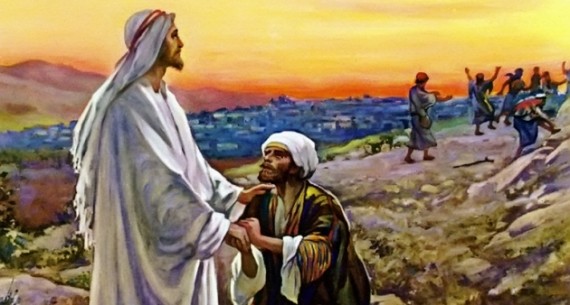
- He glorified God immediately. He shouted at the top of his lungs with the loudest voice possible. He witnessed for God. God had cleansed him and he wanted all to know the great mercy and love of God.
- He worshipped Jesus. Note that he fell down on his face at the feet of Jesus. This was both humility and recognition of the power of God in Christ, two essentials for true spiritual cleansing (salvation, Luke 17:19).
- He was a Samaritan, the most despised and rejected of the men.
- Most did not give thanks. They kept going about their business at hand. They did not stop what they were doing nor return to the Lord to give thanks. But note something: they did return to their former world, the lives they used to live. There is a lesson in the behavior of the lepers. Christ expects us to return to Him continually, to return, glorify, and worship Him as the Source of our power and strength for life.
- The most rejected was the most thankful. Note the word “stranger” (allogenes, Luke 17:18). It means that he was a “stranger from the covenants of promise, having no hope, and without God in the world” (Ephes. 2:12). He had felt his need more keenly and deeply. He knew he needed to be saved, genuinely saved—spiritually as well as physically. Despite the fact that he had never known the real promises of God and that he had been without God in this world, he now knew God. His heart just broke forth to give glory to God. Jesus had saved him from so much.
- The thankful man shall be the one truly saved—spiritually. The verb “made whole” (sesoken) is literally “has saved you.” The man was clearly whole in body. This could be easily seen, but one could not see the spiritual and inward cleansing. Jesus was telling the man that his sins were forgiven; He was giving the man the assurance of salvation.
Now note an important question. Had the nine been spiritually cleansed as well as physically cleansed? Or was it lack of being spiritually cleansed that kept them from returning to give thanks? Or was Jesus just giving this man a strong assurance of salvation?
We are not told, but one crucial factor is known. This man, the grateful and thankful leper, was the man who received assurance of being cleansed and of having his sins forgiven. The others did not. They failed in being grateful and thankful.
Another important fact to note is this: gratitude and praise bring assurance to the heart. It stirs Christ to speak to the human heart, giving assurance of acceptance and cleansing.
You would have expected all ten men to run to Jesus and thank Him for a new start in life, but only one did so—and he was not even a Jew. How grateful the men should have been for the providence of God that brought Jesus into their area, for the love that caused Him to pay attention to them and their need, and for the grace and power of God that brought about their healing. They should have formed an impromptu men’s chorus and sung Psalm 103 together!
But before we judge them too harshly, what is our own “GQ”—“Gratitude Quotient”? How often do we take our blessings for granted and fail to thank the Lord? “Oh that men would praise the Lord for His goodness, and for His wonderful works to the children of men!” (Ps. 107:8, 15, 21, 31) Too often we are content to enjoy the gift but we forget the Giver. We are quick to pray but slow to praise.
The next time you sing “Now Thank We All Our God,” try to remember that Martin Rinkhart wrote it during the Thirty Years’ War when his duties were most difficult. He conducted as many as forty funerals a day, including that of his own wife; yet he wrote those beautiful words as a table grace for his family. In spite of war and plague around him and sorrow within him, he was able to give thanks to the Lord from a grateful heart.
Luke’s account closes with one unusual man (Luke 17:15-19). The Samaritan shouted “Glory to God!” and fell at Jesus’ feet to praise Him and give thanks. It would have been logical for him to have followed the other men and gone to the temple, but he first came to the Lord Jesus with his sacrifice of praise (Ps. 107:22; Heb. 13:15). This pleased the Lord more than all the sacrifices the other men offered, even though they were obeying the Law (Ps. 51:15-17). Instead of going to the priest, the Samaritan became a priest, and he built his altar at the feet of Jesus (read Ps. 116:12-19).
Every child of God should cultivate the grace of gratitude. It not only opens the heart to further blessings but glorifies and pleases the Father. An unthankful heart is fertile soil for all kinds of sins (Rom. 1:21ff).


 Proud to be TJ's man