24 After Jesus and his disciples arrived in Capernaum, the collectors of the two-drachma tax came to Peter and asked, “Doesn’t your teacher pay the temple tax?”
It’s not too surprising that Levi, the tax collector, is the only evangelist to record this odd event. Aside from his interest in this unique method of collecting revenue, why does he include it? After all, it appears to interrupt the story line. But upon closer examination, it actually continues the trend that began in Caesarea Philippi. That is, Jesus is exalted by others but humbles himself. No one reading this story would really expect Jesus to pay temple taxes when he was the Son of God. But he does. This sets up a contrast between Jesus’ self-humiliation and the disciples’ self-aggrandizement in the following verses.
This particular tax was not a legal Roman tax. The Jews, however, expected that each male, between ages twenty and fifty would support the temple each year with two drachma (cf. Josephus, Ant. III. 8.2; XVIII, 9.1). This was based on Exodus 30:11–16; 38:25–26, where God commanded support for the tabernacle. The cost was equivalent to about two day’s wages. Why do they ask for it now? We can only guess that since Jesus missed the last Passover, there was some question about him fulfilling his financial obligation as a Jew.
The tax collectors question Peter, who apparently has distinguished himself as the spokesman of the group. Their question is framed so as to expect a positive reply. It might be better translated, “Your teacher pays the temple tax, doesn’t he?” It is of interest that officially ordained rabbis were exempt from this tax. Since Jesus had not attended their schools, he could not rightly claim this advantage.
Mt 17:25–27 “Yes, he does,” he replied.
When Peter came into the house, Jesus was the first to speak. “What do you think, Simon?” he asked. “From whom do the kings of the earth collect duty and taxes—from their own sons or from others?”
26 “From others,” Peter answered.
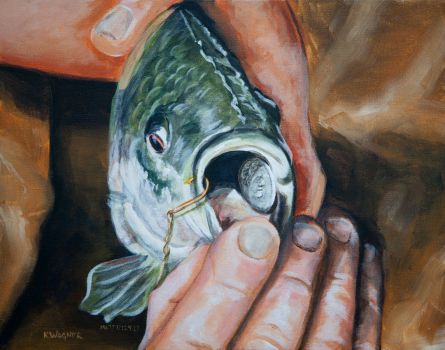
“Then the sons are exempt,” Jesus said to him. 27 “But so that we may not offend them, go to the lake and throw out your line. Take the first fish you catch; open its mouth and you will find a four-drachma coin. Take it and give it to them for my tax and yours.”
We assume Peter’s reply is without Christ’s consent, though we don’t know for sure. Peter may know that Jesus did, in fact, pay this tax before. When Peter goes back into the house, Jesus is the first to speak. Matthew probably wants us to see that Jesus reads Peter’s mind.
He questions Peter with the use of this brief parable which suggests that because of Jesus’ relationship with God, he is rightly exempt from paying the temple tax. But so that he might not offend the Jewish rulers he goes ahead and pays. Not only is Jesus exempt, but so is Peter because he is a disciple of Jesus. But he, too, is to pay the tax. Notice that the coin Peter is to get would pay for both of them.
Apparently, civil disobedience for a follower of Jesus should be reserved for when the individual is asked to disobey a direct command of God (Exod 1:15ff; Dan 3:1ff; 6:10ff; Acts 4:19; 5:29).
Matthew stops short of telling us that Peter goes out and catches the fish. Perhaps we are to understand that he did go catch a fish that had a coin (lit., statēra, = four drachma), in its mouth. Fish are often attracted to shiny objects. And there have been accounts of fish caught in the Sea of Galilee that have swallowed coins. Thus, perhaps Jesus “saw” the fish before Peter caught it and brought the two together.
Mark E. Moore, The Chronological Life of Christ (Joplin, MO: College Press Publishing Company, 2011), 320–321.


 Proud to be TJ's man