RSS

Author Archives: Gary Davenport

Unknown's avatar

About Gary Davenport

Christian man, husband, father, father-in-law, and granddaddy

The Benefits of Being Christians #10b The Power of Hope


Hope is a dynamic power that enables one to do almost unbelievable things. I am thinking of hope as a part of life, not just as religious hope.

Many years ago the pilgrims came across the North Atlantic; they battled the storms of winter in those little ships. They made the journey and settled into this new land. Why did they brave those storms? Why did they risk their lives to come to the new land? It was because of hope for a better life in the new world.

In the early days of our country the pioneers moved westward. They crossed mountains, rivers, and plains. They suffered hardship. Many of them died. Many others reached their objective of arriving in the West. Why did they make those journeys? It was because of hope. They hoped that beyond those mountains, beyond the rivers, beyond the plains they would find a great meaning to their lives.

The same is still true today. A person is sick. Perhaps he may be hospitalized. He may have to undergo surgery. One of the great healing elements in his life will be his hope of getting better. I believe it goes without contradiction that sometimes sick people do not get well when they are sick because they give up hope. When they give up, they cannot win the victory.

As we saw last week, in Romans 8, Paul speaks of hope in the context of the problems of human suffering. In verse 17 he said, “We are heirs of God and joint heirs with Christ if we suffer with Him.”

Paul is focusing attention upon the world as it is, a fallen world, a world into which sin has come. As a result of the fall, as a result of sin, there is sickness, heartache, disappointment, and death in this world.

Basically, suffering is in the world because the world has fallen. How is the man in Christ to deal with the world as it is? His disappointments? His physical pain and mental anguish? Death? Paul’s word is “hope.”

Notice what Paul says in verse 18: “For I consider that the sufferings of this present time are not worthy to be compared with the glory that is to be revealed to us.” God has something better for His people than the suffering and heartache of this world. That something in the future is the object of the Christian’s hope. But no sooner does Paul refer to the sufferings of this present time than he begins to mention what he calls the “whole creation.” Notice what he says:

For the anxious longing of the creation waits eagerly for the revealing of the sons of God. For the creation was subjected to futility, not of its own will, but because of Him who subjected it, in hope that the creation itself also will be set free from its slavery to corruption into the freedom of the glory of the children of God. For We know that the whole creation groans and suffers the pain of childbirth together until now (8:19-22).

He is talking about every creature that makes up the human family. His point is that everyone, regardless of who he is, longs for a better life in another world. Everyone has some concept of life beyond this life. The Indians in the earlier days of our country had their happy hunting grounds in their thoughts. Man longs for a better tomorrow. Paul says that every man is groaning under the sufferings that the world brings and wants to be released from that suffering. How- ever, Paul’s major point has to do with the Chris- tian and his hope. The man who is out of Christ does not live in hope. If he has a hope, it is a false hope because the hope of a better tomorrow belongs only to those who are in Christ.

THE OBJECT OF HOPE

Paul continues in 8:23: “And not only this, but also we ourselves, having the first fruits of the Spirit, even we ourselves groan within ourselves, waiting eagerly for our adoption as sons, the redemption of our body.” The whole family of man longs for a better tomorrow, but those who are in Christ know best of all that a better tomorrow is coming. We know it because we have the assurance of God Himself. The object of what we are looking forward to is the “redemption of our body.” Paul is referring to the resurrection from the dead.

I believe in a bodily resurrection. Why? Because the Bible teaches the resurrection of the body;  because  Jesus  Christ  Himself  has  been raised. First Corinthians 15:22 says, “For as in Adam all die, so also in Christ all shall be made alive.” All are going to be raised from the dead. The beautiful concept for the Christian is that those who are in Christ are to enjoy the final adoption, the redemption of the body. First Co-rinthians 15 is the great chapter on the bodily resurrection of the dead. In that chapter Paul shows that at some point this mortal will put on immortality, this corruptible shall put on incorruption. When this mortal shall put on immortality, then shall be brought to pass the saying, “Death is swallowed up in victory.” Did you know that those who are in Christ will win the ultimate victory even over death? Death is not the end; it is only a stage in the Christian’s existence. He does not face death by himself. God will be with His children even in death and bring them safely through death to the other side.

What assurance do we have that we will be raised? We could say that our assurance is the promise of God; we could say our assurance is the fact that Christ has been raised. But in this context what is the assurance? Did you notice that in verse 23 Paul spoke of the first fruits of the Spirit? The Spirit of God is given to those who are obedient to God (Romans 5-8). Paul has pre- viously emphasized the concept of God’s Spirit being spread abroad in the hearts of those who are in Christ. Acts 5:32 says, “. . . so is the Holy Spirit, whom God has given to those who obey Him.” The first fruit is the giving of the Spirit to the Christian. The first fruit is the promise of an additional harvest that will come later. The addi- tional harvest is the resurrection of the body. Our assurance is the Spirit, “the first fruits of the Spirit.” God’s Spirit is a down payment on blessings to be received in the future.

III. THE NATURE OF HOPE

What is hope? There are two elements in hope. One is desire; the other is expectation. A person can desire something and never achieve it. He can expect something that he does not desire. When he has hope he has both desire and expectation. The desire and expectation of the Christian is that there will be a resurrection of the body in an eternal dwelling place with God. He desires it and expects it because God has promised it.

IV. THE RECIPIENTS OF HOPE. Who has hope? Who has hope for the future; who  has  hope  for  being  raised,  exalted,  and glorified with God? The man out of Christ does not. Ephesians 2:12 speaks of those who live without Christ, as living without hope. That is one of the saddest thoughts that can ever enter our minds. No hope. Out of Christ. Christians who take their commitment to Christ lightly and never commit their lives to Jesus have no hope. The church at Laodicea in Revelation 3 was about to be spewed out of the mouth of Christ. Simply being a church member does not mean a person has hope. Who has hope? In Colossians 1:27 Paul said, “Christ in you, the hope of glory.” The Christian is in Christ. Romans 6 says he was baptized and that act put him into Christ (6:3).

He has entered into Christ. Not only is the Christian in Christ, but Christ is in him. Christ’s light is being reproduced in the life of a Christian. The Christian is seeking to think, talk, and act like Christ. As Christ is formed in the Christian, it is “Christ in you, the hope of glory.”

You can have that hope. But if you have hope it will be because you made the effort to enter into Christ and are daily developing into His image. It is a great concept. Those in Christ have hope for the future. Let us probe this term to see what it means to us, what its real significance is, and how it is attached to being in Christ. In verse 19 he uses a wonderful word for eager expectation. It is apokaradokia and it describes the attitude of a man who scans the horizon with head thrust forward, eagerly searching the distance for the first signs of the dawn break of glory.

To Paul life was not a weary, defeated waiting; it was a throbbing, vivid expectation. The Christian is involved in the human situation. Within he must battle with his own evil human nature; without he must live in a world of death and decay. Nonetheless, the Christian does not live only in the world; he also lives in Christ. He does not see only the world; he looks beyond it to God. He does not see only the consequences of man’s sin; he sees the power of God’s mercy and love. Therefore, the keynote of the Christian life is always hope and never despair. The Christian waits, not for death, but for life. The Christian, a new person in Christ, has a new hope: “a living hope through the resurrection of Jesus Christ from the dead” (1 Pt. 1:3-9).

HOPE’S NATURE: WHAT IS IT? Hope is the expectation of something desired. Hope = desire + expectation. Hope is always the expectation of something good — in contrast to fear, which is the dreaded expectation of something bad. Hope is always oriented toward the future – Rom. 8:24,25; Hb. 11:1. It is waiting with:

Joy – Rom. 12:12.

Confidence – 2 Cor. 5:6-8; 2 Thess. 2:16,17.

Patience – Rom. 8:25; 1 Thess. 1:3.

Discipline – Hb. 10:23; 1 Pt. 1:13.

(1 Corinthians 15:14 NNAS) “and if Christ has not been raised, then our preaching is vain, your faith also is vain.”

(1 Corinthians 15:17-19 NNAS) “and if Christ has not been raised, your faith is worthless; you are still in your sins. {18} Then those also who have fallen asleep in Christ have perished. {19} If we have hoped in Christ in this life only, we are of all men most to be pitied.” Critics have attempted to portray Christian hope as groundless naivete, blind optimism, silly Pollyanna-ism, etc. F. W. Nietzsche said, “Hope is the worst of evils, for it prolongs the torment of man.”

(Hebrews 12:1-2 NIV) “Therefore, since we are surrounded by such a great cloud of witnesses, let us throw off everything that hinders and the sin that so easily entangles, and let us run with perseverance the race marked out for us. {2} Let us fix our eyes on Jesus, the author and perfecter of our faith, who for the joy set before him endured the cross, scorning its shame, and sat down at the right hand of the throne of God.”

“Everyone needs long-range goals, if for no other reason than to keep from being frustrated by short-range failures.” “The hopeful man sees success where others see failure, sunshine where others see shadows and storm” (O. S. Marden). “Of all the forces that make for a better world, none is so indispensable, none so powerful, as hope. Without hope men are only half alive. With hope they dream and think and work” (Charles Sawyer).

Conclusion. Hope may be one of the most conspicuous blessings of Christianity, a thing other people notice and ask about: “But sanctify the Lord God in your hearts, and always be ready to give a defense to everyone who asks you a reason for the hope that is in you, with meekness and fear” (1 Pt. 3:15). Hope is a central theme of the gospel(Acts 23:6 NIV) “Then Paul, knowing that some of them were Sadducees and the others Pharisees, called out in the Sanhedrin, “My brothers, I am a Pharisee, the son of a Pharisee. I stand on trial because of my hope in the resurrection of the dead.””

(Acts 24:14-15 NIV) “However, I admit that I worship the God of our fathers as a follower of the Way, which they call a sect. I believe everything that agrees with the Law and that is written in the Prophets, {15} and I have the same hope in God as these men, that there will be a resurrection of both the righteous and the wicked.”

(Acts 26:6-7 NIV) “And now it is because of my hope in what God has promised our fathers that I am on trial today. {7} This is the promise our twelve tribes are hoping to see fulfilled as they earnestly serve God day and night. O king, it is because of this hope that the Jews are accusing me.”

[1] John White, The Cost of Commit­ment, p. 4.

 
Leave a comment

Posted by on January 22, 2024 in Romans 8


The Benefits of Being Christians #10 “The Christian’s Hope” – Romans 8:25


What is hope? Is it a wishy washy maybe or a kind of unsure optimism? The modern idea of hope is “to wish for, to expect, but without certainty of the fulfillment; to desire very much, but with no real assurance of getting your desire.”

In Scripture, according to the Hebrew and Greek words translated by the word “hope” and according to the biblical usage, hope is an indication of certainty. “Hope” in Scripture means “a strong and confident expectation.” Though archaic today in modern terms, hope is akin to trust and a confident expectation.

Hope may refer to the activity of hoping, or to the object hoped for—the content of one’s hope. By its very nature, hope stresses two things: (a) futurity, and (b) invisibility. It deals with things we can’t see or haven’t received or both .

Romans 8:24-25  For in hope we have been saved, but hope that is seen is not hope; for why does one also hope for what he sees? 25 But if we hope for what we do not see, with perseverance we wait eagerly for it.

Biblically, from the standpoint of the object hoped for, hope is synonymous with salvation and its many blessings, past, present, and future, as promised in Scripture. This is true even with what we have al­ready received as believers because these blessings come under the category of what we cannot see. We may see some of the results, but it still requires faith and hope. For example, we do not see the justifying work of God, the imputation of Christ’s righteousness to our account, nor do we see the indwelling of the Holy Spirit when we are saved, nor our co-union with Christ. We believe this to be a reality, but this is a matter of our hope. We believe in the testimony of God in the Word and hope for the results in our lives.

In summary, hope is the confident expectation, the sure cer­tainty that what God has promised in the Word is true, has occurred, and or will in accordance with God’s sure Word.

A Description of Hope: It is Dynamic or Active

In the Bible, hope is never a static or passive thing. It is dynamic, active, directive and life sustaining. This is everywhere obvious as we read the Word. Take a concordance, look up the word “hope” and you will find reference after reference pointing out the active results of hope in the lives of those who truly have a biblical hope and live accordingly.

In other words, a biblical hope is not an escape from reality or from problems. It doesn’t leave us idle, drifting or just rocking on the front porch. If our hope is biblical and based on God’s promises, it will put us in gear.

It has Results

(1) It changes how we see ourselves. It changes us into pilgrim persons, people who see this life as temporary sojourn.

2 Peter 1:13 And I consider it right, as long as I am in this earthly dwelling, to stir you up by way of reminder,

1 Peter 2:11 Beloved, I urge you as aliens and strangers to abstain from fleshly lusts, which wage war against the soul.

(2) It changes what we value. Hope, if biblical, makes us heavenly minded rather than earthly minded. Our Lord’s words here blast our deception away.

Matthew 6:19-21 Do not lay up for yourselves treasures upon earth, where moth and rust destroy, and where thieves break in and steal. 20 “But lay up for yourselves treasures in heaven, where neither moth nor rust destroys, and where thieves do not break in or steal; 21 for where your treasure is, there will your heart be also.

(3) It affects what we do with our lives—our talents, time, treasures.

Titus 2:1-13  But as for you, speak the things which are fitting for sound doctrine. 2 Older men are to be temperate, dignified, sensible, sound in faith, in love, in perseverance. 3 Older women likewise are to be reverent in their behavior, not malicious gossips, nor enslaved to much wine, teaching what is good, 4 that they may encourage the young women to love their husbands, to love their children, 5 to be sensible, pure, workers at home, kind, being subject to their own husbands, that the word of God may not be dishonored. 6 Likewise urge the young men to be sensible; 7 in all things show yourself to be an example of good deeds, with purity in doctrine, dignified, 8 sound in speech which is beyond reproach, in order that the opponent may be put to shame, having nothing bad to say about us. 9 Urge bondslaves to be subject to their own masters in everything, to be well-pleasing, not argumentative, 10 not pilfering, but showing all good faith that they may adorn the doctrine of God our Savior in every respect. 11 For the grace of God has appeared, bringing salvation to all men, 12 instructing us to deny ungodliness and worldly desires and to live sensibly, righteously and godly in the present age, 13 looking for the blessed hope and the appearing of the glory of our great God and Savior, Christ Jesus;

1 John 3:1-3  See how great a love the Father has bestowed upon us, that we should be called children of God; and such we are. For this reason the world does not know us, because it did not know Him. 2 Beloved, now we are children of God, and it has not appeared as yet what we shall be. We know that, when He appears, we shall be like Him, because we shall see Him just as He is. 3 And everyone who has this hope fixed on Him purifies himself, just as He is pure.

The Christian life, if it is grasped according to God’s truth, is a magnificent obsession with an eternal hope, a hope that does not lead to an escapist attitude, but to the pursuit of life on a whole new dimension. It makes you bullish, as we might say today, on the potentials of this life as stewards of God. It gives us power to live courage­ously, to be all God has called us to be in Christ.

So then, why are we so quick to opt for earthly treasure and so slow to be obsessed with the heavenly? Perhaps it is because we do not believe in heavenly realities. They repre­sent a celestial cliche in our minds, but no more.[1] You see, it is the person who believes in this heaven­ly hope and who is so fixed on it, in the words of Peter, that he or she is able to have such a light grip on the things of this world that he or she is able to put first things first.

In other words, a biblical hope is never an escape from reality or from problems. It doesn’t leave us idle, drifting or just rocking on the front porch. If our hope is biblical and not just a heavenly cliche or like the sign, “in case of emergency, break glass,” it will put us in gear. But, being dynamic, hope also has something else:

It has Rewards and Blessings

(1) It gives us joy and peace.

Romans 15:13 Now may the God of hope fill you with all joy and peace in believing, that you may abound in hope by the power of the Holy Spirit.

Romans 5:2 through whom also we have obtained our introduction by faith into this grace in which we stand; and we exult in hope of the glory of God.

(2) It gives us protection.

Psalm 33:18 Behold, the eye of the LORD is on those who fear Him, On those who hope for His lovingkindness,

(3) It gives us strength, courage, boldness.

Psalm 31:24 Be strong, and let your heart take courage, All you who hope in the LORD.

(4) It gives us endurance, comfort, con­fidence in the face of death.

1 Thessalonians 4:13 But we do not want you to be uninformed, brethren, about those who are asleep, that you may not grieve, as do the rest who have no hope.

(5) It gives us confidence in ministry.

1 Timothy 4:10  For it is for this we labor and strive, because we have fixed our hope on the living God, who is the Savior of all men, especially of believers.

The Derivation (Origin) of Hope. Where and How Do We Get Hope? Negative–warnings regarding false hope

There are a number of warnings in Scrip­ture against putting our hope in anything other than the Lord because these things will leave us ashamed, frustrated, disappointed, and in ruin.

Job 8:11-15 11 Can the papyrus grow up without marsh? Can the rushes grow without water? 12 While it is still green and not cut down, Yet it withers before any other plant. 13 So are the paths of all who forget God, And the hope of the godless will perish, 14 Whose confidence is fragile, And whose trust a spider’s web. 15 He trusts in his house, but it does not stand; He holds fast to it, but it does not endure.

Psalm 33:17 A horse is a false hope for victory; Nor does it deliver anyone by its great strength. Point: deliverance must come from the Lord.

Psalm 146:5 How blessed is he whose help is the God of Jacob, Whose hope is in the LORD his God; i.e., rather than man.

Proverbs 10:28 The hope of the righteous is gladness, But the expectation of the wicked perishes.

Proverbs 11:7 When a wicked man dies, his expectation will perish, And the hope of strong men perishes. The strong man hopes in his physical strength, his money, or power or position, but ultimately, it must perish.

Proverbs 24:14 Know that wisdom is thus for your soul; If you find it then there will be a future, And your hope will not be cut off. Without God’s wisdom which gives god’s hope, your hope will be in the wrong thing and it will be cut off.

Positive–the means and basis of the only true hope

God is called “the God of Hope.” This means He is the source of all real hope. If we are going to have hope (confident expectation), it must come from Him for He alone has the power to give it.

Psalm 62:5 My soul, wait in silence for God only, For my hope is from Him.

Romans 15:13 Now may the God of hope fill you with all joy and peace in believing, that you may abound in hope by the power of the Holy Spirit.

Psalm 62:5 My soul, wait in silence for God only, For my hope is from Him.

If you are without Christ, you are without God and without hope.

Ephesians 2:12 …remember that you were at that time separate from Christ, excluded from the commonwealth of Israel, and strangers to the covenants of promise, having no hope and without God in the world.

1 Timothy 1:1-2 Paul, an apostle of Christ Jesus according to the commandment of God our Savior, and of Christ Jesus, who is our hope; 2 to Timothy, my true child in the faith: Grace, mercy and peace from God the Father and Christ Jesus our Lord.

(1) Hope depends on knowing the Word of God.

Romans 15:4 For whatever was written in earlier times was written for our instruction, that through perseverance and the encouragement of the Scriptures we might have hope.

Colossians 1:5-6 because of the hope laid up for you in heaven, of which you previously heard in the word of truth, the gospel, 6 which has come to you, just as in all the world also it is constantly bearing fruit and increasing, even as it has been doing in you also since the day you heard of it and understood the grace of God in truth;

(2) Hope depends on knowing and resting in God’s Grace.

2 Thessalonians 2:16 Now may our Lord Jesus Christ Himself and God our Father, who has loved us and given us eternal comfort and good hope by grace,

(3) Hope depends on the Spirit Filled life.

Romans 15:13 Now may the God of hope fill you with all joy and peace in believing, that you may abound in hope by the power of the Holy Spirit.

1 Peter 1:13  Therefore, gird your minds for action, keep sober in spirit, fix your hope completely on the grace to be brought to you at the revelation of Jesus Christ.

Friends, on what have you fixed your hope? Does your life prove it? Has it changed who you are, what you value, and what you are doing with your life?

In Romans 8:18-25, Paul brings us to another great blessing of being in Jesus Christ. He mentions one of the most important words in the religion of Jesus Christ. It is a life changing word when it is a part of life. In Christ we have hope. Paul says, “We are saved by hope.” Hope has something to do with our salvation.


Leave a comment

Posted by on January 18, 2024 in Romans 8


The Benefits of Being Christians #9 Present Suffering, Future Glory – Romans 8:17b-25


“Dad, I saw on the news a bad flood that killed a lot of people. Why are there floods and earthquakes and hurricanes and tornadoes? Why are there famines where people starve to death?”

“Mom, why did my friend at school get cancer and die? Why did Grandma get sick and die?”

“Granddaddy, why do people set off bombs to blow up other people? Why do people do bad things to hurt each other?”

Maybe your children or grandchildren have asked you questions like these. Probably you’ve wrestled with them yourself.

Some become agnostics or even atheists because they cannot come up with satisfactory answers to the question of how a loving, all-powerful God can allow the terrible suffering that is in the world.

Since none of us are exempt from suffering and death, it’s important that we understand what the Bible teaches on this difficult topic. (Will spend some time on this subject in an extended way beginning next week in our Sunday am class…using C.S. Lewis’ title The Problem of Pain).

Job, one of the oldest book on the Bible, is devoted to this problem. And in our text, Paul gives part of the biblical perspective that we need to persevere through the suffering that we surely will encounter.

At the outset, make no mistake: there is a price to be paid for being identified with Jesus. Along with the great treasures, Paul mentions the suffering that Christians must face.

What kinds of suffering are we to endure? For first-century believers, there was economic, social, and physical persecution; some even faced death.

In many parts of the world today, believers face pressures just as severe as those faced by Christ’s first followers.

Even in countries where Christianity is tolerated or encouraged, Christians must not become complacent.

To live as Jesus did—serving others, giving up one’s own rights, resisting pressures to conform to the world—always exacts a price. Nothing we suffer, however, can compare to the great price that Jesus paid to save us.

What does it mean to be a Christian—to think like a Christian—to act like a Christian?

Paul’s words recorded in Romans 8:18-27 strip away the artificial and superficial views of the Christian life, leaving us with the core of what it means to live in this present world as a Christian.

Romans 8:17 (ESV)  17 and if children, then heirs—heirs of God and fellow heirs with Christ, provided we suffer with him in order that we may also be glorified with him.  

Romans 8:18 (ESV) For I consider that the sufferings of this present time are not worth comparing with the glory that is to be revealed to us.

The present suffering is temporary, while the future glory is eternal. Paul had written to the Corinthians, “For our light and momentary troubles are achieving for us an eternal glory that far outweighs them all” (2 Corinthians 4:17 niv).

Suffering is part of the process of sharing in Christ’s death; it will culminate in sharing His glory. If glory is the majesty of God, his character seen for all that it truly is, then his glory . . . revealed in us will occur when we suddenly become exactly what God has intended us to be.

19 For the creation waits with eager longing for the revealing of the sons of God.

8:19 The creation. Human beings and the rest of creation presently face suffering, and both will be glorified in the future. When Adam sinned, God sentenced all of creation: “Cursed is the ground because of you” (Genesis 3:17 nrsv). Since then, the world has suffered decay and pollution, largely because people have forgotten or ignored their responsibilities as stewards of the earth.

Waits with eager longing.NRSV This form of the Greek verb for this phrase is used seven times in the New Testament. Each time it is used in connection with the believers’ anticipation of Christ’s return  (Romans 8:19, 23, 25; 1 Corinthians 1:7; Galatians 5:5; Philippians 3:20; Hebrews 9:28).

Here it is used in connection with creation awaiting that day. In the meantime, the created order functions in spite of its flaws. But diseases, deformities, and suffering constantly remind us that all is not right with us or with the world.

For the revealing of the sons of God.NKJV This will occur at the second coming of Christ when he returns for his people. We will share in his glory (8:18) and receive our complete redemption (8:23). The entire universe is looking forward to the conclusion of God’s plan.

People are the largest group of holdouts in anticipating that time. It is humbling to realize that as creatures developing an eager expectation for Christ’s return, we humans are the last to respond.

20 For the creation was subjected to futility, not willingly, but because of him who subjected it, in hope 21 that the creation itself will be set free from its bondage to corruption and obtain the freedom of the glory of the children of God.

When Adam sinned, God decreed that all of creation would be subjected to frustration; that is, to futility, change, and decay. Creation is frustrated because it is unable to attain the purposes for which it was made.

The original sense of perfect order in the world was marred by sin; therefore, fallen people had to live in a fallen world. This was not by its own choice because it was God’s doing and part of his plan of salvation.

In hope that the creation itself will be liberated from its bondage.NIV The word for hope indicates anticipating a future event. Eventually this frustration will end and creation will be brought into the glorious freedom of the children of GodNIV—freedom from sin, evil, decay, and death.

Adam and Eve’s act of rebellion affected the entire world. It has taken many centuries to realize the inter-relatedness of this global village, but the Bible begins with that assumption. Having the same Creator links us with the rest of the created order.

Making creation a god is only worshiping a power that is finite and destructible. We have been charged to care for the world, and to worship her Creator.

22 For we know that the whole creation has been groaning together in the pains of childbirth until now.

Paul pictures the fallen earth in pain. Consider earthquakes, floods, fire, drought, famine—these are surely not what creation was meant to be, but sin and evil now rule.

Just as the pains of childbirth end at the birth of the child, so the groaning and pain of the creation will end at the birth of the new earth. This groaning is not impatient, but “eager” (8:23).

It is not the groaning of hopelessness, but the sound of total concentration on a painful, but hopeful conclusion. It is not the despairing cry of the hopeless, but the eager longing of the hopeful. Before the glory is revealed there is a time of groaning.

We long for the full redemption of our bodies in the resurrection. In this process we are not alone, for the Holy Spirit groans with us, expressing our unutterable longing to God. But until the time of our release and redemption, we must groan, wait and hope.

Two observations before we move on: First, this text assumes that God is the creator of all that is. It did not evolve by chance or random mutations over billions of years.

Second, even though the creation is fallen, it still bears witness to the majesty and glory of the Creator. David marveled (Ps. 19:1), “The heavens are telling of the glory of God; and their expanse is declaring the work of His hands.”

23 And not only the creation, but we ourselves, who have the firstfruits of the Spirit, groan inwardly as we wait eagerly for adoption as sons, the redemption of our bodies.

This verse returns to the train of thought Paul began in verse 18, the present sufferings of believers. We know that God will fulfill his promises of future glory because of the witness of the Holy Spirit within us.

The Holy Spirit is like the first fruits of a farmer’s harvest—a guarantee of more to come. Paul described the Holy Spirit as “a deposit guaranteeing our inheritance until the redemption of those who are God’s possession” (Ephesians 1:14 niv).

To creation’s groaning is now added ours. Like creation, we have the promises but lack the final realization of glory. Our sufferings cause us to groan inwardly; God’s promises cause us to wait eagerly.

Although we have already received adoption into God’s family (8:15), we are still awaiting our completed adoption, identified here as redemption (see also 8:19, 21).

This will occur when Christ returns, when our bodies will be transformed, and we will live with him forever (see 1 Corinthians 15:42-54; 2 Corinthians 5:1-5; 1 Thessalonians 4:13-18).

24 For in this hope we were saved. Now hope that is seen is not hope. For who hopes for what he sees? 25 But if we hope for what we do not see, we wait for it with patience.

When we put our faith in Christ as Savior, we receive this hope: that we will be redeemed. Paul wrote of this assurance in other letters: “By faith we eagerly await through the Spirit the righteousness for which we hope” (Galatians 5:5 niv); and “Christ in you, the hope of glory” (Colossians 1:27). We already have the presence of the Holy Spirit, who is unseen, but we must eagerly wait for our new bodies, that are also unseen.

Hope that is seen is no hope at all. Who hopes for what he already has?NIV Our full redemption has not yet happened; it will happen when Christ returns. That is why it is still a hope for believers.

CAN’T WAIT!
We keep looking in confidence for what we cannot see. Our eager anticipation is like that of the person who drives all night and eagerly looks forward to the sunrise, when the mist and darkness will be driven away. He knows it will happen and can’t wait. His assurance of it carries him on. We look forward to:
·         Our new bodies.
·         The new heaven and the new earth. Rest and the rewards of service.
·         Our eternal family and home.
·         The absence of sin and suffering.
·         Being face to face with Jesus Christ.

It’s important to think biblically about suffering because when it clobbers you or those you love, you will be engulfed by a wave of powerful emotions.

I’m not suggesting that you should suppress or deny your emotions, but I am saying that you need to process them through the grid of biblical truth, so that you are not devastated by your trials.

Paul wants us to think about four things: First, our present sufferings are relatively short compared to our eternal sharing in the glory of God.

Second, the weight of our present trials is like a feather on the scale, which can’t compare with the tons of gold of the glory that will be revealed to us.

He expresses the same thought in 2 Corinthians 4:16-18, Therefore we do not lose heart, but though our outer man is decaying, yet our inner man is being renewed day by day. For momentary, light affliction is producing for us an eternal weight of glory far beyond all comparison, while we look not at the things which are seen, but at the things which are not seen; for the things which are seen are temporal, but the things which are not seen are eternal.

A third thing to think about to endure present, temporary suffering for future glory is that our future glory with God is absolutely certain.

God has promised it and He cannot lie. Christ promised to return in power and glory to bring final redemption to His people and to judge His enemies. Either He was mistaken or it is our certain future.

And in the rest of the chapter Paul unfolds a fourth reason that we need to think biblically about suffering, namely, that God is using it to conform us to the image of Christ. Not even torture or martyrdom can separate us from His great love (8:35-39).

Often people observe the terrible suffering in the world and doubt God’s love or His power. The argument is especially emotional when we consider little children suffering physical or sexual abuse or the horrible effects of war or natural disasters.

If you say, “That’s not fair,” you’re on dangerous ground, to accuse the Sovereign God of being unfair! And you’re arrogantly implying that you would have done better than Adam did, so you don’t deserve to be penalized for his sin.

So you’d best not accuse God of being unfair for imposing suffering on the human race because of sin.

But the fact of terrible suffering does not undermine the fact that God has a plan and that He will accomplish His plan.

The future glory is not totally revealed to us yet, but it includes the revealing of all that God has promised for us.

  1. B. Phillips 8:19, “The whole creation is on tiptoe to see the wonderful sight of the sons of God coming into their own.”

The future glory includes the full renewal of creation to its original perfection and purpose.

The future glory is guaranteed by our present possession of the Holy Spirit, the first fruits of our redemption.

The indwelling Holy Spirit gives us a taste of what it will be like to be holy, as Jesus is holy.

The Holy Spirit is the promise that God will not abandon us to our sin. He’s the down payment that signals that God will complete the purchase.

Keep your eyes on the future promised glory and you will persevere in present sufferings with hope.

Paul anticipates us thinking, “But, I can’t see this future glory.” His reply is, “Yes, that’s the very nature of hope.” If you can see it all, then it’s not hope.

Our salvation includes hope because we don’t receive it all in this life.

But we hope for it because we have not yet received all that has been promised. So Paul concludes (8:25), “But if we hope for what we do not see, with perseverance we wait eagerly for it.”

 
Leave a comment

Posted by on January 15, 2024 in Romans 8


The Benefits of Being Christians #8 Adopted Heirs of God – Romans 8:12-17a


12  So then, brothers, we are debtors, not to the flesh, to live according to the flesh.13  For if you live according to the flesh you will die, but if by the Spirit you put to death the deeds of the body, you will live.14  For all who are led by the Spirit of God are sons of God. 15  For you did not receive the spirit of slavery to fall back into fear, but you have received the Spirit of adoption as sons, by whom we cry, “Abba! Father!” 16  The Spirit himself bears witness with our spirit that we are children of God, 17  and if children, then heirs—heirs of God and fellow heirs with Christ, provided we suffer with him in order that we may also be glorified with him.

Paul is introducing us to another of the great metaphors in which he describes the new relationship of the Christian to God. He speaks of the Christian being adopted into the family of God.

Adoption is a beautiful thing to behold. I have looked around at most congregations and seen families that have adopted children from other countries and think about where those kids would be if they had not been adopted into a loving family.

They had no family to love them or provide for their needs. They had no caring dad or mom to listen to their problems or put their arms around them and assure them that things would be all right.

Depending on their circumstances, some of them were malnourished and sick. They had no instruction even about basic matters in life such as hygiene, let alone spiritual instruction.

Then one day a couple with love and kindness in their eyes chose them and went through all of the legal and financial matters necessary to bring that needy child into their home. For the first time in their lives, those kids heard prayers and felt kisses before drifting off to sleep.

When they awoke frightened or sick in the night, they had the comfort of loving parents to calm their fears or nurse them back to health. They had nutritious meals and nice clothing.

They learned what it was like to be a part of a loving, caring family where God is worshiped, His Word is read, and needs are brought before His gracious throne in prayer.

It was Paul’s picture that when a man/woman became a Christian they entered into the very family of God. He did nothing to deserve it; God, the great Father, in his amazing love and mercy, has taken the lost, helpless, poverty-stricken, debt-laden sinner and adopted him into his own family, so that the debts are cancelled and the glory inherited.

I’m reminded of a story I heard long ago (tell of man watching a family across the street…noticed there was suddenly two instead of one boy playing…after many weeks, had the opportunity…”One of us is adopted, but I don’t remember which one”)

We have two grandsons who were adopted out of orphanages in China…but “I don’t remember which of my six grandsons they are.”  We now have a niece with four children…one a three-year old girl just this week adopted from India (but I don’t remember which one).

The Bible uses adoption as a picture of what God has done for us. Spiritually, we were dirty, diseased, impoverished street urchins, with no one to care for us.

He cleaned us up, removed our rags, clothed us in the righteousness of Christ, fed us with the nourishing truth of His Word, and guided us in His paths of righteousness and wisdom.

He brought us into His family, where we have brothers and sisters to share our burdens and our joys. And He made us His heirs, so that throughout eternity we will enjoy the unfathomable riches of Christ.

Paul says that God’s Spirit witnesses with our spirit that we really are his children.

Romans 8:17 is transitional: First (8:14) he says that all who are being led by the Spirit of God are the sons of God. We saw that in the context this does not refer to the Spirit’s leading us in matters of guidance about life’s choices, but rather to the Spirit’s leading us to kill our sin.

If the Holy Spirit is prompting and enabling you to fight against and kill your sin, it’s an evidence that should assure you that you are a child of God.

The next step is that if you are a child of God, then you are an heir. Then he goes higher—you are an heir of God Himself and a joint-heir with Christ.

Finally, we will be glorified with Him. Every grace we receive should lead us to seek after something higher still. We should never be complacent or think that we have arrived spiritually. We should seek to be filled more and more with all the fullness of God.

With that as an introduction, let’s explore some of the riches of our text. I’m convinced that Paul does not just want us to think about these things intellectually and walk away saying, “That’s interesting!”

Rather, he wants us to feel emotionally the wonderful grace and love of being an adopted child of God and all of the glorious riches that God has stored up for us in eternity so that we can joyfully persevere in our present sufferings. He is saying,

8:14-15 Those who are led by the Spirit of God are sons of God. For . . . you received the Spirit of sonship.NIV The Jews already considered themselves to be “sons of God” because of their heritage; but Paul explains that sons of God has new meaning. True sons of God are those who are led by the Spirit of God as evidenced in their lifestyle. Believers not only have the Spirit (8:9); they are also led by the Spirit.

Paul uses adoption or “sonship” to illustrate the believer’s new relationship with God and his or her privileges as part of God’s family.

In Roman culture, the adopted person lost all rights in his old family and gained all the rights of a legitimate child in his new family. He became a full heir to his new family.

Likewise, when a person becomes a Christian, he or she gains all the privileges and responsibilities of a child in God’s family. One of these outstanding privileges is being led by the Spirit (Galatians 4:5-6).

You did not receive a spirit that makes you a slave again to fear, but you received the Spirit of sonship.NIV This slavery to fear most likely refers to life under the law, obedience that was concerned for scrupulous exactness with a constant fear of failure.

Paul implies that the absence of fear is an important indicator of the Spirit’s presence: “God did not give us a spirit of timidity, but a spirit of power, of love and of self-discipline” (2 Timothy 1:7 niv).

By whom we cry out, “Abba, Father.”NKJV We are not slaves who must cower in fear before their master.

We are adopted sons who can call God our Father. Abba is from the Aramaic and is still a term used by Hebrew children to address their father (see Galatians 4:6).

Jesus used the expression when he prayed to his Father (see Mark 14:36). “Abba” is a term of informal intimacy and respect spoken by children to their fathers.

The equivalent expression in our language is “Daddy” or “Papa.” Calling God “Daddy” indicates that we have an intimate relationship with him.

8:16 The Spirit Himself bears witness with our spirit that we are children of God.NKJV The Holy Spirit within makes all the difference for believers.

This does not come about because of direct intervention of God in some intuitive, experiential way.

     In its context, it’s supposing that in the midst of trials and hardships, we might have doubts. The Spirit speaks to our inner self to remove those doubts!

We can only be children of God by being obedient to His will (1 John 4:1-3; 5:1-3; 2 John 7-9).

The Holy Spirit not only adopts us as God’s children, but he also assures us of our family status (see Galatians 4:6).

The Spirit within changes our obedience to God from slavery to a relationship where God is both our Master and our loving Father.

The Scriptures indicate that believers can expect inward confirmation of the faith by the Spirit. Our very capacity and desire to approach God as our Father is itself evidence of the Spirit’s witness with our spirit that we are children of God. We are motivated by the Spirit.

8:17 We are heirs—heirs of God and co-heirs with Christ.NIV 17  and if children, then heirs—heirs of God and fellow heirs with Christ, provided we suffer with him in order that we may also be glorified with him.

Have you ever daydreamed about what it might be like to be an heir of a wealthy family, like the Rockefeller’s or the Kennedy’s or the Getty’s? From what I’ve read, many of those heirs are not happy people. They fight and take each other to court, trying to grab or protect their portion of the inheritance.

The Jews were convinced that they were the Lord’s inheritance, and that as such they would inherit the Promised Land.

Paul explains that God’s promise includes all who believe in Christ—both Jews and Gentiles. Because we are God’s children, we are his heirs.

And we are co-heirs with Christ, the Son of God. Heirs of what? The Jews thought it was to be the Promised Land—instead, it is another “land,” God’s kingdom.

We are heirs of God only because of Christ’s suffering on our behalf. As believers, we suffer with him so that we may also be glorified with him.NRSV

We will enjoy our future inheritance if our relationship with Christ is genuine enough so that we will face suffering for his sake. History has demonstrated that hatred for Christ has often resulted in terrible persecution of his co-heirs. The early Christians who died in the arena shared in Christ’s suffering because of their connection with Christ.

There was no personally redemptive value in their suffering, except that on occasion, the suffering of one believer was the seed that bloomed with faith in another person. Jesus said, “Remember the words I spoke to you: ‘No servant is greater than his master.’ If they persecuted me, they will persecute you also” (John 15:20 niv). For more on this theme, see 2 Timothy 2:12; 3:12; 1 Peter 4:13.

The basis of our assurance of being children of God is not subjective emotionalism. It is the objective criteria of habitually keeping the commandments of the Lord.

The Spirit is the seal or pledge of our inheritance as adopted children of God (Eph. 1:13-14).

In a wonderful chapter in Knowing God, J. I. Packer says (p. 187) that adoption is the highest privilege that the gospel offers, even higher than the blessing of justification, because it brings us into a richer relationship with God as our loving Father.

It’s at the root of glorifying the Father, as people see our good works and glorify our Father in heaven. It’s at the heart of pleasing the Father, who sees our hearts, rather than being hypocrites who practice our righteousness before men.

This truth was taught in the Old Testament. When Israel conquered the land of Canaan, it was divided up among the various tribes. But the priestly tribe of Levi got no land, because “the Lord is their inheritance, as He promised them” (Deut. 18:2; Josh. 13:33).

Do you suppose that any of the Levites looked with envy at the other tribes and their fertile pastures and grumbled, “Where’s my inheritance?” And when they were told, “The Lord God of Israel is your inheritance,” they complained, “Bummer, I’d rather have some land!” I hope not!

If God Himself is our inheritance, then our salvation is secure because He is eternal and unchangeable and His promises never fail.

Hebrews 1:2 declares, “In these last days [God] has spoken to us in His Son, whom He appointed heir of all things, through whom also He made the world.”

Our inheritance is secure because there is absolutely no doubt that Jesus will inherit all that the Father has ordained to give Him.

It is certain that Jesus will inherit all that the Father has promised to Him. And since we are fellow heirs with Christ, our inheritance is secure. Our right to the riches of heaven is not because of anything in us, but because we are in Christ.

Packer elaborates on how adoption gives us the deepest insights into five other matters:

(1) It shows us the greatness of God’s grace and love

(2) the glory of the Christian hope

(3) the ministry of the Holy Spirit

(4) the meaning and motives of what the Puritans called “gospel holiness”

(5) the clue we need to see our way through the problem of assurance.

Does the doctrine of God’s gracious adoption of you as His child make your heart well up with thanksgiving and joy as you realize what the Father has done for you? Meditate on that truth every day and it will give you strength to resist sin and grace to endure trials.

If by God’s grace through faith in Christ you are a child of God, then it follows:

But, what does our inheritance look like?

Our inheritance includes the unfathomable riches of Christ.

Ephesians 2:7, Paul says, “So that in the ages to come He might show the surpassing riches of His grace in kindness toward us in Christ Jesus.”

These riches include our being heirs of the world. In Romans 4:13, Paul said, “For the promise to Abraham or to his descendants (lit., “seed”) that he would be heir of the world was not through the Law, but through the righteousness of faith.”

Abraham did not inherit the world in his lifetime. The only piece of real estate he owned was the burial cave of Machpelah. But God has promised a new city whose architect and builder is God (Heb. 11:10).

Abraham was looking for that heavenly city (Heb. 11:16), and since we are fellow heirs with Christ, who is the seed of Abraham, we will inherit the new heavens and earth with Him.

But these wonderful truths raise a question: If we are God’s beloved children, then why does He allow us to suffer?

As an earthly parent, I did everything that I could to protect my children from suffering and to alleviate their pain, whether physical or emotional.

If God is an all-powerful and all-loving Father, then why doesn’t He do the same with His children?

While many books have been written to deal with that issue, Paul here and through the rest of the chapter shows that our suffering is not at odds with God’s love for us as His children.

Just as our Savior had to suffer first and then enter His glory (Luke 24:26), so too, our path to glory goes through the valley of suffering. More to come next week…

 
Leave a comment

Posted by on January 11, 2024 in Romans 8


Becoming all things to win some – 1 Corinthians 10:19-25


1 Corinthians 9:19 — Verse of the Day for 09/19/4024

9:19 For though I am free with respect to all, I have made myself a slave to all, so that I might win more of them.

In our text today, Paul asserted that he was free to yield certain rights in matters that did not compromise the gospel message. In such a way, he could vary the style of his message or other minor matters, becoming a slave to his audience so that [he] might win more of them.

Paul’s goals were to glorify God and to bring people to Christ. Thus he stayed free of any philosophical position or material entanglement that might sidetrack him while he strictly disciplined himself to carry out his goals.

By being a slave to all, Paul was communicating the heart of his mission strategy. He had a willingness to accommodate and adjust to different settings. When with Jews, he ate kosher food; when with Gentiles, he ate regular food. In Philippi, he accepted support; in other places, he did not.

Was Paul a chameleon, merely adapting to each environment? In some ways, he was; but his principles were higher than self-protection. He wanted people of all cultures and backgrounds to listen to the gospel. Whenever missionaries go to another culture, they should consciously embrace and adapt to every element in that culture that doesn’t hinder the gospel or violate biblical ethics.

9:20    To the Jews I became like a Jew, to win the Jews. To those under the law I became like one under the law (though I myself am not under the law), so as to win those under the law.

Paul never compromised the doctrines of Scripture, never changed God’s Word in order to make it more palatable to people in any given place. He never went against God’s law or his own conscience. In matters that did not violate any principle of God’s Word, however, Paul was willing to become like his audience in order to win them to Christ. Three groups are mentioned in these verses: Jews, Gentiles, and those with weak consciences. By saying, to the Jews I became like a Jew, Paul was stating that, when necessary, he conformed his life to the practices of those under the law even though he himself was no longer under the law (because of his freedom in Christ; see Acts 16:3; 18:18; 21:20–26). If, however, Paul had gone into a Jewish synagogue to preach, all the while flouting the Jewish laws and showing no respect for their laws and customs because of his “freedom in Christ,” he would have offended the very people he had come to tell about Jesus Christ. But by adapting himself to them, by conforming to their regulations and restrictions (Paul had been a Pharisee), he had gained an audience so that he might win those under the law. Again, Paul was careful never to violate any of God’s commands in his attempts to serve his listeners. He never conceded that those regulations had to be kept in order for people to become believers, but he conformed to the laws to help the Jews come to Christ. The line was a difficult one to walk, for the book of Galatians records a time when Paul rebuked Peter for acting like a Jew among the Gentiles (see Galatians 2:11–21).

9:21 To those not having the law I became like one not having the law (though I am not free from God’s law but am under Christ’s law), so as to win those not having the law.

As Paul conformed himself to the Jews, he also conformed to those not having the law, referring to Gentiles. Paul met them on their own turf, becoming like one not having the law. This did not mean that Paul had thrown aside all restraints and was living like a pagan in hopes of winning the pagans to Christ! As he explained, he always remembered that he was not free from God’s law but [was] under Christ’s law. Paul lived according to God’s law and his conscience, but he did not put undue constraints on his Gentile audiences. Unlike some false teachers of the day, called Judaizers, Paul did not require the Gentiles to follow the Jewish laws in order to become believers (see Acts 15:1–21). Instead, he spoke a message that would win those not having the law (see, for example, Acts 17:1–34).

9:22–23 To the weak I became weak, so that I might win the weak. I have become all things to all people, that I might by all means save some.

“The weak” refers to those with a weak conscience, a subject Paul had discussed in chapter 8. In that chapter, Paul had explained that believers who were free in Christ ought to set aside certain freedoms in the presence of another believer with a more sensitive conscience. Paul followed his own advice, saying that he became weak when with such people (meaning that he had set aside his freedoms and had lived by their restraints for a time) so that he might win the weak. The “weak” were already believers, but they needed to grow into a deeper knowledge of Christ and a deeper understanding of their freedom in Christ. Paul did this delicately, becoming as they were in order to gain their listening ears. He chose to become all things to all people (the Jews, the Gentiles, and those with weak consciences, 9:20–22) in order to save some. Paul never compromised the gospel truth, God’s law, or his own conscience; in other matters, however, Paul was willing to go to great lengths to meet people where they were. He had one focus:  I do all this for the sake of the gospel, that I may share in its blessings.  Paul’s life focused on taking the gospel to an unbelieving world. He did not preach with pride, counting the numbers of converts; instead, he preached with love for the gospel and for people, so that in the end, he and all believers could share together in the blessings of knowing Christ.

First Corinthians 9 reveals several basic principles for effective ministry:

  1. find common ground with others
  2. avoid a know-it-all attitude
  3. make others feel accepted
  4. be sensitive to others’ needs and concerns
  5. look for opportunities to tell about Christ.

Paul immediately practiced his strategy of identifying with his audience by using an athletic lesson. Because Corinth was the site of the Isthmian Games, Paul knew that the Corinthians would be able to understand that winning a race requires purpose and discipline.

Paul used this illustration to explain that the Christian life takes hard work, self-denial, and grueling preparation. As Christians, we are running toward our heavenly reward. The essential disciplines of prayer, Bible study, and worship equip us to run with vigor and stamina.

Don’t merely observe from the grandstand; don’t just jog a couple of laps each morning. Train diligently—your spiritual progress depends upon it.

He wanted every believer to run in such a way that you will win. In other words, every believer should be putting out the kind of effort for the reward of God’s kingdom that an athlete puts out to merely win a wreath. The athletes practiced strict self-control so as to win a prize that will fade away.

Believers, therefore, ought to willingly practice self-control with a focus on bringing others to Christ because they are running toward an eternal prize. They have all already “won”; the prize is not dependent on how they run the race. Because they already are assured of the prize, they should live for God with as much focus and enthusiasm as did the ancient runners at the games.

Paul pointed to the self-control of runners. They must make choices between good and bad. Christians’ choices are not always between good and bad. At times we must even give up something good in order to do what God wants. Each person’s special duties determine the discipline and denial that he or she must accept. Without a goal, discipline is nothing but self-punishment. With the goal of pleasing God, denial seems like nothing compared to the eternal, imperishable reward.

9:24–25 Remember that in a race everyone runs, but only one person gets the prize. You also must run in such a way that you will win. All athletes practice strict self-control. They do it to win a prize that will fade away, but we do it for an eternal prize.

Paul’s exhortations in the previous verses—for the believers to give up their own rights, to think of others first, to be wholehearted in their focus on bringing others to Christ—called upon the Christians to deny themselves as they looked forward to future reward. Paul compared this to a race, picturing the ancient “games.” The Olympics were already operating in Paul’s time. Second in popularity only to the Olympic games, the Isthmian games were celebrated every two years at Corinth. Athletes would come from all over Greece, and the winners of the games were accorded the highest honor. To get into the games, and especially to emerge as victors, required that each athlete prepare diligently with self-denial and dedication. Typically, for ten months prior to the games, the athletes-in-training denied themselves many ordinary pleasures in order to prepare and be in top condition for the competition. Each put forth his greatest effort during the contest, setting aside all else in order to win the prize. Everyone runs, but only one person gets the prize. The coveted prize, and the honor accorded with it, meant the world to these athletes. They would give up everything else in order to obtain it.

9:26–27 So I run straight to the goal with purpose in every step. I am not like a boxer who misses his punches. I discipline my body like an athlete, training it to do what it should. Otherwise, I fear that after preaching to others I myself might be disqualified.

Paul not only preached the gospel message and encouraged the believers to self-discipline and self-denial, he also practiced what he preached. He too had to live by the gospel, and he too practiced self-denial like the athletes just described. Paul did not run the race aimlessly, nor was he like a boxer who misses his punches. Instead, he kept his eyes focused on the goal, running straight for it, with purpose in every step. He did not allow himself to be sidetracked and he did not waste time becoming lazy. He kept on, disciplining and training his body. Paul pictured life as a battle. Believers must not become lazy—for Satan seeks to cause them to stumble, sin continues to buffet, and sorrow and pain are a daily reality (see Romans 7:14–25). Instead of being bound by their bodies, believers must diligently discipline themselves in their Christian lives in order to stay “in shape.”

SELF-CONTROL

Whatever happened to self-control? Many books and speakers guide wandering souls to self-fulfillment, self-satisfaction, and self-awareness. Not many tackle self-control.

Self-control requires an honest look at your strengths and weaknesses, with emphasis on the latter. It means building the will to say no when a powerful appetite inside you screams yes.

  • No to friends or situations that will lead you away from Christ.
  • No to casual sex, saving intimacy for marriage.
  • No to laziness in favor of “can do” and “will do.”

Self-control is a long, steady course in learning attitudes that do not come naturally, and channeling natural appetites toward God’s purposes.

This passage describes the spiritual maturation process, the period of growth during believers’ lives on earth when they are living “in” the world while not being “of” it.

The time between a person’s acceptance of Christ in that burial in water in order to have sins forgiven….and his or her death is the only time when growth in Christ can occur. Paul wanted to grow diligently and receive a reward from Christ at his return.

WHY WE DON’T GIVE UP

Perseverance, persistence, the prize! Christ never promised us an easy way to live. These verses (9:26–27) remind us that we must have a purpose and a plan because times will be difficult and Satan will attack. We must be diligent, all the while remembering that we never run alone. God keeps his promises.

Walk in My Shoes” by Victoria T Zicafoose

Walk in my shoes just one step, you will feel my pain and how I have silently wept.

Walk in my shoes just one foot, you will feel how I struggle every day to stay strong and be tough as wood.

Walk in my shoes, just one yard, you will feel my heart ache and be able to empathize how some days are truly hard.

Walk in my shoes, just one mile, you will feel the frustration I feel in having to keep a phony smile.

Walk in my shoes for a day, you will suffer the pain I feel, when the judgment you subtly pass is so obvious to me.

Walk in my shoes for a week, you will then come to realize how much respect you really have for me.

No need to walk any further, for you are able to step out of my shoes. You will now know all the struggles it takes to survive and all the stress that is juggled.

Before you judge me, just try a walk in my shoes, even if it is for a moment.

For you will never know when you will be wearing the same shoes too.


Leave a comment

Posted by on January 8, 2024 in Miscellaneous


The Benefits of Being Christians #7 The Spiritual Mind: Do You Belong to Christ? Romans 8:9-11


The Holy Spirit is mentioned only once in the first 7 chapters of Romans, but is referred to nearly 20 times in chapter 8. The Spirit is to a Christian what God the Creator is to the physical world. Without God, the physical world would not exist. It has been created and is continually sustained by the omnipotent power of God.

So the Holy Spirit—who also, of course, participated in the creation of the world—is to the Christian. The Holy Spirit is the divine agent who creates, sustains, and preserves spiritual life in those who place their trust in Jesus Christ through their baptism in order to have sins forgiven.

It is the Holy Spirit who ultimately will bring every Christian into the full consummation of his salvation by granting him eternal glory in the presence of God.

It should be made clear that the Holy Spirit is not merely an influence or an impersonal power emanating from God. He is a person, the third member of the Trinity, equal in every way to God the Father and God the Son.

The doctrine of God’s being one essence, yet existing in three persons, is one of the most certain truths in Scripture.

Among the many characteristics of personhood that the Holy Spirit possesses and manifests are: He functions with mind, emotion, and will; He loves the saints, He communicates with them, teaches, guides, comforts, and chastises them; He can be grieved, quenched, lied to, tested, resisted, and blasphemed.

The Bible speaks of His omniscience, His omnipotence, His omnipresence, and His divine glory and holiness.

Scripture reveals that the Holy Spirit was fully active with the Father and Son in the creation and that He has been with Christians and enabled and empowered them since Pentecost, which we read about in Acts 2 at the birth of the church.

The Holy Spirit has been the divine agent who uniquely came upon God’s servants and inspired God’s sovereignly-chosen men to pen God’s Word.

Since Pentecost, the Holy Spirit has dwelt in all Christians, illuminating their understanding and application of God’s Word as well as empowering them for sanctification in a greater way than had every occurred before.

He fills them, seals them, communes with them, fellowships with them, intercedes for them, comforts them, admonishes them, sanctifies them, and enables them to resist sin and to serve God.

As we saw last week, in verses 5-6, Paul divides people into two categories—those who let themselves be controlled by their sinful flesh and those who follow after the Holy Spirit. We would all be in the first category if Jesus hadn’t offered us a way out.

How do we cooperate with the Holy Spirit?

·       Ask for greater openness and responsiveness to the Holy

Spirit’s guidance.

·       Consciously humble ourselves before God, so we are not too

·       proud to change.

·       Look to God’s Word for guidance.

·       Obey where we have clear direction, so that our forward

movement will enhance the Holy Spirit’s leading.

·       We pray as Jesus did, “Nevertheless, not my will but your

will be done.”

Do You Belong to Christ? Romans 8:9-11

You, however, are not in the flesh but in the Spirit, if in fact

the Spirit of God dwells in you. Anyone who does not have

the Spirit of Christ does not belong to him. 10 But if Christ is

in you, although the body is dead because of sin, the Spirit

is life because of righteousness. 11 If the Spirit of him who raised Jesus from the dead dwells in you, he who raised

Christ Jesus from the dead will also give life to your

mortal bodies through his Spirit who dwells in you.

The most important question that you ever need to answer is, “Do I belong to Christ?”

If you belong to Christ, all of God’s promises are “yes” for you in Him: 2 Corinthians 1:20 (ESV) For all the promises of God find their Yes in him. That is why it is through him that we utter our Amen to God for his glory.

If you belong to Christ, you are reconciled to God, your sins are all forgiven, you can enjoy fellowship with Him every day, and you know that if you were to die today, you would be with the Lord in the glory of heaven forever.

“Yes, the worker told me that if I prayed that prayer, I could be assured that I’m going to heaven.” Really?

Where does the Bible say that praying a prayer will get you into heaven? You need to make sure that you belong to Christ based on what the Bible says.

Acts 2:38 (ESV) And Peter said to them, “Repent and be baptized every one of you in the name of Jesus Christ for the forgiveness of your sins, and you will receive the gift of the Holy Spirit.

(We have made available a House-to-House article “I want to be saved like they were in the book of Acts).

If you have been immersed in water in order to have sins forgiven, God’s Spirit dwells in you…you belong to Christ; and though your physical body will die, God will raise your body from the dead.

It is absolutely vital to have the Spirit of God dwelling in you, because if you do not, you do not belong to Christ.

As we have seen, Paul divides all people into just two categories: Those who are “in the flesh” and those “in the Spirit.” There is no category for so-called “carnal” Christians, who claim that Jesus is their Savior, but not their Lord.

There are distinguishing marks by which you can tell if the Spirit dwells in you.

In Romans 8, Paul shows a number of things that the Spirit does.

  • He sets you free from the law of sin and of death (8:2).
  • He gives new life and peace with God (8:6).
  • The Spirit will raise our mortal bodies (8:11);
  • He enables us to kill our sin (8:13);
  • testifies to us that we are God’s children (8:16);
  • helps us to pray (8:26).
  • And, by way of implied contrast (8:7-8), the Spirit reconciles us to God and enables us to submit to His Word and to please Him.

This list is not comprehensive, but here is one negative and nine positive marks by which you can tell if the Spirit dwells in you:

(1). Speaking in tongues is not a sign that the Spirit dwells in you.

I must point this out because some Pentecostal denominations claim that speaking in tongues is the sign that you have the Holy Spirit. But this is contrary to Paul’s statement that all do not have the gift of tongues (1 Cor. 12:30).

We do not need the gift of tongues today. But if it was valid, it must be translatable language, not babble. You cannot interpret or translate babble.

Language has definable structure and vocabulary. The biblical gift of tongues is the miraculous ability to speak in a language that you have not learned so that a speaker of that language could understand you.

Positively,

(2). If the Spirit dwells in you, you have experienced the new birth. You know that the Spirit of God has changed your heart from being a God-hater to being a God-lover. He changed you from trusting in your own good works to trusting in Christ alone.

(3). If the Spirit dwells in you, you are drawn to Jesus Christ and you desire to know and honor Him (John 16:14-15; Eph. 3:16-17).

(4). If the Spirit dwells in you, you have been flooded with God’s love so that you have hope in Him (Rom. 5:5; 15:13).

(5). If the Spirit dwells in you, you regard Scripture as His Word of truth and you are growing to understand it.

Jesus calls Him “the Spirit of truth” (John 14:17; 15:26). He inspired the writers of Scripture (2 Pet. 1:21; 2 Tim. 3:16).

(6). If the Spirit dwells in you, His fruit is growing in your life and the deeds of the flesh are diminishing. Fruit takes time, but it should be evident that you are growing in love, joy, peace, patience, kindness, goodness, faithfulness, gentleness, and self-control (Gal. 5:22-23).

(7). If the Spirit dwells in you, you will have a growing hatred of sin and love of holiness.

He works to make us holy (set apart from this evil world), beginning on the thought level (1 Cor. 6:11, 19; 2 Cor. 3:18; Rom. 14:17; 1 Thess. 4:7-8).

(8). If the Spirit dwells in you, you will be growing in praise, joy, and thankfulness toward God (Luke 1:67ff; 2:26-32; 10:21; Acts 13:52; Eph. 5:18-20; Phil. 3:3).

(9). If the Spirit dwells in you, you will be growing in prayer (Rom. 8:26; Eph. 6:18; Jude 20).

(10). If the Spirit dwells in you, you will tell others about Christ.

Acts 1:8: “But you will receive power when the Holy Spirit has come upon you; and you shall be My witnesses….”

The Book of Acts is the story of the early church bearing witness of Jesus and the resurrection through the Spirit’s power.

We who are in the Spirit are still subject to physical death, even though the Spirit has given us life (8:10).

Romans 8:10: “And if Christ is in you, though the body is dead because of sin, yet the spirit is alive because of righteousness.”

We who are in the Spirit have the promise that He who raised Jesus from the dead will also resurrect our mortal bodies through His Spirit who dwells in us (8:11).

Without Christ, life is grim and futile. As the bumper sticker says, “Life is tough and then you die.”

 
Leave a comment

Posted by on January 4, 2024 in Romans 8


Uncommon Things We Believe Series #10 We Believe We Should Partake Of Lord’s Supper Each 1st Day of the Week


There is much disagreement in the religious community of “Christendom” as to when the Lord’s Supper, commanded by Jesus, should be observed:

Matthew 26:26-29 (ESV)
Mt 26  Now as they were eating, Jesus took bread, and after blessing it broke it and gave it to the disciples, and said, “Take, eat; this is my body.”
27  And he took a cup, and when he had given thanks he gave it to them, saying, “Drink of it, all of you,
28  for this is my blood of the covenant, which is poured out for many for the forgiveness of sins.
29  I tell you I will not drink again of this fruit of the vine until that day when I drink it new with you in my Father’s kingdom.”
   Mark 14:22-25 (ESV)
Mk 22  And as they were eating, he took bread, and after blessing it broke it and gave it to them, and said, “Take; this is my body.”
23  And he took a cup, and when he had given thanks he gave it to them, and they all drank of it.
24  And he said to them, “This is my blood of the covenant, which is poured out for many.
25  Truly, I say to you, I will not drink again of the fruit of the vine until that day when I drink it new in the kingdom of God.”
    Luke 22:17-20 (ESV)
Lk 17  And he took a cup, and when he had given thanks he said, “Take this, and divide it among yourselves.
18  For I tell you that from now on I will not drink of the fruit of the vine until the kingdom of God comes.”
19  And he took bread, and when he had given thanks, he broke it and gave it to them, saying, “This is my body, which is given for you. Do this in remembrance of me.”
20  And likewise the cup after they had eaten, saying, “This cup that is poured out for you is the new covenant in my blood.

We do not consider the Lord’s Supper in a sacramental way. A sacramental view would mean that the ceremony itself has a certain power to impart a blessing apart from the heart of a participant. In this view, the emblems of Communion are felt to have intrinsic power. However, the Bible teaches that the emblems offer no blessing unless the heart of a participant is right with God.

We simply eat bread and drink grape juice when we do no partake biblically 1 Corinthians 11:20 (ESV)
1Co 20  When you come together, it is not the Lord’s supper that you eat.

Therefore, we do not believe that the Lord’s Supper actually becomes the body and blood of Christ.

Most groups serve communion infrequently. For instance, Lifeway surveyed 1,066 Southern Baptist pastors and found that

  • 1 percent offered the Lord’s supper weekly,
  • 18 percent once a month,
  • 15 percent 5–10 times a year,
  • 57 percent quarterly, and
  • 8 percent 0–3 times a year.

Many mainline churches would have similar practices. The Roman Catholic Church requires taking the Eucharist (bread) only once a year, but it does offer mass daily.

The church of Christ takes the Lord’s supper every Lord’s day, since that was the practice of the early church (Acts 20:7). Bible scholars agree that the early church had weekly communion:

  • John Calvin: “We ought always to provide that no meeting of the church is held without the word, prayer, the dispensation of the Supper, and alms. We may gather from Paul that this was the order observed by the Corinthians, and it is certain that this was the practice many ages after” (Institutes of Christian Religion).
  • Adam Clarke, Methodist: “Intimating by this, that they were accustomed to receive the holy sacrament on each Lord’s Day.”
  • C. Hervey, Church of England: “This is also an important example of weekly communion as the practice of the first Christians” (Pulpit Commentary).
  • Albert Barnes, Presbyterian: “It is probable that the apostles and early Christians celebrated the Lord’s Supper on every Lord’s Day” (Barnes’ Notes).

Several theoretical views may be entertained.

Some allege that the communion need not be observed at all; they contend it was a cultural phenomenon of the first century, and thus not binding today.

Many argue that the time element is inconsequential. Thus the supper might be served at any time—daily, weekly, monthly, or even annually.

Members of the church of Christ generally have maintained that the Lord’s supper ought to be eaten each Sunday, and that the communion is restricted to that day.

What does the New Testament evidence suggest?

The Cultural Argument

The notion that the Lord’s supper was merely a cultural circumstance of the early church, and so was never intended to be an abiding obligation upon Christians for all time, is refuted by the explicit testimony of the New Testament.

Paul instructed the saints in Corinth that as long as they ate the elements of the sacred supper, they would proclaim the Savior’s death “till he come”

1 Corinthians 11:23-26 (ESV)
1Co 23  For I received from the Lord what I also delivered to you, that the Lord Jesus on the night when he was betrayed took bread,
24  and when he had given thanks, he broke it, and said, “This is my body which is for you. Do this in remembrance of me.”
25  In the same way also he took the cup, after supper, saying, “This cup is the new covenant in my blood. Do this, as often as you drink it, in remembrance of me.”
26  For as often as you eat this bread and drink the cup, you proclaim the Lord’s death until he comes.

The apostle clearly anticipated that Christians would be honoring the Lord, by partaking of the communion, until the very end of time.

The Any-Time Position

A vastly greater segment of those who profess an allegiance to Christianity maintains that the time factor is irrelevant.

These folks, though obviously sincere, overlook two important matters:

  • The issue of authority—what does the New Testament actually authorize?
  • The spiritualconnection between the Lord’s supper and the Lord’s day.

Other days authorized?

Let us explore the matter of authority. We will assume, for the moment, that the concept of authority is important to most people. Some argue, therefore, that there is authority for observing the Lord’s supper on days other than Sunday. The main passage advanced in support of this position is Acts 2:46. And they, continuing daily with one accord in the temple, and breaking bread from house to house, did eat their meat [food] with gladness and singleness of heart.

Not a few writers contend that “breaking bread” in this passage is an allusion to the Lord’s supper, and that the communion therefore was being observed daily. The argument is flawed in two particulars:

The term “daily” denotes the frequency with which the disciples were meeting in the temple. Grammatically, “daily” does not modify “breaking bread.” There is no support for “daily . . . breaking of bread” here, regardless of what “bread” signifies in the text.

The “breaking bread” of this passage is not a reference to the Lord’s supper. This is evidenced by the fact that the phrase is paralleled with “eat their food” in the same clause.

“Food” translates the Greek term trophe, which essentially means “nourishment” (Arndt and Gingrich 1967, 835). The word is employed sixteen times in the Greek Testament, and never is it used of the communion, for such was not designed as a nourishment for the body.

Note the comment of Presbyterian commentator Albert Barnes:

Here [“meat” (KJV)] it means all kinds of sustenance; that which nourished them — trophes — and the use of this word proves that it does not refer to the Lord’s supper; for that ordinance is nowhere represented as designed for an ordinary meal, or to nourish the body(1956, 59).

  1. T. Robertson, a prominent Baptist scholar, observed that the language is “clearly referring to the regular meals at home” (1930, 3.39).

No historical evidence

Aside from the considerations discussed above, there is no historical evidence from the post-apostolic period that Christians partook of the Lord’s supper on occasions other than Sunday.

One historian notes: “The Lord’s supper was a constant feature of the Sunday service. There is no second-century evidence for the celebration of a daily eucharist” (Ferguson 1971, 96).

A spiritual connection

Finally, this factor should be taken into consideration: there is a spiritual connection between the Lord’s supper and the Lord’s day that is severed when the communion is attempted at other times within the week. The supper consists of two elements—the bread and the fruit of the vine, which symbolize the Savior’s body and blood, i.e., his death.

At the time of his death, Jesus’ flesh was broken open (his bones were not broken), and his blood was poured out. This was to pay the price for human redemption:

Matthew 26:26-28 (ESV)
Mt 26  Now as they were eating, Jesus took bread, and after blessing it broke it and gave it to the disciples, and said, “Take, eat; this is my body.”
27  And he took a cup, and when he had given thanks he gave it to them, saying, “Drink of it, all of you,
28  for this is my blood of the covenant, which is poured out for many for the forgiveness of sins.
   Acts 20:28 (ESV)
Ac 28  Pay careful attention to yourselves and to all the flock, in which the Holy Spirit has made you overseers, to care for the church of God, which he obtained with his own blood.
   Ephesians 1:7 (ESV)
Eph 7  In him we have redemption through his blood, the forgiveness of our trespasses, according to the riches of his grace’’’”0

On the first day of the week, three days after his death, Christ came out of the grave. When, therefore, the communion is eaten on Sunday, there is a vital link between the Savior’s death and his resurrection—a connection that does not exist at any other time. This point, taken with other supporting evidence, is compelling indeed.

Sunday Communion

The only authoritative case that can be made for the frequency of the Lord’s supper is this: it was  bserved each Lord’s day by the early Christians, and, so far as the evidence reveals, on that day only.

There is the suggestion in the inspired record that after the Lord was resurrected, the disciples began meeting together on the first day of the week.

For example, John 20:26 indicates that “after eight days,” i.e., on Sunday, the Master’s men were assembled again. Robertson says this passage “seems to mean that from the very start the disciples began to meet on the first (or eighth) day” (5.336).

Some fifty days following Jesus’ death, the church was established on the day of Pentecost, which always occurred on a Sunday (Leviticus 23:15-16).

Noted historian John Mosheim wrote: All Christians were unanimous in setting apart the first day of the week, on which the triumphant Savior arose from the dead, for the solemn celebration of public worship (1959, 35).

From that first Lord’s day the members of Christ’s church were observing the communion in a regular fashion. Luke records that they “continued steadfastly [the imperfect tense form suggests a sustained practice] . . . in the breaking of bread” (Acts 2:42).

Scholars are almost wholly agreed that “the breaking of bread” is a reference to the communion supper.

Luke is speaking of the greatest things done in this first congregation and characterizes the celebration of the Lord’s Supper by use of the expression that was common at that time: “breaking the bread” (Lenski 1961, 116).

But the evidence gets even stronger! Near the conclusion of his third missionary campaign, Paul departed from Philippi just after “the days of unleavened bread” (which followed the Jewish Passover [cf. Acts 20:6]). He was hurriedly making his way toward Jerusalem, where he hoped to arrive by Pentecost, slightly more than a month away (cf. 20:16). In spite of the fact that he still had a journey of several hundred miles remaining, he took the time to “tarry” seven days in Troas, the port city of Mysia.

Why this delay in view of his urgent mission? The most reasonable answer is this: the apostle wanted to meet with the whole church in Troas, and he knew the brethren would be assembled on the Lord’s day. Note Luke’s use of a conjunction to mark the transition between verses six and seven of chapter twenty.

Certain texts, as reflected by the King James Version, simply state that the “disciples came together.” Most others have “we were gathered together” — which is another of those references indicating Luke’s presence with Paul.

But the expression, “were gathered together,” is a passive voice form, signifying to “bring or call togethergather a number of persons” (Arndt and Gingrich, 790).

The suggestion is this: this assembly was convened by an extraneous directive—the most logical inference being by divine authority. Sunday worship was not an arbitrary decision of the first-century church.

The primary design of the meeting was “to break bread.” In the grammar of the Greek Testament, this reflects an infinitive of purpose. In other words, the prime purpose of the Lord’s day meeting was to observe the supper.

The implication is clear: if the communion is not observed, there really is no authority, certainly no necessity, for even meeting every Sunday!

There is, however, convincing evidence that the primitive church did assemble every Lord’s day. In his first Corinthian epistle, Paul commanded those Christians to contribute into the church treasury “on the first day of every week” (16:2, NASB).

While the term “every” (Greek kata) is not brought into the English rendition by either the KJV or the ASV, it is present in the original text. J. H. Thayer translated the phrase: “on the first day of every week” (1958, 328).

When one draws these points together, here is the irresistible conclusion:

  • The early church, under the oversight of inspired apostles, met regularly—upon the first day of each week.
  • The primary purpose of their Sunday meeting was to observe the Lord’s Supper.
  • The communion supper, therefore, was observed each Lord’s day by the apostolic church.

Conclusion

What clearer evidence could be desired for those who wish to replicate the practice of the ancient church in their own lives? Where is the authority for doing otherwise?

Christians must urge their contemporaries to return to the apostolic pattern of worship. Worship must be according to divine truth (John 4:24), not mere human inclination.

  1. There are commonly many different observance schedules people use for the Lord’s Supper.
  2. The uncommon way of observing every Lord’s Day is nevertheless commonly seen as the New Testament way.
 
Leave a comment

Posted by on January 1, 2024 in Uncommon Things


Uncommon Things We Believe Series: #8 Instrumental Music Isn’t Authorized In the Worship of the Church – Ephesians 5:18-20


Instrumental-Music-in-Worship

https://housetohouse.com/why-do-churches-of-christ-not-use-instrumental-music/

(Ephesians 5:18-20)  And do not get drunk with wine, for that is dissipation, but be filled with the Spirit, {19} speaking to one another in psalms and hymns and spiritual songs, singing and making melody with your heart to the Lord; {20} always giving thanks for all things in the name of our Lord Jesus Christ to God, even the Father…”

“WHY DON’T YOU USE MUSIC IN YOUR WORSHIP?”

Heard that before? Here’s at least a beginning answer to that important question, which certainly sets us apart from much of the religious world.

We do use music, but we don’t use musical instruments to accompany our singing.

Early Christianity included two groups of people: Jews with a background of instrumental music and pagan Gentiles who also worshipped with musical instruments. Yet when the church was established in about 33 A.D., those early Christians worshipped without such instruments.

In fact, according to Dr. F.W Mattox, a scholar of early church history, musical instruments weren’t used until the 5th century, and organ music didn’t become part of Christian worship until the 8th century.

So it seems logical, considering our goal of restoring a New Testament type Christian worship, that acappella singing would fit that model. Besides, the only musical instrument God ever created is the human voice; man created all the rest. Perhaps the purest form of musical worship on earth is found in human voices.

First, Some Clarification.

We are not opposed to instrumental music in and of itself. The issue with us has to do with the worship of the church. Many among us are quite gifted in musical abilities and play a number of instruments.

We understand that instrumental music in worship was appropriate in Old Covenant worship. Our convictions deal with the nature of New Testament worship. The Old Testament specifically commands instrumental music in the worship of Israel:

(2 Chronicles 29:25)  He stationed the Levites in the temple of the LORD with cymbals, harps and lyres in the way prescribed by David and Gad the king’s seer and Nathan the prophet; this was commanded by the LORD through his prophets.

We look for New Covenant authority for the worship of the church.

The Surprising Testimony Of History.

  1. The synagogue did not use instruments in the days of Jesus, or for 1,800 years thereafter; instruments were found only in temple worship—as commanded.
  2. There is no reference in the first 1000 years of church history to the acceptability of instrumental music and no example of its actual use.
  3. Greek speaking churches have continued to reject instrumental music in worship—Greek is the language of the New Testament.
  4. Vocal music was promoted in the early church.
  5. Ignatius (early 100’s) praised the harmony provided by joined voices.
  6. Justin Martyr (middle 100”s) spoke of God’s character being such as to deserve our words of praise.
  7. The Christianized Sibylline Oracles (100’s) extolled vocal music.
  8. Eusebius, the great church historian of the 300’s, mentions that it was the sound of Christian voices heard outside of Christian meeting places.
  9. Ambrose (late 300’s) wrote that the only time extraneous noise was absent from assemblies was when all were occupied with singing. He also spoke of how Christians sang songs and pagans played harps—if a Christian went back to such pagan ways he was said to have chosen death.

Instrumental music was rejected in the early church.

  1. Theodoret (400) said that “lifeless instruments” were “excluded from the singing in the churches, and simple singing is left.”
  2. Niceta (400) spoke to the point that the New Testament was the source of Christian worship and that it rejected instruments being used in worship.
  3. Chrysostom (late 300’s) Attributed instruments to dullness and Christian singing to enlightenment.
  4. Isidore (400’s) equated instrumental music to a state of childhood that characterized Old Testament worship.
  5. Pseudo-Clementine Writings (300’s) condemned instrumental music and classified it with drunkenness.
  6. Tertullian (about 200) condemned instrumental music in the worship of the church.
  7. Gregory of Nazianzus (mid 300’s) said, “Let us take up hymns instead of timbrels, psalmody instead of lewd dances, and songs of thankful acclamation instead of theatrical clapping…”
  8. Arnobius (early 300’s) named virtually all the instruments known to his culture and forcefully stated that they had no place in Christian worship.
  9. The Canons of Basil (mid 300’s) equated instrumental music with the need for one to be excluded from the church.

Later church history.

  1. In 1250 Thomas Aquinas wrote that the church did not use instruments in worship.
  2. Zwingli rejected instruments in worship.
  3. Calvin spoke strongly against instrumental worship.
  4. Luther called the organ “an ensign of Baal.”
  5. Wesley said they were fine as long as they were “neither heard nor seen.”
  6. Spurgeon allowed no instruments where he preached.
  7. The term A cappella means “as done in the church.”

The Greek New Testament.

  1. In the first-century world, the Greek word psallo, the key word associated with music, had long sense come to mean “vocal music only.” This is a well documented reversal from Classical Greek. The first 400 years of church writings demonstrate this meaning without any doubt.
  2. In the Greek New Testament, when the worship of the church is associated with music, only singing is mentioned.
  3. The seven verses are (Acts 16:25; Rom. 15:9; I Cor. 14:15; Eph. 5:19; Col. 3:16; Jas. 5:13; Heb. 13:15).

(Acts 16:25)  About midnight Paul and Silas were praying and singing hymns to God, and the other prisoners were listening to them.

(Romans 15:9)  so that the Gentiles may glorify God for his mercy, as it is written: “Therefore I will praise you among the Gentiles; I will sing hymns to your name.”

(1 Corinthians 14:15)  So what shall I do? I will pray with my spirit, but I will also pray with my mind; I will sing with my spirit, but I will also sing with my mind.

(Ephesians 5:19)  Speak to one another with psalms, hymns and spiritual songs. Sing and make music in your heart to the Lord,

(Colossians 3:16)  Let the word of Christ dwell in you richly as you teach and admonish one another with all wisdom, and as you sing psalms, hymns and spiritual songs with gratitude in your hearts to God.

(Hebrews 13:15)  Through Jesus, therefore, let us continually offer to God a sacrifice of praise–the fruit of lips that confess his name.

(James 5:13)  Is any one of you in trouble? He should pray. Is anyone happy? Let him sing songs of praise.

  1. There are three New Testament verses that use Old Testament imagery when speaking of heaven and mention instruments (Rev. 5:8-9; 14:1-3; 15:2-3).

(Revelation 5:8-9)  And when he had taken it, the four living creatures and the twenty-four elders fell down before the Lamb. Each one had a harp and they were holding golden bowls full of incense, which are the prayers of the saints. {9} And they sang a new song: “You are worthy to take the scroll and to open its seals, because you were slain, and with your blood you purchased men for God from every tribe and language and people and nation.

(Revelation 14:1-3)  Then I looked, and there before me was the Lamb, standing on Mount Zion, and with him 144,000 who had his name and his Father’s name written on their foreheads. {2} And I heard a sound from heaven like the roar of rushing waters and like a loud peal of thunder. The sound I heard was like that of harpists playing their harps. {3} And they sang a new song before the throne and before the four living creatures and the elders. No one could learn the song except the 144,000 who had been redeemed from the earth.


(Revelation 15:2-3)  And I saw what looked like a sea of glass mixed with fire and, standing beside the sea, those who had been victorious over the beast and his image and over the number of his name. They held harps given them by God {3} and sang the song of Moses the servant of God and the song of the Lamb: “Great and marvelous are your deeds, Lord God Almighty. Just and true are your ways, King of the ages.

  1. A metaphoric use is obvious in Revelation 14:1-3.

(Revelation 14:1-3)  Then I looked, and there before me was the Lamb, standing on Mount Zion, and with him 144,000 who had his name and his Father’s name written on their foreheads. {2} And I heard a sound from heaven like the roar of rushing waters and like a loud peal of thunder. The sound I heard was like that of harpists playing their harps. {3} And they sang a new song before the throne and before the four living creatures and the elders. No one could learn the song except the 144,000 who had been redeemed from the earth.

  1. A symbolic character is evident in Revelation 5:8-9; 15:2-3.

(Revelation 5:8-9)  And when he had taken it, the four living creatures and the twenty-four elders fell down before the Lamb. Each one had a harp and they were holding golden bowls full of incense, which are the prayers of the saints. {9} And they sang a new song: “You are worthy to take the scroll and to open its seals, because you were slain, and with your blood you purchased men for God from every tribe and language and people and nation.

(Revelation 15:2-3)  And I saw what looked like a sea of glass mixed with fire and, standing beside the sea, those who had been victorious over the beast and his image and over the number of his name. They held harps given them by God {3} and sang the song of Moses the servant of God and the song of the Lamb: “Great and marvelous are your deeds, Lord God Almighty. Just and true are your ways, King of the ages.

Theological Considerations.

  1. The nature of Christian worship (Rom. 12:1-2; I Pet. 2:5; Jn. 4:24).

(John 4:24)  God is spirit, and his worshipers must worship in spirit and in truth.”

(Romans 12:1-2)  Therefore, I urge you, brothers, in view of God’s mercy, to offer your bodies as living sacrifices, holy and pleasing to God–this is your spiritual act of worship. {2} Do not conform any longer to the pattern of this world, but be transformed by the renewing of your mind. Then you will be able to test and approve what God’s will is–his good, pleasing and perfect will.

(1 Peter 2:5)  you also, like living stones, are being built into a spiritual house to be a holy priesthood, offering spiritual sacrifices acceptable to God through Jesus Christ.

  1. Rational service over mere emotions or feelings.
  2. Spiritual sacrifices as opposed to the carnal methods of the Old Covenant.
  3. God determines the nature of acceptable worship, not man.
  4. We must come to God on His terms (Matt. 5:4; Jn. 4:19-24).

(Matthew 5:4)  Blessed are those who mourn, for they will be comforted.

(John 4:19-24)  “Sir,” the woman said, “I can see that you are a prophet. {20} Our fathers worshiped on this mountain, but you Jews claim that the place where we must worship is in Jerusalem.” {21} Jesus declared, “Believe me, woman, a time is coming when you will worship the Father neither on this mountain nor in Jerusalem. {22} You Samaritans worship what you do not know; we worship what we do know, for salvation is from the Jews. {23} Yet a time is coming and has now come when the true worshipers will worship the Father in spirit and truth, for they are the kind of worshipers the Father seeks. {24} God is spirit, and his worshipers must worship in spirit and in truth.”

  1. Consider Cain and Able (Gen. 4:4-8; Heb. 11:4; Rom. 10:17).

(Genesis 4:4-8)  But Abel brought fat portions from some of the firstborn of his flock. The LORD looked with favor on Abel and his offering, {5} but on Cain and his offering he did not look with favor. So Cain was very angry, and his face was downcast. {6} Then the LORD said to Cain, “Why are you angry? Why is your face downcast? {7} If you do what is right, will you not be accepted? But if you do not do what is right, sin is crouching at your door; it desires to have you, but you must master it.” {8} Now Cain said to his brother Abel, “Let’s go out to the field.” And while they were in the field, Cain attacked his brother Abel and killed him.

(Romans 10:17)  Consequently, faith comes from hearing the message, and the message is heard through the word of Christ.

(Hebrews 11:4)  By faith Abel offered God a better sacrifice than Cain did. By faith he was commended as a righteous man, when God spoke well of his offerings. And by faith he still speaks, even though he is dead.

  1. This is not on oversimplification—this is the heart of the issue.

ARGUMENTS FAVORING NON-USE OF INSTRUMENTS OF MUSIC IN WORSHIP

  1. AN ARUGMENT FROM HISTORY
    1. Most feel that instrumental music has always been a part of worship because it has been around as long as they can remember.
    2. Rather like television, young people can not imagine a time without TV.
    3. “Historical evidence shows that instrumental music was introduced into Christian worship centuries after the beginning of the church and must be rejected because it is a human innovation into N.T. Christianity” (Worship In Song, p.93, Jimmy Jividen).
    4. Historical evidence affirms that instrumental music was not used in the early church.
    5. Was gradually introduced by the Roman Catholic Church.
    6. First used when Pope Vitalian introduced the instrument in churches in Western Europe about 660-670 A.D.
    7. Instruments were resisted at that time and was not widely used as late as 1250 A.D. during the time of Thomas Aquinas: “Our church does not use musical instruments, as harps and psalteries, to praise God withal, that she may not seem to Judaize.”
    8. C. Kurfees in his book “Instrumental Music In The Worship” quotes dozens of historians which witness to the fact that the early church sang only in their worship services.
    9. The basic opposition to instrumental music in worship is not grounded in historical evidence of human conduct.
    10. Historical evidence might not always give the complete picture.
    11. If we could establish that not one instrument was used from the 1st to the 21st centuries, that alone would not make it right or wrong.
    12. However, historical evidence argues strongly against the use of instruments of music in worship.
    13. This evidence serves to substantiate the biblical evidence that instruments were not used in worship.

BECAUSE THAT IS THE WAY WE HAVE ALWAYS DONE IT, TRADITION!

  1. Because Churches of Christ have not used it makes it neither right or wrong.
  2. Tradition must not be the religious standards we look to in pleasing God.
  3. Neither do we reject something just because it is traditionally done, if it is the will of God.
  4. Both those who use and don’t use instruments do so because of tradition.
  5. Each has been reared in a fellowship that follows a certain practice.
  6. Each makes a personal decision about the right or wrong of it based on the practice of the fellowship of which they are a part.
  7. Therefore, human tradition is not a valid reason for accepting or rejecting instrumental music in worship.
  8. This is seeking truth from the wrong source.
  9. Many in the Lord’s Church can give no other reason for not using instruments than ” we just have always done it that way.”
  10. If what our fore fathers did is according to scriptures, we should do the same thing.
  11. Not because they did it, but because it is biblical.
  12. Traditions of men are neutral.
  13. Justification for religious practice can only come from Christ as revealed in Scripture.
  14. A major motivating principle of men in the Restoration Movement in the United States was rejection of human traditions.
  15. Their cry was “Let us speak where the Bible speaks and be silent where the Bible in silent.”
  16. Our faith must rest upon the word of God, not the traditions of our fathers.
  • A CAPELLA IS THE BEST MUSIC!
    1. Some say, “the best argument against instrumental music is good singing.”
    2. If one means by this that pleasing God is the best practice, this would be true.
    3. However, this is not usually the point being made.
    4. Many try to justify instruments because of poor quality of singing.
    5. Instruments can not make up for improper singing as they constitute different actions.
    6. God is not interested in the quality of singing, but the quality of the heart producing the singing.
    7. This line of reasoning could be carried on to the Lord’s Supper.
    8. Adding fried chicken would make the Lord’s Supper more enjoyable.
    9. Chicken is more attractive to outsiders than grape juice and unleavened bread.
    10. An appeal to experience or taste is never a valid authority for religious practice.
    11. The criterion for good singing is not whether it pleases men or not, but does it please God?


  1. APOSTOLIC EXAMPLE!
    1. No question but apostolic example was singing without instruments in Christian worship.
    2. But, first must decide what is apostolic example and how apostolic example teaches.
    3. An example is an “action” taken by individuals or churches which has been recorded in the N.T.
    4. Not all examples recorded in the N.T. have Divine approval.
    5. There are bad examples such as Herod putting Peter in prison, Ananias & Sapphira lying to God and Peter refusing to eat with the Gentiles.
    6. There are neutral examples like Christians meeting on third floor of a building, preaching until midnight, going to the temple to pray, etc.
    7. There are examples which do not have the force of a command, but show reasonable and sensible ways churches and individuals functioned.
    8. Church at Antioch fasted, prayed and laid hands on Barnabas and Saul as they sent them out to preach the gospel (Acts 13:1ff).
    9. A special prayer meeting was held for Peter while he was in jail (Acts 12:12).
    10. The mere presence of an example does not mean that it is required nor the absence of an example mean that it is forbidden.
    11. If an action is recorded in the N.T. with obvious approval, it shows that such is right in such a circumstance.
    12. An approved apostolic example means that an action has apostolic sanction.
    13. It must be something that was witnessed with approval by an inspired apostolic person.
    14. As is true with the other three arguments against the use of instrumental music in worship, apostolic example alone does not prove the point one way or the other.
    15. The Christian concerned with doing the will of God and edifying his brethren should be concerned with two things:
    16. There is full and sufficient authority for worship in song, such is plain in the N.T. and this should be what we teach and practice.
    17. There is no N.T. authority for instrumental music in Christian worship.
    18. Such cannot be found by commands, examples or necessary inference.
    19. The question is not “Where does the Bible condemn it?”, but rather “Where does the Bible authorize it?”

CONCLUSION

  1. These four arguments are commonly used to reject instrumental music in Christian worship.
  2. Rejecting instruments in worship does not solely rest on these arguments.
  3. True, the cumulative evidence of these arguments would make its use highly questionable.

We must go to the word of God for the real answer

 
Leave a comment

Posted by on December 28, 2023 in Uncommon Things


Uncommon Things We Believe Series #7 The Essential Nature of Baptism – Romans 6:1-4


Saved the way they were in book of Acts

https://housetohouse.com/a-baptism-in-the-new-testament/

Romans 6:1-4)  What shall we say, then? Shall we go on sinning so that grace may increase? {2} By no means! We died to sin; how can we live in it any longer? {3} Or don’t you know that all of us who were baptized into Christ Jesus were baptized into his death? {4} We were therefore buried with him through baptism into death in order that, just as Christ was raised from the dead through the glory of the Father, we too may live a new life.

One Baptism  Ephesians 4:4-5; Galatians 1:6-9; 3:26-28

Ever made a bad first impression? Have you ever felt like you’ve messed it up enough that you wish you could start all over? That’s one way of describing what baptism is all about, a new beginning, a brand new life.

Ephesians 4:4-5: There is one body and one Spirit– just as you were called to one hope when you were called– {5} one Lord, one faith, one baptism; Belief Matters—Eph 4:7 beliefs that really matter, we’ve covered …today One Baptism

When speaking of the one Baptism Paul could not have had in mind the question or debate of where it was of pouring, or sprinkling, or immersion. Only immersion was practiced in the time of the apostles. The earliest case of sprinkling for baptism on record is that of Novation in 251 A. D., who was “baptized” upon his bed while sick by pouring a large quantity of water over him.

According to the historians, immersion was nearly the universal practice until the Middle Ages when the Roman Catholic church declared at the Council of Constance that immersion and sprinkling were of equal validity.

Paul was certainly not referring to Holy Spirit baptism as the one baptism that was the common experience of the church. Baptism in the Holy Spirit was an exceptional experience. On the day of Pentecost, the apostles were baptized in the Holy Spirit (Acts 1:5; 2:4). About ten years later, at the house of Cornelius, Peter saw the Holy Spirit fall of Cornelius and his household.

In telling about this, Peter said that the Holy Spirit fell on them, “as at the beginning. Then remembered the word of the Lord how that he had said, John indeed baptized with water, but ye shall be baptized with the Holy Spirit” (Acts 11:15-16).

These are the only cases of Holy Spirit baptism recorded in the Bible. The experiences of those who claim to have received the baptism in the Holy Spirit in modern times are so contradictory that no confidence can be placed in them. If there is only one baptism, surely there ought not be any disagreement as to how it is to be performed, or in what it is done.

(Acts 2:38-39 NIV)  Peter replied, “Repent and be baptized, every one of you, in the name of Jesus Christ for the forgiveness of your sins. And you will receive the gift of the Holy Spirit. {39} The promise is for you and your children and for all who are far off–for all whom the Lord our God will call.”

The difficulty comes in the simple definition —  or redefining – of the word eis. Is it saying that baptism is to receive the forgiveness of sins or baptism is because my sins have  already been forgiven? To say the same thing in another way: is baptism necessary in order to have your sins forgiven?

If the word eis in Acts 2:38 means their sins were already forgiven before baptism, it has to be interpreted the same way in Matthew 26:28: “This is my blood of the covenant, which is poured out for many for the forgiveness of sins.” Does anyone here believe that forgiveness of sins was possible for the masses BEFORE the death and the “shedding of blood” by Jesus?

The One Baptism is an immersion in water of a person who understands and believes the good news about Jesus and who is willing to follow Jesus as his One Lord.

  1. Is an immersion – Word means immerse or dip (ship sinking, man drowning), parallel w/ DBR; some vv. refer to “much water” or “going down into the water” and indicate that immersion is what was going on (Matt. 3:16; John 3:23; Acts 8:38-39). Some may wonder if sprinkling is okay. Wrong Q—don’t need to be trying to figure out whether what we may have done is good enough but figuring out what God wants.
  2. Understands & believes the good news— (vv. Acts 2:24-38; Col. 2:11-12) not a ritual, must be understanding & faith, not for babies or others who don’t understand or believe.
  3. Willing to follow Jesus as their one lord—(vv. Acts 2:36, 41) not magical & not the end of the journey, rather the beginning.

The purpose and meaning of baptism is broad:

  • It is associated with being a part of the church, being clothed with Christ, repentance, death, the Holy Spirit
  • It is associated w/ forgiveness of sins and salvation. I believe a proper understanding of it fits with the clear biblical teaching that we are saved by grace through faith. The best simple way I know to say it is that baptism is one of the responses to God’s grace in order to be forgiven and saved.
  1. Salvation is by grace (Eph. 2:8-9). Grace is the basis for salvation, no way we can save ourselves. When we get baptized, we are not saving ourselves (but cf. Acts 2:40-41).
  2. Baptism is a response to grace. Grace is primary; grace is the basis; baptism is a response to it. Without the grace, baptism would be meaningless.
  3. Baptism is not a work (Titus 3:4-5). Rather, it is a response to Christ’s work.
  4. Baptism is a matter of faith (Gal. 3:26-27; Col. 2:11-12).
  5. Baptism is one of several responses to God’s grace (faith, repentance, confession).
  6. Baptism is a necessary response (vv. Acts 2:38; 22:16; I Pet. 3:21; John 3:3-5).
  7. Baptism is the beginning point for new life (Rom. 6:4), I don’t know of any other point in time that the NT says we die to our old life.

Every “religious group” teaches some response to God’s grace is necessary for salvation, to believe in Jesus or accept Jesus or pray to Jesus etc. The idea of responding to God’s grace is biblical (“those who receive God’s abundant provision of grace,” Rom. 5:17). I believe the NT teaches baptism is a part of receiving it, one of the necessary responses, in view of the clear statements that connect w/ salvation.

If you are familiar with “the sinner’s prayer” I encourage you to think carefully about that. I can’t find that in the Bible, Rev. 3:20 is talking to Christians.

People feel a need for a tangible beginning point, and baptism is that beginning point…a particular event at a particular point in time and an actual act which is deliberate and able to be witnessed. I believe the sinner’s prayer is a way of filling the void left when people remove baptism.

So baptism is an immersion in water of a person who understands and believes the good news about Jesus and who is willing to follow Jesus as his One Lord.

  • This is the One baptism shared by all God’s people. It holds us together as God’s people.
  • This is what we believe & teach at Parkway & something you need to do if you want to be a member of Parkway.
  • If you’re not quite there yet in your thinking, that’s okay. Our walk w/ God is a journey. But I encourage you to be thinking, praying, & studying about this.
  • It is a vital part. I’d love to talk with you about it if you wish. Or if you think I’m wrong about this, I’d be glad to dialog with you.

(Galatians 1:6-9 NIV)  I am astonished that you are so quickly deserting the one who called you by the grace of Christ and are turning to a different gospel– {7} which is really no gospel at all. Evidently some people are throwing you into confusion and are trying to pervert the gospel of Christ. {8} But even if we or an angel from heaven should preach a gospel other than the one we preached to you, let him be eternally condemned! {9} As we have already said, so now I say again: If anybody is preaching to you a gospel other than what you accepted, let him be eternally condemned!

(Galatians 3:26-28 NIV)  You are all sons of God through faith in Christ Jesus, {27} for all of you who were baptized into Christ have clothed yourselves with Christ. {28} There is neither Jew nor Greek, slave nor free, male nor female, for you are all one in Christ Jesus.

Why is this so important? Because the religious world is good at giving “false confidence” in this area. We’ve got to spend some time today in Acts 19:1-5

Paul found some disciples who had been immersed in water: “in the right way” for the wrong reason. Why was it such a big deal? What was the recourse? How does it affect us today? Tell the story of Molly (name changed).

Throughout this series of messages on Belief Matters we’ve been saying it’s not enough merely to understand what the Bible teachers or merely to concur with it. It needs to change our lives.

If we believe in the One Baptism, we’ll do two things: Get baptized, w/ understanding, w/ faith, w/ the intent to follow Jesus. If you haven’t done that, I urge you to do so. If it’s associated with being saved, it’s really, really important. Wouldn’t want you to do it just to do it; need to understand. Glad to discuss it with you further.  Live like you’ve been baptized (not “follow the rules”). Parallel <> baptism and death, burial, & resurrection of Jesus.

At least six major attitudes have been taken toward baptism:

  1. A first view is, As a sacrament, the water cleanses one from his sins based on the right words and actions by the one administering the baptism. “A sacrament is a sign of something sacred insofar as it produces a grace merited by Christ. This sign not only signifies but in some way actually causes grace. . . . Thus when the minister moves water on the head of the candidate for Baptism . . . it is the water thus determined by the words of the minister who acts in the name of the Church that causes the removal of the ancient stain of original sin and makes the person a member of the Church.”[1]
  2. A second view is, As an act of obedience, baptism shows that one has been saved from his sins. The purpose of baptism is “to show salvation, not procure it. . . . It is an illustration by figure or symbol of salvation. . . . Baptism is not essential for salvation.”[2]

Concerning Acts 2:38 “Not that baptism effects forgiveness. Rather, forgiveness comes through that which is symbolized by baptism.”[3] Acts 22:16, “Baptism is the outward sign of an inward grace. The reality and symbol are closely associated in the New Testament.” [4]

  1. A third view is, As a command of Christ, it is the act that brings one into the visible church. Baptism is of the New Testament, ordained by Jesus Christ, not only for the solemn admission of the party baptized into the visible Church, but also, to be unto him a sign and seal of the covenant of grace, of his ingrafting into Christ, of regeneration, of remission of sins, and of his giving up unto God through Jesus Christ, to walk in newness of life[5]
  2. A fourth view is, As a ritual, it is the dedication ceremony of an adult, or of an infant (when it is christened) to the Lord, and includes the dedication of an infant’s parents to the rearing of the child for the Lord. Baptism, being a symbol of the New Testament, young children may be baptized, upon request of parents or guardians, who shall give assurance for them of necessary Christian training. [6]

What, then, does Christian baptism signify? It is not a washing away of one’s sins, because cleansing from sin comes only through faith in Jesus Christ (Ephesians 1:7). Rather, it is a public demonstration, testifying that one has made a solemn dedication to Jehovah God and is presenting himself to do His will. [7]

  1. A fifth view is, As an act of faith in obedience to God, baptism brings about forgiveness of sins and all other benefits promised by God concerning baptism, regardless of the understanding of its purpose by the one being baptized. . . . although that person may have been ignorant of remission, his baptism must be regarded as scriptural. Hence, the concept that one must grasp the exact significance of “remission of sins” at the time of baptism is incorrect. [8]

Mr. [Alexander] Campbell had, however always been entirely opposed to the practice of reimmersion upon such trivial grounds as were alleged in favor of it, believing it to be in all cases valid where there was a sincere belief in Christ, however uninformed the baptized person might be at the time with regard to the nature and design of the institution. Nothing, he justly thought could ever justify reimmersion, except a consciousness on the part of the individual that at his first baptism he was destitute of faith in Christ.[9]

As for the design of immersion, which expression means merely the blessing promised to those who are immersed, it involves no duty either of the immerser or of the immersed. It belongs to God and not to man. Having promised it on certain conditions, when the conditions are complied with, he will be as good as his word, and it would be most unreasonable to suppose that he would withhold the blessing simply because I do not know that I am entitled to it. A man, therefore, cannot forfeit the blessing by mere ignorance of the promise, unless a knowledge of the promise is found to be a condition of its fulfillment, which certainly will not be assumed by any reader of the New Testament.[10]

  1. The purpose of this lesson is to examine baptism as a scriptural response to God. In baptism, one who believes that Jesus is the Christ, Lord, Savior, and Son of God (John 3:16; Acts 2:36) and has faith in His blood to forgive him of his sins (Romans 3:25) must commit himself to a new life (Romans 6:4) in order to be clothed with Jesus (Galatians 3:27) and be forgiven of his sins (Acts 2:38). Thus, he is forgiven, is born again, and enters into the kingdom of God (John 3:5), the body of Christ (1 Corinthians 12:13), which is His church (Ephesians 1:22, 23).

These, with some variations, include the major attitudes that most groups and individuals hold toward baptism. Some of these attitudes overlap, while some are diametrically opposed to one another. The burden of this study is to determine what Jesus requires of the person who is being baptized. Does the water of baptism have the power to forgive sins? Is baptism only a symbol, an outward sign of an inward grace, that shows that one has been saved? Is it only a sign of dedication or an act that inducts people into a denomination? Is baptism valid if the person being baptized neither knows the purpose and design of baptism nor understands the commitment expected of him? Is an empty ritual all that God requires of one who is seeking to be a child of God? Has God ever required an act on the part of man involving His relationship with man devoid of a response from the heart and of an understanding of its purpose and meaning? Is one to commit himself to a new birth when he is being baptized? Must one accept baptism in the light of the meaning God has associated with it?

These questions must be answered if we are to understand what God requires of a person engaging in a physical act that has no meaning apart from the meaning God has associated with it. The only way to find the answers is to examine the Bible and let God speak for Himself.

One of the most hotly contested issues in contemporary Christendom centers on whether or not baptism is for the remission of sins. Although we commonly find that our religious neighbors disassociate baptism from remission of sins, we commonly insist that baptism is inseparably associated with the forgiveness of sin.

First, Some Clarification.

We do not believe that baptism saves as a work that earns salvation. Romans 4:1-9 shows very clearly that we do not and cannot earn our salvation. Boasting is excluded in Christ (Rom. 3:27).

We do, however, believe that baptism saves as a work of faith that accesses salvation (Jas. 2:14-26). Naaman’s leprosy was cured by the power of God, but that power was accessed through dipping seven times in the Jordan River (II Kings 5:1-14). We believe baptism works in the same way. Belief does not earn, but it is a part of our accessing grace (Jn. 3:16).

Belief is a work (Jn. 6:28-29). Belief is part of a faithful response to God, as is repentance. The fact that God requires a response does not take away from grace.  If there were no human response required, all would be saved.

The Scriptural Evidence For Our “Uncommon” Belief—If baptism isn’t for the remission of sins…

Why did Simon Peter answer those looking to be forgiven by telling them to “… repent and let each of you be baptized in the name of Jesus Christ for the forgiveness of your sins…” (Acts 2:36-38)?

Why did the Eunuch request baptism after having Jesus preached to him, even though he was on a lonely road? Why did he rejoice after baptism rather than belief? (Acts 8:35-39)?

Why was the jailer “immediately” baptized at midnight with only his family present (Acts 16:32-33)?

Why do we never find baptism deliberately delayed in the New Testament as it often is by denominations today?

Why was the repentant, believer Paul told to “Arise and be baptized, and wash away your sin calling on His name” (Acts 22:16).

Why were the Roman Christians asked to recall their baptism as the time when they had been raised to “… walk in newness of life” (Rom. 6:3-4)?

Why were those in the churches of Galatia told that they were sons of God through faith, “For as many of you who were baptized into Christ have clothed yourselves with Christ” (Gal. 3:26-27)?

Why is baptism never put after salvation in a verse, but always before?

Why is a “washing” or “water” often associated with salvation (Acts 22:16; Eph. 5:26; Titus 3:5; Jn. 3:5; I Pet. 3:20-21; I Cor. 6:11)?

Why does Peter say “…baptism now saves you…” (I Pet. 3:21)?

Why do we not hear from denominational pulpits Peter’s response to those wanting to be Christians?

Why do almost all conversions in Acts mention baptism while many of those accounts do not mention belief?

Why does the Bible say that we are saved “… not by faith alone” (Jas. 2:24).

Why are we never told to “believe in Christ”, but we are told to be “baptized into Christ” (Matt. 28:18-20; Rom. 6:3-4).

Why did Jesus say that “He who has believed and has been baptized shall be saved… ’’ (Mk. 16:16).

The Evidence Is Overwhelming.

Baptism is linked to salvation, forgiveness, newness of life, new birth, washing away sins, becoming a Christian, being clothed with Christ, being sons of God, being saved, being sanctified, regenerated, etc..

Baptism is never deliberately postponed.

People are baptized in isolated circumstances and at unusual times.

Belief alone is said not to save, while baptism is said to save in association with Jesus resurrection.

Baptism is said to be the way “into” Christ.

But What About…

Acts 16:30-31

Indeed, the jailer did need to believe to be saved. Believing, however, included baptism (v. 34). His rejoicing occurred after his baptism. James 2:21-24 shows that saving faith includes whatever is the appropriate response of faith. Apart from the commanded response, faith is dead.

Acts 10:44-48

The Holy Spirit fell on Cornelius before he was baptized—wouldn’t that mean that he was saved before baptism?

He had the Holy Spirit fall on him before he heard or believed the gospel (Acts 11:15). Peter had not told him what he must do (Acts 10:6, 22, 32-33; 11:14). Cornelius was baptized, even though Peter was apparently concerned that some might try to forbid his baptism (Acts 10:47-48; cf. Acts 11:1-3). Why would Peter have been concerned about people forbidding baptism if it were unnecessary? If belief alone was required, why no objection to belief?

Paul’s conversion (Acts 9:1-19; 22: 1-16; 26:12-18)?

It is commonly assumed that Paul was saved on the road to Damascus. Acts 22:16 shows that Paul was still in his sinful condition prior to his baptized.

Conclusion

Our “uncommon” belief is commonly found in the Scriptures. Baptism is for the remission of sins. Not in isolation, but in association with: the preaching of the Gospel, belief, repentance, confession, and most importantly the death, burial and resurrection of Jesus.

Don’t delay, “Arise and be baptized and wash away your sins, calling on His name.”

What About This Matter Of Baptism?

A person is saved on the basis of his absolute trust in Jesus to save him. Nothing he can do earns salvation from God. But what is included in this biblical idea of “trust”? What does it encompass?

We must realize that salvation is conditional. Salvation is based on grace, but it is conditional. As K. C. Moser pointed out, if salvation were unconditional, “it would be possessed by those who do not want it and who are wholly unfit for it.

A person could be saved without even knowing it. John 3:16, the golden text of the Bible, says that salvation is conditional. Not everyone will have eternal life, it says, but only those who believe in Jesus.

If salvation is conditional, what are the conditions? Surely a person must believe the gospel to be true.

In addition, a person must confess that Jesus is Lord (Romans 10:9).

The person must repent of his or her sins (Acts 2:38; 3:19). The person must be baptized in the name of Jesus Christ to have his sins forgiven (Acts 2:38).

All of these conditions are biblical and are elements of faith. They are merely acts of faith and depend upon faith in Jesus.

As an illustration, consider the woman with the issue of blood who was healed by touching Jesus (Mark 5:25-34). What saved her? Her faith. Jesus said so.

But what did she do? She acted; she reached out and touched Jesus’ garment. Did the act save her, or did her faith save her? She believed before she acted, but it was only when she acted in faith that she was made whole.

She did what she had to do to find wholeness, but the basis for her action was faith. She performed an act of faith and found relief.

Her faith and her act were inseparably bound. Mere intellectual assent is not usually what the Bible is talking about when it speaks of “faith.”

Usually “faith” can also be translated “trust”: trusting Jesus so much that you act on the basis of what you have come to see as the truth.

Without an act of faith, intellectual assent is empty. The main actor in baptism is not the person who is responding to the gospel.

The main actor is God who raises the person to newness of life, washes away the person’s sins, and gives the gift of the Holy Spirit.

Baptism is not a “work” that earns salvation. Baptism is a response, an act of faith, in which God “works” to bring salvation to a person’s life. Why can we not be saved as the thief on the cross was, by a simple appeal to Jesus?

  1. First, Jesus was there in person and had the authority on earth to forgive sins (Mark 2:10).
  2. Second, the new covenant had not begun because Jesus had not died.
  3. Third, Jesus’ great commission to the apostles (Matthew 28:19, 20; Mark 16:15, 16), the pattern of conversions in Acts (e.g., Acts 8:26-40), and several references to salvation in the letters (such as Galatians 3:27) all include baptism.

Even Romans, which has much to say about faith,  discusses the essential role of baptism (Romans 6:3-11). No one in the New Testament ever says a “sinner’s prayer” and is saved.

  1. In the New Testament, those who come to accept the message of Jesus are baptized in His name.

Understanding the essentiality of baptism does not mean that you must abandon belief in salvation by faith. You cannot separate faith and obedience. It is wrong to emphasize either to the neglect of the other. Faith must be defined biblically, and acts of faith have their proper place within that definition.

[1] Paul H. Hallett, What is a Catholic? (New York: Macmillan Co., 1955), 125.

[2] 2Joe T. Odle, Church Member’s Handbook (Nashville: Broadman Press, 1962), 22.

[3] Kenneth Barker, ed., The NIV Study Bible (Grand Rapids, Mich.: Zondervan, 1985), 1648.

[4] 4Ibid., 1690.

[5] Westminster Confession, Chapter XXVIII, Article I, The Constitution of the Reformed Presbyterian Church of America (Philadelphia, Penn.: Synod of Reformed Presbyterian Churches, 1949), 48.

[6] Manual, 4th ed. (Kansas City: Nazarene Publishing House, 1923), 26.

[7] The Truth That Leads to Eternal Life (New York: Watchtower Bible and Tract Society, 1968), 183.

[8] Jimmy Allen, Rebaptism? (West Monroe, La.: Howard Publishing Co., 1991), 48.

[9] Robert Richardson, Memoirs of Alexander Campbell, vol. 2 (Philadelphia, Penn.: J. B. Lippincott, 1868-70; reprint, Indianapolis, Ind.: Religious Book Service, 1976), 443-44, quoted in Allen, 84.

[10] 0J. W. McGarvey, “What Is a Valid Immersion?” The American Christian Quarterly Review, 1862, quoted in Allen, 94.


Leave a comment

Posted by on December 25, 2023 in Uncommon Things


Uncommon Things We Believe Series #6 It Does Really Matter…what one believes, where one worships…”… 1 Corinthians 1:10-15


One of the main reasons that cults in our day have had such an impact on the world is their unity. Disharmony is not tolerated. Though misguided, misused, and often totalitarian, such unity is attractive to many people who are tired of religious uncertainty, ambiguity, and confusion.

Few of us who have attended church for a number of years have not been in or known of a congregation where there was a split or at least serious quarreling. The problem has existed in the church from New Testament times. The Corinthian believers fell short of the Lord’s standards in many ways, and the first thing for which Paul called them to task was quarreling.

Quarrels are a part of life. We grow up in them and around them. Infants are quick to express displeasure when they are not given something they want or when something they like is taken away. Little children cry, fight, and throw tantrums because they cannot have their own ways.

We argue and fight over a rattle, then a toy, then a football, then a position on the football team or in the cheerleading squad, then in business, the PTA, or politics. Friends fight, husbands and wives fight, businesses fight, cities fight, even nations fight—sometimes to the point of war. And the source of all the fighting is the same: man’s egotistic, selfish nature.

Scripture teaches nothing more clearly than the truth that man sinful, and that the heart of his sinfulness is self-will. From birth to death the natural inclination of every person is to look out for “number one”—to be, to do, and to have what he wants.

Even believers are continually tempted to fall back into lives of self-will, Self-interest, and general self-centeredness. At the heart of sin is the ego, the “I.” Even Christians are still sinners—justified, but still sinful in themselves. And when that sin is allowed to have its way in our flesh, conflict is inevitable.

When two or more people are bent on having their own ways, they will soon be quarreling and arguing, because their interests, concerns, and priorities sooner or later will conflict. There cannot possibly be harmony in a group, even a group of believers, whose desires, goals, purposes, and ideals are generated by their egos.

(James 4:1-2)  What causes fights and quarrels among you? Don’t they come from your desires that battle within you? {2} You want something but don’t get it. You kill and covet, but you cannot have what you want. You quarrel and fight. You do not have, because you do not ask God.).

What the Lord laments and opposes, Satan applauds and fosters. Few things demoralize, discourage, and weaken a church as much as bickering, backbiting, and fighting among its members. And few things so effectively undermine its testimony before the world.

One of the common features of the modern religious world is denominationalism. There are currently over 2000 generally recognized denominations and over 20,000 smaller, distinct divisions in the church.

The spirit of the age looks at such with acceptance as is evidenced by the often heard, “attend the church of your choice.” They proceed to statements like “…it really doesn’t matter…what you believe…how you worship…as long as you believe in God….we worship the same God.”

Nevertheless, and despite the many contemporary appearances of acceptability, Jesus did not intend for His church to be divided.

Some make an effort to discount the significance of religious division, suggesting…That the differences are not all that great; Or that religious division is good, for it enables people to find a church that suits them personally; But there are several reasons why I believe these answers are wrong and do a disservice to the cause of Christ.

Most denominational members would be surprised to discover that their chosen religious affiliation is less than 500+ years old. Many people assume that the church of which they are members is ancient in origin, divinely ordained, and a part of the church  revealed in the New Testament.

It has never occurred to them that there were no denominations in New Testament days. When the church was established in Acts 2 on the day of Pentecost, there was one church with Christ as the head and the apostles as pillars of faith as they did exactly what Jesus had trained them to do.

That church was planned (Eph. 3:10-11), prophesied (Isaiah 2:2-3), prepared (Matt. 3:1-2), and promised (Matt. 16:18) before it existence. The kingdom came with power (Mark 9:1) when the Holy Spirit came (Acts 1:8). The gospel was preached, sinners responded to that resurrected Savior, they repented, they were immersed in water for remission of sins, and they began the Christian walk.

How simple! And how tragic today that so many have changed that simple beginning with their own ideas and teachings. How thrilling it is to find people in the Ukraine (for instance) who were given Bibles in years past and began reading it and with little or no help from outside teachers, became New Testament Christian and began worshipping in ways God approved through the apostles and first century Christians.

At Pentecost, every person obeyed the same gospel, became members of the same body, and ultimately wore the same name.

THE BIBLE REJECTS THE CONCEPT OF DENOMINATIONALISM

Jesus prayed that His followers would be united (Jn. 17:21-23).

(John 17:20-23)  “My prayer is not for them alone. I pray also for those who will believe in me through their message, {21} that all of them may be one, Father, just as you are in me and I am in you. May they also be in us so that the world may believe that you have sent me. {22} I have given them the glory that you gave me, that they may be one as we are one: {23} I in them and you in me. May they be brought to complete unity to let the world know that you sent me and have loved them even as you have loved me.

 The Bible teaches that division is contrary to God’s will (I Cor. 1:10-15).

Among the Corinthian church’s many sins and shortcomings, quarreling is the one that Paul chose to deal with first. In unity lies the joy of Christian ministry and the credibility of Christian testimony.

 (1 Corinthians 1:10-15)  I appeal to you, brothers, in the name of our Lord Jesus Christ, that all of you agree with one another so that there may be no divisions among you and that you may be perfectly united in mind and thought. {11} My brothers, some from Chloe’s household have informed me that there are quarrels among you. {12} What I mean is this: One of you says, “I follow Paul”; another, “I follow Apollos”; another, “I follow Cephas “; still another, “I follow Christ.” {13} Is Christ divided? Was Paul crucified for you? Were you baptized into the name of Paul? {14} I am thankful that I did not baptize any of you except Crispus and Gaius, {15} so no one can say that you were baptized into my name.

The traditions of men have no biblical authority, they divide those who believe that Jesus is the Christ—they are vain (Matt. 15:7-9).

(Matthew 15:7-9)  You hypocrites! Isaiah was right when he prophesied about you: {8} “‘These people honor me with their lips, but their hearts are far from me. {9} They worship me in vain; their teachings are but rules taught by men.'”

Those who cause factions are to be rejected

(Titus 3:10)  Warn a divisive person once, and then warn him a second time. After that, have nothing to do with him.

Men who cause dissensions are to be avoided

(Romans 16:17)  I urge you, brothers, to watch out for those who cause divisions and put obstacles in your way that are contrary to the teaching you have learned. Keep away from them.).

Neither can we just choose to ignore certain differences of belief and simply agree to disagree.

(Matthew 5:17-20)  “Do not think that I have come to abolish the Law or the Prophets; I have not come to abolish them but to fulfill them. {18} I tell you the truth, until heaven and earth disappear, not the smallest letter, not the least stroke of a pen, will by any means disappear from the Law until everything is accomplished. {19} Anyone who breaks one of the least of these commandments and teaches others to do the same will be called least in the kingdom of heaven, but whoever practices and teaches these commands will be called great in the kingdom of heaven. {20} For I tell you that unless your righteousness surpasses that of the Pharisees and the teachers of the law, you will certainly not enter the kingdom of heaven.

(Matthew 23:23)  “Woe to you, teachers of the law and Pharisees, you hypocrites! You give a tenth of your spices–mint, dill and cummin. But you have neglected the more important matters of the law–justice, mercy and faithfulness. You should have practiced the latter, without neglecting the former.

(1 Timothy 4:1-3)  The Spirit clearly says that in later times some will abandon the faith and follow deceiving spirits and things taught by demons. {2} Such teachings come through hypocritical liars, whose consciences have been seared as with a hot iron. {3} They forbid people to marry and order them to abstain from certain foods, which God created to be received with thanksgiving by those who believe and who know the truth.

OTHERS WHO VIEWED DENOMINATIONALISM AS WRONG…

  1. Martin Luther, the leader of the Reformation Movement:

“I ask that men make no reference to my name, and call themselves not Lutherans, but Christians. What is Luther? My doctrine, I am sure, is not mine, nor have I been crucified for any one. St. Paul, in 1 Cor. 3, would not allow Christians to call themselves Pauline or Petrine, but Christian. How then should I, poor, foul carcass that I am, come to have men give to the children of Christ a name derived from my worthless name? No, no, my dear friends; let us abolish all party names, and call ourselves Christians after Him Whose doctrine we have.” – Hugh Thomason Kerr, A Compend of Luther’s Theology (Philadelphia: The Westminster Press, 1943, p. 135)

  1. John Wesley, another great reformation leader, among whose followers are Methodists, Wesleyans, etc.:

“Would to God that all party names, and unscriptural phrases and forms which have divided the Christian world, were forgot and that the very name [Methodist] might never be mentioned more, but be buried in eternal oblivion.” – John Wesley, Universal Knowledge, A Dictionary and Encyclopedia of Arts, Science, History, Biography, Law, Literature, Religions, Nations, Races, Customs, and Institutions, Vol. 9, Edward A. Pace, Editor (New York: Universal Knowledge Foundation, 1927, p. 540)

  1. Charles Spurgeon, one of the most recognized Baptist preachers who ever lived:

“I look forward with pleasure to the day when there will not be a Baptist living! I hope that the Baptist name will soon perish, but let Christ’s name last forever.” – Spurgeon Memorial Library, Vol. I., p. 168

HOWEVER, THE BIBLE ALSO TEACHES THAT THOSE WHO HAVE BEEN LED ASTRAY ARE TO BE GIVEN KINDLY ASSISTANCE

God is much more desirous of people being saved, than of their being condemned

(Ezekiel 18:23)  Do I take any pleasure in the death of the wicked? declares the Sovereign LORD. Rather, am I not pleased when they turn from their ways and live?

(John 3:17)  For God did not send his Son into the world to condemn the world, but to save the world through him.

(1 Timothy 2:4)  who wants all men to be saved and to come to a knowledge of the truth.

(2 Peter 3:9)  The Lord is not slow in keeping his promise, as some understand slowness. He is patient with you, not wanting anyone to perish, but everyone to come to repentance.

Jesus feels compassion for those who wander astray (Matt. 9:36-38; 18:6-7).

(Matthew 9:36-38)  When he saw the crowds, he had compassion on them, because they were harassed and helpless, like sheep without a shepherd. {37} Then he said to his disciples, “The harvest is plentiful but the workers are few. {38} Ask the Lord of the harvest, therefore, to send out workers into his harvest field.”

(Matthew 18:6-7)  But if anyone causes one of these little ones who believe in me to sin, it would be better for him to have a large millstone hung around his neck and to be drowned in the depths of the sea. {7} “Woe to the world because of the things that cause people to sin! Such things must come, but woe to the man through whom they come!

We are to use wisdom and grace in building people up and bringing people into the “way of the Lord more perfectly” (Acts 18:24-28; Col. 4:5-6; Eph. 4:29).

(Acts 18:24-28)  Meanwhile a Jew named Apollos, a native of Alexandria, came to Ephesus. He was a learned man, with a thorough knowledge of the Scriptures. {25} He had been instructed in the way of the Lord, and he spoke with great fervor and taught about Jesus accurately, though he knew only the baptism of John. {26} He began to speak boldly in the synagogue. When Priscilla and Aquila heard him, they invited him to their home and explained to him the way of God more adequately. {27} When Apollos wanted to go to Achaia, the brothers encouraged him and wrote to the disciples there to welcome him. On arriving, he was a great help to those who by grace had believed. {28} For he vigorously refuted the Jews in public debate, proving from the Scriptures that Jesus was the Christ.

(Ephesians 4:29)  Do not let any unwholesome talk come out of your mouths, but only what is helpful for building others up according to their needs, that it may benefit those who listen.

(Colossians 4:5-6)  Be wise in the way you act toward outsiders; make the most of every opportunity. {6} Let your conversation be always full of grace, seasoned with salt, so that you may know how to answer everyone.

Kindness, patience, and gentleness, are to be used in correcting the mistaken and misguided

(2 Timothy 2:24)  And the Lord’s servant must not quarrel; instead, he must be kind to everyone, able to teach, not resentful.).

Denominationalism presents us with a great challenge. We must both oppose without compromise its practice, yet assist with all compassion its sincerely mistaken practitioners.

Many of us here today are no longer within a denominational context because someone, without compromise, showed us kindness, patience, and compassion. The ways of the Lord are right, and consequently they also work!

“It Does Really Matter What One Believes About the One Lord  — 1 Corinthians 8:4-6

Sometimes we aren’t aware that we cheat ourselves out of much needed good guidance because we’re enamored with “echoes of our own voice” or other voices instead of the One voice that can help us most.

(1 Corinthians 8:4-6 NIV)  So then, about eating food sacrificed to idols: We know that an idol is nothing at all in the world and that there is no God but one. {5} For even if there are so-called gods, whether in heaven or on earth (as indeed there are many “gods” and many “lords”), {6} yet for us there is but one God, the Father, from whom all things came and for whom we live; and there is but one Lord, Jesus Christ, through whom all things came and through whom we live.

A man was out on a practice golf course one day when the club pro brought another man out for a golf lesson. The pro watched the man swing several times and then started making suggestions for improvement. Each time the pro spoke, however, the student interrupted with his own version of what was wrong and how to correct it. After a few minutes of these repeated objections, the pro began to respond to the student by merely nodding his head in agreement. At the end of the lesson, the student paid the pro, congratulated him on his expertise as a teacher, and then left in an obviously pleased frame of mind.

The man who was watching all this was so astonished by it that he asked the pro why he went along with him. The pro responded, “I learned a long time ago that it’s a waste of time to try to sell answers to a man who wants to buy “echoes” of his own voice.”

Honestly, all of us need someone to guide us in our attempts to live well, but sometimes we aren’t aware that we cheat ourselves out of much needed good guidance because we’re enamored with “echoes of our own voice” or other lesser known voices instead of the one voice that can help us most.

I think we need direction in this life. We need a map. We need a compass! The primary person we turn to in our life is Jesus Christ!

The one Lord is Jesus Christ. “He is Lord of all.”

 (Acts 2:38 NIV)  Peter replied, “Repent and be baptized, every one of you, in the name of Jesus Christ for the forgiveness of your sins. And you will receive the gift of the Holy Spirit.

(Acts 10:36 NIV)  You know the message God sent to the people of Israel, telling the good news of peace through Jesus Christ, who is Lord of all.

(Romans 10:12 NIV)  For there is no difference between Jew and Gentile–the same Lord is Lord of all and richly blesses all who call on him,

I think all of us here today believe these verses. I think we understand what they are teaching and are even willing to talk to others about them.

But do we really believe them?

No pope, prophet, teacher, editor, elder, preacher, reformer, president, or any other man has authority to act as Lord of the church.

  • Jesus wants to be that voice.
  • He offers to lead us, and most of us probably think he’s qualified to lead us, but still sometimes we don’t let him lead.
  • Maybe we don’t believe it deeply enough or maybe we’re not be thoughtful enough about our lives to realize how often we listen to our own advice or others who say things we want to hear, instead of listening to him.
  • Somehow we need to more consciously recognize that he’s qualified to do so.

The way Jesus seeks to convince us of his worthiness to lead us, is not by frightening us or by listing logical reasons why, but by demonstrating his authority.

Turn to Mark 1 and let’s notice a theme emphasized in Mark 1-5:

Authority to forgive sins.  He can look at you and me and say “you are OK” and we really are!

Through these real-life encounters, Jesus is showing us that he is worthy to be the leader of our lives, to be our lord.

The end of the story of Jesus the fact that He ultimately was raised from the dead, which is God’s sign of validation to the ministry and life of Jesus.

At the end of his life, another event even more powerfully demonstrated his worthiness to lead us: According to God’s plan he was executed but then God raised him from the dead. The resurrection of Jesus from the dead is not only extraordinarily remarkable, it is significant: it tells us who he is.

(Romans 1:4 NIV)  and who through the Spirit of holiness was declared with power to be the Son of God by his resurrection from the dead: Jesus Christ our Lord.

(Romans 14:9 NIV)  For this very reason, Christ died and returned to life so that he might be the Lord of both the dead and the living.

As His subjects, believers are unequivocally instructed…

 (Matthew 28:18-20 NIV)  Then Jesus came to them and said, “All authority in heaven and on earth has been given to me. {19} Therefore go and make disciples of all nations, baptizing them in the name of the Father and of the Son and of the Holy Spirit, {20} and teaching them to obey everything I have commanded you. And surely I am with you always, to the very end of the age.”

(John 20:28 NIV)  Thomas said to him, “My Lord and my God!”

(Acts 2:22-36 NIV)  “Men of Israel, listen to this: Jesus of Nazareth was a man accredited by God to you by miracles, wonders and signs, which God did among you through him, as you yourselves know. {23} This man was handed over to you by God’s set purpose and foreknowledge; and you, with the help of wicked men, put him to death by nailing him to the cross. {24} But God raised him from the dead, freeing him from the agony of death, because it was impossible for death to keep its hold on him.

{32} God has raised this Jesus to life, and we are all witnesses of the fact. {33} Exalted to the right hand of God, he has received from the Father the promised Holy Spirit and has poured out what you now see and hear. {34} For David did not ascend to heaven, and yet he said, “‘The Lord said to my Lord: “Sit at my right hand {35} until I make your enemies a footstool for your feet.”‘ {36} “Therefore let all Israel be assured of this: God has made this Jesus, whom you crucified, both Lord and Christ.”

What we need to recognize in our hearts is Jesus is Lord.

  • to live as He said: holy and righteous and pure, bearing the fruit of His Spirit (Galatians 5:19-21).
  • to carry out His orders as one body (Matthew 7:21-23; 1 Cor. 12:5; Phil. 2:9-11).

The word “lord” sometimes means “sir,” but frequently is much stronger and more significant (Master of slaves, the Emperor of the Roman Empire, Nero (Acts 25:26), w/ religious connotations).

It indicates tremendous authority and we rightly call Jesus ‘Lord.”

But we also need to notice that, even though he is Lord of all, he didn’t conduct himself as an authoritarian. He told people the truth and called people to follow and obey, but he wasn’t harsh and demanding. He had credibility with people because of the quality & character of his own life, because the wisdom and truthfulness of his words, and because of his love for people.

This is a belief that matters. Eph. 4:5 lists “One Lord” as one of the truths that holds us together as God’s people. If we want to be a part of his church, we need to believe …

So the question is: Do you believe it? Do you believe Jesus is Lord.

Not just understand it or agree w/ it but believe it. Understanding of Jesus as One Lord could be measured by taking a doctrinal test but believing Jesus is the One Lord is measured by whether we let him lead our lives.

(Matthew 7:21-23 NIV)  “Not everyone who says to me, ‘Lord, Lord,’ will enter the kingdom of heaven, but only he who does the will of my Father who is in heaven. {22} Many will say to me on that day, ‘Lord, Lord, did we not prophesy in your name, and in your name drive out demons and perform many miracles?’ {23} Then I will tell them plainly, ‘I never knew you. Away from me, you evildoers!’

(Luke 6:46-49 NIV)  “Why do you call me, ‘Lord, Lord,’ and do not do what I say? {47} I will show you what he is like who comes to me and hears my words and puts them into practice. {48} He is like a man building a house, who dug down deep and laid the foundation on rock. When a flood came, the torrent struck that house but could not shake it, because it was well built. {49} But the one who hears my words and does not put them into practice is like a man who built a house on the ground without a foundation. The moment the torrent struck that house, it collapsed and its destruction was complete.”

(2 Timothy 2:19 NIV)  Nevertheless, God’s solid foundation stands firm, sealed with this inscription: “The Lord knows those who are his,” and, “Everyone who confesses the name of the Lord must turn away from wickedness.”

Probably the biggest challenge for us lies in the word “One.”  One Lord.

God’s people have always been susceptible to syncretism, mixing religions. We don’t reject Jesus and Christianity, we just water it down by adding elements of other religions. Essentially, we practice polytheism because, regardless of our doctrinal statements, we listen to and are guided by multiple lords.

Some of the key “other god,” rivals to Jesus as the One Lord, though they may not seem religious, are our feelings, our desires, our friends, our society.

We need to identify things like this that influence us and make sure we don’t allow them to be our leader (2 Cor. 8:4-6).  Are you ready for a test? It is going to be tough, I assure you.

  1. Is Jesus lord of our attitude? Me & joy & praise. Setting ourselves up as the standard and arbiter for most everything. I don’t like this or that, we shouldn’t do this or that. So embedded in society that it’s difficult to see. Did we learn to take on this role from Jesus or from a rival lord? Doesn’t matter if it’s color and cheetos or soft drinks. We often made these evaluations after our morning worship: “I didn’t like that or I liked that” etc.” Where did  we get that? Did it come from Jesus?
  2. Is Jesus lord of our relationships? Or are feelings allowed to reign. Bless those who persecute us, forgive those who do us wrong, work out matters between the 2 of us, not grumble against each other, have equal concern for all the parts of the body, confess our faults, work out your problems; serve one another in love.
  3. Is Jesus lord of our sexuality? Or are the norms in our society, which conveniently fit our desires? According to the word of God, sexual relations are a gift from God, a wedding present, if you will, and are to be enjoyed exclusively with a person of the opposite gender that we are married to, our husband or our wife. Now that I’ve mentioned this, do you want to look around for a version of Christianity that doesn’t comment on our sexuality? Society wants to tell us how we should act in this matter…..in that case Jesus wouldn’t be lord. Essentially we can even find a religious group that agrees w/ my desires.
  4. Does our diet of guidance and input indicate Jesus is lord? Who or what do we listen to and read most? Who/what guidance do we put most stock in? Oprah? She speaks according to New Age thinking!

Many advise us to listen to our hearts. Romans 1 says “our hearts are darkened1 (Jeremiah 17:9 NIV)  The heart is deceitful above all things and beyond cure. Who can understand it?

Sometimes we are subtly led astray by making Christian books our main source instead of the Bible. Some have even made  the step away from the Bible and read a Reader’s Digest version!

Can you hear Jesus for yourself or do you require a guru? (there is room for teachers, but we can discern as well).

(1 John 2:20 NIV)  But you have an anointing from the Holy One, and all of you know the truth.

These are examples of the way we measure whether we genuinely believe Jesus is Lord.

A couple more things: the point here isn’t quite that Jesus is in charge so we gotta do what he says to do and not do what he says not to do. True, but a better way to grasp what is really going on is that he knows what he’s talking about—this is what’s best for us. Our leader knows better what we need than we do.

And 2nd, if this kind of examination suggests we aren’t treating him as the One Lord, we can be forgiven. We really can, and we’d love to tell you more about that. At the same time, if we’re not treating him as our Lord, we do need to change, and that’s why I am calling our attention to it.

Stanley Jones tells of a missionary who got lost in an African jungle. As far as the eye could see there was nothing but bush and a few clearings. He finally managed to find a native hut and the man who lived it said he could get him out.

“All right,” said the missionary. “Show me the way.” The native said, “Walk.” So they walked and hacked their way through unmarked jungle for more than an hour. The missionary finally got worried. “Are you sure this is the way? Where is the path?” His native guide answered, “Bwana, in this place there is no path. I am the path.”

In the midst of the conflicting desires of our hearts, the confusing advice of our age, and the sometimes overwhelming perplexity about the direction of our lives, one credible voice still quietly pleads, “follow me.” If we believe Jesus is the One Lord, we will do so.

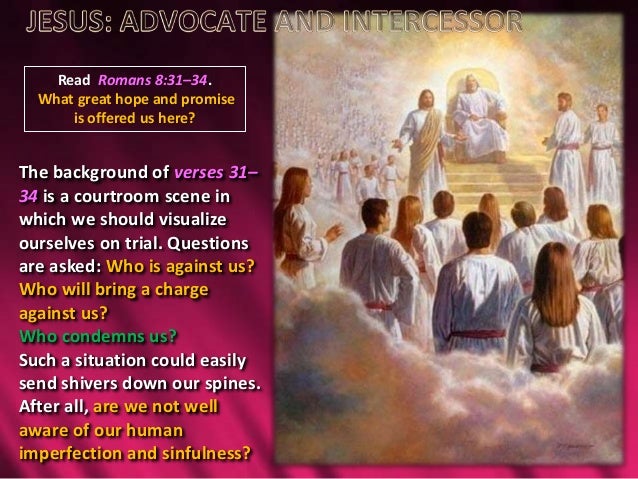


5 Comments

Posted by on December 21, 2023 in Uncommon Things