RSS

Category Archives: 1 Corinthians

The Radical Resurrection – Acts 4


Of Easter Sunday, it has been said that it is the only time of the year “when anyone can go to church without being accused of being religious!”

We turn to a section in the book of Acts, where we can trace the tremendous explosion of radical Christianity which burst out upon a decadent and weary world in the First Century.

We note the power and the excitement which prevailed because of this message, and discover that the same thing can occur today whenever authentic Christianity is proclaimed.

In Acts 3, Peter and John go up to the temple to pray. There they found a cripple, a man who had been lame from his birth, who asked them for some money. But Peter said, “Silver and gold have I none, but such as I have I give unto you: in the name of Jesus of Nazareth, rise and walk, {Acts 3:6}.

Immediately strength came to this man’s ankles, and he began to leap and to jump and to shout. All this drew a crowd, and Peter seized the occasion and began to preach to them in the name of Jesus, saying that it was by the power of Jesus Christ, risen from the dead, that this man was made whole.

He gave a great message, which had tremendous effect. But in the midst of it, an interruption occurred. We pick up that story now as it is given to us by Luke, the author of the book of Acts, in the 4th chapter:

Acts 4:1–4 (ESV) And as they were speaking to the people, the priests and the captain of the temple and the Sadducees came upon them, greatly annoyed because they were teaching the people and proclaiming in Jesus the resurrection from the dead. And they arrested them and put them in custody until the next day, for it was already evening. But many of those who had heard the word believed, and the number of the men came to about five thousand.

There is something strangely familiar to us about that, is there not? It sounds most contemporary. Here were the apostles, speaking to the people from the steps of the temple, and out in the crowd you can almost (using today’s vision) see banners and signs proclaiming: POWER TO THE PEOPLE! DOWN WITH THE ESTABLISHMENT!

Here also was the presence of the police, and the representatives of the establishment. The captain of the temple guard was there, and the Sadducees, who were the ruling class in Jerusalem. And there was a tremendous popular response to the message of Peter on that day.

We are told that five thousand men believed. In the midst of all this there was this sudden display of annoyed authority, of authoritative, iron-fisted power, when the temple guard suddenly elbowed their way through the crowd and, surrounding Peter and John, arrested them, dragged them off, and put them in jail until the morrow.

But the most remarkable thing about this occasion was the message. The message was the proclamation that Jesus had been raised from the dead.

They did not proclaim the overthrow of the Roman government. Such a reaction of authority might be expected if that were their message. But it was not. They were not advocating the violent overthrow of the establishment.

Nor were they protesting against some of the social evils of the day.

There is not a word of protest raised against the widespread practice of slavery throughout the empire. Half of the Roman empire at this time were slaves — every other person was a slave. But nothing is said about that.

There is nothing said about the burdens of excessive taxation which the Romans had placed upon this people. There is no such protest.

The message which was so threatening that the authorities regarded it as too radical to tolerate was nothing more than the proclamation of Jesus and the resurrection from the dead. For this, Peter and John were thrown into jail before they could even finish the message.

And yet, because of this message, five thousand men in that great crowd in Jerusalem became believers in Jesus Christ.

Now, let me ask you: Do you think this could happen today? Would the authorities oppose a message like this today? Well, the clear answer of current history is: Yes, they would, and they do.

Two-thirds of believers around the world live under governments more repressive than the Roman Empire of the first century.

Believers everywhere face misunderstanding, ridicule, and even harassment by unbelieving friends, employers, teachers, and family members.

In some countries, converting to Christianity is punishable by death. No one is exempt from catastrophe, pain, illness, and death—trials that, like persecution, make us lean heavily on God.

First, of course, they proclaimed the great and exciting fact that Jesus Christ had himself risen from the dead — only seven weeks before this event took place and that they were witnesses to this fact. And not only Peter and John, but a band of a 120 disciples and then more than 500 could bear sterling witness to the fact that they had seen the risen Lord — not once, but many times.

And so powerful was that testimony, so convicting was that witness, that not one voice in all this vast crowd is raised to protest or challenge it. Instead, 5,000 are convinced of the truth of it, as 3,000 had been just a few days before, on the day of Pentecost.

They understand that this is true, that this dramatic event had occurred, that Jesus Christ, the man of Galilee, the prophet from Nazareth, had solved man’s most difficult problem — the problem of death.

Once in all history it had taken place. It had never occurred before; it has never occurred since. Oh, it is true that some have been brought back from the dead before by the power of God — a handful or so in history. But they were only returned to the same life they had before, and we would believe that they died again.

But here is One who comes back to a different level of life, who is resurrected, not merely resuscitated. He never dies again, and never will. This is the meaning of the resurrection of Jesus.

Here is a whole new level of life, a whole new realm of possibility for humanity. This dramatic breakthrough, they declared, had occurred in their own city just a few weeks earlier.

Second, they also preached the fact that the promise of the resurrection had been extended by Jesus to others as well, that he himself had said, I am the resurrection and the life. He that believes in me, though he die, yet shall he live,” {John 11:25}.

He said, “Because I live, you shall live also,” {John 14:19}. And out of that open tomb has arisen a blazingly radiant, flaming hope which has gripped and held the hearts of thousands and millions since, through the centuries, who have had to face the fact and the experience of death.

Yet if that were all these apostles had to say, I do not think they would have created quite the stir they did. Because Judaism had a hope beyond death, as well.

This crowd was made up mostly of Jews, and they already knew from the Old Testament Scriptures that there was a hope beyond death. Pagan Romans and others were not aware of this, but the Jews knew.

But there was a third element that Peter and John proclaimed on this day which made all the difference in the world. It is the most dramatic element of all about the truth of the resurrection of Jesus.

They undoubtedly explained to these people that the death of the body, some day, is strangely linked, in a way that we do not fully comprehend, with the death which is at work in our inner lives, right now.

That is, death is all one thing, whether it takes place and affects the physical body some day, or whether it is taking place within the spirit of man today.

It is all of a piece. And that inner death is what we experience in a thousand ways — sometimes as loneliness, sometimes as bitterness, sometimes as emptiness and despair, as depression of spirit.

Sometimes it is a boredom, sometimes it is hate, sometimes it is malice and resentment and violence. Whatever it may be, it is not what God intended for man.

It is an enemy which has seized man and lives with him, sleeps with him, and eats with him, and haunts him in everything he does. The glorious proclamation of the truth as it is in Jesus we have peace instead of restlessness, acceptance rather than guilt, love in place of lust or hate, power to replace weakness, joy for mourning, beauty for ashes, hope for despair, courage in place of cowardice, and cleansing from all dirt and filth of spirit.

Now, would you not think that the authorities would be pleased with such a development? Would you not think that the rulers of the city would be happy that men and women were finding the answer to their life-long search? Why are they so irritated? Why are they annoyed and threatened by this event?

Well, it is clear that they sense something about it is a threat to them.

Acts 4:5–12 (ESV) On the next day their rulers and elders and scribes gathered together in Jerusalem, with Annas the high priest and Caiaphas and John and Alexander, and all who were of the high-priestly family. And when they had set them in the midst, they inquired, “By what power or by what name did you do this?”

Then Peter, filled with the Holy Spirit, said to them, “Rulers of the people and elders, if we are being examined today concerning a good deed done to a crippled man, by what means this man has been healed, 10 let it be known to all of you and to all the people of Israel that by the name of Jesus Christ of Nazareth, whom you crucified, whom God raised from the dead—by him this man is standing before you well.

11 This Jesus is the stone that was rejected by you, the builders, which has become the cornerstone. 12 And there is salvation in no one else, for there is no other name under heaven given among men by which we must be saved.”

A tremendous declaration! You can see how seriously the authorities took all this by Luke’s careful list of those who were present. There was Annas, who was the honorary high priest, the father of Caiaphas. Then there was Caiaphas, who was the official high priest. And with them were gathered two of his brothers, John and Alexander — all of one family.

This confirms what we know from secular history — that this family of the high priest intermarried with one another and constituted a ruling class in Jerusalem, controlling the vast wealth of the temple and certain profitable monopolies connected with the sacrifices.

So here was the class that sat in power and authority in the city, who had great vested interests politically and economically throughout this city. And they are disturbed. They sense a threat to their power.

They are so disturbed, in fact, that without realizing what they are doing, they give Peter an open door for testimony such as he never had before. They ask him, “Tell us, by what power or what name have you done this thing?

This is just what Peter is waiting for. He is delighted to tell them. And look how bold he is. What a contrast with that cringing disciple who was afraid of a little maid in the high priest’s courtyard a few weeks earlier!

Now there is a difference. He is filled with the Holy Spirit. The life of Jesus is being imparted to him by that Holy Spirit.

This is what the Holy Spirit does. When he comes into a human heart, his business is to take a risen Lord’s life and give it to you, to empower you, to encourage you, to strengthen you, to do whatever you need have done to make you adequate to cope with life. This is the work of the Holy Spirit.

So Peter, filled with the Spirit, is bold — bold as a lion. Evidently the formerly lame man was right there with them, as well. In fact, later on the account says so. He was “Exhibit A” of the power and authority of the name of Jesus Christ.

Then to drive the point home Peter quotes from Psalm 118: “This is the stone which was rejected by your builders, but which has become the head of the corner, {cf, Psa 118:22}. This is the prediction of the resurrection in that amazing Psalm. It is where we get the verse we often quote: This  is  the  day  which  the  Lord  has  made; let  us  rejoice  and  be  glad  in  it.  {Psa  118:24  RSV}

What day? Why, the day of Christ’s resurrection, when God took that Stone which had been rejected by the builders, and made him the Head of the corner.

God had designed that Jesus of Nazareth would be the cornerstone of his government on earth, the rock upon which all human government should rest, and from which it would take its authority.

But the builders of various nations have rejected the Cornerstone. This is why no government can stand very long, why God’s program through history has been one of overturning, overturning, overturning, as Ezekiel says, until he shall come whose right it is to reign.

And  there  is  salvation  in  no  one  else,  for  there  is  no  other  name  under  heaven  given among  men  by  which  we  must  be  saved.  {Acts  4:12  RSV}

This is a startling declaration! It says that there is no other who can fulfill the place of being the cornerstone of authority in the world. No other name! None of the religious leaders, none of the political leaders of all time could possibly do this work.

There is only One adequately equipped, qualified to be the foundation of human government, the basis of human authority. You take all the religious names of history — Buddha, Mohammed, Confucius, Mahatma Gandhi, Ramakrishna, Joseph Smith, Mary Baker Eddy — whoever and whatever.

The most that can be said of these men and women is that they are moral teachers. The best we can say of them is that they taught what is right. Many of them did. They could tell us what was right; but they could not enable us to do it.

That is the difference between Jesus of Nazareth and any other name that can be named in this world. That is why we can never consent to considering any other name to be equal with that of Jesus of Nazareth.

No other has solved the problem of death. No other has broken through this ghastly terror that hangs over the human race — only Jesus of Nazareth. God has made him the head of the corner, and there is no other name by which we can be saved.

You see, we do not need someone to tell us what to do; we know what to do. Most of us know better than we are doing!

Mark Twain said, “I don’t need anyone to tell me what to do. I’m not doing half of what I know to do, now.”

This is exactly the truth. What we need is One who will change us, give us a new motivation, make us want to do what we ought to do, and make us over, give us a new heart, a new outlook, a new ability, a new capacity, a new life. This is what Jesus of Nazareth does again and again.

And this, my friends, is political heresy. Whenever this takes place it threatens all oppression and tyranny and totalitarianism, wherever it may be established.

The life of Jesus Christ is never against government; but it is against oppressive government. It is the foundation of Christian liberties, everywhere. There has never been a force more powerful and more vital to assure the liberation of men and women from oppression than this dramatic power of the resurrection. This is why it is hated by the totalitarian forces of the day, wherever they may be.

But the glorious thing is: This is what God intends. This is what he is going to build his kingdom on. Christ is the head of the corner. God, through the course of history, behind the scenes, as it were, of all the tumultuous events of our own day, all the tyranny and heartbreak and tears and anguish and sorrow that is going on all around us in the world, behind that facade,

God is working out his purposes. He is building a new humanity. And everywhere he is inviting men and women to become a part of it, by sharing in the risen life of Jesus Christ, and experiencing now the glory of a life of peace and joy and rest and strength and adequacy and power and meaning and fullness — now. This is what the resurrection means.

Now, you will never know that kind of power, and that kind of joy and love and peace, until you come to grips with Jesus Christ personally, yourself, until there comes a time when you ask Jesus of Nazareth, risen from the dead, to be part of your faith response that leads to being immersed in water in order to have sins forgiven…and be Lord of your life.

When you do that, earnestly and sincerely, he comes in, and you begin a new life in Jesus Christ. There is no other name — there is no one else — no other name under heaven given among men whereby we must be saved.

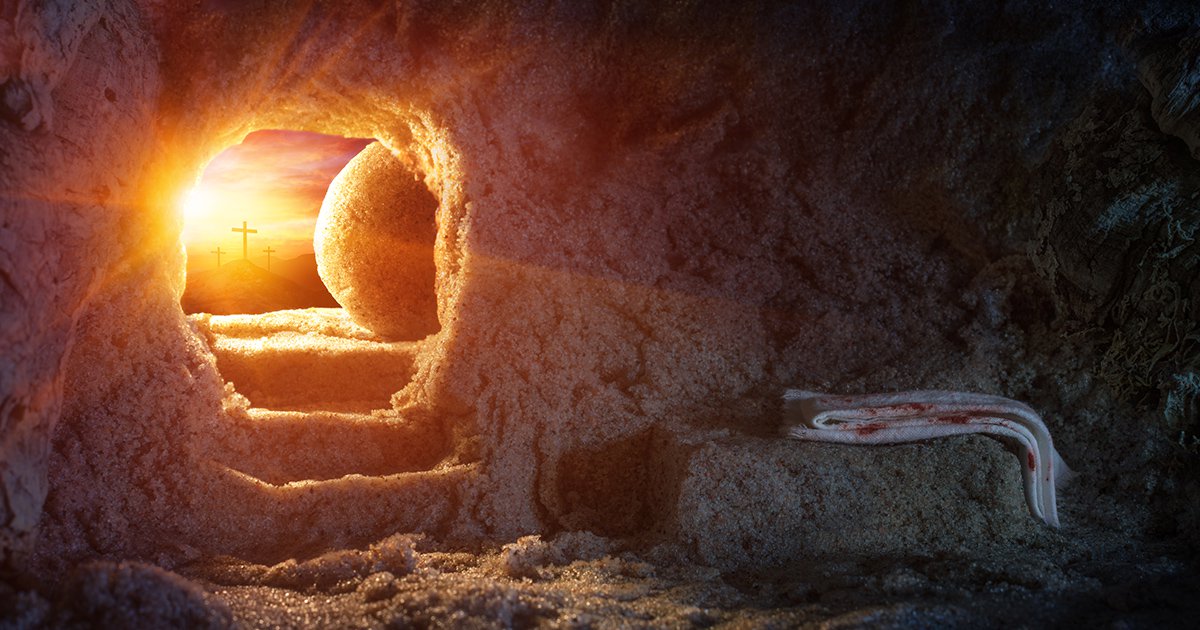
 
Leave a comment

Posted by on April 6, 2023 in Resurrection


Resurrection and Life – John 11


Charles Hodges made this statement when beginning a discussion of John 11: “Take off your shoes, for John 11 is holy ground.” This is a “Hall of Fame” chapter. It requires the heart as well as the head. John 11 reveals the heart of Jesus.

The raising of Lazarus from the dead was not our Lord’s last miracle before the Cross, but it was certainly His greatest and the one that aroused the most response both from His friends and His enemies.

John selected this miracle as the seventh in the series recorded in his book because it was really the climactic miracle of our Lord’s earthly ministry. He had raised others from the dead, but Lazarus had been in the grave four days. It was a miracle that could not be denied or avoided by the Jewish leaders.

If Jesus Christ can do nothing about death, then whatever else He can do amounts to nothing.

“If in this life only we have hope in Christ, we are of all men most miserable’ (1 Cor. 15:19). Death is man’s last enemy (1 Cor. 15:26), but Jesus Christ has defeated this horrible enemy totally and permanently.

1. THE FAMILY (read John 11:1-8)

Jesus had family and made disciples. John 11 reveals this “special family.” Bethany was a quiet suburb about two miles outside Jerusalem.

Jesus loved Martha, Mary, and Lazarus (11:3, 5, 36) So the Jews said, “See how he loved him!”

We usually think the reverse: “We love Jesus.” This is crucial. It is not our love for Christ; it is His love of us!

The sisters did not manipulate, obligate, or threaten Jesus with, “You know what he has done for You.” No! They knew Jesus loved him.

If only we could grasp this. The issue is not “self esteem.” The issue is “Jesus loves me.” This also touched John! Five times John entitled himself, “The disciple Jesus loved.

This does not suggest “a pet” or “special disciple.” This really grabbed John! Jesus loved him! This will change your life too. Do not brag only about how much you love Jesus; grasp how much He loves you!

Then Jesus stayed away! This is shocking! He healed strangers but not His best friend! No doubt the disciples were perplexed about several matters. First of all, if Jesus loved Lazarus so much, why did He permit him to get sick? Even more, why did He delay to go to the sisters?

For that matter, could He not have healed Lazarus at a distance, as He did the nobleman’s son? (John 4:43–54).

God’s love for His own is not a pampering love; it is a perfecting love. The fact that He loves us, and we love Him is no guarantee that we will be sheltered from the problems and pains of life.

After all, the Father loves His Son: and yet the Father permitted His beloved Son to drink the cup of sorrow and experience the shame and pain of the Cross. We must never think that love and suffering are incompatible. Certainly they unite in Jesus Christ.

He saw in this sickness an opportunity to glorify the Father. It is not important that we Christians are comfortable, but it is important that we glorify God in all that we do.

Then Jesus told His disciples, “Let’s go.” They thought it was too risky and too dangerous. Then they thought that if Lazarus had merely “fallen asleep” it meant that he would get well.

Jesus said, “Lazarus is dead! This totally shocked them! Jesus let His best friend die without any effort to aid! Read verse 37: 37 But some of them said, “Could not he who opened the eyes of the blind man also have kept this man from dying?”

Here is one insight: Martha had many friends. People like Jesus make friends. Many came to mourn.

2. MARTHA and MARY. (read John 11: 17-27).

Martha was quick to affirm her faith in Jesus Christ vs. 22), and Jesus responded to that faith by promising her that her brother would rise again. He was thinking of the immediate situation, but she interpreted His words to mean the future resurrection in the last day.

Our Lord’s reply is the fifth of John’s “I AM” statements. It is important to note that Jesus did not deny what Martha said about the future resurrection. The resurrection of the human body is a cardinal doctrine in the orthodox Jewish faith.

But in this I AM statement, our Lord completely transformed the doctrine of the resurrection and, in so doing, brought great comfort to Martha’s heart.

* To begin with, He brought the doctrine of the resurrection out of the shadows and into the light. The Old Testament revelation about death and resurrection is not clear or complete; it is, as it were, “in the shadows.” There are some passages in Psalms and Ecclesiastes that almost make one believe that death is the end and there is no hope beyond the grave.

* By His teaching, His miracles, and His own resurrection, Jesus clearly taught the resurrection of the human body. He has declared once for all that death is real, that there is life after death, and that the body will one day be raised by the power of God.

* He transformed this doctrine in a second way: He took it out of a book and put it into a person, Himself. “I am the resurrection and the life”! (John 11:25) We realize that we are saved by the Redeemer and not by a doctrine written in a book.

When we know Him by faith, we need not fear the shadow of death.

Jesus Weeps (John 11:28-35).

Martha cried over Lazarus; she also cried over Jesus. She rebuked Him; yet she still trusted Him. One must not determine the actions of Jesus. One must allow Him freedom to do His divine will. One cannot dictate to leaders. One must give leaders room to breathe.

It was not abstract theology; it was personal. Lazarus had to die for death to be grasped. A week prior to this, Jesus could have lectured to Martha about death. He could have diagrammed it on the blackboard. It would have meant little.

Our Lord’s message to the sisters did not say that their brother would not die. It promised only that death would not be the ultimate result, for the ultimate result would be the glory of God.

He wanted them to lay hold of this promise; in fact, He reminded Martha of this message when she balked at having the tomb opened (vs. 40).

When we find ourselves confronted by disease, disappointment, delay, and even death, our only encouragement is the Word of God. We must live by faith and not by sight.

Their situation seemed hopeless, yet the sisters knew that Jesus was the Master of every situation.

Conclusion.

John 11:25 (ESV) : Jesus said to her, “I am the resurrection and the life. Whoever believes in me, though he die, yet shall he live, 26 and everyone who lives and believes in me shall never die. Do you believe this?”

Jesus affirmed that believers would one day be raised from the dead. Then He immediately revealed the added truth that some believers would never die (and it is a double negative, “never never die!”) (vs. 26).

How is this possible? The answer is found in 1 Thessalonians 4:13, 18. When Jesus Christ returns in the air to take His people home, those who are alive at His coming shall never die. They shall be changed and caught up to meet Him in the air!

This is the greatest statement on immortality: Jesus is the resurrection and the life! Jesus is not saying, “I will be resurrected.” He said, “I am resurrection.”

Lazarus was resuscitated or reconstructed. Time came, and he aged and died.

Jesus is resurrection. Lazarus had to die before Martha could wrestle with resurrection.

Then comes that million-dollar verse: “Jesus wept.” Jesus cares! He saw the hurt in Martha and Mary that He could have prevented. His friend lay a corpse. Others mourned.

“Jesus wept” is the shortest and yet the deepest verse in Scripture. His was a silent weeping (the Greek word is used nowhere else in the New Testament) and not the loud lamentation of the mourners.

But why did He weep at all? After all, He knew that He would raise Lazarus from the dead (John 11:11).

Our Lord’s weeping reveals the humanity of the Savior. He has entered into all of our experiences and knows how we feel. In fact, being the perfect God-Man, Jesus experienced these things in a deeper way than we do.

His tears assure us of His sympathy; He is indeed “a Man of sorrows and acquainted with grief” (Isa. 53:3).

Today, He is our merciful and faithful High Priest, and we may come to the throne of grace and find all the gracious help that we need.

We see in His tears the tragedy of sin but also the glory of heaven.

Perhaps Jesus was weeping for Lazarus, as well as with the sisters, because He knew He was calling His friend from heaven and back into a wicked world where he would one day have to die again.

Jesus had come down from heaven; He knew what Lazarus was leaving behind.

Jesus sensed His mission—life in the presence of death.

Jesus could cry! We need shepherds who can cry! We need ministers who can cry! We need a church who can cry!

The church must not be suspicious of emotion. Look at the pathos, the profound humanity of Jesus! John 11 exposes the depth of Jesus!

3. Lazarus (Read John 11:38–44). Lazarus was dead! Since Palestine is hot without embalming procedures, the dead were buried quickly. To Jews the spirit also departed on the fourth day. Lazarus was dead! No question about it. This was the seventh miracle or sign of Jesus in John.

Jesus prayed. He preached in prayer. He gave thanks, and then He “hollered.”

Jesus “hollered” eight times in the New Testament (six times in John). From the depths of His soul, He cried with authority! Jesus is life! His best friend, Lazarus was held by death! You find, literally, life face to face with death.

Jesus saw the entire focus of His life and ministry. He called Lazarus back with profound fervor. The raising of Lazarus not only reveals how Jesus thinks but also how He feels.

A quaint Puritan writer said that if Jesus had not named Lazarus when He shouted, He would have emptied the whole cemetery!

Jesus called Lazarus and raised him from the dead. It was an unquestioned miracle that even the most hostile spectator could not deny.

Lazarus was raised from the dead by the power of God, and all who trust Christ have been given new life and lifted out of the graveyard of sin (see John 5:24).

Because of the great change in Lazarus, many people desired to see him; and his “living witness” was used by God to bring people to salvation (John 12:9–11).

There are no recorded words of Lazarus in the Gospels, but his daily walk is enough to convince people that Jesus is the Son of God. Because of his effective witness, Lazarus was persecuted by the religious leaders who wanted to kill him and get rid of the evidence.

The “trigger” to the cross was the resurrection of Lazarus, the seventh sign! The life of Lazarus is the death of Christ!

CONCLUSION. There are so many lessons in John 11:

When delays occur, God has a better time and a better way.

When death occurs, God has a better plan and better place.

A man is not ready to live until he is ready to die.


Leave a comment

Posted by on April 3, 2023 in Resurrection


Resurrection Seen in the New Testament


There is a beautiful moment in John 11:25-26 when Jesus decides to raise Lazarus from the dead. He looks at Martha and says, “I am the resurrection and the life. Whoever believes in Me will live, even though he dies. And everyone who lives and believes in Me will never die. Do you believe this?” This is the gospel message – Jesus is the resurrection, He is the life. Even though believers in Him will die, they will live eternally in Heaven because of Him.

Jesus resurrected three people during his ministry on earth. He raised the widow of Nain’s son (Luke 7:11-17), the daughter of Jairus (Matthew 9:18-26Mark 5:21-43Luke 8:40-56), and Lazarus (John 11:1-44). Although these individuals were given an extended life on earth, they would each still face death again. What Jesus offered through His death and resurrection was eternal relationship and security through Him.

If you have ever participated in an Easter church service, then you might be familiar with the call and response, “He has risen” “He has risen indeed.” This comes from the message of the angel at Jesus’ tomb. In multiple places we read “He is not here; he has risen” (Matthew 28:5-6Mark 16:6Luke 24:7). Jesus was on a mission, we see His death, resurrection, and ascension in Scripture. Jesus raised Himself back to life and then ascended to Heaven and sits at the right hand of God the Father.

Because of Jesus’ resurrection, we too will be resurrected one day. The Gospel Project says, “Our resurrection will take place at the future return of Christ. When we die, we immediately enter the presence of the Lord, but the final resurrection has not yet happened. When it does, we will know it because Christ’s return will be known by all.”

New Testament Verse about Resurrection

1 Peter 1:3-5 – “Praise be to the God and Father of our Lord Jesus Christ! In his great mercy he has given us new birth into a living hope through the resurrection of Jesus Christ from the dead, and into an inheritance that can never perish, spoil or fade. This inheritance is kept in heaven for you, who through faith are shielded by God’s power until the coming of the salvation that is ready to be revealed in the last time.”

2 Corinthians 5:15 – “And he died for all, that those who live should no longer live for themselves but for him who died for them and was raised again.”

Romans 6:4 – “We were therefore buried with him through baptism into death in order that, just as Christ was raised from the dead through the glory of the Father, we too may live a new life.”

Although resurrection literally means to rise up or stand up, to a believer, resurrection means that their eternity is sealed in Jesus. Resurrection is one of the foundational beliefs of the Christian faith. It is by the grace of God that we have been saved though faith in Jesus and we are sealed by the Holy Spirit. This means that we can live in victory – today, right now, in this moment – because of the finished work of Christ. Romans 8:11 says, “The Spirit of God, who raised Jesus from the dead, lives in you. And just as God raised Christ Jesus from the dead, he will give life to your mortal bodies by this same Spirit living within you.”

Just as Jesus resurrected Lazarus from his dead state, maybe there is an area that is dead in your faith right now? Ask the Holy Spirit for help, for anything idle in your faith to be renewed and that your life can be one of victory in Jesus. It is by His resurrection that we can live life in victory each day.

Jesus’ Resurrection as Evidence of His Divinity

What are other proofs that Jesus is God? One of the greatest proofs is the historical evidence for Jesus’ resurrection. In 1 Corinthians 15:14, Paul said, “And if Christ has not been raised, then our preaching is futile and your faith is empty.” Without the resurrection, there is no Christian faith. It is the crux of Christianity.

What are evidences for Christ’s resurrection? Specifically, there are documented eye-witness testimonies. It has often been said that there is more historical evidence for Christ’s resurrection than that Julius Caesar lived.[1]  In fact, Brooke Foss Westcott, a British scholar who lived from 1825-1901, said this: “Indeed taking all the evidence together, it is not too much to say that there is no historic incident better or more variously supported than the resurrection of Christ.”[2] If we reject the evidence of Christ’s resurrection, then we will have to reject much of what we know about ancient history. We’ll consider evidences for the resurrection below.

The Case of the Empty Tomb

It is well attested historically that Christ died on the cross. Not only do we have the testimony of New Testament authors, but also ancient, secular historians like Josephus and Tacitus who recorded the event in their writings.[3] In addition, medical experts, using scientific research, have examined the circumstances of Christ’s crucifixion, including the fact that he was beaten to disfigurement before his crucifixion (Is 52:14, John 19:1-3), that people crucified typically died by asphyxiation (not being able to breath), and that he was pierced by a professional executioner to confirm his death (John 19:34), and concluded that Christ couldn’t have survived.[4]

After Christ’s crucifixion, he was buried in a rich man’s tomb. The tomb was sealed and guarded by soldiers. When Christ resurrected, there was a great earthquake, an angel appeared and rolled away the stone, and the guards ran away. Christ was no longer present in the grave, but his clothes laid on the ground (Matt 28:1-10, Mk 16:1-8, Lk 24:1-8, John 20:1-18). The empty grave was first found by some women followers, and then, they told Christ’s disciples. To account for the missing body, the Pharisees accused the disciples of stealing it and paid the guards a large sum to remain quiet (Matt 28:11-15).

Since Christ, without a doubt, died and was buried, we must ask the question, “Was there really an empty tomb?” This is a fundamental question that must be answered affirmatively to prove that Christ did in fact rise from the dead. We’ll consider a few evidences below:

  1. Proof of an empty tomb is the fact that Christ’s body was never produced as evidence against the resurrection. Paul taught that the resurrection is the crux of the Christian faith. If Christ has not been raised from the dead, our faith is in vain (1 Cor 15:14, 17). Therefore, in order to stop Christianity from growing, all the authorities had to do was prosecute the disciples (including having the soldiers testify) and produce the body. However, there is no historical record of the disciples ever being charged for stealing Christ’s body.[5] Instead, the disciples were threatened to stop preaching the resurrection, flogged, jailed, exiled, and most were ultimately martyred. If the Jews had produced the body or even given an adequate explanation for the fact that it was missing, it would have ended Christianity before it began. However, they didn’t. The tomb was empty, and the body was never found.
  2. Proof of an empty tomb is the fact that women were the first and primary witnesses of Christ’s resurrection (Matt 28:1-10, John 20:1, 14-18). Since women had such a low standing in ancient Jewish and Roman societies, it wouldn’t make sense for the disciples to fabricate a resurrection story with women witnesses. In fact, in a Jewish court of law, a woman’s testimony was not even admissible.[6] If the disciples were going to fabricate a resurrection story, they would have surely chosen the initial witnesses to be male. This shows that the Gospel writers faithfully recorded what happened even if it would have been embarrassing or unconvincing in their culture.[7] When women went to see Christ’s body at the tomb, it was empty. Christ had resurrected.
  3. Proof of an empty tomb is the historical lack of tomb veneration. During the period Jesus lived, there were at least fifty tombs of prophets or holy persons which served as sites of religious worship and veneration.[8] With Jesus being the founder of Christianity, certainly early followers would have regularly visited his grave if his body was still there. However, there is no record of that.[9] This is further proof that the body was never found and that the tomb was empty.

The empty tomb is a necessary evidence of Christ’s resurrection. What are other evidences?

The Case of the Original Apostles

A strong evidence is that of the original apostles. Who were the apostles? They were twelve devoted followers of Christ who lived and served with him during his three years of ministry. However, when Christ was betrayed by Judas (one of the twelve) and taken by the Jewish and Roman authorities to be put to death for claiming to be the messiah, they all ran away, and some denied him overtly. Though they believed in him, they were not willing to die with him.

While the disciples served Christ, he spent a considerable part of his ministry preparing them for his death. He told them that he was going to die and be raised from the dead three days later (John 2:19). He told them that the Jewish authorities were going to put him to death (Matt 16:21) and warned that they would be persecuted for following him (Matt 24:9). He even taught them that to be his disciples, they had to be willing to take up their crosses—being willing to die for their faith (Lk 14:27). However, when everything Christ taught them happened, they fled. None were willing to die with him.

With that said, this leads to one of the strongest evidences for the resurrection. After Christ rose from the dead and appeared to his apostles, each of the remaining eleven were willing to be hated, beaten, jailed, exiled, and even die for their belief. Each of the remaining eleven died for Christ—declaring that he had been resurrected—with the exception of John, who spent the last part of his life exiled on an island for prisoners because of his faith (Rev 1).

If the resurrection were not true and was simply made up, one must ask, “Why would they die for something they knew was a lie?” If the resurrection was false, surely somebody would have broken and said, “OK, OK! We lied! We stole the body and hid him!” But none did. Not only Peter, the head apostle, but also his wife died for Christ. When his wife was being taken to be crucified, he encouraged her with, “Remember the Lord!” And when it was his time to die, he requested to be crucified upside down because he didn’t deserve to die like Christ. From a historical perspective, the apostle’s willingness to die for their belief in the resurrection means that they truly believed it. The apostles suffering for their belief in the resurrection is a strong proof that it really happened, especially when considering that each of them fled or denied him while he was still alive.

Michael Green, Principal of St. John College, Nottingham, said this:

[The resurrection] was the belief that turned heart broken followers of a crucified rabbi into the courageous witnesses and martyrs of the early church.  This was the one belief that separated the followers of Jesus from the Jews and turned them into the community of the resurrection.  You could imprison them, flog them, kill them, but you could not make them deny their conviction that on the third day he rose again.[10]

The Case of James, Jesus’ Brother

Further support for the resurrection is the conversion and martyrdom of James, the brother of Jesus. During Christ’s ministry, James did not believe in him, even though he witnessed the miracles. In fact, John 7:3-5 shares this about James’ and Christ’s other brother, Jude:

 So Jesus’ brothers advised him, “Leave here and go to Judea so your disciples may see your miracles that you are performing. For no one who seeks to make a reputation for himself does anything in secret. If you are doing these things, show yourself to the world.” (For not even his own brothers believed in him.)

However, after Christ’s resurrection, he appeared to James. First Corinthians 15:3-7 says:

For I passed on to you as of first importance what I also received—that Christ died for our sins according to the scriptures, and that he was buried, and that he was raised on the third day according to the scriptures, and that he appeared to Cephas, then to the twelve. Then he appeared to more than five hundred of the brothers and sisters at one time, most of whom are still alive, though some have fallen asleep. Then he appeared to James, then to all the apostles.

After seeing the resurrected Christ, James converted. He not only became a follower of Christ but also an apostle—an official witness of the resurrection. He became the leader of the Jerusalem church (Acts 15:13-21) and was known as “James the Just” because of his righteous character. Tradition says his knees were hard like a camel’s knees because of the callouses developed from long periods in prayer.

James even wrote his own epistle which begins with “From James, a slave of God and the Lord Jesus Christ, to the twelve tribes dispersed abroad…” (Jam 1:1). James considered himself a slave of Christ. His belief in Christ not only attests to the resurrection but also to many other doctrines about Christ. It provides evidence for Christ’s sinless life and the virgin birth. James would have known more about these things than anybody else, and yet, he still believed in Christ. He not only believed in Christ, but tradition says he died a martyr, stoned by the Jews around AD 62.[11]

The Case of the Apostle Paul

Another evidence that must be considered is that of the apostle Paul. Paul was a Pharisee and the son of a Pharisee (Acts 23:6). He was raised knowing Jewish law and the Greek and Hebrew languages. He studied under a renowned rabbi named Gamaliel (Acts 22:3 cf. Acts 5:34). As Christianity grew in popularity among the Jews, Paul zealously persecuted all who believed and taught it. He believed Christians were perverting the true way to salvation which came through the law, and not through faith in Jesus Christ. When Stephen attempted to preach the gospel to the Jews and was stoned for it, the Jews threw his clothes at Paul’s feet (Acts 7:58, 8:1)—demonstrating his consent of their actions. Later, Paul received permission from the Jewish authorities to imprison anybody who professed Christ. However, while on his way to Damascus, Paul had a vision of the resurrected Christ which blinded him. Acts 9:3-5 describes this experience:

As he was going along, approaching Damascus, suddenly a light from heaven flashed around him. He fell to the ground and heard a voice saying to him, “Saul, Saul, why are you persecuting me?” So he said, “Who are you, Lord?” He replied, “I am Jesus whom you are persecuting!

In addition, in 1 Corinthians 15:7-8, Paul shared this about seeing the resurrected Christ and his call to apostleship: “Then he appeared to James, then to all the apostles. Last of all, as though to one born at the wrong time, he appeared to me also.” Paul considered himself “born at the wrong time” or “abnormally born” (NIV) because his call to apostleship happened after the resurrection, not before, like the original apostles.

Historians throughout the ages have been baffled at the historic figure of Paul—a Pharisee persecuting Christians, who professed to have seen the resurrected Christ, consequently converting, then becoming an apostle who preached to the Gentiles. He wrote almost half of the New Testament, was constantly persecuted for his faith, and died a martyr. It’s like the historical figure of Hitler, who persecuted Jews, becoming a Jew and the greatest proponent of Judaism because he claimed to have seen a resurrected Moses. It sounds ridiculous! Yet, that is what Paul claimed about Christ, which has always baffled historians.

Consider how drastic Paul’s change was: Not only did he profess Christ who he previously hated, but he also began to love Gentiles. Faithful Jews despised Gentiles. Jewish men commonly prayed a morning blessing thanking God they were Jews and not Gentile dogs, men and not women. But, after Paul’s conversion, he was now the apostle to the Gentiles, spending his life on missionary journeys throughout Asia and Europe, seeking to reach them. In addition, Paul was considered the liberator of women. Most Jewish teachers would not teach women, and some wouldn’t even look at them, to prevent lust; however, Paul championed the teaching of women and their dignity. In 1 Timothy 2:11, he says, “A woman must learn quietly with all submissiveness.” This was radical during those days. Paul the persecutor of Christians, the racist, and misogynist now loved Jesus, Christians, Gentiles, and women!

Elias Andrews, a noted historian, said this:

Many have found the radical transformation of this Pharisee of the Pharisees the most convincing evidence of the truth and power of religion to which he was converted, as well as the ultimate worth and place of the Person of Christ.[12]

In Paul’s writings, he constantly spoke of his conversion and commitment to the resurrected Christ:

I have been crucified with Christ, and it is no longer I who live, but Christ lives in me. So the life I now live in the body, I live because of the faithfulness of the Son of God, who loved me and gave himself for me.

Galatians 2:20

But these assets I have come to regard as liabilities because of Christ. More than that, I now regard all things as liabilities compared to the far greater value of knowing Christ Jesus my Lord, for whom I have suffered the loss of all things—indeed, I regard them as dung!—that I may gain Christ

Philippians 3:7-8

But not only did Paul preach the resurrection, he also died for it. Tradition says he was decapitated in his second Roman imprisonment, around the mid-60s AD. His life is a tremendous evidence for the resurrection.

In fact, a story about two professors at Oxford who were initially antagonistic to Christianity shows the importance of Paul’s conversion. As stated by Josh McDowell in his book, More than a Carpenter:

Two professors at Oxford, Gilbert West and Lord Lyttleton, were determined to destroy the basis of the Christian faith. West was going to demonstrate the fallacy of the resurrection and Lyttleton was going to prove that Saul of Tarsus had never converted to Christianity. Both men came to the opposite conclusion and became ardent followers of Jesus. Lord Lyttleton writes:

The conversion and apostleship of Saint Paul alone, duly considered, was of itself a demonstration sufficient to prove Christianity to be a Divine Revelation.

He concludes that if Paul’s twenty-five years of suffering and service for Christ were a reality, then his conversion was true, for everything he did began with that sudden change. And if his conversion was true, Jesus Christ rose from the dead, for everything Paul was and did he attributed to the sight of the risen Christ.[13]

The Case of the Jews in Acts

Possibly, the strongest evidence for the resurrection is the conversion of many of the Jews who convinced Pilate to murder Christ. How is it possible that only weeks after Christ died, these Jews became followers of Christ? In Acts 2, Peter proclaimed the resurrection of the one they killed and called for their repentance and 3,000 of them were converted. Consider the following verses:

Men of Israel, listen to these words: Jesus the Nazarene, a man clearly attested to you by God with powerful deeds, wonders, and miraculous signs that God performed among you through him, just as you yourselves know—this man, who was handed over by the predetermined plan and foreknowledge of God, you executed by nailing him to a cross at the hands of Gentiles. But God raised him up, having released him from the pains of death, because it was not possible for him to be held in its power. Acts 2:22-24

Therefore let all the house of Israel know beyond a doubt that God has made this Jesus whom you crucified both Lord and Christ.” Now when they heard this, they were acutely distressed and said to Peter and the rest of the apostles, “What should we do, brothers?” Peter said to them, “Repent, and each one of you be baptized in the name of Jesus Christ for the forgiveness of your sins, and you will receive the gift of the Holy Spirit. Acts 2:36-38

So those who accepted his message were baptized, and that day about three thousand people were added. They  ere devoting themselves to the apostles’ teaching and to fellowship, to the breaking of bread and to prayer. Acts 2:41-42

Why were they converted? They had to be convinced that the resurrection was true. Not only did 3,000 convert, but in Acts 4:4, the number grew to 5,000. Historically, the early church boomed in Jerusalem, and then because of persecution, it spread throughout the ancient world and exists today as the biggest religion in the world.

How is this possible? It’s baffling. (1) Some have tried to explain it away as a mass hallucination or dream. However, that makes no sense. How can thousands of people have the same hallucination? (2) Some have tried to explain it away as the development of a myth or legend. But again, that is illogical. Myths and legends can take generations to develop. They don’t develop while the original audience is still alive and, certainly, not a few weeks after the event. Conclusions that deny a literal resurrection just don’t make sense.

Again, the New Testament declares that after the resurrection, Christ appeared to the apostles and then 500 people over a period of forty days (1 Cor 15:6, Acts 1:3). These witnesses were throughout Jerusalem. The tomb was empty. The Roman soldiers, who typically would have been executed for failing to protect the tomb apparently were still alive (Matt 28:11-15), and the body of Christ was never found. The Jews who consented to Christ’s death had to be totally convinced of his resurrection, because after publicly committing to Christ, they would have been persecuted for their newfound faith. Probably, contributing to their quick conversion was the fact that right after Christ’s death, there was a major earthquake in Jerusalem and the bodies of other believers were resurrected (Matt 27:50-54). These Jews were convinced that Jesus was the Son of God and that he had resurrected.

Now it must be remembered, this isn’t just something the Bible teaches. These are historical facts about the birth of the early church, well-attested by ancient Jewish and Roman historians. Jesus resurrected from the grave! No other conclusion makes sense.

Conclusion

How do we know Jesus is God? What are some evidences?

Evidence for Jesus’ deity is his teachings. It is impossible to accept him as a good man, moral teacher, or prophet, which are the most common views of Jesus, while knowing the things he claimed, including being the Son of God. With the things he said and taught, he would either be a liar, lunatic, or demon.

Evidence for Jesus’ deity is the resurrection. As mentioned, there is no ancient historical event more variously supported than the resurrection. If we reject the historical evidence for the resurrection, we must reject much of what we know about ancient history, including the fact that Julius Caesar lived.

[1] Accessed 7/22/20 from https://billygraham.org/devotion/evidence-of-jesus/

[2] Bright, Bill. A Journey Home. Thomas Nelson Publishers. 2003.

[3] McDowell, Josh. Evidence That Demands a Verdict (p. 276). Thomas Nelson. Kindle Edition.

[4] McDowell, Josh. Evidence That Demands a Verdict (p. 276-277). Thomas Nelson. Kindle Edition.

[5] McDowell, Josh. Evidence That Demands a Verdict (p. 268). Thomas Nelson. Kindle Edition.

[6] Accessed 7/24/2020 from https://www.gotquestions.org/why-believe-resurrection.html

[7] Accessed 7/24/2020 from https://www.gotquestions.org/why-believe-resurrection.html

[8] McDowell, Josh. Evidence That Demands a Verdict (p. 262). Thomas Nelson. Kindle Edition.

[9] McDowell, Josh. Evidence That Demands a Verdict (p. 262). Thomas Nelson. Kindle Edition.

[10] Accessed 1/13/2020 from https://www.josh.org/wp-content/uploads/Easter-Articles-Who-Would-die-for-a-lie.pdf

[11] Accessed 1/13/2019 from https://seanmcdowell.org/blog/did-james-the-brother-of-jesus-die-as-a-martyr

[12] McDowell, Joshua. More Than a Carpenter. Chapter “Did You Hear What Happened to Saul?”

[13] McDowell, Joshua. More Than a Carpenter. Chapter “Did You Hear What Happened to Saul?”

 
Leave a comment

Posted by on March 30, 2023 in Resurrection


Evidence for Christ’s Deity: His Teaching and the Resurrection


When Jesus came to the area of Caesarea Philippi, he asked his disciples, “Who do people say that the Son of Man is?” They answered, “Some say John the Baptist, others Elijah, and others Jeremiah or one of the prophets.” He said to them, “But who do you say that I am?” Simon Peter answered, “You are the Christ, the Son of the living God.” And Jesus answered him, “You are blessed, Simon son of Jonah, because flesh and blood did not reveal this to you, but my Father in heaven! And I tell you that you are Peter, and on this rock I will build my church, and the gates of Hades will not overpower it. Matthew 16:13-18

Who was Jesus? In Matthew 16:13-18, when Jesus asked the disciples who people said he was, they gave various answers: He was a prophet, John the Baptist, the second coming of Elijah. Essentially, the answer people came up with was that Jesus was a righteous man or a good prophet.

But, when Peter was asked about Jesus’ identity, he replied, “You are the Christ, the Son of the living God.” Now we should understand that this was a very controversial claim, one which ultimately led to Christ’s execution. Consider how the Jews responded to Christ’s claim of God being his Father in John 5:17-18:

So he told them, “My Father is working until now, and I too am working.” For this reason the Jewish leaders were trying even harder to kill him, because not only was he breaking the Sabbath, but he was also calling God his own Father, thus making himself equal with God.

Jesus claimed to be equal with God, which was blasphemous to Jews. Likewise, in John 10:30, he claimed that he and the Father were one. His followers taught this also. In John 1:1-3, John said: In the beginning was the Word, and the Word was with God, and the Word was fully God. The Word was with God in the beginning. All things were created by him, and apart from him not one thing was created that has been created.

The “Word” was John’s favorite name for Jesus. Jesus was the very communication of God. He was with God in the beginning and was God. He created the earth. Likewise, in 2 Peter 1:1, Peter called Jesus “our God and Savior.” This is what separates Christ from many other founders of religions such as Buddha and Muhammad; he claimed to be God and his followers taught the same.

Who was Jesus? Though Jesus taught that he was the Son of God and died because of it and his disciples taught the same and were persecuted for it, most today would not answer the question the way they did. Like the early Jews, they would say Jesus was a good man, a wise teacher, or a prophet but not God. For example, a secular book published by Cambridge Press in 2013 called Who’s Bigger? ranked Jesus as the most significant figure in all of human history by using quantitative analysis.[1]

Likewise, the Koran calls Jesus “the greatest above all in this world and in the world to come” (Imran v. 45) and describes him as “holy”—meaning without sin (Sura 19:19). However, when considering these high praises written about Jesus, both fall short of saying what Jesus and his followers said—that Jesus was God.

In this study, we will answer the question, “Was Jesus God?” We will do this by considering several evidences that point to his deity.

Jesus’ Teachings as Evidence of His Deity

As mentioned, the most commonly accepted view of Jesus is that he was simply a good man, moral teacher, or prophet from God. Something we must then ask: “Are these common conclusions about who Jesus was really feasible, considering all that Jesus said and taught?” Let’s reflect on a few controversial statements Jesus said:

1. Jesus’ Claim of Resurrecting Himself

Hypothetically, let’s say that during dinner time at a restaurant, a person stood on a table and started publicly declaring, “Shoot me! Shoot me! And, in three days I will raise myself from the dead!”  What would everybody think? They would probably question, “Is this guy OK? Did he forget his medications?” People would think the man was crazy, immediately call 911, and try to get him help.

However, that scenario is very similar to something Christ did while alive. In John 2:19, he said to a crowd, “Destroy this temple [referring to his body] and in three days I will raise it up again.” When considering Christ’s words, it would be illogical to call Jesus a good man, or wise, moral teacher. Good, moral people don’t go around encouraging people to kill them and declaring they will resurrect themselves.

2. Jesus’ Claim of Forgiving Sins

In addition, consider another illustration about the same hypothetical man. Outside of the downtown courtroom, this man is now claiming to forgive people who have been charged with crimes. As robbers, prostitutes, and murderers are escorted to jail, the man continually says to them, “I forgive you.” This would be fine if he had a personal relationship with these criminals and they had harmed him in some way, but the man doesn’t know these people and hasn’t been harmed by them. Only a person hurt by another can forgive his or her sins. Again, this would be strange.

However, this again mirrors something that Christ did. In the Gospel of Mark, Jesus forgave the sins of a paralytic, which angered the religious leaders who were watching. Mark 2:5-7 details this:

When Jesus saw their faith, he said to the paralytic, “Son, your sins are forgiven.” Now some of the experts in the law were sitting there, turning these things over in their minds: “Why does this man speak this way? He is blaspheming! Who can forgive sins but God alone?”

As mentioned, the religious leaders were baffled by Christ’s words and considered it blasphemy. Who can forgive sins but God?

Most of us would find a person professing to forgive our sins whom we have not harmed very strange. Again, this is exactly what Christ did. Is it really possible that Christ could be a great moral teacher and say ridiculous things like this?

3. Jesus’ Claim of Judging the World

In addition to the previous scenarios, this hypothetical man is now standing at a major intersection and declaring to all who pass by that he is going to judge the world—separating people like a shepherd separates sheep and goats. The sheep will go to heaven and the goats to hell. Again, wouldn’t this seem strange and possibly scary? To make this even worse, this man claimed to be the Son of God and that only those who follow him are sheep who will go to heaven. Because of his teaching, many left their friends, families, and careers to follow this man.

These are all things that Christ taught and did (Matt 25:31-46, John 14:6). Is it really reasonable to accept Christ as a good man, moral teacher, or prophet from God considering his teachings? This is what C.S Lewis, a former professor at Cambridge University, said in his book Mere Christianity:

I am trying here to prevent anyone from saying the really foolish thing that people often say about Him: I’m ready to accept Jesus as a great moral teacher, but I don’t accept His claim to be God.  That is one thing we must not say.  A man who was merely a man and said the sort of thing Jesus said would not be a great moral teacher.  He would either be a lunatic… or else he would be the Devil of Hell.  You must make your choice.  Either this man was and is the Son of God: or else a madman or something worse. … You can shut Him up for a fool, you can spit at Him and kill Him as a demon; or you can fall at His feet and call Him Lord and God.

It is impossible to consider what Christ said and did and yet take the common view that he was a good man, moral teacher, or prophet from God. He is either God, like he said, or he was a liar, lunatic, or demon. There is no middle ground.

What Jesus claimed and taught is an evidence for his deity. By itself, it is not very convincing, but it is an important evidence, especially for those who reject Christ’s claim of deity and yet accept him as either a good man, moral teacher, or prophet from God. What Christ taught and did doesn’t leave those as reasonable options.

What does the Bible say about resurrection?

What we know for certain is that the Bible says everyone who has lived will live again, and there are only two types of resurrection, one for believers and one for unbelievers. The only variable in all this is the type of resurrection we will participate in. Jesus said we will either rise to live, or rise to be condemned, and it will all come down to what we believe about Him.

What Does Resurrection Mean?

Growing up in church, we hear about the death and resurrection of Jesus. Do we ever think about how if Jesus simply died, we would not have Christianity today? The resurrection is everything to our faith. The death of Jesus was the necessary sacrifice for our sins, but the resurrection was the victory. Today we are going to study what this key word, resurrection, means.

When we think about resurrecting something, we are bringing back to life. Ephesians 2:1 tells us that we were once dead in our sins, but then Ephesians 2:4-5 goes on to say, “But because of His great love for us, God, who is rich in mercy, made us alive with Christ even when we were dead in our trespasses. It is by grace you have been saved!”

Adam and Eve lived in a perfect world, with perfect bodies, and there was no sin. When they ate from the tree of the knowledge of good and evil, they sinned and death was the consequence. Our sins lead to death, but the gift of God is eternal life through Christ. Jesus had to resurrect Himself; He needed to defeat death for us so we could be brought back and restored to the life God intended for us. Sin separates, but Jesus resurrects.

Anastasis is the word for resurrection in the Greek. Strong’s Concordance says that Anastasia is “a standing up, i.e., a resurrection, a raising up, rising.” Helps Word Study shares, “Christ’s physical resurrection is the foundation of Christianity, which also guarantees the future resurrection of all believers (see Jn 6:39,40,44).”

Resurrection Seen in the Old Testament

Although resurrection is mostly thought to be in the New Testament, the concept is intertwined throughout the entire Bible.

James Street from Masters Seminary shares “Job himself in Job 14:14 says, ‘If a man dies, will he live again?’” He shares Job 19:26, which says, “Even after my skin is destroyed, Yet from my flesh I shall see God.” Street explains, “Job does not know how God is going to do it, but he believes in his heart that somehow God will raise him from the dead.” Street brings up the point that Psalm 91:16 references David’s belief in salvation and that in Psalms 49:15 and 103:4 he believers resurrection would come through the Redeemer.

Of all people, Hosea knew what it was like to show forgiveness and reconciliation. He was called by God to marry a prostitute named Gomer who was continuously unfaithful to him, however he remained faithful and pursued her. This was God’s way of showing His relationship and loyalty to us as humanity. Hosea 6:2 says, “He will revive us after two days; He will raise us up on the third day, that we may live before Him.”

One of the most popular instances of Jesus’ foreshadowing is seen in the life of Abraham and Isaac. In Genesis 22, God tests Abraham’s faith by asking him to sacrifice his one and only son of the covenant. Abraham believed that God would make a way, but was obedient to the point right before he struck his son dead on the altar. Jewish tradition holds that Isaac about around 25 years old. This meant that he was willing to allow His older father to slay him as a sacrifice for the Lord.

I cannot even imagine the pain and sorrow both father and son were going through. Thankfully, God stopped Abraham and provided a ram caught by the horns to be the sacrifice instead of Isaac. This moment of rescue represents the rescue that we have because of Jesus. This scenario did not play out the same way when God the Father sacrificed Jesus the Son on behalf of our sins. God gives us a glimpse into the pain and difficulty to send His one and only Son to the cross at Calvary to slay Him on our behalf.

Old Testament Verse about Resurrection

Isaiah 26:19 – “Your dead will live; Their corpses will rise. You who lie in the dust, awake and shout for joy, For your dew is as the dew of the dawn, And the earth will give birth to the departed spirits.”

Ezekiel 36:26 – “Moreover, I will give you a new heart and put a new spirit within you; and I will remove the heart of stone from your flesh and give you a heart of flesh.”

Daniel 12:2 – “Many of those who sleep in the dust of the ground will awake, these to everlasting life, but the others to disgrace and everlasting contempt.”

[1] Accessed 1/13/2020 http://content.time.com/time/specials/packages/article/0,28804,2111975_2112269_2112278,00.html

 
Leave a comment

Posted by on March 27, 2023 in Resurrection


The Evidence for Jesus’ Resurrection – John 20:1-10


I always am fascinated to watch footage of engineers taking down an old building by placing dynamite charges at strategic points so that the building implodes. By finding just those few load-bearing points in the foundation, the entire building collapses into a heap of rubble.

The entire Christian faith rests on one historically verifiable point: the bodily resurrection of Jesus Christ from the dead. The apostle Paul says (1 Cor. 15:17), “If Christ has not been raised, your faith is worthless; you are still in your sins.” Everything in the Christian faith rests on the historical truth that Jesus was raised from the dead. If you can explode that one truth, the Christian faith collapses.

But I need to clarify that we’re talking about objective truth. We live in an age that holds to a subjective, experience-oriented view of truth. But if Jesus was raised bodily from the dead, then He is the only truth and the only way to the Father (John 14:6). And this truth applies to every person. As Paul proclaimed to the Athenian philosophers, they should repent because (Acts 17:31), God “has fixed a day in which He will judge the world in righteousness through a Man whom He has appointed, having furnished proof to all men by raising Him from the dead.”

Jesus’ resurrection was at the center of the apostles’ witness. On the Day of Pentecost, Peter preached (Acts 2:32), “This Jesus God raised up again, to which we are all witnesses.” He told the crowd that gathered after God used him and John to heal the lame man at the temple gate (Acts 3:14-15), “But you disowned the Holy and Righteous One and asked for a murderer to be granted to you, but put to death the Prince of life, the one whom God raised from the dead, a fact to which we are witnesses.” When the apostles were dragged before the Jewish Sanhedrin, Peter boldly proclaimed (Acts 4:10), “Let it be known to all of you and to all the people of Israel, that by the name of Jesus Christ the Nazarene, whom you crucified, whom God raised from the dead—by this name this man stands here before you in good health.” (See also, Acts 4:33; 5:30; 10:40; 13:32-37; 17:18, 31; 26:23).

The emphasis on Jesus’ resurrection led church historian Philip Schaff to conclude (History of the Christian Church [Eerdmans], 1:173, cited by Josh McDowell, Evidence That Demands a Verdict [Campus Crusade for Christ], p. 190), “The resurrection of Christ is therefore emphatically a test question upon which depends the truth or falsehood of the Christian religion. It is either the greatest miracle or the greatest delusion which history records.”

At the same time, we must acknowledge that there are some difficulties harmonizing the gospel accounts of the resurrection. John lacks stories that the other gospels have and he includes stories that they lack or do not report exactly as he does. For example, Luke 24:12 mentions Peter’s visit to the tomb, but doesn’t mention that John went with him. John tells of Mary Magdalene’s early morning visit to the tomb, but doesn’t mention the other women who accompanied her. More differences could be cited. But as Leon Morris explains (The Gospel According to John [Eerdmans], p. 828), “The differences between the Gospels amount to no more than a demonstration that here we have the spontaneous evidence of witnesses, not the stereotyped repetition of an official story.”

Eyewitnesses report what they have seen and heard, but different eyewitnesses to the same event can report seemingly contradictory details that still are all true. For example, the late theologian Kenneth Kantzer had a friend whose mother was killed. Kantzer first heard about her death through a trusted mutual friend who reported that the woman had been standing on the street corner, was hit by a bus, and died a few minutes later. Later he heard from the dead woman’s grandson that she was riding in a car that was in a collision, she was thrown from the car and killed instantly. The boy was quite certain of his facts. Which story was correct?

Dr. Kantzer later learned from the dead woman’s daughter that her mother had been waiting for a bus, was hit by another bus and critically injured. A passing motorist put her in his car and sped off to the hospital. En route, he was in a collision in which the injured woman was thrown from the car and killed instantly. Although the accounts seemed contradictory, both were true! (Christianity Today [10/7/88], p. 23.) So while there are harmonistic problems, we can trust the different resurrection accounts.

John’s purpose for writing what he saw concerning Jesus’ resurrection, as well as all of the other miracles he reports, is (John 20:31), “so that you may believe that Jesus is the Christ, the Son of God; and that believing you may have life in His name.” Thus,

The evidence for Jesus’ bodily resurrection should lead us to believe in Him as Savior and Lord.

So let’s consider five evidences in John’s Gospel for Jesus’ bodily resurrection from the dead.

1. The first evidence for Jesus’ resurrection: the stone was rolled away and the tomb was empty.

John (20:1) reports that Mary Magdalene came early to the tomb “and saw the stone taken away from the tomb.” This was a large, round stone placed in a groove in front of the tomb to secure it from grave robbers. It would have taken several strong men to roll that stone out of the groove. The Jewish leaders feared that the disciples would come and steal Jesus’ body and claim that He was risen. So they went to Pilate and got a Roman guard to secure the tomb (Matt. 27:63-66). They set a seal on the stone and were there guarding the tomb when an angel came and rolled away the stone (Matt. 28:1-4)—not so that Jesus could get out, but so that the witnesses to the resurrection could get in to verify that the tomb was empty! The guards reported what had happened to the Jewish leaders, who gave them a large sum of money and told them to tell anyone who asked that the disciples came at night and stole Jesus’ body while the guards slept (Matt. 28:11-15).

There are several problems with that story. The Roman guards would have faced the death penalty if they had fallen asleep while on guard. Even if they had dozed off, the sound of a group of men moving the heavy stone would have awakened them. Besides, after the crucifixion, the disciples were too depressed and fearful to pull off a grave robbery. And even if they had stolen Jesus’ body or bribed the guards to take it away, they wouldn’t then have endured persecution and eventual martyrdom to proclaim what they knew to be a hoax.

In addition to the stone being rolled away, the tomb was empty. Mary Magdalene was not expecting the resurrection, but when she saw that the stone was rolled away, she assumed that somebody had taken Jesus’ body. She immediately ran to the disciples to report (John 20:2), “They have taken away the Lord out of the tomb, and we do not know where they have laid Him.” This caused Peter and John to run to the tomb to see for themselves. John outran Peter, but he hesitated to go into the tomb. He stooped and looked in, seeing the grave clothes. Typically impetuous Peter brushed past John and went in. Then John went into the tomb and they both confirmed that Jesus’ body was not there.

If the Jewish leaders knew where Jesus’ body was, they would have produced it the instant that the apostles began proclaiming the resurrection. So the stone rolled away and the empty tomb both bear witness to Jesus’ bodily resurrection from the dead.

2. The second evidence for Jesus’ resurrection: the grave clothes.

John goes into more detail concerning the grave clothes than the other gospels do. In telling the story, John uses three different Greek words meaning “to see.” When John first arrived at the tomb, he stooped and looked in and saw the linen wrappings lying there, but he didn’t go in (John 20:5). He uses the common Greek word that suggests nothing more than sight. But when Peter got there, he entered the tomb and saw the linen wrappings (John 20:6). Here the Greek word has the nuance of looking carefully or examining something. We get our word theater from it. Audiences at a theater watch carefully so as not to miss any part of the play. Finally, John went in, saw, and believed (John 20:8). Here John uses a word that means to see with understanding.

What did Peter and John see? Jewish burials involved wrapping the corpse with linen strips and tucking spices into the folds to offset the stench of the corpse. The head was wrapped separately. Peter and John saw the linen wrappings with the face cloth rolled up by itself in an orderly manner, but Jesus’ body was gone. Grave robbers would not have taken the time to remove the grave clothes at the scene, but would have grabbed the body with the grave clothes and left. Or, if they had removed them, they would have left them scattered in a disorderly fashion. D. A. Carson (The Gospel According to John [Eerdmans/Apollos], pp. 637-638) observes, “The description is powerful and vivid, not the sort of thing that would have been dreamed up; and the fact that two men saw it (v. 8) makes their evidence admissible in a Jewish court (Dt. 19:15).”

When Jesus raised Lazarus, he was raised in his old body which was still subject to disease and death. So Lazarus couldn’t pass through the grave clothes, but had to be unbound by bystanders (John 11:44). But Jesus was raised with a resurrection body that is no longer subject to death. That new body is physical, yet could pass through the grave clothes, leaving them lying there intact. He later could pass through closed doors without opening them, as well as appear and disappear suddenly at will (John 20:19, 26; Luke 24:15, 31).

3. The third evidence for Jesus’ resurrection: His post-resurrection appearances.

Here I’m looking ahead to the rest of John’s narrative. He cites four post-resurrection appearances of Jesus: To Mary Magdalene (20:11-18); to the disciples except Thomas (20:19-23); to the disciples, including Thomas (20:24-31); and, to seven of the disciples, by the Sea of Galilee (21:1-25). Paul mentions several other appearances, including one to over 500 people at one time, many of whom were still alive when he wrote (1 Cor. 15:6-8). The varied circumstances of the appearances and the different personalities of the witnesses militate against hallucinations or visions. Even Thomas, who at first was skeptical, became convinced when he saw the risen Lord (John 20:27).

John Warwick Montgomery (History and Christianity [IVP], p. 19, cited by McDowell, ibid., p. 233) commented:

Note that when the disciples of Jesus proclaimed the resurrection, they did so as eyewitnesses and they did so while people were still alive who had had contact with the events they spoke of…. It passes the bounds of credibility that the early Christians could have manufactured such a tale and then preached it among those who might easily have refuted it simply by producing the body of Jesus.

A skeptic might counter that the reports of Jesus’ resurrection are all given by believers. Why didn’t Jesus appear to any unbelievers so that they would come to faith? Peter alludes to this when he preached to the Gentiles gathered in Cornelius’ house (Acts 10:40-41): “God raised Him up on the third day and granted that He become visible, not to all the people, but to witnesses who were chosen beforehand by God, that is, to us who ate and drank with Him after He arose from the dead.”

But the risen Savior did later reveal Himself to one militant unbeliever: Saul of Tarsus, later known as the apostle Paul. The only way to explain Paul’s dramatic conversion is that he saw the risen Lord Jesus. But he was shown unusual grace. Normally, God doesn’t reveal Himself to proud skeptics, especially when they have already rejected the light that He has given them. The Jewish leaders had rejected many witnesses to Christ (John 5:31-40), so He did not show Himself to them after His resurrection, except through the witness of the apostles, which they also rejected. They refused to come to Jesus to receive life, so they were given over to judgment. But for those willing to submit to Jesus as Lord, His post-resurrection appearances are a strong evidence of His resurrection.

4. The fourth evidence for Jesus’ resurrection: the changed lives of the witnesses.

John shows that none of the witnesses was expecting a resurrection. Mary Magdalene thought that someone had taken Jesus’ body (John 20:2, 15). Neither John nor Peter at first understood the Scripture that Jesus must rise again from the dead (John 20:9). All the disciples were fearful and confused. Thomas was depressed and doubting. But all were transformed into the bold witnesses of the Book of Acts because they became convinced that Jesus rose bodily from the dead. They were so convinced that the resurrection was true that many of them went on to die as martyrs.

John calls attention here (John 20:8) to his own change of belief when he saw the empty tomb and the grave clothes: “So the other disciple who had first come to the tomb then also entered, and he saw and believed.” John and the other apostles obviously had already believed in Jesus, as evidenced by their following Him. So what did John here believe? He believed in Jesus’ resurrection from the dead (see John 20:25, 27, 29). Dr. Carson (p. 638) points out that most of the early witnesses came to believe the resurrection after they saw Jesus alive from the dead, but John came to such faith before he saw Jesus in resurrected form.

Also, John 20:9 explains, “For as yet they did not understand the Scripture, that He must rise again from the dead.” The apostles’ understanding of the Old Testament prophecies about Jesus’ resurrection came later. What Scripture was John referring to? Isaiah 53:10-12 speaks of the Messiah alive and seeing His offspring after He has been led like a sheep to the slaughter. Psalm 22 describes Christ’s death by crucifixion, but in verse 22 the mood shifts abruptly as He proclaims, “I will tell of Your name to my brethren; in the midst of the assembly I will praise You.” And in Psalm 16:10 Messiah proclaims, “For You will not abandon my soul to Sheol; nor will You allow Your Holy One to undergo decay.” On the Day of Pentecost, Peter cited that verse and explained that it could not refer to the author, David, who was still in his tomb. Rather, it spoke of Jesus, whom God raised from the dead (Acts 2:25-32).

Also, there is another subtle change in the lives of the witnesses alluded to in our text. John 20:1 mentions that Mary came to the tomb on the first day of the week (Sunday). Church history affirms that the early church gathered for worship on Sunday, not on the Jewish Sabbath (Acts 20:7; 1 Cor. 16:2). Why would they change an institution that had been in place for centuries? They did it to proclaim and celebrate the Lord’s resurrection from the dead.

Thus the stone rolled away and the empty tomb; the grave clothes; the post resurrection appearances; and the changed lives of the witnesses, are all evidence that Jesus is risen. Finally,

5. The fifth evidence for Jesus’ resurrection: His unique Person and amazing claims.

Study the Gospel accounts of who Jesus was, what He taught, His astounding claims, the miracles He performed, and the prophecies He fulfilled. On more than one occasion He predicted His own death and resurrection (Matt. 16:21; Luke 9:22; John 2:19-22; 16:16-20, 28). His encounter with doubting Thomas shows that His purpose was to bring Thomas into a place of full faith in His deity. When Thomas exclaimed, “My Lord and my God,” Jesus did not rebuke or correct him for overstating things. Rather, Jesus commended Thomas’ correct perception and faith (John 20:27-29). A merely good teacher, especially a devout Jewish rabbi, would never accept such worship from a follower.

Everything in the Gospel accounts about Jesus’ person and teaching argues against His being a charlatan or lunatic. The only sensible option is that He is who He claimed to be: the eternal Son of God in human flesh, the Messiah of Israel. He offered Himself for our sins and God raised Him bodily from the dead. He wants those of us who have not seen Him to believe in Him (John 20:29).

The British New Testament scholar, B. F. Westcott (cited by Josh McDowell, More Than a Carpenter [Living Books], pp. 96-97) said, “Taking all the evidence together, it is not too much to say that there is no historic incident better or more variously supported than the resurrection of Christ.” You may wonder, “If the evidence is so convincing, why don’t more people believe it?” The answer is: people refuse to believe in Jesus’ resurrection because it has personal implications that they do not want to face. If Jesus is risen, then He is the rightful Lord of all and I must turn from my sin and live under His lordship. Because people don’t want to do that, they refuse to believe in Jesus in spite of the evidence.

Conclusion: Here are four concluding applications:

1. Our faith in the risen Savior is grounded on solid historical evidence: Believe it and proclaim it!

Faith in Christ is not a blind leap in the dark. It is based on the apostolic witness, which is to say, the eyewitness testimony of credible men. I’ve always been bothered by the line in the hymn, “He Lives”: “You ask me how I know He lives; He lives within my heart.” That is completely subjective. The reason I know He lives is that he predicted His resurrection and the apostles and many others saw Him after He arose.

Wilbur M. Smith concluded (Therefore Stand [Baker], p. 419, cited by McDowell, Evidence, p. 187): “If our Lord said, frequently, with great definiteness and detail, that after He went up to Jerusalem He would be put to death, but on the third day He would rise again from the grave, and this prediction came to pass, then it has always seemed to me that everything else that our Lord ever said must also be true.” When you tell people about Jesus, emphasize that they need to believe in Him because He truly is risen and He is coming again to judge the living and the dead.

2. Our faith in the risen Savior must include repentance and surrender to His lordship.

The demons believe that Jesus is risen from the dead, but such faith does them no good. Saving faith in the risen Savior means repenting from sin and bringing every area of life under His rightful lordship (Acts 17:30-31).

3. Be encouraged that the Lord does not cast us off when our faith is weak and our understanding is shallow, but He graciously leads us to deeper faith and understanding as we seek Him.

Mary did not yet expect the resurrection, but she loved the Lord and wanted to give Him a proper burial. Peter’s and John’s faith and understanding were very weak at this point, but the Lord graciously nurtured them along and later used them mightily. We serve a gracious and loving Savior who can sympathize with our weaknesses. Draw near to Him, especially when you’re confused or doubting (Heb. 4:15-16).

4. Jesus’ bodily resurrection is the guarantee of our future bodily resurrection; so in your bodily weakness, hope in Him.

It is not news, especially to us who are getting up in years, that our bodies are subject to aging, sickness, and death. But the promise of Scripture is that since Jesus is risen, all who believe in Him will be raised and given new resurrection bodies that are not subject to sickness and death (1 Cor. 15:12-58; 1 Thess. 4:13-18; Rev. 21:3-4).

The evangelist D. L. Moody told of a 15-year-old girl who was suddenly hit with an illness that left her paralyzed on one side and almost blind. As she lay in bed one day, she heard the family doctor say to her parents, “She has seen her best days, poor child.” But she was a believer and she quickly responded, “No, doctor, my best days are yet to come, when I shall see the King in His beauty.” (In James Boice, The Gospel of John [Zondervan], p. 1,400.) Her hope is your hope if your trust is in the risen Savior!

 
1 Comment

Posted by on March 23, 2023 in Resurrection


Religious leaders bribe the guards – Matthew 28ff


11 While they were going, behold, some of the guard went into the city and told the chief priests all that had taken place. 12 And when they had assembled with the elders and taken counsel, they gave a sufficient sum of money to the soldiers 13 and said, “Tell people, ‘His disciples came by night and stole him away while we were asleep.’ 14 And if this comes to the governor’s ears, we will satisfy him and keep you out of trouble.” 15 So they took the money and did as they were directed. And this story has been spread among the Jews to this day.

The Great Commission

16 Now the eleven disciples went to Galilee, to the mountain to which Jesus had directed them. 17 And when they saw him they worshiped him, but some doubted. 18 And Jesus came and said to them, “All authority in heaven and on earth has been given to me. 19 Go therefore and make disciples of all nations, baptizing them in the name of the Father and of the Son and of the Holy Spirit, 20 teaching them to observe all that I have commanded you. And behold, I am with you always, to the end of the age.” [1]

28:11 While the women were on their way, some of the guards went into the city and reported to the chief priests everything that had happened.  Jesus’ resurrection was already causing a great stir in Jerusalem. A group of women was moving quickly through the streets, looking for the disciples to tell them the amazing news that Jesus was alive. At the same time, guards were on their way, not to Pilate, but to the chief priests. If these were Roman guards (see commentary on 27:65), under Roman law, they would have paid with their lives for falling asleep on the job (28:13). Since they were assigned to the Jewish authorities, they went to the religious leaders badly in need of a cover-up. They went to the chief priests, to tell them everything that had happened (at least up to the point where they fainted!).

28:12–15  When the chief priests had met with the elders and devised a plan, they gave the soldiers a large sum of money, telling them, “You are to say, ‘His disciples came during the night and stole him away while we were asleep.’ If this report gets to the governor, we will satisfy him and keep you out of trouble.”  The religious leaders’ worst fears had been realized (27:63–64)—Jesus’ body had disappeared from the tomb! Instead of even considering that Jesus’ claims had been true and that he truly was the Messiah risen from the dead, the chief priests and elders devised a plan and paid a bribe to the soldiers in order to explain away what had happened. What irony that the chief priests were forced to bribe the guards to spread the very lie that the chief priests had tried to prevent! This may have seemed like a logical explanation, but they didn’t think through the details. Why would Jesus’ disciples, who already had run off on him at his arrest, risk a return at night to a guarded and sealed tomb in an effort to steal a body—an offense that could incur the death penalty? If they had done so, would they have taken the time to unwrap the body and leave the graveclothes behind?

If this had occurred while the guards were asleep, how could the guards possibly have known that the disciples came during the night and stole the body? If this truly happened, why didn’t the religious leaders arrest the disciples in order to prosecute them? The story was full of holes and the guards would have to admit to negligence on their part, so getting them to spread this rumor required a large sum of money. If the governor (Pilate) were to hear the story, the Jewish leaders promised to intervene for the guards, satisfy Pilate with the made-up rumor, and keep the guards out of trouble. (Considering their treatment of Judas in 27:4, one ought to wonder at the sincerity of these words!) Nevertheless, the plan worked:  So the soldiers took the money and did as they were instructed. And this story has been widely circulated among the Jews to this very day.  Apparently the sum of money paid was worth it, because the soldiers took it and did as they were instructed. The story circulated and many people believed the lie, also apparently not thinking through the information long enough to ask the obvious questions. The story was still being circulated in the days of Matthew’s writing this Gospel, and even in the days of Justin Martyr (a.d. 130–160).


LIES COMPOUNDED

First the religious leaders had to get false accusers to give false reports at Jesus’ kangaroo court. Then they had to invent false charges of treason against Roman authority. Here they developed an alibi for the guards, and, if necessary, they would lie to Pilate to protect the guards and themselves.

Lying leads to lying. If you start down that slide, there’s a gravity that keeps pulling you down. Invent one story, and you’ll have to invent another, sure thing.

•       Take a lesson from these sorry leaders. Tell the truth, and live free from the worry that your cover may be blown. At home, require the truth from your children, and give the truth to them. At work, be up-front and square. The bumps you may feel over the truth are nothing like the boulders you’ll have to climb by lying to protect yourself.


JESUS GIVES THE GREAT COMMISSION / 28:16–20

28:16–17 Now the eleven disciples went to Galilee, to the mountain to which Jesus had directed them. When they saw him, they worshiped him; but some doubted.  Jesus made several appearances to various people after his resurrection (see the chart “Jesus’ Appearances after His Resurrection” on page 577). “The eleven” refers to the remaining disciples after the death of Judas Iscariot. Although he first appeared to the disciples in Jerusalem, at his first appearance, Thomas had been absent. He doubted the story of the rest of the disciples, until Jesus appeared to him as well (John 20:24–31). They did go to Galilee, as Jesus had previously directed them (26:32; 28:10). At some point they returned to Jerusalem where Jesus ascended into heaven from the Mount of Olives (Acts 1:9). “The mountain” referred to here in Galilee is unknown; however, mountains figured prominently in Matthew, for they are found sixteen times in connection with divine revelation (at the Temptation, Sermon on the Mount, Transfiguration, etc.).

In an effort to exclude the eleven disciples from having “doubted” Jesus, some scholars have suggested that they who saw him refers to more than just the eleven disciples—perhaps the “five hundred brothers” mentioned by Paul in 1 Corinthians 15:6 nrsv. But the text doesn’t allow for this; among the eleven who saw Jesus there were some who doubted—which means, they had hesitations about believing in Jesus’ resurrection. Apparently on their walk from Jerusalem to Galilee, lengthy discussions were held. Matthew may have been reporting some of the doubts and concerns still lingering in the minds of the eleven chosen disciples. Of course, they would all eventually be fully convinced and believe.

This mountain at the conclusion of our Lord’s life corresponds to the mountain of temptation at the beginning. There he was offered the empire of the world, if only he would take the easy lower path; here he is acknowledged King of the world because he took the hard one of obedience unto death. F. B. Meyer


DOUBT

Matthew’s honesty is remarkable. Some of the disciples struggled with doubt.

No Christian grows in faith without some doubt. The five-year-olds who took in every Bible story will become the fifteen-year-olds who want to know how, what, why, when, and where. And they will grow, too, and press for deeper answers along the way.

When you doubt, don’t be discouraged. It’s not a sin nor a failure. It’s a normal part of spiritual growth. Keep talking with thoughtful Christian friends and teachers, keep studying and praying, keep serving the Lord, and keep asking questions and looking for answers. God gave you a mind to discover his truth. Don’t let anyone tell you that discovery is wrong.

28:18 And Jesus came and said to them, “All authority in heaven and on earth has been given to me.” N When someone is dying or leaving us, we pay close attention to his or her last words. Jesus left the disciples with these last words of instruction:

  • They were under his authority.
  • They were to make more disciples.
  • They were to baptize and teach these new disciples to obey Christ.
  • They would have Christ with them always.

JESUS’ APPEARANCES AFTER HIS RESURRECTION

1. Mary Magdalene


Mark 16:9–11; John 20:10–18


2. The other women at the tomb


Matthew 28:8–10


3. Peter in Jerusalem


Luke 24:34; 1 Corinthians 15:5


4. The two travelers on the road


Mark 16:12–13; Luke 24:13–35


5. Ten disciples behind closed doors


Luke 24:36–43; John 20:19–25


6. All eleven disciples (including Thomas)


Mark 16:14; John 20:26–31; 1 Corinthians 15:5


7. Seven disciples while fishing on the Sea of Galilee


John 21:1–14


8. Eleven disciples on a mountain in Galilee


Matthew 28:16–20; Mark 16:15–18


9. A crowd of 500


1 Corinthians 15:6
10. Jesus’ brother James


1 Corinthians 15:7


11. Those who watched Jesus ascend to heaven


Mark 16:19–20; Luke 24:50–53; Acts 1:3–9


God gave Jesus authority over heaven and earth, a sweeping concept that implies divine status. He has “all authority”—that is, nothing is outside of his sovereign control. The major message here and in 28:20 is that Jesus, the one raised from the dead, has the authority of God himself. During Satan’s temptation of Jesus, Satan had offered “all the kingdoms of the world and their splendor” (4:8 nrsv). Jesus resisted the tempter, obeyed God to the point of horrible death, and was raised again in victory to receive all authority over heaven and earth—something Satan could never have given because it was never his in the first place.

28:19–20 “Go therefore and make disciples of all the nations, baptizing them in the name of the Father and of the Son and of the Holy Spirit, teaching them to observe all things that I have commanded you; and lo, I am with you always, even to the end of the age.” Amen.  On the basis of his authority, Jesus told his disciples to go and make disciples as they preached, baptized, and taught. “Making disciples” means instructing new believers on how to follow Jesus, to submit to Jesus’ lordship, and to take up his mission of compassionate service. To be a disciple means entering a relationship of learner to Master (Teacher) with Jesus. The church must not merely evangelize, but it also must show new converts how to obey Jesus’ commands. Discipleship must be stressed without neglecting evangelism. “Baptism” is important because it unites a believer with Jesus Christ in his or her death to sin and resurrection to new life. Baptism symbolizes submission to Christ, a willingness to live God’s way, and identification with God’s covenant people. To baptize in the name of the Father and of the Son and of the Holy Spirit affirms the reality of the Trinity, the concept coming directly from Jesus himself. He did not say baptize them into the “names,” but into the “name” of the Father, Son, and Holy Spirit. While the word “Trinity” does not occur in Scripture, it well describes the three-in-one existence of the Father, Son, and Holy Spirit. (See also Romans 8:11; 1 Corinthians 12:4–6; 2 Corinthians 13:14; Galatians 4:6; Ephesians 4:4–6; 2 Thessalonians 2:13.)

Whereas in previous missions Jesus had sent his disciples only to the Jews (10:5–6), their mission from here forward would be to go to all the nations. This is called the Great Commission. The disciples had been trained well, and they had seen the risen Lord. They were ready to teach people all over the world to observe all things that Jesus had commanded them. This also showed the disciples that there would be a lapse of time between Jesus’ resurrection and his second coming. During that time, Jesus’ followers had jobs to do—evangelize, baptize, and teach people about Jesus so that they, in turn, could do the same. The good news of the gospel was to go forth to all the nations.

With this same authority, Jesus still commands us to tell others the Good News and make them disciples for the kingdom. We are to go—whether it is next door or to another country—and make disciples. It is not an option, but a command to all who call Jesus “Lord.” We are not all evangelists in the formal sense, but we have all received gifts that we can use to help fulfill the Great Commission. As we obey, we have comfort in the knowledge that Jesus is always with us. “Always” literally means “all the days” and refers to the presence of Christ with each believer every moment. This would occur through the Holy Spirit’s presence in believers’ lives. The Holy Spirit would be Jesus’ presence that would never leave them (John 14:26; Acts 1:4–5). Jesus continues to be with us today through his Spirit. As this Gospel began, so it ends—Immanuel, “God with us” (1:23).

The Old Testament prophecies and genealogies in the book of Matthew present Jesus’ credentials for being King of the world—not a military or political leader, as the disciples had originally hoped, but a spiritual King who can overcome all evil and rule in the heart of every person. If we refuse to serve the King faithfully, we are disloyal subjects. We must make Jesus King of our lives and worship him as our Savior, King, and Lord.

[1] The Holy Bible: English Standard Version (Wheaton, IL: Crossway Bibles, 2016), Mt 28:11–20.

 
Leave a comment

Posted by on March 20, 2023 in 1 Corinthians, Resurrection


Jesus raises from the dead – Matthew 28:1-7


Now after the Sabbath, toward the dawn of the first day of the week, Mary Magdalene and the other Mary went to see the tomb. And behold, there was a great earthquake, for an angel of the Lord descended from heaven and came and rolled back the stone and sat on it. His appearance was like lightning, and his clothing white as snow. And for fear of him the guards trembled and became like dead men. But the angel said to the women, “Do not be afraid, for I know that you seek Jesus who was crucified. He is not here, for he has risen, as he said. Come, see the place where he lay. Then go quickly and tell his disciples that he has risen from the dead, and behold, he is going before you to Galilee; there you will see him. See, I have told you.”[1]

The resurrection of Jesus from the dead is the central fact of Christian history. On it, the church is built; without it, there would be no Christian church today. Jesus’ resurrection is unique. Other religions have strong ethical systems, concepts about paradise and afterlife, and various holy scriptures. Only Christianity has a God who became human, literally died for his people, and was raised again in power and glory to rule his church forever.

Why is the Resurrection so important?

  • Because Christ was raised from the dead, we know that the kingdom of heaven has broken into earth’s history. Our world is now headed for redemption, not disaster. God’s mighty power is at work destroying sin, creating new lives, and preparing us for Jesus’ second coming.
  • Because of the Resurrection, we know that death has been conquered and that we, too, will be raised from the dead to live forever with Christ.
  • The Resurrection gives authority to the church’s witness in the world. Look at the early evangelistic sermons in the book of Acts: The apostles’ most important message was the proclamation that Jesus Christ had been raised from the dead!
  • The Resurrection gives meaning to the church’s regular feast, the Lord’s Supper. Like the disciples on the road to Emmaus, we break bread with our risen Lord.
  • The Resurrection helps us find meaning even in great tragedy. No matter what happens to us as we walk with the Lord, the Resurrection gives us hope for the future.
  • The Resurrection assures us that Christ is alive and ruling his kingdom. He is not legend; he is alive and real.
  • The power of God that brought Christ’s body back from the dead is available to us to bring our morally and spiritually dead selves back to life so that we can change and grow (1 Corinthians 15:12–19).

Christians can look very different from one another, and they can hold widely varying beliefs about politics, lifestyle, and even theology. But one central belief unites and inspires all true Christians—Jesus Christ rose from the dead!

28:1 Now after the Sabbath, as the first day of the week began to dawn, Mary Magdalene and the other Mary came to see the tomb.  The women could not make the trip to the tomb until after the Sabbath. As dawn approached, Mary Magdalene and the other Mary came to see the tomb. Both of them had been at Jesus’ cross and had followed Joseph so they would know where the tomb was located (27:56, 61). Mark also mentioned that Salome was with them; she had also been at the cross and was probably the mother of the disciples James and John. The women went home and kept the Sabbath as the law required, from sundown Friday to sundown Saturday. In the Jewish reckoning of time, a day included any part of a day; thus, Friday was the first day, Saturday was the second day, and Sunday was the third day. Unlike the Jewish leaders, they certainly had no expectation that the disciples would steal the body (27:62–66). When the women arrived at daybreak on Sunday, the third day, Jesus had already risen.

Mark explained that they had gone back to the tomb to bring spices and perfumes to anoint Jesus’ body because they had had no time to do so before the Sabbath (Mark 16:1). Anointing a body was a sign of love, devotion, and respect. Bringing spices to the tomb would be like bringing flowers to a grave today. Since they did not embalm bodies in Israel, they would use perfumes as a normal practice. The women undoubtedly knew that Joseph and Nicodemus had already wrapped the body in linen and spices. They probably were going to do a simple external application of the fragrant spices. Matthew, however, omitted the detail of their visit, explaining only that they came to see the tomb.

28:2–4 There was a violent earthquake, for an angel of the Lord came down from heaven and, going to the tomb, rolled back the stone and sat on it.  Again a supernatural event took place, probably having occurred before the women arrived at the tomb. There was a violent earthquake (see also 27:51–52) that occurred as the angel of the Lord descended, or it was the means by which the stone was rolled away from the tomb’s entrance. The stone was not rolled back so Jesus could get out, but so others could get in and see that Jesus had indeed risen from the dead, just as he had promised. This is as close a description of the Resurrection as the Bible gives us.

Mark records that the women were concerned about how they would get into the tomb to anoint Jesus’ body (Mark 16:3). They had seen Joseph put the stone at its entrance (27:60–61), although they may have been unaware of the sealing of the stone and of the guards who had been posted. When they arrived at the tomb, they saw that the large stone had already been rolled aside. An angel of the Lord was sitting on the stone.  His appearance was like lightning, and his clothing white as snow. For fear of him the guards shook and became like dead men.  The radiance of this angel made him appear like lightning. These words recall Old Testament visions like that of Daniel (see Daniel 7:9; 10:6). The angel’s beauty and glory, coming from heaven itself, caused the posted guards to faint with fear and caused great fear for the women as well (28:5, 8). Matthew and Mark wrote that one angel met the women at the tomb, while Luke mentions two angels. Each Gospel writer chose to highlight different details as he explained the same story, just as eyewitnesses to a news story may each highlight a different aspect of that event. Matthew and Mark probably emphasized just the angel who spoke.

28:5–6 The angel said to the women, “Do not be afraid, for I know that you are looking for Jesus, who was crucified. He is not here; he has risen, just as he said. Come and see the place where he lay.”  The angel spoke reassuringly to the frightened women. They were looking for Jesus, the human being who had been crucified on the cross. But Jesus was not there; he had risen. Jesus had given the disciples three predictions of both his death and of his resurrection (16:21–28; 17:22–23; 20:17–19). The angel said to the women, “Remember how he told you, while he was still in Galilee, that the Son of Man must be handed over to sinners, and be crucified, and on the third day rise again” (Luke 24:6–7 nrsv).

The angel invited the women to look into the inner burial chamber and see the place where he lay. John records that the linen cloths that had been wrapped around Jesus’ body were left as if Jesus had passed right through them. The handkerchief was still rolled up in the shape of a head, and it was at about the right distance from the wrappings that had enveloped Jesus’ body (John 20:6–7). A grave robber couldn’t possibly have made off with Jesus’ body and left the linens as if they were still shaped around it. The best explanation was that Jesus had risen from the dead, just as he said he would.


COME AND GO

The angel who announced the good news of the Resurrection to the women gave them four messages:

1.     “Do not be afraid.” The reality of the Resurrection brings joy, not fear. When you are afraid, remember the empty tomb.

2.     “He is not here.” Jesus is not dead and is not to be looked for among the dead. He is alive, with his people.

3.     “Come and see.” The women could check the evidence themselves. The tomb was empty then, and it is empty today. The Resurrection is a historical fact.

4.     “Go quickly and tell.” They were to spread the joy of the Resurrection. We too are to spread the great news about Jesus’ resurrection.

28:7 “Then go quickly and tell his disciples, ‘He has been raised from the dead, and indeed he is going ahead of you to Galilee; there you will see him.’ This is my message for you.” N The women who had come to anoint a dead body were given another task—proclaiming the Resurrection to the frightened disciples. Mark explained that the angel made special mention of Peter to show that, in spite of Peter’s denials, Jesus had not disowned and deserted him. According to Luke’s account, several women ran to tell the disciples: “Now it was Mary Magdalene, Joanna, Mary the mother of James, and the other women with them who told this to the apostles. But these words seemed to them an idle tale, and they did not believe them. But Peter got up and ran to the tomb; stooping and looking in, he saw the linen cloths by themselves; then he went home, amazed at what had happened” (Luke 24:10–12 nrsv). John, in his personal account, added that he too dashed in amazement to the tomb (John 20:3–5).

The disciples had deserted Jesus in the hour of trial, but the angel’s words held hope of renewal and forgiveness. The disciples had deserted, but they were directed to meet Jesus in Galilee. This was exactly what Jesus had told them during the Last Supper, that he would go ahead of them into Galilee after his resurrection (26:32).

 JESUS APPEARS TO THE WOMEN / 28:8–10

28:8 So the women hurried away from the tomb, afraid yet filled with joy, and ran to tell his disciples.  The women hurried away from the tomb, realizing that they had seen the results of an awesome miracle in the empty tomb and had been in the presence of an angel. This revelation from God had filled them with a mixture of fear and joy. They obeyed the angel’s command and ran to the eleven disciples with the good news of the empty tomb and Jesus’ resurrection.

28:9 Suddenly Jesus met them and said, “Greetings!” And they came to him, took hold of his feet, and worshiped him.  As the women ran from the tomb, in their path appeared Jesus himself! The women took hold of his feet (a Near Eastern custom for a subject showing obeisance to a king) and worshiped him, giving homage to their Savior, Lord, and King.


MEETING THE SAVIOR

When Moses met God on Mount Sinai, it was a scene of holy terror: burning bush, awesome voice, brilliant glory-light. But here, Jesus surprises the two Marys and says, “Hello.” What a friendly way to greet two devoted followers.

How does Jesus greet us today? Usually in quiet, friendly ways.

•       With a moment of deep assurance after a morning prayer.

•       Through the touch of a friend come to share a piece of news.

•       By the arrival of a letter from an old friend.

•       Through a feeling of wonder at the Lord’s Supper during morning worship.

How does Jesus greet you? Share your joy with others this week

28:10 Then Jesus said to them, “Do not be afraid; go and tell my brothers to go to Galilee; there they will see me.” N By “brothers,” Jesus meant his disciples. This showed that he had forgiven them, even after they had disowned and deserted him, and that he raised them to a new level of fellowship—from disciples to “brothers” (see John 15:15). Jesus told the women to pass a message on to the disciples—that they should go to Galilee, as he had previously told them (26:32). Galilee was where Jesus had called most of them and where he had said they would become “fishers of men” (4:19 niv), and it would be where this mission would be restated (John 21). But the disciples, filled with fear, remained behind locked doors in Jerusalem (John 20:19). Jesus met them first in Jerusalem (Luke 24:36) and later in Galilee (John 21). Then he returned to Jerusalem, where he ascended into heaven from the Mount of Olives (Acts 1:9–12).

In almost every example of God breaking into life on earth, the opening words are, “Fear not … Have no fear, I am with thee.” Our Father knows that we need constant reassurance. Catherine Marshall

[1] The Holy Bible: English Standard Version (Wheaton, IL: Crossway Bibles, 2016), Mt 28:1–7.

 
Leave a comment

Posted by on March 16, 2023 in 1 Corinthians, Resurrection


Why did Jesus fold the linen burial cloth after His resurrection?


The Gospel of John (20:7) tells us that the napkin, which was placed over the face of Jesus, was not just thrown aside like the grave clothes.

headclothThe Bible takes an entire verse to tell us that the napkin was neatly folded, and was placed at the head of that stony coffin.

Is that important?…You’d better believe it!…Is that significant?…Absolutely!…Is it really significant?…Yes!  

In order to understand the significance of the folded napkin, you have to understand a little bit about Hebrew tradition of that day.  The folded napkin had to do with the Master and Servant, and every Jewish boy knew this tradition. When the servant set the dinner table for the master, he made sure that it was exactly the way the master wanted it.

The table was furnished perfectly, and then the servant would wait, just out of sight, until the master had finished eating, and the servant would not dare touch that table, until the master was finished.

Now if the master was done eating, he would rise from the table, wipe his fingers, his mouth, and clean his beard, and would wad up that  napkin and toss it onto the table. The servant would then know to clear  the table. For in those days, the wadded napkin meant, “I’m done”.  But  if the master got up from the table, and folded his napkin, and laid it  beside his plate, the servant would not dare touch the table, because  the servant knew that the folded napkin meant, “I’m not finished yet.”  

The folded  napkin meant, “I’m coming back!”

 
1 Comment

Posted by on March 13, 2023 in 1 Corinthians, Jesus Christ


A study of the Resurrection from 1 Corinthians #31 Resurrection Hope


1 Peter 1:3-7 (ESV) 3  Blessed be the God and Father of our Lord Jesus Christ! According to his great mercy, he has caused us to be born again to a living hope through the resurrection of Jesus Christ from the dead,
4  to an inheritance that is imperishable, undefiled, and unfading, kept in heaven for you,
5  who by God’s power are being guarded through faith for a salvation ready to be revealed in the last time.

Peter reveals the tremendous depth and scope of God’s plan. God chooses, destines, cleanses, and covers those who believe. All three members of the Trinity—God the Father, Son, and Holy Spirit—work together to take us to our final destination. What amazing teamwork and strategy.

With God’s strength, we can try harder to do more at greater risk without fear. We can face trials knowing that the final victory belongs to God.

Despite the growing threat of organized persecution, he reminded the Christians that they were and would remain God’s selected and loved people who, although strangers in this world and often persecuted by it, would eventually find their eternal rest and home with Christ.

This letter continues to encourage Christians facing trials. Two-thirds of believers around the world live under governments more repressive than the Roman Empire of the first century.

Christians everywhere face misunderstanding, ridicule, and even harassment by unbelieving friends, employers, teachers, and family members.

In some countries, converting to Christianity is punishable by death. No one is exempt from catastrophe, pain, illness, and death—trials that, like persecution, make us lean heavily on God.

The first verses of the first chapter show the perspective we should have in trials. We are chosen, but we must live as resident aliens. We know that we belong to the triune God rather than to this world. For today’s readers, as well as for Peter’s original audience, the themes of this letter are hope and assurance in Jesus Christ.

When Peter says “Grace and peace,” he’s saying much more than “Have a nice day!” Grace describes God’s character. It’s a theological statement of immense importance. The heart behind the universe is a gracious heart of love. Although he is the center of all power, God cares for you as a person.

The meaning of peace goes far beyond merely the cessation of hostilities. Peace between you and God settles your biggest problem—sin.

When God saves us, he removes all our rebellion and indifference to him. Peace with God gives you the base for solving your second tier of problems—relationships with everyone else in the world. With your relationship with God made right, you have the energy and insight to work on your human relationships. All this comes at a price you could not pay yourself; it was prepaid by Jesus on the cross.

By his great mercy he has given us a new birth into a living hope through the resurrection of Jesus Christ from the dead.NRSV We find God’s mercy always at the center of any discussion of salvation. Only God’s mercy would allow him to have compassion for sinful and rebellious people.

Salvation is all completely from God; we can do nothing to earn it. Salvation is given to us because of God’s great mercy alone.

Christ Jesus has given us hope of eternal life. Our hope is not only for the future; it is “living.” Eternal life begins when we trust Christ and join God’s family. Regardless of our pain and trials, we know that this life is not all there is. Eventually we will live with Christ forever.

We have hope based on our conviction that God will keep his promises. We base our hope in a future resurrection on the resurrection of Jesus Christ.

By rising from the dead, Christ made the necessary power available for our resurrection. Christ’s resurrection makes us certain that we too will be raised from the dead.

We shouldn’t be discouraged by earthly trials, for we have the Resurrection to be our backup.

The resurrection of Jesus Christ from the dead is one of the crucial and non-negotiable doctrines of the Bible. Here are just a few reasons why this is true:

  • Jesus declared that His resurrection would serve as His final sign, which would demonstrate that His claims and teachings are true (Matthew 12:38-40; Romans 1:4).
  • The resurrection is an inseparable part of the gospel, which must be believed (1 Corinthians 15; Romans 10:9f,).
  • The resurrection is one of the ways the Holy Spirit bears witness to the truth of the gospel, convincing men that Jesus has been raised from the dead because His grave is empty and we see Him no more (John 16:8-11; note especially verse 10).
  • The resurrection is a powerful warning to those who reject Jesus as Savior because there will be a future judgment with eternal consequences. In short, the unsaved dead will be raised to life, to live forever away from the presence of God (Daniel 12:2; 2 Thessalonians 1:6-10; Revelation 20:11-15).
  • In the Book of Acts, it was the apostles’ proclamation that Jesus had risen from the dead that the Jewish religious leaders found intolerable and sought to suppress (Acts 1:22; 2:31; 4:2, 33; 23:6-8).

But by the time we reach Peter’s epistles, we find Peter defending the very suffering he had avoided.

Indeed, we find him declaring suffering for Christ’s sake not only to be the will of God but the cause for rejoicing:

In this you greatly rejoice, even though now for a little while, if necessary, you have been distressed by various trials, 7 that the proof of your faith, being more precious than gold which is perishable, even though tested by fire, may be found to result in praise and glory and honor at the revelation of Jesus Christ;” (1 Peter 1:6,7).

Items Which Bring About Chaos
A. Absence of Biblical authority.
(1 Pet 1:13) “Therefore, prepare your minds for action; be self-controlled; set your hope fully on the grace to be given you when Jesus Christ is revealed.”

Chaos will always result when there is no authoritative source of truth. What fills that void? The WORD OF GOD, the revelation of God who has always spoken the truth, who always declared what is right.

Truth is not merely some abstract body of orthodox religious laws – truth is that which makes life work…grow…to be rich and full … in contrast, lies are what make our lives small, shrink and die

1:13: “Prepare your minds for action.”

Gird up loins, roll up sleeves. We’re going to have to THINK!

3;15: “Be prepared to give an answer”

When our faith is on trial, we will be found immune and deficient: no answer/ reason to offer for our hope … and hope without a reason is ultimately hopeless.

People who know their theology … will not be such easy prey to modern secularism, or theological liberalism, or New Age pantheism.

  1. Absence of moral identity.
    (1 Pet 1:15-16) “But just as he who called you is holy, so be holy in all you do; {16} for it is written: “Be holy, because I am holy.””

    Peter makes sure his church knows who they are:
  • God’s elect/chosen (1:1-2)
  • obedient children (1:14)
  • blood-bought redeemed (1:18-19)
  1. Absence of the experience of transcendence.
    (1 Pet 1:8-9) “Though you have not seen him, you love him; and even though you do not see him now, you believe in him and are filled with an inexpressible and glorious joy, {9} for you are receiving the goal of your faith, the salvation of your souls.”

What we have to offer is not some religious adrenalin experience (“getting high on Jesus”) .….but the possibility of a living relationship with a transcendent God, creator of the deepest joys the human heart can know.

 
Leave a comment

Posted by on March 6, 2023 in 1 Corinthians


A study of the Resurrection from 1 Corinthians #30 Of First Importance – 1 Corinthians 15


The truth never loses its power. People, however, often lose their grip on truth. The struggles in the Corinthian church made it clear to Paul that they needed to refocus their attention on the gospel.

The resurrection of Christ is not just a matter of fact, which can be taken lightly–it is literally a matter of eternal life or death. The resurrection is not simply a fact to be believed or rejected, it is a fact to which our response will determine our eternal destiny.

Unlike most of 1 Corinthians, chapter 15 is devoted entirely to doctrine, and to a single doctrine at that. In these 58 verses Paul gives the most extensive treatment of the resurrection in all of Scripture.

Just as the heart pumps life-giving blood to every part of the body, so the truth of the resurrection gives life to every other area of gospel truth. The resurrection is the pivot on which all of Christianity turns and without which none of the other truths would much matter.

It is of great importance to remember that the Corinthians were denying not the Resurrection of Jesus Christ but the resurrection of the body.

Without the resurrection, Christianity would be so much wishful thinking, taking its place alongside all other human philosophy and religious speculation.

The resurrection was the focal point of every other truth Christ taught. He taught His disciples that “the Son of Man must suffer many things and be rejected by the elders and the chief priests and the scribes, and be killed, and after three days rise again” (Mark 8:31).

He said, “I am the resurrection and the life; he who believes in Me shall live even if he dies” (John 11:25).

The first two sermons preached after Pentecost focused on the resurrection of Christ (Acts 2:14–36; 3:12–26).

Because of that truth the heart-broken followers of the crucified Rabbi were turned into the courageous witnesses and martyrs who, in a few years, spread the gospel across the Roman empire and beyond. Belief in the resurrection, the truth that this life is only a prelude to the life to come for those who trust in Jesus Christ and are baptized into Christ, could not be obliterated by ridicule, prison, torture, or even death. No fear or dread in this life can quench the hope and joy of an assured life to come.

True New Testament Christianity is a religion of the resurrection. John Locke, the 18th-century British philosopher, said, “Our Savior’s resurrection is truly of great importance in Christianity, so great that His being or not being the Messiah stands or falls with it.”

Because it is the cornerstone of the gospel, the resurrection has been the target of Satan’s greatest attacks against the church. If the resurrection is eliminated, the life-giving power of the gospel is eliminated, the deity of Christ is eliminated, salvation from sin is eliminated, and eternal life is eliminated.

“If we have hoped in Christ in this life only, we are of all men most to be pitied” (1 Cor. 15:19). If Christ did not live past the grave, those who trust in Him surely cannot hope to do so.

Without the resurrection salvation could not have been provided, and without belief in the resurrection salvation cannot be received. “If you confess with your mouth Jesus as Lord, and believe in your heart that God raised Him from the dead, you shall be saved” (Rom. 10:9). It is not possible, therefore, to be a Christian and not believe in the resurrection of Jesus Christ.

Proof #1—their salvation (vv. 1-2).

Proof #2—the Old Testament Scriptures (vv. 3-4).

Proof #3—Christ was seen by witnesses (vv. 5-11).

Now I would remind you, brothers, of the gospel I preached to you, which you received, in which you stand, and by which you are being saved, if you hold fast to the word I preached to you—unless you believed in vain.

For I delivered to you as of first importance what I also received: that Christ died for our sins in accordance with the Scriptures, that he was buried, that he was raised on the third day in accordance with the Scriptures, and that he appeared to Cephas, then to the twelve. Then he appeared to more than five hundred brothers at one time, most of whom are still alive, though some have fallen asleep. Then he appeared to James, then to all the apostles. Last of all, as to one untimely born, he appeared also to me.

—————–

When your leader dies, what do you do? When Jesus died the hopes of eleven men were shattered. The disciples like many others had hoped for a kingdom. The disciples expected Jesus to establish that kingdom.

They had argued over who would have the highest station in the kingdom (Matthew 18:1). Asked “Who is the greatest in the kingdom of heaven?” The mother of two of the disciples had tried to influence Jesus to give her sons places of preference in the coming kingdom (Mark 10:37 and Matthew 20:21).

The disciples of Jesus, like their fellow Jews, were looking for an earthly kingdom. That kingdom would be brought about by a messiah. The disciples and many others thought that that Jesus was that messiah.

The disciples’ hope for a kingdom was shattered. Jesus, the man they thought was the messiah, was dead. Jesus had been crucified as a criminal. Peter followed at a distance to see what would happen to Jesus (Luke 22:54f).

Jesus had told the disciples about his death. The apostle Paul later wrote, “…but we preach Christ crucified: a stumbling block to Jews….” (I Corinthians 1:23)

In a little over a month a great change took place. The disciples began to declare a new message in Jerusalem. The disciples, who had given up hope and hid in fear, now boldly proclaimed that Jesus was indeed the messiah (Acts 2:36). “Therefore let all the house of Israel be assured of this: God has made this Jesus, whom you crucified, both Lord and Christ.”

They proclaimed that the death of Jesus had been in the will and plan of God even though it was an inexcusable murder (Acts 2:23).

Their conduct and their attitude toward Jesus had been radically changed. Was it the outpouring of the Holy Spirit on the day of Pentecost? Important to the birth of the church – very important. Not the only changing element in the disciples.

The disciples were changed from a terrified, hopeless band of men to the bold preachers of Jesus the messiah and savior.

  • In the Gospels we read of the event that transformed the disciples: the resurrection of Jesus from the dead.
  • The dead teacher had become the risen, living savior.

THE STORY OF THE RESURRECTION

Jesus was buried just before the Sabbath began. The women go to the tomb on the first day of the week. Mary Magdalene

Mary, mother of James and Salome. They brought spices to anoint the body. They wondered who would move the stone for them. Luke says, “They found the stone rolled away from the tomb.” (24:2)

Matthew states that a great earthquake had occurred. An angel of the Lord rolled the stone away. The guards were frightened.

The women found the tomb empty. The angels told them that Jesus had arisen from the dead. The women brought the news of what they had seen to the eleven disciples. The disciples did not believe the women.

Peter and John go to the tomb (John 20:1-9) John outran Peter, stopped at the tomb’s entrance, and looked inside, seeing the linen cloths. Peter entered the tomb. The linens were neatly arranged.

Jesus appeared to Mary Magdalene. Jesus asked her why she was crying (20:15). She thought he was the gardener. Wanted to know where the body of Jesus had been taken Jesus called her by name: “Mary” (20:16). Mary recognized Jesus and said, “teacher”. Mary told the disciples what had happened.

Jesus appears to ten of the disciples.

  1. Jesus appeared to his disciples, except for Thomas. At first, they were frightened. The disciples were glad when they realized that Jesus was alive. “The disciples were overjoyed when they saw the Lord” (John 20:20). Jesus appears to Thomas and the other disciples. Thomas was not about to believe that Jesus was alive. Jesus appeared again when Thomas was present.
  2. Jesus made other appearances. John 21:1-24 – to seven disciples by the Sea of Galilee
  3. Jesus appeared to the eleven on a mountain in Galilee. Jesus made a final appearance to his disciples and then ascended into heaven. This event would change the world.

THE CERTAINTY OF THE RESURRECTION

Many find the idea of the resurrection hard to accept. The disciples were hard to convince. Many modern people, including some Bible scholars, consider the resurrection of Christ to be impossible.

The resurrection had to occur. God, the creator, made the “laws of nature”. He can also break them. If the resurrection did not occur the rest of the story does not make sense. Just because we have not seen a man raised from the dead does not mean it could not happen. We are confronted with an empty tomb. How can we explain it?

THE IMPORTANCE OF THE RESURRECTION

The resurrection of Jesus Christ is the central event in Christianity. Early preaching centered on the fact of the resurrection. Jesus had been raised. Jesus was exalted to God’s right hand in heaven. If Jesus was not raised our faith is worthless, we are in sin, and the dead have perished. Jesus must have arisen from the dead or we are without hope

Leon Barnes – “As powerful as the cross of Christ is, it would have no power had Jesus remained in the tomb. The act which validated His death was the resurrection (Romans 1:4). The resurrection of Christ is central to the gospel itself. There would be no good news without the resurrection (1 Corinthians 15:1-3).”

  1. F. Bruce – “The crucifixion and the resurrection are necessary to each other. There can be no gospel without both, for neither is meaningful without the other.”
  2. J. Hoover has well written: The Resurrection isn’t just a pretty optional extra of Christian theology, invented by some Pollyanna theologian to give a happy ending to the tragic death of Jesus. No! The Resurrection is the linchpin of our complete system. Remove it and the whole structure of Christianity collapses. . .. If the cross was the last thing we knew about Jesus we would judge him a failure. His death would have justified the Sanhedrin in executing him for blasphemy.” (A. J. Hoover, The Case for Christian Theism (Grand Rapids, Mich.: Baker Book House, 1976), 227.)

Professor C. E. M. Joad, the noted philosopher of London University, was asked which one of all the figures of history he would most like to meet, and what he would most like to ask that person. He replied that he would most like to meet Jesus. The question he would most like to ask was what he described as “the most important question in the world”: “Did You or did You not rise from the dead?” (Quoted in Michael Green, The Day Death Died (Downers Grove, Ill.: InterVarsity, 1982), 15. – Tommy South)

CONCLUSION. I Corinthians 15:20 – “But Christ has indeed been raised from the dead, the firstfruits of those who have fallen asleep.”

“Jesus is well and alive today. He makes his home in my heart. Nevermore, will I be alone, since he promised me that we never would part.”

Jesus lived and died. Jesus arose from the dead to die no more. Paul Harvey – “And that’s the rest of the story.”


Leave a comment

Posted by on March 2, 2023 in 1 Corinthians