
RSS

Category Archives: Church

Why I left the Roman Catholic church by John A. Cupp


 mp3icon YouTube JesusIsLordofthisWebSite placeforyou2 575273_579331012148169_1163921425_n

 ——————————————–

(John A. Cupp is a longtime family friend of Gary Davenport and this material is presented for your edification)
 INTRODUCTORY REMARKS

At this time I would like to thank each and every one of you assembled here this evening for coming out. I know there are a lot of places you could be that might be a lot more entertaining than here, but I am thankful to God that there are some who would come out tonight to listen to this lesson as we study from the word of God.

As we begin our lesson, I want to take the title itself and examine some of the implications that are contained therein. First, why I left the Roman Catholic Church or just the Catholic Church will be sufficient. The title implies that I did leave it, but before you leave anything you must be a member of that body, group or organization that you are about to leave. I have papers in my pocket tonight that can prove to anybody that I was baptized (and I use that term loosely at this point) I was baptized into the Catholic Church at the age of our days. Second, I want to tell you that I did leave the Catholic Church. In the first place, if I didn’t leave it, I wouldn’t be her tonight, and in the second place, I want you to know assuredly that I did leave it and I was not put out. Sometimes people think, as soon as you’re going to speak or preach about leaving the Catholic Church, that you are a reprobate and they kicked you out.

I can prove to you that nobody kicked me out, but I left of my own accord, and I thank God everyday of my life that I did leave.

Before we get into the main discussion of the lesson, I want to say with the exception of approximately fifteen people in this audience, the rest of you are total strangers to me. Of that number I do not know how many of you are Roman Catholics, with the exception of maybe one. Friends, I want to assure you of one thing tonight, whether you are a Christian, whether you are a member of some denomination, whether you are a Roman Catholic or not, I am going to treat you just like I would want you to treat me, because it hasn’t been too many years since I sat in the same seat—not in this city or state—but I sat in a meeting house similar to this and heard the Gospel for the first time. I guarantee you one thing right now, had the preacher said something about the Catholic Church which was untrue, I would have walked out and wouldn’t have listened to his sermon. Everything I’m going to say tonight, I’m going to read to you verbatim from these books I have on this stand that deal with the teaching, or the doctrine of the Catholic Church. I want you to do me a favor, If you are here tonight and are a Catholic and I misrepresent you, I want you to tell me about it, because I find that people sometimes unconsciously misrepresent denominations and the Catholic Church.

These books to which I will refer in my lesson, and from which I will quote, are official books of the Catholic Church. I have one book here “The History of the Church” by a man named Birkhasuser. This particular volume is designed for use as a textbook in Catholic seminaries. I have another book here called “Religion, Doctrine and Practice”. This man calls himself “Father” or “Reverend” Cassilly, and is one of the best writers of the Catholic Church, and a member of the Jesuit Society. I am going to refer to Mr. Cassilly in that manner. Another book here is called “Advanced Catechism of Catholic Faith and Practice” and another one “A Baltimore Catechism Number Three”. These three last books mentioned aren’t used in seminaries, but rather, they’re the textbooks that are used in the parochial schools, grammar and high schools.

I want you, if you have a Bible, to turn to Galatians the first chapter. I’m using the King James Version and reading to you verses six through ten. I want you to carefully listen and see if this applies to this meeting tonight. Paul, an inspired writer of God, says in Galatians the first chapter, verse six, writing to the Church at Galatia, “I marvel that ye are so soon removed from him that called you into the grace of Christ unto another Gospel.” Now Paul is about to rebuke them for something that is being done. He goes on in verse seven and explains what this is. Notice this, “Which is not another, but there be some that trouble you, and would pervert the Gospel of Christ, but though we, or an angel from Heaven,” (Now notice this wording) “Though we”, an inspired man of God – as Paul was, “or an angel from Heaven”, as he goes on to say, “preach any other gospel unto you than that which we have preached unto you, let him be accursed. As we said before, so say I now again if any man preach any other gospel unto you than that y have received, let him be accursed. For do I persuade men, or God? Or do I seek to please men? For if I yet pleased men, I shall not be the servant of Christ.” That is Galatians the first chapter, read out of the King James Version. A version that is studied perhaps more than any other version by people of the world who are non-Catholics. As I study this writing of the Apostle Paul, he warned over nineteen hundred years ago to look out for something. He said that there are some among you who would pervert the Gospel, and that’s a warning, and then he goes on and warns us to be careful and to look out for them. He also tells us, if anybody, ANYBODY even and angel from heaven, preach any other doctrine that he is to be accursed!

I have in my hand another Catholic book. This is a Revision of the Challoner-Rheims Version of the New Testament. You read your King James, and the Catholic that reads his New Testament will read this. I want you to listen carefully as I read to you the official Catholic interpretation of this scripture. To be perfectly honest with you, I like this translation better than the King James, as it does no injutice to the Greek in this test. When I read it, you will see what I am talking about. Here’s the Catholic interpretation: Paul speaking: “I marvel that ye are so quickly deserting him who called you to the grace of Christ, changing to another gospel; which is not another gospel, except in this respect, that there are some who trouble you, and wish to pervert the gospel of Christ. But even if we or an angel from Heaven should preach a gospel to you other than that which we have preached to you, let him be anathema!” Then he goes on to say, “As we have said before, so now I say again: If anyone preach a gospel to you other than that which ye have received, let him be anathema. For am I now seeking the favor of men, or of God? Or am I seeking to please men? If I am still trying to please men, I should not be a servant of Christ.”

That is the Catholic translation of that verse of scripture, and I want you to notice what the Apostle Paul is warning every Catholic who reads that verse today. “If we, or an angel from Heaven should preach a gospel to you, other than that which we have preached to you, let him be Anathema.” Now somebody says, “What does Anathema mean?” Let’s have the Catholics explain it, because they’ve got a footnote on it. “Anathema: i.e. cursed, excluded from the Kingdom of God.” Paul wrote this and it will be the basis of my lesson.

Paul warned us, and I warn you tonight, that God gave us a gospel, God gave us a doctrine. He gave it to us over nineteen hundred years ago, and here one of his inspired writers warns us, pleads with us—that if anybody else, even an angel from Heaven (now how much higher could you get) if they preached any other gospel unto you than the New Testament gospel they are to be anathema, accursed, or cut out. Friends, I studied that verse of scripture a number of years ago, and as I studied it, I had to make a decision. The Apostle Paul either meant what he said, or he didn’t mean what he said, and I think as we continue in this lesson tonight we will see from the word of God, that everything an inspired man has ever put in the Bible, God put there because he wanted his people to follow it, because he wanted them to believe it, and because it was needful for the good of man.

PERSONAL HISTORY

It might be interesting at this point to give you some background in my life. As I said before, I became a member of the Catholic Church at a very young age. As a matter of fact, I became a member of the Catholic Church on April the 12th after I was born on April 8th. Somebody doesn’t see a thing wrong with that, and says, “Well, what are you making a statement about that for? After all, that happens to all Catholics. Because the Catholic Church teaches that a child should be baptized as soon as possible. To put off the sacrament for 3 or 4 weeks, and even longer, without very grave reasons, may be a grievous sin.: * (*Klauder, Rev., Catholic Practice, p. 25.)

This is their official teaching. My mother knew this teaching and she wasn’t taking any chances. They even say a week or two after birth, and she beat them to that. She got me there after four days, and had me “baptized” into the Catholic Church. Previously, I said I used the word baptism loosely. I wasn’t baptized into anything! I was: poured” into the Catholic Church. That’s all they did to me. They poured a little water over my head, called me John Andrew, and I officially became a member of the Roman Catholic Church, and my name is recorded on the books at Saint Columbus Church, in Youngstown, Ohio. Somebody might say, “Well, why didn’t you consider that baptism:” Friends, if you study the New Testament you would know that’s not baptism. You know there are certain things that I have to do before baptism. I want to ask you, what child of four days old ever had anything to repent of except keeping his parents up half the night: I had to repent of something* (* Acts 2:38) the Bible just says so. They baptized me, or poured me, and I had done nothing for which I should repent. That sounds funny, but it’s very serious, because from the very beginning they were not following the teaching of the scriptures.

You are probably wondering just what my early life in the Catholic Church was. Well, I went to Catholic schools all my school-life—with a couple years exception. Nearly every day of my life in the Catholic school we went to Mass (usually at eight in the morning), and were special devotions, we would go to Communion. I didn’t live next door to the Catholic Church; in Youngstown I lived about three miles from the Church! Hence, when I went to Mass, I didn’t just cross the street, but traveled the distance on foot! (And in the Catholic Church one doesn’t eat before Communion.) Let it be remembered that in Ohio the snow gets pretty deep, and for boys and girls in the first and second grades it can make travelling pretty difficult!! Nevertheless, we would go to church and Communion, then we ate a sandwich for breakfast and a couple of sandwiches for dinner, and we didn’t think a thing in the world of it. As a matter of fact, we were glad to do it.

That brings me to a point that I want to bring to you. I believe that the New Testament has the truth, and if we follow the New Testament we have the truth. The Catholic Church is not following the New Testament, but you know they go to church and do a lot of good works that put us to shame. I’ve heard people say, “Now why should I take my children to Bible study on Sunday morning? You mean I’ve got to get up an hour earlier, and dress all of them and get them there?” If you were in the Catholic church, you would have them to church every morning during some months, and would be happy to do it. Yet we will stand up and shout to heaven “we’ve go the truth” and we’re too lazy to do anything about it. If you want to talk about people that have zeal and will put us to shame in many cases, it’s the Catholic. Just because they have zeal and can put us to shame, still if they don’t follow God,* (Matthew 7:21-25) Matthew the seventh chapter has an answer to that particular situation.

When I was in the Catholic (or parochial) schools I became an altar boy. I believe this is the desire and wish of every young Catholic boy, and every mother and father want their son to become an altar boy. Why is that so important to a Catholic? Let me tell you. The Catholic church teaches that, especially during the transubstantiation of the mass, that the host and the wine that the priest holds up actually becomes the body and blood of Jesus Christ. Here’s the priest as he offers it and holds it up on the altar during the transubstantiation. It is the privilege of the altar boy to hold the vestment of the priest as he kneels and stands. They will tell you, and will impress it upon your mind—just think!—you are holding the garments of the one who is holding Christ in his hands. Friends, I’ll tell you, with arguments like that, you want to learn your Latin and become and altar boy. You want to get to serve mass because if you love God, you want to be by him. I loved God, and I wanted to be by him.

It was during this time as an altar boy, that I had the privilege (and then I considered it a deep privilege) to serve such men as Cardinal Mooney. Cardinal Mooney was from my hometown of Youngstown. He advanced to one of the highest offices in the Catholic Church,–and I had the privilege of service Mass for him. Another cardinal that I had the privilege of serving mass for was a man by the name of Mindszenty. He came over from Hungary one year and went about the United States making speeches to different Catholic religious organizations. It was when he was in Youngstown for a Labor Day speech, I served in the ceremony with Cardinal Mindszenty. Somebody says, “What does this have to do with the story?” Simply this: I had to opportunity then of coming in very close contact with the priests, bishops and even cardinals. As a matter of fact, I have a letter (now I’m not saying this to brag, I’m just giving you some background). I have a letter in my files that will prove to you that I was one of the main altar boys who served Bishop McFadden when Youngstown was made a diocese of the Catholic church. I had then the opportunity to come in contact with the priests and the bishops when they were serving God, according to the teachings of their church. It made me happy, and I couldn’t help thinking how wonderful it would be if I, John Cupp, could become a priest and help to serve all these people.

LIFE IN THE SEMINARY

It was while I was thinking along this line that I met a priest a Father Carroll, as he called himself, who was a member of the Maryknoll Missions. Maryknoll Missions are a group of Catholic priests, nuns and brothers, who go into foreign lands, and preach the gospel to the poor heathens. Well, I listened to his story, and I talked with him. After talking to him and another priest by the name of Harrington, I decided to go to the Seminary and study to be a Catholic priest. After preliminary investigations, physical examinations and such, I was sent to Buffalo, New York, to Saint Joseph’s Seminary. There I began the study of the Catholic Church that was offered to the young men who were going to spend their next eight years in the Seminary studying to be Catholic priests.

It was then I began to ask questions. Previous to this I had been too contented to ask any questions. I wasn’t worried about anything. After all, if we (The Catholic Church) were doing it, it must be right and what else was there to do. Every Thursday afternoon we had what they called orientation periods. It was at that time the Monsignor in charge of the Seminary would take us up to the third floor of the school in the auditorium and there he would lecture to us about some of the things that we could expect after we were finally ordained priests. The first meeting we had, he made a statement that stuck with me. He said to us at that meeting—(there were about sixty-two of us in the class)—”at the end of this course, if we get two priests out of the sixty-two, we’re running a good average”. Do you know what I said, when he said that? I said to myself, “Father, if there are two priests that come out of this group, Cupp’s going to be one of them”. Somebody says at this time, “Well if you went to the Seminary and left, you weren’t sincere in the first place”. I want to go again to this Catholic Testament, and read to you the statement that won me admission to the Seminary in Buffalo, New York. I want you to listen to it and see the way I was thinking then. This is what I wrote to gain admission. “I want to become a Maryknoll Missionary because I have heard and read of their works. I feel on the advice of my priest, that this is the way I can spend my life, in knowing, loving and serving God. Only in this way, do I help others to save their souls. I know it is a life of many hardships, but I hope to depend on the grace of God to give me the ability to carry on.” I wrote that a long time ago. I didn’t come across it until about two years ago. So then when somebody says, “You weren’t sincere in the first place”, I beg to differ with you. That’s why I read that statement.

The priest began to lecture and tell us about some of the things we could expect after we were ordained. He told us about a young man who had been ordained in May. He said this particular man was sent to a parish. As he went to work with this parish, it was his duty on Sunday afternoon to go out and baptize the infants. Every Sunday afternoon at home they baptized the infants. He went out and came back in a little while and was crying. The old Monseignor was kneeling in the sacristy saying his office, that is the prayers that they have to say every day. He looked at the young man and said, “What’s the matter?” The young man answered, “Father, that baby I baptized—its father was a priest.” He used to say to us, “Many times this collar will choke you.” He had the white collar on that you have all seen. I didn’t know then what he was talking about—I didn’t understand him. When he began to warn us about some of these things I began to understand.

I want to say something at this point, I said that he said (and he did) that the father of that baby was a Catholic priest. Just about now somebody is thinking, “You know, that bears out a story I heard from so and so from such and such a place about Catholic so and so and such and such. Friends, I want to say this to you. You have heard a lot of stories about the Catholic Church. I’ve heard some that would curl your hair. But I want to let you in on a secret. The Catholics have heard stories about you that would curl your hair too. Catholics talk about Protestants and Protestants turn around and talk about Catholics and when you shuck it all down and examine what they are both saying, there is usually about one-tenth of one percent of truth to what either side is saying. This reminds me of a game we played at parties when I was a child. We sat in a circle, somebody would start a story, and would pass it around the room from person to person. You know what had happened when it got back to the person who had started it? Nine cases out of ten, it was so jumbled up he didn’t recognize it as the story he started with. That is what happens when we start to talk about the Catholics and the Catholics begin to talk about us. Friends listen, there are some cases and I know of one case personally in my own family, (when I say my own family I know what I’m speaking of) where priests and nuns have gotten out of line, but I want you to know this; that is not the common practice. There are some people in the Roman Catholic Church tonight as sincere as any Christian has ever been. But still, because they are sincere and reject the work of God, we can’t make excuses for them.

I began to ask a lot of questions after some of these lectures. One thing that bothered me in particular was confession. I wanted to know why I had to go to confession. (When we were in the seminary we had to go once a week and I began to ask questions about this practice.) About the best answer I ever got from the Monsignor was this, “Now, when you boys have been here long enough, these things will all come—they will all be revealed to you and you’ll understand. Well, I listened to that for so long that I simply got disgusted. I even stopped studying my Latin. I didn’t car what happened, and decided to go home.

RETURN HOME

What were the reactions of my parents when I returned home? Well, when I first got back to Youngstown, I started to think about what that priest said in the first lecture he gave us. Out of this class if we get two—or actually out of fifty he said, if we get two that’s a good average. I started to think to myself. Before I left the Seminary I could think of about seventeen boys that had left before me. I started to ask myself the question, “John, what happens to these boys?” Let me tell you what happens. Some of them come out and continue to live in the Catholic Church. Others come out and they join some denomination; soon, if they study, they find themselves as bad off as they were before. Still others, get to the condition I believe I was in—about to become an atheist.

You wonder why that was. When I came home, unknown to others, I began to go to other churches. I went to the Methodist Church in Youngstown, Ohio (I want you to know where these are). I went to the Baptist Church, The Presbyterian Church and the Episcopalian Church—and the Catholic Church. You know it was the funniest thing, everyone of them begged me to come, they were all going to save me. They were all going to get me to heaven, but they were all going to do it a different way! Now I couldn’t understand that. Why there was a just God in Heaven who would let a man in this pulpit and that pulpit and another and another were telling me that everybody else was going to hell, now there must have been something wrong. I wondered just what was missing. What was lacking that would lead a person into a mess like that.

Friends, if you have ever been in that position you know what I’m talking about. Well, I wasn’t too happy with anything about that time, but I would go to mass on Sunday morning for one reason—t keep my mother from reprimanding me for not going. It was during this period when I was so undecided and couldn’t make up my mind, when I had been studying these other religions and they were all so farfetched that it was impossible to believe anything, that I met a young lady who was a member of the Lord’s church. Soon after we met she asked me to go to church with her, but I refused. I was sick and tired of religion. I wondered what her denomination had to offer that everybody else didn’t have, and continued to refuse to go until she hit my weak spot. One Sunday afternoon she invited me home for lunch and I went with her, as I’ve never passed up a free meal yet. We were sitting there eating and the doorbell rang. She answered the door and ushered in a young man and lady who I imagined were friends she knew from a club or something. The man was about twenty-one and his wife was about the same age. They sat down and after dinner we got to talking shop. He said Mr. Cupp, what do you do? “Mr. Barnhouse, what do you do “well,” he said, “I’m preaching where Shirley goes to church.” I was astonished, here was a young man about twenty-one years old preaching to old people! Well, I went to church that night, and I’ll tell you why. I was just plain curious. After the sermon, the young lady asked me what I thought of it. I told her it was very interesting, but one thing struck me in particular, the way everything he said he took from the Bible. He didn’t use anything else. I couldn’t understand why he placed so much faith in one book, but as I began to study this book, I could see that this is what God had given us in the first place to make us united. As long as a person follows that teaching, he would be saved, if he would but do what Jesus Christ said, and leave man and his personal opinions out. I began to go to church regularly. I went for about four Sunday nights and about two Sundays, morning and evening. The next Sunday I walked up the aisle, March 5, 1950, and was baptized by Brother Jess Nutter, because at last I had found something that wasn’t arguing with itself, that would tell me the way to get to heaven. I knew if God was right, if this was his book, then what he said, I’d better do. For as sure as I could tell, I was headed straight for Hell.

You know, we Christians sometimes forget how lucky we are. Let’s just take this illustration, for example: When an average preacher, not a member of the Church of Christ, a denominational preacher or a Catholic goes to discuss religion with you, he has to take every book that every one of his intelligent men have written on the subject. Nine times out of ten he will debate with you, and he will find one man saying in 1890 what another man contradicted in 1945, so he just doesn’t know which way to turn. When you start talking about God, all you need to have is the word of God. God gave you in the Bible everything you have to know.

He gave you the plan of salvation. He tells you how to live and what to do after you have obeyed the gospel. Friends, that is what I had been looking for for a long time. God wasn’t cruel—He hadn’t forgotten man. He has given them something that they could take, and follow, and study, and eventually go home and be with Him in Heaven.

About this time, in February of that year my mother happened to find a church bulletin in my pocket. She was watching me very closely and found that I was going to another church. Then I had to make up my mind. Should I wait to be baptized as God said I had to be? Should I wait until I was financially able to get away from home? Or should I go ahead and do it right now? There’s another decision you should try to make sometime. I decided to be baptized right away. So that March 5th I was baptized. From the day in February they found that paper in my pocket—February, March, April, May and June—five months I lived with my mother and father, two brothers and a sister, and they spoke not one word to me. The best I could get out of them was, “Get Up”, in the morning when it was time to get up, and that is about all. Oh, they would fight with me—one brother in particular. He wanted to argue anytime he could and he usually ended up arguing with his fists. He claimed to be a good Christian, and I enjoyed watching him act like that.

Well, if you lived home for five months, with people that you loved, (and I love my mother tonight as much as I love anybody) if you lived home under conditions like that, I ask you, what would you do? I’ll tell you what you would do in the average case. You would think about it so much that you would probably end up going back to the Catholic Church, just to be friends with everybody. If it were not for the help of the church people, I don’t know what I would have done. I think I might be back in the Catholic Church tonight. I wouldn’t have worried about God and doctrine or things like that, because I could go back there where my loved ones were. It was the help of the church people that kept me going. It was their encouragement and their patience and their time when I would sit down and ask questions, (and I was full of questions). They would say, “John, if you will open your Bible and study it, I think you will see what you want.” You know, I began to realize that the Bible was the most wonderful thing in the world. That it was just full of good material. There isn’t a day goes by at the present time that I don’t become more and more engrossed in God’s word. It is so full of the things that we need, and God gave it to us so long ago.

When my parents finally did find out that I had obeyed the gospel, they put me out—disowned and disinherited me. When I tried to talk religion with them, the back door was opened, and even today I can’t talk religion with them. Last April I had to go home because of sickness, not in my own family, but the family of a group of church people that had taken me in, and literally speaking adopted me. When in Youngstown I went to my mother’s house. She met my wife for the first time, but there was one thing that I couldn’t do. I couldn’t open the Bible and show her that precious word that God had given us. **Romans 1:16 That word that Paul said was the power of God unto Salvation.

I hope I haven’t bored you with background. At this time we are going to go in and see just what the reasons were which caused me to leave the Catholic church. What were some of those question I had to answer for myself? At this time, I could go into the history of the Catholic Church, but I didn’t leave on account of the history. I left because of some of the things that the average Catholic is associated with—the things that they know, the things that they love, and the things they do.

CONFESSION

I told you about confession earlier in the lesson. That was the first thing that bothered me. I couldn’t get the teaching on confession straight in my mind. Why should I go once a week, especially in the seminary where you weren’t allowed to read the newspaper, or go to the show without an older brother, you had to study most of the time, and you just couldn’t get into any mischief, and yet you had to go to confession once a week. I didn’t have anything to tell, but we had to go. I kept asking questions about that. I wanted them to tell me somehow, why we had to do it. As far as I knew, confession had been here since the church had been established. But I began to have my eyes opened, I guess you would call it. I actually surprised myself by studying about how long confession had been around. Confession in the Catholic Church today is what they call auricular confession. That simply means confession from your mouth to the ear of the priest. I thought that had been here since the time of the apostles, but if you will check with Catholic history auricular confession didn’t come into existence until the year 1215, when it was defined by Pope Innocent III, at the IV Council of Lateran.

When did the Church come into existence? You might put on a piece of paper large number to represent 33 A.D. or the Day of Pentecost, when Jesus Christ’s church was established. Here is a doctrine that is coming in, in the year 1215 A.D. brought in by the man called Pope Innocent who defined it. It had been around for a few years before, but now they get up the courage to define it. I had to go and kneel before a priest confess my sins and tell him I was sorry when in some cases he was doing things a lot worse. When I began to study the Bible I wanted to know just why I had to go and kneel down and tell the priest my sins. Now somebody says “How do we know that it is the duty of the priest to forgive your sins?” To answer the skeptic I will refer you to this book by Mr. Cassilly, Religion, Doctrine, and Practice. On page 266, question number 7, we find this question: “Mention the principal powers of the priest. The principal powers of the priest are to offer the Holy Sacrifice, (meaning the mass) and to forgive sins”. Now there is only one thing wrong with that. I checked it out in my New Testament, in the Challoner Rheims Version and in the King James translation. I couldn’t find that teaching in there any place. Somebody referred me to First Timothy, chapter two and verse five. You know what I found? Jesus Christ is my mediator, (He’s the one that I go to God through when I’ve sinned) I ask God to forgive me. You can take any translation you have, Latin Vulgate, King James, American Standard, or any other translation and there is not one of them that will tell you to go to the Catholic priest to confess your faults. James the fifth chapter says, “Confess your faults one to another”. There is not a Catholic priest mentioned in any—one of those translations. Now you can see why I wondered about confession. Friends it is hard to make the decision I had to make, to hold on to something that you have loved all your life, or to turn around and take something that seems new, but has actually been here longer than the Doctrine of Confession. Now I ask this question, “Why should I go to the Catholic priests when Jesus Christ is my mediator between God and man?” That is the wedge that started to open the gap.

INSTRUMENTAL MUSIC

Another thing that bothered me was instrumental music. That may sound strange to you. The first night I walked into the Church of Christ we were ready for church and everybody sat down. A man stood up with a song book, and just started singing. They didn’t have an organ or a piano. I couldn’t figure it out. When we started home that night, I asked the young lady, “Can’t you afford a piano?”, as it was a small congregation. Well, she put me straight in no uncertain terms. She said that if God had commanded us to have an organ or a piano, we would have the best that money could buy.

Well, why don’t you have and instrument of music? When I was in the early grades of Catholic school, we used to sing during mass. We had choirs and sang on Sunday mornings at nine o’clock mass. By the time I got up into the high school age, that had almost completely passed away in Youngstown. I don’t know if you do it here, but they had practically stopped the singing by school children and adults at mass. The only choirs they had were the seminarian choirs, men in the seminary who would sing, or the choirs from the high schools, and occasionally a choir from the grade school. I began to study instrumental music. I wondered did they (the Catholic Church) have that from the time of Christ. Here I got another shock. I found that instrumental music did not come until the year of 666 A.D. and it was brought in by a pope at that time by the name of Vitalian.* Y You ask what the reaction was? I’ll tell you.** (*Oechtering, Rev. Mgr. J.H., Short Catechism of Church History, p. 105) (** Catholic Encyclopedia, v61. II, pp. 300-301) The people were so angry and so mad that they had to take the organ out of the church, in some instances, for over two hundred years. I can show this to you from Catholic books, it isn’t something I’m making up. Today Pope Vitalian is a saint. He brought it in not worrying about what is said in Revelation 22:18-19.

When a person argues that Scripture is their basis for the instrument—the only scripture or book they have is Catholic Church tradition. I went to my Bible. I had somebody point out some very interesting verses of scripture. They showed me Ephesians 5:19 AND Colossians 3:16. I studied these verses in different translations and all I could read was that I was to sing and make melody in my heart. There wasn’t an example or verse that told me to use a banjo, an accordion, a piano or anything else. It just told me to sing, and make melody in my heart unto God. There’s another thing. What are you going to do? You have to follow one or the other—you have to follow the teaching of Jesus Christ—you have to follow this instrumental music teaching that has been here quite a while too, but not as long as the Bible. I was preaching this sermon one time and made that same statement. An old lady called me down, she said, “Wait a minute young man. You’ve missed the boat.” When I asked her what she meant she asked me if I had ever been to any of the other churches—that they all had their organ or their piano, and because they all used it, it must be all right. Friend, I say this to you kindly, if you are a member of some organization that uses an instrument of music in worship, you can’t find authority for it in the New Testament. You know where you will find it? You will find it in 666 when Mr. Vitalian brought it into the Catholic Church. That is your only authority.

The denominational world is really following the Catholics. Sixty years ago how many non-Catholic churches would have thought of celebrating Lent? I don’t imagine there were any. But you know, it was a most amazing thing. During what they call the Lenten season I made a trip to the Central part of the state, and in every town through which I would drive they would have a big sign LENTEN SERVICE. Where did they find that in the Bible? They found it in the same Bible they found instrumental music—Catholic tradition. They couldn’t prove it from the word of God. When they observe Lent they take it from the Catholics. They didn’t have that fifty or sixty years ago, but they’ve got it today. When you discuss this with a Protestant and ask him for scriptural authority, he doesn’t have to waste time looking in the Bible. All he has to do is go back and show you where the Catholic Church brought it in. It is a sad case, but it is just a case of trying to keep up with the Joneses. You know that old saying, “You just stay where you are, and you’ll meet them coming back.”

The teaching on Purgatory

The next thing that I will discuss, because it caused me a lot of concern, is the teaching of the Catholic Church on purgatory. As far as I was concerned, purgatory was like everything else. It had been there from the year the church was established, and we could just go to the Bible and show you all about it if you wanted to know when we had to use it. Catholics today will tell you that their source of authority is twofold. It is from scripture and from tradition. They won’t argue with you about it. As a matter of fact, we are going to use a few questions in a minute from their books that they use to show that they get their authority from tradition.

Where is purgatory, how do you get there, and how do you get out? I found the doctrine of purgatory wasn’t defined until the year 1438 and then it was defined by the Council of Florence.* It was there they began to set up some of the teachings about indulgences and such like. When I was in the seminary there was a boy there by the name of Jimmy Pastoure from Canton, Ohio. Jimmy, his mother and brother were Catholics. I found out one day helping him wash dishes that his Dad was not a Catholic. That shocked me. When I asked him why his Dad was not a Catholic he told me that his Father just did not believe in purgatory, and I worked as hard as I’ve ever worked on any project to get books and pamphlets that would convince him. I hope I didn’t convince him, because when I started to study it for myself, I could not find it in the word of God. We might turn again to Mr. Cassilly’s book and let him answer just what purgatory is. (* Birkhaeuser, Rev. J.A., History of the Church, p. 421)

I can’t define it from the Bible so don’t ask me. Question number 17 on page 459, “What is purgatory?” “Purgatory is a state in which the souls of the just after death are purified from the stains of sin still remaining before they can enter heaven.” Now that’s their book. That is what they teach. Mr. Cassilly goes on to say “The doctrine of purgatory is entirely according to reason.” You know this amazes me, you go to them and they will dig up a lot of scriptures and try to apply it to the teaching, but when he says it is entirely according to reason he simply doesn’t need scripture. He goes on to say, “The Council of Trent says the scripture (now if the scriptures say it, I want to accept it, because I know if I reject scripture I’m going to be lost) and the early tradition of the Church teaches that purgatory exists.” I would like to know what verse of scripture that is. I’ve talked with a lot of Catholics and I’ve searched for it but I haven’t been able to find it, so if you know where it is, I want you to tell me. Somebody says, “Well where is purgatory?” A Catholic can’t tell you. Some of their greatest scholars have been arguing about that. Some will tell you that it’s the sun, other say that it is the center of the earth, while others say it’s out in the galaxys someplace. They just can’t tell you. Hebrews 9:27 tells me something very interesting. “And as it is appointed unto man once to die, but after this is the judgment.” I say this to you tonight, there is not a verse of scripture in the New Testament that teaches me that if I die with sin on my soul that you can do anything to help me, or that I can come back and have a second chance. It just isn’t in the Bible.

Just who goes to purgatory? Catholics teach there are two kinds of sin: mortal sin and venial sin. Big sin and little sin. The Bible doesn’t say this but they do. If a man dies with mortal sin on his soul, he goes to Christ, is judged and goes to hell. If the man dies with venial sin on his soul, he is judged, but goes to purgatory to serve out his time. The Bible doesn’t say that, but the Catholic Church does* (* Ibid., page 421)

If the Bible teaches it I want you to show it to me. Somebody asks, “What is there to move people to make them believe anything like that?” I think question nineteen in Mr. Cassilly’s book answers that. “What are the pains of purgatory?” “The principal pain of purgatory is deprivation of the Beatific Vision;” (break that down into language the average person understands, and it means you can’t see Christ) “and the general tradition of the church is that the souls also suffer acutely in other ways. Many say that the souls are punished by fire.” Now just think, a loved one dies and the Catholic priest said he probably went to purgatory. This is how they get this doctrine across. What about after the day of judgment? “After judgement day there will be heaven and hell, but no purgatory”, Question twenty, part B.

Let’s take a man who dies and follow their teaching on purgatory. He dies and goes to God. If he has a mortal sin on his soul, Christ says “Now you can’t come into Heaven!” and the man goes to Hell. If a man dies with Venial sin on his soul, he is judged by Christ and sentenced to purgatory for a certain period of time. Again they tell you that you get so many days indulgences for certain acts, but they can’t tell you to save their life how many days indulgences an individual would need in purgatory. You ask, “When a person goes to purgatory, how can he get out.” He can get out in one of two ways. The first way he can get out is to serve his time, or the second way is that he can get out by your helping him get out. From this book Advanced Catechism, I read question 415. “Can the faithful on earth help the soul in purgatory?” “The faithful on earth can help the souls in purgatory by their prayers, fasts, alms deeds, indulgences and by having masses said for them”. These thoughts bring in another teaching of the Catholic Church. The Communion of Saints. If I were a Catholic, and somebody I loved died, I would simply go to the priest and say that I want a mass said for the one who died and the indulgences would be applied to their indulgences when that act was performed that would be applied to their account, just like paying a loan, when they take so much off, the total debt, after that person paid the time, then he would be allowed to go to heaven and be with God. That’s the way the Communion of Saints works.

Indulgences are not—and I want to say this and make it clear—never were, and never will be a license to sin. You might properly call indulgences, “The Key to Heaven.” There is not a Catholic theologian today who would agree with you if you were to say indulgences are a license to sin. If we misrepresent the Catholics on one thing, it is on indulgences. You have heard the story that they are having a special down at the Catholic Church this week-—indulgences three for a dollar. You go buy some and then sin all you want. This is just a lot of foolish gossip and anybody who repeats it should be ashamed of himself. Talk like this is what gets false stories started. Trouble begins when people start passing stories like that which have no foundation. There is not a Catholic priest alive today who would not admit to you that there have been misuses of indulgences, but friends please don’t show somebody how little you know, and I say that kindly, don’t show them how ignorant you are by taking a misuse that they will admit and say this is what you do and teach all the time. It isn’t what they teach all the time, they teach just what I’ve told you. Some people have heard so many other things about them, that they just don’t know what the truth is.

Let me give you an example of one of the misuses of indulgences. The Low Mass in the United States today costs one dollar. It doesn’t cost—a good Catholic asks what is the offering. In times past you could go to Canada and have the Low Mass for the same amount of indulgences said for twenty-five cents, but if you lived in France where there were a lot poor priest, you could have the mass with the same amount of indulgences said for five cents. Now here is what is on record of happening.* When the dollar was paid (*Chiniquy, Charles, Fifty Years in the Church of Rome p.201) in the United States, twenty-five cents was sent to Cannonade to have the Mass said, the Priest in Canada sent Five cents to France and kept twenty cents and finally the Mass was said for the poor soul who died. Somebody was making ninety-five cents on a dollar. They’ll admit that that is wrong, but it is not the general practice, let me say that, that has been done in times past, but because they’ve done that in times past, don’t dig up the dirt, just take the doctrine of purgatory and indulgences which they are proud of and examine it along side the word of God.

BAPTISM

When I began to study about baptism, I thought that pouring was perfectly all right. I had been a sponsor in a number of Catholic baptisms, and it was then I would stand up and be a Godparent for the infant that was to be baptized. I said in the beginning I was “poured” into the Catholic Church. Now that’s just about true. I began to study the word of God, especially after I saw an individual baptized, and I couldn’t understand how they baptized her. It just didn’t make sense to me for they took the girl and put her completely down in the water, just like in this pool here, got her all wet, then they brought her up. I couldn’t understand why they would do anything like that. I thought baptism had always been pouring from the beginning. Upon closer investigation I found that pouring and sprinkling were not introduced into the Catholic Church until approximately 1311 A.D. Now remember that the Church began 33 A.D. You compare 1311 with it and you’ll find that this was introduced into the church a long time after Jesus Christ told us how to be baptized. I want to again read to you a question or statement from Mr. Cassilly’s book and see what they have to say about baptism. “What is baptism? Baptism is the sacrament of regeneration, which cleanses us from original sin, makes us Christians, Children of God, and heirs of Heaven”* This is how they get (*Cassilly, S.J., Religion, Doctrine & Practice p. 183) baptism across to the average Catholic. They say, “Mother, when your child is born it has original sin on its soul, all the way from Adam, and if it were to die with it, it wouldn’t go home to be with God in Heaven, but would go to Limbo.”** The Bible

(**Rumble & Carty, Fathers, Radio Replies, Vol. I, p. 167) doesn’t sat that.*** (***Matthew 18) I wish all our souls tonight were as pure as any child that is in this audience. “In what three ways may the water be applied in baptism.”* “The water may (*Cassilly, S.J., Religion, Doctrine & Practice, p. 136) be applied by immersion, sprinkling or pouring. A. The Church has at different times and places applied the water in these three ways. Sprinkling is no longer practiced, although it might be used in a possible case where neither or the other methods could be followed. Immersion means dipping a person wholly or partly under water.” They don’t even define the term correctly. “This method is still sanctioned by cannon law for churches which have an approved ritual book that calls for it.” Some wonder what cannon law is. It is to the Catholic what the Bible is to Christians. That is the official word, and the official word even recognizes immersion today. The ordinary way is to pour water on the head. I had to study about that because I found another very interesting thing.

The Catholic Church that I was a member of at that time was baptizing infants at a very rapid rate, during the Second World War as most of you remember. They were actually pouring water on their heads, and when I went to the Bible all I could find it saying was that baptism was a burial, so somebody’s wrong. Either the apostles were wrong when they defined it, or the Catholic Church was wrong when they ignored it! There’s that old question that will keep popping up in your mind when you study the Bible and compare your doctrine with the Word of God. God said this and my preacher said that, now which are you going to follow. Don’t follow your preacher, follow God. That’s the only safe thing to do. The Bible says that we are to buried in Baptism, Romans 6:4. I was shocked when I read Colossians 2:12, I’ve got to be buried! I could see why the preacher buried that girl completely under the water, because that’s simply the way the New Testament told him to do it. Someone made the statement to me today, “Why you couldn’t say that baptism was burial, because if it was, how could you take an infant and put it down under the water?” Friends, baptism wasn’t meant for infants. Some people are going to say; now you watch what you’re saying. The plan of salvation is very simple, and I’m going to briefly outline it now. I know that I must hear the word of God, Romans 10:17, “So then Faith cometh by hearing, and hearing by the word of God.” When I hear the word of God and am ready to repent of my sins I confess Jesus Christ as did the Eunuch in Acts the 8th chapter, then I’m ready to be buried by baptism for the remission of my sins. Now you tell me what child that is one week, or one year old can hear the word of God and understand it, and is willing to repent of its sins, who’ll confess with the mouth Christ as did the Eunuch, and say now I want to be buried by baptism as Jesus Christ commanded. See, it wasn’t meant for children. Any person who says that a child is born with original sin on its soul is saying something that neither you nor I can find in the word of God. It’s just not there. Are you going to follow God, or are you going to follow man?* (*Ezekiel 18:29)

PAPAL INFALLIBILITY

The next thing that bothered me in the Seminary and still bothers me today, is Papal Infallibility. That’s a big term, it doesn’t really mean much, it simply means that the Pope is infallible. You would think that if the Pope was sanctioned by the Bible you could trace it all the way back to New Testament times, but you can’t trace the Pope back, and find any authorization for Popes to start with. Anyway, they teach that the Pope of Rome is infallible. What does this mean to the average person who doesn’t know much about the Catholic Church? I have studied Papal infallibility and I thought it meant that the Pope had always been infallible from the beginning. Well, they’ll argue it both ways. Some will say he was, some will say he was not. You show them a case where two popes contradict each other and they say “Oh they weren’t infallible,” but when you show them the whole situation they’ll say “Yes, we’ve had infallibility since the time of Peter.” Infallibility was defined by the Vatican Council in 1870. Here is the way men at the Council voted on it. 541 said we will accept infallibility; 88 voted against it; 62 said they would accept it if modified; and 70 wouldn’t vote at all. Yet they say they’re unified on everything, but they weren’t united on this particular teaching. I want somebody to show me where infallibility of the Pope is taught in the New Testament.

Let me give you an example of what infallibility is, so we will better understand it. On August 15, 1950 the Pope declared that Mary ascended bodily into Heaven. That then became an official doctrine of the Roman Catholic Church. On August 14, 1950 a parish priest in the United States, say a Jesuit, says from his pulpit that Mary did not ascend into Heaven bodily. On August 15 the Pope declares that she did, and he declares it by his infallibility. On August 16 you know what has to happen. August 16 that same Jesuit priest has to say that she did go up bodily, if he doesn’t he will be excommunicated from the Catholic Church.

Now let me say this. The Catholic Church does not teach that the Pope cannot sin. It teaches that he can sin. In fact, whether you know it or not, the Pope of Rome goes to confession everyday of his life. What he confesses I don’t know. In Mr. Connell’s New Baltimore Catechism #3, Question 403, page 97, “When does the Church teach infallibility? The Church teaches infallibility when it defines, through the Pope alone, as the teacher of all Christians, or through the Pope and bishops a doctrine of faith or morals to be held by all the faithful.” We go on to Question $406, “Must we accept the teaching of the Pope, which are not infallible. We must accept the teachings of the Pope which are not infallible, because they are wise and just, and since he gives them with authority, then we must accept out of obedience, though not out of faith.” Now see what this doctrine teaches. It teaches that what the Pope says you have to do as a Catholic, you must do it. We might go on further if time permitted and read some of the other questions. Here is one. From Mr. Cassilly’s book page 421: I said the Pope can sin—Catholics teach that he can.

Question 32: “When is the Pope infallible? The Pope can do wrong or commit sin as any other person, hence he is not impeccable. Moreover, in his private capacity he could hold false opinions even on matters of faith.” Now look at this. The Pope can have a private opinion on a matter of faith, he can preach it—here it goes—”it was possible also for him to deviate from truth in giving a sermon or in writing a book.” (Notice this now.) “But when acting in his official capacity as teacher of the Church, he is preserved by the assistance of the Holy Ghost from falling into error.” If you have a Bible, turn to Colossians 1:18. Now Paul, the writer, an inspired man of God, must have been ignorant on this point, because he didn’t know this. Paul said that “He (Christ) is the head of the body”, and that body is the Church. He never said that anybody in Rome was. Paul said that Christ is the head of the body, the Church. Colossians 1:18. Ephesians 1:22-23 is another example of a teaching that was here before Catholicism!

Just what power does the Pope have over Catholics today? You know, it worries me sometimes, especially on this point. People say, “Young man, you don’t know what you are talking about, what power could he have over people in America when he is in Rome?” I wish you could have been in the seminary with me. You would have learned a little about the power of the Pope. Every Cardinal, Bishop, Priest, Nun and Brother in the world today is under the jurisdiction and has to take orders from the Pope of Rome. Let me give an example to show just how complete his power is. Had I stayed in the seminary and had been ordained a Catholic priest, the Pope could have sent word to New York and said Cupp goes to China—Cupp would have gone to China, or he could have said send Cupp to Africa and let him teach down there, and Cupp would have gone to Africa. On the other hand, he could have said, We’ll keep Cupp in the United States and Cupp would have stayed in the United States. He has that same power over every Priest, every Nun and Bishop in the Catholic Church.

Another illustration will show you what I mean. A cloister nun is a woman who devotes her life never to leave the walls of the convent after she enters.* Never to come (*Catholic Encyclopedia, Vol. 4, p. 61) out and have contact with the outside world. Not too long ago, a cloister nun in New York had to have an operation. But before she could have that operation, she had to have permission from the Pope in Rome to leave the convent. That may startle you, but that is the power that he has over every religious member of the Catholic Church. Somebody says, “Now wait a minute Brother Cupp. You are talking about Priests, Nuns and Bishops, What about the average Catholic citizen?” Let me read you something to answer your question. Pope Leo the 13th, in his letter entitled, “Chief Duties of Christian Citizens”, says this (and it applies to a Catholic tonight): “Catholics owe complete submission and obedience of will to the Church and to the Roman Pontiff as to God himself.” You can ask any priest about this letter and you will find that statement in there.

As we bring this lesson to a close tonight, we are going to have an open forum, and answer questions after we sing a song of invitation. “Brother Cupp, just what are the future plans of Rome?” I can’t answer that completely. But I remember as perhaps some of you do, that I was living in Tampa, Florida in the fall of 1951, and a newspaper article came out at that time. It said the Pope of Rome (you can check this) wanted to build an army and an air force and a navy. You know, Jesus answered that argument pretty well in John 18:36. He said, “My kingdom is not of this world.”

What about the Catholic Church in America? The Constitution, thank God, provides for separation of church and state. I’ll tell you tonight that this is not the aim of the Catholic Church. The Catholic Church will be happy (and they will admit it) when Church and state are one. There are some very good books out on that. A man by the name of Paul Blanchard did some excellent research on the Catholic Church and put out two books that are great—just full of facts. These give an excellent insight into the political aspect of the Catholic Church.

As for the church and state being one, I have here in my hand a United Press dispatch release—it was in the Miami Herald. The date is August 7, 1953. The headline is: “Catholicism is declared Spain’s Only Religion”. It goes on to say, “Spain and the Vatican signed a concordat today which declared that Roman Catholicism is the ‘only religion’ in Spain and guaranteed the teaching of the Catholic religion in all schools.” The third paragraph goes on to say, “The thirty-six article pact, text of which has not been released, extends to the government of Generalissimo Francisco Franco to the Spanish branch of the church and to the Spanish language certain special new privileges”.

That may seem harmless enough in itself. I wonder what could result from this. I now want to refer you to an Associated Press dispatch, dated March 15, 1954, Barcelona, Spain. “Catholic Urges Crusade Against Protestantism”. Then we go on to read and see what happened when the Catholics got in over there. “Roman Catholic Arch-Bishop Gregorio Modrego of Barcelona called today for a ‘True Crusade’ against Protestantism in his diocese. In a pastoral letter made public today, the prelate said such a campaign was necessary because of increased Protestant propaganda and proselyting. He asked all parochial leaders to watch Protestants closely, and report to the authorities immediately all Protestant actions they considered not be in conformity with the Spanish Bill of Rights. This provides non-Catholics must worship in private. No external signs of their religion are permitted”. That is what happened. That is just one example of what the Catholic Church was able to do. I’m not saying that the Catholic Church will take over the United

States in the next ten, twenty or thirty years, but I believe with all my heart and soul (and I know from the official teaching of the Catholic Church which is no secret)* that the aim (*Marshall, C.C., The Roman Catholic church in the Modern State, p. 107) of the Catholic Church is to make church and state one in the United States. When I was in the seminary (now this is on me) I argued that point as loud and long as anybody—that we ought to use tax money to support parochial schools. I didn’t have any scripture for my arguments then, but I wasn’t worried about scriptures.

As I’ve been talking to you tonight, I haven’t tried to offend anybody. I would have preached the same sermon had my mother been in the audience. Every time I’ve preached this lesson, I’ve preached it with that in mind. I want to change her from that error and take her from the yoke with which she is burdened. As I study the teaching of the Catholic Church and look at some of their doctrinal books, I can’t help but thank God for the simple teachings of the New Testament.

Are you a member of some organization that is not mentioned in the New Testament? A denomination that Jesus Christ does not recognize” I beg you to think about these things, look at the proof that has been presented. These books are the official teaching of the Catholic Church, even though they conflict with the simple teachings of the New Testament. Let me ask you. Who are you going to serve? If you take your doctrine the belief that you hold to, and stack it up along side the word of God, then try to find it in the Bible and you don’t find it there—I just hope and pray that you will be man or woman enough to say to yourself, “Now, I’ve got to serve God—to put away the traditions and teachings that I’ve been holding to in times past”.

If you do not know, let me tell you what the plan of salvation is. It is not hard or complicated. I have outlined it briefly, but let me say again: Romans 10:17 tells me the wonderful news that faith comes by hearing, and hearing by the word of God. So I hear the word of God and believe it. What do I do then? I’m not saved yet. The Bible doesn’t say that-then I repent of my sins. The Lord said, “Except ye repent…ye shall likewise perish”.* I have heard God’s word, I believe it and I repent of my sins, then I (*Luke 13:3) what the Eunuch did in Acts the 8th chapter. I confess Jesus Christ with my mouth—that he is the Son of God, he came down, he made this plan possible. Then I do what the early people did in order to be saved. Some people say if you get this far that you’re saved, but I cannot find that in my New Testament, just as I can’t find many teachings of the Catholic Church. Acts 2:37, Peter was preaching to the people, and they wanted to know what they had to do to be saved. Peter told them to “Repent and be baptized, every one of you, in the name of the Lord Jesus Christ”, in verse 38. I wonder if you are here tonight, willing to do that—obey that simple plan of salvation which will put you in the Kingdom of God. All you are going to need to know to be saved and help others to be saved is God’s Word. If you are here, subject to the Gospel Call, won’t you come, as together we stand and sing.
 
1 Comment

Posted by on September 26, 2015 in Church


Individual Christians without a church family…how can that be?


 placeforyou2mp3icon  YouTube JesusIsLordofthisWebSite575273_579331012148169_1163921425_n

 ——————————————–

In America, there are thousands of people who would classify themselves as Christians and yet they are not members of any religious body. To them, Christianity is something that you believe, something that you try to live at home and in business, but it does not entail being a member of a church.

church.peopleWhy is that the case?

  1. Because of divisions which have fractioned the religious world. There are more than 250 different religious bodies in the U. S. It is completely foreign to the pleas of unity, as prayed by Jesus in John 17.
  2. Disparity. The practice gap (how Christians live as compared to the way Christ lived). People look at Christ and are drawn to Him…they look at the church and it appears unappealing.

 The church is the grandest and most glorious institutuon on earth!!  

8 Reasons:

  1. It’s origin.

The church began in the mind of God rather than in the minds of men. It was not an afterthought!

 Ephesians 3:8-11:  “Although I am less than the least of all God’s people, this grace was given me: to preach to the Gentiles the unsearchable riches of Christ, {9} and to make plain to everyone the administration of this mystery, which for ages past was kept hidden in God, who created all things. {10} His intent was that now, through the church, the manifold wisdom of God should be made known to the rulers and authorities in the heavenly realms, {11} according to his eternal purpose which he accomplished in Christ Jesus our Lord.”

  1. It’s foundation.

1 Corinthians 3:11: “For no one can lay any foundation other than the one already laid, which is Jesus Christ.”

 Matthew 16:13-18: “When Jesus came to the region of Caesarea Philippi, he asked his disciples, “Who do people say the Son of Man is?” {14} They replied, “Some say John the Baptist; others say Elijah; and still others, Jeremiah or one of the prophets.” {15} “But what about you?” he asked. “Who do you say I am?” {16} Simon Peter answered, “You are the Christ, the Son of the living God.” {17} Jesus replied, “Blessed are you, Simon son of Jonah, for this was not revealed to you by man, but by my Father in heaven. {18} And I tell you that you are Peter, and on this rock I will build my church, and the gates of Hades will not overcome it.”

  1. It’s wonderful beginning.

We spent the summer looking at the major conversions from the book of Acts. Prophecies that it would begin in Jerusalem…great day of Pentecost…great sermon by Peter…thousands heard him…3,000 souls added to the church that day.

  1. Its relationship to God and to Christ.

The church is the people, not a building. Part of its glory lies in the relationship which Christians sustain to God and to Christ.

 1 Timothy 3:15: “…if I am delayed, you will know how people ought to conduct themselves in God’s household, which is the church of the living God, the pillar and foundation of the truth.”

 The scriptures describe Christ as the bridegroom and Christians as his bride. A wedding is a special event…to see two people who love each other promise their love for life!

 That’s the picture Christ has with the church:

Ephesians 5:32: “This is a profound mystery–but I am talking about Christ and the church.”

  1. Its universality.

There is no one on earth excluded from the church.

John 3:16: “For God so loved the world that he gave his one and only Son, that whoever believes in him shall not perish but have eternal life.”

 Acts 10:34-35: “Then Peter began to speak: “I now realize how true it is that God does not show favoritism {35} but accepts men from every nation who fear him and do what is right.”

 Galatians 3:28: “There is neither Jew nor Greek, slave nor free, male nor female, for you are all one in Christ Jesus.”

  1. Its work.

The church has three main functions, and each is vital for the individuals reached: evangelism, edification, and benevolence.

  1. Its simplicity.

It’s wonderful to know that the organization of the church and the plan of worship are so simple that people can become Christians and serve God anywhere on earth — on ships, far-off military posts, as well as home in small towns and large cities.

  1. Its destiny.

John 14:1-3: “Do not let your hearts be troubled. Trust in God ; trust also in me. {2} In my Father’s house are many rooms; if it were not so, I would have told you. I am going there to prepare a place for you. {3} And if I go and prepare a place for you, I will come back and take you to be with me that you also may be where I am.”

 Christians are on a journey. Earth is not our home. Sometimes its frightening to read in those last chapters of Revelation of the books which will be opened at the judgment. No one will enter into heaven except those who are written in the Lamb’s book of life.

 It need not be frightening, for it’s within our power to accept God’s grace and be certain that our names are written there. A response of faith that leads to baptism…and we become part of his church. May we never lose sight of its glory!!!

 
Leave a comment

Posted by on August 17, 2015 in Church


Do It Anyway


 mp3iconFacebook    YouTube JesusIsLordofthisWebSite placeforyou2

 ——————————————–

1. People are illogical, unreasonable and self-centered. Love them anyway.
2. If you do good, people will accuse you of selfish ulterior motives. Do good anyway.
3. If you are successful, you win false friends and true enemies. Succeed anyway.
4. The good you do today will be forgotten tomorrow. Do good anyway.
5. Honesty and frankness make you vulnerable. Be honest and frank anyway.
6. The biggest men with the biggest ideas can be shot down by the smallest men with the smallest minds Think big anyway.
7. People favor underdogs, but follow only top dogs Fight for a few underdogs anyway.
8. What you spend years building may be destroyed overnight. Build anyway.
9. People really need help, but may attack you if you do help them. Help them anyway.
10. Give the world the best you have and you’ll get kicked in the teeth. Give the world the best you have anyway.

David Augsberger, When Enough is Enough, (Ventura, CA: Regal Books, 1984), pp. 109-130

President Truman’s definition is: “A leader is a person who has the ability to get others to do what they don’t want to do, and like it.”…

Lord Montgomery enunciated seven ingredients necessary in a leader in war, each of which is appropriate to the spiritual warfare:

(1) He should be able to sit back and avoid getting immersed in detail.
(2) He must not be petty.
(3) He must not be pompous.
(4) He must be a good picker of men.
(5) He should trust those under him, and let them get on with their job without interference.
(6) He must have the power of clear decision.
(7) He should inspire confidence.

 
Leave a comment

Posted by on June 29, 2015 in Church


Characteristics of an effective leader


 placeforyou2mp3iconFacebook    YouTube  575273_579331012148169_1163921425_n

 ——————————————–

John W. Gardner, former Secretary of the U.S. Department of Health, Education, and Welfare, who is now directing a leadership study project in Washington, D.C., has pinpointed five characteristics that set “leader” managers apart from run-of-the-mill managers:

Leadership1. They are long-term thinkers who see beyond the day’s crisis and the quarterly report.
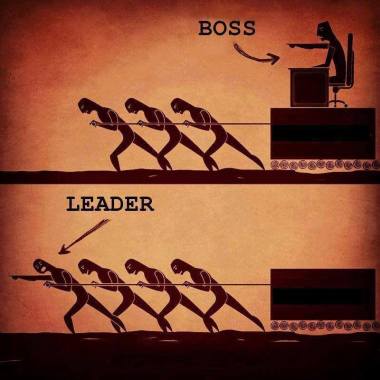
2. Their interest in the company does not stop with the unit they are heading. They want to know how all of the company’s departments affect one another, and they are constantly reaching beyond their specific area of influence.

3. They put heavy emphasis on vision, values, and motivation.

4. They have strong people skills.

5. They don’t accept the status quo.

Finding Good Leaders

What kind of person is best able to involve others and himself in good decision making? J. Keith Louden lists seven qualities:

1. The ability to look ahead and see what’s coming—foresight.

2. Steadiness, with patience and persistence and courage.

3. A buoyant spirit that in spite of cares generates confidence.

4. Ingeniousness, the ability to solve problems soundly yet creatively.

5. The ability to help others.

6. Righteousness, the willingness to do the right thing and speak the truth.

7. Personal morality of a quality that commands the respect of others. — Charles W.L. Foreman, “Managing a Decision Into Being,” from the Management Course for Presidents, pp. 3-4.

 
Leave a comment

Posted by on June 15, 2015 in Church


Examining the position of leadership


 placeforyou2mp3iconFacebook    YouTube  575273_579331012148169_1163921425_n

 ——————————————–

Don’t take a position of leadership in church unless you are prepared to be honest, pure, and loving in your lifestyle. Leadership is a privilege, and with privilege comes responsibility.

God holds teachers of His truth doubly responsible because we who lead are in a position where we can either draw people toward Christ or drive them away from Him.

This is illustrated in the life of the famous author Mark Twain. Church leaders were largely to blame for his becoming hostile to the Bible and the Christian faith. As he grew up, he knew elders and deacons who owned slaves and abused them. He heard men using foul language and saw them practice dishonesty during the week after speaking piously in church on Sunday.

He listened to ministers use the Bible to justify slavery. Although he saw genuine love for the Lord Jesus in some people, including his mother and his wife, he was so disturbed by the bad teaching and poor example of church leaders that he became bitter toward the things of God.

Indeed, it is a privilege to be an elder, a deacon, a Sunday school teacher, or a Bible club leader. But it is also an awesome responsibility. Let’s make sure we attract people to the Savior rather than turn them away.leaders

Lead Others

Actually, a manager needs the ability not only to make good decisions himself, but also to lead others to make good decisions. Charles Moore, after four years of research at the United Parcel Service reached the following conclusions:

1. Good decisions take a lot of time.

2. Good decisions combine the efforts of a number of people.

3. Good decisions give individuals the freedom to dissent.

4. Good decisions are reached without any pressure from the top to reach an artificial consensus.

5. Good decisions are based on the participation of those responsible for implementing them.*

One Man

Wherever anything is to be done, either in the Church or in the world, you may depend upon it, it is done by one man. The whole history of the Church, from the earliest ages, teaches the same lesson. A Moses, a Gideon, an Isaiah, and a Paul are from time to time raised up to do an appointed work; and when they pass away, their work appears to cease. Nor is it given to everyone, as it was to Moses, to see the Joshua who is destined to carry on his work to completion.

God can raise up a successor to each man, but the man himself is not to worry about that matter, or he may do harm. One great object of every religious teacher should be to prevent the creation of external appliances to make his teaching appear to live when it is dead.


1 Comment

Posted by on June 8, 2015 in Church


Reviving Old Dry Bones” (Hebrews) series “Are We Getting Careless?” Hebrews 2:1-4


 placeforyou2mp3iconFacebook    YouTube JesusIsLordofthisWebSite

 ——————————————–

 Hebrews 2:1-4 (NIV) “We must pay more careful attention, therefore, to what we have heard, so that we do not drift away. {2} For if the message spoken by angels was binding, and every violation and disobedience received its just punishment, {3} how shall we escape if we ignore such a great salvation? This salvation, which was first announced by the Lord, was confirmed to us by those who heard him. {4} God also testified to it by signs, wonders and various miracles, and gifts of the Holy Spirit distributed according to his will.”

We have our first of five direct “word of encouragements.” Let me paraphrase the message like this: Do not be careless with the Word! The passage begins with the phrase “for this reason,” which ties it with what has already been said in the book: Since Jesus is God’s Son, since Jesus should be worshiped, since Jesus cre­ated all things, and since Jesus reigns over all, “we must pay much closer attention to what we have heard, so that we do not drift away from it” (v. 1).

God does not sit idly by and permit His children to rebel against Him. He will continue to speak and, when necessary, He chastens His own.

The Greek word for “neglect” (ameleo) was often used in the New Testament for people who had no appreciation for a valuable item:

  • 1 Timothy 4:14: Do not neglect your gift, which was given you through a prophetic message when the body of elders laid their hands on you)
  • When the guests in Jesus’ parable of the banquet “made light” (ameleo) of the invita­tion (Matthew 22:5 NIV) “But they paid no attention and went off–one to his field, another to his business.

Multiple examples of modern-day drifting, neglect, and carelessness could be given—along with the tragic consequences. A marriage can be destroyed because one or both of the partners neglect the marriage. Married people who become unfaithful to their mates do not necessarily plan to do so; sometimes they become careless, drifting into unscriptural relationships.

Many of these started the Christian life with enthusiasm. Then, they leave their “first love.” They no longer study as much as they once had. They did not pray as much. They start missing a few worship services. They are not as active in the service of the Lord. They began to drift . . . drift . . . drift . . . slowly . . . slowly . . . slowly . . . but surely—away from the Lord.

Salvation is too important to be thrown away. It needs to be taken seriously.

We see often indifference from the outside and apathy from inside.

It is particularly disappointing that people who often “get tired” of the Christian message do not “give up” on religion…they simply turn to substitute religions…to psychological efforts “to find themselves.”

We seek “to be all things to all people” and eventually have no message at all. We seek to accommodate and are left with no clear voice.

The author of Hebrews declares that our hope lies in taking seriously the “great salva­tion” which we have heard….the death, burial, and resurrection of Christ (! Cor. 15:1ff). Remember, he was talking to first century Christians who were relatively ‘close’ to the ministry and message of Christ!

Being Careless with the Word of Christ

The emphasis in our text is on the tragedy of being careless with the gospel. This is tragic, first, because it is the Word of Christ. The writer con­trasted “the word spoken through angels” (v. 2; see Acts 7:53; Galatians 3:19) (the Old Testament) with that “spoken through the Lord” (v. 3) (the New Testament).

Under “the word spoken through angels,” “every transgression and disobedience received a just penalty” (v. 2). A man who gathered sticks on the Sabbath was stoned to death (Numbers 15:32–36). When Uzzah touched the sacred ark, he was struck dead (2 Samuel 6:3–7). If such a punishment occurred in keeping with a revela­tion from angels, the writer wondered, what will happen to those who neglect the great salvation4 that was “spoken through the Lord” (v. 3)?

Being Careless with the “Guaranteed” Gospel

Second, being careless with the gospel is tragic because it is the “guaranteed” gospel. The writer emphasized that “it was confirmed to us” (v. 3).  Most of us like for products we buy to have guarantees; they instill trust. Since the Lord Himself guarantees the gospel, we can trust our eternal souls to its teaching.

He says to us, “Listen up!” He jolts us from complacency and apathy in order to get our attention so that our minds will be directed toward the gospel.

Neil R. Lightfoot noted “When they came into the assembly (see James 2:2), they should have sat on the edge of their seats, eager to hear God’s Word. Too often, when you and I come to class and worship, we are halfhearted—physically and mentally. Regarding spiritual matters, eternal matters, we need greater intensity!

He gives us two reasons for paying attention:

1) The consequences for disregarding the gospel are tragic.

2) The eternal benefits of embracing it are staggering.

Hell is undoubtedly full of people who were never actively opposed to Jesus Christ, but who simply neglected the gospel.

Punishment is always related to light. The more light we have, the more severe our punishment. Jesus was clear about this.

Matt. 11:20-24 (NIV) 20Then Jesus began to denounce the cities in which most of his miracles had been performed, because they did not repent. 21“Woe to you, Korazin! Woe to you, Bethsaida! If the miracles that were performed in you had been performed in Tyre and Sidon, they would have repented long ago in sackcloth and ashes. 22But I tell you, it will be more bearable for Tyre and Sidon on the day of judgment than for you. 23And you, Capernaum, will you be lifted up to the skies? No, you will go down to the depths.If the miracles that were performed in you had been performed in Sodom, it would have remained to this day. 24But I tell you that it will be more bearable for Sodom on the day of judgment than for you.”

There are degrees of punishment in hell. The hottest places belong to those who have rejected the most light. Listen to Jesus’ own words: Luke 12:47 (NIV) 47“That servant who knows his master’s will and does not get ready or does not do what his master wants will be beaten with many blows. The Lord is talking about judgment, and His point is simple: the greater the light, the greater the accountability.

The Apathetic and Bored Church Member

John S. Savage wrote a doctoral dissertation on inactive members and the steps they go through to become inactive. I believe it will be advantageous for all of us to be aware of these steps and be ready to assist our brothers and sisters if a need arises.

  1. The first step is an anxiety-provoking event. An incident which produces some type of anxiety or uncomfortable feeling in the active member (1) Conflict with the minister; (2) Conflict with another family member; (3) Conflict with another church member.
  2. The second step is the blinking red light. The member is hurting inside and wants/needs to talk.
  3. When anxiety reaches the stage of acute discomfort, the anxiety is transformed to anger.
  4. Behavioral change. The member either becomes more aggressive or withdrawn. If the problem is not resolved at this point, they move further away from active membership. They drop out of committees. They give up their Sunday or Wednesday classes, if teaching. Usually, at this point, they stop attending except on Sunday morning. They stop attending special meetings and their contributions are either cut down or cut out altogether.
  5. Holding Pattern. This lasts from six to eight weeks. During this time, they are breaking emotional ties with the folks at the church. They are waiting to see if anyone from the church will call on them. If no one comes during the holding period, then they begin to reinvest their time and energy in other organizations and clubs. Camping, or other family outings, especially on weekends, seems to become a favorite pastime of the inactive member.
  6. Out the back door. The active member has now made the journey out of the church and no longer attends or takes interest in the congregation to which he/she once gave much time and effort.


Leave a comment

Posted by on April 19, 2015 in Church, Encouragement


Modern denominational myths


mp3icon Facebook    YouTube JesusIsLordofthisWebSite

 ——————————————–

In our present age many myths are being circulated as biblical truths. In this article we will examine some of them.

1. Salvation by Faith Only.
One myth being circulated which is contrary to God’s Word is that we are saved by faith only. Romans 5:1 tells us we are justified by faith. James 2:24 tells us we are justified by works and not by faith only. Is there a contradiction between these two scriptures. No! James 2:24 says in essence “Yes, you are justified by faith, but not by faith alone, some works are required.” Do we then merit our salvation? No, salvation comes only by undeserved favor or grace. We do however have to follow God’s plan to accept or receive that grace. Faith defined is “A conviction of things not seen”. We must have faith. “Without faith it is impossible to please God…” Hebrews 11:6. So we see that faith is essential to seo-myths-mythbustersalvation but in itself it is useless. James says, “Faith if it has not works is dead.” No one, not I anyone else, refutiates the fact that we are saved and justified by faith, Ephesians 2:8 and Romans 5:1 both say so, but it is not faith alone because James 2:24 says so.

You say it is confusing. No, not really. Let me illustrate. Say you have a real bad infection and you go to the doctor. He tells you to fill the prescription he lays down in front of you and you will be made well. Faith tells you he knows what he is talking about and that following his instructions will save you heartaches. Now the question is “Does that faith by itself make you well?” Of course not! It does however cause you to fill the prescription and follow the doctor’s orders to the letter.

The same principle applies to God’s Word, the Bible. It tells us that faith in Jesus as the Son of God, His death and resurrection will save us from sin, but it goes on to say faith alone will not save. For faith to be any good, it must immediately be followed by action. The faith does not save, but it leads us to take certain steps which do save us. So then in the sense that faith leads us to obey Jesus” commandments, it does save. That is what the Hebrew writer, Paul and James were saying. Faith saves only in that it leads us to obey.

2. Saved by Faith and Repentance Only.
Another fallacy in our modern day religious circles is that if we have faith and repent only we will be saved. The Bible very clearly lays down a pattern through which we may be saved. Though repentance is a necessary part of salvation, salvation does not stop there. We see in Luke 13:3 and Acts 17:30 that repentance is commanded. We cannot be saved without repenting, just as we could not be saved without faith, believing. To be saved without repenting would be to say, “Okay God, save me, but I want to continue to sin against you and never come to realize my sins hurt and grieve you or turn from them.” To repent means literally to turn, to change one’s mind.

Paul says to repent we must first be sorry for our sins ( 2 Corinthians 7:10 ). Being sorry then is not repentance, but it leads us to repent. Who can be truly sorry for doing wrong, and continue to do so? If we truly are sorry, then we will repent or turn from sin?

3. Faith, Repentance, Confession alone are not Salvation.
In other religious circles it is taught that if we have faith or believe, repent and confess only we will be saved. Although admittedly Romans 10:10 says if we confess we shall be saved, we cannot say that salvation stops at confession without doing a great injustice to the Bible, God’s Word. We know that without coming into contact with Christ’s blood we cannot be saved. Confession does not bring us into contact with His blood nor does faith and repentance. Without confession though, we cannot be saved. Luke 12:8,9 says so. We must confess Christ before men for Him to  onfess us before God. If we deny Him, He’ll deny us!! Our confessions must be by mouth. ( Romans 10:10 ). We cannot sign a card or such thing. We must verbally confess our belief in Christ.

4. To be saved we do not confess our sins.
Many would have us think that to be saved we must confess our sins. There is no scriptural authority for this. Christians are instructed to confess their sins. (1 John 1:9 ) and do so before men (James 5:16 ) where their faults are concerned, but with praying for forgiveness this applies ONLY to Christians. 

5. Baptism does not save.
Such a statement is contrary to all the apostles taught, Jesus ordered, and history shows! In Mark 16:16, Jesus said, “He who believes and is baptized shall be saved, but he who believes not ( hasn’t faith ) is damned.” People in most religious circles like to omit baptism in the first part of this statement and over emphasize “believes not” in the second part. I agree one hundred percent that if we do not believe (have faith) it is impossible to please God! That does not however release us from the command to be baptized. Contrary to what they teach, the Bible teaches that baptism is essential by reason for it, what it does and the actions of the early preachers and apostles!

Let us consider why we are to be baptized.

  • (A) Baptism was commanded by Jesus ( Matthew 28:18,19; Mark 16:16 ).
  • (B) Baptism is for the remission or forgiveness of sins. We all know that when we are saved our sins are forgiven. It is impossible to be saved otherwise. Acts 2:38 makes it clear that if our sins are to be forgiven we must “repent and be baptized for the remission of sins.” The word remission here means “pardon” or “forgiveness”. That is real clear then that for forgiveness of sins we are to be baptized.
  • The apostle Paul was told at his conversion “Arise and be baptized and wash away thy sins” ( Acts 22:16 ). Notice here that Ananias would not wait, he wanted it done right then. He says, “Why tarriest thou; arise and be baptized and wash away thy sins.” Even though Jesus told Ananias He had a special purpose in Paul. Ananias would take no risks and he rushed to get him baptized then and there. It must have been extremely important then, wouldn’t you say?
  • Another important scripture to consider is Galatians 3:27, not to mention Romans 6:3. These both say, we are “baptized into Christ.”

What is in Christ? “Spiritual blessings” ( Ephesians 1:3 ); “no condemnation” ( Romans 8:1 ); “eternal life” ( 1 John 5:11,12); “salvation” ( 2 Timothy 2:10 ). How do we get into Christ to receive all these things? Baptism! ( Romans 6:3; Galatians 3:27). Baptism then is important! Even essential! 1 Peter 3:21 says, “The like figure whereunto even baptism doth also now save us…”

6. Baptism does not refer to water.
Many will say, “Well, baptism does not refer to water, it refers to the spirit.” Just two points to mention on that subject. First, Jesus refers to being born of the water and of the Spirit in John 3:5. They will refutiate that by saying water means physical birth. The very verse before it tells us differently as do the context and circumstances. It is very clear from the previous verse that Nicodemus knew Jesus was talking about a “second birth” and the context of the whole scripture tells us that is what Jesus meant. For this to have meant physical birth Jesus would have insulted the intelligence of Nicodemus. Nicodemus was a member of the Sanhedren, the Jewish ruling council. I think he had enough sense to know that if you were to do something the second time you had to have done it the first! I just cannot picture my Lord and Savior as being so arrogant as to spring that newsflash on an old man!

Second, Romans 6:4 says, “We are buried in baptism, so that like Christ was raised from the dead, so we can be to walk in the newness of life”. Couple this with John 3:5 and the other scriptures we have studied such as Galatians 3:27 and those referring to all things being in Christ and add to all this one dash of Acts 10:47 in which Cornelius and his family have already received Holy Spirit baptism and Peter wants them baptized in water and what do you have? WATER BAPTISM: resulting in the second birth.

We are buried with Christ, ( Romans 6:4 ) in water baptism ( Acts 10:47; 8:37-38 ) and raised to newness of life ( Romans 6:4 ). This obviously is the second birth spoken of in John 3:5. Baptism then brings us in contact with Christ ( Romans 6:3; Galatians 3:27 ) and hence forth His blood where in is atonement for our sins.

We see then that to be saved we must have faith and believe ( Hebrews 11:6; John 3:24 ) but believing only is not enough nor is faith only (James 2:19,24 ) or the devils would be saved.

We must also repent, which is merely changing one’s mind, no prayers involved. Then we must confess Christ and our belief in Him ( Luke 12:3,9; Romans 10:9,10; Acts 17:30; Luke 13:3; John 9:31 ).

Then we must be baptized for remission of sins, ( Acts 2:38 ), to get into Christ ( Galatians 3:27; Romans 6:3 ) to obtain salvation which is in Christ ( 2 Timothy 2:10 ). 

7. Baptism is sprinkling or pouring.

This cannot be so! We see from Romans 6:3-5 that baptism is a burial so it couldn’t possibly be done by sprinkling or pouring, but would have to be done by immersion.

For what reason were you baptized? Were you saved by the above method? Were you baptized before you were saved, for the remission of sins following belief, repentance, and confession of faith? We see in Ephesians 4:5 there is only one baptism. It is before salvation for remission of sins and to get into Christ ( Galatians 3:27; Romans 6:3) where salvation lies ( 2 Timothy 2:10 ). It is a burial, signifying submersion or immersion.

Baptism alone after you are saved does not count, or for any reason besides remission of sins does not count or without faith, belief, repentance and confession of faith does not count or by any means other than immersion such as sprinkling, pouring does not count or by any authority other than Christ ( Matthew 28:18,19 ) does not count.

Do you fall under any of these? There is a Church of Christ in your community. Contact them and they will be glad to Scripturally baptize you. Call on them, will you? Don’t wait another minute because it may then be too late ( James 4:14 ), and good intentions will not save (Matthew 7:21-23 ).

Please do not take our word as final on anything you read here. May God bless you as you search for His truth!

 
1 Comment

Posted by on March 20, 2015 in Church, Doctrine


“Disappointments New Christians Face”


mp3icon Facebook    YouTube JesusIsLordofthisWebSite

 ——————————————–

There is great joy in seeing new Christians grow in the faith:
(2 John 1:4) “It has given me great joy to find some of your children walking in the truth, just as the Father commanded us.”

(3 John 1:3-4) “It gave me great joy to have some brothers come and tell about your faithfulness to the truth and how you continue to walk in the truth. {4} I have no greater joy than to hear that my children are walking in the truth.”

Unfortunately not all new Christians grow as they should. Problems and disappointments often overwhelm them, and some even fall away.

This ought to concern older Christians, for we have a responsibility to those who are young in the faith:

(Rom 15:1-2) “We who are strong ought to bear with the failings of the weak and not to please ourselves. {2} Each of us should please his neighbor for his good, to build him up.”

(Gal 6:1-2) “Brothers, if someone is caught in a sin, you who are spiritual should restore him gently. But watch yourself, or you also may be tempted. {2} Carry each other’s burdens, and in this way you will fulfill the law of Christ.”

1. SAME WEAKNESSES AS BEFORE (Disappointed with themselves)
Many become Christians with joyful anticipation…

1. Excited about forgiveness of sins…
2. ” the chance to start over…”
3. “the help God is going to give them to change…”

…but they soon discover….
1. That the temptations are just as strong as before (sometimes even stronger!)

2. They can easily be discouraged and overcome

HOW CAN WE HELP?

1. By teaching them that “transformation” is an on-going process:
(Rom 12:1-2) “I urge you therefore, brethren, by the mercies of God, to present your bodies a living and holy sacrifice, acceptable to God, which is your spiritual service of worship. {2} And do not be conformed to this world, but be transformed by the renewing of your mind, that you may prove what the will of God is, that which is good and acceptable and perfect.”

2. By reminding them of God’s willingness to forgive and provide strength???????????????????????????
(Phil 2:12-13) “Therefore, my dear friends, as you have always obeyed–not only in my presence, but now much more in my absence–continue to work out your salvation with fear and trembling, {13} for it is God who works in you to will and to act according to his good purpose.”

(1 John 1:9) “If we confess our sins, he is faithful and just and will forgive us our sins and purify us from all unrighteousness.”

(1 John 2:1) “My dear children, I write this to you so that you will not sin. But if anybody does sin, we have one who speaks to the Father in our defense–Jesus Christ, the Righteous One.”

2. IMPERFECT CHRISTIANS (Disappointed by their brethren)
They witness inconsistency in the lives of others…
1. They see those who do not practice what they preach

2. It really hurts when seen in those they had looked up to
3. But this problem is not a new one

Ill treatment  by Christians…
1. May occur in Bible classes, business meetings, at work, at play

2. Harsh words can be devastating to those new in the faith

WHAT CAN WE DO?
1. First, set better examples!

(1 Tim 4:12) “Don’t let anyone look down on you because you are young, but set an example for the believers in speech, in life, in love, in faith and in purity.”

2. Confess wrong when it occurs

3. Help the new Christian realize that older Christians are ALSO going through the process of “transformation”

(Phil 3:12-14) “Not that I have already obtained all this, or have already been made perfect, but I press on to take hold of that for which Christ Jesus took hold of me. {13} Brothers, I do not consider myself yet to have taken hold of it. But
one thing I do: Forgetting what is behind and straining toward what is ahead, {14} I press on toward the goal to win the prize for which God has called me heavenward in Christ Jesus.”

3. TRIALS AND TEMPTATIONS (Disappointed by the world)
Such as pleasures and responsibilities of the world…
1. Often drawing the new Christian away (e.g., job, family, hobbies)…choking them to the point of unfruitfulness. Discouragement by unconverted friends and family…

2. Want them to come back to the things of the world

3. As Paul warned in (1 Cor 15:33-34) “Do not be misled: “Bad company corrupts good character.” {34} Come back to your senses as you ought, and stop sinning; for there are some who are ignorant of God—I say this to your shame?”

 WHAT CAN WE DO?

1. Demonstrate what it means to “seek first the kingdom of God”
2. Make it clear by our own example who it is we love the most (i.e., not our jobs, hobbies, etc.)
3. Develop close friendships with new Christians IN THE LORD; friendships centered around Christ and His work

4. FALSE CONCEPTIONS ABOUT PROSPERITY (Disappointed by lack of success)
Thinking that now all our problems will go away…an idea propagated by the gospel of health and wealth” teachers.

 But such is not always the case, even as it was in the days of the first century (James 1:2-4) “Consider it pure joy, my brothers, whenever you face trials of many kinds, {3} because you know that the testing of your faith develops perseverance. {4} Perseverance must finish its work so that you may be mature and complete, not lacking anything.”

(1 Pet 1:6-9) “In this you greatly rejoice, though now for a little while you may have had to suffer grief in all kinds of trials. {7} These have come so that your faith–of greater worth than gold, which perishes even though refined by fire–may be proved genuine and may result in praise, glory and honor when Jesus Christ is revealed. {8} Though you have not seen him, you love him; and even though you do not see him now, you believe in him and are filled with an inexpressible and glorious joy, {9} for you are receiving the goal of your faith, the salvation of your
souls.”

We need to prepare new Christians for possible adversity; this need is especially great because Satan often strikes hardest when one is new in the faith

5. TOO MUCH “NEGATIVE” TEACHING (Disappointed by their teachers)
1. Certainly there is a place for learning about those in error

2. But there can be dangers involved in doing so…
   a. If it is done in an arrogant, self-righteous spirit
   b. If it is done to make us feel good or superior
   c. If it is done to the exclusion of learning what WE need to do

3. If we are not careful, it can create carnal Christians, given to strife and envy

When “negative teaching” is called for…
1. It should be done: for the purpose of trying to understand and each those in
error…out of love for those in error. It should be done as Paul did it…

   a. With prayer for their souls

   b. With recognition for their accomplishments

3. It should be done with the qualities mentioned in (2 Tim 2:24-26) “And the Lord’s servant must not quarrel; instead, he must be kind to everyone, able to teach, not resentful. {25} Those who oppose him he must gently instruct, in the hope that God will grant them repentance leading them to a knowledge of the truth, {26} and that they will come to their senses and escape from the trap of the devil, who has taken them captive to do his will.”

CONCLUSION
It may help to quickly point that Christians generally go through four stages of spiritual growth…

a. The “ball of fire” stage, following their conversion to Christ
b. The “reality” stage, when the disappointments start to come in
c. The “up and down” stage…here, people either grow through it to the next stage…or they fall away, or become apathetic (i.e., “pew-warmers”)
d. Finally, those who persevere reach the stage of “steady as she goes”, where growth is progressive and steady:

 
Leave a comment

Posted by on March 15, 2015 in Church, Encouragement


What about Israel and the Jews? Acts 28:16-20


 mp3iconFacebook    YouTube JesusIsLordofthisWebSite

 ——————————————–

A Quick Review Of Other Millennial Assertions.

Daniel 9:24-27 is supposed to represent a “prophetic clock” that stops ticking at the death of Christ and does not start ticking again until seven years of tribulation, recorded in the book of Revelation, at the “first phase” of the Second Coming of Christ.

Where is the gap?  Where does the Bible show that the “clock” stops for 2000 years before it resumes ticking?

Why not let the 70 weeks of Daniel be literal like the 1000 years of Revelation (dispensationalists commonly say the weeks are actually 490 years)?

Revelation 20:1-6 is alleged to show a literal 1000 year reign of Christ, on the earth, on David’s throne. Where is the earth mentioned in Revelation 20:1-6)?  Is Satan’s chain literal, and if not, why in a book of symbols should the 1000 years be literal?  Where is Jerusalem and David’s throne in Revelation 20:1-6?

The book of Revelation has the Father and the Son located in heaven (4:1; 5:1, 6; 6:9-11).  he slain of Revelation 6:9-11 were to wait in God’s presence until the full number of martyrs came in—the very thing that happens in Revelation 20:4. This is a heavenly scene.

What Christians Need To Be Doing As They Face The Millennium.

Matthew 24:42-51 makes it clear that since we do not know when Jesus will return, we should live in faith at all times.  alking in the light is the way of security (I Jn. 1:7).  Seeking God’s kingdom and His righteousness are first priorities (Matt. 6:33).  God gives glory to the quiet, everyday kind of faith (I Thess. 4:11-12).  Those who have relied on sensational things rather than on simple trust and obedience will be disappointed (Matt. 7:21-23).

WHAT ABOUT ISRAEL AND THE JEWS? (Acts 28:16-20)

INTRODUCTION

  1. R.DeHaan said, “Following the Rapture of the church, God will gather Israel into Canaan, rebuild the temple, re-establish the Old Testament form of worship and sacrifices.”
    1. Christ then appears to set up the earthly kingdom with Jerusalem as its capital.
  2. Hal Lindsey – “Late Great Planet Earth” pp. 42-47
    1. Uses Matthew 24 to teach a rebuilt temple.
    2. Israel restored to her land.
    3. Sacrificial system and Sabbath re-instituted.
  3. According to Pre-Mill., the land promises God made to Israel have not been fulfilled, and were eternal in nature.
  4. Questions to be answered:
    1. What were the promises God made to Israel?
    2. Have these promises been fulfilled?
    3. Were those promises conditional or unconditional?
    4. Where is the “Israel of God” today?
  1. WHAT WERE THE PROMISES GOD MADE TO ISRAEL? (Gen. 12:1-7; 13:14-17).
    1. God promised Abram:
      1. A new land.
      2. Would be a great nation
      3. God would bless him and make his name great
      4. Through Abram, all families of the earth would be blessed.
      5. Physical and spiritual blessings.
    2. What land was promised?
      1. The land he traveled to upon the command of God (Gen. 12:6-7).
      2. The larger land of Canaan (Gen. 15:18; Ex. 23:30-31) to the river Euphrates.
      3. Promises made to Abraham and His seed (Gen. 17:8; Ex. 6:4-8).

 II. HAVE THESE PROMISES BEEN FULFILLED?

  1. Land of Promise has been fulfilled (Deut. 1:7-8; Joshua 21:43-45; 2 Samuel 8:3; 2 Chron 9:26; Neh. 9:7-8).
  2. When was this promise fulfilled?
    1. Following the bondage in Egypt as Moses let Israel to and Joshua lead them into the Canaan Land.
    2. Abraham himself received not one foot of Canaan – but his seed did.
    3. Pre-Mill. say that Abraham must be raised from the dead to enter millennial kingdom in order to possess the land.
    4. Stephen said “the time drew near” while Israel was in Egyptian bondage (Acts 7:17).

III. WERE LAND PROMISES CONDITIONAL OR UNCONDITIONAL?

  1. Pre-Mill. say unconditional (Gen. 17:7-8). “Everlasting covenant”
    1. Word translated “everlasting” means “age-lasting.” Same for Sabbath and other O.T. rituals which are not kept today.
    2. As long as Law of Moses lasted, these things lasted. When Law of Moses ended, these things ended.
  2. Notice the conditions of keeping the land (Deut. 8:19-20; 28:29-30, 63, 64; Josh. 23:14-16; 1 Kings 9:3-7).
  3. Israel lost their land.
    1. Northern Kingdom carried away by Assyria.
    2. Southern Kingdom carried away by Babylon (2 Chron. 36:17-19).
  4. Restoration promises (Deut. 30:1-3; Ezek. 37:11-22; Isa. 10:20-23 (remnant return) Jer. 30:3).
  5. Has Israel been restored? (2 Chron. 36:20-23; Jer. 25:11-13; Ezra 9:9).
    1. All prophecies concerning the return to the land, rebuilding of the temple, etc., were made prior to 516 B.C. Since the rebuilding of the temple of that time – following a return to Palestine – there have been no prophecies concerning a return to the land or a rebuilding of the temple.
  1. WHO ARE THE ISRAEL – JEWS OF GOD TODAY?
  1. Jesus spoke of a “new kingdom” to the Jews of his day (Matt. 21:41-45; 23:38; 24:1-35).
  2. Circumcision nor uncircumcision avail anything – but new creature (Gal. 5:6).
  3. Christians are now God’s Jews – God’s Israel (Rom. 2:28-29; Gal. 3:26-29; Rom. 4:13-16; 9:7-8).
  4. Conversion destroys nationality (Col. 3:10-11).
  5. Paul’s allegory of two women (Gal. 4:21-31).
    1. Two women are two covenants – OLD AND NEW.
    2. Two sons – two nations – fleshly and spiritual.
    3. Hagar and Ishmael had nothing in common with Sarah and Isaac. National Israel has nothing in common with spiritual Israel.
    4. Final verdict – “Cast out the bondwoman and her son.” National Israel cannot have an inheritance with Spiritual Israel.  CHRISTIANS ARE THE ONLY ISRAEL GOD HAS TODAY!
  6. Can Jews be saved today?
    1. Yes, all men come to God the same way, through Christ (Eph. 2:14-18).
    2. The same gospel is for all (Matt. 28:18-20).
    3. Great commission was for the Jews also (Acts 10:34-43).
    4. Paul’s prayer for Israel was “that they might be saved” (Rom. 10:1-4).
    5. No New Testament passages affirm or predict a return of Jews to Palestine and a second chance to accept Christ as Messiah. It is now or never!

CONCLUSION

  1. God promised Israel the Canaan land and they occupied that land hundreds of years ago.
  2. The nation God promised to make of Abram’s seed no longer exists as it did in Old Testament times.

(appreciation to Bill Craddock for much of this material)

 
Leave a comment

Posted by on March 15, 2015 in Church, Doctrine


Willing to Worship…A man can no more diminish God’s glory by refusing to worship him than a lunatic can put out the sun by scribbling the word darkness on the walls of his cell


Erwin Lutzer said, “If we haven’t learned to be worshipers, it doesn’t really matter how well we do anything else. “

Realizing the awesome presence of God is quite a discovery. It changes our life. Our worship. Our Eternity.

The plea is a simple one:

   Bring yourself and your spirit of worship. Bring reverence for God and His house. Bring your offering (the tithe plus).

   Bring a spirit of love and fellowship. Bring a hearty handshake and a smile. Bring a kind word and helpful thoughts.

   Bring your willingness to help sing, and sing out of your heart. Bring a friend or relative. Be sure to bring your visiting friend.

   Bring your best each Sunday to worship. Get the church-going habit.

In their book Lessons from History, Will and Ariel Durant observed, “There is no significant example in history, before our time, of a society successfully maintaining moral life without the aid of religion.”

I hope Charles Spurgeon was incorrect, when he observed that “ I believe a very large majority of churchgoers are merely unthinking, slumbering worshipers of an unknown God.”

We have crowded God out of the center by replacing Him with ourselves.  And it is much worse to have a false idea of God than no idea at all.

A wife remarked to her husband after the church service: “Did you see the hat Mrs. Jones was wearing?” “No,” said her husband, “I didn’t.” “Did you see the new dress Mrs. Smith had on?” she asked. “I’m afraid I didn’t,” said her husband. To this his wife replied: “Well a lot of good it does YOU to go to church!”

God used to rage at the Israelites for frequenting holy groves. I only wish I could find one. Somehow, in the secularizing sweep in our world, we have lost the light out of the treetops. We’ve lost the sense of holiness that somehow permeates the sacred groves, and there isn’t anything sacred to most of us anymore.

We have gone all the way from pantheism to pan-atheism–from a view of life that found God in everything to a view of life that finds God in nothing. [We have gone] from a view of life where everything was holy to a view where we hardly ever see anything holy anymore. [1]

The majority of us do not enthrone God, we enthrone common sense. We make our decisions and then ask the real God to bless our god’s decision. [2]

The one essential condition of human existence is that man should always be able to bow down before something infinitely great. If men are deprived of the infinitely great, they will not go on living and will die of despair. The Infinite and the Eternal are as essential for man as the little planet on which he dwells.[3]

Men must worship something, if they do not worship an unseen Being who loves and cares for them, they will worship the works of their own hands; they will secretly bow down to the things that they see, and hear, and taste, and smell; these will be their lords and master.[4]

A silent love is acceptable only from the lower animals. God has given us speech that we should call upon his name. Worship is to religion what fragrance is to the flower.[5]

G. Campbell Morgan told a story about a father and his young daughter who were especially close.  They enjoyed spending time together.  If he went for a walk or made a social call, she wanted to go along.  But then he began to notice a change. When he asked her to accompany him on errands, she made excuses.  As the weeks passed, he became concerned about it.

When his birthday came, she presented him with a pair of slippers she had made.  Then he realized that she had been working on them while he was out of the house.  “Darling, I like these slippers very much,” he said gently, “but next time buy the slippers and let me have you all the days.  I would rather have you than anything you can make for me.”

Beyond any work we may do for God, time spent in His presence must take priority.  He desires our fellowship first of all.  If our worship is neglected, our work will be deficient.

It’s a necessary lesson to discover that worship does not satisfy our hunger for God; it only whets our appetite.

If we yearned after God even as much as a cow yearns for her calf, we would be the worshiping and effective believers God wants us to be.  If we longed for God as a bride looks forward to the return of her husband, we would be a far greater force for God than we are now. [6]

God wants us to worship Him. He doesn’t need us, for He couldn’t be a self-sufficient God and need anything or anybody, but He wants us. When Adam sinned it was not he who cried, “God, where art Thou?” It was God who cried, “Adam, where art thou?”[7]

 It is a terrible thing to be grateful and have no one to thank, to be awed and have no one to worship. [8]


Ten Values of Church Attendance:

1. It keeps your heart in constant tune with God.

2. It keeps your mind on the great necessity for having God’s word spread throughout all nations.

3. It improves your character by learning the great examples that Christ gave to us.

4. It improves your disposition by learning to be meek and humble like Christ.

5. It helps in your everyday life by learning to love one another, even as Christ loved you.

6. It teaches you to give and know the wonderful joy you receive by giving.

7. It teaches you to pray, for prayer is the answer to many of your problems.

8. It gives your soul great joy and comfort to worship and know that God is near.

9. It shows the world that you are working for Christ and His Kingdom.

10. It is what Christ intended for you to do. “For where two or three are gathered together in my name, there am I in the midst of them.”[9]


The church is not:

* An ark for the saving of a select few.

* A ferryboat to take effortless passengers to the shores of heaven.

* A life insurance company, with no obligation on policy holders except the payment of a small annual premium.

* A social set, welcoming certain people and excluding others from its fellowship.

* A Sunday pleasure club for the providing of pleasant occupation on the day of rest.


The church is:

* A lifeboat for the rescue of sin-wrecked and perishing souls.

* A family, in which love and service are expected from each member to each member.

* An organized community, with constant activities and continual growth and development.

* A company of believers who have found the one way of life and obey the one Lord of life.

* A union of those who love for the benefit of those who suffer.

* A center of social worship, in which the spiritual life of each is helped by the spiritual life of his fellow.

* The representative — the “body” — of Jesus Christ on the earth, reflecting his spirit and controlled by his will.


I like the following list, which speaks not only to sporting events but also worship: The reasons why I’m giving up sports (football in the fall, baseball in the summer, basketball in the winter). I’ve had it all. I quit attending sports once and for all, and here are my excuses:

   1. Every time I went, they asked for money.

   2. The people I sat next to didn’t seem friendly.

   3. The seats were too hard and not comfortable at all.

   4. I went to many games but the coach never came to call on me.

   5. The referees made decisions that I couldn’t agree with.

   6. The game went into overtime and I was late getting home.

   7. The band played numbers I’d never heard before and it wasn’t my style of music.

   8. It seems the games are always scheduled when I want to do other things.

   9. I suspect that I was sitting next to some hypocrites. They came to see their friends and they talked during the whole game.

   10. I was taken to too many games by my parents when I was growing up.

   11. I hate to wait in the traffic jam in the parking lot after the game.


Adrian Rogers maintains that Americans attend church at least three times in their life. When they are hatched, matched, and dispatched. The first time they throw water. The second time they throw rice. The third time they throw dirt.

Reasons for attending church fall into two categories — good and bad. In the bad column are these: Attending is socially acceptable. God is angry if I don’t. Going merits His favor. I feel better. Such  motivations dishonor God, and some are the devil’s lies.

In the good column are these reasons: God’s Word commands it. I need Christian fellowship. Others need my encouragement. I can hear the Word. I can meet God.

A story might help to explain. One day the telephone rang in the minister’s office of the Washington church attended by the President. An eager voice said, “Tell me, do you expect the President to be there Sunday?” “That I cannot promise,” the minister said patiently. “But we do expect God, and we fancy it will be incentive enough for a reasonably large attendance.

Ted Malone, whose radio show came on early in the morning, told of the Idaho shepherd who wrote: “Will you, on your broadcast, strike the note ‘A’? I’m a sheepherder way out here on a ranch, far away from a piano. The only comfort I have is my old violin. It’s all out of tune. Would you strike ‘A’ so that I might get in tune?”

Malone honored the request. Later he received a “thank you” note from the distant shepherd saying, “Now I’m in tune.”

One of the purposes and responsibilities of personal and public worship is to enable the aspirant to keep tuned to the Great Shepherd.

One of the joys of the Christian life is to help others recapture the missing note!

Have you known of someone who could have written this following letter:  “Dear Minister:  You often stress attendance at worship as being very important for a Christian, but I think a person has a right to miss now and then. I think every person ought to be excused for the following reasons and the number of times indicated:

      Christmas (Sunday before or after)

      New Year (Party lasted too long)

      Easter (Get away for holidays)

      July 4 (National holiday)

      Labor Day (Need to get away)

      Memorial Day (Visit hometown)

      School Closing (Kids need break)

      School Opens (One last fling)

      Family Reunions (Mine & wife’s)

      Sleep late (Saturday night activities)

      Deaths in Family

      Anniversary (Second honeymoon)

      Sickness (One per family member)

      Business Trips (A must)

      Vacation (Three weeks)

      Bad Weather (Ice, snow, rain, clouds)

      Ball games

      Unexpected Company (Can’t walk out)

      Time changes (Spring ahead; fall back)

      Special on TV (Super Bowl, etc.)

“That leaves only two Sundays per year. So, you can count on us to be in church on the fourth Sunday in February and the third Sunday in August unless providentially hindered. Sincerely, A Faithful Member.”

No Excuse Sunday

To make it possible for everyone to attend church next Sunday, we are going to have a special “No Excuse Sunday.” Cots will be placed in the foyer for those who say, “Sunday is my only day to sleep in.” Murine will be available for those with tired eyes… from watching television too late on Saturday night. We will have steel helmets for those who say, “The roof would cave in if I ever came to church.” Blankets will be provided for those who think the church is too cold, and fans for those who think the church is too hot. We will have hearing aids for those who say, “The Minister speaks too softly,” and cotton for those who say he preaches too loudly.

Score cards will be available for those who wish to list the hypocrites present. Some relatives will be in attendance for those who like to go visiting on Sunday. There will be 100 T.V. dinners for those who cannot go to church and cook dinner also. One section will be devoted to trees and grass for those who like to seek God in nature. Finally, the sanctuary will be decorated with both Christmas poinsettias and Easter lilies for those who have never seen the church without them.

Just suppose the Lord would begin tomorrow to make people as sick as they claim to be on Sunday. Just suppose the Lord would take away the child whom the parents use as an excuse for staying away from church. Some things sound humorous, but they are serious! What is your excuse? See you next Sunday!?

One hour with God infinitely exceeds all the pleasures and delights of this lower world.   A. W. Tozer said, “We are called to an everlasting preoccupation with God.”

Orthodox Jews avoided Samaria because there was a long-standing, deep-seated hatred between them and the Samaritans.

The Samaritans were a mixed race, part Jew and part Gentile, that grew out of the Assyrian captivity of the ten northern tribes in 727 b.c. Rejected by the Jews because they could not prove their genealogy, the Samaritans established their own temple and religious services on Mt. Gerizim.

This only fanned the fires of prejudice. So intense was their dislike of the Samaritans that some of the Pharisees prayed that no Samaritan would be raised in the resurrection! When His enemies wanted to call Jesus an insulting name, they called Him a Samaritan (John 8:48).

He made it clear that all religions are not equally acceptable before God, that some worshipers act in ignorance and unbelief.

It was a devastating statement to say that worship would no longer be limited to the Jewish temple. This ties in with John 2:19-21 and also Stephen’s statement in Acts 7:48-50. John’s Gospel clearly reveals that there is a new sacrifice (John 1:29), a new temple (John 2:19-21; 4:20-24), a new birth (John 3:1-7), and a new water (John 4:11). Jews reading this Gospel should realize that God has established in Jesus Christ a whole new economy. The Old Covenant Law has been fulfilled and set aside.

Arthur Pink had a specific perspective of those who offer false worship: ‘They bring their bodies to the house of prayer but not their souls. They worship with their mouths but not in spirit and in truth.

“They are sticklers for early morning communion with God but they take no thought about keeping their hearts with all diligence.

“They boast of their orthodoxy but disregard the precepts of Christ.

“Multitudes of professing Christians abstain from external acts of violence, yet hesitate not to rob their neighbors of a good name by spreading evil reports against them.

“They contribute regularly to the church but shrink not from misrepresenting their goods and cheating their customers persuading themselves that business is business.

“They have more regard for the laws of man than those of God for his fear is not before their eyes.”

In a false worship we may detect three faults. First, a false worship is a selective worship.  It chooses what it wishes to know about God and omits the rest. 

One of the most dangerous things in the world is a one-sided religion.  It is very easy for a man to accept and hold such parts of God’s truth as suit him and to disregard the remainder. 

We would do well to remember that, although no man will ever grasp the whole orb of truth, it is total truth that we should aim at, not the snatching at fragments which happen to suit ourselves and our own position.

Second a false worship is an ignorant worship.  Worship ought to be the approach to God of the whole man.  A man has a mind and he has a duty to exercise it. 

Religion may begin with an emotional response; but the time comes when that emotional response has to be thought out.  E. F. Scott said that religion is far more than merely the strenuous exercise of the intellect, but that nonetheless a very great part of religious failure is due to nothing other than intellectual sloth. 

To fail to think things out is in itself a sin.  In the last analysis, religion is never safe until a man can tell, not only what he believes, but why he believes it.  Religion is hope, but it is hope with reason behind it (1 Peter 3:15).

Finally, a false worship is a superstitious worship.  It is a worship given, not out of a sense of need nor out of any real desire, but basically because a man feels that it might be dangerous not to give it. 

Many a person will refuse to walk beneath a ladder; many a person will have a pleased feeling when a black cat crosses his path; many a person will pick up a pin with the idea that good luck will follow; many a person will have an uncomfortable feeling when he is one of thirteen sitting at a table. 

He does not believe in these superstitions, but he has the feeling that there might be something in them and he had better play safe. 

There are many people whose religion is founded on a kind of vague fear of what might happen if they leave God out of the reckoning.  But real religion is founded not on fear but on the love of God and gratitude for what God has done.  Too much religion is a kind of superstitious ritual to avert the possible wrath of the unpredictable gods. [10]

A man’s spirit is the highest part of him.  That is the part which lasts when the physical part has vanished.  That is the part which dreams the dreams and sees the visions which, because of the weakness and faultiness of the body, may never be carried out.  It is the spirit of a man which is the source of his highest dreams and thoughts and ideals and desires. 

The true worship is when man, through his spirit, attains to friendship and intimacy with God.  Genuine worship does not consist in coming to a certain place nor in going through a certain ritual or liturgy nor even in bringing certain gifts.  True worship is when the spirit, the immortal and invisible part of man, speaks to and meets with God, himself immortal and invisible.[11]

I believe that if we are to be and to do for others what God means us to be and to do, we must not let adoration and worship slip into second place, “For it is the central service asked by God of human souls; and its neglect is responsible for much lack of spiritual depth and power.”

Perhaps we may find here the reason why we so often run dry. We do not give time enough to what makes for depth, and so we are shallow; a wind, quite a little wind, can ruffle our surface; a little hot sun, and all the moisture in us evaporates. It should not be so. [12]

Let me recite some lines from some ancient prayers from the black church. We have some people in every tradition who pray pretty much the same prayer every Sunday if they’re asked to pray. Many of these lines are well known all over the black church.

One of the lines is, “Lord, I thank you that the blood is running warm in my veins this morning and that my bed was not my cooling board.” Cooling board is a reference to the slab of concrete or marble on which a dead body lies in the mortuary. They just let your body cool down.

You get these old saints who say, “Lord, I thank you that this morning when I rose, my bed was not my cooling board. One more day to praise you and thank you. You’ve been good.”

Or another line is, “Lord, I want to thank you that you’ve allowed my golden moments to roll on.” I love that line: “You could have stopped my life at any point, but you allowed my golden moments to roll on.” God says, “I’ve been good to you. You ought to worship and praise me.” [13]  

We’ll close with these words:

If my lips could sing as many songs as there are waves in the sea:

if my tongue could sing as many hymns as there are ocean billows:

if my mouth filled the whole firmament with praise:

if my face shone like the sun and moon together:

if my hands were to hover in the sky like powerful eagles

and my feet ran across mountains as swiftly as the deer;

all that would not be enough to pay you fitting tribute,

O Lord my God. [14]


[1] Annie Dillard, Preaching Today.

[2] Oswald Chambers in The Oswald Chambers Devotional Reader.  Christianity Today, Vol. 36, no. 9.

[3] Fyodor Dostoyevsky, Leadership, Vol. 19, no. 1.

[4] Frederick Denison Maurice, Virtue, Vol. 21, no. 1.

[5] Henry Van Dyke in The Upward Path. Christianity Today, Vol. 42, no. 7.

[6] A. W. Tozer in Men Who Met God.  Christianity Today, Vol. 30, no. 15

[7] Ibid, Tozer.

[8] Phillip Yancey, Open Windows, Marriage Partnership, Vol. 5, no. 4.

[9] Manhattan Messenger, Pulpit Helps, May 1996, p. 25.

 [10] The Gospel of John Vol. 1 and 2, The Daily Study Bible Series Revised Edition by William Barclay

[11] Ibid

[12] Amy Carmichael in Edges of His Ways.  Christianity Today, Vol. 39, no. 13.

[13] Richard Allen Farmer, “The ‘What’s’ and the ‘Why’ of Worship,” Preaching Today, Tape No. 150.

[14] Hymn probably composed in the Talmudic period, 3rd-5th century A.D., in Praying with the Jewish Tradition (comp. Elias Kopciowski). Christianity Today, Vol. 41, no. 9.


Leave a comment

Posted by on February 28, 2015 in Church