RSS

Category Archives: ephesians

The “Mystery” of His Will – Ephesians 1:9-10


Ephesians 1:9-10 - Verse Of The Day November 06, 2018 | TriangleOfLove

9”.. making known to us the mystery of his will, according to his purpose, which he set forth in Christ 10 as a plan for the fullness of time, to unite all things in him, things in heaven and things on earth.

 New International Version he made known to us the mystery of his will according to his good pleasure, which he purposed in Christ,

New Living Translation

God has now revealed to us his mysterious will regarding Christ—which is to fulfill his own good plan.

English Standard Version

making known to us the mystery of his will, according to his purpose, which he set forth in Christ

NASB 1995 He made known to us the mystery of His will, according to His kind intention which He purposed in Him

Having made known to us the mystery of His will: Part of what belongs to us under the riches of His grace is the knowledge of the mystery of His will, God’s great plan and purpose which was once hidden but is now revealed to us in Jesus. Through the Apostle Paul, God called us to consider the greatness of God’s great plan for the ages and our place in that plan.

“In the New Testament sense a mystery is something which is hidden to the heathen but clear to the Christian.” (Barclay)

The idea behind the word dispensation also reflects a plan or a strategy. “The plan which the master of a family, or his steward, has established for the management of the family… it signifies, also, a plan for the management of any sort of business.” (Clarke)

That… He might gather together in one all things in Christ, both which are in heaven and which are on earth; in Him: God’s ultimate plan is to bring together — to ultimately resolve — all things in Christ, either through Jesus as a Savior or Jesus as a Judge; this will happen in the fullness of the times.

The word for gather together has the idea of “to unite” or “to sum up.” It was used for the process of adding up a column of figures and putting the sum up at the top. Paul’s idea is that God will make all things “add up” at the end, and right now He is in the process of coming to that final sum.

This shows that God wants to unify all things in our lives under Him. “It is a heresy of our times to divide life into sacred and secular.” (Foulkes)

This is the great resolution and deliverance that even the creation groans for (Romans 8:18-22), the day when every wrong will be righted and every matter resolved according to God’s holy love and justice.

Bruce on the fullness of the times: “When the time is ripe for the consummation of his purpose, in his providential overruling of the course of the world, that consummation will be realized.”

In Him also we have obtained an inheritance: For believers, Jesus is not a judge, but the One in whom we have an inheritance. Believers are predestined for this according to the counsel of His will — again, the reasons for His choosing reside in Him, not in us.

Being predestined according to the purpose of Him who works all things according to the counsel of His will: We see three aspects of God’s plan working together. It begins with His purpose, then the counsel of His will, and finally results in His work. God made His plan carefully according to an eternal purpose, taking counsel within the Godhead, and then He works with all wisdom.

“Our God is a God who not only wills; He works; and He works according to His will… The word counsel stands for deliberate planning and arranging, in which the ways and means of carrying out the will are considered and provided for.” (Morgan)

By the counsel of His will: “God doth all by counsel, and ever hath a reason of his will, which though we see not for present, we shall at last day. Meanwhile submit.” (Trapp)

That we who first trusted in Christ should be to the praise of His glory: God’s purpose in all this is so that those who have trusted Christ will exist to the praise of His glory. The goal of God’s ultimate plan is to glorify Him.

We who first trusted in Christ: This speaks of Jewish believers. The words you also in Ephesians 1:13 speak of Gentile believers. God’s great plan has a place for both Jew and Gentile, and it brings them both together in Jesus.

Having made known unto us the mystery of his will.–In the same connection we read in 1Corinthians 2:7, “we speak the wisdom of God in a mystery.” The word “mystery” properly signifies a thing which (see Ephesians 3:5Colossians 1:27) “was hid from all ages, but is now made manifest.” So our Lord evidently uses it (in Matthew 13:11Mark 4:11Luke 8:10). For the rest, except in four passages of the Apocalypse (Revelation 1:20Revelation 10:7Revelation 17:5Revelation 17:7), it is used by St. Paul alone, and by him no less than twenty-one times, of which ten belong to this Epistle and the parallel Epistle to the Colossians–always in connection with such words as “knowledge,” “declaration,” “dispensation.” The ordinary sense of the word “mystery”–a thing of which we know that it is, though how it is we know not–is not implied in the original meaning of the word; but it is a natural derivative from it. Reason can apprehend, when revealed, that which it cannot discover; but seldom or never can it comprehend it perfectly. In this verse the mystery is declared to be accordant to the good pleasure of God’s will, which (it is added) “He purposed in Himself.” In this seems to be implied that (see Ephesians 3:19) though in some sense we can know it, yet in its fulness “it passeth knowledge.” . . .

The word mystery (μυστήριον) appears prominently throughout Paul’s letter to the Ephesians, occurring six times in total, more than in any other New Testament (NT) book.

Meaning

The origin of μυστήριον is obscure.[3] By Paul’s time, it meant “a secret.”[4] Mounce says it was “a matter to the knowledge of which initiation is necessary; a secret which would remain such but for revelation.”[5] The word differs from the modern word mystery, which refers to a known but difficult problem that people try solve. The NT word refers to material wholly unknown unless God reveals it. Ryrie explains this as special, divine knowledge beyond the reach of humans.[6] Remarkably, Paul’s letter to the Ephesians, through the following six references, reveals such knowledge which would have remained unknown otherwise.

Ephesians 1:9

Knowledge of this mystery is a result of God’s grace to believers revealed to the church. It divulges a crucial aspect of God’s will, that he would form a new, comprehensive union from all kinds of people, Gentile or Jew (cf. 2:15-16).[7] This union would occur through the redemptive work of Christ and encompass the spiritual world.[8] Though the Old Testament (OT) revealed that Gentiles would share in God’s redemption (Gen 12:3; Isa 42:6-7), it did not reveal that Jews and Gentiles would form a new spiritual entity.[9]

Ephesians 3:3-4

God revealed this mystery to Paul and to other apostles and prophets as well (Eph 3:5), who would reveal it to the church (3:3). Thielman observes, “No amount of exegetical study of the Scriptures would have yielded this insight; God had to make it known to Paul personally.”[10] This mystery centered on Christ as the agent who would unite believing Gentiles and Jews through the gospel. As such, believers can abandon all “inferior and pseudo-mysteries – the rituals of the gods and goddesses they may have worshiped all their lives – and give their allegiance to Christ alone.”[11] This mission of Christ would was not revealed to previous generations, but God revealed to the church for the very first time.

Ephesians 3:9

Paul was charged with enlightening everyone possible, “all” (πάντας), about this new revelation. He had a crucial administrative role (οἰκονομία) in propagating this message of the “ethnically inclusive nature” of God’s new spiritual creation, which is the church. Hoehner says, “Paul’s mission [had] no place for secrecy; it [was] to be openly shared.”[12] In doing so, he shared something that had been hidden from previous generations entirely.

Ephesians 5:32

Paul reveals a profound (“great”) correlation between the intimate union of a husband and wife and the union of Christ with the church (cf. Gen 2:24).[13] Apart from Paul making this connection, we would never have considered it.[14] In fact, he “goes beyond analogy” by claiming “we are (ἐσμέν) members of [Christ’s] body (Eph 5:30).”[15] This underscores the profound spiritual closeness and union we share with Christ and one another in the church.

Ephesians 6:19

Despite Paul’s privileged role in publicizing the mystery, he had been imprisoned for his gospel activity. Therefore, he requested prayer from the Ephesian believers that he would discharge his mission with clarity and confidence. This request pertained not to the gospel in general, but to the “mystery,” which was a key component and result of the gospel.[16] Though this message enabled true social reconciliation, it was not always well received.

Conclusion

The word mystery in Ephesians highlights a special message revealed to Christians through Paul and the apostles, who received it as revelation from God. This insight into God’s eternal redemptive plan had never been disclosed before. It revealed that God, through Christ, would join believing Jews and Gentiles into a new spiritual entity called the church. This union together with Christ would be profoundly intimate and widely publicized. In response to this reality, believers should “submit to one another” (5:21) as we learn to submit ourselves to Christ in the church (Eph 5:22-24). This mindset will enable us to manifest our spiritual reconciliation with Christ and one another in a practical, visible way. It will also show all people that the gospel of Christ is the means of genuine ethnic and social reconciliation.

[1] Paul used this word twenty-one times in his NT writings (Rom 11:25; 16:25; 1 Cor 2:7; 4:1; 13:2; 14:2; 15:51; Eph 1:9; 3:3-4,9; 5:32; 6:19, Col 1:26-27; 2:2; 2 Thess 2:7; 1 Tim 3:9; 3:16). It appears even times elsewhere in the NT (Matt 13:11; Mark 4:11; Luke 8:10; Rev 1:20;10:7; 17:5, 7).

[2] “The NT concept of the mystery is most fully developed in Ephesians. While in Paul’s other epistles the mystery focuses on Christ’s redemption that includes Gentiles, in Ephesians the mystery is that believing Jews and Gentiles are now one in the body of Christ.” Hoehner, Harold W. Ephesians, Kindle ed. (Grand Rapids: Baker, 2002), loc. 8977-8979.0

[3] Arthur G. Patzia, “Mystery,” ed. Ralph P. Martin and Peter H. Davids, Dictionary of the Later New Testament and Its Developments (Downers Grove: InterVarsity, 1997), 782.

[4] James Swanson, Dictionary of Biblical Languages with Semantic Domains: Greek (New Testament) (Oak Harbor: Logos Research Systems, 1997).

[5] William D. Mounce, Mounce’s Complete Expository Dictionary of Old & New Testament Words (Grand Rapids: Zondervan, 2006), 1215.

[6] Charles Caldwell Ryrie, Basic Theology (Chicago: Moody, 1999), 463.

[7] Hoehner, Ephesians, loc. 8986-8987.

[8] Peter T. O’Brien, “Mystery,” ed. Gerald F. Hawthorne, Ralph P. Martin, and Daniel G. Reid, Dictionary of Paul and His Letters(Downers Grove: InterVarsity, 1993), 622.

[9] Ryrie, Basic Theology, 463.

[10] Thielman, Frank. Ephesians, Baker Exegetical Commentary on the New Testament (Grand Rapids: Baker Academic,2010), 194.

[11] Clinton E. Arnold, Ephesians, Zondervan Exegetical Commentary on the New Testament (Grand Rapids: Zondervan,2010), 188.

[12] Hoehner, loc. 8951-8952.

[13] Arnold, Ephesians, 397.

[14] Hoehner, 8956-8958.

[15] Arnold, 396.

[16] Hoehner, 8952-8954.

God’s Plan for the Ages – Ephesians 1:8b-10

“God loves you and has a wonderful plan for your life.” Most of us recognize that sentence as the familiar Law One of the Four Spiritual Laws. It is true, of course: God does love you and He has a wonderful plan for your life.

Having said that, however, I must add that God’s actual plan for your life and your idea of God’s plan for your life may not be one and the same! Your idea of God’s wonderful plan for your life may be a comfortable home in the suburbs, a good job, a happy, healthy family, and a good church where you have many Christian friends. God’s actual wonderful plan may include financial pressures, a difficult marriage, a debilitating illness, children who rebel, or other unforeseen trials.

Or, God’s actual wonderful plan may be that you move to a difficult part of the world that is entrenched in a non-Christian religion, to take the gospel to these people. You will have to learn a difficult language and adapt to a strange culture. You may have to endure corrupt and ineffective government, daily power outages, undrinkable water, pollution, the lack of modern medical facilities, and opposition from the local people. You will face the difficulty of rearing and educating your children in a non-western culture. And, although you are serving God in a difficult situation, you and your family are not exempt from disease and other trials.

Also, you may be plagued by a lack of adequate support from the comfy Christians back in the homeland, who are enjoying all of the latest gadgets and conveniences that the American dream provides. While they are building equity in their homes and retirement portfolios so that they can cruise America’s National Parks in their RV’s, you will not own a home or have a retirement portfolio of any substance. This may be God’s actual wonderful plan for your life! Although it may not sound inviting, in truth you will enjoy God’s true blessing, because you are living your life in light of His eternal plan for the ages.

The apostle Paul is enumerating some of the spiritual blessings that God has graciously bestowed on us in Jesus Christ. He has mentioned God’s choosing us in Christ before the foundation of the world, that we would be holy and blameless before Him (1:4). He tells us that in love, God predestined us to adoption as sons through Jesus Christ to Himself, according to the kind intention of His will (1:5). He says that in Christ, we have redemption through His blood, the forgiveness of our trespasses, according to the riches of His grace which He lavished on us (1:7).

Some scholars link the next phrase, “in all wisdom and insight,” with the preceding phrase, meaning that God gave us wisdom and insight to understand our redemption and forgiveness. Or, it may (as in the NASB) point ahead to the next blessing, that God has given us wisdom and insight to understand the mystery of His will, or His plan for the ages. In 1:8b-10, Paul’s message and its application are,

Because God’s plan for the ages is to sum up all things under Christ, we should submit ourselves to Jesus as Lord.

Rick Warren’s The Purpose-Driven Life is phenomenally popular, and as long as you understand it properly, from God’s perspective, the message is valid. If you tweak the message into an Americanized version, where you use God to help you reach your goals, you have perverted the biblical message. But, if you understand that God’s purpose is to be glorified through your submitting all of your life to the lordship of Jesus, then the message is valid.

If you want your few years on this earth to count for eternity, you must bring your life under Christ’s lordship and in line with God’s purpose for the ages, which is to bring all things into one harmonious whole under Jesus Christ as Lord. Note four things:

1. God has a plan for the ages.

It is only reasonable that an all-wise, all-knowing, all-powerful God would have a comprehensive plan for the world that He spoke into existence and that He would have the ability to carry out that plan.

A. God has a plan and He has the ability to carry it out.

Many Scriptures affirm this evident truth. For example, Job 42:2 declares, “I know that You can do all things, and that no purpose of Yours can be thwarted.”

Psalm 103:19 rejoices that, “The Lord has established His throne in the heavens, and His sovereignty rules over all.”

Psalm 115:3 states, “But our God is in the heavens; He does whatever He pleases.”

In Isaiah 46:9-10, God declares, “For I am God, and there is no other; I am God, and there is no one like Me, declaring the end from the beginning, and from ancient times things which have not been done, saying, ‘My purpose will be established, and I will accomplish all My good pleasure.”

In Daniel 4:34-35, the humbled Nebuchadnezzar blesses, praises, and honors the Most High, who lives forever, “For His dominion is an everlasting dominion, and His kingdom endures from generation to generation. All the inhabitants of the earth are accounted as nothing, but He does according to His will in the host of heaven and among the inhabitants of earth; and no one can ward off His hand or say to Him, ‘What have You done?’”

Or, as Paul comprehensively states in Ephesians 1:11, we have “been predestined according to His purpose who works all things after the counsel of His will.”

Some deny that God is sovereign over all that happens, because they think that it would make Him the author of evil. But, the Bible is clear that God decreed beforehand what will happen in history, including such evil events as the crucifixion of Christ (Acts 2:23; 4:27-28) and the rise of the Antichrist (2 Thess. 2:8-10; Rev. 13). Yet, at the same time, God is not the author of evil or responsible for it (1 John 1:5). God declares (Isa. 45:7) that He is “the One forming light and creating darkness, causing well-being and creating calamity; I am the Lord who does all these.” Or, Amos 3:6 asks rhetorically, “If a calamity occurs in a city has not the Lord done it?” God declares to the prophet Habakkuk that He is raising up the evil Chaldeans to discipline His people Israel. In that context, the prophet rightly declares of God (Hab. 1:13), “Your eyes are too pure to approve evil, and You can not look on wickedness with favor.” God is sovereign even over evil, yet He is not the author of evil and is not responsible for it. The Bible is clear that He has a plan and He can and will carry it out.

B. God’s plan is according to His own good pleasure.

Paul states (Eph. 1:9) that God’s will is “according to His kind intention which He purposed in Him.” “Kind intention” is a single Greek word that means “good pleasure” (the same word is in 1:5). Jesus used this word in Luke 10:21, when He said, “I praise You, O Father, Lord of heaven and earth, that You have hidden these things from the wise and intelligent and have revealed them to infants. Yes, Father, for this way was well-pleasing in Your sight.” It refers to the fact that God does what He does simply because it pleases Him to do so. In other words, He does not determine His plan based upon anything outside of Himself. He did not look down through the corridors of time and then make up His plan after He saw who would choose Him. He did not base His choice on any merit or worthiness that He foresaw in us.

John Calvin (Sermons on Ephesians [Banner of Truth, 1973], p. 58) points out that Paul uses this word to “put away and shut out all opinion which men might conceive of their own worthiness.” Then he adds, “For God’s good pleasure can have no place unless men are barred from all deserving and come to him utterly empty.” So, God’s plan to save us (which is Paul’s subject in the context here) is totally because of His grace and good pleasure.

C. God carries out His plan according to His sovereign timetable.

Paul says (1:10) that God’s purpose is “with a view to an administration suitable to the fullness of the times….” “Administration” (New KJV = “dispensation”) here refers to God’s “comprehensive arrangement and administration of [His] plan according to … [His] decree” (John Grassmick, unpublished class notes, Dallas Theological Seminary). “The picture is that of a great household of which God is Master and which has an orderly system of management controlled by Him.” It means that “God orders everything in its full time and in sovereign wisdom orders the time of all things” (ibid.).

Paul uses a similar phrase in Galatians 4:4-5 with reference to the incarnation: “But when the fullness of the time came, God sent forth His Son, born of a woman, born under the Law, so that He might redeem those who were under the Law, that we might receive the adoption as sons.” In other words, God brought the Savior into the world in His perfect timetable. He promised to send a Savior to Adam and Eve after they fell into sin (Gen. 3:15). But at least 2,000 years went by before God chose to call Abraham out of Mesopotamia. God promised to give Abraham a son and the land and to bless the nations through His descendant, Jesus Christ.

But, Abraham’s descendants had to spend 400 years in captivity in Egypt, while the world waited for the Savior. Then there was about 1,000 years of Israel’s mostly disobedient history, including the Babylonian captivity. There were 400 more silent years, with no prophetic word from God. Finally, at least 4,000 years after Adam and 2,000 years after Abraham, God sent His Son into this world.

Was God late? Perish the thought! Although we may wonder why God waited so long, while millions of people down through the centuries died in their sins, God sent His Son at precisely the right moment, from His divine plan. He is in charge of the events of history, and no evil tyrant or disobedient nation can thwart God’s plan.

This truth gives us encouragement and hope, especially when we see frightening international events unfolding, such as the threat of militant Islamic terrorists who are determined to destroy our nation. It also applies to our individual history, when tragedies hit or things seem to be spinning out of control. God is still in charge and He does not allow anything to disrupt His sovereign plan.

2. God has graciously given us wisdom and insight to know His plan for the ages.

“All wisdom and insight” (1:8b) refers to the wisdom and insight that God has graciously given to us so that we can know “the mystery of His will.” We need to understand several terms. Wisdom is a general term that refers to understanding the true nature of things, whereas insight refers to practical discernment that results in right action in daily life. In the context here, the idea is that God has given us the wisdom we need to apprehend His gracious eternal plan of salvation and the practical outworking of it in our daily lives. William Barclay put it (cited by Grassmick, ibid.), “Christ gives to men the ability to see the great ultimate truths of eternity and to solve the problems of each moment of time.”

Paul says (1:9) that God “made known to us the mystery of His will….” Mystery does not refer to a closely guarded secret that only those in the secret inner circle understand. (It was used in this way in the “mystery” religions of the first century.) Nor does it refer to something vague, nebulous, and indefinite. Rather, it means something that was previously unknown, but now has been revealed. God has graciously revealed to us what we never could have figured out by ourselves, namely, His sovereign will or plan for the ages, to sum up everything in Christ.

Paul uses this idea of God revealing the mystery of His will, in other places. In Romans 16:25-26, he writes, “Now to Him who is able to establish you according to my gospel and the preaching of Jesus Christ, according to the revelation of the mystery which has been kept secret for long ages past, but now is manifested ….” Or, in 1 Corinthians 1, Paul contrasts the wisdom of the world, through which they could not come to know God, with the wisdom of God as displayed at the cross. Then, in 2:6-7, he explains, “Yet we do speak wisdom among those who are mature; a wisdom, however, not of this age nor of the rulers of this age, who are passing away; but we speak God’s wisdom in a mystery, the hidden wisdom which God predestined before the ages to our glory.” He goes on to explain how God has to reveal this wisdom to us, because the natural man is incapable of understanding it (2:14).

Even though God has given us wisdom and insight into the mystery of His will, such wisdom and insight is not automatic! We have to study the Scriptures diligently, asking God to give us such wisdom and insight, so that we might walk in His ways. As Proverbs (2:2-4) tells us, we must seek for wisdom as silver and search for her as for hidden treasures.

Thus, God has a plan for the ages and He has graciously given us wisdom and insight to know this plan.

3. God’s plan for the ages is to sum up all things under Jesus Christ as Lord.

The Greek verb translated “summing up” means to bring together or to gather up in one. It implies that things were before in disharmony or disarray (because of the fall), but now they will be brought together in unity. Sam Storms explains (http://www.en­joyinggodministries.com/article/17-14), “The idea is that the discordant and disintegrating elements in the creative realm will be renewed and unified under the Lordship of Jesus. Everything will be brought into submission to his will and subservience to his glory.” The Greek scholar, J. B. Lightfoot concludes (Notes on Epistles of St. Paul [Baker, 1980 reprint], ed. by J. R. Harmer, p. 322), “Thus the expression implies the entire harmony of the universe, which shall no longer contain alien and discordant elements, but of which all the parts shall find their centre and bond of union in Christ.”

Paul explains “all things” by adding, “things in the heavens and things on the earth.” This is a figure of speech that expresses comprehensiveness. It includes the restoration of the fallen creation (Rom. 8:18-23); the salvation and perfect sanctification of all of God’s elect (Eph. 1:4); and, eternal rest from conflict for the elect angels (1 Tim. 5:21), whose ministry to us engages them in battle with the forces of Satan (Daniel 10:12-13; Rev. 12:7-9).

God’s summing up all things in Christ (reconciling all things to Himself in Col. 1:20) does not mean, as some erroneously teach, that eventually everyone (including Satan!) will be saved! The Bible is clear that Satan and his evil demonic forces, will be forever subdued and confined to the lake of fire, along with all who die without believing in Christ (Rev. 20:11-15). But, every knee will someday bow before Jesus and acknowledge Him as Lord, either willingly or forcibly (Phil. 2:9-11).

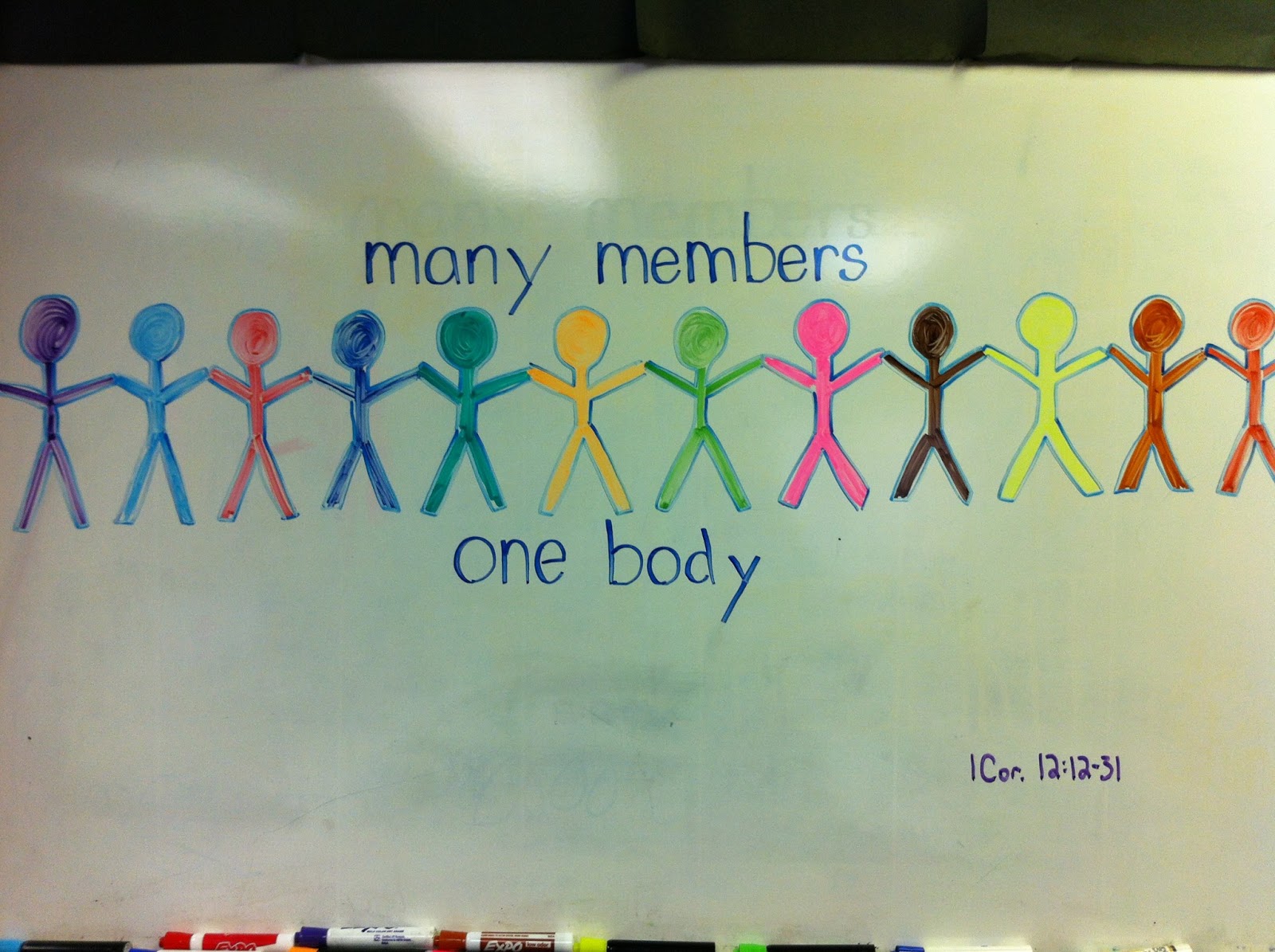
Paul will go on (in Eph. 2 & 3) to emphasize that the church is now the prototype of God’s ultimate plan of reunification. Specifically, the mystery that God has now revealed is that the Jews and the Gentiles (who were about as discordant groups as you could find!) are now fellow members of the one body of Christ (see 3:4-6). Thus in chapter 4, he emphasizes strongly the need for practical, demonstrable love and unity in the church.

But here he is laying the theological foundation for such behavior, namely, that the church is the first glimpse of what God ultimately plans to do. His plan for the ages is to reunite in Christ everything that has been torn apart and alienated through sin. There will be no strife or rivalry or selfishness or jealousy or tyranny of one person over another in the future kingdom of Christ. While we wait for that great day, we must labor to preserve the unity of the Spirit in the bond of peace (Eph. 4:3). The bottom line of Paul’s theology here is:

4. When we understand God’s eternal purpose, it will lead us to submit to Jesus Christ as Lord of all.

If all things will be subject one day to Jesus Christ as Lord and if all of His subjects will dwell together in the unhindered harmony of heaven, then it follows that we now should bring every area of our lives and every relationship under His sovereign lordship. God has told us that His plan for the ages is to sum up or reunite all things in one harmonious whole under Jesus Christ. We know that God will do as He purposes to do. It is certain that He will accomplish all His good pleasure (Isa. 46:10). Every knee will bow before Jesus as Lord, either willingly or under force. It is far better to bow willingly now than to bow under force at the judgment, when there will be no chance for repentance!

To submit to Jesus as Lord begins with your thought life. You must be transformed by the renewing of your mind (Rom. 12:1-2). When sinful thoughts pop into your mind, you must turn from them and enthrone Jesus as Lord. As Paul puts it (Rom. 13:13-14), “Let us behave properly as in the day, not in carousing and drunkenness, not in sexual promiscuity and sensuality, not in strife and jealousy. But put on the Lord Jesus Christ, and make no provision for the flesh in regard to its lusts.” Behavior always comes from the heart (Mark 7:21-23), so you must begin there.

Submitting to Jesus as Lord also requires that you bring your priorities and values in line with His Word. He commanded us (Matt. 6:33), “But seek first His kingdom and His righteousness, and all these things will be added to you.” In the context, “all these things” refers to the things that unbelievers eagerly seek, especially material things. How we manage the money that the Lord entrusts to us is a litmus test of our faithfulness to the Lord (Luke 16:10-13).

Enthroning Jesus as Lord also means that we bring our schedules under His lordship. We all are given a certain amount of time on this earth. Many hours each day are taken up with necessary activities, such as sleeping, eating, personal grooming, and work. But, how do we spend the other hours? Do we make spending time alone with God a priority? Do we hunger and thirst to know Him? Or, do we fritter it away with useless pastimes?

Living under Christ’s lordship also means that we order our relationships according to His Word. We must learn truly to love others, even as He has loved us. We must speak kindly to one another. We must put away selfishness and strife. As Paul wrote (Col. 3:12-14), “So, as those who have been chosen of God, holy and beloved, put on a heart of compassion, kindness, humility, gentleness and patience; bearing with one another, and forgiving each other, whoever has a complaint against anyone; just as the Lord forgave you, so also should you. Beyond all these things put on love, which is the perfect bond of unity.”

Conclusion

The outcome of history is certain and God has revealed it to us in advance. He is going to sum up all things under the lordship of Jesus Christ. Knowing that outcome, you’d be a fool to bet your life on anything else. God wants each of us to submit now to Jesus as Lord and to spend our lives furthering His kingdom purposes. In light of His revealed sovereign purpose, that’s the only wise way to invest your life!


The Mystery of Unity

Today, in the first chapter of Ephesians, we will be examining a great question with which men continually wrestle in our day, as they have all through history: The question of whether or not there is a purpose in the universe. Do the events of history make any sense? Is the record of human events — with its concatenation of tragedy and happiness and misery and heartache and joy — to any real effect, is it moving toward any one goal?

Or is life, as Shakespeare once described it, “a tale told by an idiot, full of sound and fury, signifying nothing”? There are many people today who say that is a true description. They agree with Shakespeare. There are many voices saying that there is no purpose for the universe, and they are respected voices. Many historians, scientists, and others, looking at life around us, at the human story, say that no plan is evident, no purpose discernible, through all the strange mixture of history.

I was reading the commentary on the Bible by William Barclay this week. He cites several English voices in this respect: Oscar Wilde, in one of his epigrams, said, “You give the criminal calendar of Europe to your children under the name of history.” That is all he could see in history, a criminal calendar. G. N. Clark, in his inaugural lecture as president of Cambridge University, said, “There is no secret and no plan in history to be discovered. I do not believe that any future consummation could make any sense of all the irrationalities of preceding ages. If it could not explain them, still less could it justify them.”

And in the introduction to his A History of Europe, H. A. L. Fisher writes, “One intellectual excitement has been denied me. Men wiser and more learned than I have discovered in history a plot, a rhythm, a predetermined pattern. But these harmonies are concealed from me. I can see only one emergency following another, as wave follows upon wave, only one great fact with respect to which, since it is unique, there can be no generalization, only one safe rule for the historian — that he should recognize in the development of human destiny the play of the contingent and the unforeseen.” And Andre Maurois said, “The universe is indifferent. Who created it? Why are we here upon this puny mud heap, spinning in infinite space? I have not the slightest idea, and I am quite convinced that no one else has the least idea.”

For he has made known to us in all wisdom and insight the mystery of his will, according to his purpose which he set forth in Christ as a plan for the fullness of time, to unite all things in him, things in heaven and things on earth. In him, according to the purpose of him who accomplishes all things according to the counsel of his will, we who first hoped in Christ have been destined and appointed to live for the praise of his glory. (Ephesians 1:9-12 RSV)

That is another of the vast and complicated statements in which the apostle crams together truth which relates to one great, central theme — the purpose of God in what is happening today. It is here that we begin to understand the world around us and the course of history as it rolls on. In order to understand it we must take this statement apart. I find four major divisions in it.

There is, first, the secret itself, “the mystery of his will,” the hidden purpose of God. You notice that Paul describes it as a mystery. A mystery, as we have seen in previous messages, is a secret which only God understands, and which men desperately need to know, but about which they can never find out except through the disclosure of God. Mysteries are the answers to the great questions which continually throb in the human heart. But you never can find them by any ordinary human enterprise. No course of instruction, no curriculum of a university, no scientific investigation, will ever reveal these secrets. You cannot find them out in any other way; God must tell us the answers. This is the sort of mystery spoken of here.

You remember that, in First Corinthians 4, Paul reminds us that we Christians have been made stewards of the mysteries of God, dispensers of them. It is up to us to grasp them, understand them, and speak out about them. What is wrong in the world of our day is the fact that the church has not been speaking about the mysteries which belong to it, and, therefore, the world is in confusion and darkness. So it is up to us to tell these forth.

The second division, a very important one, is the way by which the mystery of God’s will was made manifest. Paul brings this out in this passage. The third is the time in which it is to be fully manifested. And the fourth is the part which we will play in accomplishing it — our part in this tremendous procedure. That is our course of study this morning. First let’s look at the great secret which Paul sets before us, found in the latter part of Verse 10:

…to unite all things in him [Christ], things in heaven and things on earth. (Ephesians 1:10b RSV)

That is what God is doing in history. He is working to unite all things in Christ. But that is rather an amazing statement, because, when you look at history, it looks as if exactly the opposite is occurring, as if things are falling apart. Paul has an answer for that — we’ll come to it in just a moment — but first he wants us to understand that this is the direction in which God is moving, this is what he is going to do. He is going to unite all things in him.

When Paul says “all things,” he means all things. In fact, he amplifies it: “things in heaven and things on earth.” That is, things in the invisible realm of reality, heaven, the forces which are at work in our lives right now, but which we can’t see or taste or touch or feel, both evil and good, the evil principalities and powers struggling with the angels and the forces of good, all things in heaven, and all the visible forces on earth, the struggles between nations, the strife among individuals — all these shall cease and be united together, brought to a head, is the idea. The Greek word for unite means “to head up,” i.e., to relate to Christ as a body relates to its head. Then he will be the director, the supreme operator, of all things, both in heaven and on earth.

Remember how Paul puts that in his letter to the Philippians. The process first was one of disglorification. Our Lord emptied himself of the glory that was his when he was equal with God, took upon himself the form of a servant, and was born in the likeness of man. Then he humbled himself and became obedient unto death, even death on a cross. “Therefore,” Paul writes, “God has highly exalted him and bestowed on him the name which above every name, that at the name of Jesus every knee should bow, in heaven and on earth and under the earth, and every tongue confess that Jesus Christ is Lord, to the glory of God the Father,” (Philippians 2:9-11 RSV). That is where God is moving. That is what he is here to do in this time and space continuum in which we live.

You and I know that it doesn’t look that way, does it? Men are living in a divided world, and it is evident on every side. We are out of step with nature, divided from nature. Something has come between us and the animals — they hate us, fear us, run from us. We destroy them, eliminate them gradually but steadily from the face of the earth. We pollute the rivers and darken the skies and build garbage heaps around us that we don’t know what to do with. We know we are doing this, but we don’t know how to stop it, because this is a divided world. Something is at work to keep us from being in harmony with the world of nature in which we live. We are at war among ourselves, with nation against nation, class against class. Struggle and strife and division are taking place on every side. Our newspapers are full of it, as you know. And each one of us is a walking civil war! Aren’t we? We fight within ourselves. We want to do something good, but at the same time we want to do exactly the opposite. We want both to have our cake and to eat it too, and we struggle constantly in this way.

Now, the great thought which Paul drops on us in this passage is that Jesus has come to stop all that. He has come to heal that division, to end it, to heal the broken relationships, to end the strife, to still the bitter, angry, hateful words that men say to one another. He has already started. He has begun healing, binding up, bringing all the divisions to a close. He himself said, “He who is with me gathers; he who is against me scatters,” Matthew 12:30, Luke 11:23). He has come as a healing force into the world to mend all the damage and bind up all the broken hearts. Paul makes a point of that. He says that the way this great fact was made known to us is by the life of Jesus. As he puts it,

For he has made known to us in all wisdom and insight the mystery of his will, according to his purpose which he set forth in Christ … (Ephesians 1:9 RSV)

It is very important to see that, because you will never understand the purpose unless you understand the way it was made known. There is something very remarkable hidden in this statement. You see, this is the way we can come to understand what is happening in the world of our day, the events of today. If you understand what this way is, and how it works, you can make sense of the events which otherwise don’t make sense at all.

This next week we will be observing the Republican convention in Miami Beach. How do you understand it, how does it fit in with what God is doing? “Well,” you Democrats say, “of course, it doesn’t!” — but it is necessary that you ask that question. How does the Vietnamese war fit in with what God is doing? You must never read your newspaper as unrelated to what God is doing. He is working in this world. Every event is brought about, and finds its meaning, because it fits into the plan that he has. So what part does it play? How do you understand it? Where does it fit? That is exactly what Paul is dealing with here — how to read your newspaper intelligently, how to see where these current events fit into the program and the working of God in the affairs of men.

This has been made known to us, he says, “in all wisdom and insight.” These two words, sophia and phronesis, were well understood by the Greek world. Sophia was the passion of the philosophers. They loved to try to find the secrets of life and to seek after wisdom. Phronesis was the common-sense, practical application of these to the problems of life. So Paul says that this mystery of God’s will came to us through wisdom and insight made known, or set forth, in Jesus Christ. There is your clue. It is in Christ that you see how this works.

If you think through the ministry of Jesus, you can see what he is getting at. The end results of the ministry of healing which Jesus came to do are visible in his works. This was why he did his miracles. There is that beautiful passage in Isaiah 35 where Isaiah predicts that God shall come to us. And what does he say will be the results? Why, the eyes of the blind shall be opened, and the ears of the deaf unstopped, the lame man shall leap like a deer, the tongue of the dumb shall sing for joy, and there will be healing manifest in nature on every side (Isaiah 35:5-7).

And that is what happened when Jesus came. He began to heal. He opened blind eyes and touched lame men and made them well. He mastered nature, stilled the storm, walked on water, changed water into wine. He mastered these forces. He delivered the oppressed from the realm of Satan. He set men free, he liberated them, and healed the hurt of their life. This was just the visible demonstration that the end result of his work, which he began then, would finally and ultimately be seen everywhere. So you see it in his works.

Now listen carefully: The principles by which this healing would take place in men’s spirits, as well as their bodies, are set forth in his words, in the words of Jesus. That is why it is so important to listen to the words of Jesus. The Gospel records of the messages and sermons of Jesus are so vitally important because there we have declared to us the radical approaches to life, the revolutionary principles, which will produce a new creation, and are producing it right in the midst of the destruction of the old. That is what is going on in life.

Have you ever really seriously listened to the words of Jesus? Take the Beatitudes, for instance: “Happy,” Jesus said, “are the poor in spirit,” Matthew 5:3). Do you ever feel that way? When you get poor, impoverished, in spirit, when you feel as if you have nothing left, feel that you have been drained dry and have no riches of spirit remaining to you at all — are you happy? Do you go around rejoicing and singing, “Oh, how great it is that I’m so poor in spirit!”? No. We say we’re depressed, and oftentimes we react with bitterness. But listen! Jesus says that is a golden moment. “Blessed [happy] are the poor in spirit, for theirs is the kingdom of heaven,” (Matthew 5:3 RSV). At that point, at that place, you are in a position to receive riches from a different source and by a different process than you could get at any other place, any other point of your life. There you are able to take them, nowhere else. “Happy are those who mourn, for they shall be comforted,” (Matthew 5:4). Do you ever think of yourself that way? Are you happy when you’re sad? It sounds almost contradictory, doesn’t it? But Jesus said that you are happy when you are mourning. Why? Well, because then you can learn about a source of comfort which is otherwise so incredible, so beyond human experience that no human being can give it to you. But you can have it at that point, and at no other place. “Blessed are they that mourn, for they shall be comforted,” (Matthew 5:4 RSV). “Happy are the meek, for they shall inherit the earth,” (Matthew 5:5).

He goes on saying these radical, transforming things. And we listen to them and recite them and say that they are wonderful words, but we never take them seriously. Yet that is what Paul is talking about, these healing, unifying principles revealed in Christ which will transform lives. Do you live by those principles? Or do you live by the world’s interpretation of them? J. B. Philips, in his book, When God Was Man, gives the usual parody of the Beatitudes:

Happy are the pushers, for they get on in the world.
Happy are the hard-boiled, for they never let life hurt them.
Happy are they who complain, for they get their own way in the end.

Which do you live by? Which do I live by?

Happy are the blasé, for they never worry over their sins.
Happy are the slave drivers, for they get results.

The entire world of business is built on that one, isn’t it?

Happy are the knowledgeable men of the world for they know their way around.
Happy are the trouble makers, for they make people take notice of them.

These are exactly contrary to the words of Jesus. Notice how Jesus, when he is dealing with his disciples, takes these men of the world, with all their conventional approaches, and constantly, gently, and graciously corrects them. When they are arguing which is the greatest among them, he sets a child in their midst and says, “Look, you’ll never be great until you learn to be like this child. When you stop trying to be great, when you quit your struggling and manipulating and, in simple, childlike facing of life, trust God, then you can be great. But you never will make it otherwise,” (Matthew 18:1-4).

The mother of James and John comes to him and asks for positions of privilege and favor at his right and left hand for them when he comes into his glory. And Jesus says, “You don’t know what you’re asking. My kingdom isn’t run that way. No, that will be given by my Father to those for whom it is prepared.” And he goes on to tell what prepares us for it: “Unless you drink the cup that I drink of, and are baptized with the baptism with which I’m going to be baptized, you cannot understand or grasp or have that kind of position of privilege and favor,” (Matthew 20:20-23). By that he means the cross and the resurrection — the cross, with its denial, its setting aside of all the old ways, the ways the world operates, and its affirming of a wholly new process, a wholly new way of life, resurrection life — that, he says, will bring you to readiness for it. Nothing else will.

In Jesus’ parables you have so many revelations of a new way of life. The principles by which the new creation is going to come into being are revealed. How many of you men who work have ever wrestled with the parable of the laborers in the vineyard? How many of you have ever tried to justify in your thinking Jesus’ words that it was right for the man who owned that vineyard to pay those laborers the same amount of money, no matter whether they had worked the whole day long or only for an hour? Have you ever struggled with that? Why, the A F of L would shut that vineyard down within ten minutes if they ever heard of anything like that! They would never accept that as a way of operating. And yet Jesus says that is right. The owner of the vineyard has the right to be gracious above measure to some whom he chooses, and not to others. That is right. But that confounds us, confuses us, bewilders us, baffles us. We don’t understand that kind of thinking.

But that is what Paul means when he says that this plan which is working out right now in life was set forth in Christ. In the wisdom and insight of the Scriptures, you will find it, and only there. And yet there is a strange thing about that. When you read of the ministry of Jesus, you find that he himself announces that he came to be a peacemaker. He came to heal, to save, to deliver, to liberate. Yet he also said, “I have not come to bring peace, but a sword. For I have come to set a man against his father, and a daughter against her mother, and a daughter-in-law against her mother-in-law; and a man’s foes will be those of his own household,” (Matthew 10:34-36). The strange thing is that at the beginning he seems to make things worse rather than better. He increases the division and the strife. He offended the rulers when he spoke. His disciples said to him many times, “Lord, don’t you realize that you offended those men?” (Matthew 15:12). “What you said made them angry. You are never going to make it as king if you don’t learn how to handle your public relations a little better!” He offended and baffled his own disciples. He hurt them at times by what he said to them. He sent people away instead of trying to get them to join his cause. And it all ended at last in the hurt and heartache and blood of the cross. But out of that hurt and destruction there came ultimate joy and blessing. That is what Paul is getting at here. And that leads on to the time when all this is going to be fully manifest. He says it will be:

…a plan for the fullness of time [or, literally, “unto the administration of the completeness of the seasons”], (Ephesians 1:10a RSV)

The seasons that he mentions here are the cycles of history. Any historian will tell you that history moves in cycles. There are times of peace and prosperity which move at last into apathy and lethargy, and this foments disquiet and uncertainty and then finally rebellion and revolution which brings about a change which results in peace and prosperity which, in turn, move into apathy and lethargy, etc. You can trace those cycles throughout history again and again and again. Those are what the Bible calls the seasons. Paul says that there is a time coming when all these seasons, which have been working on incessantly toward a great goal, will be fulfilled — the completeness of the seasons. Someday they will be ended. And then we will know that God has succeeded in tearing down the old creation, destroying it utterly, and at the same time has built up the new. Now here is a remarkable thought that Paul is conveying to us. When I started this summer to build an addition to my home the first thing we had to do was to tear off part of the roof. (I helped by falling through the ceiling!) The roof had to be destroyed first, eliminated. We had to destroy the old before we could build the new.

But the marvel of God is that he does both at the same time, and by the same process! Do you grasp the implications of that? You see, the heartache, the hurt, the suffering, the injustice, the misery, is the way he is tearing down the old. But that same heartache and hurt and suffering is the way he is building the new. That is what the Scriptures tell us. That is the amazing revelation, the amazing thought of God which is dropped upon us. And that is why we have references all the way through Scripture to our part in this — the fact that we are called upon not only to believe in Christ and follow him, but also to suffer for his name’s sake as part of the process. God is doing both at once. By means of the hate and the hurt and the suffering he is building the new creation. And when the old is destroyed, the new emerges, all finished, complete, and at the same time. That is the administration of the fullness of time. What is our part? Well, Paul has put it in one phrase:

…we who first hoped in Christ have been destined and appointed to live for the praise of his glory. (Ephesians 1:12 RSV)

That is our part. But this translation softens it to a degree that we miss a bit of what is said. What Paul literally says is, “We have been made his inheritance.” We saints are the inheritance of Christ, his heritage. In Verse 18 of this same chapter Paul refers to “the riches of his glorious inheritance in the saints.” It is necessary to understand what that means. There is a double inheritance in the Christian life. We inherit Jesus. He is our inheritance. He is our resource from which we draw. If you receive an inheritance you live on that basis. You use your inheritance to enrich yourself. And Jesus is our inheritance. We can enrich ourselves with him at any moment. He is our power, our strength, our love, our life, our wisdom, our truth. He is what we live by. Christ is our life.

But, and this is the wonderful thing, we are his inheritance. He draws on us. He takes us and uses us. He has prepared us. Our bodies and souls, our full humanity, are to be his to use to manifest the new creation in the midst of the destruction of the old. That is his inheritance in the saints. All that produces riches, not only in our life but in the lives of others, and in the world in general — the riches of his glorious inheritance in the saints.

What does that mean in practical terms? Well, that means that you and I must not complain any longer about what life hands us. It is the Father who has made that choice. He has chosen to put us where we are, and to put us into the situations where we find ourselves, and to give us the problems that we have, in order that, in the hurt and the heartache and the suffering, and in the joy and the blessing and the riches, whatever they may be, the life of Jesus may be released in that situation. By that means he destroys the old and brings in the new. And as we make ourselves available to him moment by moment, in the shop, in the office, in the home, in the backyard, wherever we are, and as we respond with joy and love and acceptance to the situation in which we find ourselves, God is glorified. Christ receives his inheritance. He finds riches of delight and enjoyment in that. The old is torn down, and the new is built in its place, all in one great, tremendous operation.

I don’t fully understand that, but I know it works. I know that is the way God is working. And therefore there is no escape from the heartache and hurt and suffering. It is going to be there for us. But it is an opportunity, never an obstacle! Let me give you an illustration which perhaps will involve you as well as me. In my mail yesterday was a thick envelope from the City of Palo Alto. I opened it and found a letter enclosing a petition signed by one hundred fourteen people who live right near this church asking the city to revoke our use permit and to restrict our operations as a church. My first reaction was anger. Why should they do this? Why should they try to stop what is happening here, what God is doing among us? Why should this resistance and opposition arise? I was resentful and felt defensive immediately. Don’t they know what’s happening in terms of changed lives? Don’t they understand that youths are being redirected, and older people revitalized, that homes are being blessed and marriages saved, that life is coming alive in new ways as never before to scores and hundreds of people?

But, of course, I immediately realized that they don’t know that. Most of them, probably, have never been inside; they’ve been only outside. And they’re upset. They are annoyed by people who park in such a way as to block their driveways. They are fed up with exhaust fumes because it takes so long for us to get out of our crowded parking lot. They have had enough of noise at night, and of lights that shine into their homes in the middle of the night, and a lot of other things which may seem small to us but which to them are irritations and aggravations.

And then I began to see what this is about. This is God’s opportunity given to us to demonstrate a real, genuine, loving spirit of appreciation and thoughtfulness to our neighbors. This is his opportunity for us to say “I’m sorry for hurt that we’ve caused, unwittingly to be sure, but inconvenience and annoyance and irritation nevertheless,” and for us to respond not in defensiveness but in love, to curtail the annoyances as much as possible, to return good for evil, to invite them to come and see what is happening, and to welcome them to share with us the joys as well as the irritations of what goes on. And, if God grants it, we hope that response will be received by our neighbors in a spirit of relief and acceptance.

I had said to myself, at first, “Why should this intervene? Why do we have to take time out to deal with these petty little problems?” But, of course, the answer is that these aren’t petty problems. They constitute a great opportunity, a glorious chance to know our neighbors, to break down barriers that we, unknowingly, have erected. It is a chance for the whole congregation to show some love and understanding, and to be extra careful not to annoy those around us, and to apologize when we have, and to renew relationships with these people whom God loves. That is why God sent it. And, in the process, he will bring in the new, and break down the old.

 
Leave a comment

Posted by on December 18, 2025 in ephesians


Redemption – Ephesians 1:7-8


Ephesians 1:7-8 | KCIS 630

On every continent, in every country, in every city, in every family, people join together at times for celebrations. For instance, people celebrate birthdays and anniversaries. We decorate. We purchase cards and gifts. We take pictures r make videotapes to help us remember the celebration and all who participated in it.

As a nation, the U.S. celebrates various holidays—Memorial Day, Independence Day, Labor Day, and Thanksgiving. These celebrations include family, friends, picnics, fireworks, and parades. Through these special occasions we remember where we have been as a nation; what got us here; what we stand for; and how we fit into history.

When we come to the Bible, we discover that the most important celebration of our lives ought to be the celebration of what God has done for us through Christ. Every public assembly of God’s people should be a grand celebration of who Christ is and what He has done.

The opening words of the Book of Ephesians ring with celebration in Paul’s praises to God for all that He has given to us in Christ. We find in Ephesians 1:3–14 a single sentence saturated with celebration.

In a “trumpet blast” of praise, Paul celebrated that God has blessed us with every spiritual blessing in Christ (1:3). He celebrated that God has made us His chosen people in Christ (1:4). Paul celebrated that God has adopted us to be His children (1:5). He celebrated the grace freelygiven to us in Christ (1:6).

Then we come to this spectacular statement: “In Him [Christ] we have redemption through His blood, the forgiveness of our trespasses, according to the riches of His grace, which He lavished upon us. . . .” (1:7, 8).

In  Christ  we  celebrate  being  redeemed.  How does this celebration unfold?

WE CELEBRATE THE MEANING OF REDEMPTION

“In Him we have redemption through His blood, . . .” (1:7). Paul celebrated redemption in Christ, but what did He mean by “redemption”? Remember two words: “condition” and “cost.” Redemption  tells  us  something  about the condition we were in before we were redeemed. One commentator made this observation: “The fundamental idea of redemption is that of the setting free of a thing or a person that has come to belong to another.”

In the Old Testament, redemption was the price paid to gain a slave’s freedom. Redemption was also what God did for Israel when He liberated them from Egyptian slavery. Redemption means liberation or freedom from the control of another. Paul wrote about being “sold into bondage to sin” (Romans 7:14). Redemption reminds me of the condition that we were in before we

Redemption Through His Blood

Some years ago trading stamps were popular. For each dollar amount purchased a given number of trading stamps was given as a bonus. When sufficient stamps were saved up, they were taken to a redemption center and exchanged for merchandise.

Redemption is one of the central themes of Scripture and of the book of Ephesians, but it carries much more than the idea simply of exchanging one thing for another of equal value.

The Meaning of Redemption

Redemption comes from one of six terms taken from the field of law and used in the New Testament in relation to salvation. Dikaioō and related terms referred to legal acquittal of a charge and are used theologically to speak of a sinner’s being vindicated, justified, and declared righteous before God (see, for example, Rom. 3:4; 4:25; 5:18; 1 Tim. 3:16). Aphiēmi basically means to send away and was used to indicate the legal repayment or cancellation of a debt or the granting of a pardon. It is used in Scripture to refer to God’s forgiveness of sin (see Matt. 9:2; Rom. 4:7; Eph. 1:7; 4:32; etc.). Huiothesia referred to the legal process of adopting a child and is used by Paul to represent the believer’s adoption into God’s family (see Rom. 8:15; Gal. 4:5; Eph. 1:5). Katallassō meant to legally reconcile two disputing parties in court and in the New Testament is used of a believer’s reconciliation with God through Jesus Christ (Rom. 5:10; 2 Cor. 5:8–20).

Two Greek legal terms are related to redemption. Agorazō, and the related exagorazō, refer to buying or purchasing. The source of the terms is agora, which means marketplace, and the root idea of the derived verbs and nouns referred to buying and trading in the marketplace. In the New Testament they are used to denote spiritual purchase or redemption (see Gal. 3:13; Rev. 5:9; 14:3–4; etc.).

The other term for redemption, lutroō (along with its related forms), meant to release from captivity. It carried an even stronger meaning than agorazō and is behind the noun rendered here as redemption. This word was used to refer to paying a ransom in order to release a person from bondage, especially that of slavery.

During New Testament times the Roman Empire had as many as six million slaves, and the buying and selling of them was a major business. If a person wanted to free a loved one or friend who was a slave, he would buy that slave for himself and then grant him freedom, testifying to the deliverance by a written certificate. Lutroō was used to designate the freeing of a slave in that way.

That is precisely the idea carried in the New Testament use of the term to represent Christ’s atoning sacrifice on the cross. He paid the redemption price to buy for Himself fallen mankind and to set them free from their sin.

Every human being born since the Fall has come into the world enslaved to sin, under total bondage to a nature that is corrupt, evil, and separated from its Creator. No person is spiritually free. No human being is free of sin or free of its consequences, the ultimate consequence, or penalty, for which is death (Rom. 6:23). “The soul who sins will die” (Ezek. 18:4).

Jesus said, “Truly, truly, I say to you, everyone who commits sin is the slave of sin” (John 8:34), and Paul points out that every person has committed sin: “There is none righteous, not even one” (Rom. 3:10; cf. Ps. 14:1). In the same letter the apostle says that we are all “sold into bondage to sin” (7:14) and that, in fact, the whole of creation is enslaved to the corruption of sin (8:21).

Sin is man’s captor and slave owner, and it demands a price for his release. Death is the price that had to be paid for man’s redemption from sin. Biblical redemption therefore refers to the act of God by which He Himself paid as a ransom the price for sin.

In Romans Paul speaks of redemption as “our having been freed from sin” and become “slaves of righteousness” (6:18). In Galatians He describes redemption in saying that Jesus Christ “gave Himself for our sins, that He might deliver us out of this present evil age, according to the will of our God and Father” (1:3–4); that “Christ redeemed us from the curse of the Law, having become a curse for us” (3:13); and that “it was for freedom that Christ set us free; therefore keep standing firm and do not be subject again to a yoke of slavery” (5:1). In Colossians the apostle says that “He delivered us from the domain of darkness, and transferred us to the kingdom of His beloved Son, in whom we have redemption, the forgiveness of sins” (1:13–14).

The writer of Hebrews explains redemption in these words: “Since then the children share in flesh and blood, He Himself [Christ] likewise also partook of the same, that through death He might render powerless him who had the power of death, that is, the devil; and might deliver those who through fear of death were subject to slavery all their lives” (2:14–15)

The Elements of Redemption

which He freely bestowed on us in the Beloved. In Him we have redemption through His blood, the forgiveness of our trespasses, according to the riches of His grace, which He lavished upon us. In all wisdom and insight He made known to us the mystery of His will, according to His kind intention which He purposed in Him with a view to an administration suitable to the fulness of the times, that is, the summing up of all things in Christ, things in the heavens and things upon the earth. (1:6b–10)

In this passage Paul mentions five elements of the redemption God offers fallen men through His Son, Jesus Christ: the Redeemer, the redeemed, and the redemption price, results, and reason.

the redeemer

Grace (v. 6a) is the antecedent of which. It is God’s grace (undeserved love and goodness) that He freely bestowed on us in the Beloved, and because we are in Him we have redemption. Jesus Christ is our Redeemer from sin, the Beloved (the word indicates the One who is in the state of being loved by God) who Himself paid the price for our release from sin and death. Because we now belong to Christ, by faith made one with Him and placed in His Body, we are now acceptable to God.

From the beginning of Jesus’ ministry the Father declared Him to be “My beloved Son” (Matt. 3:17). And because we have believed in Him, “He delivered us from the domain of darkness, and transferred us to the kingdom of His beloved Son” (Col. 1:13). Because we are now in the Beloved, we, too, are “beloved of God” (Rom. 1:7).

Only Jesus Christ has the inherent right to all the goodness of God. But because we are identified with Him by faith, that goodness is now also our goodness. Because our Savior and Lord is the Beloved of the Father and possesses all the goodness of the Father, we are also the beloved of the Father and possess all His goodness. Jesus said, “He who has My commandments and keeps them, he it is who loves Me; and he who loves Me shall be loved by My Father” (John 14:21).

The Father now loves us as He loves Christ and wants us to have everything that Christ has. That is why Paul could say He “has blessed us with every spiritual blessing in the heavenly places in Christ” (Eph. 1:3). Every Christian is God’s beloved child because the Lord Jesus Christ has become our Redeemer.

The Old Testament concept of a kinsman-redeemer set forth three qualifications: he had to be related to the one needing redemption, able to pay the price, and willing to do so. The Lord Jesus perfectly met these requirements.

Charitoō (freely bestowed) is from charis (grace, v. 6a), and therefore Paul is saying that God has graced us with His grace. Christians are those who have been graced by God.

the redeemed

On us, “the saints … who are faithful in Christ Jesus” (v. 1), the Redeemer has freely bestowed His grace. We are the ones who have redemption through His blood.

In chapter 2 Paul reminds us of what we were like when God so graciously redeemed us. We “were dead in [our] trespasses and sins”; we “walked according to the course of this world, according to the prince of the power of the air”; we “lived in the lusts of our flesh, indulging the desires of the flesh and of the mind, and were by nature children of wrath”; and we were without “hope and without God in the world” (vv. 1–3, 12). In chapter 4 he reminds us that we formerly walked in futility of mind, “darkened in [our] understanding, excluded from the life of God,” because of ignorance and hardness of heart (vv. 17–18). Those are the kinds of people (the only kind who exist) that God chose to redeem.

It is of course because men are like that that they need redemption. Good men would not need a Redeemer. That is why Christ “gave Himself for us, that He might redeem us from every lawless deed and purify for Himself a people for His own possession, zealous for good deeds” (Titus 2:14).

Until a person realizes his need for redemption, however, he sees no need for a Redeemer. Until he recognizes that he is hopelessly enslaved to sin, he will not seek release from it. But when he does, he will be freed from the curse of sin, placed in Christ’s Body, and blessed with His every spiritual blessing.

the redemption price

In Him we have redemption through His blood, (7a)

The price of redemption is His blood. It cost the blood of the Son of God to buy men back from the slave market of sin (cf. Lev. 17:11; Heb. 9:22).

Shedding of blood is a metonym for death, which is the penalty and the price of sin. Christ’s own death, by the shedding of His blood, was the substitute for our death. That which we deserved and could not save ourselves from, the beloved Savior, though He did not deserve it, took upon Himself. He made payment for what otherwise would have condemned us to death and hell.

The blood of sacrificial animals was continually offered on the altars of the Tabernacle and then the Temple. But that blood was never able, and was never intended, to cleanse the offerers from sin. Those animals were only symbolic, typical substitutes. As the writer of Hebrews explains, “It is impossible for the blood of bulls and goats to take away sins” (Heb. 10:4). But in the shedding of His blood, “we have been sanctified through the offering of the body of Jesus Christ once for all” (10:10). He “gave Himself up for us, an offering and a sacrifice to God as a fragrant aroma” (Eph. 5:2). The Savior Himself said that His blood was “poured out for many for forgiveness of sins” (Matt. 26:28). As the writer of Hebrews explains, Christ’s sacrifice was “not through the blood of goats and calves, but through His own blood, He entered the holy place once for all, having obtained eternal redemption. For if the blood of goats and bulls and the ashes of a heifer sprinkling those who have been defiled, sanctify for the cleansing of the flesh, how much more will the blood of Christ, who through the eternal Spirit offered Himself without blemish to God, cleanse your conscience from dead works to serve the living God?” (Heb. 9:12–14).

We “were not redeemed with perishable things like silver or gold, … but with precious blood, as of a lamb unblemished and spotless, the blood of Christ” (1 Pet. 1:18–19). No wonder John saw the four living creatures and the twenty-four elders singing, “Worthy art Thou to take the book, and to break its seals; for Thou wast slain, and didst purchase for God with Thy blood men from every tribe and tongue and people and nation. And Thou hast made them to be a kingdom and priests to our God; and they will reign upon the earth” (Rev. 5:8–10).

The “redemption which is in Christ Jesus … in His blood through faith” (Rom. 3:24–25) has paid the price for those enslaved by sin, bought them out of the slave market where they were in bondage, and set them free as liberated sons of God. In their freedom they are in union with Jesus Christ and receive every good thing that He is and has. His death frees believers from sin’s guilt, condemnation, bondage, power, penalty, and—some glorious day—even from its presence.

the redemptive results

the forgiveness of our trespasses, according to the riches of His grace, which He lavished upon us. In all wisdom and insight He made known to us the mystery of His will, (7b–9a)

Redemption involves every conceivable good thing, “every spiritual blessing in the heavenly places in Christ” (v. 3). But here Paul focuses on two especially important aspects. One is negative, the forgiveness of our trespasses, and the other is positive, wisdom and insight.

Forgiveness. The primary result of redemption for the believer is forgiveness, one of the central salvation truths of both the Old and New Testaments. It is also the dearest truth to those who have experienced its blessing. At the Last Supper, Jesus explained to the disciples that the cup He then shared with them was His “blood of the covenant, which is poured out for many for forgiveness of sins” (Matt. 26:28). Redemption brings forgiveness.

Behaviorists and those from some other schools of psychology maintain that we cannot be blamed for our sin, that it is the fault of our genes, our environment, our parents, or something else external. But a person’s sin is his own fault, and the guilt for it is his own. The honest person who has any understanding of his own heart knows that.

The gospel does not teach, as some falsely maintain, that men have no sin or guilt, but rather that Christ will take away both the sin and the guilt of those who trust Him. As Paul told the Jews in Pisidian Antioch, “Through Him [Christ] forgiveness of sins is proclaimed to you, and through Him everyone who believes is freed from all things” (Acts 13:38–39).

Israel’s greatest holy day was Yom Kippur, the Day of Atonement. On that day the high priest selected two unblemished sacrificial goats. One goat was killed, and his blood was sprinkled on the altar as a sacrifice. The high priest placed his hands on the head of the other goat, symbolically laying the sins of the people on the animal. The goat was then taken out deep into the wilderness, so far that it could never find its way back. In symbol the sins of the people went with the goat, never to return to them again (Lev. 16:7–10).

But that enactment, beautiful and meaningful as it was, did not actually remove the people’s sins, as they well knew. It was but a picture of what only God Himself in Christ could do. As mentioned above, aphiēmi (from which forgiveness comes) basically means to send away. Used as a legal term it meant to repay or cancel a debt or to grant a pardon. Through the shedding of His own blood, Jesus Christ actually took the sins of the world upon His own head, as it were, and carried them an infinite distance away from where they could never return. That is the extent of the forgiveness of our trespasses.

It is tragic that many Christians are depressed about their shortcomings and wrongdoing, thinking and acting as if God still holds their sins against them—forgetting that, because God has taken their sins upon Himself, they are separated from those sins “as far as the east is from the west” (Ps. 103:12). They forget God’s promise through Isaiah that one day He would wipe out the transgressions of believers “like a thick cloud” and their “sins like a heavy mist. Return to Me,” He said, “for I have redeemed you” (Isa. 44:22). Even before the Messiah came and paid the price for redemption, God spoke of it as already having taken place. Depressed Christians forget that God looked down the corridors of time even before He fashioned the earth and placed the sins of His elect on the head of His Son, who took them an eternal distance away. He dismissed our sins before we were born, and they can never return.

Hundreds of years before Calvary, Micah proclaimed, “Who is a God like Thee, who pardons iniquity and passes over the rebellious act of the remnant of His possession? He does not retain His anger forever, because He delights in unchanging love. He will again have compassion on us; He will tread our iniquities under foot. Yes, Thou wilt cast all their sins into the depths of the sea” (Mic. 7:18–19).

To ancient Israel the distance from east to west and “the depths of the sea” represented infinity. God’s forgiveness is infinite; it takes away our trespasses to the farthest reaches of eternal infinity.

When Jesus comes into our lives as Savior and Lord, He says to us what He said to the woman caught in the act of adultery, “Neither do I condemn you; go your way” (John 8:11). “There is therefore now no condemnation for those who are in Christ Jesus. For the law of the Spirit of life in Christ Jesus has set you free from the law of sin and of death” (Rom. 8:1–2).

Forgiveness in Jesus Christ is undeserved, but it is free and it is complete. Those who have Him have freedom from sin, now and throughout eternity. In Christ our sins—past, present, and future—“are forgiven … for His name’s sake” (1 John 2:12; cf. Eph. 4:32; Col. 2:13). They were forgiven countless ages before we committed them and will remain forgiven forever.

Because we continue to sin, we need the continued forgiveness of cleansing; but we do not need the continued forgiveness of redemption. Jesus told Peter, “He who has bathed needs only to wash his feet, but is completely clean” (John 13:10). Even though we continue to sin, Jesus “is faithful and righteous to forgive us our sins and to cleanse us from all unrighteousness” (1 John 1:9). He forgives all our sins in the sweeping grace of salvation. That does not mean we will no longer sin, nor that when we do our sins have no harmful effect. They have a profound effect on our growth, joy, peace, usefulness, and ability to have intimate and rich communion with the Father. Thus the believer is called on to ask for forgiveness daily so that he may enjoy not just the general forgiveness of redemption, but the specific forgiveness of daily cleansing, which brings fellowship and usefulness to their maximum. That is the issue in our Lord’s teaching on prayer recorded in Matthew 6:12, 14–15.

There are no second class Christians, no deprived citizens of God’s kingdom or children in His family. Every sin of every believer is forgiven forever. God knows how we were, how we now live, and how we will live the rest of our lives. He sees everything about us in stark-naked reality. Yet He says, “I am satisfied with you because I am satisfied with My Son, to whom you belong. When I look at you, I see Him, and I am pleased.”

Because God accepts every believer as He accepts His own Son, every believer ought to accept himself in the same way. We do not accept ourselves for what we are in ourselves any more than God accepts us for that reason. We accept ourselves as forgiven and as righteous because that is what God Himself declares us to be. To think otherwise is not a sign of humility but of arrogance, because to think otherwise is to put our own judgment above God’s Word and to belittle the redemption price paid for us by His own beloved Son. A Christian who denigrates himself and doubts full forgiveness denies the work of God and denigrates a child of God. If we matter to God, we certainly ought to matter to ourselves.

A person may have many friends in high places. He may know presidents, kings, governors, senators, and world leaders of every sort. But such friendships pale beside that of the most obscure Christian, who not only is a friend but a child of the Creator of the universe.

Philip Bliss wrote, I am so glad that our Father in heav’n Tells of His love in the Book He has giv’n.

Wonderful things in the Bible I see; This is the dearest, that Jesus loves me. Oh, if there’s only one song I can sing,

When in His beauty I see the Great King, This shall my song in eternity be:“Oh, what a wonder that Jesus loves me!”

The vastness and comprehensiveness of our forgiveness is seen in Paul’s statement that it is according to the riches of His grace. God’s grace—like His love, holiness, power, and all His other attributes—is boundless. It is far beyond our ability to comprehend or describe, yet we know it is according to the riches of that infinite grace that He provides forgiveness.

If you were to go to a multimillionaire and ask him to contribute to a worthy ministry, and he gave you a check for twenty-five dollars, he would only be giving out of his riches. Many poor people give that much. But if, instead, he gave you a check for fifty thousand dollars, he would be giving according to his riches.

That is a small picture of God’s generosity. His forgiveness not only is given according to the riches of His grace but is lavished upon us. We need never worry that our sin will outstrip God’s gracious forgiveness. “Where sin increased,” Paul assures us, “grace abounded all the more” (Rom. 5:20). Our heavenly Father does not simply give us subsistence forgiveness that will barely cover our sins if we are careful not to overdo. We cannot sin beyond God’s grace, because as wicked and extensive as our sins might be or become, they will never approach the greatness of His grace. His forgiveness is infinite, and He lavishes it without measure upon those who trust in His Son. We therefore not only can enjoy future glory with God but present fellowship with Him as well.

Wisdom and Insight. The second result of redemption for the believer is his being given wisdom and insight. Sophia (wisdom) emphasizes understanding of ultimate things—such as life and death, God and man, righteousness and sin, heaven and hell, eternity and time. Paul is speaking of wisdom concerning the things of God. Phronēsis (insight), on the other hand, emphasizes practical understanding, comprehension of the needs, problems, and principles of everyday living. It is spiritual prudence in the handling of daily affairs.

God not only forgives us—taking away the sin that corrupts and distorts our lives—but also gives us all the necessary equipment to understand Him and to walk through the world day by day in a way that reflects His will and is pleasing to Him. He generously gives us the wherewithal both to understand His Word and to know how to obey it.

In Jesus Christ, God takes us into His confidence. “We do speak wisdom among those who are mature,” Paul said; it is “a wisdom, however, not of this age, nor of the rulers of this age, who are passing away; but we speak God’s wisdom in a mystery, the hidden wisdom, which God predestined before the ages to our glory.… Now we have received, not the spirit of the world, but the Spirit who is from God, that we might know the things freely given to us by God” (1 Cor. 2:6–7, 12). He concluded that amazing passage by declaring, “we have the mind of Christ” (v. 16).

The French philosopher André Maurois said, “The universe is indifferent. Who created it? Why are we on this puny mud-heap, spinning in infinite space? I have not the slightest idea, and I am convinced that no one has the least idea.”

It is not surprising that those who do not even recognize that God exists, much less trust and serve Him, do not have the least idea of what life, the universe, and eternity are all about. Jesus said, “I praise Thee, O Father, Lord of heaven and earth, that Thou didst hide these things from the wise and intelligent and didst reveal them to babes” (Matt. 11:25). James said, “If any of you lacks wisdom, let him ask of God, who gives to all men generously and without reproach, and it will be given to him” (James 1:5). When God takes away sin, He does not leave us in a spiritual, moral, and mental vacuum where we must then work things out for ourselves. He lavishes wisdom and insight on us according to the riches of His grace just as He lavishes forgiveness on us according to those riches.

the redemptive reason

according to His kind intention which He purposed in Him with a view to an administration suitable to the fulness of the times, that is, the summing up of all things in Christ, things in the heavens and things upon the earth. (1:9b–10)

Why has God done so much for us? Why has He blessed us with every spiritual blessing, chosen us in Christ before the foundation of the world, made us holy and blameless, predestined us to adoption as His children, redeemed us through His blood, and lavishly given us forgiveness, wisdom, and insight according to the infinite riches of His grace?

God redeems men in order that He might gather everything to Himself. The time of that gathering will be the millennial kingdom, which will be an administration suitable to the fulness of the times. When the completion of history comes, the kingdom arrives, eternity begins again, and the new heaven and new earth are established, there will be a summing up of all things in Christ, things in the heavens and things upon the earth. Jesus Christ is the goal of history, which finds its resolution in Him. The paradise lost in Adam is restored in Christ.

At that time, “at the name of Jesus every knee [will] bow, of those who are in heaven, and on earth, and under the earth, and … every tongue [will] confess that Jesus Christ is Lord, to the glory of God the Father” (Phil. 2:10–11). Christ will gather the entire universe into unity (see Ps. 2; Heb. 1:8–13). At the present time the universe is anything but unified. It is corrupted, divided, and splintered. Satan is now “the ruler of this world,” but in that day he “shall be cast out” (John 12:31). He and his demon angels will be thrown into the pit during the Millennium, released for a short while, and then cast into the lake of fire for all eternity (Rev. 20:3, 10).

When every trace of evil has been disposed of, God will establish an incomparable unity in Himself of all things that remain. That is the inevitable goal of the universe.

Macbeth pessimistically declared that history is “a tale told by an idiot, full of sound and fury, signifying nothing” (Shakespeare, Macbeth, 5.5.19).

Apart from the wisdom and insight God provides His children, such a hopeless conclusion is inescapable. But history belongs to God, not to the puny plans of man or the perverse power of Satan. History is written and directed by its Creator, who will see it through to the fulfillment of His own ultimate purpose—the summing up of all things in Christ. He designed His great plan in the ages past; He now sovereignly works it out according to His divine will; and in the fulness of the times He will complete and perfect it in His Son, in whom it will forever operate in righteous harmony and glorious newness along with all things in the heavens and things upon the earth.[1]

WE CELEBRATE THE RESULT OF REDEMPTION

“In Him we have redemption through His blood, the forgiveness of our trespasses, . . .” (1:7; emphasis mine). The result of redemption is the forgiveness of sins.

The noun “forgiveness” (Gk.: aphesis) comes from a verb which means “to send away, to bid to depart.” God sends our sins away. They no longer stand between us and God.

Those who lived under the Old Testament had the scapegoat. On the Day of Atonement, the high priest would lay his hands on it as a sym- bolic transferal of all the sins from the people to the goat. The goat was then taken out into a remote place in the wilderness so that it would never be able to return to the camp. The goat was gone, and so were the sins (Leviticus 16).

Jesus Christ became our scapegoat. He took our guilt and accepted the punishment:

. . . the Lord has caused the iniquity of us all to fall on Him (Isaiah 53:6).

He made Him who knew no sin to be sin on our behalf, that we might become the righteousness of God in Him (2 Corinthians 5:21).

. . . He Himself bore our sins in His body on the cross, . . . (1 Peter 2:24).

A group of people were once asked about their religious beliefs. A number of different ideas were expressed about heaven and hell. One of the common views held by many of the respondents was this: Where you spend eternity depends on how good you are. In other words, if a person stays out of trouble, takes care of responsibilities, treats people well, and seems to have more good that can be said about him than bad, then that person will go to heaven.

That idea cannot be found in the Bible! The Bible teaches that none of us is good enough to go to heaven: “There is none righteous, not even one” (Romans 3:10); “All have sinned and fall short of the glory of God” (Romans 3:23); “The wages of sin is death” (Romans 6:23).

Those three verses alone disprove the notion that goodness gets people into heaven. It does not matter if you are selected as the most outstanding student in your school, recognized by the civic club as a model citizen, or respected in your congregation as a person of concern and compassion. You cannot enter heaven just be- cause you see yourself as basically good. Goodness will not get us into heaven. None of us can ever be good enough. Our sins have seen to that.

The first time I sinned, the first time you sinned, it became impossible for us to get into heaven by being good. None of us can do any- thing to “de-sin” a sinner.

Regardless of how good we might seem to others, we are not acceptable to God. We cannot make ourselves acceptable to God. God alone does this by forgiving us. He does this by sending our sins away. That is why we celebrate the result of redemption—the forgiveness of sins.

WE CELEBRATE THE MEASURE OF REDEMPTION

“In Him we have redemption through His blood, the forgiveness of our trespasses, according to the riches of His grace, which He lavished upon us” (1:7, 8; emphasis mine). Paul affirmed the vastness and the completeness of our forgive- ness. The extent of our forgiveness is measured by the boundless grace of God which He causes to overflow into our lives.

God redeems and forgives according to the riches of His grace. God does not have a quota. God does not allow a person just so many “big” sins that we had better never exceed. “But where sin increased, grace abounded all the more” (Romans 5:20). No human being can ever sin beyond the reach of God’s grace. Our sins never can be so horrible, never so numerous that His grace cannot handle them.

The truth is this: Goodness will not get you into heaven no matter how hard you try; however, incredible sinfulness will not exclude you from heaven if you put your trust in Jesus.

Thom Lemmons wrote a novel that takes readers back to the first century, to the time of the cross of Christ, and to the years that followed. The main character is a carpenter named Linus who was abruptly awakened one night and summoned to build a cross for the crucifixion of a rebellious teacher from Nazareth. He did it. Later that same day Linus stood by and watched Jesus of Nazareth bleed and die on the cross he had made.

Guilt overwhelmed him. He fled Jerusalem and set out on a search for both truth and life. Years later, the memory of the dying Galilean teacher still haunted him. Linus met a man from Tarsus, named Saul. In their imaginary meeting, Linus and Saul had this conversation:

“I am guilty—directly guilty of his blood! I knew, felt he was innocent, and yet I—” He could not make himself say the words, his mind absorbed by the blood of an innocent man. . . . “I built the cross on which he was killed,” he whispered at last, in a voice choked with shame and confusion. “I knew, and yet I consented—”

. . . Saul leaned over and gripped his fore- arm. “Surely you cannot imagine you have more guilt in this than I, carpenter. . . . But none of us can escape a part in his death. Don’t you understand, Linus? He is the Passover Lamb, slain once for the sins of the whole world—of everyone who has ever lived or who will ever live.”

Hot tears began to seep from Linus’s eyes. He shook his head, unable to see, unable to permit himself to accept—“Think of it this way, my friend,” Saul continued. “If your work contributed to his death, it has also contributed to a new life for the whole creation. You didn’t just build a cross, Linus. You also built an altar.”3

The  cross  confirms that we  cannot  sin so much or so horribly that God’s grace is power- less to do anything about it. Men took the perfect Son of God, stripped Him and beat Him, and hung Him on a wooden cross to die like a common criminal. They did everything they could to humiliate, hurt, and destroy Jesus. God’s grace was still greater than their sins. God took what they did to Jesus and made forgiveness possible through His blood.

CONCLUSION Have  you  joined  in  the  celebration  of  redemption?  Remember,  goodness  will  not  get you into heaven. The only way to enter heaven is to be in Jesus. Are you in Jesus? Commit your life to Him. Do not put this off another day! Redemption is still a reality. Forgiveness is still offered. Grace still flows.

3Thom Lemmons, Once Upon a Cross (Sisters, Oreg.: Multnomah Books, 1993), 304.

[1] John F. MacArthur Jr., Ephesians, MacArthur New Testament Commentary (Chicago: Moody Press, 1986), 17–26.

 
Leave a comment

Posted by on December 15, 2025 in ephesians


Chosen – Ephesians 1:4


Pin by Vicky Pratt (2nd Time) on Bible verses 09 | Bible promises ...One of the funniest cartoons I ever saw showed a lawyer reading a client’s last will and testament to a group of greedy relatives. The caption read: “I, John Jones, being of sound mind and body, spent it all!”

When Jesus Christ wrote His last will and testament for His church, He made it possible for us to share His spiritual riches. Instead of spending it all, Jesus Christ paid it all. His death on the cross and His resurrection make possible our salvation.

He wrote us into His will, then He died so the will would be in force. Then He arose again that He might become the heavenly Advocate to make sure the terms of the will were correctly followed!

He has chosen us (v. 4). This is the marvelous doctrine of election, a doctrine that has confused some and confounded others.

God chose us even before He created the universe…He knew mankind would need a Savior, so He decided that those who responded to this gift would be part of His spiritual family (“in Christ”), so that our salvation is wholly of His grace and not on the basis of anything we ourselves have done.

A woman died in West Palm Beach, Florida, at the age of 71. The  coroner’s  report  listed  malnutrition as the cause of death. The woman weighed only fifty pounds at the time of her death.

She appeared to have lived a hard life. Authorities found her house indescribably filthy. Neighbors reported that she had made frequent trips to their back doors to beg for food. Her clothes came from a charity organization. It seemed that a penniless woman had finally come to the end of her difficult journey.

As the police searched through her trashy house, they came across two keys. The keys led them to safe-deposit boxes at two local banks. When the authorities opened one of the boxes, they discovered more than seven hundred valu- able stock certificates and securities, along with about $200,000 in cash.

The second box held only cash—$600,000 worth. The woman had begged for food, worn secondhand clothes, and died of malnutrition, even though her estate was valued at over $1,000,000!

Paul wrote the Ephesian letter to Christians who were inclined to do with their vast spiritual resources what the woman in Florida did with her material resources—fail to put them to good use.

Christians today can make that same mistake. We have tremendous possessions in Christ, and no Christian should ever become spiritually malnourished or wasted. We simply need to put to good use what God has provided.

Ephesians affirms the limitlessness of God’s heavenly reserves. The epistle demonstrates that Christians need not be spiritually deprived. As God’s children, we have available to us resources which can make us incredibly rich in God. Paul described them as “the riches of His grace, which He lavished upon us” (1:7b, 8).

The text sets forth a timeless truth: God gives every possible spiritual blessing to those who are in Christ. What do you have in Christ? You have everything God has to give!

GOD GIVES US BLESSINGS BY HIS OWN CHOICE

Paul’s words call on Christians to praise God: “Blessed be the God and Father of our Lord Jesus Christ, who has blessed us with every spiritual blessing in the heavenly places in Christ, just as He chose 2   us in Him before the foundation of the world, . . .” (vv. 3, 4a; emphasis mine).

Before the earth existed, God desired to share with Christians His love and the riches located, literally, “in the heavenlies.” God’s nature prompts Him to express His love toward others and to share His riches with them.

God determined by His own free choice to create sons and daughters in His own image. He gave them the ability to enjoy being with Him, loving Him, sharing His home, and praising His name.

  1. Phillip Keller’s description helps us to imagine the reaction when God first let the heavenly realm know about His plan: “Insofar as we human beings can ascertain, it was possibly one of the most daring ideas ever generated in the council chambers of God. And we may be quite sure that when the scheme was made known a wave of excitement swept across the expanses of eternity. None of the angels or other ministering spirits had ever dreamed of such a stirring project.

“God was determined to reproduce Himself. He would bring into being and sonship others like Himself. He was intent on populating His heavenly home with freewill beings fashioned in His own character. They would be heirs and joint heirs with Christ, His Son, entitled to enjoy eternity in ecstasy.”

God freely chose to make us sons and daughters. What are we to do with the idea that God chose us to be His children in Christ?

We can settle for less. We can discount the notion that God wants us to be His children.

On the other hand, we can accept God’s best. His aim is to adopt us and make us His children, to make  us heirs of His riches, to bring out His image in us, and to share heaven with us forever.

Think for a moment. Where are you in all of this? Are you settling for less? Is God’s choice to make you His child and to give heaven’s riches to you something that makes you marvel? Do you not desire to let this happen in your life?

GOD GIVES US HIS BLESSINGS IN HIS OWN WAY

God gives us every spiritual blessing “in Christ.” The phrase “in Christ” or its equivalent occurs more than twenty times in Ephesians. Paul made prominent use of it in these early verses:

The faithful are in Christ (v. 1).                                 Every spiritual blessing is in Christ (v. 3).

We are holy and blameless in Christ (v. 4).                Grace is freely bestowed in Christ (v. 6).

Redemption/forgiveness  of  sins  are  in Christ (v. 7).    The chosen are in Christ (v. 9).

We are marked, or sealed, in the Holy Spirit to guarantee our inheritance in Christ (v. 13).

John 14:20 – “In that day you will know that I am in my Father, and you in me, and I in you.”

Romans 8:1 – “There is therefore now no condemnation for those who are in Christ Jesus.”

2 Corinthians 5:17 – “Therefore, if anyone is in Christ, he is a new creation. The old has passed away; behold, the new has come.”

Galatians 3:26-28 – “For in Christ Jesus you are all sons of God, through faith. For as many of you as were baptized into Christ have put on Christ. There is neither Jew nor Greek, neither slave nor free, nor male and female, for you are all one in Christ Jesus.”

1 Thessalonians 4:16 – “For the Lord himself will descend from heaven with a cry of command, with the voice of an archangel, and with the sound of the trumpet of God. And the dead in Christ will rise first.”

2 Timothy 1:9 – “Who saved us and called us to a holy calling, not because of our works but because of his own purpose and grace, which he gave us in Christ Jesus before the ages began.”

These verses illustrate the profound implications of being “in Christ,” including themes of identity, salvation, unity, and empowerment.

If you’re interested in further exploration or discussion of these concepts, feel free to ask!

To be “in Christ” means that you belong to Him. You have been united with Him. All of the privileges, responsibilities, and expectations of being in Christ are yours.

It does not send shock waves through the corridors of heaven when God gives you a place in His kingdom. That comes with being in Christ.

Angels do not faint when God sends His Spirit to dwell in you. That comes with being in Christ. No one objects that God forgives all your sins. That comes with being in Christ.

Because God declares us and leads us to be holy and blameless, we should strive to live lives now that reflect the holiness and blamelessness that are our destiny.

Get back to basics. I must reaffirm my identity: I am God’s child. God has made me His child through Jesus. That is what He wants me to be. Next, I must reaffirm for myself that I am “in Christ.” Galatians 3:26, 27 says, “For you are all sons of God through faith in Christ Jesus. For all of you who were baptized into Christ have clothed yourselves with Christ.”

Use the basics. When I am discouraged with myself, I can often trace the discouragement to neglect of the basics. Like the “poor” woman in Florida, I have not used my possessions. That leads to spiritual starvation.

The basics include (1) the Word of God—studying it, memorizing it, meditating on it; (2) prayer—having regular communion with God; (3) service—personally participating in kingdom work; and (4) fellowship—sharing life with fellow Christians.

William Barclay: Paul thinks of the purpose of God’s choice. God chose us that we should be holy and blameless. Here are two great words. Holy is the Greek word hagios, which always has in it the idea of difference and of separation.

A temple is holy because it is different from other buildings; a priest is holy because he is different from ordinary men; a victim is holy because it is different from other animals; God is supremely holy because he is different from men; the Sabbath is holy because it is different from other days. So, then, God chose the Christian that he should be different from other men.

Here is the challenge that the modern Church has been very slow to face. In the early Church the Christian never had any doubt that he must be different from the world; he, in fact, knew that he must be so different that the probability was that the world would kill him and the certainty was that the world would hate him.

But the tendency in the modern Church has been to play down the difference between the Church and the world. We have, in effect, often said to people: “So long as you live a decent, respectable life, it is quite all right to become a Church member and to call yourself a Christian. You don’t need to be so very different from other people.” In fact a Christian should be identifiable in the world.

It must always be remembered that this difference on which Christ insists is not one which takes a man out of the world; it makes him different within the world. It should be possible to identify the Christian in the school, the shop, the factory, the office, the hospital ward, everywhere. And the difference is that the Christian behaves not as any human laws compel him to do but as the law of Christ compels him to do.

A Christian teacher is out to satisfy the regulations not of an education authority or a headmaster but of Christ; and that will almost certainly mean a very different attitude to the pupils under his charge.

A Christian workman is out to satisfy the regulations not of a Trades Union but of Jesus Christ; and that will certainly make him a very different kind of workman, which may well end in him being so different that he is expelled from his union.

A Christian doctor will never regard a sick person as a case, but always as a person.

A Christian employer will be concerned with far more than the payment of minimum wages or the creation of minimum working conditions. It is the simple fact of the matter that if enough Christians became hagios, different, they would revolutionize society.

 
Leave a comment

Posted by on December 11, 2025 in ephesians


God’s Overflowing Kindness – Ephesians 1:1-3


Paul wrote to the believers in Ephesus and the surrounding churches to give them in-depth teaching about how to nurture and maintain the unity of the church. He wanted to put this important information in written form because he was in prison for preaching the gospel and could not visit the churches himself.

Paul, writing in Greek, wrote one long sentence from 1:3 to 1:14 (which is not reflected in English translations). It forms the longest sentence ever found in ancient Greek. In this sentence, Paul introduced most of the themes he develops in this epistle. Paul used a technique rooted in Jewish worship known as the berakah—a form of praise. The language and style suggest influence by Hebrew psalms and hymns, which would have been significant to Paul in his spiritual upbringing.

This one long sentence forms a eulogy, praising God for the blessings he has showered on believers because of his grace. These blessings come as a result of Christians’ identification with Christ and the presence and work of the Holy Spirit in their lives. All of this occurred according to God’s plan and purpose—his people were chosen in Christ “before the foundation of the world” (1:4 nkjv).

Because it was God’s plan, believers can trust that their salvation is certain—nothing can change what God has purposed. Because it was God’s plan, believers also know that they were called and chosen for a purpose: to “be holy and without blame before Him in love” (1:4 nkjv) and that they “might live for the praise of his glory” (1:12 nrsv). Finally, because it was God’s plan, Paul wanted his readers to understand God’s ultimate purpose—”to bring all things in heaven and on earth together under one head, even Christ” (1:10 niv).

To be in Christ means to be part of God’s plan for the redemption of sinful humanity in a sin-filled world—a plan he made before the earth was created! Believers are privileged to be chosen by God, saved by Christ, and filled with the Spirit, “who is a deposit guaranteeing our inheritance until the redemption of those who are God’s possession—to the praise of his glory” (1:14 niv).

Through this eulogy, Paul demonstrated that believers have all spiritual blessings; then he prayed that they would know God intimately (1:17) in order that they might understand their past call to salvation, their future inheritance with Christ, and their present power available to them through the Spirit.

This eulogy serves to introduce Paul’s letter by focusing the readers on their privileged position with God and the blessings he has heaped on them. From this beginning, Paul would teach them about unity in the church and about living as lights in their dark world.

1:1 Paul. Saul (whom we know as Paul) was a Jew from the tribe of Benjamin. He was raised as a strict Pharisee (Philippians 3:5), grew up in Tarsus, and was educated under a well-known teacher, Gamaliel (Acts 22:3). However, he was also a Roman citizen, a fact that he used to great advantage at times (Acts 22:27-29). Out of this diverse background, God formed and called a valuable servant, using every aspect of Paul’s upbringing to further the gospel.

The Jewish name “Saul,” given to a man born in the tribe of Benjamin, evoked memories of the tribe’s days of glory. The first king of Israel was named Saul and came from this tribe (1 Samuel 10:20, 24-26). The Roman name “Paul” (Paulus) was a common surname (see, for example, Sergius Paulus in Acts 13:7). The name may have been a family name, or Paul may have chosen the name simply because of how close it sounded to his Jewish name. In Acts, Luke wrote, “Then Saul, who also is called Paul” (Acts 13:9 nkjv), and then used only the name “Paul” throughout the rest of the book. When Paul accepted the Christian faith and began his mission to the Gentiles, he identified with his listeners by using his Roman name. In all of his letters, Paul identified himself with his Roman name, linking himself with the Gentile believers to whom God had sent him with the gospel of Christ.

Following the style of first-century letters, Paul began his letter to the Ephesians, like all of his letters, by introducing himself as the writer. Paul used a scribe (secretary) for his letters (see Romans 16:22), dictating as the scribe wrote. Paul then often added the last few lines in his own hand to validate the document. Tertius served as Paul’s scribe for Romans (Romans 16:22), as did other unnamed individuals (see 1 Corinthians 16:21; Galatians 6:11; Colossians 4:18; 2 Thessalonians 3:17). Paul also had people deliver these letters directly to the recipients. Tychicus probably carried this letter to the Ephesians (see 6:21-22) and may also have carried the letter to the Colossians (Colossians 4:7-9).

   An apostle of Jesus Christ by the will of God.NKJV Paul was an apostle of Jesus Christ. Paul was not one of the original twelve disciples (later called apostles), but the risen Christ Jesus confronted him on the road to Damascus and called him to preach the gospel to Jews and Gentiles (Acts 9:3-19). The apostles’ mission was to be God’s representatives: They were envoys, messengers, delegates, directly under the authority of Jesus Christ. They had authority to set up and supervise churches and to discipline them if necessary, which Paul did on all three of his missionary journeys and after his release from this first imprisonment in Rome.

In some letters (Galatians, for example), Paul called himself an apostle at the outset of the letter but then explained and defended his apostleship to that doubting congregation. The Ephesian church most likely had no doubt about Paul’s authority as an apostle. However, Paul used the opening he commonly used in letters (see, for example, 2 Timothy 1:1) because this letter was to be circulated to other churches and congregations whom Paul had not met.

God chose Paul for special work, saying that Paul would be his “chosen instrument to take my message to the Gentiles and to kings, as well as to the people of Israel” (Acts 9:15 nlt). Paul did not seek this apostleship; instead, God chose him. Thus, Paul could truthfully say that he was an apostle by the will of God (see 1:1). God selected Paul for the apostleship through the same “will” that originated the church (1:5, 9, 11; Galatians 1:4).

BY THE WILL OF GOD
An apostle was a messenger, a “sent one.” Paul says he was Jesus’ messenger “by the will of God.” If ever there was a clear-cut case of someone’s not choosing God but being chosen by him, it was Paul of Tarsus. Saul, as he was then named, was a violent persecutor of the church. He was there when Stephen was martyred (Acts 7:58). He was heading to Damascus to do more harm to Christians when Jesus stopped him in his tracks. From that moment, Paul followed, later becoming Christianity’s greatest missionary. Whatever sins you have committed, whatever shameful thoughts or deeds haunt your past—or present— they are minor compared to Paul’s. If God’s grace was sufficient for him, it is sufficient for you. Let go of your feelings of guilt or inadequacy, and leave them at the foot of the cross. Paul did, and the world has never been the same.

To the saints in Ephesus, the faithful in Christ Jesus.NIV Paul wrote this letter to the Ephesian believers (the saints in Ephesus). The Bible uses “saints” to refer to three groups in the Bible: angels, Israel, and the church (the body of believers). The word means “set apart ones.” When Paul wrote to the saints in any area, he was referring to the believers there. These people were not “saints” because of any merit of their own; they were “saints” because they were set apart by God to devote themselves to the highest moral living. Paul emphasizes their dedication to God, not their personal holiness. (Of course, that personal holiness grew as they matured in their faith.) This is captured in Paul’s greeting to the Roman believers: “To all in Rome who are loved by God and called to be saints” (Romans 1:7 niv). Thus, the word “saint” denotes both the privilege and the responsibility of all true believers.

SAINTS AND STAINED GLASS
A little girl who attended worship in a place with a lot of stained-glass windows was asked what a saint was. “A saint is a person the light shines through,” she replied. A saint is someone whose life—speech, actions, attitudes, relationships—points to Jesus. Does yours? The Bible teaches that all believers are saints—including you! This is not a reflection of your personal holiness but of the fact that a holy God has set you apart for his purposes. Face your day ready to treat each responsibility or each relationship as an opportunity to reflect God’s mercy to others.

The words “in Ephesus” are not present in the three earliest manuscripts. Therefore, this was very likely a circular letter, meaning the name of each local church would be filled in as the letter circulated from church to church. Ephesus, the leading church in the region of Asia Minor, was probably the first destination for this epistle. Paul mentioned no particular problems or local situations, and he offered no personal greetings as he might have done if this letter were intended for the Ephesian church alone. (See, for example, his admonishing of the Galatian church in Galatians 3:1-5 and his personal greetings to people in the church at Philippi in Philippians 4:2-3.)

Ephesus was one of the five major cities in the Roman Empire, along with Rome, Corinth, Antioch, and Alexandria. Ephesus was a commercial, political, and religious center for all of Asia Minor. The population during the first century may have reached 250,000. The temple to the Greek goddess Artemis (Diana is her Roman equivalent) was located there. Paul first visited Ephesus at the end of his second missionary journey on his way back to Antioch (Acts 18:19-21). During his third missionary journey, he stayed there for almost three years (Acts 19; 20:31), obviously getting to know and love the believers there.

The book of Acts records some of the events in Ephesus during Paul’s ministries there:

  • During his first short visit, “He himself went into the synagogue and reasoned with the Jews. When they asked him to spend more time with them, he declined. But as he left, he promised, ‘I will come back if it is God’s will'” (Acts 18:19-21 niv). Obviously, God wanted Paul to return to Ephesus.
  • Upon arriving for his three-year stay during his third missionary journey, Paul met twelve of John the Baptist’s disciples. Paul explained the work of the Holy Spirit and baptized them in the name of the Lord Jesus (Acts 19:1-7)
  • Paul spoke first in the synagogue for three months, but the Jews refused to believe. So Paul
  • and his followers went to the lecture hall of Tyrannus where he spoke the word of the Lord daily for two years, to both Jews and Gentiles (Acts 19:9-10).“God gave Paul the power to do unusual miracles” (Acts 19:11 nlt), so that even those who practiced magic collected their magic books and had a huge public book-burning (Acts 19:11-20). (Magic in those days was a mixture of deception and spiritualism, not to be confused with entertainers or even gospel prestidigitators who perform “magic” for audiences today.)
  • Just before Paul planned to move on to Macedonia and Achaia, a riot occurred in the city. Demetrius, a silversmith who made statues of the Greek goddess Artemis (Diana), was angry that Paul’s preaching threatened his livelihood and that of his fellow shrine makers. (The more people who believed in Jesus, the less market existed for the idols.) Demetrius and the “silversmith union” managed to start a riot in the city, after which Paul immediately left for Macedonia (Acts 19:21-20:1).
  • After his ministry in Macedonia, Paul wanted to get back to Jerusalem by the Day of Pentecost, so he began the coastal voyage around Asia, going south and east back to Judea. However, at a stopover in Miletus, Paul “sent a message to the elders of the church at Ephesus, asking them to come down to meet him” (Acts 20:17 nlt). His words to them, recorded in Acts 20:18-35, reveal the deep love, strong fellowship, and unbreakable unity that had grown between Paul and these believers. Paul had cared for them and loved them, even cried over their needs. They responded with love and care for him, and sorrow over his leaving: “When he had said this, he knelt down with all of them and prayed. They all wept as they embraced him and kissed him. What grieved them most was his statement that they would never see his face again. Then they accompanied him to the ship” (Acts 20:36-38 niv).

Clearly, Paul had a deep love for the church in Ephesus. His last words to the Ephesian elders focused on two items: (1) warning them about false teachers: “I know full well that false teachers, like vicious wolves, will come in among you after I leave, not sparing the flock. Even some of you will distort the truth in order to draw a following. Watch out!” (Acts 20:29-31 nlt), and (2) exhorting them to show love and care toward one another: “Help the poor by working hard. You should remember the words of the Lord Jesus: ‘It is more blessed to give than to receive'” (Acts 20:35 nlt).

Paul apparently received reports that the Ephesian church held up well against false teachers (see discussion on 4:14). However, perhaps the love, care, and unity Paul had called for were lacking. Thus, this letter speaks much of love and unity and the outworkings of these in relationships in the home and in the church. Paul knew that such teaching was needed not only in Ephesus but in every church—again pointing to the probable circular nature of this letter. Indeed, Paul’s words applied in Ephesus and in all the Asian churches—and they apply to our churches today.

Paul also referred to the believers in Ephesus as the faithful in Christ Jesus. As opposed to the church in Galatia, which had, for a time, turned away from the faith, Paul commended these believers for remaining faithful and rejecting false teaching.

While these believers were “in Ephesus” (or in neighboring congregations), all believers are “in Christ Jesus.” Jesus Christ brought a new relationship between God and people—we have a relationship with God only because of Christ Jesus and only because we are “in” him through our belief in him. In fact, Paul used this phrase (or a variation of it) twelve times in the first fourteen verses as he stressed the unity all believers should have because of their common bond in Christ. Not only do believers have faith, they are also faithful; however, it is only when believers are “in Christ Jesus” that they can be faithful. Faithfulness is possible only in Christ.

O COME, ALL YE FAITHFUL
 “Faithful in Christ Jesus”—what an excellent reputation! Such a label would be an honor for any believer. What would it take for others to characterize you as faithful to Christ Jesus? Hold fast to your faith, one day at a time; faithfully obey God, even in the details of life. Then, like the Ephesians, you will be known as a person who is faithful to the Lord.

1:2 Grace to you and peace from God our Father and the Lord Jesus Christ.NKJV

“Grace” means God’s undeserved favor. It is through God’s kindness alone that anyone can become acceptable to God. As Paul will write later in this letter, “For by grace you have been saved through faith, and that not of yourselves; it is the gift of God” (2:8 nkjv).

“Peace” refers to the peace that Christ established between believers and God through his death on the cross.

Grace means the free, unmerited, unexpected love of God, and all the benefits, delights, and comforts which flow from it. It means that while we were sinners and enemies we have been treated as sons and heirs.

R. P. C. Hanson

True peace is available only in Christ. Jesus said, “Peace I leave with you; my peace I give you. I do not give to you as the world gives. Do not let your hearts be troubled and do not be afraid” (John 14:27 niv).

Paul used “grace and peace” as a standard greeting in all of his letters (see, for example, Romans 1:7; 1 Corinthians 1:3; 2 Corinthians 1:2; Galatians 1:3). He wanted his readers to experience God’s grace and peace in their daily living. In these two words, Paul combined expressions from Jewish and Gentile customs. Jews wished one another “peace” (eirene or the Hebrew shalom); Gentiles wished each other “grace” (charis). Already Paul was underscoring the unity of all believers—Jews and Gentiles alike—by using greetings common to both groups.

Only God our Father and the Lord Jesus Christ can grant such wonderful gifts. By mentioning “the Lord Jesus Christ” along with “God our Father,” Paul was pointing to Jesus as a full person of the Godhead. He recognized Jesus’ deity and lordship over all of creation. Both God the Father and Jesus Christ the Lord are coequal in providing the resources of grace and mercy.

1:3 Blessed be the God and Father of our Lord Jesus Christ, who has blessed us with every spiritual blessing in the heavenly places in Christ.NKJV Here begins a lengthy passage that praises God for what he has done for us in Jesus Christ. This complex sentence is very difficult to analyze. Paul heaped praise upon praise, one thought leading into another, which then would remind him of another. This section forms a blessing, in Hebrew called a berakah, frequently used in Jewish liturgy. It is a eulogy for God and for all the blessings he gives his people.

In this prologue to the book, Paul summarizes the Trinity’s plan for the church:

  1. the Father’s work of love in choosing us to holiness (1:4), sonship (1:5), and acceptance (1:6), to receive the knowledge of his will (1:8-9), to participate in his heading up all things in Christ (1:10), to be his inheritance (1:11), and to be his glory (1:12);
  2. the Son’s act of saving us (1:7) and being the head of all creation (1:10);
  3. the Holy Spirit’s work of making us secure (1:13) and becoming the guarantee of our eternal inheritance (1:14).

Paul first praised God, saying that God was to be blessed. The Greek word eulogetos comes from a verb meaning “to speak well of.” It is an Old Testament benediction meaning “praise” (when people “bless” God). To say “blessed” be God, we are “blessing” God by recognizing and attributing worth to him. It is a word of praise and reverence. In the New Testament, this particular word, translated both “blessed” and “praise,” is used only when speaking of God (see also Mark 14:61; Luke 1:68; Romans 1:25; 9:5; 2 Corinthians 1:3; 11:31; 1 Peter 1:3). God alone is worthy of our praise and our worship; he alone is worthy to be “blessed.”

As believers know already, this praise and blessing is to be directed toward the God and Father of our Lord Jesus Christ. Paul may have been pointing out the essential unity of God and Christ, the unity believers have with both God and Christ, and thus, the unity believers ought to have with one another. (For similar wording, see also Romans 15:6; 1 Peter 1:3; Revelation 1:6.)

Then Paul gave the reason why God is worthy to be blessed: because he has blessed us. This verb means “to benefit, to prosper, to give contentment.” This verb occurs hundreds of times in the Old Testament, revealing that God enjoys blessing his people. Here Paul used the past tense (“has blessed”), indicating that this prospering of believers had already occurred—even from eternity past. God has blessed us by allowing us to receive the benefits of Christ’s redemption (1:7) and resurrection (1:19-20). God blessed us through Christ’s death on the cross on our behalf.

In Christ, believers have every spiritual blessing. The phrase “in Christ” or its equivalent occurs twelve times in these verses. The same phrase occurs throughout the New Testament. Here it conveys the meaning of what God does for us through Christ, as well as depicts our unity with Christ. It shows the unique benefits given to us by Christ’s work (see Romans 3:24; 6:23) but focuses on what will come to pass at the consummation of history when Christ rules in the new heaven and new earth. Because by faith we are under Christ’s lordship, we have “every spiritual blessing”—that is, every benefit of knowing God and everything we need to grow spiritually. These are spiritual blessings, not material ones. Because God has already blessed believers, we need not ask for these blessings but simply accept them and apply them to our lives. Because we have an intimate relationship with Christ, we can enjoy these blessings now and will enjoy them for eternity.

The phrase heavenly places occurs five times in this letter:

  1. Believers are blessed with every spiritual blessing in the “heavenly places” (1:3).
  2. Christ is seated at God’s right hand in the “heavenly places” (1:20).
  3. We have been raised up to sit with Christ in the “heavenly places” (2:6).
  4. God is being made known to the rulers and authorities in the “heavenly places” (3:10).
  5. We struggle against the spiritual forces of evil in the “heavenly places” (6:12).

When Paul refers to the “heavenly places,” he refers to the sphere beyond the material world—the place of spiritual activity where the ultimate conflict between good and evil takes place. This conflict continues but has already been won by Christ’s death and resurrection. This is the realm in which the spiritual blessings were secured for us and then given to us. Our blessings come from heaven, where Christ now lives (1:20), and Christ’s gift of the Holy Spirit, the source of all spiritual blessings, came as a result of his ascension to heaven (4:8). Paul was making the point that these blessings are spiritual and not material; thus, they are eternal and not temporal. Oddly enough, while this phrase is used five times in this letter, it is found in none of Paul’s other letters. Although the phrase is not used elsewhere, the thought is. Read these other quotations from Paul:

  • So we don’t look at the troubles we can see right now; rather, we look forward to what we have not yet seen. For the troubles we see will soon be over, but the joys to come will last forever. (2 Corinthians 4:18 nlt)
  • Since, then, you have been raised with Christ, set your hearts on things above, where Christ is seated at the right hand of God. Set your minds on things above, not on earthly things. For you died, and your life is now hidden with Christ in God. When Christ, who is your life, appears, then you also will appear with him in glory. (Colossians 3:1-4 niv)
IN CHRIST
Although you have the blessing of a special relationship with Christ, do you sometimes experience the tension of being a Christian in a non-Christian world? It’s like having one foot on a dock and one foot in a boat leaving the dock. Jesus acknowledged this when he prayed for us in John 17, saying that we would be in the world and yet not of it. The reason we experience this struggle is that we are “in Christ” (we have a relationship with him). Formerly we were “in Adam” (according to Romans 5, unbelievers are totally identified with Adam’s sin); we were fallen, thoroughly stained and twisted by sin, unable to please God. But now, by God’s grace, we who believe are “in Christ”: still fallen, still sin-scarred, but now we are made right with God through faith. When the pressure and temptation of the non-Christian world seem too strong, don’t be surprised and don’t be discouraged. God has begun a new work in you, reversing the effects of the Fall and restoring you to what you were intended to be, a new person—”in Christ.” Keep him as the Lord of your life.


Leave a comment

Posted by on December 8, 2025 in ephesians


The Glory of the Church series – The Church: A Radical Community


Letter to Diognetus (AD 125): “Although they live in Greek and barbarian cities alike, as each man’s lot has been cast, and follow the customs of the country in clothing and food and other matters of daily living, at the same time (Christians) give proof of the remarkable and admittedly extraordinary constitution of their own commonwealth. They live in their own countries, but only as aliens…they busy themselves on earth, but their citizenship is in heaven. They obey the established laws, but in their own lives they go beyond what the laws require. They love all man, and by all men are persecuted…

Letter to Hadrian (AD 125): “The Christians know and trust their God…If any of them have bondwomen or children, they persuade them to become Christians for the love they have toward them; and when they become so, they call them “brother” without distinction. They love one another…If they see a stranger, they take him into their dwellings and rejoice over him as a real brother; for they do not call each other brother after the flesh, but after the Spirit of “”God. If any among them is poor and needy, and they do not have food to spare, they fast two or three days that they may supply him with necessary food. But, the deeds which they do, they do not proclaim to the ears of the multitude, but they take care that no man shall perceive them. Thus they labor to become righteous. Truly, this is a new people and there is something divine in them.”

(Mark 3:32-35)  “A crowd was sitting around him, and they told him, “Your mother and brothers are outside looking for you.” {33} “Who are my mother and my brothers?” he asked. {34} Then he looked at those seated in a circle around him and said, “Here are my mother and my brothers! {35} Whoever does God’s will is my brother and sister and mother.””

 When the first Christians were made part of the New Testament church, begun on the day of Pentecost in Acts 2, they knew hardly anything of Jesus and nothing at all of the “church.” Yet, immediately, they were thrust into a fellowship of other believers – a radical, consuming community which supplanted every other loyalty.

What did the church look like? They “devoted themselves” to meeting with a relative strangers (Acts 2:42). They sold their possessions to support one another (Acts 4). They met daily with their new friends to worship and commune in each other’s homes (Acts 2:46). They even rejoiced together when suffering persecution and ridicule!

All this had a revolutionary impact on the families, businesses, and friendships of these first Christians. Old loyalties were exchanged for new ones. The church became almost overnight the primary “reference group” for its members.

In the New Testament, the church commanded the primary allegiance of disciples. No other group of people was allowed to take precedence over God’s people. Even family ties were subordinated to the family of God. Families of origin were put at risk and even broken:

(Mark 10:29-30)  “”I tell you the truth,” Jesus replied, “no one who has left home or brothers or sisters or mother or father or children or fields for me and the gospel {30} will fail to receive a hundred times as much in this present age (homes, brothers, sisters, mothers, children and fields–and with them, persecutions) and in the age to come, eternal life.”

This radical sense of community was true of the first century church. Is it true of the church today? Is it true that many other loyalties compete with our devotion to the body of Christ?

 Leaders served and elders focused efforts on the good of others: Matthew 20:25-28 (NIV)
25  
Jesus called them together and said, “You know that the rulers of the Gentiles lord it over them, and their high officials exercise authority over them.
26  Not so with you. Instead, whoever wants to become great among you must be your servant,
27  and whoever wants to be first must be your slave–
28  just as the Son of Man did not come to be served, but to serve, and to give his life as a ransom for many.” 

We have an opportunity in this place at this time to rediscover what a radical community the church of Jesus can be. Are we willing to place as much importance on being together and serving each other as the early church? Can we adopt a new ethic for living life in this community? Perhaps we need to realize that the church is God’s means of saving us, and that we cannot make it alone!

Unity demanded at Corinth by Paul.

(1 Cor 1:10-16)  “I appeal to you, brothers, in the name of our Lord Jesus Christ, that all of you agree with one another so that there may be no divisions among you and that you may be perfectly united in mind and thought. {11} My brothers, some from Chloe’s household have informed me that there are quarrels among you. {12} What I mean is this: One of you says, “I follow Paul”; another, “I follow Apollos”; another, “I follow Cephas “; still another, “I follow Christ.” {13} Is Christ divided? Was Paul crucified for you? Were you baptized into the name of Paul? {14} I am thankful that I did not baptize any of you except Crispus and Gaius, {15} so no one can say that you were baptized into my name. {16} (Yes, I also baptized the household of Stephanas; beyond that, I don’t remember if I baptized anyone else.)”

 (1 Cor 3:1-3)  “Brothers, I could not address you as spiritual but as worldly–mere infants in Christ. {2} I gave you milk, not solid food, for you were not yet ready for it. Indeed, you are still not ready. {3} You are still worldly. For since there is jealousy and quarreling among you, are you not worldly? Are you not acting like mere men?”

Some evil effects of division

  1. Division among believers is wrong because it is directly opposed to the prayer of Jesus.
  2. Division among believers is wrong because it is contrary to the Scriptures.
  3. Division among God’s people is wrong because it results in a waste of time, means, and energy. Just imagine how powerful God’s cause would be if all believers worked in harmony!
  4. Division is wrong because it retards the salvation of lost souls. Several have told me that they are going to “try” every church until they find the right one.“ Sinners are confused by the conflicting doctrines and practices of various religious groups. Each denomination is striving to uphold its particular doctrines rather than the New Testament.

To preserve its undenominational character the church must have:

  1. No denominational name.
  2. No denominational creed, recognizing no authority but Christ.
  3. No denominational organization.
  4. Uncorrupted worship, following the N.T. plan.
  5. No denominational requirements for membership.

Unity an individual obligation to Christians

(Eph 4:3)  “Make every effort to keep the unity of the Spirit through the bond of peace.”

 The Divine Standard of Unity

(Eph 4:4-6)  “There is one body and one Spirit– just as you were called to one hope when you were called– {5} one Lord, one faith, one baptism; {6} one God and Father of all, who is over all and through all and in all.”
Our Authority in Religion

Every thinking person realizes that authority plays a very significant role in the life of all of us. We must have adequate authorization for everything we do. The vital place which authority plays in every phase of our lives is seen no matter in which direction we may look.

Before we drive a car we must have the authority of a license. Before we write a check we must have the authority which comes from having made a previous deposit in a bank. Even to get married, we must have a license from the County court clerk.

We can’t even attend a football game until we are authorized to do so through the purchase of a ticket. Authority comes from many sources and is of many kinds, but there is little we can do in life without proper authority.

Is it not reasonable to think this principle would also be in place in regard to religious conduct? Christianity is essentially a personal relationship with God, found in Christ, and based upon a person’s surrender of obedience.

Late in the earthly ministry of Jesus the chief priest and the elders came to him and asked: (Matthew 21:23)  “By what authority are you doing these things?” they asked. “And who gave you this authority?”

 Jesus answered their question in a variety of ways:

  1. The fulfillment of the many prophecies concerning His life
  2. The miracles which He performed
  3. The superior quality of His teaching
  4. The perfection of His life
  5. His resurrection from the dead was the absolute proof!

The question asked by the religious leaders of Jesus day needs to be asked/answered often in our day! God is not the author of confusion. Jeremiah 10:23: “I know, O LORD, that a man’s life is not his own; it is not for man to direct his steps.”

I suggest that the answer — The Bible, the inspired of word of God

The only dependable authority in religious matters is the Word of God. And isn’t it obvious that God, the creator but also the object of our worship, should be the one to determine what He wants done in our worship and service to Him?

(Matt. 11:27)  “”All things have been committed to me by my Father. No one knows the Son except the Father, and no one knows the Father except the Son and those to whom the Son chooses to reveal him.”

 (John 1:17)  “For the law was given through Moses; grace and truth came through Jesus Christ.”

 (John 5:26-27)  “For as the Father has life in himself, so he has granted the Son to have life in himself. {27} And he has given him authority to judge because he is the Son of Man.”

 (Hebrews 1:1-2)  “In the past God spoke to our forefathers through the prophets at many times and in various ways, {2} but in these last days he has spoken to us by his Son, whom he appointed heir of all things, and through whom he made the universe.”

 Christ’s authority was executed through His apostles

(Matt. 16:17-19)  “Jesus replied, “Blessed are you, Simon son of Jonah, for this was not revealed to you by man, but by my Father in heaven. {18} And I tell you that you are Peter, and on this rock I will build my church, and the gates of Hades will not overcome it. {19} I will give you the keys of the kingdom of heaven; whatever you bind on earth will be bound in heaven, and whatever you loose on earth will be loosed in heaven.””

(Matt. 19:27-28)  “Peter answered him, “We have left everything to follow you! What then will there be for us?” {28} Jesus said to them, “I tell you the truth, at the renewal of all things, when the Son of Man sits on his glorious throne, you who have followed me will also sit on twelve thrones, judging the twelve tribes of Israel.”

(Mat 28:18-20)  “Then Jesus came to them and said, “All authority in heaven and on earth has been given to me. {19} Therefore go and make disciples of all nations, baptizing them in the name of the Father and of the Son and of the Holy Spirit, {20} and teaching them to obey everything I have commanded you. And surely I am with you always, to the very end of the age.””

(2 Cor 5:18-20)  “All this is from God, who reconciled us to himself through Christ and gave us the ministry of reconciliation: {19} that God was reconciling the world to himself in Christ, not counting men’s sins against them. And he has committed to us the message of reconciliation. {20} We are therefore Christ’s ambassadors, as though God were making his appeal through us. We implore you on Christ’s behalf: Be reconciled to God.”

Our relationship to God through Christ is the most important things in the world. We ought to be absolutely certain about everything that we believe and practice!

(Gal 1:8-9)  “But even if we or an angel from heaven should preach a gospel other than the one we preached to you, let him be eternally condemned! {9} As we have already said, so now I say again: If anybody is preaching to you a gospel other than what you accepted, let him be eternally condemned!


Leave a comment

Posted by on December 4, 2025 in ephesians