RSS

Category Archives: Genesis

Moral Purity in a Polluted World – Genesis 39:1-20


Joseph: Resisting Temptation (Genesis 39) – First Baptist Scott City, MOIt’s not news that we live in a culture obsessed with sex. Of course, sexual immorality is nothing new. But it used to be hidden and generally viewed as wrong by our culture. Now it’s blatant and shrugged off as no big deal.

It would be wonderful if Christians had resisted this moral breakdown, but that’s not so. Many pastors (some famous, some not) have fallen into sexual sin. A Christianity Today ([10/2/87], pp. 25-45) survey reported that one out of eight pastors admit to committing adultery since being in the ministry! Among CT’s subscribers who were not pastors, it was one out of four! In answer to, “Since you’ve been over 21, have you ever done anything with someone (not your spouse) that you feel was sexually inappropriate?” 45 percent of lay persons and 23 percent of pastors answered “yes”. Remember, this wasn’t with Christians in general, but with subscribers to Christianity Today, a magazine aimed at church leaders.

With statistics like that, you begin to wonder, Is it possible to be morally pure in our polluted world?

The story of Joseph in Genesis 39 says, “Yes!” If Joseph, a young man reared in a society as morally corrupt as ours, who had no Bible, no church, and not much parental training, alone in a foreign culture, could resist the direct proposition of his master’s wife, then we can resist sexual temptation.

We CAN be morally pure in a polluted world.

But it’s not going to happen accidentally. You don’t win wars without knowing your weak areas, knowing the enemy’s tactics, having a strategy, and being willing to pay the price.

Here are some reasons that are often discussed:

  1. Human Nature and Desire: Sexual desire is a natural and powerful aspect of human biology. Because it is intense and deeply embedded in human nature, struggles around it can be common.
  2. Cultural Changes: Many societies have become more permissive regarding sexual behavior, with increased exposure to sexual content in media and more liberal attitudes toward sex outside traditional boundaries.
  3. Lack of Education or Guidance: In some cases, insufficient education about sexuality, self-control, and healthy relationships can lead to confusion or poor decision-making.
  4. Emotional and Psychological Needs: People may seek sexual activity to fill emotional voids, cope with loneliness, stress, or low self-esteem, turning to it as a comfort or escape.
  5. Peer Pressure and Social Influence: Social environments that normalize or encourage certain sexual behaviors can increase prevalence.
  6. Spiritual and Moral Perspectives: From a religious or spiritual standpoint, sexual sins are often linked to a fallen nature, temptation, and the struggle to live according to moral principles.
  7. Technology and Accessibility: The internet and smartphones have made access to sexual content and opportunities more immediate and widespread.I want to give you four principles from our test that will help you gain and maintain moral purity in this polluted world.

1. Be aware of situations where you’re vulnerable.

The stage is set in verses 1-6. Joseph had been sold to Potiphar, the captain of Pharaoh’s bodyguard. He was the security chief, also responsible for executing anyone Pharaoh didn’t want around. You wouldn’t want to get on Potiphar’s bad side!

Because the Lord was with Joseph, he did well under Potiphar. There is no mention of the struggles this 17-year-old boy must have gone through when he arrived. He was torn from his father, taken to a strange culture where he couldn’t understand the language, and sold as a piece of property to this powerful man. Yet with God’s strength, he adjusted to the situation. By the time he was in his mid-twenties, Joseph had been put in charge of everything Potiphar owned. Potiphar trusted Joseph so much that he didn’t even check up on him. And, as the NIV translates, “Joseph was well-built and handsome”. That sets the stage for the temptation that follows. Satan hits you with temptation when you’re most vulnerable. Joseph’s situation reveals four situations where you’re vulnerable.

A. You’re vulnerable when you’re in different circumstances, where no one else will know.

Joseph was a single man in his twenties, with the normal sex drive of any young man. He was a country boy in a sophisticated foreign capital, working in a home frequented by the rich and famous. He had no friends who shared his belief in God. As far as he knew, this tempting situation was private and would never be known to anyone else. He didn’t know that his story would be recorded in the world’s most-read book. He was vulnerable!

If you travel in business or if you find yourself alone in a different city where nobody will know if you give in to sexual temptation, be on guard! Satan will hit you. You may think that no one will ever find out, but the Bible warns, “…be sure your sin will find you out” (Num. 32:23). God knows everything. Sin is never private.

B. You’re vulnerable when you’re successful and attractive.

Success always opens up new temptations. We read, “after these events” (Joseph’s success) Potiphar’s wife looked with desire at Joseph (39:7). It wasn’t just his good looks, but also his success that attracted her.

If you’re good-looking, be on guard! Only three men in the Bible are called good-looking: Joseph, David, and Absalom. All three were hit with sexual temptation; two failed. If God has given you good looks, you need to be careful not to dress seductively (that applies to men as well as women) or to use your looks to manipulate people.

Studies have shown that besides good looks, women are attracted to men who are financially successful, confident, competent, who have power and influence, and public recognition. Also, women are drawn to men who are compassionate, gentle and attentive listeners. Except for financial success, most of those factors fit many pastors. Men in ministry need to be on guard! Joseph didn’t let his success or good looks bring him down.

C. You’re vulnerable when you’re alone with an emotionally needy woman.

Potiphar’s wife was needy. Her husband was busy with his important job. Every time Pharaoh traveled, he was gone, sometimes for weeks at a time. Being a “macho” man, Potiphar probably didn’t excel in sensitivity to his wife. Her bitterness bleeds through when she blames her husband for her problem with Joseph (39:14. 17). This neglected wife longed for attention and intimacy. She mistakenly thought she would get it through sex outside of marriage.

Any time someone of the opposite sex begins sharing his or her marriage frustrations with you and telling you how kind and sensitive you are, look out! If you’re not careful you’ll think, “Why that no good brute she’s married to! She deserves better than he is. She just needs someone to be kind to her.” You’re vulnerable to sexual temptation.

D. You’re vulnerable when you’re emotionally needy.

Joseph must have felt lonely. His mother had died. He was separated from his father. His brothers had rejected him. He was a slave without any friends who understood or shared his background. Any normal young man desires the companionship of a woman. He might never be able to marry and have sexual relations. Potiphar’s wife could have met many pressing needs. But Joseph didn’t yield!

Sexual temptation is never just physical. There’s always the good feeling that comes from being desired by someone else. God designed marriage and sex within marriage to meet our needs. If we try to meet our needs through sex outside of marriage, we’ll have immediate pleasure but long term pain. We end up enslaved to sin.

If you’re married, you need to cultivate companionship with you wife. Don’t let emotional drift set in. If you’re single, pray for a wife! And use lonely times to deepen your intimacy with the Lord, while maintaining your commitment to moral purity. The first step to moral purity is to be aware of situations where you’re vulnerable.

2. Be aware of how temptation works.

First, as we’ve seen, the stage is set: A needy woman and a vulnerable man who is also a servant of God. Satan won’t leave that situation alone. Next, there is flattery and surprise, the direct approach: “Lie with me”. Probably she had dropped hints before, but now it hit him head on. Joseph must have felt strangely good: “This important woman desires me?” But Joseph said no and the problem went away. Right? He said no, but the problem didn’t go away.

The next stage was her persistence: “…she spoke to Joseph day after day (39:10). She tried to get him to reconsider, to wear him down by sheer repetition of the idea, the way TV advertisers do. That’s how Delilah caused Samson’s downfall.

The last step was her sudden ambush, where Joseph had to give in or flee. She waited until he was alone in the house. Concentrating on his work, Joseph probably didn’t realize that the two of them were alone or he would have taken precautions. But she knew. She grabbed him by the coat and again said, “Lie with me!” Joseph left his coat in her hand and ran outside.

That’s how temptation often works: You’re vulnerable; there’s a surprise opportunity which flatters you; if you resist that, there will be other opportunities, pressure to get you to reconsider; then, there will be the sudden ambush, where you hardly have time to think. You must act immediately, and your decision in that instant determines everything. Because of that, the third step toward moral purity is the most important:

3. Make a commitment to purity and develop a strategy before the temptation hits.

Joseph’s resistance wasn’t accidental or natural. He had made a previous commitment to moral purity and he had a strategy for resistance already in place.

A. Make a commitment to integrity in all of life.

Joseph was a man of integrity in all areas of live. Verses 4-6 repeat four times that all Potiphar owned was in Joseph’s charge. He could be trusted with Potiphar’s money.

Integrity affects all of life. If Joseph had been cheating on business matters, it would have been easier to cheat with Potiphar’s wife. Any time there is adultery, there is deception. If you’ll make a commitment to integrity across the board, it will be easier to maintain that integrity when the opportunity to cheat sexually comes knocking.

B. Make an up-front commitment to inner purity.

When Potiphar’s wife surprised Joseph with her offer, he just said no. If he had been toying with it in his mind, he could have yielded. He had thought about it and the answer was no. A lot of folks want to be delivered from temptation, but they’d like to keep in touch. But you’ve got to decide up-front that you want to be morally pure. It begins by confronting lustful thoughts. No one ever committed adultery who didn’t first entertain it in his mind.

Derek Kidner points out that Joseph’s arguments for refusal (39:8-9) are the same that another man could have used for yielding. His master trusted him, so he was free from close supervision; he had control over all matters except this one—why not take it too? Many men would view sex with a prominent woman like this as the path to social and political opportunity. Besides, she was his master’s wife. Shouldn’t he submit to her?

It’s easy to rationalize sin. With the same circumstances, you can construct arguments either in favor of obedience to God or against it. It all depends on your focus, on what you’re aiming for. You’ve got to decide beforehand that you want to be a man or woman of God and that you will say no when temptations to sexual immorality come, as surely they will.

C. Focus on your responsibilities, not your needs.

When Potiphar’s wife propositioned him, Joseph didn’t think about his needs; he pointed out his responsibilities toward his master, toward her, and toward God (39:8-9). If he had focused on his needs, he could have built a case for yielding.

I’ve found this helpful in dealing with sexual sin on the thought level, where it always begins. I am responsible as a Christian witness, as a father, and as a pastor. Even if you’re single, you never sin alone; your sin tarnishes the name of Christ. If I confront lustful thoughts, it stops right there. If I entertain them, rationalizing. “I’ve got needs,” I expose many others to Satan’s attacks. If I fail morally, I’m failing my family, my church, the lost, and my God. So I’ve got to be responsible to judge my lustful thoughts.

D. Consciously live in the presence of God.

Joseph was alone with Potiphar’s wife in Egypt, far from is family. But he knew that he was not alone, that if he gave in to her desire, he would sin primarily against God. Four times in this chapter (39:2, 3, 21, 23) it says, “The Lord was with Joseph.” Of course, being omnipresent, the Lord is with everybody, but that’s not what this means. It means that God was with Joseph in a special way. Joseph lived with an awareness of God’s presence. He didn’t want to trade that blessing for the passing pleasure of sin.

Ask God to give you a constant sense of His holy presence. All sin is done in His sight and is primarily against Him. If we covet God’s blessing in our lives, we will fear Him and flee temptation.

E. Call sin sin.

Joseph calls this “a great evil”, a “sin against God”. One of the ways Satan gets us is by swapping the labels on sin, so that it doesn’t sound quite so bad. How often in the press do you read about someone doing a great evil? Usually it’s called an affair or a fling. It sounds fun!

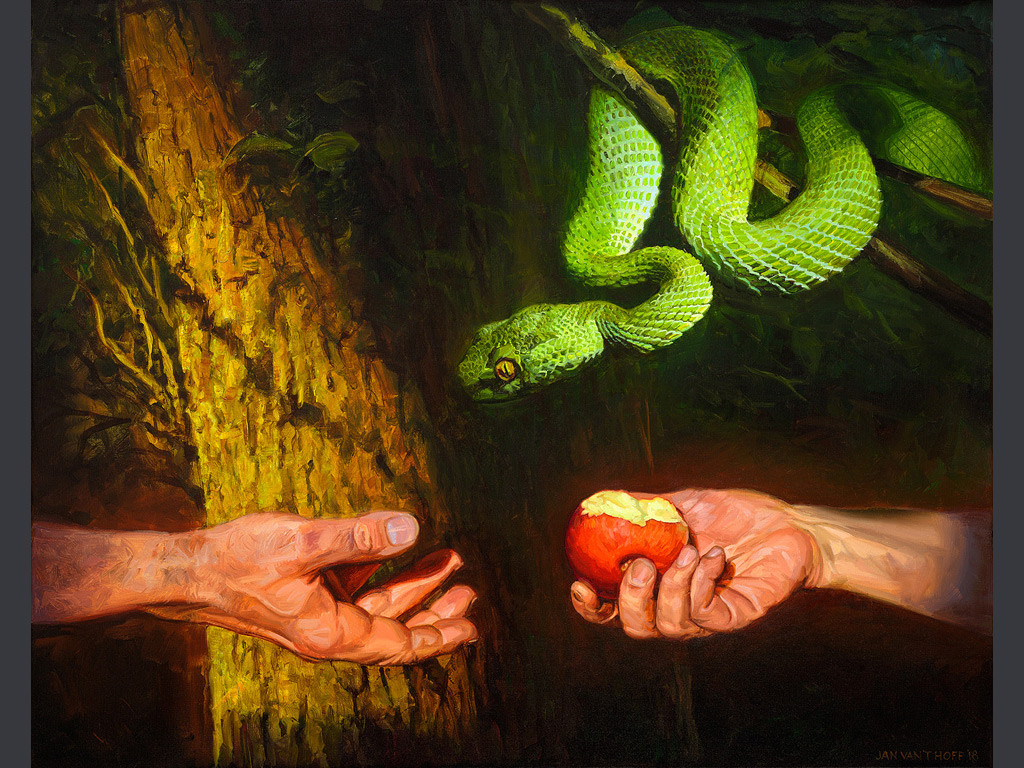
When you’re tempted, focus on the evil of the sin, not on its pleasure. All sin has its attractive side, or we wouldn’t give it a second thought. Adultery has a certain thrill. But it also wreaks destruction and tears apart families, not to mention the risk of sexually transmitted diseases, which can be fatal. When Eve was tempted, she focused on the attractiveness of the fruit and she fell. Joseph focused on the evil of adultery and stood firm.

F. Avoid the opportunity to be tempted.

We read that Joseph “did not listen to her to lie beside her or be with her” (39:10). This relates to the up-front commitment to be pure. If you want to be pure and you know that someone or someplace will tempt you, then avoid that person or place. If you’re tempted by pornography, don’t go into a store where it’s readily available. If a woman at work is flirtatious, avoid her as much as possible. Don’t lead her on by listening to her. Give strong signals that you’re not interested.

G. Flee when you need to.

When she finally went so far as to grab Joseph’s coat, he ran. The Bible never says that we should stand and pray and quote precious verses when sexual temptation hits. “Flee immorality!” (1 Cor. 6:18). Resist the devil (James 4:7; 1 Pet. 5:9), but flee youthful lusts (2 Tim. 2:22). As one of my older professors in seminary said, “Men, they aren’t just youthful”. You’ve got to flee them all your life. You won’t yield while you’re running the other way.

So, Joseph ran away and God rewarded him for his righteousness. Right? Not quite. That leads to the final step toward moral purity in a polluted world:

4. Be willing to pay the price for your convictions.

Potiphar’s wife was humiliated by Joseph’s refusal and her humiliation quickly turned to rage. As the poet wrote, “Heaven has no rage like love to hatred turned, nor hell a fury like a woman scorned”. So she framed Joseph and he spent the next few years in prison.

There is reason to think that Potiphar didn’t believe her story. If he did, he would have executed Joseph that day. The text says that his anger burned (39:19), but not that it burned against Joseph. He could see his wife’s flirtatious ways. He knew Joseph’s integrity. But he had to do something to get her off his back. He would lose a servant who had brought him great prosperity, but he couldn’t let it slide. If he believed Joseph over his wife she would have made life difficult for him. Potiphar couldn’t have missed the way she blamed him: “This Hebrew slave, whom you brought to us, came in to me to make sport of me…” (39:17). She was blaming Joseph and her husband.

Because the world is so polluted, you can expect to pay a price when you take a stand for purity. People will slander you. They’ll blame you for their sin. You could even lose your job. Joseph had plenty of time sitting in prison to replay the scene and think about what he would do if he had the chance again. Satan always comes to you after you’ve done the right thing and gotten stung for it and whispers, “Next time just give in and all this won’t happen. See how your God takes care of you”.

But Joseph still had the presence and blessing of God, even in prison (39:21-23). It wasn’t worth trading that, even with prison, for the fleeing pleasure he would have enjoyed with Potiphar’s wife.

Avoiding sexual sins, like overcoming any challenge, involves a combination of practical steps, self-awareness, and, for many, spiritual or moral guidance. Here are some general principles that can help:

  1. Understand Your Values and Commit to Them. Clarify your beliefs and the reasons why you want to avoid sexual sins. Having a clear personal or spiritual conviction can strengthen your resolve.
  2. Set Boundaries

Establish clear physical and emotional boundaries in relationships to avoid situations that might lead to temptation. This might include avoiding certain types of media, not being alone with someone in a compromising situation, or setting limits on physical affection.

  1. Protection Through Accountability

Share your struggles and goals with a trusted friend, mentor, or counselor who can support you and hold you accountable without judgment.

  1. Avoid Tempting Situations

Identify triggers that lead to temptation—such as certain websites, social media, or environments—and actively avoid them.

  1. Develop Healthy Habits

Engage in activities that promote self-control, such as regular exercise, prayer or meditation, hobbies, and social involvement.

  1. Educate Yourself

Learn about the consequences of sexual sins, both emotional and physical, as awareness can motivate avoidance.

  1. Seek Professional Help if Needed

If struggling with compulsive behaviors, consider counseling or therapy to address underlying issues.

  1. Practice Self-Control and Mindfulness

Techniques like mindfulness and delaying gratification can strengthen your ability to resist impulses.

  1. Cultivate Spiritual Disciplines (if applicable)

For those with religious beliefs, regular prayer, reading sacred texts, participating in community worship, and seeking grace can provide strength.

10. Forgiveness and Growth

Recognize that setbacks may happen. Forgive yourself, learn from mistakes, and keep moving forward with renewed commitment.

By combining these practical strategies with inner resolve and support, it becomes more manageable to avoid sexual sins and live in alignment with your values.

The prevalence of sexual sins can be understood from various perspectives, including psychological, social, cultural, and spiritual dimensions. Understanding these factors can help in addressing the underlying causes and promoting healthier attitudes and behaviors.

Conclusion

The battle for moral purity in a polluted world is a lifelong war. But it is winnable if you’ll be aware of situations where you are vulnerable and be on guard; be aware of how temptation works; make a commitment to purity and develop a strategy before temptation hits; and, be willing to pay the price that purity in a polluted world has cost every disciple of Jesus Christ.

If you’ve already defiled yourself with sexual sin or you’re presently ensnared by it, Christ will deliver you and give you victory if you turn to Him. No sin is beyond His Grace. To every sinner who comes to Him, He says, “Neither do I condemn you; go your way. From now on sin no more: (John 8:11). Let’s commit ourselves to be men and women who are pure in thought and deed!

 
Leave a comment

Posted by on October 27, 2025 in Genesis


Joseph: Tattletale and favored son – Genesis 37


Joseph's Inspired Dreams

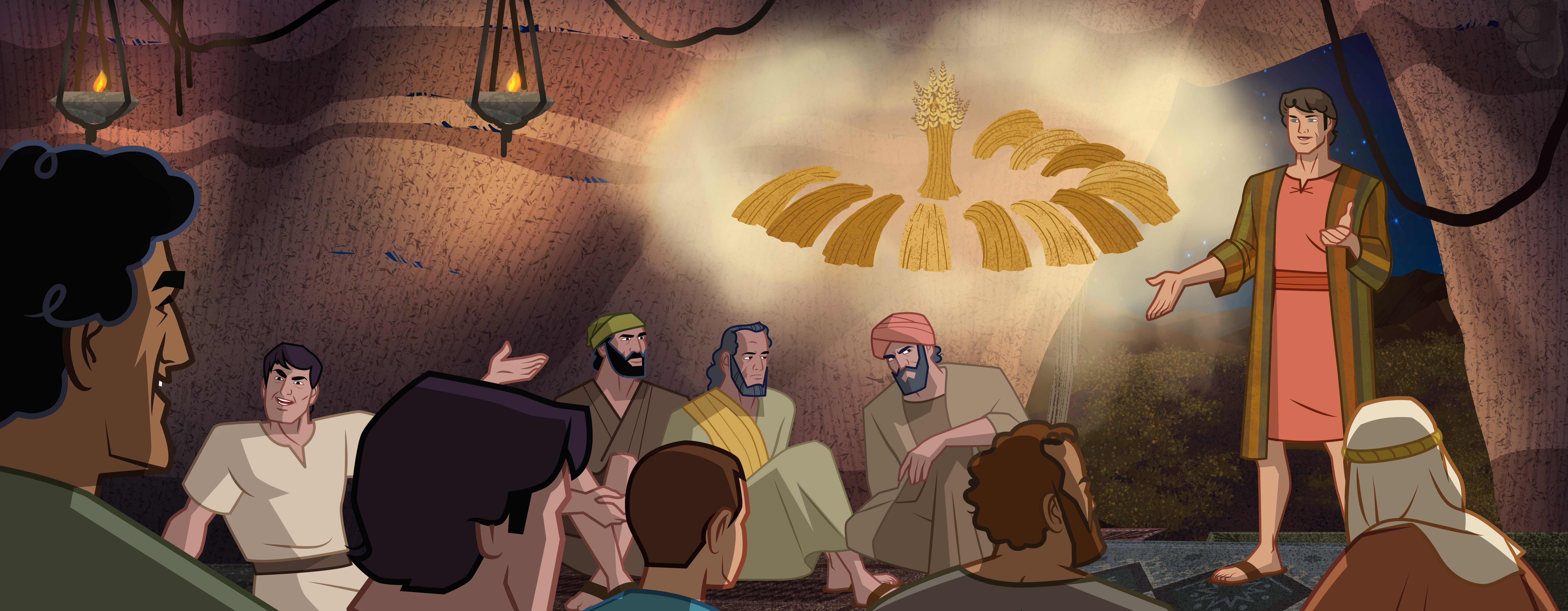
Now Jacob lived in the land where his father had sojourned, in the land of Canaan. These are the records of the generations of Jacob. Joseph, when seventeen years of age, was pasturing the flock with his brothers while he was still a youth, along with the sons of Bilhah and the sons of Zilpah, his father’s wives. And Joseph brought back a bad report about them to their father. Now Israel loved Joseph more than all his sons, because he was the son of his old age; and he made him a varicolored tunic. And his brothers saw that their father loved him more than all his brothers; and so they hated him and could not speak to him on friendly terms. Then Joseph had a dream, and when he told it to his brothers, they hated him even more. And he said to them, ‘Please listen to this dream which I have had; for behold, we were binding sheaves in the field, and lo, my sheaf rose up and also stood erect; and behold, your sheaves gathered around and bowed down to my sheaf.” Then his brothers said to him, “Are you actually going to reign over us? Or are you really going to rule over us?” So they hated him even more for his dreams and his words. Now he had still another dream, and related it to his brothers, and said, “Lo, I have had still another dream; and behold, the sun and the moon and eleven stars were bowing down to me.” And he related it to his fa­ther and to his brothers; and his father rebuked him and said to him, “What is this dream that you have had? Shall I and your mother and your brothers actually come to bow ourselves down before you to the ground?” And his broth­ers were jealous of him, but his father kept the saying in mind (Genesis 37:1‑11).

There is a tendency to regard the remaining chapters of Genesis as the “story of Joseph,” but this is not technically accurate. Moses referred to chap­ter 36 as the “records of the generations of Esau” (36:1,9). In Genesis 37:2 Moses entitled this section “the records of the generations of Jacob.” We must not forget that Jacob will not pass off the scene until Genesis 49, where we find the account of his death. This last section, then, is an account of God’s working in the life of Jacob and of his sons through the instrumentality of Joseph. Joseph is certainly the central figure in these chapters, but he is not the only figure. God is forming a nation out of all the sons of Jacob. Joseph’s sojourn in Egypt and his ultimate elevation to the post of prime minister under Pharaoh makes possible the preservation of Jacob and his sons, as well as teaching all of them some valuable spiritual lessons.

One of the great disservices we do to this text is to fail to grasp the fundamental cause of the animosity of Joseph’s brothers toward him. Generally we tend to think of Joseph as a small lad 8‑10 years of age who is a tattletale on his big brothers. That is hardly a crime which deserves death, and it does not fit the details of the account. Joseph is not 7 years old, but 17 (37:2). Now in some senses this is young, but in the Ancient Near East girls of this age were often already married (for example, Dinah 34:lff.), and young men were not infrequently kings at this age (cf. II Kings 11:21).

It is my contention that Joseph was rejected by his brothers because of the authority he exercised over them, even though he was their younger brother. Seventeen was not necessarily young for such authority, but it was younger than his older brothers, and this was indeed a bitter pill for them to swallow. Sev­eral convincing lines of evidence converge to document this assertion:

(1) Grammatically, Joseph’s authority is not only permissible, but it is preferable. George Bush, author of the classic commentary on the book of Genesis, strongly holds to the most literal and normal rendering of verse 2, of which he writes,

… literally was tending, or acting the shepherd over, his brethren in the flock. However uncouth to our ears the phraseology, this is undoubtedly the exact rendering and the import of the words we take to be that Joseph was charged with the superintendence of his brethren, particularly the sons of Bilhah and Zilpah.[1]

Bush goes into considerable grammatical detail to establish his point,[2] and I must say that he has convinced me.

(2) After the sin of Reuben, Joseph was given the rights of the firstborn:

Now the sons of Reuben the firstborn of Israel (for he was the firstborn, but because he defiled his father’s bed, his birthright was given to the sons of Joseph the son of Israel; so that he is not enrolled in the genealogy ac­cording to the birthright. Though Judah prevailed over his brothers, and from him came the leader, yet the birthright belonged to Joseph), … (I Chronicles 5:1‑2).

While it is not until chapter 49 that this transfer is formally stated by Jacob, the sin which precipitated it has already been recorded in Genesis 35:22. It is not unlikely that Jacob expressed his intentions much sooner than this to his sons and even began to give Joseph preeminence over his brothers by this time. Further details seem to demonstrate this.

(3) Joseph’s coat was a symbol of the authority he was granted over his brothers. Jacob’s preference for Joseph was no secret (37:2,3). The coat his father gave him was regarded as evidence of Jacob’s greater love for Joseph above his other sons. Furthermore, this coat indicated more than preference; it sym­bolized preeminence and superiority of rank.

No one really knows exactly what this coat looked like. Some have sug­gested that it differed from the coats of Joseph’s brethren in that it had long sleeves,[3] in which case it would mark out Joseph as a “white collar worker” while his brothers were mere “blue collar workers.” Just as supervisors are marked out today by the fact that they wear suits, so, we are told, Joseph was set apart by his long‑sleeved coat.

While there is considerable conjecture on this matter of the coat, one thing is certain. The term which is used for Joseph’s coat in this chapter oc­curs elsewhere only in II Samuel 13:18‑19. There it is employed for the coat which was worn by Tamar, the daughter of David. While other things may have been symbolized by this garment (such as virginity), the coat was an evidence of roy­alty.

In the context of our passage I believe that Joseph’s coat was considered to be symbolic of his authority in the same manner as stripes on the sleeve of a military uniform. Joseph’s brothers hated this garment and what it symbolized, for their first act of violence was to strip his coat from him (37:23).

(4) The greatest antagonism toward Joseph was from the sons of Bilhah and Zilpah (verse 2), while the two brothers who attempted to release him (Reuben and Judah) were sons of Leah (37:21,26). In verse 2 Joseph was said to have pastured the flocks of Jacob “along with the sons of Bilhah and the sons of Zilpah.” Reu­ben, and later Judah, sons of Leah, attempted to prevent or at least to modify the plan of the others to kill Joseph. A footnote on verse 2 in the margin of the Berkeley Version[4] suggests that the sons of Bilhah and Zilpah would be less disciplined since they were the sons of pagan mothers, while Leah and Rachel would reflect the relatively more godly training of Laban.

There is little doubt that both Bilhah and Zilpah would be on a socially lower plane than Leah and Rachel since the former were mere concubines, while the latter were full‑fledged wives. This social stratification would naturally be reflected in the sons of these women, and so it is not difficult to believe that Jacob would have put Joseph in charge of the sons of Bilhah and Zilpah.

(5) Joseph’s report to his father would be a logical and necessary part of his function and authority as a supervisor. Joseph at 17 was no tattletale. This can hardly be the case. Surely this kind of sibling rivalry would be ex­pected but undeserving of such harsh counter‑measures by Joseph’s brothers. If Joseph had been placed in a position of authority (a “white collar” job) by his father, then what could be more logical than a report to Jacob on the performance, efficiency, and reliability of those under him?

When Jacob asked Joseph to go to Shechem to check up on his sons and on his flocks (verses 12‑14), he was not sending Joseph around the corner to spy upon and then tattle on his brothers. It was 50 miles or more to Shechem and about 70 miles to Dothan! Since Shechem had been the scene of the slaughter of the men of that city years before (34:25ff.), Jacob would not have taken such an assignment lightly. It was the kind of responsibility that he would give only to one who had proven his capabilities as a leader. A sensitive and potentially dangerous mission would not be given to a son without reliability and authority.

(6) The intensity of Joseph’s brothers’ reaction to his dreams indicates that there must have been some substance to their fears of Joseph assuming such great power and prominence. Joseph’s brothers were deeply distressed by his two dreams (verses 8, 11). And when the plot to kill him is first conceived, the dreams are a prominent part of their hostility and motivation:

And they said to one another, “Here comes this dreamer! Now then, come and let us kill him and throw him into one of the pits; and we will say, ‘A wild beast devoured him.’ Then let us see what will become of his dreams!” (Genesis 37:19‑20).

Idle or fanciful dreams provide an occasion only for laughter. Under most circumstances the worst that might be considered would be that Joseph needed to be put into a padded cell for his own protection. But if there were already evidence of Joseph’s authority, leadership, and capabilities, fear of even greater status and power would be acted upon with grim determination and zeal.

(7) As a type of Christ, the cause of Joseph’s rejection would most ac­curately be a refusal to submit to the authority of one who threatened personal power and prestige. Joseph, I have maintained, was rejected by his brethren be­cause they deeply resented the authority his father had granted him over them, especially when they reasoned that it should be theirs. Was this not the very root reason for the rejection of Jesus by the religious leaders of His day? When Jesus taught the people, the response of the masses was significant:

The result was that when Jesus had finished these words, the multitudes were amazed at His teaching; for He was teaching them as one having authority, and not as their scribes (Matthew 7:28‑29).

What a blow this must have been to the pride of Israel’s leaders. This is the reason why they resisted the Master with the challenge, “By what authority are You doing these things, and who gave You this authority?” (Matthew 21:23).

All of these lines of evidence lead me to the same conclusion: Joseph was rejected by his brethren because he, the youngest of these men (save Benjamin, of course), was placed in a position of authority over them. This rejection of Joseph’s authority, coupled with the specter of even greater preeminence as fore­shadowed by his dreams, led them to conclude that they must do away with him in order to protect their own position.

An Evil Plot, An Empty Pit, and an Egyptian Purchase (37:12‑36)

Animosity toward Joseph had continued to build up until the situation was explosive. Now it was only a matter of time and opportunity. That opportu­nity finally arrived when Jacob sent Joseph to Shechem.

Then his brothers went to pasture their father’s flock in Shechem. And Israel said to Joseph, “Are not your brothers pasturing the flock in Shechem? Come, and I will send you to them.” And he said to him, “I will go.” Then he said to him, “Go now and see about the welfare of your brothers and the welfare of the flock; and bring word back to me.” So he sent him from the valley of Hebron, and he came to Shechem. And a man found him, and behold, he was wandering in the field; and the man asked him, “What are you looking for?” And he said, “I am looking for my brothers; please tell me where they are pasturing the flock.” Then the man said, “They have moved from here; for I heard them say, ‘Let us go to Dothan.’” So Joseph went after his brothers and found them at Dothan (Genesis 37:12‑17).

Jacob’s concern for the welfare of his family and his flocks was not un­founded. Shechem was the city where Dinah had been taken by force and where Jacob’s sons, especially Simeon and Levi (34:30), had slaughtered all of the men. Since Jacob had purchased land there (33:19), it would not be unusual for him to make use of it by sending his flocks there to feed on its rich pastureland under the care of his sons. But there was always the danger of some angry relative of one of those Shechemites who were killed or captured seeking vengeance. This seems to be what Joseph was sent to look into. Only a man with proven skill and wisdom would ever be sent to handle a task as sensitive and volatile as this.

Joseph wandered about the fields of Shechem in search of his brothers. It just so happened[5] that a man found him who had further happened to see Joseph’s brothers and overhear them saying they were going on to Dothan. Not willing to give up his search and return to his father without completing his task, Joseph went on to Dothan.

While at a considerable distance Joseph was recognized by his brothers. They immediately conspired in a violent and daring plot which would rid them once and for all of their brother:

When they saw him from a distance and before he came close to them, they plotted against him to put him to death. And they said to one another, “Here comes this dreamer! Now then, come and let us kill him and throw him into one of the pits; and we will say, ‘A wild beast devoured him.’ Then let us see what will become of his dreams!” But Reuben heard this and res­cued him out of their hands and said, “Let us not take his life.” Reuben further said to them, “Shed no blood. Throw him into this pit that is in the wilderness, but do not lay hands on him”—that he might rescue him out of their hands, to restore him to his father. So it came about, when Joseph reached his brothers, that they stripped Joseph of his tunic, the varicolored tunic that was on him; and they took him and threw him into the pit. Now the pit was empty, without any water in it (Genesis 37:18‑24).

It was probably Joseph’s coat that made it possible to identify him so quickly from such a distance. It may also have been that coat which triggered the pent‑up feelings of jealousy and hostility toward the beloved son of their father. They saw the great distance from their father and the remoteness of this spot as the ideal opportunity to do away with the threat which Joseph posed. The opportunity for a perfect alibi was also at hand, for wild animals were a threat to life and limb in the open field. They need not even produce a body if they blame Joseph’s absence on his being devoured by a wild beast. Only a bloody robe need be presented to Jacob. His imagination would take care of the rest.

Reuben had good reason to hate his brother, for it was Joseph who would obtain the birthright that could have belonged to him. But it seems that Reuben feared facing his father more than he hated Joseph. He was still the oldest of the family. Whether or not he had the rights of the first‑born, he was still saddled with the responsibilities. This may be the explanation for Reuben’s suggestion and his intention to spare the life of Joseph.

Reuben’s actions were hardly heroic. I must admit, however, that I would not have wanted to stand up against these fellows either. They were mean, really mean. These men would make the “nickel defense” of the Dallas Cowboys look like a Boy Scout troop. The slaughter of the Shechemites was only one evidence of their brutal natures. Reuben therefore suggests that they kill Joseph without the shedding of blood. Throw the boy in a cistern and let nature do him in. The idea had some definite advantages, and so the plan was agreed to.

When Joseph arrived, his reception was far from friendly. They tore off his coat, the symbol of all that they rejected, and threw the defenseless young man into a pit. It is significant that this pit was empty, for normally it would have contained water.[6] If this had been the case, Joseph would have drowned be­fore the Ishmaelite caravan had arrived. Even the empty pit was a part of God’s providential care of Joseph and his brothers.

The callousness and cruelty of Joseph’s brothers is almost unbelievable.

Then they sat down to eat a meal. And as they raised their eyes and looked, behold, a caravan of Ishmaelites was coming from Gilead, with their camels bearing aromatic gum and balm and myrrh, on their way to bring them down to Egypt. And Judah said to his brothers, “What profit is it for us to kill our brother and cover up his blood? Come and let us sell him to the Ishmae­lites and not lay our hands on him; for he is our brother, our own flesh.” And his brothers listened to him. Then some Midianite traders passed by, so they pulled him up and lifted Joseph out of the pit, and sold him to the Ishmaelites for twenty shekels of silver. Thus they brought Joseph into Egypt. Now Reuben returned to the pit, and behold, Joseph was not in the pit; so he tore his garments. And he returned to his brothers and said, “The boy is not there, as for me, where am I to go?” So they took Joseph’s tunic, and slaughtered a male goat, and dipped the tunic in the blood; and they sent the varicolored tunic and brought it to their father and said, “We found this; please examine it to see whether it is your son’s tunic or not” (Genesis 37:25‑32).

Having thrown Joseph into the pit, they sat down to eat a meal. There is no loss of appetite, no sense of guilt or remorse. And there is no pity, for they eat their meal probably well within hearing of the cries that were continuing to come from the bottom of the pit. I can almost hear one of the brothers raise his voice over the petitions of Joseph and say to one of the others, “Want to trade a mutton sandwich for a cheese?” Only later would these cries haunt the sons of Jacob:

Then they said to one another, “Truly we are guilty concerning our brother, because we saw the distress of his soul when he pleaded with us, yet we would not listen; therefore this distress has come upon us” (Genesis 42:21).

While they were eating, a caravan of Ishmaelites approached them on their way to Egypt from Gilead (verse 25). This gave Judah an idea which would prevent the shedding of Joseph’s blood altogether. Rather than leaving Joseph to die of starvation and exposure, why not sell him into slavery to these traders? This would dispose of their problem, avoid the messy matter of murder, and get rid of any evidence of wrongdoing. Perhaps most appealing, it would provide them with a profit.

I do not see any virtue in Judah’s proposal to his brothers. While Reuben sought to return Joseph to his father, Judah is not said to have any such inten­tion. He did not question the ethics or desirability of Joseph’s murder, only the benefits. Profit was the one word which best summarizes Judah’s motivation. While slavery may seem to be a more humane fate than death, some who lived in such a state of slavery might challenge this fact. Selling a brother as a slave was hardly more commendable than putting him to death. In the end, Joseph was sold to the Midianite[7] traders for twenty shekels of silver, the price which Moses later fixed for a young slave boy (Leviticus 27:5).

Reuben had been gone during the time his brothers sold Joseph to the traders. Very likely this was to distract their attention from Joseph in the hope of their leaving him quickly, so that he could return to rescue Joseph. What a shock it must have been for him to return to the dry cistern and find Joseph gone. Reuben, as the oldest son, is the one who must face his father, and that to him is not a very pleasant thought.

Not only were Joseph’s brothers completely aloof to his suffering, but also they almost seemed to delight in the suffering that their report would bring to Jacob. There is no gentle approach, no careful preparation for the tragic news, only the crude act of sending the bloody coat to him and letting him draw the desired conclusion. It was a heartless deed, but one that accurately de­picted their spiritual condition at the time.

Like most of us, Jacob jumped to a conclusion, assuming the very worst had happened:

Then he examined it and said, “It is my son’s tunic. A wild beast has de­voured him; Joseph has surely been torn to pieces!” So Jacob tore his clothes, and put sackcloth on his loins, and mourned for his son many days. Then all his sons and all his daughters arose to comfort him, but he refused to be com­forted. And he said, “Surely I will go down to Sheol in mourning for my son.” So his father wept for him (Genesis 37:33‑35).

It was, of course, his son’s tunic, for there was none other like it. And it was covered with blood. Such a blood‑stained garment without a body led Jacob to the conclusion his sons desired: Joseph must have been attacked and devoured by a wild animal. Perhaps the brothers of Joseph prided themselves in the fact that they never said Joseph was dead. They simply “deceived” their father into be­lieving this. Isn’t it ironic that this deception involved the killing of a goat, just as the deception of Isaac had (cf. 27:9,16‑17,19).

Jacob seemed to have handled the death of Deborah (35:8) and Rachel (35:16-19) with a fair degree of composure, but the death of Joseph simply overcame him. There was no way that his children could comfort him. How hypocritical these efforts must have been anyway. Life for Jacob seemed hardly worth living any longer. The only thing Jacob could look forward to was the grave. For many years Jacob would live with the lie that his son was dead.

In one sense believing this was a gracious thing. Can you imagine the mental torment it would have been for Jacob to know what was actually happening to his son? We have just seen the dramatic conclusion to the hostage crisis in Iran, which lasted less than two years. We know something of the agony of the relatives and friends of these captives, but Jacob would have had to endure such suffering and anguish for over twenty years.[8] How his soul would have been trou­bled by the knowledge of Potiphar’s wife pursuing Joseph day after day (cf. 39:10). What heartache would have been Jacob’s had he known of Joseph’s imprisonment (cf. 39:19ff.). Ignorance, in this case, was not bliss, but it was better than a blow-­by‑blow account of Joseph’s status.

While Jacob was crying, “Woe is me,” God was working all things together for the good of Jacob, Joseph, and his wayward brothers: “Meanwhile, the Midionites sold him in Egypt to Potiphar, Pharaoh’s officer, the captain of the bodyguard” (Genesis 37:36).

Joseph, in fact, was not dead, nor was he outside of the providential care of God. By no accident Joseph ended up in the home of one of the most responsible officers of Pharaoh’s administration. While years would pass by before God’s purposes would become known, the process was under way.

Conclusion

Contextually and historically the sale of Joseph into slavery explains how Joseph (and ultimately the entire nation of Israel) ended up in Egypt, from whence the exodus commenced. More importantly, this chapter tells us a good part of the reason why it was necessary for the 400 years of bondage to occur. The fact that this bondage would take place was no mystery, for God had revealed it to Abraham:

And God said to Abram, “Know for certain that your descendants will be stran­gers in a land that is not theirs, where they will be enslaved and oppressed four hundred years. But I will also judge the nation whom they will serve; and afterward they will come out with many possessions” (Genesis 15:13‑14).

Spiritually, the state of the sons of Israel was at an all‑time low. Nowhere have we yet seen any kind of relationship with God such as that of their forefathers. Internally, there was no unity among these brothers. They were simply the sons of four different mothers perpetuating the strife which existed between them (cf. 29:21‑30:24). There was no brotherly love, only the seeking of self‑interest. There is no better way to stimulate unity than through persecution. A brotherly quarrel is quickly forgotten and family unity is intensified when out­side opposition is introduced. Four hundred years spent among Egyptians, who de­spised Hebrews (46:34), developed and strengthened the cohesiveness of these tribes of Israel.

Later on in the story of Joseph and his brothers, Joseph will test them in this matter of family unity, for he will offer them the opportunity of gaining their freedom for the expedient sacrifice of their youngest brother (chapters 42-44). Then they showed a change of heart which greatly encouraged and touched Joseph.

Doctrinally, we gain insight into several key biblical truths. First, we are reminded of the teaching of Scripture on the matter of election. We almost have to pinch ourselves to be reminded that the roots of Israel’s race and reli­gion go back to men such as these brothers, who have conspired to do away with their own flesh and blood. In the ninth chapter of Romans Paul taught that elec­tion is not based upon the works which a person has done or will do in the future (9:6‑13). Surely the choice of these sons of Israel illustrates this principle of election. Nearly anyone else in the land of Canaan would have been as quali­fied or more so than these cruel and wicked men. Most pagans have a deeper sense of family loyalty than this.

Furthermore, the doctrine of the sovereignty of God is easily seen in this chapter. In Romans it is summarized by these words:

And we know that God causes all things to work together for good to those who love God, to those who are called according to His purpose (Romans 8:28).

In the book of Ephesians Paul has written:

… also we have obtained on inheritance, having been predestined according to His purpose who works all things after the counsel of His will, … (Ephesians 1:11).

God had purposed and promised to bring about the fulfillment of His promises to Abraham, Isaac, and Jacob through these sons (35:10‑12). Neither Jacob nor Joseph nor Jacob’s other sons nor even Pharaoh himself could prevent or even delay the sovereign purposes of the God of Israel.

The means which God employed to accomplish His will is seen in the doc­trine of the providence of God. No one has defined the providence of God better than George Bush:

While the recital flows on with all the charm of a highly‑wrought tale of fiction, we are still assured of the truth and reality of every incident, and feel that we are contemplating an epitome of the dispensations of that over­ruling Power which is “wonderful in counsel and mighty in operation”—which controls the free and voluntary action of intelligent creatures, even when prompted by a spirit of malevolence and rebellion, so as to render them sub­servient to the accomplishment of those very plans which they are intent upon defeating, while the guilt of the agents remains resting upon them in all its unabated aggravations.[9]

In its simplest terms, the providential rule of God is the working out of His plan through sinful and willful men, even when they are actively striving to resist Him and His purposes. All the while, God remains sovereign and in full control. He assumes none of the guilt or responsibility for man’s sins; man must bear the full weight of responsibility for his actions.

The providence of God is not His preferred plan of action, but a back‑up system which assures the fulfillment of His eternal purposes. Ideally, God works through believing men and women who will do His will as expressed through His Word. When believers or unbelievers choose to resist the will and Word of God, He resorts to this secondary system. It is decidedly less desirable to willful obedience and submission, for the wayward one always faces the consequences of disobedience and fails to find the joy and fulfillment which comes from obedience. The joy of actively and joyfully participating in the plan and program of God is lost. God’s work goes on, but we are unaware of it, just as Jacob and the brothers of Joseph were ignorant to the hand of God in what was taking place. God is never handicapped by man’s sin and disobedience, but we are always hurt by it.

Few have failed to note the typical significance of the life of Joseph, who in many ways foreshadows the life and work of our Lord.[10] While this is a profitable avenue of study, we must point out that nowhere do the Scriptures specifically refer to Joseph as a type of Christ. So long as such study is viewed as supplementary and secondary in importance, it can be profitably pursued.

The practical applications of the principles found in this passage are many. First, there is a lesson in the matter of divine guidance. Since we have already dealt with the subject of God’s providence, we shall not do any more than to relate this doctrine to the matter of guidance.

God’s revealed will is given to us in His Word. In this sense it was surely not God’s revealed will that brothers should sell one of their own into slavery. Thus, the actions of Joseph’s brothers were sin. God never guides by circumstances alone, but by the Scriptures, His revealed Word. They did find themselves at a secluded spot, far from the scrutiny of their father. There was a pit near at hand, but it was not the revealed will of God that Joseph be cast into it. There was a band of traders conveniently passing by, but selling Joseph into slavery was wrong.

God’s eternal purpose, as stated to Abraham years before (Genesis 15:13‑15), was a period of bondage. Joseph’s brothers had no intention of carrying out God’s purpose—they sought only to get rid of Joseph. The plan of God was for the Israelites to sojourn in Egypt but this was not known to the sons of Jacob at this time. (In fact, God had carefully avoided telling Abram where this sojourn was to be or how it would come about.) Seldom is guidance a matter of not knowing the general principles and precepts that should govern our conduct. Most often we “miss” the will of God by deliberately choosing to disobey what we know to be right. But even when we deliberately step out of the revealed will of God, His purposes will continue through His providential guidance. In this sense, we can­not miss the will of God. And, be assured, God will make us aware of our sin and bring us back to the place of willful obedience, though through the hard knocks of experience.

What a commentary this event is on the matter of suffering. I think an excellent title for the entire episode might be “A Severe Mercy,” picking up on the title of a current and popular book. The two terms “severe” and “mercy” seem to be contradictory, but this is never the case for the Christian. That is why the Apostle James wrote centuries later:

Consider it all joy, my brethren, when you encounter various trials; knowing that the testing of your faith produces endurance. And let endurance have its perfect result, that you may be perfect and complete, lacking in nothing (James 1:2‑4).

The writer to the Hebrews has said nearly the same thing in more extensive terms (Hebrews 12:1‑13 and, indeed, the entire epistle).

On the one hand, the suffering which we observe in the lives of Jacob, Joseph, and his brothers is needless, the result of sin. Yet it is a part of the gracious dealings and discipline of God to bring these men to Himself and to ma­turity. In the midst of our suffering this is most often not seen because the truth is veiled by our tears. But the end result of suffering is to be faith, maturity, and joy. So it was for Jacob and his sons. So it will be for every child of God.

All discipline for the moment seems not to be joyful, but sorrowful; yet to those who have been trained by it, afterwards it yields the peaceful fruit of righteousness (Hebrews 12:11).

The life of Joseph provides excellent material for a study on rejection. We know, of course, that Joseph was not sinless. His sins are not recorded, I believe, in order to provide a more accurate type of Christ and also to illustrate the matter of innocent suffering. Moses, then, portrays an incident where the rejection of Joseph is without good cause. That informs me, as other passages suggest (e.g., I Peter 2:20‑25; 3:17; 4:4‑5,12‑19), that rejection and persecution may come completely without cause. The Christian must be prepared for rejection in this life. It is the badge of discipleship:

If the world hates you, you know that it has hated Me before it hated you. If you were of the world, the world would love its own; but because you are not of the world, but I chose you out of the world, therefore the world hates you. Remember the word that I said to you, “A slave is not greater than his master.” If they persecuted Me, they will also persecute you; if they kept My word, they will keep yours also (John 15:18‑20).

And indeed, all who desire to live godly in Christ Jesus will be persecuted (II Timothy 3:12).

Hence let us go out to Him outside the camp, bearing His reproach (Hebrews 13:13).

Persecution is never to be sought, but it is to be expected and accepted. One part of this persecution is rejection. Few have faced the kind of rejection that Joseph did. He was rejected by his brothers, by Potiphar and his wife (even­tually), and by Egyptians in general, who disliked Hebrews. His rejection, and ours, need not indicate any defect on our part, however. It can be an evidence of godliness and purity. Since this is true, our self‑image (not self‑love) need not suffer self‑inflicted pangs of guilt and abuse.

In this chapter God prepared Joseph for the rejection which he was to ex­perience. The two dreams he had were much more for his benefit than for his brothers. They strongly impressed Joseph with the important role he was to play in the outworking of God’s program. In the sight of his brothers and the Egyptians (at least for a time), Joseph was a detriment, an obstacle, and a problem to be removed if possible. To God, Joseph was a key figure for the salvation (in a physical sense) and spiritual instruction of his brethren.

Rejection is an unavoidable part of life for every Christian. If we are living as God desires, we will be rejected of men. Righteous rejection, if I may so label it, is cause for encouragement, not despair. Rejection can best be handled by an awareness that God has a significant role for us to play in His work. Is this not a part of what the New Testament teaching of the body of Christ and the gifts and calling of individual members is all about?

But now there are many members, but one body. And the eye cannot say to the hand, “I have no need of you”; or again the head to the feet, “I have no need of you.” On the contrary, it is much truer that the members of the body which seem to be weaker are necessary; and those members of the body, which we deem less honorable, on these we bestow more abundant honor, and our unseemly mem­bers come to have more abundant seemliness, whereas our seemly members have no need of it. But God has so composed the body, giving more abundant honor to that member which lacked, that there should be no division in the body, but that the members should have the same care for one another. And if one member suffers, all the members suffer with it; if one member is honored, all the members rejoice with it. Now you are Christ’s body, and individually members of it (I Corinthians 12:20‑27).

The life of Joseph is a wonderful encouragement to parents, who will some­day have to turn loose of their children, allowing them to move out from under their control and protection. It may be in the form of sending a child off to a college campus, removed from the supervision of the parents. It may be by a marriage or a job change. All of us as parents will have to face the time when we cannot control the environment in which our children will live. (Perhaps that is more true, even now, than we would like to admit.)

Joseph was abruptly torn from his father and friends and family. He was removed from any godly influences and encouragement. He was placed among a people who did not believe in his God or his convictions. In Egypt he was subject to the strongest temptations. And yet, apart from any Christian friends or fellowship, Joseph not only survived, but he was strengthened. His father could not save Joseph from this, but Joseph would eventually save his father and brothers from starvation.

God knows how to care for His people. No one is on more dangerous ground than the one who is complacent and smugly secure. No one is safer, regardless of their environment, than he or she who is looking only to God for protection and provision for the need of the moment. When our children have left the security of our nest, they will be secure in the hands of the God who created them and cares for them.

There is an interesting analogy between Abraham and Jacob. Both of them were called upon to give up their beloved sons. Abraham did so voluntarily and actively, Jacob unknowingly and begrudgingly. Both sons were given back to them. It was through these sons, whom these fathers gave up, that the future of the fathers was secured.

Throughout the Scriptures, salvation is never secured without great sac­rifice. As it was with Abraham, so it was with Jacob also. These two instances only prepare us for the greatest sacrifice of all when God the Father gave up His Son, Jesus Christ, for our salvation. As Joseph was rejected by his brethren and humiliated by slavery and imprisonment, so Jesus Christ was rejected by the Jewish leaders and His brethren and crucified on a Roman cross among criminals. Through the suffering of Joseph, Jacob and his sons were spared from the ravages of a severe famine. Through the sufferings of our Lord Jesus Christ, those who trust in Him are spared from the eternal wrath of God.

The Word of God declares you to be a sinner, my friend, deserving of the eternal wrath of a holy and righteous God (cf. Romans 3:10‑18,23; 6:23). But the good news of the gospel is that Jesus Christ has come to take the place of the sinner, paying the penalty for his sins and providing the righteousness which God requires for eternal life (II Corinthians 5:21; Romans 3:21‑22). You may expe­rience the forgiveness of sins and the peace of God by simply acknowledging your guilt and trusting in the work of Jesus Christ on your behalf, for, “Whoever will call upon the name of the LORD will be saved” (Romans 10:13).

[1] George Bush, Notes on Genesis (Minneapolis: James Family Christian Publishers, 1979 (reprint)), II, p. 220.

[2] Ibid, p. 221.

[3] “The gift of a coat of many ‘pieces’ (not ‘colors’), or rather ‘the tunic with sleeves,’ was about the most significant act that Jacob could have shown to Joseph. It was a mark of distinction that carried its own meaning, for it implied that exemption from labor which was the peculiar privilege of the heir or prince of the Eastern clan. Instead of the ordinary work‑a‑day vestment which had no sleeves, and which, by coming down to the knees only, enabled men to set about their work‑‑this tunic with sleeves clearly marked out its wearer as a person of special distinction, who was not required to do ordinary work.” V. H. Griffith Thomas, Genesis: A Devotional Commentary (Grand Rapids: Eerdmans, 1946), p. 356.

“The outward distinction which the father bestows upon this son is ‘a long‑sleeved cloak,’ kethoneth passim. The kethoneth is the undergarment or tunic, which usually was sleeveless‑‑a thing of about knee‑length. But passim means ‘ankles’ or ‘wrists.’ Consequently, this tunic was sleeved and extended to the ankles. It was not, therefore, a garment adapted to work but suitable to distinguish a superior, or an overseer. By this very garment the father expressed his thought that this son should have pre‑eminence over the rest.” H. C. Leupold, Exposition of Genesis (Grand Rapids: Baker Book House, 1942), II, p. 955.

Not all agree with statements such as these by Thomas and Leupold, Stigers challenges, “There is nothing in any of the texts where the term is used to indicate that the tunic had long sleeves or was of many colors. The AV ‘coat of many colors’ becomes only an attempt to give a meaning to the total term.” Harold Stigers, A Commentary on Genesis (Grand Rapids: Zondervan, 1976), p. 271.

[4] Gerrit Verkuyl, editor‑in‑chief, The Berkeley Version in Modern English (Grand Rapids: Zondervan, fifth edition, 1962), p. 37, fn. w.

[5] These “strange coincidences” are evidence of the providence of God, which we shall discuss more fully later.

[6] “The original word is sometimes rendered ‘cistern,’ a term applied to hollow reservoirs excavated out of the solid rock for the purpose of holding rain water, or to natural cavities containing fountains, which were often walled up with stone to prevent the water from escaping.” Bush, Genesis, II, p. 231.

[7] “The alternation of the names Ishmaelites and Midianites in verses 25, 27, 28, 36, and chapter 39:1 would suggest that they were synonymous or over­lapping terms, even if no evidence confirmed it. It is in fact settled by Judges 8:24, which says of the Midianites ‘they had golden earrings, because they were Ishmaelites.”’ Derek Kidner, Genesis: An Introduction and Commentary (Chicago: Inter‑Varsity Press, 1967), pp. 182‑183.

[8] Joseph was 17 years old when he was sold into slavery (37:2). He was raised to a position of power under Pharaoh at age 30 (41:46). The seven years of plenty had already passed and two years of famine had gone by before Joseph revealed his identity to his brothers (45:6‑9). Joseph was therefore 39 when he revealed his identity to his brothers, and so 22 years had elapsed since his brothers sold him into slavery.

[9] Bush, Genesis, II, p. 219.

[10] “Hence the appearance, in our history, of individual types representing the New Testament history of Jesus, such as the jealousy and hatred of Joseph’s brethren, the fact of his being sold, the fulfillment of Joseph’s prophetic dreams in the very efforts intended to prevent his exaltation, the turning of his brothers’ wicked plot to the salvation of many, even of themselves, and of the house of Jacob, the spiritual sentence pronounced on the treachery of the brethren, the victory of pardoning love, Judah’s suretyship for Benjamin, his emulating Joseph in a spirit of redeeming resignation, Jacob’s joyful re­viving on hearing of the life and glory of his favorite son, whom he had be­lieved to be dead.” John Peter Lange, Commentary on the Holy Scriptures. (Grand Rapids: Zondervan, 1960), I, p. 581.

 
Leave a comment

Posted by on October 23, 2025 in Genesis


God’s Warnings – Genesis 7:1-24


A woman who works for the IRS in Utah has the job of communicating with delinquent taxpayers. On one occasion she called Anchorage and was patched through to a ham operator in the Aleutian Islands. Two hours later the ham operator raised the taxpayer’s home base and from there reached him at sea with his fishing fleet. After the woman identified herself as being with the IRS in Utah, there was a long pause. Then over the static from somewhere in the North Pacific came: “Ha! Ha! Come and get me!” (Reader’s Digest [10/82].)

Like that tax-dodger, a lot of people think that judgment will never happen. Some may be able to dodge the IRS. But no one can dodge God’s day of reckoning. But people look around and see the wicked literally getting away with murder. The unrighteous often seem to fare pretty well in this life. And so people mistakenly conclude that judgment will never happen. They mistake God’s patience and grace in delaying the day of judgment to mean that it will never take place and that they can sin without consequence. But the familiar story of the flood is given to warn us:
Because God’s judgment on the earth is a fact, we must take the means of escape He has provided.

Unfortunately, the story of Noah and the great flood is often regarded as a fairy tale, not as fact. But it is in the Bible to show that…
1. God’s judgment on the earth is a fact.
A. The flood is the past example of the fact of God’s judgment on the whole earth.
At no other point in history has God’s judgment on the earth been as severe and widespread as it was at the flood. At various times God has judged individuals, groups, and even whole nations. Sodom and Gomorrah were destroyed when God rained fire and brimstone on them. God ordered Israel to destroy the Canaanites because of their sin. Israel itself was judged by the Babylonian captivity. Jerusalem was destroyed in A.D. 70 because of rejecting the Messiah. There are many more examples in the Bible. But no other judgment in history was as widespread and severe as that of the flood. As such, the flood stands as the past example, bar none, of the fact of God’s judgment on the whole earth. Just as He judged the whole earth with the flood, so He will judge the whole earth in the end times, and none will escape.

I am going to take more of a biblical rather than a scientific approach. For our purposes, let’s look at three points:
(1) The flood was historical. While there are some difficult problems to consider, I think we must take the biblical account at face value. The text clearly presents this as an eyewitness, historical account, not as a parable or fairy tale. For example, the precise date (7:11), as Derek Kidner states, “has the mark of a plain fact well remembered; and this is borne out by the further careful notes of time in the story” (Genesis [IVP], p. 90). While the miraculous is obviously present (especially in the way God gathered the animals to Noah), there is nothing mythical about it.

Also, the New Testament clearly interprets the flood as historical. Both the apostle Peter and the Lord Jesus refer to it as an example of the way people in the end times will scoff at God’s judgment (2 Pet. 2:5; 3:3-10; Matt. 24:37-39; Luke 17:26-27). Either Jesus was mistaken; or He was deceptively using something He knew not to be true as if it were true; or He knew what He was talking about when He referred to Noah and the flood as historically true.

Outside of the Bible, there is the widespread evidence of flood stories in many cultures. While there are variations in the stories, as would be expected over thousands of years, the wide distribution of these stories from every continent of the world points to a common source (see Tim LaHaye and John Morris, The Ark on Ararat [Thomas Nelson], pp. 233-239).

Geologically, there is debate even among Christian scholars about the evidence for a worldwide flood. Some, such as the late Bernard Ramm, argue for a localized flood because they see a number of scientific problems with a universal flood. But there are many lines of geologic evidence which may point to a universal flood and which are not easy to explain in any other way. I cannot deal with the technical aspects of it here, but refer you to John Whitcomb and Henry Morris’s The Genesis Flood (Baker, 518 pp.) if you want more detail.

Just over a century ago, the German scholar, C. F. Keil, put the scientific issue in focus when he wrote, “However impossible, therefore, scientific men may declare it to be for them to conceive of a universal flood of such a height and duration in accordance with the known laws of nature, this inability on their part does not justify any one in questioning the possibility of such an event being produced by the omnipotence of God” (Keil & Delitzsch, Commentary on the Old Testament [Eerdmans], 1:146-147).

But, biblically the evidence for the flood as historically true is incontrovertible. Culturally, there is a massive body of independent traditions which points to a common historical event as their source. Geologically, evidence does not definitely prove the flood, but neither does it disprove it. And there is much evidence that supports the flood.

(2) The flood was universal. Not only was the flood an actual historical event; it was also universal, or worldwide. While I am inclined toward Whitcomb and Morris’s scientific arguments, I am not basing this point on geology, but on the Bible. I think the biblical evidence is clear that the flood was worldwide in scope.

For one thing, the language of the text could not be stronger in describing a flood of universal proportions. While the words “all” and “every” are sometimes used in a relative sense in the Bible, Genesis 7 uses deliberately strong, repetitive language to describe the extent of the flood. In verses 2 and 3 God says that Noah must take some of every kind of animal “to keep offspring alive on the face of all the earth.” That would not be necessary if the flood were only local. In verse 4, God tells Noah that He is about to blot out every living thing that He has made. Why have Noah go to all the bother of building an ark of this size if the flood was merely local? The animals could just as easily have fled the area (along with Noah and his family) and returned afterward.

Verses 11 and 12 say that the source of the flood was not only 40 days and nights of rain, but also the breaking up of the great deep. This points to massive changes in the oceans and subterranean vaults of the earth, and describes much more water than that of a local flood. Verses 19 and 20 say that all the high mountains everywhere under the heavens were covered to a depth of 15 cubits (about 23 feet, perhaps the draft of the loaded ark). (The mountains on earth before the flood were not necessarily the same as afterwards; see Whitcomb and Morris, pp. 266-270).

Then there is the time which it took for the flood waters to abate. The water prevailed upon the earth for 150 days (7:24). This means that it took 110 days after the rain stopped for the water to recede enough for the ark to touch down on Mount Ararat (8:3, 4). It took another ten weeks for the water level to go down enough for the tops of other mountains to become visible (8:5). All told, it was just over a year before it was safe for Noah and those on the ark to disembark (8:14-15). No local flood would require that much time to subside.

Verses 21 and 22 say that all animals in whose nostrils were the breath of life died. Verse 23 sums it up by saying that God blotted out every living thing from the land “from man to animals to creeping things and to birds of the sky … and only Noah was left, together with those that were with him in the ark.” How much more plainly could you say it?

In addition, Genesis 8 implies that Noah and those with him in the ark were the only living creatures on earth after the flood (esp. 8:1, 15-17). God’s promise not to destroy the earth in this manner again (8:21-22; 9:15-16) would not be true if the flood was merely local, because there have been many severe local floods in history. Genesis 9:19 and 10:32 state that the whole earth was repopulated from Noah’s three sons. So the biblical evidence that the flood was universal is overwhelming. (See Henry Morris, The Genesis Record [Baker], pp. 199-203, 683-685, for much more biblical support.)

Thus the flood was both historical and universal. There’s a third fact to observe:
(3) The flood came suddenly, but not without warning. God had been warning that evil world for almost 1,000 years. Enoch preached against the ungodliness of his day. He named his son Methuselah, which means, “when he is dead, it [judgment] will come.” As a testimony of God’s grace and patience, Methuselah lived 969 years, longer than any other human being. Finally he died in the year of the flood. But God’s warnings were ignored.

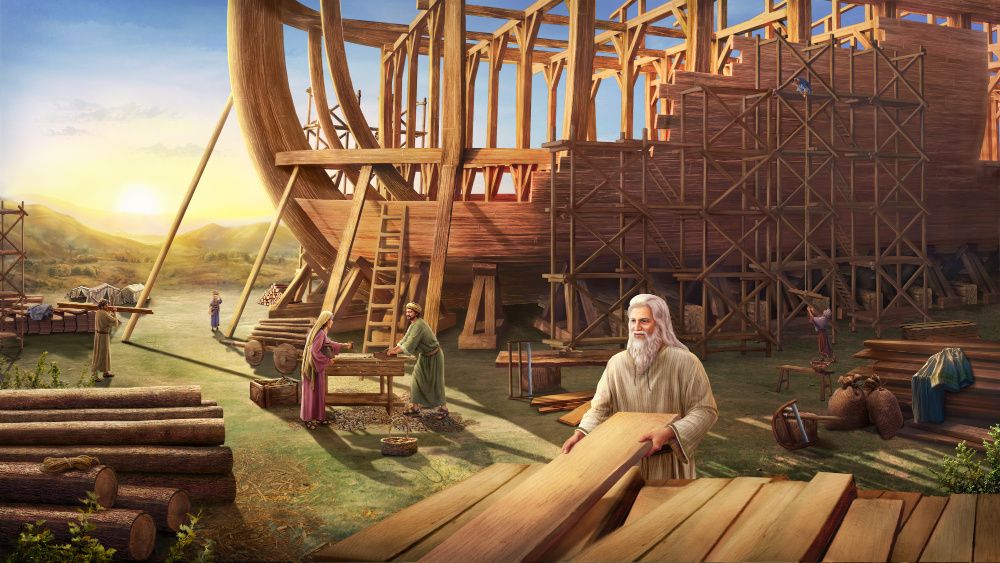
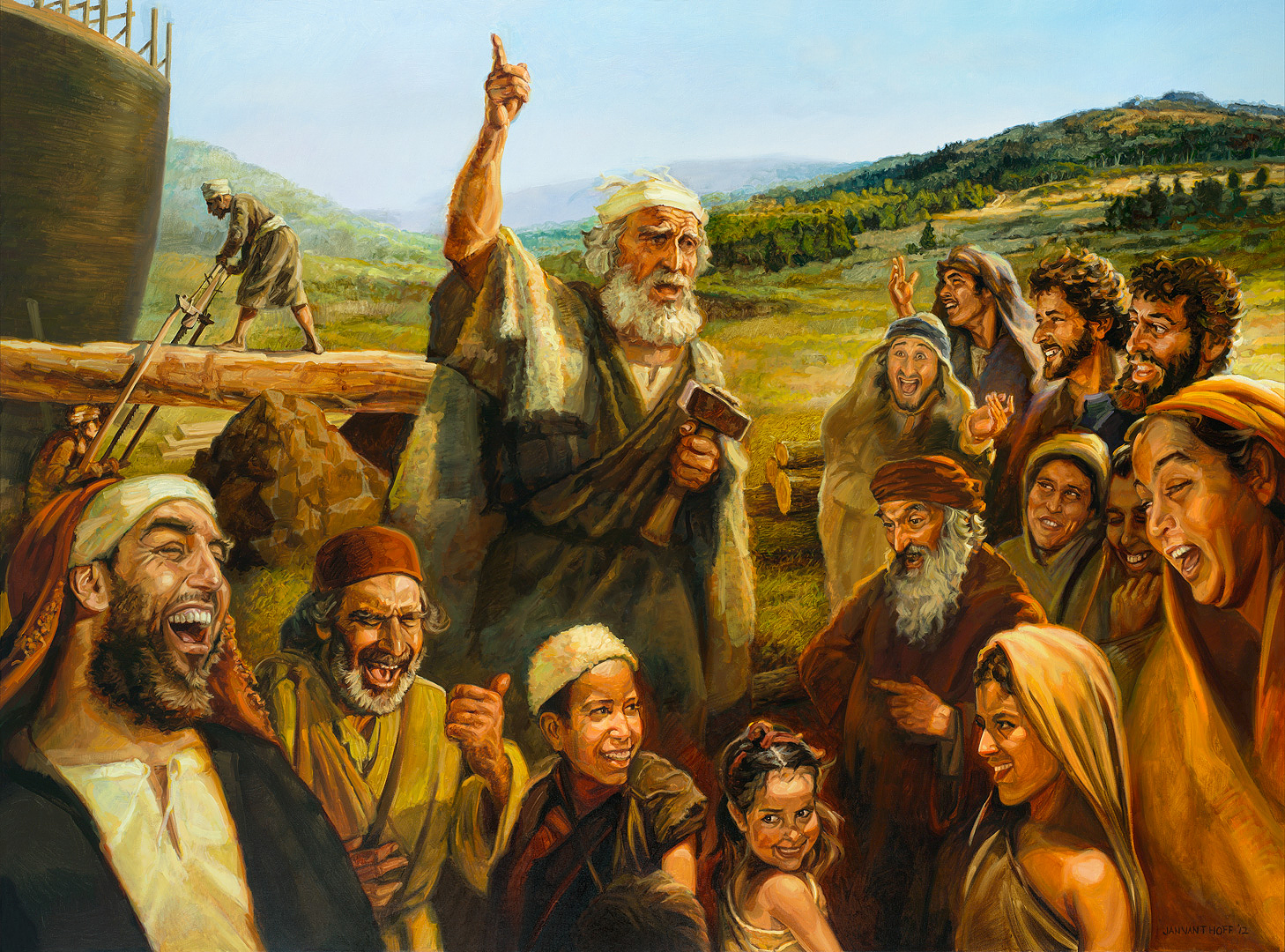
Noah’s ark was finally finished after 120 years. People watched as the animals migrated toward the ark, two by two. Can’t you hear the people hooting, “Hey, everyone, Noah’s finally getting ready to sail!” Remember, there wasn’t a drop of rain yet. The ark sat there on dry ground. The day of the flood dawned just as every other day had. Then God closed the door of the ark, the rain began, and the earth quaked as the deeps were opened. Judgment came suddenly, but not without warning.

Why is this important? It’s important because the flood is the one great historical example of God’s future judgment for the whole earth.

B. God’s future judgment will be historical, universal, and will come suddenly, but not without warning.

Just as none escaped the judgment of the flood, so none will escape God’s coming judgment. In the flood, every person on the face of the earth had to come to terms with God, either by accepting His means of escape (the ark), or by perishing in the flood. In the coming judgment, all will appear before God’s bar of justice. Those who are protected by God’s means of escape, the Lord Jesus Christ, will be protected from that judgment. Those who have not trusted in Christ will be condemned.

It will be a historical event: God “has fixed a day in which He will judge the world in righteousness through a Man whom He has appointed, having furnished proof to all men by raising Him from the dead” (Acts 17:31).

It will be universal: He will judge “the world”–every person who has ever lived. Those who have taken refuge in Christ will be spared, but all who are outside of Christ will appear before the Great White Throne, where those whose names are not written in the book of life will be thrown into the lake of fire (Rev. 20:11-15).
It will be sudden, but not without warning. There is the warning of the Scriptures. Even many who do not read the Bible know the story of the flood, which serves as a warning to them. But over and over Jesus and others in the Bible warn of the certainty of the coming judgment.

There is the warning of those who live godly lives. Surely Noah’s life served notice on that ungodly generation that their lives were not pleasing to the Lord. His obedience in the face of an almost impossible task which took 120 years stood as a testimony that they needed to repent. Even the march of the animals to the ark, obedient to their Creator’s command, bore witness to that generation that God was about to do something significant.

There is the warning of our own advancing mortality. Those in Noah’s day lived much longer than we do, but they all had one thing in common with us: they all died. As George Bernard Shaw observed, “The statistics on death are quite impressive: one out of one people die.” We look in the mirror each day and see new wrinkles and increasing gray hair (or lack thereof). Our muscles and joints ache over things that used not to phase us. Our eyesight dims. We can’t hear quite as well. And I forget the last thing–oh, yes, we start to forget things. These are all warning signs that death is ahead, when we must face eternity.

Then suddenly, after all these warnings, a day will dawn for each of us that will not start any differently than any other day. But before that day is over, we will be face to face with God. Either Jesus Christ will have returned to judge the earth, or we will die and stand before God. Are you ready for that day? The Book of Revelation clearly shows that the world will be prospering right up to the final hour when judgment falls. People will be living in luxury and sensuality. Then, in one day, in one hour, God’s judgment will fall (Rev. 18:8, 10, 17, 19). To be ready, …

2. We must take the means of escape God has provided.
The story of the flood shows us that before He brings judgment,
A. God graciously provides a means of escape from His judgment.
Noah didn’t think up the idea of the ark himself. Clearly, the ark was God’s initiative. He revealed it to Noah. He designed it and gave him the directions he needed. No human plan would have saved Noah or anyone else. They could have climbed the highest mountains; the flood went 20 feet over the tops of those mountains. There was no means of escape except the means God provided, and it was sufficient.

God’s grace is seen in not closing the door until the last possible moment. The people watched Noah working for 120 years. They watched the animals streaming in from all parts of the globe. They watched Noah and his family board the ark. The door was still open for any to come aboard. Nobody did. They watched as the Lord shut the door (Gen. 7:16). The rain started. It was too late.

Even though the door was open until the last possible moment, there is a sense in which those outside the ark had sealed their own doom years before the flood. There are very few deathbed conversions. A person fixes his mind in unbelief so that he can continue in his sinful ways. He deliberately ignores warning after warning. Perhaps he thinks that when he has one foot in the grave and the other on a banana peel, he will repent. But by then it’s too late. God has closed the door of salvation.

In reference to the last minute conversion of the thief on the cross, one of the Puritans wisely observed, “We have one account of a deathbed repentance in order that no man need despair; we have only one, in order that no man may presume.” God’s grace does have a limit. We cannot go on and on in our sin, ignoring God’s gracious warnings, without consequence. Today is the day of salvation!

B. We must take God’s means of escape.
There was only one means of escape provided by God. It was not especially fancy or inviting: A great big box daubed with pitch. A luxury liner like the Queen Mary might have attracted a few more. A good advertising campaign, along with a few shows on board may have drummed up a bit more interest.

And there was only one door. The proud lions and the lowly lizards all entered the same way. It was very narrow and restrictive. Some of Noah’s neighbors may have said, “All that matters is that a person is sincere and tries to do the best he can. Noah’s way is just too confining.” They perished in the flood. Others urged tolerance. They said, “Noah’s message is too judgmental. We need to preach love, not judgment.” They perished in the flood.

It wasn’t enough to know about the ark. Many in Noah’s day knew about the ark, but they never got on board and they perished in the flood. It wasn’t enough to admire the ark. Many marveled at the size of the ark, but they never got on board and they perished. It wasn’t enough to intend to get on board the ark some day. There were some who had good intentions, but they were just too busy; they were lost in the flood. Others said, “I don’t want to give up my business; it’s just beginning to turn a healthy profit.” They perished in the flood. Others said, “I’ll get on board when my mate decides to come.” But their mate never decided; they perished in the flood. The only ones who were saved were those who got on board the ark before the flood.

God has ordained one means of salvation from the judgment to come: The Lord Jesus Christ, crucified for sinners. Whether you’re wealthy or poor, moral or immoral, educated or uneducated, there is only one way to heaven, the way of the cross of Jesus Christ. He is the only means of salvation God has provided.

Conclusion
The question is, Have you gotten on board? That will be the only issue when God’s day of judgment comes suddenly. Are you trusting fully in Jesus Christ as your only hope of deliverance from God’s wrath? Have you left your sin, left your busy pursuits, left your business, left anything that hinders you, and come to Christ who alone can save you from the wrath to come? That is the only question which matters in the day of judgment.

God invited Noah and his family aboard the ark with the words, “Enter the ark” (7:1). The KJV puts it, “Come into the ark ….” That’s His invitation to you today. God has not yet closed the door of salvation. At the end of the Bible, after warning of the judgment to come, God’s final appeal is, “The Spirit and the bride say, ‘Come.’ And let the one who hears say, ‘Come.’ And let the one who is thirsty come; let the one who wishes take the water of life without cost” (Rev. 22:17). But lest you put it off, the Bible goes on in the next to the last verse to warn, “He who testifies to these things says, ‘Yes, I am coming quickly” (Rev. 22:20). The Lord Jesus is coming to judge the earth; He invites you to come aboard before He comes to close the door. Come to Christ now!

 
Leave a comment

Posted by on October 20, 2025 in Genesis


Standing Alone – Genesis 6:9-22


Genesis 6:13-22 “Noah's Ark” – Simply the Bible BlogTo be faithful as a Christian in an evil day, you must learn to stand alone. You will repeatedly face pressure to violate your Christian standards and go along with the crowd. As a Christian teenager, you’re with some friends who are passing around a joint. What will you do when it comes to you? All the other kids are experimenting with sex and talking about their adventures. Will you go along with the crowd? Everyone has an illegal copy of an upcoming test. Will you join them in cheating?

Christian adults also face constant pressure to compromise their faith. At work, the boss expects you not to be totally honest in dealing with customers. On a business trip, your associates are all going to a porno movie and want you to join them. At family gatherings over the holidays, the rest of the family are gossiping about another family member. They’re telling off-color jokes. What do you do?

No one likes to be ridiculed or rejected. We all want to be liked and included. We don’t want others to think that Christians are a bunch of prudes who can’t enjoy life. So we’re easily tempted to go along with the crowd rather than to stand alone for Jesus Christ. But if we yield, we dishonor God and lose our distinctive witness for our Savior.

There is probably no greater example of a man who stood alone with God in an evil day than Noah. God, who sees the heart of every person, saw fit to save only Noah and his family. All others perished in the flood. Think of what it would be like to be the only godly family on earth! Noah’s life teaches us that …

To stand alone in an evil day we must walk with God.

“Noah walked with God” (6:9). That phrase is used only of Enoch (5:22, 24), Noah, and the godly priests (Mal. 2:6). It is the secret of standing alone in an evil day. The first thing we learn is that …

1. Standing alone is necessary because we live in an evil day.

Through repetition, the text underscores several points. Twice (6:11, 12) it mentions that the corruption on earth was in the sight of God. In the sight of men, things weren’t so bad. As we’ve seen, they were making great strides in many areas. They viewed themselves as progressive; but God viewed them as putrid. It is God’s view, not man’s, that matters. We only learn God’s view in His Word.

Three times the text repeats that the earth was corrupt (6:11, 12), meaning morally degraded. The Hebrew word “corrupt” means to destroy. Derek Kidner puts it, “… what God decided to ‘destroy’ (13) had been virtually self-destroyed already” (Genesis [IVP], p. 87). Twice it is said that the earth was filled with violence (6:11, 13). Moral degradation and violence go together.

When people cast off God’s standards for right and wrong, self becomes the standard. Self grabs whatever it can get, regardless of others. Violence is the gruesome result. Because of the degree of moral degradation and violence, God wiped out everything through the flood.

This text is especially applicable to us, because Jesus said that just as it was in the days of Noah, so it will be in the days prior to His return (Matt. 24:37-39). People were going on about life oblivious to God, “eating and drinking, … marrying and giving in marriage, until the day that Noah entered the ark, and they did not understand until the flood came and took them all away.” They were living without regard to God and His impending judgment. What a description of our time!

The frightening thing is that there were grandchildren of the godly Enoch who were swept away in the flood. They knew about God. Perhaps some of them even claimed to know God. But they had blended in so much with the evil around them that they didn’t listen to God’s repeated warnings of judgment.

When Jesus returns, there are going to be many who claim to know Him, even those who have prophesied and cast out demons and done miracles in His name, who will say to Him, “Lord, Lord,” but He will say to them, “I never knew you; depart from Me, you who practice lawlessness” (Matt. 7:21-23). They thought they knew Jesus, but Jesus didn’t know them because they blended in with the wickedness of the end times! It’s not easy, but we must stand alone because we live in an evil day!

2. Standing alone is possible because Noah did it.

“Noah was a righteous man, blameless in his time” (6:9). The word righteous is used in two ways in the Bible. It is used of the righteousness of faith, that is, of imputed righteousness (Rom. 3:21-4:25). When a person trusts in Christ as his sin-bearer, God credits the righteousness of Jesus Christ to his account. We know that Noah had been justified by faith because Hebrews 11:7 says that his obedience in building the ark shows that he was “an heir of the righteousness which is according to faith.”

But the word righteous is also used of the right conduct which stems from being justified (declared righteous) by faith. It means “conformity to a standard” and points to the observable behavior of those who live by God’s revealed standards of right and wrong.

When verse 9 says that Noah was righteous, it is referring to this type of righteousness. It would be wrong to say that Noah found favor with God (6:8) because he was a righteous man. Rather, because he was the object of God’s undeserved favor, he lived a righteous life. His faith showed itself in good works and moral behavior. That’s always God’s order–grace first, then saving faith, then good deeds (Eph. 2:8-10).

Noah was not only righteous, but also blameless, which means “complete” or “whole,” that Noah had integrity. The phrase “in his time [or, generations]” means that Noah’s contemporaries viewed him that way.

Many of them probably thought he was crazy, but they couldn’t deny that he lived what he believed. That Noah was righteous and blameless does not mean that he was perfect. He sinned just as we do. But Noah confessed his sin to God and he obeyed God. Noah’s righteousness and blamelessness are summed up in the words, “Noah walked with God.”

The text probably repeats the names of Noah’s three sons in verse 10 (see 5:32) to remind us of the effect that Noah’s godly life had on them. They easily could have been influenced to leave their father in his crazy project of building this ocean liner on dry ground and to blend in with the world. The reason they stayed with Noah and got on board the ark was that they saw in their father a life that rang true.

If we want children who learn to stand alone in our evil day, we’ve got to be parents who live our convictions, as Noah did. Kids are smart; they read our lives much more than our lectures. They can smell phoniness a mile off, and they want no part of it. But if they see reality with God in us, there is a much better chance that they will stand alone against the tide of ungodliness in our times.

Standing alone is hard in any day. But Noah’s example proves that it is possible. But how do we do it? A step at a time.

3. Standing alone is achieved by walking with God.

As we saw with Enoch, walking with God implies faith in God, obedience to God, and fellowship with God. With Noah’s walk with God, three things shine through: faith, obedience, and perseverance. First, faith:

A. Walking with God begins and continues through faith in God’s Word.

Like Enoch, Noah is listed in the faith “Hall of Fame” in Hebrews 11:7: “By faith Noah, being warned by God about things not yet seen, in reverence prepared an ark for the salvation of his household, by which he condemned the world, and became an heir of the righteousness which is according to faith.” Note two aspects of Noah’s faith:

(1) Faith in God’s Word concerns the unseen. Noah was warned about “things not yet seen.” God threatened to destroy the wicked and promised to save Noah and his family through the ark (Gen. 6:13-18). All this was in the future. Noah had no tangible signs to verify that this would happen. All he had was God’s word. But he built his whole life around it. Alexander Maclaren writes, “The far-off flood was more real to him than the shows of life around him. Therefore he could stand all the gibes, and gave himself to a course of life which was sheer folly unless that future was real” (Expositions of Holy Scripture [Baker], p. 54).

Could you say that about your life–that it is sheer folly unless heaven and hell are real? We’ve gotten away from this. We emphasize the present benefits of being a Christian. Christianity is being marketed as a product that can do everything from help you lose weight to make you a successful salesman. But you won’t stand alone in our evil day unless by faith you are staking everything on what God says about future judgment.

(2) Faith assumes that we hear and know God’s Word. Hearing and knowing what God said, Noah acted upon it. We have God’s written Word. But if you don’t know the Word, it won’t have any effect on your daily attitudes, behavior, and relationships. Let’s say you watch one hour of TV each day (the national average is three hours per day!), plus a weekly movie. You spend another hour daily reading the newspaper and various magazines. Plus, you spend time listening to the radio while driving, etc. You read your Bible once or twice a week for 10-15 minutes. It doesn’t take a Ph.D. to figure out what is going to influence your life the most! We are so bombarded with the world! You won’t stand alone against the evil of our day unless your intake of the Word is sufficient to offset your intake of the world.

I urge you to saturate yourself with the Bible every way you can. Get it on tape and play it while you drive. Read it daily, asking God to give you His wisdom on how to live in this evil day. Memorize key verses so that God can bring them to mind when you’re tempted to sin.

B. Walking with God requires complete obedience to God’s Word.

Twice we are told that Noah did according to all that the Lord had commanded him (6:22; 7:5). When you think about it, what the Lord commanded him was incredible. Can you imagine Noah telling Mrs. Noah that he was going to build a ship 450 feet long, 75 feet wide, and 45 feet high? You hear about guys who build a fishing boat in their back yard, but this was ridiculous! This wasn’t a weekend hobby; it was a full-time job for 120 years!

Most of us would have argued with the Lord: “It’s not feasible! It’s not logical! It’s too costly! It will take too long!” But no matter how difficult, illogical, or costly, Noah did “according to all that God had commanded him.” Walking with God requires that kind of complete obedience.

The task God gave Noah was enormous. If you parked the ark on the street out front, it would go from the corner of Benton to the Beaver Street Brewery. The street is 30 feet wide, so it would be two and a half times the width of the street. And it would be three stories high!

In fact, as far as we know, it was not until 1858 that a vessel of greater length was built: the “Great Eastern,” which was 692 by 83 by 30 feet (James Boice, Genesis [Zondervan], p. 262]). While the ark was a floating box, not a pleasure craft, studies have shown that its proportions are ideal for a seaworthy vessel. How would Noah or anyone else at that time have known how to build such a large seaworthy vessel apart from revelation from God?

Critics have called Noah’s ark a myth, saying that it would be impossible to fit all the known species of animals in such a vessel.

If you’re interested in a detailed treatment, I refer you to The Genesis Flood [Baker], by John Whitcomb and Henry Morris, two scientists who show that it is not incredible. We don’t know exactly what the Bible means by the word “kind” in reference to the animals (6:20). It could refer to families of animals, from which the various species could later develop.

The Bible is clear that God created the various kinds of animals distinct from one another, but there could have been change within the kinds. Authorities on taxonomy estimate that there are less than 18,000 species of mammals, birds, reptiles, and amphibians alive today. Even if that number is doubled to allow for extinct species, the ark would need to hold about 75,000 animals. Given the dimensions of the ark, it easily could hold as many as 125,000 animals the size of a sheep. Since the average size of land animals is less than that of a sheep, no more than 60 percent of the ark would be needed to hold the animals, with the rest being used for food and water storage (Morris, The Genesis Record [Baker], p. 185).

As for the problem of how Noah went about collecting all these species, verse 20 indicates that God caused the animals to come to him. That’s a miracle, but certainly God could do it. As for how Noah could have collected food for all those animals and fed them all on board, it is possible that God caused the animals to go into a type of hibernation so that they didn’t require as much food and water (Whitcomb & Morris, p. 71).

Also, it is possible that, as will be the case in the millennium, the carnivorous animals ate grass before the flood. We don’t know, but it is not impossible. (Man was vegetarian before the flood.) At any rate, the story is not incredible or mythological. There are reasonable explanations for the many problems.

We don’t know the meaning of “gopher wood” (6:14; NIV = “cypress”). But the Hebrew word for “gopher” as well as the word “pitch” (tar that Noah covered the wood with) both come from the Hebrew root word for “atonement,” which means “to cover.” So you could say that those who were protected by the “atonement” wood and “atonement” pitch were delivered from God’s judgment.

As such, the ark is a type of the Lord Jesus Christ. Just as everyone who was on the ark was saved and everyone not on the ark was lost, so everyone who, in the obedience of faith, has put himself under the covering of the blood of Jesus Christ will be saved from God’s future judgment; everyone who is outside of Christ will be lost.

It doesn’t depend on one person being better or worse than another person. There were probably some nice people who didn’t get on board the ark. There are some wonderful people who have never trusted in Christ for salvation. It all depends on whether you are “on board” or not, covered from God’s judgment by the means He has ordained.

If Noah had said, “I believe what God says about the coming flood,” but he hadn’t followed through in obedience, he would not have been saved. If he had started, but got tired of the whole thing and quit part way through, he would not have been saved. He and his family were saved from the flood because he obeyed God completely. In our day there is a false security being offered to people under the label of eternal security. Somebody prays to receive Christ and we tell them that they are saved and eternally secure. They may be; but they may not be. If there is no subsequent change in terms of obedience to God, there’s reason to doubt the reality of their salvation. We are saved by grace through faith apart from works, but faith that saves works. The proof of your faith is your obedience.

Walking with God begins and continues by faith in God’s Word; it requires complete obedience to God’s Word.

C. Walking with God requires perseverance.

The metaphor of walking suggests the long haul. You may run for short distances, but if you need to go far, walking is more effective. God warned Noah of the impending judgment and told him to start building the ark 120 years before the flood (Gen. 6:3). By faith Noah started working and kept going. When his sons were old enough, they helped him. Noah just kept on until it was done.

The New Testament says that he was a preacher of righteousness (2 Pet. 2:5). He preached righteousness for 120 years and didn’t have a single convert. It is likely that he had many scoffers. It must have been a favorite pastime to go over and watch old Noah working on his ark. It probably had never rained yet on the earth (Gen. 2:6). Everyone must have thought Noah was bonkers to spend his life building an ocean liner on dry ground on an earth that didn’t know rain! The pressure to quit would have been tremendous. Yet he kept plodding on.

It’s easy to make a profession of being a Christian. It’s not too difficult to remain a Christian for a few months or even a few years. But it’s another matter to walk with God through the years in spite of trials, hardships, ridicule, and no visible results. We need what has been called “a long obedience in the same direction.” We need perseverance!

Conclusion

Let me put it plainly: If you don’t consistently spend time alone with God in His Word and in prayer, you don’t have a walk with God! If you don’t have a walk with God, you will not be able to stand alone as Noah did. You will be more conformed to this evil world than you are to Jesus Christ. Peter writes that just as the early world was destroyed by the flood, so “the present heavens and earth by [God’s] word are being reserved for fire, kept for the day of judgment and destruction of ungodly men” (2 Pet. 3:7). His conclusion is, “Since all these things are to be destroyed in this way, what sort of people ought you to be in holy conduct and godliness” (3:11).

If you worked for a company that you knew was going to be dissolved by bankruptcy, your attitude toward that company would change. You wouldn’t put your future hopes in it, because it has no future. If you heard that the government was going to shut down a bank because of insolvency, you wouldn’t rush to invest your money in that bank. God has said that this evil world is doomed. He has promised “a new heavens and a new earth, in which righteousness dwells” (2 Pet. 3:13). Like Noah, we must redirect everything in our lives–our time, our money, our goals–in light of God’s warning of judgment and His promise of deliverance in Christ. We must stand alone in this evil day by walking with God.

 
Leave a comment

Posted by on October 16, 2025 in Genesis


Sin’s Full Course – Genesis 6:1-8


Noah warns the people - GospelimagesSin is like cancer of the human soul. It often starts unnoticed, perhaps with a small compromise. There may be a few bothersome symptoms, but we dismiss them or excuse them as due to some other problem. But the cancer is there and growing, working corruption in the individual and also tainting his relationships. If unchecked, it will contaminate an entire society. The final result is God’s judgment. But, thankfully, throughout the process prior to God’s judgment, His grace gives us repeated offers to repent and be restored. This process is pictured in Genesis 6:1-8, which describes the world just prior to God’s judgment in the flood. It shows us that …

Sin begins with compromise, goes on to corruption, and ends in condemnation, unless we respond to God’s grace.

We would do well to pay attention to these verses, since Jesus likened the days just prior to His return to the days just prior to the flood. He said, “For the coming of the Son of Man will be just like the days of Noah. For as in those days which were before the flood they were eating and drinking, they were marrying and giving in marriage, until the day that Noah entered the ark, and they did not understand until the flood came and took them all away; so shall the coming of the Son of Man be” (Matt. 24:37-39). Jesus is saying that the people of Noah’s day ignored God’s warnings. They went about the normal things of life, oblivious to the repeated warnings of judgment, until it was too late. The same thing will happen to many in the days just prior to Christ’s return. So the message to us is, “Make sure you listen to God’s warning about your sin. If you ignore the symptoms, it may be too late!” Our text reveals sin’s full course:

1. Sin begins with compromise.

We read that as the population grew, “the sons of God saw that the daughters of men were beautiful; and they took wives for themselves, whomever they chose” (6:1-2). The first interpretive problem (of several) is, Who are the sons of God and the daughters of men?

It’s easy to lose the application of this text in the debate over the right interpretation. The debate is centuries old, with godly men holding differing views. But whichever view is right, the application is the same–that the human race before the flood was corrupted by sin, and that corruption began with compromise.

Three main views have been proposed. The first view is that the sons of God were powerful rulers, probably controlled or indwelled by demons, striving for fame and fertility. In some Ancient Near Eastern cultures, kings were called the sons of one of the gods, and even in the Bible, the Hebrew word “Elohim” is used for men in positions of authority (Exod. 21:6 [NASB margin]; Ps. 82:1, 6). The daughters of men refers to all women. The sin of these rulers was their lust for power and women; they were trying to achieve immortality through immorality. (Allen P. Ross, The Bible Knowledge Commentary [Victor Books] 1:36, defends this view.) The weaknesses of this view are that it seems forced on the text, it stretches the biblical terms, and it would not have occurred to Moses’s audience in reading the context of Genesis.

A second, more widely held, view is that the sons of God refers to fallen angels (demons) who came to earth in human bodies and cohabited with women, resulting in a superhuman race called the Nephilim (6:4). Many respected modern Bible scholars hold this view (A. W. Pink, Donald Barnhouse, Ray Stedman, James Boice, Charles Ryrie [Study Bible]). It goes back as early as the Septuagint in 200 B.C. Justin Martyr and Tertullian held this view in the early Church, but it was opposed vigorously by Augustine and Chrysostom and later by the Reformers. But there are some strong arguments in its favor or so many respected men would not hold it.

The strongest argument for it is that every other time the term “sons of God,” is used in the Bible, it refers to angels (Job 1:6; 2:1; 38:7; Dan. 3:25; Pss. 29:1; 89:6). Also, several New Testament passages referring to the flood mention demons who disobeyed by abandoning their proper abode, thus incurring God’s judgment (1 Pet. 3:19, 20; 2 Pet. 2:4, 5; Jude 6). It is argued that these demons left their proper abode of the spirit world and cohabited with women. But, how could angels do this? In Genesis 19, the angels visiting Lot in Sodom were desired by the men of that evil city for homosexual relations. If you object that Jesus said that angels cannot marry, it is answered that Jesus said that in heaven the angels do not marry (Matt. 22:30). But neither will men and women marry in heaven. Thus, there is no inherent problem with angels cohabiting with earthly women.

Proponents also argue that in the context of Genesis, Satan wanted to thwart God’s promise to bring a deliverer by the seed of the woman by corrupting the human race with this superhuman race of giants. It was his insidious plan to bring immortality to the human race illicitly, bypassing God’s curse of death.

In spite of these arguments, I reject this view. I think it creates mind-boggling theological problems which have no biblical warrant. We do not need such a far-fetched view to explain the text adequately in its context. So why adopt it? First, there is the theological problem of how angelic beings can have sex with women. It is one thing to say that demons indwell human men who marry human women. But it is incredible and makes the Bible sound like Greek mythology to say that demons take on bodies and produce offspring with human women!

What were the offspring–half-angel, half-men? There is no such category in the Bible. Do they have some sort of angel–human souls? While the term “sons of God” refers to angels in other Old Testament uses, it refers to righteous angels, not to demons. (In Job 1:6 and 2:1, Satan is distinguished from the sons of God, as if he were not part of their number. In the other references [Job 38:7; Dan. 3:25; Pss. 29:1; 89:7], righteous angels clearly are meant.) “Sons of God” seems like a strange term for fallen angels. And while the exact term is not used of men, God’s people are called His sons in the Old Testament (Deut. 32:5; Ps. 73:15; Hos. 1:10 [in the Hebrew text, “children” = “sons”]). With regard to the New Testament references (1 Pet. 3:19-20; 2 Pet. 2:4-5; Jude 6), there are other adequate interpretations. So why introduce a mythological sounding concept full of incredible theological problems which has no other scriptural warrant when we don’t need to?

The third view, and most normal in light of the context, is that the sons of God refers to the godly descendants of Seth, who called on the Lord (4:26 & 5:1-32); the daughters of men refers to ungodly women, mostly from the line of Cain, who rejected God (4:16-24). The problem described here, which led to the corruption of the human race and the judgment of the flood, was the intermarriage of the godly line of Seth with godless women. Undoubtedly Satan was involved behind the scenes, as he always is when a generation turns away from the Lord (Balaam, Numbers 25). To say that Satan was involved in seducing men from a godly heritage to marry ungodly women is not fantastic; to say that fallen angels actually married human women is.

The biggest problem with this view is why Moses uses this term. It is an unusual designation. If it were not, everybody would agree on the interpretation! The best answer is that Moses used the term to underscore the high standards which the Sethites should have observed (H. C. Leupold, Exposition of Genesis [Baker], p. 252; also, see Calvin). As “sons of God,” they should have known better than to marry godless women. But instead, they married on the basis of sexual attraction only, not on the basis of godly character. They “saw that the daughters of men were beautiful; and they took wives for themselves, whomever they chose” (6:2). The result was the compromise of godly standards which led to the corruption and judgment of the human race. Luke 3:38 seems to support this view. Luke traces the line of Christ back through Seth to Adam, but doesn’t stop there; he calls Adam “the son of God.” Thus Adam’s descendants through Seth are the sons of God who became corrupted through wrongful marriage alliances.

As I said earlier, it’s easy to lose the application in the process of working through the interpretation. But let’s not do that. No matter what interpretation you take, the application is the same: Sin begins with compromise. Satan often uses wrongful marriages as the area of compromise to seduce God’s people. It is an effective tool, since the sex drive and the emotions of romantic love are so powerful. I have seen many young people neutralized in their Christian lives by marrying “nice” unbelievers or worldly-minded professing Christians.

It is proper to be physically attracted to the person you marry. But to marry primarily because of physical attraction is a serious mistake. The typical short-lived Hollywood marriage ought to tell us that. But Satan uses this weapon over and over. A couple is physically attracted to each other, they get physically involved, they get married on that basis, and later there is often infidelity and divorce. Their testimony for Christ is polluted.

While the area of wrongful marriage alliances was where the line of Seth compromised, and is a major area where we can compromise, it is not the full extent of the application. When these men from the line of Seth, called “sons of God,” married these ungodly women on the basis of sexual attraction, they compromised their integrity. They had a name to live up to: “sons of God.” But their lives didn’t match their title. So they had to put up a front, to try to maintain the image of sons of God, while living on a natural, sensual plane. It is a short step from there to total spiritual corruption.

Guard your spiritual integrity! Integrity does not mean perfection, but it does mean walking in reality with God, and dealing biblically with your sin. Satan wants to undermine your integrity. He wants you to compromise your testimony on the job, and instead of confessing your sin, to cover it up or deny it. He wants you, as perhaps a church leader, to yell at your kids and verbally abuse them at home, but not to confess your sin and ask their forgiveness. Then you come to church and pretend to be spiritual. You’ve just compromised your integrity. Sin begins with compromise.

2. Sin goes on to corruption.

I will come back to verse 3; but note that in verse 4, Moses mentions the Nephilim. This is another major interpretive problem. Who were the Nephilim? Those who hold to the angel view say that they were a race of giants who resulted from the union of the angels with the daughters of men. But the text doesn’t say that they are the product of that union, but only that they were on the earth at that time and also afterward.

The word occurs only one other time, in Numbers 13:33. There the spies who return to the Israelite camp report that they had seen the Nephilim, and that they felt like grasshoppers in comparison to them. The word comes from a root word meaning “to fall upon,” and thus apparently points to men of violence, who had a reputation of falling upon their enemies. They may or may not all have been giants physically. But the point is, they were vicious men who would just as soon kill you as look at you. Moses’ point is that the generation prior to the flood was notorious for its violence (see 6:13). Their unchecked sin had grown into the worst sort of corruption. They had let themselves go in hardened, open rebellion against God.

This is further affirmed by God’s evaluation of that generation: “Then the Lord saw that the wickedness of man was great on the earth, and that every intent of the thoughts of his heart was only evil continually” (6:5). God looked beyond the actual deeds of wickedness and saw the hearts. What He saw was total corruption. Alfred Edersheim says of verse 5: “This means more than the total corruption of our nature, as we should now describe it, and refers to the universal prevalence of open, daring sin, and rebellion against God, brought about when the separation between the Sethites and the Cainites ceased” (Old Testament Bible History [Eerdmans], 1:39). Verse 5 is God’s description of the extreme corruption of that generation.

But it is also a description of the corruption of every human heart. Sin begins in the heart, or thoughts (Mark 7:20-23). It does not always reach the outward manifestation of Noah’s day (although our society is at least as far gone), but the heart of every person is the same as what God saw when He looked on that generation. After the flood, when the righteous Noah offered a sacrifice, God said, “… the intent of man’s heart is evil from his youth” (Gen. 8:21). This is God’s revelation of His view of what goes on inside every person, even those, like Noah, whom He has redeemed.

If you want to verify God’s viewpoint, look at the world around you–the violence, greed, sexual immorality, and self-centeredness. But you don’t need to look out there. Look at your own heart. Even though outwardly you may be reasonably respectable, is there anyone who would want their innermost thoughts to be broadcast? Though I have been a Christian for years and experience consistent victory over sin, I often have to fight against degraded, corrupt thoughts! I agree with Martin Luther who wrote, “Without the Holy Spirit and without grace man can do nothing but sin and so goes on endlessly from sin to sin” (Luther’s Works, Vol. 2, p. 40, cited in James Boice, Genesis [Zondervan], 1:250). Sin’s course begins with compromise; it goes on to corruption.

3. Sin ends in condemnation.

God determined to bring judgment on the whole world because of man’s corruption (6:6-7). When the Bible says that God “repented” (KJV), it does not mean that He changed His eternal plan. God is unchangeable in His person, perfections, and purposes. Nothing thwarts the counsel of His will (Eph. 1:11). But from our perspective, sometimes it seems that God has changed His plan. To put it in terms which we can understand, and to reveal God’s heart response to human sin, the Bible says that God repents, or feels sorrow (1 Sam. 15:11, 29).

The point is, God doesn’t get a sadistic kick out of judgment. It grieves Him to see our rebellion and sin, and He only brings judgment after He has repeatedly warned and appealed to us to turn from our sin. When He does judge, His judgments are always just. He has a right to judge man, because He created him (6:7). But, even then, as He said to Ezekiel, “I take no pleasure in the death of the wicked, but rather that the wicked turn from his way and live. Turn back, turn back from your evil ways! Why then will you die, O house of Israel?” (Ezek. 33:11).

Thus sin begins with compromise; goes on to corruption; and ends in condemnation. But the section ends on a brighter note. The cycle can be broken!

4. We can respond to God’s grace.

“But Noah found favor in the eyes of the Lord” (6:8). The word favor means acceptance or grace. When used of God’s favor toward man it means His undeserved favor. Noah did not earn favor with God, he found it. He was just as much a sinner as his contemporaries (9:21). The difference was, Noah was willing to accept God’s view of his own sin and to turn from that sin to God, seeking His grace. The result was a righteous life.

This is the first time the word grace appears in the Bible. It is not the first time grace appears, since God’s grace is seen in His treatment of Adam and Eve in clothing them with animal skins rather than judging them for their sin. It is seen in His repeated dealings with Cain. It is seen in the long life of Methuselah, whose name means, “when he is dead, it [that is, judgment] will come.” His long life was a testimony to God’s gracious appeal over almost 1,000 years to this godless world to repent.

God’s grace is seen in 6:3, when the Lord says that His Spirit will not strive with men forever. The word “strive” means to judge, in the sense of striving to restrain men from their evil ways. God is saying that the human race had cast off any desire to live in the realm of the spirit, and was living as mere flesh, as totally given over to sin. He was warning that He would not continue to strive to check man’s unbridled sinfulness indefinitely. But, God adds, “his days shall be 120 years.” Some understand this to mean that his lifespan would now be 120 years. But I think God means that there will be another 120 years before the judgment of the flood for man to repent. That’s grace! If they had repented, I believe that God would have relented on His judgment, even as He did with sinful Ninevah in the days of Jonah.

But, when sin was at its peak, we read that Noah found grace in the eyes of the Lord. That’s a great encouragement. It means that in spite of the corruption, the horrible violence, immorality and degradation around us, God’s grace for the individual still shines through. Where sin abounds, grace superabounds (Rom. 5:20). No matter how terrible your sin, you can find grace if you will turn to the Lord Jesus Christ. Jesus did not come to save the righteous, but to call sinners to repentance. If you will agree with God’s view of your heart (6:5), and cry out to Him, “Be merciful to me, the sinner,” He will pour out His grace and salvation on you.

Conclusion

But God’s grace does have a limit. In Noah’s day, it was 120 years. The flood came and everyone was lost except Noah and his family. In our day, we do not know when time will run out. We do know that our day, like Noah’s, is a time of unparalleled corruption, with people going on about life without regard for God. And we do know that God “has fixed a day in which He will judge the world in righteousness through a Man whom He has appointed, having furnished proof to all men by raising Him from the dead” (Acts 17:31). We’re all infected with the cancer of sin. Only God can cure it. He is ready and willing, if you will respond to His gracious offer. The only other option is to let sin run its full course, resulting in corruption and final condemnation. God calls out to you, “Now is the acceptable time, behold, now is the day of salvation” (2 Cor. 6:2).

 
Leave a comment

Posted by on October 13, 2025 in Genesis


The Fruits of the Fall – Genesis 4:1‑26


Cain kills Abel - GospelimagesWhen we sin we often do so with the futile hope that we shall obtain the maximum amount of pleasure at the minimum penalty. It seldom works that way, however.

I once heard the story of a man and his wife who decided to go to a drive‑in movie. They thought the price was too high and plotted to put one over on the management of the theater. When they were within a short dis­tance of the drive‑in, the husband climbed into the trunk of the car. The arrangement was that his wife would let him out after she was inside the theater.

All went off as planned, at least as far as getting past the ticket seller was concerned. But when the wife got to the back of the car to let her husband out of the trunk, she discovered that he had the trunk keys in his pocket. In desperation she had to call the manager, the police, and the rescue squad. Neither saw the movie and the trunk had to be cut open. Such is the path of sin. The ride is short and the price is high.

At first glance, the taking of the forbidden fruit and eating of it seemed like a trivial matter, a mere misdemeanor. But Genesis chapter three makes it clear that it was a matter of gravity. Man had chosen to believe Satan rather than God. Adam and Eve had concluded that God was unduly harsh and severe. They decided to seek the path of self‑fulfillment as opposed to servanthood .

The serpent had suggested, indeed, he had boldly asserted, that no harm­ful effects would be experienced in disobedience to God, only a higher level of existence. But in this fourth chapter of Genesis we quickly see that Satan’s promises were blatant lies. Here the real wages of sin begin to appear.

The Fruit of the
Fall in the Life of Cain
(4:1‑15)

The sexual union of Adam and Eve produced a first child, a son whom Eve named Cain. This name is probably to be understood as a play on words. It sounds similar to the Hebrew word, Qanah, which means ‘to get’ or ‘to acquire.’ In today’s vernacular this son would probably have been named ‘Got.’[1]

The significance of the name is that it reflects Eve’s faith, for she said, “I have gotten (Qaniti, from Qanah) a manchild with the help of the Lord” (Genesis 4:1).

While there is some discussion among Bible scholars as to the precise mean­ing of this statement,[2] Eve acknowledged the activity of God in the gift of her son. I believe that Eve understood from the prophecy of Genesis 3:15 that one of her offspring would bring about her redemption. Perhaps she looked upon Cain as her redeemer. If so she was destined for disappointment.

While she may have been mistaken in her hopes for a speedy victory over the serpent by her firstborn child, she was correct in looking for God’s deliv­erance through her seed. She was, therefore, correct in general but mistaken in particular.

Eve’s optimism seems to have waned by the time of the birth of her second son, Abel. His name meant ‘vanity,’ ‘breath,’ or ‘vapor.’ Perhaps Eve had learned by this time that the consequences of sin were not to be quickly done away with. Life would involve struggle and a good measure of seemingly futile effort. Cain was the symbol of Eve’s hope; Abel, of her despair.

Abel was a keeper of flocks, while Cain was a tiller of the soil. No­where does Moses imply that one of these occupations is inferior to the other. Neither is this account some kind of predecessor to the television shows which have worn thin the theme of the struggle between the dirt farmers and the cattlemen.

Cain’s problem is not to be found in his means of livelihood, but in the man himself:

So it came about in the course of time that Cain brought an offering to the Lord of the fruit of the ground. And Abel, on his part also brought of the firstlings of his flock and of their fat portions. And the Lord had regard for Abel and for his offering; but for Cain and for his offering He had no regard … (Genesis 4:3‑5a).

The Israelites who first read these words of Moses would have little difficulty in grasping the problem with the sacrifice of Cain. They received this as a part of the Pentateuch, the first five books of the Bible. As such, they understood that man could not approach God without the shedding of sac­rificial blood. While there were non‑bloody sacrifices,[3] man could only have access to God through shed blood. Cain’s offering fell short of God’s requirements of the Law.

“But Cain did not have such revelation!” someone may object. Quite true. But then we must all admit that none of us knows what revelation he did have. Any speculation on the subject is just that—mere conjecture.

Having said this, I must point out that it is not necessary for Moses to have told us. His contemporaries had more than sufficient basis to grasp the significance of shed blood, because of the meticulous prescriptions of the Law regarding sacrifices and worship Christians of our own time have the advantage of seeing the matter much more clearly in the light of the cross, and from the realization that Jesus was “the Lamb of God who takes away the sin of the world” (John 1:29).

While we do not know what God revealed to Adam or to his sons, we are assured that they knew what they were to do. This is clear from God’s words to Cain:

Then the Lord said to Cain, ‘Why are you angry? And why has your countenance fallen? If you do well, will not your countenance be lifted up? And if you do not do well, sin is crouching at the door; and its desire is for you, but you must master it (Genesis 4:6‑7).

God’s question clearly implies that Cain’s anger was ill‑founded. While we do not know the specifics of what ‘doing well’ involved, Cain did. Cain’s problem was not one of lack of instruction, but of insurrection and rebellion against God.

Cain, like so many people today, wanted to come to God, but he wanted to do it his way. This may work at the hamburger stand. They may let you do it ‘your way’ as the commercial says, but God will not. As a friend of mine says, ‘You can go to heaven God’s way, or you can go to hell any way you please.’

Notice that Cain was not an irreligious person. He believed in God, and he wanted God’s approval. But he wanted to come to God on his terms, not on God’s. Hell, as I have said before, will be populated with religious people.

Cain did not want to approach God through shed blood. Cain preferred to offer God the fruit of his labors. He had a green thumb, and blood­stained hands had no appeal to him. Men today differ little. Many are those who, like the demons (cf. James 2:19), believe in God, and who acknowledge Jesus as the Son of God. But they refuse to submit to Him as Lord. They refuse His sacrificial and substitutionary death upon the cross as the payment for their sins. They wish to come to God on their own terms. The message of the gospel is very clear: there is no approach to God except through that which Christ has earned through the death of the cross.

Jesus said to him, ‘I am the way, and the truth, and the life; no one comes to the Father, but through Me’ (John 14:6).

… And there is salvation in no one else; for there is no other name under heaven that has been given among men, by which we must be saved (Acts 4:12).

… And according to the Law, one may almost say, all things are cleansed with blood, and without shedding of blood there is no forgiveness ( Hebrews 9:22).

… but with precious blood, as of a lamb unblemished and spotless, the blood of Christ (I Peter 1:19). (Cf. also Luke 22:20; Acts 20:28; Romans 3:25; 5:9; Ephesians 1:7).

How gracious God was to seek out Cain and to gently confront him with his sinful anger. How clear was the message of restoration and the warning concerning the danger he faced. But the counsel of God was rejected.

This week a friend of mine pointed out to me the wisdom of God’s rebuke. How easy it would have been for God to have corrected Cain by comparing him with Abel. That is the way we parents often handle the discipline of our children. But God did not say “Why don’t you worship me like your brother Abel does?” God pointed Cain to the standard which He had set, not to the example of his brother. Nevertheless, Cain made the connection. Cain’s offering was not accepted; Abel’s was. God gently admonished Cain and in­structed him that the way to win His approval was to submit to the divine pattern of approach to God. Cain concluded that the solution was to eliminate his competition—to murder his brother.

One thing must be clear. It was not just the sacrifice that was the problem. Much more, it was the person who sought to present the offering. Moses tells us,

And the Lord had regard for Abel and for his offering, but for Cain and his offering He had no regard (verse 4b,5a).

The source of the problem was Cain, and the symptom was the sacrifice.

Verse 7 is pregnant with implications:

If you do well, will not your countenance be lifted up? And if you do not do well, sin is crouching at the door; and its desire is for you, but you must master it (Genesis 4:7).

The way to get over his depression was to change his performance. He would feel better as he did better. In one sense Cain was right in being angry with himself. He was wrong in his animosity toward his brother and his God.

If Cain chose to ignore God’s gentle prodding, let him be fully aware of the dangers ahead. Sin lay waiting for him like a crouching animal. It wanted to master him, but he must master it.[4] Cain is faced with a decision and held accountable for his choice. He need not succumb to sin, just as we should not, because God always gives sufficient grace to resist temptation (cf. I Corinthians 10:13).

When the two men were in the open field (seemingly where there could be no witness, cf. Deuteronomy 22:25‑27), Cain killed his brother. God now came to Cain in judgment.

Then the Lord said to Cain, ‘Where is Abel your brother?’ And he said, ‘I do not know. Am I my brother’s keeper?’ (Genesis 4:9).

Cain’s insolence is incredible. Not only does he lie in denying any knowledge of Abel’s whereabouts, he seems to rebuke God for the question. There may even be a sarcastic play on words to the effect, “I don’t know. Shall I shepherd the shepherd?”[5]

The ground was cursed on account of Adam and Eve (3:17). Now the earth has been stained with the blood of man, and that spilled by his brother. That blood now cries out to God for justice (4:10). God, therefore, confronts Cain with his sin. The time for repentance has passed and now the sentence is passed on Cain by the Judge of the earth.

It is not the ground which is cursed again, but it is Cain.

And now you are cursed from the ground, which has opened its mouth to receive your brother’s blood from your hand. When you cultivate the ground, it shall no longer yield its strength to you; you shall be a vagrant and a wanderer on the earth (Genesis 4:11‑12).

Cain had been blessed with a ‘green thumb.’ He had attempted to approach God through the fruits of his labor. Now God cursed him in the area of his strength and sin. Never again will Cain be able to sustain himself by tilling the soil. While Adam had to earn his living by the sweat of his brow (3:19), Cain could not survive by farming. For him the curse of chapter three had been intensified. For Adam farming was difficult; for Cain it was disastrous.

Cain’s response to the first rebuke of God had been sullenness and silence, followed by sin. Cain is no longer silent once his sentence has been pronounced, but there is no indication of repentance, only regret.

And Cain said to the Lord, ‘My punishment is too great to bear! Behold, Thou hast driven me this day from the face of the ground; and from Thy face I shall be hidden, and I shall be a vagrant and a wanderer on the earth, and it will come about that whoever finds me will kill me’ ( Genesis 4:13‑14).

Cain’s words have a familiar ring to any parent. At times a child is truly sorry for his disobedience. At other times he is only sorry that he was caught, and bitterly bemoans the severity of punishment he is to receive. All Cain does is to repeat his sentence bitterly, and express his fear that men will treat him as he did his brother.

God assured Cain that while human life meant little to him, He valued it highly. He would not even allow Cain’s blood to be shed at this time.[6] We cannot be sure about the exact nature of the sign that was appointed for Cain. It could have been a visible mark, but it seems more likely that it may have been some kind of event that confirmed to Cain that God would not allow him to be killed.[7]

Verse 15 has a two‑fold purpose. The first is to assure Cain that he would not die a violent death at the hand of man. The second is a clear warning to anyone who should consider taking his life. Notice the words, “Therefore whoever kills Cain, vengeance will be taken on him sevenfold” (Genesis 4:15), are not spoken to Cain, but of Cain. God did not say, “Whoever kills you,” but “Whoever kills Cain.”

A partial genealogy is given of the line of Cain. Moses employed this, I believe, to evidence the ungodliness of Cain (and the sinfulness of man commenced at the Fall) in his descendants, and to serve as a contrast to the genealogy of Adam through Seth in chapter 5.

Cain settled in the land of Nod. After the birth of his son, Enoch, Cain established a city named after his child. It would seem that the founding of this city was an act of rebellion against God, who had said he would be a vagrant and a wanderer (4:12).

Lamech manifests mankind at his lowest point of descent.

And Lamech took to himself two wives: the name of the one was Adah, and the name of the other, Zillah. And Adah gave birth to Jabal; he was the father of those who dwell in tents and have livestock. And his brother’s name was Jubal; he was the father of all those who play the lyre and pipe. As for Zillah, she also gave birth to Tubal‑cain, the forger of all implements of bronze and iron, and the sister of Tubal­-cain was Naamah. And Lamech said to his wives, ‘Adah and Zillah, Listen to my voice, you wives of Lamech, give heed to my speech, for I have killed a man for wounding me; and a boy for striking me; if Cain is avenged sevenfold, then Lamech seventy‑sevenfold.’ (Genesis 4:19‑24).

Lamech appears to be the first to have departed from the divine ideal for mar­riage as described in chapter two. One wife was not sufficient for him so he took two, Adah and Zillah.

We would expect Moses to have only condemning words for Lamech. Surely nothing good could come from such a man. And yet, it is from his offspring that great cultural and scientific contributions come. One son became the father of nomadic herdsmen, another was the first of a line of musicians, and another was the first of the great metal workers.

We must pause to observe that even man at his worst is not without the ability to produce that which is deemed beneficial to mankind. We should also hasten to say that man’s contributions can quickly and easily be adapted to the ruin of men. Music can entice and allure men into sin. The skills of the metal worker can be used to produce implements of sin (e.g. idols, cf. Exodus 32:1ff.).

To the ungodly, the line of Cain was the source of much that was praiseworthy. But the real fruits of sin are revealed in the words of Lamech to his wives. Adam and Eve had sinned, but repentance and faith are implied after their sentence was pronounced. Cain murdered his brother Abel, and while he never fully repented, neither could he defend his actions.

Lamech brings us to the point in the history of man where sin is not only committed boldly, but boastfully. He bragged to his wives of his murder. More than this he boasted that his sin was committed against a mere youngster who had only struck him. This murder was brutal, bold, and volatile. Worst of all, Lamech shows a disdain and disregard for God’s word: “If Cain is avenged sevenfold, then Lamech seventy‑sevenfold.” (Genesis 4:24).

God had spoken these words to assure Cain that he would not be killed by the hand of man. He also warned men of the seriousness of such an act. These words were spoken to reveal the fact that God valued human life. Lamech twisted and distorted them as a boast to his violence and aggressive hostility toward man and God. Here man has quickly plummeted to the bottom of the barrel!

A Glimmer of Grace
(4:25‑26)

In Romans chapter 5 the apostle Paul has much to say about the fall of man in the book of Genesis. But in this same chapter we find these words of hope: “But where sin increased, grace abounded all the more” (Romans 5:20).

Sin surely abounded in the line of Cain, but the chapter will not end without a glimmer of the grace of God.

And Adam had relations with his wife again; and she gave birth to a son, and named him Seth, for, she said, ‘God has appointed me another offspring in place of Abel; for Cain killed him.’ And to Seth, to him also a son was born; and he called his name Enosh. Then men began to call upon the name of the Lord (Genesis 4:25‑26).

Eve had hoped for salvation through her first son, Cain. It would surely not come from him or from his descendants. Neither could it come from Abel. But another son was given whose name, Seth, means “appointed.” Not only was he a substitute for Abel (verse 25), he was the seed through whom the Savior would be born.

Seth, too, had a son, Enosh. It began to become clear that the deliverance Adam and Eve hoped for was not to be soon, but it was nevertheless certain. And so it was that in those days men began ‘to call upon the name of the Lord’ (verse 26). I understand this to be the commencement of corporate worship.[8] In the midst of a perverse and crooked generation there was a believing remnant that trusted in God and hoped for His salvation.

Conclusion

The New Testament is by far our best commentary on this chapter and informs us of its principles and practical applications.

This account is not simply the record of two men who lived in the long ago and the far away. My Bible informs me that it is the description of two ways, the way of Abel and the way of Cain.

Woe to them! For they have gone the way of Cain, and for pay they have rushed headlong into the error of Balaam, and perished in the rebellion of Korah! (Jude 11).

Jude warns his readers of those who are spiritual counterfeits (verse 4). They are not saved, but they endeavor to pass as believers and to pervert the true faith and to divert men from experiencing the grace of God. In verse 11 these men are described as being like Cain. They are like him in that they are rebels who hide under the banner of religion.

Let me simply say that the world is full of religion today, and hell will be full of religionists. There is a substantial difference, however, between those who are righteous and those who are religious. Those who are truly saved are those who, like Abel, approach God as a sinner, and who grasp the fact that only through the shed blood of the perfect Lamb of God, the Lord Jesus Christ, are they saved. All others attempt to win God’s approval by offering up the works of their hands. The ‘way of Cain’ is an ever increasing line of those who want to get to heaven ‘their way’ and not His way.

The irony of the way of Cain is that it is clearly marked. While they appear to offer good works to God, their hearts are corrupt.

For this is the message which you have heard from the beginning, that we should love one another; not as Cain, who was of the evil one, and slew his brother. And for what reason did he slay him? Because his deeds were evil, and his brother’s were righteous (I John 3:11‑12).

Those who are evil cannot stand those who are truly righteous. They proclaim brotherly love but they fail to practice it. It is no wonder, then, that the religious leaders of Jesus’ day rejected Him and put him to death with the help of the Gentiles. This is what John explained in his gospel.

In Him was life; and the life was the light of men. And the light shines in the darkness; and the darkness did not comprehend it.… There was the true light which, coming into the world, enlightens every man. He was in the world, and the world was made through Him, and the world did not know Him. He came to His own, and those who were His own did not receive Him (John 1:4‑5; 9‑11).

For those who would walk in the way of Cain there is little reason for hope. There may be the illusory gains of culture or technology, but they must ultimately suffer the fate of Cain. They must spend their days away from the presence of God and they will find their days on earth full of sorrow and regret ultimately.

We can rejoice that there is another better way, and that is the way of Abel.

By faith Abel offered to God a better sacrifice than Cain, through which he obtained the testimony that he was righteous, God testifying about his gifts, and through faith, though he is dead, he still speaks (Hebrews 11:4).

In order that the blood of all the prophets, shed since the foundation of the world, may be charged against this generation, from the blood of Abel to the blood of Zechariah, who perished between the altar and the house of God; yet, I tell you, it shall be charged against this generation (Luke 11:50‑51).

And to Jesus, the mediator of a new covenant, and to the sprinkled blood, which speaks better than the blood of Abel (Hebrews 12:24).

That which made the difference between Cain and Abel was faith. Abel trusted not in himself, but in God. His sacrifice was a better sacrifice because it evidenced his faith and it reflected that the object of his faith was God. No doubt he also had some grasp of the value of the shed blood of an innocent victim.

But Abel was more than an example of an early believer, he was, according to our Lord, a prophet. Perhaps by his lips, but surely by his works, he proclaimed to his brother the way of access to God. He was also a prophet in that he predicted in his death the fate of many who would come later with a word from God to unbelieving men.

While God valued the blood of Abel that was shed for his faith, it is not to be compared with that better blood that was shed by Jesus Christ. Abel’s blood was a testimony to his faith. Christ’s blood is the cleansing agent by which men are purged of their sins and delivered from the penalty of eternal separation from God. Have you come to trust in the blood of Christ as God’s provision, His only provision for your sin? Why not do so today.

[1] Cf. H. C. Leupold, Exposition of Genesis (Grand Rapids: Baker‑Book House, 1942), I, p. 189.

[2] Literally Eve replied, “I have gotten a son, the Lord.” Does she believe that she has begotten the Savior? This is possible, of course. Perhaps more likely she has acknowledged that God has enabled her to bear a child, a child through whom her deliverance may soon come.

[3] “The offering here is a minha, which in human affairs was a gift of homage or allegiance and, as a ritual term, could describe either animal or more often cereal offerings (e.g. I Sa. 2:l7; Lu. 2:1).” Derek Kidner, Genesis: An Introduction and Commentary (Chicago: Inter­Varsity Press, 1967), p. 75.

[4] These words are nearly identical with those in verse 16 of chapter three: “Yet your desire shall be for your husband, And he shall rule over you.” Is God here suggesting that the same temptation (or at least the same tempter) which Eve and Adam failed to resist is now facing Cain?

[5] Gerhard VonRad, Genesis (Philadephia: The Westminster Press, 1972), p. 106.

[6] It is not until chapter nine that God instituted capital punishment. It would seem that the greater punishment for Cain was a ‘life sentence’ as a vagabond and wanderer, than to have put him to death.

[7] VonRad suggests a tattoo or something similar (page 107). The same word for sign is found in 9:13 and 17:11.

[8] “Since this calling out by the use of the name definitely implies public worship, we have here the first record of regular public worship. Private worship is presupposed as preceding. The great importance of public worship, both as a matter of personal necessity as well as a matter of public confession, is beautifully set forth by this brief record.” Leupold, p. 228.

 
Leave a comment

Posted by on October 9, 2025 in Genesis


The Fall of Man – Genesis 3:1‑24


FreeBibleimages :: Gospel images - The fall of man :: Paintings of the fall  of Adam and Eve (Genesis 2-4:8, 11:4-9)If the fall of man were to have occurred in our times, one can hardly conceive of the consequences. I would imagine that the American Civil Liberties Union would immediately file suit—against God and in defense of Eve and her husband (the order of the two is not accidental), Adam. The suit would probably be pressed on the grounds of an illegal eviction. “And after all,” we would be told, “this alleged sinful act was performed in the privacy of the garden, and by two consenting adults.”

But most of all we would be told that the crime (if indeed there was one) and the punishment were totally out of proportion. Could God really be serious in what this account claims to report? Because of a mere bite of some ‘forbidden fruit’ the man and woman are evicted and will suffer a lifetime of consequence? And more than this, that due to this one act the whole world and all mankind continue to suffer the evils about us?

Those who do not take the Bible seriously or literally have little difficulty here. They simply write off the third chapter of Genesis as a myth. To them it is merely a symbolic story which endeavors to account for things as they are. The details of the fall present no problems for they are not fact, but fiction.

But several serious questions do arise in connection with the account of man’s fall. Why, for example, must Adam assume primary responsibility when Eve is the principle character in the narrative? To put the question in more contemporary terms, why did Adam get the blame when Eve did all the talking?

Furthermore, we must give thought to the severity of the consequences of man’s partaking of the forbidden fruit in the light of what seems to be a rather trifling matter. What was so evil about this sin that brought about such a harsh response from God?

The structure of the first chapters of Genesis demands this description of man’s fall. In Genesis chapters 1 and 2 we read of a perfect creation which received God’s approval as being ‘good’ (cf. 1:10,12,18,21). In chapter 4 we find jealousy and murder. In the following chapters mankind goes from bad to worse. What happened? Genesis 3 answers this question.

And so this chapter is vital because it explains the world and society as we observe it today. It informs us of the strategies of Satan in tempting men. It explains the reason for the New Testament passages that restrict women from assuming leadership roles in the church. It challenges us to consider whether or not we continue to ‘fall’ as did Adam and his wife.

Here is not a chapter that we will regret having studied, however. It does depict the entrance of sin into the human race and the severity of the consequences of man’s disobedience. But beyond man’s sinfulness and the penalties it demands, there is the revelation of the grace of God. He seeks out the sinner and provides him with a covering for sin. He promises a Savior through whom this whole tragic event will be turned into triumph and salvation.

Man’s Sin (3:1‑7)

The serpent suddenly appears in verse one rudely and without introduc­tion. Adam, Eve, and the garden we are prepared to find, for we have seen them before. The serpent is said to be one of God’s creatures, therefore, we must take this creature literally. While it was an actual snake, later revelation informs us that the beast was being used by Satan, who is described as a dragon and serpent (cf. II Corinthians 11:3; Revelation 12:9; 20:2).

While we may wish to know the answers to questions pertaining to the origin of evil, Moses had no intention of supplying them for us here. The point God wishes to make is that we are sinful. To pursue more distant causes only removes our responsibility for sin from the focus of our attention.

Notice especially the approach which Satan takes here. He does not come as an athiest, or as one who would initially challenge Eve’s faith in God.[1] Satan may manifest himself as a Madalyn Murray O’Hair, but very often it is as an “angel of light” (II Corinthians 11:14). Satan often stands behind the pulpit, holding a Bible in his hand.

The wording of Satan’s inquiry is significant. The word ‘indeed’ (verse 1) is dripping with innuendo. The effect of it is this: “Surely God could not have said this, could He?” Also the word God (“Has God said,” (verse 1) is interesting. Moses has been using the expression “the Lord God,” Yahweh Elohim:

“Now the serpent was more crafty than any beast of the field which the Lord God had made” (Genesis 3:1). But when Satan referred to the Lord God it was merely God. This omission is indicative of Satan’s rebellious attitude toward almighty God.

Satan’s initial approach is to deceive, not deny; to cause doubts, not disobedience. Satan came to Eve as an inquirer. He deliberately distorted the command of God, but in such a way as to imply, “I may be wrong here, so correct me if I am mistaken.”

Now Eve should have never begun this conversation. It was a complete overturn of God’s chain of authority. That chain was Adam, Eve, creature. Adam and Eve were to express God’s rule over His creation (1:26). Eve would no doubt have rebuked such a conversation if it were not for the manner in which it was initiated by Satan.

Had Satan begun to challenge the rule of God or Eve’s faith in Him, her choice would have been an easy one. But Satan erroneously stated God’s command. He stated the question so as to appear that he was misinformed and needed to be corrected. Few of us can avoid the temptation of telling another that they are wrong. And so, wonder of wonders, Eve has begun to walk the path of disobedience while supposing that she was defending God to the serpent.

Did you notice that Satan has not mentioned either the tree of life or the tree of the knowledge of good and evil? What a subtle attack! His question brought the forbidden tree to the center of Eve’s thinking, but without any mention of it. She brought it up. By his question Satan has not only engaged Eve in dialogue, but he has also taken her eyes off of the generous provisions of God and caused her to think only of God’s prohibition. Satan does not wish us to ponder the grace of God, but to grudgingly meditate upon His denials.

And this is precisely what has imperceptibly taken place in Eve’s thinking. Eve has revealed her change of attitude by several ‘Freudian slips.’ While God said, “From any tree of the garden you may eat freely” (2:16), Eve said, “From the fruit of the trees of the garden we may eat” (3:2). Eve omitted “any” and “freely,” the two words which emphasized the generosity of God.

Likewise Eve had a distorted impression of the severity of God in pro­hibiting the fruit of the tree of the knowledge of good and evil. She expressed God’s instruction in these words: “You shall not eat from it or touch it, lest you die” (3:3). But God had said, “But from the tree of the knowledge of good and evil you shall not eat, for in the day that you eat from it you shall surely die” (2:17).

While exaggerating the prohibition to the point where even touching the tree was evil, Eve had unconsciously downplayed the judgment of God by omitting the word ‘surely,’ and by failing to report that death would come on the day of the offense. In other words, Eve emphasized God’s severity, but under­estimated the fact that judgment would be executed surely and soon.

Satan’s first attack on the woman was that of a religious seeker, in an effort to create doubts about the goodness of God and to fix her attention on what was forbidden as opposed to all that was freely given. The second attack is bold and daring. Now in place of deception and doubt there is denial, followed by the slander of God’s character: “And the serpent said to the woman, ‘You surely shall not die!’” (Genesis 3:4).

God’s words of warning were not to be understood as the promise of certain punishment, but as the mere threats of a self‑centered deity.

We may wonder at the dogmatism of Satan’s denial, but it is my opinion that this is precisely what weakened Eve’s opposition. How could anyone be wrong who was so certain? Many today, my friend, are convinced more of the dogmatic tone of a teacher than they are by the doctrinal truthfulness of his teaching. Dogmatism is no assurance of doctrinal accuracy.

Satan’s fatal blow is recorded in verse 5: “For God knows that in the day you eat from it your eyes will be opened, and you will be like God, knowing good and evil” (Genesis 3:5).

Many have tried to determine precisely what Satan is offering in verse 5. “Your eyes will be opened,” Satan assures them. In other words, they are living in a state of incompletion, of inadequacy. But once the fruit is eaten, they would enter into a new and higher level of existence: they would become “like God.”[2]

As I understand Satan’s assertion, the statement is deliberately elusive and vague. This would stimulate the curiosity of Eve. To know ‘good and evil’ may be to know everything.[3] But how could Eve possibly grasp the specifics of the offer when she did not know what ‘evil’ was.

One of my friends tells me that women are, by nature, more curious than men. I do not know if this is so, but I know that I have an active curiosity as well. The mysteriousness of this possibility of knowing more and living on some higher plane surely invites speculation and consideration.

I find an illustration on this play upon human curiosity in the book of Proverbs:

The woman of folly is boisterous, she is naive, and knows nothing. And she sits at the doorway of her house, on a seat by the high places of the city, calling to those who pass by, who are making their paths straight; ‘Whoever is naive, let him turn in here,’ and to him who lacks understanding she says, ‘stolen water is sweet; and bread eaten in secret is pleasant’ (Proverbs 9:13‑17).

The women of folly is herself naive and unknowing, but she entices her victims by offering them a new experience, and the fact that it is illicit simply adds to the appeal (verses 16‑17). That is the kind of offer which Satan made to Eve.

Satan, I believe, leaves Eve with her thoughts at this point. His destructive seeds have been planted. While she has not yet eaten the fruit, she has already begun to fall. She has entered into a dialogue with Satan and now she is entertaining blasphemous thoughts about God’s charac­ter. She is seriously contemplating disobedience. Sin is not instantaneous, but sequential (James 1:13‑15), and Eve is well on her way.

Notice that the tree of life is not even mentioned or considered. Here before Eve were the two trees, the tree of life and the tree of the knowledge of good and evil. Seemingly it was not a choice between the one or the other. She only saw the forbidden fruit. It, alone, appeared to be ‘good for food and a delight to the eyes’ (verse 6), and yet in 2:9 we were told that all the trees had these features in common. But Eve had eyes only for what was forbidden. And this tree offered some mysterious quality of life which appealed to the woman.

Satan lied outright in assuring Eve that she would not die, but he simply failed to tell her the fine print in his promise of what the forbidden fruit would offer. Having studied that tree for some time (I would imagine), she finally determined that the benefits were too great and the consequences were unreasonable and therefore unlikely. At that moment she snatched the fruit and ate it.

One may shake his head at Eve’s action, but the real wonder is that Adam seemingly without hesitation succumbed to Eve’s invitation to share her disobedience. Moses employs 6 3/4 verses to describe the deception and disobedience of Eve, but only a part of one sentence to record Adam’s fall. Why? While I am not as dogmatic on this possibility as I once was, two words of Moses could give us the answer: “with her” (verse 6):

When the woman saw that the tree was good for food, and that it was a delight to the eye, and that the tree was desirable to make one wise, she took from its fruit and ate; and she gave also to her husband with her, and he ate (Genesis 3:6).

Is it possible that Eve was never alone with the serpent?[4] Could it be that Moses, by these two words, ‘with her,’ is informing us that Adam was present throughout the entire event, but never opened his mouth? If he were there, listening to every word and assenting by his silence, then it is little wonder that he simply took the fruit and ate it when it was offered by Eve.

It is something analogous to my wife and I sitting in the family room. When the doorbell rings, my wife gets up to answer it while I keep on watching my favorite TV program. I can overhear my wife letting in a vacuum cleaner salesman and listening with increasing interest to his sales pitch. I do not want to stop watching my program, so I let the conversation continue, even to my wife signing a contract. If she were then to come into the room and say to me, “Here, you have to sign this, too,” it will come as no shock if I sign it without protest. By default I have allowed my wife to make a decision and I have chosen to go along with it.

If Adam were not present throughout the entire dialogue between the serpent and his wife, one can still conceive of how it may have happened. Eve independently could have eaten the fruit and then hastened to tell her husband of her experience. I can well imagine that Adam would want to know two things. First, he would want to know if she felt any better—that is, did the fruit have any beneficial effect on her. Secondly, he would want to know it if had any detrimental effect. After all, God had said that they would die that very day. Had she found the fruit pleasurable and as yet sensed no harmful effect, Adam would surely be inclined to follow his wife’s example. What a tragic error!

Verses 7 and 8 are particularly informative, because they instruct us that sin has its consequences as well as its punishment. God has not yet prescribed any punishment for the sins of Adam and Eve, and yet the conse­quences are inseparably coupled with the crime. The consequences of sin mentioned here are shame and separation.

The nakedness which Adam and Eve shared without guilt was now a source of shame. Sweet innocence was lost forever. Remember, there was no man in the garden but the two of them. But they were ashamed to face each other without clothing. Not only could they not face each other as they had before, but they dreaded facing God. When He came to have sweet fellowship with them, they hid themselves in fear.

God had said that they would die in the day that they ate the forbidden fruit. Some have puzzled over this promise of judgment. While the process of physical death began on that fateful day, they did not die physically. Let us recall that spiritual death is separation from God:

And these will pay the penalty of eternal destruction, away from the presence of the Lord and from the glory of His power (II Thessalonians 1:9).

Isn’t it amazing that the spiritual death of Adam and Eve occurred immediately—­that is, there was now a separation from God. And this separation was not one imposed by God; it was initiated by men.

I must digress to say that the spiritual death experienced by Adam and his wife is the same as that of today. It is the alienation of man from God. And it is that which man himself chooses. It is his preference. Hell is God’s giving men both what they want and what they deserve (cf. Revelation 16:5‑6).

God Seeks, Sifts, and Sentences Man
(3:8‑21)

The separation which Adam and Eve brought about is that which God seeks to bridge. God sought out man in the garden. While Satan’s question was designed to bring about the fall of man, God’s questions seek his re­conciliation and restoration.

Notice that no questions are asked of the serpent. There is no intention of restoration for Satan. His doom is sealed. Take note also of the order or sequence here. Man fell in this order: serpent, Eve, Adam. This is the opposite of God’s chain of command. While God questioned in the order of authority (Adam, Eve, snake), He sentenced in the order of the fall (snake, Eve, Adam). The fall was, in part, the result of the reversal of God’s order.

Adam is first sought by God with the question, “where are you?” (verse 9). Adam reluctantly admitted his shame and fear, probably hoping that God would not press him on this issue. But God probed more deeply, seeking an admission of wrongdoing: “Who told you that you were naked? Have you eaten from the tree of which I commanded you not to eat?” (verse 11).

Thrusting at least a part of the responsibility back upon the Creator, Adam blurted out, “The woman whom Thou gavest to be with me, she gave me from the tree, and I ate” (verse 12).

Both Eve and God must share in the responsibility for the fall, Adam implied. His part was mentioned last and with as little detail as possible. And so it will always be with those who are guilty. We always find mitigating circum­stances.

All the ways of a man are clean in his own sight, but the Lord weighs the motives (Proverbs 16:2).

Then Eve is questioned, “What is this you have done?” (verse 13).

Her response was little different (in essence) than her husband’s: “The serpent deceived me, and I ate” (verse 13).

It was true, of course. The serpent did deceive her (I Timothy 2:14), and she did eat. The guilt of both, while a feeble effort to excuse or at least diminish human responsibility was made, had been clearly established.

Such must always be the case, I believe. Before punishment can be meted out, the wrong‑doing must be proven and acknowledged. Otherwise punishment will not have its corrective effect on the guilty. The penalties are now prescribed by God, given in the order of the events of the fall.

The Serpent Sentenced (vss. 14‑15)

The serpent is first addressed and his punishment established. The creature, as the instrument of Satan, is cursed and subject to an existence of humiliation, crawling in the dust (verse 14).

Verse 15 addresses the serpent behind the serpent, Satan, the deadly dragon: “And the great dragon was thrown down, the serpent of old who is called the devil and Satan, who deceives the whole world; … ” (Rev 12:9).

There is to be, first of all, a personal animosity between Eve and the serpent: “And I will put enmity between you and the woman” (verse 15).

Such enmity is easy to comprehend. But this opposition will broaden: “And between your seed and her seed” (verse 15).

Here, I believe God refers to the battle of the centuries between the people of God and the followers of the devil (cf. John 8:44ff).

Finally, there is the personal confrontation between the seed[5] of Eve, the Messiah, and Satan: “He shall bruise you on the head, and you shall bruise him on the heel” (verse 15).

In this confrontation Satan will be mortally wounded while the Messiah will receive a painful, but not fatal wound.

How beautifully this prophecy portrays the coming Savior, Who will reverse the events of the fall. This is that of which Paul wrote in retrospect in the fifth chapter of Romans:

Nevertheless death reigned from Adam until Moses, even over those who had not sinned in the likeness of Adam’s offense, who is a type of Him who was to come. But the free gift is not like the transgression. For if by the transgression of the one the many died, much more did the grace of God and the gift by the grace of the one Man, Jesus Christ, abound to the many. And the gift is not like that which came through the one who sinned; for on the one hand the judgment arose from one transgression resulting in condemnation, but on the other hand the free gift arose from many transgressions resulting in justification. For if by the transgression of the one, death reigned through the one, much more those who receive the abundance of grace and of the gift of righteousness will reign in life through the One, Jesus Christ (Romans 5:14‑17).

While the prophecy of verse 15 is somewhat veiled, it becomes more and more evident in the light of subsequent revelation. It comes as little surprise, then, to learn that the Jews, according to the Targum, regarded this passage as Messianic.[6]

The Woman’s Penalty (vs. 16)

It is only fitting that since Satan attacked mankind through the woman that God would bring about man’s salvation and Satan’s destruction through her. This has already been revealed to Satan in verse 15. Every child born to woman must have troubled Satan.

While salvation would come through the birth of a child, it would not be a painless process. Woman’s sentence comes at the center of her existence. It deals with the bearing of her children. But in the midst of her labor pains she could know that God’s purpose for her was being realized, and that, perhaps, the Messiah would be born through her.

In addition to labor pains, the woman’s relationship to her husband was prescribed. Adam should have led and Eve should have followed. But such was not the case in the fall. Therefore, from this time on women were to be ruled by men: “Yet your desire shall be for your husband, and he shall rule over you” (verse 16).

Several things must be said concerning this curse. First of all, it is one which is for all women, not just Eve. Just as all women must share in the pains of childbirth, so they must be subject to the authority of their husbands. This does not in any way imply any inferiority on the part of women. Neither does it justify the restriction of voting rights or withholding equal pay and so on.

For those who refuse to submit to the biblical teaching concerning the role of women in the church—that women must not lead or teach men, and not even speak publicly (I Corinthians 14:33b‑36; I Timothy 2:9‑15)—let me say this. The role of women in the church and in marriage is not restricted to Paul’s teaching, nor is it to be viewed as only related to the immoral context of Corinth. It is a biblical doctrine, which has its origin in the third chapter of Genesis. That is why Paul wrote,

Let the women keep silent in the churches; for they are not permitted to speak, but let them subject themselves, just as the Law also says (I Corinthians 14:34).

To those men and women who wish to disregard God’s instruction I must say, that is precisely what Satan desires. Just as he drew Eve’s attention to the restriction of the one tree, so he wants women to ponder the restric­tion placed upon women today. “Throw off your shackles,” he urges, “Find self‑fulfillment.” “God is keeping you from what is best,” he whispers. And it is a lie! God’s rules have reasons, whether we understand them or not.

For the men, I hasten to add that this verse (and the biblical teaching on the role of women) is no proof text for male superiority or for some kind of dictatorship in marriage. We are to lead by love. Our leadership is to be at our own personal sacrifice, seeking what is best for our wife (Ephesians 5:25ff). Biblical leadership is that patterned after our Lord (cf. Philip­pians 2:1‑8).

The Punishment of Men (vss. 17‑20)

Just as Eve’s punishment related to the center of her life, so is the case with Adam. He had been placed in the garden, now he will have to earn a living from the ground “by the sweat of his brow” (verses 17‑19).

You will notice that while the serpent is cursed, it is only the ground which is cursed here, and not Adam or Eve. God cursed Satan because He does not intend to rehabilitate or redeem him. But already the purpose of God to save men has been revealed (verse 15).

Not only will Adam have to battle the ground to earn a living, he will eventually return to dust. Spiritual death has already occurred (cf. verses 7‑8). Physical death has begun. Apart from the life which God gives, man will simply (though slowly) return to his original state—dust (cf. 2:7).

Adam’s response to God’s penalties and promise is revealed in verse 20: “Now the man called his wife’s name Eve, because she was the mother of all the living.”

I believe this act evidenced a simple faith on the part of Adam. He accepted his guilt and punishment, but focused upon the promise of God that through the offspring of woman the Savior would come. Eve’s salvation (and ours as well!) would come through her submission to her husband and through the bearing of children. Adam’s naming the woman, Eve, which means ‘living’ or ‘life’ showed that life would come through Eve.

God is not just a God of penalties, but of gracious provision. Thus, He made for Adam and his wife garments from the skins of animals to cover their nakedness. A veiled prophecy of redemption through the shedding of blood is not, in my opinion, an abuse of this verse.

A Severe Mercy
(3:22‑24)

Satan’s promise had, in a backhanded way, come true. Adam and Eve had, in a sense, become like God in the knowing of good and evil (verse 22). But there is a great difference as well as some similarity. Both man and God knew good and evil, but in a vastly different way.

Perhaps the difference can best be illustrated in this way. A doctor can know of cancer by virtue of his education and experience as a doctor. That is, he has read of cancer, heard lectures on cancer, and seen it in his patients. A patient, also, can know of cancer, but as its victim. While both know of cancer, the patient would wish he had never heard of it. Such is the knowledge which Adam and Eve came to possess.

God had promised salvation to come in time through the birth of Messiah, who would destroy Satan. Adam and Eve might be tempted to gain eternal life through the eating of the fruit of the tree of life. They had chosen knowledge over life. Now, as the Israelites too late tried to possess Canaan (Numbers 14:39‑45), so fallen man might attempt to gain life through the tree of life in the garden.

It would seem that had Adam and Eve eaten of the tree of life they would have lived forever (verse 22). This is the reason God sent them out of the garden (verse 23). In verse 24 the ‘sending out’ of the two is more dramati­cally called ‘driving out.’ Stationed at the entrance of the garden are the cherubim and the flaming sword.

“How cruel and severe,” some would be tempted to protest. In today’s legal jargon, it would probably be called ‘cruel and unusual punishment.’ But think a moment, before you speak rashly. What would have happened had God not driven this couple from the garden and banned their return? I can answer it in one word—hell. Hell is giving men both what they want and what they deserve (cf. Revelation 16:6) forever. Hell is spending eternity in sin, separate from God:

And these will pay the penalty of eternal destruction, away from the presence of the Lord and from the glory of His power (II Thessalonians 1:9).

God was merciful and gracious in putting Adam and Eve out of the garden. He kept them from eternal punishment. Their salvation would not come in a moment, but in time, not easily, but through pain—but it would come. They must trust Him to accomplish it.

Conclusion

I cannot help but think of Paul’s words when I read this chapter, “Behold then the kindness and severity of God” (Romans 11:22).

There is sin, and there is judgment. But the chapter is interlaced with grace. God sought out the sinners. He sentenced them as well, but with a promise of salvation to come. And keeping them from hell on earth, He provides them with a covering for the time and full redemption in time. What a Savior!

Before we focus our attention on the application of this chapter to our own lives, consider for a moment what this Passage would mean to the people of Moses’ day. They had already been delivered out of Egypt and had been given the Law. They had not yet entered into the promised land.

The purpose of the books of Moses (which includes Genesis) is given in Deuteronomy chapter 31:

And it came about, when Moses finished writing the words of this law in a book until they were complete, that Moses commanded the Levites who carried the ark of the covenant of the Lord, saying, ‘Take this book of the law and place it beside the ark of the covenant of the Lord your God, that it may remain there as a witness against you. For I know your rebellion and your stubbornness; behold, while I am still alive with you today, you have been rebellious against the Lord; how much more, then, after my death? Assemble to me all the elders of your tribes and your officers that I may speak these words in their hearing and call the heavens and the earth to witness against them. For I know that after my death you will act corruptly and turn from the way which I have commanded you; and evil will befall you in the latter days, for you will do that which is evil in the sight of the Lord, provoking Him to anger with the work of your hands’ (Deuteronomy 31:24‑29).

In many respects Eden was a type of the promised land and Canaan was the antitype. Canaan, like Paradise, was a place of beauty and plenty, a ‘land of milk and honey’ (cf. Deut 31:20). Israel would experience blessing and prosperity so long as they were obedient to the Word of God (Deut 28:1‑14). If God’s laws were set aside, they would experience hardship, defeat, poverty, and be cast out of the land (28:15‑68). In effect, Canaan was an opportunity for Israel to experience, to a limited degree, the blessings of Eden. Here, as in Eden, God’s people were faced with a decision to make: “See, I have set before you today life and prosperity, and death and adversity” (Deut 30:15).

Genesis chapter three is far from academic or mere history. It was a word of warning. What happened in Eden would again occur in Canaan (cf. Deuteronomy 31:16ff.). They would be tempted to disobey, just as Adam and Eve were. Serious consideration of this chapter and its implications were essential to Israel’s future.

The chapter is distinctly prophetic as well, for Israel disobeyed and chose the way of death, just as the first couple in the garden. As Adam and Eve were cast out of the garden, Israel was put out of the land. But there is hope as well, for God promised a Redeemer, Who would be born of woman (Gen 3:15). God would chasten Israel and bring her back to the land (Deut 30:1ff.). Even then Israel would not be faithful to her God. She must look to the Messiah of Genesis 3:15 to bring her final and permanent restoration. Israel’s history, then, is summarized in Genesis 3.

For us there are many applications. We must not be ignorant of Satan’s devices (II Corinthians 2:11). The manner of his temptation is repeated in the testimony of our Lord in the wilderness (Matthew 4:1‑11; Luke 4:1‑12). And so he will continue to tempt us today.

Genesis chapter three is vital to Christians today because it alone explains things as they are. Our world is a blend of both beauty and beastliness, of loveliness and that which is ugly. The beauty which remains is evidence of the goodness and greatness of the God Who created all things (cf. Romans 1:18ff). The ugliness is the evidence of man’s sinful­ness (Romans 8:18‑25).

From what I can tell, the present state of God’s creation was one of the crucial elements in Darwin’s move from orthodoxy to doubt and denial. He did not behold the orderliness of creation and say to himself, “Oh, this must have occurred by chance.” Instead, he looked at the cruelty and ugliness and concluded, “How could a loving, all‑powerful God be responsible for this?” The answer, of course, is found in this text in Genesis chapter three: man’s sin has turned God’s creation inside‑out.

The only solution is for God to do something to bring about redemption and restoration. This has been accomplished in Jesus Christ. The penalty for man’s sins have been borne by Him. The consequences for Adam’s sins need not destroy us. The choice which confronts us is this: Do we wish to be united with the first Adam or the last? In the first Adam we are constituted sinners and are subject to physical and spiritual death. In the last we become new creatures, with eternal life (physical and spiritual). God has not placed two trees before us, but two men: Adam and Christ. We must decide with whom we will identify. In one of these two our eternal future rests.

There is much to be learned here about sin. Essentially sin is disobed­ience. Notice that the initial sin did not seem very serious. It might be thought of as a trivial thing. The seriousness of sin can be seen in two significant facts, which are clear from our text.

First, sin is serious because of its roots. The eating of the forbidden fruit was not the essence of the sin, but merely its expression. It is not the source of sin, but its symbol. The partaking of that fruit is similar to the sharing of the elements, the bread and the wine, of the Lord’s table, that is, the act expresses something much more deep and profound. So the root of the sin of Adam and Eve was rebellion, unbelief, and ingratitude. Their act was a deliberate choice to disobey a clear instruction from God. It refused to gratefully accept the good things as from God and the one prohibi­tion as for their good as well. Worst of all, they viewed God as being evil, miserly and threatened, as Satan had portrayed Him.

Secondly, sin is serious because of its fruits. Adam and Eve did not experience a higher form of existence, but shame and guilt. It did not provide them with more to enjoy, but spoiled what they previously experienced without shame. Worse yet, it brought about the downfall of the entire race. The beginnings of the effects of the fall are seen in the rest of the Bible. We see the results of that sin today, in our lives and in society. The result of sin is judgment. That judgment is both present and future (cf. Romans 1: 26-27).

Let me tell you, my friend, that Satan always emphasizes the present pleasures of sin while keeping our minds from their consequences. Sin is never worth the price. It is like the rides at the State Fair: the ride is short and the price is high—incredibly high.

But let us not concentrate upon the sins of Adam and Eve. We should not be shocked to learn that the temptations are the same for men today as in the garden. And the sins are the same as well.

Madison Avenue has taken up the cause of the evil one. Advertising urges us to forget the many blessings we have and to concentrate upon what we do not possess. They suggest that life cannot be experienced fully without some product. For example, we are told, “Coke adds life.” No, it doesn’t; it simply rots your teeth. And then we are urged not to consider the cost or the consequences of indulging ourselves with this one more thing which we need. We can ‘charge it to MasterCard.’

I suspect that there is a bit of a smile forming on your face. You may suppose that I am really getting far afield. Consider what the Apostle Paul tells us about the meaning of Old Testament truths to our present experience:

For I do not want you to be unaware, brethren, that our fathers were all under the cloud, and all passed through the sea; and all were baptized into Moses in the cloud and in the sea, and all ate the same spiritual food; and all drank the same spiritual rock which followed them; and the rock was Christ. Nevertheless, with most of them God was not well pleased; for they were laid low in the wilderness. Now these things happened as examples for us, that we should not crave evil things, as they also craved (I Corinthians 10:1‑6).

What kept Adam and Eve from everlasting blessing was their desire to have pleasure at the cost of unbelief and disobedience. Such, Paul writes, was also the case with Israel (I Cor 10:1‑5). The same temptations face us, but God has given us sufficient means to be have victory. What are these means?

(1) We are to understand that denials (doing without, prohibitions) come from the hand of a good and loving God:

No good thing does He withhold from those who walk uprightly (Psalm 84:11).

(2) We must realize that denials are a test of our faith and obedience:

And you shall remember all the way which the Lord your God has led you in the wilderness these forty years, that He might humble you, testing you, to know what was in your heart, whether you would keep His commandments or not. And He humbled you and let you be hungry, and fed you with manna which you did not know, nor did your fathers know, that He might make you understand that man does not live by bread alone, but man lives by everything that proceeds out of the mouth of the Lord. Your clothing did not wear out on you, nor did your foot swell these forty years. Thus you are to know in your heart that the Lord your God was disciplining you just as a man disciplines his son (Deuteronomy 8:2‑5).

Doing without is not God’s keeping us from blessing, but preparing us for it:

By faith Moses, when he had grown up, refused to be called the son of Pharaoh’s daughter; choosing rather to endure ill‑treatment with the people of God, than to enjoy the passing pleasures of sin; considering the reproach of Christ greater riches than the treasures of Egypt; for he was looking to the reward (Heb 11:24‑26; cf. Deut 8:6ff)

(3) When we are kept from those things which we think we want we must be careful not to meditate upon what is denied, but upon what is graciously given, and by Whom. Then we must do what we know to be God’s will.

But you shall utterly destroy them, the Hittite and the Amorite, the Canaanite and the Perizzite, the Hivite and the Jebusite, as the Lord your God has commanded you, in order that they may not teach you to do according to all their detestable things which they have done for their gods, so that you would sin against the Lord your God (Deut 20:17-18).

Be anxious for nothing, but in everything by prayer and supplication with thanksgiving let your requests be made known to God. And the peace of God, which surpasses all comprehension, shall guard your hearts and your minds in Christ Jesus. Finally, brethren, whatever is true, whatever is honorable, whatever is right, whatever is pure, whatever is lovely, whatever is of good repute, if there is any excellence and if any thing worthy of praise, let your mind dwell on these things. The things you have learned and received and heard and seen in me, practice these things; and the God of peace shall be with you (Philippians 4:6‑9).

Almost daily we find ourselves repeating the sins of Adam and Eve. We ponder what we are forbidden to have. We begin to distrust the goodness of God and His graciousness to us. We worry about things that are really in­consequential. And often, in unbelief, we take matters into our own hands.

Many times I find Christians seriously contemplating sin, knowing it is wrong, and realizing that there will be consequences, but foolishly supposing that the pleasure of sin is greater than its price. How wrong! That was the error of Adam and Eve.

May God enable us to praise Him for those things which He forbids and to trust Him for those things which we need and He promises to provide.

[1] I like the way Helmut Thielicke puts this:

“The overture of this dialogue is thoroughly pious, and the serpent introduces himself as a completely serious and religious beast. He does not say: “I am an atheistic monster and now I am going to take your paradise, your innocence and loyalty, and turn it all upside down.” Instead he says: “Children, today we’re going to talk about religion, we’re going to discuss the ultimate things.” How the World Began (Philadelphia: Fortress Press, 1961), p. 124.

[2] Some point out that ‘God’ (‘like God”), in verse 5, is the name Elohim, which is plural. They suggest that we should translate it, “You shall be like gods.” Such a possibility, while grammatically permissible, does not seem worthy of consideration. The same word (Elohim) is found in the first part of verse 5, where God is referred to.

[3] “So far as knowledge of good and evil is concerned, one must remember that the Hebrew yd’ (‘to know’) never signifies purely intellectual knowing, but in a much wider sense an ‘experiencing,’ a ‘becoming acquainted with,’ even an ‘ability.’ ‘To know in the ancient world is always to be able as well’ (Wellhaussen). And secondly, ‘good and evil’ may not be limited only to the moral realm. ‘To speak neither good nor evil’ means to say nothing (Gen 31.24,29; 2 Sam 13.22); to do neither good nor evil means to do nothing (Zeph 1:12); to know neither good nor evil (said of children or old people) means to understand nothing (yet) or (any longer) (Deut 1:39; 2 Sam. 19:35 f.) “Good and evil” is therefore a formal way of saying what we mean by our colorless ‘everything’; and here too one must take in its meaning as far as possible.” Gerhard Von Rad, Genesis (Philadelphia: Westminster Press, 1961), pp. 86‑87.

[4] “She partakes of the fruit, she gives to her husband, and he eats also. Someone may ask: ‘Where was Adam all the time?’ The Bible does not tell us. I assume he was present there, because she gave the fruit to him: ‘her husband was with her.’ More we cannot say for the simple reason that the Bible does not say more.” E. J. Young, In the Beginning (Carlisle, Pennsylvania: The Banner of Truth Trust, 1976), p. 102.

[5] The word seed (zera) can be used collectively as well as individually (cf. Genesis 4:25; I Samuel 1:11; II Samuel 7:12). Here in Genesis 3:15 it is used in both senses, I believe. Kidner states, “The latter, like the seed of Abraham, is both collective (cf. Rom 16:20) and, in the crucial struggle, individual (cf. Gal 3:16), since Jesus as the last Adam summed up mankind in Himself.” Derek Kidner, Genesis (Chicago: Inter‑Varsity Press, 1967), p. 71.

[6] H. C. Leupold, Exposition of Genesis (Grand Rapids: Baker Book House, 1942), I, p. 170.
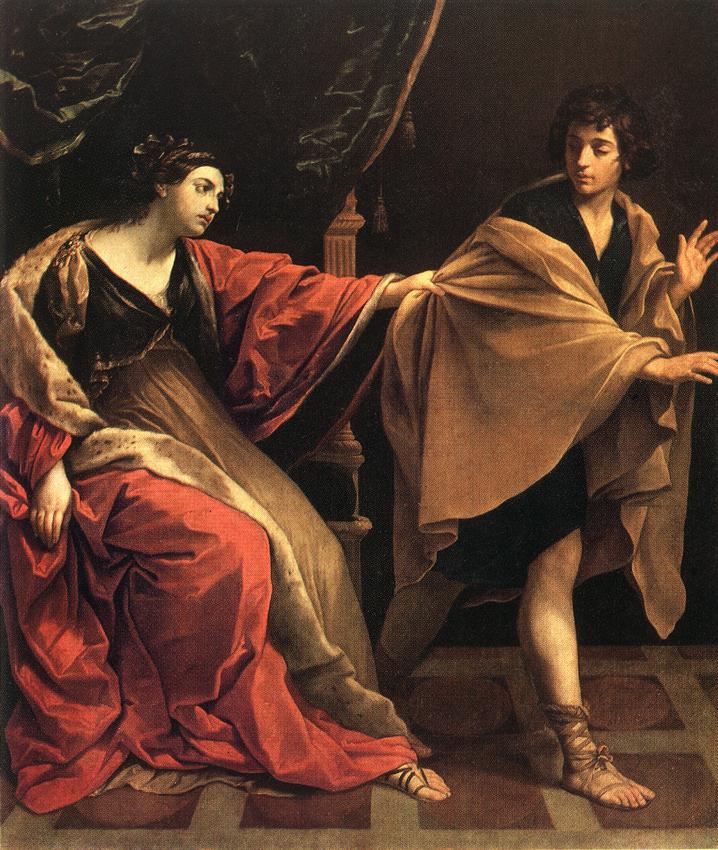
 
Leave a comment

Posted by on October 6, 2025 in Genesis


First Things First – Genesis 2


Genesis 2:3Genesis 2 introduces us to a series of “firsts” that are important to us if we want to build our lives according to the basics God has put into His universe.

The first Sabbath (Gen. 2:1-3)

The word “Sabbath” isn’t found in this paragraph, but Moses is writing about the Sabbath, the seventh day of the week. The phrase “seventh day” is mentioned three times in verses 2-3. “Sabbath” comes from a Hebrew word shabbat that means “to cease working, to rest” and is related to the Hebrew word for “seven.”

We need to consider three different Sabbaths found in the Bible.

The personal Sabbath of the Lord God (vv. 1-4). This first Sabbath didn’t take place because God was tired from all His creative work, because God doesn’t get weary (Isa. 40:28). God set apart the seventh day because His work of creation was finished and He was pleased and satisfied with what He had created. “And God saw everything that He had made, and, behold, it was very good” (Gen. 1:31).

Three things are distinctive about this seventh day of the creation week.

First, there’s no mention of “evening and morning,” suggesting that God’s Sabbath rest would have no end. Unfortunately, man’s sin interrupted God’s rest; and God had to search for Adam and Eve and deal with them (3:8-9, and see John 5:9, 17).

Second, there’s no record that He blessed any of the other six days, but God did bless the seventh day (Gen. 2:3). In blessing it, He made it a blessing.

Third, after blessing the seventh day, God sanctified it (v. 3), which means He set it apart for His own special purposes.

Jehovah is the God of time as well as the Lord of eternity. It was He who created time and established the rotation of the planets and their orbits around the sun. It was He who marked out the seven-day week and set aside one day for Himself.

Every living thing that God has created lives a day at a time except humans made in God’s image! People rush around in the frantic “rat race” of life, always planning to rest but never seeming to fulfill their plan.

It has been said that most people in our world are being “crucified between two thieves”: the regrets of yesterday and the worries about tomorrow. That’s why they can’t enjoy today.

Relying on modern means of transportation and communication, we try to live two or three days at a time, only to run headlong against the creation cycle of the universe; and the results are painful and often disastrous.

A famous Chinese scholar came to America to lecture and during the course of his tour was met at a busy metropolitan railway station by his university host. “If we run quickly, we can catch the next train and save ourselves three minutes,” said the host. The scholar quietly asked, “And what significant thing shall we do with the three minutes that we save by running?” A good question that could not be answered.

Henry David Thoreau wrote in Walden over a century ago, “The mass of men lead lives of quiet desperation.” I wonder what he’d say if he saw the frantic people running up and down escalators in our airline terminals!

God had done many wonderful things during the six days of Creation, but the climax of the creation week was God’s “rest” after His work. As we shall see, God has sanctified work as well as rest, but it’s rest that seems to be the greatest need in people’s hearts today.

Augustine was correct when he wrote, “Thou hast made us for Thyself, and our hearts are restless until they rest in Thee.”

The national Sabbath of Israel.

There’s no mention of the Sabbath in Scripture until Exodus 16:23 when God gave the regulations to Israel about gathering the daily manna. From the way this commandment is worded, it suggests that the Jews already knew the importance of the Sabbath and were observing it as a day of rest. In giving the Sabbath to Israel, the Lord related this special day to other events in sacred history.

To begin with, when God gave Israel the Law at Mount Sinai, the Sabbath was connected with Creation (20:8-11). God was the generous Giver of all that they needed, and they must acknowledge Him by worshiping the Creator and not the creation. They were not to imitate the pagan nations around them (Rom. 1:18ff).

Moses even mentioned the weekly rest needed by servants and farm animals (Ex. 23:12), so keeping the Sabbath was a humanitarian act as well as a religious duty. The Lord commanded His people to observe every seventh year as a Sabbatical Year and every fiftieth year as a Year of Jubilee. This would permit the land to enjoy its Sabbaths and be renewed (Lev. 25).

The Sabbath was not only connected with Creation, but at the close of the giving of the Law, it was vested with special significance as a sign between Israel and Jehovah (Ex. 31:12-17; Neh. 9:13-15).

“Surely My Sabbaths you shall keep, for it is a sign between Me and you throughout your generations, that you may know that I am the Lord who sanctifies you” (Ex. 31:13, nkjv).

There’s no evidence that God ever required any other nation to observe the Sabbath, because the Jews alone were the chosen people of God.

There’s a third connection between the Sabbath and the Jews. When Moses rehearsed the Law for the new generation about to enter Canaan, he connected the Sabbath Day with their deliverance from Egypt (Deut. 5:12-15). The weekly Sabbath and the annual Passover feast would both remind Israel of God’s mercy and power in freeing the nation from bondage.

Furthermore, this weekly day of rest would also be a foretaste of the rest they would enjoy in the Promised Land (Deut. 3:20; 12:10; 25:19; Josh. 22:4). God had brought them out of Egypt that He might bring them into the Promised Land to claim their inheritance (Deut. 4:37-38).

In the Book of Hebrews, this concept of a “promised rest” is applied to believers today.

The nation of Israel eventually declined spiritually and didn’t observe God’s laws, including the Sabbath law; and they were ultimately punished for their disobedience (2 Chron. 36:14-21; Ezek. 20:lff; Isa. 58:13-14; Jer. 17:19-27).

The Northern Kingdom of Israel was swallowed up by Assyria, and the Southern Kingdom of Judah was taken into captivity by Babylon.

By the time of the ministry of Jesus, the scribes and Pharisees had added their traditions to God’s Word and turned the Law in general and the Sabbath in particular into religious bondage.

The few prohibitions found in Moses (Ex. 16:29; 35:2-3; Num. 15:32-36) were expanded into numerous regulations.

Jesus, however, rejected their traditions and even performed miracles on the Sabbath! He said, “The Sabbath was made for man, and not man for the Sabbath” (Mark 2:27).

The spiritual Sabbath of the Christian believer (Heb. 4:1-11).

Hebrews 4 brings together God’s creation rest (v. 4) and Israel’s Canaan rest (v. 8) to teach us about the spiritual rest that believers have in Christ (vv. 9-11).

When you trust Jesus Christ, you enter the “new creation” (2 Cor. 5:17) and into His spiritual rest (Matt. 11:28-30). You also enter into the spiritual inheritance He gives all who trust Him (Acts 20:32; Eph. 1:18; Col. 1:12).

Believers are not under bondage to keep the Law (Gal. 5:1) because the Holy Spirit fulfills the righteousness of the Law in us as we yield to Him (Rom. 8:1-3).

The first Christian believers met daily for worship and fellowship (Acts 2:46), but they also gathered together on the first day of the week, the day of Christ’s resurrection from the dead (John 20:19, 26; Acts 20:7; 1 Cor. 16:2).

The first day was known as “the Lord’s day” (Rev. 1:10); and to make the Lord’s Day into a “Christian Sabbath” is to confuse what these two days stand for in God’s plan of salvation.

The seventh day of the week, the Jewish Sabbath, symbolizes the old creation and the covenant of law: first you work, then you rest. The first day of the week, the Lord’s day, symbolizes the New Creation and the Covenant of Grace: first you believe in Christ and find rest, and then you work (Eph. 2:8-10).

In the New Creation, God’s Spirit enables us to make the entire week an experience of worship, praise, and service to the glory of God.

The Jewish Sabbath law was fulfilled by Christ on the cross and is no longer binding on God’s people (Gal. 4:1-11; Col. 2:16-17). However, some believers may choose to honor the Sabbath Day “as unto the Lord,” and Christians are not to judge or condemn one another in this matter.

When good and godly people disagree on matters of conscience, they must practice love and mutual acceptance and grant one another liberty (Rom. 14:1-15:7).

“Therefore let no one judge you in food or in drink [the dietary laws], or regarding a festival or a new moon [the Jewish feasts] or Sabbaths” (Col. 2:16, nkjv).

 
Leave a comment

Posted by on October 2, 2025 in Genesis


The Meaning of Man: His Duty and His Delight – Genesis 1:26‑31; 2:4‑25


Genesis 2:7Within the last several weeks a rather frightening case was reported in the newspaper. Its implications are almost incredible. The suit involved an elderly gentleman who was apparently a bit senile, and who was also on dialysis. The family determined that the old gentleman had passed the time of productivity and, if he had the mental ability to reason it out properly, would have wished to terminate his meager existence. Had the nurses, who had grown to love this man, not protested, this man might be dead today.
We live in a frightening age. We now have awesome technological and biological powers in our hands, but no solid ethical or moral basis for the determination of how these powers are to be used. Not only have we made it con­venient and inexpensive to kill children while still in the womb, there is actually serious discussion of issuing a life certificate which would pronounce an infant legally alive, just as one is now legally certified to be dead. This certificate would not be issued until after the birth of a child, when a complete battery of tests could be administered. Any ‘inferior’ or potentially non‑productive infant would simply be rejected and not pronounced ‘alive’ and thus terminated. I am told that in some places of the world suicide is not considered a crime and counsel is now given to those who wish to pursue it—but not to convince them of the error of their ways!

In a day when the power of life and death seems to be more in the hands of men than ever before, we find our society in a moral vacuum in which these life and death decisions are to be made. The age‑old philosophical questions about the meaning of life are no longer simply academic and intellectual—they are intensely practical and must be answered.

In the light of such issues, never have these verses in Genesis 1 and 2 been of more importance than they are today. In them we find the meaning of man. I have therefore entitled this message, The Meaning of Man: His Duty and His Delight. To rightly understand this passage is to grasp eternal principles which should determine many of our ethical and moral decisions. Beyond this, we are reminded anew of what it is that really makes our lives worthwhile.

While we have already dealt with the six days of creation in a very general way, it is important for us to understand the relationship between the first three chapters of Genesis. Chapter one outlines creation chronologically. (Actually verses 1‑3 of chapter two should be included here also.)

God created the heavens and the earth, and all life in six days, while He rested on the seventh day. Man is pictured as the crown of God’s creation. In order to maintain a chronological format, only a very general description of man’s creation is given in verses 26‑31.

Chapter two returns to this matter of the creation of man with a much more detailed account. Far from contradicting chapter one, as some scholars have suggested, it greatly compliments it. While it is stated that God created man, both male and female (1:26‑27), it is described more fully in chapter 2. In chapter one man is given every plant to eat (1:29‑30), in chapter two man is placed in a lovely garden (2:8‑17). In the first chapter man is told to rule over all God’s creatures (1:26, 28), in the second man is given the task of naming God’s creatures (2:19‑20). Contradictions between these two chapters must be contrived, for it is clear that the writer of the first chapter intended to fill out the details in the second.

Furthermore, chapter two serves as an introduction and preparation for the account of the fall in chapter three. Chapter two gives us the setting for the fall of man which is described in chapter three. We are introduced to the garden (2:8‑9), the two trees, the tree of life and the tree of the knowledge of good and evil (2:9). The woman who was to be deceived is introduced in chapter two as well. Without chapter two the first chapter would be far too brief and the third would come upon us unprepared.

If chapter one is laid out in chronological fashion—that is in a sequence of seven days, chapter two is not chronological, but logical. Of course the events of chapter two fit into chapter one’s order, but the chapter is laid out differently. If chapter one is creation as seen through a wide angle lens, chapter two is viewed through a telephoto lens. In chapter one man is found at the top of a pyramid, as the crown of God’s creative activity. In chapter two man is at the center of the circle of God’s activity and interest.

Man’s Dignity (1:26‑31)

Since chapter two builds upon the bare details of 1:26‑31, let us begin by considering these verses more carefully. Man, as we have said before, is the crown of God’s creative program. This is evident in several particulars.

First, man is the last of God’s creatures. The whole account builds up to man’s creation. Second, man alone is created in the image of God. While there is considerable discussion as to what this means, several things are implied in the text itself. Man is created in the image and likeness of God in his sexuality.

And God created man in His own image, in the image of God He created him; male and female He created them (Genesis 1:27).

This is not to say that God is male or female, but that God is both unity and diversity. Man and woman in marriage become one and yet they are distinct. Unity in diversity as reflected in man’s relationship with his wife reflects one facet of God’s personhood.

Also, man somehow is like God in that which distinguished him from the animal world. Man, as distinct from animals, is made in the image and likeness of God. What distinguishes man from animal must therefore be a part of His reflection of God. Man’s ability to reason, to communicate, and to make moral decisions must be a part of this distinction.

Further, man reflects God in the fact that he rules over creation. God is the Sovereign Ruler of the universe. He has delegated a small portion of His authority to man in the rule of creation. In this sense, too, man reflects God.

Notice as well that it is man and woman who rule: “… and let them rule … ” (Genesis 1:26, cf. verse 28).

Them refers to man and his wife, not just the males He has made. While Adam has the function of headship (as evidenced by his priority in creation,[1] his being the source of his wife,[2] and his naming of Eve[3]), Eve’s task was to be a helper to her husband. In this sense both are to rule over God’s creation.

One more point should be made here. There seems to be little doubt that in the provision God has made for man’s food, only vegetarian foods are included at this time:

Then God said, ‘Behold, I have given you every plant yielding seed that is on the surface of all the earth, and every tree which has fruit yielding seed; it shall be food for you; and to every beast of the earth and to every bird of the sky and to every thing that moves on the earth which has life; I have given every green plant for food; and it was so’ (Genesis 1:29‑30).

It was not until after the fall, and perhaps after the flood, that meat was given as food for man (cf. Genesis 9:3‑4). Shedding of blood would have significance only after the fall, as a picture of coming redemption through the blood of Christ. In the Millennium we are told,

The wolf and the lamb shall graze together, and the lion shall eat straw like the ox; and dust shall be the serpent’s food. They shall do no evil or harm in all My holy mountain, says the Lord (Isaiah 65:25).

If I understand the Scriptures correctly, the Millennium will be a return to things as they once were before the fall. Thus, in the paradise of Eden, Adam and Eve and the animal kingdom were all vegetarians. How, then, can some speak of ‘survival of the fittest’ until after the creation of all things and the fall of man?

But more important than this is the fact that man’s dignity and worth are not imputed by man, but they are intrinsic to man as one who has been created in the image of God. Man’s worth is directly related to his origin. No wonder we are hearing such frightening ethical and moral positions proposed today.

Any view of man’s origin which does not view man as the product of divine design and purpose, cannot attribute to man the worth which God has given him. To put it another way, our evaluation of man is directly proportionate to our estimation of God.

I am no prophet, my friend, but I will venture to say that we who name the name of Christ are going to have to stand up and be counted in the days to come. Abortion, euthanasia, and bioethics, to name just a few, are going to demand ethical and moral standards. The bedrock principle upon which such decisions must be made, in my estimation, is the fact that all men are created in God’s image.

In this light, I can now see why our Lord could sum up the whole of the Old Testament in two commands,

And He said to him, ‘You shall love the Lord your God with all your heart, and with all your soul, and with all your mind. This is the great and foremost commandment. And a second is like it, You shall love your neighbor as yourself’ (Matthew 22:37‑40).

The attitude of the future seems to be to love only those ‘neighbors’ who are the contributors to society, only those who may be considered assets. How different is the value system of our Lord, who said,

Truly I say to you, to the extent that you did it to one of these brothers of Mine, even the least of them, you did it to Me (Matthew 25:40).

In my estimation, here is where we Christians are going to be put to the test. Some are strongly suggesting that those who our Lord called ‘the least’ are precisely those who should be eliminated from society. May God help us to see that man’s dignity is that which is divinely determined.

Man’s Duty (2:4‑17)

While Genesis 1 describes a progression from chaos to cosmos, or disorder to order, chapter two follows a different pattern. Perhaps the literary thread which runs throughout the passage is that of God’s creative activity in supplying those things which are deficient.

Verse 4 serves as an introduction to the remaining verses.[4] Verse 5 informs us of the deficiencies which are supplied in verses 6‑17: No shrub, no plant, no rain, and no man. These are satisfied by the mist (verse 6) and the rivers (verses 10‑14), the man (verse 7), and the garden (verses 8‑9).

The deficiency of verses 18‑25 is, simply stated, “no helper suitable for Adam” (cf. verses 18,20). This helper is provided in a beautiful way in the last part of chapter 2.

Again, let me emphasize that Moses goes not intend to give us a chronological order of events here, but a logical one.[5] His purpose is to more particularly describe the creation of man, his wife, and the setting into which they are put. These become key factors in the fall which occurs in chapter 3.

While as yet no rain had ever fallen, God provided the water which was needed for plant life. “But a mist used to rise from the earth and water the whole surface of the ground” (Genesis 2:6).

There is some discussion over this word ‘mist’ (‘ed). It could mean a mist or a fog, as some contend.[6] The Septuagint used the Greek word pe„ge„, which means ‘spring.’ Some have understood the Hebrew word as being derived from a Sumerian word, referring to subterranean waters.[7] It may be that springs flowed out of the ground and that vegetation was perhaps watered by irrigation or channels. This could even explain, in part, the work of Adam in keeping the garden.

The water being supplied, God created the garden, which was to be the place of man’s abode, and the object of his attention. It was well‑supplied with many trees which provided both beauty and food.

And out of the ground the Lord God caused to grow every tree that is pleasing to the sight and good for food; the tree of life also in the midst of the garden, and the tree of the knowledge of good and evil (Genesis 2:9).

Specifically, two trees are mentioned, the tree of life and the tree of knowledge of good and evil. This latter tree was the only thing forbidden man.

And the Lord God commanded the man, saying, ‘From any tree of the garden you may eat freely; but from the tree of the knowledge of good and evil you shall not eat, for in the day that you eat from it you shall surely die’ (Genesis 2:16‑17).

It is interesting that seemingly Adam, alone, is told by God that the fruit of the tree of knowledge of good and evil must not be eaten. One can only conjecture as to how effectively God’s command to Adam was communicated to Eve. Could this explain Eve’s inaccurate appraisal in 3:2‑3?

Into this paradise,[8] man was placed. While he was surely to enjoy this wonderland, he was also to cultivate it. Look again at verse 5:

Now no shrub of the field was yet in the earth, and no plant of the field had yet sprouted, for the Lord God had not sent rain upon the earth; and there was no man to cultivate the ground (Genesis 2:5).

When placed in the garden, Adam was to work there: “Then the Lord God took the man and put him into the garden of Eden to cultivate it and keep it” (Genesis 2:15).

Adam’s creation is described more fully in 2:7 than in chapter one. He was formed[9] from the dust of the ground. While this is a humbling fact, it is also obvious that man’s origin is not from the animal world, nor is man created in the same way as the animals. In part, Adam’s dignity stems from the fact that his life breath is the inspiration of God (verse 7).

Here was no mythical garden. Every part of the description of this paradise inclines us to understand that it was a real garden in a particular geographical location. Specific points of reference are given. Four rivers are named, two of which are known to us today. We should not be surprised, especially after the cataclysmic event of the flood, that changes may have occurred, which would make it impossible to locate this spot precisely.

I find it most interesting that the Paradise of Eden was a place some­what different from what we envision today. First of all, it was a place of work. Men today dream of paradise as a hammock suspended between two coconut trees on some desert island, where work is never again to be con­templated. Furthermore, heaven is thought of as the end of all prohibitions. Heaven is frequently confused with hedonism. It is very self‑centered and pleasure‑oriented. While Adam’s state was one of beauty and bliss, it can­not be thought of as unrestricted pleasure. The forbidden fruit is a part of Paradise, too. Heaven is not the experiencing of every desire, but the satisfaction of beneficial and wholesome desires.

Servanthood is not a new concept in the New Testament. Meaningful service provides fulfillment and purpose for life. God described Israel as a cultivated garden, a vineyard (Isaiah 5:1‑2ff.). Jesus spoke of Him­self as the Vine and we as the branches. The Father tenderly cared for His vineyard (John 15:1ff.). Paul described the ministry as the work of a farmer (II Timothy 2:6).

While the church of the New Testament may be better described as a flock, nevertheless the image of the garden is not inappropriate. There is a work to be done for the child of God. And that work is no drudgery, no duty to begrudgingly carry out. It is a source of joy and fulfillment. Many today have no real sense of meaning and purpose because they are not doing the work that God has designed for them to carry out.

Man’s Delight (2:18‑25)

One deficiency remains. There is now adequate water, the beautiful and bountiful provision of the garden, and a man to cultivate it. But there is not yet a companion suitable for man. This need is met in verses 18‑25.

The garden, with its pleasures and provisions for food and meaningful activity was not sufficient unless these delights could he shared. God would provide Adam with that which he needed most.

Then the Lord God said, ‘It is not good for the man to be alone; I will make him a helper suitable for him’ (Genesis 2:18).

Adam’s mate was to be a very special creation, a ‘helper, suitable for him’ (verse 18). She was to be a ‘helper,’ not a slave, and not an inferior. The Hebrew word ezer is most interesting. It was a word that Moses obviously liked, for in Exodus 18:4 we are told that this was the name he gave to one of his sons.

And the other was named Eliezer (El=God), for he said, ‘The God of my father was my help (ezer), and delivered me from the sword of Pharaoh’ (Exodus 18:4).

The other three times ezer is found used by Moses in Deuteronomy (33:7,26,29), it refers to God as man’s helper. So also in the Psalms (20:2; 33:20; 70:5; 89:19; 115:9; 121:1,2; 124:8; 146:5).

The point of the word as it is most often employed in the Old Testament is that the help given implies no inferiority whatsoever. In a way consis­tent with its usage, God is helping man through women. What a beautiful thought. How far above some conceptions this is.

Then also, she is a helper who ‘corresponds to’ Adam. One translation reads, “… I will make a helper like him.”[10]

This is precisely opposite the point. Yet this is often what we consider the perfect wife—one who is just like us. Incompatibility is by divine design in many instances. As Dwight Hervey Small has correctly observed,

Incompatibility is one of the purposes of marriages! God has appointed conflict and burdens for lessons in spiritual growth. These are to be subservient to high and holy purposes.[11]

Just as Eve was fashioned so as to correspond to Adam in a physical way, so she complimented him socially, intellectually, spiritually and emotionally.

As a result, when I counsel those who plan to marry, I do not seek to discover as many points of similarity as possible. Instead, I am concerned that each partner has an accurate view of what the other is really like, and that they are committed to the fact that God has joined them permanently. A recognition that God has made man and woman differently by design, and a determination to attain unity in this diversity is essential to a healthy marriage.

Before creating this counterpart, God first whet his appetite. The creatures which God had formed are now brought to Adam to name. This naming reflected Adam’s rule over the creatures, as God intended (cf. 1:28). It probably involved a careful study on Adam’s part to note the unique charac­teristics of each creature.[12]

This naming process may have taken some time. In the process, Adam would observe that no mere creature could ever fill the void in his life. Further, I would use a little sanctified imagination to conjecture that Adam observed each creature with its mate, a wonderfully designed counterpart. Adam must have realized that he, alone, was without a mate.

At this moment of intense need and desire, God put Adam in a deep sleep,[13] and from his rib and attached flesh[14] fashioned the woman.[15] He then presented the woman to the man.

What excitement there is in Adam’s enthusiastic response:

And the man said, ‘This is now bone of my bones, and flesh of my flesh; she shall be called Woman, because she was taken out of Man (Genesis 2:23).

I like the way the RSV renders Adam’s initial response, “at last … ”[16]

In this expression there is a mixture of relief, ecstasy, and delighted surprise. “This (for Adam has not yet named her) is now bone of my bones and flesh of my flesh” (verse 23a). The name of Adam’s mate is woman. The English translation nicely picks up the play on similar sounds. In Hebrews, man would be pronounced ’ish; woman would be ’ishshah. While the sounds are similar, the roots of the two words are different. Appropriately ’ish may come from a parallel Arabic root, conveying the idea of ‘exercising power,’ while the term ’ishshah may be derived from an Arabic parallel, meaning ‘to be soft’.[17]

The divinely inspired commentary of verse 24 is of utmost import:

For this cause a man shall leave his father and his mother, and shall cleave to his wife; and they shall become one flesh (Genesis 2:24).

From the account it is imperative that a man leave his mother and father and cleave to his wife. What is the relationship between this command to leave and cleave and the creation of women? Verse 24 begins, “For this cause … ” What cause is this? We can understand the reason only when we explain the command. Man is to leave his parents, not in the sense of avoiding his responsibility to them (e.g. Mark 7:10‑13; Ephesians 6:2,3), but in the sense of being dependent upon them. He must cease to live under their headship and begin to function alone as the head of a new home.[18]

The woman is not commanded similarly because she simply transfers from one head to another. While she once was subject to her father, now she is joined to her husband. The man, however, has the more difficult transition. He, as a child, was dependent upon and submissive to his mother and father.

When a man marries he must go through the more radical transition from a dependent, submissive son to an independent (from a parents) leader, who functions as the head of the home.

As many have observed, the husband‑wife relationship is permanent while the parent‑child relationship is temporary. Even if the parents are unwill­ing to terminate the dependent relationship of son to parents, the son is responsible to do so. To fail to do so is to refuse the kind of bond necessary with his wife.

Now, perhaps, we are in a position to see the relationship of this command to the creation account. What is the reason for its mention here in Genesis? First of all, there are no parents to whom Adam or Eve have been born. Eve’s origin is directly from her husband, Adam. The union or bond between Adam and his wife is the union of coming from one flesh (Adam’s) and of becoming one flesh (in physical union). This bond is greater than that between parent and child. A woman is, of course, the product of her parents, as the man is of his. But the original union involved no parents, and the wife was a part of the flesh of her husband. This first marriage, then, is evidence of the primacy of the husband‑wife relationship over that of the parent‑child relationship.

The last verse is not incidental. It tells us a great deal that we need to know. “And the man and his wife were both naked and were not ashamed” (Genesis 2:25).

We learn, for example, that a sexual side of this relationship was a part of the paradise experience. Sex did not originate with or after the fall. Procreation and physical intimacy were intended from the beginning (cf. 1:28). Also we see that sex could be enjoyed to its fullest in the divine plan. Disobedience to God did not heighten sexual pleasure; it diminished it. Today the world wishes to believe that they have invented sex and that God only seeks to prevent it. But sex, apart from God, is not what it could or should be.

Ignorance, if you will forgive me for saying so, is bliss. In our generation we are cool, if you prefer, sophisticated, only if we know (by experience) all there is to know about sex. “How naive are those who have never had sex before marriage,” we are led to believe. There are many things it is better not to know. Sex was never enjoyed so much as it was in sweet ignorance.

Later revelation does add much light to this text. Our Lord, signifi­cantly, quotes from chapter one and chapter two as though from one account (Matthew 19:4,5), a fatal blow to the source document critics.

The divine origin of marriage means it is no mere social invention (or convention), but a divine institution for man. Because God joins a man and woman in marriage, it is a permanent union: “What therefore God has joined together, let no man separate” (Matthew 19:6).

The fact that Adam preceded his wife in creation and that Eve was brought forth from Adam also establishes the reasons why the husband is to exercise headship over his wife in marriage (cf. I Corinthians 11:8-9; I Timothy 2:13). The role of women in the church is not just Paul’s idea, restricted to the time and culture of the Corinthian Christians. The biblical role of women is established on the biblical account of creation (cf. also I Corinthians 14:34).

Conclusion

Having considered the passage in terms of its parts, let us focus our attention on this passage as a whole. No passage in all of the Bible so concisely defines the things which really count in life. Life’s meaning can only be grasped in relationship to the God Who has created man in His image and likeness. While this image has been distorted due to the fall, those who are in Christ are being renewed in Christ’s image:

… and that you be renewed in the Spirit of your mind, and put on the new self, which in the likeness of God has been created in righteousness and holiness of the truth (Ephesians 4:23,24).

… and have put on the new self who is being renewed to a true knowledge according to the image of the One who created him (Colossians 3:10).

Furthermore, man’s meaning in life is not only found in the dignity which God has given him as being created in His image, but in the work which He gives him to do. Men often view work as a curse. While work has been affected by the fall (Genesis 3:17‑19), it was given before the fall and is a means of blessing and fulfillment if it is done as unto the Lord (cf. Colossians 3:22‑24).

Last, the institution of marriage is given by God to deeply enrich our lives. The work we are to do is much richer and fuller when we share it with God’s counterpart for us. Here, then, is the real essence of life—a recognition of our divinely ordained dignity, our duty, and our delight. Our worth, our work, our wife are all a source of great blessing if they are ‘in the Lord.’

[1] I Timothy 2:13.

[2] I Corinthians 11:8,12.

[3] Genesis 2:23.

[4] “Now it is a well‑known fact that the book of Genesis is by its own author divided into ten sections, to each of which he gives the title ‘story’ (toledo‚th); cf. 5:1; 6:9; 10:1; 11:10, 27; 25:12, 19; 36:1, (9); 37:2. This circumstance alone, plus the use of the round number ten, would definitely point to the fact that here the expression, ‘these are the toledo‚th’ must also be a heading. In all other instances of its use in other books the same fact is observable; cf. Num. 3:1; Ruth 4:18; I Chron. 1:29; it is as always a heading.” H. C. Leupold, Exposition of Genesis (Grand Rapids: Baker Book House, 1942), I, p. 110.

[5] “Verse 4b takes us back into the time of the work of creation, more particularly to the time before the work of the third day began, and draws our attention to certain details, which, being details, could hardly have been inserted in chapter one: the fact that certain forms of plant life, namely the kinds that require the attentive care of man in greater measure, had not sprung up. Apparently, the whole work of the third day is in the mind of the writer.” Ibid., p.112.

“I have been very insistent that the first chapter is to be understood chronologically. What is seen by the order of development, the progression of thought. It is seen also by the chronological emphasis‑‑day one, day two, and so on. You do not find that in the second chapter of Genesis. There, instead of giving a chronological order of statement, the Lord is stating matters step by step to prepare for the account of the temptation.” E. J. Young, In The Beginning, (Carlisle, Pennsylvania, The Banner of Truth Trust, 1976), p. 70.

[6] Such appears to be the view of Leupold, I, pp. 113‑114.

[7] “What are we to understand by the ‘ed? Not a mist! The word is apparently related to a Sumerian word. It seems to refer to subterranean waters, and what we have here is either a breaking forth of water in some way from under the ground, or possibly a river overflowing its banks. I do not think we can be dogmatic here.” Young, pp. 67‑68. Cf. also Derek Kidner, Genesis (Chicago: InterVarsity Press, 1967), pp. 59‑60.

[8] “The word ‘Eden’ in Hebrew may mean a delight or a pleasure. I am not sure that that is what it means here. There is a Sumerian word that means a steppe, or a plain, a wide plain, and in the eastern part of this plain God planted a garden. Without being dogmatic I give my opinion that that is what ‘Eden’ means. So the garden is planted.” Young, p. 71.

[9] “The verb employed here accords more with the “Yahweh” character of God; yatsar means to ‘mold’ or ‘form.’ It is the word that specifically describes the activity of the potter (Jer. l8:2ff). The idea to be emphasized is that with the particular care and personal attention that a potter gives to his task. God gives tokens of His interest in man, His creature, by molding him as He does.” Leupold, p. 115.

[10] Cf. Leupold, p. 129.

[11] Dwight Hervey Small, Design For Christian Marriage (Old Tappan, New Jersey: Fleming H. Revell, 1971), p. 58. Elsewhere Small remarks, “As Elton Trueblood has suggested, a successful marriage is not one in which two people, beautifully matched, find each other and get along happily ever after because of this initial matching. It is, instead, a system by means of which persons who are sinful and contentious are so caught up by a dream and a purpose bigger than themselves that they work through the years, in spite of repeated disappointment, to make the dream come true.” p. 28.

[12] “For the expression to give names, in the Hebrew usage of the word ‘name,’ involves giving a designation expressive of the nature or character of the one named. This was not a crude fable, where, according to a Hebrew notion, the accidental ejaculations at the sight of new and strange creatures were retained as names for the future.” Leupold, p. 131.

[13]Tardemah is indeed a ‘deep sleep,’ not a state of ecstasy, as the Greek translators render; nor a ‘hypnotic trance’ (Skinner), for traces of hypnosis are not to be found in the Scriptures. A ‘trance’ might be permissible. The root, however, is that of the verb used in reference to Jonah when he sleeps soundly during the storm.” Ibid, p. 134.

[14] “The word tsela translated ‘rib,’ definitely bears this meaning, (contra v. Hofman), although it is not necessary to think only of the bare bone; for, without a doubt, bone and flesh will have been used for her of whom the man afterward says ‘bone of my bone and flesh of my flesh,’” (v. 23). Ibid.

[15] “The activity of God in fashioning the rib taken from man is described as a building (wayyi ‘bhen). Rather than being an indi­cation of the work of a different author, the verb grows out of the situation as being the most appropriate. It would not have been seemly to use yatsar ‘to mold,’ a verb applicable in the case of clay, not of flesh. ‘Build’ applies to the fashioning of a structure of some importance; it involves constructive effort.” Ibid, p. 135.

[16] Or, as Leupold suggests, “Now at length” (p. 136).

[17] Leupold, pp. 136‑137.

[18] Caution must be exercised, I believe, in the application of Bill Gothard’s principle ‘chain of counsel.’ While the wise will seek counsel and some of that may well come from parents, undue dependence is a real danger. The problem is not so much with the principle, but with its application.

 
Leave a comment

Posted by on September 29, 2025 in Genesis


The Creation of the Heavens and the Earth – Genesis 1:1‑2:3


Genesis 1:1 — Today's Verse for Wednesday, January 1, 2020I want to be especially careful as we approach this first chapter of the book of Genesis. This past week I read an account of a man who attempted to quote Scripture from our passage as a proof text for smoking pot. Here is the account as given by Christianity Today a couple of years ago:

Arrested in Olathe, Kansas, for possession of the drug, Herb Overton based his defense on Genesis l:29: “and God said, … I have given you every herb bearing seed, which is upon the face of the earth …”

Judge Earl Jones doubted Overton’s hermeneutics, however. According to a Chicago Tribune account, the judge told the Bible-quoting defendant: “As a mere mortal, I’m going to find you guilty of possession of marijuana. If you want to appeal to a higher authority, that’s fine with me.”[1]

We can all read of such an event and laugh about it. While Herb Overton’s error is comical, there may be a less obvious error of which many Christians may be guilty—and it is not a laughing matter.

This week my attention was arrested by a brief article in Eternity mag­azine entitled, “Evangelicalism’s Six Flaws.” Most of the article has me still scratching my head, but I was particularly troubled by this statement:

We have treated creation as a static occurrence—arguing whether or not God has created it in seven days, thus missing the point of the religious meaning of creation and the ongoing activity of God in history.[2]

As I have considered Robert Webber’s accusation, it seems to me that we evangelicals have made five major errors in the way we have handled Genesis over the past few years. Most of these errors are in part a reaction to the three‑fold attack of atheistic evolution, comparative religion and literary criticism.[3]

(1) We have dealt with the creation account according to a scientific grid. Some recent theories and conclusions of scientists have challenged the traditional interpretation of the biblical creation accounts. In a conscientious effort to prove the Bible to be scientifically accurate, we have approached the first chapters of Genesis from a scientific point of view. The problem is that these chapters were not intended to give us an account of the creation that would answer all of the scientific problems and phenomenon.

Dr. B. B. Warfield has stated the problem well:

A glass window stands before us. We raise our eyes and see the glass; we note its quality, and observe its defects; we speculate on its composition. Or we look straight through it on the great prospect of land and sea and sky beyond. So there are two ways of looking at the world. We may see the world and absorb ourselves in the wonders of nature. That is the scientific way. Or we may look right through the world and see God behind it. That is the religious way.

The scientific way of looking at the world is not wrong any more than the glass‑manufacturer’s way of looking at the window. This way of looking at things has its very important uses. Nevertheless the window was placed there not to be looked at but to be looked through; and the world has failed of its purpose unless it too is looked through and the eye rests not on it but on its God.[4]

The author of Genesis has not written the creation account for the glass maker. Rather he urges us to look through the glass of his account to the Creator behind it all.

(2) We have used the creation account of Genesis as an apologetic, when its primary purpose is not apologetic. The apologetic use of the early chapters of Genesis, while of value,[5] is not in keeping with the author’s purpose for writing. Genesis was written to the people of God, not un­believers. Men who refuse to believe in creationism do not do so for lack of facts or proof (cf. Rom 1:18ff), or due to their greater knowledge (Psalm 14:1), but due to a lack of faith (Hebrews 11:3). Genesis is much more of a declaration than a defense.

(3) We have attempted to find in Genesis one the answers to mysteries which may or may not be explained elsewhere. We may wish to learn, for example, just where Satan’s fall and judgment fit into the creation account, but may not be given such information because it was not the purpose of the author to answer such questions.[6]

(4) We have failed to study Genesis one in its historical context. I suppose that it is easy to commit such an error here. We may doubt that there is any historical background. Or we may conclude that this is pre­cisely the purpose of the chapter—to give us a historical account of creation.

The background which is vital to our grasp of the meaning and message of creation is that of those who first received this book. Assuming Moses to be the author of Genesis, the book most likely would have been written sometime after the Exodus and before the entrance to the land of Canaan. What was the situation at the time of the writing of this creation account? Who received this revelation and what needs were to be met by it? This is crucial to rightly interpreting and applying the message of the creation.

(5) We have often failed to apply the first chapter of Genesis one in any way that is relevant to our own spiritual lives. As one of my friends put it, “We come to a message on Genesis chapter one expecting nothing more than to have our apologetic batteries recharged again.”

The creation account becomes a prominent theme throughout the Old and New Testaments. Here, as elsewhere, we cannot do wrong by allowing Scrip­ture to interpret Scripture. When the creation theme occurs in Scripture, it calls forth a response from men. We have frequently failed to call for any such response as we have taught Genesis chapter one.

The Historical Backdrop of Genesis 1

Revelation never is given in a historical vacuum. The Bible speaks to men in specific situations and with particular needs. We cannot rightly interpret Scripture or apply it to ourselves until we have answered the question, “What did this passage mean to those to whom it was originally given?” From archaeological studies much is known of the literature, culture, and religions of those who surrounded the Israelites. Understanding the contemporaries of the Israelites greatly enhances our grasp of the meaning of the creation account according to divine revelation as found in Genesis one.

First, we know that virtually every nation had its own cosmogony, or creation account(s). Somehow I had always thought that the account of Genesis one was something new and original. Actually this revelation came late compared to other near eastern nations. Antiquity had devoted a great deal of time and effort to its origins. The account of Genesis chapter one had to ‘compete,’ so to speak, with the other accounts of its day.

Secondly, there is an almost remarkable similarity between these pagan cosmogonies. From her study of twelve myths, Ms. Wakeman has identified three features always present: “1) a repressive monster restraining creation, 2) the defeat of the monster by the heroic god who thereby releases the forces essential for life, and 3) the hero’s final control over these forces.”[7]

Third, while distressing to some, there is considerable similarity between the pagan creation myths and the inspired account of creation in the Bible.[8] The correspondence includes the use of some of the same terms (e.g. Leviathan) or descriptions (e.g., a man‑headed sea monster), similar literary form,[9] and a parallel sequence of events at creation.[10]

The explanation of these similarities by some are unacceptable. For example, we are told that these similarities evidence the fact that the biblical cosmogony is no different than any other ancient creation myth. Others would assure us that while there are similarities, the Israelites ‘demythologized’ these corrupted accounts to assure an accurate account of the origin of the earth and man.[11] Some conservative scholars simply call the correspondence coincidence, though this seems to avoid the difficulties, rather than to explain them. The most acceptable explanation is that the similarity is explained by the fact that all similar creation accounts attempt to explain the same phenomenon.

Early races of men wherever they wandered took with them these earliest traditions of mankind, and in varying Latitudes and climes have modified them according to their religions and mode of thought. Modifications as time proceeded resulted in the corruption of the original pure tradition. The Genesis account is not only the purist, but everywhere bears the unmistakable impress of divine inspiration when compared with the extravagances and corruptions of other accounts. The Biblical narrative, we may conclude, represents the original form these traditions must have assumed.[12]

More important than the fact that the nations surrounding Israel had their own (perhaps older) accounts of creation, was the use to which these were put in the ancient Near East. Ancient cosmogonies were not carefully recorded and preserved out of a love for ancient history; they were the foundation of religious observance.

In the ancient world their deities were nature gods, sun gods, moon gods, rain gods, and so on.[13] In order to assure the on‑going of the forces of nature and guarantee bountiful crops and growing herds of cattle, the creation myths were re‑enacted every year.

Myth, therefore, in the ancient world was mimetically re‑enacted in public festivals to the accompaniment of ritual. The whole complex constituted imitative magic, the effect of which was believed to be beneficial to the entire community. Through ritual aroma, the primordial events recorded in the myth were reactivated. The enactment at the appropriate season of the creative deeds of the gods, and the recitation of the proper verbal formulae, it was believed, would effect the periodic renewal and revitalization of nature and so assure the prosperity of the community.[14]

From this background we can begin to realize how vital a role was played by cosmogony in the ancient Near East. Israel’s social and religious life, like that of her neighbors, was based upon her origin. The Genesis account of creation laid the foundation for the remainder of the Pentateuch.

In this light we can see the significance of the contest between the God of Israel and the ‘gods’ of Egypt. Pharaoh dared to ask Moses, “Who is the Lord that I should obey His voice to let Israel go?” (Exodus 5:2).

The answer of the Lord was a series of ten plagues. The message of these plagues was that Israel’s God is the creator of heaven and earth.

For I will go through the land of Egypt on that night and will strike down all the first‑born in the land of Egypt, both man and beast; and against all the gods of Egypt I will execute judgments—­I am the Lord (Exo 12:12; cf. 18:11; Num 33:4).

It would seem that each plague was a direct affront to one of Egypt’s many gods. While a direct correlation of each plague to a specific god may be somewhat speculative,[15] the battle of the gods is evident.

No wonder that the covenant sign of the Israelites was the keeping of the Sabbath:

But as for you, speak to the sons of Israel, saying, “You shall surely observe My Sabbaths; for this is a sign between Me and you throughout your generations, that you may know that I am the Lord who sanctifies you.…  It is sign between Me and the sons of Israel forever, for in six days the Lord made heaven and earth, but on the seventh day He ceased from labor, and was refreshed” (Exo 31:13,17).

Observing the Sabbath identified Israel with their God, the Creator Who ceased from labor on the seventh day.

The miracles of the Exodus, then, served a function similar to the signs and wonders performed by our Lord. They authenticated the message which was proclaimed. In our Lord’s case, it was the words He proclaimed and the inspired writers preserved. In the case of the Exodus, the Penta­teuch was Moses’ written revelation of God which his miracles authenticated. The Exodus proved Yahweh to be the only God, the Creator and Redeemer. The Pentateuch provided the content for the faith of Israel, of which the creation account is the foundation.

Genesis 1:1‑3

Many interpretations exist for the first three verses of the Bible, but we will briefly mention the three most popularly held by evangelicals. We will not spend a great deal of time here because our conclusions will be tentative and the differences have little bearing on the application of the text. Let me simply begin by saying that we who name the name of Christ as Savior must ultimately take Genesis 1:1 at face value on faith (Heb 11:3).

View 1: The Re‑creation (or Gap) Theory. This view maintains that Genesis 1:1 describes the original creation of the earth, prior to the fall of Satan (Isaiah 14:12‑15; Ezekiel 28:12ff). As a result of Satan’s fall the earth lost its original state of beauty and bliss and is found in a state of chaos in Genesis 1:2. This ‘gap’ between verses 1 and 2 not only helps to explain the teaching of Satan’s fall, but it also allows for a considerable time period, which helps to harmonize the creation account with modern scientific theory. It does suffer from a number of difficulties.[16]

View 2: The Initial Chaos Theory. Briefly, this view holds that verse one would be an independent introductory statement. Verse 2 would describe the state of the initial creation as unformed and unfilled. In other words the universe is like an untouched block of granite before the sculpter begins to fashion it. The creation is not in an evil state, as the result of some catastrophic fall, but merely in its initial unformed state, like a lump of clay in the potter’s hands. Verses 3 and following begin to describe God’s working and fashioning of the mass, transforming it from chaos to cosmos. Many respectable scholars hold this position.[17]

View 3: Precreation Chaos Theory: In this view (held by Dr. Waltke), verse one is understood either as a dependent clause (“When God began to create … ”) or as an independent introductory summary statement (“In the beginning God created … ”). The creation account summarized in verse one begins in verse two. This ‘creation’ is not ‘ex nihilo’ (out of nothing), but out of the stuff existing in verse 2. Where this comes from is not explained in these verses. In effect, this view holds that the chaotic state does not occur between verses one and two, but before verse one of an unspecified time. The absolute origin of matter is, then, not the subject of the ‘creation’ account of Genesis 1, but only the relative beginnings of the world and civilization as we know it today.[18]

We might summarize the difference between these three viewpoints in this fashion:[19]

The Six Days of Creation (1:1‑31)

It is important to recognize that verses 2‑31 do little more than expand upon verse 1. They do not fully (certainly not in a scientific fashion—­who would have cared over the centuries until now?) explain creation. Neither do they prove it, for this is ultimately a faith issue. The facts upon which this faith must be based are simply stated.

There does seem to be a pattern to these six creation days, which many Bible students have observed. It can best be illustrated graphically:

Formlessness Changed to Form Emptiness Changed to Habitation
vv 3-5 Day 1 Light vv 14-19 Day 4 Luminaries (sun, moon, stars)
vv 6-8 Day 2 Air (upper expanse)
Water (lower expanse)
vv 20-23 Day 5 Fish, Birds
vv 9-13 Day 3 Dry land plants vv 24-31 Day 6 Animals, Man

Seen in this way, the first three days remedy the situation of formless­ness described in Genesis 1:2. The 4‑6 days deal with the state of ‘void’ or ‘emptiness’ of verse 2. There also seems to be a correlation between days 1 and 4, 2 and 5, 3 and 6. For example, the air and water receive correspond­ing life forms of fish and birds, though this should not be pressed too far.

Two other observations should be pointed out. First, there is a sequence to the six days. It is clear that this account is arranged chronologically, each day building upon the creative activity of previous days. Secondly, there is a process involved in the creation, a process involving the change from chaos to cosmos, disorder to order.

While God could have instantaneously created the earth as it is, He did not choose to do so. The clear impression given by the text is that this process took six literal days, and not long ages. Nevertheless, the eternal God is not nearly so concerned about doing things instantaneously as we are. The process of sanctification is only one of many examples of God’s progressive activity in the world.

The Meaning of Creation for the Israelites of Old

Before we approach the question of what the creation should mean to us, we must deal with its meaning for those who first read these inspired words from the pen of Moses. The initial purpose of this account was for the Israelites of Moses’ day. What should they have learned? How should they have responded?

(1) The creation account of Genesis was a corrective to the corrupted cosmogonies of their day. We have already said that Egypt, for example, believed in a multiplicity of nature‑deities. We need to recognize that Israel, due to her close and prolonged contact with the Egyptians, was not unaffected by their religious views.

“Now, therefore, fear the Lord and serve Him in sincerity and truth, and put away the gods which your fathers served beyond the River and in Egypt, and serve the Lord” (Joshua 24:14).

It was not enough to regard Yahweh merely as a god, one among many. Neither should He be conceived of as just the God of Israel. Yahweh is God alone. There is no other god. He is the Creator of heaven and earth. He is not merely superior to the gods of the surrounding nations; He alone is God.

The tendency to begin to confuse God with His creation was a part of the thinking of the ancient world. He must be regarded as the God of creation, not just God in creation. Every attempt to visualize or humanize God in the form of any created thing was a tendency to equate God with His creation. So it was, I believe, with Aaron’s golden calf.

(2) The creation account describes the character and attributes of God. Negatively, Genesis one corrects many popular misconceptions concerning God. Positively, it portrays His character and attributes.

  • God is sovereign and all‑powerful. Distinct from the cosmogonies of other ancient peoples, there is no creation struggle de­scribed in Genesis one. God does not overcome opposing forces to create the earth and man. God creates with a mere command, “Let there be … ” There is order and progress. God does not experiment, but rather skillfully fashions the creation of His omniscient design.
  • God is no mere force, but a Person. While we must be awed by the transcendence of God, we should also be His immanence. He is no distant cosmic force, but a personal ever‑present God. This is reflected in the fact that He creates man in His image (1:26‑28). Man is a reflection of God. Our personhood is a mere shadow of God’s. In chapter two God provided Adam with a meaningful task and with a counterpart as a helper. In the third chapter we learn that God communed with man in the garden daily (cf. 3:8).
  • God is eternal. While other creations are vague or erroneous concerning the origin of their gods, the God of Genesis is eternal. The creation account describes His activity at the beginning of time (from a human standpoint).
  • God is good. The creation did not take place in a moral vacuum. Morality was woven into the fabric of creation. Repeatedly, the expression is found “it was good.” Good implies not only usefulness and completion, but moral value. Those who hold to atheistic views of the origin of the earth see no value system other than what is held by the majority of people. God’s goodness is reflected in His creation, which, in its original state, was good. Even today, the graciousness and goodness of God is evident (cf. Matt 5:45; Acts 17:22‑31).

The Meaning of Creation for All Men

The theme of God as Creator is prominent throughout Scripture. It is significant that the last words of the Bible are remarkably similar to the first.

And he showed me a river of the water of life, clear as crystal, coming from the throne of God and of the Lamb, in the middle of its street. And on either side of the river was the tree of life, bearing twelve kinds of fruit, yielding its fruit every month; and the leaves of the tree were for the healing of the nations. And there shall no longer be any curse; and the throne of God and of the Lamb shall be in it, and His bond‑servants shall serve Him; and they shall see His face, and His name shall be on their fore­heads. And there shall no longer be any night; and they shall not ­have need of the light of a lamp nor the light of the sun, because the Lord God shall illumine them; and they shall reign forever and ever (Revelation 22:1‑5).

The truth that God is the Creator of heaven and earth is not merely something to believe, but something to which we must respond. Let me mention just a few implications and applications of the teaching of Genesis 1.

(1) Men should submit to the God of creation in fear and obedience. The heavens proclaim the glory of God:

The heavens are telling of the glory of God; and their expanse is declaring the work of His hands. Day to day pours forth speech, and night to night reveals knowledge (Psalm 19:1‑2).

For since the creation of the world His invisible attributes, His eternal power and divine nature, have been clearly seen, being understood through what has been made, so that they are without excuse. For even though they knew God, they did not honor Him as God, or give thanks; but they became futile in their speculations, and their foolish heart was darkened (Romans 1:20‑21).

Men should fear the all powerful God of creation:

By the word of the Lord the heavens were made, and by the breath of His mouth all their host. He gathers the waters of the sea together as a heap; He lays up the deeps in storehouses. Let all the earth fear the Lord; Let all the inhabitants of the world stand in awe of Him. For He spoke, and it was done; He commanded, and it stood fast (Psalm 33:6‑9).

The greatness of God is evident in the work of His hands—the creation which is all about us. Men should fear and reverence Him for Who He is.

Bless the Lord, O my soul! O Lord my God, Thou art very great; Thou art clothed with splendor and majesty, covering Thyself with light as with a cloak, stretching out heaven like a tent curtain. He lays the beams of His upper chambers in the waters; He makes the clouds His chariot; He walks upon the wings of the wind; He makes the winds His messengers, flaming fire His ministers. He established the earth upon its foundations, so that it will not totter forever and ever. Thou didst cover it with the deep as with a garment; the waters were standing above the mountains. At Thy rebuke they fled; at the sound of Thy thunder they hurried away. The mountains rose; the valleys sank down to the place which Thou didst establish for them. Thou didst set a boundary that they may not pass over; that they may not return to cover the earth ( Psalm 104:1‑9).

(2) Men should trust in the God of creation, to provide their every need.

Then after his return from the defeat of Chedorlaomer and the kings who were with him, the king of Sodom went out to meet him at the valley of Shaveh (that is, the King’s Valley). And Melchizedek king of Salem brought out bread and wine; now he was a priest of God Most High. And he blessed him and said, “Blessed be Abram of God Most High, possessor of heaven and earth; and blessed be God Most High, Who has delivered your enemies into your hand.” And he gave him a tenth of all. And the king of Sodom said to Abram, “Give the people to me and take the goods for yourself.” And Abram said to the king of Sodom, “I have sworn to the Lord God Most High, possessor of heaven and earth that I will not take a thread or a sandal thong or anything that is yours, lest you should say, ‘I have made Abram rich.’ I will take nothing except what the young men have eaten, and the share of the men who went with me, Aner, Eshcol, and Mamre; let them take their share (Genesis 14:17‑24).

Abram offered tithes to Melchizedek on the basis of his profession that Abram’s God was “God Most High, possessor of heaven and earth” (verse 19,20). And yet while Abram gave a tithe to Melchizedek, he refused to benefit in any monetary way from the pagan king of Sodom, for he wanted this man to know that “God Most High, possessor of heaven and earth” was the One Who made him prosper.

We sing, “He owns the cattle on a thousand hills … I know that He will care for me.” That is good theology. The God Who is our Creator, is also our Sustainer. You see God did not wind up the universe and then leave it to itself, as some seem to say. God maintains a continual care over His creation.

He causes the grass to grow for the cattle, and vegetation for the labor of man, so that he may bring forth food from the earth, and wine which makes man’s heart glad, so that he may make his face glisten with oil, and food which sustains man’s heart. The trees of the Lord drink their fill. The cedars of Lebanon which He planted, where the birds build their nests, and the stork, whose home is the fir trees. The high mountains are for the wild goats; the cliffs are a refuge for the rock badgers. He made the moon for the seasons, the sun knows the place of its setting. Thou dost appoint darkness and it becomes night, in which all the beasts of the forest prowl about. The young lions roar after their prey, and seek their food from God. When the sun rises they withdraw, and lie down in their dens, man goes forth to his work and to his labor until evening (Psalm 104:14‑23).

The New Testament goes an additional step by informing us that the Son of God was the Creator, and continues to serve as the Sustainer of the creation, holding all things together:

For in Him all things were created, both in the heavens and on earth, visible and invisible, whether thrones or dominions or rulers or authorities—all things have been created through Him and for Him. And He is before all things, and in Him all things hold together (Colossians 1:16‑17).

(3) Men should be humbled by the wisdom of God as evidenced in creation. Job had endured much affliction. But finally, enough was enough. He began to question the wisdom of God in his adversity. To his questioning God responded,

Then the Lord answered Job out of the whirlwind and said, ‘Who is this that darkens counsel by words without knowledge? Now gird up your loins like a man, and I will ask you, and you instruct Me! Where were you when I laid the foundation of the earth! Tell Me, if you have understanding, who set its measurements, since you know? Or who stretched the line on it? On what were its bases sunk? Or who laid its cornerstone, when the morning stars sang together, and all the sons of God shouted for joy? (Job 38:1‑7).

Job was challenged to fathom the wisdom of God in creation. He could not explain or comprehend it, let alone challenge it. How, then, could Job possibly question the wisdom of God’s working in his life. True, he could not see the purpose in it all, but his perspective was not God’s. Let any who would question God’s dealing in our lives contemplate God’s infinite wisdom as seen in creation, and then be silent and wait upon Him to do what is right.

If man should choose to ponder any question, let him attempt to fathom why an infinite God would so concern Himself with mere man:

When I consider Thy heavens, the work of Thy fingers, the moon and the Stars, which Thou hast ordained; what is man, that Thou dost take thought of him? and the son of man, that Thou dost care for him? Yet Thou hast made him a little lower than God, and dost crown him with glory and majesty! (Psalm 8:3‑5).

(4) Man should find comfort in times of distress and difficulty, knowing that His creator is able and willing to deliver him.

Therefore, let those also who suffer according to the will of God entrust their souls to a faithful Creator in doing what is right (I Peter 4:19).

Why do you say, O Jacob, and assert, O Israel, “My way is hidden from the Lord, and the justice due me escapes the notice of my God”? Do you not know? Have you not heard? The Everlasting God, the Lord, the creator of the ends of the earth does not become weary or tired. His understanding is inscrutable. He gives strength to the weary, and to him who lacks might He in­creases power. Though youths grow weary and tired, and vigorous young men stumble badly, yet those who wait for the Lord will gain new strength; they will mount up with wings like eagles, They will run and not get tired, they will walk and not become weary (Isaiah 40:27‑31).

Thus says God the Lord, Who created the heavens and stretched them out, Who spread out the earth and its offspring, Who gives breath to the people on it, and spirit to those who walk in it, ‘I am the Lord, I have called you in righteousness, I will also hold you by the hand and watch over you, and I will appoint you as a covenant to the people, as a light to the nations’ (Isaiah 42:5‑6).

I am the Lord, and there is no other; besides me there is no God. I will gird you, though you have not known Me; that men may know from the rising to the setting of the sun that there is no one besides Me. I am the Lord, and there is no other. The One forming light and creating darkness, causing well‑being and creating calamity; I am the Lord who does all these (Isaiah 45:5‑7).

(5) Man should respond to the God of creation with the praise that is due Him:

Let the glory of the Lord endure forever; let the Lord be glad in His works; He looks at the earth, and it trembles; He touches the mountains, and they smoke. I will sing to the Lord as long as I live; I will sing praise to my God while I have my being. Let my meditation be pleasing to Him; as for me, I shall be glad in the Lord. Let sinners be consumed from the earth, and let the wicked be no more. Bless the Lord, O my soul. Praise the Lord! (Psalm 104:31‑35).

Praise the Lord! Praise the Lord from the heavens; Praise Him in the heights! Praise Him, all His angels; Praise Him, all His hosts! Praise Him, sun and moon; Praise Him, all stars of light! Praise Him, highest heavens, and the waters that are above the heavens! Let them praise the name of the Lord, for He commanded and they were created. He has also established them forever and ever; He has made a decree which will not pass away (Psalm 148:1-6).

Come, let us worship and bow down; let us kneel before the Lord our Maker (Psalm 95:6).

O Lord, our Lord, how majestic is Thy name in all the earth, Who hast displayed Thy splendor above the heavens! (Psalm 8:1).

Conclusion

My friend, the teaching of Genesis one is a great and mighty truth. It is one that demands more than assent; it necessitates action. And yet, great as it is, it has been paled by the coming of Jesus Christ. Just as God proclaimed, let there be light, so God has once and for all spoken in these last days (Heb 1:1‑2) in His Son, Who is the light:

For God, who said, “Light shall shine out of darkness” is the One who has shone in our hearts to give the light of the knowledge of the glory of God in the face of Christ (II Corinthians 4:6).

In the beginning was the Word, and the Word was with God, and the Word was God. He was in the beginning with God. All things came into being through Him; and apart from Him nothing came into being that has come into being. In Him was life; and the life was the light of men. And the light shines in the darkness; and the dark­ness did not comprehend it (John 1:1‑5).

There was the true light which, coming into the world, enlightens every man. He was in the world, and the world was made through Him, and the world did not know Him. He came to His own, and those who were His own did not receive Him. But as many as received Him, to them He gave the right to become children of God, even to those who believe in His name, who were born not of blood, nor of the will of the flesh, nor of the will of man, but of God (John 1:9‑13).

While God revealed Himself faintly in creation, He has disclosed Himself fully in His Son:

No man has seen God at any time; the only begotten God, who is in the bosom of the Father, He has explained Him (John 1:18).

We cannot avoid the biblical revelation that the God Who created heaven and earth, the God Who redeemed the Israelites from Egypt, is the God‑man of Galilee, Jesus Christ. Just as He fashioned the first creation (Col 1:16), so He has now come to accomplish a new creation, through His work on the cross of Calvary:

Therefore if any man is in Christ, he is a new creature; the old things passed away; behold, new things have come (II Corinthians 5:17).

Beyond this there will soon come a day when the heavens and the earth will be purged of the effects of sin and there will be a new heaven and a new earth:

But the day of the Lord will come like a thief, in which the heavens will pass away with a roar and the elements will be destroyed with intense heat, and the earth and its works will be burned up. Since all these things are to be destroyed in this way, what sort of people ought you to be in holy conduct and godliness, looking for and hastening the coming of the day of God, on account of which the heavens will be destroyed by burning, and the elements will melt with intense heat! But according to His promise we are looking for new heavens and a new earth, in which righteousness dwells (II Peter 3:10‑13).

Are you ready for that day, my friend? Have you become a new creation in Christ? Genesis one reveals how God has taken chaos and fashioned it into cosmos—order and beauty. If you have never come to Christ, I can say with total confidence that your life is formless and empty; it is chaotic and lifeless. The same One Who turned chaos into cosmos can make your life anew.

[1] “Pot Proof,” Christianity Today, September 22, 1978, p. 43.

[2] “Evangelicalisms Six Flaws,” Eternity, January, 1980, p. 54. This article by the Staff of Eternity magazine is a summary of an article by Robert E. Webber, published in the October issue of New Oxford Review.

[3] Dr. Bruce Waltke briefly describes this threefold attack:

First, there came the challenge of the scientific community. In the wake of Charles Darwin’s revolutionary hypothesis of evolution to explain the origin of species, the majority of the scientific com­munity fell in with Darwin’s hypothesis against the Bible. They believed that they could validate Darwin’s theory by empirical data, but they thought that they could not do the same for the Bible.

The second challenge came from the comparative religionists who sought to discredit the biblical story by noting the numerous points of similarity between it and ancient mythological creation accounts from various parts of the near East being studied at that time. . . . According to his (Gunkel’s) view, the Hebrew version of creation was just another Near Eastern folk tale but in the process of time the transmitters of the story improved it by their creative and superior philosophical and theological insights.

The third challenge came from literary criticism. The case was stated most persuasively by Julius Wellhausen in his most influential classic, still available in paperback on book stands, entitled, Pro Legomena to the Old Testament. Here he argued that there were at least two distinct accounts of creation in Genesis l and 2 and that these two accounts contradicted each other at various points. Bruce Waltke, Creation and Chaos (Portland, Oregon: Western Conservative Baptist Seminary, 1974), pp. 1‑2.

[4] Benjamin B. Warfield, Selected Shorter Writings of Benjamin B. Warfield, Vol. I, edited by John E. Meeker (Nutley, N.J. Presbyterian and Reformed Publishing Co., 1970), p. 108.

[5] I must stress here that we should take seriously Peter’s instruction, “ . . . always being ready to make a defense to every one who asks you to give on account for the hope that is in you . . . ” (I Peter 3:15). Even here, in what might be called an exhortation for apologetic readiness, the message most needed by the unbeliever is the gospel of salvation through faith in Christ. My experience is that few are saved by the use of the Genesis account of creation as an apologetic. For those who are seriously consider­ing the claims of Christ, but fear the Bible to be untrustworthy, such effort may well be worthwhile.

[6] “First we can say, that the Book of Genesis does not inform us concerning the origin of that which is contrary to the nature of God, neither in the cosmos nor in the world of the spirit. Where does the opposite of Him that is good and bright originate? When we delve into the problem of the origin of evil in the moral realm, we come upon a great mystery. Suddenly, without explanation, in Genesis 3 an utterly evil brilliant, intelligent personality appears in the Garden of Eden masquerading as a serpent. The principle of origins, so strong in our minds, demands on explana­tion. But the truth is that the Book mocks us. Likewise, when we come to that which is negative in the cosmos, something devoid of form and dark, the Bible provides us with no information. Here are some of the secret things that belong to God” (Waltke, Creation and Chaos, p. 52). While I do not prefer Dr. Waltke’s choice of words (“the Book mocks us”), I do agree with his position that Genesis does not tell us all we might desire to learn.

[7] Wakeman, as quoted by Waltke, Creation and Chaos , p. 6.

[8] Waltke demonstrates the similarities between the biblical cosmogony with the creation myths of the ancient near east:

First, by a comparison of Psalm 74:13,14 with the Ugaritic Text 67:I: 1‑3 (Waltke, p. 12).

Psalm 74:13‑14: “Thou hast broken the sea with Thy might, even smashed the heads of the monster of the waters, Thou hast crushed the heads of Leviathan, even given him as food for the people. . . .”

Text 67: I . 1‑3, 27‑30: “When thou smitest Lotan (Leviathan) the evil dragon, even destroyest the crooked dragon, the mighty one of the seven heads. . . .”

Second, by a comparison of Isaiah 27:1 with the Ugaritic Text ‘nt:III: 38‑39 (Waltke, p. 13):

Isaiah 27:1: “On that day God will visit, with his sword (that is) mighty and great and powerful, Leviathan the evil serpent, even Leviathan the crooked serpent, and slay the monster that is in the sea.”

Text ‘ni:III: 38‑39: “The crooked dragon, the mighty one of the seven heads.”

[9] Cf. Waltke, Creation and Chaos, pp. 33,35. Actually, this similarity in form between the biblical text of the Pentateuch and the ancient Near Eastern texts has proven to be a blessing to those who hold to a unified (Mosaic) authorship:

“Kitchen compared the Pentateuch with ancient Near Eastern texts and discovered that the same features used by the critics as a divining rod to divide up the Pentateuch were present in these texts, written on rock with no pre‑history.” Waltke, pp. 41‑42.

[10] Ibid, p. 45.

[11] “The most common explanation of those scholars who regard the world as a closed system without divine intervention is that Israel borrowed these mythologies, demythologized them, purged them of their gross and base polytheism, and gradually adapted them to their own developing and higher theology.” Ibid., p. 46.

[12] Merrill F. Unger, Archaeology and the Old Testament, p. 37, quoted by Waltke, p. 46.

[13] “In Canaan at the time of the Conquest, each city had its own temple dedicated to some force of nature. The name Jericho derives from the Hebrew word, yerah, which means “moon” for its inhabitants worshipped the moon, the god “Yerach.” Likewise, on the other side of the central ridge of Palestine, we find the city of Beth Shemesh, which means “Temple of the Sun” for Shamash, the sun god, was worshipped there.” Waltke, p. 47.

[14] Sarna, Understanding Genesis, p. 7, as quoted by Waltke, p. 47.

[15] “The knowledge extant concerning the practical everyday wor­ship of the Egyp. pantheon is meager, and for all intents and purposes little or nothing is known about their metaphysical assumptions from the documented sources. It is obvious, however, that the twenty‑two Egyp. provinces each had their respective religious center and totemic animal or plant. It is precisely the attributes of these deities that are involved in the plagues, but whether each of the plagues was thought to be the special domain of one or another of the Egyp. gods cannot be stated with certainty.” W. White, Jr. “The Plagues of Egypt, The Zondervan Pic­torial Encyclopedia of the Bible (Grand Rapids: Zondervan, 1975, 1976), IV, p. 806.

[16] Cf. Waltke, pp. 21‑25.

[17] For example, E. J. Young, In the Beginning (Carlisle; Pennsylvania: Banner of Truth Trust, 1976), pp. 20ff.

[18] “But what shall we say about the uncreated or unformed state, the darkness and the deep of Genesis 1:2? Here we enter a great mystery for the Bible never says that God brought these into existence by His Word. What can we say about them?” Bruce Waltke, p. 52.

[19] Adapted from Waltke, p. 18.

 
Leave a comment

Posted by on September 25, 2025 in Genesis