RSS

Category Archives: Jingzhou

Teaching in China: “It is like living in a movie. What will tomorrow bring? I’m sure it will not be boring.”


This slideshow requires JavaScript.

Pictures of our apartment’s interior and our neighborhood

Astute comments from Terry, my ‘better half”

Greetings from China.  My first report was written last week and then we found out it did not go through so I will try again (Google noticed unusual traffic from my account and sent a security check). The trip over was long but not as difficult as I had expected; no restless legs or sore backs.  The traffic was not bad at first and then when we came close to our city it really got congested with cars, buses, scooter, bicycles and pedestrians all mingled together, some going the wrong way.

I just relaxed since I was not in charge or responsible for everybody’s health. It was quite a hoot. It is amazing how it all works out. They don’t go fast and they don’t get angry they just flow around each other. Yes, they use their horn constantly but it is not out of anger or frustration. Mostly it is just a signal to let others know of their presence and intentions.

When the men moved our containers from the hotel to the apartment they secured two containers at a time in a large strong cloth knotted at the top. Then they slid a round 5” wooden pole under the knot, lifted the pole onto their shoulders with the containers in between them and carried it down the 3 flights of stairs at the hotel and up the 4 flights of stairs to our apartment. Those were really strong men and I really appreciate their work and told them so.

When they pulled out into the street with their cart full of our things they went left right into the oncoming traffic. Cars, scooters, bikes were coming right towards us (we were walking behind them and got right up on the sidewalk immediately) they slowly kept right on going and all the traffic just flowed around them as they all honked.

By His grace my unstable ankle is doing fine. It seems everything we go to is on the 2nd, 3rd or 4th floor. I’m taking it one step at a time and doing fine.

We are both soooo thankful to find many delicious dishes to eat when we eat out. We have a written list that we take with us now.

I have really enjoyed the students in my classes. They have arrived on time, curious and with their paper and pens. There is only one couple who remind me of the movie “To Sir, With Love”. They sit on the last row and are not very interested. He has part of his hair died bright red. They will be my challenge. I “yarp” for them daily, that they will learn their worth and potential and let me “come along side”.

One of the girl students gave me a gift of “good food”. I took it home to try because in China you wait till later to open a gift you receive from someone. It was a package of dried squid. I tried a piece. It was salty and fishy tasting and had the texture kind of like a thin beef jerky.

We were told in training to train ourselves to think “fascinating” instead of “frustrating”. Well, today was very “fascinating”.  Because of contradicting instructions I missed the teacher’s bus that would take me to the other campus for my classes. So I took a taxi. I arrived in plenty of time to get my things in order and put my information on the board.  Class time–not a single student was present.

I called my contact. He called me back and apologized. The University had changed my schedule without telling me or my contact. So—I caught a city bus and went back to the Central campus. First times are always the hardest. It will get easier. During the whole thing I did not ever get scared or nervous. I never felt unsafe or in danger; just going along for the adventure. It is like living in a movie. What will tomorrow bring? I’m sure it will not be boring.

We are so thankful for skype. It is great to see our loved ones. You are all dear to us. Take care, stay faithful and keep “yarping”.

Love, Terry

Our students are so energetic and delightful!

Terry and I have both had freshman classes on the West campus (about 10 minutes away by bus from us) and most of them are female. We have found them energetic to learn and so delightful! Of course, some present normal challenges, but they are adjusting to us as we adjust to them.

Terry was apprehensive about taking a bus to the West campus, but within two minutes met two nice young students and another English teacher who will also be riding on Mondays. Her smile was matched only by mine as I kissed her goodbye.

We have met several who are Family and enjoyed times where Good News is shared, which is the highlight of our week.

We have felt like we’re back in South Florida several times. Not for the warm weather, by no means, but because there are so many cars honking their horns. China bought more cars last year than the USA and many of them are here….and the good folks know how to drive…they just do not know about staying in certain areas of the street and bicycles and small motorcycles and walkers are everywhere.

Everyone wants to meet the foreign English teachers. Many say hello as they walk past us – that is the only English some are comfortable using right now. Lots of smiles and stares, which takes getting used to….I find comfort remembering that Terry is ‘watched’ on many fronts when we are on separate campuses two of our three teaching days. Something that is popular here are ‘English corner,’ where the students gather around English teachers and ask all kinds of questions….an opportunity to use their English and also find about many American things. The Good News comes up often in these events and leads to small group discussions, so we are gladly a part of it. 🙂

Three officials from the foreign affairs office met with Terry and me and took us to dinner. We have now eaten from the Chinese ‘hot pot.’ Go to this site to read more about it, if you are interested: http://en.wikipedia.org/wiki/Hot_pot.

I enjoyed shrimp and some beef, etc., and TJ found enough to eat that we were full at the end and did OK. No one lost face. It is a delicacy and served on top floors of the restaurants, which means more expensive, etc. The University paid for this meal for the 5 of us. We have enjoyed Skype to some of you and glad the internet is working consistently. Will schedule it soon for others.

We were part of an official dinner last night of the head of our International Foreign Affairs office. He was a student at Ohio State for two years, so we had a good time to discuss Columbus, Ohio, and the Buckeyes. He was never easy to talk with since his English was excellent, and had a great sense of human and diplomatic attitude when explaining rules and procedures.

We ate ‘chicken and beef’ that looked like chicken and beef, which pleased both of us, and we even brought some leftovers home. It was on the fourth floor of the most popular and fancy motel in our city.

We also went to Wuhan (3 hours away) for a required physical (they drew blood, took chest x-ray) and we ate at a Subway restaurant for lunch and did some shopping locally for foreign foods (American food).

Things discussed in class our first week…….

We are encouraged to use cultural idioms and proverbs to aid their English development. These are the ones I used for my first class (and, no, I cannot read Chinese characters…I had one of the students read it):

burn the candle at both ends To do more than one ought to; to overextend oneself: “His doctor said that his illness was brought on by STRESS, and recommended that he stop burning the candle at both ends.”

burn the midnight oil To stay awake late at night to work or study: “Gary has been burning the midnight oil lately; I guess she has a big exam coming up.”

Cast pearls before swine 明珠暗投

In Matthew 7:6, Jesus says, “Do not give what is holy to dogs; and do not throw your pearls before swine, or they will trample them under foot and turn and maul you.”

Daily ‘surprises’ we have found…

  • Terry and I did something that surprised even us: we caught a ride back  from a supper gathering with friends on electric motorcycles with Dale and Lisa. About 4 miles….at night….slightly crowded streets…..and we enjoyed it!
  • Cellular telephones are relatively cheap here for basic service ($55) and there are no contracts expected…we pay as we go. America could learn something.
  • We have found peanut butter, jelly, OJ and grape juice, pinto beans, apples and bananas are just as good here as in California, Texas, Arkansas, and Florida. Thanks to those who mailed ‘care packages.’ We have enjoyed the ‘back home’ foods! If you want, send twist ties and plastic bags any time you are mailing items…we have need of them. We discovered the Bamboo Restaurant just 4 blocks from campus and found beef/onions, chicken/mushrooms, carrots, corn/sweet pea dishes that we both particularly liked. My take on it: you know what you are eating!
  • Now that my internet is working, I have received this message while trying to watch NCIS, The Good Wife and Blue Bloods on CBS: “the video you have requested is not available for your geographical region.” What do the networks have against China? Now I know what I will be buying for gifts when I return: full season DVDs. ABC and NBC also block full episodes.
  • I had already found ESPN3 was not available. I can watch reruns of Fox News Sunday and Special Report. It seems even China considered Fox ‘fair and balanced’ and blocks some liberal network sites. These guys are well informed.
  • We were taken to Wuhan (3 hours east) by the university to take a health physical. I told the dean of our department I would try 20 pushups if we could skip the physical…since they had to reschedule our classes because of it. She smiled and did not accept my proposal, which is probably best since I doubt I could do 20 pushups after climbing 4 levels daily to our apartment and 2-3 levels for all classes.
  • I must comment on local toilets, available for all here and apparently normal. We much prefer Western style! (see picture bottom left).
  • Remember I mentioned we lost 13 hours in flight on our trip from LA to Hong Kong. I just realized why I have so many “words to share” since I did not talk, etc., during that lost time. Does that mean I will be quiet when we return in January, 2012? YOU can only hope so.

We believe we are here for a reason: to reach out to the 18-20 year old university students in Jingzhou…to sow seeds of knowledge and understanding wherever possible. We know it will not return to us void. We have the opportunity to reach the future leaders of China, and to be ‘stretched’ ourselves in the process. Gary and Terry Davenport

 
1 Comment

Posted by on February 24, 2011 in Jingzhou


My hero’s status has only risen! What a wife!


This slideshow requires JavaScript.

Pictures of our two-bedroom, furnished apartment…..

and Terry and Seth read a book (ignore date on photos)

Terry has been my personal earthly hero since before we were married. I admired her determination and spunk back in 1970 when first seeing her at a distance as college students at Middle Tennessee State in Murfreesboro, Tennessee.

I have said often “there is nothing she cannot accomplish if she sets her mind to it,” and, believe me, she has ‘set her mind’ to many things over our 39+ years of marriage. Nothing has changed here in China!

Our two-bedroom, furnished, clean, heated, and much appreciated apartment is a safe haven, where we can retreat and recharge and thrive in our relationship. When we ‘remember when,’ we immediately realize we have heater units and hot water, which the students do not have. No one had lived in our place for several months, and they bought new curtains and new bed linens, to Terry’s delight when she saw it.

Our residence lets us remember our five children and three grandsons, and we have enjoyed bragging on each of them to the students, who visit our apartment, as they see pictures on the wall and on the computer’s screen saver.

Terry takes a university bus to the West campus three days and a bus to get home (a 12 minute ride each way); she quickly embraced the challenge when it was revealed that this campus is the only one where freshman students are located. I am there for three of my six classes.

The first week: we had a heater in the spare bedroom, one hot-plate burner, and the internet and cable television not working, in addition to a water drip in the kitchen. Workers were sent and they were fix in a reasonable time frame (quite a nice process).

Those who have known me for only 10 minutes realize I enjoy sports and like to keep up with news events. The internet lets me observe/read anything I had in America. We also watch TV programs when we have time via online services like Hulu. I receive a USA Today newspaper as pdf email attachment daily ($4.95 per month).

Daily ‘surprises’ we have found…

  • Most major buildings on campus and in town do not have heat…and, yes, it is cold. The seasons here can be compared to Tennessee, we were told in our training. When the concrete blocks get cold, it takes a long time to warm up, even when the temperatures rise. The students have no hot water, where they live eight to a room, and electricity is turned off at 11 p.m. (how dare us even begin to complain about our situations).
  • Wal-Mart is here and some ‘foreign’ foods are also in other stores, though nothing is convenient without a car (we Americans are spoiled). We sent out a ‘wish list’ of natural peanut butter, pinto beans, tomato soup, macaroni and cheese, and decaf tea bags to those who expressed the desire to aid our ministry through ‘care packages.’
  • x

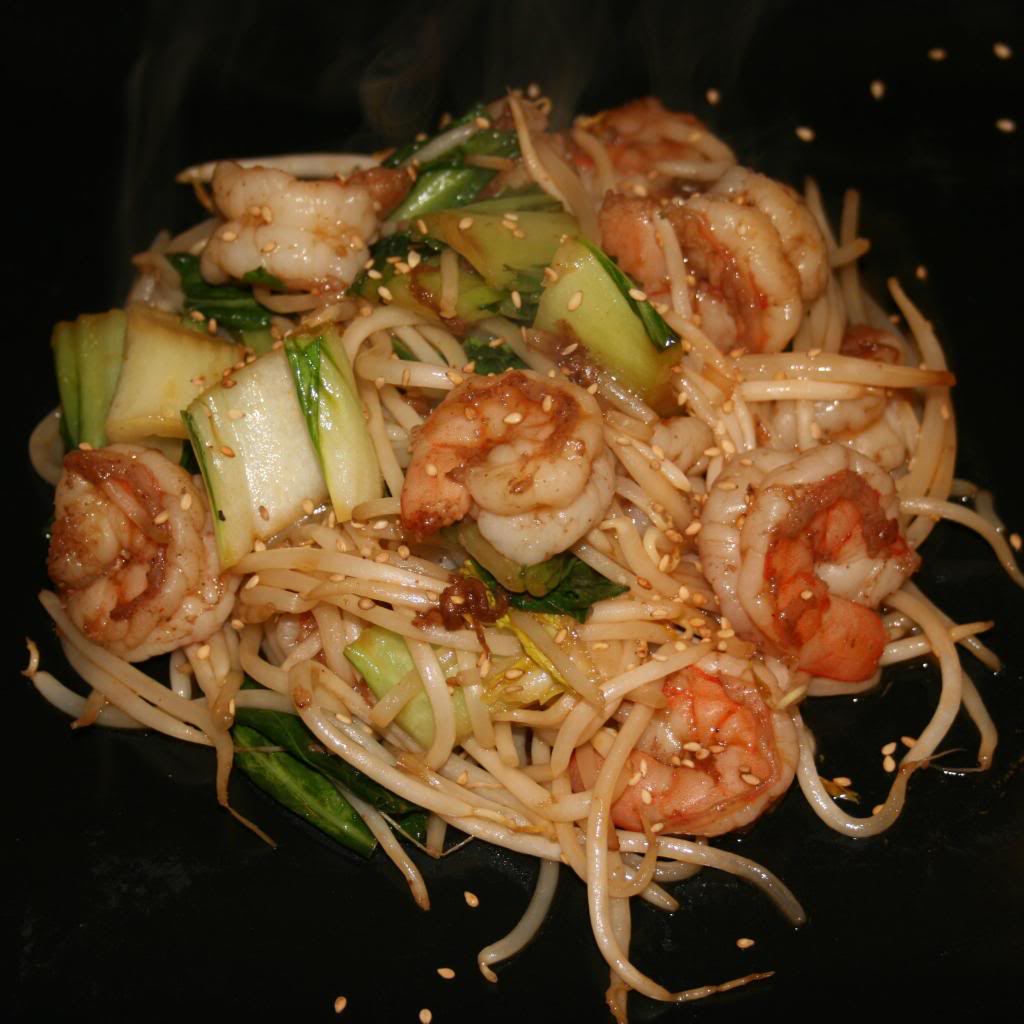
    I am glad we have found good bread, orange and grape juice, spaghetti sauce and noodles, tuna, and cheese (all American brands). I admit it…I am not as ‘spunky’ as Terry in food choices, though I have made some progress. She has found a good stir-fry spot on the streets, though it is considered ‘peasant food’ by the other local English teachers. One said he did not know of any ‘foreigners’ who liked it.

  • We drink and cook with only the bottled water to preserve our bodily functions. Glad to have it at a good price! Food and transportation prices are great: 4 medium-sized apples are five yuan: 81 cents; a bus ride across town 1 yuan: 16 cents; a taxi ride across town (3 people) 15.5 yuan: $2.50. I have already ridden more buses and taken more taxis than at any other time in my life, in just one week.

Who would have thought even a year ago that we would have a checking account with a bank in China. We’re handling the language issues daily and depending on others for much help along the way. Terry is going to keep Seth and Caleb one evening so Dale and Lisa can have a ‘date night’ out.

 
1 Comment

Posted by on February 20, 2011 in Jingzhou


10:38 am arrival in China…a delightful waiban…and our first Chinese meal after saying goodbye to special Texas family


This slideshow requires JavaScript.

Family in Texas as we made plans to leave China…Ms. Guan and our first real Chinese meal (those fancy seats were 1st class…not for us)

We have arrived—no adventures!

Any time those of us in the Davenport family travel, we anxiously await the text that says: ‘Safe arrival…no  adventures!” That means no luggage fell off the top of the car, all tires stayed inflated, the back bumper did not fall off and the car worked so we could arrive at the final destination (each of those items have long stories attached to them).

After 9,279 miles and some 36 hours, we have arrived to begin our work on the central campus of Chang Jiang Da Xue (Yangtze River University) in Jingzhou, Hubei Province. We touched down at 10:38 am, having lost 12 hours somewhere out there. The flight from Los Angeles to Hong Kong was 17 hours, due to some heavy headwinds…we were beginning to feel that by the time we landed.

We had great food on the flight, something I have not experienced in many years, and had over 50 movies and multiple TV shows to choose from on individual monitors…encourage you to see Secretariat if you have not already seen it.

We met our Foreign Affairs Officer in Wuhan and were transported to Jingzhou. We experienced our first Chinese meal on Wednesday and have had one of the English teachers (see Kevin photo below) help in many ways to find our way around and get a Bank of China account, money exchanged, and a cell phone. He took us to a local Kentucky Fried Chicken so we could get a meal more to our liking, as we get used to the food selections here.

Dale and Lisa Taylor, other teachers, have been our biggest asset. They live in the same building…and grew up in Chattanooga and Monteagle, Tennessee areas. We have many things in common besides our love for the Father and His Kingdom.

We have been without internet connections these first few days. We’ve had the heat full-blast to get our apartment warm; it was empty for 7-8 months and these concrete blocks were pretty cold, as we are finishing winter here.

We were without sleep over 36 hours, except for what we got on the plane. Went to bed the first night at 7 p.m. and slept to 8 a.m. Since then, we have gradually stayed up later but are still waking up around 4:45 a.m., so we’re trying to get on a good sleeping schedule before Monday. This is being written on Saturday morning.

Some have volunteered to send ‘care packages’ and we sent out a list earlier (cheerios, tomato soup, natural peanut butter, and dried pinto beans are our ‘comfort food’ are keep us connected to home). We have hung up pictures of our children and grandsons—pray several times a day for them and know they are also praying for us. Will use Skype as soon as we have consistent internet connection.

Love to all! More to come as we get into our teaching schedule and have Special Time with Friends/Family here on Sunday.

 
Leave a comment

Posted by on February 19, 2011 in Jingzhou


Advise Offered to Help in Our Preparation


This slideshow requires JavaScript.

Pictures are of things sold at a Chinese Wal-Mart

(The following advise has been offered by many who have gone to China before us…with the goal of preparing us for the work ahead. I thought many who are following our efforts would enjoy seeing some of it).

  • Teaching English is a JOB. Prepare for it and treat it as such. This work can be very stressful, but it gets easier after the first semester.
  • Respect the school and the Chinese teachers. Try to get to know the other teachers in your department. Send gifts, make meals, or plan activities so you can socialize with them.
  • Be willing to go above and beyond for your students because your love for them will impress them more than anything else. Go on class picnics, be willing to judge speech competitions, and invite them to be a part of your life.
  • Encourage your students. It is amazing what a few kind words can do. Most of them seldom hear “I am proud of you” or “You are smart” from parents or other teachers. In my opinion, students also perform better when encouraged.
  • If your suitcases are heavier than the airline allows, pay the extra money and take what you have packed anyway.  When you are thousands of miles away from home, you will be glad you brought those extra things, and $50 isn’t much in the long run.  And if you’re already overweight, you might as well go as overweight as they will let you if you already have to pay the $150 anyway. (We can check two bags each free on Cathay Pacific Airways…$150 for each one after that).
  • Two words:  warm clothes.  Especially socks.
  • You’re not in college anymore.  Staying up too late at night and sleeping until noon on the weekends will not help you.  You’re no good to anyone, especially your students, if you are always tired.
  • If you decide to get your haircut (girls), take a student with you!  Take your bossiest student with the best English.  If you try to tell the stylist what you want by yourself, they will think you are just a strange foreigner who doesn’t know what she really wants.  Be assertive, unless you want a haircut from the 80s.
  • I would have mailed more stuff to us like winter clothes and treats instead of carrying it all.
  • We were told to bring snacks and comfort food like cheese and crackers and instant oatmeal for the first few days.  That was a very good thing.
  • We also would buy a few extra sandwiches at KFC and freeze them.  This was before we learned how to eat out by ourselves.  Learn the names of dishes as soon as you can so you can eat out without help.
  • One thing that we did was save one pair of socks and one pair of underwear that had been washed and dried with fabric softener.  We saved them all year and did not wear them until the day we left.
  • Be prepared that the beds are very hard.  We put several comforters under our sheet, but we got used to the bed.

Personal Space

  • In Western countries we have a much different idea of personal space than in Eastern countries. We stand apart when we talk, we give each other plenty of room on the couch, we only enter the personal space of people we know. Yet, in Asian countries, the sheer numbers of people make that impossible. I can remember being so uncomfortable at first when walking with other female teachers or students and they would take my arm so that we could walk close together and talk or getting on a crowded bus where you don’t even need to hold onto the rails because the press of bodies will keep you from falling over. There are so many people and it is so common to bump into people that no one even apologizes or says “Excuse me” and it is not considered rude to physically push someone out of your way on the bus or in the grocery store without so much as a glance in their direction. It was difficult to learn not to be offended when someone shoved me or banged my knee with their shopping bags and didn’t apologize.

Arrival Anxieties

  • Your first few weeks in China keep you trapped in confusion; you try to understand people’s body language and who you can trust to help you.  You try to find out where you can get the basic necessities; you figure out which restaurants cook food the way you like it.  Because of the administrative system here, you’re not complete on the details of your teaching.  You’re trying to guess patterns of life and custom.
  • At first there is a “high” because everything is so exciting and different.  Then there is a time of almost depression and tears–“Are you sure You want me here”  “Am I nuts to come here?” “Just want to go home….,” etc.   Then, all becomes OK.  You learn to live in the culture, you can find your way around, you get used to the food, and the CROWDS and the lack of private space.

Display of Emotion

  • Chinese show their emotions in completely different environments.  If they gash a finger or turn an ankle, they won’t show much pain.  They will accept the blood or pain with a detached resignation and go on with life as if they’re too much aware of the rest of the world to [notice] their own problem.  They show their emotion to friends, usually in loud conversation; there is no such thing as an “inside voice.”  A dispute is settled by who can talk the fastest and who looks most angered.  The customer is not always right here.

Litter Bugs

  • “Have I mentioned the habit of most Chinese to just throw their trash on the ground?  Yep.  If you are eating an ice cream as you walk down the street and finish, feel free to go ahead and just throw the wrapper on the sidewalk.  Do you have a stuffy nose?  Well, when you finish with that kleenex, just toss it to the ground.  It’s the street sweeper’s job to clean it up anyway.”

Too Much Honesty

  • I love China.  Have I mentioned that our two cultures are really different?  They are.  It’s funny sometimes.  The other day I was walking home from class.  I saw a student.  We chewed the fat.  And the fat was mostly good…until she paused mid-sentence, stared at my face, leaned in for a closer look, and pointed at the mother of all pimples (which resided on my face)…then she ‘innocently’ asked, “What’s that?”  I wasn’t sure if I should laugh or cry or run away.  I chose to respond with “What are you talking about?” pretending like I wasn’t growing another head on the right side of my face.  This only prolonged the misery and brought her finger within biting range.  I broke down and called it “a zit”.  She said, “Oh, okay” and kept talking.  She just learned a new vocab word.  And I learned something about the culture (and humility).  Yeah, I live in China now.  And I love it.

The Most Important Thing About Clothing

  • People wear what to the Western eye are strange things—plaids with polka dots, pajamas in public and other things like that are a normal sight on the streets.  But the most important thing about the outfit are the shoes.  Are they clean?

Time Scheduling Frustrations

  • First we are told one thing, and then, after we have made plans and commitments, we are told something different.  I expressed my frustration to our foreign affairs liaison and explained that it sure would help if we could know a month or two ahead what is going on so we could make plans.  She said in China people don’t make plans that far ahead!  So we have discovered!

Movie-Star Syndrome

  • Many Chinese people have never met a person from another country, so the only Westerners they see are on TV. If they do happen to see one on the street, there is no end to the staring and whispering!  This sort of behavior has actually decreased over the past few years, so it’s not as bad as it used to be, but I can still tell stories of visiting a Kung Fu temple and having a line of 4 parents with babies and cameras… each of them wanted me to hold their baby and pose for a photo!

You Know You’re in Good Hands…

  • People who had visited China told me to expect “a sea of bicycles.” How quaint!  Bicycles, in my mind, summoned an image of tranquil, noise-free recreation, and city streets that were gentle and humane.  Such was my innocence. Then I arrived among one-quarter of the world’s population and discovered, to my terror, that at any given moment, as I moved about the streets, this sea of bicycles seemed to be coming directly at me. Not only bicycles, but trucks, busses, taxis, push carts, bicycle carts, and the occasional BMW or 4×4 — a chaotic flood of fast-moving traffic that must make New York City seem languid by comparison.
  • As I sat in the back seat of the taxi with Mr. Yang, the first thing I discovered about traffic in China is: there are no rules.  It is every man for himself!  The simple act of crossing a busy Chinese street is one of the first challenges to greet a traveler from overseas. It isn’t only the sheer numbers of people and machines, but the fact that no one seems to obey the traffic rules that we in the West take for granted. A red light, for example, indicates that SOME vehicles will come to a stop SOME of the time — but don’t bet your life on it. Nor does anyone stay in orderly lanes, or always drive on the right side of the street. Bicycles and motorcycles are often moving AGAINST the flow of traffic, and even cars will occasionally zip along quite merrily where you least expect to see them.
  • Perhaps the most unnerving aspect of Chinese traffic is that cars do not slow down for mere human beings who happen to be in the way in the middle of a busy intersection. This is a country where drivers use their horns rather than their brakes, and you had better get out of the way. Not even the sidewalks are a safe refuge, since people park their cars here and often seem to think of sidewalks as a convenient extra lane. There is some comfort in the fact that there are heavy fines to pay if you actually mow down a foreigner — so if you are a blonde or a redhead, flaunt it. Wave you hair like a flag. It may save your life.
  • English—an ability you developed simply because you were born in North America.  Here (in China) you are an expert on the subject.  People on the street want to say hello to you, usually because it’s the only English they know.  Some people reply to “how are you?” with “how are you?”
  • Of those who do have some ability to communicate in your mother tongue, you’ll find all kinds of people bidding for your time—they want you to define obscure words, they want to know what is the word for this or that situation at the instant you draw a blank (or maybe there is no word that fits), they want you to converse with a group of students, they want you to give a lecture in front of 200 children.  The most exhausting demands come when you’ve slipped back to your four walls of solitude (be it ever so humble) and find your phone ringing with more requests and strangers knocking at your door.  It was easy for them to find you; they just wandered around campus asking where the laowai (respected foreigners) are. The locals stare.
  • They watch you shop and want to know what you buy and how much you pay.  You bargain most places you go, and sometimes the price doubles or triples as soon as they see your face.  They want to know how you live, whether you put your pants on one leg at a time.  In a country with few bathroom stalls, I wonder exactly how much I’m being watched sometimes.
  • With the curiosity there often comes some respect.  Businesses near the school consider you a part of the community, and will take care of you.  I think it’s a mark of honor for them to receive your patronage.  They go out of their way to make you comfortable.  Even though you can’t understand them, there’s a look about them that shows they care.
  • You may be tempted to feel powerful and influential until you remember the amount of pity you rely on each day—you need help shopping, you need help traveling, you need help ordering some foods, you need help finding the bathroom sometimes.  All these people need you to help them improve their poor English, but you need their translating skills to survive.  You remember that you’re in a culture that believes westerners say “thank you” too much, and you try to say thank you the best way you can.  You visit with those who intrude on your privacy.  You give that 1-hour lecture in the village 2 hours away.  You learn humility.

Indecent Exposure

  • I am losing weight here.  My guess would be the five mammoth flights of stairs I must ascend to get to my apartment and the five flights I must climb to get to my classroom a few million times have something to do with my misplaced pounds.  I’ll let you know if I find them.
  • I have one pair of pants that I used to be embarrassed to wear because the pant legs are too short.  I look like I’m preparing for a flood when I wear them – or at least, that used to be the case.  Those jeans hang so low on me these days that they drag the ground.  I’m constantly having to pull them up.  It’s annoying.
  • I was at Metro (the Chinese Wal Mart) with a Chinese friend when I finally caved in and bought a belt.  I wanted to put it on immediately because my pants were really getting on my nerves, so I pulled it out of my shopping bag and went to work.  Elizabeth looked at me and asked if I would like to go to the toilet.  I asked her why and she looked around before saying, “This is a public place.”
  • Before I tell you my reply to that statement, I must tell you a little of what I see every day here in China.  Modesty is not that common.  I’ve seen a woman hike up her skirt to her waist while walking down the street so that she could adjust her pantyhose.  I’ve seen people take off their clothes in the middle of a store so they can try an item on without the extra padding.  I’ve seen skirt-wearing women throw caution to the wind and sit however they please, flashing anyone near enough to be that unlucky.  I finished putting on my belt right where I was.

What I Learned…

  • I hope that I am able to readily remember all of the things that He has taught me here.  Here, He has seemed so much bigger than He ever has before.  I never knew how wonderful it is to be so helpless. He is so faithful, caring, and loving.  He provides all that I need and more.  I think sometimes back home I would get so caught up in everything that I overlooked those things.  I did not depend on Him for absolutely every need.  I truly am desperate for more of Him every day.  I am asking Him to keep me just as dependent on Him when I return as I am now.  I am so in love with Him!  I love this family!  I love my entire life revolving around my Father’s business.  I hope that never changes.

Street Restaurants

  • I probably have never described a hole-in-the-wall restaurant for you, have I?  Usually such an establishment has three or four squatty tables with pink plastic stools for seats.  The air is usually full of cigarette smoke, and the other patrons are talking as loudly as they can in Chinese.  I think the Chinese “inside voice” and the Chinese “outside voice” operate at the same decibel level.  Ha.
  • Outside, near the entrance, there may be a large wok and an open fire where the chef works under a heavy, striped, plastic awning.  Beside the wok there is often a row of shelves where the vegetables are kept in multicolored plastic drainers.  And, for the best part, there may be a long wooden table where the meat, in all its glorious rawness, is laid so guests can point to their animal flesh of choice.  Often you can see huge open-eyed, open-mouthed fish heads, slimy pink squids, marbly sides of beef and pork, and various pink organs, such as livers.  Yummy, huh?  If you aren’t careful and look too close, you can really lose your appetite, believe me.

I learned…

  • Something China has taught me:  I have learned to be more tolerant of the bad things around me. I have learned that having patience really is a virtue.  If I lose patience I lose a good mood and I lose the purpose for being here. I have learned that I can really do more than I ever imagined.  I have had to learn to be my own plumber.  I have learned to be my own repairwoman.  I have learned to be TRULY independent.  I feel I am dependent on certain things like some language barriers, but I have learned to do most things on my own.  Doing things on my own, of course, does not mean totally on my own.  I have had to depend totally on my Father still and His words.  I know that things go better when I totally give things to Him and when I trust Him fully to help me through.  China has taught me many, many good life lessons.

Chinese Dorm Life

  • Students pay about $75 a YEAR for their dorm rooms, and they think that is too much! Right before I left I visited some of the girls’ dorm rooms. The juniors live in the oldest building on campus and have seven in one room. They occasionally have mice in their rooms. The sophomore girls live in a new dorm and have 11 girls in one room. In all cases, the bathrooms are down the hall and the showers are in a separate building, where they have to pay twenty cents for each shower. The girls in the old building don’t have electricity during the day, so on cloudy days it’s hard for them to see inside. All dorms have their power cut at 11 pm. My students aren’t allowed to have computers in their rooms, or almost any other kind of electrical device except for a radio or tape player. The fuses would blow if they used a hair dryer.
  • The students live 6-8 people in a dorm room about the size of most regular bedrooms in the States.  No heaters are allowed because of the fire hazard, so the only means of warmth at night is the blankets around them and the body heat of their roommates.  Many of the students sleep with a hot water bottle beside them at night.  They say it keeps you warm long enough to fall asleep but many of the students sleep very restless nights.  A few of my students have even come to class with hands that are bright red, swollen and cracked.  They look terrible.   The first time I saw it, I thought the girl had been burnt in a cooking accident or something. Turns out it is mild frostbite. And of course, they don’t have hot water in their rooms to bathe or wash their hair in.  We constantly see students carrying their two metal buckets of water up to their dorm rooms [from a central hot-water location] for all their basic needs.  I would guess most students have no more than five sets of clothes. And if they did have more, where would they put them?
  • Be flexible in all things. The Chinese always talk about “WE”. You are now somewhat part of that so called “WE”. Disorder, as we would define it as Americans is all around you.  I have found myself saying “Why would you do this or that, that way.” We heard the advice but did not listen, do not bring a lot of clothes, bring food and books!
  • Decide in advance how you will handle confrontation about the WORK, so you are not caught unprepared.  In a moment where you may be asked to stand up for TRUTH, you want to be prepared culturally and spiritually. Spend time with your students.  Beware the foreign bubble. Understand that it is okay to say no.  Eventually, you will learn to distinguish between time spent with Chinese that advances the work, and time spent that does not serve the greater purpose, and ends up taking up valuable time and energy.  I wasted a lot of time on activities and people that I should have been able to know were not for the WORK, and know I missed some great opportunities because of that busy schedule.
  • For the women (especially those who like to cook and spend a lot of time in the kitchen), bring more kitchen appliances/utensils, such as a mixer, pastry cutter, food brush, waffle maker, etc. Or, you can just bring a bunch of extra money and buy some of them at Metro. Bring more board and card games.    You’re gonna have bad China days. Hold on to the Father, hide yourself away for a day, and watch an American movie/TV show and eat some American food. You’ll get through it!

Chinese Bamboo Tree

  • You take a little seed, plant it, water it, and fertilize it for a whole year, and nothing happens.
  • The second year you water and fertilize it, and nothing happens.
    The third year you water it and fertilize it, and nothing happens. How discouraging this becomes!
  • The fourth year you water it and fertilize it, and nothing happens. This is very frustrating.
  • The fifth year you continue to water and fertilize the seed and then sometime during the fifth year, the Chinese bamboo tree sprouts and grows ninety feet in six weeks!
  • In the Kingdom, we prepare the soil, sow seeds, water, and fertilize.  But only God gives the increase in His time. Patience is a very important virtue in Chinese ministry.
 
2 Comments

Posted by on January 26, 2011 in Jingzhou


China’s Education System, the Students, and the Foreign English Teacher


Most Westerners naturally assume that what they will encounter in China is a model of education that is more or less similar to their own, barring a few cultural differences: What they find instead is a unique amalgam of Confucian tradition and current political agenda interspersed with Western influence, and a population of students who face overwhelming academic demands, parental expectations, and fierce competition that are nearly impossible for any foreigner to fathom without having actually lived and taught here.

This overview of China’s educational system, related sociocultural and political dynamics, and how they impact upon the day-to-day lives of Chinese students was written as a foundation to better inform the first section of the guide: teaching English in China. It is organized across four main sections: historical antecedents; structure of the educational system; understanding the mind-set of Chinese students and, finally; the interplay between these factors and the role of the foreign English teacher in China. By reading this chapter, you will acquire a much better understanding of not only what you will encounter as a foreign teacher but why.

Historical Antecedents: Zhou Enlai’s Four Modernizations and Educational Reforms under Deng Xiaoping

In 1974, at the Fourth National People’s Congress, Premier Zhou Enlai—in what would be one of his last public acts just prior to his death two years later—introduced what are referred to as the Four Modernizations (sì gè xiàn dài huà). Following Zhou’s death, Deng Xiaoping assumed control of the Chinese Communist Party (CCP) and, in December 1978, at the Third Plenum of the 11th Central Committee, Deng announced the official launch of these Four Modernizations, formally marking the beginning of the reform era. The Four Modernizations were in the fields of 1) agriculture, 2) industry, 3) technology, and 4) defense and were specifically intended to make China a great and self-reliant economic power by the early 21st century.

Shortly following the Third Plenum of the 11th Central Committee, China reformed its educational system to explicitly achieve these Four Modernizations, which are viewed to this day as the underlying foundation of all its educational goals. Both the 6-3-3 system (six years of primary school, followed by three years each of junior and senior middle school) and the designation of “key schools” were restored (Surowski, 2000). Key schools are those that are intended to serve the most academically gifted and, on the secondary school level, are the equivalent of upscale Western college preparatory programs (or prep schools). At the post-secondary level, key national universities are those that are considered to be the most prestigious and are charged with awarding master’s and doctoral degrees to China’s educational elite. In all cases, key schools receive the lion’s share of public funding (especially Project 211 Universities). A province may also designate a university as a key school which simply means it is considered to be the most influential and prestigious at the provincial level.

What all of this means is that the best education in China is provided by public or government universities and the competition to obtain admission into these best schools is fierce and omnipresent. Related, and unlike in the West, private schools in China are generally regarded as an academically weaker (and far more expensive) alternative for students who could not earn admission into the better public schools, for those whose parents can afford it. The reality of this dual-system of education is something you should definitely bear in mind when applying for teaching jobs in China.

Structure of Education in China

As is true of most Western countries, the Chinese educational system consists of five tiers: kindergarten; primary (elementary) school; junior middle school; senior middle school, and; post-secondary or college/university. National entrance exams are required for admission into senior middle school (Zhong Kao exam) and university (Gao Kao exam; literally meaning “tall exam,” an informal abbreviation for China’s National College Entrance Exam, often explained—tongue-in-cheek—that it is so abbreviated because it looms so large in the lives of all Chinese).

Vocational schools exist at the senior middle school and post-secondary levels for those who do not score high enough on their respective admission exams. As is true in the United States, a typical bachelor’s degree can be earned from between four to six years, depending on major (for example, a bachelor’s degree in clinical medicine is a six-year program). All four-year degree conferring universities also offer a 3-year diploma alternative for students who either didn’t score well enough on the Gao Kao exam or didn’t pass the CET-4 (college English test, band-4 for non-English majors). In 1986, the Chinese government promulgated a 9-year compulsory education requirement, so all nationals must stay in school through the end of junior middle school. Table 1, below, provides a schematic representation of the educational system in China.

High Cost of Education in China

Although the cost of education in China is negligible by Western standards, when you consider the country’s GDP and the average national income, it weighs in as the most expensive educational system in the world. The typical cost of a university education in China is approximately 6,000 to 7,000 yuan per year (about $870 to $1015) in tuition (which also typically includes housing), and can increase to tens of thousands of yuan per year for special science and technology majors. These fees do not include the cost of food and books (Cai and Qi, 2006).

The problem here is that for the majority of families in China, these educational costs represent up to 60 percent of their annual household income, second only to their food budget. The annual expense of a college student is as high as a farmer’s total gross income over several years. Consequently, many universities in China have adopted an unofficial policy of demanding advanced payment for the first year’s tuition and then tolerating non-payment of tuition for the remaining three years until such time that the student wants or needs his or her diploma. In practice, most working class and poor families will borrow money for the first year’s tuition and then worry about borrowing the rest around the time their child is scheduled to graduate. Of course, not all families are able to raise the initial tuition monies in time and, subsequently, the implications of China’s relatively high cost of education are profound.

Read the rest of this entry »

 
Leave a comment

Posted by on January 21, 2011 in Jingzhou


Eating Out in China


(The following material was sent as part of our training, so we would know what to expect. I am anxious to file a first-hand report when we actually arrive.)

A person can get culture shock going back and forth between the two Chinas: the modern, Western city of skyscrapers and sleek hotels, and a second, much vaster China that is older than time.  Happily, fast food outlets, Western-style, have sprung up all over China in the past few years, as they have done in most other large Chinese cities.

The first thing you need to know about fast food in China is that it’s an upscale event, a fashionable way to spend the evening, and depending where you go, a good deal more expensive than “real” restaurants — quite the opposite of fast food in America, where it was invented for the express purpose of being casual, convenient, and cheap.

McDonald’s is the oldest and most widely established Western fast-food franchise in China, and you will see dozens of families eating exotic hamburgers and taking photographs of each other in front of that redheaded clown, Ronald.  A Big Mac combo meal (Big Mac, Medium Fries, and a Medium Drink) is 18 Yuan or about $2.65.  You can super size it for another 3 Yuan (about 45 cents).  A milkshake is 6 Yuan ($1.00) and a soft serve cone is only 4 Yuan (60 cents).

The second most popular franchise is KFC. The Colonel with his white goatee and spectacles can be found looking out upon Chinese streets in many locations in China, and a combo meal is about the same as a combo meal at McDonalds.  All the Western-style fast food outlets pride themselves on absolutely un-Chinese cleanliness, and it is generally impossible to walk up or down a flight of stairs without tripping over an employee with a mop.

So foreigners need not starve in China.  For those moments of culinary homesickness, it is nice to know that empty calories are so close at hand.

On the other hand, for the adventuresome of heart great food at an indecently bargain basement price can be found in many of the local restaurants in the neighborhood around your back gate.  You may hesitate to partake of the food hawked by the street vendors.  These folks just set up a metal drum, put charcoal blocks in it for heat, add oil to a wok shaped pan, and start cooking.  The students at your school keep these guys in business because they are very cheap.  Sanitation can be a major concern for the faint hearted.

We have, however, found that we can eat extremely well at a small restaurant near our apartment. I don’t know the actual name of the place–in fact, it could be Any Hole-In-The Wall Restaurant in China, on the lower end of things economically, but not the absolute rock bottom.  Our restaurant boasts of air conditioning (although it has to be swelteringly hot outside for them to turn it on), tile floors, and two different menus.  If you sit in the downstairs area at the tables and stools, you order off the jiaozi menu.  If you sit in one of the rooms at round tables upstairs, you order off the more extensive menu which is several pages long.

Chinese people think of food as “dishes” and “staples.”  Dishes are meat, fish, and vegetables.  Staples are noodles, rice or other grain fillers.  The more expensive the meal the fewer staples you will see on the table.  The food is served communally in the middle of the table, and everyone uses their chopsticks to remove the food to their own bowls or plates.  You may also be given a small porcelain spoon in a small bowl.  This is important if soup is served.  (I have yet to see anyone manage soup with chopsticks!!)  Our table is set with chopsticks and paper napkins (or sometimes a roll of toilet paper).  The paper is indispensable for the necessary wiping off of all utensils and dishes before using them.  When you get wooden chopsticks, you must rub the ends together (kind of like sharpening a knife) so that you will not end up with any splinters on your tongue when you spear your first piece of food. Don’t expect to be served a glass of water with a meal (which would be standard practice in a restaurant back home.) No one drinks tap water, so the restaurant will sell bottled water if we want some.

One of the Chinese teachers at our school went to lunch with us and translated the “short” jiaozi menu for us.  There are about 9 different kinds of jiaozi you can order.  What is jiaozi?  It is a bite-sized form of steamed dumpling filled with meat and vegetables.  (I suppose most cuisines around the world have a version of some sort of meat filled pastry or pie—this is the Chinese version.)  We are able to order the type of jiaozi we prefer (after sampling many kinds we prefer the pork & Chinese cabbage version) as well as a huge bowl of fried rice.  The menu lists the price of jiaozi “per jin” so it looks rather expensive.  However, a jin of jiaozi would be about 60 dumplings—way too many for our family of 4!  You must also order the rice by the jin.  We usually order a half jin of rice and have enough left over to take a box home.  A half jin of jiaozi is ample for our family, too!

A sufficient amount of jiaozi and rice to feed our family of four costs 15 Yuan.  That translates to $2.20 for the meal or 55 cents per person.  We bring our own bottle of water and push away from the table sated and satisfied.

Most foreigners love Chinese food and eat it regularly at home. However, the Chinese food you are accustomed to in xx hometown, is not the same in China. Most foreign teachers think it is BETTER! One thing you will find in China that you may never have seen in the US is a restaurant referred to as “huo guo” or hot pot. A hot pot is like Swiss fondue without the chocolate or cheese. A pot of broth—usually divided down the middle between a spicy mixture and plain vegetable broth—is placed on a portable gas type range in the middle of the table. You place all sorts of meats, vegetables, and noodles in the boiling broth. Once the food is cooked you remove the food to your bowl and dip it into various oils, spices or pastes before eating. DELICIOUS!

BREAKFAST in CHINA: The Chinese concept of breakfast is very different from ours. A typical Chinese breakfast for your students consists of milk or, more commonly, a warm yogurt drink and either rice porridge, some type of bread or a “baozi” (a steamed bun usually containing a green vegetable). There may also be some noodles or fried rice involved as well. So where are the bacon, eggs, biscuits and pancakes? You prepare your own.

COFFEE: Coffee drinking is becoming more common-place in China these days (especially among the younger generation). It is usually pretty high priced in restaurants, although you can get a cup of coffee at McDonalds for a reasonable price. You may also find a streetside “café wu” (coffee house) in your city where a whole pot of locally grown coffee will cost about 3 Yuan (45 cents) a person.

MILK: The last thing I want to mention is that milk in China is processed using a different method of pasteurization (UHT rather than HTST). Milk that has been prepared using the UHT method can be stored unrefrigerated for long periods of time. For many of us, buying unrefrigerated milk in a cardboard box takes some getting used to.

Here is other information you might find interesting:

  • Bring toilet paper – public restrooms are holes in the ground with no toilet paper provided
  • YOU WILL NEED universal adapters or else your electronics will be fried
  • Credit cards are accepted everywhere
  • Street vendors will negotiate everything
  • Men can get a custom-made suit in one-day for under $200
  • You may need Tylenol PM for the first night there
  • Have your meds in their ORIGINAL containers for customs
  • There is a 12 hour time difference between us.
 
Leave a comment

Posted by on January 18, 2011 in Jingzhou


Jingzhou, China — Here We Come!


This slideshow requires JavaScript.

On February 14, Terry and I will board a plane in Dallas and travel through Los Angeles, Hong Kong and Wuhan, China (9,279 miles in 22 hours, 50 minutes), and eventually begin our work in Jingzhou, China on the central campus of Chang Jiang Da Xue (Yangtze River University) in Jingzhou, Hubei Province. We will each teach 6-7 classes weekly with some 35-50 students in each class.

Jingzhou, China

Population: 6.30 million Urban Population: 1.56 million    Area: 1,400 sq km

Jingzhou (“Jing-joe”):Jingzhou sits on the Yangtze River, between Wuhan and Yichang in Hubei Province.  It was the capital of Jing, one of the nine great regions into which Emperor Yu, founder of the Xia dynasty (2205-1766 BC), divided China.  In the Spring and Autumn period (770-476 BC) the city was the capital of the Kingdom of Chu .  According to tradition its walls were first built in the third century by Guan Yu, a hero of the Three Kingdoms era.  Guan Yu was renowned for his strength, height and valor.  A thousand years after his death he was deified as the god of war, and his fierce red-faced image appears in many Chinese temples. Stories of his exploits and battles over the city are vividly told in the novel, “Romance of the Three Kingdoms.” http://en.wikipedia.org/wiki/Jingzhou

For information about Hubei Province, here’s an English website you might want to take a look at: http://english.cnhubei.com

City Wall

The City Wall of Jingzhou has a history of over 2,000 years. The enceinte was built during Qing and Han Dynasties (221 BC-220), and the wall itself was built during the Five Dynasties and Ten States Period (907-960). It had been damaged and repaired multiple times during the Song, Yuan, Ming and Qing Dynasties. The one in existence now was built in the Qing Dynasty (1644 – 1911).

The wall has three parts: inner earth city, middle brick city and outer water city. Measuring 30 feet high, the city wall has 1,567 battlements and 28 emplacements. The water city is the moat of the city wall and its first line of defense. Seven miles long, 33 yards wide and 13 feet deep, the moat connects Tai Lake in the west to the Grand Canal in the east. A boat can sail from here to Wuhan.

Among China’s seven ancient city walls, the City Wall in Jingzhou is rated as the second best. Compared with other famous city walls such as that in Nanjing and Shanxi, the wall in Jingzhou is the largest and best preserved.

Jingzhou Museum

Many cultural relics and treasures have survived the long history of Jingzhou. Over the years, many items have been excavated and housed in the Jingzhou Museum. Among these are the sword of Gou Jian (the king of Yue State during the Eastern Dynasty) and the man corpse of Western Han Dynasty (206 BC – 24 AD). The sword, although buried under the earth for three thousand years, still looks new and is fairly sharp. The man corpse, buried in 167 BC, was once an official in Jiangling. There are also silks and lacquer wares from the Warring States Period on display here.

Relics of Three Kingdoms

As Jingzhou was the battle-field during the Three Kingdoms Period, many relics found here are related to this period. Romance of the Three Kingdoms, one of the four classic Chinese novels, is still very popular in Jingzhou and was written based on the history and stories of this period.

Yangtze University is situated in the ancient historical city of Jingzhou, connected with Wuhan by a 200 km highway. Jingzhou is a birthplace of Chu culture and a must for scholars who research Chu culture at home and aboard. Chu State was the most powerful civilized state in the Warring Period of China. Chu State founded the capital in Jingzhou and it has been well reserved here up to the present. Jingzhou witnesses some world-renowned culture and history, including Quyuan and his works Chu Ci as well as Guanyu and relevant stories of Three Kingdoms.

The university has 3,436 faculty members, of whom 2,149 are full time teachers. 938 people have senior title. Now 233 are full professors and 501 are associate professors. There are 1,154 having obtained their postgraduate degree, including 241 doctoral members. It has 8 specially appointed professors from the Chu Tian Scholar Project, 48 experts endowed with special grants from the State Council or the provincial government, 16 young and middle aged experts who won outstanding contribution prize from Hubei Government, 3 National Excellent Teachers and 3 Hubei Famous Teachers. The university has invited a group of famous scholars and academicians from Chinese Academy of Sciences as part time professors.

The university offers 3 doctoral programs, 4 first level subjects of master’s degree and 46 master’s programs. It can grant master’s degree to applicants who have equivalent educational level of graduate, master’s degree of Engineering, master’s degree of agricultural promotion and on-the-post master’s degree to teachers of intitutions of higher learning. The university has 80 undergraduate programs covering 10 disciplines, specifically economics, law, education, literature, history, science, engineering, agriculture, medicine and management. Its full-time student body is about 34,000, including postgraduates, undergraduate students, three years students and international students.

Yangtze River Attractions – The Yangtze River, the longest river in China, boasts widespread natural scenery and rich cultural relics. It has plentiful traveling resources mostly clustering around the mainstream area from Chongqing to Shanghai. Along the route, visitors can find many well-known scenic sights such as Chongqing Jinyun Mountain, Fengdu Ghost City, Yunyang Zhangfei Temple, Jingzhou Ancient City, Red Cliff, Wuhan Yellow Crane Tower and Yueyang Tower. Besides, the big cities like Chongqing, Wuhan, Nanjing and Shanghai are all hot tourist cities.

Among the countless scenic sights, the Three Gorges is the most amazing landscape. It is one of the ten top scenic sights in China. Starting from Fengjie County in Chongqing City in the west and ending at Yichang City in Hubei Province in the east, it is composed of Qutang Gorge, Wu Gorge and Xiling Gorge from west to east, thus the name “Three Gorges”. The Three Gorges presents visitors with different views. Qutang Gorge is grand and magnificent. Wu Gorge is noted for beautiful scenery, and Xiling Gorge is struck by its abruptness and boldness. The branch rivers such as Daning River, Fragrant Stream and Shennong Stream are equally to visitors’ liking. Rowing on the river, one will feel like traveling in an enchanting Chinese landscape painting. A large number of celebrities in history have left poems in praising its charm. Recently as the completion of the Three Gorges Dam Project in 2009, a quantity of scenic sites have been submerged or removed. But at the same time, the rising water makes some originally narrow gorges reachable. Many new sights emerge.

Yangtze River Attractions
 
Leave a comment

Posted by on January 15, 2011 in Jingzhou