One of the refreshing marks of young people is their idealism. Even if you know from years of experience that a young person’s ideals are not practical, his zest can inspire faith and hope in those of us who may have lost our vision somewhere in the many battles of life. Someone has said, “Ideals are like the stars. We never reach them but, like the mariners on the sea, we chart our course by them” (Carl Schurz, Reader’s Digest [5/84], p. 66).
But as you mature, you learn that the real world isn’t quite as perfect as you had once envisioned. We’ve all heard of Murphy’s Law: “If anything can go wrong, it will.” There are many variations of it:
“The other line moves faster. This applies to all lines: bank, supermarket, tollbooth, customs. If you change lines, then the line that you were originally in moves faster!”
“All papers that you save will never be needed until such time as they are disposed of, when they become essential.”
“When you’re working on your car, any tool dropped will roll under the car to the car’s geographic center.”
Or, as one wag summed up, “Murphy was an optimist!”
All of these statements are exaggerations, of course. But they make us chuckle because they resemble somewhat the real world we live in. Things don’t always go smoothly, even when we have prayed about it beforehand. Following Jesus does not guarantee a trouble-free life. In fact, it often gets us into deeper trouble. But, part of maturity is learning to deal with the world as it is, not as we would like it to be.
That applies in the realm of Christian service. It’s easy for a young person or a new Christian to become very idealistic about serving the Lord. Whether it is an opportunity to teach Sunday School, to serve on a church committee, to work with the youth group, to go on a short-term mission trip, or to go into some kind of full-time Christian work, it’s easy to get stars in your eyes. “It will be wonderful to serve the Lord! I’ll be working with other Christians who also love the Lord. It will be so different from my job in the world working with all those worldly pagans!” And so we jump in, only to find out that the water isn’t just warm; sometimes it is scalding hot! Not anticipating the realities, many grow disillusioned and quit. One of the main reasons missionaries return from the mission field is conflicts with their fellow workers.
Nehemiah 2 has some helpful insights on the realities of serving God. Even though Nehemiah was doing God’s will, it wasn’t all smooth and rosy. Studying his life will help us, on the one hand, not to be overly idealistic and thus vulnerable to disillusionment; and, on the other hand, to be realistic while not giving in to cynicism and dropping out. Nehemiah faced real problems, but he moved through them to great accomplishments.
Our chapter shows us three things: To serve God realistically, we must learn to wait on Him, to work with people, and to wrestle wisely with problems.
Waiting on God, working with people of all sorts, and wrestling wisely with a steady stream of problems are essentials of finishing the course that God has set before us.
1. To serve God realistically, we must learn to wait on Him.
The chapter begins with a chronological note that, compared with 1:1, shows us that four months elapsed between the time that Nehemiah heard the report of Jerusalem until his opportunity to speak to the king. During that time, Nehemiah was so burdened by the news that he wept, mourned, fasted, and prayed for God to do something about the grievous situation in Jerusalem.
Compared to other men in the Bible whom God used, four months was a pretty short wait.
- Abraham waited over 25 years for God to give him Isaac.
- Joseph spent time as Potiphar’s slave and then two years in prison before God elevated him to second beneath Pharaoh.
- Israel was enslaved for 400+ years in Egypt.
- Moses spent 40 years in the desert before God used him to bring Israel out of Egypt. Then the nation spent 40 more years in the wilderness.
- David spent his twenties running from King Saul.
- The apostle Paul spent three years alone in Arabia and more years in obscurity in Tarsus before the Lord began to use him in a more significant manner. Those whom God uses must learn to wait on Him.
Waiting is hard! It seems like life is too short, anyway. Time’s a wasting! And then, God puts you on hold. What do you do while you wait?
This was a crisis moment. He was before the king, and he took an enormous risk. But he did so with the deep wisdom of someone who had been with God and had thought long and hard about what to say and how to say it. The great ministry of the rebuilding of Jerusalem, and its preparation for the coming of the Messiah finally, was advanced because Nehemiah had been prepared by God for the moment when the Spirit would give him words to say.
- He had the faith to wait…and he prayed (Neh. 2:1-3)
(Nehemiah 2:1-3) “In the month of Nisan in the twentieth year of King Artaxerxes, when wine was brought for him, I took the wine and gave it to the king. I had not been sad in his presence before; {2} so the king asked me, “Why does your face look so sad when you are not ill? This can be nothing but sadness of heart.” I was very much afraid, {3} but I said to the king, “May the king live forever! Why should my face not look sad when the city where my fathers are buried lies in ruins, and its gates have been destroyed by fire?”
Since the Jewish month of Nisan would be our mid-March to mid-April, it would indicate that four months have passed since Nehemiah received the bad news about the plight of Jerusalem. As every believer should, Nehemiah patiently waited on the Lord for directions; because it is “through faith and patience” that we inherit the promises (Heb. 6:12). “He that believeth shall not make haste” (Isa. 28:16).
True faith in God brings a calmness to the heart that keeps us from rushing about and trying to do in our own strength what only God can do. We must know not only how to weep and pray, but also how to wait and pray.
Throughout the book, we find Nehemiah praying no less than 11 times in 13 chapters (1:5-11; 2:4; 4:4, 9; 5:19; 6:9, 14; 13:14, 22, 29, 31).
By way of review, we observed in chapter 1 that Nehemiah had wrestled with God for four months over the tension between his high station in the Persian empire and his brotherly connection to the exiles who had returned to Judah. He wondered what God would require of him, so he spent a long time weeping, mourning, praying, confessing, wrestling with God. At the end of that process, in verse 11, Nehemiah said to the Lord, “Give your servant success today by granting him favor in the presence of this man.” This day he would go into the presence of the king differently than he had before. His prayers and his walk with the Lord had made clear to him that he was going to have to put himself on the line. He was going to ask for permission himself to go where the need was.
Unknown to him, Nehemiah was about to join the glorious ranks of the “champions of faith”; and in the centuries to follow, his name would be included with heroes like Abraham, Joseph, Moses, Joshua, Esther, Deborah, and David. One person can make a big difference in this world, if that person knows God and really trusts in Him. Because faith makes a difference, we can make a difference in our world to the glory of God.
“Faith is a living, daring confidence in God’s grace,” said Martin Luther. “It is so sure and certain that a man could stake his life on it a thousand times.” The promise is that “all things are possible to him who believes” (Mark 9:23, nkjv). Jesus said living faith can move mountains! (Matt. 17:20)
Many of these are just sentence prayers, like the one in our text (2:4), but they reflect the fact that in any and every situation, Nehemiah looked to God in prayer. He is an example of a man who prayed without ceasing (1 Thess. 5:17). The Greek word translated “without ceasing” does not mean without any break, which would be impossible. It means that prayer should be something we return to again and again until we obtain an answer.
Three statements in Scripture have a calming effect on me whenever I get nervous and want to rush ahead of the Lord: “Stand still, and see the salvation of the Lord” (Ex. 14:13); “Sit still … until you know how the matter will turn out” (Ruth 3:18, nkjv); “Be still, and know that I am God” (Ps. 46:10). When you wait on the Lord in prayer, you are not wasting your time; you are investing it. God is preparing both you and your circumstances so that His purposes will be accomplished. However, when the right time arrives for us to act by faith, we dare not delay.
Eastern monarchs were sheltered from anything that might bring them unhappiness (Est. 4:1-2); but on that particular day, Nehemiah could not hide his sorrow. “By sorrow of the heart the spirit is broken” (Prov. 15:13), and Psalm 102 certainly describes Nehemiah’s feelings about Jerusalem. Perhaps each morning, Nehemiah prayed, “Lord, if today is the day I speak to the king about our plans, then open the way for me.”
The king noticed that his cupbearer was carrying a burden. Had Artaxerxes been in a bad mood, he might have banished Nehemiah or even ordered him killed; but instead, the king inquired why his servant was so sad. “The king’s heart is in the hand of the Lord, as the rivers of water He turneth it whithersoever He will” (Prov. 21:1). World leaders are only God’s servants, whether they know it or not. “O Lord God of our fathers, are You not the God who is in heaven? You rule over all the kingdoms of the nations. Power and might are in Your hand, and no one can withstand You” (2 Chron. 20:6, niv).
There are wonderful subtleties in this, and I want to point out some of them. This frightening moment when Nehemiah stood before the king began when he decided to be honest. For four months he had been weeping in the presence of God, mourning the sorrows of his people. God had seen his tears, but the king had never seen them. Like most individuals who have absolute authority in the world in which they live, the king never permitted anyone to bring their difficulties into his presence. If the king were to have a moment’s indigestion, everybody in the room ought to feel the indigestion. If the king were to have concern about new gray along his temples, then everybody should be concerned about it. If there was a chill in the air, then all should rush to meet the needs of the king. He shouldn’t be uncomfortable for even a moment. But no one was allowed to walk into the king’s presence with their own heartache, their own need, their own weakness. Why should the king care about anyone else? He was the sun in the sky, the only personality that mattered. So it was a breach of convention to go to the king with a puffy face and red eyes, obviously having been crying.
This is true, I think, for powerful people everywhere. Prima donna athletes and performers are used to having everyone jump and cater to their whims, and are astonished when anybody else has concerns or problems or needs. It’s true of self-impressed, powerful corporate executives, political leaders, and every other sort of person who imagines himself or herself to be at the center of everything. Probably the literary figure who best makes the point is the Queen of Hearts in the story Alice in Wonderland. When she didn’t get what she wanted, her cry was, “Off with their heads!”
King Artaxerxes, an absolute despot, had things exactly his way. But on this day Nehemiah walked into the king’s presence, and he hadn’t used a cool cloth to reduce the puffiness of his cheeks and hadn’t wiped away his tears. He went in with his broken heart obvious on his face. He was very frightened. Nehemiah was a sheep in the presence of a wolf, a dove that couldn’t defend itself. All he had were the words of God, if the Spirit would give him words to say. He had nothing else to protect him.
The king notices that Nehemiah is sad in his presence, which was a breach of protocol. Kings liked to be surrounded by happy people. This could have caused Nehemiah to lose his job or even his life. Some think that he deliberately staged this sadness, in light of his prayer in 1:11. Or, I think that his request in 1:11 was a daily prayer for four months, but on this particular day, Nehemiah inadvertently let his sorrow over Jerusalem show on his face, leading to this encounter. The gravity of his situation is seen in that he was “very much afraid” (2:2). It was the opportunity that he had been waiting for, but when it actually came, he was terrified. How did he handle it?
3 I said to the king, “Let the king live forever! Why should not my face be sad, when the city, the place of my fathers’ graves, lies in ruins, and its gates have been destroyed by fire?”
4 Then the king said to me, “What are you requesting?” So I prayed to the God of heaven.
5 And I said to the king, “If it pleases the king, and if your servant has found favor in your sight, that you send me to Judah, to the city of my fathers’ graves, that I may rebuild it.”
6 And the king said to me (the queen sitting beside him), “How long will you be gone, and when will you return?” So it pleased the king to send me when I had given him a time.
This quick sentence prayer rested on four months of extended praying. It shows that Nehemiah depended on the Lord in every situation. As 2:8 shows, Nehemiah didn’t attribute the king’s favorable response to good luck. Rather, “the king granted them to me because the good hand of my God was on me.”
One reason God makes us wait on Him is to teach us to depend on Him in prayer. If He immediately granted everything we ask for, we’d grab the goodies and forget God. But when we wait on God in prayer, we learn to seek God Himself and to depend upon Him in ways that we never would learn any other way. And, when the answer finally comes, we realize that it is because of one reason: “the good hand of our God was upon us.” Thus we give Him all the glory He deserves.
B. While waiting, Nehemiah developed patience.
Waiting reveals our impatience and teaches us to be patient. Patience is a fruit of the Spirit that God wants to develop in all of His children, but especially in leaders. An impatient leader can cause a lot of problems if he reacts impetuously in a crisis.
Derek Kidner (Ezra & Nehemiah Tyndale Old Testament Commentaries [IVP], p. 78) observes that Nehemiah’s waiting on God in prayer in chapter 1 was remarkable in light of his natural bent for swift, decisive action, and “it shows where his priorities lay.” He didn’t hear about the scene in Jerusalem and immediately rush into the king’s presence asking for a year’s leave of absence because God had called him to Jerusalem. For four months he concealed this heavy burden from the king and presented it to God in private, until God finally opened the opportunity to talk with the king. Only then did Nehemiah move ahead.
His patience is also seen when he arrived in Jerusalem. He could have ridden into town with his retinue of soldiers and announced, “I have come to help you rebuild the wall! We’ll have a meeting in one hour to disclose my plan!” But he waited three days before doing anything, and even then he moved cautiously, keeping his purpose concealed until the right moment.
Many leaders are bursting with great ideas for reforming the church, move too quickly and meet resistance. The metaphor of sowing and reaping should teach us that we need patiently to sow God’s Word into lives, and that change takes time. Nehemiah prayed and he was patient as he waited on God to work.
C. While waiting, Nehemiah planned.
7 And I said to the king, “If it pleases the king, let letters be given me to the governors of the province Beyond the River, that they may let me pass through until I come to Judah,
8 and a letter to Asaph, the keeper of the king’s forest, that he may give me timber to make beams for the gates of the fortress of the temple, and for the wall of the city, and for the house that I shall occupy.” And the king granted me what I asked, for the good hand of my God was upon me.
The chapter shows that Nehemiah had been doing a lot of advance thinking and planning. When the king asked how long he would be gone, Nehemiah didn’t vaguely say, “Well, that’s up to the Lord!” He gave him a definite time. While we later learn (5:14) that he was in Jerusalem for 12 years, probably he finished the wall, then returned to report to Artaxerxes, and then came back to serve as governor.
Not only did Nehemiah give the king a definite time, he also laid out some definite requests that show that he had been doing some careful planning (2:7-8). He requested letters from the king to the governors of the provinces to allow him to pass through their territory. He asked for a letter to the keeper of the king’s forest, to get timber for making repairs to the walls and gates, and for a house for himself. When he got to Jerusalem, he assessed the situation firsthand and obviously did some thoughtful planning as to how to approach the project.
Prayer and planning are not at odds with each other. Many Christians think that it’s unspiritual to plan. They will say, “Let’s just trust the Lord,” which being interpreted means, “I don’t have a clue about how we’re going to move from here to there!” It’s true that we can go to the other extreme of being so elaborate in our plans that we trust the plans, not the Lord. But Nehemiah shows the biblical balance of waiting on God in prayer, but also thinking and planning about what he would do when God opened the door.
Thus while you wait on the Lord, you pray, you develop patience, and you plan.
2. To serve God realistically, we must learn to work with people.
It’s easy to be idealistic about serving God until you meet the actual people that you have to work with! Suddenly you realize the truth that Linus shouted, “I love mankind; it’s people I can’t stand!” I often joke that the ministry would be great if it weren’t for the people! Sometimes I envy those guys with a radio ministry. They just talk into a microphone in a quiet studio and never have to relate to all the cranky people in their radio audience!
But the ministry involves people. Many leaders bomb out of ministry because they’ve never learned how to work with people. They’re abrasive or insensitive and when people react against them, they develop a persecution complex. But Nehemiah was sensitive to people and he responded with tact. But when needed, he confronted with uncompromising strength. There are three types of people he dealt with in our chapter:
First, Nehemiah knew how to work with an unbelieving king. This was an especially difficult situation in that the king was Nehemiah’s boss who literally had the power to make Nehemiah’s head roll! That’s why Nehemiah was very much afraid when the king asked him why he was sad in his presence. You didn’t rain on this man’s parade without sometimes severe consequences! Also, the king had previously stopped the work on the wall in Jerusalem (Ezra 4:21). The decrees of the kings of the Medes and Persians were proverbial about being unchangeable. Now Nehemiah wants to convince this Persian king to reverse his policy about Jerusalem! It was no easy task!
How did Nehemiah do it? As we’ve seen, he moved the king through private prayer. It is amazing how God can soften the hearts of the most difficult people if we will spend time asking Him to do so! Talk to God before you go to talk to a difficult person.
Also, Nehemiah had gained the king’s respect through his competence on the job. The king’s inquiry about how soon Nehemiah could return shows that he wanted him to come back! Nehemiah’s trustworthy character and his loyalty to the king had been obvious over the time that he had worked for the king. Every Christian should be a witness on the job first by godly character and competence, and only second by verbal witness.
Also, Nehemiah was tactful and sensitive in how he spoke to the king. He never mentions Jerusalem by name—that would have been a sore spot with the king! He refers to it in personal terms, as the place of his fathers’ tombs, a point that this pagan king could relate to. If you have to speak to an unbelieving boss about a difficult subject, think about how he will receive it and speak in a manner that he is certain to identify with.
Also, Nehemiah knew how to relate to demoralized believers. The Jews in Jerusalem believed in God and His covenant promises, at least intellectually. But they had lost hope. They had tried to rebuild the wall, but had been shot down. They were likely to resist this outsider coming in and telling them to try something that they knew could not be done. Some may not even have seen the need. Others would warn that if you tried to rebuild the wall, you’re only going to stir up the opposition of the surrounding governors.
9 Then I came to the governors of the province Beyond the River and gave them the king’s letters. Now the king had sent with me officers of the army and horsemen.
10 But when Sanballat the Horonite and Tobiah the Ammonite servant heard this, it displeased them greatly that someone had come to seek the welfare of the people of Israel.
11 So I went to Jerusalem and was there three days.
12 Then I arose in the night, I and a few men with me. And I told no one what my God had put into my heart to do for Jerusalem. There was no animal with me but the one on which I rode.
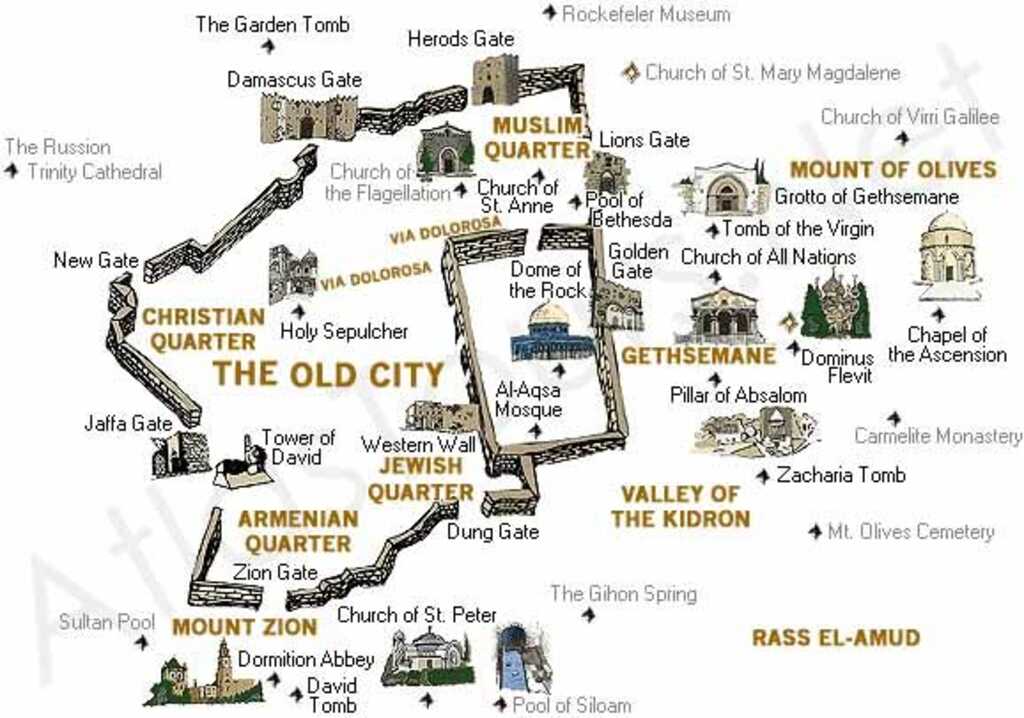
13 I went out by night by the Valley Gate to the Dragon Spring and to the Dung Gate, and I inspected the walls of Jerusalem that were broken down and its gates that had been destroyed by fire.
14 Then I went on to the Fountain Gate and to the King’s Pool, but there was no room for the animal that was under me to pass.
15 Then I went up in the night by the valley and inspected the wall, and I turned back and entered by the Valley Gate, and so returned.
16 And the officials did not know where I had gone or what I was doing, and I had not yet told the Jews, the priests, the nobles, the officials, and the rest who were to do the work.
Nehemiah’s careful, secretive preparations once he got to Jerusalem show that he anticipated some resistance to his proposal. So he spent three days doing his homework and thinking about how to present this in a way that would overcome the objections. After that he called the Jewish leaders and people together and began by stating the problem very plainly (2:17): 17 Then I said to them, “You see the trouble we are in, how Jerusalem lies in ruins with its gates burned. Come, let us build the wall of Jerusalem, that we may no longer suffer derision.”
18 And I told them of the hand of my God that had been upon me for good, and also of the words that the king had spoken to me. And they said, “Let us rise up and build.” So they strengthened their hands for the good work.
He also identified himself with them in the problem. It wasn’t their problem; it was our problem. He didn’t blame them for things but neither did he gloss over the fact that we have a problem.
Then, he appealed to a need that they all felt, “that we may no longer be a reproach.” They all knew that a defenseless Jerusalem was a joke to the surrounding neighbors. They sensed that Nehemiah had come to seek their welfare (2:10). Finally, he told them how God already had been favorable as seen in the king’s favorable response. Perhaps he showed them the letters from the king and the requisition for the timber. Their instant response was that of hope: “Let us arise and build!”
There’s an art to working with people and learning to motivate them to accomplish great things for God. Some leaders err by becoming people-pleasing politicians. They want everyone’s approval, so they tell people what they want to hear rather than what they need to hear. But they erode trust because people quickly realize that they are manipulative and do not speak the truth.
Other leaders err by telling it like it is, but without sensitivity and tact. They don’t take the time to listen to people and understand where they’re at and how they feel about things. When people react against their leadership, they label them as disobedient and move on. Nehemiah should teach us to combine wisdom and tact with plain truth.
19 But when Sanballat the Horonite and Tobiah the Ammonite servant and Geshem the Arab heard of it, they jeered at us and despised us and said, “What is this thing that you are doing? Are you rebelling against the king?”
20 Then I replied to them, “The God of heaven will make us prosper, and we his servants will arise and build, but you have no portion or right or claim in Jerusalem.”
The third group of people that Nehemiah had to work with was the enemies. Sanballat was the governor of Samaria to the north. Tobiah, whose name is Jewish (“Yah is good”), ruled the Ammonites to the east. Geshem was the leader of the Arabs to the south. They all opposed a fortified Jerusalem because it threatened their political positions. They didn’t care at all about the plight of the Jews, much less about the name of the Lord being exalted in Jerusalem. So they were very displeased (2:10) and joined together to ridicule the project and accuse the people of rebellion against the king (2:19).
Nehemiah demonstrates both wisdom and courage in dealing with these enemies. He was wise in that he sensed, “This is no time for diplomacy. I need to meet these enemies head-on.” Any meeting to hear their concerns or to work out a compromise would have been a mistake. So Nehemiah courageously confronted them and drew the line between them and God’s people so that they could not join the project with the goal of sabotaging it. He didn’t use the clout of the king’s letters, but rather spiritual clout: “The God of heaven will make us prosper (2:20).
Any time God’s people say, “Let’s arise and build,” the enemy will say, “Let’s arise and stop them.” J. Sidlow Baxter writes, “There is no winning without working and warring. There is no opportunity without opposition” (Explore the Book, Six Volumes in One [Zondervan], 2:230). A godly leader must have the discernment to know when to work with people and when to confront and oppose them. Early in my ministry, a veteran pastor, Ray Ortlund, told me, “You’ve got to decide where you want to give blood.” It is good counsel!
Thus to serve God realistically, you must learn to wait on Him and to work with people. Finally,
3. To serve God realistically, we must learn to wrestle with problems.
Any time you try to do anything significant for God, there will be problems. The enemy will see to that! We’ve already seen how Nehemiah dealt with the problem of the enemies. But also, he had to face the problem of the destroyed wall.
He began with a realistic firsthand appraisal of the situation. In one place, the rubble was so bad that he couldn’t ride his horse or mule through the debris. As the leader, he needed to know exactly how bad things were so that he could develop a realistic, practical plan of action. Nehemiah didn’t gloss over the problems. He describes it to the people as “a bad situation.”
Again, we need balance here. Some leaders are so sanguine that they refuse to acknowledge how bad things are. People in the trenches feel that he’s out of touch and it undermines his leadership. Other leaders are so engulfed by the problems that they lose hope. Nehemiah realistically saw the problem and, as we will see, broke it down into manageable units in order to get the job done.
Conclusion
So to serve God realistically, we must wait on Him for His timing, work with different sorts of people, and wrestle with problems. Just because it is the Lord’s work and He is on our side does not mean that everything will work out smoothly and effortlessly. We need both the idealism of what God wants to do and the realism that there will be major hurdles to overcome. But it’s worth all the hassles. My parents used to have the little plaque on the wall by the door that said, “Only one life, ’twill soon be past; only what’s done for Christ will last.” I hope that all of you will know the joy of serving Him in spite of the inevitable difficulties.
================
He had the faith to ask (Neh. 2:4-8)
{4} The king said to me, “What is it you want?” Then I prayed to the God of heaven, {5} and I answered the king, “If it pleases the king and if your servant has found favor in his sight, let him send me to the city in Judah where my fathers are buried so that I can rebuild it.” {6} Then the king, with the queen sitting beside him, asked me, “How long will your journey take, and when will you get back?” It pleased the king to send me; so I set a time. {7} I also said to him, “If it pleases the king, may I have letters to the governors of Trans-Euphrates, so that they will provide me safe-conduct until I arrive in Judah? {8} And may I have a letter to Asaph, keeper of the king’s forest, so he will give me timber to make beams for the gates of the citadel by the temple and for the city wall and for the residence I will occupy?” And because the gracious hand of my God was upon me, the king granted my requests.”
The king asked him, “What is it you want?” What an opportunity for Nehemiah! All the power and wealth of the kingdom were wrapped up in that question!
Verse 4 offers a good pattern to follow: “I prayed to the God of heaven, and I answered the king.” Nehemiah must have prayed, “O Lord, I’m jumping off the cliff. Help me!” He didn’t say it out loud, but he spoke with an attitude of prayer underlying what he would say to the king. And as Jesus promised, the Spirit gave him words to say.
I’m impressed by another example Nehemiah set for us. Through the four months in which he wrestled with God, he did not conclude that someone else should go. God did not permit him to. It’s often the case that someone else should go, that you or I should stay put, that the place we occupy is the right place, that our energies are being focused on the right things, and that the jobs and families and neighborhoods and responsibilities we have are the right ones. But sometimes it’s time for you or me to go. The conclusion of four months of wrestling with and seeking God was, “Send me.” The Lord wanted this man, with all his gifts, capabilities, and background, to go to Jerusalem to rebuild the wall. And Nehemiah didn’t back away from the responsibility.
Furthermore, he had thought through what would be needed. He needed letters of permission for the governors of Trans-Euphrates. That is, he needed the authority to quell the political storms that would surely arise. He needed a letter to the keeper of the forest to get timber. He was organized, decisive. And once again we see the Spirit give him words, but the Spirit was also drawing on strengths that had been there all along. This was a man who knew how to lead, and God had put him in the right place. At great danger to himself he exercised his gifts at the right moment.
I’m convinced the Lord will do the same thing for us. All through our lives he will make us the right person for the critical time to say what will serve his purposes. So here are some important questions to ask: What is God doing right now? What struggle are you going through now? What study of the Bible should you be making now? Are you learning how God thinks? What lesson can you learn from the things that are going wrong? Should you be learning something about when to speak and when not to speak? Have you been in settings of counsel and personal renewal in which you figured out why you struggle the way you do, what it is about your interior life that makes you prone to certain problems; and have you let God minister to you there? Could you explain to someone else someday what you’ve been through, how your suffering has led to something good, so you can comfort them with the comfort that you’ve received? If so, you’ll know what to say because the Lord has taught you lessons throughout a lifetime. The Spirit is doing the teaching and giving you the words for the moment. He gets the credit.
As he was accustomed to do, Nehemiah sent one of his quick “telegraph prayers” to the Lord (4:4; 5:9; 6:9, 14; 13:14, 22, 29, 31). But keep in mind that these “emergency prayers” were backed up by four months of fasting and praying. If Nehemiah had not been diligent to pray in private, his “telegraph prayers” might have gone unanswered. “He had only an instant for that prayer,” wrote George Morrison. “Silence would have been misinterpreted. Had he closed his eyes and lingered in devotion, the king immediately would have suspected treason.”2-1
It encourages my prayer life when I contrast the earthly throne of Artaxerxes with the throne of grace in heaven. Nehemiah had to wait for an invitation before he could share his burden with the king, but we can come to the throne of grace at any time with any need (Heb. 4:14-16). Artaxerxes saw the sorrow on Nehemiah’s face, but our Lord sees our hearts and not only knows our sorrows but also feels them with us. People approaching the throne of Persia had to be very careful what they said, lest they anger the king; but God’s people can tell Him whatever burdens them. (The word boldly in Heb. 4:16 means “freedom of speech.”) You are never sure of the mood of a human leader, but you can always be sure of God’s loving welcome.
Jewish rabbis often answer a question with a question, and Nehemiah followed that example. Instead of telling the king what he planned to do, he aroused the king’s sympathy and interest with a question regarding how he should feel about the sad plight of his ancestral city and the graves of his forefathers. It was good psychology, and God used Nehemiah’s reply to get the king’s sympathetic attention (Luke 21:14-15). A pagan monarch would probably not sorrow over the ruins of Jerusalem, but he would certainly show respect for the dead.
Nehemiah was a true patriot whose dreams for the future were motivated by the values of the past. He did not try to duplicate the past, for that was impossible; rather, he built on the past so that Israel would have a future. To Nehemiah, the past was a rudder to guide him and not an anchor to hold him back. When Samuel Johnson called patriotism “the last refuge of a scoundrel,” he was referring to that temporary zeal that uses “love of country” as propaganda for selfish purposes. United States Ambassador to the United Nations Adlai Stevenson said that patriotism was not “a short and frenzied outburst of emotion, but the tranquil and steady dedication of a lifetime.” That certainly describes Nehemiah’s kind of patriotism.
Not only had Nehemiah prayed for this opportunity, but he had also planned for it and had his answer ready. During those four months of waiting, he had thought the matter through and knew exactly how he would approach the project. His reply to the king can be summarized in two requests: “Send me!” (Neh. 2:4-6) and “Give me!” (vv. 7-10)
Nehemiah could not leave his post without the approval of the king, nor could he work in Jerusalem without the authority of the king. Pressure from local officials had stopped the work once before (Ezra 4), and Nehemiah didn’t want history to repeat itself. He asked Artaxerxes to appoint him governor of Judah and to give him the authority he needed to rebuild the city walls. He told the king when he expected to return, but we don’t know what that date was. According to Nehemiah 5:14, Nehemiah spent twelve years as governor. He went back to Persia briefly to report to the king, but then returned to Jerusalem to correct the abuses that appeared during his absence (13:6-7).
But Nehemiah asked for even more. He needed letters of introduction that would guarantee safe travel and hospitality between Susa and Jerusalem. He also requested letters of authority that would provide the materials needed for the construction of buildings and walls. (Nehemiah had done his research well. He even knew the name of the keeper of the king’s forest!) Artaxerxes gave him what he asked, but it was the good hand of God that made the king so cooperative (see 2:18; and Ezra 7:6, 9, 28).
When Jesus sent His disciples out to minister, He first gave them the authority they needed to do the job; and He promised to meet their every need (Matt. 10:1-15). As we go forth to serve the Lord, we have behind us all authority in heaven and on earth (28:18); so we don’t have to be afraid. The important thing is that we go where He sends us and that we do the work He has called us to do.
Nehemiah is a good example of how believers should relate to unsaved officials as they seek to do the work of God. Nehemiah respected the king and sought to work within the lines of authority that existed in the empire. He didn’t say, “I have a commission from the Lord to go to Jerusalem, and I’m going whether you like it or not!” When it comes to matters of conscience, we must always obey God rather than men (Acts 5:29); but even then, we must show respect for authority (see Rom. 13 and 1 Peter 2:11-25). Daniel and his friends took the same approach as did Nehemiah, and God honored them as well (Dan. 1).
The king’s response is evidence of the sovereignty of God in the affairs of nations. We expect God to be able to work through a dedicated believer like Nehemiah, but we forget that God can also work through unbelievers to accomplish His will. He used Pharaoh to display His power in Egypt (Ex. 9:16; Rom. 9:17) and Cyrus to deliver His people from Babylon (Isa. 44:28; 45:1; Ezra 1:1-2). Caesar issued the decree that brought Mary and Joseph to Bethlehem (Luke 2:1-7), and two different Roman centurions—Claudius Lysias and Julius—saved Paul’s life (Acts 21:26-40; 23:25-30; 27:1, 42-44). While it may be helpful to have believing officials like Joseph, Daniel, and Nehemiah, we must remember that God is not required to use only believers.
Moses and Nehemiah made similar decisions of faith and similar sacrifices (Heb. 11:24-26). As the representative of the deliverer of the Jews, would he be welcomed by the Gentile officials? Nehemiah performed no signs or wonders, nor did he deliver any prophecies; but he faithfully did his work and prepared a city for the coming Messiah (Dan. 9:24-27).
Traveling (Neh. 2:9-10).
(Nehemiah 2:9-10) “So I went to the governors of Trans-Euphrates and gave them the king’s letters. The king had also sent army officers and cavalry with me. {10} When Sanballat the Horonite and Tobiah the Ammonite official heard about this, they were very much disturbed that someone had come to promote the welfare of the Israelites.”
No description is given of the trip from Susa to Jerusalem, a journey of at least two months’ time. As a testimony to the faithfulness of God, Ezra had refused military protection for his journey (Ezra 8:21-23); but since Nehemiah was a governor on official business, he had a military escort. Nehemiah had just as much faith as Ezra; but as the king’s officer, he could not travel without his retinue. For one thing, he would not oppose the will of the king; and he could not force his faith upon others.
When the official caravan arrived, it was bound to attract attention, particularly among those who hated the Jews and wanted to keep them from fortifying their city. Three special enemies are named: Sanballat, from Beth Horan, about twelve miles from Jerusalem; Tobiah, an Ammonite; and Geshem, an Arabian (Neh. 2:19), also called “Gashmu” (6:6). Sanballat was Nehemiah’s chief enemy, and the fact that he had some kind of official position in Samaria only made him that much more dangerous (4:1-3).
Being an Ammonite, Tobiah was an avowed enemy of the Jews (Deut. 23:3-4). He was related by marriage to some of Nehemiah’s co-laborers and had many friends among the Jews (Neh. 6:17-19). In fact, he was “near of kin” (“allied”) to Eliashib the priest (13:4-7). If Sanballat was in charge of the army, then Tobiah was director of the intelligence division of their operation. It was he who gathered “inside information” from his Jewish friends and passed it along to Sanballat and Geshem. Nehemiah would soon discover that his biggest problem was not the enemy on the outside but the compromisers on the inside, a problem the church still faces today.
He had the faith to challenge others (Neh. 2:11-18a)
(Nehemiah 2:11-18) “I went to Jerusalem, and after staying there three days {12} I set out during the night with a few men. I had not told anyone what my God had put in my heart to do for Jerusalem. There were no mounts with me except the one I was riding on. {13} By night I went out through the Valley Gate toward the Jackal Well and the Dung Gate, examining the walls of Jerusalem, which had been broken down, and its gates, which had been destroyed by fire. {14} Then I moved on toward the Fountain Gate and the King’s Pool, but there was not enough room for my mount to get through; {15} so I went up the valley by night, examining the wall. Finally, I turned back and reentered through the Valley Gate. {16} The officials did not know where I had gone or what I was doing, because as yet I had said nothing to the Jews or the priests or nobles or officials or any others who would be doing the work. {17} Then I said to them, “You see the trouble we are in: Jerusalem lies in ruins, and its gates have been burned with fire. Come, let us rebuild the wall of Jerusalem, and we will no longer be in disgrace.” {18} I also told them about the gracious hand of my God upon me and what the king had said to me. They replied, “Let us start rebuilding.” So they began this good work.”
This scene is also visually impressive. Presumably it was a moonlit night. Nehemiah was examining the situation in detail, circling the walls on horseback in the middle of the night, looking at great mounds of broken stones and mortar and burned gates. No one living could remember Jerusalem in any other condition. The Jews didn’t have the heart to build the wall again, and most of their neighbors had strong interest in seeing them not succeed in getting the job done.
Investigating (Neh. 2:11-16).
(Nehemiah 2:11-16) “I went to Jerusalem, and after staying there three days {12} I set out during the night with a few men. I had not told anyone what my God had put in my heart to do for Jerusalem. There were no mounts with me except the one I was riding on. {13} By night I went out through the Valley Gate toward the Jackal Well and the Dung Gate, examining the walls of Jerusalem, which had been broken down, and its gates, which had been destroyed by fire. {14} Then I moved on toward the Fountain Gate and the King’s Pool, but there was not enough room for my mount to get through; {15} so I went up the valley by night, examining the wall. Finally, I turned back and reentered through the Valley Gate. {16} The officials did not know where I had gone or what I was doing, because as yet I had said nothing to the Jews or the priests or nobles or officials or any others who would be doing the work.”
After his long difficult journey, Nehemiah took time to rest; for leaders must take care of themselves if they are going to be able to serve the Lord (Mark 6:31). He also took time to get “the lay of the land” without arousing the concern of the enemy. A good leader doesn’t rush into his work but patiently gathers the facts firsthand and then plans his strategy (Prov. 18:13). We must be “wise as serpents” because the enemy is always watching and waiting to attack.
Leaders are often awake when others are asleep, and working when others are resting. Nehemiah didn’t want the enemy to know what he was doing, so he investigated the ruins by night. By keeping his counsel to himself, Nehemiah prevented Tobiah’s friends from getting information they could pass along to Sanballat. A wise leader knows when to plan, when to speak, and when to work.
As he surveyed the situation, he moved from west to south to east, concentrating on the southern section of the city. It was just as his brother had reported: The walls were broken down and the gates were burned (Neh. 2:13; 1:3). Leaders must not live in a dream world. They must face facts honestly and accept the bad news as well as the good news. Nehemiah saw more at night than the residents saw in the daylight, for he saw the potential as well as the problems. That’s what makes a leader!
Challenging (Neh. 2:17-20).
(Nehemiah 2:17-20) “Then I said to them, “You see the trouble we are in: Jerusalem lies in ruins, and its gates have been burned with fire. Come, let us rebuild the wall of Jerusalem, and we will no longer be in disgrace.” {18} I also told them about the gracious hand of my God upon me and what the king had said to me. They replied, “Let us start rebuilding.” So they began this good work. {19} But when Sanballat the Horonite, Tobiah the Ammonite official and Geshem the Arab heard about it, they mocked and ridiculed us. “What is this you are doing?” they asked. “Are you rebelling against the king?” {20} I answered them by saying, “The God of heaven will give us success. We his servants will start rebuilding, but as for you, you have no share in Jerusalem or any claim or historic right to it.””
Nehemiah’s appeal was positive; he focused on the glory and greatness of the Lord. He had been in the city only a few days, but he spoke of “we” and “us” and not “you” and “them.” As he did in his prayer (1:6-7), he identified with the people and their needs. The city was a reproach to the Lord (1:3; 4:4; 5:9), but the hand of the Lord was with them; and He would enable them to do the work. God had already proved His power by working in the heart of the king, and the king had promised to meet the needs. It was Nehemiah’s personal burden for Jerusalem and his experience with the Lord that convinced the Jews that the time was right to build.
It is to the credit of the Jewish nobles that they accepted the challenge immediately and said, “Let us rise up and build!” They were not so accustomed to their situation that they took it for granted and decided that nothing could be changed. Nor did they remind Nehemiah that the Jews had once tried to repair the walls and were stopped (Ezra 4). “We tried that once and it didn’t work. Why try again?”
Christian leaders today face these same two obstacles as they seek to lead God’s people into new conquests for the Lord. How often we hear, “We’re content the way things are; don’t rock the boat by trying to change things.” Or, “We tried that before and it didn’t work!”
It is worth noting that God sent the Jews a leader from the outside. Nehemiah came into the community with a new perspective on the problems and a new vision for the work. Too often in a local church, new members have a hard time “breaking into the system” because the veterans are afraid of new ideas that might lead to change. Since most of their leadership comes up through the ranks, parachurch ministries must also beware of the “closed corporation” attitude. New workers from outside the organization might open the windows and let in some fresh air.
The good hand of God was upon the leader, and the followers “strengthened their hands” for the work (Neh. 2:8, 18). It takes both the hands of leadership and the hands of partnership to accomplish the work of the Lord. Leaders can’t do the job by themselves, and workers can’t accomplish much without leadership. Vincent de Paul said, “If in order to succeed in an enterprise, I were obliged to choose between fifty deer commanded by a lion, and fifty lions commanded by a deer, I should consider myself more certain of success with the first group than with the second.”
Someone has defined leadership as “the art of getting people to do what they ought to do because they want to do it.” If that definition is true, then Nehemiah certainly was a leader! Most of the people united behind him and risked their lives to get the work done.
Nehemiah was not only able to challenge his own people, but he was also able to stand up against the enemy and deal effectively with their opposition. Just as soon as God’s people step out by faith to do His will, the enemy shows up and tries to discourage them. Sanballat and Tobiah heard about the enterprise (v. 10) and enlisted Geshem to join them in opposing the Jews. In chapters 4-7, Nehemiah will describe the different weapons the enemy used and how the Lord enabled him to defeat them.
They started off with ridicule, a device somebody has called “the weapon of those who have no other.” They laughed at the Jews and belittled both their resources and their plans. They even suggested that the Jews were rebelling against the king. That weapon had worked once before (see Ezra 4).
Whether in the area of science, exploration, invention, business, government, or Christian ministry, just about everyone who has ever accomplished anything has faced ridicule. Our Lord was ridiculed during His life and mocked while He was hanging on the cross. He was “despised and rejected of men” (Isa. 53:3). On the Day of Pentecost, some of the Jews in the crowd said that the Christians were drunk (Acts 2:13). The Greek philosophers called Paul a “babbler” (17:18, niv), and Festus told Paul he was out of his mind (26:24).
Nehemiah could have dealt with their ridicule in several ways. He might have ignored it, and sometimes that’s the wisest thing to do (Prov. 26:4). But at the beginning of an enterprise, it’s important that leaders encourage their people and let them know that God has everything in control. Had Nehemiah ignored these three men who were important in the community, he might have weakened his own position among the Jews. After all, he was the official governor, and he was doing official business.
Or, Nehemiah might have debated with the three enemy leaders and tried to convince them that their position was false. But that approach would only have given “official promotion” to the three men along with opportunity for them to say more. Why should Nehemiah give the enemy opportunity to make speeches against the God whom he served?
Of course, Nehemiah would not ask them to join the project and work with the Jews, although Sanballat and his friends would have welcomed the invitation (Neh. 6:1-4). In his reply, Nehemiah made three things clear: Rebuilding the wall was God’s work; the Jews were God’s servants; and Sanballat, Tobiah, and Geshem had no part in the matter. Sometimes leaders have to negotiate, but there are times when leaders must draw a line and defend it. Unfortunately, not everybody in Jerusalem agreed with their leader; for some of them cooperated with Sanballat, Tobiah, and Geshem and added to Nehemiah’s burdens.
The stage is now set and the drama is about to begin.
But before we join the workers on the wall, let’s ask ourselves whether we are the kind of leaders and followers God wants us to be. Like Nehemiah, do we have a burden in our hearts for the work God has called us to do? (2:12) Are we willing to sacrifice to see His will accomplished? Are we patient in gathering facts and in planning our work? Do we enlist the help of others or try to do everything ourselves? Do we motivate people on the basis of the spiritual—what God is doing—or simply on the basis of the personal? Are they following us or the Lord as He leads us?
As followers, do we listen to what our leaders say as they share their burdens? Do we cling to the past or desire to see God do something new? Do we put our hands and necks to the work? (v. 18; 3:5) Are we cooperating in any way with the enemy and thus weakening the work? Have we found the job God wants us to complete?
Anyone can go through life as a destroyer; God has called His people to be builders. What an example Nehemiah is to us! Trace his “so” statements and see how God used him: “So I prayed” (2:4); “So I came to Jerusalem” (v. 11); “So they strengthened their hands for this good work” (v. 18); “So built we the wall” (4:6); “So we labored in the work” (v. 21); “So the wall was finished” (6:15).
Were it not for the dedication and determination that came from his faith in a great God, Nehemiah would never have accepted the challenge or finished the work. He had never seen the verse, but what Paul wrote in 1 Corinthians 15:58 was what kept him going: “Therefore, my beloved brethren, be steadfast, immovable, always abounding in the work of the Lord, knowing that your labor is not in vain in the Lord” (nkjv).
No matter how difficult the task, or how strong the opposition, BE DETERMINED! As Dr. V. Raymond Edman used to say, “It is always too soon to quit.”
I’m convinced that Jesus meant what he said. There’s going to come a time when we, as his disciples, will face problems and opposition, when we’re called to be like doves or sheep, having nothing but God’s words as our defense and as our advance. We’re called on to hear what the Spirit has taught us over a lifetime, and at the moment we have to speak, we’ll know what to say and how to say it, what influence to bring to bear. Rather than observing the world’s power and authority and ways, we will use God’s words, and everything will change. The God of heaven will give us success.
So it’s really worthwhile learning the lessons God is teaching us, inviting God’s insight into the things that are going on in our lives right now, learning the Bible, embracing fellowship that’s real and interactive and life-changing. God will use all the means by which he is carving and changing and strengthening us in ways that we can’t predict now. And we’ll thank him for that in the end.
The Book of Nehemiah
Commentary by Robert Jamieson
Nehemiah 2
Nehemiah 2:1-20. Artaxerxes, understanding the cause of Nehemiah’s sadness, sends him with letters and a commission to build again the walls of Jerusalem.
Verse 1. it came to pass in the month Nisan—This was nearly four months after he had learned the desolate and ruinous state of Jerusalem (Nehemiah 1:1). The reasons for so long a delay cannot be ascertained.
I took up the wine, and gave it unto the king—Xenophon has particularly remarked about the polished and graceful manner in which the cupbearers of the Median, and consequently the Persian, monarchs performed their duty of presenting the wine to their royal master. Having washed the cup in the king’s presence and poured into their left hand a little of the wine, which they drank in his presence, they then handed the cup to him, not grasped, but lightly held with the tips of their thumb and fingers. This description has received some curious illustrations from the monuments of Assyria and Persia, on which the cupbearers are frequently represented in the act of handing wine to the king.
Verses 2-5. the king said unto me, Why is thy countenance sad?—It was deemed highly unbecoming to appear in the royal presence with any weeds or signs of sorrow (Esther 4:2); and hence it was no wonder that the king was struck with the dejected air of his cupbearer, while that attendant, on his part, felt his agitation increased by his deep anxiety about the issue of the conversation so abruptly begun. But the piety and intense earnestness of the man immediately restored [Nehemiah] to calm self-possession and enabled him to communicate, first, the cause of his sadness (Nehemiah 2:3), and next, the patriotic wish of his heart to be the honored instrument of reviving the ancient glory of the city of his fathers.
Verses 6-9. the queen also sitting by him—As the Persian monarchs did not admit their wives to be present at their state festivals, this must have been a private occasion. The queen referred to was probably Esther, whose presence would tend greatly to embolden Nehemiah in stating his request; and through her influence, powerfully exerted it may be supposed, also by her sympathy with the patriotic design, his petition was granted, to go as deputy governor of Judea, accompanied by a military guard, and invested with full powers to obtain materials for the building in Jerusalem, as well as to get all requisite aid in promoting his enterprise.
I set him a time—Considering the great dispatch made in raising the walls, it is probable that this leave of absence was limited at first to a year or six months, after which he returned to his duties in Shushan. The circumstance of fixing a set time for his return, as well as entrusting so important a work as the refortification of Jerusalem to his care, proves the high favor and confidence Nehemiah enjoyed at the Persian court, and the great estimation in which his services were held. At a later period he received a new commission for the better settlement of the affairs of Judea and remained governor of that province for twelve years (Nehemiah 5:14).
Verse 7. letters be given me to the governors beyond the river—The Persian empire at this time was of vast extent, reaching from the Indus to the Mediterranean. The Euphrates was considered as naturally dividing it into two parts, eastern and western (see on Ezra 5:3).
Verse 8. according to the good hand of my God upon me—The piety of Nehemiah appears in every circumstance. The conception of his patriotic design, the favorable disposition of the king, and the success of the undertaking are all ascribed to God.
Verse 10. Sanballat the Horonite—Horonaim being a town in Moab, this person, it is probable, was a Moabite.
Tobiah the servant, the Ammonite—The term used indicates him to have been a freed slave, elevated to some official dignity. These were district magistrates under the government of the satrap of Syria; and they seem to have been leaders of the Samaritan faction.
Verses 11, 12. So I came to Jerusalem, and was there three days—Deeply affected with the desolations of Jerusalem, and uncertain what course to follow, he remained three days before informing any one of the object of his mission [Nehemiah 2:17, 18]. At the end of the third day, accompanied with a few attendants, he made, under covert of night, a secret survey of the walls and gates [Nehemiah 2:13-15].
Verses 13-15. I went out by night by the gate of the valley—that is, the Jaffa gate, near the tower of Hippicus.
even before the dragon well—that is, fountain on the opposite side of the valley.
and to the dung port—the gate on the east of the city, through which there ran a common sewer to the brook Kedron and the valley of Hinnom.
Verse 14. Then—that is, after having passed through the gate of the Essenes.
I went on to the gate of the fountain—that is, Siloah, from which turning round the fount of Ophel.
to the king’s pool: but there was no place for the beast that was under me to pass—that is, by the sides of this pool (Solomon’s) there being water in the pool, and too much rubbish about it to permit the passage of the beast.
Verse 15. Then went I up … by the brook—that is, Kedron.
and entered by the gate of the valley, and so returned—the gate leading to the valley of Jehoshaphat, east of the city. He went out by this gate, and having made the circuit of the city, went in by it again [Barclay, City of the Great King].
Verses 16-18. the rulers knew not—The following day, having assembled the elders, Nehemiah produced his commission and exhorted them to assist in the work. The sight of his credentials, and the animating strain of his address and example, so revived their drooping spirits that they resolved immediately to commence the building, which they did, despite the bitter taunts and scoffing ridicule of some influential men.
nelson’s new illustrated bible commentary
2:1 Nisan corresponds to March-April. sad in his presence: Four months after hearing the report from his brother concerning Jerusalem, Nehemiah was still grieving over the conditions in Jerusalem.
2:2 The king noticed Nehemiah’s sad expression and concluded that it was caused by sorrow of heart rather than physical illness. I became dreadfully afraid: Persian monarchs believed that just being in their presence would make any person happy. Yet, Nehemiah was about to request the emperor’s permission to go to Jerusalem, suggesting that he would rather be somewhere other than in the emperor’s presence. On top of that, it was Artaxerxes himself who had ordered the work on the wall to be stopped (Ezra 4:21–23). Nehemiah had reason to be afraid.
2:3 live forever: Addressing the king with proper respect, Nehemiah related the burden of his heart. the place of my fathers’ tombs: It is possible that this phrase was designed to catch the king’s attention. In many Asian cultures, a connection with the burial places of one’s ancestors was a matter of great importance.
2:4 I prayed: Even though Nehemiah had come into the presence of the king, he had never left the presence of the true King of kings.
2:5 After his silent prayer (v. 4), Nehemiah spoke boldly, asking for permission to leave the king’s palace to travel to Jerusalem to rebuild the wall. Again Nehemiah spoke of his fathers’ tombs (v. 3). Though this was not his principal concern, it must have been something he thought would be important to the king.
2:6 the queen: It is possible that Nehemiah implied by this parenthetical phrase that her presence influenced the king’s decision. She may have looked on Nehemiah with a special grace. It is also possible that he had waited for a time when she would be present (v. 1). How long will your journey be … when will you return: In responding to Nehemiah’s request (v. 5), the king might have had Nehemiah executed on the spot; or he might have dismissed Nehemiah with a laugh. However, his questions implied that the request was already granted. I set him a time: The fact that Nehemiah responded quickly to the king’s request for specific details indicates that he had been planning the trip. it pleased the king to send me: The king not only sent Nehemiah to Jerusalem, he made him governor (5:14). With the possibility of unrest in Egypt and in Cyprus, the king might have decided that Jerusalem needed a wall after all (Ezra 4:21).
2:7 Nehemiah knew that he needed safe passage for his journey to Judah, so he requested letters from the king to show to the governors of the region beyond the Euphrates River.
2:8 Nehemiah’s plans were detailed. He asked the king for permission to go to Jerusalem (v. 5), for letters to ensure safe passage (v. 7), and also for provisions. Nehemiah requested a letter addressed to Asaph, the man in charge of the king’s forest, to enable him to obtain supplies of lumber for three projects: (1) the gates of the citadel, (2) the city wall, and (3) his personal house. Jerusalem had plenty of limestone for building projects. But timber, necessary for making roofs and other parts of large building projects, was scarce. The citadel was a fortress situated just northwest of the temple. It overlooked and protected the temple area. according to the good hand of my God: The king graciously granted Nehemiah all that he had requested, but Nehemiah knew that the ultimate source of his provisions was God.
2:9 captains of the army and horsemen: Nehemiah had a military escort to Jerusalem. In 458 b.c. Ezra had journeyed to Jerusalem with 1,800 people carrying valuable treasures, and had refused a military escort (Ezra 8:22). Fourteen years later, Nehemiah made the same trip with a smaller company and no valuables, but the king sent an escort with him.
2:10, 11 Some have suggested that since he traveled lighter than Ezra had, Nehemiah may have taken the shorter route from Shushan to Tadmor through Damascus, thus following the Jordan Valley to Jericho. He and his party would therefore avoid the Samaritan community and arrive in Jerusalem with no opposition. If that was their intention, it did not work. Sanballat was the governor of Samaria. Horonite refers to Sanballat’s city Beth-Horon. Tobiah was probably Sanballat’s secretary and confidential advisor. Ammonite: At the time of Nehemiah, the Ammonites (Gen. 19:38) had pushed west into the land vacated by Judah. The prospect of a strong Jewish community in newly fortified Jerusalem would have seemed threatening to the Ammonite power.
2:12–15 Since Nehemiah had arrived in Jerusalem from the north, he would have seen that side of the wall as he approached the city. If he lived in the southwestern part of the city, he would have had ample time for viewing the western wall. Nehemiah seems to have been concerned with inspecting the southern and eastern walls of Jerusalem. With a few servants, he passed through the Valley Gate into the Valley of Hinnom. He then traveled along the south wall. When the piles of stone and heaps of rubble obstructed his passage, he dismounted his animal and continued on foot up the Kidron valley in order to view the eastern wall.
2:16 the officials did not know: The only people who knew Nehemiah’s plans were the few men who had made the secret night ride with him (v. 12).
2:17 we: Nehemiah encouraged all of the people to assist in rebuilding the city’s walls.
2:18 Nehemiah emphasized that it was not just his idea to rebuild the wall of Jerusalem. Rather, the idea had come to him from the Lord (vv. 8, 12). In response to Nehemiah’s challenge, the people replied, Let us rise up and build.
| LEADERSHIP PRINCIPLES FROM NEHEMIAH (PART 2)
Leaders Leverage Their Power (2:5)
Management has been defined as the ability to get things done through other people. However, that can happen only if the people involved are in a position to get things done. Thus leaders must use their influence to get people of means participating in their efforts.
Nehemiah followed this principle in his plan to rebuild Jerusalem. He was in a key position of influence as the cupbearer to Artaxerxes (Neh. 2:1). He had the king’s ear, and he leveraged his proximity to power for the advantage of his people. He requested and was granted a leave of absence (2:5, 6), letters of reference (2:7), and a government grant for building materials (2:8).
Today, the ability to leverage power is an indispensable requirement of leadership, especially for those who work in community development and urban ministry. There are plenty of resources to help the poor, for example, but it takes wise and disciplined leaders to align themselves with the powerful on behalf of the powerless. Tasks such as grant-writing, resource development, and asset distribution require careful cultivation of relationships with those in the networks of power.
Leaders Conduct Research (2:12)
A missile without a guidance system is a dangerous thing—all power and no direction. In the same way, leaders who don’t know where they are going can wreak havoc. That’s why it pays for people in leadership positions to gather the right kind of information, so that they can make wise choices about which path to pursue.
Before he launched his plan to rebuild the walls of Jerusalem, Nehemiah conducted careful research about the task at hand. He quietly walked around the city by night, without fanfare, surveying the extent of the problem and perhaps formulating some tentative strategies (2:11–15). Nehemiah’s low profile was especially appropriate given that he was a new member of the community. As a representative of the king, he could have come in with trumpets blaring and declared what his expectations were. Instead, he kept his thoughts to himself and avoided attracting attention until he had formulated a plan.
Leaders Build Community (2:17, 18)
In many Western countries of the twentieth century, the labor force often has been sharply divided between management and labor. One problem of this rigid distinction is that it tends to create a mentality of “us” versus “them.” History shows that most of the greatest achievements of humanity have been accomplished by teams and communities of people working together toward common ends.
Nehemiah understood the power of community as he undertook the task of rebuilding Jerusalem’s walls. After surveying the situation, he gathered the people and gave a speech in which he mobilized the community around the rebuilding project. First he raised their awareness that something should be done, then he instilled confidence in them that something could be done—by them (2:17, 18).
It is interesting to notice that Nehemiah spoke in terms of “we” and “us,” even though in his written account he used “they” and “them.” Clearly he saw himself as a participant in the dire circumstances, even though he had just arrived from the royal palace. In fact, he bridged the class division between himself and his people by sharing the discussion he had had with the king, thereby showing that the people had a friend in the emperor’s court. |
| |
2:19 In v. 10, Nehemiah here mentioned two men who were unhappy about his coming—Sanballat and Tobiah. Here the opposition grows to three. Geshem was the leader of a company of Arab troops maintained by Sanballat. In v. 10, Nehemiah’s opponents were grieved; here they laughed. They accused Nehemiah of false motives, of plotting rebellion against the king. The same charge had been directed against the Jewish people in Zerubbabel’s time (Ezra 4).
2:20 Nehemiah ignored his opponents’ accusation that he was rebelling against the king. He asserted that God was involved in what he was doing. Nehemiah’s motive was not rebellion against the king, but submission to God. you have no heritage: Nehemiah indicated that Samaritans and foreign people had no place in Jerusalem (Ezra 4:3).[1]
[1]Radmacher, E. D., Allen, R. B., & House, H. W. 1999. Nelson’s new illustrated Bible commentary . T. Nelson Publishers: Nashville

 The walls were completed, the gates were restored, and the enemy was chagrined; but Nehemiah’s work was not finished by any means. Now he had to practice the truth Paul emphasized in Ephesians 6:13, “And having done all, to stand.” Nehemiah had been steadfast in building the walls and in resisting the enemy, and now he had to be steadfast in consolidating and conserving the gains. “Look to yourselves,” warned the Apostle John, “that we lose not those things which we have wrought, but that we receive a full reward” (2 John 8)





 Proud to be TJ's man