RSS

Category Archives: Romans 8

The Benefits of Being Christians #14 “What Will It Take? – Romans 8:35-39


About the only time I have played golf is when I played with my two sons, Eric or Gregory. There was a time when we played 5-6 times a year…one time I even took golf clubs on a plane when Eric lived in Louisiana.

On one occasion, we were walking to the club house just before we were to tee off. Knowing I had not played for some time, Eric offered me a word of advice: “Dad, until you build up your confidence, why don’t you drive with an iron at first?”

“Eric,” I responded, “I have all the confidence in the world. What I lack is ability.”

Confidence can be a very good thing. It can also be a millstone around one’s neck.

Being confident simply is not enough. The crucial issue is in whom, or in what, is our confidence. Ill-founded confidence is deadly. Well-founded confidence is proper and good.

Some Christians have no confidence at all, believing that with one slip, one sin, they are out of the faith. Agonizing their way through life, they hope no sin has gone unnoticed and unconfessed; if so, they fear they will not get to heaven.

These Christians desperately need the confidence of which Paul speaks in Romans 8:35-39: Who shall separate us from the love of Christ? Shall tribulation, or distress, or persecution, or famine, or nakedness, or danger, or sword? 36  As it is written, “For your sake we are being killed all the day long; we are regarded as sheep to be slaughtered.” 37  No, in all these things we are more than conquerors through

him who loved us. 38  For I am sure that neither death nor

life, nor angels nor rulers, nor things present nor things

to come, nor powers, 39  nor height nor depth, nor anything else in all creation, will be able to separate us from the

love of God in Christ Jesus our Lord.

Paul gives us every reason to be confident, not in ourselves but in our salvation and in the sovereign God who is accomplishing it.

Paul’s words offer hope and confidence in the midst of a fallen world. To everyone who is in Christ by faith, they are words of comfort and reassurance.

Christ protects the believer from the severest circumstances. This is the sixth assurance of deliverance, and it is the most wonderful assurance imaginable. “Who [or what] can separate us from the love of God?”

Too many people, even believers, feel that God does not love them, that He just could not love them. They feel unworthy of His love, for they come too short, are too disobedient, and fail too often. How could God possibly love them when they go against His will so much? The results of such feelings are…

a sense of unworthiness

a sense of discouragement

a low self-esteem

a defeated life

Such feelings totally contradict Scripture. There is no circumstance, no situation, no event that can cause Christ to turn away from us.

No matter how terrible or severe the situation, it cannot separate the true believer from the love of Christ. Christ loves the believer regardless of the circumstance, and He longs to be reconciled to the believer.

No more severe circumstance can be imagined than the ones given:

Tribulation: to undergo struggle, trials, temptation, suffering, or affliction.

Distress: to suffer anguish, trouble, strain, agony; not knowing which way to turn or what to do.

Persecution: to be abused, mocked, ridiculed, shamed, mistreated, ignored, neglected, harassed, attacked, or injured.

Famine: to have no food, to be starving and have no way to secure food.

Nakedness: to be stripped of all clothes and earthly comforts; to be bare, having all earthly possessions taken away.

Peril: to be exposed to the most severe risks; to be confronted with the most terrible dangers to one’s body, mind, soul, property, family, and loved ones.

Sword: to be killed; to suffer martyrdom.

Just imagine a person experiencing all this. What would his thoughts be? Would he feel that he had been forsaken by God? In the midst of so much dark trouble, would he believe that God loved him?

Scripture declares loudly and clearly that God does love him.

In Knowing God, Dr. Packer applies his chapter, “The Love of God,” by asking some convicting questions:

  • Why do I grumble and show discontent and resentment at the circumstances in which God has placed me?
  • Why am I distrustful, fearful, or depressed?
  • Why do I allow myself to grow cool, formal, and half-hearted in the service of the God who loves me so?
  • Why do I allow my loyalties to be divided, so that God has not all my heart?
  • … Could an observer learn from the quality and degree of love that I show to others—my wife … husband … family … neighbors … people at church … people at work anything at all about the greatness of God’s love to me?

There is absolutely nothing—no matter how dark and depressing, no matter how severe—that can separate the believer from the love of Christ. Circumstances are not evidence that God does not love us. God loves us no matter what the circumstances may be.

But believers must always remember: they are going to suffer while they are in this world.

In fact, the world is going to count them as sheep for the slaughter, rejecting and persecuting them (Psalm 44:22).

The world is going to persecute believers as long as believers continue to live for Christ.

Their lives of godliness convict the world, and the world rejects godliness.

No matter the circumstances and their severity, Christ will carry us through all, strengthening and encouraging us. We cannot lose, no matter the severity of the situation. Christ loves us and is going to look after and take care of us..

To begin with, God does not shelter us from the difficulties of life because we need them for our spiritual growth (Rom. 5:3-5).

  • God assures us that the difficulties of life are working for us and not against
  • God permits trials to come that we might use them for our good and His glory.
  • We endure trials for His sake (Rom. 8:36), and since we do, do you think that He will desert us? Of course not!
  • Instead, He is closer to us when we go through the difficulties of life.

Furthermore, He gives us the power to conquer (Rom. 8:37). We are “more than conquerors,” literally, “we are super-conquerors” (hupernikṓ) through Jesus Christ! through Christ who has loved us (Romans 8:37).

This is the seventh assurance of deliverance. There is nothing in the universe that can separate the believer from the love of God which is in Christ Jesus our Lord. The believer can be fully persuaded of this glorious fact.

Just consider the experiences and forces mentioned by Scripture:

Not death: confronting death and leaving this world cannot separate us from Christ and His love (John 5:24).

Not life: no trial or pleasure or comfort of life, not any person nor any thing in this life can separate us from Christ and His love.

Not angels, principalities, or powers: no heavenly or spiritual creature, no being from any other dimension can separate us from Christ and His love.

At this particular time the Jews had a highly developed belief in angels. Everything had its angel. There was an angel of the winds, of the clouds, of the snow and hail and hoarfrost, of the thunder and the lighting, of cold and heat, of the seasons.

The Rabbis said that there was nothing in the world, not even a blade of grass, that had not got its angel.

They felt there were three ranks of angels. The first included thrones, cherubim and seraphim. The second included powers, lordships and mights. The third included angels and archangels and principalities.

Now the Rabbis-and Paul had once been a Rabbi-believed that they were grudgingly hostile to men. They believed that they had been angry when God created man. It was as if they did not want to share God with anyone and had grudged man his share in him.

The Rabbis had a legend that when God appeared on Sinai to give Moses the law he was attended by his hosts of angels, and the angels grudged Israel the law, and assaulted Moses on his way up the mountain and would have stopped him had not God intervened.

So Paul, thinking in terms of his own day, says, “Not even the grudging, jealous angels can separate us from the love of God, much as they would like to do so.”

Not anything present or anything to come: neither present events, beings or things, nor future events, beings, or things—absolutely nothing in existence or anything in future existence—can cut us off from Christ and His love.

Not height or depth: nothing from outer space or from the depths of the earth can separate us from Christ and His love.

Note the grand finale: if there be any other creature than the ones named, that creature cannot separate us from “the love of God, which is in Christ Jesus our Lord.”

No malign influences (powers) will separate us from Christ. Paul speaks about height and depth. No other world can separate us from God. The word that Paul uses for other (heteros) has really the meaning of different. He is saying: “Suppose that by some wild flight of imagination there emerged another and a different world, you would still be safe; you would still be enwrapped in the love of God.”

Paul is saying: “You can think of every terrifying thing that this or any other world can produce. Not one of them is able to separate the Christian from the love of God which is in Jesus Christ, Lord of every terror and Master of every world.” Of what then shall we be afraid?

Matthew 13:20-22 (NIV) The one who received the seed that fell on rocky places is the man who hears the word and at once receives it with joy. 21  But since he has no root, he lasts only a short time. When trouble or persecution comes because of the word, he quickly falls away. 22  The one who received the seed that fell among the thorns is the man who hears the word, but the worries of this life and the deceitfulness of wealth choke it, making it unfruitful.

Matthew 10:16, 22-29 (NIV) I am sending you out like sheep among wolves. Therefore be as shrewd as snakes and as innocent as doves. 22  All men will hate you because of me, but he who stands firm to the end will be saved. 23  When you are persecuted in one place, flee to another. I tell you the truth, you will not finish going through the cities of Israel before the Son of Man comes. 26  “So do not be afraid of them. There is nothing concealed that will not be disclosed, or hidden that will not be made known. 27  What I tell you in the dark, speak in the daylight; what is whispered in your ear, proclaim from the roofs.  28  Do not be afraid of those who kill the body but cannot kill the soul. Rather, be afraid of the One who can destroy both soul and body in hell. 29  Are not two sparrows sold for a penny? Yet not one of them will fall to the ground apart from the will of your Father.

Luke 12:6 (NIV) Are not five sparrows sold for two pennies? Yet not one of them is forgotten by God.  

 
Leave a comment

Posted by on February 5, 2024 in Romans 8


The Benefits of Being Christians #13 “God Is For Us!” – Romans 8:31-34


31 What, then, shall we say in response to this? If God is for us, who can be against us?

For a long time in our Christian experience we somehow had the idea that God was against us:

  • That He was just waiting for me to make a mistake so that He could teach me a lesson by bringing judgment upon me.
  • Every bad thing that happened to me I blamed on God. I figured that He was punishing me for something.
  • I thought that somehow I had to earn God’s favor or approval.
  • Somehow I had to persuade Him to love me, I thought that His love was something that I had to deserve.
  • Basically I thought that God loved good boys/girls and hated bad boys/girls.
  • That song about Santa Claus making out a list and checking it twice, “going to find out who’s naughty and nice” was sort of describing God.
  1. I did not comprehend the extent of God’s love for me.
  2. Should Satan ever hassle you concerning God’s love for you just look at the cross.
  3. For God commended His love towards us in that while we were yet sinners, Christ died for the ungodly.

John 3: 16 “For God so loved the world, that He gave His only begotten Son, that whoever believes in Him shall not perish, but have eternal life.

17 “For God did not send the Son into the world to judge the world, but that the world might be saved through Him.

  1. “He who believes in Him is not judged; he who does not believe has been judged already, because he has not believed in the name of the only begotten Son of God.

In broad terms, Paul may be encouraging specific reflection on the evidences we have that God is for us. One way of doing this is to replace these things with some of the phrases Paul has used earlier in this chapter. For example, what then shall we say in response to the fact that “there is now no condemnation for those who are in Christ Jesus” (8:1 )?

Or, what then shall we say in response to the fact that “the Spirit helps us in our weakness” (8:26)? What then shall we say in response to the fact that “in all things God works for the good of those who love him” (8:28)?

The other option for considering what to say in response is the choice Paul makes. He asks rhetorical questions, the answers to which require application of the pattern God has already established for our day-to-day experiences.

So, for instance, since God has shown that he is for us, who of any real significance can be against us?

Or, since God “did not spare his own Son … how will he not also, along with him, graciously give us all things?” (8:32).

Paul wants to let believers know, in no uncertain terms, that their salvation is sure and secure. When we fully realize that God has called, justified, and glorified us, we can do nothing but fall before him in humble gratitude.

If God is for us, who can be against us? Satan and those under his power are against us, but in the end, God promises the victory. No one will oppose God and his followers forever; their dreadful end is also sure.

32 He who did not spare his own Son, but gave him up for us all–how will he not also, along with him, graciously give us all things?

8:32   He who did not spare his own Son, but gave him up for us all. How much is God “for” us? So much that he gave us his only Son to die for us. (The Greek word behind “for” is huper, a benefactive pronoun meaning “on behalf of.”) Only through Christ’s death are we been made acceptable to God. The word for spare is the same word for “withheld,” used in Genesis 22:12, when God said to Abraham, “You have not withheld from me your son, your only son”

Our major struggle with prayer is not that God doesn’t answer. What upsets us is that he seldom answers in line with our plans or schedule. At those times we may think that God is intentionally withholding something from us. But God has already given us the greatest gift of all. Remembering God’s gift will help us see that God is working for our good even when we can’t immediately see it. So when we are most tempted to doubt God’s love for us, we ought to express our love to him. This allows us to apply the lesson of verse 28, trusting that God is working in all things for our good.

How will he not also, along with him, graciously give us all things? God sacrificed his Son to save us; will he now invalidate that sacrifice by refusing to help and guide believers? No, instead, he promises to give us all things to bring us to the ultimate goal—our sanctification and glorification. These things come under the guideline as the things in verse 28; they are experiences God will give us as he “works for the good” that he has planned for us (see also Matthew 6:33). When the Bible promises that God will answer our prayers, it does not oblige God to give us anything we ask of him. Rather, these promises are reminders that we are presenting requests to someone who is infinitely free and powerful to act. The fact that his grace motivates his giving ensures that his gifts are best for us.

33 Who will bring any charge against those whom God has chosen? It is God who justifies.

8:33   Who will bring any charge against those whom God has chosen? Paul’s next question is, Who can press charges or accuse us? At first we might think of Satan because he is our accuser (Revelation 20:10).

Who then is bringing charges against you? Satan.

REV 12:10 And I heard a loud voice saying in heaven, Now is come salvation, and strength, and the kingdom of our God, and the power of his Christ: for the accuser of our brethren is cast down, which accused them before our God day and night.

Many times our enemies lay charges against us, and sometimes even our friends. God is not laying any charges against you.

Satan is always condemning us. Every time you stumble or fall, he is there to condemn you, he tries to discourage you from trying to follow Jesus or come to God.

  • He is constantly trying to focus you on your weakness rather than on God’s strength.
  • He seeks to persuade you that you must earn God’s favor.
  • He is constantly telling you that you do not deserve to be saved.
  • The problem is that he can often build a strong case against us.

8:34 Who is he that condemns? Christ Jesus, who died–more than that, who was raised to life–is at the right hand of God and is also interceding for us.

Like the last question, this one focuses on charges, but in Greek it carries a future tense: Who will condemn? Jesus Christ has been appointed by God to judge the world (John 5:22, 27; Acts 17:31), but Christ Jesus, who died … is at the right hand of God, who indeed intercedes for us. This is a divine court. God has already declared us “not guilty.” Any further charges of guilt are thrown out of court. Jesus would not condemn those for whom he died. Because he was raised to life, Christ Jesus is at God’s right hand interceding for us in heaven (see also Psalm 110:1; Mark 12:35–37; Hebrews 4:14–16). The Spirit intercedes for us (8:27) and Christ intercedes for us. How much more advocacy do we need?

This is the greatest truth in all the world. God did not have to act for man, but He did. Therefore, believers can rest assured that nothing, absolutely nothing shall ever separate them from the plan and purpose of God.

  1. The Father is for us and proved it by giving His Son (Rom. 8:32).
  2. The Son is for us (Rom. 8:34)
  3. And so is the Spirit (Rom. 8:26).
  4. In His person and His providence, God is for us.

The believer needs to enter into each new day realizing that God is for him.

“There is no need to fear, for his loving Father desires only the best for His children, even if they must go through trials to receive His best. ”

The argument here is from the lesser to the greater.

  1. If when we were sinners, God gave us His best, now that we are God’s children, will He not give us all that we need?
  2. Jesus used this same argument when He tried to convince people that it was foolish to worry and fear. God cares for the birds and sheep, and even for the lilies; surely He will care for you!

Matt. 6:30 “But if God so clothes the grass of the field, which is alive today and tomorrow is thrown into the furnace, will He not much more clothe you? You of little faith!

31 “Do not worry then, saying, ‘What will we eat?’ or ‘What will we drink?’ or ‘What will we wear for clothing?’

32 “For the Gentiles eagerly seek all these things; for your heavenly Father knows that you need all these things.

33 “But seek first His kingdom and His righteousness, and all these things will be added to you.

Understanding the meaning of justification brings peace to our hearts. When God declares the believing sinner righteous in Christ, that declaration never changes.

Our Christian experience changes from day to day, but justification never changes. We may accuse ourselves, and men may accuse us; but God will never take us to court and accuse us. Jesus has already paid the penalty and we are secure in Him.

A dual intercession keeps the believer secure in Christ: the Spirit intercedes (Rom. 8:26-27) and the Son of God intercedes (Rom. 8:34).

The same Savior who died for us is now interceding for us in heaven.

As our High Priest, He can give us the grace we need to overcome temptation and defeat the enemy: (Hebrews 4:14-16) “Therefore, since we have a great high priest who has passed through the heavens, Jesus the Son of God, let us hold fast our confession. {15} For we do not have a high priest who cannot sympathize with our weaknesses, but One who has been tempted in all things as we are, yet without sin. {16} Therefore let us draw near with confidence to the throne of grace, so that we may receive mercy and find grace to help in time of need.”

As our Advocate, He can forgive our sins and restore our fellowship with God: (1 John 1:9-10) “If we confess our sins, he is faithful and just and will forgive us our sins and purify us from all unrighteousness. {10} If we claim we have not sinned, we make him out to be a liar and his word has no place in our lives.”

(1 John 2:1-2) “My dear children, I write this to you so that you will not sin. But if anybody does sin, we have one who speaks to the Father in our defense–Jesus Christ, the Righteous One. {2} He is the atoning sacrifice for our sins, and not only for ours but also for the sins of the whole world.”

Christ does four wonderful things for us.

  1. Christ has died for us.

Christ is our glorious Savior. When we honestly come to Him, He does not condemn us for our sin and shame; He forgives us. He is able to forgive us because He died for us. Christ has already paid the penalty for sin.

  1. Christ has risen from the dead for us.

Christ is our risen Lord. His resurrection does two marvelous things for the believer.

The resurrection of the Lord proves that God was perfectly satisfied with the death of Jesus Christ. What Christ did—His dying for our sins—was acceptable to God; therefore, God has accepted Jesus’ death for us. God has approved His dying for us.

The resurrection of the Lord gives the believer a new life, making the believer a new creature and a new man.

Christ has been exalted for us.

He is our exalted Lord. He sits face to face with God at His right hand. This gives two assurances to the believer.

The believer shall also be exalted into the presence of God. Just as Christ lives face to face with God, the believer shall also live face to face with God throughout all eternity.

The Lord Jesus Christ is exalted as the Sovereign and majestic Lord of the universe. He is the Ruler who reigns and rules over all, who possesses all might and power and is full of all wisdom and truth. He is the One who is going to destroy and utterly eliminate sin and evil in the world. He is the One who is going to establish a kingdom of righteousness and justice, love and truth in the new heavens and earth.

Christ makes intercession for us before the throne of God.

He is our great Intercessor, our Mediator and Advocate who stands between God and man. It is Christ Jesus who brings us to God and who makes redemption, even the forgiveness of our sins, possible.

1 Peter 3: 9 “The Lord is not slow about His promise, as some count slowness, but is patient toward you, not wishing for any to perish but for all to come to repentance.

 
Leave a comment

Posted by on February 1, 2024 in Romans 8


The Benefits of Being Christians #12 A Solace in Suffering: The Sovereignty of God – Romans 8:28


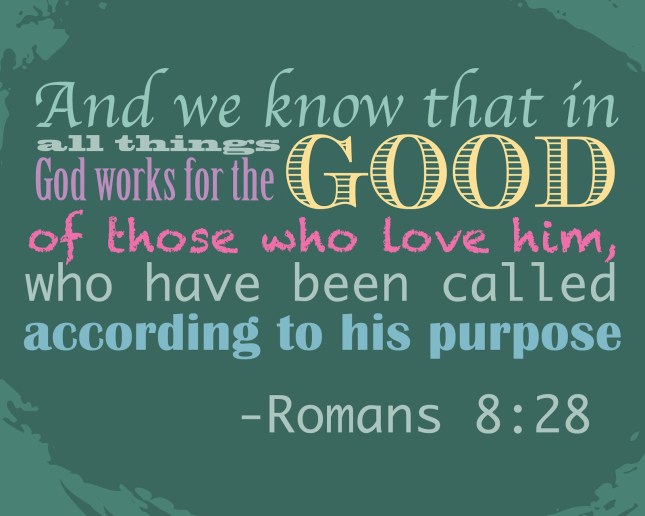
(Romans 8:28 NASB)  And we know that God causes all things to work together for good to those who love God, to those who are called according to His purpose.

The story is told of an airliner which began to develop trouble in mid-air. One engine began to smoke. Over the speaker came the pilot’s reassuring voice informing the passengers of a small problem. One engine had caught fire, but it had been extinguished. With three remaining engines, the plane would easily reach its destination.

Then a second engine failed. Once again, the pilot calmly assured the passengers there was no danger; two engines would suffice. A third engine failed. Now the pilot informed the passengers that it would be necessary to land short of their destination. Finally, the fourth engine failed, and from their windows the passengers saw the plane’s crew in parachutes descending to the earth.

The pilot’s calm and reassuring voice again came over the speaker: “Ladies and gentlemen, we are having a problem with the airplane. We will need to make an emergency landing. The pilot and crew have abandoned the plane and are parachuting to safety. There is no need to panic. The plane is operating on automatic pilot, and everything is under control … control … control …”

There are times in life when things seem to be “out of control.” At those times atheists and agnostics are quite convinced, following our analogy, that the plane has no pilot. If ever there was a pilot, he has bailed out, leaving them to themselves to face threatening dangers.

We who are Christians believe there is a God. When life goes smoothly for us and God’s blessings are evident, we are tempted to believe we are in control. We may even think we do not need God.

When the bottom falls out and the trials of life seem to be swallowing us up so that we seem to lose control, we may still believe that God is in the cockpit.

But we may begin to question whether God is really in control. We may be tempted to think God’s control over creation might be limited and fallible.

When Paul speaks of the spiritual life in Romans 8, he speaks much of suffering. We who are in Christ need not suffer from guilt or fear, for our sins have been forgiven. There is no condemnation for those who are in Christ Jesus (8:1-4).

When we sin as Christians, and deal with it through confession of sins to God, we need never doubt that we are justified by faith because God’s Spirit dwells within us, bearing witness that we are God’s sons.

Further, because the Spirit of God indwells us, He not only leads us to do the will of God, but He empowers us to do so.

Paul turns in verse 28 to yet another truth which should sustain the Christian in the midst of the suffering and groanings of this present life—the sovereignty of God.

Whatever the Christian sees happening, we may be assured that it is not only under God’s control, but its purpose is to produce what is for God’s glory and for our good.

The sovereignty of God has many avenues of application, but here Paul applies it to suffering.

The truth of which Paul speaks is a truth he believes is universally held by all Christians.

We know …” A definite note of certainty is here. Paul wanted to teach the Romans a number of truths, truths which, it would seem, he doubted they knew. Why else would he bother to write this very systematic, theological epistle?

Here the sovereignty of God is something Paul presumes all his readers know.

The sovereignty of God should be a very foundational and fundamental doctrine. It must be a doctrine clearly taught which every Christian should know.

“God Works ” God is in control. He is the One who has done all these things so that they are as good as done, even if their final consummation is yet future. This is why he uses the past and not the present or future tense.

God causes all things to work together

We must be careful to note that God is not the cause of all things. In particular, He is not the cause of sin. God is the Creator. As such, He created the universe, including this earth and all that is in it. God is the originator of many things.

God is the orchestrator and controller of all that takes place in this world. He either causes or allows all things!

While God permits things to happen which displease Him, He does not allow anything to happen which is contrary to His sovereign purpose.

Taken individually, the events and circumstances God allows may not appear to be of any value or good to the Christian. But Paul does not say that each event is good or even that each incident will produce that which is good.

He informs us that all of the events, working together, produce what is good.

To illustrate: the ingredients which go into a cake are not very tasty when eaten individually. Flour, sugar, shortening, eggs, salt, baking powder, and spices are not something we want to eat one ingredient at a time. But mix all of these together in just the right proportions, and then bake the combined mixture, and you have a delicious treat.

Each event in our life is like one ingredient in a cake. It may not seem good, by itself, but when mixed by God with other correct events, it will produce what is good.

Paul speaks here of God’s sovereignty in terms of His choosing and blending of all of our experiences, in such a way as to produce that which is good. God causes all things to “work together” for good.

This means we should not judge the goodness of God’s work until His program is finished.

Until God’s recipe for our lives is complete, we dare not judge God’s cooking. We had best entrust ourselves to Him as the cook, knowing that He always blends the right ingredients, at the right time, in the right way, and in the right proportions.

God controls what He is doing in the life of one believer in such a way as to harmonize with what He is doing in the lives of all the rest. Such a task is beyond human comprehension. It is a task only a God with infinite power can accomplish.

The word “for” is significant. God does not necessarily bring into our lives those things which are, in and of themselves, good. He often allows things in our lives which are painful, which cause us to groan.

To understand and apply this verse, we need to think through four truths:

  1. God has an eternal purpose and He is able to accomplish His purpose.

This truth is foundational to the truth of Romans 8:28. If God doesn’t have a purpose, then He couldn’t work all things according to that purpose.

Or, if He has a purpose, but He’s not able to pull it off, then your trials might be sabotaging His purpose.

God has an eternal purpose that cannot be thwarted.

It’s unthinkable that the Sovereign God created the universe with no purpose or no plan to achieve that purpose. But we don’t need to infer this by logic; the Bible often affirms that God has a purpose that can’t be thwarted.

In the oldest book of the Bible, after all his suffering, Job replies to the Lord (42:2), “I know that You can do all things, and that no purpose of Yours can be thwarted.”

In Isaiah 14:24, with regard to the eventual downfall of Israel’s enemy, Assyria, the prophet states, “The Lord of hosts has sworn saying, ‘Surely, just as I have intended so it has happened, and just as I have planned so it will stand.”

In Ephesians, after stating how God chose us in Christ before the foundation of the world and predestined us to adoption as sons (1:4, 5), Paul adds (1:11), “In Him also we have obtained an inheritance, having been predestined according to His purpose who works all things after the counsel of His will.” (See, also, Eph. 3:11.)

B. Sinful people are not able to thwart or frustrate God’s purpose.

After speaking of God as the almighty Creator, who spoke the universe into existence, the psalmist adds (Ps. 33:10-11), “The Lord nullifies the counsel of the nations; He frustrates the plans of the peoples. The counsel of the Lord stands forever, the plans of His heart from generation to generation.”

So, rather than sinful people frustrating God’s purpose, God frustrates their purpose!

Genesis 37-50 unfolds the moving story of Joseph and his brothers. Their father Jacob favored Joseph, which caused his brothers to hate him. They sold him into slavery in Egypt and lied to their father that a wild beast had killed him.

In the providence of God, Joseph rose from prison to the position of second in command to Pharaoh. In that role, he was able to save his extended family during a long famine.

He later explained to them (Gen. 50:20), “As for you, you meant evil against me, but God meant it for good in order to bring about this present result, to preserve many people alive.”

The New Testament tells of the greatest evil that has ever been committed, when sinful men crucified the sinless Son of God. But did these evil men, acting under Satan’s influence, thwart God’s plan?

In Acts 4:27-28 we read the prayer of the early church when they faced persecution: “For truly in this city there were gathered together against Your holy servant Jesus, whom You anointed, both Herod and Pontius Pilate, along with the Gentiles and the peoples of Israel, to do whatever Your hand and Your purpose predestined to occur.”

The wicked men were responsible for their sin, but their sin fulfilled rather than thwarted God’s plan.

This means that no sinful person can thwart God’s purpose or plan for your life.

  • The sinful mate who left you for another didn’t ruin God’s plan for your life.
  • The drunk driver who killed your loved ones can’t frustrate God’s purpose for their lives or your life.
  • The evil person at work who lied about you and got you wrongfully fired didn’t divert God’s purpose for your life.

Conclusion. What happens may not itself be “good,” but God will make it work to our ultimate good, to meet His ultimate goal for our life.

Suffering will still bring pain, loss, and sorrow, and sin will bring shame. But under God’s control, the eventual outcome will be for our good.

God works behind the scenes, ensuring that even in the middle of mistakes and tragedies, good will result for those who love him.

At times this will happen quickly, often enough to help us trust the principle. But there will also be events whose results for good we will not know until eternity.

Paul knew this from his own experience: “Now I want you to know, brothers, that what has happened to me has really served to advance the gospel” (Philippians 1:12 niv); I will boast all the more gladly about my weaknesses, so that Christ’s power may rest on me. That is why, for Christ’s sake, I delight in weaknesses, in insults, in hardships, in persecutions, in difficulties. For when I am weak, then I am strong” (2 Corinthians 12:9-10 niv).

 
Leave a comment

Posted by on January 29, 2024 in Romans 8


The Benefits of Being Christians #11 “The Appeal of the Divine In Us” Romans 8:26-27


Romans 8:26-27 (ESV) Likewise the Spirit helps us in our weakness. For we do not know what to pray for as we ought, but the Spirit himself intercedes for us with groanings too deep for words. 27  And he who searches hearts knows what is the mind of the Spirit, because the Spirit intercedes for the saints according to the will of God.

These two verses form one of the most important passages on prayer in the whole New Testament. Paul is saying that, because of our weakness, we do not know what to pray for, but the prayers we ought to offer are offered (interpreted) for us by the Holy Spirit.

Paul wants to encourage us, especially when we feel our own weakness, because the Holy Spirit is praying for us. Even though we do not know how to pray as we should, we should be encouraged to keep praying.

Douglas Moo (The Epistle to the Romans [Eerdmans], p. 526) summarizes Paul’s thought in these verses: “Paul is saying … that our failure to know God’s will and consequent inability to petition God specifically and assuredly is met by God’s Spirit, who himself expresses to God those intercessory petitions that perfectly match the will of God. When we do not know what to pray for—yes, even when we pray for things that are not best for us—we need not despair, for we can depend on the Spirit’s ministry of perfect intercession “on our behalf.”

  1. H. Dodd defines prayer in this way: “Prayer is the divine in us appealing to the Divine above us.”

The Holy Spirit helps our infirmities. It is true that He helps us in all our infirmities, but the point of the present passage deals only with prayer.

The Spirit is not going to force us to pray. It is our responsibility to pray: to take the time to get alone and pray. When we do this the Spirit begins to act both upon us and for us.

The Stoic taught that the duty of every man was acceptance. If he accepted the things that God sent him, he knew peace. If he struggled against them, he was uselessly battering his head against the purpose of God.

Knowing that the Holy Spirit tenderly prays for us in our weakness should encourage us to pray.

A sense of our weakness will drive us to pray.

Paul did not set himself on a pedestal as an example of spiritual strength. Rather, he included himself with us as one who was weak.

Sometimes a small pronoun in the Bible can make a lot of difference. Paul did not write, “… the Spirit also helps your weakness,” but rather, “the Spirit also helps our weakness.”

A main reason that we do not pray as frequently or as fervently as we should might be that “we do not recognize/acknowledge how weak we really are.”

If we knew ourselves to be weak, we would constantly be coming to the Lord and crying out for His strength.

Jesus did not say, “Without Me, you can get along with all of the everyday stuff. But when you get hit with something really big, call on Me.”

Rather, He said (John 15:5), “… apart from Me, you can do nothing.”

We tend to look at the spiritual giants in the Bible and think, “Wow, they were so strong!” Look at Elijah! What a guy! He called down fire on his sacrifice and then slaughtered 400 prophets of Baal. Twice he called down fire to consume a commander and fifty armed men who were sent to arrest him. Don’t mess with Elijah!

And yet James (5:17) tells us, “Elijah was a man with a nature like ours, and he prayed ….” Elijah was weak, just like we are. But he prayed to the God who is strong.

Consider Moses. He stood up to the most powerful monarch in the world (Pharoah) by calling down miraculous plagues on him and his kingdom. He parted the Red Sea so that the Israelites could pass through on dry ground and then he brought the sea back over the heads of the pursuing Egyptian army.

He brought water from a rock in the barren desert. At his word, the ground opened up and swallowed alive those who challenged his leadership. He seemed to be a rock of spiritual strength!

And yet in the mournful Psalm 90, he laments the frailty and shortness of life. The psalm ends with his pathetic plea (Ps. 90:17), “Let the favor of the Lord our God be upon us; and confirm for us the work of our hands; yes, confirm the work of our hands.”

I’ve often thought, “If Moses needed to beg God to confirm his labors, how much more do I!” Moses was aware of his own weakness, which is why he prayed.

Look at the Jesus. He alone lived a sinless life on this wicked earth. He boldly confronted the religious leaders without fearing their threats. He overturned their money tables and pronounced woes on their hypocrisy.

If anyone seemed to be strong, it was Jesus. And yet He said (John 5:19), “The Son can do nothing of Himself, unless it is something He sees the Father doing.”

In His humanity, Jesus knew that He must depend on the Father for all things. He is a model for us of praying at all times and for all things (Luke 18:1). Our weakness should cause us to cry out to God in prayer.

Hudson Taylor: “All God’s giants have been weak men who did great things for God because they reckoned on God being with them.”

The next time you’re about to explode, run to Jesus. Every time you feel your weakness and inability, call out to Jesus.

Our weakness extends to our prayer lives.

Part of the weakness that Paul refers to is weakness in prayer: “for we do not know how to pray as we should.”

He is not talking about the method or technique of praying, but rather the content.

Paul wrestled with the same thing in Philippians 1:22-24, where he couldn’t decide whether to pray that the Lord would take him home, which was Paul’s desire, or preserve his life for further ministry.

Moses entreated the Lord to let him enter the Promised Land, but that was not God’s will (Deut. 3:25-26).

Elijah, man of prayer that he was, asked the Lord to take his life (1 Kings 19:4).

Jesus, in His humanity, prayed that if possible, the Father might allow Him to escape from the cross, if it would be God’s will (Matt. 26:36-46).

The point is, we’re all weak in many areas, including prayer. We often don’t know how to pray as we should. But, thankfully, God doesn’t leave us to ourselves:

We saw in our study of the Holy Spirit a few weeks back on Wednesday, that the Holy Spirit is a person, the third member of the Godhead.

The Holy Spirit is not an impersonal force. He helps us in our weakness by praying for us, which an impersonal force cannot do.

God is one God who exists eternally as three distinct persons, the Father, the Son, and the Holy Spirit (Deut. 6:4; James 2:19; Matt. 28:19).

The fact that the Spirit prays for us shows that He is distinct from the Father, to whom He prays.

Also, the Father knows perfectly the mind of the Spirit and the Spirit prays perfectly in accord with the will of the Father.

The Holy Spirit indwells everyone who belongs to Jesus Christ (Rom. 8:9). And so His ministry of prayer comes from within us, while Jesus’ ministry of intercession (8:34) takes place at the right hand of the Father.

The Holy Spirit helps us.

The word used for “helps” occurs only here and in one other place in the New Testament. The meaning is, someone is carrying a heavy load and another person comes alongside to take the other end and bear the burden with him.

The other use of “help” is in Luke 10:40, where Jesus is in the home of Mary and Martha. Mary was sitting at Jesus’ feet, but Martha was distracted with all her preparations. Finally, she burst out, “Lord, do You not care that my sister has left me to do all the serving alone? Then tell her to help me.” She wanted her sister to help bear the burden of preparing and serving the meal.

The word implies that the Holy Spirit doesn’t do everything, while we sit back and do nothing.

Rather, we are to keep praying and, if appropriate, keep working or obeying or whatever the Bible may tell us to do about our situation.

But as we pray, the Spirit says, “Let Me grab the other end. Let me help you by picking up your burden and taking it before the Father’s throne.

“I know what to pray for when you don’t.” The Holy Spirit helps us by interceding for us on an emotional level. “The Spirit Himself intercedes for us with groanings too deep for words.”

What does this mean? We don’t have anything to compare it with, since this is the only reference to such a thing in Scripture.

As you can predict, there are differing views of what this phrase means.

My understanding is that the Spirit’s groaning on our behalf is an anthropomorphism, which is to attribute human emotions to God.

Paul pictures the Holy Spirit taking up our needs at the deepest emotional level and conveys our hurts and cares to the Father’s throne, all in line with the will of God. This should encourage us to pour out our hearts before Him (Ps. 62:8).

The Holy Spirit helps us by interceding for us according to the will of God.

If the Father understands all human hearts, then He must know the unspoken groans of the Holy Spirit on our behalf. The Spirit takes our deepest feelings and unexpressed needs to the Father, who understands everything perfectly. Nothing leaves God scratching His head, wondering what our real needs are. Pour out your heart honestly to Him.

The Holy Spirit’s prayers for us are always according to God’s will and thus are always answered.

The last phrase of 8:27 seems to say that the Holy Spirit makes corrections for any misdirected prayers that we make by praying for us according to the will of God.

The last phrase of 8:27 seems to say that the Holy Spirit makes corrections (“interprets”) any misdirected prayers that we make by praying for us according to the will of God.

Part of our weakness in prayer is that we’re not able to know God’s sovereign will, in the sense of His decree, until after it has happened.

But there is a mystery here that we cannot fully understand.

Samson’s parents rightly exhorted him not to marry a Philistine woman. But they did not know that God wanted to use Samson’s wrong desires to bring judgment on the Philistines (Judges 14:1-4).

Jeremiah was right to pray that God would spare His people from the Babylonians for His name’s sake. But God’s sovereign will in that situation was to judge them (Jer. 14:19-15:2).

Satan demanded permission to sift Peter like wheat by tempting him to deny Christ. If I had heard that demand, I would have prayed that God would keep Peter from sinning.

But Jesus, who knew the will of God perfectly, did not pray that Peter would not sin, but rather that his faith would not totally fail and that after he was restored, he would strengthen his brothers (Luke 22:31-32).

The believer never need faint in times of suffering and trial because he knows that God is at work in the world (Rom. 8:28), and that He has a perfect plan (Rom. 8:29).

Best of all, God’s plan is going to succeed! (more next week)

There are two very obvious reasons why we cannot pray as we ought. First, we cannot pray aright because we cannot foresee the future.

We cannot see a year or even an hour ahead; and we may well pray, therefore, to be saved from things which are for our good and we may pray for things which would be to our ultimate harm.

In the last analysis the perfect prayer is simply, “Father, into Thy hands I commend my spirit. Not my will, but Thine be done.”

Second, we cannot pray because in any given situation we do not know what is best for us.

We are often in the position of a child who wants something which would be bound only to hurt him; and God is often in the position of a parent who has to refuse his child’s request or compel him to do something he does not want to do, because he knows what is to the child’s good far better than the child himself.

We cannot know our own real need; we cannot with our finite minds grasp God’s plan; in the last analysis all that we can bring to God is an inarticulate sigh which the Spirit will translate to God for us.

So while there are difficult details in these verses, the bottom line is pretty clear: We should be encouraged to pray.

If you are praying unknowingly for something that is not His will, you can trust that the Spirit will take your prayers and line them up with God’s perfect will.

He has ordained prayer as the means through which we cooperate with Him in bringing about His sovereign will.

 
Leave a comment

Posted by on January 25, 2024 in Romans 8


The Benefits of Being Christians #10b The Power of Hope


Hope is a dynamic power that enables one to do almost unbelievable things. I am thinking of hope as a part of life, not just as religious hope.

Many years ago the pilgrims came across the North Atlantic; they battled the storms of winter in those little ships. They made the journey and settled into this new land. Why did they brave those storms? Why did they risk their lives to come to the new land? It was because of hope for a better life in the new world.

In the early days of our country the pioneers moved westward. They crossed mountains, rivers, and plains. They suffered hardship. Many of them died. Many others reached their objective of arriving in the West. Why did they make those journeys? It was because of hope. They hoped that beyond those mountains, beyond the rivers, beyond the plains they would find a great meaning to their lives.

The same is still true today. A person is sick. Perhaps he may be hospitalized. He may have to undergo surgery. One of the great healing elements in his life will be his hope of getting better. I believe it goes without contradiction that sometimes sick people do not get well when they are sick because they give up hope. When they give up, they cannot win the victory.

As we saw last week, in Romans 8, Paul speaks of hope in the context of the problems of human suffering. In verse 17 he said, “We are heirs of God and joint heirs with Christ if we suffer with Him.”

Paul is focusing attention upon the world as it is, a fallen world, a world into which sin has come. As a result of the fall, as a result of sin, there is sickness, heartache, disappointment, and death in this world.

Basically, suffering is in the world because the world has fallen. How is the man in Christ to deal with the world as it is? His disappointments? His physical pain and mental anguish? Death? Paul’s word is “hope.”

Notice what Paul says in verse 18: “For I consider that the sufferings of this present time are not worthy to be compared with the glory that is to be revealed to us.” God has something better for His people than the suffering and heartache of this world. That something in the future is the object of the Christian’s hope. But no sooner does Paul refer to the sufferings of this present time than he begins to mention what he calls the “whole creation.” Notice what he says:

For the anxious longing of the creation waits eagerly for the revealing of the sons of God. For the creation was subjected to futility, not of its own will, but because of Him who subjected it, in hope that the creation itself also will be set free from its slavery to corruption into the freedom of the glory of the children of God. For We know that the whole creation groans and suffers the pain of childbirth together until now (8:19-22).

He is talking about every creature that makes up the human family. His point is that everyone, regardless of who he is, longs for a better life in another world. Everyone has some concept of life beyond this life. The Indians in the earlier days of our country had their happy hunting grounds in their thoughts. Man longs for a better tomorrow. Paul says that every man is groaning under the sufferings that the world brings and wants to be released from that suffering. How- ever, Paul’s major point has to do with the Chris- tian and his hope. The man who is out of Christ does not live in hope. If he has a hope, it is a false hope because the hope of a better tomorrow belongs only to those who are in Christ.

THE OBJECT OF HOPE

Paul continues in 8:23: “And not only this, but also we ourselves, having the first fruits of the Spirit, even we ourselves groan within ourselves, waiting eagerly for our adoption as sons, the redemption of our body.” The whole family of man longs for a better tomorrow, but those who are in Christ know best of all that a better tomorrow is coming. We know it because we have the assurance of God Himself. The object of what we are looking forward to is the “redemption of our body.” Paul is referring to the resurrection from the dead.

I believe in a bodily resurrection. Why? Because the Bible teaches the resurrection of the body;  because  Jesus  Christ  Himself  has  been raised. First Corinthians 15:22 says, “For as in Adam all die, so also in Christ all shall be made alive.” All are going to be raised from the dead. The beautiful concept for the Christian is that those who are in Christ are to enjoy the final adoption, the redemption of the body. First Co-rinthians 15 is the great chapter on the bodily resurrection of the dead. In that chapter Paul shows that at some point this mortal will put on immortality, this corruptible shall put on incorruption. When this mortal shall put on immortality, then shall be brought to pass the saying, “Death is swallowed up in victory.” Did you know that those who are in Christ will win the ultimate victory even over death? Death is not the end; it is only a stage in the Christian’s existence. He does not face death by himself. God will be with His children even in death and bring them safely through death to the other side.

What assurance do we have that we will be raised? We could say that our assurance is the promise of God; we could say our assurance is the fact that Christ has been raised. But in this context what is the assurance? Did you notice that in verse 23 Paul spoke of the first fruits of the Spirit? The Spirit of God is given to those who are obedient to God (Romans 5-8). Paul has pre- viously emphasized the concept of God’s Spirit being spread abroad in the hearts of those who are in Christ. Acts 5:32 says, “. . . so is the Holy Spirit, whom God has given to those who obey Him.” The first fruit is the giving of the Spirit to the Christian. The first fruit is the promise of an additional harvest that will come later. The addi- tional harvest is the resurrection of the body. Our assurance is the Spirit, “the first fruits of the Spirit.” God’s Spirit is a down payment on blessings to be received in the future.

III. THE NATURE OF HOPE

What is hope? There are two elements in hope. One is desire; the other is expectation. A person can desire something and never achieve it. He can expect something that he does not desire. When he has hope he has both desire and expectation. The desire and expectation of the Christian is that there will be a resurrection of the body in an eternal dwelling place with God. He desires it and expects it because God has promised it.

IV. THE RECIPIENTS OF HOPE. Who has hope? Who has hope for the future; who  has  hope  for  being  raised,  exalted,  and glorified with God? The man out of Christ does not. Ephesians 2:12 speaks of those who live without Christ, as living without hope. That is one of the saddest thoughts that can ever enter our minds. No hope. Out of Christ. Christians who take their commitment to Christ lightly and never commit their lives to Jesus have no hope. The church at Laodicea in Revelation 3 was about to be spewed out of the mouth of Christ. Simply being a church member does not mean a person has hope. Who has hope? In Colossians 1:27 Paul said, “Christ in you, the hope of glory.” The Christian is in Christ. Romans 6 says he was baptized and that act put him into Christ (6:3).

He has entered into Christ. Not only is the Christian in Christ, but Christ is in him. Christ’s light is being reproduced in the life of a Christian. The Christian is seeking to think, talk, and act like Christ. As Christ is formed in the Christian, it is “Christ in you, the hope of glory.”

You can have that hope. But if you have hope it will be because you made the effort to enter into Christ and are daily developing into His image. It is a great concept. Those in Christ have hope for the future. Let us probe this term to see what it means to us, what its real significance is, and how it is attached to being in Christ. In verse 19 he uses a wonderful word for eager expectation. It is apokaradokia and it describes the attitude of a man who scans the horizon with head thrust forward, eagerly searching the distance for the first signs of the dawn break of glory.

To Paul life was not a weary, defeated waiting; it was a throbbing, vivid expectation. The Christian is involved in the human situation. Within he must battle with his own evil human nature; without he must live in a world of death and decay. Nonetheless, the Christian does not live only in the world; he also lives in Christ. He does not see only the world; he looks beyond it to God. He does not see only the consequences of man’s sin; he sees the power of God’s mercy and love. Therefore, the keynote of the Christian life is always hope and never despair. The Christian waits, not for death, but for life. The Christian, a new person in Christ, has a new hope: “a living hope through the resurrection of Jesus Christ from the dead” (1 Pt. 1:3-9).

HOPE’S NATURE: WHAT IS IT? Hope is the expectation of something desired. Hope = desire + expectation. Hope is always the expectation of something good — in contrast to fear, which is the dreaded expectation of something bad. Hope is always oriented toward the future – Rom. 8:24,25; Hb. 11:1. It is waiting with:

Joy – Rom. 12:12.

Confidence – 2 Cor. 5:6-8; 2 Thess. 2:16,17.

Patience – Rom. 8:25; 1 Thess. 1:3.

Discipline – Hb. 10:23; 1 Pt. 1:13.

(1 Corinthians 15:14 NNAS) “and if Christ has not been raised, then our preaching is vain, your faith also is vain.”

(1 Corinthians 15:17-19 NNAS) “and if Christ has not been raised, your faith is worthless; you are still in your sins. {18} Then those also who have fallen asleep in Christ have perished. {19} If we have hoped in Christ in this life only, we are of all men most to be pitied.” Critics have attempted to portray Christian hope as groundless naivete, blind optimism, silly Pollyanna-ism, etc. F. W. Nietzsche said, “Hope is the worst of evils, for it prolongs the torment of man.”

(Hebrews 12:1-2 NIV) “Therefore, since we are surrounded by such a great cloud of witnesses, let us throw off everything that hinders and the sin that so easily entangles, and let us run with perseverance the race marked out for us. {2} Let us fix our eyes on Jesus, the author and perfecter of our faith, who for the joy set before him endured the cross, scorning its shame, and sat down at the right hand of the throne of God.”

“Everyone needs long-range goals, if for no other reason than to keep from being frustrated by short-range failures.” “The hopeful man sees success where others see failure, sunshine where others see shadows and storm” (O. S. Marden). “Of all the forces that make for a better world, none is so indispensable, none so powerful, as hope. Without hope men are only half alive. With hope they dream and think and work” (Charles Sawyer).

Conclusion. Hope may be one of the most conspicuous blessings of Christianity, a thing other people notice and ask about: “But sanctify the Lord God in your hearts, and always be ready to give a defense to everyone who asks you a reason for the hope that is in you, with meekness and fear” (1 Pt. 3:15). Hope is a central theme of the gospel(Acts 23:6 NIV) “Then Paul, knowing that some of them were Sadducees and the others Pharisees, called out in the Sanhedrin, “My brothers, I am a Pharisee, the son of a Pharisee. I stand on trial because of my hope in the resurrection of the dead.””

(Acts 24:14-15 NIV) “However, I admit that I worship the God of our fathers as a follower of the Way, which they call a sect. I believe everything that agrees with the Law and that is written in the Prophets, {15} and I have the same hope in God as these men, that there will be a resurrection of both the righteous and the wicked.”

(Acts 26:6-7 NIV) “And now it is because of my hope in what God has promised our fathers that I am on trial today. {7} This is the promise our twelve tribes are hoping to see fulfilled as they earnestly serve God day and night. O king, it is because of this hope that the Jews are accusing me.”

[1] John White, The Cost of Commit­ment, p. 4.

 
Leave a comment

Posted by on January 22, 2024 in Romans 8


The Benefits of Being Christians #10 “The Christian’s Hope” – Romans 8:25


What is hope? Is it a wishy washy maybe or a kind of unsure optimism? The modern idea of hope is “to wish for, to expect, but without certainty of the fulfillment; to desire very much, but with no real assurance of getting your desire.”

In Scripture, according to the Hebrew and Greek words translated by the word “hope” and according to the biblical usage, hope is an indication of certainty. “Hope” in Scripture means “a strong and confident expectation.” Though archaic today in modern terms, hope is akin to trust and a confident expectation.

Hope may refer to the activity of hoping, or to the object hoped for—the content of one’s hope. By its very nature, hope stresses two things: (a) futurity, and (b) invisibility. It deals with things we can’t see or haven’t received or both .

Romans 8:24-25  For in hope we have been saved, but hope that is seen is not hope; for why does one also hope for what he sees? 25 But if we hope for what we do not see, with perseverance we wait eagerly for it.

Biblically, from the standpoint of the object hoped for, hope is synonymous with salvation and its many blessings, past, present, and future, as promised in Scripture. This is true even with what we have al­ready received as believers because these blessings come under the category of what we cannot see. We may see some of the results, but it still requires faith and hope. For example, we do not see the justifying work of God, the imputation of Christ’s righteousness to our account, nor do we see the indwelling of the Holy Spirit when we are saved, nor our co-union with Christ. We believe this to be a reality, but this is a matter of our hope. We believe in the testimony of God in the Word and hope for the results in our lives.

In summary, hope is the confident expectation, the sure cer­tainty that what God has promised in the Word is true, has occurred, and or will in accordance with God’s sure Word.

A Description of Hope: It is Dynamic or Active

In the Bible, hope is never a static or passive thing. It is dynamic, active, directive and life sustaining. This is everywhere obvious as we read the Word. Take a concordance, look up the word “hope” and you will find reference after reference pointing out the active results of hope in the lives of those who truly have a biblical hope and live accordingly.

In other words, a biblical hope is not an escape from reality or from problems. It doesn’t leave us idle, drifting or just rocking on the front porch. If our hope is biblical and based on God’s promises, it will put us in gear.

It has Results

(1) It changes how we see ourselves. It changes us into pilgrim persons, people who see this life as temporary sojourn.

2 Peter 1:13 And I consider it right, as long as I am in this earthly dwelling, to stir you up by way of reminder,

1 Peter 2:11 Beloved, I urge you as aliens and strangers to abstain from fleshly lusts, which wage war against the soul.

(2) It changes what we value. Hope, if biblical, makes us heavenly minded rather than earthly minded. Our Lord’s words here blast our deception away.

Matthew 6:19-21 Do not lay up for yourselves treasures upon earth, where moth and rust destroy, and where thieves break in and steal. 20 “But lay up for yourselves treasures in heaven, where neither moth nor rust destroys, and where thieves do not break in or steal; 21 for where your treasure is, there will your heart be also.

(3) It affects what we do with our lives—our talents, time, treasures.

Titus 2:1-13  But as for you, speak the things which are fitting for sound doctrine. 2 Older men are to be temperate, dignified, sensible, sound in faith, in love, in perseverance. 3 Older women likewise are to be reverent in their behavior, not malicious gossips, nor enslaved to much wine, teaching what is good, 4 that they may encourage the young women to love their husbands, to love their children, 5 to be sensible, pure, workers at home, kind, being subject to their own husbands, that the word of God may not be dishonored. 6 Likewise urge the young men to be sensible; 7 in all things show yourself to be an example of good deeds, with purity in doctrine, dignified, 8 sound in speech which is beyond reproach, in order that the opponent may be put to shame, having nothing bad to say about us. 9 Urge bondslaves to be subject to their own masters in everything, to be well-pleasing, not argumentative, 10 not pilfering, but showing all good faith that they may adorn the doctrine of God our Savior in every respect. 11 For the grace of God has appeared, bringing salvation to all men, 12 instructing us to deny ungodliness and worldly desires and to live sensibly, righteously and godly in the present age, 13 looking for the blessed hope and the appearing of the glory of our great God and Savior, Christ Jesus;

1 John 3:1-3  See how great a love the Father has bestowed upon us, that we should be called children of God; and such we are. For this reason the world does not know us, because it did not know Him. 2 Beloved, now we are children of God, and it has not appeared as yet what we shall be. We know that, when He appears, we shall be like Him, because we shall see Him just as He is. 3 And everyone who has this hope fixed on Him purifies himself, just as He is pure.

The Christian life, if it is grasped according to God’s truth, is a magnificent obsession with an eternal hope, a hope that does not lead to an escapist attitude, but to the pursuit of life on a whole new dimension. It makes you bullish, as we might say today, on the potentials of this life as stewards of God. It gives us power to live courage­ously, to be all God has called us to be in Christ.

So then, why are we so quick to opt for earthly treasure and so slow to be obsessed with the heavenly? Perhaps it is because we do not believe in heavenly realities. They repre­sent a celestial cliche in our minds, but no more.[1] You see, it is the person who believes in this heaven­ly hope and who is so fixed on it, in the words of Peter, that he or she is able to have such a light grip on the things of this world that he or she is able to put first things first.

In other words, a biblical hope is never an escape from reality or from problems. It doesn’t leave us idle, drifting or just rocking on the front porch. If our hope is biblical and not just a heavenly cliche or like the sign, “in case of emergency, break glass,” it will put us in gear. But, being dynamic, hope also has something else:

It has Rewards and Blessings

(1) It gives us joy and peace.

Romans 15:13 Now may the God of hope fill you with all joy and peace in believing, that you may abound in hope by the power of the Holy Spirit.

Romans 5:2 through whom also we have obtained our introduction by faith into this grace in which we stand; and we exult in hope of the glory of God.

(2) It gives us protection.

Psalm 33:18 Behold, the eye of the LORD is on those who fear Him, On those who hope for His lovingkindness,

(3) It gives us strength, courage, boldness.

Psalm 31:24 Be strong, and let your heart take courage, All you who hope in the LORD.

(4) It gives us endurance, comfort, con­fidence in the face of death.

1 Thessalonians 4:13 But we do not want you to be uninformed, brethren, about those who are asleep, that you may not grieve, as do the rest who have no hope.

(5) It gives us confidence in ministry.

1 Timothy 4:10  For it is for this we labor and strive, because we have fixed our hope on the living God, who is the Savior of all men, especially of believers.

The Derivation (Origin) of Hope. Where and How Do We Get Hope? Negative–warnings regarding false hope

There are a number of warnings in Scrip­ture against putting our hope in anything other than the Lord because these things will leave us ashamed, frustrated, disappointed, and in ruin.

Job 8:11-15 11 Can the papyrus grow up without marsh? Can the rushes grow without water? 12 While it is still green and not cut down, Yet it withers before any other plant. 13 So are the paths of all who forget God, And the hope of the godless will perish, 14 Whose confidence is fragile, And whose trust a spider’s web. 15 He trusts in his house, but it does not stand; He holds fast to it, but it does not endure.

Psalm 33:17 A horse is a false hope for victory; Nor does it deliver anyone by its great strength. Point: deliverance must come from the Lord.

Psalm 146:5 How blessed is he whose help is the God of Jacob, Whose hope is in the LORD his God; i.e., rather than man.

Proverbs 10:28 The hope of the righteous is gladness, But the expectation of the wicked perishes.

Proverbs 11:7 When a wicked man dies, his expectation will perish, And the hope of strong men perishes. The strong man hopes in his physical strength, his money, or power or position, but ultimately, it must perish.

Proverbs 24:14 Know that wisdom is thus for your soul; If you find it then there will be a future, And your hope will not be cut off. Without God’s wisdom which gives god’s hope, your hope will be in the wrong thing and it will be cut off.

Positive–the means and basis of the only true hope

God is called “the God of Hope.” This means He is the source of all real hope. If we are going to have hope (confident expectation), it must come from Him for He alone has the power to give it.

Psalm 62:5 My soul, wait in silence for God only, For my hope is from Him.

Romans 15:13 Now may the God of hope fill you with all joy and peace in believing, that you may abound in hope by the power of the Holy Spirit.

Psalm 62:5 My soul, wait in silence for God only, For my hope is from Him.

If you are without Christ, you are without God and without hope.

Ephesians 2:12 …remember that you were at that time separate from Christ, excluded from the commonwealth of Israel, and strangers to the covenants of promise, having no hope and without God in the world.

1 Timothy 1:1-2 Paul, an apostle of Christ Jesus according to the commandment of God our Savior, and of Christ Jesus, who is our hope; 2 to Timothy, my true child in the faith: Grace, mercy and peace from God the Father and Christ Jesus our Lord.

(1) Hope depends on knowing the Word of God.

Romans 15:4 For whatever was written in earlier times was written for our instruction, that through perseverance and the encouragement of the Scriptures we might have hope.

Colossians 1:5-6 because of the hope laid up for you in heaven, of which you previously heard in the word of truth, the gospel, 6 which has come to you, just as in all the world also it is constantly bearing fruit and increasing, even as it has been doing in you also since the day you heard of it and understood the grace of God in truth;

(2) Hope depends on knowing and resting in God’s Grace.

2 Thessalonians 2:16 Now may our Lord Jesus Christ Himself and God our Father, who has loved us and given us eternal comfort and good hope by grace,

(3) Hope depends on the Spirit Filled life.

Romans 15:13 Now may the God of hope fill you with all joy and peace in believing, that you may abound in hope by the power of the Holy Spirit.

1 Peter 1:13  Therefore, gird your minds for action, keep sober in spirit, fix your hope completely on the grace to be brought to you at the revelation of Jesus Christ.

Friends, on what have you fixed your hope? Does your life prove it? Has it changed who you are, what you value, and what you are doing with your life?

In Romans 8:18-25, Paul brings us to another great blessing of being in Jesus Christ. He mentions one of the most important words in the religion of Jesus Christ. It is a life changing word when it is a part of life. In Christ we have hope. Paul says, “We are saved by hope.” Hope has something to do with our salvation.


Leave a comment

Posted by on January 18, 2024 in Romans 8


The Benefits of Being Christians #9 Present Suffering, Future Glory – Romans 8:17b-25


“Dad, I saw on the news a bad flood that killed a lot of people. Why are there floods and earthquakes and hurricanes and tornadoes? Why are there famines where people starve to death?”

“Mom, why did my friend at school get cancer and die? Why did Grandma get sick and die?”

“Granddaddy, why do people set off bombs to blow up other people? Why do people do bad things to hurt each other?”

Maybe your children or grandchildren have asked you questions like these. Probably you’ve wrestled with them yourself.

Some become agnostics or even atheists because they cannot come up with satisfactory answers to the question of how a loving, all-powerful God can allow the terrible suffering that is in the world.

Since none of us are exempt from suffering and death, it’s important that we understand what the Bible teaches on this difficult topic. (Will spend some time on this subject in an extended way beginning next week in our Sunday am class…using C.S. Lewis’ title The Problem of Pain).

Job, one of the oldest book on the Bible, is devoted to this problem. And in our text, Paul gives part of the biblical perspective that we need to persevere through the suffering that we surely will encounter.

At the outset, make no mistake: there is a price to be paid for being identified with Jesus. Along with the great treasures, Paul mentions the suffering that Christians must face.

What kinds of suffering are we to endure? For first-century believers, there was economic, social, and physical persecution; some even faced death.

In many parts of the world today, believers face pressures just as severe as those faced by Christ’s first followers.

Even in countries where Christianity is tolerated or encouraged, Christians must not become complacent.

To live as Jesus did—serving others, giving up one’s own rights, resisting pressures to conform to the world—always exacts a price. Nothing we suffer, however, can compare to the great price that Jesus paid to save us.

What does it mean to be a Christian—to think like a Christian—to act like a Christian?

Paul’s words recorded in Romans 8:18-27 strip away the artificial and superficial views of the Christian life, leaving us with the core of what it means to live in this present world as a Christian.

Romans 8:17 (ESV)  17 and if children, then heirs—heirs of God and fellow heirs with Christ, provided we suffer with him in order that we may also be glorified with him.  

Romans 8:18 (ESV) For I consider that the sufferings of this present time are not worth comparing with the glory that is to be revealed to us.

The present suffering is temporary, while the future glory is eternal. Paul had written to the Corinthians, “For our light and momentary troubles are achieving for us an eternal glory that far outweighs them all” (2 Corinthians 4:17 niv).

Suffering is part of the process of sharing in Christ’s death; it will culminate in sharing His glory. If glory is the majesty of God, his character seen for all that it truly is, then his glory . . . revealed in us will occur when we suddenly become exactly what God has intended us to be.

19 For the creation waits with eager longing for the revealing of the sons of God.

8:19 The creation. Human beings and the rest of creation presently face suffering, and both will be glorified in the future. When Adam sinned, God sentenced all of creation: “Cursed is the ground because of you” (Genesis 3:17 nrsv). Since then, the world has suffered decay and pollution, largely because people have forgotten or ignored their responsibilities as stewards of the earth.

Waits with eager longing.NRSV This form of the Greek verb for this phrase is used seven times in the New Testament. Each time it is used in connection with the believers’ anticipation of Christ’s return  (Romans 8:19, 23, 25; 1 Corinthians 1:7; Galatians 5:5; Philippians 3:20; Hebrews 9:28).

Here it is used in connection with creation awaiting that day. In the meantime, the created order functions in spite of its flaws. But diseases, deformities, and suffering constantly remind us that all is not right with us or with the world.

For the revealing of the sons of God.NKJV This will occur at the second coming of Christ when he returns for his people. We will share in his glory (8:18) and receive our complete redemption (8:23). The entire universe is looking forward to the conclusion of God’s plan.

People are the largest group of holdouts in anticipating that time. It is humbling to realize that as creatures developing an eager expectation for Christ’s return, we humans are the last to respond.

20 For the creation was subjected to futility, not willingly, but because of him who subjected it, in hope 21 that the creation itself will be set free from its bondage to corruption and obtain the freedom of the glory of the children of God.

When Adam sinned, God decreed that all of creation would be subjected to frustration; that is, to futility, change, and decay. Creation is frustrated because it is unable to attain the purposes for which it was made.

The original sense of perfect order in the world was marred by sin; therefore, fallen people had to live in a fallen world. This was not by its own choice because it was God’s doing and part of his plan of salvation.

In hope that the creation itself will be liberated from its bondage.NIV The word for hope indicates anticipating a future event. Eventually this frustration will end and creation will be brought into the glorious freedom of the children of GodNIV—freedom from sin, evil, decay, and death.

Adam and Eve’s act of rebellion affected the entire world. It has taken many centuries to realize the inter-relatedness of this global village, but the Bible begins with that assumption. Having the same Creator links us with the rest of the created order.

Making creation a god is only worshiping a power that is finite and destructible. We have been charged to care for the world, and to worship her Creator.

22 For we know that the whole creation has been groaning together in the pains of childbirth until now.

Paul pictures the fallen earth in pain. Consider earthquakes, floods, fire, drought, famine—these are surely not what creation was meant to be, but sin and evil now rule.

Just as the pains of childbirth end at the birth of the child, so the groaning and pain of the creation will end at the birth of the new earth. This groaning is not impatient, but “eager” (8:23).

It is not the groaning of hopelessness, but the sound of total concentration on a painful, but hopeful conclusion. It is not the despairing cry of the hopeless, but the eager longing of the hopeful. Before the glory is revealed there is a time of groaning.

We long for the full redemption of our bodies in the resurrection. In this process we are not alone, for the Holy Spirit groans with us, expressing our unutterable longing to God. But until the time of our release and redemption, we must groan, wait and hope.

Two observations before we move on: First, this text assumes that God is the creator of all that is. It did not evolve by chance or random mutations over billions of years.

Second, even though the creation is fallen, it still bears witness to the majesty and glory of the Creator. David marveled (Ps. 19:1), “The heavens are telling of the glory of God; and their expanse is declaring the work of His hands.”

23 And not only the creation, but we ourselves, who have the firstfruits of the Spirit, groan inwardly as we wait eagerly for adoption as sons, the redemption of our bodies.

This verse returns to the train of thought Paul began in verse 18, the present sufferings of believers. We know that God will fulfill his promises of future glory because of the witness of the Holy Spirit within us.

The Holy Spirit is like the first fruits of a farmer’s harvest—a guarantee of more to come. Paul described the Holy Spirit as “a deposit guaranteeing our inheritance until the redemption of those who are God’s possession” (Ephesians 1:14 niv).

To creation’s groaning is now added ours. Like creation, we have the promises but lack the final realization of glory. Our sufferings cause us to groan inwardly; God’s promises cause us to wait eagerly.

Although we have already received adoption into God’s family (8:15), we are still awaiting our completed adoption, identified here as redemption (see also 8:19, 21).

This will occur when Christ returns, when our bodies will be transformed, and we will live with him forever (see 1 Corinthians 15:42-54; 2 Corinthians 5:1-5; 1 Thessalonians 4:13-18).

24 For in this hope we were saved. Now hope that is seen is not hope. For who hopes for what he sees? 25 But if we hope for what we do not see, we wait for it with patience.

When we put our faith in Christ as Savior, we receive this hope: that we will be redeemed. Paul wrote of this assurance in other letters: “By faith we eagerly await through the Spirit the righteousness for which we hope” (Galatians 5:5 niv); and “Christ in you, the hope of glory” (Colossians 1:27). We already have the presence of the Holy Spirit, who is unseen, but we must eagerly wait for our new bodies, that are also unseen.

Hope that is seen is no hope at all. Who hopes for what he already has?NIV Our full redemption has not yet happened; it will happen when Christ returns. That is why it is still a hope for believers.

CAN’T WAIT!
We keep looking in confidence for what we cannot see. Our eager anticipation is like that of the person who drives all night and eagerly looks forward to the sunrise, when the mist and darkness will be driven away. He knows it will happen and can’t wait. His assurance of it carries him on. We look forward to:
·         Our new bodies.
·         The new heaven and the new earth. Rest and the rewards of service.
·         Our eternal family and home.
·         The absence of sin and suffering.
·         Being face to face with Jesus Christ.

It’s important to think biblically about suffering because when it clobbers you or those you love, you will be engulfed by a wave of powerful emotions.

I’m not suggesting that you should suppress or deny your emotions, but I am saying that you need to process them through the grid of biblical truth, so that you are not devastated by your trials.

Paul wants us to think about four things: First, our present sufferings are relatively short compared to our eternal sharing in the glory of God.

Second, the weight of our present trials is like a feather on the scale, which can’t compare with the tons of gold of the glory that will be revealed to us.

He expresses the same thought in 2 Corinthians 4:16-18, Therefore we do not lose heart, but though our outer man is decaying, yet our inner man is being renewed day by day. For momentary, light affliction is producing for us an eternal weight of glory far beyond all comparison, while we look not at the things which are seen, but at the things which are not seen; for the things which are seen are temporal, but the things which are not seen are eternal.

A third thing to think about to endure present, temporary suffering for future glory is that our future glory with God is absolutely certain.

God has promised it and He cannot lie. Christ promised to return in power and glory to bring final redemption to His people and to judge His enemies. Either He was mistaken or it is our certain future.

And in the rest of the chapter Paul unfolds a fourth reason that we need to think biblically about suffering, namely, that God is using it to conform us to the image of Christ. Not even torture or martyrdom can separate us from His great love (8:35-39).

Often people observe the terrible suffering in the world and doubt God’s love or His power. The argument is especially emotional when we consider little children suffering physical or sexual abuse or the horrible effects of war or natural disasters.

If you say, “That’s not fair,” you’re on dangerous ground, to accuse the Sovereign God of being unfair! And you’re arrogantly implying that you would have done better than Adam did, so you don’t deserve to be penalized for his sin.

So you’d best not accuse God of being unfair for imposing suffering on the human race because of sin.

But the fact of terrible suffering does not undermine the fact that God has a plan and that He will accomplish His plan.

The future glory is not totally revealed to us yet, but it includes the revealing of all that God has promised for us.

  1. B. Phillips 8:19, “The whole creation is on tiptoe to see the wonderful sight of the sons of God coming into their own.”

The future glory includes the full renewal of creation to its original perfection and purpose.

The future glory is guaranteed by our present possession of the Holy Spirit, the first fruits of our redemption.

The indwelling Holy Spirit gives us a taste of what it will be like to be holy, as Jesus is holy.

The Holy Spirit is the promise that God will not abandon us to our sin. He’s the down payment that signals that God will complete the purchase.

Keep your eyes on the future promised glory and you will persevere in present sufferings with hope.

Paul anticipates us thinking, “But, I can’t see this future glory.” His reply is, “Yes, that’s the very nature of hope.” If you can see it all, then it’s not hope.

Our salvation includes hope because we don’t receive it all in this life.

But we hope for it because we have not yet received all that has been promised. So Paul concludes (8:25), “But if we hope for what we do not see, with perseverance we wait eagerly for it.”

 
Leave a comment

Posted by on January 15, 2024 in Romans 8


The Benefits of Being Christians #8 Adopted Heirs of God – Romans 8:12-17a


12  So then, brothers, we are debtors, not to the flesh, to live according to the flesh.13  For if you live according to the flesh you will die, but if by the Spirit you put to death the deeds of the body, you will live.14  For all who are led by the Spirit of God are sons of God. 15  For you did not receive the spirit of slavery to fall back into fear, but you have received the Spirit of adoption as sons, by whom we cry, “Abba! Father!” 16  The Spirit himself bears witness with our spirit that we are children of God, 17  and if children, then heirs—heirs of God and fellow heirs with Christ, provided we suffer with him in order that we may also be glorified with him.

Paul is introducing us to another of the great metaphors in which he describes the new relationship of the Christian to God. He speaks of the Christian being adopted into the family of God.

Adoption is a beautiful thing to behold. I have looked around at most congregations and seen families that have adopted children from other countries and think about where those kids would be if they had not been adopted into a loving family.

They had no family to love them or provide for their needs. They had no caring dad or mom to listen to their problems or put their arms around them and assure them that things would be all right.

Depending on their circumstances, some of them were malnourished and sick. They had no instruction even about basic matters in life such as hygiene, let alone spiritual instruction.

Then one day a couple with love and kindness in their eyes chose them and went through all of the legal and financial matters necessary to bring that needy child into their home. For the first time in their lives, those kids heard prayers and felt kisses before drifting off to sleep.

When they awoke frightened or sick in the night, they had the comfort of loving parents to calm their fears or nurse them back to health. They had nutritious meals and nice clothing.

They learned what it was like to be a part of a loving, caring family where God is worshiped, His Word is read, and needs are brought before His gracious throne in prayer.

It was Paul’s picture that when a man/woman became a Christian they entered into the very family of God. He did nothing to deserve it; God, the great Father, in his amazing love and mercy, has taken the lost, helpless, poverty-stricken, debt-laden sinner and adopted him into his own family, so that the debts are cancelled and the glory inherited.

I’m reminded of a story I heard long ago (tell of man watching a family across the street…noticed there was suddenly two instead of one boy playing…after many weeks, had the opportunity…”One of us is adopted, but I don’t remember which one”)

We have two grandsons who were adopted out of orphanages in China…but “I don’t remember which of my six grandsons they are.”  We now have a niece with four children…one a three-year old girl just this week adopted from India (but I don’t remember which one).

The Bible uses adoption as a picture of what God has done for us. Spiritually, we were dirty, diseased, impoverished street urchins, with no one to care for us.

He cleaned us up, removed our rags, clothed us in the righteousness of Christ, fed us with the nourishing truth of His Word, and guided us in His paths of righteousness and wisdom.

He brought us into His family, where we have brothers and sisters to share our burdens and our joys. And He made us His heirs, so that throughout eternity we will enjoy the unfathomable riches of Christ.

Paul says that God’s Spirit witnesses with our spirit that we really are his children.

Romans 8:17 is transitional: First (8:14) he says that all who are being led by the Spirit of God are the sons of God. We saw that in the context this does not refer to the Spirit’s leading us in matters of guidance about life’s choices, but rather to the Spirit’s leading us to kill our sin.

If the Holy Spirit is prompting and enabling you to fight against and kill your sin, it’s an evidence that should assure you that you are a child of God.

The next step is that if you are a child of God, then you are an heir. Then he goes higher—you are an heir of God Himself and a joint-heir with Christ.

Finally, we will be glorified with Him. Every grace we receive should lead us to seek after something higher still. We should never be complacent or think that we have arrived spiritually. We should seek to be filled more and more with all the fullness of God.

With that as an introduction, let’s explore some of the riches of our text. I’m convinced that Paul does not just want us to think about these things intellectually and walk away saying, “That’s interesting!”

Rather, he wants us to feel emotionally the wonderful grace and love of being an adopted child of God and all of the glorious riches that God has stored up for us in eternity so that we can joyfully persevere in our present sufferings. He is saying,

8:14-15 Those who are led by the Spirit of God are sons of God. For . . . you received the Spirit of sonship.NIV The Jews already considered themselves to be “sons of God” because of their heritage; but Paul explains that sons of God has new meaning. True sons of God are those who are led by the Spirit of God as evidenced in their lifestyle. Believers not only have the Spirit (8:9); they are also led by the Spirit.

Paul uses adoption or “sonship” to illustrate the believer’s new relationship with God and his or her privileges as part of God’s family.

In Roman culture, the adopted person lost all rights in his old family and gained all the rights of a legitimate child in his new family. He became a full heir to his new family.

Likewise, when a person becomes a Christian, he or she gains all the privileges and responsibilities of a child in God’s family. One of these outstanding privileges is being led by the Spirit (Galatians 4:5-6).

You did not receive a spirit that makes you a slave again to fear, but you received the Spirit of sonship.NIV This slavery to fear most likely refers to life under the law, obedience that was concerned for scrupulous exactness with a constant fear of failure.

Paul implies that the absence of fear is an important indicator of the Spirit’s presence: “God did not give us a spirit of timidity, but a spirit of power, of love and of self-discipline” (2 Timothy 1:7 niv).

By whom we cry out, “Abba, Father.”NKJV We are not slaves who must cower in fear before their master.

We are adopted sons who can call God our Father. Abba is from the Aramaic and is still a term used by Hebrew children to address their father (see Galatians 4:6).

Jesus used the expression when he prayed to his Father (see Mark 14:36). “Abba” is a term of informal intimacy and respect spoken by children to their fathers.

The equivalent expression in our language is “Daddy” or “Papa.” Calling God “Daddy” indicates that we have an intimate relationship with him.

8:16 The Spirit Himself bears witness with our spirit that we are children of God.NKJV The Holy Spirit within makes all the difference for believers.

This does not come about because of direct intervention of God in some intuitive, experiential way.

     In its context, it’s supposing that in the midst of trials and hardships, we might have doubts. The Spirit speaks to our inner self to remove those doubts!

We can only be children of God by being obedient to His will (1 John 4:1-3; 5:1-3; 2 John 7-9).

The Holy Spirit not only adopts us as God’s children, but he also assures us of our family status (see Galatians 4:6).

The Spirit within changes our obedience to God from slavery to a relationship where God is both our Master and our loving Father.

The Scriptures indicate that believers can expect inward confirmation of the faith by the Spirit. Our very capacity and desire to approach God as our Father is itself evidence of the Spirit’s witness with our spirit that we are children of God. We are motivated by the Spirit.

8:17 We are heirs—heirs of God and co-heirs with Christ.NIV 17  and if children, then heirs—heirs of God and fellow heirs with Christ, provided we suffer with him in order that we may also be glorified with him.

Have you ever daydreamed about what it might be like to be an heir of a wealthy family, like the Rockefeller’s or the Kennedy’s or the Getty’s? From what I’ve read, many of those heirs are not happy people. They fight and take each other to court, trying to grab or protect their portion of the inheritance.

The Jews were convinced that they were the Lord’s inheritance, and that as such they would inherit the Promised Land.

Paul explains that God’s promise includes all who believe in Christ—both Jews and Gentiles. Because we are God’s children, we are his heirs.

And we are co-heirs with Christ, the Son of God. Heirs of what? The Jews thought it was to be the Promised Land—instead, it is another “land,” God’s kingdom.

We are heirs of God only because of Christ’s suffering on our behalf. As believers, we suffer with him so that we may also be glorified with him.NRSV

We will enjoy our future inheritance if our relationship with Christ is genuine enough so that we will face suffering for his sake. History has demonstrated that hatred for Christ has often resulted in terrible persecution of his co-heirs. The early Christians who died in the arena shared in Christ’s suffering because of their connection with Christ.

There was no personally redemptive value in their suffering, except that on occasion, the suffering of one believer was the seed that bloomed with faith in another person. Jesus said, “Remember the words I spoke to you: ‘No servant is greater than his master.’ If they persecuted me, they will persecute you also” (John 15:20 niv). For more on this theme, see 2 Timothy 2:12; 3:12; 1 Peter 4:13.

The basis of our assurance of being children of God is not subjective emotionalism. It is the objective criteria of habitually keeping the commandments of the Lord.

The Spirit is the seal or pledge of our inheritance as adopted children of God (Eph. 1:13-14).

In a wonderful chapter in Knowing God, J. I. Packer says (p. 187) that adoption is the highest privilege that the gospel offers, even higher than the blessing of justification, because it brings us into a richer relationship with God as our loving Father.

It’s at the root of glorifying the Father, as people see our good works and glorify our Father in heaven. It’s at the heart of pleasing the Father, who sees our hearts, rather than being hypocrites who practice our righteousness before men.

This truth was taught in the Old Testament. When Israel conquered the land of Canaan, it was divided up among the various tribes. But the priestly tribe of Levi got no land, because “the Lord is their inheritance, as He promised them” (Deut. 18:2; Josh. 13:33).

Do you suppose that any of the Levites looked with envy at the other tribes and their fertile pastures and grumbled, “Where’s my inheritance?” And when they were told, “The Lord God of Israel is your inheritance,” they complained, “Bummer, I’d rather have some land!” I hope not!

If God Himself is our inheritance, then our salvation is secure because He is eternal and unchangeable and His promises never fail.

Hebrews 1:2 declares, “In these last days [God] has spoken to us in His Son, whom He appointed heir of all things, through whom also He made the world.”

Our inheritance is secure because there is absolutely no doubt that Jesus will inherit all that the Father has ordained to give Him.

It is certain that Jesus will inherit all that the Father has promised to Him. And since we are fellow heirs with Christ, our inheritance is secure. Our right to the riches of heaven is not because of anything in us, but because we are in Christ.

Packer elaborates on how adoption gives us the deepest insights into five other matters:

(1) It shows us the greatness of God’s grace and love

(2) the glory of the Christian hope

(3) the ministry of the Holy Spirit

(4) the meaning and motives of what the Puritans called “gospel holiness”

(5) the clue we need to see our way through the problem of assurance.

Does the doctrine of God’s gracious adoption of you as His child make your heart well up with thanksgiving and joy as you realize what the Father has done for you? Meditate on that truth every day and it will give you strength to resist sin and grace to endure trials.

If by God’s grace through faith in Christ you are a child of God, then it follows:

But, what does our inheritance look like?

Our inheritance includes the unfathomable riches of Christ.

Ephesians 2:7, Paul says, “So that in the ages to come He might show the surpassing riches of His grace in kindness toward us in Christ Jesus.”

These riches include our being heirs of the world. In Romans 4:13, Paul said, “For the promise to Abraham or to his descendants (lit., “seed”) that he would be heir of the world was not through the Law, but through the righteousness of faith.”

Abraham did not inherit the world in his lifetime. The only piece of real estate he owned was the burial cave of Machpelah. But God has promised a new city whose architect and builder is God (Heb. 11:10).

Abraham was looking for that heavenly city (Heb. 11:16), and since we are fellow heirs with Christ, who is the seed of Abraham, we will inherit the new heavens and earth with Him.

But these wonderful truths raise a question: If we are God’s beloved children, then why does He allow us to suffer?

As an earthly parent, I did everything that I could to protect my children from suffering and to alleviate their pain, whether physical or emotional.

If God is an all-powerful and all-loving Father, then why doesn’t He do the same with His children?

While many books have been written to deal with that issue, Paul here and through the rest of the chapter shows that our suffering is not at odds with God’s love for us as His children.

Just as our Savior had to suffer first and then enter His glory (Luke 24:26), so too, our path to glory goes through the valley of suffering. More to come next week…

 
Leave a comment

Posted by on January 11, 2024 in Romans 8


The Benefits of Being Christians #7 The Spiritual Mind: Do You Belong to Christ? Romans 8:9-11


The Holy Spirit is mentioned only once in the first 7 chapters of Romans, but is referred to nearly 20 times in chapter 8. The Spirit is to a Christian what God the Creator is to the physical world. Without God, the physical world would not exist. It has been created and is continually sustained by the omnipotent power of God.

So the Holy Spirit—who also, of course, participated in the creation of the world—is to the Christian. The Holy Spirit is the divine agent who creates, sustains, and preserves spiritual life in those who place their trust in Jesus Christ through their baptism in order to have sins forgiven.

It is the Holy Spirit who ultimately will bring every Christian into the full consummation of his salvation by granting him eternal glory in the presence of God.

It should be made clear that the Holy Spirit is not merely an influence or an impersonal power emanating from God. He is a person, the third member of the Trinity, equal in every way to God the Father and God the Son.

The doctrine of God’s being one essence, yet existing in three persons, is one of the most certain truths in Scripture.

Among the many characteristics of personhood that the Holy Spirit possesses and manifests are: He functions with mind, emotion, and will; He loves the saints, He communicates with them, teaches, guides, comforts, and chastises them; He can be grieved, quenched, lied to, tested, resisted, and blasphemed.

The Bible speaks of His omniscience, His omnipotence, His omnipresence, and His divine glory and holiness.

Scripture reveals that the Holy Spirit was fully active with the Father and Son in the creation and that He has been with Christians and enabled and empowered them since Pentecost, which we read about in Acts 2 at the birth of the church.

The Holy Spirit has been the divine agent who uniquely came upon God’s servants and inspired God’s sovereignly-chosen men to pen God’s Word.

Since Pentecost, the Holy Spirit has dwelt in all Christians, illuminating their understanding and application of God’s Word as well as empowering them for sanctification in a greater way than had every occurred before.

He fills them, seals them, communes with them, fellowships with them, intercedes for them, comforts them, admonishes them, sanctifies them, and enables them to resist sin and to serve God.

As we saw last week, in verses 5-6, Paul divides people into two categories—those who let themselves be controlled by their sinful flesh and those who follow after the Holy Spirit. We would all be in the first category if Jesus hadn’t offered us a way out.

How do we cooperate with the Holy Spirit?

·       Ask for greater openness and responsiveness to the Holy

Spirit’s guidance.

·       Consciously humble ourselves before God, so we are not too

·       proud to change.

·       Look to God’s Word for guidance.

·       Obey where we have clear direction, so that our forward

movement will enhance the Holy Spirit’s leading.

·       We pray as Jesus did, “Nevertheless, not my will but your

will be done.”

Do You Belong to Christ? Romans 8:9-11

You, however, are not in the flesh but in the Spirit, if in fact

the Spirit of God dwells in you. Anyone who does not have

the Spirit of Christ does not belong to him. 10 But if Christ is

in you, although the body is dead because of sin, the Spirit

is life because of righteousness. 11 If the Spirit of him who raised Jesus from the dead dwells in you, he who raised

Christ Jesus from the dead will also give life to your

mortal bodies through his Spirit who dwells in you.

The most important question that you ever need to answer is, “Do I belong to Christ?”

If you belong to Christ, all of God’s promises are “yes” for you in Him: 2 Corinthians 1:20 (ESV) For all the promises of God find their Yes in him. That is why it is through him that we utter our Amen to God for his glory.

If you belong to Christ, you are reconciled to God, your sins are all forgiven, you can enjoy fellowship with Him every day, and you know that if you were to die today, you would be with the Lord in the glory of heaven forever.

“Yes, the worker told me that if I prayed that prayer, I could be assured that I’m going to heaven.” Really?

Where does the Bible say that praying a prayer will get you into heaven? You need to make sure that you belong to Christ based on what the Bible says.

Acts 2:38 (ESV) And Peter said to them, “Repent and be baptized every one of you in the name of Jesus Christ for the forgiveness of your sins, and you will receive the gift of the Holy Spirit.

(We have made available a House-to-House article “I want to be saved like they were in the book of Acts).

If you have been immersed in water in order to have sins forgiven, God’s Spirit dwells in you…you belong to Christ; and though your physical body will die, God will raise your body from the dead.

It is absolutely vital to have the Spirit of God dwelling in you, because if you do not, you do not belong to Christ.

As we have seen, Paul divides all people into just two categories: Those who are “in the flesh” and those “in the Spirit.” There is no category for so-called “carnal” Christians, who claim that Jesus is their Savior, but not their Lord.

There are distinguishing marks by which you can tell if the Spirit dwells in you.

In Romans 8, Paul shows a number of things that the Spirit does.

  • He sets you free from the law of sin and of death (8:2).
  • He gives new life and peace with God (8:6).
  • The Spirit will raise our mortal bodies (8:11);
  • He enables us to kill our sin (8:13);
  • testifies to us that we are God’s children (8:16);
  • helps us to pray (8:26).
  • And, by way of implied contrast (8:7-8), the Spirit reconciles us to God and enables us to submit to His Word and to please Him.

This list is not comprehensive, but here is one negative and nine positive marks by which you can tell if the Spirit dwells in you:

(1). Speaking in tongues is not a sign that the Spirit dwells in you.

I must point this out because some Pentecostal denominations claim that speaking in tongues is the sign that you have the Holy Spirit. But this is contrary to Paul’s statement that all do not have the gift of tongues (1 Cor. 12:30).

We do not need the gift of tongues today. But if it was valid, it must be translatable language, not babble. You cannot interpret or translate babble.

Language has definable structure and vocabulary. The biblical gift of tongues is the miraculous ability to speak in a language that you have not learned so that a speaker of that language could understand you.

Positively,

(2). If the Spirit dwells in you, you have experienced the new birth. You know that the Spirit of God has changed your heart from being a God-hater to being a God-lover. He changed you from trusting in your own good works to trusting in Christ alone.

(3). If the Spirit dwells in you, you are drawn to Jesus Christ and you desire to know and honor Him (John 16:14-15; Eph. 3:16-17).

(4). If the Spirit dwells in you, you have been flooded with God’s love so that you have hope in Him (Rom. 5:5; 15:13).

(5). If the Spirit dwells in you, you regard Scripture as His Word of truth and you are growing to understand it.

Jesus calls Him “the Spirit of truth” (John 14:17; 15:26). He inspired the writers of Scripture (2 Pet. 1:21; 2 Tim. 3:16).

(6). If the Spirit dwells in you, His fruit is growing in your life and the deeds of the flesh are diminishing. Fruit takes time, but it should be evident that you are growing in love, joy, peace, patience, kindness, goodness, faithfulness, gentleness, and self-control (Gal. 5:22-23).

(7). If the Spirit dwells in you, you will have a growing hatred of sin and love of holiness.

He works to make us holy (set apart from this evil world), beginning on the thought level (1 Cor. 6:11, 19; 2 Cor. 3:18; Rom. 14:17; 1 Thess. 4:7-8).

(8). If the Spirit dwells in you, you will be growing in praise, joy, and thankfulness toward God (Luke 1:67ff; 2:26-32; 10:21; Acts 13:52; Eph. 5:18-20; Phil. 3:3).

(9). If the Spirit dwells in you, you will be growing in prayer (Rom. 8:26; Eph. 6:18; Jude 20).

(10). If the Spirit dwells in you, you will tell others about Christ.

Acts 1:8: “But you will receive power when the Holy Spirit has come upon you; and you shall be My witnesses….”

The Book of Acts is the story of the early church bearing witness of Jesus and the resurrection through the Spirit’s power.

We who are in the Spirit are still subject to physical death, even though the Spirit has given us life (8:10).

Romans 8:10: “And if Christ is in you, though the body is dead because of sin, yet the spirit is alive because of righteousness.”

We who are in the Spirit have the promise that He who raised Jesus from the dead will also resurrect our mortal bodies through His Spirit who dwells in us (8:11).

Without Christ, life is grim and futile. As the bumper sticker says, “Life is tough and then you die.”

 
Leave a comment

Posted by on January 4, 2024 in Romans 8


The Benefits of Being Christians #6 The Spiritual Mind – Romans 8:9-11


You, however, are not in the flesh but in the Spirit, if in fact the Spirit of God dwells in you. Anyone who does not have the Spirit of Christ does not belong to him. 10 But if Christ is in you, although the body is dead because of sin, the Spirit is life because of righteousness. 11 If the Spirit of him who raised Jesus from the dead dwells in you, he who raised Christ Jesus from the dead will also give life to your mortal bodies through his Spirit who dwells in you.

The spiritual richness, both theological and practical, of this chapter is beyond calculation and surpasses adequate comment. When read by a believer with an open mind and an obedient heart, it is incredibly enriching.

It is one of the supreme life-changing chapters in Scripture. It moves along in an ever-ascending course, concluding in the marvelous paean of praise and assurance: “For I am convinced that neither death, nor life, nor angels, nor principalities, nor things present, nor things to come, nor powers, nor height, nor depth, nor any other created thing, shall be able to separate us from the love of God, which is in Christ Jesus our Lord” (Rom. 8:38-39).

The Holy Spirit is mentioned but once in the first seven chapters of Romans, but is referred to nearly twenty times in chapter 8. The Spirit is to a believer what God the Creator is to the physical world. Without God, the physical world would not exist. It has been created and is continually sustained by the omnipotent power of God.

So the Holy Spirit—who also, of course, participated in the creation of the world—is to the Christian. The Holy Spirit is the divine agent who creates, sustains, and preserves spiritual life in those who place their trust in Jesus Christ. It is the Holy Spirit who ultimately will bring every believer into the full consummation of his salvation by granting him eternal glory in the presence of God.

It should be made clear that the Holy Spirit is not merely an influence or an impersonal power emanating from God. He is a person, the third member of the Trinity, equal in every way to God the Father and God the Son. The doctrine of God’s being one essence, yet existing in three persons, is one of the most certain truths in Scripture. Yet the Holy Spirit is often not respected as every bit as much a divine person as the Father and the Son.

Among the many characteristics of personhood that the Holy Spirit possesses and manifests are: He functions with mind, emotion, and will; He loves the saints, He communicates with them, teaches, guides, comforts, and chastises them; He can be grieved, quenched, lied to, tested, resisted, and blasphemed.

The Bible speaks of His omniscience, His omnipotence, His omnipresence, and His divine glory and holiness. He is called God, Lord, the Spirit of God, the Spirit of the Lord, the Spirit of Yahweh (or Jehovah), the Spirit of the Father, the Spirit of the Son, the Spirit of Jesus, and the Comforter and Advocate for believers.

Scripture reveals that the Holy Spirit was fully active with the Father and Son in the creation and that He has been with believers and enabled and empowered them since Pentecost (since suggest even before though not in the same indwelling way). He has always been convicting men of sin, giving salvation to those who truly believed, and teaching them to worship, obey and serve God rightly.

The Holy Spirit has been the divine agent who uniquely came upon God’s servants and inspired God’s sovereignly-chosen men to pen God’s Word. True believers have always served God not by human might or power but by the Holy Spirit (cf. Zech. 4:6). The Spirit was involved in Jesus’ conception as a human being and in Jesus’ baptism, anointing, temptation, teaching, miracles, death, and resurrection.

Since Pentecost, the Holy Spirit has indwelt all believers, illuminating their understanding and application of God’s Word as well as empowering them for sanctification in a greater way than had every occurred before. He fills them, seals them, communes with them, fellowships with them, intercedes for them, comforts them, admonishes them, sanctifies them, and enables them to resist sin and to serve God.

Paul divides people into two categories—those who let themselves be controlled by their sinful nature and those who follow after the Holy Spirit. We would be in the first category if Jesus hadn’t offered us a way out.

After we say yes to Jesus, we want to continue following him because His way brings life and peace. We must consciously choose to center our life on God.

Use the Bible to discover God’s guidelines, and then follow them. In every perplexing situation ask, “What would Jesus want me to do?” When the Holy Spirit points out what is right, do it eagerly. [1]

How do we cooperate with the Holy Spirit’s control?

Ask for greater openness and responsiveness to the Holy Spirit’s guidance.

Consciously humble ourselves before God, so we are not too proud to change.

Look to God’s Word for guidance.

Obey where we have clear direction, so that our forward  movement will enhance the Holy Spirit’s leading. (It makes little sense to steer a parked car!) When was the last time you prayed as Jesus did, “Nevertheless, may your will, not mine, be done”? Have you ever worried about whether or not you are a

Christian? A Christian is anyone who belongs to Christ by faith and has the Spirit of God living in him or her. If you have sincerely trusted Christ for your salvation and have acknowledged him as Lord, then the Holy Spirit has come into your life, and you are a Christian. You won’t know that the Holy Spirit has come if you are waiting for a certain feeling; you will know he has come because Jesus

promised he would.

When the Holy Spirit is working within you, you will believe that Jesus Christ is God’s Son and that eternal life comes through him (1 John 5:5); you will begin to act as Christ directs (Romans 8:5; Galatians 5:22–23); you will find help in your daily problems and in your praying (Romans 8:26–27); you will be empowered to serve God and do his will (Acts 1:8; Romans 12:6ff.), and you will become part of God’s plan to build up his church (Ephesians 4:12–13).

Do You Belong to Christ? Romans 8:9-11

The most important question that you ever need to answer is, “Do I belong to Christ?”

If you belong to Christ, all of God’s promises are “yes” for you in Him: 2 Corinthians 1:20 (ESV) For all the promises of God find their Yes in him. That is why it is through him that we utter our Amen to God for his glory.

If you belong to Christ, you are reconciled to God, your sins are all forgiven, you can enjoy fellowship with Him every day, and you know that if you were to die today, you would be with the Lord in the glory of heaven forever.

So, do you belong to Christ? You may say, “Yes, I was immersed in water way back at summer camp when I was 16…but do you belong to Christ?

“Yes, the worker told me that if I prayed that prayer, I could be assured that I’m going to heaven.” Really? Where does the Bible say that praying a prayer will get you into heaven? You need to make sure that you belong to Christ based on what the Bible says.

One of Paul’s main reasons for writing Romans 8 was to give assurance to us who believe in Jesus Christ that we belong to Him for time and eternity.

He begins with the most wonderful statement imaginable (Rom. 8:1), “Therefore there is now no condemnation for those who are in Christ Jesus.”

Then he explains (8:2), “For the law of the Spirit of life in Christ Jesus has set you free from the law of sin and of death.”

The new life that the Holy Spirit imparts frees you from the condemnation that resulted from your sin. Jesus, God’s eternal Son, bore the penalty that the law demanded, so that its requirement of perfect righteousness is met in Him (8:3-4a). This is what Paul has earlier called “justification.”

Then Paul describes those who have been justified (8:4b): [they] “do not walk according to the flesh but according to the Spirit.”

He goes on to describe this contrast further. Those who have not been justified are “according to the flesh” (8:5a). They “set their minds on the things of the flesh.”

Those who have been justified are “according to the Spirit.” They “set their minds on the things of the Spirit.”

He explains further why this is so (8:6): “For the mind set on the flesh is death, but the mind set on the Spirit is life and peace.” Those who have not been justified are in a state of spiritual death or separation from God. Those who have been justified enjoy new life (from the Spirit of life, 8:2) and peace with God.

Then (8:7-8) he explains further the unbelieving mind, which is set on the flesh: It “is hostile toward God; for it does not subject itself to the law of God, for it is not even able to do so, and those who are in the flesh cannot please God.”

Those in the flesh are spiritually incapable even of trusting in Christ for salvation because of their innate rebellion against Him. For them to be saved, God’s Spirit must raise them from spiritual death to life.

Now Paul turns to those who have experienced the new birth and explains: Romans 8:9-11 (ESV) You, however, are not in the flesh but in the Spirit, if in fact the Spirit of God dwells in you. Anyone who does not have the Spirit of Christ does not belong to him. 10  But if Christ is in you, although the body is dead because of sin, the Spirit is life because of righteousness. 11  If the Spirit of him who raised Jesus from the dead dwells in you, he who raised Christ Jesus from the dead will also give life to your mortal bodies through his Spirit who dwells in you.

If God’s Spirit dwells in you, you belong to Christ; and though your physical body will die, God will raise your body from the dead.

1. You are in the Spirit if the Spirit of God dwells in you, which is a mark of everyone who belongs to Christ (8:9).

  1. H. Spurgeon (Metropolitan Tabernacle Pulpit [Pilgrim Publications], 19:529) calls verse 9 “one of the most solemn texts in the whole Bible.” He says, “It is so sweeping: it deals with us all…. And it deals with the most important point about us, for to belong to Christ is the most essential thing for time and eternity.” Thus,

A. It is absolutely vital to have the Spirit of God dwelling in you, because if you do not, you do not belong to Christ.

As we have seen, Paul divides all people into just two categories: Those who are “in the flesh” and those “in the Spirit.” There is no category for so-called “carnal” Christians, who claim that Jesus is their Savior, but not their Lord. While the process of bringing every area of life under the lordship of Christ is lifelong, every true Christian is involved in that process. If the direction of your life is not, “Jesus, You are my Lord and I submit all of myself that I am aware of to You,” then you are not a Christian in the vital sense of that word. You are in the flesh, hostile toward God, and not subject to His Word (8:7).

Being a Christian is not a matter of going to church or believing certain doctrines of the Christian faith or trying to live by certain moral standards. Of course, true Christians do all of those things, but the vital thing is that the Holy Spirit has caused you to be born again. Jesus said this very plainly to Nicodemus, a Pharisee and ruler of the Jews. Talk about going to church—this man went to the temple to pray several times a day. He never skipped a religious observance to go fishing! Talk about believing in certain doctrines—he had memorized large portions of the Hebrew Scriptures. Talk about morality—this man was scrupulous about keeping the Ten Commandments.

But Jesus’ opening words to him were (John 3:3), “Truly, truly, I say to you, unless one is born again he cannot see the kingdom of God.” He went on to say (John 3:7), “Do not be amazed that I said to you, ‘You must be born again.’” Peter spoke of the same thing (1 Pet. 1:3): “Blessed be the God and Father of our Lord Jesus Christ, who according to His great mercy has caused us to be born again to a living hope through the resurrection of Jesus Christ from the dead” (see, also James 1:18; Titus 3:4-6). So when we are born again, the Holy Spirit imparts new life to us and takes up residence in us. Thus it is a matter of spiritual life or death to have the Spirit of God dwelling in you or not.

Some Pentecostal groups teach that you must receive the Holy Spirit subsequent to salvation. They base this on a misinterpretation of Acts 19:2, where Paul encounters some disciples of John the Baptist and asks, “Did you receive the Holy Spirit when you believed?” When they reply no, Paul explains some things, prays for them, and they receive the Holy Spirit. But it’s important to understand that Acts is a transitional book from the age of the Law, when the Spirit was only given to some and could be withdrawn (Ps. 51:11) to the age of the promised Holy Spirit, who permanently indwells all who are born again (John 7:39; 14:17; 1 Cor. 12:13). Romans 8:9 makes it clear that if you have been born again, you have the Holy Spirit dwelling in you. If you don’t have the Spirit, you do not belong to Christ.

This does not mean that we should not ask for a deeper experience of the Spirit’s presence and power. We must yield more and more of ourselves to the Spirit’s control as we become aware of areas that we have not given to Him. We are commanded to walk by means of the Spirit (Gal. 5:16) and to be filled with (or controlled by) the Spirit (Eph. 5:18). But if you have been born again and your trust is in Christ as Savior and Lord, you do not need to receive the Holy Spirit. He dwells in every believer.

Paul states it negatively (8:9b), “But if anyone does not have the Spirit of Christ, he does not belong to Him.” Think about the opposite: If you have the Spirit, you do belong to Christ. He bought you with His blood. You are not your own; you are His slave. In 1 Corinthians 6:19-20, Paul also combines the idea of the indwelling Holy Spirit and belonging to Christ: “Or do you not know that your body is a temple of the Holy Spirit who is in you, whom you have from God, and that you are not your own? For you have been bought with a price; therefore glorify God in your body.”

I can’t help but think that the church would be very different if everyone would live daily in the reality of the truth, “I am not my own; I now belong to Christ.” My tongue is not my own to use to yell at my family when I’m upset. I must use it to glorify Christ. My eyes are not my own, to look lustfully at women. I must use my eyes to glorify Christ. My money is not my own to use as I please. I must use it to glorify Christ. My time is not my own to squander on frivolous pursuits. I need to use it to serve and glorify Christ. It’s a life-transforming principle! The mark of being a Christian is, the Spirit dwells in you and you now belong to Christ.

By the way, note how Paul interchanges terms in these verses. The Holy Spirit is called “the Spirit of life in Christ Jesus” (8:2) because He imparts new life to us in Christ. In 8:9 He is called “the Spirit of God,” indicating that He is God and that He carries out God’s purposes. He is called “the Spirit of Christ” because Christ sent Him to the church when He returned to the Father. His role is to glorify Christ (John 16:14). When He was on the earth, Jesus lived in the power of the Holy Spirit (Luke 4:1). He is also called “the Spirit of Him who raised Jesus from the dead” (8:11) to emphasize that if He dwells in us, God will through the Spirit resurrect our bodies.

Also, Paul moves easily from the Spirit dwelling in us to Christ dwelling in us. Douglas Moo (The Epistle to the Romans [Eerdmans], p. 491) explains, “What this means is not that Christ and the Spirit are equated or interchangeable, but that Christ and the Spirit are so closely related in communicating to believers the benefits of salvation that Paul can move from one to the other almost unconsciously.” Thomas Schreiner points out (Romans [Baker], p. 414), “Texts like these provided the raw materials from which the church later hammered out the doctrine of the Trinity.”

Thus it is absolutely vital to have the Spirit of God dwelling in you, because if you do not, you do not belong to Christ. But how can you know whether or not the Spirit indwells you? Is it a warm feeling inside of you or a tingling sensation? A woman once told me that she knew that the Spirit was in our church because when she came in the building her hands tingled. I wanted to suggest that she get a check-up with a neurologist!

B. There are distinguishing marks by which you can tell if the Spirit dwells in you.

After speaking to Nicodemus about the new birth, Jesus drew an analogy between the effects of the wind and the effects of the Holy Spirit. We can’t see the wind, but we can see its effects. When a piece of paper blows by, you do not assume that it is flying on its own like a bird. You assume that the wind is blowing it. So it is with the Spirit. You can’t see the Spirit, but you can see His effects.

In Romans 8, Paul shows a number of things that the Spirit does. He sets you free from the law of sin and of death (8:2). He gives new life and peace with God (8:6). The Spirit will raise our mortal bodies (8:11); He enables us to kill our sin (8:13); testifies to us that we are God’s children (8:16); and, helps us to pray (8:26). And, by way of implied contrast (8:7-8), the Spirit reconciles us to God and enables us to submit to His Word and to please Him.

I can’t comment much and this list is not comprehensive, but here is one negative and nine positive marks by which you can tell if the Spirit dwells in you:

(1). Speaking in tongues is not a sign that the Spirit dwells in you.

I must point this out because some Pentecostal denominations claim that speaking in tongues is the sign that you have the Holy Spirit. But this is contrary to Paul’s statement that all do not have the gift of tongues (1 Cor. 12:30). It’s debatable whether or not the gift of tongues is valid for today. But if it is valid, it must be translatable language, not babble. You cannot interpret or translate babble. It’s just nonsense syllables. Language has definable structure and vocabulary. The biblical gift of tongues is the miraculous ability to speak in a language that you have not learned so that a speaker of that language could understand you. But most of what is called tongues today is just nonsense syllables. Non-Christians have experienced the same phenomena, obviously without the power of the Holy Spirit. Positively,

(2). If the Spirit dwells in you, you have experienced the new birth.

You may not remember the exact time or place, but you know that the Spirit of God has changed your heart from being a God-hater to being a God-lover. He changed you from trusting in your own good works to trusting in Christ alone.

(3). If the Spirit dwells in you, you are drawn to Jesus Christ and you desire to know and honor Him (John 16:14-15; Eph. 3:16-17).

(4). If the Spirit dwells in you, you have been flooded with God’s love so that you have hope in Him (Rom. 5:5; 15:13).

(5). If the Spirit dwells in you, you regard Scripture as His Word of truth and you are growing to understand it.

Jesus calls Him “the Spirit of truth” (John 14:17; 15:26). He inspired the writers of Scripture (2 Pet. 1:21; 2 Tim. 3:16). He helps us to understand the many riches that God gives us through the written Word (1 Cor. 2:10-16).

(6). If the Spirit dwells in you, His fruit is growing in your life and the deeds of the flesh are diminishing.

Fruit takes time, but it should be evident that you are growing in love, joy, peace, patience, kindness, goodness, faithfulness, gentleness, and self-control (Gal. 5:22-23).

(7). If the Spirit dwells in you, you will have a growing hatred of sin and love of holiness.

He is the Holy Spirit. He works to make us holy (set apart from this evil world), beginning on the thought level (1 Cor. 6:11, 19; 2 Cor. 3:18; Rom. 14:17; 1 Thess. 4:7-8).

(8). If the Spirit dwells in you, you will be growing in praise, joy, and thankfulness toward God (Luke 1:67ff; 2:26-32; 10:21; Acts 13:52; Eph. 5:18-20; Phil. 3:3).

(9). If the Spirit dwells in you, you will be growing in prayer (Rom. 8:26; Eph. 6:18; Jude 20).

(10). If the Spirit dwells in you, you will tell others about Christ.

Acts 1:8: “But you will receive power when the Holy Spirit has come upon you; and you shall be My witnesses….” The Book of Acts is the story of the early church bearing witness of Jesus and the resurrection through the Spirit’s power.

So the point of verse 9 is, if you belong to Christ, you have the Holy Spirit indwelling you. But, if He is the Spirit of life (8:2), then why do believers die?

2. We who are in the Spirit are still subject to physical death, even though the Spirit has given us life (8:10).

Romans 8:10: “And if Christ is in you, though the body is dead because of sin, yet the spirit is alive because of righteousness.” By “body,” Paul means the physical body. “Dead because of sin” means that our bodies are still under the curse of death as a result of the fall (5:12; 6:23). We all die physically because Adam sinned. Death remains as the penalty on the human race until Christ’s work is consummated (Rom. 8:23; 1 Cor. 15:26).

Commentators and translators are divided over whether “spirit” refers to the human spirit (NASB) or to the Holy Spirit (ESV, NIV, NKJV). (The original Greek did not use capital letters.) It’s difficult to decide, as there are good arguments for both. If it refers to the human spirit, the sense is, your spirit is alive because you are righteous in Christ. This seems to complement the contrast with the dead human body. But the word Paul uses is not “alive,” but “life.” This fits better with the Holy Spirit, the Spirit of life (8:2). The sense then would be, as Thomas Schreiner explains (p. 415), “The presence of the Spirit demonstrates that believers will not be saddled with their weak and corruptible bodies forever. The Spirit is a life-giving Spirit and will overcome death through the resurrection of the body.” The reason that the Spirit is life to us is that we are righteous in Christ through justification.

3. We who are in the Spirit have the promise that He who raised Jesus from the dead will also resurrect our mortal bodies through His Spirit who dwells in us (8:11).

The instant we die physically, our spirit goes to be with the Lord (2 Cor. 5:6-8; Luke 23:43), while our bodies decompose. But the instant Jesus returns, God will give us new resurrection bodies, which will be suited for the new heavens and earth, in which righteousness dwells (2 Pet. 3:13; 1 Cor. 15:12-57).

Jesus is the prototype. His resurrection body is a physical body, but it is not subject to disease or death. The God who raised Jesus from the dead (Eph. 1:19-20) will also raise our bodies from the grave at the moment that Jesus returns (1 Cor. 15:50-57). Whether a person was burned at the stake, died at sea and was eaten by sharks, was blown to bits by an explosion, or decomposed in a grave, God will resurrect those bodies in a recognizable but new, indestructible body. And so we shall always be with the Lord.

Conclusion

Without Christ, life is grim and futile. As the bumper sticker says, “Life is tough and then you die.” Even if you make it to 100, so what? But if you belong to Christ, no matter when you die you have the certain hope that the God who raised Jesus from the dead will raise you through His Spirit who dwells in you.

Near the end of his life, D. L. Moody said, “Soon you will read in the newspaper that I am dead. Don’t believe it for a moment. I will be more alive than ever before” (cited by Randy Alcorn, Heaven [Tyndale], p. 31).

And so I can’t urge you strongly enough to make sure you can answer “yes” to the question, “Do you belong to Christ?”

[1] Bruce B. Barton, David Veerman, and Neil S. Wilson, Romans, Life Application Bible Commentary (Wheaton, IL: Tyndale House Publishers, 1992), 153.

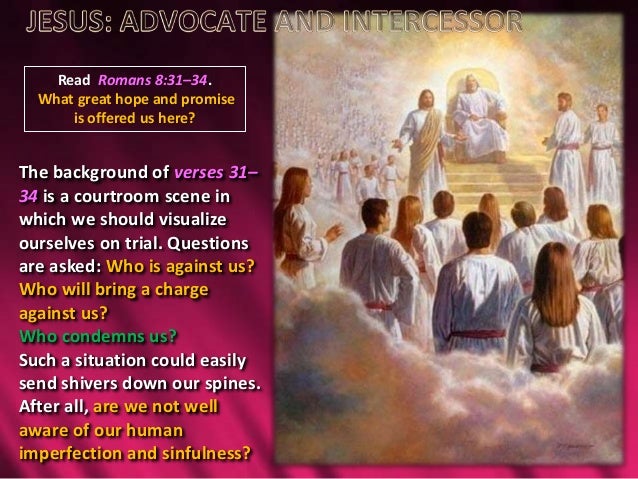
 
Leave a comment

Posted by on November 30, 2023 in Romans 8