RSS

What Every Christian Should Know About Grace – Titus 2:11-14


Titus 2:11-14: “For the grace of God that brings salvation has appeared to all men. {12} It teaches us to say “No” to ungodliness and worldly passions, and to live self-controlled, upright and godly lives in this present age, {13} while we wait for the blessed hope–the glorious appearing of our great God and Savior, Jesus Christ, {14} who gave himself for us to redeem us from all wickedness and to purify for himself a people that are his very own, eager to do what is good.”

graceAs a Christian husband/father, I appreciate so much what’s occurring in the United States:
· advertising groups are producing catchy, appealing presentations teaching our children to ‘say no’ to drugs
· there are now bans on public smoking in most places because we’re finally admitting the harm done by secondary smoke
· there’s a constant public outcry against drunk driving and many groups are trying to enact stricter laws and pressure is being put upon the court system to see that the penalties are carried out

I thank God for the progress!…though it’s only treating the symptoms of the real problem: the worship of self.

But I’ve said that to make this statement to us today: we can’t expect society “to clean itself up.”

It is, however, a role the church ought to assume, though the method might be surprising:
· we’re to spread the good news of Jesus Christ to a lost and dying world
· and those who become Christians must bring about dramatic lifestyle changes in their lives!

A simple question: is Christianity a “yes” religion or a “no” religion? What do I mean? Do you see the requirements put upon us by Christ as mainly negative or positive?

We say “YES:”
· to God and His authority
· to Jesus Christ, as Savior and Lord of our life
· to the Bible as our only map to eternal life
· to the purpose of the church and the need to make it important in our families’ life
· to the responsibility we have as parents “to give our children back to God”

I hope we also realize that pleasing God involves both “yes” and “no.”

Matthew 12:43-45: “”When an evil spirit comes out of a man, it goes through arid places seeking rest and does not find it. {44} Then it says, ‘I will return to the house I left.’ When it arrives, it finds the house unoccupied, swept clean and put in order. {45} Then it goes and takes with it seven other spirits more wicked than itself, and they go in and
live there. And the final condition of that man is worse than the first. That is how it will be with this wicked generation.””

This side of grace is powerful beyond words:
· It appears to all men
· It brought the death of Christ 
· It makes those dead in sin alive in Christ.
· leads and guides us…it doesn’t throw us into confusion
· redeemed us from all wickedness
· purifies us as His people
· inspires us to the extent that we’re eager to do what’s good and right!

It teaches us what to avoid and what to follow! 

There is another side of grace, grace as it relates to the Christian, the “us” side of grace…it teaches us some truths we all need to learn:

1. GRACE TEACHES US TO LEAVE 
Jesus said, “If any one wishes to come after Me, let him deny himself, and take up his cross, and follow Me” (Matthew 16:24).

This is not some initial act once performed that should never be considered again. It is an ongoing act! 

We must constantly deny (say NO!) to “ungodliness and worldly lust” 
· Ungodliness is a lack of reverence for the spiritual and a lack of worship and devotion that results from not living like the Lord. 
· To deny ungodliness is to strive always to avoid that which pulls you away from God. 
· This demands ongoing evaluation. Worldly lusts are those desires which lead one further from the kingdom of God.

Salvation is not only a change of position as we’re set free from the slavery of sin…it’s also a change of attitude, ambition, and action.

And if God’s gift of grace doesn’t change us, and give us a different lifestyle, then something is eternally wrong!

Anything I do that Christ wouldn’t do…or anything I do which would bring reproach upon God and the church, I must say “NO!” to it!

1 John 2:15-17: “Do not love the world, nor the things in the world. If anyone loves the world, the love of the Father is not in him. {16} For all that is in the world, the lust of the flesh and the lust of the eyes and the boastful pride of life, is not from the Father, but is from the world. {17} And the world is passing away, and also its lusts; but the
one who does the will of God abides forever.”

2. GRACE TEACHES US TO LIVE 
We must live “under control”…..it’s a way of life. This isn’t the idea of being “in control” but being “under control.” They key is a surrender or yielding to God in a dignified, reasonable way:

· God tell us that man cannot direct his own steps
· the key to winning is losing
· to way to be first is to be last
· the way to be great is to be least
· and if we think we can control our lives, the devil smiles in hell and God weeps in heaven!

Second, we must live righteously. This is a matter of our relationship with the Lord. It’s the concept of “clothing ourselves with Christ” We’re made righteous because of the constant cleansing in the blood of Christ.


We live according to a standard…and first and foremost, God wants us to know that that He sent us a man to follow.

Third, we are to be godly. 
The idea here is to include God in all our plans…God must not be the “third man out” with the Christian. We should have a reverence, respect, worship, and devotion that moves into daily life and causes us to live as the Lord wants us to live.

When we yield, study and follow God’s Word and God’s will, we become people-centered…which leads us to ask “what does God like?” (we answer that by looking at God incarnate):
· Jesus liked little children
· Jesus liked people who innocently and completely trusted in Him
· Jesus liked to forgive prostitutes and “sinners”
· JJesusIsLordofthisWebSiteesus liked to spend much time in small groups teaching and training people
· He loved His mother
· He was willing to die for His friends but also His enemies
· He was comfortable with His friends (He could tell Martha to get out of the kitchen and spend more time with people)
· He was involved and interested in people and spent little time worrying for material things or things which would bring Him comfort

Notice the text: we’re eager to do good!

  1. GRACE TEACHES US TO LOOK
    We look for Jesus’ return. This is our blessed hope, our fulfillment. It will be a glorious appearing. We will get to see Jesus, our great God and Savior.

    It is a shame that we have so preached on the second coming that even Christians do not look forward to it. We must remember who is coming. He is the One who redeemed us from the lawlessness of sin and purified us as
    His own special people. Our specialty is good works. When we live by grace, the world can see our specialty.

 
Leave a comment

Posted by on August 25, 2014 in Article


10 Reasons to Believe in Life After Death


ResurrectionWhat happens when we die? Down through the millennia, the pious and the pagan have believed that death is but a doorway to a new journey.

The Injustices of Life.
It would be difficult to believe that life is good if we knew there was nothing beyond the grave to compensate

 for problems of inequality and unfairness. While some people seem destined for happiness, others are born into terrible relationships and circumstances. If we could be sure there was nothing to offset unequal distribution of suffering, many would have reason to curse the day of their birth for the way life has treated them (Job 3:1-3). We could agree with King Solomon who at a low point in his life said, “I looked and saw all the oppression that was taking place under the sun: I saw the tears of the oppressed—and they have no comforter; power was on the side of their oppressors—and they have no comforter. And I declared that the dead, who had already died, are happier than the living, who are still alive. But better than both is he who has not yet been, who has not seen the evil that is done under the sun” (Ecclesiastes 4:1-3, NIV).

 Beauty and Balance.
There is much about life that doesn’t seem to correspond with personal problems of unfairness and hardship. But for all that is hurtful and unequal, there is beauty and balance. For moments of horror and violence, there are times of harmony and peace. As age-worn bodies succumb to pain and weakness, children and young animals play with carefree joy. Human art, in all of its glory, corresponds to birds in playful flight and morning song. Each sunset and dawn provides an answer to nature’s need for rest and renewal. Dark nights and cold winters come with the awareness that “this too shall pass.” If there is nothing beyond the grave, the pattern of nature is stunningly incomplete.

 Near-Death Experiences.
The clinical evidence for life after death is subjective and arguable. It’s often hard to assess the significance of “out of body experiences,” encounters with bright lights, long tunnels or angelic guides. It’s difficult to know how to respond to those who speak of temporary near-death visions into heaven or hell. What we do know is that there are enough of these kinds of experiences to create a sizable library on the subject. Taken as a whole, this body of evidence shows that as people approach death, many sense they are coming not to the end of existence but to the beginning of another journey.

 A Place in the Heart.
The human heart hungers for more than this life offers. Each of us experiences what King Solomon called “eternity in [our] hearts” (Ecclesiastes 3:11). While it is difficult to know what Solomon meant, it is apparent that he was referring to an inescapable longing for something this world cannot satisfy. It was an emptiness of soul that Solomon could not escape. For a while, he tried to fill this inner void with work, alcohol and laughter. He tried to satisfy his longings with philosophy, music and sexual relationships. But his disillusionment grew. Only when he returned to his confidence in a final judgment and afterlife could he find something large enough to satisfy his longing for significance (Ecclesiastes 12:14).

 Universal Beliefs.
While some believe it’s impossible to know whether there is life after death, belief in immortality is a timeless phenomenon. From the pyramids of the Egyptians to the reincarnation of New Age thinking, people of all times and places in history have believed that the human soul survives death. If there is no consciousness or laughter or regret beyond the grave, then life has fooled almost everyone from the Pharaohs of Egypt to Jesus of Nazareth.

 An Eternal God.
The Bible names God as the source of immortality. It describes His nature as eternal. The same Scriptures tell us that God created us in His likeness, and that His plan is to welcome His children eventually into His eternal home. The Scriptures also teach that God introduced death into human experience when our first ancestors trespassed into the darkness of forbidden territory (Genesis 3:1-19). The implication is that if God allowed the human race to live forever in a rebellious condition, we would have unending opportunity to develop into proud, self-centered creatures. Instead, God began to unfold a plan that would ultimately result in the eternal homecoming of all who chose to be at peace with Him (Psalm 90:1; John 14:1-3).

 Old Testament Predictions.
Some have argued that immortality is a New Testament idea. But the Old Testament prophet Daniel spoke of a day when those who sleep in the dust of the earth will be resurrected, some to life and some to everlasting shame (Daniel 12:1-3). An author of the Psalms also spoke of the afterlife. In Psalm 73 a man named Asaph described how he almost lost his faith in God when he considered how evil people prospered and the godly suffered. But then he said he went into the sanctuary of God. From the perspective of worship, he suddenly saw evil men standing on the slippery ground of their mortality. With new insight he confessed, “You guide me with your counsel, and afterward you will take me into glory. Whom have I in heaven but you? And earth has nothing I desire besides you. My flesh and my heart may fail, but God is the strength of my heart and my portion forever” (Psalm 73:24-26).

 Quotes of Christ.
Few would accuse Jesus of being an evil man or a false teacher. Even atheists and people belonging to non-Christian religions usually refer to Jesus with deference and respect. But Jesus wasn’t vague or indefinite about the reality of a continuing personal existence after death. He said, “Do not be afraid of those who kill the body but cannot kill the soul. Rather, be afraid of the One who can destroy both soul and body in hell” (Matthew 10:28). Jesus promised Paradise to the repentant thief who was dying at His side, but He also used the Valley of Hinnom-a foul garbage dump outside of Jerusalem—as a symbol of what awaits those who insist on risking the judgment of God. According to Jesus, facing the reality of life after death is the most significant issue of life. He said, for example, that if an eye keeps you from God, you have reason to get rid of that eye. “It is better for you to enter the kingdom of God with one eye than to have two eyes and be thrown into hell” (Mark 9:47).

 The Resurrection of Christ.
There is no greater evidence for the existence of life after death than the resurrection of Jesus Christ. The Old Testament predicted a Messiah who would overcome sin and death for His people (Isaiah 53; Daniel 9:26). The testimony of Jesus’ followers is that He did just that. He voluntarily died at the hands of executioners, was buried in a borrowed tomb and then three days later left that tomb empty. Witnesses said that they had seen not only an empty tomb but a resurrected Christ who appeared to hundreds of people over a period of 40 days before ascending to heaven (Acts 1:1-11; 1 Corinthians 15:1-8).

Practical Effects.
Belief in life after death is a source of personal security, optimism and spiritual betterment (1 John 3:2). Nothing offers more courage than the confidence that there is a better life for those who use the present to prepare for eternity. Belief in the unlimited opportunities of eternity has enabled many to make the ultimate sacrifice of their own life in behalf of those they love. It was His belief in life after death that enabled Jesus to say, “What good will it be for a man if he gains the whole world, yet forfeits his soul?” (Matthew 16:26). It is the same truth that prompted Christian martyr Jim Elliot, who was killed in 1956 by the Auca Indians, to say, “He is no fool who gives what he cannot keep, to gain what he cannot lose.”

You’re not alone if you find yourself honestly unconvinced about life after death. But keep in mind that Jesus promised to give divine help to those who want to know the truth so as to surrender to it. He said, “If anyone chooses to do God’s will, he will find out whether my teaching comes from God or whether I speak on my own” (John 7:17).

If you see the evidence for life after death, remember that the Bible says Christ died to pay the price for our sins, and that all who believe in Him will receive the gifts of forgiveness and everlasting life. The salvation Christ offers is not a reward for effort but a gift to all who in light of the evidence put their trust in Him.

 
Leave a comment

Posted by on August 22, 2014 in death


Diary of a Bible…


January: A busy time for me. Most of the family decided to read me through this year. They kept me busy for the first two weeks, but they have forgotten me now.

February: Clean-up time. I was dusted yesterday and put back in my place. My owner did use me for a few minutes last week. He had been in an argument and was looking up some references to prove he was right.

bibleclassesMarch: Had a busy day first of the month. My owner was elected president of the PTA and used me to prepare for a speech.

April: Grandpa visited us this month. He kept me on his lap for an hour reading 1 Cor. 13. He seems to think more of me than do some people in my own household.

May: I have a few green stains on my pages. Some spring flowers were pressed in my pages.

June: I look like a scrapbook. They have stuffed me full of newspaper clippings – one of the girls was married.

July: They put me in a suitcase today. I guess we are off on vacation. I wish I could stay home; I know I’ll be closed up in this thing for at least two weeks.

August: Still in the suitcase.

September: Back home at last and in my old familiar place. I have a lot of company. Two women’s magazine’s and four comic books are stacked on top of me. I wish I could be read as much as they are.

October: They read me a little bit today. One of them is sick. Right now I am sitting in the center of the coffee table. I think that the Minister is coming by for a visit.

November: Back in my old place. Somebody asked today if I were a scrapbook.

December: The family is busy getting ready for the holidays. I guess I’ll be covered up under wrapping paper and packages again…. just as I am every Christmas.

Please, please, keep reading and studying your Bible. Here is why:

  • 40% of our brotherhood attends only one service each week.,,,and that does not usually include Sunday morning Bible classes
  • 50% do not know why we do not use instrumental music in worship.
  • 25% of the above 50% would not mind the use of instrumental music in worship.
  • 10% believe that one church is as good as another.
  • 90% do not subscribe to a religious publication.
  • 75% cannot find the plan of salvation in the Bible.

Most of this comes from a lack of knowledge, but much of it can be attributed to the indifference of members in general to study God’s Word. The sad thing about the whole matter is that the people who need to study the Bible the most are the ones who study it the least at home and will not attend the Bible classes with the saints.


Leave a comment

Posted by on August 20, 2014 in Sermon


10 Reasons to Believe in Christ rather than religion


Facebook    YouTube 

 ——————————————–

God never asks us to be religious; He asks us to believe in His Son. So why have human beings turned God’s simple offer into something convoluted—and despairingly difficult? 

Christ Is Someone to Know and Trust. Christ is more than a system, tradition or belief. He is a Person who knows our needs, feels our pain and sympathizes with our weakness. In exchange for our trust, He offers to forgive our sins, intercede for us and bring us to His Father. He cried for us, died for us and rose from the dead to show that He was all He claimed to be. Conquering death, He showed us that He can save us from our sins, live His life through us on earth and bring us safely to heaven. He offers Himself as a gift to anyone who will trust Him (John 20:24-31).

Religion Is Something to Believe and Do. Religion is believing in God, attending religious services, tradition, ritual, ceremony, and learning the difference between right and wrong. Religion is reading and memorizing Scripture, offering prayers, and giving to the poor. Religion helping the poor and making amends for past wrongs. Religion is something that was practiced by the Pharisees, those Scripture-loving, conservative, separatist, spiritual leaders who hated Christ enough to call for His death. They hated Him not only because He broke their traditions in order to help people (Matthew 15:1-9), but also because He saw through their religion to their hearts.  

Religion Doesn’t Change Hearts. Jesus likened the religious Pharisees to a group of dishwashers who clean the outside of a cup while leaving the inside dirty. He said, “Now then, you Pharisees clean the outside of the cup and dish, but inside you are full of greed and wickedness. You foolish people! Did not the one who made the outside make the inside also?” (Luke 11:39,40, NIV). Jesus knew that a person can change his image without changing his act (Matthew 23:1-3). He knew that religious credentials and ceremony cannot change the heart. He told one of the most religious men of His day that unless a person is “born again” by the Spirit, he cannot see the kingdom of God (John 3:3). Yet from that day until now, many of the most religious people in the world continue to forget that while religion can give attention to outward appearance, only Christ can change the heart.  

Religion Makes Much of Little. Jesus spoke to religionists who had a passion for detail when He said, “Woe to you Pharisees, because you give God a tenth of your mint, rue and all other kinds of garden herbs, but you neglect justice and the love of God. You should have practiced the latter without leaving the former undone” (Luke 11:42). Jesus saw our tendency to make rules and to focus on “morally correct” behavior instead of keeping our eyes on the bigger issue of why we are trying to be so right. While the Pharisees were big on knowledge carried out to its logical conclusions, they forgot that God doesn’t care how much we know until He knows how much we care. It was this greater “why” that the apostle Paul had in mind when he wrote, “If I speak in the tongues of men and of angels, but have not love, I am only a resounding gong or a clanging cymbal…If I give all I possess to the poor and surrender my body to the flames, but have not love, I gain nothing” (1 Corinthians 13:1,3, NIV).  

Religion Offers the Approval of Men Rather Than God. Jesus reserved His strongest criticism for religious people who used their spiritual reputation to get social attention and honors. To such religionists Jesus said, “Woe to you Pharisees, because you love the most important seats in the synagogues and greetings in the marketplaces” (Luke 11:43). Then, speaking to His disciples, He said of the Pharisees, “Everything they do is done for men to see” (Matthew 23:5). Jesus saw clearly into the practice of religion, which holds the opinions and attention of man to be more important and desirable than the approval of God.  

Religion Makes Hypocrites of Us. Jesus said, “Woe to you, because you are like unmarked graves, which men walk over without knowing it” (Luke 11:44). What looks better than being dressed right, attending religious services and doing things that mark us as decent, God-fearing people? Yet how many religious scholars, ministers and faithful followers withhold honor and encouragement from their wives, attention from their children and love from their doctrinal enemies? Jesus knew what we often forget: What looks good may have a heart of evil.  

Religion Makes a Hard Life Harder. Because religion cannot change a heart, it tries to control people with laws and expectations that are not even kept by the religionists who interpret and apply the rules. With this “burden factor” in mind, Jesus said, “And you experts in the law, woe to you, because you load people down with burdens they can hardly carry, and you yourselves will not lift one finger to help them” (Luke 11:46). Religion is good at describing high standards of right behavior and relationships, but poor at giving real and merciful help to those who realize they have not lived up to those expectations.

Religion Makes It Easy to Deceive Ourselves. It’s been jokingly said, “I love humanity. It’s people I can’t stand.” The Pharisees acted out a similar idea, but it wasn’t funny. According to Jesus, the Pharisees prided themselves in honoring and building memorials to the prophets. The irony is that when they met a real prophet they wanted to kill Him. Barclay says, “The only prophets they admired were dead prophets; when they met a living one, they tried to kill Him. They honored the dead prophets with tombs and memorials, but they dishonored the living ones with persecution and death.” This is the point Jesus made in Luke 11:47-51 and in a parallel passage in Matthew 23:29-32. The Pharisees had fooled themselves. They didn’t think of themselves as prophet-killers. Religionists don’t see themselves as the God-rejecting people they are.  

Religion Hides the Key of Knowledge. One of the greatest dangers of religion is that it causes us to be a danger not only to ourselves but also to others. To the religious biblical experts of His day Jesus said, “Woe to you experts in the law, because you have taken away the key to knowledge. You yourselves have not entered, and you have hindered those who were entering” (Luke 11:52). Religionists take away “the key of knowledge” by distracting people from the Word of God and from a “right attention of heart” by the unnecessary additions of denominationally correct traditions and expectations. Rather than leading people to God, religionists shift the focus to themselves and their own rules. Religionists are those who trust the beliefs and actions of their religion to do what only Christ can do.  

Religion Leads Its Converts Astray. In Matthew 23:15 Jesus said, “Woe to you, teachers of the law and Pharisees, you hypocrites! You travel over land and sea to win a single convert, and when he becomes one, you make him twice as much a son of hell as you are.” Converts of religion are in double jeopardy. They bring a double enthusiasm to their new way of life, and with zeal they blindly defend their blind teachers. They put themselves in the trust of people who have exchanged a system of rules and traditions for the life, forgiveness and relationship of an infinite Savior.

Religion is important in its place (James 1:26-27), but only when it points us to the Christ who died for our sins and who now offers to live His life through those who trust Him (Galatians 2:20; Titus 3:5). You’re not alone if you are unconvinced that Christ is all He claimed to be. But keep in mind that He promised God’s help to those who have good reasons for their questions. He said, “If anyone chooses to do God’s will, he will find out whether my teaching comes from God or whether I speak on my own” (John 7:17).

Here Jesus reminds us that we see things not only as they are, but as we are. If you do see the reasonableness of faith in Christ, keep in mind that the Bible says to the family of God, “For it is by grace you have been saved, through faith—and this is not from yourselves, it is the gift of God—not by works [religious efforts and accomplishments], so that no one can boast” (Ephesians 2:8-9). The salvation Christ offers is not a reward for religious effort but a gift to all who put their trust in Him.


Leave a comment

Posted by on August 20, 2014 in Article


The Bible in a time of change — 2 Timothy 3. What is the place of the Bible in the life of the church?


(This is the transcript of my Sunday night sermon, which comes from a variety of sources. Special mention to Dr. James Thompson). 

If we judged from the number of copies sold, the Bible would still have to be counted the most influential book in the world.  Portions of Scripture have been translated into over 1,750 languages.  New translations continue to be published because people continue to buy Bibles. The Bible and books about the Bible outnumber any other field in publishing. It was not surprising to me to know just a few months ago that more Bible are printed in China than in any other country!

This is a good sign, of course.  But to say that the Bible is a best seller is not to say that it is actually being read, for the Bible has a number of functions.  It may have a symbolic and central place in our church buildings or in our homes.  It may be used as a good luck charm, as if its mere presence could keep away evil.  It may belong to our collection of great books, and we may treat it with respect. We may regard it as many people regard Shakespeare—as a treasure from the past.  But does anyone really read it?bibleclasses

What is the place of the Bible in the life of the church?  On the surface, the answer is obvious enough: The church recognizes the inspiration and authority of the Bible for its life and practice.  The Bible is the basis for    preaching, Christian education, and private devotion. While no one has directly challenged these convictions, one may wonder if our actual practice is consistent with our stated belief about the Bible.

The Bible and Its Competition

The fact is, the Bible faces very stiff competition for our time.  To treat it with respect is far easier than actually to read it.  Besides that, the Bible is a very old book, and we live in a time when we are overwhelmed by information and entertainment that appear to be far more relevant than the Bible. 

We face, in the first place, the extraordinary challenge of the electronic media.  This challenge is so great that some have described our era as the beginning of an entirely new age when the printed page is eclipsed by the electronic revolution. 

Television images relayed by satellite from around the world bring war and famine into our living rooms.  Through cable television many of us may choose our entertainment from more than fifty options each evening–from high culture to mindless situation comedies.  Our computer screens will also bring images from countless alternatives into our homes.  We can be surrounded every waking hour by news, music, and information from the electronic media.

This revolution in the media has changed our lives and, in many instances, has brought improvements to the way we live.  Communication advances have produced the “global village” in which we are able to communicate around the world, bringing isolated populations into contact with the rest of the world.  Missionaries in distant lands employ the electronic media to remain in constant contact with their home churches, and advances in learning once reserved for the great institutions are now available worldwide.

As helpful as this revolution may be, it has left us with at least two major unsolved problems.  In the first place, this electronic explosion has produced “information overload,” leaving us overwhelmed by its sheer volume and unable to make good choices. 

In the second place, this quantity of information may omit the very thing a civilization needs most: that which makes better people. None of the available choices may actually create more wholesome lives.

We should also mention that entertainment is a strong competition. Many Christians choose to allow their entertainment choices to take ‘first place’ rather than attend worship and classes where the Scriptures are being taught.

Educational Options from the Past

When Paul wrote 2 Timothy, the church was faced with a variety of teachers.  In 2 Timothy 3:1-5 Paul offers a depressing portrayal of the moral condition which will invade the church “in the last days” (3: 1).  When we read the entirety of the Pastoral Epistles, we recognize that these “last days” have already begun for the church and the community is now involved in a struggle to preserve its identity against these false teachers. 

The danger to the church will be seen in the decadent moral conditions that will invade from the outside as the worst excesses of pagan culture infiltrate the body of believers.  People will be “lovers of self, lovers of money, proud, arrogant, abusive, disobedient to parents, … lovers of pleasure rather than lovers of God” (3:2-4).  Paul anticipates a time when all of the character building that accompanies  “sound teaching” will be endangered in a church that reflects the worst of pagan morality.

The danger to the church is especially acute because the influx of corrupted ethics will come not from marginal Christians who are not fully transformed, but from those who “have a form of godliness” (3:5).  The danger will come from teachers!  The danger is magnified by the fact that the teachers will have eager listeners. 

As the teachers “sneak in” from house to house, they will take advantage of the most vulnerable people in the church.  The women of Paul’s day were especially vulnerable, perhaps because of the differences in education between men and women in the ancient world.  Thus the false teachers will “take captive weak women, burdened with sins and swayed by various impulses, who will listen to anybody and can never arrive at a knowledge of the truth” (3:6-7).

Paul sees, therefore, a church where “education” is taking place.  The problem, of course, is that the education is destructive to character and morality.  Unlike the “sound” or “healthy” teaching that produces healthy lives, this form of education will destroy the moral character of the church.

Preparation for the Educational Ministry

How can we address the challenges posed by education that destroys more than it edifies?  Paul’s warnings in 2 Timothy 3:1-9 were not intended to reduce the church to despair over its future, for this warning was only the prelude to his instructions for meeting the challenge in 2 Timothy 3:10-17.  Deliverance for the church under siege, Paul knew, was a well-equipped leader who could offer an alternative to the polluted teachings that were invading the church.  Only the teacher who had received the proper education could meet that challenge. Timothy was that leader.

What is the proper education for the Christian teacher?  In 2 Timothy 3:14 Paul offers a compelling definition of Christian education when he says, “But as for you, continue in what you have learned and  have firmly believed, knowing from whom you have learned it… .” Timothy’s preparation was two dimensional: he could recall “what he had learned”; but “what he had learned” could not be divorced from those “from whom he had learned.” Legitimate preparation had both a personal and an intellectual dimension.

Timothy was asked to recall those “from whom he had learned” because Christian instruction is never limited to the mere transmission of information.  We learn the Christian faith when we see how it has shaped the lives of our teachers.  We may learn higher mathematics without asking how it has shaped the character of the teachers, but the lifestyle of Christ cannot be transmitted devoid of its effect on the lives of its advocates. 

Timothy’s teacher was Paul, and his education included more than academic lectures.  “Now you have observed my teaching, my conduct, my aim in life, my faith, my patience, my love, my steadfastness… ” (2 Tim. 3:10). just as Jesus had equipped his disciples for service with his call to follow him, Timothy has followed Paul in his ministry. 

Timothy had seen the price which Paul had been willing to pay for his convictions.  He had discovered from Paul’s imprisonments and beatings that “all who desire to live a godly life will be persecuted” (2 Tim. 3:12).  He had also seen in Paul’s conduct the alternative to the decadent morality of other teachers (2 Tim. 3:1-9).

According to 3:15, Timothy had been learning “from infancy.  ” Timothy could not recall a time when the faith had not been regularly communicated.  Where the Christian faith is passed on effectively today, the same combination of factors is likely to be present as in the education of Timothy. 

Paul’s words in 2 Timothy 3:14 remind us that good teaching requires more than good models.  The modeling is meaningless without the content of learning. What Timothy had learned from childhood were “the holy Scriptures.” Long before the printing press made printed Bibles available in every home, Timothy learned “the holy Scriptures, which are able to make you wise for salvation through faith in Christ Jesus” (3:15).  He was now especially equipped to teach the church because he had been educated for the task before him.

All Scripture Is Inspired

What Timothy learned “from childhood” remains the answer for a church in transition.  To a church facing numerous educational options, Paul said, “All Scripture is inspired and is useful for teaching, rebuking, correcting and training in righteousness, so that the man of God may be thoroughly equipped for every good work” (3:16- 17). 

Scripture is the only source for “teaching, correcting and training in righteousness,” and it is the only  source which is capable of “equipping a person to every good work.” What had nourished Timothy “from infancy” is the only source for the church’s continuing health.  Whereas the false teachers were known for their decadent behavior (2 Tim. 3:1-9), Scripture provides the alternative that will result in healthy lives.

Paul’s words about the Scriptures were actually a reference to our Old Testament, for these were the writings   which Timothy had known “from infancy.” However, we   may apply his words appropriately to the entire Bible, for the New Testament writers were also conscious of writing on God’s behalf.  Therefore what Paul says of the “sacred   writings” which Timothy had known can also be said for our entire Bible: they, and only they, are useful “for teaching, rebuking, correction and training in righteousness.  “

Paul adds ‘encouragement’  in 2 Timothy 4:2. IF we are not using ALL of these in our teaching, we are not using Scripture correctly. Rebuking and correction are often necessary.

Although few today will challenge Paul’s words directly, our actual practice may indicate that we are not convinced of the indispensability of Scripture.  One may wonder if Paul’s words are actually believed when the spiritual nutrition of the church consists of little actual reflection on the words of Scripture. 

If we take seriously Paul’s words, we will recognize that education is vital for the continuing health of the church.  However, as Paul’s experience indicates, some forms of learning can be no better than “junk food,” and other forms can be overtly destructive to the health of the church.  The church that meets the challenges of its time ensures that its education is based on the direct encounter with Scripture.

 
Leave a comment

Posted by on August 19, 2014 in Sermon


Life Is A Gift


Today before you think of saying an unkind word – Think of someone who can’t speak.

Before you complain about the taste of your food – Think of someone who has nothing to eat.

Before you complain about your husband or wife – Think of someone who’s crying out to God for a companion.

Today before you complain about life – Think of someone who went too early into eternity.

Before you complain about your children – Think of someone who desires children but they’re barren.

Before you argue about your dirty house, someone didn’t clean or sweep – Think of the people who are living in the streets.

Before whining about the distance you drive – Think of someone who walks the same distance.

And when you are tired and complain about your job – Think of the unemployed, the disabled and those who wished they had your job.

But before you think of pointing the finger or condemning another- Remember that not one of us are without sin and we all answer to one Maker.

And when depressing thoughts seem to get you down – Put a smile on your face and thank God you’re alive and still around.

Life is a gift… Live it… Enjoy it… Celebrate it… And fulfill it.

Be not forgetful to entertain strangers: for thereby some have entertained angels unawares.” Hebrews 13:2

 
1 Comment

Posted by on August 18, 2014 in Sermon


10 Reasons to Believe in a God who allows suffering


Facebook    YouTube 


 ——————————————–

Even profound Christian thinker C.S. Lewis wrote about the “problem of pain.” Why indeed would a good God allow a world of suffering? 

Suffering Comes With the Freedom to Choose.
Loving parents long to protect their children from unnecessary pain. But wise parents know the danger of over-protection. They know that the freedom to choose is at the heart of what it means to be human, and that a world without choice would be worse than a world without pain. Worse yet would be a world populated by people who could make wrong choices without feeling any pain. No one is more dangerous than the liar, thief or killer who doesn’t feel the harm he is doing to himself and to others (Genesis 2:15-17).

Pain Can Warn Us of Danger.
We hate pain, especially in those we love. Yet without discomfort, the sick wouldn’t go to a doctor. Worn-out bodies would get no rest. Criminals wouldn’t fear the law. Children would laugh at correction. Without pangs of conscience, the daily dissatisfaction of boredom or the empty longing for significance, people who are made to find satisfaction in an eternal Father would settle for far less. The example of Solomon, lured by pleasure and taught by his pain, shows us that even the wisest among us tend to drift from good and from God until arrested by the resulting pain of our own shortsighted choices (Ecclesiastes 1-12; Psalm 78:34-35; Romans 3:10-18).

Suffering Reveals What Is in Our Hearts.
Suffering often occurs at the hand of others. But it has a way of revealing what is in our own hearts. Capacities for love, mercy, anger, envy and pride can lie dormant until awakened by circumstances. Strength and weakness of heart are found not when everything is going our way but when flames of suffering and temptation test the mettle of our character. As gold and silver are refined by fire, and as coal needs time and pressure to become a diamond, the human heart is revealed and developed by enduring the pressure and heat of time and circumstance. Strength of character is shown not when all is well with our world but in the presence of human pain and suffering (Job 42:1-17; Romans 5:3-5; James 1:2-5; 1 Peter 1:6-8).

Suffering Takes Us to the Edge of Eternity.
If death is the end of everything, then a life filled with suffering isn’t fair. But if the end of this life brings us to the threshold of eternity, then the most fortunate people in the universe are those who discover, through suffering, that this life is not all we have to live for. Those who find themselves and their eternal God through suffering have not wasted their pain. They have let their poverty, grief and hunger drive them to the Lord of eternity. They are the ones who will discover to their own unending joy why Jesus said, “Blessed are the poor in spirit, for theirs is the kingdom of heaven” (Matthew 5:3, NIV; see also Romans 8:18-19).

Pain Loosens Our Grip on This Life.
In time, our work and our opinions are sought less and less. Our bodies become increasingly worse for the wear. Gradually they succumb to inevitable obsolescence. Joints stiffen and ache. Eyes grow dim. Digestion slows. Sleep becomes difficult. Problems loom larger and larger while options narrow. Yet, if death is not the end but the threshold of a new day, then the curse of old age is also a blessing. Each new pain makes this world less inviting and the next life more appealing. In its own way, pain paves the way for a graceful departure (Ecclesiastes 12:1-14).

 Suffering Gives Opportunity to Trust God.
The most famous sufferer of all time was a man named Job. According to the Bible, Job lost his family to war, his wealth to wind and fire, and his health to painful boils. Through it all, God never told Job why it was happening. As Job endured the accusations of his friends, heaven remained silent. When God finally did speak, He did not reveal that His archenemy Satan had challenged Job’s motives for serving God. Neither did the Lord apologize for allowing Satan to test Job’s devotion to God. Instead, God talked about mountain goats giving birth, young lions on the hunt and ravens in the nest. He cited the behavior of the ostrich, the strength of the ox and the stride of the horse. He cited the wonders of the heavens, the marvels of the sea and the cycle of the seasons. Job was left to conclude that if God had the power and wisdom to create this physical universe, there was reason to trust that same God in times of suffering (Job 1-42).

 God Suffers With Us in Our Suffering.
No one has suffered more than our Father in heaven. No one has paid more dearly for the allowance of sin into the world. No one has so continuously grieved over the pain of a race gone bad. No one has suffered like the One who paid for our sin in the crucified body of His own Son. No one has suffered more than the One who, when He stretched out His arms and died, showed us how much He loved us. It is this God who, in drawing us to Himself, asks us to trust Him when we are suffering and when our own loved ones cry out in our presence (1 Peter 2:21; 3:18; 4:1).

 God’s Comfort Is Greater Than Our Suffering.
The apostle Paul pleaded with the Lord to take away an unidentified source of suffering. But the Lord declined, saying, “My grace is sufficient for you, for My strength is made perfect in weakness.” “Therefore,” said Paul, “I will boast all the more gladly about my weaknesses, so that Christ’s power may rest on me. That is why, for Christ’s sake, I delight in weaknesses, in insults, in hardships, in persecutions, in difficulties. For when I am weak, then I am strong” (2 Corinthians 12:9-10). Paul learned that he would rather be with Christ in suffering than without Christ in good health and pleasant circumstances.

 In Times of Crisis, We Find One Another.
No one would choose pain and suffering. But when there is no choice, there remains some consolation. Natural disasters and times of crisis have a way of bringing us together. Hurricanes, fires, earthquakes, riots, illnesses and accidents all have a way of bringing us to our senses. Suddenly we remember our own mortality and that people are more important than things. We remember that we do need one another and that, above all, we need God.

Each time we discover God’s comfort in our own suffering, our capacity to help others is increased. This is what the apostle Paul had in mind when he wrote, “Praise be to the God and Father of our Lord Jesus Christ, the Father of compassion and the God of all comfort, who comforts us in all our troubles, so that we can comfort those in any trouble with the comfort we ourselves have received from God” (2 Corinthians 1:3-4).

 God Can Turn Suffering Around for Our Good.
This truth is best seen in the many examples of the Bible. Through Job’s suffering we see a man who not only came to a deeper understanding of God but who also became a source of encouragement for people in every generation to follow. Through the rejection, betrayal, enslavement and wrongful imprisonment of a man named Joseph, we see someone who eventually was able to say to those who had hurt him, “You intended to harm me, but God intended it for good” (Genesis 50:20).

When everything in us screams at the heavens for allowing suffering, we have reason to look at the eternal outcome and joy of Jesus who in His own suffering on an executioner’s cross cried, “My God, my God, why have you forsaken me?” (Matthew 27:46).

You’re not alone if the unfairness and suffering of life leaves you unconvinced that a God in heaven cares for you. But consider again the suffering of the One called by the prophet Isaiah “a man of sorrows, and familiar with suffering” (Isaiah 53:3). Think about His slashed back, His bloodied forehead, His nail-ripped hands and feet, His pierced side, His agony in the Garden and His pathetic cry of abandonment. Consider Christ’s claim that He was suffering not for His sins but for ours. To give us the freedom to choose, He lets us suffer. But He Himself bore the ultimate penalty and pain for all our sins (2 Corinthians 5:21; 1 Peter 2:24).

When you do see the reason for His suffering, keep in mind that the Bible says Christ died to pay the price for our sins, and that those who believe in their heart that God has raised Him from the dead will be saved (Romans 10:9-10). The forgiveness and eternal life Christ offers is not a reward for effort but a gift to all who, in light of the evidence, put their trust in Him.

 
Leave a comment

Posted by on August 15, 2014 in Article


The Discipline of Meditation


In contemporary society our Adversary majors in three things: noise, hurry, and crowds. If he can keep us engaged in ‘muchness’ and ‘manyness,’ he will rest satisfied.

C. G. Jung remarked: “Hurry is not of the Devil; it is the Devil.” All the masters of meditation strive to awaken us to the fact that the universe is much larger than we know, that there are vast unexplored inner regions that are just as real as the physical world we know so well.

They tell us of exciting possibilities for new life and freedom. They call us to the adventure, to be pioneers in this  frontier of the Spirit.
It is a sad commentary on the spiritual state of modern Christianity that meditation is a word so foreign to its ears.

Genesis 24:63 (NIV) He went out to the field one evening to meditate, and as he looked up, he saw camels approaching.

God spoke to them (fathers and prophets of old) not because they had special abilities, but because they were willing to listen.

R. D. Laing: “We live in a secular world…There is a prophecy in Amos that a time will come when there will be a famine in the land, ‘not a famine for bread, nor a thirst for water, but of hearing the words of the Lord.’ That time has now come to pass. It is the present age.

Psalm 63:6 (NIV) On my bed I remember you; I think of you through the watches of the night.

Psalm 119:148 (NIV) My eyes stay open through the watches of the night, that I may meditate on your promises.

Psalm 1:2 (NIV) But his delight is in the law of the Lord, and on his law he meditates day and night.

The detachment from the confusion all around us is in order to have a richer attachment to God and to other human beings. Christian meditation leads us to the inner wholeness necessary to give ourselves to God freely, and to the spiritual perception necessary to attack social evils.

“The contemplation of the saints is fired by the love of the one contemplated: that is, God.” (apprecciation to Richard J. Foster, Celebration of Discipline).

 
Leave a comment

Posted by on August 14, 2014 in Spiritual Disciplines


Solving Our Money Problems


No test of a man’s true character is more conclusive than how he spends his time and his money. The following table might give us three perspectives which can be useful:

  POVERTY PROSPERITY STEWARDSHIP
View of prosperity Non-materialistic, disdain for possessions Prosperity is the reward of the righteous Possessions are atrust given in varying proportions
Possessions are: a curse a right a privilege
Scriptural reference Luke 18:18-22: sell, give to the poor (rich young ruler) Matt. 7:7-8 ask, seek, knock Matt. 25:14-30: parable of the talents
Mitigation Prov. 21:20 In house of wise are stores of choice food & oil, but a foolish man devours all he has Prov. 23:4-5 Don’t wear yourself out to get rich None
Needs met by “carefree attitude” don’t worry- seek kingdom 1st Matt. 6:25-34 “transaction”tithe for a blessingMal. 3:10 “faithful administration”1 Cor. 4:2;Matt. 25:21, 23
Concept Rejecter Owner Steward
Attitude toward poor We are We owe We care
Preoccupation Daily needs Money Wisdom
Attitude Carefree Prov. 3:5-6 Driven Prov. 10:17 Faithful Luke 16:10-11

Poverty Theology:  This theology is disgusted with worldliness, best symbolized by man’s obsession Money Managementwith money. He believes possessions are a curse and has rejected materialism in any and every form. A strong bias toward helping the poor exists, but he has few, if any, resources to actually help with the solution. A few guilty Christians with wealth may also fall into this category, especially if they inherited their money.

Prosperity Theology: This theology believes you have not because you ask not. They often have learned about tithing and have experienced the material blessings available by following the tithing principle. Because of their success with tithing, a preoccupation with money develops. They soon begin suggesting that the reason others are not experiencing God’s blessings financially as a lack of faith. No room is allowed for God to call some people to be poor. Many disciples of prosperity theology live consumptive lifestyles.

Stewardship Theology: Stewards believe God owns and controls everything. Possessions are a privilege and not a right; the steward gives up his rights. He reads Scripture to say possessions are a trust given in varying proportions, depending upon the innate, God-given abilities he has and his faithfulness and obedience to follow Biblical principles. The steward believes prosperity results from faithfully administering his talents, as given by God in His sole discretion.

Which one is correct? The steward!

Scriptures for discussion:

Proverbs 13:11: “Wealth obtained by fraud dwindles, But the one who gathers by labor increases it.”

   1 Timothy 5:8: “But if anyone does not provide for his own, and especially for those of his household, he has denied the faith, and is worse than an unbeliever.”

 
Leave a comment

Posted by on August 14, 2014 in Article


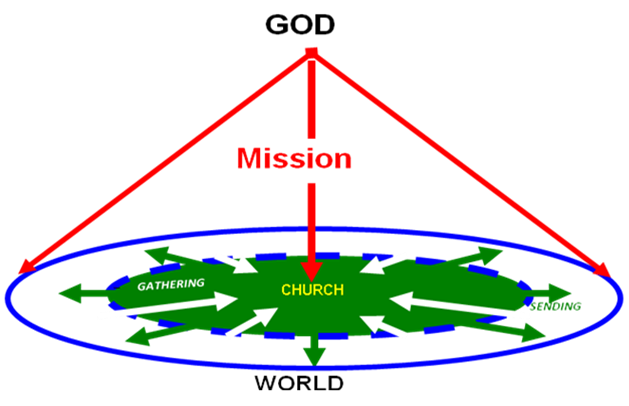
The church has left the building. Which came first, the mission or the church?


Powerpoint file: The Church has left the building: Which came first? The mission or the church?

God’s initiative to work salvation God calls Moses and sends him on mission to Egypt.  Notice how other nations (Canaan, Egypt) and not just Israel are the focus of God’s mission. 

Genesis 12:1-9 (NIV) The Lord had said to Abram, “Leave your country, your people and your father’s household and go to the land I will show you. “I will make you into a great nation and I will bless you; I will make your name great, and you will be a blessing. I will bless those who bless you, and whoever curses you I will curse; and all peoples on earth will be Picture1blessed through you.” So Abram left, as the Lord had told him; and Lot went with him.

Abram was seventy-five years old when he set out from Haran. He took his wife Sarai, his nephew Lot, all the possessions they had accumulated and the people they had acquired in Haran, and they set out for the land of Canaan, and they arrived there.   

Exodus 3:7-12 (NIV) The Lord said, “I have indeed seen the misery of my people in Egypt. I have heard them crying out because of their slave drivers, and I am concerned about their suffering. So I have come down to rescue them from the hand of the Egyptians and to bring them up out of that land into a good and spacious land, a land flowing with milk and honey–the home of the Canaanites, Hittites, Amorites, Perizzites, Hivites and Jebusites. And now the cry of the Israelites has reached me, and I have seen the way the Egyptians are oppressing them. So now, go. I am sending you to Pharaoh to bring my people the Israelites out of Egypt.” But Moses said to God, “Who am I, that I should go to Pharaoh and bring the Israelites out of Egypt?” And God said, “I will be with you. And this will be the sign to you that it is I who have sent you: When you have brought the people out of Egypt, you will worship God on this mountain.”

The disciples are gathered up and involved in God’s mission.  Notice that mission begins by bidding God to sent out harvesters. Luke 10:1-3 (NIV) After this the Lord appointed seventy-two others and sent them two by two ahead of him to every town and place where he was about to go. He told them, “The harvest is plentiful, but the workers are few. Ask the Lord of the harvest, therefore, to send out workers into his harvest field. Jesus sends the apostles just as he was sent by the Father.  (v. 21).   

John 20:19-23 (NIV) On the evening of that first day of the week, when the disciples were together, with the doors locked for fear of the Jews, Jesus came and stood among them and said, “Peace be with you!” After he said this, he showed them his hands and side. The disciples were overjoyed when they saw the Lord. Again Jesus said, “Peace be with you! As the Father has sent me, I am sending you.” And with that he breathed on them and said, “Receive the Holy Spirit. If you forgive anyone his sins, they are forgiven; if you do not forgive them, they are not forgiven.”

Biblical understandings of the kingdom of God Most Americans are not familiar with the implications of living within a kingdom. Often interchangeable with the terms “reign of God” or “rule of God.”

  • We are to receive the reign of God like a little child (Mark 10:15; Luke 18:17)
  • We inherit the kingdom (Mt. 25:34; 1 Cor. 6:9-10; Gal. 5:21)
  • We enter the reign of God (Mt. 5:20; 7:21; 18:3; 19:23-24; Mk 9:47; 10:23-25).
  • We are never mentioned as building or establishing the kingdom. That is God’s work.

Receiving the kingdom involves accepting the generosity of the king. Inheriting the kingdom involves becoming an heir…a member of the king’s house.  Entering a kingdom involves conforming to the way of life established by the king.

The lordship of Christ is often reduced to individual concerns.  When salvation is reduced to individualistic concerns, Christ is regarded as personal savior, or “Lord of my life.”  When it is a limited perspective, the church tends to ignore that God has exalted Christ as Lord universally.

In Acts 2, Peter asserts that God has made Jesus Lord regardless of the acceptance or rejection of the crowd.  He calls them to repent of their rejection of the objective reality of Jesus’ lordship and not simply acceptance of a subjective experience of that lordship

(Acts 2:36-41 (NIV) “Therefore let all Israel be assured of this: God has made this Jesus, whom you crucified, both Lord and Christ.” When the people heard this, they were cut to the heart and said to Peter and the other apostles, “Brothers, what shall we do?” Peter replied, “Repent and be baptized, every one of you, in the name of Jesus Christ for the forgiveness of your sins. And you will receive the gift of the Holy Spirit. The promise is for you and your children and for all who are far off–for all whom the Lord our God will call.” With many other words he warned them; and he pleaded with them, “Save yourselves from this corrupt generation.” Those who accepted his message were baptized, and about three thousand were added to their number that day.

The relationship between church and mission…remembering…the mission is God’s initiative

  • we are those who have received, inherited, and entered into the kingdom of God
  • God has exalted Christ as Lord over all creation.

John 17:14-18 (NIV) I have given them your word and the world has hated them, for they are not of the world any more than I am of the world. My prayer is not that you take them out of the world but that you protect them from the evil one. They are not of the world, even as I am not of it. Sanctify them by the truth; your word is truth. As you sent me into the world, I have sent them into the world.

Begins with God and the world.  Mission is more than just an adjunct activity of the church.  Mission cannot be reduced to obedience to a command to evangelize.  God sends Christ and Christ sends His church. God rules over the entire world despite the fact that some reject that rule.  The church is formed and made visible because God gathers the church from the world.

When we say that “the church has a mission,” we tend to view the church as a sort of machine that comes in a kit so that when we assemble it properly according to the instructions and turn on the power it goes to work.  But the Bible never pictures the church as an independent institution that churns out a product or repeats a task under its own power.  The biblical view of the church is not a static organization that determines its own mission.  Rather, God has a mission in this world and God is about his mission; He is calling and sending people caught up in that mission and they are the church. 

The biblical view of the church

The followers of Christ are called “The Way.” (Acts 9:2)

  • The church is the transformation of the old humanity into the new humanity (Eph. 2:15).

The church is the result of God’s Activity

  • we are the fish caught up in the dragnet (Mt. 13:47-50)
  • we are the sheaves of wheat gathered in harvest (Mt. 13:24-30)
  • we are the mustard tree sown by the sower (Mk 4:30-32)
  • we are persecuted believers on the run who tell the story that changes the world (Acts 8).

The mission of God is a tidal wave breaking onto the shores of earth and the church is caught up in it.  The mission of God is like a storm front moving into this world.  The church is like a pile of leaves or a drift of snow gathered up by the wind. (John 3:8)  We are the visible evidence of God’s invisible activity in the world. 

The mission of God has a church. Treasure in a brown paper: 2 Cor. 4:7-12 2 Corinthians 4:1-6 (NIV) Therefore, since through God’s mercy we have this ministry, we do not lose heart. Rather, we have renounced secret and shameful ways; we do not use deception, nor do we distort the word of God. On the contrary, by setting forth the truth plainly we commend ourselves to every man’s conscience in the sight of God. And even if our gospel is veiled, it is veiled to those who are perishing. The god of this age has blinded the minds of unbelievers, so that they cannot see the light of the gospel of the glory of Christ, who is the image of God. For we do not preach ourselves, but Jesus Christ as Lord, and ourselves as your servants for Jesus’ sake. For God, who said, “Let light shine out of darkness,” made his light shine in our hearts to give us the light of the knowledge of the glory of God in the face of Christ.

2 Corinthians 4:7-12 (NIV) But we have this treasure in jars of clay to show that this all-surpassing power is from God and not from us. We are hard pressed on every side, but not crushed; perplexed, but not in despair; persecuted, but not abandoned; struck down, but not destroyed. We always carry around in our body the death of Jesus, so that the life of Jesus may also be revealed in our body. For we who are alive are always being given over to death for Jesus’ sake, so that his life may be revealed in our mortal body. So then, death is at work in us, but life is at work in you.

The believer is simply a “jar of clay”; it is the treasure within the vessel that gives the vessel its value.  The important thing about a vessel is that it be clean, empty, and available for service.  We must focus on the treasure and not on the vessel. Paul was not afraid of suffering or trial, because he knew that God would guard the vessel so long as Paul was guarding the treasure. God permits trials, God controls trials, and God uses trials for His own glory. God is glorified through weak vessels.  

I need your ideas of service projects we could do to help others.  

 
Leave a comment

Posted by on August 10, 2014 in Church, Sermon