RSS

Faithful Feelings: Doing Emotions God’s Way – Giving Thanks When You Don’t Feel Like It


9780825425424It should go without saying that Christians are commanded to give thanks.

(1 Thessalonians 5:18 (ESV) 18  give thanks in all circumstances; for this is the will of God in Christ Jesus for you.

Ephesians 5:20 (ESV) 20  giving thanks always and for everything to God the Father in the name of our Lord Jesus Christ.

But this is where the rub comes. Even in those times when we should feel like giving thanks we can neglect to do so because of our own sin:

Deuteronomy 6:10-12 (ESV) 10  “And when the LORD your God brings you into the land that he swore to your fathers, to Abraham, to Isaac, and to Jacob, to give you—with great and good cities that you did not build, 11  and houses full of all good things that you did not fill, and cisterns that you did not dig, and vineyards and olive trees that you did not plant—and when you eat and are full, 12  then take care lest you forget the LORD, who brought you out of the land of Egypt, out of the house of slavery.

Such forgetfulness can have serious consequences:

Deuteronomy 28:47-48 (ESV) 47  Because you did not serve the LORD your God with joyfulness and gladness of heart, because of the abundance of all things, 48  therefore you shall serve your enemies whom the LORD will send against you, in hunger and thirst, in nakedness, and lacking everything. And he will put a yoke of iron on your neck until he has destroyed you.


Romans 1:20-21 (ESV) 20  For his invisible attributes, namely, his eternal power and divine nature, have been clearly perceived, ever since the creation of the world, in the things that have been made. So they are without excuse. 21  For although they knew God, they did not honor him as God or give thanks to him, but they became futile in their thinking, and their foolish hearts were darkened. 

But these commands to continually give thanks become even more problematic to us on those occasions when God’s blessing is not immediately apparent. To take an extreme example, how can we give thanks when we read that a terrorist group has just attacked a Christian school and kidnapped several hundred school girls?

How do the Scriptures enable us to think biblically and thus to thank God when such an atrocity or tragedy occurs? The answer is much more complex than what will be suggested in the next few sentences; but let us at least make a start by pointing out how biblical thinking responds to the evils of this world.

First, we can thank God that the Bible squares with reality, so that the atrocities of this world should not come as a surprise to us (so-called prosperity preachers will struggle here). 

The Bible begins with the creation of a perfect world, but by the third chapter it is describing the fall of man and its devastating repercussions for the world in which we live; affirmed over and over again.

Romans 8:18-25 (ESV) 18  For I consider that the sufferings of this present time are not worth comparing with the glory that is to be revealed to us. 19  For the creation waits with eager longing for the revealing of the sons of God. 20  For the creation was subjected to futility, not willingly, but because of him who subjected it, in hope 21  that the creation itself will be set free from its bondage to corruption and obtain the freedom of the glory of the children of God. 22  For we know that the whole creation has been groaning together in the pains of childbirth until now. 23  And not only the creation, but we ourselves, who have the firstfruits of the Spirit, groan inwardly as we wait eagerly for adoption as sons, the redemption of our bodies. 24  For in this hope we were saved. Now hope that is seen is not hope. For who hopes for what he sees? 25  But if we hope for what we do not see, we wait for it with patience.

Man’s sin is never minimized, as we see in Romans 3:10-18 (ESV) 10  as it is written: “None is righteous, no, not one; 11  no one understands; no one seeks for God. 12  All have turned aside; together they have become worthless; no one does good, not even one.” 13  “Their throat is an open grave; they use their tongues to deceive.” “The venom of asps is under their lips.” 14  “Their mouth is full of curses and bitterness.” 15  “Their feet are swift to shed blood; 16  in their paths are ruin and misery, 17  and the way of peace they have not known.” 18  “There is no fear of God before their eyes.”

What we see going on in the world is what we should expect from reading the Bible. An accurate diagnosis is foundational to an adequate remedy, and for the Bible’s accurate diagnosis we can give thanks.

Second, we can give thanks to God for revealing to us that our sin and the brokenness of our world is not something that we can remedy.how_do_you_feel_chart-final
Romans 3:19-20 (ESV) 19  Now we know that whatever the law says it speaks to those who are under the law, so that every mouth may be stopped, and the whole world may be held accountable to God. 20  For by works of the law no human being will be justified in his sight, since through the law comes knowledge of sin

Third, we can give thanks to God because He provided the solution for our sin and its disastrous consequences.

(Romans 3:21-26 (ESV) 21  But now the righteousness of God has been manifested apart from the law, although the Law and the Prophets bear witness to it— 22  the righteousness of God through faith in Jesus Christ for all who believe. For there is no distinction: 23  for all have sinned and fall short of the glory of God, 24  and are justified by his grace as a gift, through the redemption that is in Christ Jesus, 25  whom God put forward as a propitiation by his blood, to be received by faith. This was to show God’s righteousness, because in his divine forbearance he had passed over former sins. 26  It was to show his righteousness at the present time, so that he might be just and the justifier of the one who has faith in Jesus.

Titus 3:3-7 (ESV) 3  For we ourselves were once foolish, disobedient, led astray, slaves to various passions and pleasures, passing our days in malice and envy, hated by others and hating one another. 4  But when the goodness and loving kindness of God our Savior appeared, 5  he saved us, not because of works done by us in righteousness, but according to his own mercy, by the washing of regeneration and renewal of the Holy Spirit, 6  whom he poured out on us richly through Jesus Christ our Savior, 7  so that being justified by his grace we might become heirs according to the hope of eternal life.

God sent His Son into this world as the perfect God-man, who died in the sinner’s place, bearing the penalty for his sin. In exchange for our sin and condemnation He offers us His righteousness and the gift of eternal life. Jesus is the cure for the consequences of sin for all who will receive His gift of salvation.

2 Corinthians 5:17-21 (ESV) 17  Therefore, if anyone is in Christ, he is a new creation. The old has passed away; behold, the new has come. 18  All this is from God, who through Christ reconciled us to himself and gave us the ministry of reconciliation; 19  that is, in Christ God was reconciling the world to himself, not counting their trespasses against them, and entrusting to us the message of reconciliation. 20  Therefore, we are ambassadors for Christ, God making his appeal through us. We implore you on behalf of Christ, be reconciled to God. 21  For our sake he made him to be sin who knew no sin, so that in him we might become the righteousness of God.

Fourth, we can give thanks that Jesus is coming to this earth once again, this time to punish evil doers, to put away sin, and to establish a kingdom in which righteousness dwells.

2 Thessalonians 1:6-10 (ESV) 6  since indeed God considers it just to repay with affliction those who afflict you, 7  and to grant relief to you who are afflicted as well as to us, when the Lord Jesus is revealed from heaven with his mighty angels 8  in flaming fire, inflicting vengeance on those who do not know God and on those who do not obey the gospel of our Lord Jesus. 9  They will suffer the punishment of eternal destruction, away from the presence of the Lord and from the glory of his might, 10  when he comes on that day to be glorified in his saints, and to be marveled at among all who have believed, because our testimony to you was believed.

Fifth, we can give thanks that God is sovereign over all creation, and over all heavenly and earthly powers

John 16:11 (ESV) 11  concerning judgment, because the ruler of this world is judged.

Colossians 2:13-15 (ESV) 13  And you, who were dead in your trespasses and the uncircumcision of your flesh, God made alive together with him, having forgiven us all our trespasses, 14  by canceling the record of debt that stood against us with its legal demands. This he set aside, nailing it to the cross. 15  He disarmed the rulers and authorities and put them to open shame, by triumphing over them in him.

Sixth, we can give thanks that our God is a God who “causes all things to work together for good.”

Romans 8:28 (ESV) 28  And we know that for those who love God all things work together for good, for those who are called according to his purpose.) and thus He even uses the sinful acts of men to ultimately achieve His good and perfect purposes. 

We see that with the sins of Joseph’s brothers.

 (Genesis 50:20 (ESV) 20  As for you, you meant evil against me, but God meant it for good, to bring it about that many people should be kept alive, as they are today.

Seventh, we can give thanks that our God is mindful of the sufferings of those who are innocent, and that He will always do that which is right.

(Genesis 18:25 (ESV) 25  Far be it from you to do such a thing, to put the righteous to death with the wicked, so that the righteous fare as the wicked! Far be that from you! Shall not the Judge of all the earth do what is just?”

God’s wrath abides on those who are stumbling blocks to “little ones”

Matthew 18:5-7 (ESV) 5  “Whoever receives one such child in my name receives me, 6  but whoever causes one of these little ones who believe in me to sin, it would be better for him to have a great millstone fastened around his neck and to be drowned in the depth of the sea. 7  “Woe to the world for temptations to sin! For it is necessary that temptations come, but woe to the one by whom the temptation comes!

Eighth, we can give thanks that our struggles with the success of the wicked is one with which other saints have wrestled.

Psalm 73:1-28 (ESV)  Truly God is good to Israel, to those who are pure in heart. 2  But as for me, my feet had almost stumbled, my steps had nearly slipped. 3  For I was envious of the arrogant when I saw the prosperity of the wicked. 4  For they have no pangs until death; their bodies are fat and sleek. 5  They are not in trouble as others are; they are not stricken like the rest of mankind.

10  Therefore his people turn back to them, and find no fault in them. 11  And they say, “How can God know? Is there knowledge in the Most High?” 12  Behold, these are the wicked; always at ease, they increase in riches.

13  All in vain have I kept my heart clean and washed my hands in innocence. 14  For all the day long I have been stricken and rebuked every morning.

16  But when I thought how to understand this, it seemed to me a wearisome task, 17  until I went into the sanctuary of God; then I discerned their end. 18  Truly you set them in slippery places; you make them fall to ruin. 19  How they are destroyed in a moment, swept away utterly by terrors!

20  Like a dream when one awakes, O Lord, when you rouse yourself, you despise them as phantoms. 21  When my soul was embittered, when I was pricked in heart, 22  I was brutish and ignorant; I was like a beast toward you. 23  Nevertheless, I am continually with you; you hold my right hand. 24  You guide me with your counsel, and afterward you will receive me to glory. 25  Whom have I in heaven but you? And there is nothing on earth that I desire besides you. 26  My flesh and my heart may fail, but God is the strength of my heart and my portion forever. 27  For behold, those who are far from you shall perish; you put an end to everyone who is unfaithful to you. 28  But for me it is good to be near God; I have made the Lord GOD my refuge, that I may tell of all your works.

This give us instruction as to how we should handle our adversities.

Ninth, we can give thanks for the character of our God, which assures us of His mercy and kind intentions, and informs us that His desire is that men be saved, rather than to face eternal judgment.

Exodus 34:6-7 (ESV) 6  The LORD passed before him and proclaimed, “The LORD, the LORD, a God merciful and gracious, slow to anger, and abounding in steadfast love and faithfulness, 7  keeping steadfast love for thousands, forgiving iniquity and transgression and sin, but who will by no means clear the guilty, visiting the iniquity of the fathers on the children and the children’s children, to the third and the fourth generation.”

Ezekiel 18:23 (ESV) 23  Have I any pleasure in the death of the wicked, declares the Lord GOD, and not rather that he should turn from his way and live?

2 Peter 3:9 (ESV)  9  The Lord is not slow to fulfill his promise as some count slowness, but is patient toward you, not wishing that any should perish, but that all should reach repentance.

 
Leave a comment

Posted by on July 23, 2018 in Encouragement


‘Types of churches’ determine their outcome


Highly effective churches have some common traits. Identifying them would help some churches that are struggling to focus their energies productively.  Instead of simply doing the same old things on the same old schedules in the same old way, perhaps they could try a few new things and get a better result.
After all, didn’t somebody say the definition of insanity is doing the same things in the same ways and expecting a  different outcome?

A church will be propelled either by precedent, personality, power, or purpose.
Precedent-driven churches have as their operative formula: This is the way we always do things here.

Personality-driven churches thrive on the dreams and creativity of a central leader who has special gifts. Assuming the purest of motives and a Christ-focused agenda, the obvious limitation in such churches is the unlikelihood that their growth and effectiveness will survive the death or move of that leader.

Power-driven churches are unhealthy places where the worldly game of win-lose is played out in the name of Jesus. Some person or family within the church pushes people around, coerces conformity, and drives it according to a human agenda.  A common phrase used in this setting: “We’ll leave if you do that…”

Most of these churches wind up having fights that lead to church splits – always masked as “doctrinal divisions” in order to justify the abusive things the disputants say about and do to one another.

A purpose-driven church, on the other hand, can survive the pitfalls just identified.: “Because it looks forward rather than backward, the fact that “we’ve never done it that way before” need not hamstring justifiable innovations. Because its vision is larger than any one person’s genius, it can not only survive a death or move but continue forging ahead to the glory of God and the salvation of souls. Because it has embraced a kingdom mentality in which the willingness to wash feet supersedes anyone’s desire to be a church boss, power plays of the sort people witness in the world are altogether out of place.”

 
Leave a comment

Posted by on July 11, 2018 in Church


What Preaching is All About?


By Wes McAdams

Preaching is the proclamation and explanation of God’s word. Both the Old and New Testaments are full of men who stood before God’s people and explained, “This is what God says, this is what it means, and this is how it applies to us today.”

The church needs to hear the proclamation and explanation of God’s word. We need to hear what it says, what it means, and how it applies to our lives today. When God’s word is proclaimed and explained:

  • it brings glory to God.
  • it unites God’s people of the present with His people of the past.
  • it makes us into a knowledgeable and disciplined community, by encouraging us to stretch our attention spans and develop an ability to hear the word of the Lord.

How We Turn Preaching Into a Competitive Performance

With singing, we often misplace our focus. We focus on the tune and the tempo, when the focus should be on the words of praise. With preaching, we focus on the preacher’s style and delivery, when the focus should be on accurately proclaiming and explaining the word of God.

But think about it, when we sit in the pew and make the sermon about the preacher’s performance – rather than our own walk with Jesus – it takes the pressure off us and puts it on the preacher.

When we have the luxury of sitting and measuring the length and style of the sermon, comparing it with other sermons we’ve heard, our job in the pew is easy. It’s much more difficult for us to accept our God-given responsibility to look beyond the flaws, shortcomings, and human limitations of the preacher in order to discern and apply God’s holy word to our lives.

Pride, Ego, and Self-Esteem

It’s easy to see the harm we do to those we criticize. It’s easy to see how it hurts a preacher’s feelings when we criticize his style; but we might actually be doing more harm to those on whom we constantly brag. When we constantly brag on a preacher’s style and performance, we might very well be stroking his ego.

 How To Encourage a Preacher

So how can we show appreciation to our preachers, without being stumbling blocks? Here are a few of my favorite kinds of encouragement:

  • “That message really made me think. I’m going to have to go home and study some more.”
  • “I’m convicted. I’m going to make some big changes in my life.”
  • “God’s word is so powerful.”
  • “Thank you for telling us the truth.”


1 Comment

Posted by on July 7, 2018 in Article


Faithful Feelings: Doing Emotions God’s Way: Grief, Sorrow, and Anguish: How Do I Handle Difficult Situations? Matthew 26:36-46, Psalm 42


One of Philip Bliss’s beautiful hymns contains the words,

Man of sorrows, what a name, For the Son of God who came, Ruined sinners to reclaim! Hallelujah, what a Savior!

The hymn writer borrowed his description of Christ from Isaiah, who predicted that the Messiah would be “a man of sorrows, and acquainted with grief” (Isa. 53:3).

There is no record in Scripture of Jesus’ laughing, but there are numerous accounts of His grieving, His sadness, and even His weeping:

  • He wept at the grave of Lazarus (John 11:35)
  • He wept over Jerusalem at the time of His triumphal entry (Luke 19:41).

    Matthew 26:36-46 reveals three aspects of Jesus’ striving in the garden: His sorrow, His supplication, and His strength. And in clear contrast to their Lord’s unremitting struggle we see also the disciples’ indifferent lethargy

Sorrow

36  Then Jesus went with his disciples to a place called Gethsemane, and he said to them, “Sit here while I go over there and pray.”
37  He took Peter and the two sons of Zebedee along with him, and he began to be sorrowful and troubled.
38  Then he said to them, “My soul is overwhelmed with sorrow to the point of death. Stay here and keep watch with me.”

 “Jesus had often met there with His disciples,” and it was that fact that enabled Judas to find Him so easily later that night (John 18:2).

Luke 22:42-71 (NIV) 42  “Father, if you are willing, take this cup from me; yet not my will, but yours be done.” 43  An angel from heaven appeared to him and strengthened him. 44  And being in anguish, he prayed more earnestly, and his sweat was like drops of blood falling to the ground.

 2 Corinthians 5: 21 (NIV)  God made him who had no sin to be sin for us, so that in him we might become the righteousness of God.

Hebrews 5:7 (NIV)  During the days of Jesus’ life on earth, he offered up prayers and petitions with loud cries and tears to the one who could save him from death, and he was heard because of his reverent submission.

 Supplication

39  Going a little farther, he fell with his face to the ground and prayed, “My Father, if it is possible, may this cup be taken from me. Yet not as I will, but as you will.”
40  Then he returned to his disciples and found them sleeping. “Could you men not keep watch with me for one hour?” he asked Peter.
41  “Watch and pray so that you will not fall into temptation. The spirit is willing, but the body is weak.”
42  He went away a second time and prayed, “My Father, if it is not possible for this cup to be taken away unless I drink it, may your will be done.”
43  When he came back, he again found them sleeping, because their eyes were heavy.
44  So he left them and went away once more and prayed the third time, saying the same thing.
45  Then he returned to the disciples and said to them, “Are you still sleeping and resting?

 “I lay down My life that I may take it again,” He explained to the unbelieving Pharisees “No one has taken it away from Me, but I lay it down on My own initiative. I have authority to lay it down, and I have authority to take it up again” (John 10:17-18).

As always with Jesus, the determining consideration was God’s will. “I did not speak on My own initiative,” He declared, “but the Father Himself who sent Me has given Me commandment, what to say and what to speak” (John 12:49; cf. 14:31; 17:8).

The need for spiritual vigilance is not occasional but constant. Jesus was warning His disciples to be discerning enough to know they were in spiritual warfare and to be prepared by God to resist the adversary. He was warning them of the danger of self-confidence, which produces spiritual drowsiness.

 Strength

Matthew 26:45-46 (NIV) Mt 45 (NIV)  Then he returned to the disciples and said to them, “Are you still sleeping and resting? Look, the hour is near, and the Son of Man is betrayed into the hands of sinners. 46  Rise, let us go! Here comes my betrayer!”

With the courage of invincibility, Jesus had made the ultimate and final act of commitment to His heavenly Father, who He knew would raise Him from the dead on the third day. As He moved toward the crowd who came to arrest Him, He also resolutely moved toward the cross. “For the joy set before Him [He] endured the cross, despising the shame” (Heb. 12:2).

Matthew 26:36-46 gives the pattern and sequence of spiritual tragedy, which may be summarized in the words: confidence, sleep, temptation, sin, and disaster.

  • Self-confidence always opens the door to temptation. The first step of a believer’s falling into sin is false confidence that he is able to be faithful to the Lord in his own power. Like the disciples on the Mount of Olives, he is certain he would never forsake Christ or compromise His Word.
  • Following self-confidence comes sleep, representing indifference to evil and lack of moral and spiritual vigilance. The sleeping believer has little concern for what he reads or listens to, even when it is clearly unchristian and debasing.
  • The third step is temptation, which Satan’s system is constantly ready to place in the way of God’s people. As with Jesus, the temptation appeals to one’s personal rights and calls for rebellion against God.
  • The fourth step is sin, because a believer who is spiritually self-confident, who is indifferent to sin, and who does not turn to the Lord for help will inevitably fall into sin. No person, not even a Christian, has the capacity within himself to withstand Satan and avoid sin.
  • The fifth and final stage in the sequence is disaster. Just as temptation that is not resisted in God’s power always leads to sin, sin that is not confessed and cleansed leads to spiritual tragedy.

But this passage also contains the pattern for spiritual victory, manifested and exemplified by Jesus. The way of victory rather than tragic defeat:

  • confidence in God rather than self
  • moral and spiritual vigilance rather than indifference
  • resisting temptation in God’s power rather than in our own
  • and holding to obedience rather than to the rebellion of sin. 
 
Leave a comment

Posted by on June 25, 2018 in Encouragement


Faithful Feelings: Doing Emotions God’s Way: Worry/Fretting…What Does The Future Hold? Matthew 6:25-34, Psalm 37


Worry has become an obsession in our modern world. A look at the self-help section in any bookstore will reveal its prevalence. Hospitals and waiting rooms are filled with people who have physical problems caused by overwhelming anxiety. In addition, there are many people whose lives are disrupted or made unenjoyable because of paralyzing fear.

Christians like to hide their worry by labeling it Christian concern. Jesus’ Sermon on the Mount is intensely practical. He deals with this practical problem of anxiety. If he taught about it, that means he cares about it.

The Jews themselves were very familiar with this attitude to life. It was the teaching of the great Rabbis that a man ought to meet life with a combination of prudence and serenity. They insisted, for instance, that every man must teach his son a trade, for, they said, not to teach him a trade was to teach him to steal. That is to say, they believed in taking all the necessary steps for the prudent handling of life. But at the same time, they said, “He who has a loaf in his basket, and who says, ‘What will I eat tomorrow?’ is a man of little faith.”

Jesus said that worry is sinful. We may dignify worry by calling it by some other name—concern, burden, a cross to bear—but the results are still the same. Instead of helping us live longer, anxiety only makes life shorter (Matt. 6:27). The Greek word translated take no thought literally means “to be drawn in different directions.” Worry pulls us apart. Until man interferes, everything in nature works together, because all of nature trusts God. Man, however, is pulled apart because he tries to live his own life by depending on material wealth.

God feeds the birds and clothes the lilies. He will feed and clothe us. It is our “little faith” that hinders Him from working as He would. He has great blessings for us if only we will yield to Him and live for the riches that last forever.

Mt 25 (NIV)  “Therefore I tell you, do not worry about your life, what you will eat or drink; or about your body, what you will wear. Is not life more important than food, and the body more important than clothes?

There is plenty to worry about (v. 25).

There is no shortage of potential items to worry about. Jesus mentions several matters of common concern.

  1. Life 2. Health 3. Possessions

We could add our own list of concerns.

  1. Accidents 2. Aging 3. Weather    4. Criticism

In these ten verses Jesus sets out seven different arguments and defenses against worry.

  • He begins by pointing out (verse 25) that God gave us life….surely we can trust him for the lesser things.
  • Jesus goes on to speak about the birds (verse 26). 26 Look at the birds of the air; they do not sow or reap or store away in barns, and yet your heavenly Father feeds them. Are you not much more valuable than they? 
  • There is no worry in their lives, no attempt to pile up goods for an unforeseen and unforeseeable future; and yet their lives go on. The point that Jesus is making is not that the birds do not work; it has been said that no one works harder than the average sparrow to make a living; the point that he is making is that they do not worry.
  • 27 Who of you by worrying can add a single hour to his life? In verse 27, Jesus goes on to prove that worry is in any event is useless…no man by worrying can add the shortest space to his life; and that meaning is more likely.
  • 28 “And why do you worry about clothes? See how the lilies of the field grow. They do not labor or spin. 29  Yet I tell you that not even Solomon in all his splendor was dressed like one of these. 30  If that is how God clothes the grass of the field, which is here today and tomorrow is thrown into the fire, will he not much more clothe you, O you of little faith? Jesus goes on to speak about the flowers (verses 28-30), and he speaks about them as one who loved them. If God gives such beauty to a short-lived flower, how much more will he care for man?
  • 31 So do not worry, saying, ‘What shall we eat?’ or ‘What shall we drink?’ or ‘What shall we wear?’ 32  For the pagans run after all these things, and your heavenly Father knows that you need them.
  • Jesus goes on to advance a very fundamental argument against worry. Worry, he says, is characteristic of a heathen, and not of one who knows what God is like (verse 32). Worry is essentially distrust of God.
  • Jesus goes on to advance two ways in which to defeat worry. The first is to seek first, to concentrate upon, the Kingdom of God. Worry is banished when God becomes the dominating power of our lives.
  • Jesus says that worry can be defeated when we acquire the art of living one day at a time (verse 34).
  • 33 But seek first his kingdom and his righteousness, and all these things will be given to you as well. 34  Therefore do not worry about tomorrow, for tomorrow will worry about itself. Each day has enough trouble of its own.
  • We worry over things we cannot control…usually do not happen…cause us to lose joy of the day…act as if we do not know God.

    Worry is a futile thing It’s something like a rocking chair, It will keep you occupied But it won’t get you anywhere.

    It ain’t no use putting up your umbrella till it rains. Alice Caldwell Rice

    It is distrust of God to be troubled about what is to come; impatience against God to be troubled with what is present; and anger at God to be troubled for what is past. Simon Patrick (1625–1707)

    Read from Psalm 37:1-40 (NIV) …note the word ‘fret’ and apply to the verses

 
Leave a comment

Posted by on June 18, 2018 in Encouragement


Faithful Feelings: Doing Emotions God’s Way – Dealing With Emotions


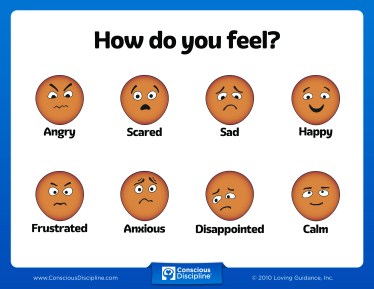
how_do_you_feel_chart-final“So what is your gut reaction? Tell me how you really feel.”

“They are a perfect match—they’re madly in love, and she has nothing but good feelings about him.”

“Let’s go for it! My sense is that we’re doing the right thing.”

These familiar sound bytes indicate that our modern world is deeply sensitive to human emotions. In fact, more often than not, our feelings are our compass, guiding our decision-making process. We call it “following our hearts instead of our heads.”

Of course, we know that emotions are a God-given part of our lives, allowing us to vividly experience the world. But as Christians, we have to ask ourselves if emotional satisfaction should be our primary goal in life.

The answer is clearly no.

The evidence around us suggests that modern emotions are creating subjective standards that aren’t the least bit trustworthy. Broken marriages, abused children, and teenage suicides proclaim out-of-control emotions.

Wants that are falsely identified as needs keep family credit cards maxed out and finances in shambles. And “if it feels good, do it” was a deadly motto for thousands of people now suf­fering from sexually transmitted diseases.

God’s Word provides an objective set of stan­dards for daily living. Naturally, these standards don’t always “feel good” when we first confront them. For example, when God calls upon us to treat others the way we’d like to be treated ourselves, personal sacrifice is nec­essary.

When He requires us to obey His commandments, doing so may conflict with our deepest cravings. Most dis­turbing of all, He firmly challenges us to set all else aside when we submit ourselves to His sovereign will.

Why is dealing with our emotions—facing our feelings—so important?

While positive emotions add luster to life, negative emotions can be very damaging.

If we ignore them, become obsessed with them, or refuse to confront them, they will stunt our spiritual growth. The truth is, we cannot be spiritually mature unless we are emotionally mature.

  1. 1. God made us with emotions and has given us many instructions about them.
  2. 2. We have often neglected emotion in Bible study, thinking, discussion, and practice.
  3. 3. Many of us fall short of pleasing God because we have not properly addressed our emotions. We do not respond fully to God because we are deficient in positive emotions, and we also wreak havoc on ourselves and others because we are unduly influenced by negative emotions.

Nurturing Our Spiritual and Emotional Growth

When God created us in His image, that image included our emotions. God gives us all things to enjoy, and healthy emotions bring color and zest to our lives.

1 Timothy 6:17 (ESV) As for the rich in this present age, charge them not to be haughty, nor to set their hopes on the uncertainty of riches, but on God, who richly provides us with everything to enjoy.  

We’re also told in Scripture to enjoy our work, our mates, our children, our good health, our material blessings, and our God. Without emotions, that would be impossible.

We enjoy God. We enjoy our families and our friends. We enjoy the opportunities God gives us to use our abilities to serve others. Life has purpose and fulfillment. Our spiri­tual life matures and deepens as we appreciate God’s blessings.

When everything is working out—when we move into a new home, when our children finish college and find a good job, when they marry the right woman or man, when we have a good report from the doctor, when we actually have money left over at the end of the month—these occur­rences make us happy. Our emotions respond and react to our physical circumstances.

Our emotions also react to our spiritual circumstances. When a person, overwhelmed with guilt, finds forgiveness by trusting in Jesus Christ, he or she feels cleansed and free.

We often see this happen in women who have carried the guilt and pain of abortion for years; they have found emotional and spiritual healing through Christ’s forgiveness, particularly within the context of a support group for abortion recovery.  (news of Emmanuel’s baptism and 10 baptisms in Kigali, Rwanda at Centre Marembo).

After immorality has destroyed their self-worth, women renounce their unhealthy lifestyles and find joy in obedience to the Lord.

But what if our emotions become a runaway train we can’t control? Perhaps you often feel overwhelmed by your emotions and you see yourself in the following descriptions:

  • Have you experienced rejection or been treated unfairly, or are you struggling with emotional devas­tation from the past—were you molested or neglected?
  • Are you in a marriage that has soured and you feel hopeless?
  • Do others say you seem to “have it all together,” but underneath the surface you are seething with anger and bitterness, unable to forgive things that were done to you?
  • Are you overwhelmed with guilt and regret for things you have done and you just can’t forgive yourself?
  • It is clear to me that people with self-love issues have a hard time with confidence issues.

When we face uncertain, painful, or tragic circumstances in life, we feel sorrow, confusion, anger, and pain. These emotions are also God-given; our Father uses these feelings to push us closer to Him.

Just as physical pain tells us some­thing is wrong with our bodies, so emotional pain may be God’s way of telling us all is not well with our spiritual rela­tionship with Him.[1]

When emotions become destructive, they can make us miserable, ruin our relationships with others, and stunt our spiritual growth. They build a solid wall between us and God, and between us and other people.

In our misery, we can’t help but feel that God is somehow to blame for the tragic events of our past or the unhappiness of our present, and it’s hard for us to trust a God who allows such tragedy to happen to His children.

So we keep our distance from Him. We do just enough to keep our membership in His “club,” but there’s no sense of con­nection, no real enjoyment of God’s presence, and not a lot of honest fellowship with other believers.

These untampered, destructive emotions—selfishness, guilt, fear, worry, inability to forgive, anger, envy, rejection, greed, pride, feelings of inferiority, disappointment, discontentment, grief, and lone­liness—can hinder our spiritual growth and keep us from having a close, trusting relationship with our Creator.

Maybe you’re thinking no one could ever understand the misery your emotions have led you to feel right now. Maybe you secretly think your situation is past healing. If so, please remember what the prophet Jeremiah prayed as he watched his world crumble before his eyes: “Ah, Sovereign LORD, you have made the heavens and the earth by your great power and outstretched arm. Nothing is too hard for you” (Jer. 32:17 emphasis mine).

God’s clearly stated purpose for all of His children is that we grow into spiritual maturity. He can take us around, over, or through any obstacle that has retarded our spiritual growth.

Nothing from our past or in our present is too hard for Him to handle. God created our emotions, and He is able to stop their destructive effect on our lives. He can make our emotions work for us, giving us peace and joy as we learn to respond to our relationship with our Lord rather than react to our circumstances.

The task may seem great, but with God’s help it’s really not all that hard.

Myth#1: Christian love is not a feeling but a duty and action.

Truth: Christian love is a feeling that leads to right actions.

Our heavy emphasis on the actions of love has demoted love. Do we really believe God loves us dutifully but not from his heart?

Deuteronomy 7:7 (ESV) It was not because you were more in number than any other people that the LORD set his love on you and chose you, for you were the fewest of all peoples,

Jeremiah 31:3 (ESV) …the LORD appeared to him from far away. I have loved you with an everlasting love; therefore I have continued my faithfulness to you.

Philippians 1:8 (ESV) For God is my witness, how I yearn for you all with the affection of Christ Jesus.

Philippians 2:1-2 (ESV) So if there is any encouragement in Christ, any comfort from love, any participation in the Spirit, any affection and sympathy, 2  complete my joy by being of the same mind, having the same love, being in full accord and of one mind.

Then why would he want us to love that way? Because genuine Christian love will lead to obedience and service.

1 John 3:18 (ESV)  Little children, let us not love in word or talk but in deed and in truth.

1 John 5:3 (ESV) For this is the love of God, that we keep his commandments. And his commandments are not burdensome.

2 John 1:6 (ESV) And this is love, that we walk according to his commandments; this is the commandment, just as you have heard from the beginning, so that you should walk in it.

Apparently, some people in their day were not expressing love in actions and so needed to hear that emphasis.

Still, God wants us to have his love in our hearts.

John 5:42 (ESV) But I know that you do not have the love of God within you.

Many Scriptures show that there is a difference between love (the emotion) and the actions it leads to

1 Corinthians 13:3 (ESV) If I give away all I have, and if I deliver up my body to be burned, but have not love, I gain nothing.

1 Corinthians 16:14 (ESV) Let all that you do be done in love.

Ephesians 4:2 (ESV) … with all humility and gentleness, with patience, bearing with one another in love…

1 Thessalonians 2:8 (ESV) So, being affectionately desirous of you, we were ready to share with you not only the gospel of God but also our own selves, because you had become very dear to us.

Hebrews 10:24 (ESV) And let us consider how to stir up one another to love and good works…

1 John 5:2 (ESV) By this we know that we love the children of God, when we love God and obey his commandments.

This genuine emotion of love will lead us to the right actions

John 14:15 (ESV) 15  “If you love me, you will keep my commandments.

The greatest commandment is to love God with everything

Mark 12:28-34 (ESV) 28  And one of the scribes came up and heard them disputing with one another, and seeing that he answered them well, asked him, “Which commandment is the most important of all?” 29  Jesus answered, “The most important is, ‘Hear, O Israel: The Lord our God, the Lord is one. 30  And you shall love the Lord your God with all your heart and with all your soul and with all your mind and with all your strength.’ 31  The second is this: ‘You shall love your neighbor as yourself.’ There is no other commandment greater than these.” 32  And the scribe said to him, “You are right, Teacher. You have truly said that he is one, and there is no other besides him. 33  And to love him with all the heart and with all the understanding and with all the strength, and to love one’s neighbor as oneself, is much more than all whole burnt offerings and sacrifices.” 34  And when Jesus saw that he answered wisely, he said to him, “You are not far from the kingdom of God.” And after that no one dared to ask him any more questions.

We have rightly emphasized soul, mind, and strength, but we must not neglect the heart.

In the Bible, the heart includes our thoughts, desires, will, and emotions. God wants us to feel love for him.

If you have strong feelings of love for someone, you are much more likely to treat them well. Our commitment to them should lead us to do right by them regardless of what we are feeling at the moment, but a healthy emotion of love is a very powerful motivation for treating them right.

So with God. Heartfelt love for God will lead us not only to obey him but also to extol (praise enthusiastically) him, celebrate with all our might before him, kiss his feet and wash them with our tears, and seek him earnestly

Psalm 34:1-3 (ESV) I will bless the LORD at all times; his praise shall continually be in my mouth. 2  My soul makes its boast in the LORD; let the humble hear and be glad. 3  Oh, magnify the LORD with me, and let us exalt his name together!

Psalm 63:1 (ESV) O God, you are my God; earnestly I seek you; my soul thirsts for you; my flesh faints for you, as in a dry and weary land where there is no water.
How different would your relationship with God be if you had a deep, heartfelt, emotional love for him? What difference would heartfelt, passionate love for God make to our vision of Loving Like Jesus? … to our purpose of being Joined Together in Love?

Myth#2: Follow your heart.

Truth: Our hearts can easily lead us astray Jeremiah 17:9-10 (ESV) The heart is deceitful above all things, and desperately sick; who can understand it? 10  “I the LORD search the heart and test the mind, to give every man according to his ways, according to the fruit of his deeds.”

If our hearts are pure, they have a valid place in making decisions. Healthy emotion can keep us from making cold, unfeeling, Pharisaical decisions. But the notion of following one’s heart, while paraded as integrity, often means following one’s sinful desires.

If you “have feelings” for someone that you should not be in a love relationship with, do not follow your heart. Instead, put a stop to the thoughts and actions that are generating those feelings.

Will Harley (His Needs/Her Needs) says marital affairs result from creating emotional bonds with someone other than our spouse. Likewise, emotional bonds (love) with money, pleasure, praise, etc. will lead to spiritual affairs against God.

Pathway #1: One pathway to healthier emotions in general and loving God in particular is grasping God’s love more fully. This will help create love in us (1 John 4:19 (ESV) We love because he first loved us…) which will make us healthier emotionally. Having more love will also choke out some of our unhealthy emotions.

Ephesians 3 teaches us that prayer (v. 14), God’s Spirit (v. 16), and other Christians (v. 18) can all help us grasp God’s love more fully. If we can continue to do it mindfully, we should add this to our ongoing prayers

[1] Erwin Lutzer, Managing Your Emotions (Chappaqua, N.Y.: Christian Herald Books, 1981), 17.

 
1 Comment

Posted by on June 11, 2018 in counsel, Encouragement


Working for worth…“Life is a series of inspired follies.”


A mother overheard her son’s little six-year-old friend ask why babies are spanked when they are born. The youngster replied, “To get them 1526556_807300415953891_297388138_nused to it.”

From the human point of view, life appears futile; and it is easy for us to get pessimistic. The Jewish writer Sholom Aleichem once described life as “a blister on top of a tumor, and a boil on top of that.” You can almost feel that definition!

The American poet Carl Sandburg compared life to “an onion—you peel it off one layer at a time, and sometimes you weep.” And British playwright George Bernard Shaw said that life was “a series of inspired follies.”

What a relief to turn from these pessimistic views and hear Jesus Christ say, “I am come that they might have life, and that they might have it more abundantly” (John 10:10). Or to read Paul’s majestic declaration, “Therefore, my beloved brethren, be steadfast, unmovable, always abounding in the work of the Lord, knowing that your labor is not in vain in the Lord” (1 Cor. 15:58).

Do you have a dream? You need one. Dreams give hope. They display a powerful image of what life can be. Has your dream been shattered? Worse yet, has your dream turned into a nightmare and come true? For all of us dreamers, there is hope.

We need to find meaning and purpose! It gives us daily direction. It gives us worth.

Life is “not in vain” if it is lived according to the will of God! This mind-set makes all the difference! It gives us a focus as we wake each morning and begin pondering the new day. It makes calculation easier when we wonder what lies ahead – and helps erase those things past, over which we no longer have control.

A little girl was working very hard and could not be induced to stop and rest. This was before the day of electric lights. When asked, “Why do you not stop and rest?” she replied, “I have just one little candle, and it will soon be burned out. I wish to do what I can while the candle burns.” So it is with us. Our little day will soon be gone. May we do what we can while the candle burns.

Henri J. Nouwen is credited with a profound statement: Sometimes I think of life as a big wagon wheel with many spokes. In the middle is the hub. Often in ministry, it looks like we are running around
the rim trying to reach everybody. But God says, “Start in the hub; live in the hub. Then you will be connected with all the spokes, and you won’t have to run so fast.”
I want to accept the challenge offered by Mark Twain: “Let us so live that when we die even the undertaker will be sorry.”

If we make that choice, we might prefer to adopt the positive lifestyle of Jeanne Hendricks, who said that “Living is not a spectator sport.  No one, at any price, is privileged to sit in the stands and watch the action from a distance.  Being born means being a participant in the arena of life, where opposition is fierce and winning comes only to those who exert every ounce of energy. “

Or perhaps we like the Yiddish Proverb: “Life is the biggest bargain.  We get it for nothing.”

Abraham Lincoln had ten guidelines by which he lived and governed his life. He followed these guidelines until the day he died:

 1. You cannot bring about prosperity by discouraging thrift.

 2. You cannot help small men by tearing down big men.

 3. You cannot strengthen the weak by weakening the strong.

 4. You cannot lift the wage earner by pulling down the wage payer.

 5. You cannot help the poor man by destroying the rich.

 6. You cannot keep out of trouble by spending more than your income.

 7. You cannot further the brotherhood of men by inciting class hatred.

 8. You cannot establish security on borrowed money.

 9. You cannot build character and courage by taking away man’s initiative and independence.

 10. You cannot help men permanently by doing for them what they could and should do for themselves.

 
Leave a comment

Posted by on May 28, 2018 in Encouragement


Where is God when we hurt?


“God is our refuge and strength, an ever-present help in trouble.” Psalm 46:1

“…who comforts us in all our troubles, so that we can comfort those in any trouble with the comfort we ourselves have received from God.” 2 Corinthians 1:4

1. WHEN YOUR REQUEST IS WRONG, GOD IS DENYING YOU

When you ask, you do not receive, because you ask with wrong motives, that you may spend what you get on your pleasures. James 4:3

Psalm 69:6 (43 kb)2. WHEN YOUR TIMING IS WRONG, GOD IS DELAYING YOU

There is a time for everything, and a season for every activity under heaven: Ecclesiastes 3:1

3. WHEN YOUR COURSE IS WRONG, GOD IS DIRECTING YOU

Then the sailors said to each other, “Come, let us cast lots to find out who is responsible for this calamity.” They cast lots and the lot fell on Jonah. Jonah 1:7

From inside the fish Jonah prayed to the LORD his God. Jonah 2:1

4. WHEN YOUR LIFE IS WRONG, GOD IS DISCIPLINING YOU

Hebrews 12:4-11 (NIV)
4  In your struggle against sin, you have not yet resisted to the point of shedding your blood.
5  And you have forgotten that word of encouragement that addresses you as sons: “My son, do not make light of the Lord’s discipline, and do not lose heart when he rebukes you,
6  because the Lord disciplines those he loves, and he punishes everyone he accepts as a son.”
7  Endure hardship as discipline; God is treating you as sons. For what son is not disciplined by his father?
8  If you are not disciplined (and everyone undergoes discipline), then you are illegitimate children and not true sons.
9  Moreover, we have all had human fathers who disciplined us and we respected them for it. How much more should we submit to the Father of our spirits and live!
10  Our fathers disciplined us for a little while as they thought best; but God disciplines us for our good, that we may share in his holiness.
11  No discipline seems pleasant at the time, but painful. Later on, however, it produces a harvest of righteousness and peace for those who have been trained by it.

5. THROUGH IT ALL, GOD IS DEVELOPING YOU

“…being confident of this, that he who began a good work in you will carry it on to completion until the day of Christ Jesus. Philippians 1:6

Keep your lives free from the love of money and be content with what you have, because God has said, “Never will I leave you; never will I forsake you.” Hebrews 13:5

 
Leave a comment

Posted by on May 21, 2018 in God


“A Woman Worthy of Praise” – Proverbs 31:10-31  


We had the meanest mother in the whole world! While other kids ate candy for breakfast, we had to have cereal, eggs, and toast. When others had a Pepsi and a Twinkie for lunch, we had to eat sandwiches. And you can guess our mother fixed us a dinner that was different from other kids had, too.

Mother insisted on knowing where we were at all times. You’d think we were convicts in a prison. She had to know who our friends were, and what we were doing with them. She insisted that if we said we would be gone for an hour, we would be gone for an hour or less.

We were ashamed to admit it, but she had the nerve to break the Child Labor Laws by making us work. We had to wash the dishes, make the beds, learn to cook, vacuum the floor, do laundry, and all sorts of cruel jobs. I think she would lie awake at night thinking of more things for us to do. She always insisted on us telling the truth, the whole truth, and nothing but the truth.

By the time we were teenagers, she could read our minds. Then, life was really tough! Mother wouldn’t let our friends just honk the horn when they drove up. They had to come up to the door so she could meet them. While everyone else could date when they were 12 or 13, we had to wait until we were 16.

Because of our mother, we missed out on lots of things other kids experienced. None of us have ever been caught shoplifting, vandalizing other’s property, or ever arrested for any crime. It was all her fault. We never got drunk, took up smoking, stayed out all night, or a million other things, other kids did. Sundays were reserved for church, and we never missed once. We knew better than to ask to spend the night with a friend on Saturdays.

Now that we have left home, we are all God-fearing, educated, honest adults. We are doing our best to be mean parents just like Mom was.

I think that’s what is wrong with the world today. It just doesn’t have enough mean moms anymore.

We’re calling upon a man whose name is mentioned only once in scripture, yet this choice portion of literature seems to last forever in our minds as we look for a godly woman.

His name was King Lemuel, and he had a good mother. Listen to the opening verses of this chapter: Proverbs 31:1-9: “The sayings of King Lemuel–an oracle his mother taught him: {2} “O my son, O son of my womb, O son of my vows, {3} do not spend your strength on women, your vigor on those who ruin kings. {4} “It is not for kings, O Lemuel– not for kings to drink wine, not for rulers to crave beer, {5} lest they drink and forget what the law decrees, and deprive all the oppressed of their rights. {6} Give beer to those who are perishing, wine to those who are in anguish; {7} let them drink and forget their poverty and remember their misery no more. {8} “Speak up for those who cannot speak for themselves, for the rights of all who are destitute. {9} Speak up and judge fairly; defend the rights of the poor and needy.””

In verse 10, King Lemuel begins with both a question and a declaration:

Question: a wife of noble character, who can find?

Answer: she is worth far more than rubies!

Verse 30 sums it all up: “Charm is deceptive, and beauty is fleeting; but a woman who fears the Lord is to be praised.”

Many times these verses are presented in such a way that a great deal of guilt is brought forth on the part of the women and mothers listening. If you do not get up early and buy-and-sell land or provide your family with hand-sewn clothing…these verses are still for your encouragement.

Instead of listing items of activity which should be part of the Christian woman, it is listing characteristics which are then applied to the culture in which we walk and work. The idea: be this kind of woman in your character and your activities will be determined by the particular circumstances which do apply to your life.

She is diligent (vs. 13, 17-18, 27)

Proverbs 31:13: “She selects wool and flax and works with eager hands.”

Proverbs 31:17-18: “She sets about her work vigorously; her arms are strong for her tasks. {18} She sees that her trading is profitable, and her lamp does not go out at night.”

Proverbs 31:27: “She watches over the affairs of her household and does not eat the bread of idleness.”

   This trait seems to be mixed with a pleasant spirit and a good attitude. She seems to possess pride in what she does…she’s not happy just to “get by” but in doing a good job. She looks for the best buys, she realizes a profit, and works even into the night.

She’s industrious and efficient (vs. 14, 16, 24)

Proverbs 31:14: “She is like the merchant ships, bringing her food from afar.”

Proverbs 31:16: “She considers a field and buys it; out of her earnings she plants a vineyard.”

Proverbs 31:24: “She makes linen garments and sells them, and supplies the merchants with sashes.”

    She’s a thinking individual. In the investment of her time, she looks for dividends and returns. Instead of focusing on the grind, she looks to the benefits her work will bring.

 She’s compassionate (vs. 20, 26).

Proverbs 31:20: “She opens her arms to the poor and extends her hands to the needy.”

Proverbs 31:26: “She speaks with wisdom, and faithful instruction is on her tongue.”

   She has a soft heart that can be touched. And this makes her unique and distinct when contrasted to the man: an illustration….a child is hurt and the two responses: Mother: How are YOU doing? What can I do? (the caring one). Dad: Why were you running? You scratched the wall! Who’s fault was it? (the investigator).

 She has inner beauty (vs. 22, 25).

Proverbs 31:22: “She makes coverings for her bed; she is clothed in fine linen and purple.”

Proverbs 31:25: “She is clothed with strength and dignity; she can laugh at the days to come.”

 IF MARRIED: She’s a devoted wife:

She maintains her husband’s confidence (vs. 11a)

Proverbs 31:11a: “Her husband has full confidence in her….”

   He’s comfortable in being transparent with her. He can share his feelings of insecurity, inadequacy, and disappointment and know she will keep them to herself.

 She meets his needs (vs. 11b).

Proverbs 31:11b: “…and lacks nothing of value.”

   She’s supportive and affectionate. She encourages his pursuits, and is committed to him and his efforts. Remember when God looked at Adam and said: “It is not good that man should be alone.” He made a help-meet that would make him complete. Woman was a special creation of God but also a “corresponding part.”

 She seeks his good (vs. 12)

Proverbs 31:12: “She brings him good, not harm, all the days of her life.”

 She aids his influence (vs. 23)

Proverbs 31:23: “Her husband is respected at the city gate, where he takes his seat among the elders of the land.”

 IF A PARENT: she’s a dependable mother.

She is disciplined (vs. 15, 18-19).

Proverbs 31:15: “She gets up while it is still dark; she provides food for her family and portions for her servant girls.”

Proverbs 31:18-19: “She sees that her trading is profitable, and her lamp does not go out at night. {19} In her hand she holds the distaff and grasps the spindle with her fingers.”

  This is not a verse teaching you into hell if you don’t make homemade biscuits early in the morning, etc. But it is teaching a principle of taking charge of your time so you can meet the family needs. If the role of the husband or father in your house is for him to fix breakfast, then, obviously, the specifics would change.

 She’s organized (vs. 21).

Proverbs 31:21: “When it snows, she has no fear for her household; for all of them are clothed in scarlet.”

   This verse presents a sense of planning. She takes the challenge of a family as just that, a challenge, and seeks to meet it. It’s not just “a cross to bear.”

 She’s dedicated (vs. 27).

Proverbs 31:27: “She watches over the affairs of her household and does not eat the bread of idleness.”

 What will be the results of this kind of woman (28-31).

Proverbs 31:28-31“Her children arise and call her blessed; her husband also, and he praises her: {29} “Many women do noble things, but you surpass them all.” {30} Charm is deceptive, and beauty is fleeting; but a woman who fears the LORD is to be praised. {31} Give her the reward she has earned, and let her works bring her praise at the city gate.”

* Her children will bless her! * Her husband will praise her!

* Her peers will be challenged by her! * Her works will bring their own praise!

* Her Lord will be honored by her life!

A husband’s relationship to his excellent wife: (vs. 11-12, 28-29)

Proverbs 31:11-12: “Her husband has full confidence in her and lacks nothing of value. {12} She brings him good, not harm, all the days of her life.”

Proverbs 31:28-29: “Her children arise and call her blessed; her husband also, and he praises her: {29} “Many women do noble things, but you surpass them all.””

He trusts her (vs. 11). He has no cause for suspicion for her. Deep within, he holds confidence in her.

He benefits from her (vs. 11).

He’s affirmed by her (vs. 12).

He’s impressed with her and sings her praises (vs. 28-29).

Young men – look for this kind of woman!

Young ladies – strive with God’s help to be this kind of woman!

Fathers and married men – Thank God if you have this kind of woman!

THE BEAUTY OF LOVE

A little girl came to her mother one day and said, “Mother, why do you always wear gloves?” The mother replied, “Because my hands are such ugly, unsightly hands.” “But,” said the daughter, “Mother, what is the matter with your hands?” “Please take off your gloves. I want to see your hands.” The mother did so, and as the little girl saw the burned, drawn hands, she said, “O, Mother, put the gloves back on.”

Then she said, “But, Mother, how came your hands so burned and drawn?” She said, “When you were a baby the house was on fire; your bed and  your clothes were on fire and in rescuing you I burned my hands.”

The little girl said, “Take off the gloves again, I do want to look at your hands.” She did so, and the little girl affectionately patted and kissed the unsightly hands and said, “These are the most beautiful hands I have ever seen.” Love beautifies. We need more of it. — By William Moses Tidwell, “Effective Illustrations.”


Leave a comment

Posted by on May 13, 2018 in Marriage


Get Your Priorities Straight – Exodus 20:1-3


Some suggest there’s not a lot to brag about when it comes to flying on Southwest Airlines. Southwest is all about no frills bargains. It’s the Wal-Mart of airlines. (I like the low cost, not paying fees for luggage, and no penalties if you need to make last minute changes!)

But Southwest Airlines has a way of making me feel great about flying on their planes. After the plane lands, a flight attendant grabs the mike and after announcing all the gates for connecting flights she will say, “We hope you enjoyed your flight today. We know that you have choices when you travel and we thank you for choosing Southwest Airlines.”

Southwest Airlines may not give me the greatest airline snacks, but they recognize that I have the power to choose and they respect that. They make me feel good for choosing them instead of Delta or American. Southwest knows that I am a customer and they are so thankful and appreciative of me.

In ancient times there were dozens of gods to choose from. Really neat gods and goddesses with cool names – they went on adventures and had magic powers.

God makes the following statement: Exodus 20:2-3 “I am the LORD your God, who rescued you from the land of Egypt, the place of your slavery. You must not have any other god but me.”

How on earth can God make such a statement? People do have choices, right? So why does God have to be so absolute?  There’s a relationship here when God says: I AM the one who delivered you.

The Israelites who first heard these words at the base of Mount Sinai, had been slaves for four generations in Egypt. God had delivered them from slavery. No other god. No other power. God was the one who had saved them, fed them, nurtured them, and protected them.

God is still delivering people from enslavement. People are enslaved to fear, worry, hatred, addiction, pride, poverty, loneliness, and despair.

People are dehumanized and demeaned by oppressive powers of sin. But God is more powerful than the powers. What other God died for us and redeemed us? What other God made us into a people with purpose. What other God brings us hope? Before we ever thought about choosing God – He chose us!

Because of that relationship, there are certain claims established. God is our God and we are his people. It’s like a marriage. You have a choice in who you marry, but once you marry that relationship is exclusive. So God is all-inclusively exclusive.

God knows that there are choices. I suppose you can choose another god, but once you choose God, it’s exclusive.

Anyone can come to God. God can deliver anyone. But once you enter into the relationship – it’s you and God. It’s us and God. The relationship is established.

Greatest Commandments: Love God with all you heart, soul, strength, and mind. Love your neighbor as yourself.

The first commandment given to God’s chosen people…then and now…asserts the claim of God to absolute sovereignty over the lives of his people. Without this fundamental declaration of divine authority over human lives, there would be no basis for any other of the commandments to follow. This is the first commandment, then, not only in order of their statement but in order of their internal coherence. It has to do with fixing priorities in human affairs.

The fundamental decision that each of us must make in life can be put into words this way: What is going to be the most important thing in my life?

The Other Gods We Are Tempted to Follow

1 John 2:15-17 refers to an unholy trinity of pleasure, possessions, and position. John summarized all this when he wrote: “Do not love the world or the things in the world. If anyone loves the world, love for the Father is not in him. For all that is in the world, the lust of the flesh [i.e., the Pleasure God] and the lust of the eyes [i.e., the Possession God] and the pride of life [i.e., the Position God], is not of the Father but is of the world. And the world passes away, and the lust of it; but he who does the will of God abides for ever” (I John 2:15-17).

These false gods are worshipped in many different forms, but everything that competes with the true God for first place in our lives comes under one of these three headings.

When pleasure becomes your god, work and duty become burdensome. Are we such a pleasure-mad people that we hate anything that smacks of work and duty? What starts as a legitimate diversion for an individual can enslave his time, money, and energy so as to become a sin for him. It may be fishing, hunting, playing tennis, playing or coaching baseball, or any number of things that are good within themselves. But when anyone of them becomes more important to you than your responsibilities as an adult, a provider, a human being, or a Christian, it has become a god to you.

When possessions become your god, money rules your thoughts and ambitions. You begin to neglect spiritual things and find yourself participating in things you would have never believed possible. You find yourself being devious and underhanded, and you begin to shade the truth in order to take unfair advantage in a business deal. What has happened? You have dethroned the Almighty God and put the Almighty Dollar in his place.

When position becomes your god, you begin taking yourself too seriously. You develop an over-inflated ego and think you are smarter and more important than you really are. Your “rights” become all-important to you, so the notion of humbling yourself to serve someone else or turning the other cheek when insulted becomes repulsive to you.

The man or woman who spends a lifetime in pursuit of these idols will lose both them and his or her own soul. The individual whose priorities are right gains and cannot lose. The false gods of human experience promise things they cannot deliver. Sensuality, wealth, and fame certainly don’t guarantee happiness.

The “unholy trinity” cannot get us out of trouble. Creature pleasures won’t chase away depression, money can’t buy love, and fame will not make a marriage happy. All these things together will not secure eternal life, fellowship with God, or heaven.

  • Live for pleasure and carnal satisfaction, and you will burn out and self-destruct! “For he who sows to his own flesh will from the flesh reap corruption” (Galatians 6:8a).
  • Live for God, and your life will take on the special qualities of peace and fulfillment that can be experienced only by those close to deity. You will come to be able to “prove what is the will of God, what is good and acceptable and perfect” (Romans 12:2).

So the first rule of a good life is this: Get your priorities right. Put God first in everything. Let things of the kingdom of God have precedence over every other concern. “No one can serve two masters; for either he will hate the one and love the other, or he will be devoted to the one and despise the other. You cannot serve God and mammon,” said the Lord Jesus (Matthew 6:24).

Paul took up this same theme of life priorities and put it this way: “If then you have been raised with Christ, seek the things that are above, where Christ is, seated at the right hand of God. Set your minds on things that are above, not on things that are on earth. For you have died, and your life is hid with Christ in God” (Colossians 3·1-3).

The Place of This Commandment for Us

If you understand now what God was asking of the Jews at Mt. Sinai, surely you see the relevance of this same command for us. If you are going to live by the rules, you will have to give God first place in your life and put the things of His kingdom first in your behavior.

Why are false doctrines ever taught among us? It is because somebody has not seen the Word of God alone as true and primary and has thought that his own superior knowledge and insight were as good as the commandments of God himself. Someone thought he could improve on the way God had ordered something done.

Why does sinful behavior ever get into your life or mine? It is because we get our priorities confused. We get our feeings hurt and decide we have the right to retaliate; we get depressed and decide it will be all right to reach for some forbidden pleasure as a palliative; we forget that God and his will are all that really matter in this world and begin to neglect the Bible, put off prayer, and place the work of Christ’s church on the back burner of life.

Whenever we put what we want above what we know is right, we have broken the first rule of right living.

Paul explained this under the analogy of a man in military service. “No soldier on service gets entangled in civilian pursuits, since his aim is to satisfy the one who enlisted him” (2 Tim. 2:14).

When someone is serving in the army, military obligations have full claim on him. He cannot run two or three private businesses while on duty. He is on service to his country, and that service demands his full time and attention.

In the same way, those of us who wear the name of Christ are on service for him. Twenty-four hours per day and seven days per week, his concerns must occupy our attention. Someone on service for Christ cannot carry on two or three sideline flirtations with the world. Kingdom business has to come first.

How did the first century Christians do in those first weeks/months following Pentecost?

Acts 2:42-47 (NIV) Ac 42 (NIV)  They devoted themselves to the apostles’ teaching and to the fellowship, to the breaking of bread and to prayer. 43  Everyone was filled with awe, and many wonders and miraculous signs were done by the apostles. 44  All the believers were together and had everything in common. 45  Selling their possessions and goods, they gave to anyone as he had need. 46  Every day they continued to meet together in the temple courts. They broke bread in their homes and ate together with glad and sincere hearts, 47  praising God and enjoying the favor of all the people. And the Lord added to their number daily those who were being saved.

How did it change within those first 50+ years?

Hebrews 2:1-4 (NIV)  We must pay more careful attention, therefore, to what we have heard, so that we do not drift away. 2  For if the message spoken by angels was binding, and every violation and disobedience received its just punishment, 3  how shall we escape if we ignore such a great salvation? This salvation, which was first announced by the Lord, was confirmed to us by those who heard him. 4  God also testified to it by signs, wonders and various miracles, and gifts of the Holy Spirit distributed according to his will.

Hebrews 3:7-12 (NIV) So, as the Holy Spirit says: “Today, if you hear his voice, 8  do not harden your hearts as you did in the rebellion, during the time of testing in the desert, 9  where your fathers tested and tried me and for forty years saw what I did. 10  That is why I was angry with that generation, and I said, ‘Their hearts are always going astray, and they have not known my ways.’ 11  So I declared on oath in my anger, ‘They shall never enter my rest.'” 12  See to it, brothers, that none of you has a sinful, unbelieving heart that turns away from the living God.

Hebrews 5:11-14 (NIV) We have much to say about this, but it is hard to explain because you are slow to learn. (no thros: Hebrews 6:12: We do not want you to become lazy, but to imitate those who through faith and patience inherit what has been promised. -lazy) 12 In fact, though by this time you ought to be teachers, you need someone to teach you the elementary truths of God’s word all over again. You need milk, not solid food! 13  Anyone who lives on milk, being still an infant, is not acquainted with the teaching about righteousness. 14  But solid food is for the mature, who by constant use have trained themselves to distinguish good from evil.

Hebrews 10:25-31 (NIV)  Let us not give up meeting together, as some are in the habit of doing, but let us encourage one another–and all the more as you see the Day approaching. 26  If we deliberately keep on sinning after we have received the knowledge of the truth, no sacrifice for sins is left, 27  but only a fearful expectation of judgment and of raging fire that will consume the enemies of God. 28  Anyone who rejected the law of Moses died without mercy on the testimony of two or three witnesses. 29  How much more severely do you think a man deserves to be punished who has trampled the Son of God under foot, who has treated as an unholy thing the blood of the covenant that sanctified him, and who has insulted the Spirit of grace? 30  For we know him who said, “It is mine to avenge; I will repay,” and again, “The Lord will judge his people.” 31  It is a dreadful thing to fall into the hands of the living God.

The pious Christian, imitating his Jewish counterpart of generations ago, would do well to repeat the words of the Shema frequently: “Hear, 0 Israel: The Lord our God is one Lord; and you shall love the Lord your God with all your heart, and with all your soul, and with all your might” (Deuteronomy 6:4-5).

Conclusion — The God of the Bible is a jealous God. His jealousy is a moral excellence rather than flaw, because it is the jealousy of a husband who justly desires his wife’s exclusive affection.

It is not the sort of suspicious and accusing jealousy some husbands display toward their wives but the sort of holy jealousy a man and woman have over each other from love. A good man would be horrified if anyone else were to get any part of the devotion and affection that he alone has the right to receive from his wife.

In the same way, God will have first place or no place in your life. He will not share your loyalties and affections. If you will not give him the best and purest of your love, he will not take the leftovers.

Enthrone the true God in your heart, and keep that priority fixed forever.


Leave a comment

Posted by on May 7, 2018 in God