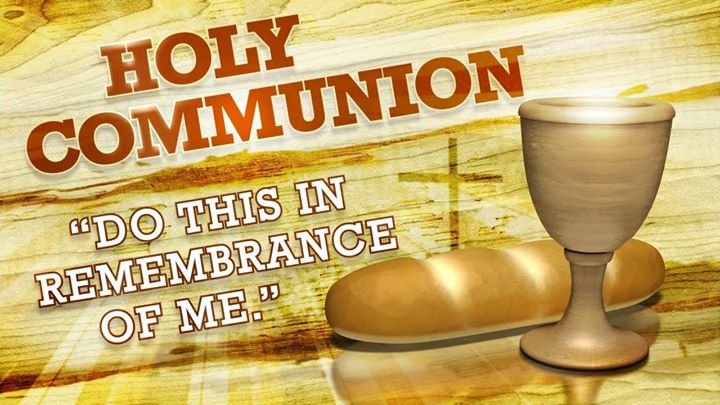
 There is much disagreement in the religious community of “Christendom” as to when the Lord’s Supper, commanded by Jesus, should be observed:
Matthew 26:26-29 (ESV)
Mt 26 Now as they were eating, Jesus took bread, and after blessing it broke it and gave it to the disciples, and said, “Take, eat; this is my body.”
27 And he took a cup, and when he had given thanks he gave it to them, saying, “Drink of it, all of you,
28 for this is my blood of the covenant, which is poured out for many for the forgiveness of sins.
29 I tell you I will not drink again of this fruit of the vine until that day when I drink it new with you in my Father’s kingdom.”
Mark 14:22-25 (ESV)
Mk 22 And as they were eating, he took bread, and after blessing it broke it and gave it to them, and said, “Take; this is my body.”
23 And he took a cup, and when he had given thanks he gave it to them, and they all drank of it.
24 And he said to them, “This is my blood of the covenant, which is poured out for many.
25 Truly, I say to you, I will not drink again of the fruit of the vine until that day when I drink it new in the kingdom of God.”
Luke 22:17-20 (ESV)
Lk 17 And he took a cup, and when he had given thanks he said, “Take this, and divide it among yourselves.
18 For I tell you that from now on I will not drink of the fruit of the vine until the kingdom of God comes.”
19 And he took bread, and when he had given thanks, he broke it and gave it to them, saying, “This is my body, which is given for you. Do this in remembrance of me.”
20 And likewise the cup after they had eaten, saying, “This cup that is poured out for you is the new covenant in my blood.
We do not consider the Lord’s Supper in a sacramental way. A sacramental view would mean that the ceremony itself has a certain power to impart a blessing apart from the heart of a participant. In this view, the emblems of Communion are felt to have intrinsic power. However, the Bible teaches that the emblems offer no blessing unless the heart of a participant is right with God.
We simply eat bread and drink grape juice when we do no partake biblically 1 Corinthians 11:20 (ESV)
1Co 20 When you come together, it is not the Lord’s supper that you eat.
Therefore, we do not believe that the Lord’s Supper actually becomes the body and blood of Christ.
Most groups serve communion infrequently. For instance, Lifeway surveyed 1,066 Southern Baptist pastors and found that
- 1 percent offered the Lord’s supper weekly,
- 18 percent once a month,
- 15 percent 5–10 times a year,
- 57 percent quarterly, and
- 8 percent 0–3 times a year.
Many mainline churches would have similar practices. The Roman Catholic Church requires taking the Eucharist (bread) only once a year, but it does offer mass daily.
The church of Christ takes the Lord’s supper every Lord’s day, since that was the practice of the early church (Acts 20:7). Bible scholars agree that the early church had weekly communion:
- John Calvin: “We ought always to provide that no meeting of the church is held without the word, prayer, the dispensation of the Supper, and alms. We may gather from Paul that this was the order observed by the Corinthians, and it is certain that this was the practice many ages after” (Institutes of Christian Religion).
- Adam Clarke, Methodist: “Intimating by this, that they were accustomed to receive the holy sacrament on each Lord’s Day.”
- C. Hervey, Church of England: “This is also an important example of weekly communion as the practice of the first Christians” (Pulpit Commentary).
- Albert Barnes, Presbyterian: “It is probable that the apostles and early Christians celebrated the Lord’s Supper on every Lord’s Day” (Barnes’ Notes).
Several theoretical views may be entertained.
Some allege that the communion need not be observed at all; they contend it was a cultural phenomenon of the first century, and thus not binding today.
Many argue that the time element is inconsequential. Thus the supper might be served at any time—daily, weekly, monthly, or even annually.
Members of the church of Christ generally have maintained that the Lord’s supper ought to be eaten each Sunday, and that the communion is restricted to that day.
What does the New Testament evidence suggest?
The Cultural Argument
The notion that the Lord’s supper was merely a cultural circumstance of the early church, and so was never intended to be an abiding obligation upon Christians for all time, is refuted by the explicit testimony of the New Testament.
Paul instructed the saints in Corinth that as long as they ate the elements of the sacred supper, they would proclaim the Savior’s death “till he come”
1 Corinthians 11:23-26 (ESV)
1Co 23 For I received from the Lord what I also delivered to you, that the Lord Jesus on the night when he was betrayed took bread,
24 and when he had given thanks, he broke it, and said, “This is my body which is for you. Do this in remembrance of me.”
25 In the same way also he took the cup, after supper, saying, “This cup is the new covenant in my blood. Do this, as often as you drink it, in remembrance of me.”
26 For as often as you eat this bread and drink the cup, you proclaim the Lord’s death until he comes.
The apostle clearly anticipated that Christians would be honoring the Lord, by partaking of the communion, until the very end of time.
The Any-Time Position
A vastly greater segment of those who profess an allegiance to Christianity maintains that the time factor is irrelevant.
These folks, though obviously sincere, overlook two important matters:
- The issue of authority—what does the New Testament actually authorize?
- The spiritualconnection between the Lord’s supper and the Lord’s day.
Other days authorized?
Let us explore the matter of authority. We will assume, for the moment, that the concept of authority is important to most people. Some argue, therefore, that there is authority for observing the Lord’s supper on days other than Sunday. The main passage advanced in support of this position is Acts 2:46. And they, continuing daily with one accord in the temple, and breaking bread from house to house, did eat their meat [food] with gladness and singleness of heart.
Not a few writers contend that “breaking bread” in this passage is an allusion to the Lord’s supper, and that the communion therefore was being observed daily. The argument is flawed in two particulars:
The term “daily” denotes the frequency with which the disciples were meeting in the temple. Grammatically, “daily” does not modify “breaking bread.” There is no support for “daily . . . breaking of bread” here, regardless of what “bread” signifies in the text.
The “breaking bread” of this passage is not a reference to the Lord’s supper. This is evidenced by the fact that the phrase is paralleled with “eat their food” in the same clause.
“Food” translates the Greek term trophe, which essentially means “nourishment” (Arndt and Gingrich 1967, 835). The word is employed sixteen times in the Greek Testament, and never is it used of the communion, for such was not designed as a nourishment for the body.
Note the comment of Presbyterian commentator Albert Barnes:
Here [“meat” (KJV)] it means all kinds of sustenance; that which nourished them — trophes — and the use of this word proves that it does not refer to the Lord’s supper; for that ordinance is nowhere represented as designed for an ordinary meal, or to nourish the body(1956, 59).
- T. Robertson, a prominent Baptist scholar, observed that the language is “clearly referring to the regular meals at home” (1930, 3.39).
No historical evidence
Aside from the considerations discussed above, there is no historical evidence from the post-apostolic period that Christians partook of the Lord’s supper on occasions other than Sunday.
One historian notes: “The Lord’s supper was a constant feature of the Sunday service. There is no second-century evidence for the celebration of a daily eucharist” (Ferguson 1971, 96).
A spiritual connection
Finally, this factor should be taken into consideration: there is a spiritual connection between the Lord’s supper and the Lord’s day that is severed when the communion is attempted at other times within the week. The supper consists of two elements—the bread and the fruit of the vine, which symbolize the Savior’s body and blood, i.e., his death.
At the time of his death, Jesus’ flesh was broken open (his bones were not broken), and his blood was poured out. This was to pay the price for human redemption:
Matthew 26:26-28 (ESV)
Mt 26 Now as they were eating, Jesus took bread, and after blessing it broke it and gave it to the disciples, and said, “Take, eat; this is my body.”
27 And he took a cup, and when he had given thanks he gave it to them, saying, “Drink of it, all of you,
28 for this is my blood of the covenant, which is poured out for many for the forgiveness of sins.
Acts 20:28 (ESV)
Ac 28 Pay careful attention to yourselves and to all the flock, in which the Holy Spirit has made you overseers, to care for the church of God, which he obtained with his own blood.
Ephesians 1:7 (ESV)
Eph 7 In him we have redemption through his blood, the forgiveness of our trespasses, according to the riches of his grace’’’”0
On the first day of the week, three days after his death, Christ came out of the grave. When, therefore, the communion is eaten on Sunday, there is a vital link between the Savior’s death and his resurrection—a connection that does not exist at any other time. This point, taken with other supporting evidence, is compelling indeed.
Sunday Communion
The only authoritative case that can be made for the frequency of the Lord’s supper is this: it was bserved each Lord’s day by the early Christians, and, so far as the evidence reveals, on that day only.
There is the suggestion in the inspired record that after the Lord was resurrected, the disciples began meeting together on the first day of the week.
For example, John 20:26 indicates that “after eight days,” i.e., on Sunday, the Master’s men were assembled again. Robertson says this passage “seems to mean that from the very start the disciples began to meet on the first (or eighth) day” (5.336).
Some fifty days following Jesus’ death, the church was established on the day of Pentecost, which always occurred on a Sunday (Leviticus 23:15-16).
Noted historian John Mosheim wrote: All Christians were unanimous in setting apart the first day of the week, on which the triumphant Savior arose from the dead, for the solemn celebration of public worship (1959, 35).
From that first Lord’s day the members of Christ’s church were observing the communion in a regular fashion. Luke records that they “continued steadfastly [the imperfect tense form suggests a sustained practice] . . . in the breaking of bread” (Acts 2:42).
Scholars are almost wholly agreed that “the breaking of bread” is a reference to the communion supper.
Luke is speaking of the greatest things done in this first congregation and characterizes the celebration of the Lord’s Supper by use of the expression that was common at that time: “breaking the bread” (Lenski 1961, 116).
But the evidence gets even stronger! Near the conclusion of his third missionary campaign, Paul departed from Philippi just after “the days of unleavened bread” (which followed the Jewish Passover [cf. Acts 20:6]). He was hurriedly making his way toward Jerusalem, where he hoped to arrive by Pentecost, slightly more than a month away (cf. 20:16). In spite of the fact that he still had a journey of several hundred miles remaining, he took the time to “tarry” seven days in Troas, the port city of Mysia.
Why this delay in view of his urgent mission? The most reasonable answer is this: the apostle wanted to meet with the whole church in Troas, and he knew the brethren would be assembled on the Lord’s day. Note Luke’s use of a conjunction to mark the transition between verses six and seven of chapter twenty.
Certain texts, as reflected by the King James Version, simply state that the “disciples came together.” Most others have “we were gathered together” — which is another of those references indicating Luke’s presence with Paul.
But the expression, “were gathered together,” is a passive voice form, signifying to “bring or call together, gather a number of persons” (Arndt and Gingrich, 790).
The suggestion is this: this assembly was convened by an extraneous directive—the most logical inference being by divine authority. Sunday worship was not an arbitrary decision of the first-century church.
The primary design of the meeting was “to break bread.” In the grammar of the Greek Testament, this reflects an infinitive of purpose. In other words, the prime purpose of the Lord’s day meeting was to observe the supper.
The implication is clear: if the communion is not observed, there really is no authority, certainly no necessity, for even meeting every Sunday!
There is, however, convincing evidence that the primitive church did assemble every Lord’s day. In his first Corinthian epistle, Paul commanded those Christians to contribute into the church treasury “on the first day of every week” (16:2, NASB).
While the term “every” (Greek kata) is not brought into the English rendition by either the KJV or the ASV, it is present in the original text. J. H. Thayer translated the phrase: “on the first day of every week” (1958, 328).
When one draws these points together, here is the irresistible conclusion:
- The early church, under the oversight of inspired apostles, met regularly—upon the first day of each week.
- The primary purpose of their Sunday meeting was to observe the Lord’s Supper.
- The communion supper, therefore, was observed each Lord’s day by the apostolic church.
Conclusion
What clearer evidence could be desired for those who wish to replicate the practice of the ancient church in their own lives? Where is the authority for doing otherwise?
Christians must urge their contemporaries to return to the apostolic pattern of worship. Worship must be according to divine truth (John 4:24), not mere human inclination.
- There are commonly many different observance schedules people use for the Lord’s Supper.
- The uncommon way of observing every Lord’s Day is nevertheless commonly seen as the New Testament way.


