RSS

Author Archives: TJ's Man

Unknown's avatar

About TJ's Man

Began working with the Sunset Avenue church of Christ in Madera, California on September 8, 2013.

A Celebration of Family — Do I Really Make A Difference?


I’m not sure I can adequately express how excited this event is for Terry and me. We are getting to meet some of you who have family members worshipping here at Sunset Avenue … and we’ve already heard some of the stories about you!

Where does it begin? Psalm 127:1-5 (NIV)
1  Unless the LORD builds the house, its builders labor in vain. Unless the LORD watches over the city, the watchmen stand guard in vain.
2  In vain you rise early and stay up late, toiling for food to eat– for he grants sleep to those he loves.
3  Sons are a heritage from the LORD, children a reward from him.
4  Like arrows in the hands of a warrior are sons born in one’s youth.
5  Blessed is the man whose quiver is full of them. They will not be put to shame when they contend with their enemies in the gate.

There are some people in 21st century who do not feel this way…a modern version might sound more like this: Lo, children are a burden from the Lord; and the fruit of the womb must be his way of testing us. As the source of endless work and continual aggravation, so are the children of one’s youth. Unhappy is the man who hears his neighbor ask, “Do all those kids belong to you?”

We can understand why folks might feel that way. Some children are rebellious, disobedient, disrespectful — not very pleasant to be around. Some young couples have decided not to have any at all.

In those families, what has gone wrong? Where might we lose God’s perspective? The first verse of Psalm 127 may provide us with a clue. Unless the LORD builds the house, its builders labor in vain.

pic1Stable and successful homes are built by God. He’s the architect and the general contractor. He’s drawn the blueprint, and He wants to provide the direction and give the orders. All He needs are some laborers–husbands, wives and children–who will study the blueprint provided in His Word, then follow His di­rections. Any other procedure is going to result in frustration and failure. It’s because of this simple fact that many in foreign countries that otherwise do not believe in God…are interested in learning about God…because they see couples who have great homes!

Some folks think there are other ways to produce a happy home. For example, “Work, work, work, as hard as you can. Provide all the material things of this world for your children. Maybe that will make them happy.” If dad doesn’t make enough money to do it, mom goes to work too. Read on in Psalm 127. 2  In vain you rise early and stay up late, toiling for food to eat– for he grants sleep to those he loves.

The bread of sorrows is simply bread secured through toil and trouble. Food is essential, but God can provide it without tak­ing fathers and mothers away from their children day and night to pursue that elusive and almighty dollar. God has no time for laziness. He blesses honest work, but he can supply the things we need without anxious efforts and ceaseless self‑activity. The Psalmist says God provides for his beloved ones, literally, “in sleep,” the idea being in calm, restful, confident trust in him.

Every new child born into a Christian home is a gracious gift from God, a lovely legacy from the Lord entrusted to our care to be loved, cherished, provided for and properly molded for his glory. “The fruit of the womb is his reward.”

A husband and wife ought to give their child to God even before he is born. And they should pray together after the birth of the child, willingly dedicating themselves to train him as God directs.

 “Happy is the man who hath his quiver full of them: they shall not be ashamed, but they shall speak with the enemies in the gate.”

Wives, submit yourselves (vv. Ephesians 5:22-24).

22  Wives, submit to your husbands as to the Lord.
23  For the husband is the head of the wife as Christ is the head of the church, his body, of which he is the Savior.
24  Now as the church submits to Christ, so also wives should submit to their husbands in everything.

He gives two reasons for this command: the lordship of Christ (Eph. 5:22) and the headship of the man in Christ (Eph. 5:23). When the Christian wife submits herself to Christ and lets Him be the Lord of her life, she will have no difficulty submitting to her husband.

1 Corinthians 11:3 (NIV)
3  Now I want you to realize that the head of every man is Christ, and the head of the woman is man, and the head of Christ is God.

Husbands, love your wives (vv. 25-32).

25  Husbands, love your wives, just as Christ loved the church and gave himself up for her
26  to make her holy, cleansing her by the washing with water through the word,
27  and to present her to himself as a radiant church, without stain or wrinkle or any other blemish, but holy and blameless.
28  In this same way, husbands ought to love their wives as their own bodies. He who loves his wife loves himself.
29  After all, no one ever hated his own body, but he feeds and cares for it, just as Christ does the church-30  for we are members of his body.
31  “For this reason a man will leave his father and mother and be united to his wife, and the two will become one flesh.”
32  This is a profound mystery–but I am talking about Christ and the church.

The husband is not to “use” his wife for his own pleasure, but rather is to show the kind of love that is mutually rewarding and sanctifying. The marriage experience is one of constant growth when Christ is the Lord of the home. Love always enlarges and enriches, while selfishness does just the opposite.

As he loves her, he is nourishing her. How many people have confessed, “I am starved for love.” There should be no starvation for love in the Christian home, for the husband and wife should so love each other that their physical, emotional, and spiritual needs are met.

If both are submitted to the Lord, and to each other, they will be so satisfied that they will not be tempted to look anywhere else for fulfillment.

Ephesians 6:1-4 (NIV)
1  Children, obey your parents in the Lord, for this is right.
2  “Honor your father and mother”–which is the first commandment with a promise–
3  “that it may go well with you and that you may enjoy long life on the earth.”

4  Fathers, do not exasperate your children; instead, bring them up in the training and instruction of the Lord.

Let the audience see what exasperation looks like!

THE BEST GIFT YOU CAN GIVE YOUR CHILDREN?

LOVE AND RESPECT (Ephesians 5:33)

33  However, each one of you also must love his wife as he loves himself, and the wife must respect her husband.

pic2The secret to the communication code is this:
1. Love is her deepest need and respect is his deepest need. I believe this based on the Bible.
Ephesians 5:33 “Nevertheless let each individual among you also love his own wife even as himself; and let the wife see to it that she respect her husband.”

In other words, a wife needs to feel love and a husband needs to feel respect.

Without love she reacts without respect, and without respect he reacts without love.

Marital craziness is when we keep doing the same thing over and over. The topics change but the crazy cycle continues. Unless couples discover the secret that cracks the communication code, and learn how to get off the Crazy Cycle, things tend to stay a bit crazy! And it really gets crazy when a husband tells his wife, “Oh, stop feeling this way.” Or, a wife says to her husband, “Oh, stop feeling this way.”

The marriage book…and the dieting book.

Read the words from the I Love You card.

This is what I’m really saying every time I say I Love You…

I’m really trying to say so much more than just those three little words;

I’m trying to express so many wonderful feelings about you…

I’m trying to say that you mean more to me than anyone else in the world.

I’m trying to let you know that I adore you and that I cherish the time we spend together.

I’m trying to explain that I want you and that I need you and that I get lost in wonderful thoughts every time I think about you.

And each time I whisper “I love you,” I’m trying to remind you that you’re the nicest thing that has ever happened to me.”

Another card: I love you with all my heart. And my body generally goes where my heart does.

How Being a Strong Christian Will Help Us Have A Happy Marriagepic3

  • Christians are concerned about others.
  • Christians practice love.
  • Christians want the best for others.
  • Christians have a positive sexual ethic.
  • Christians can forgive.
  • Christians make good fathers and mothers.
  • Christians provide for their own.
  • Christians are kind.
  • Christians are unselfish.
  • Christians honor/respect each other

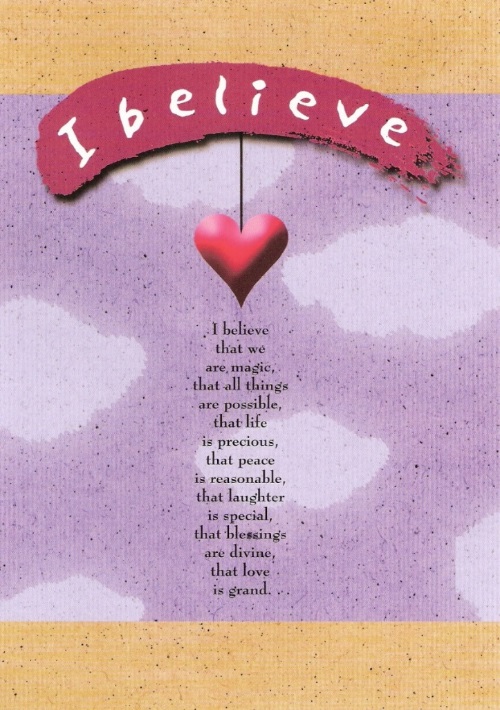
I believe that we are magic, that all things are possible, that life is precious, that peace is reasonable, that laugher is special, that blessings are divine, that love is grand…And that you are the best thing that ever happened to me. I love you.

ADVISE

1.Make A Commitment
2. Make it a Priority
3. Make your marriage fun
4. Learn to communicate, talk, and fight (fair)
pic4My wife & I never fight . . . “But sometimes you can hear us reasoning things out for several blocks.”

5. Deal with your Demons!

  • Find out what you’re doing to harm your marriage and heal it.
  • Dictatorship?
  • Financial irresponsibility?
  • Temper?
  • Pornography?
  • Substance Abuse?
  • You name it…get help! I volunteer my services free of charge…and others here will, too.

“Buy Me a Rose” lyrics
He works hard to give her all he thinks she wants…A three car garage, her own credit cards. He pulls in late to wake her up with a kiss good night. If he could only read her mind, she’d say:

Buy me a rose, call me from work, Open a door for me, what would it hurt; Show me you love me by the look in your eyes. These are the little things I need the most in my life.

Now the days have grown to years of feeling all alone, And she can’t help but wonder what she’s doing wrong. Cause lately she’d try anything to turn his head. Would it make a difference if she said:

Buy me a rose, call me from work, Open a door for me, what would it hurt; Show me you love me by the look in your eyes. These are the little things I need the most in my life.

And the more that he lives the less that he tries To show her the love that he holds inside.
And the more that she gives the more that he sees…This is a story of you and me

So I bought you a rose on the way home from work, To open the door to a heart that I hurt. And I hope you notice this look in my eyes Cause I’m gonna make things right For the rest of your life. I’m gonna hold you tonight. Do all those little things …For the rest of your life.


Leave a comment

Posted by on July 5, 2014 in Article


Christian Evidences Series: The Bible is the Word of God


Studies in Christian Evidences by Waymon D. Miller

(This little booklet was developed in 1961 but is now out of print. For that reason, it is provided here for your use and edification in hopes that one more soul will come to believe today)

INTRODUCTION:
1. The Bible is the most amazing and wonderful Book the world has ever
known.
(a) It occupies an unchallenged position amid the myriad of books, and
has never had a serious rival.
(b) It is an incomparable Volume, and never has any other book
approached it in content or distinctiveness.
(c) It is the one Book of all books known to man worthy of its unique
title of the “Bible”-the Book.

2. The Bible itself forms an invincible argument in the area of
Christian evidences.
(a) The Bible is a Book that must be reckoned with by those who deny
Christianity, its God, and its Founder.
(b) The Bible is the very basis of Christianity, and to disprove it
would be to destroy the foundation of Christianity.
(c) Yet the Bible has resisted every attempt through the ages to
disprove it, and no other book could have survived the vigorous attacks
made upon the Bible.

3. The Bible proposes numerous vital issues which must be met by the
unbeliever:
(a) The Bible has existed for thousands of years, and its very presence
in the world must be accounted for.
(b) The Bible asserts that it is the product of divine revelation and
inspiration.
(c) There is conclusive evidence of the reliability of the text and
canon of the Bible.
(d) There is a supernatural atmosphere about the Bible found in no other
book.
(e) The reliability and integrity of the Bible have survived every
attempt to disprove them.
(f) The hope of the Christian religion is established upon the integrity
of the Bible.

4. This study will present some reasons why Christians accept the Bible
as being the inspired Word of God.
(a) In our age of skepticism, the Bible has been subjected to ridicule,
with unbelievers urging that it is no more than a book of superstition,
folklore, and the common religious beliefs of an unenlightened age.
(b) If the Bible does not merit our faith in it, surely the age of
superior knowledge in which we live could prove this.
(c) Must Christians accept the Bible as God’s Word merely upon blind
faith, or is there valid evidence to support our belief that it is a
divine revelation?

I. THE UNIQUENESS OF THE BIBLE:
1. The Bible is a book distinctly and remarkably different from any
other book ever written.
(a) It is so different in nature and content that this presents one of
its most impressive aspects.
(b) It offers to the world a Book of inimitable style, character,
content, message, meaning, and purpose.
(c) Since no other book has ever been produced like it, the very
uniqueness of the Bible separates it from all others.

2. The Bible is unique for the manner in which it was written.
(a) About 40 persons participated in the writing of the Bible, and about
1600 years were required to write it.
(b) Its writers were men of widely differing positions: kings, prophets,
priests, statesmen, fishermen, shepherds, the untutored, the educated,
scribes, poets, military leaders, a tentmaker, a doctor, and prisoners.
(c) The authors of Biblical books wrote under widely varying
circumstances: while on thrones, in prisons, in exile, in captivity, some
despised and some honored.
(d) The contents of the Bible presents a variety contained in no other
book: autobiography, biography, history, sermons, psalms, proverbs,
poetry, prophecy, romance, oratory, drama, doctrinal discussions, civil
legislation, governmental decrees, parables, direction for worship,
apocalyptic visions, personal letters, general letters, rituals, maxims,
philosophy, hymns, obituaries, character appraisals, and miracles.
(e) The circumstances under which its authors wrote are also unique: 
many writers of the Bible were unknown to one another, they lived at
different times, they wrote in different countries, they wrote in
different languages, they wrote upon different subjects, and they wrote
in different circumstances.
(f) Despite these astonishingly diverse situations, there is a wonderful
unity in all the writings of the Bible.

3. the Bible presents a uniqueness in its physical structure seen in no
other book.
(a) The Bible, though comprising one unified volume, is actually
comprised of 66 separate books.
(b) Although there is evident a master Mind that produced it, the actual
writing was done by 40 writers.
(c) The Bible contains two major divisions: the Old and the New
Testaments. They are as unlike in character as two separate books could
be, but are perfectly harmonious.
(d) Some of the individual books are vastly different in character, yet
in complete accord with one another.
(e) The two major divisions of the Bible were written in different
languages (Hebrew and Greek), but this presents no problem whatever in
the harmony between them.
(f) The length of Biblical books varies greatly from five books
containing only one chapter to Psalms which contains 150 chapters. The
difference in the length of books or chapters, however, does not affect
its harmony.
(g) The language of the Bible is unmatched in majesty of style.

II. THE INFLUENCE OF THE BIBLE IS SUPERNATURAL:
1. Ever since the Bible became available to the masses it has exerted a
supernatural influence upon the lives of men.
(a) No other book has been able to arrest the attention and grip the
soul of man as has the Bible.
(b) It has always been the most important Book in the world to those
who have given it serious consideration.
(c) It possesses a supernatural force of attraction that draws men to
it. Matthew Arnold said, “To the Bible men will return, because they
cannot do without it.”

2. The Bible is the most widely circulated book known to man.
(a) The Septuagint, completed around 170 B.C., was the first important
translation of a book ever made. This was a translation of the Old
Testament from Hebrew into the Greek.
(b) The Bible was the first book printed on movable type. This was done
by Johannes Gutenburg in 1455. One of the three existing copies of it
was purchased by the Library of Congress in 1930 for $305,000.00. Copies
of the Bible are the most valuable books in the world.
(c) The Bible is the only book ever sent by cable across the ocean, and
it forms the longest telegram ever sent. On May 20, 1881, the revision
of the New Testament was finished in England. The following morning the
books of Matthew through Romans were printed in the “Chicago Times” and
the “Chicago Tribune.”
(d) The number of copies of the entire Bible, New testaments, and
portion of the Bible printed run into astronomical figures. No book has
ever presented serious competition to the Bible as the world’s most
popular book.

3. The Bible is the most translated Book the world has ever known.
(a) It has been said that the cream of human literary production could
be defined as those books translated into three or more languages.
(b) No book has ever been translated and retranslated so many times as
has the Bible, for it has been translated into every major language and
dialect in the world.
(c) The last figure available indicates that the Bible has now been
translated into 1061 languages and dialects.

4. The Bible is the most popularly used book in the world.
(a) In 1952, Thomas Nelson and Sons employed a firm to determine the
extent of Bible reading in America.
(b) The report revealed that 90% of all Protestant families have Bibles,
and most of them have more than one Bible; that 95% of Americans read the
Bible at some time, and 41% read it at least once a week.

5. The bible has exerted the most profound moral and ethical influence
of any book the world has ever known.
(a) Horace Greeley stated: “It is impossible to enslave mentally or
socially a Bible-reading people. The principles of the Bible are the
ground work of human freedom.”
(b) Lord Bacon said, “There was never found, in any age of the world,
either religion or law that did so highly exalt public good as the
Bible.”
(c) The Bible has become the supreme standard of right and good among
men and nations everywhere.
(d) Everywhere the Bible goes it exerts a transforming influence upon
men. Lifting them to the greatest heights of moral and spiritual
attainment.

III. THE BIBLE IS INSPIRED OF GOD:
1. The supreme claims made by the Bible for itself is that it is God’s
divine revelation to man, and as such that it is a supernatural and
inspired Book.
(a) The Bile contends that in its production God moved in a miraculous
manner upon its writers to enable them to infallibly record His will.
(b) Indicative of its divine origin, the Bible is represented as being
“the word of God” (Eph. 6:17), “the oracles of God” (I Peter 4:11), “the
writing of God” (Exodus 2:16), the “wisdom of God” (Luke 11:49), the
“word of his grace” (Acts 20:32), and the “word of truth” (James 1:18).
(c) Many times in the Old Testament it is stated that God spoke to such
men as Moses (Num. 5:1; 14:10), Joshua (Joshua 3:7; 5:9), Jacob (Gen.
35:15), and David (I Kings 6:12; 2 Sam. 23:2).
(d) The writings of Moses were recordings of what God had spoken unto
him. (Exodus 20:1; 24:4; 25:1)
(e) Twenty times in his writings Jeremiah affirmed that “the word of the
Lord came unto me.” (Jeremiah 1:4)
(f) Forty-six times Ezekiel affirmed that “the word of the Lord came
unto” him. (Ezekiel 1:3)
(g) Repeatedly the prophets contended that God spoke to them. (Isaiah
1:2; Jonah 1:1; Haggai 1:1; Zech. 4:8; 2 Peter 1:21)
(h) A host of Scriptures affirm that God spoke through men to reveal His
will to them. (2 Sam. 23:2; Isaiah 1:2; Jer. 1:7; Ezek. 2:7; Matt. 1:22;
Mark 12:36; Luke 1:70; Acts 1:16; Hebrews 1:1)
(i) The writers of the thirty-nine Old Testament books affirmed more
than 2,000 times that God spoke to them.
(j) Almost half of the book of Exodus (48%, or 15,750 words) is an
account of what God spoke directly.
(k) In the 40 chapters of Exodus alone, it is stated 161 times the “God
spake these words.”

2. The New Testament also extends the same claims as to its divine
origin.
(a) Jesus attested the authority of the Old Testament by frequently
quoting from it and referring to it as the “word of God” (John 10:35)
and the “wisdom of God” (Luke 11:49).
(b) Jesus promised to endow the apostles with divine power, to make
revelations through them, and to inspire their teaching. (Matt.
10:19-21; John 14:26; 15:26-27; 16:13)
(c) The apostles steadfastly maintained that the truths that they taught
were divine revelations. (I Cor. 2:13, 19; 14:37; Gal. 1:12; I Peter
1:11-12; 2 Peter 3:2; Rev. 22:16)
(d) the grand claim of the New Testament is that the Scriptures are
inspired of God. (2 Tim. 3:16-17

 
Leave a comment

Posted by on July 2, 2014 in Bible


God as Father is our model parent


Facebook    YouTube


——————————————–

Why does God give parents to children?

With family troubles intensifying, discipline problems increasing, and a growing corps of psychologi­cally handicapped people coming through the ranks of the traditional family circle, we wonder why God doesn’t come up with a different way of bringing children to maturity than using parents in a home environment.

And he keeps them there so long, nearly eigh­teen years on the average. Most birds and animals mature God the Fatherand move out on their own in a matter of weeks or months. But the frequent failures of teen‑age marriages dramatically illustrate that fif­teen, sixteen, or even seventeen years may not be enough to prepare humans to establish successful homes of their own. Why?

Because, among other things, life for an animal is a matter of instincts which are basically inborn. Life for humans goes far beyond that. It involves intellectual and emotional character, volitional choices, moral and aesthetic values. These things are not instinctive; they are developed, and that takes time. God gives parents to children to help build the qualities into them that will prepare them for a most useful and satisfying life.

Other organizations and agencies also contribute to molding the character and personality of children, but none has the same degree of influence as their parents. This is due not only to the uniqueness and intensity of the parent‑child relation­ship, but also to the sheer volume of time logged in the home.

Before entering school, nearly all of our children’s time is spent at home. Even during their school years, as many as 60 wak­ing hours per week are spent in or around the home, far exceed­ing the hours spent in any other single place. What transpires during those hours will largely determine the kind of adults our children become, and the mark of those years will be indel­ibly imprinted on their personalities.

God says a person’s ways later in life will be determined by his early experiences and training (Prov. 22:6). Modern psychologists, sociologists, and educators agree. Our children are what we make them. They are the sum total of what we contribute to their lives. The training we pro­vide will affect their ability to get along with other people, the genuineness of their Christian testimony and service, the caliber of work they do, the quality of home they establish, and almost every other area of their lives.

That’s a staggering thought. Raising a child successfully sounds like a superhuman task. As a matter of fact, it is. It demands more than human resources have to offer. It requires supernatural wisdom and strength. “But I’m not God,” you say. Right! Your children probably know that already. But God does promise to supply all your need (Phil. 4:19). And he knows exactly what you do need to be a good parent, because he himself is the Model Parent.

Isn’t it interesting that when Jesus prayed he addressed God as “our Father, who art in heaven.” God is a father. And the Psalmist exclaimed, “What a God he is! How perfect in every way!” (Psa. 18:30, TLB). The obvious conclusion is that God is a perfect father. By examining his Word and learning how he functions as a parent, we can learn what kind of parents we should be. Then when we commit ourselves completely to him and let him con­trol our lives, he is free to express through us his wisdom and strength as the Model Parent. He provides both the example and the encouragement, both the direction and the dynamic for us to be successful parents.

There are a number of Scripture passages that compare God’s parenthood to ours. For example, the Psalmist wrote, “He is like a father to us, tender and sympathetic to those who rever­ence him” (Psa. 103:13, TLB).

Solomon made this wise observation which the writer to the Hebrews borrowed: “For whom the Lord loves He reproves, even as a father the son in whom he delights” (Prov. 3:12, NASB; cf. Hebrews 12:6).

Jesus added his inspired testimony: “And if you hard‑hearted, sinful men know how to give good gifts to your children, won’t your Father in heaven even more certainly give good gifts to those who ask him for them?” (Matt. 7:11, TLB).

The point is well established in the Bible. God’s parenthood and our parenthood are a great deal alike–at least they should be. But did you notice that in all these verses the direction is from the human to the divine. Each verse uses human parents and the way they treat their children to teach us what God is like.

Christian counselors have discovered that it does indeed work that way. A person’s image of God is often patterned after his image of his own parents, especially his father.

  • If his par­ents were happy, loving, accepting, and forgiving, he finds it easier to experience a positive and satisfying relationship with God. But if his parents were cold and indifferent, he may feel that God is far away and disinterested in him personally.
  • If his parents were angry, hostile, and rejecting, he often feels that God can never accept him.
  • If his parents were hard to please, he usually has the nagging notion that God is not very happy with him either.

We need to meditate on that, Christian parent. What kind of God‑concept is our child cultivating by his relationship with us? Is he learning that God is loving, kind, patient, and forgiv­ing? Or are we unintentionally building a false image of God into his life, implying by our actions that God is harsh, short-­tempered, and critical, that he nags us, yells at us, or knocks us around when we get out of line?

Our children’s entire spiritual life is at stake here. It is imperative that we learn what kind of a parent God is, then follow his example in order that our chil­dren may see a living object lesson of the kind of God we have.

There is at least one passage in the Bible, however, that does move from the divine to the human, exhorting us to follow God’s example in raising our children: “And, fathers, do not provoke your children to anger; but bring them up in the dis­cipline and instruction of the Lord” (Eph. 6:4, NASB).

Those three little words at the conclusion of this verse will set our course through the remainder of this book. The training we give our children must be the training “of the Lord.” The Lord must be the guiding principle of that training. It belongs to him and is to be ad­ministered by him. It is the same training he gives us, and we are to give it to our children by his direction, through his pow­er, under his authority, and answerable to him.

It is “of the Lord” in every sense of that phrase. When we get right down to specific principles of child‑training, the Bible does not have a great deal to say directly. But when we understand the great principle established in this verse, the Bible becomes an in­exhaustible source-book for successful child training.

It boils down simply to this–we deal with our children as the Lord deals with us. He is our model. And our understand­ing of how he deals with us does not necessarily come from our parents, for that understanding may be faulty, as we have seen. It must come from his Word. We need to search the Scriptures to find out how God deals with his children, then do the same with our children.

Paul uses two words in Ephesians 6:4 to sum up God’s method of rearing children–discipline and instruction. The first of these is a very general word for child‑training. It in­volves setting goals for our children, teaching them the goals, then patiently but persistently guiding them toward those goals. While the word did not originally mean correction, it came through usage to include that idea and is translated “chas­tening” in Hebrews 12:5‑7 (KJV). But discipline, contrary to popular opinion, is far more than correction. It is charting a course for our children, guiding them along that course, and firmly but lovingly bring them back to that course when they stray.

Think about charting the course for a moment. Have you ever prayerfully established goals for the training of your children? This might be a good time to do it. We cannot expect our children to turn out right if we’re not sure what “right” is. As one of my seminary profs used to say, “If you aim at nothing, that’s exactly what you’ll hit.” Since we can’t hit a target we don’t have, let’s build one right now. Your aims may be much more extensive than mine, but this may at least be a good place to begin. Here is a God The Fatherbasic list of biblical goals we want to ac­complish with our children.

1. To lead them to a saving knowledge of Jesus Christ. It must be in his own perfect time, but we cannot really expect them to be all that God wants them to be until they have a new nature imparted from above.

2. To lead them to a total commitment of their lives to Christ. We want them to make their decisions in accord with his will, share every detail of life with him in prayer, and learn to trust him in every experience they face. Asking first what God wants us to do is a habit pattern that must be cultivated. The time to begin is very early in a child’s life.

3. To build the Word of God into their lives. We will en­deavor to teach it to them faithfully, relate it to the cir­cumstances of life, and set an example of conformity to it.

4. To teach them prompt and cheerful obedience, and re­spect for authority. By developing their willing submission to our authority, we seek to instill a respect for all duly consti­tuted authority, such as public school, Sunday school, gov­ernment, and ultimately, the authority of God himself. Submis­sion to authority is the basis for a happy and peaceful life in our society.

5. To teach them self‑discipline. The happiest life is the con­trolled life, particularly in areas such as eating, sleeping, sex, care of the body, use of time and money, and desire for material things.

6. To teach them to accept responsibility–responsibility for happily and efficiently accomplishing the tasks assigned to them, responsibility for the proper care of their belongings, and responsibility for the consequences of their actions.

7. To teach them the basic traits of Christian character, such as honesty, diligence, truthfulness, righteousness, unselfish­ness, kindness, courtesy, consideration, friendliness, generosi­ty, justice, patience, and gratitude.

Now we know where we’re going. But remember, our pur­pose is not just to insist on these things while our children are under our care. It is to make this whole package such a part of their lives that when they leave our care it will continue to guide them.

That seems to be what Solomon had in mind when he wrote, “Young man, obey your father and your mother. Tie their instructions around your finger so you won’t forget. Take to heart all of their advice. Every day and all night long their counsel will lead you and save you from harm; when you wake up in the morning, let their instructions guide you into the new day. For their advice is a beam of light directed into the dark corners of your mind to warn you of danger and to give you a good life” (Prov. 6:20‑23, TLB).

Internalizing these standards, that is, making them an inte­gral part of the child’s life, seems to be indicated in the second word Paul used in Ephesians 6:4 to describe the training God gives which we are to emulate, the word instruction. This word means literally, “to place in the mind.” The emphasis is on verbal training–warning, admonishing, encouraging, instruct­ing, or reproving.

But it goes far beyond the famous parental lecture. It pictures the faithful parent tenderly planting the principles of God’s Word deep down in the very soul of the child so that they become a vital part of his being. The standard is no longer the parent’s alone. It now belongs to the child as well. He is ready to move out into the world, independent of his parent’s control, with the principles of God’s Word so woven into the fiber of his life that he finds delight and success in doing the will of God, even when nobody is watching him.

Maybe this explains why some parents are reluctant to let go of their children when they should. If parents suspect they have not successfully instilled God’s way of life into their children, they may hesitate to break their emotional ties with them, but seek to influence and manipulate them in various ways long after they have married and left home. God wants us to begin building toward independence from the time our children are born.

Parental rules, regulations, and restrictions are only tempo­rary. Their purpose is to prepare the child for freedom, the only kind of freedom that can bring him real satisfaction, the free­dom to live in harmony and happiness with his Maker and Lord. As he learns and matures, the restraints are decreased and the independence increased until he leaves our care to establish a home of his own, a self‑disciplined, Spirit‑directed adult, capable of assuming his God‑given responsibilities in life.

This whole process is beautifully illustrated by the way God has dealt with the human race through the ages of history. In the time of man’s spiritual childhood, God gave him the law– 613 commandments, ordinances, and judgments regulating nearly every detail of life. It isn’t the way most people would choose to live, but it certainly did the job.

Paul said, “The law was our schoolmaster to bring us unto Christ, that we might be justified by faith. But after that faith is come, we are no longer under a schoolmaster” (Gal. 3:24, 25, KJV, cf. Gal. 4:1‑7). He goes on to describe the fullness of faith, the freedom of life in Christ, and the joy of adult sonship. Who needs the bondage of all those external laws when we have the internal motivation of the Holy Spirit (Rom. 8:14)?

That’s exactly what human parents should be doing. During the childhood years we regulate behavior while we inculcate biblical standards. As the child develops an inner discipline and control, more and more of the outward restrictions are removed until he has achieved the independence God intended him to have when he said, “Therefore shall a man leave his father and mother, and shall cleave unto his wife . . .” (Gen. 2:24, KJV).

There are few joys in this world that excel the thrill of watch­ing our children live in fellowship with God of their own will­ing desire. The Apostle John said, “I have no greater joy than to hear that my children walk in truth” (3 John 4, KJV). He was probably speaking of his spiritual children, but the idea is equally applicable to our physical children.

Old Jacob must have had that joy when he heard the story of his son’s encounter with Potiphar’s wife. She offered Joseph her body and nobody would have been the wiser. Dad was several hundred miles away and it was doubtful at that point whether Joseph would ever see him again. But the godly principles built into his soul through his early years kept him from sin (Gen. 39:7‑20).

Daniel’s parents experienced that same joy if they ever heard of their son’s steadfast devotion to God in Babylon. He was nearly six hundred miles from home. And all the other boys were gorging themselves with the sumptuous foods of the Babylonian king which had been dedicated to pagan idols. “Everybody else is doing it” and “Nobody will ever know” have been good enough excuses to send countless other kids into a spiritual tailspin. “But Daniel made up his mind not to eat the food and wine given to them by the king” (Dan. 1:8, TLB).

Wouldn’t it be wonderful to know the joy of our children walking with God when they’re gone from our nest? With the example of the Model Parent to guide us and the power of his indwelling Spirit to strengthen us, we can help our children through their formative years and mold them into men and women of God, equipped to do his will. (Material comes from many sources).

 
Leave a comment

Posted by on June 28, 2014 in Family, God


“If All Your Dreams Come True” (Senior Day – 2014 and Ecclesiastes)


Picture1

Norman Rockwell’s painting depicted on the front cover of the Saturday Evening Post many years ago (I am showing my age) hit the heart of any father when it showed the son with his dad. The dog, too, knew life was changing as the youngster anxiously awaited his future.

It was also true of the girl, shown looking in mirror, pondering her future, wondering if it could be what she had always dream it would be.

We want to give special honor to our graduating seniors…but also acknowledge the accomplishments of all our children and teens today….your education is one of the most important things for survival in this world. You MUST devote the time necessary and put forth the discipline required to “make it in this life.”

 I. The Problem Declared (1-2)

“Is life really worth living?”

Life is not worth living because life is full of vanity (emptiness). Then he states his reasons:

 A. Man is only a cog in a big wheel (1:4-11)

What is man compared to the vastness of the world? Everything in nature continues, century Picture2after century, but man is here for a brief space of time, then he dies. It all seems so meaningless. It is vanity. Since life is so short and man so insignificant, why bother to live at all?

 B. Man cannot understand it all (1:12-18)

Solomon was the wisest of men, yet when he tried to understand the meaning of life, he was baffled. Is it reasonable to live when you cannot understand what life is all about?

 C. Mans pleasures do not satisfy (2:1-11)

2014-napkin1Solomon had plenty of money, pleasure, culture, and fame; yet he admitted that these things did not satisfy. Nor did they last.

II. The Problem Discussed (3-10)

A. God has a purpose in our lives (chap. 3)

God balances life: birth-death, sorrow-joy, meeting-parting.

(1) so that we will not think we can easily explain God’s works (v. 11)

(2) so that we will learn to accept and enjoy what we have (vv. 12-13).

God has set “eternity” in our hearts. This means that the things of the world can never really satisfy us.

 B. God gives riches according to His will (chaps. 4-6)

Why is one person rich and another poor? Why is there injustice and inequality in the world? Because God has a plan for us, that we should not trust in uncertain riches but in the Lord.

 C. God’s wisdom can guide us through life (chaps. 7-10)

It is true that man’s wisdom cannot fathom God’s plan, but God can give us wisdom to know and do His will.

Simply because we cannot understand everything does not mean we should give up in despair. Trust God and do what He tells you to do.

Did you notice that in each of these sections, Solomon emphasizes the enjoyment of God’s blessings and the reality of death?

The Dream of Knowledge

(1 Kings 4:29-34 NIV)  God gave Solomon wisdom and very great insight, and a breadth of understanding as measureless as the sand on the seashore. {30} Solomon’s wisdom was greater than the wisdom of all the men of the East, and greater than all the wisdom of Egypt. {31} He was wiser than any other man, including Ethan the Ezrahite–wiser than Heman, Calcol and Darda, the sons of Mahol. And his fame spread to all the surrounding nations. {32} He spoke three thousand proverbs and his songs numbered a thousand and five. {33} He described plant life, from the cedar of Lebanon to the hyssop that grows out of walls. He also taught about animals and birds, reptiles and fish. {34} Men of all nations came to listen to Solomon’s wisdom, sent by all the kings of the world, who had heard of his wisdom.

A one-man university

 (Ecclesiastes 1:12-18 NIV)  I, the Teacher, was king over Israel in Jerusalem. {13} I devoted myself to study and to explore by wisdom all that is done under heaven. What a heavy burden God has laid on men! {14} I have seen all the things that are done under the sun; all of them are meaningless, a chasing after the wind. {15} What is twisted cannot be straightened; what is lacking cannot be counted. {16} I thought to myself, “Look, I have grown and increased in wisdom more than anyone who has ruled over Jerusalem before me; I have experienced much of wisdom and knowledge.” {17} Then I applied myself to the understanding of wisdom, and also of madness and folly, but I learned that this, too, is a chasing after the wind. {18} For with much wisdom comes much sorrow; the more knowledge, the more grief.

Makes us more aware of our ignorance

“A chasing after the wind”

 The Dream of Pleasure

700 wives and 300 concubines

(1 Kings 11:3 NIV)  He had 700 wives of royal birth and 300 hundred concubines, and his wives led him astray.

“I refused my heart no pleasure.”

(Ecclesiastes 2:10-11 NIV)  I denied myself nothing my eyes desired; I refused my heart no pleasure. My heart took delight in all my work, and this was the reward for all my labor.

“Meaningless”

{11} Yet when I surveyed all that my hands had done and what I had toiled to achieve, everything was meaningless, a chasing after the wind; nothing was gained under the sun.”

 The Dream of Accomplishment

7 years to build temple

(1 Kings 6:38 NIV)  In the eleventh year in the month of Bul, the eighth month, the temple was finished in all its details according to its specifications. He had spent seven years building it.

13 years to build palace

(1 Kings 7:1 NIV)  It took Solomon thirteen years, however, to complete the construction of his palace.

All must be left behind

(Ecclesiastes 2:18 NIV)  I hated all the things I had toiled for under the sun, because I must leave them to the one who comes after me.

“Meaningless”

  (Ecclesiastes 2:24 NIV)  A man can do nothing better than to eat and drink and find satisfaction in his work. This too, I see, is from the hand of God,

 The Dream of Wealth

Richest man on earth

(1 Kings 10:23 NIV)  King Solomon was greater in riches and wisdom than all the other kings of the earth.

Silver as common as stones

(1 Kings 10:27 NIV)  The king made silver as common in Jerusalem as stones, and cedar as plentiful as sycamore-fig trees in the foothills.

“Meaningless”

(Ecclesiastes 5:10 NIV)  Whoever loves money never has money enough; whoever loves wealth is never satisfied with his income. This too is meaningless.

Your Own Dreams

Look at your own dreams. What if they all came true…where would you be? And why would they be looked at ultimately any differently than Solomon?

Your Own Dreams  A. Live by faith (11:1-6)

 (Ecclesiastes 11:1-6 NIV)  Cast your bread upon the waters, for after many days you will find it again. {2} Give portions to seven, yes to eight, for you do not know what disaster may come upon the land. {3} If clouds are full of water, they pour rain upon the earth. Whether a tree falls to the south or to the north, in the place where it falls, there will it lie. {4} Whoever watches the wind will not plant; whoever looks at the clouds will not reap. {5} As you do not know the path of the wind, or how the body is formed in a mother’s womb, so you cannot understand the work of God, the Maker of all things. {6} Sow your seed in the morning, and at evening let not your hands be idle, for you do not know which will succeed, whether this or that, or whether both will do equally well.

 Your Own Dreams  B. Remember that life will end (11:7-12:7)

(Ecclesiastes 11:7-10 NIV)  Light is sweet, and it pleases the eyes to see the sun. {8} However many years a man may live, let him enjoy them all. But let him remember the days of darkness, for they will be many. Everything to come is meaningless. {9} Be happy, young man, while you are young, and let your heart give you joy in the days of your youth. Follow the ways of your heart and whatever your eyes see, but know that for all these things God will bring you to judgment. {10} So then, banish anxiety from your heart and cast off the troubles of your body, for youth and vigor are meaningless.

(Ecclesiastes 12:1-7 NIV)  Remember your Creator in the days of your youth, before the days of trouble come and the years approach when you will say, “I find no pleasure in them”– {2} before the sun and the light and the moon and the stars grow dark, and the clouds return after the rain; {3} when the keepers of the house tremble, and the strong men stoop, when the grinders cease because they are few, and those looking through the windows grow dim; {4} when the doors to the street are closed and the sound of grinding fades; when men rise up at the sound of birds, but all their songs grow faint; {5} when men are afraid of heights and of dangers in the streets; when the almond tree blossoms and the grasshopper drags himself along and desire no longer is stirred. Then man goes to his eternal home and mourners go about the streets. {6} Remember him–before the silver cord is severed, or the golden bowl is broken; before the pitcher is shattered at the spring, or the wheel broken at the well, {7} and the dust returns to the ground it came from, and the spirit returns to God who gave it.

Your Own Dreams  C. Fear God and obey Him (12:8-14)

(Ecclesiastes 12:8-14 NIV)  “Meaningless! Meaningless!” says the Teacher. “Everything is meaningless!” {9} Not only was the Teacher wise, but also he imparted knowledge to the people. He pondered and searched out and set in order many proverbs. {10} The Teacher searched to find just the right words, and what he wrote was upright and true. {11} The words of the wise are like goads, their collected sayings like firmly embedded nails–given by one Shepherd. {12} Be warned, my son, of anything in addition to them. Of making many books there is no end, and much study wearies the body. {13} Now all has been heard; here is the conclusion of the matter: Fear God and keep his commandments, for this is the whole duty of man. {14} For God will bring every deed into judgment, including every hidden thing, whether it is good or evil.

 Fear God and keep his commandments, for this is the    whole of man. –Eccl. 12:13

From the human point of view “under the sun,” it seems as if life is futile and empty; all is vanity. But when life is lived in the power of God for the glory of God, then life becomes meaningful.

 Any dream that doesn’t have God as the center is a dream that is unworthy of your life.

 The best part of this story took place AFTER the movie. He played for three years and had more shoulder and elbow trouble. He realized baseball was jeopardizing a bigger dream: his family. Baseball wasn’t the most important thing in the world after all.

(Psalms 42:1-2) As the deer pants for streams of water, so my soul pants for you, O God. {2} My soul thirsts for God, for the living God. When can I go and meet with God?

 
Leave a comment

Posted by on June 20, 2014 in Family, Sermon


 Order in the Church – The Priority Of Prayer 1 Timothy 2:1-7


 1 Timothy 2:1-7 (NIV) “I urge, then, first of all, that requests, prayers, intercession and thanksgiving be made for everyone– {2} for kings and all those in authority, that we may live peaceful and quiet lives in all godliness and holiness. {3} This is good, and pleases God our Savior, {4} who wants all men to be saved and to come to a knowledge of the truth. {5} For there is one God and one mediator between God and men, the man Christ Jesus, {6} who gave himself as a ransom for all men–the testimony given in its proper time. {7} And for this purpose I was appointed a herald and an apostle–I am telling the truth, I am not lying–and a teacher of the true faith to the Gentiles.”

 1 Timothy 2:1-7 (MSG) 1 The first thing I want you to do is pray. Pray every way you know how, for everyone you know. 2 Pray especially for rulers and their governments to rule well so we can be quietly about our business of living simply, in humble contemplation. 3 This is the way our Savior God wants us to live. 4 He wants not only us but everyone saved, you know, everyone to get to know the truth we’ve learned: 5 that there’s one God and only one, and one Priest-Mediator between God and us—Jesus, 6 who offered himself in exchange for everyone held captive by sin, to set them all free. Eventually the news is going to get out. 7 This and this only has been my appointed work: getting this news to those who have never heard of God, and explaining how it works by simple faith and plain truth.

As Paul begins to tell Timothy how to conduct oneself in the local church (3:15), he puts prayer as the first priority (2:1, “First of all”). But Paul is not just talking about the need for prayer in general. He is talking about the need for prayer as it relates to the salvation of the lost

 1. Prayer that all be reached with the gospel is in line with God’s plan (2:1-2, 8). Prayer is not a nicety, but a necessity. God is sovereign, yet His sovereign plan includes the prayers of His people. If we are involved with God’s plan for the world, then we will be praying in line with His plan.

 A. God’s plan involves all kinds of prayer for all kinds of people.

• “Entreaties” = prayer stemming from a sense of need. Sensing our lack and God’s sufficiency, our impotence and God’s omnipotence, should move us to pray.

• “Prayers” = a general term for prayer to God….refers to requests for needs that are always present, in contrast to specific and special needs.

• “Petitions” = means to converse freely; it pictures someone who can go into the presence of the king and talk freely with him on your behalf.

• “Thanksgivings” = this points to the fact that we must express not only our petitions, but our gratitude to God for His gracious answers.

Not only do we need all kinds of prayer, but also we need to pray for all kinds of people. In his case, this included the cruel maniac, Nero, who later executed both Peter and Paul, who lit his gardens in the evenings with Christians covered with pitch, burned as human torches. Prayer is God’s means for removing tyrants and establishing peace.

It is extraordinary to trace how all through its early days, those days of bitter persecution, the Church regarded it as an absolute duty to pray for the Emperor and his subordinate kings and governors.

Justin Martyr writes: “We worship God alone, but in all other things we gladly serve you, acknowledging kings and rulers of men, and praying that they may be found to have pure reason with kingly power” (Apology 1: 14,17).

B. God’s plan involves the spread of the gospel so that all may be saved. We should pray that those in authority would govern so that we might enjoy a tranquil and quiet life. But the purpose for such a life is not that we might be comfortable and happy, but so that we can grow in “godliness and dignity” with a view toward the maximum spread of the gospel.

C. God’s plan designates men as taking the leadership in prayer.

God wants “men” (the Greek word in 2:8 means “males,” men in contrast to women) to take the leadership in the prayer life of the church.

2. Prayer that all be reached with the gospel is in line with God’s pleasure (2:3-4).

Note the words, “good” (beautiful, pleasant), “acceptable,” and “desire.” God’s desire is for the salvation of all men. The Lord told Ezekiel (33:11), “I take no pleasure in the death of the wicked, but rather that the wicked turn from his way and live.”

3. Prayer that all be reached with the gospel is in line with God’s provision (2:5-6) and God’s procedure (2:7).

That one way of salvation involves a mediator between God and men, the man Christ Jesus. In order for God to be reconciled to sinful man, man had to pay for his sin. The price was death, because the wages of sin is death. But God provided a representative man to be the substitute for all other men through His death. He became the ransom, the one who paid the price to release us from bondage to sin and judgment. This ransom is sufficient for all who will receive it.

The Conduct Of Women In The Church (1 Timothy 2:9-15)

I didn’t write the Bible. I just try to report what it says. But sometimes people get upset with me because they don’t like the forecast. For some that’s the case when I tell you what the Bible says about the conduct of women in the church.

Being a Christian means obeying apostolic doctrine, not changing the message to be more compatible with our times. The conduct of women in the church should be marked by godliness and submission to male leadership.

1 Timothy 2:8-15 (NIV) I want men everywhere to lift up holy hands in prayer, without anger or disputing. I also want women to dress modestly, with decency and propriety, not with braided hair or gold or pearls or expensive clothes, but with good deeds, appropriate for women who profess to worship God. A woman should learn in quietness and full submission. I do not permit a woman to teach or to have authority over a man; she must be silent. For Adam was formed first, then Eve. And Adam was not the one deceived; it was the woman who was deceived and became a sinner. But women will be saved through childbearing–if they continue in faith, love and holiness with propriety.

(MSG) 8 Since prayer is at the bottom of all this, what I want mostly is for men to pray—not shaking angry fists at enemies but raising holy hands to God. 9 And I want women to get in there with the men in humility before God, not primping before a mirror or chasing the latest fashions 10 but doing something beautiful for God and becoming beautiful doing it. 11 I don’t let women take over and tell the men what to do. 12 They should study to be quiet and obedient along with everyone else. 13 Adam was made first, then Eve; 14 woman was deceived first—our pioneer in sin!—with Adam right on her heels. 15 On the other hand, her childbearing brought about salvation, reversing Eve. But this salvation only comes to those who continue in faith, love, and holiness, gathering it all into maturity. You can depend on this.

1. The proper attire of Christian women: not focused on outward appearance, but on godliness (2:9-10).

When a woman dresses for the worship service to attract attention to herself, she has violated the purpose of worship.

Our grooming and clothing says a lot about our values and the way we think. If a woman dresses in a sensuous manner or if by inordinate attention to grooming she emphasizes external beauty, it reveals that her emphasis is on the superficial and worldly rather than on that which is significant from God’s perspective. He is not prohibiting a woman from looking attractive, as long as she is not seductive or showy. Nor is he putting an absolute ban on a woman’s braiding her hair or wearing modest jewelry. He’s talking about emphasis. He was correcting women who went to great expense and effort to braid jewels and expensive ornaments into their hair. Their clothing was showy and expensive.

2. The proper attitude of Christian women: not assertive, but submissive to male church leadership (2:11-15).

When it comes to the roles of men and women, the Bible is clear that both male and female reflect the image of God (Gen. 1:27). Men are not superior over women nor women over men. In Christ, men and women are equal (Gal. 3:28), but at the same time, they are to fulfill different roles.

A. The realm of submission involves activities where a woman would exercise authority over a man (2:11-12).

Paul wants women to learn as long as their attitude is marked by two qualities: “quietness” and “submissiveness.”

The word translated “quietly” doesn’t mean absolute silence, but rather to have inner tranquility or peace (see 2:2). When the church gathers, however, women are to listen to the men who teach quietly … with entire submissiveness. Heôsuchia appears at the beginning of verse 11 (quietly), and the end of verse 12 (quiet), thus bracketing Paul’s teaching on the role of women with the principle of silence.

Order in the Church #3

The Priority Of Prayer (1 Timothy 2:1-7)


1 Timothy 2:1-7 (NIV) “I urge, then, first of all, that requests, prayers, intercession and thanksgiving be made for everyone– {2} for kings and all those in authority, that we may live peaceful and quiet lives in all godliness and holiness. {3} This is good, and pleases God our Savior, {4} who wants all men to be saved and to come to a knowledge of the truth. {5} For there is one God and one mediator between God and men, the man Christ Jesus, {6} who gave himself as a ransom for all men–the testimony given in its proper time. {7} And for this purpose I was appointed a herald and an apostle–I am telling the truth, I am not lying–and a teacher of the true faith to the Gentiles.”


1 Timothy 2:1-7 (MSG) 1 The first thing I want you to do is pray. Pray every way you know how, for everyone you know. 2 Pray especially for rulers and their governments to rule well so we can be quietly about our business of living simply, in humble contemplation. 3 This is the way our Savior God wants us to live. 4 He wants not only us but everyone saved, you know, everyone to get to know the truth we’ve learned: 5 that there’s one God and only one, and one Priest-Mediator between God and us—Jesus, 6 who offered himself in exchange for everyone held captive by sin, to set them all free. Eventually the news is going to get out. 7 This and this only has been my appointed work: getting this news to those who have never heard of God, and explaining how it works by simple faith and plain truth.


As Paul begins to tell Timothy how to conduct oneself in the local church (3:15), he puts prayer as the first priority (2:1, “First of all”). But Paul is not just talking about the need for prayer in general. He is talking about the need for prayer as it relates to the salvation of the lost


1. Prayer that all be reached with the gospel is in line with God’s plan (2:1-2, 8). Prayer is not a nicety, but a necessity. God is sovereign, yet His sovereign plan includes the prayers of His people. If we are involved with God’s plan for the world, then we will be praying in line with His plan.


A. God’s plan involves all kinds of prayer for all kinds of people.

• “Entreaties” = prayer stemming from a sense of need. Sensing our lack and God’s sufficiency, our impotence and God’s omnipotence, should move us to pray.

• “Prayers” = a general term for prayer to God….refers to requests for needs that are always present, in contrast to specific and special needs.

• “Petitions” = means to converse freely; it pictures someone who can go into the presence of the king and talk freely with him on your behalf.

• “Thanksgivings” = this points to the fact that we must express not only our petitions, but our gratitude to God for His gracious answers.


Not only do we need all kinds of prayer, but also we need to pray for all kinds of people. In his case, this included the cruel maniac, Nero, who later executed both Peter and Paul, who lit his gardens in the evenings with Christians covered with pitch, burned as human torches. Prayer is God’s means for removing tyrants and establishing peace.


It is extraordinary to trace how all through its early days, those days of bitter persecution, the Church regarded it as an absolute duty to pray for the Emperor and his subordinate kings and governors.


Justin Martyr writes: “We worship God alone, but in all other things we gladly serve you, acknowledging kings and rulers of men, and praying that they may be found to have pure reason with kingly power” (Apology 1: 14,17).


B. God’s plan involves the spread of the gospel so that all may be saved. We should pray that those in authority would govern so that we might enjoy a tranquil and quiet life. But the purpose for such a life is not that we might be comfortable and happy, but so that we can grow in “godliness and dignity” with a view toward the maximum spread of the gospel.


C. God’s plan designates men as taking the leadership in prayer.

God wants “men” (the Greek word in 2:8 means “males,” men in contrast to women) to take the leadership in the prayer life of the church.

2. Prayer that all be reached with the gospel is in line with God’s pleasure (2:3-4).

Note the words, “good” (beautiful, pleasant), “acceptable,” and “desire.” God’s desire is for the salvation of all men. The Lord told Ezekiel (33:11), “I take no pleasure in the death of the wicked, but rather that the wicked turn from his way and live.”


3. Prayer that all be reached with the gospel is in line with God’s provision (2:5-6) and God’s procedure (2:7).

That one way of salvation involves a mediator between God and men, the man Christ Jesus. In order for God to be reconciled to sinful man, man had to pay for his sin. The price was death, because the wages of sin is death. But God provided a representative man to be the substitute for all other men through His death. He became the ransom, the one who paid the price to release us from bondage to sin and judgment. This ransom is sufficient for all who will receive it.


The Conduct Of Women In The Church (1 Timothy 2:9-15)

I didn’t write the Bible. I just try to report what it says. But sometimes people get upset with me because they don’t like the forecast. For some that’s the case when I tell you what the Bible says about the conduct of women in the church.


Being a Christian means obeying apostolic doctrine, not changing the message to be more compatible with our times. The conduct of women in the church should be marked by godliness and submission to male leadership.


1 Timothy 2:8-15 (NIV) I want men everywhere to lift up holy hands in prayer, without anger or disputing. I also want women to dress modestly, with decency and propriety, not with braided hair or gold or pearls or expensive clothes, but with good deeds, appropriate for women who profess to worship God. A woman should learn in quietness and full submission. I do not permit a woman to teach or to have authority over a man; she must be silent. For Adam was formed first, then Eve. And Adam was not the one deceived; it was the woman who was deceived and became a sinner. But women will be saved through childbearing–if they continue in faith, love and holiness with propriety.


(MSG) 8 Since prayer is at the bottom of all this, what I want mostly is for men to pray—not shaking angry fists at enemies but raising holy hands to God. 9 And I want women to get in there with the men in humility before God, not primping before a mirror or chasing the latest fashions 10 but doing something beautiful for God and becoming beautiful doing it. 11 I don’t let women take over and tell the men what to do. 12 They should study to be quiet and obedient along with everyone else. 13 Adam was made first, then Eve; 14 woman was deceived first—our pioneer in sin!—with Adam right on her heels. 15 On the other hand, her childbearing brought about salvation, reversing Eve. But this salvation only comes to those who continue in faith, love, and holiness, gathering it all into maturity. You can depend on this.

1. The proper attire of Christian women: not focused on outward appearance, but on godliness (2:9-10).

When a woman dresses for the worship service to attract attention to herself, she has violated the purpose of worship.


Our grooming and clothing says a lot about our values and the way we think. If a woman dresses in a sensuous manner or if by inordinate attention to grooming she emphasizes external beauty, it reveals that her emphasis is on the superficial and worldly rather than on that which is significant from God’s perspective. He is not prohibiting a woman from looking attractive, as long as she is not seductive or showy. Nor is he putting an absolute ban on a woman’s braiding her hair or wearing modest jewelry. He’s talking about emphasis. He was correcting women who went to great expense and effort to braid jewels and expensive ornaments into their hair. Their clothing was showy and expensive.


2. The proper attitude of Christian women: not assertive, but submissive to male church leadership (2:11-15).

When it comes to the roles of men and women, the Bible is clear that both male and female reflect the image of God (Gen. 1:27). Men are not superior over women nor women over men. In Christ, men and women are equal (Gal. 3:28), but at the same time, they are to fulfill different roles.


A. The realm of submission involves activities where a woman would exercise authority over a man (2:11-12).

Paul wants women to learn as long as their attitude is marked by two qualities: “quietness” and “submissiveness.”


The word translated “quietly” doesn’t mean absolute silence, but rather to have inner tranquility or peace (see 2:2). When the church gathers, however, women are to listen to the men who teach quietly … with entire submissiveness. Heôsuchia appears at the beginning of verse 11 (quietly), and the end of verse 12 (quiet), thus bracketing Paul’s teaching on the role of women with the principle of silence.

Adam was there ‘with’ Eve

Genesis 3:3-24 (NIV) When the woman saw that the fruit of the tree was good for food and pleasing to the eye, and also desirable for gaining wisdom, she took some and ate it. She also gave some to her husband, who was with her, and he ate it. Then the eyes of both of them were opened, and they realized they were naked; so they sewed fig leaves together and made coverings for themselves.

Adam was ‘passive’ in that situation and it ‘encouraged’ Eve to take upon herself a role not intended…with terrible consequences.

God expects the man to lead the relationship.


Leave a comment

Posted by on June 18, 2014 in Church, Sermon


 Order in the Church series – The Church in Transition 1 Timothy 1: 3-11


Where is the church going? Most of us will agree that extraordinary changes are taking place in the church. Traditions which have lasted for decades have been cast aside in favor of changes that are likely to become new traditions. Questions are being raised on many of the issues that had seemed to be settled long ago.

The incredible uniformity of a fellowship that was held together by no ecclesiastical body is disappearing as congregations experiment with new understandings of their mission.

All change is difficult, especially when our religious convictions are involved. The transition that is taking place in the church is likely to be difficult – even painful – because we will be forced to deal with questions that will divide us.

Some greet current changes as harbingers of hope, while others greet them with dismay and alarm. Some changes are appropriate to our own times, while others undermine the very nature of the Christian faith. Our task is to know the difference!

James Thompson wrote, regarding ‘fault lines emerging in congregation after congregation, that “I see little evidence that we even know how to discuss the issues. It is as if we were engaged in a game in which the participants had vastly different understandings of the rules or even a disagreement about the purpose of the game. As long as we have no shared understanding of the nature of the game, we can neither face the challenge of changing times nor work harmoniously in God’s service.”

These epistles are written to prepare the believers to act when the apostle is no longer there to guide them; to equip them to remain faithful when Paul is taken from them. Thus they are a word to churches throughout history which must act and make decisions in the physical absence of the apostles!

1 Timothy 3:14-15 (NIV) Although I hope to come to you soon, I am writing you these instructions so that, 15 if I am delayed, you will know how people ought to conduct themselves in God’s household, which is the church of the living God, the pillar and foundation of the truth.

(1 Tim 1:3)”As I urged you when I went into Macedonia, stay there in Ephesus so that you may command certain men not to teach false doctrines any longer”

The Ephesian church was on Paul’s mind. According to Acts 19, he had founded the church himself and had spent more time in Ephesus than in any other community (Acts 19:10; 20:31). During his last missionary journey, he called the Ephesian elders together for a farewell visit and sermon (Acts 20:17-25), in which he warned them about the false teachers who would threaten the church.

This is the first charge to the young minister—to be a defender of the faith. The young minister must guard against and correct false teachers:

1. False teachers teach a different doctrine (v.3).

2. False teachers give heed to speculations and myths (4:7; 2 Tim. 4:4; Titus 1:4), genealogies (Titus 3:9) and questions rather than godly edification (v.4).

3. False teachers put empty discussion above love (v.5-6).

4. False teachers put ambition and personal ideas above the truth (v.7).

5. False teachers put self-righteousness above God’s gospel (v.8-11).

6. They forbid marriage and the eating of meat (1 Tim. 4:1-5).

The situation is so dangerous that Paul describes the false teaching as a disease that is infecting the church (1 Tim. 6:4). Their talk will “spread like gangrene” (2 Tim. 2:17).

They are proud, arrogant, and abusive (1 Tim. 6:4), disobedient to their parents (Titus 1:16), slanderers, haters of good, treacherous, reckless, swollen with conceit. They are insubordinate and factious (Titus 1:10; 3:10). Clearly, Timothy is confronted by a formidable task.

In the definitive words of John 8:44, Jesus informs us that Satan is a liar. Wherever God sows truth, His arch-enemy endeavors to sow falsehood and error. It is no surprise, then, that one of his most persistent attacks on the church has been through false doctrine.

Our Lord reminded us often of the danger of false teachers. He warned in Matthew 7:15, “Beware of the false prophets, who come to you in sheep’s clothing, but inwardly are ravenous wolves.”

Timothy was to charge the ministers, teachers, and leaders to preach no other doctrine than the doctrine of God’s Word.

  • They were not to add or take away from the doctrine of God’s Word.
  • They were not to formulate new doctrines for the church.
  • They were not to make what they thought were improvements nor to correct what they thought were defects in the Word of God.

His task was to teach “sound doctrine.” In fact, there is an emphasis on “sound teaching” (2 Tim. 4:3; Titus 1:9; 2:1), sound words (1 Tim. 6:3; 2 Tim. 1:13; Titus 2:8), and being “sound in the faith” (Titus 1:13; 2:2).

That familiar phrase, so well known to many of us, is actually a medical metaphor. “Sound” teaching is literally “healthy” or “wholesome” teaching. This phrase reflects the view that the church, in selecting its teachers, chooses between health and disease.

Sound doctrine involves our central convictions about the saving significance and his cross! Whenever the church departs from the saving significance of the cross of Christ, it rejects that sound teaching which produces healthy lives.

Our need to reach out to non-Christians, to maintain interest among church members, and to maintain the interest of our youth places before us special challenges, for we are all shaped by a media culture that has increased our appetite for entertainment and diminished our attention span.

In this situation, the understandable temptation for the church is to find the subjects that will maintain the interest of the people and, in effect, let them set the agenda for the church’s teaching ministry.

In a religious climate driven by consumer demand, “customers” dictate the substance of their instruction and teachers occupy themselves with meeting the demands of the clientele.

Richard Osmer: “a staggering 76% of all church members (all religious groups) now agree that an individual should arrive at his/her own religious beliefs independent of a church or synagogue.”

Paul is not suggesting a mean-spirited attitude. Paul’s goal: producing the life distinguished by love that issues from a pure heart and a good conscience.

“…the aim of our charge is love that issues from a pure heart and a good conscience and sincere faith.” 1 Timothy 1:15.

No teaching is true which does not produce faith and love. The end of God’s commandment—of all that God has ever said to man—is love. But to do this he must be totally committed…

• to having a pure heart before God.

• to having a good (clear) conscience before God.

• to following the faith, that is, the teachings and doctrine of God’s Word.

Paul used the word “conscience(s)” 21 times in his letters, and 6 of these references are in the Ministerial Epistles (1 Tim. 1:5, 19; 3:9; 4:2; 2 Tim. 1:3; Titus 1:15).

The word “conscience” means “to know with.” Conscience is the inner judge that accuses us when we have done wrong and approves when we have done right (Rom. 2:14-15).

Conclusion

From the earliest days Christians have faced the formidable challenge of maintaining an unaltered faith while they changed customs to meet the demands of different cultures.

A healthy church will recognize that changes reflect ideas and are seldom merely matters of style. Whether our assemblies undergo major or minor changes, we do well to ask rigorous questions about what it means to come together in the presence of God.

The major issues of our public assemblies – how we sing, what we sing, how we participate in the Lord’s Supper – involve theological questions about what we have been called to do as a people. These questions are not solved by the preferences of consumer demands.

Healthy churches can have vigorous discussion – even debate – as it meets the challenge of change.

Vigorous debate, if it is conducted without rancor and within the context of a search for truth, may help us clarify the important issues of our time.

Does doctrine really matter? Sound (healthy) teaching matters!

It matters not only for pragmatic reasons, but because it is true.

(2 Tim 1:12)”That is why I am suffering as I am. Yet I am not ashamed, because I know whom I have believed, and am convinced that he is able to guard what I have entrusted to him for that day.”

(2 Tim 1:14)”Guard the good deposit that was entrusted to you–guard it with the help of the Holy Spirit who lives in us.”

 
Leave a comment

Posted by on June 16, 2014 in Church, Sermon


The Joy of Fatherhood (Father’s Day 2014)


Happy-Fathers-Day-2013- I may never be as clever as my neighbor down the street

I may never be as wealthy as some other people I’ll meet

I may never have the fame that other men may have

But I’ve just got to be successful as my little girl’s dad!


There are certain dreams that I cherish that I’d like to see come true

There are things I’d like to accomplish before my working days are through

But that task my heart is set on is no mere passing fad

But I’ve just got to be successful as my little girl’s dad!


It’s the one job I dream of, the task I think of most

For if I fail my little girl I’ve nothing else to boast

For all the wealth and fame I’d gather my fortune would be sad

If I fail to be successful as my little girl’s dad!


I may never come to glory. I may never gather gold

And men may count me as a failure when my business life is told

But if my little girl can just grow up godly then I’ll be glad

Then I’ll know I’ve been successful as my little girl’s dad!

Psalms 128: “Blessed are all who fear the LORD, who walk in his ways. {2} You will eat the fruit of your labor; blessings and prosperity will be yours. {3} Your wife will be like a fruitful vine within your house; your sons will be like olive shoots around your table. {4} Thus is the man blessed who fears the LORD.

In an issue of the Journal of Youth and Adolescence, family scientist Laura Walker’s study found that parents’ awareness of what’s going on in their child’s life at college is associated with the children not getting involved in risky behaviors.

Specifically, students who said their fathers were in the loop of their lives had a lower likelihood of doing drugs or engaging in risky sexual behaviors. When mothers were in the know with their kids, students were less likely to drink alcohol.

“For parents, the fact that closeness plays a strong role is a message to not be overbearing,” Walker said. “Having a close relationship promotes the child wanting to open up and share what’s going on rather than the parent having to intrusively solicit the information from the child.”

They have choices & responsibility too, of course, and that will have huge effect on what they become. But what we do will set them way back and make it difficult for them or set them way ahead and open up a lot more possibilities. How we do family will also have a huge effect on the spouses. What we do will affect the future significantly.

“Fatherhood”

“So you’ve decided to have a child. You’ve decided to give up quiet evenings with good books and lazy happy-fathers-day-quotesweekends with good music, intimate meals during which you finish whole sentences, sweet private times when you’ve savored the though that just the two of you and your love are all you will ever need.

“You’ve decided to turn your soft into trampolines, and to abandon the joys of leisurely contemplating reproductions of great art for the joys of frantically coping with reproductions of yourselves.

“Why? Poets have said the reason to have children is to give yourself immortality; and I must admit I did ask God to give me a son because I wanted to carry on the family name. Well, God did just that and I now confess that there have been times when I’ve told my son not to reveal who he is. You make up a name, I’ve said…just don’t tell anybody who you are.

“Immortality? Now that I have children, my only hope is that they are out of the house before I die.” (Bill Cosby)

Dad’s Many Hats–First of all, he is to be a leader.

God has placed fathers in the family to take the lead. God’s authority in the home centers in dad.

Nowhere is that more succinctly stated than in the divinely established qualifications for an elder in the church. “He must manage his own family well and see that his children obey him with proper respect. (If anyone does not know how to manage his own family, how can he take care of God’s church?)” (1 Tim. 3:4, 5, NIV).

Studies have shown that there is a direct correlation between a weak father figure and a child’s problems in areas such as character, conduct, and achievement. Those who work with teens in trouble invariably discover the lack of an adequate father image in the home.

When dad abdicates his position of authority in the home, mom usually assumes the role she was never intended to have. The unhappy combination of a disinterested father and an overbearing mother can drive children to run away from home, enter early and unwise marriages, or suffer emotional difficulties and personality deficiencies.

“If anyone does not provide for his relatives, and especially for his immediate family, he has denied the faith and is worse than an unbeliever” (1 Tim. 5:8, NIV).

 “For you know that we dealt with each of you as a father deals with his own children, encouraging, comforting and urging you to live lives worthy of God, who calls you into his kingdom and glory” (1 Thess. 2:11-12, NIV).

As a godly manager, he prayerfully considers the feelings of others and his decisions are for their good rather than his own. He recognizes his wife’s abilities and encourages her to develop them and use them to their fullest extent.

She makes sure that he is aware of what is going on, and that he approves. And to be assured that he is in charge, that he has final responsibility for the smooth operation of the household, and that he will faithfully discharge that responsibility, brings a great sense of security both to her and to the children.

He is to be secondly a lover.

He must love his wife with an unselfish, forgiving love. Somebody has suggested that the very best thing a father can do for his children is to express a Christ-like love toward their mother. Paul exhorted “husbands love your wife as Christ loved the church” (Eph. 5:25).

Genesis 2:24 (NIV) For this reason a man will leave his father and mother and be united to his wife, and they will become one flesh.

Simply stated, Dad, that means that after the Lord himself, your wife comes first in your life–before you, before your boss, before your friends, before your Christian service, even before your children.

And those very children will be the beneficiaries of your faithful adherence to this principle. Your love for their mother, openly expressed, will give them a sense of satisfaction and security that nothing else in this world can provide.

They may groan and cover their eyes when you take her in your arms and kiss her, muttering something like “Oh, brother, here we go again.” But deep down inside there will be a warm glow of contentment.

Some husbands and wives live only for their children and they never really get to know each other. One day, all too soon, the kids are grown and gone and mom and dad are left staring at each other like total strangers with nothing to say, toying with an uncontrollable urge to meddle in their children’s marriages.

So, Dad, take your wife out for dinner periodically. Bring her something that says “I love you.” Spend time talking about the things that are burdening her. Be sensitive to her needs and live to meet those needs.

Help her with the chores. If she’s had a particularly hard day, cheerfully take over and encourage her to go out for awhile. Don’t knock her or argue with her in the children’s presence. Be demonstrably affectionate toward her in front of the children. How else are they going to learn how to love?

The most frequent answer received, when college students are asked in what way they felt their parents might have failed them, was lack of love between their parents.

One girl wrote, “No affection was ever shown in our family, my father toward my mother or my parents toward us. I know I can’t blame them totally, but I am not a very warm, receptive person.” Some had never seen any open expression of love between their parents and were suffering from emotional malnutrition as a result.

The third major role a father must play is that of disciplinarian.

“And fathers, do not provoke your children to anger; but bring them up in the discipline and instruction of the Lord” (Eph. 6:4, NASB).

A father who rules by force and fear breeds the same personality and conduct problems as no father image at all.

“Fathers, do not exasperate your children, that they may not lose heart” (Col. 3:21, NASB).

1 Timothy 3:4 (NIV) He must manage his own family well and see that his children obey him with proper respect.

The fourth role God would have every father fill is that of companion.

That doesn’t mean pal. Some fathers have made fools of themselves palling around with their kids and trying to do everything they do, often to the embarrassment of the younger generation. By companion I mean comrade, confidant, and friend.

Malachi 4:6 (NIV)
6 He will turn the hearts of the fathers to their children, and the hearts of the children to their fathers; or else I will come and strike the land with a curse.”

This passage still awaits its final prophetic fulfillment, but illustrates what God’s grace can accomplish even today in restoring a cherished relationship between fathers and their children.

That will require time spent together, with open communication and intimate communion. Boys and girls both need time alone with dad.

An ideal occasion for communication and companionship with younger children is at bedtime.

A boy particularly needs to know his dad. Dad represents the man he will become–the husband he will be to his wife, the father he will be to his children, the provider he will be for his family, the leader he will be in his church, and the witness he will be in the world. He needs an example to follow, a model to identify with, a dad he can be proud of.

Build Me a Son, O Lord

“Build me a son, O Lord, who will be strong enough to know when he is weak, and brave enough to face himself when he is afraid; one who will be proud and unbending in honest defeat, and humble and gentle in victory.

“Build me a son whose wishbone will not be where his backbone should be; a son who will know Thee and that to know himself is the foundation stone of knowledge. Lead him, I pray, not in the path of ease and comfort, but under the stress and spur of difficulties and challenge. Here let him learn to stand up in the storm; here let him learn compassion for those who fail.

“Build me a son whose heart will be clean, whose goal will be high; a son who will master himself before he seeks to master other men; one who will learn to laugh, yet never forget how to weep; one who will reach into the future, yet never forget the past.

“And after all these things are his, add, I pray, enough of a sense of humor, so that he may always be serious, yet never take himself too seriously. Give him humility, so that he may always remember the simplicity of greatness, the open mind of true wisdom, the meekness of true strength. Then I, his father, will dare to whisper, “I have not lived in vain.”

Daughters need to know their dads. A girl learns from her dad what men are like. He represents the husband she will one day give herself to, the father of her children, the authority figure she will submit to. Cultivate a warm and cordial relationship with her. It will help her adjust successfully to the husband God gives her. If you deprive her of your companionship, the resentment she feels will be transferred to other men, even to her husband.

Psalm 121:1-8 (NIV) I lift up my eyes to the hills– where does my help come from? My help comes from the Lord, the Maker of heaven and earth. He will not let your foot slip– he who watches over you will not slumber; indeed, he who watches over Israel will neither slumber nor sleep. The Lord watches over you– the Lord is your shade at your right hand; the sun will not harm you by day, nor the moon by night. The Lord will keep you from all harm– he will watch over your life; the Lord will watch over your coming and going both now and forevermore.

 
Leave a comment

Posted by on June 15, 2014 in Family, Sermon


We have begun new work in Madera, California…. quickest transfer we have ever experiened


We received the phone call in Beijing on August 17, and on Friday (Sept. 5) at 2 am we drove into Sacramento…on September 8, we had tried out in Madera, California, and taken the job, following the evening worship. It represents the quickest transition we have ever experienced.

The Monday after taking the job, we bought a used car, Tuesday we found a rental house, we went to Sacramento on Wednesday and brought our storage items back to Madera, and all of it was out of the truck ‘under roof’ for the slow process of unpacking everything and finding its place in our 4 bedroom, 2 bath house the next day.

Thanks to all who were prayerful in this situation and to our new church family, who have received us joyfully!

 
2 Comments

Posted by on September 25, 2013 in Church


Goodbye to dear Family and friends! After 2 1/2 years of joyous, rewarding, and challenging time, we will return to the US, pursue full-time ministry situation


In every walk of life, it is abundantly clear that often times a single phone call quite literally can change your life.

Sometimes it’s news from the doctor, or the office, or one of your precious family members.

But it can also come from a stranger, who is only a passing acquaintance in your recent past, the one asked to pass on ‘bad news’ from someone in the chain-of-command. That is the China way, we have always heard, and now know it to be true.

We received that phone call on August 17 around 4:30 p.m. Beijing time, telingl us that Terry’s Visa would not be extended due to drastic changes at her language school that would not allow any foreigners to register for the new semester, essentially closing down the school.

It seems some students were using their visa for work opportunities, rather than for school, and when it became known, the school was immediately ‘punished,’ and Terry was caught in the middle. Of course, the student’s actions were against the law. They are closing the school, effective immediately.

It meant we would have to exit/enter the country and revert back to a 30-day tourist visa, which is quite costly considering it required two airplane tickets each time, plus cost to play the waiting game in that country for the paperwork to move through the process.

Our option? We decided, after 2 1/2 years of a joyous, rewarding, and challenging time in Jingzhou and Beijing, China, we would return to the United States and pursue a full-time ministry situation again.

Due to Terry’s age, they would not guarantee her entry into the one school where he age was not an issue, and because our present visa is ‘connected’ to the school now being closed, they will not guarantee offering me a spousal visa, even if she is accepted.

So this will be the final report on our China Adventure, which included two provinces/cities and began on February 14, 2011!

Saying goodbye thus far to Family and friends has not been easy, but they will have a special place in our heart for the rest of our days…and we hope to see many of them throughout eternity as they progress down that road of faith or begin that special walk with an awesome Father!

My nature is to get busy and move forward, so upon hearing the news, I began reworking my search material, which has been used when needed  for some 34 years now, for sending out to congregations looking for a minister.

I sent out over 40 that first night via the internet, and got quick responses during the night, one asking for a phone call, which brought a tryout in September in a area within 120 miles of people and places where we have lived and worked before. And I have now scheduled a second telephone interview from China, with 4 other congregations looking over the materials I sent to get back with me, which promises nothing but at least tells me they are still looking. God does work in mysterious ways, doesn’t He?

We will fly out on September 5.

Eric, Wendy, Brinson, and Aiden came through Beijing in January within two weeks of our moving here, on a teaching school break from Shiyan…and will come through on their way back for their second year the same week we were leaving. Again, we are so-o-o thankful for these special visits, and glad for Skype so we can stay in touch.

We are giving thought at this time to spending a few days in Searcy so we can attend this year’s Harding Lectureships, before heading in South Florida….if we do not find a job first, which would be a great situation. factors.

We are blessed to have Tonia, Gregory, Andrea, Colton, and Connor in South Florida, and available again for more convenient communications. 🙂

Your prayers of support and comfort have been greatly appreciated, and have sustained us in these awkward moments that bring surprise.

Greetings from TJ— Many complicated details. Long story short:  no school, no visa, no stay. Such a surprise. My human side is very sad, crying hard tears at first but my spirit knows He has a plan. He is watching over us and our students.

The Lord gives and the Lord takes away. Blessed be the name of the Lord. Everything is temporary. Make the most of your time. We have done what we could. No regrets.

Sunday we had our morning meeting (six in person, two by skype) in our apartment. Then, as planned, they stayed and ate lunch with us. The Japanese lady even brought one of her special dishes to add to the meal. It was a good time of fellowship.

The internet has been off in our apartment for large blocks of time making communication during this crucial time very difficult. Because we know time is short and we want to continue our individual studies as long as possible, we have already started packing. With our experience in moving, it will not take long. Kind of like “bugging out” on the old M*A*S*H television show. — Love you, Terry

 
2 Comments

Posted by on August 23, 2013 in Beijing


A new Sister …all is well! The seed works! God gives the increase…we are pleased for ‘just one more!’


Life has been slower this summer, with some of our students not available as often for groups or personal studies, but Sundays have been really-y-y-y exciting. We have had visitors most every week, from the United States, Costa Rica, Japan, Nigeria, Canada, South Africa, and different parts of China.

We also enjoyed lunch with four young Let’s Start Talking team members from Grapevine church of Christ. They spent nearly two weeks in our city reading with many of our students to help improve their English using the Bible. Of course, they were impressed with the interest and understanding…and their willingness to travel 1-2 hours by subway or bus to meet with them!

We are giving prayerful thought of moving to a Holiday Inn Express location here in Wangjing for our Sunday assemblies, since there are many more foreigners in this area. It  is also my thought that the ‘brand name’ might also attract visitors who might be interested in joining us.

If insanity is “doing the same thing over and over and expecting different results,” it makes sense to try something different. It will be equally convenient to the subway system, is much closer for us, and the weekly rental cost will be cheaper, too. 🙂

I saw my first three lawnmowers in China today…all three being used on the tall grass outside our apartment. In Jingzhou and other parts of Beijing, we have only seen weed-eaters, even when the space to be cleared was a large football-size field. It was good to see that modern tools are known here for yard work.

Terry will say more later, but we are pleased to announce one new Sister…just proof that the seed still works, that God gives the increase, and we can continue to believe that our part is ‘just one more.’ We love planting and watering the seed of God’s word.

One of our former students was involved in and lost money in a pyramid scheme, which involved more than 100 million yuan ($16 million) and nearly 7,000 members across 28 provinces and municipalities on the Chinese mainland…it has recently been cracked. Police found Shanghai Chengshangcheng Co suspected of pyramid selling in the name of promoting cosmetics and health products in March.

The country is also seeing the value of vocational training, compared to three or four-year university degrees. There are now about seven million graduates looking for work this year, the highest number ever.

Greetings from Terry: I have recently finished reading , Sum It Up  by Pat Summitt and Sally Jenkins.

A young woman who came to talk to Gary about depression is doing much better as she works to change her way of thinking. She also helped me get a new lining put into my gray winter coat.  I am very thankful for her help.

We have had many beautiful days of cleaner air this month. Recently Gary and I watched the old movie, I Remember Mama and Les Miserables.

I love this poem by Bob Perks:  I Wish You Enough — I wish you enough sun to keep your attitude bright. I wish you enough rain to appreciate the sun more; enough happiness to keep your spirit alive; enough pain so that the smallest joys in life appear much bigger; enough gain to satisfy your wanting; enough loss to appreciate all that you possess; enough “Hello’s” to get you through the final “Good bye”.

Here in Beijing we have “enough” and it is good.

Today I finished working the new puzzle I purchased while in Florida at the time Connor was born. The title of the picture is “Picnic by the bridge” by Charlotte Joan Sternberg. It is a beautiful scene. I can feel the breeze, smell the clean air, hear the children’s laughter, feel the cushy  grass and soft , silty dirt in the path where the children walk barefoot. I have thoroughly enjoyed the mini vacation it gave me.

I have begun to ask my students when they first heard about our Father and when did they first see the most important book. The answers are very interesting and I hope to get to share some of them with you when I next see you in person.

We have now ridden our first city bus in Beijing. The bus stop is near our apartment. We rode to Burger King for lunch then did some shopping in the mall. It only  cost 2 yuan for  both of us round trip instead of  13 yuan for a taxi one way.  On my latest “exploring” walk I found the B Gate of our neighborhood which has a diagram/map of our area on the wall near it. I think I will take a photo of it. It will make it a lot easier to find our way around and explain things to newcomers.

I finished reading The Enchanted Barn by Grace Livingston Hill. I really like the character of the hero and heroine. It was like another mini vacation. Life’s simple pleasures are the best.

We rejoice to say as of 2:00 p.m. August 11 Amanda is our newest sister.

Please make frequent petitions for Cherry and Amanda. Both are new to The Way and are being harshly treated by angry relatives. Amanda has been coming over for encouragement and learning ways to improve her thought patterns and self talk. She is hungry to learn. Last night she got off work early and was able to eat dinner with us. She and I had time to read our favorite book together and have a very pleasant visit. I  told her my friends would be making requests on her behalf and she was really touched by it. — Love you, Terry

Terry is counseling a student under immense pressure by parents to marry a young man “she does not love or even like” her family has chosen…telling her she needs to do ‘this for the good of the family.

Many young ladies have gone on countless blind dates and to numerous match-making events in search of a husband.

Couples celebrate the “Qixi” festival on August 13, the Chinese equivalent of Valentine’s Day, and millions of women face stark choices as long-held ideas about matrimonial hierarchy run up against economic and social changes sweeping the world’s most populous country.

The term “shengnu” – directly translated as “leftover women” – was coined to refer to professional women who have not married by their late 20s.

Chinese authorities are considering providing solemnization services at marriage registration offices, an official with the Ministry of Civil Affairs has revealed.

Instead of a brief process of form filling, approval and certificate issuance that typically can be finished within a minute, the ministry is mulling whether to provide a certificate-presenting ceremony at more registration offices in China, Xu Liyang said on Monday.

With the couple’s consent, a registrar and presenter will act as a marriage witness and lead the new bride and groom to utter their wedding vows in a special ritual hall, and the couple will be informed of their rights and obligations as a wife or husband.

It is hoped that through such solemnization procedures, the newlyweds will get an understanding of their responsibilities and commitments in marriage.

A free ceremony for marriage registration is now available in registries in Shanghai, Shandong, Hubei and Beijing, and the ministry is considering expanding the program to more places in China.

It is common for a couple to get their marriage certificate, which officially marries them…and then wait weeks or even months for an official ‘public ceremony’ to be enjoyed by family and friends. Sometimes they will have these ‘public ceremonies’ in the hometowns of both the couple, if they are from different provinces.

Terry has always been a great housekeeper…make no mistake about it! Health officials have warned that bed bugs, which were mostly eradicated in Beijing decades ago, have reappeared in the capital, it was reported in the Beijing Times reported this week.

Zeng Xiaopeng, deputy director of the Beijing Center for Disease Control and Prevention, said the center’s staff have investigated a dozen houses where family members reported being bitten by the insects Feeding on the blood of human and other warm-blooded animals, bed bugs are one of the most widespread human parasites, which prefer to hide in mattresses, wall cracks and ceilings during the day and come out at night, Zeng said

Bed bugs can cause skin rashes on humans, which can last for several days. Zeng reminded residents that they should keep a clean environment at home. Experts said the capital’s recent high temperatures and rainy weather may have contributed to the rise of bed bugs.

We are seeing reports in the US news that China, one of the most visited countries in the world, has seen sharply fewer tourists this year – with worsening air pollution partly to blame.

That trend has affected our Sunday numbers for nearly three years, now, and the economy gets much of the blame, as US companies pulled their staff out.

But tourists have also been put off by news about smog and other problems. The number of people booking trips to China through one German  company has fallen 16 percent this year, for instance. That China’s air and water are badly polluted following three decades of breakneck growth is not news. But January’s record-setting bout of smog got worldwide news coverage and was so bad some longtime foreign residents left the country. We were here for those weeks, and it was not a pretty sight 😦

From January to June, the total number of foreign visitors, including business travelers and residents, entering China declined by 5 percent to just under 13 million compared with the same period last year, according to the China National Tourism Administration. Overall, visitors from Asia, Australia, Europe and the Americas all declined.

In Beijing, with major attractions including the Great Wall and the Imperial Palace, the drop is even more striking. The number of foreign tourists visiting the Chinese capital fell by 15 percent in the first six months of the year to 1.9 million, according to the Beijing Tourism Administration.

Beijing’s official air quality reports show improvement over recent years. But Steven Andrews, an environmental and legal consultant, said other data show a decline.

An analysis of U.S. Embassy readings of smaller, more harmful airborne particles, show this year’s pollution is significantly worse than in the past three years, Andrews said.

Beijing’s city government only started publicly releasing air quality data in January 2012 that measured PM2.5, or fine particles smaller than 2.5 micrometers in diameter. They can enter deep into the lungs and can cause more damage. They are considered a more accurate reflection of air quality than other pollutants.

According to Andrews’ calculations, the average PM2.5 reading in the first half of 2013 was about 118 micrograms per cubic meter, compared with 95 last year and 89 in 2011. “In other words, so far this year the air pollution is about 25 percent worse than the first half of last year,” he said.

Total numbers of foreigners to Beijing rose in January by 13 percent compared with a year earlier. But following news reports of January’s smog, they dropped in February by 37 percent compared with February 2012.

In June, the number of foreigners to the Chinese capital was down by about 19 percent from a year ago, according to the Beijing Tourism Administration.

Beijing News —- The numbers of foreign visitors have declined following January’s “Airpocalypse,” when already eye-searing levels of smog soared to new highs. “You are reading about smog. You are reading about political things,” said Ilic. “All the news which is coming from China concerning the non-touristic things are bad, frankly speaking,”

China is the world’s No. 3 destination for international travel after France and the United States. Weakness in visitor numbers could hurt government efforts to reduce reliance on trade-driven manufacturing by promoting cleaner service industries such as tourism. Foreign visitors are outnumbered by Chinese tourists but spend more.

The decline could be long-term if Beijing fails to make visible progress in combating pollution, experts say.

The China National Tourism Administration acknowledges a decline in foreign tourists to China as a whole, and in cities including Beijing, Shanghai and Xiamen, a prosperous port city in the southeast.

It blames the global economic slowdown and a stronger Chinese currency and says China’s tourism image has been hurt by the emergence of H7N9 bird flu, air pollution and dead pigs found floating in Shanghai’s main river.

The city of Awara in central Japan canceled a student exchange trip due to bad air. Eighteen Japanese students were due to visit the eastern coastal city of Shaoxing under an annual exchange program that goes back 30 years.

The biggest drop was among Japanese visitors – 55 percent fewer came to the capital in the first six months. The number of Americans, the biggest single group of foreign visitors, declined 4 percent to just under 370,000.

How long the tourist decline lasts is linked to how quickly the smog clears, economists suggest.

Air and water pollution from factories and cars is the outcome of successful economic development and “difficult to control because it is difficult or politically infeasible to identify responsible parties”.

“Thus the air pollution trends in China will be difficult to reverse and their impacts will be significantly negative on the tourism industry,” he said. These impacts could be reversed if “the government can make significant improvements in air quality and enthusiastically convey these improvements to international travelers.” Other economists in the U.S. are studying data from 18 Chinese provinces from 1999 to 2010 that suggest air pollution hurts levels of foreign visitors.

A master’s degree thesis by Chinese student Cong Huang at the University of San Francisco was the starting point. She estimated that a 1 percent rise in air pollution will lower the number of foreign tourist arrivals by about 1.2 percent.

The Chinese government has announced ambitious new anti-pollution measures but people whose jobs depend on foreign tourists aren’t hopeful. The sales manager of the Cuiming Garden Hotel, near Tiananmen Square in central Beijing, said guest numbers are down. She said the next three months usually are a busy period but if the slump continues, the hotel might cut prices.

“We’re still not very much confident about having many inbound tourists next year,” said the manager, who would give only her surname, Wang.

 
Comments Off on A new Sister …all is well! The seed works! God gives the increase…we are pleased for ‘just one more!’

Posted by on August 14, 2013 in Beijing