RSS

Category Archives: Encouragement

Rest for the Weary — Matthew 11:28-30


 “Come to me, all you who are weary and burdened, and I will give you rest. {29} Take my yoke upon you and learn from me, for I am gentle and humble in heart, and you will find rest for your souls. {30} For my yoke is easy and my burden is light.”

Jesus spoke to men desperately trying to find God and desperately trying to be good, who were finding the tasks impossible and who were driven to weariness and to despair.

Our age has produced a new malady. It is called “chronic fatigue syndrome.” There is a sense in which all of us suffer from it. If we are nothing else, we are tired. When we come to Christ, we come to One who can give us rest.

A Common Problem — We are all tired from something. Fatigue occasionally overtakes even the strongest among us.  We are tired physically and mentally from the everyday struggle to make ends meet. We are tired emotionally from wrestling with dysfunctional relationships, unrealized dreams, and heartbreaking loss.  Ironically, we are tired spiritually from trying to live up to our faith.

Fatigue can do strange things to us. Vince Lombardi, the great football coach, once said, “Fatigue makes cowards of us all.”  It can even affect an entire generation, like Israel in the wilderness, who began grumbling. It can break our resolve to go on.

A Comforting Promise—“I will give you rest.”  If just anyone made this promise, we might find it empty. If a politician or even a physician made this promise, we would take it with a grain of salt. There are some things other people just can’t do for us.  But when Jesus makes a promise, we stop and listen. His promises are anything but empty. He has both the integrity and power to deliver on His word. We stake our eternal destinies on the reliability of his promises. We must take this one seriously as well.

A Challenging Prescription—“take my yoke upon you and learn of me.” He says, “My yoke is easy.”  The word easy is in Greek chrestos, which can mean well-fitting.  In Palestine ox-yokes were made of wood; the ox was brought, and the measurements were taken.  The yoke was then roughed out, and the ox was brought back to have the yoke tried on.  The yoke was carefully adjusted, so that it would fit well, and not gall the neck of the patient beast.  The yoke was tailor-made to fit the ox.

Jesus’ next words are surprising. We often seek rest by escaping, getting away, relieving ourselves of responsibility. Instead Jesus calls us to a new task. While we are looking for a hammock, Jesus calls us to a yoke! He calls us to find rest by voluntarily placing ourselves under a new burden. Jesus’ words teach us the real cause of fatigue and the nature of true rest.

Jesus says, “My burden is light.”  As a Rabbi had it:  “My burden has become my song.”  It is not that the burden is easy to carry; but it is laid on us in love; it is meant to be carried in love; and love makes even the heaviest burden light.  When we remember the love of God, when we know that our burden is to love God and to love men, then the burden becomes a song. 

The problem with our lives is not that we must work, that we must serve some master, perform some task. The problem is really what “work” we choose to do and whom we choose to serve. The kind of rest Jesus offers is not relief from the tasks necessary to sustain us or even freedom from all of life’s trials. Those early disciples who took Him up on this promise still had to labor for bread and face life’s difficulties. The kind of rest Jesus offers is a peace of mind, a calmness of spirit that comes from knowing our lives are being lived within His will. It is the kind of rest that accompanies a life that is rescued from self-made anxieties and stresses. Even the unavoidable work of meeting basic needs is made less tiring by the reassurance that the Savior is looking after us.

Conclusion

People wear all kinds of “yokes.” Some are slaves to ambition, to greed, to materialism, to lust, to alcohol, to pride and all of its evils. These are the things that truly exhaust us. By placing ourselves under the yoke of the gentle, humble Savior our lives are liberated from the exhaustion of all these things and set free to work purposefully unto true satisfaction and fulfillment.

 
Leave a comment

Posted by on November 20, 2017 in Encouragement


The value of faith


Faith is like love in that it, too, is always beginning. For example, in the Gospel of John, the disciples had already come to have faith in Jesus by the time we reach chapter 11.

Andrew believed on the day when he left John the Baptist to follow Jesus (1:41), Philip believed on the day when Jesus called him (1:45), and Nathanael believed when Jesus said He had seen him under the fig tree (1:49).

The disciples who attended the wedding feast in Cana believed when they saw that Jesus had turned the water into wine (2:11). We are told that Peter and the other disciples who witnessed the feeding of the five thousand and heard the Bread of Life discourse also believed (6:69). Even after all of these statements of faith, Jesus told His disciples that He was glad for the opportunity to raise Lazarus so that they might believe (11:15)!

Faith is like that–always beginning.

Many of us already believe, at least to some degree. Then, one day, we face something that is so lifechanging that we never look at faith in the same way again. This encounter may be a blessing or a trial, the birth of a child or a fifty-foot fall. Suddenly, we see everything differently, and it seems that faith is beginning all over!

Today the Gospel of John calls us to believe (20:31). Many of us hear that call and think, “I already believe.” However, if we will listen and seek and follow, we may find that faith is only beginning in us!

FAITH IS FULL OF PROMISE

When Martha met Jesus outside of Bethany, her brother had been in the tomb for four days. She lamented that if Jesus had only been there, her brother would not have died.

In response to her grief, Jesus said, “I am the resurrection and the life; he who believes in Me shall live even if he dies, and everyone who lives and believes in Me shall never die. Do you believe this?” (11:25, 26).

Jesus’ words provide a powerful motivation to believe. Faith is hard work, and a lazy person will simply not put forth the effort. We do not believe just because we want to believe, but we will never believe if we do not want to believe. Faith involves dedication, obedience, sacrifice, and, oftentimes, tears. However, a rich promise is made to all who will believe.

In this respect, faith is like hard work in college; the student does it because of the promised payoff of getting a good job. Working hard at one’s career is rewarded with a good paycheck or promotion. Make no mistake about this: Faith does not earn a reward, but God’s promises are what motivate us to continue down the long, difficult, sometimes trying road to faith.

FAITH IS FOCUSED ON JESUS

John’s faith moves us toward faith in Jesus. What we need is not faith in parents, faith in the apostles, faith in other Christians, faith in the church, or even faith in faith. Rather, we need faith in Jesus.

In Martha’s powerful statement of faith, she told Jesus, “… I have believed that You are the Christ, the Son of God, even He who comes into the world” (11:27; emphasis mine). When Jesus, His disciples, Martha, Mary, and the crowd of mourners were later gathered outside Lazarus’ tomb, Jesus prayed to the Father, saying, “And I knew that Thou hearest Me always; but because of the people standing around I said it, that they may believe that Thou didst send Me” (11:42).

This is consistent with the rest of the Gospel of John, where the purpose is to produce faith “that Jesus is the Christ, the Son of God” (20:31).gods-wisdom

John Paton was a missionary to Africa who taught and baptized a large number of people. Because the Bible was not available in the language of the people he was teaching, Paton began the long and difficult work of Bible translating.

The task went fairly smoothly until he began trying to translate the word “believe.” As strange as it may seem, there was no word in this language for “believe.” How could one possibly translate the Bible without a word for “believe”?

Then, one day as Paton was struggling with this linguistic problem, a Christian man from the village came to visit him. This man had been working hard all day and was exhausted.

When he sat down in a chair he gave a weary sigh of relief and said, “It is so good to lean your whole weight on something.” Paton realized that he had found an expression for “believe”: To believe is to “put your whole weight on Jesus.”‘ Faith is focused on Jesus and nothing less.

FAITH IS DIVISIVE

As the people stood outside Lazarus’ tomb and saw him walk out alive, they were presented with an unavoidable fork in the road. They had seen Lazarus dead, had prepared him for burial, had placed him in a tomb, and had placed a stone over the mouth of the cave.

They were eyewitnesses to these events. Then, because of Jesus’ miracle, these same people had become witnesses of Lazarus’ rising! Would they believe? They could not avoid making a decision.

John recorded the division that took place among the observers of the miracle that day:

 “Many therefore of the Jews, who had come to Mary and beheld what He had done, believed in Him. But some of them went away to the Pharisees, and told them the things which Jesus had done” (11:45, 46).

Amazingly, these people all witnessed the same events but reacted in opposite ways. Some saw that they were in the presence of the power of God, so they placed their faith in Jesus that day. Others only “saw” a juicy piece of gossip and scurried off to Jerusalem to tell the Jewish leaders about the stir created by Jesus.

The division among the people that day is no insignificant part of the story. On the contrary, division is the very nature of the story of Jesus: When people hear about Jesus, they are forced to make a decision, one way or the other, about His true identity. There is no neutral ground.

Jesus and the apostle John both push us relentlessly toward a decision. Is Jesus the Son of God, or was He a fraud? Either He is divine, or He was a blasphemer deserving death. What is your decision?

FAITH IS THREATENING

Some of those who had witnessed Lazarus’ resurrection went to the chief priests and the Pharisees in Jerusalem to tell them what the teacher from Nazareth had done.

As they made their report, they complained, “If we let Him go on like this, all men will believe in Him, and the Romans will come and take away both our place and our nation” (11:48).

They realized that faith in Jesus would change lives, change families, and even change a nation. They realized–perhaps better than most Christians today–· just how “dangerous” faith is.

An old song says about love that “it will lift you up, never let you down, take your world and turn it all around. The same should be said about faith in Jesus.

The tendency today is to expect too little in regard to faith. Many Christians have made faith too easy, too soft, too undemanding.

Wilbur Pees expressed this tendency in the following sarcastic paragraph: I would like to buy $3 worth of God, please, not enough to explode my soul or disturb my sleep, but just enough to equal a cup of warm milk or a snooze in the sunshine. I don’t want enough of Him to make me love a black man or pick beets with a migrant. I want ecstasy, not transformation; I want the warmth of the womb, not a new birth. I want a pound of the Eternal in a paper sack. I would like to buy $3 worth of God, please”

The faith to which Jesus invites us may well change our entire lives. John wanted to make sure that we understand the possible costs involved in following Jesus. We may suffer, we may be persecuted, and we may lose everything we own. Compared with the rich promises of faith, the costs seem strangely insignificant!


Leave a comment

Posted by on November 16, 2017 in Encouragement


Stressed spelled backwards is desserts


cropped-13417416_1089550607782925_630592262196408666_n.pngYou may have heard that stressed spelled backwards is desserts, but what does that really mean? Will eating a twinkie help you manage your kids better…should you eat ice cream right before a job interview… is there a way you can find time to have your cake and eat it too?

Before we can answer that question we need to define exactly what stress is. Simply put, stress is a bodily response to any change that occurs around you.

In many cases the change is a good thing (like buying a house or coming inside from a cold day) and your body makes the necessary adjustments to deal with the change. If the change is small you may not even notice these changes, but if it is significant you may feel your muscles getting tense, feel your heart pounding, get clammy hands or feel your stomach tighten.

Using this surge of energy to respond to the change and then letting your body relax is actually the way God planned it to be. It is this type of stress that helps you focus on an important goal and makes you very productive in coming up with a solution to a tough problem.

Using stress this way also leaves people with a real sense of accomplishment, especially when the task is done and you allow yourself to wind down. The problem comes though, of course, when there is more stress than you can handle and the chance to relax never comes.

When this state of constant stress happens, people begin to become anxious, worry and get ‘stressed-out’. As Americans, we also tend to push our bodies pretty hard. Trying to get all our work done on top of social and family commitments means that there is less time for our body to rest. As your body tries to stay healthy despite high levels of stress, you will probably begin to feel stress in one or more of the following ways.

  • Physically: you may experience fatigue, headaches, neck and back pains, sleeping problems, loss of appetite, ulcers, cramps and diarrhea, colitis, high blood pressure, skin rashes, abnormal heart beat and even heart attacks, strokes and seizures.
  • Emotionally: you may become depressed, irritable, moody, impatient, overly sensitive, anxious, or have trouble with memory and concentration.
  • Behaviorally you may suffer from repetitive thoughts, compulsive eating, avoidance of work, and we may turn more often to alcohol, drugs and coffee.

Although these symptoms are not very pleasant, these warning signs are necessary for your body to warn you so that the stress you feel now won’t leave any permanent damage later. To insure this damage does not occur, several practical techniques have been developed to first help you reduce and then manage the stress in your life.

First, researchers agree that you must identify the major stressors in your life. Whether it is the everyday demands of work and home, major life changes or simply the accumulation of several minor annoyances and irritations, it is important to determine which are problem areas of stress for you. The following is an incomplete list of some of the most common stressors people face:

  • Balancing multiple responsibilities (job, family, school, friends, etc.)
  • Change in job situation (promotion, demotion or unemployment)
  • Death or lengthy illness (either loved ones or self)
  • Divorce or Separation (either parent or self)
  • Financial instability
  • Lack of sleep or adequate relaxation
  • Life worries (death, meaning of life, etc.)
  • Moving
  • Peer pressure
  • Relational difficulties
  • Substance abuse (caffeine, nicotine, alcohol, drugs etc.)
  • Unfinished tasks

Secondly, you must begin to reduce the amount of stress in your life. Recognize that there are things that you cannot change. Try setting aside less critical tasks until later and/or giving yourself a short break to gain a better perspective. Take control of your life by not allowing yourself to take on new commitments (even if they seem attractive), and work to reduce or finish your existing commitments.

Next, it is time to develop better coping skills; changes in life will cause less stress if you can be prepared for them. When dealing with a stressful time it is very important to get a sufficient amount of sleep, to keep a balanced diet and to take time for exercise and quiet times. Many people also try to deal with the demands of life by themselves. If you find yourself stressed out, ask for help. Often times just talking with friends, family and others can lessen the load.

You can also change your response to a stressful situation. Sometimes we need to take the pressure off ourselves. Try leaving intentional downtime in your schedule next week and use the time to have some fun. Spend more time doing the things you enjoy, laugh more, indulge yourself with a bath ” or do nothing at all. Remember to live in the present. If you are the type of person that regrets past actions, work towards letting them go; the past is history. On the flip side, realize that worrying or fearing the future won’t change the outcome. Lastly, learn to relax. There are many good books that describe techniques like deep breathing and progressive muscle relaxation.

 
Leave a comment

Posted by on November 6, 2017 in Encouragement


Only ones going to heaven?


Sometimes, unfortunate misunderstandings prevent great good from being done. One of these is the misconception that members of particular congregations believe others must keep their rules to go to heaven.

This article is given with the writer’s fervent hope it will help open doors of opportunity to study about Jesus together. Isaiah said: “Come, now let us reason together, saith the Lord…” (Isa. 1:18). Therefore, let us reason about the true source of authority. 

It does not matter what the churches believe. Whatever these churches believe had better be what the Lord Jesus commands! Peter said: “if any man speaketh, speaking as it were the oracles of God…” (I Peter.4:11).

The church must be subject to Christ and His authority. Paul said: “And he is the head of the body, the church…that in all things he might have the preeminence” (Col. 1:18).

There must never be church rules or creeds! One must never be required to satisfy the member of a local church. While some religious groups vote members in, the Bible teaches: “And the Lord added to them day by day those that were saved” (Acts 2:47). If the Lord does the adding, no man must ever dare to do the subtracting (III Jn. 9, 10)! Therefore, whatever churches believe must be handed down to them by King Jesus in His word (Jn. 16:13, 14). We must never render our opinions as if we are God! We must present the Bible as the message of God (Deut. 4:2; 2 Pet. 1:21).

Again, the statement: “do certain churches believe,” indicates the wrong people are being asked! Jesus will judge us all by His word (Jn. 12:48). Jesus, not an elder, preacher, or member, “…is the way, the truth, and the life” (Jn. 14:6).

“It Is The Only One Going To Heaven?”
Who is going to heaven?  Must one keep a church’s rules to be saved? Must one join a particular denomination to enjoy salvation? What if he/she is determined to be ‘non-denominational?’

Is one group better than another? Perhaps some of the difficulty with these questions is a misunderstanding of terms. The word church comes from the Greek word ekklesia which means “those called out.” Remember Acts 2:47: “…And the Lord added to them day by day those that were saved.”

In other words, those that responded to the gospel message (Acts 2:38, 41) were “called out” of the world and into Christ. They became a part of the church because the church is that body of saved believers.  When one is baptized into Christ, he becomes part of His bride (Eph. 5:22-33, body (Eph. 1:22, 23; 4:4), or church (Matt. 16:18). Paul said: “For in one Spirit were we all baptized into one body…” (I Cor. 12:13).

Our Lord never wanted the religious division so prevalent in the world today. He prayed that we might be one (Jn. 17:17, 20-21). It grieves our  Lord to see rules of men divide us. Why can’t we simply forget the rules of men, open our Bibles, and obey the Lord? When we do, He will add us to His church, not a denomination (Acts 2:47).

In fact, which ‘group were the Christians in the book of Acts added to? No denomination came into being until hundreds of years later!

There are various scriptural names for this church. “churches of Christ (Rom. 16:16), “Church of God” (I Cor. 1:1), “pillar and ground of the truth” (I Tim. 3:15), “my church” (Matt. 16:18), “one body” (Eph. 4:4), “the bride” (Rev. 22:7), and on and on we could go. These are all descriptive names for the same church built by Jesus (Matt. 16:18; I Cor. 3:11).

Also, this body of believers will obey the Lord without compromising His will (Gal. 1:6-9). People who obey Jesus (Heb. 5:8, 9) and become His by being called out of the world into the “called out ones” are saved (Gal. 3:26-27).

What Do You Believe?
Long ago, Solomon warned: “There is a way which seemeth right unto a man, but the end thereof are the ways of death” (Prov. 14:12). It may sound good, feel good, look good, but is it what Jesus said?  The apostle John gave this acid test: “And hereby we know that we know him, if we keep his commandments. He that saith, I know him, and keepeth not his commandments, is a liar, and the truth is not in him” (I Jn. 2:3, 4).

How do you know Jesus? Has some man guided you with creeds, tradition, or extra-biblical “revelations?” Come to know Him the way King Jesus through the apostle John commanded. Let’s open our Bibles, and hear right from Jesus ourselves (Jn. 16:13, 14). Let’s “reason together.”

Conclusion
It does not matter what different churches believe nor any of their members. All that matters is the will of our blessed Lord.  Jesus and His word are always right. In the very words of God Himself at the Mount of Transfiguration: “This is my beloved Son, in whom I am well pleased; hear ye him” (Matt. 17:5).

 
Leave a comment

Posted by on October 23, 2017 in Church, Encouragement


God’s children must be peacemakers


peaceofgodGod is a peacemaker. Jesus Christ is a peacemaker. So, if we want to be God’s children and Christ’s disciples, we must be peacemakers too. We should also diligently wish to work for peace in this world where peace is difficult to find. We might ask daily these questions:

  1. Do I strive to live in harmony with others?
  2. Do I strive to be sympathetic to the feelings of others?
  3. Do I give the benefit to others I would give to myself?
  4. Do I tend to insult or bless?
  5. Do I spread goodwill with my conversation?
  6. Do I pray for people to be in harmony with God and others?

You should pray when you’re in a praying mood, for it would be sinful to neglect such an opportunity. You should pray when you’re not in a praying mood, because it would be sinful to remain in such a condition.

Never let a day begin without it.  “My voice shalt thou hear in the morning, O LORD; in the morning will I direct my prayer unto thee, and will look up.” Psalm 5:3

Never let a day end without it.  “Evening, and morning, and at noon, will I pray, and cry aloud: and He shall hear my voice.” Psalm 55:17

Never face a situation/problem without it. “Trust in the Lord with all thine heart, and lean not unto thine own understanding..” Proverbs 3:5

Never neglect it when it seems unnecessary. A little boy when asked by minister if he prayed everyday, said, “Not everyday. Sometimes I don’t need anything.” That’s the response of an immature individual.

Keep submitting your heart to God. “And let the peace of God rule in your hearts, to the which also ye are called in one body; and be ye thankful.” Colossians 3:15.

Peace is the deliberate adjustment of my life to the will of God.

Everything starts with your thought life. “If you sow a thought, you reap an attitude. If you sow an attitude, you reap an action. If you sow an action, you reap a habit.”

“… every man is tempted, when he is drawn away of his own lust, and enticed. Then when lust hath conceived, it bringeth forth sin: and sin, when it is finished, bringeth forth death. Do not err, my beloved brethren.” James 1:14-16

 
Leave a comment

Posted by on September 14, 2017 in Encouragement


Fill your mind with God


You can fill your mind with many different things. If you want peace, though, you must fill your mind with God. 

“Finally, brethren, whatsoever things are true, whatsoever things are honest, whatsoever things are just, whatsoever things are pure, whatsoever things are lovely, whatsoever things are of good report; if there be any virtue, and if there be any praise, think on these things.” Philippians 4:8

Men and women of the 21st century are worn out, fatigued, and overcommitted. The man with a full resume always pays a price to get it. Something has to suffer when we are an elder, a businessman, a civic leader, and a sportsman. When we run in the fast lane, precious little time remains for God and our family. Wouldn’t you like to get out of the fast lane?

Prayerfully ask God to help you make the right choices. If you were speeding down the inside lane of a busy interstate highway at 80 miles an hour and decided to get off the road, you wouldn’t swerve sharply without warning. You would turn on your blinker and start to work your way over. Even then you would have to wait for an exit ramp.

God is not so much interested in your position as He is in your attitude, in where you are as in where you are going. When we make the decision to get out of the fast lane, God will help us, will bless the direction in which we are moving. He will empower us to make the adjustment, to find an exit.[1]

Winston Churchill said “an appeaser is one who feeds a crocodile — hoping it will eat him last.”  I’m reminded of what happened just prior to World War II.  Neville Chamberlain, the British prime minister, had a policy of appeasement in regards to Nazi Germany.  Whatever Hitler wanted he gave in return for a guarantee of peace.  As he got off the airplane he waved in the air the peace treaty signed by Hitler.  He spoke bravely of “peace with honour” and “peace in our time.”  Just two weeks later Hitler’s armies invaded Czechoslovakia.

We have our peace movements, and all we want is peace abroad and at home.  But if by peace we mean appeasing tyranny, compromising with gangsters and being silent because we haven’t the moral fortitude to speak out against injustice, then this is not real peace.  It is a false peace.  It is a farce and it is a hoax.[2]

Peace is not an absence of war, it is a virtue, a state of mind, a disposition for benevolence, confidence, justice. Herbert Hoover said, “Peace is not made at the council tables, or by treaties, but in the hearts of men.”

——————————-

[1] Patrick M. Morley, The Man in the Mirror (Zondervan, 1989), quoted in Men of Integrity, Vol. 2, no. 4.

[2] Billy Graham in, The Quotable Billy Graham. Compiled and Edited by Cort R. Flint and the Staff of Quote, (Anderson, S.C.: Droke House, 1966).

 
Leave a comment

Posted by on September 4, 2017 in Encouragement


Strengthening Our Grip…on Money 1 Timothy 6:3-19


Yeah, right. I wouldn’t mind strengthening my grip on a briefcase of money,” you say. But lest the title make a promise it can’t deliver on, the lesson today is not about money grabbing! It offers no get-rich-quick formulas. It won’t help you get your hands on a low-interest mortgage. And it won’t help you understand APRs or ATMs, IRAs or the IRS.

What it will help you with, however, is getting a firm grasp on what the Bible says about money. And it says a lot. Surprisingly, giving is only one of the subjects it addresses. It talks about the nature of money as well as the nature of man in relation to money. It talks of spending, saving, and investing.

No matter how greatly monetary systems have changed since the Bible was penned, God’s principles regarding money are still applicable. Today, we want to try on some of those ancient principles to see just how well they fit in today’s ever-changing world of yen and francs, of dollar signs and decimal points. Read 1 Timothy 6:3-10, 17-19.

A Reminder to Those Who Are Not Rich — From a biblical point of view, money is amoral-neither moral nor immoral. It’s the human heart and our attitude toward money that determines the issue of morality or immorality. Godliness is validated neither by wealth nor poverty. The Bible is replete with godly people who were poor-for example, John the Baptist (Matt. 3:4) and the widow who gave her last penny to the temple treasury (Mark 12:42). The Bible is also full of godly people who were rich, Abraham (Gen. 24:34-35) and Job (Job 1:1-3), for instance.

Paul is quick to show in verse 6 that gaining godliness is a higher goal than gaining anything of material merit. But godliness actually is a means of great gain, when accompanied by contentment. Godliness + Contentment = Great Gain. So, to those who are not rich, the advice is clear. First, we need an eternal perspective (v. 7), and second, we need a simple acceptance of the essentials (v. 8). And what are these essentials? Food and coverings! With these we should be content, as Paul says in Philippians 4:11-13.

What, then, is necessary to help us quit striving for more and be contented and at peace with what we have? The first half of the answer is found in 1 Timothy 6:7. Babies are born empty-handed, and who ever saw a hearse pulling a U-Haul? That’s why Paul tells us in Colossians 3:2 to “set your mind on the things above, not on the things that are on earth.” We are to have an eternal perspective.

Having our sights telescoped on things above will cause our material longings to blur into the periphery. That’s when we can relax-when our real needs are brought into focus: (1 Tim. 6:8).

Warning to Those Who Want to Get Rich — In verses 9-10, the pronoun shifts from “we” to “those.” Paul is addressing those who have made it their ambition to follow the rainbow’s end in a frenzied search for that elusive, often illusory, pot of gold. The term want seems tame enough in verse 9, but in the original Greek it indicates “resolve” or “determination.” So for this person, the pursuit of money is not a passing fancy but a passionate obsession. For those possessed individuals, this verse offers a series of stern warnings: First: They fall into temptation and a snare. Second: They fall into many foolish and harmful desires. Third: Those things plunge them into ruin and destruction.

Verse 10 tells us that it is not money itself that is the problem, but the intimacy of our relationship with it. Notice this verse carefully-it does not say money is the root of all evil. Nor that the love of money is the root of evil. Love of money is a root, not the root, of all sorts of evil.

Instructions for Those Who Are Rich — Paul now turns his attention away from the frustrated have-nots to the financially endowed. In doing so, he offers three pieces of advice in verses 17 -19: two negative and one positive. First: Don’t be conceited. Conceit is the first temptation money throws across our path, to become highbrowed and look down our nose at others who are not so well-heeled. Second: Don’t trust in your wealth for security. Third: Become a generous person.

What the whole world really longs for is not an abundance of things but an abundant life. So often, however, that longing drives us to all the wrong places, off the right road to wander somewhere in the tall weeds and tangled overgrowth.

John 10:10b: “I came that they might have life, and might have it abundantly.”

 
Leave a comment

Posted by on August 31, 2017 in Encouragement


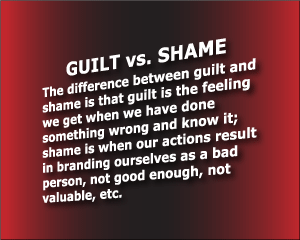
Satan’s use of ‘perfectionism, guilt and shame’


Guilt-vs.-Shame1 Revelation 12:10 (NIV)
10  Then I heard a loud voice in heaven say: “Now have come the salvation and the power and the kingdom of our God, and the authority of his Christ. For the accuser of our brothers, who accuses them before our God day and night, has been hurled down.

2 Corinthians 7:10 (NIV)
10  Godly sorrow brings repentance that leads to salvation and leaves no regret, but worldly sorrow brings death.

Suppose that the believer does not take advantage of his victorious position in Christ. Suppose he refuses to use the spiritual defenses provided. Suppose the believer sins. What then?

You would think that Satan, having led the person into sin, would then leave him to suffer the consequences; but this is not what happens. Satan has one more strategy that can make the disobedient Christian doubly defeated.

When you and I have disobeyed God, Satan moves in for that finishing stroke. He attacks us in our heart and conscience. “So you are a Christian! You go to church, you read your Bible, you even seek to serve the Lord. And look what you have done! If your friends at church knew what kind of a person you really were, they would throw you out!”

See how subtle and merciless Satan really is. Before we sin—while he is tempting us—he whispers, “You can get away with this!” Then after we sin, he shouts at us, “You will never get away with this!”

Have you ever heard his hateful voice in your heart and conscience? It is enough to make a Christian give up in despair!

 It is important that we learn to distinguish between Satan’s accusations and the Spirit’s conviction. A feeling of guilt and shame is a good thing if it comes from the Spirit of God. If we listen to the devil, it will only lead to regret and remorse and defeat.

When the Spirit of God convicts you, he uses the Word of God in love and seeks to bring you back into fellowship with your Father.

When Satan accuses you, he uses your own sins in a hateful way, and he seeks to make you feel helpless and hopeless.

Judas listened to the devil and went out and hanged himself. Peter looked at the face of Jesus and wept bitterly, but later came back into fellowship with Christ.

When you listen to the devil’s accusations (all of which may be true), you open yourself up to despair and spiritual paralysis. “My situation is hopeless!” I have heard more than one Christian exclaim, “I’m too far gone—the Lord could never take me back.” When you have that helpless, hopeless feeling, you can be sure Satan is accusing you.

 As long as you are feeling guilty, you are under indictment and you are moving farther and farther from the Lord. True conviction from the Spirit will move you closer to the Lord.

Satan wants you to feel guilty. Your heavenly Father wants you to know that you can be forgiven. Satan knows that if you live under a dark cloud of guilt, you will not be able to witness effectively or serve the Lord with power and blessing.

Sad to say, there are some ministers/churches that major in guilt. They seem to feel that unless a Christian goes home from service feeling like a failure, the services have not been a blessing.

Definitions and Key Thoughts

Guilt is a feeling of deep regret or remorse caused by feeling responsible for a failure or loss.

Guilt can lead to shame if the feelings of guilt are based on an act or acts that were thought to be sinful or displeasing to an authority figure.

There is a difference between feeling guilty and actually being guilty. If a moral law has been violated, a person is guilty, regardless of whether or not he feels guilty. On the other hand, just feeling guilty doesn’t mean that a moral law has been violated.

It is important to clarify whether the guilt is caused by a sinful act or from inappropriate regret.

True guilt is caused by sin and is God’s way of calling us to repentance and restitution.

False guilt is a burden of responsibility and blame we place on ourselves for failure to live up to our own or someone else’s expectations.

Paul had a situation like that in the church at Corinth. One of the members had fallen into sin and had refused to repent and make things right with God and the church.

1 Corinthians 5:1-6 (ESV)
1  It is actually reported that there is sexual immorality among you, and of a kind that is not tolerated even among pagans, for a man has his father’s wife.
2  And you are arrogant! Ought you not rather to mourn? Let him who has done this be removed from among you.
3  For though absent in body, I am present in spirit; and as if present, I have already pronounced judgment on the one who did such a thing.
4  When you are assembled in the name of the Lord Jesus and my spirit is present, with the power of our Lord Jesus,
5  you are to deliver this man to Satan for the destruction of the flesh, so that his spirit may be saved in the day of the Lord.
6  Your boasting is not good. Do you not know that a little leaven leavens the whole lump?

2 Corinthians 2:6 (ESV) 6  For such a one, this punishment by the majority is enough,

At first, when this sin was detected, the Corinthian believers were very complacent and refused to act. Paul’s letter shocked them into their senses; but then they went to the other extreme and made it so hard on the offender that they would not forgive him!

So Paul had to counsel them,So that on the contrary you should rather forgive and comfort him, lest somehow such a one be overwhelmed by excessive sorrow. Wherefore I urge you to reaffirm your love for him…in order that no advantage be taken of us by Satan; for we are not ignorant of his schemes. 2 Corinthians 2:7, 8, 11

Excessive guilt and sorrow can only lead to depression, despair, and defeat. Sometimes it leads to destruction.

The first epistle of John was written against the teaching of the Gnostics of that time…and we still have some of their ‘way of thinking’ at work in our congregations. It’s the idea that we can grow as individuals to the point that we will eventually be perfect…the discussion of perfectionism.

 1 John 1:8-10 (ESV)
8  If we say we have no sin, we deceive ourselves, and the truth is not in us.
9  If we confess our sins, he is faithful and just to forgive us our sins and to cleanse us from all unrighteousness.
10  If we say we have not sinned, we make him a liar, and his word is not in us. 
Jesus Christ stands at God’s right hand to intercede for us!

1 John 2:1 (ESV)
1  My little children, I am writing these things to you so that you may not sin. But if anyone does sin, we have an advocate with the Father, Jesus Christ the righteous.

Dealing with True Guiltth
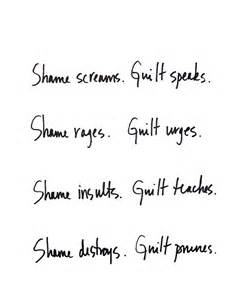
Guilt caused by sin requires an understanding of confession and forgiveness.

This kind of guilt is prompted by the Holy Spirit working in the conscience. The individual is motivated to confess sin and experience God’s cleansing.

Confession, request for forgiveness, and/or restitution needs to happen if possible (that is, if the person hurt is still alive, or if restitution is able to be made in any form).

Move On

Once you’ve confessed, apologized, and made restitution, don’t beat yourself up anymore, Leave it with God.

Turn off the mental tape player. Satan, not the Holy Spirit, is the accuser Rev. 12:10). Satan wants to create feelings of condemnation resulting in unnecessary guilt. Turn him off!

Keep a “guilt pot:’ Anytime you feel guilt creeping in, write that guilt feeling on a piece of paper and throw it in the pot. (The pot will remind you that God is the Potter, always at work on you, and you are merely the clay-Isaiah 64:8,)

This perfecting ministry has two aspects to it. As our High Priest, Jesus Christ intercedes for us and provides the grace that we need when we are tested and tempted. If by faith we turn to him and come to the throne of grace, he will see us through to victory.

But if we yield to temptation and sin, then he ministers as our Advocate to forgive us and restore us to fellowship once again.

LOVE FOR ALL song (136)

Love for all and can it be? Can I hope it is for me…I, who strayed so long ago, Strayed so far, and fell so low?

I, the disobedient child, Wayward, passionate and wild…I, who left my Father’s home, In forbidden ways to roam

To my Father can I go? At His feet myself I’ll throw; In His house there yet may be, Place a servant’s place for me.

See! my Father waiting stands; See! He reaches out His hands: God is love, I know, I see, Love for me, yes, even me.

Biblical Insights

So he said, “I heard Your voice in the garden, and I was afraid because I was naked; and I hid myself– Genesis 3:10

Adam already knew he had sinned, He felt an inner awareness of wrongdoing called guilt, given by God as an internal corrective. The realization of guilt could have brought Adam to repentance and confession, Instead, Adam tried to cope with guilt and shame by avoidance and denial.

As long as we blame others and refuse to take responsibility for our wrong actions, we remain mired in sin, Guilt cuts us off from God’s redemptive healing. God invites us to be honest about our sin and confess it to Him, When we do, God is “faithful and just to forgive us our sins and to cleanse us from all unrighteousness” (1 John 1:9),

At the evening sacrifice I arose from my fasting; and having torn my garment and my robe, I fell on my knees and spread out my hands to the Lord my God. And I said: “0 my God, I am too ashamed and humiliated to lift up my face to You, my God; for our iniquities have risen higher than our heads, and our guilt has grown up to the heavens.” -Ezra 9:5-6

Despite our mistakes and failures, God is willing to meet us at our point of need. Sometimes we can make amends by specific action. At other times we suffer the consequences of our sin, but through repentance, we can experience God’s grace and love.

Then Jesus said to those Jews who believed Him, “If you abide in My word, you are My disciples indeed. And you shall know the truth, and the truth shall make you free. . . Most assuredly, I say to you, whoever commits sin is a slave of sin. And a slave does not abide ill the house forever, but a son abides forever. Therefore if the Son makes you free, you shall be free indeed.” -John 8:31-36

No truth is more glorious to imprisoned people than to be told that they are no longer condemned but are set free! Christ brings that good news.

Often, however, believers who have been set free still keep themselves behind bars. They feel guilty about their past, or that they can’t be perfect in this life.

The feeling of guilt is healthy and productive when it helps us to know when we have done something wrong. But oppressive guilt can also keep people from being able to rejoice in their new life in Christ. That kind of guilt is a prison. We needn’t stay locked up if Christ has set us free.

There is therefore now no condemnation to those who are in Christ Jesus, who do not walk according to the flesh, but according to the Spirit. -Romans 8:1

Failure to keep the law perfectly leads to condemnation. Since no one can keep God’s law perfectly, all people are condemned. The law brings guilt because people realize they are powerless to keep it. Christ’s death for us, however, sets us free. If Christ no longer condemns us, then neither should we condemn ourselves.

 But I don’t ‘feel’ forgiven…I don’t ‘feel’ saved. This might be true because

  1. We do not believe God
  2. We do not see ourself as God sees us

 1 John 1:5-8 (ESV)
5  This is the message we have heard from him and proclaim to you, that God is light, and in him is no darkness at all.
6  If we say we have fellowship with him while we walk in darkness, we lie and do not practice the truth.
7  But if we walk in the light, as he is in the light, we have fellowship with one another, and the blood of Jesus his Son cleanses us from all sin. 
Do not listen to the voice of the devil! Instead, listen to the voice of God. Turn to the Word and believe what God says.

Rest assure that your Advocate in heaven is waiting to forgive you and restore you. To delay admitting and confessing sin is only to give Satan a greater opportunity to damage your life and ministry.

 
Leave a comment

Posted by on July 31, 2017 in Encouragement, Sermon


“God Bless The U.S.A.” Isaiah 40:21-31


god bless the usaIsaiah 40:21-31 (NIV)
21  Do you not know? Have you not heard? Has it not been told you from the beginning? Have you not understood since the earth was founded?
22  He sits enthroned above the circle of the earth, and its people are like grasshoppers. He stretches out the heavens like a canopy, and spreads them out like a tent to live in.
23  He brings princes to naught and reduces the rulers of this world to nothing.
24  No sooner are they planted, no sooner are they sown, no sooner do they take root in the ground, than he blows on them and they wither, and a whirlwind sweeps them away like chaff.
25  “To whom will you compare me? Or who is my equal?” says the Holy One.
26  Lift your eyes and look to the heavens: Who created all these? He who brings out the starry host one by one, and calls them each by name. Because of his great power and mighty strength, not one of them is missing.
27  Why do you say, O Jacob, and complain, O Israel, “My way is hidden from the LORD; my cause is disregarded by my God”?
28  Do you not know? Have you not heard? The LORD is the everlasting God, the Creator of the ends of the earth. He will not grow tired or weary, and his understanding no one can fathom.
29  He gives strength to the weary and increases the power of the weak.
30  Even youths grow tired and weary, and young men stumble and fall;
31  but those who hope in the LORD will renew their strength. They will soar on wings like eagles; they will run and not grow weary, they will walk and not be faint.

Index of Leading Cultural Indicators, a statistical portrait of American behavioral trends of the past three decades.

Among the findings: Since 1960, while the gross domestic product has nearly tripled, violent crime has increased at least 560%. Divorces have more than doubled. The percentage of children in single-parent homes had tripled. And by the end of the decade 40% of all American births and 80% of minority births will occur out of wedlock. These are not good things to get used to.

In 1940 teachers identified the top problems in America’s schools as: talking out of turn, chewing gum, making noise and running in the hall. In 1990, teachers listed drugs, alcohol, pregnancy, suicide, rape and assault. These are not good things to get used to, either.

There is a coarseness, a callousness and a cynicism to our era. The worst of it has to do with our children. Our culture seems almost dedicated to the corruption of the young. People are losing their capacity for shock, disgust and outrage…

The ancients called our problem acedia, an aversion to spiritual things and an undue concern for the external and the worldly. Acedia also is the seventh capital sin—sloth—but it does not mean mere laziness. The slothful heart is steeped in the worldly and carnal, hates the spiritual and wants to be free of its demands.

When the novelist Walker Percy was asked what concerned him most about America’s future, he answered, “Probably the fear of seeing America, with all its great strength and beauty and freedom…gradually subside into decay through default and be defeated, not by the communist movement, but from within, from weariness, boredom, cynicism, greed and in the end helplessness before its great problems.”

I realize this is a tough indictment. If my diagnosis is wrong, then why, amid our economic prosperity and military security, do almost 70% of the public say we are off track? I submit that only when we turn to the right things—enduring, noble, spiritual things—will life get better.

Most important, we must return religion to its proper place. Religion provides us with moral bearings, and the solution to our chief problem of spiritual impoverishment depends on spiritual renewal. The surrendering of strong beliefs, in our private and public lives, has demoralized society.

Today, much of society ridicules and mocks those who are serious about their faith. America’s only respectable form of bigotry is bigotry against religious people. And the only reason for hatred of religion is that it forces us to confront matters many would prefer to ignore.

Today we must carry on a new struggle for the country we love. We must push hard against an age that is pushing hard against us. If we have full employment and greater economic growth—if we have cities of gold and alabaster—but our children have not learned how to walk in goodness, justice and mercy, then the American experiment, no matter how gilded, will have failed.

Do not surrender. Get mad. Get in the fight.

——————————————-

For hundreds of years, the eagle has been admired for its grandeur, its grace in flight, and its size and awesome power.

The soaring eagle is used by Isaiah the prophet to stir within us an understanding of God’s power….it’s also a picture of the true meaning of liberty…and a good beginning for our lesson today.

Every coin minted in the U.S. bears these words: “LIBERTY: In God we trust.” Our forefathers chose these words to describe the tremendous cost and sacrifice that has been paid to secure our freedom…and to acknowledge God’s hand in making and preserving this nation.

They were confident God was blessing us as a nation…and they warned future generations that the day God was not revered in America, it would cease to be a great nation.

If America has lost its way in our day, it’s because it doesn’t know its own Christian heritage. We need this knowledge to understand why “God shed His grace on Thee.”

I am personally thankful for the religious revival taking place in our land! I find weekly that people are looking for direction….for a sense of meaning…for a value system which has not been part of their family.

I believe (and you do, too) that the answers are found in Jesus Christ and in God’s Word! In Christ lies all the secrets of the universe, the origin of life, the meaning or purpose for life, the direction of history, and of life beyond.

Psalms 33:12: “Blessed is the nation whose God is the LORD, the people he chose for his inheritance.”

Proverbs 14:34: “Righteousness exalts a nation, but sin is a disgrace to any people.”

On July 4, 1776, 56 courageous men signed a Declaration of Independence, which marked the birth of this nation which, under God, was destined for world leadership. Did you realize these facts: of the 56 men:

  • Five were captured and killed by the British
  • 12 had their homes sacked, looted, occupied by the enemy, or burned
  • two lost their sons in the army; one had two sons captured
  • 9 died in the war from bullets or its hardships

The idea is that we are “a nation under God.” Our very political superstructures stand upon Biblical principles.

The forefathers understood the need of a separation of church and state but NOT a divorcement of God from government! The American system is the political expression of Christian ideas…a nation founded upon the rock of religion and rooted in the love of man.

Daniel Webster (in 1851): “Let the religious element in man’s nature be neglected, let him be influenced by no higher motives than low self-interest, and subjected to no stronger restraint than the limits of civil authority, and he becomes the creature of selfish passion or blind fanaticism. On the other hand, the cultivation of the religious sentiment represses licentiousness…inspires respect for law and order, and gives strength to the whole social fabric, at the same time that it conducts the human soul upward to the Author of its being.”

Charles Malik (in 1951..one time ambassador of the U.S.—”The good in the United States would never have come into being without the blessing and the power of Jesus Christ…I know how embarrassing this matter is to politicians, bureaucrats, businessmen and cynics; but, whatever these honored men think, the irrefutable truth is that the soul of America is at its best and highest—Christian.”

What makes America great? The land and the people have made it great for these 229-plus years. We have a generous and sharing system; we struggle for each person’s freedoms.

Thomas Jefferson: “Can the liberties of a nation be secure when we have removed the conviction that these liberties are the gift of God?”

We must also not forget: when great reform swept across Europe, it put the Bible in the hands of the people…and the Restoration Movement, of which we’re part, went further to encourage all people to go “all the way back to the Bible” to restore the New Testament pattern.

Calvin Coolidge: “The foundations of our society and our government rest so much on the teachings of the Bible that it would be difficult to support them if faith in these teachings would cease to be practically universal in our country.”

Romans 13:1-7:”Everyone must submit himself to the governing authorities, for there is no authority except that which God has established. The authorities that exist have been established by God. {2} Consequently, he who rebels against the authority is rebelling against what God has instituted, and those who do so will bring judgment on themselves. {3} For rulers hold no terror for those who do right, but for those who do wrong. Do you want to be free from fear of the one in authority? Then do what is right and he will commend you. {4} For he is God’s servant to do you good. But if you do wrong, be afraid, for he does not bear the sword for nothing. He is God’s servant, an agent of wrath to bring punishment on the wrongdoer. {5} Therefore, it is necessary to submit to the authorities, not only because of possible punishment but also because of conscience. {6} This is also why you pay taxes, for the authorities are God’s servants, who give their full time to governing. {7} Give everyone what you owe him: If you owe taxes, pay taxes; if revenue, then revenue; if respect, then respect; if honor, then honor.”

I know we’re trying desperately to be “politically correct” in our day but we’ve gone too far when we seek to change the meaning of some “tried and tested” Biblical words:

  • drunkenness is called “a social disease”
  • homosexuality is “gay rights and an alternate lifestyle”
  • perversion is now called “pornography, adult entertainment”
  • immorality is called “the new morality”
  • cheating is now “abnormal social development”

This change of words “mentality” has brought a great deal of shame to our homes and to our country:

  • 500,000 heroin addicts and 43 million Americans have experimented with marijuana
  • Crime costs us $2 billion annually; a serious crime is committed every 3.5 seconds; one robbery every 83 seconds; one murder every 27 minutes
  • 9 million alcoholics; suicide is 2nd largest killer of teens

There was a time when we legislated against those things God said were wrong. But gradually we began to tolerate, then accept, then condone openly, and even promote what was once unthinkable.

Think of some myths which are alive and well in our society:

  1. The battle isn’t real. Two greatest problems we face? “I don’t know” and “I don’t care.” The devil is described as a “roaring lion, seeking who he can devour.”
  2. Life began with blind chance. Genesis 1:1: ““In the beginning God created the heavens and the earth.”
  3. We can have morality without religion. (Romans 1:18-22) “The wrath of God is being revealed from heaven against all the godlessness and wickedness of men who suppress the truth by their wickedness, {19} since what may be known about God is plain to them, because God has made it plain to them. {20} For since the creation of the world God’s invisible qualities–his eternal power and divine nature–have been clearly seen, being understood from what has been made, so that men are without excuse. {21} For although they knew God, they neither glorified him as God nor gave thanks to him, but their thinking became futile and their foolish hearts were darkened. {22} Although they claimed to be wise, they became fools”
  4. Whatever is legal is moral. (Jesus taught in Matthew 22:21: “Give to Caesar what is Caesar’s, and to God what is God’s.”).
  5. The role of men and women is interchangeable.
  6. A fetus is not human.
  7. Pornography is a harmless adult pleasure.
  8. The church should have no voice in government. The ballot box is the best place.

I have said it before and believe it still today: we get what we deserve if we are going to elect ungodly men and women to led our country! I have little or no sympathy for any of us today if we don’t vote according to our conscience instead of a political party or according to political dogma.

1 Timothy 2: 1-6: “I urge, then, first of all, that requests, prayers, intercession and thanksgiving be made for everyone– {2} for kings and all those in authority, that we may live peaceful and quiet lives in all godliness and holiness. {3} This is good, and pleases God our Savior, {4} who wants all men to be saved and to come to a knowledge of the truth. {5} For there is one God and one mediator between God and men, the man Christ Jesus, {6} who gave himself as a ransom for all men–the testimony given in its proper time.”

 
Leave a comment

Posted by on July 19, 2017 in Encouragement


Six ways to overcome grief


god-is-loveDr. M. Norval Young has suggested six ways to overcome grief

  1. Accept the sympathy of others graciously. Sometimes they will not know how to express themselves well, but their love is sincere and you help them and yourself in leaning on them for a time.
  2. Recognize that the pain will grow more bearable. The pain of sorrow is acute, but time will help, or rather we should say God will help and he uses time to heal our hurts.
  3. Turn to the Bible with renewed thirst. Someone has said, “I opened the old, old Bible, and looked at a page of Psalms ‘til the wintry sea of my troubles was soothed as by summer calms; for the words that have helped so many, and the ages have made more clear, seemed new in their power to comfort, as they brought me their word of cheer.”
  4. Utilize the power of prayer. As Tennyson said, “There is more wrought by prayer than this world dreams of.” In the words of Frank L. Cox, “Divine comfort is greatly needed. Hearts are broken, bowed down with sorrow, filled with fear. Anxiety, bereavement, and temptation beset us. A humble prayer to “the God of all comfort” brings relief, binds up the broken heart, lightens the burden. Through prayer Jesus found relief and obtained strength to face the foe.
  5. Be even more faithful in worship. Some people make the mistake of withdrawing from the world and of closing the blinds and locking the door. The wise Christian knows that worshipping with others who have suffered will help him. He knows that grief is a common denominator and that the solace of worship will be especially helpful at this time.
  6. Look out and see others who need your help. Work is a blessing when we need to overcome sorrow. There is no substitute for getting busy helping others. The best way to honor the dead is to serve the living

Paul wrote, “I can do all things through Christ who strengthens me” (Phil. 4:13). We can even carry the burden of grief.

 
Leave a comment

Posted by on July 10, 2017 in Encouragement