RSS

Category Archives: Marriage

Unhealthy reasons for marraige


These are unhealthy reasons for marriage. If you find that any of these appear either on your list or in your mind, you should spend time discussing them with your fiancé and your marriage advisor.

1. To spite or get back at your parents.

2. Because of a negative self-image—marrying your fiancé will make you feel worthwhile and will give meaning to your life.

3. To be a therapist or counselor to your fiancé.

4.  The fear of being left out—being single forever.

5. Fear of independence.

6. Marrying on the rebound—you were hurt in a former love relationship and to ease your hurt you immediately choose another.

7. Fear of hurting the other person—you’re afraid of what will happen to your fiancé if you break up even though you know that marriage is not the answer.

8. To escape an unhappy home.

9. Because you are pregnant or your fiancé is pregnant.

10. Because you have had sex. (Before You Say “I Do” by H. Norman Wright and Wes Roberts)


Leave a comment

Posted by on March 5, 2016 in Marriage


The Myth of “Happily Ever After”


marriage-mythsWe see from 1 Peter 3 that the believing wife can win over her unbelieving husband “without words” by her Christ-like behavior in the home.

We also saw that there are three things she is not ‘given permission’ by God to do: She cannot leave. She should not nag. She must not lead…the husband is still head of that home and, unless he is against God, she must continue following in that relationship.

We have often heard the phrase “happily ever after” when attending a wedding of two special people, deeply in love, and making vows before God, family, and friends. The Disney empire has fed our romantic fantasies for fairy tales so we are captivated by storybook romance.

This is not the Christian view. Our faith sees the wedding day not as a place of arrival but the place where the adventure begins.”1

The divorce rate in our culture is at an all-time high. Whatever happened to “happily ever after”? Why is it so hard to maintain the hopes and dreams that surround a beautiful wedding with all its promises of love and fidelity, sacrifice and service?

Marriage counselors Les and Leslie Parrott have an idea. In their excellent book Saving Your Marriage Before It Starts, they suggest four myths that have torpedoed many marriages because of unrealistic expectations and misconceptions about what marriage should be.

“For too long,” the Parrotts write, “marriage has been saddled with unrealistic expectation and misguided assumptions. Liberated from these four myths, couples can settle into the real world of marriage—with all its joys and sorrows, passion and pain.”2

Many people know that something is wrong but they don’t know what; and you can’t fix or change something if you don’t know what’s wrong in the first place. Many of our marriage problems are due to harmful expectations and beliefs that fly in the face of “real reality.” One divorce lawyer told the Parrotts that the number-one reason people split up is that they “refuse to accept the fact that they are married to a human being.”3 In this article we bust the myth of “happily ever after.”

Myth #1: “We Expect Exactly the Same Things From Marriage”

When people are in love, it’s easy to assume that the other person has the same values and expectations as we do. But every family has its own culture, so to speak, and we tend to expect life will continue the same way once we’re adults as it was while we were growing up. One way these differing expectations play out is in the unspoken rules of each family.

We are usually not aware of our unspoken rules and expectations unless there is much time to ‘get to know each other’ or until the other person violates them.

I recently heard a great word of wisdom: “Expectations are the mother of resentments.” How true is that?! When our spouse doesn’t live up to our unspoken expectations, we can feel frustrated and irritated, and often we don’t even know why we’re upset because we don’t know what’s wrong. It’s helpful to think through “the rules” of one’s family so that unspoken rules and expectations are brought out into the light of examination.

Here are some rules from various families:

  • Don’t ask for help unless you’re desperate.
    • Downplay your successes.
    • Be invisible.
    • Get someone else to do the hard or dirty work.
    • Don’t get sick.
    • Never ever get angry.
    • Don’t talk about your body.
    • Don’t go to bed without cleaning the kitchen.
    • Don’t talk about your feelings.
    • Don’t ever upset Daddy.

Can you see how these unspoken rules can cause havoc if a spouse doesn’t know about them?

Another source of mismatched expectations is the unconscious roles that spouses fall into, the way an actor follows a script. We inherit expectations about how wives and husbands act by watching our parents and other adults, and we often play out those roles the same way unless we choose to change it. For example, one new husband surprised his wife at dinner by picking up his empty iced tea glass and tinkling the ice cubes.

His father had always signaled this way to his mother that he was ready for more tea. The bride was not pleased to learn that her husband expected to play the role of pampered king whose every whim was gladly granted!

The myth that “we expect exactly the same things from marriage” is busted by identifying and talking about unspoken expectations and unconscious roles. The more openly couples discuss their differing expectations, the more likely they are to create a vision of marriage that they can agree on. It’s good planning to work through some of those “my family does it this way” scenarios well in advance of the actual marriage ceremony.

Myth #2: “Everything Good in Our Relationship Will Get Better”

Most people, when they fall in love, really believe their love will last forever because it’s so intense and intoxicating. It’s hard not to believe that everything good about the relationship will just continue to get better and better as time goes on. But reality “is that not everything gets better. Many things improve in relationships, but some things become more difficult. Every successful marriage requires necessary losses, and in choosing to marry, you inevitably go through a mourning process.”4

For some, marriage means giving up childhood. It means giving up the safety and security of being your parents’ child, and becoming a full-fledged adult. God makes this statement in Genesis 2:24 when He says, “For this reason a man will leave his father and mother and be united to his wife, and they will become one flesh.” Marriage means the end of childhood, and that can feel like a loss to be mourned.

Marriage also “means giving up a carefree lifestyle and coming to terms with new limits. It means unexpected inconveniences.”5 Marriage means always passing one’s plans and choices through the filter of “us.” Since “the two become one,” many of our even mundane life choices impact someone else. That can feel like a loss to be faced, as well.

The Parrotts write, “By far the most dramatic loss experienced in a new marriage is the idealized image you have of your partner. This was the toughest myth we encountered in our marriage. Each of us had an airbrushed mental picture of who the other was. But eventually, married life asked us to look reality square in the face and reckon with the fact that we did not marry the person we thought we did.”6

It is an illusion that the intense romantic thrill of the beginning of a relationship will last forever. “Debunking the myth of eternal romance will do more than just about anything to help . . . build a lifelong happy marriage.”7 When we get past the myth of continual bliss with a perfect partner, we can embrace the reality that we married another flawed and fallen human being. This is good news, because God only gives grace for reality, nor for illusion or temporary enchantment. And this is good news because intimacy is only available with a real person, not with an idealized image.

Myth #3: “Everything Bad in My Life Will Disappear”

Remember the story of Cinderella? A poor, mistreated stepchild who is forced to serve her wicked step-family is magically turned into a beautiful princess. She is rescued by her Prince Charming and they live . . . all together now . . . “happily ever after.” And don’t we all long for a Prince Charming or a beautiful princess to make us happy and wipe away every tear from our eyes?

The myth of a “happily ever after” life is a legitimate longing of our hearts. We ache to return to Eden where everything bad in our lives will disappear. God promises that He will eventually make all things right again, but it doesn’t happen in marriage between two fallen human beings living in a fallen world.

Marriage is a glorious institution invented by God, but it “does not erase personal pain or eliminate loneliness. Why? Because people get married primarily to further their own well-being, not to take care of their partners’ needs. The bad traits and feelings you carried around before you were married remain with you as you leave the wedding chapel. A marriage certificate is not a magical glass slipper.”8

The Parrotts write, “Getting married cannot instantly cure all our ills, but marriage can become a powerful healing agent over time. If you are patient, marriage can help you overcome even some of the toughest of tribulations.”9

Perhaps the biggest reason for this is the amazing power of love. I believe God’s love is the strongest healing agent in the universe. In marriage, He can love us through our spouses; He can be “Jesus with skin on” to each of us.

A healthy marriage can become a place to wrap up unfinished business from childhood and deal with unresolved hurts. It’s a myth that everything bad in our lives will disappear when we say “I do,” but God’s grace is bigger than the myth. We still live in a fallen world with a fallen spouse, but God can bring much grace through mutual love.

Myth #4: “My Spouse Will Make Me Whole”

One of the greatest lines in all of movie history belongs to Tom Cruise in Jerry Maguire where he tells his wife, “You complete me.” It is romantic and feels emotionally satisfying—but in reality, it’s just not true.

Couples who swallow the myth that their spouse will make them whole are in danger of going to one of two extremes. One is an unhealthy dependence on the other that the Parrotts term an enmeshed relationship. They unconsciously make their partner completely responsible for their well-being. They are like ticks that constantly attempt to suck life and love and meaning from their spouse. It is a form of idolatry, because they are looking to their partner to provide emotional “living water” that only God can give.

The other extreme is a disengaged relationship of what the Parrotts call “rugged self-reliance.” These spouses are so isolated and independent from each other that they function more like neighbors or business associates than a God-created union of two souls.

The first kind of couple is looking for wholeness from their partner; the second kind of couple is looking for wholeness from within. It is also a form of idolatry, because they are looking to themselves instead of God to provide meaning for life.

Neither enmeshed nor disengaged relationships are healthy, and neither will allow the people in them to experience wholeness. A sense of wholeness is found in an interdependent relationship where two people with self-respect and dignity make a commit-ment to nurture their own spiritual and emotional growth as well as their partner’s.

Enmeshed relationships are like the capital letter A. They lean on each other so much that if one moves, the whole structure falls down. Their security is in another person instead of in God.

Disengaged relationships are like the letter H. Partners stand virtually alone. If one lets go, the other hardly feels a thing. Interdependent relationships are like the letter M. They could stand on their own, but they choose to stay connected to the other out of their fullness, not out of their emptiness. If one lets go, the other feels a loss but can recover.

Every marriage is between two broken and fallen people who cannot make each other whole. We are called to love and respect each other, serve and celebrate each other—but only God can make us whole.

“Happily ever after” may be for fairy tales, but that doesn’t mean there is no such thing as a happy, rich, fulfilling marriage. But it’s only possible for those who live in reality, not in the fantasy of make-believe myths. May God give us grace to trust Him to walk in truth and not illusion.

________________

Notes

  1. Les and Leslie Parrott. Saving Your Marriage Before It Starts. (Grand Rapids: Zondervan, 1995), 26.
    2. Ibid., 16.
    3. Ibid., 23.
    4. Ibid., 21.
    5. Ibid., 22.
    6. Ibid.
    7. Ibid.
    8. Ibid., 24.
    9. Ibid., 25.
 
Leave a comment

Posted by on February 25, 2016 in Marriage


Words To Live By Series #7 Honor Your Parents


Sunday 1030amThe fifth of these Words to Live By brings us to a fundamental responsibility in human relations. The commandment says: Exodus 20:12 (ESV) “Honor your father and your mother, that your days may be long in the land that the LORD your God is giving you.

Our own common sense tells us that we need some rules for preserving and strengthening family life.

The family is being challenged for its right to endure. Many are choosing to forego marriage. Others are substituting life together without marriage for the traditional marriage relationship.

Those who do choose the traditional arrangement are having problems keeping things together and achieving stability within their marriages.

The family is primary to God as a means for blessing and guiding human lives. With the failure of so many homes in the different ways already identified, the will of God is being thwarted too frequently. One of the rules for right living points to the need for keeping the family strong through proper relationships between children and their parents.

What does it mean to honor our mother and father? To honor means more than demonstrating sentimental feelings. The word “honor” literally means to give weight or heaviness. To honor someone then means that we take them seriously.

Mark 7:9-13 (ESV) 9  And he said to them, “You have a fine way of rejecting the commandment of God in order to establish your tradition! 10  For Moses said, ‘Honor your father and your mother’; and, ‘Whoever reviles father or mother must surely die.’ 11  But you say, ‘If a man tells his father or his mother, “Whatever you would have gained from me is Corban”’ (that is, given to God)— 12  then you no longer permit him to do anything for his father or mother, 13  thus making void the word of God by your tradition that you have handed down. And many such things you do.”

Ephesians 6:1-3: “Children, obey your parents in the Lord, for this is right. Honor your father and mother this is the first commandment with a promise, ‘that it may be well with you and that you may live long on the earth.'”

There are some things that commend themselves to us as proper and right. Surely one of those things is showing honor to the man and woman responsible for bringing you into the world, feeding you, getting your cavities filled, nursing you when you were sick, and doing the million other things that go with being a parent.

Children can always derive great personal benefit from seeking and heeding the counsel of their parents. A child who has finished high school or a few years of college may already have more education than his parents; what he may not realize is that he is not yet as smart as his parents. There are some things that nobody learns except by living, having experience, failing at some things and bouncing back. The best lessons about life come from the good counsel of godly parents. If you have a relationship with people who have lived long enough to learn those lessons and who will share their wisdom with you, your life will be blessed.

We should honor our parents because the day will come when we cannot show them the honor we would like to give. Some don’t have your parents with you any longer. I hope you don’t have to look back with regret. I once told my parents that I appreciated all they had done for me…my mother promptly said this: “Do you know what you can do? Do it for your own children.”

Respect Is a Two-Way Street

The Bible teaches that children need discipline. “He who spares the rod hates his son, but he who loves him is diligent to discipline him” (Proverbs 13:24). The sort of discipline spoken of here is administered with patience, tenderness, and love.

Severity of punishment in dealing with children violates the teaching of Paul: “Fathers, do not provoke your children to anger, but bring them up in the discipline and instruction of the Lord” (Ephesians 6:4).

Obedience must be learned, and it is the job of parents to teach it to their children. “Train up a child in the way he should go, and when he is old he will not depart from it” (Proverbs 22:6). Children need to cooperate with their parents in creating a good home. Parents should not have to fight their children for control of the family.

In America, several factors tend to undermine honoring parents.

(1.) There is the impact of technology. In previous generations fathers were often craftsmen, who had learned their trade from their fathers. It took a son years to match his own father in skills, and he would only gradually pass him up.

Now, a child in elementary school may be learning things that parents never heard of. Who of us, for example, would want to try to explain some of the math our kids are being taught in school? Thus, each new generation quickly surpasses the preceding generation in the knowledge it possesses. There is much temptation for the younger generation to think of its parents as out of date, antiquated in thinking. In a society where knowledge is prized more than wisdom, the older generation is fortunate to be respected, let alone honored, by the younger generation.

(2) Because of the rapid increase of divorce, children are often called upon to honor one parent and to despise the other. Neither parent can seem to tolerate the thought of the former mate having the respect of their child. If this were not bad enough, Freudian Psychology has provided each generation with an excuse to blame all of its problems on family members from our past. Countless expeditions into the parental past has provided many individuals with an expensive excursion into past history in order to pin the blame for their sins on someone else, often one or both parents.

(3) If it is possible to pin the blame for our problems on someone else, it is also easy to pin the responsibility of caring for aging parents on someone else. Perhaps more than any other time in history, we are looking to the government to carry much of the burden families have borne in providing for the needs of their aging parents. Social Security, Medicare, Medicaid, and other government programs are viewed as the means for handling our obligation as children to our parents.

1 Timothy 5:8 (ESV) But if anyone does not provide for his relatives, and especially for members of his household, he has denied the faith and is worse than an unbeliever.

(4) Honor is due to more than just parents. The New Testament requires the Christian to honor all men (Romans 12:10; 1 Peter 2:17). Learning to honor parents is thus a significant step in the direction of honoring others.

(5) If children must give honor to their parents, then parenting must be an honorable occupation. One should hardly have to make such a statement, but in today’s world it is necessary to do so. The fact that women line up at abortion clinics around the country and in various parts of the world suggests that bearing and raising children is viewed as something far less than a blessing. This rejects the clear teaching of the Bible. Those who would leave the home and seek fulfillment in the working world in order to gain dignity and respect have also turned from the truth of God’s Word. Let those who would seek to avoid parenting be reminded that in God’s Word parenting is a most honorable occupation.

(6) The way in which one relates to parents changes with conversion. When a person comes to Christ through baptism, there are a number of significant changes. When a person becomes a child of God by faith, God becomes a Father to them in a new and previously unknown way. While God was once denied, and His authority rejected (Ephesians 2:1‑3), now He is our Heavenly Father, with final authority, authority which has priority over all others, including fathers and mothers. As we have seen from our Lord’s teaching, faith in Christ may alienate children from their parents.

(7) The way in which one relates to parents changes with marriage. Marriage is usually the first of several dramatic changes in the child’s relationship with his parents. In the Book of Genesis, God revealed that marriage was to bring about a change in the way a child relates to his parents: “For this cause a man shall leave his father and his mother, and shall cleave to his wife; and they shall become one flesh” (Genesis 2:24).

  • First, the son leaves the authority structure of his parents home to establish a new home, under his authority. This passage draws the son out from under his parents’ authority, as he had once been. My parents or Terry’s parents no longer had authority/control over us when we married…but of course are available to offer counsel when we asked for it.
  • Second, the son is to leave home so that his devotion and affection will be primarily focused upon his wife. Certainly the son’s affection toward his parents is not terminated, but leaving his home lessens the competition between a man’s father and mother and his wife for his devotion and attention.
  • Third, the instruction in this text suggests to us that the parent‑child relationship is temporary, the husband‑wife relationship is permanent.

(8) We honor our parents most when we obey and honor God in our lives. The highest goal of parents is to raise the child God has entrusted to them in such a way as to encourage and promote trust in God and obedience to His Word. Whenever a child trusts in God and obeys His Word, He honors his parents. Even an unbelieving parent is honored by a believing and obedient child.

(9) Honoring parents does not always mean that the child does what his parents want. Father and Mother are not to be honored because they are perfect, but because they are parents. They, like their children, are plagued with the frailties of mankind. They, like their children, sin. They will therefore make many mistakes in the parenting process. They will command that their children do the wrong things, at times. At times they will also forbid their children to do what is right.

(10) Honoring parents may someday require parenting parents. It is an irony indeed, but those who were once parented by fathers and mothers often find themselves parenting their parents in their final years of life. The parent that once fed and diapered the child may in the last days of their life be fed and diapered by their children. The child who was once parented now becomes his parent’s parent, making decisions for them, sometimes having to make choices against their will, even deciding how long to allow artificial, life preserving devices to maintain some semblance of life. There is no thought less pleasant than this, but for many it has been, is, or will be a reality.

(11) Since we must honor all men, this means that parents must honor their children. Much has been said and written about developing self‑esteem in children. I think I would differ with some of this teaching, based upon the fact that much self‑esteem is simply renamed pride, and the Book of Proverbs has more to say about the need for humility in a child than self-confidence (and certainly than self‑love). We must, however, deal with our children in a way that not only manifests our own dignity (cf. 1 Timothy 3:4), but also reflects the dignity of the child as a creation of God, one for whom Christ died. Thus, we must honor our children, as we must honor all others.

 
Leave a comment

Posted by on February 22, 2016 in counsel, Family, Marriage, Sermon


Is God inclusive or exclusive?


Exclusive Is God inclusive or exclusive? Both! He wants all to be saved but there are “steps of faith.” Peter proclaimed the clear answer in 2 Peter 3: The Lord is not slow in keeping his promise, as some understand slowness. He is patient with you, not wanting anyone to perish, but everyone to come to repentance.”

Churches today are less and less likely to ask “What does the Bible say?” and more likely to ask, “What does the community want?” We need to be reminded that the church belongs to the Lord, not the community. The church is uniquely His and was designed to be His servant to take His gospel to a lost and dying world.

Truth has become trivial, irrelevant. Realize that 72% of Americans between the ages of 18-25 now believe that there is no such thing as absolute truth!

David F. Wells, God in the Wasteland, “We have turned to a God that we can use rather than to a God we must obey; we have turned to a God who will fulfill our needs rather than to a God before whom we must surrender our rights to ourselves. He is a God for us, for our satisfaction – not because we have learned to think of him in this way through Christ but because we have learned to think of him this way through the marketplace.
   “In the marketplace, everything is for us, for our pleasure, for our satisfaction, and we have come to assume that it must be so in the church as well. And so we transform the God of mercy into a God who is at our mercy.”

Jesus once asked regarding John the Baptizer, (Matthew 11:7) “As John’s disciples were leaving, Jesus began to speak to the crowd about John: “What did you go out into the desert to see? A reed swayed by the wind?” A reed is a symbol of instability; it pictures that which yields to other forces.

On the other hand, Paul described the church as the “pillar and ground of the truth” (1 Tim. 3:15). The imagery here is that of a solid, immovable foundation. It is a question that the church of today must ask. Are we a “reed shaken in the wind,” or are we the “pillar and ground of the truth”?

Real Love – Real love doesn’t leave another person in error. Real love takes the time to show them the error of their way:  (Galatians 6:1) “Brothers, if someone is caught in a sin, you who are spiritual should restore him gently. But watch yourself, or you also may be tempted.”
(2 Timothy 2:24-26) “And the Lord’s servant must not quarrel; instead, he must be kind to everyone, able to teach, not resentful. {25} Those who oppose him he must gently instruct, in the hope that God will grant them repentance leading them to a knowledge of the truth, {26} and that they will come to their senses and escape from the trap of the devil, who has taken them captive to do his will.”

inclusion-wordle11Jesus was exclusive! (John 14:6) “Jesus answered, “I am the way and the truth and the life. No one comes to the Father except through me.”


Unless you believe that I am He (John 8:24) “I told you that you would die in your sins; if you do not believe that I am the one I claim to be, you will indeed die in your sins.””

One Gospel  – (Galatians 1:6-9) “I am astonished that you are so quickly deserting the one who called you by the grace of Christ and are turning to a different gospel– {7} which is really no gospel at all. Evidently some people are throwing you into confusion and are trying to pervert the gospel of Christ. {8} But even if we or an angel from heaven should preach a gospel other than the one we preached to you, let him be eternally condemned! {9} As we have already said, so now I say again: If anybody is preaching to you a gospel other than what you accepted, let him be eternally condemned!”

  JesusIsLordofthisWebSite placeforyou2 575273_579331012148169_1163921425_n

 
Leave a comment

Posted by on February 18, 2016 in Encouragement, Marriage


Some easy ways to improve your marriage


 mp3icon YouTube JesusIsLordofthisWebSite placeforyou2 575273_579331012148169_1163921425_n

 Eric/Wendy’s November 2015 newsletter from Kigali, Rwanda

——————————————–

Improving your marriage doesn’t necessarily have to involve huge changes on your part or your spouse’s. Many times, the cumulative effect of small changes can make a significant difference in the quality of a relationship. It can be discouraging to only focus on the big, sweeping long-range changes that you feel are needed, such as improved communication or increased intimacy. Instead, focus on making several small changes that can affect the quality of your relationship right away.respect

Once you generate some positive energy flow, it’ll be easier to tackle the larger issues. Plus, you’ll be more motivated to put forth the effort and to keep trying. Here are some easy ways you can improve your marriage:

  1. Schedule date nights on a regular basis. Did you know research by Idaho State University shows that one of the secrets to a happy marriage is scheduling regular dates? This study involving 132 couples found those who went on dates more often (the average was six dates a month) were more likely to be satisfied with their marriage than those who spent less time together. So get out your calendar and schedule some times for you and your spouse to go out and spend time together doing something you both enjoy. Doing everything with the children and not spending time alone with your spouse can be a way to try to avoid sex or to minimize romance. It’s a mistake to think this won’t hurt your marriage in the long run—because it will.
  2. Show respect when you’re talking to your spouse. You may not realize you’re doing damage to your marriage when your spouse is talking to you and you sigh with exasperation and roll your eyes. Psychologist John Gottman has conducted research on what attitudes increase the chances that a marriage will end unhappily. He has found contempt is the most damaging, and he says rolling your eyes when your spouse is talking to you is a classic sign that communicates contempt. You’re giving your partner important information about how you really feel about him (or her) when you show disrespect.
  3. Make time for vacations. The Wisconsin Medical Journal reported that when 1500 women were asked how often they took a vacation, 20% said that it had been six years or more. These non-vacationers were more likely to be stressed and unhappy in their marriages. Every day life can get so bogged down with details, work, and loose ends that fun and romance can easily become buried and neglected. Remember the old saying, “All work and no play makes Jack a dull boy.” The same is certainly true of relationships—if there’s no time to play and have fun, then dullness, fatigue, and boredom often take hold. Passion and romance thrive on stimulation, building positive new memories, and the excitement that change brings. Just leaving home and seeing and doing different things can be energizing and perk up a stale relationship. The vacations don’t have to be expensive or exotic. Put on your creative thinking cap and see what’s possible.
  4. Remember to hug your mate each day. Doctors at the University of North Carolina have found that hugging boosts blood levels of oxytocin, a relaxing hormone that is linked to trust. According to Kathleen Light, Ph.D., professor of psychiatry at UNC and one of the study’s authors, “It is safe to say that oxytocin is linked to emotional as well as physical closeness in partners….” Make it a point to initiate more hugging, and don’t be bashful about asking for what you need and want. Note: If “hugs = sex” in your marriage, it’s time to make a change. Many wives complain their husbands only touch them—hold hands, hug, kiss, snuggle—when the husbands want sex. These wives often try to avoid physical contact with their husband because they don’t want to get him aroused. This leads to a pulling away and a lack of on-going closeness and connection. Thus, it’s important that hugging not be just a prelude to sex.
  5. Celebrate days that are special to the two of you. Take the time to record the special days on your personal calendar so you won’t forget. Through the years, I’ve heard many spouses express hurt that their mate never buys them a gift, even for their birthday. There’s no special dinner or birthday cake—nothing.  They might not receive a Valentine’s Day card or a Christmas present, either. I’m always sad to hear this, because it seems like such a loss of an opportunity to celebrate. And the message delivered to the mate is she (or he) isn’t valued and treasured. Life is short, and you can’t take your beloved partner for granted. Look for every opportunity to celebrate your love, your marriage, and the fact that you’re alive!
  6. Smile More Often. A genuine smile can warm the heart and make you more attractive to your spouse. That’s because smiles are sexy as well as contagious, and the energy they produce can give you and your spouse a needed boost just when you need it the most. A warm smile invites your spouse to come closer, to connect with you, and to linger in your presence. You’ll feel better and so will your spouse.
 
1 Comment

Posted by on December 31, 2015 in Marriage


Life is a gift


 mp3iconYouTube JesusIsLordofthisWebSite placeforyou2 575273_579331012148169_1163921425_n

 ——————————————–

Today before you think of saying an unkind word – Think of someone who can’t speak.

Life is a giftBefore you complain about the taste of your food – Think of someone who has nothing to eat.

Before you complain about your husband or wife – Think of someone who’s crying out to God for a companion.

Today before you complain about life – Think of someone who went too early to into eternity.

Before you complain about your children – Think of someone who desires children but they’re barren.

Before you argue about your dirty house, someone didn’t clean or sweep – Think of the people who are living in the streets.

Before whining about the distance you drive – Think of someone who walks the same distance.

And when you are tired and complain about your job – Think of the unemployed, the disabled and those who wished they had your job.

But before you think of pointing the finger or condemning another- Remember that not one of us are without sin and we all answer to one Maker.

And when depressing thoughts seem to get you down – Put a smile on your face and thank God you’re alive and still around.

Life is a gift… Live it… Enjoy it… Celebrate it… And fulfill it.

Be not forgetful to entertain strangers: for thereby some have entertained angels unawares.” Hebrews 13:2

 
Leave a comment

Posted by on October 22, 2015 in Marriage


Why it’s difficult for some spouses to apologize


 mp3iconYouTube JesusIsLordofthisWebSite placeforyou2 575273_579331012148169_1163921425_n

 ——————————————–

Is it difficult for your spouse to apologize and tell you that he (or she) is sorry? Or is it hard for you to offer an apology?

Some individuals can say “I’m sorry” easily while others can’t ever seem to choke the words out. When a spouse is reluctant to apologize, the partner inevitably ends up carrying emotional baggage from the resulting hurt feelings, resentment, and anger.

It’s often easier to offer an apology to a total stranger or a casual acquaintance than it is to a spouse. Usually, in those cases, whatever we have done—temporarily blocked the aisle with our shopping cart at the grocery store or bumped into someone in a hallway—was done unintentionally.

There’s normally not any feeling that one person did something to the other in a personal way. Instead, it feels like an accident, a momentarily distraction, or a misjudgment of visual space.

But when things happen between two spouses, an oversight or mistake can take on more personal tones and meaning. A spouse may harbor strong feelings that whatever occurred was deliberate and intentional.

When intense feelings are triggered and the emotional climate becomes either icy or raging, the offending spouse may retreat, not knowing what else to do. Or he (or she) may be afraid of doing the wrong thing and making the situation worse.

Some spouses view apologizing as a sign of weakness that brings about a loss of power and status. A spouse with this perspective may equate apologizing with admitting inadequacy and incompetence, and thus be reluctant to apologize for mistakes, failures, or misjudgments.

To others, it’s humiliating to have to apologize. They may have been ridiculed and criticized harshly by their parents when they made mistakes growing up, and as a result, they try to avoid admitting to mistakes and the unpleasant feeling that brings.

Accepting responsibility for personal actions and decisions is challenging for some spouses. They operate in denial, as though by not admitting fault they haven’t done anything “wrong.” It’s almost as though they are afraid of owning any inappropriate behaviors because then they might have to also take responsibility for other actions. So it’s just easier to avoid and deny than to admit responsibility and apologize.

If a spouse views apologizing as “all or nothing”—that the person who is “wrong” has to ask for forgiveness from the one who is “right”—that can also make the task more daunting. So can viewing the person who apologizes as the “loser” in an argument or dispute, while the one accepting the apology is the “winner.”

What Can You Do if It’s Hard for Your Spouse to Apologize?

The following five tips offer specific actions that you can take:

  1. Become comfortable with saying, “I’m so sorry for my part in what happened between us” or ‘I’m so sorry for my part in the misunderstanding.” That acknowledges two people are involved in what happens in relationship interactions and makes it less threatening for each to accept personal responsibility.
  2. If your partner refuses to make an apology for behavior that deeply hurt you, ask her (or him) if she at least regrets what happened. Some spouses will find it easier to say “I really regret what happened at the party” than “I’m really sorry for my behavior at the party.”
  3. Practice being the kind of partner that you wish you had. Apologize readily and model healthy behavior for your spouse. Be open about your feelings when it’s hard to apologize. Say, “I don’t know why it’s so hard to apologize sometimes—but it is. This isn’t easy for me to say because I’d rather blame you than look at myself, but I am truly sorry for the things I said last night.” You can’t control what your spouse decides to do or not to do, so focus on what you do have control over—your own reactions and behavior.
  4. Write your spouse a handwritten letter (pen and paper—no emails) sharing your feelings and say that in order to move on, you really need some sort of acknowledgement of your feelings and the hurt you have experienced. State that it’s important for you to know your partner cares about your feelings enough to apologize or admit regret for what happened.
  5. Remember that if your spouse can’t apologize to you, it doesn’t necessarily mean your spouse doesn’t love you. In some cases, it can indicate a callousness and indifference to the partner’s feelings. But in other cases, it can indicate a lack of relationship skills or unresolved individual issues.

Your best strategy may be to see if your partner will agree to some marriage counseling sessions to improve communication and intimacy. Then, address the issue in the counselor’s office where your chances of being heard and opening the door for positive change are greatly increased. (By Nancy Wasson, Ph.D.)

 
Leave a comment

Posted by on October 1, 2015 in Marriage


How to Keep Hope Alive During a Marriage Crisis


 placeforyou2mp3icon    YouTube JesusIsLordofthisWebSite575273_579331012148169_1163921425_n

 ——————————————–

During a marriage crisis, you can feel like your whole world is falling apart and all of your dreams are being shattered. Hearing the words “I don’t love you anymore,” “I want a divorce,” or “I don’t know if I want to stay married” can leave you reeling from the shock.

Marriage-CrisisMany feelings surface after the initial stunned reaction: anger, fear, anxiety, confusion, resentment, bitterness, desperation, and depression. Everything seems mixed up and slightly unreal, as though this is really happening to someone else, not to you. But, unbelievably, it is happening to you.

This is when you have to use every ounce of courage and strength that you possess and a lot that you didn’t know you had until now. Immediately, you have to create space for some private time so that you can take care of yourself, regroup, and create a plan of action.

You might need to take a day off from work, spend some time talking with a close friend, buy a notebook and start writing down your feelings and thoughts, or take a long walk in the park. Another option is to call and schedule a counseling appointment for yourself as soon as possible.

Next, spend some time thinking about how you’ll handle the situation. Your goal is to buy time so that your spouse doesn’t bolt out of the door prematurely. You want to slow things down so that your spouse can have time to reconsider and, if at all possible, agree to go to counseling with you.

During this time of crisis, you will have to be the “guardian of the marriage flame.” It will be up to you to keep hope and love alive so that the fire won’t go out. You can complain that it’s not fair and that it shouldn’t be this way.

But the bottom line is that if you want to save your marriage and your partner wants out, it’s going to be up to you to take positive action. During the crisis, you’ll need to be willing to do much more than your fair share to keep your marriage alive.

And that means that despite your fear and anxiety, it’s up to you to keep hope alive—hope that your marriage will make it—hope that your partner will change his or her mind—hope that your marriage can survive this and be even better than ever.

Here are some tips on how to keep hope alive and cope during this time:

  1. Don’t give up on your marriage no matter what your spouse has said. People often change their mind. No situation is hopeless if at least one partner is willing to do whatever it truly takes to preserve the marriage.

There is always hope that your marriage can be transformed by loving energy. Many spouses reconsider their initial impulse to leave and decide that they have invested too much time and energy to just throw their marriage away without at least trying marriage counseling.

  1. Don’t take everything your spouse says personally. People often say extreme things when they are upset or trying to justify what they’re doing. A partner who feels guilty about telling you she wants a divorce may get really angry instead. A spouse who has never expressed his true feelings about things may finally explode with a long list of your faults through the years.
  1. Really anchor in your mind that how you react to the situation will have a major impact on how things go from here. If you keep badgering a spouse who wants some emotional space, you are giving her the perfect excuse to go ahead and leave. You can’t control what your spouse chooses to do or not to do, but you can control how you choose to handle the situation.
  1. Allow yourself to be “confused.” If your spouse asks what you’re going to do next, just say that you’re confused and need time to think, that you don’t want to make any rushed decisions. Being “confused” can defuse a spouse who is just waiting to pick a fight. It also buys you some time.
  1. Honor your spouse’s request for emotional space, if that is an issue. Back off and take some time to regroup, stabilize yourself, and take the spotlight off of your partner for the time being. You have much to lose if you let your anxiety take over and demand immediate answers to difficult questions.
  1. Make a list of all the different things you can do to ground yourself and get more balanced emotionally and physically. Include things like working out at the gym, getting a massage, walking or hiking, letting close friends be supportive, listening to inspirational tapes on the way to work, reading books about people who have survived hard times, receiving power from your spiritual roots and connections, attending services at your church, temple, or mosque, or starting individual counseling sessions. Then make plans to implement the ones you think will help the most.
  1. Decide that whatever happens in your marriage, it’s important to you to know that you gave it your best shot and that you tried everything you knew to do. So instead of trying to constantly try to figure out what the odds are that your marriage will survive, instead put your energy into doing what you can in a helpful way every day. Be proactive and take positive action.
  1. Start expanding your life to include some new interests and activities. Don’t wait until everything is settled about your marriage before you start enjoying as much of your life as you can. Your marriage situation may be unresolved, but that doesn’t mean you need to brood and obsess about it all the time. Stretch yourself to broaden your world. When you are enjoying yourself by participating in activities that interest you, you become more interesting to others, including your spouse.
  1. Make a conscious choice to remain positive and to have the expectation that something good and helpful will come out of this experience in the long run. Your expectation will affect what happens. If you are doubtful, the energy of doubt will permeate your efforts. Tell yourself that there’s always a creative solution to any problem. Trust in your ability to be creative, flexible, and resilient.
 
Leave a comment

Posted by on August 10, 2015 in Marriage


A Smile for Married Folks…


 placeforyou2mp3icon YouTube JesusIsLordofthisWebSite575273_579331012148169_1163921425_n

 ——————————————–

HIS: Sometimes women are overly suspicious of their husbands. When Adam stayed out very late for a few nights, Eve became upset. “You’re running around with other women,” she charged. “You’re being unreasonable,”

Adam responded. “You’re the only woman on earth.” The quarrel continued until Adam fell asleep, only to be awakened by someone poking him in the chest. It was Eve. “What do you think you’re doing?” Adam demanded. “Counting your ribs,” said Eve.

——————————-

husband and wife jokes(1)HERS: A man was sitting quietly reading his paper one morning, peacefully enjoying himself, when his wife sneaked up behind him and whacked him on the back of his head with a huge frying pan.

 MAN: “What was that for?”

 WIFE: “What was that piece of paper in your pants pocket with the name Marylou written on it?”

 MAN: “Oh honey, remember two weeks ago when I went to the horse races? Marylou was the name of one of the horses I bet on.”

 The wife looked satisfied, apologized, and went off to work around the house. Three days later the man was once again sitting in his chair reading and his wife repeated the frying pan swatting.

 MAN: “What was that for this time?”

 WIFE: “Your horse called.”

 “. . . be sure your sin will find you out ” – Numbers 32:23

 
Leave a comment

Posted by on August 3, 2015 in Family, Marriage


Enhancing communication in Marriage


  placeforyou2mp3iconFacebook    YouTube JesusIsLordofthisWebSite575273_579331012148169_1163921425_n

 ——————————————–

In marriages, many arguments and hurt feelings can be traced back to communication problems. It’s not unusual for spouses to stay in a continual state of frustration, feeling misunderstood and unappreciated.

Unexpressed feelings can pile up and poison the relationship. When you repress your anger, it will always come out later, usually after something minor has upset you.

Communication SkillsYou may find that it’s difficult to have a complete conversation without you or your spouse leaving the room before the conflict is resolved. The emotional buttons that your spouse pushes in you can make you want to bolt and get away from your uncomfortable feelings and reactions.
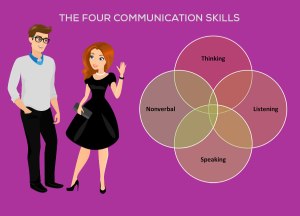
Learning to communicate more effectively with your spouse requires that you be fully present and attentive. You have to be committed to really listening and hearing, not only with your ears but also with your heart. You want to eliminate any communication blocks that prevent you and your partner from growing in understanding and intimacy.

Communication blocks are anything that you do, verbally or non­verbally, to keep you from connecting deeply with another person. Some examples of communication blocks in marriage are:

* Rolling your eyes and looking resigned or exasperated when your spouse is talking;

* Sighing deeply and loudly when your spouse is sharing his/her viewpoint;

* Looking at your watch or a clock repeatedly;

* Not stopping what you’re doing when your spouse is trying to have a serious talk with you;

* Not making eye contact and not giving your partner your undivided attention;

* Using the time when your spouse is talking to think about other things unrelated to the conversation;

* Tuning your spouse out because you’ve heard the same thing repeatedly and are convinced it’s the same old speech;

* Becoming defensive and angry immediately instead of showing your partner the respect of hearing him/her out;

* Belittling your spouse, name calling, cursing, shaking or pointing a finger, or getting in his/ her face.

* Interrupting your partner before he/she is finished talking.

the-four-communication-skillsIt has been said that for every minute you are angry with someone, you lose sixty seconds of happiness that you can never get back. It just makes good sense to do everything you can to preserve the good will and intimacy of your marriage when conflict, anger, hurt feelings, and disagreements occur.

If you truly love your partner, you will not want to rip him/her to shreds verbally, or to ignore or discount differing opinions and beliefs. You will want to do everything you can to insure that you have quality communication in your relationship and that you are communicating your caring, love, and respect to your spouse

Eleanor Roosevelt once said, “The most important thing in any relationship is not what you get but what you give.” While you cannot control how someone else will react to your efforts, you can commit to doing all you can to create a safe environment where intimacy can flourish.

 
Leave a comment

Posted by on July 13, 2015 in Marriage