RSS

Powerful in prayer…the activity which we call prayer is, without a doubt, the very heart of religion


That which distinguishes a deeply religious person from all other people is the fact that he has a definite place in his life for prayer. Prayer is a definite part of his life. And is should be the case, because there is not in the world a kind of life more sweet and delightful than that of a continual conversation with God.

We are not told that Jesus ever taught His disciples how to preach, but He taught them how to pray. He wanted them to have power with God; then He knew they would have power with man.
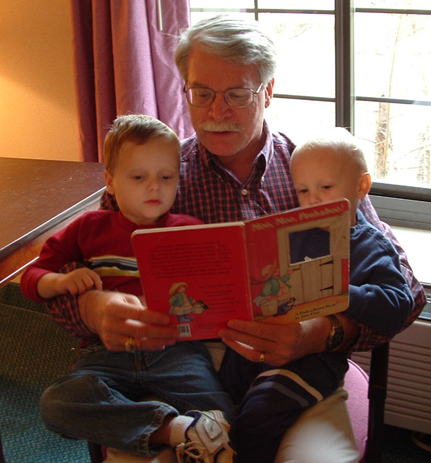

GDreading TJ readingPrayer is a form of communication between God and man and man and God. It is of the essence of communication between persons that they should talk with each other from the same basic agenda. Wherever this is not done, communication tends to break down. If, however, an atmosphere of trust can be maintained, then one learns how to wait and be still. It is instructive to examine the prayer life of the Master from this point of view.[1]

Prayer is much like a check to be countersigned by two parties. I sign the check and send it up to heaven. If Jesus Christ also signs it, it does not matter how large it is — it’ll be honored.

Abraham Lincoln faced some of our nation’s most difficult situation with prayer, stating that “I have been driven many times to my knees by the overwhelming conviction that I had nowhere else to go.”

The trouble with many who pray is that he/she says “Amen” and runs away before God has a chance to reply.

God wants us to communicate with Him because He has a great plan for our lives. For us to fulfill that plan, we have to hear what He’s saying and what He’s calling us to do. Prayer sometimes consists of sitting down and just being quiet and listening.

   You know how people say, “Don’t just stand there, do something”? I believe God is telling us, “Don’t just do something, stand there.” God wants us to be quiet sometimes and just meditate. We have to listen before we can learn and obey.

There come times in our lives when we in our desperation and pain run to God and dial our 911 prayers. Sometimes we’re hysterical. Sometimes we don’t know the words to speak. But God hears. He knows our number and he knows our name and he knows our circumstance. That help is already on the way; God has already begun to bring the remedy to us.[2]

Since September 11, 2001, when those Twin Towers were destroyed by terrorists in New York City, our country has been more accommodating to the ‘idea’ of prayer as opposed to the secular attitude of many of our citizens. Even our politicians have been seen to turn to prayer in a way unlike recent years.

But there is a natural cynicism in wondering if their actions are truly genuine, reminding me of an Indiana farmer who took his family to the nation’s capital to see how their government worked.  After visiting the House of Representatives, they went to the Senate gallery, where the chaplain of the Senate was speaking.

 Daddy,” asked the farmer’s ten-year-old daughter, “does the chaplain pray for the Senate?”

“No,” said the farmer.  “He comes in, looks at the Senators, and then prays for the country.”[3]

Many are unaware that the Declaration of Independence did not come into being until a day of fasting and prayer had been observed. Appointed by the Continental Congress, it was kept by all the colonies on May 17, 1776. At that time in our history, God and the Bible were given more reverence and recognition than they are today. When the nation was finally born, our forefathers rang the Liberty Bell with great enthusiasm, and a legend says that it cracked as they zealously proclaimed their freedom. Years later the White Chapel Foundry of London offered to recast the huge carillon, but their proposal was of course refused. Apparently the symbolic value of the damaged bell, which recalls the religious and patriotic fervor of those early days, is something that America still wishes to preserve.

This in itself is good; but in view of our nation’s moral decline, the crack may also suggest a break in our basic ideals and a serious defect in our spiritual attitudes. We can remedy the situation and avert the judgment of the Lord only by repentance, prayer, and a return to the faith of our fathers. In this sense, there is no time for delay in “mending the bell.”

These words have a profound historical significance: “Almighty God, we acknowledge our dependence upon thee, and we beg thy blessings upon us, our teachers and our country.” This was the voluntary prayer the U.S. Supreme Court found violated the establishment clause of the Constitution in 1962 in Engel vs. Vitale. It reasoned that if this prayer was allowed, it would be a step toward establishment of a state-sponsored religion. The absurdity of this reasoning is self-evident.

The end of the Declaration of Independence provides: “with a firm reliance of the protection of divine providence….” At the opening of each day’s session of the Supreme Court the crier states: “God save the United States and this honorable court.” In 1952 the U.S. Supreme Court stated in Zorach vs. Clauson: “We are a religious people whose institutions presuppose a supreme being.” Carved above the entrance to the Supreme Court is: “In God we Trust.”

There are some of us within the legal system who desperately oppose the Supreme Court on this point and support those who courageously seek to change the law. Our children deserve better than the current moral anarchy.

Prayer is not overcoming God’s reluctance; it is adjusting to God’s willingness. God never sleeps, so He is never disturbed when we approach Him. God does not answer our much praying in order to get rid of us, but because He loves us.

Howard Hendricks tells of a church in Dallas a few years ago having trouble finding a teacher for a junior high boys class: “The list of prospects had only one name and when they told me who it was I said, “You’ve got to be kidding.” But I couldn’t have been more wrong about that young man. He took the class and revolutionized it.

“I was so impressed I invited him to my home for lunch and asked him the secret of his success. He pulled out a little black book. On each page he had a small picture of one of the boys, and under the boy’s name were comments like “having trouble in arithmetic,” or “comes to church against parents’ wishes,” or “would like to be a missionary some day, but doesn’t think he has what it takes.”

  “I pray over those pages every day,” he said, “and I can hardly wait to come to church each Sunday to see what God has been doing in their lives.”

Prayer does not fit us for the greater works; prayer is the greater work. Prayer . . . really is a silent surrendering of everything to God because it is not quite clear to us how we should pray.

What type things might we pray about? Pray for a tough hide and a tender heart. We might ask the lord to grant us a peaceful night and a perfect death.  The best prayers have often been more groans than words.

Benjamin Franklin suggested that we “Work as if you were to live a hundred years; pray as if you were to die tomorrow.”

There are days when we can bring before God a deep and glad laughter of joy and gratitude. There will be other days when we can only muster a bitter, angry complaint. If it is honest, be confident that God will accept whatever it is we truly have to lift up before him, and he will make it serve his purpose and our good.[4]

F.B. Meyer offered that “the great tragedy of life is not unanswered prayer, but unoffered prayer.”

A 17-century Roman Catholic Frenchman named Francois Fenelon wrote, “Tell God all that is in your heart, as one unloads one’s heart, its pleasures and its pains, to a dear friend. Tell Him your troubles, that He may comfort you; tell Him your joys, that He may sober them; tell Him your longings, that He may purify them; tell Him your dislikes, that He may help you to conquer them, talk to Him of your temptations, that He may shield you from them; show Him the wounds of your heart, that He may heal them; lay bare your indifference to good, your depraved tastes for evil, your instability. Tell Him how self-love makes you unjust to others, how vanity tempts you to be insincere, how pride disguises you to yourself and to others.

“If you thus pour out all your weaknesses, needs, troubles, there will be no lack of what to say. You will never exhaust the subject. It is continually being renewed. People who have no secrets from each other never want for subjects of conversation. They do not weigh their words, for there is nothing to be held back, neither do they seek for something to say. They talk out of the abundance of the heart, without consideration they say just what they think. Blessed are they who attain to such familiar, unreserved intercourse with God.”

According to a poll on prayer for Newsweek in 1997, the following percentage said:

They ask for health or success for a child or family member when they pray — 82

They ask for strength to overcome a personal weakness — 75

They never ask for financial or career success —  36

The following percentages stated their beliefs about the prospects of prayer:

God answers prayers — 87

God doesn’t answer prayers —  51

They believe God does not play favorites in answering prayers — 82

God answers prayers for healing someone with an incurable disease — 79

Prayers for help in finding a job are answered —  73

They believe that when God doesn’t answer their prayers, it means it wasn’t God’s will to answer — 54

They don’t turn away from God when prayers go unanswered   —  82

According to researchers James Petterson and Peter Kim in their book, The Day America Told the Truth:  What People Really Believe about Everything that Really Matters, God is alive and well. But fewer people are listening to what He has to say than ever before. While 90 percent of those questioned by the authors said they believe in God, few turn to Him when they face a moral issue.

If Petterson and Kim are right — and other research results confirm America’s spiritual drift — then it’s no wonder that those willing to do right often seem few and maligned.

Prayer is not a stratagem for occasional use, a refuge to resort to now and then. It is rather like an established residence for the innermost self. All things have a home; the bird has a nest, the fox has a hole, the bee has a hive. A soul without prayer is a soul without a home.

Weary, sobbing, the soul, after roaming through a world festered with aimlessness, falsehoods, and absurdities, seeks a moment in which to gather up its scattered life, in which to divest itself of enforced pretensions and camouflage, in which to simplify complexities, in which to call for help without being a coward. Such a home is prayer.[5]

R.A. Torrey offers the following prescription that will bring revival — revival to any church, or community, or any city on earth. First: Let few Christians get thoroughly right with God. If this is not done, the rest will come to nothing. Second: Let them bind themselves together to pray for revival until God opens the windows of heaven and comes down. Third: Let them put themselves at the disposal of God for His use as He sees fit in winning others to Christ. That is all. I have given this prescription around the world… and in no instance has it failed. It cannot fail.

He also is credit with stating that “If all the sleeping folk will wake up, if all the lukewarm folk will fire up, if all the dishonest folk will confess up, if all the disgruntled folk will cheer up, if all the depressed folk will cheer up, if all the estranged folk will make up, if all the gossipers will shut up, if all true soldiers will stand up, if all the dry bones will shake up, if all the church members will pray up…then we can have a revival!”

The Untimely Death of Mrs. Prayer Meeting!

We are sorry to announce the passing of Mrs. Prayer Meeting. She died recently at the First Neglected Church on Ho-Hum Avenue. Born many years ago in the midst of a great revival, she was strong and healthy as a child, fed largely on testimony and Bible study she grew into world-wide prominence and was one of the most influential members of the Church family.

However, in recent years Sister Prayer Meeting has been failing in health, gradually wasting away until rendered helpless by stiffness of the knees, cooling of the heart, lack of spiritual sensitivity and the concern for spiritual things. Her last whispered words were inquiring about the strange absence of her loved ones, now so busy in the market place and places of wordly amusement on Wednesday evenings!

Experts, including Dr. Good Works, Dr. Socializing and Dr. Unconcerned disagree as to the fatal cause of her final illness. They all administered large doses of excuses, even ordered a last minute motivational bypass, all to no avail. A post-mortem examination showed that a deficiency of regular spiritual food, a lack of prayer and Christian fellowship, all contributed to her untimely demise.

The following prayer might be a good way to begin each and every day: I arise today through God’s strength to direct me, God’s might to uphold me, God’s wisdom to guide me, God’s eye to look before, God’s ear to hear me, God’s word to speak to me, God’s hand to guard me, God’s way to lie before me, God’s shield to protect me, God’s hosts to save me from snares of devils. From temptation of vices, From everyone who shall wish me ill, Afar and near, Alone and in a multitude.[6]

————————–

[1] Howard Thurman in A Strange Freedom. Christianity Today, Vol. 43, no. 5.

[2] Leith Anderson, Men of Integrity, Vol. 2, no. 2.

[3] From Quote Magazine, reprinted in Reader’s Digest, March 1992, p. 50

[4] Gardner Taylor, quoted in Reflections,  Christianity Today, Vol. 45, no. 2.

[5] Abraham Joshua Heschel in Moral Grandeur and Spiritual Audacity.  Christianity Today, Vol. 42, no. 5.

[6] Attributed to St. Patrick, from “The Deer’s Cry” (St. Patrick’s Breastplate), translated by Kuno Meyer, quoted in “Reflections,” Christianity Today, Vol. 44, no. 13.


 
Leave a comment

Posted by on February 5, 2015 in Encouragement


How does God reveal Himself?  One way is in nature


David proclaimed that ”The heavens declare the glory of God; the skies proclaim the work of his hands. {2} Day after day they pour forth speech; night after night they display knowledge. {3} There is no speech or language where their voice is not heard. {4} Their voice goes out into all the earth, their words to the ends of the world. In the heavens he has pitched a tent for the sun, {5} which is like a bridegroom coming forth from his pavilion, like a champion rejoicing to run his course. {6} It rises at one end of the heavens and makes its circuit to the other; nothing is hidden from its heat.” (Psalms 19:1-6)

????????????????????????????????????????????????????????????????????????????????????????????????????????????????????Paul lays a heavy responsibility upon every human being, who can learn at a stated level that he is left without excuse if he does not respond with a changed life:  “The wrath of God is being revealed from heaven against all the godlessness and wickedness of men who suppress the truth by their wickedness, {19} since what may be known about God is plain to them, because God has made it plain to them. {20} For since the creation of the world God’s invisible qualities–his eternal power and divine nature–have been clearly seen, being understood from what has been made, so that men are without excuse. {21} For although they knew God, they neither glorified him as God nor gave thanks to him, but their thinking became futile and their foolish hearts were darkened. (Romans 1:18-21)

The Apostle Paul taught us that God reveals something about His holy standards through man’s conscience.

(Romans 2:14-16) Indeed, when Gentiles, who do not have the law, do by nature things required by the law, they are a law for themselves, even though they do not have the law, {15} since they show that the requirements of the law are written on their hearts, their consciences also bearing witness, and their thoughts now accusing, now even defending them.) {16} This will take place on the day when God will judge men’s secrets through Jesus Christ, as my gospel declares.

But none of these give us very many particulars about God’s personality or nature. We need something more. We need to have Him talk with us.

And He does that, not through spooky voices or mystical experiences, but through Scripture. They are God’s words to us. They were given by the breath of His mouth:

(Matthew 4:4)  Jesus answered, “It is written: ‘Man does not live on bread alone, but on every word that comes from the mouth of God.'”

(2 Timothy 3:16-17)  All Scripture is God-breathed and is useful for teaching, rebuking, correcting and training in righteousness, {17} so that the man of God may be thoroughly equipped for every good work.

(2 Peter 1:20-21)  Above all, you must understand that no prophecy of Scripture came about by the prophet’s own interpretation. {21} For prophecy never had its origin in the will of man, but men spoke from God as they were carried along by the Holy Spirit.

In the Bible God tells us what He is like. We learn how He thinks, how He feels, and how we can expect Him to act. If we want to know God, we must begin by opening the Bible and reading what He has to say about Himself.

But God is infinite, and we are finite human beings. How can the finite ever really understand the infinite? How can the human ever truly know the divine?

It seems that God must reveal Himself to us in some way more personal than mere written words if we are ever to know Him genuinely. And that is exactly what He did through Jesus Christ.

(John 1:14-18)  The Word became flesh and made his dwelling among us. We have seen his glory, the glory of the One and Only, who came from the Father, full of grace and truth. {15} John testifies concerning him. He cries out, saying, “This was he of whom I said, ‘He who comes after me has surpassed me because he was before me.'” {16} From the fullness of his grace we have all received one blessing after another. {17} For the law was given through Moses; grace and truth came through Jesus Christ. {18} No one has ever seen God, but God the One and Only, who is at the Father’s side, has made him known.

(Hebrews 1:1-3)  In the past God spoke to our forefathers through the prophets at many times and in various ways, {2} but in these last days he has spoken to us by his Son, whom he appointed heir of all things, and through whom he made the universe. {3} The Son is the radiance of God’s glory and the exact representation of his being, sustaining all things by his powerful word. After he had provided purification for sins, he sat down at the right hand of the Majesty in heaven.

Jesus Christ is the out-shining of God’s glory and the perfect expression of God’s essential being. To know Him is to know God.

Jesus Himself made that claim when He said: “If you had known Me, you would have known My Father also; from now on you know Him, and have seen Him. (John 14:7).

While Jesus has returned bodily to Heaven, God has given us both the inspired record of His life as well as the spiritual faculties we need to know Him personally. We can know Christ just as intimately as if we walked with Him on earth as His first disciples did. And to know Him is to know God.

WHY IS KNOWING GOD SO IMPORTANT?

  1. It shapes our moral and ethical standards.
  2. It directly affects our response to pain and hardship.
  3. It motivates our response toward fortune, fame, power, and pleasure.
  4. It gives us strength when we are tempted.
  5. It keeps us faithful and courageous when we are outnumbered.
  6. It enhances our worship and prompts our praise.
  7. It determines our lifestyle and dictates our philosophy.
  8. It gives meaning and significance to relationships.
  9. It sensitizes our conscience and creates the desire to be obedient.
  10. It stimulates hope to go on, regardless.
  11. It enables us to know what to reject and what to respect while I’m invited to planet Earth.
  12. It is the foundation upon which everything rests!

      A March (1994) poll for U.S. News and World Report’s issue found that 93% of Americans say they believe in God or a universal spirit. Of those polled, 65% say religion is losing its influence on American life, although 62% say religion is increasing its influence in their personal lives. Other findings:

  • The Bible is the actual word of God to be taken literally, word for word: 34%
  • The Bible is the inspired word of God, but not everything in it can be taken literally: 46%
  • The Bible is an ancient book of legends, history and moral precepts, recorded by man: 16%
  • God is a heavenly father who can be reached by prayers: 76%
  • God is an idea, not a being: 11%
  • God is an impersonal creator: 8%                    Yes       No
  • There is no one set of values that is right 48% 44%
  • Each individual must determine what is right or wrong 70% 25%
  • The president should be a moral and spiritual leader 78% 17%
  • Our government would be better if policies were more directed by moral values 84% 9%
  • Individual freedom is critical to democracy in this country 91% 4%
  • God is the moral guiding force of American democracy 55% 35%
  • Nearly 60% of Americans say they hold their current religious beliefs because of their parents’ example.
  • More than 8 of every 10 Americans today believe that it’s possible to be a good Christian or Jew even without attending a church or synagogue.


Leave a comment

Posted by on February 2, 2015 in Doctrine


Working for worth… “Life is a series of inspired follies”


A mother overheard her son’s little six-year-old friend ask why babies are spanked when they are born. The youngster replied, “To get them used to it.”

From the human point of view, life appears futile; and it is easy for us to get pessimistic. The Jewish writer Sholom Aleichem once described life as “a blister on top of a tumor, and a boil on top of that.” You can almost feel that definition!

enthusiasm4final1The American poet Carl Sandburg compared life to “an onion—you peel it off one layer at a time, and sometimes you weep.” And British playwright George Bernard Shaw said that life was “a series of inspired follies.”

When you were studying English literature in school, you may have read Matthew Arnold’s poem “Rugby Chapel” in which he includes this dark description of life:

Most men eddy about Here and there—eat and drink,

Chatter and love and hate, Gather and squander, are raised

Aloft, are hurl’d in the dust, Striving blindly, achieving Nothing; and then they die—


What a relief to turn from these pessimistic views and hear Jesus Christ say, “I am come that they might have life, and that they might have it more abundantly” (John 10:10). Or to read Paul’s majestic declaration, “Therefore, my beloved brethren, be steadfast, unmovable, always abounding in the work of the Lord, knowing that your labor is not in vain in the Lord” (1 Cor. 15:58).

Do you have a dream? You need one. Dreams give hope. They display a powerful image of what life can be. Has your dream been shattered? Worse yet, has your dream turned into a nightmare and come true? For all of us dreamers, there is hope.

We need to find meaning and purpose! It gives us daily direction. It gives us worth.

Life is “not in vain” if it is lived according to the will of God! This mind-set makes all the difference! It gives us a focus as we wake each morning and begin pondering the new day. It makes calculation easier when we wonder what lies ahead – and helps erase those things past, over which we no longer have control.

A little girl was working very hard and could not be induced to stop and rest. This was before the day of electric lights. When asked, “Why do you not stop and rest?” she replied, “I have just one little candle, and it will soon be burned out. I wish to do what I can while the candle burns.” So it is with us. Our little day will soon be gone. May we do what we can while the candle burns. [1]

We live in a time of unprecedented discoveries, many of which tend to make life longer and living more comfortable and enjoyable. But with change and progress the inexorable law of change and decay also operates. Strange that so few in this world prepare for the inevitable. [2]

Henri J. Nouwen is credited with a profound statement: Sometimes I think of life as a big wagon wheel with many spokes. In the middle is the hub. Often in ministry, it looks like we are running around the rim trying to reach everybody. But God says, “Start in the hub; live in the hub. Then you will be connected with all the spokes, and you won’t have to run so fast.” [3]

I want to accept the challenge offered by Mark Twain: “Let us so live that when we die even the undertaker will be sorry.”

If we make that choice, we might prefer to adopt the positive lifestyle of Jeanne Hendricks, who said that “Living is not a spectator sport.  No one, at any price, is privileged to sit in the stands and watch the action from a distance.  Being born means being a participant in the arena of life, where opposition is fierce and winning comes only to those who exert every ounce of energy. “

Or perhaps we like the Yiddish Proverb: “Life is the biggest bargain.  We get it for nothing.”


Developing The Proper Outlook

One of the many outlooks we need to pursue is the one by Solomon offered in the overlooked book of Ecclesiastes. It’s often presented as a book for those in their 20’s to help them avoid coming mistakes or one for those in their 50’s due to their coming “midlife crisis.” It seems certain that this wise and powerful king seemed to go through one.

In his Unfolding Message of the Bible, G. Campbell Morgan perfectly summarizes Solomon’s outlook: “This man had been living through all these experiences under the sun, concerned with nothing above the sun … until there came a moment in which he had seen the whole of life. And there was something over the sun. It is only as a man takes account of that which is over the sun as well as that which is under the sun that things under the sun are seen in their true.[4]

    Since it is one of the Old Testament wisdom books, Ecclesiastes would have something to say about both wisdom and folly. There are at least thirty-two references to “fools” and “folly” and at least fifty-four to “wisdom.” King Solomon was the wisest of men (1 Kings 4:31) and he applied this wisdom as he sought to understand the purpose of life “under the sun.” The Preacher sought to be a philosopher, but in the end, he had to conclude, “Fear God, and keep His commandments” (12:13).

Because we live so close to the biblical text, we often fail to note its power to summon and evoke new life. The Bible is our firm guarantee that prophetic construal of another world are still possible, still worth doing, still longingly received by those living at the edge of despair, resignation, and conformity.[5]

John Locke once said, “The Bible is one of the greatest blessings bestowed by God on the children of man. It has God for its author, salvation for its end, and truth without mixture for its matter. It is all pure; all sincere; nothing too much; nothing wanting.”

From the human point of view, nothing seems more permanent and durable than the planet on which we live. When we say that something is “as sure as the world,” we are echoing Solomon’s confidence in the permanence of planet Earth. With all of its diversity, nature is uniform enough in its operation that we can discover its “laws” and put them to work for us. In fact, it is this “dependability” that is the basis for modern science.

Nature is permanent, but man is transient, a mere pilgrim on earth. His pilgrimage is a brief one, for death finally claims him. At the very beginning of his book, Solomon introduced a topic frequently mentioned in Ecclesiastes: the brevity of life and the certainty of death.

Abraham Lincoln had ten guidelines by which he lived and governed his life He followed these guidelines until the day he died:

 1. You cannot bring about prosperity by discouraging thrift.

 2. You cannot help small men by tearing down big men.

 3. You cannot strengthen the weak by weakening the strong.

 4. You cannot lift the wage earner by pulling down the wage payer.

 5. You cannot help the poor man by destroying the rich.

 6. You cannot keep out of trouble by spending more than your income.

 7. You cannot further the brotherhood of men by inciting class hatred.

 8. You cannot establish security on borrowed money.

 9. You cannot build character and courage by taking away man’s initiative and independence.

 10. You cannot help men permanently by doing for them what they could and should do for themselves.

As far as wealth and pleasure are concerned, God gives to us “richly all things to enjoy” (1 Tim. 6:17). “The blessing of the Lord makes one rich, and He adds no sorrow with it” (Prov. 10:22). The wealth and pleasures of the world do not satisfy, and the quest for power and position is futile. In Jesus Christ we have all that we need for life and death, time and eternity.

 So I suggest that we seek God and discover Him and make Him a power in our life. Without Him all of our efforts turn to ashes and our sunrises into darkest nights. Without Him life is a meaningless drama with the decisive scenes missing.

 But with Him we are able to rise from the fatigue of despair to the buoyancy of hope. With Him we are able to rise from the midnight of desperation to the daybreak of joy. St. Augustine was right–we were made for God and we will be restless until we find rest in Him. [6]

Contentment

To a large extent, we’re searching for that elusive place of contentment. The Holman Bible Dictionarydescribes contentment as “an internal satisfaction which does not demand changes in external circumstances.”

Hebrews 13:5-7 summarizes the teaching in advising believers to be free of the love of money and to depend on God’s promise not to forsake His people: “Keep your lives free from the love of money and be content with what you have, because God has said, “Never will I leave you; never will I forsake you.” So we say with confidence, “The Lord is my helper; I will not be afraid. What can man do to me?” Remember your leaders, who spoke the word of God to you. Consider the outcome of their way of life and imitate their faith.”

Worry has become an obsession in our modern world. A look at the self-help section in any bookstore will reveal its prevalence. Hospitals and waiting rooms are filled with people who have physical problems caused by overwhelming anxiety. In addition, there are many people whose lives are disrupted or made unenjoyable because of paralyzing fear.

Christians like to hide their worry by labeling it Christian concern. In spite of protestations to the contrary, Christians do worry. But, do they have to? Not if they learn from Jesus how to win over worry.

Paul spoke in similar terms in 1 Timothy 6:6-10: “But godliness with contentment is great gain. For we brought nothing into the world, and we can take nothing out of it. But if we have food and clothing, we will be content with that. People who want to get rich fall into temptation and a trap and into many foolish and harmful desires that plunge men into ruin and destruction. For the love of money is a root of all kinds of evil. Some people, eager for money, have wandered from the faith and pierced themselves with many griefs.”

The believer can be content no matter what the outward circumstances: Philippians 4:11-13: “I am not saying this because I am in need, for I have learned to be content whatever the circumstances.  I know what it is to be in need, and I know what it is to have plenty. I have learned the secret of being content in any and every situation, whether well fed or hungry, whether living in plenty or in want.  I can do everything through him who gives me strength.”

When we look at life against the message of the life of Jesus and His teachings, the risen life is not easy: it is also a dying life. [7] We should make it our priority and purpose.

Contentment finds an opposite in the form of worry. The words of Jesus early in His public ministry suggest that food and lodging should be enough for the godly: Matthew 6:34: “Therefore do not worry about tomorrow, for tomorrow will worry about itself. Each day has enough trouble of its own.”

There is plenty to worry about (vs. 25). There is no shortage of potential items to worry about. Jesus mentions several matters of common concern: life, health, possessions, We could add our own list of concerns: accidents, aging, weather, or criticism.

There is nothing accomplished by worry (vv. 26-33). It is senseless. The rest of God’s creation does not worry, but God provides for them. Will he not do the same for us. This does not say we should not work, only that we should not worry while we work (v. 26, 28). It is fruitless. It will not add an inch to your height or a hour to your life. In fact, it may well take away from your life (v. 27). It is harmful. Worrying makes us look like the heathen, and it destroys our witness. [8]

Worry, he says, is characteristic of a heathen, and not of one who knows what God is like (verse 32). Worry is essentially distrust of God. Such a distrust may be understandable in a heathen who believes in a jealous, capricious, unpredictable god; but it is beyond comprehension in one who has learned to call God by the name of Father. The Christian should not worry because he believes in the love of God.

Worry gives a small thing a big shadow. Worry is an indication that we think God cannot look after us. Worry is like a rocking chair. It gives you something to do but doesn’t get you anywhere.

Jesus goes on to advance two ways in which to defeat worry. The first is to seek first, to concentrate upon, the Kingdom of God. We have seen that to be in the Kingdom and to do the will of God is one and the same thing (Matthew 6:10). To concentrate on the doing of, and the acceptance of, God’s will is the way to defeat worry. We know how in our own lives a great love can drive out every other concern. Such love can inspire a man’s work, intensify his study, purify his life, dominate his whole being.

We must trust the heavenly father to provide for us as he has promised (v. 32b). We also need to live one day at a time. Handle each worry as it comes. Many will never come to pass. Those that do occur can only be handled in the present (v. 34).

It was Jesus’ conviction that worry is banished when God becomes the dominating power of our lives.

Simon Patrick said, “It is distrust of God to be troubled about what is to come; impatience against God to be troubled with what is present; and anger at God to be troubled for what is past.”

What seems clear is that we often worry about things over which we have no control, or about events and circumstances that never occur. For this, we lose the joy of today and add a burden to an already difficult day.

Life’s too short for worrying. “Yes, that’s what worries me,” we reply.

Rather we should know that one is given strength to bear what happens to one, but not the one hundred and one different things that might happen. [9]

John Dryden commented that “Only man clogs his happiness with care, destroying what is, with thoughts of what may be.”

Only one type of worry is correct: to worry because you worry too much.

We should leave tomorrow’s trouble to tomorrow’s strength; tomorrow’s work to tomorrow’s time; tomorrow’s trial to tomorrow’s grace and to tomorrow’s God.

It ain’t no use putting up your umbrella till it rains.[10]

Solomon got involved in all kinds of projects, hoping to discover something that would make life worth living. He started with great works (4-6), including houses (1 Kings 7), cities (2 Chron. 8:4-6), gardens, vineyards, orchards and forests (1 Kings 4:33), and the water systems needed to service them. Of course, Solomon also supervised the construction of the temple (1 Kings 5ff), one of the greatest buildings of the ancient world.

Solomon accumulated wealth (7b-8a), in flocks and herds (1 Kings 8:63) as well as gold and silver (1 Kings 4:21 and 10:1ff). He was the wealthiest and wisest man in the whole world, yet he was unhappy because activity alone does not bring lasting pleasure.

There can be joy in the doing of great projects, but what happens when the task is finished? Solomon found delight in all his labor (2:10); but afterward, when he considered all his works, he saw only “vanity and vexation of spirit” (2:11). The journey was a pleasure, but the destination brought pain.

“Success is full of promise until men get it,” said the American preacher Henry Ward Beecher, “and then it is a last-year’s nest from which the birds have flown.”


Work

We must not conclude that Solomon was condemning work itself, because work is a blessing from God. Adam had work to do in the Garden even before he sinned. “The Lord God took the man and put him in the Garden of Eden to work it and take care of it” (Gen. 2:15, niv).

In the Book of Proverbs, Solomon exalted diligence and condemned laziness; for he knew that any honest employment can be done to the glory of God (1 Cor. 10:31). But work alone cannot satisfy the human heart, no matter how successful that work may be (Isa. 55:2).

Solomon’s conclusion: Fear God, and keep his commandments; for this is the whole of man.

This is what makes man whole. And the secret is to enthrone God in the days of our youth. If you want to find the secret of living so that the heart is satisfied and the spirit is enriched and fulfilled according to God’s intention for you, then “Remember also your Creator in the days of your youth, before the evil days come.” Enthrone God in the center of your life and you will discover all that God has intended your life to be. And you will be able to rejoice all the days of your life.

——————

[1] William Moses Tidwell, “Pointed Illustrations.”

[2] L. Nelson Bell.  Christianity Today, Vol. 1, reprinted Vol. 40, no. 10.

[3] Henri J. Nouwen in “Moving from Solitude to Community to Ministry”, Leadership (Spring 1995).  Christianity Today, Vol. 40, no. 13.

[4] Fleming H. Revell Company, 1961, p. 229.

[5] Walter Brueggemann, Finally Comes the Poet, in Christianity Today, “Reflections,” Vol. 44, no. 9.

[6] Martin Luther King, Jr., in The Words of Martin Luther King Jr., compiled by Coretta Scott King. Christianity Today, Vol. 43, no. 1.

[7] Thomas Merton in He Is Risen. Christianity Today, Vol. 43, no. 5.

[8] Sermon Outlines For Seekers by J. Michael Shannon.

[9] C. S. Lewis (1898–1963)

[10] Alice Caldwell Rice


Leave a comment

Posted by on February 1, 2015 in Encouragement


“Going Nowhere Fast” Series: #8 “Self-Control”


She seemed the same as the rest of us. She loved the Lord and lived for Him, taking every opportunity to serve that she could, but place a little bit of alcohol in her coke and something happened to her. She became a completely different person. That which she had seemed to overcome – alcoholism – took over and she could do nothing about it She was no longer able to control herself to say no and to refrain from drinking more.

For most of us this is hard to understand and yet for some we seem controlled by a little white stick called a cigarette. If we are confined to a place where we can not smoke, we crave inside waiting to get outside where we can light up. I’ve seen calm people get very upset because they could not find their cigarettes.

Or there may be those of us that cannot stop looking at pornographic pictures – just a quick look.

Or perhaps there is someone who seems to makes us change who we are. We can be kind and gentle but we are so angry with someone that feelings overtake us and we loose control – saying things or doing things we really don’t want to. We hear of killers who were the nicest people.

In all these cases there is a common problem – that of not having self- control.

Words like self-control, temperance, moderation, and self-restraint are all terms used to describe the last of the nine fruits of the Spirit. Self-control may be the last facet of God’s love in the list, but that certainly doesn’t reduce it to the least important.

The word “self-control” seems to stress self – me. And that is what the Greek word “agkretai” means. In Greek writings and philosophy it means status, power by which I can control myself, others, and all situations rather than let myself be controlled.

No doubt it is true and fair to say that it is one aspect of Christian conduct and character and conversion with which most of us have the greatest difficulty. Of all the fruits which should flourish in the garden of our lives this may well be the one which is the most “spotty, uneven, and irregular.”

In the New Testament itself we have very little material through which to work out the meaning of this word (egkrateia). It occurs in only two places:

(Acts 24:25)  “As Paul discoursed on righteousness, self-control and the judgment to come, Felix was afraid and said, “That’s enough for now! You may leave. When I find it convenient, I will send for you.””

(2 Peter 1:6)  “…and to knowledge, self-control; and to self-control, perseverance; and to perseverance, godliness…”

Self-control; the word is egkrateia which Plato uses of self-mastery.  It is the spirit which has mastered its desires and its love of pleasure. 

The corresponding verb egkrateuomai occurs twice in the NT. It is used of the athlete’s discipline of his body (1 Corinthians 9:25) and of the Christian’s mastery of sex (1 Corinthians 7:9). 

(1 Corinthians 7:9)  “But if they cannot control themselves, they should marry, for it is better to marry than to burn with passion.”

(1 Corinthians 9:25)  “Everyone who competes in the games goes into strict training. They do it to get a crown that will not last; but we do it to get a crown that will last forever.”

The corresponding adjective agkrates occurs once:

(Titus 1:8)  “Rather he must be hospitable, one who loves what is good, who is self-controlled, upright, holy and disciplined.”

There is the fruit of temperance (egkrateia): to master and control the body or the flesh with all of its lusts. It means self-control, the master of desire, appetite and passion, especially sensual urges and cravings. It means to be strong and controlled and restrained. It means to stand against the lust of the flesh and the lust of the eye and the pride of life (1 John 2:15-16).

In some situations we behave in a most exemplary and commendable manner. At other times we behave worse than beasts. There are days when we seem to act in decent and dignified ways. On other occasions we can become erupting volcanoes of venom and violence.

In these situations, we are showing ourselves to “be human,” to be sure. But it can also call into question the struggle we have between consistency and credibility.

We need to stop and make another point absolutely clear: we are not talking here of the world’s concept of “being stoic.” The picture here is not the grim, rigid idea of setting the jaw, steeling the will to endure life with cold cynicism. Self-control for God’s person doesn’t imply that with severe self-discipline I can control my conduct.

Self-control for the Christian means that my “self,” my whole person, my whole being, body, soul, and spirit comes under the control of Christ. It means that I am an individual governed by God.

My entire life, every aspect of it – whether spiritual, moral, or physical – has become a subject to the sovereignty of God’s Spirit. I am a “man under authority.” The running of my affairs, my attitudes, my actions is a right which has been relinquished and turned over to God’s Spirit, living within me.

Some statements about self-control

We live under the illusion that if we can acquire complete control, we can understand God, or we can write the great American novel.  But the only way we can brush against the hem of the Lord, or hope to be part of the creative process, is to have the courage, the faith, to abandon control.  For the opposite of sin is faith, and never virtue, and we live in a world which believes that self-control can make us virtuous.  But that’s not how it works.  — Madeleine L’Engle in Walking on Water. Christianity Today, Vol. 36, no. 4.

A common path to sexual sin is the notion that feelings are not only all-important but also totally uncontrollable; they just happen to you.    — Louis McBurney, M.D., Leadership, Vol. 6, no. 3.

Self-control is the capacity to reak a chocolate bar into four pieces with your bare hands – and then eat just one of the pieces.

The believer is to proclaim self-control to the lost.

“And as he reasoned of righteousness, temperance, and judgment to come, Felix trembled, and answered, Go thy way for this time; when I have a convenient season, I will call for thee” (Acts 24:25).

The believer is to control his sexual desires.

“But if they cannot contain [control], let them marry: for it is better to marry than to burn” (1 Cor. 7:9).

The believer is to strenuously exercise self-control, just as an athlete controls himself.

“And every man that striveth for the mastery is temperate in all things. Now they do it to obtain a corruptible crown; but we an incorruptible” (1 Cor. 9:25).

The believer is to grow in self-control.

“And to knowledge temperance; and to temperance patience; and to patience godliness” (2 Peter 1:6).

The aged believer is especially to be on guard to control himself.

“That the aged men be sober, grave, temperate, sound in faith, in charity, in patience” (Titus 2:2).

Secular Greek uses it of the virtue of an Emperor who never lets his private interests influence the government of his people.  It is the virtue which makes a man so master of himself that he is fit to be the servant of others.

Without God we are out of control. In the examples at start of message people showed that our bodies are out of control.

Their belly is their God. 1Cor 6 we are told that our body is the temple of the Holy Spirit.

Eph 5:18 Do not get drunk on wine, which leads to debauchery. Instead, be filled with the Spirit.

We need to choose – what controls us is our god – what is your god?

In concluding our discussion we should remember that the fruit of the Spirit is the very nature of God (Galatians 2:20; Ephes. 5:18). The believer is to walk in the Spirit; that is, he is to walk in such a consciousness of God and in such open confession that he is kept constantly clean from sin. God keeps him clean and pure and acceptable as though he were perfect. As the believer so walks in such an awareness of God, he assimilates the very nature of God and the Holy Spirit’s fruit is produced. No law can stand against such things.

There are four stages of fruit-bearing given: (1) no fruit (John 15:2), (2) fruit (John 15:2), (3) more fruit (John 15:2), and (4) much fruit (John 15:5, 8).

What does it mean to say a Christian is to bear fruit? It means to bear converts (Romans 1:13), to bear righteousness (Romans 6:21-23), to bear Christian character or the fruit of the Spirit.

Note also the conditions for bearing fruit in life: cleansing (John 15:3), abiding in Christ (John 15:5), and obedience (John 15:10, 12). A true Christian is a person who really does abide in Christ (1 John 2:10). John said that to abide in Christ means eight things.

     1.   A person walks in open confession before God. He walks through life opening up his life to God; he confesses all known sin. He does not walk in sin, and he does not allow any sin to go unconfessed (1 John 1:6-10).

     2.   A person walks and fellowships with Christ. He lives and moves and has his being with Christ. He communes and lives in a consciousness of God’s presence, and from God’s presence he learns of God, and he draws the strength and authority to live victoriously day by day (1 John 2:6; 1 John 2:27; cp. Psalm 16:11; Proverbs 3:5-6).

     3.   A person continues in the church; he has not gone out from the church (1 John 2:19).

     4.   A person possesses confidence, an unashamedness in life that prepares him for eternity (1 John 2:28).

     5.   A person does not walk in continuous sin (1 John 3:6). He experiences constant victory over sin.

     6.   A person actively surrenders himself to obey God’s commandments (1 John 3:24).

     7.   A person experiences the indwelling presence and witness of the Spirit (1 John 4:12-13).

     8.   A person dwells in love and unity and fellowship with all other believers (John 17:21-23; 1 John 4:16; cp. 1 John 4:20).

When we study history and the Bible, we find that many great men and women in the past also failed in this area. Adam and Eve failed in eating the forbidden fruit. Noah failed in getting drunk and exposing his nakedness. Abraham failed in sleeping with his handmaid, Hagar. Esau failed in selling his birth right for the temporary satisfaction of his hunger. Samson failed in the indulgence of his lust. King David and King Solomon also failed in the same area. These leaders paid a heavy price for their lack of self-control. Their descendants also suffered the consequence of their sins.

There is one person in human history who has perfect self-control. This person is Jesus Christ. Jesus was tempted by the devil for forty days in the wilderness. The devil tempted him in the area of physical need. Jesus refused to yield to him by saying: “Man does not live on bread alone, but on every word that comes from the mouth of God.” (Matt. 4:4) The devil tempted Him with pride, Jesus refused to yield to him by saying: “Do not put the Lord your God to the test.” (Matt. 4:7) The devil tempted him with worldly glory and riches. Jesus refused to yield to him by saying “Worship the Lord your God, and serve him only.” (Matt. 4:10) Throughout His life on earth, the devil continued to tempt Him, but Jesus never lost His self-control. Neither did He yield to Satan’s temptation. Jesus not only won the victory for Himself, He won the victory for us.

Dear brothers, sisters and friends, do you have the problem of lack of self-control? I believe that most of us will have to say “I have a weakness in this area. I need help!” Jesus can help you and He wants to help you. He can help you to develop the virtue of self-control. Let us understand from the Word of God in what areas we need to have self-control and how we can develop the ability to control ourselves. We can have victory through Jesus Christ.

I. The areas God wants us to have self-control

A. God wants us to have self-control in eating and drinking

Rom. 14:17 says: “For the kingdom of God is not a matter of eating and drinking, but of righteousness, peace and joy in the Holy Spirit”.

God has created many kinds of food for man to enjoy. Eating and drinking is not a sin in itself. In fact God wants us to eat and drink properly in order to be happy in life and have good health. The problem with men is that men enjoy the good food created by God but forget the Creator Himself. Besides, men indulge in eating and drinking to the point of hurting themselves.

Many people spend too much time in thinking, buying and preparing fine food to eat. They always look for the best restaurants to go. Paul said of these people that their god is their stomach (Phil. 3:19)

Many people in America have the problem of overeating and overweight. Many Christians also are guilty of indulgence in eating. The result is that over 25% of the Americans have too much fat in their bodies which develop into some forms of heart disease. Every year about one million Americans die of heart diseases. It is the number one killer in this country. Overweight and too much fat can also develop into other diseases such as diabetes. Indulgence in drinking caused 15 millions Americans to become alcoholics. Alcohol is responsible for about 100,000 death each year. The Word of God exhorts us to exercise self-control in eating and drinking.

B. God wants us to have self-control in sexual desire

1Ths. 4:3-5 say: “It is God’s will that you should be sanctified: that you should avoid sexual immorality; that each of you should learn to control his own body in a way that is holy and honorable, not in passionate lust like the heathen, who do not know God”

God created the desire for food as well as the desire for sex in human nature. Sex is not a sin in itself. It is a gift from God to make the marriage union joyful. It is also for the purpose of the multiplication of the human race. But God has given a law concerning the use of sex. It can only be enjoyed within marriage. The breaking of this law is a serious sin before God. The Bible condemns all forms of fornication and adultery. The nations of the world don’t have the written laws of God but they have a conscience which was planted by God in their hearts. The conscience of man also tells him that fornication is a sin.

But many people in the world today ignore the conscience and God’s law. They commit all kinds of sexual sins. God in His providence, allow many kinds of terrible diseases such as gonorrhea and aids to be inflicted upon those who violate His laws. There are also other kinds of evil consequences. Many marriages and homes were broken because of marital infidelity.

There are a lot of temptation in the world today. Pornography has invaded all channels of the media. Pornography is rampant in movies, cable TV. magazines and in the internet. Premarital sex, casual sex, extra-marital sex and many forms of perverted sex are widely practiced in our campuses and society. Christians too are subject to these temptations. While many people of the world give in to all forms of sexual sins, the Word of God exhorts the believers to exercise self-control in this area and to live a holy and honorable life.

C. God wants us to have self-control in speech

Another area God wants us to have self-control is in our words. It is easy for a person to commit sin with his lip. The prophet Isaiah under the light of God confessed that he was a man of unclean lip and that he lived among a people of unclean lips. The apostle James described the evil of the tongue with these words. He said: “No man can tame the tongue. It is a restless evil, full of deadly poison. With the tongue we praise our Lord and Father, and with it we curse men, who have been made in God’s likeness. (James 3:8-9)

The evil words people speak include gossips, dirty jokes, filthy language, slanders, unfair criticism, words of rebuking, words of insult, malicious words, lying and boasting. The evil words of man cause a lot of harm in the home, in the work place and in the church. It hurts relationship. It causes a lot of hard feeling, animosity and bitter fight among people. It offends God. Jesus warned that man’s careless words will come under the judgment of God.

The apostle James says: “If anyone considers himself religious and yet does not keep a tight rein on his tongue, he deceives himself and his religion is worthless.” (James 1:26). It is important for the Christians to control our tongues so that we will not sin against God and man.

D. God wants us to have self-control in anger

Another area God wants us to have self-control is anger. Jesus warned the disciples not to be angry with a brother. He said in the Sermon of the Mount: “You have heard that it was said to the people long ago, `Do not murder, and anyone who murders will be subject to judgment.’ But I tell you that anyone who is angry with his brother will be subject to judgment. Again, anyone who says to his brother, `Raca,’ is answerable to the Sanhedrin. But anyone who says, `You fool!’ will be in danger of the fire of hell. (Matt. 5:21-22)

Anger is often an expression of the hatred, wickedness and pride inside a person. Angry attitude and angry words can hurt a person deeply just like a violent act can. Anger creates tension and animosity among family members, friends and colleagues. That is why the Word of God teaches us to have control over our anger.

The Bible doesn’t say that every expression of anger is sinful. Anger can be a natural response to some injustice done to us or to our loved ones. But even in a righteous anger we still need to be careful. Because we have a sin nature inside, we can express our hatred and wickedness through our angry words and attitude. That is why Eph. 4:26-27 teach: “In your anger do not sin. Do not let the sun go down while you are still angry, and do not give the devil a foothold.”

God has His way to correct injustice and wrong behavior. We need to grow in knowledge and grace so that we can follow God’s way to correct injustice. Before we know how to deal with wrong behavior and injustice, let us control our anger, so that we will not sin.

E. God wants us to have self-control in greed

Another area God wants us to exercise self-control is greed. Jesus said to the people of His days: “Watch out! Be on your guard against all kinds of greed; a man’s life does not consist in the abundance of his possessions.” (Luke 12:15)

We are living in a very materialistic society. Most people are bent on the pursuit of money and material things. They consider life consisting in the abundance of one’s possession. They give all their heart, time and energy to make more and more money. They keep acquiring more and more property and assets. They keep buying luxurious things.

Rich men like Bill Gates and Sam Walton have become the heroes that millions of people admire. Many people take on two or three jobs in order to get rich. They have no time to think about God, morality and the destiny of their souls. They fight with everyone for selfish gain. They lose their loved ones and friends and make many enemies. Many Christians also abandon the Lord to pursue worldly gain. They do not grow in spiritual life even though they may have been Christians for many years.

1Tim. 6:10 says: “For the love of money is a root of all kinds of evil. Some people, eager for money, have wandered from the faith and pierced themselves with many griefs.” For the pursuit of money and material things, many people lose God, lose their family, lose their character, lose their friends, lose their health and in the end they will lose their souls.” Jesus said: What good will it be for a man if he gains the whole world, yet forfeits his soul? Or what can a man give in exchange for his soul? (Matt. 16:26)

There are higher and better things in life than money. God, eternal life, the kingdom of God and righteousness are of infinite worth while money and material things are of temporal value. Paul exhorted Timothy: “But you, man of God, flee from all this, and pursue righteousness, godliness, faith, love, endurance and gentleness.” (1Tim. 6:11)

Besides greed, the Word of God also exhorts Christians to exercise self-control in other areas such as pride, jealousy, vanity and worldly pleasure.

II. How can we develop the virtue of self-control

A. Depending on the Holy Spirit

Gal. 5:23 says: The fruit of the Spirit is self-control. This means that the Spirit of God will help us to develop the virtue of self-control. If we depend on our own strength we will fail because we have a sin nature inside of us which is too powerful for us. The sin nature is that strong, evil bent in us which causes us to indulge in eating, drinking, sex, malicious talk, anger, greed, pride, self-seeking and vanity.

After many years of failure, I finally recognize that I don’t have the ability to control the evil desires inside of me. Now I turn to the Lord and depend on Him completely. I find victory in Jesus. Jesus has already won the victory for me and now He is living in me to help me to control my sin nature. If you are still struggling with gluttony, lust and greed, my advice to you is that don’t depend on your own strength to control them. If you do, you will certainly fail. But if you depend on the Holy Spirit moment by moment to control the evil desires of your body, you will have victory.

How does the Holy Spirit help us? He helps us by imparting in our spirit a new desire for the things of God which are holy, righteous, truthful and noble. This new desire is fighting again the old desires of our flesh. As a new Christian, we begin to experience that these two desires are constantly fighting against each other within us.

As young Christians we still fail from time to time and follow the desires of the flesh to live. But every time we indulge in the flesh and commit sin, the Holy Spirit causes our heart to feel grieved. We feel shameful and miserable about what we have done. We are convicted by the Holy Spirit of our sins. Our fellowship with the Lord is broken. Then, we have to repent and confess our sins before the Lord. It usually takes us a day or two to regain the joy of salvation and the fellowship with God again. The Word of God teaches: “do not grieve the Holy Spirit of God, with whom you were sealed for the day of redemption. Get rid of all bitterness, rage and anger, brawling and slander, along with every form of malice. Flee from all this.” (Eph. 4:30-31)

An average Christian probably will go through the cycle of sinning, repentance and restoration of fellowship hundreds of times in the first few years of his Christian life. But if a Christian is faithful in prayer, bible study, attending meetings and serving in the house of God, his spiritual life will grow strong. He will discover that the desire for holiness in him become stronger and stronger and the Holy Spirit helps him to subdue the evil desires of the flesh. That is why Paul said:” “Live by the Spirit, and you will not gratify the desires of the sinful nature.” (Gal. 5:16) Paul also said: “If you live according to the sinful nature, you will die; but if by the Spirit you put to death the misdeeds of the body, you will live, (Rom. 8:13)

B. Fasting and prayer

As we turn our attention to the working of the Holy Spirit in our lives, let us also look at the Biblical teaching and example of fasting and prayer. Fasting is an act of humiliation and repentance. God said to the people of Israel through the prophet Joel: “Even now, declares the LORD, return to me with all your heart, with fasting and weeping and mourning.”(Joel 2:12)

When we have sinned, it is necessary that we repent with an attitude of humiliation. Genuine repentance and the denial of our physical needs will help us not to fall in the same sin again.

Besides, the Lord Jesus Himself set a good example in fasting to resist the temptation of the devil. He said: “Man does not live on bread alone, but on every word that comes from the mouth of God.” (Matt. 4:4). By the practice of fasting, we affirm that knowing and obeying the Word of God is more important than satisfying our physical needs.

The prophets and teachers in the Antioch church fasted and prayed in seeking God’s will. As a result of their earnest attitude, God revealed His will to them and called them to send out Paul and Barnabas as missionaries to the nations.

C. Enduring suffering in God’s will

The apostle Peter said to the believers in the first century: “Therefore, since Christ suffered in his body, arm yourselves also with the same attitude, because he who has suffered in his body is done with sin. As a result, he does not live the rest of his earthly life for evil human desires, but rather for the will of God. For you have spent enough time in the past doing what pagans choose to do –living in debauchery, lust, drunkenness, orgies, carousing and detestable idolatry. (1 Pet. 4:1-4)

The Christians in the first century suffered poverty and persecution for their faith. Peter comforted them and pointed out to them the value of suffering. Suffering in the body can help a person to get rid of the habit of sinning.

In God’s providence, some of us may be suffering from the loss of a job, poverty, failure in business, sickness, family trouble or other kind of adversity. Instead of taking it as a misfortune in life, we should submit to God’s will. God is in control of all things and He is working in all things for our good. God utilizes the difficult circumstances to remove some sins in our lives such as pride, vanity, self-will, gluttony or greed. Just as fire can purify gold, hard circumstances can purify our lives.

Suffering can help us to develop good character and make us more mature. Paul said: We also rejoice in our sufferings, because we know that suffering produces perseverance; perseverance, character; and character, hope. “(Rom. 5:3-4)

D. Pursuing the Word of God

Another way to develop self-control is to spend time to feed on the Word of God. Jesus said to the Jews in His days: “Do not work for food that spoils, but for food that endures to eternal life, which the Son of Man will give you. On him God the Father has placed his seal of approval.” (John 6:27)

The Bible reveals that God created man with three parts: spirit, soul and the body. The spirit is the highest part of man while the body is the lowest part. We should let the spirit lead us how to live rather than letting the body to lead us. But if our spirit is weak and the body is strong, the desires of our body will dominate our lives.

On the other hand if our spirit is strong, the spirit will take the leadership. It will lead us to live according to God’s will. How can our spirit become strong? It becomes strong through the feeding of God’s Word. Jesus Christ and His Word is the bread of life. If we study and meditate on His Word, we will become strong in the spirit. His Word satisfies our souls. His Word teaches us the truths and the noble things of God. His Word gives us strength to control ourselves and to live according to God’s will.

Many people fail in the area of lack of self-control. Dear friends, brothers and sisters do you have a problem in self-control? Can you overcome the temptation in eating and drinking, in sex, in words, in anger, in greed, in pride and vanity. If you recognize that you are vulnerable and you are in danger of falling, I have good news for you this morning.

Jesus Christ has won the victory for us. He has overcome Satan’s temptation. He never sinned in all his life. He offered His life to die for our sins on the cross. He was resurrected to give the believers eternal life. If you have failed in self-control and have committed sins. Come to Jesus and believe in Him. He will not condemn you. He will forgive you and He will give to you the gift of the Holy Spirit.

Let us all depend on the Holy Spirit. The Holy Spirit will lead us to control our sin nature. Under His guidance, let us practice fasting and prayer. let us endure suffering in His will and let us pursue the Word of God diligently. We will possess spiritual strength from God to control our evil desires. We will have strength to do God’s will and live a holy life. Yes, we can have victory in Jesus.

 
1 Comment

Posted by on December 31, 2014 in Article


2014 in review


The WordPress.com stats helper monkeys prepared a 2014 annual report for this blog.

Here’s an excerpt:

A San Francisco cable car holds 60 people. This blog was viewed about 920 times in 2014. If it were a cable car, it would take about 15 trips to carry that many people.

Click here to see the complete report.

 
Leave a comment

Posted by on December 29, 2014 in Sermon


“Going Nowhere Fast” Series” #7 “Meekness or Gentleness: Power under control”


Most of us have seen believers lose their temper, and demonstrate the opposite of meekness. Perhaps we have even done it ourselves. Christians, however, are to be meek.

Definition of Gentleness or Meekness

We’re going to consider the fruit of “gentleness.” And once again, we need to define it. What is “gentleness?”

Their definition of gentleness was “power under control,” & they illustrated it with the picture of a horse that had been tamed. Gentleness to them was a powerful animal with its power completely under control.

I. What is meekness?

A. It is NOT weakness.

DEF. Webster “soft, pliant, supple. Mild of temper; gentle; not easily provoked or irritated; submissive.”

B. Great men are described as meek.

1. Moses (Numbers 12:3) “(Now Moses was a very humble man, more humble than anyone else on the face of the earth.)”

2. Jesus (Matthew 11:29; 2 Corinthians 10:1)

(Matthew 11:29)  “Take my yoke upon you and learn from me, for I am gentle and humble in heart, and you will find rest for your souls.”

 (2 Corinthians 10:1)  “By the meekness and gentleness of Christ, I appeal to you–I, Paul, who am “timid” when face to face with you, but “bold” when away!”

C. It is STRENGTH UNDER CONTROL.

D. It is EMOTION under control.

It is the ability to “govern our passions and resentments, so as not to be easily provoked, and when we are so, to be soon pacified.” Matthew Henry (Notice next fruit – temperance, which is APPETITE under control.)

II. Where does one get meekness?

A. Fruit of the Spirit. (Provision.)

“If any man have not the Spirit of Christ…”

“What? know ye not that your body is the temple of the Holy Ghost which is in you…?” 1 Corinthians 6:19

B. It must daily be put on. (Colossians 3:12) (Definite action.)

(Colossians 3:12)  “Therefore, as God’s chosen people, holy and dearly loved, clothe yourselves with compassion, kindness, humility, gentleness and patience.”

Wardrobe is AVAILABLE, but no good until you take action and PUT IT ON.

C. It must daily be pursued. (1 Timothy 6:11) (Continuous action.)

(1 Timothy 6:11)  “But you, man of God, flee from all this, and pursue righteousness, godliness, faith, love, endurance and gentleness.”

Car, once started, will only work if you keep the pedal down. So with the fruit of the Spirit. It is available, but we must CONSTANTLY be asking for the Lord’s help to demonstrate it.

III. Who should meekness be demonstrated toward?

  1. Those who have sinned. (Galatians 6:1)

(Galatians 6:1)  “Brothers, if someone is caught in a sin, you who are spiritual should restore him gently. But watch yourself, or you also may be tempted.”

  1.  Weakness turns its back on them.
  2.  Meekness restores them.
  1. Those with whom you serve the Lord. (Ephesians 4:1-3)

(Ephesians 4:1-3)  “As a prisoner for the Lord, then, I urge you to live a life worthy of the calling you have received. {2} Be completely humble and gentle; be patient, bearing with one another in love. {3} Make every effort to keep the unity of the Spirit through the bond of peace.”

  1.  Weakness brings disunity.
  2.  Meekness brings unity.

C. Those who have done you wrong. (Colossians 3:12-13) “Therefore, as God’s chosen people, holy and dearly loved, clothe yourselves with compassion, kindness, humility, gentleness and patience. {13} Bear with each other and forgive whatever grievances you may have against one another. Forgive as the Lord forgave you.”

  1.  Weakness returns the abuse.

2. Meekness TAKES the abuse.

  1.  Jesus Christ “Who when He was reviled, reviled not again; when He suffered, He threatened not; but committed Himself to Him that judgeth righteously.” 1 Peter 2:23

D. Those who disagree with you. (2 Timothy 2:24-26) “And the Lord’s servant must not quarrel; instead, he must be kind to everyone, able to teach, not resentful. {25} Those who oppose him he must gently instruct, in the hope that God will grant them repentance leading them to a knowledge of the truth, {26} and that they will come to their senses and escape from the trap of the devil, who has taken them captive to do his will.”

1. Weakness argues.

2. Meekness instructs.

E. Everybody. (Titus 3:2) “…to slander no one, to be peaceable and considerate, and to show true humility toward all men.”

a.  Meekness has a humble state of mind. The meek person simply loves people and loves peace; therefore, he walks humbly among men regardless of their status and circumstance in life. Associating with the poor and lowly of this earth does not bother the meek person. He desires to be a friend to all and to help all as much as possible.

b. Meekness has a strong state of mind. It looks at situations and wants justice and right to be done. It is not a weak mind that ignores and neglects evil and wrong-doing, abuse and suffering.

  • If someone is suffering, meekness steps in and does what it can to help.
  • If evil is being done, meekness does what it can to stop and correct it.
  • If evil is running rampant and indulging itself, meekness actually strikes out in anger. However, note a crucial point: the anger is always at the right time and against the right thing.

c. Meekness has strong self-control. The meek person controls his spirit and mind. He controls the lusts of his flesh. He does not give way to ill-temper, retaliation, passion, indulgence, or license. The meek person dies to himself, to what his flesh would like to do, and he does the right thing—exactly what God wants done.

The meek Christian does not throw his weight around or assert himself. Just as wisdom is the right use of knowledge, so meekness is the right use of authority and power.

Meekness is required when wrong has been inflicted on us. It especially points to us having the command of our feelings under wrong.

ILL. Water that’s under control would be water rushing through a dam turning turbines, generating electricity to light a city. Water out of control would be a flood destroying everything in its path.

ILL. A disease out of control can devastate the body & kill its victim. But a disease under control can produce vaccines & save thousands of lives.

So when you think about gentleness, think about power under control, anger under control, our emotions under God’s control. In summary, the meek man walks in a humble, tender, but strong state of mind; he denies himself, giving utmost consideration to others. He shows a control and righteous anger against injustice and evil. A meek man forgets and lives for others because of what Christ has done for him.

(Matthew 11:29)  “Take my yoke upon you and learn from me, for I am gentle and humble in heart, and you will find rest for your souls.”

(Galatians 6:1)  “Brothers, if someone is caught in a sin, you who are spiritual should restore him gently. But watch yourself, or you also may be tempted.”

(Ephesians 4:1-3)  “As a prisoner for the Lord, then, I urge you to live a life worthy of the calling you have received. {2} Be completely humble and gentle; be patient, bearing with one another in love. {3} Make every effort to keep the unity of the Spirit through the bond of peace.”

(2 Timothy 2:25)  “Those who oppose him he must gently instruct, in the hope that God will grant them repentance leading them to a knowledge of the truth,”

(Titus 3:2)  “to slander no one, to be peaceable and considerate, and to show true humility toward all men.”

(James 1:21)  “Therefore, get rid of all moral filth and the evil that is so prevalent and humbly accept the word planted in you, which can save you.”

(James 3:13)  “Who is wise and understanding among you? Let him show it by his good life, by deeds done in the humility that comes from wisdom.”

(1 Peter 3:4)  “Instead, it should be that of your inner self, the unfading beauty of a gentle and quiet spirit, which is of great worth in God’s sight.”

Do you know any VDPs, “Very Draining People?” They’re the kind who say things that set you on edge, & you’re convinced that they enjoy doing it? They come into your home & say, “Where did you find that wall-paper?” And it’s obvious that they’re not asking because they want to go out & buy some for themselves.

They’re the kind who come right out & ask, “Ooh, how much weight have you gained, dear?” Or they say, “Boy, you sure look tired today.” Deep down inside, we know that we don’t need comments like that.

They’re all around us! And why are they like that? I’ve heard their excuses. “It’s not my fault. That’s just the way I am. It’s in my genes. I inherited it from my mother or my father. That’s the way they were, too.”

You see, we live in a “blame game” society where what we do & how we act are never our own fault. Our temperament, our personality, how we deal with people are always somebody else’s fault.

At times I just want to shake people like that & ask them, “What about God? What about the Holy Spirit? Why don’t you let Him into your life, to change your attitudes & actions, your life & your personality?”

PROP. What I’m hoping for is that you will allow the Holy Spirit to do His work in you, changing & making you into the kind of person God wants you to be. And when that happens, the fruit of the Spirit will be evident in your life.

II. JESUS IS OUR EXAMPLE OF GENTLENESS
A. Now let’s look at some demonstrations of gentleness in the Bible. Once again, Jesus is our perfect example.

So let’s consider 3 events in His life that demonstrate the gentleness of Jesus. But as we do, I want you to keep in mind this question: “If we had people like these people in our church, how would we treat them?”

1. With that in mind, in the 4th chapter of the Gospel of John, we see His gentleness in the familiar story about the woman at the well.

Vs. 7 says. “When a Samaritan woman came to draw water, Jesus said to her, `Will you give me a drink?’” And in parentheses it says, “His disciples had gone into town to buy food.” If the disciples had been there, this would have been a very complicated situation.

Vs. 9 says, “The Samaritan woman said to Him, `You are a Jew & I am a Samaritan woman. How can you ask me for a drink?’” Then it says in parentheses, “For Jews do not associate with Samaritans.”

Now again, remember the culture. In that day a man didn’t talk publicly to a woman, & a Jew certainly didn’t talk to a Samaritan. So if Jesus were a normal Jewish man, He would never have spoken to her. But Jesus is deliberately trying to break down the barriers between them.

Well, you know the rest of the story – how she taunts Jesus & speaks very unkindly to Him. Yet Jesus responds with patience & kindness & love. Then it turns out that she has been married 5 times, & is now living with a man who is not her husband. She’s guilty, there’s no question about that.

But Jesus sees in her more than just a woman who has been married 5 times & is now living with someone who is not her husband. He sees a thirsty, needy person. And He offers her living water that will quench her thirst, not just for a moment, but forever.

2. There is a similar story found in the 8th chapter of the Gospel of John. It is the story of the woman who was caught in the act of adultery. She was guilty, & Jesus could have judged her harshly. She deserved condemnation. She deserved punishment. She deserved judgment.

But Jesus treats her gently. He writes in the sand, & shames her accusers into slinking away. Then He says to her, “Neither do I condemn thee. Go your way & sin no more.”

3. There’s another story in Luke 19. It is the story of Zacchaeus, the wee little man who gets all his self-esteem from taking money from other people. He’s rich & dishonest. But Jesus looks at him & says, “Zacchaeus, come down. I am coming to your house today.”

Soon we see a changed Zacchaeus, & we hear Jesus saying, “Today, salvation has come to this house.”

How would you deal with people like that in our church – dishonest business men, immoral women, a woman who has lived with several men, hoping that each one would be the right relationship? How would you deal with them? Would you judge them harshly? Would you tell them that they’re not welcome here?

Let me suggest that is exactly what the word “gentleness” is all about, dealing with people who have been broken & twisted & mangled in life.

Now why didn’t Jesus condemn them? Because His motivation is very different. He did not come just to judge. But rather, He came to restore. He came to save.

We have always known John 3:16 as one of the most important verses in the Bible. It says, “For God so loved the world that He gave His only begotten Son, that whosoever believes in Him shall not perish but have eternal life.”

Vs. 17 is equally important. It says, “God did not send His Son into the world to condemn the world, but to save the world through Him.”

We must never forget that the whole reason Jesus came was “to seek & to save the lost.”

III. HOW GENTLENESS IS TO BE USED
Now finally, I want you to see how gentleness is to be used. Galatians 6:1 says, “Brothers, if someone is caught in a sin,” Notice the terminology. Paul is saying “if someone is caught.” It’s like a lure, a trap, a web. A person is caught & all wrapped up in their sin.

Then he says, “You who are spiritual” in other words, those of you who are filled with the Holy Spirit, “restore him gently.” That’s the way gentleness is to be used. It is to be used to restore.

We live in a war zone. Do you feel it? Do you sense that you’re surrounded by exploding lives & personalities & relationships? Do you hear the cries of suffering? Do you see the mangled lives & relationships – all because they made wrong choices?

ILL. Maybe it is a business man who made a wrong choice in business, & his integrity is now suspect, & he’s about to lose his job. Maybe it is someone who has made wrong moral decisions. Now he finds himself infected with a sexually transmitted disease, & his marriage has been destroyed.

ILL. Maybe it is a woman who decided to abort her child, & now she must deal with the guilt. Maybe it is a young man who made wrong sexual choices, & is now caught in the trap of homosexuality. Maybe it is a teenager who made wrong choices about drugs or alcohol.

God is saying, “When you see people who are caught in sin – like the woman at the well, like the woman caught in the act of adultery, like Zacchaeus” – He says, “When you see people like that… Church, be gentle! Be careful. Their lives are so fragile. They could be easily broken.

But they can also be restored. So treat them with gentleness. Pick them up & hold them gently. Show them the way to repentance, & the way back to me, because they are mine. I created them, & I want them back. More than anything else, I want them back.”

Listen to these words of prophecy about Jesus found in Isaiah 40:11, “He tends His flock like a shepherd: He gathers the lambs in His arms & carries them close to His heart; He gently leads those that have young.”

ILL. A picture that will probably always be fixed in our minds from the Oklahoma City tragedy is the picture of the fireman holding the body of that baby. We’ll never be able to forget it, will we? What’s touching about that picture is the obvious gentleness with which that big, burly fireman is holding that little baby. You can see in his face, “I must handle this child gently. He’s so fragile. But if I hold him gently, maybe he can be saved.”

ILL. Violet Slaughter’s father died in 1969. Before he died he gave her an antique pitcher & wash basin that before the turn of the century used to be found in guest bedrooms. The pitcher would be full of water & the guest would pour water into the basin to wash off at night before going to bed.

It was Violet’s most prized possession because it came from her parents’ home. And it became even more precious to her after her father died. She kept it on display in a very special spot in her home.

One day guests came to visit, & they brought with them an unruly dog that jumped around a lot. In doing so it wrapped its leash around the little table on which this pitcher & basin were displayed, causing the pitcher & basin to fall & break.

It was a tragedy to Violet. Her husband says, “I watched as she took the dust pan & picked up every piece of that broken basin & pitcher. She kept all the pieces. And every evening, she would bring out the ceramic glue & glue pieces back together again.”

That’s what God says we need to do as a church. So we have two goals. First of all, to realize how gentle God has been with us, how many times He could have condemned us, how many times He could have punished us. But gently, time & again, He reaches out & takes us in His arms & holds us close to His heart. He gently leads us.

Secondly, I want you to realize how important it is that we become gentle caregivers, & begin to exhibit the fruit of the Spirit in our lives.

SUM. It’s a harsh & cold world out there. And somehow humanity needs to see that Jesus makes a difference. He brings our tempers & our temperaments & our personalities under control.
The Manly Meekness of Moses

In the hour of discouragement and tragedy, Moses manifested a manly meekness, a remarkable control of his passions. Notice a few of the factors which no doubt helped Moses to attain such manly meekness:

. . 1. Moses believed and revered God.
. . 2. Moses was remarkably unselfish.
. . . . a. He could have possibly become a Pharaoh in Egypt.
. . . . b. He could have made himself a king in the wilderness.
. . . . c. Heb 11:2-24.
. . 3. Moses had disciplined his will power.
. . 4. Moses was a man of prayer.

Two Great Men of Meekness

The two greatest to walk on this earth– Jesus the Son of God, and Moses, the greatest mere man who ever lived. One of their greatest characteristics and qualities was their meekness.

1) Moses (Num 12:3)
2) Jesus (Mat 11:29)

Meekness is characterized by a willingness to suffer wrong rather than do wrong.
1) Moses Num 12:1-7
2) Jesus– being crucified.

Meekness is not weakness, nor an indication of spinelessness, but it is “strength under control.” Jesus quoted much O.T. Scripture regarding meekness. Pss; Isa 61:1 (Mat 5:5).

Paul entreated meekness and gentleness. 2Cor 10:1; Gal 5:23, 6:1; Eph 4:2; Titus 3:2; 1Pet 3:4.

Conclusion: Jas 1:21 “Receive with meekness the … “

 
Leave a comment

Posted by on December 28, 2014 in Article


#7 “The Marriage/Divorce Rat-Race (Faithfulness: the virtue of reliability)”


“For every ten marriages occurring in America today, five will end in bitter conflict and divorce. That is tragic… but have you ever wondered what happens to the other five? Do they sail blissfully into the sunset? Hardly! Some couples will remain married for the benefit of the children, while others will pass the years in relative apathy. Incredibly, only one or two out of ten will achieve what might be called ‘intimacy’ in the relationship.” –Dr. James Dobson

“One of the telling features of the dominant culture is the value placed on disposability. We have disposable plates, napkins, eating utensils, packaging, razors, diapers, contact lenses and cameras. Indeed, almost every week a new product comes on the market whose primary “virtue” (read “selling point”) is its disposability. Rather than service those things that serve us, we create products that we can simply discard. Within such a culture should we be surprised if we find it easier and easier to “dispose” of relationships once they have outlived their usefulness?” –Philip Kenneson

Some Recent Statistics on Divorce:

There were over two million divorces in America last year.

The average duration of broken marriages was only seven years, half before three years.

Almost half the children in America had no healthy marriage models in the formative years.

Approximately 80% of couples seeking divorce state money was the focus of their disagreements.

90% of children suffer some acute sense of shock when marriage separation occurs.

37% of children are more unhappy about a parental divorce 5 years after than even at 18 months.

The Great Need for Marriages Today…Faithfulness: a life characterized by belief and trust; strict adherence to duty and promises pledged.

“Many a man claims to have unfailing love, but a faithful man who can find? The righteous man leads a blameless life; blessed are his children after him. Even a child is known by his actions, by whether his conduct is pure and right” (Prov. 20:6-11)

“But the Fruit of the Spirit is love, joy, peace, patience, kindness, goodness, faithfulness…”(Gal. 5:22)

Fidelity; this word (pistis) is common in secular Greek for trustworthiness.   It is the characteristic of the man who is reliable…it is that which makes a man/woman a person on whom we can utterly rely and whose word we can utterly accept.


There are only three other times the word is used in the New Testament:

(Matthew 23:23)  “”Woe to you, teachers of the law and Pharisees, you hypocrites! You give a tenth of your spices–mint, dill and cummin. But you have neglected the more important matters of the law–justice, mercy and faithfulness. You should have practiced the latter, without neglecting the former.”


(Romans 3:3)  “What if some did not have faith? Will their lack of faith nullify God’s faithfulness?”


(Titus 2:10)  “and not to steal from them, but to show that they can be fully trusted, so that in every way they will make the teaching about God our Savior attractive.”


The Three Components of Faith:

1. The faith: the body of Christian truth implied in faith.

“Contend for the faith that was once for all entrusted to the saints.” (Jude 3)

2. Faith: a total belief in the work of Jesus for salvation.

“And without faith it is impossible to please God, because anyone who comes to him must believe that he exists, and that he rewards those who earnestly seek him” (Heb. 11:6).

3. Faithfulness: responding to God’s faithfulness by the way we live.

“Well done, good and faithful servant! You have been faithful with a few things; I will put you in charge of many things” (Matt. 25:23).

Typical Marriage Killers That Challenge Faithfulness (from James Dobson)

  1. Over commitment and physical exhaustion, the only time couples see each other they are worn out
  2. Excessive credit and conflict over how money will be spent
  3. Selfishness, friction over a marriage with a giver and a taker
  4. Interference from in-laws, couples not fully emancipated from parents
  5. Alcohol or substance abuse, as well as pornography, gambling and other addictions
  6. Sexual frustration, loneliness, low self-esteem and the greener grass of infidelity
  7. Business failure followed closely by great business success (see Prov. 30:8)
  8. Getting married too young—there is an 85% divorce rate in America for teens who marry.

There is the fruit of faith or faithfulness (pistis): it means to be faithful and trustworthy; to be loyal and stedfast in devotion and allegiance. It means to be constant, staunch, and enduring. A faithful person denies and sacrifices himself—all he is and has—and trusts God. He believes God and knows that God will work all things out for good. Therefore, he casts himself totally upon God and becomes faithful to God.

  • Faithfulness does not doubt God—not His salvation, provision, or strength to help.
  • Faithfulness does not begin with God then back off and give up.
  • Faithfulness does not walk with God then give in to the lusts of the flesh.


  ILL. Almost exactly two years ago the headline of a major supermarket tabloid proclaimed, “And they said it wouldn’t last!” The paper was celebrating the first wedding anniversary of a very well-known couple whose marriage many had predicted wouldn’t last. The tabloid was gleefully proclaiming that the predictions were all wrong, & that the marriage was healthy & strong. 

Who were they talking about? Who was this famous couple? It was Michael Jackson & Lisa Marie Presley, whose marriage ended soon afterwards.

Now not only was the tabloid absolutely wrong about the state of their marriage, but it also revealed the weakness of modern society in suggesting that if a marriage lasts one year, it has really lasted.

ILL. Hallmark has a card that fits the mood of our time by saying, “I can’t promise you forever, but I can promise you today.” That’s about as deep a commitment as some are willing to make.

B. But in contrast to that, God exhibits & honors faithfulness. Psalm 100:5 says, “The Lord is good & His love endures forever; His faithfulness continues through all generations.” 

Every time you see a rainbow, remember that God is faithful – He keeps His promises. Every time you pick up a Bible, remember that He said, “Heaven & earth will pass away, but my words will never pass away” [Matthew 24:35]. 

Every time you gather to worship with brothers & sisters in Christ, remember that He said, “Where 2 or 3 come together in my name, there am I with them” [Matthew 18:20].

Every time you partake of communion, every time someone answers the invitation, remember that He said, “I will be with you always, even to the end of the world.”

And when you stand on the brink of death, remember His promise, “In my Father’s house are many rooms…I am going there to prepare a place for you. And if I go & prepare a place for you, I will come back & take you to be with me. For where I am, there you will be also” [Matthew 14:2-4].

ILL. The songwriter is right:

“Great is Thy faithfulness, O God my Father…
Morning by morning new mercies I see. 
All I have needed Thy hand hath provided. 
Great is Thy faithfulness, Lord, unto me.” 

Oh, I wish could do justice to singing that! But even though I can’t, I can still proclaim that our God is a faithful God, that “His faithfulness continues through all generations.”

APPL. And if we allow His Spirit to work within us, then the fruit of faithfulness will be real & evident in our lives, too. The more we yield to His guidance, the less fickle, the less vulnerable to discouragement & temptation we’ll become. 

And as we are filled with His Spirit, others will find in us a reliability, a trustworthiness, a staying power through both good & bad, a faithfulness that the world doesn’t understand.

I. A DEFINITION OF FAITHFULNESS

A. To begin with, let’s define “faithfulness” & make sure that we’re talking about the same thing. 

If you were going to define faithfulness, as Paul uses it in the N.T., how would you do it? Well, if you looked in the dictionary, you would find a technical definition that says, “To follow through with a commitment regardless of difficulty.” That’s a good definition. 

But let me give you one that may be easier to remember, “Faithfulness is love hanging on.” It is love saying, “I will not quit. There may be misunderstandings, there may be disappointments, there may be discouragements, but I will not quit.” It is love hanging on.

ILL. If a husband says, “I really love my wife,” & then he goes out & has an affair, you may call him a liar. You may call him a cheat. But most of all, you will say, “He is unfaithful.” Because that is what he has been. And no matter how strong his arguments may be, no matter how loudly he proclaims his love for his wife, you will not believe him because his unfaithfulness negates his proclamation of love.

ILL. And if someone says, “I really love the Lord,” or “I really love the church,” & then is unfaithful, then it’s hard to believe that he really does love the Lord. Because, you see, faithfulness & love always go hand in hand. Faithfulness is love hanging on.

You may get discouraged. You may be disappointed. But faithfulness says, “Even though there is discouragement & disappointment, I will not let go, I will not quit. I will keep on attending & giving & serving, because God has called me to be faithful.”

B. Listen to what the Bible says. Here are some of the scriptures that challenge us to be faithful.

1 Corinthians 4:1-2 challenges us to be faithful in stewardship. Ephesians 6:21 talks about being faithful in service. 1 Timothy 5:9 speaks of being faithful in our marriages. Revelation 2:15 speaks of being faithful in witnessing. Romans 12:12 says we are to be faithful in prayer. Colossians 1:7 speaks of being faithful in ministry.

Revelation 17:14 says we are to be faithful in following the Lord. Proverbs 31:26 speaks of faithful instruction. 3rd John 3 says we are to be faithful in the truth. Revelation 13:10 speaks of faithfulness even in times of persecution. Revelation 2:10 says we are to be faithful unto death & then we’ll receive the crown of life.

ILL. One of the hot box office attractions two years ago was a movie called “Bridges Over Madison County.” It was advertised as “the world’s greatest love story.” I didn’t see it, but I did read the reviews. It starred Clint Eastwood as a traveling photographer & Merryl Streep as a housewife. They meet, & begin having a sordid affair. Then, after 4 days, they end it & go their separate ways. And Hollywood called it “the world’s greatest love story.”

APPL. You see, this world really doesn’t understand faithfulness. It doesn’t even have a clue as to what Paul is talking about when he says the fruit of the Spirit is “faithfulness.”

II. A DEMONSTRATION OF FAITHFULNESS

A. To help us better understand it, let’s look at a demonstration of faithfulness in the Bible. Once again, the example is Jesus, & it is found in the 16th chapter of Matthew.

Vs. 21 tells us that Jesus brings His disciples together, & tells them that He is going to Jerusalem. He tells them, “I know what will happen there. I’m going to be arrested, & beaten, & crucified. But I’m going anyway.”

You may remember that in the next verse Peter tries to stop Him. He said, “Lord, don’t go!” But Jesus says, “Get thee behind me, Satan.” Now here’s the reason that He called Peter “Satan” – because Satan was using Peter to try to get Jesus to quit, to be unfaithful.

Again & again throughout His ministry Satan tried to tempt Jesus to be unfaithful. “Don’t go to the cross. Don’t die for their sins. Just quit. It’s going to be too tough. There will be too many obstacles, too many difficulties. Just turn around & quit.”

Yet here the King James Version tells us that “Jesus set His face steadfastly toward Jerusalem.” Jesus was determined that no matter what happened, He would be faithful to the mission God had for Him to do. So “steadfastly” He goes to Jerusalem.

Even while He was hanging on the cross, the people below Him were mocking Him, saying, “If you really are the Son of God, come down from the cross.” That’s what Satan was saying, too. “Quit! Come down. It’s not worth it. The pain is too intense. The people don’t care anyway. Just quit!”

But He continued to hang there until finally He says, “Father, forgive them for they don’t know what they are doing.” And “Into thy hands I commit my spirit.” That’s faithfulness. That’s faithfulness unto death.

And the faithfulness of Jesus has inspired the faithfulness of others down through the ages, those who hung in there, through the good & the bad, through times of plenty & times of want. 

ILL. They’re the people who were here when this church began in a renovated butcher shop on East Levee. They’re the people who built the old church building & then sacrificed through the depression years to pay for it. They were here praying when it wasn’t easy to pray. They were here through the good times & they were here through the bad.

There must have been many times they were tempted to quit, tempted to say, “I’m sorry, it’s too big a job. I don’t want to hang in there.” But God had called them to be faithful. So down through the years they hung in there & they were faithful. And we are the recipients of their faithfulness.

ILL. George Muller began praying for 5 of his friends. He prayed 5 years before the first one was converted; for the next one he prayed 10 years; for the third one 25 years; for the fourth nearly 50 years. The last one was converted after 52 years, at George Muller’s funeral. George Muller was faithful, even unto death.

III. HOW DO WE DEVELOP FAITHFULNESS?

A. Finally, let’s ask the question, “How do we develop faithfulness?” In order to answer this you need to realize that an apple tree doesn’t stand out in the middle of an orchard saying, “Now how do I develop apples?” An apple tree produces apples because that’s what apple trees do. 

And when we are Spirit-led Christians, when we are a branch attached to the vine who is Jesus Christ, then we produce fruit because it’s the natural thing to do. We don’t have to sit around & think about it & analyze it. But we do have to be careful that our branch is never detached from the vine, or that some disease will destroy our fruitfulness.

B. So there are certain things that we need to be careful about. 

1. #1, we need to realize that temptations will come. Just as surely as Jesus was tempted to be unfaithful, we will be tempted to be unfaithful – in our marriage, in our relationship with the Lord, & in the church. That’s what Satan does. He will tempt us to be unfaithful.

2. Secondly, we need to seek the Holy Spirit’s reinforcement & develop regular, positive, spiritual habits. This world is not a Christian world. This nation is not a Christian nation. And we’re being pressured on every side to develop negative habits, tempting us to be unfaithful in church attendance, to be unfaithful in prayer, & in studying the Word of God.

But if we’ll say, “Get thee behind me, Satan,” & be determined to serve God faithfully, then people will be able to count on us. We’ll be consistent, & trustworthy, & reliable. We’ll develop these habits so they come automatically. And when Satan tempts us, we will not be severely tempted because we’ve developed the habits of faithfulness, & we will not quit.

3. Finally, we need to get back up when we fall or are knocked down.

ILL. Simon Peter is one of my heroes in the scriptures, but not because he always did right. Sometimes he made glaring mistakes, even denying the Lord, & he wept bitterly because of what he had done. But every time he fell down, he got back up again. So when it came time to choose someone to preach the very first gospel sermon on the Day of Pentecost, guess who was chosen?

The Holy Spirit said, “Simon Peter, you do it. You’ve had the experience of being down & getting back up again. You’ve made some mistakes, & these people need to know that. They need to hear how vulnerable you’ve been, but despite all that, God is able to do His work through you.”

ILL. The same is true of Saul of Tarsus who became the Apostle Paul. He experienced all kinds of persecution, all kinds of discouragement, all kinds of temptations. Yet he didn’t give up.

Then came that glorious day when the old Apostle Paul wrote these words to Timothy, “The time has come for my departure. I have fought the good fight, I have finished the race, I have kept the faith. Now there is in store for me the crown of righteousness, which the Lord, the righteous Judge, will award to me on that day – & not only to me, but also to all who have longed for His appearing” [2 Timothy 4:6b-8].


Faithfulness begins with God and continues with God. Faithfulness continues on and on; it never slackens or surrenders.

  • God is faithful.

      “God is faithful, by whom ye were called unto the fellowship of his Son Jesus Christ our Lord” (1 Cor. 1:9).

      “Wherefore, let them that suffer according to the will of God commit the keeping of their souls to him in well doing, as unto a faithful Creator” (1 Peter 4:19).

      “Know therefore that the Lord thy God, he is God, the faithful God, which keepeth covenant and mercy with them that love him and keep his commandments to a thousand generations” (Deut. 7:9).

      “Blessed be the Lord, that hath given rest unto his people Israel, according to all that he promised: there hath not failed one word of all his good promise, which he promised by the hand of Moses his servant” (1 Kings 8:56).

      “I will sing of the mercies of the Lord for ever: with my mouth will I make known thy faithfulness to all generations” (Psalm 89:1).


Believers are to be faithful.

      “And he said unto him, Well, thou good servant: because thou hast been faithful in a very little, have thou authority over ten cities” (Luke 19:17).

      “Moreover it is required in stewards [believers], that a man be found  faithful” (1 Cor. 4:2).

      “And Moses verily was faithful in all his house, as a servant, for a testimony of those things which were to be spoken after” (Hebrews 3:5).

      “Now therefore, if ye will obey my voice indeed, and keep my covenant, then ye shall be a peculiar treasure unto me above all people: for all the earth is mine” (Exodus 19:5).


Learning Faithfulness Straight From the Source—God Our Father

“This saying is sure and faithful: If we have died with him, we will also live with him; if we endure, we will also reign with him; if we deny him, he will also deny us; if we are faithless, he remains faithful—for he cannot deny himself.” (2 Tim. 2:11-13)

Key Realization: Faithfulness is first about who we are, seen by what we do!

1. What God does is always reliable.

“The works of God’s hand are always faithful and just.” (Psalm 111:7)

2. How God acts is always consistent.

“The word of the Lord is right and true, he is faithful in all he does.” (Psalm 33:4)

3. The manner God loves is always dependable.

“I will declare your love stands firm forever, your faithfulness is established in heaven itself” (Psalm 89:2)

4. The way God stays is always permanent.

“Your love, O Lord, reaches to the heavens, your faithfulness to the skies.” (Psalm 36:5)

5. When God speaks, it is always believable.

“The statutes you have laid down are righteous, they are fully trustworthy.” (Psalm 119:138)

6. When God responds, it is always appropriate.

“I know that your ways are righteous, and in faithfulness you have disciplined me.” (Psalm 119:75)

“Love the Lord, all his saints! The Lord preserves the faithful, but the proud he pays back in full”(Psm 31:23).

“It will be good for that servant whose master finds him doing so when he returns”(24:46).

“The virgins who were ready went in with him to the wedding banquet. And the door was shut….Therefore keep watch, because you do not know the day or the hour”(25:10-13).

“Well done good and faithful servant! You have been faithful with a few things; I will put you in charge of many things. Come and share your master’s happiness” (25:21,23)

“’Thank you God, for what we have…which we know we cannot keep.’ I wish every newlywed couple could capture that (prayer’s) incredible concept. If only we realized how brief is our time on this earth, then most of the irritants and frustrations which drive us apart would seem terribly insignificant and petty.”–Dr. James Dobson

“What good is it, my brothers, if a man claims to have faith but has no deeds? Can such faith save him?…In the same way, faith by itself, if it is not accompanied by action is dead. But someone will say, ‘You have faith; I have deeds.’ Show me your faith without deeds, and I will show you my faith by what I do. You believe that there is one God. Good! Even the demons believe that–and shutter….You see that a person is justified by what he does and not by faith alone….As the body without the spirit is dead, so faith without deeds is dead” (James 2:14-26)

 
Leave a comment

Posted by on December 25, 2014 in Article


“Going Nowhere Fast” (Fruit of the Spirit) Series: #5-6 Kindness and Goodness


Translations differ in the translation of the 5th virtue of the Spirit: chrestotes. It is translated gentleness in one location but in all other it is the word kindness.

It is the divine kindness out of which God acts toward men. It is what the OT means when it declares that “God is good,” as it so frequently does. The Christian is to show kindness by behaving toward others as God has behaved toward him.

Kindness and goodness are closely connected words.  For kindness the word is chrestotes.  It, too, is commonly translated goodness.  The Rheims version of 2 Corinthians 6:6 translates it sweetness.  It is a lovely word.  Plutarch says that it has a far wider place than justice.  Old wine is called chrestos, mellow.  Christ’s yoke is called chrestos (Matthew 11:30), that is, it does not chafe.   The whole idea of the word is a goodness which is kind. 

The word Paul uses for goodness (agathosune) is a peculiarly Bible word and does not occur in secular Greek (Romans 15:14; Ephesians 5:9;2 Thessalonians 1:11).   It is the widest word for goodness; it is defined as “virtue equipped at every point.”  What is the difference?  Agathosune might, and could, rebuke and discipline; chrestotes can only help.  Trench says that Jesus showed agathosune when he cleansed the Temple and drove out those who were making it a bazaar; but he showed chrestotes when he was kind to the sinning woman who anointed his feet.  The Christian needs that goodness which at one and the same time can be kind and strong.

The goodness or kindness of God is not a moral holiness from which a man might shrink in fear; it is a kindness which draws men to him with cords of love. The Old Testament sees this kindness of God expressed in certain ways:

  • The kindness of God is expressed in nature. “The LORD will indeed give what is good, and our land will yield its harvest.”    (Psalms 85:12) “When you give it to them, they gather it up; when you open your hand, they are satisfied with good things.”    (Psalms 104:28) The bounty of nature is the expression of the kindness of God!
  • The kindness of God is expressed in the events of history. “May he remember all your sacrifices and accept your burnt offerings. Selah” (Psalms 20:3) “I will praise you forever for what you have done; in your name I will hope, for your name is good. I will praise you in the presence of your saints.” (Psalms 52:9) “They will celebrate your abundant goodness and joyfully sing of your righteousness.” (Psalms 145)
  • The kindness of God is expressed even in the judgments of God. (Psalms 119:39)  “Take away the disgrace I dread, for your laws are good.” If God’s judgments were simply morally good, then there would be nothing left but fear; but God’s judgments are kind and therein lies our hope.
  • The kindness of God is expressed in the instruction of God. (Psalms 25:8)  “Good and upright is the LORD; therefore he instructs sinners in his ways.” (Psalms 119:65-68)   “Do good to your servant according to your word, O LORD. {66} Teach me knowledge and good judgment, for I believe in your commands. {67} Before I was afflicted I went astray, but now I obey your word. {68} You are good, and what you do is good; teach me your decrees.” God’s kindness is expressed in the revelation of his will and his holiness to men.
  • The kindness of God comes very specially to certain people. (Psalms 34:8)  “Taste and see that the LORD is good; blessed is the man who takes refuge in him.” (Psalms 145:9)   “The LORD is good to all; he has compassion on all he has made.” (Nahum 1:7)  “The LORD is good, a refuge in times of trouble. He cares for those who trust in him,”
  • It therefore comes as no surprise that it is the possession of this kindness which makes a man a good man, and the neglect of it brings the condemnation of God. (Psalms 13:1-3)  “For the director of music. A psalm of David. How long, O LORD? Will you forget me forever? How long will you hide your face from me? {2} How long must I wrestle with my thoughts and every day have sorrow in my heart? How long will my enemy triumph over me? {3} Look on me and answer, O LORD my God. Give light to my eyes, or I will sleep in death;” (Psalms 36:3)   “The words of his mouth are wicked and deceitful; he has ceased to be wise and to do good.” (Psalms 52:3)  “You love evil rather than good, falsehood rather than speaking the truth. Selah” (Psalms 112:5)  “Good will come to him who is generous and lends freely, who conducts his affairs with justice.”

The New Testament speaks of the kindness and the forebearance of God (Romans 2:4), and Paul has nothing  but condemnation for the man who does not see that this kindness of God is designed to lead us to repentance. It should in fact be that very kindness of God which is the dynamic of Christian goodness.

It is because men have tasted that the Lord is kind that they should lay aside all sinful things (1 Peter 2:3).

The kindness of God must never be regarded as providing an opportunity to sin; it is a terrible thing to seek to try to trade on the kindness of God. In any event, this kindness of God in hand with it goes the severity of God (Rom. 11:22). In God there is strength and gentleness combined.

The kindness of God is a universal thing, for God is kind even to the unthankful and to the evil (Luke 6:35). The fact is that it is impossible to live in the world and to enjoy the light of the sun without experiencing the kindness of God; there is no man or woman who is not indebted to this kindness for it is universally bestowed, not according to man’s deserving,  but according to God’s graciousness in giving.

(2 Corinthians 6:6)  “in purity, understanding, patience and kindness; in the Holy Spirit and in sincere love;”

(Ephesians 4:32)  “Be kind and compassionate to one another, forgiving each other, just as in Christ God forgave you.”

(Colossians 3:12)  “Therefore, as God’s chosen people, holy and dearly loved, clothe yourselves with compassion, kindness, humility, gentleness and patience.”

Gentleness cares for the feelings of others and feels with them. It experiences the full depth of sympathy and empathy. It shows care and gets right into the situation with a person. Gentleness suffers with those who suffer, and struggles with those who struggle, and works with those who work.

  • God is kind.

      “But love ye your enemies, and do good, and lend, hoping for nothing again; and your reward shall be great, and ye shall be the children of the Highest: for he is kind unto the unthankful and to the evil” (Luke 6:35).

      “But God, who is rich in mercy, for his great love wherewith he loved us, even when we were dead in sins, hath quickened us together with Christ, (by grace ye are saved;) and hath raised us up together, and made us sit together in heavenly places in Christ Jesus: that in the ages to come he might show the exceeding riches of his grace in his kindness toward us through Christ Jesus” (Ephes. 2:4-7).

  • Believers are to be kind to one another.

      “Be kindly affectioned one to another with brotherly love; in honour preferring one another” (Romans 12:10).

      “And be ye kind one to another, tenderhearted, forgiving one another, even as God for Christ’s sake hath forgiven you” (Ephes. 4:32).

      “Put on therefore, as the elect of God, holy and beloved, bowels of mercies, kindness, humbleness of mind, meekness, longsuffering” (Col. 3:12).

      “And beside this, giving all diligence, add to your faith virtue; and to virtue knowledge; and to knowledge temperance; and to temperance patience; and to patience godliness; and to godliness brotherly kindness; and to brotherly kindness charity “ (2 Peter 1:5-7).

There is the fruit of goodness (agathosune): it is being full of virtue and excellence, kindness and helpfulness, peace and consideration. It means that a person is full of all good and he does all good. It means…

  • that he has a good heart and good behavior.
  • that he is good and does good.
  • that he is a quality person.

     Note that a good person lives and treats everyone just as they should be treated. He does not take advantage of any person nor does he stand by and let others take advantage. He stands up and lives for what is right and good and just. This means that goodness involves discipline and rebuke, correction and instruction as well as love and care, peace and conciliation. A good person will not give license to evil, will not let evil run rampant. He will not allow evil to indulge itself and treat others unjustly. He will not allow others to suffer evil. Goodness steps forward and does what it can to stop and control evil.

      “And I myself also am persuaded of you, my brethren, that ye also are full of goodness, filled with all knowledge, able also to admonish one another” (Romans 15:14).

  • God is full of goodness.

      “But the fruit of the Spirit is love, joy, peace, longsuffering, gentleness, goodness, faith, meekness, temperance: against such there is no law” (Galatians 5:22-23).

      “For the fruit of the Spirit is in all goodness and righteousness and truth” (Ephes. 5:9).

      “Wherefore also we pray always for you, that our God would count you worthy of this calling, and fulfil all the good pleasure of his goodness, and the work of faith with power” (2 Thes. 1:11).

      “He loveth righteousness and judgment: the earth is full of the goodness of the lord” (Psalm 33:5).

      “O taste and see that the lord is good: blessed is the man that trusteth in him” (Psalm 34:8).

      “And I looked, and there was none to help; and I wondered that there was none to uphold: therefore mine own arm brought salvation unto me; and my fury, it upheld me” (Isaiah 63:5).

  • Believers are to be full of all goodness.

      “And I myself also am persuaded of you, my brethren, that ye also are full of goodness, filled with all knowledge, able also to admonish one another” (Romans 15:14).

      “And to know the love of Christ, which passeth knowledge, that ye might be filled with all the fulness of God” (Ephes. 3:19).

The Generous Goodness

The difficulty with the 6th virtue in the fruit of the Spirit is to define more exactly what it means. All the other eight virtues and graces are quite definite adornments of the Christian character; but the English goodness is a wide and general term.

The difficulty about the word goodness is that it takes its meaning from its context, and from the sphere in which the particular excellence described lies.

The word is used in only three other instances in the New Testament:

(Romans 15:14)  “I myself am convinced, my brothers, that you yourselves are full of goodness, complete in knowledge and competent to instruct one another.”

(Ephesians 5:9)  “(for the fruit of the light consists in all goodness, righteousness and truth)”

(2 Thessalonians 2:17)  “encourage your hearts and strengthen you in every good deed and word.”

“Sex is the great amateur art. The professional, male or female, is frowned on; he or she misses the whole point and spoils the show.” –David Cort

“Today, men and women feel more pressure than ever before to be “good” at sex. We have been seduced into believing that if we are healthy, growing individuals, we will do it more, be better at it, and derive more pleasure from it. And if we don’t, we’re not just missing out, we’re seen as cold, uptight, repressed and inadequate…. We are victims of sexual misinformation overload. Millions of Americans are secretly on a sexuality treadmill, believing that sexual behavior is a measure of self-esteem rather than a source of pleasure and/or expression of loving feelings.” –Dr. Melvin Kinder                                             

The Sexual Performance Rat-Race Quiz:

  1. Is the focus upon sexual performance or sexual fulfillment?
  2. Is the focus more upon someone looking sexy or being close?
  3. Is the focus upon a choreographed “dramatic event” or upon mutual desire?
  4. Do you hesitate to initiate times of love making because everything wouldn’t be “just right”?
  5. Do your times of lovemaking involve the “real you” and celebrate your closeness?
  6. When you have sex, is the goal a specific outcome or a certain expression?

Two CompetingTruths:

  1. It is the fear of being average that puts us into the sexual performance rat-race!
  2. The more importance we place on sexual performance, the worst we feel!

The Way Out—Focus Upon Expressing kindness!

Kindness: humane, having tenderness or goodness of nature; benevolent; friendly; courteous; a congenial disposition.

“Love cannot remain by itself–it has no meaning. Love has to be put into action and that action is kindness” –Mother Teresa

“But the Fruit of the Spirit is Love, Joy, Peace, Patience and Kindness…” (Gal. 5:22)

B. The Kindness (steadfast love) of God:

The word for the kindness of God in the Old Testament is Hesed. This word occurs over 200 times, and conveys a sense of absolute loyalty and a willingness to love (see Jonah 4:2, Psm. 103, 136).

Kindness = Love + Integrity.

C. When It Comes To Sexual Performance, Kindness Is…

The force which allows us to be patient. (SoS. 3:6-11)

“Love is patient, love is kind, it is not self-seeking…” (I Cor. 13:4)

The focus  which allows us to see our partner’s beauty. (SoS. 4:1-7)

“You are all beautiful my darling, there is no flaw in you!” (SoS. 4:7)

The faithfulness which makes a relationship safe. (SoS. 4:8)

“And the God of all grace will himself make you strong, firm and steadfast.” (I Pet. 5:11)

The fire that flames a passion based in purity. (SoS. 4:9-12)

“You are a garden locked up, my sister, my bride; you are a spring enclosed, a sealed fountain.”

The fuel behind the joy of committed love (SoS. 4:13-16)

“Always try to be kind to one another, and to everyone else.” (I Thess. 5:15)

The fondness that comes from having a true life partner. (SoS. 5:1)

“I am my lovers and my lover is mine; he browses among the lilies.” (SoS. 6:3)

The freedom that comes from God to “Enjoy!” (SoS. 5:1)

“Eat, O friends, and drink; drink your fill, O lovers”

“And the man and his wife were both naked, and they felt no shame.” (Gen. 2:25)

The Secret: Practice random acts of kindness!

What determines the value of something? A child may think that a quarter is worth more than a dollar bill because the quarter is shiny & pretty, or that a candy bar is worth more than a handful of dollar bills because it wants the candy more. So what really determines value?Again, we all have things that we consider valuable. If our house caught fire, one of the first things we would try to save would be a box of family pictures, for they’re valuable to us. But they wouldn’t be to you. So how do you determine the value of something?

During the past few weeks, as we have looked at Galatians 5:22 & considered the fruit of the Spirit, we have talked about some very valuable fruit, like love & joy & peace & patience.

But what about goodness? I’m afraid that people just don’t seem to be very committed to the idea of goodness anymore. While love & joy & peace step to the plate & hit homeruns, goodness does its best just to get a single. To many, goodness is just not considered important or even desirable today.

I. GOODNESS IS DOING THE RIGHT THING FOR THE RIGHT REASON
One of our problems with goodness is the same problem we have with love. The word “good” is used in so many ways, just as we use the word “love.” We love our children, we love apple pie, & we love a beautiful sunset, but each of these “loves” are entirely different. 

It’s the same with the word “good.” We say, “I had a good meal,” or “I met a good person,” or “We had a good cry.” They’re different, aren’t they?

So let’s look at how the word “good” is used in the Bible. For instance, we read in the opening chapters of Genesis that God created the heavens & the earth, & then He created life in the sea & in the air & on the ground. After each creation, God looked at it & said, “It is good.” What does that mean?

Well, I guess it means that when God looked at what He had done, He was pleased with it. So maybe we could say, “Goodness means something that pleases God.” Or maybe we could go a step further & say, “A good person is a person who is pleasing to God.” 

The Bible also tells us that “God is good.” Now what makes God good? Well, God is pure, God is holy, God is forgiving, God is generous. So therefore, if we’re good people, then all those characteristics would be true of us, too.

Let me give you another definition of goodness. It is a pretty simple definition. But if you’ll remember it, I think you’ll begin to see the value of goodness. “Goodness is doing the right thing for the right reason.”

SUM. Now I suppose we could do the right thing for the wrong reason. I suppose that we could even do the wrong thing for the right reason. But “goodness is doing the right thing for the right reason.”

II. JESUS – A DEMONSTRATION OF GOODNESS
During the past few weeks we have been reminded again & again that our model, our example, is Jesus. When you want perfect love, look at Jesus. When you want joy & peace, look at Jesus. And the same is true of goodness.

Now don’t make the mistake of thinking that being good came naturally for Jesus. He lived in the flesh just as we live in the flesh. And Satan tempted Him over & over again.

Turn with me to the 4th chapter of the Gospel of Luke, & let’s look at one of the times that Satan tempted Jesus. There are 3 temptations here. The first is the temptation of selfishness. The second is the temptation of compromise. And the third is the temptation of popularity. And Satan is still using those same temptations on us, even today.

1. Listen to Luke 4:3-4, “The devil said to Him, `If you are the Son of God, tell this stone to become bread.’ Jesus answered, `It is written: `Man does not live on bread alone.’’”
Now here is the age-old struggle between selfishness & love. It started in the Garden of Eden & it continues today.

Today’s culture tells us that as long as we have food & nice clothing, as long as we live in a nice home & have a good automobile, & are able to live in comfort, then we are a success & ought to be proud of ourselves.

But here is Satan, trying to get Jesus to focus on Himself. He tempts Jesus to turn the stones into bread. Now you must understand that Satan always tempts us in our area of weakness, & Jesus had been fasting for 40 days. He was extremely hungry, & it would have been so easy for Him to have used His power to do what Satan suggested.

Now do you understand what Satan was trying to do? If he could just get Jesus to be concerned about satisfying His own needs, of making things easy for Himself, of taking the easy way out, then Jesus would never be willing to pray, “Not my will, but thine be done.”

And He certainly would not have been willing to pay the price for your sins & for mine. He would never have gone to the cross for us. If Jesus were concerned first about His own needs, then He would never have gotten around to being concerned about us.

But Jesus, because He had come to do the will of His Father, knew that the most important thing was not Himself, but us. So He says, “It is written, `Man does not live on bread alone.’” He did the right thing for the right reason.

Now the second temptation was a temptation to compromise. Luke 4:5-7 says, “The devil led Him up to a high place & showed Him in an instant all the kingdoms of the world. And he said to Him, `I will give you all their authority & splendor, for it has been given to me, & I can give it to anyone I want to. So if you worship me, it will all be yours.’” Boy, what a temptation!

ILL. You know, every week people line up by the thousands to buy lottery tickets, fantasizing about buying new houses, & new cars, & taking exotic vacations, & doing all the things that they couldn’t do otherwise.

“Here it is, Jesus,” Satan says, “I have control over the people of this world. They’re serving me. So let’s make a deal. Don’t set your standards so high. Just compromise with me, & all this can be yours.”

APPL. Is Satan using that same temptation on you? Are you playing fast & loose with the truth, cutting corners, compromising with that which you know to be wrong? All this just so you can get more & more?

I don’t think there is anything wrong with material things. God gave them to us. But who is really the owner of the things that we have? Is God the owner, or am I? If God is the owner, & He’s just loaning all of this to me, then my responsibility is to be a good steward of it, & to make sure that God is exalted by the way I use it.

Jesus did the right thing. Vs. 8 says, “Jesus answered, `It is written: `Worship the Lord you God & serve Him only.’’” So He did the right thing for the right reason.

The third temptation is the temptation of popularity. Vs’s 9-11 say, “The devil led Him to Jerusalem & had Him stand on the highest point of the temple. `If you are the Son of God,’ he said, `throw yourself down from here. For it is written: `He will command His angels concerning you to guard you carefully; they will lift you up in their hands, so that you will not strike your foot against a stone.’’”

Here is Satan taking scripture out of context, & he does it very well. He is tempting Jesus to do something spectacular to amaze the crowds & show them His power. Why bother spending 3 1/2 years walking back & forth through the land, accompanied by just a few Galileans as His disciples?

If Jesus would do something marvelous like throwing Himself down from the top of the temple in Jerusalem before the leaders of Israel, & then have God’s angels swoop down & catch Him like in “Angels in the Outfield,” everyone would eagerly follow Him.
Then if He would do it again every once in a while, people would come from far & near to see it & praise Him. He would instantly become the most popular man in all Israel! It would be so easy for Jesus to do, & then the people would follow Him anywhere!

This was the temptation that Satan brought to Jesus. And it wasn’t the last time. He did it again as Jesus hung on the cross. Listen to the people crying out, “Jesus, if you’re really the Messiah, come down from the cross & save yourself. Then we’ll believe in you. Show us that you’re really the Son of God. And we’ll follow you.”

What a big temptation that must have been because Jesus could have done it. He could have saved Himself. But He could not have saved Himself & us, too.

Jesus said to Satan in vs. 12, “Do not put the Lord your God to the test.” And vs. 13 says, “When the devil had finished all this tempting, he left Him until an opportune time.”

But Satan didn’t stay away long. He kept on tempting Him. Don’t ever think that it was easy for Jesus to be good. He had to deliberately do the right things for the right reasons.

SUM. Some churches are constantly being tempted to focus on more & more spectacular services because they want to be popular. But the right thing to do is to focus on Jesus as our Savior & our Lord.

III. TANGIBLE WAYS TO DISPLAY GOODNESS
In the Sermon on the Mount Jesus talks about a good tree & a bad tree. He says that the “good tree produces good fruit, but a bad tree produces bad fruit” [Matthew 7:17]. And He says, “The good tree cannot produce bad fruit, & the bad tree cannot produce good fruit.”

Then He says, “If the good tree does not produce good fruit, we cut it down & throw it into the fire.” He ends it by saying, “By their fruit you will recognize them.”

So the question is, “What kind of fruit are we producing?” And as you look at the fruit, do you see goodness? Is it there? Well, here are 4 ways to display goodness.

1. #1, we can display God’s goodness by being forgiving. Listen to Matthew 6:14-15, “If you forgive men when they sin against you, you heavenly Father will also forgive you. But if you do not forgive men their sins, your Father will not forgive your sins.”

Now those are frightening verses, because they say that if I’m not forgiving, then I cannot be forgiven. If I go around holding grudges, then I won’t receive the forgiveness of God because it is blocked by my unforgiving spirit. 

So the first step is to do the right thing for the right reason & to become forgiving as God is forgiving.

2. The second step is purity. We can display goodness by being morally pure. Now that is counter-cultural because our culture embraces impurity, & is constantly telling us that everybody is doing it.

APPL. Have you noticed how we’ve shifted, even in the last few years? 

ILL. Remember Gary Hart? He ran for president in the 1980’s, but withdrew his candidacy when it was revealed that he had an extra-marital affair. It was pretty much certain in the 1980’s that we would not vote for a candidate who engaged in extra-marital affairs. But recently Gary Hart said that our nation has matured, & now we freely elect candidates who have had extra-marital affairs.

ILL. Dolly Parton has said that “Marital unfaithfulness is okay as long as no one gets hurt. Raquel Welch says, “Men have sexual flings, & it’s okay. Just expect it.”

But the Bible doesn’t say that. And if you’re going to be a good person, you are to be a pure person, keeping your life pure before the Lord. 
3. The third way we display goodness is through graciousness. 2 Corinthians 5:17 says that when we are in Christ, we’re a new creation. Now why are we new? We’re new because God has changed us. 

ILL. Robert Keller writes, “It is the good person, the gracious soul, the generous heart who helps the down-trodden.” So the gracious person is one who has a heart of compassion. He looks around & sees others who are suffering & need his help. So wherever he can reach out & help them, he does.

Now, others may never know. You’ve performed good acts & no one every knew that you did them, right? You may have never heard a “thank you.” But here’s the promise, when you’re gracious & good to others, one day you will hear the voice of God Himself, “Well done, good & faithful servant.” And that’s all the recognition we need. 

4. Finally, we express goodness through generosity. 1 John 3:1 says, “How great is the love the Father has lavished on us.” It is so much love that we cannot even receive it all. God is a giving God. “God so loved the world that He gave His only begotten Son.” And He gives & He gives & He gives some more. 

So in turn, then, if we are to participate in the goodness of God we need to become generous, too. But that’s a touchy subject, isn’t it? Shouldn’t we give cheerfully? Shouldn’t we give because God has given us so much? Shouldn’t we give just because we love to give to God?

Someone has said, “You never look more like God than when you are giving.” Don’t give out of guilt. Don’t give out of obligation. Give because it’s the right thing to do. 

CONCL. Well, after having said all that about goodness, let me say this, “Goodness will never get us into heaven.” We will never be good enough to get into heaven. It’s only through the mercy & grace of God that we can be saved.

 
Leave a comment

Posted by on December 20, 2014 in Article


Going Nowhere Fast (Fruit of the Spirit) Series: #4 “The Ambition Chasing Rat-Race (Patience)”


“But the fruit of the Spirit is love, joy, peace, patience, kindness, goodness, faithfulness, gentleness and self-control. Against such things there is no law.” (Galatians 5:22,23)

Ambition is lauded as a virtue. To lack ambition in our society is to risk being called lazy, fearful, and even stupid. We are constantly reminded that people with drive, zeal, and enthusiasm made this country what it is.

Success is a game with rules that lots of people talk about and penalties that few will acknowledge. It speaks to the price of ambition! People are finding themselves on the treadmill…they feel as if they are being ground up…and they are confused because they are miserable while seemingly doing so well!

Each profession has its criteria for success, a collection of trophies, a list of rewards, that mark the path to make it. The most common metaphor we use is “climbing the ladder of success.” Another? We use the phrase “playing the game” which may reflect some of our self-doubts about what we are doing.

The ambition treadmill is all about reaching ever higher. It’s a thief of time, a killer of contentment. It leads to exhaustion, and an even more depleted sense of self.

And success doesn’t always bring the anticipated sense of fulfillment. After attaining a goal, some people run out of steam and lose direction. They forget, or perhaps never knew, that the process of mastery or ambition should be rewarding on its own terms.

I cannot think of a virtue that is more desperately needed, or harder to produce in our lives, than patience.

ILL. The story is told of a young Christian who went to an older Christian for help. “Will you please pray for me that I may be more patient?” he asked. So they knelt together & the old man began to pray. “Lord, send this young man tribulation in the morning; send this young man tribulation in the afternoon; send this young man…”

At that point the young Christian blurted out, “No, no, I didn’t ask you to pray for tribulation. I wanted you to pray for patience.” “Ah,” responded the wise old Christian, “it’s through tribulation that we learn patience.”

WHAT IS PATIENCE?

“Patience” (makrothumia) is the quality of putting up with others, even when one is severely tried. The importance of patience is evidenced by its being most often used of the character of God, as in the great text from Joel: “Return to the LORD, your God, for he is gracious and merciful, slow to anger, and abounding in steadfast love, and repents of evil” (2:13, RSV).

1. “Patience is self-restraint which does not hastily retaliate against a wrong.” That’s pretty good. When someone does you a wrong, how do you respond – with patience or anger?

2. Here’s another: “Patience is the ability to accept delay or disappointment graciously.” How do you deal with delay or disappointment? For some that’s really tough. Yet, patience is the ability to accept it without becoming upset.

3. Here’s another: “Patience is the powerful attribute that enables a man or woman to remain steadfast under strain – & continue pressing on.” Maybe that is where some of you are. You’re dealing with difficult circumstances. You’re a raising a child, or you’re caring for aging parents, or maybe you have a loved one who is ill & you’ve spent long hours at the hospital or nursing home. You’re weary, but patience is the quality that says, “This too, will pass. It’s almost over. I can keep on keeping on.”

4. But here is my favorite definition: “Patience is a calm endurance based on the certain knowledge that God is in control.”

The story is told of an artist who went to visit an old friend. When he arrived, she was weeping. He asked why. She showed him a beautiful handkerchief that had great sentimental value, but which had been ruined by a spot of indelible ink.

The artist asked her to let him have the handkerchief, which he returned to her by mail a few days later. When she opened the package she could hardly believe her eyes. The artist, using the inkblot as a base, had drawn on the handkerchief a design of great beauty. Now it was more beautiful & more valuable than ever.

IT IS DIFFICULT TO DEVELOP PATIENCE

Well, as desirable as patience may be, as the young Christian found out, it is not easy to develop patience. For instance, I think developing patience is difficult because it goes against human nature. We aren’t born patient, are we?

When a baby wakes up in the middle of the night & is hungry, or its diaper is wet, it doesn’t lie there & think, “I know Mom & Dad are tired. So I’ll just wait until a more convenient time to let them know that I need something to eat or my diaper changed.”

No! That baby cries impatiently & continues to cry until it receives the attention it demands. Children aren’t very patient. Have you ever traveled with a child? That can be quite an experience.

ILL. How about the little 4-year-old boy who was traveling with his mother & constantly asking the same question over & over again? “When are we going to get there? When are we going to get there?” Finally, the mother got so irritated that she said, “We still have 90 more miles to go. So don’t ask me again when we’re going to get there.” Well, the boy was silent for a long time. Then he timidly asked, “Mom, will I still be four when we get there?”

Now here’s a second reason why developing patience is difficult. It’s because there are weeds of pride, selfishness & anger that can choke out the fruit of patience.

A couple of years ago a survey revealed that we have become an impatient & oftentimes angry nation. You see it at work. You see it in school. You see it on the highways.

A man’s car stalled in heavy traffic just as the light turned green. All his frantic efforts to get the car started failed, & a chorus of honking horns behind him made matters worse. He finally got out of his car & walked back to the first driver behind him & said, “I’m sorry, but I can’t seem to get my car started. If you’ll go up there & give it a try, I’ll stay here & honk your horn for you.”

Thirdly, patience is difficult to develop because it’s contrary to our culture. We don’t live in a relaxed culture. Go to most third world countries today & you’ll find a much different lifestyle. They’re more laid back. They think, “Whatever happens, happens. It’ll be all right.” And they wonder why we’re so uptight.

It’s because we’re on a fast track, & in a rat race. We’re in a world of fast food & quick print & expressways & 10-minute oil changes & instant cameras & microwaves.

One Calvin & Hobbes comic strip pictured his father sitting at a computer saying, “It used to be that if a client wanted something done in a week it was considered a rush job, & he would be lucky to get it. Now, with modems, faxes, & car phones everybody wants everything instantly.” About that time Calvin walks by holding a microwave dinner, reading the instructions. “It takes 6 minutes to microwave this,” he says. Who’s got that kind of time?”

I think another reason that patience is difficult to develop is because we have convinced ourselves that impatience is a virtue. So you hear people say, “Well, I may be impatient, but I get things done.”

We like “type A” personalities, hard-charging people who get things done, & somehow impatience is seen as a virtue.

Proverbs 14:29 says, “A patient man has great understanding, but a quick-tempered man displays folly.”

Proverbs 15:18 says, “A hot-tempered man stirs up dissension, but a patient man calms a quarrel.”

ILL. A young man was very upset with his mother. They had argued, & at work that day he wrote her an angry letter giving all the things that he felt were wrong with her. It was a very nasty letter. After sealing the envelope, he handed it to a co-worker to mail it for him. Well, the co-worker knew what was in the letter, so he put it in his pocket. “Maybe he’ll have second thoughts about it. I can always mail it tomorrow,” he thought.

The next day, when he went to work, his friend was sitting there all forlorn, saying, “Oh, I wish I had never written that letter. I’d give $100 to have it back.” Well, you know what happened, don’t you? His friend pulled it out of his pocket & said, “Here it is.”

Would you consider yourself to be a patient person? Do you show patience in your life? No doubt many of us struggle with this. No doubt we all could use a little more patience. It’s so often the case, is it not, that we allow ourselves to become guilty of impatience.

You know, it can even be said that in some ways, impatience lies at the heart of almost every sin you can think of. Just look back to the beginning of sin, when Eve was tempted by the serpent in the garden of Eden. The serpent tells her that if she were to eat of the forbidden fruit, she could be like God, knowing good and evil. She saw that the tree was desirable for gaining wisdom. She became impatient for that wisdom, she became impatient with the command of God which said to her that she did not need to have that wisdom, so she ate, and she gave some to her husband, and he ate.

Consider also the Ten commandments, and how impatience will cause you to break each and every one of them:

  • Command 1: You shall have no other gods before me. Why would we want other gods? Because we are impatient with God, and we think that perhaps some other gods can give us more of what we want than God.
  • Command 2: no graven images. We make graven images because we are impatient with the way of worship which God commands of us in his Word, we impatiently want to make an image of Him that we can see. Remember how the Israelites were impatient when Moses was up on the mountain, so they made a golden calf.
  • Command 3: no taking God’s name in vain. We take His name in vain in cursing because we become impatient in reaction to something which has happened to us. Can you think of any instance where you would swear in anger when you are not being impatient?
  • Command 4: remember the Sabbath. We break Sabbath, doing unnecessary work because we are impatient to see that that work gets done. We can’t wait until Monday to do what we want to do.
  • Command 5: honor your parents. You do not show your parents the proper respect which God commands of you because you are impatient with their weaknesses.
  • Command 6: no killing. You show anger toward your neighbor, perhaps even going so far as killing them, because you believe that they did something wrong to you, and you are too impatient to leave it to God to avenge.
  • Command 7: no adultery. You lust after someone sexually, you commit some sexual sin, because you are too impatient with respect to having your physical desires satisfied in the proper context of marriage.
  • Command 8: no stealing. You steal from your neighbor, because you are too impatient to actually earn for yourself that which you stole. Someone steals a car to sell for money, they are too impatient to earn their money in a legitimate job.
  • Command 9: no bearing false witness. Someone lies about their neighbor, bearing false witness against them, because they are too impatient to let the truth takes its course.
  • Command 10: no coveting. You envy what belongs to your neighbor, because you impatiently believe that God has not given you enough. You are impatient with His providence, knowing that He has promised to take care of all your needs, but not believing that he is taking care of them fast enough.

So much sin, so much impatience. Think about the sins you have committed this past week. You spoke ill of someone behind their back, because you were impatient with what you perceived as their weakness.

You became angry with some person, some family member, a child, a brother or sister, whatever the case may be, you became angry because you were impatient with how they did not act exactly as your wanted them to act. Boys and girls, you grabbed some toy away from a brother or sister because you were too impatient to wait until they finished playing with that toy. Even babies get angry because they are impatient to be fed.

We can also be impatient during church services. For instance, we can be impatient with a song that has a tune we are not very familiar with. Perhaps we become impatient with a sermon that we find boring, or that we don’t quite agree with, or that hits a little bit too close to home. Maybe you are even becoming impatient with the fact that I am talking about impatience so much in this sermon.

I would dare say that there is hardly a sin which you could think of which somehow is not connected, if not directly, than at least indirectly, to impatience.

It should not be surprising then, that impatience is so completely contrary to the will of God. It should not surprise us that God commands his people to be patient. As Ephesians 4:2 says, “Be completely humble and gentle; be patient, bearing with one another in love.”

And Colossians 3:12 – “Therefore, as God’s chosen people, holy and dearly loved, clothe yourselves with compassion, kindness, humility, gentleness and patience”

We have been called by God to live as his chosen, redeemed people, and as redeemed people, washed clean by the blood of Jesus Christ, we should be living as patient and humble people, putting up with one another as people who share a common bond of love.

This is not just simple moralism here. I am not just trying to promote a feel-good, let’s-all-try-to-get-along, sort of attitude. People of God, this is the will of God for His people. This is what redeemed people will be like, having the Holy Spirit live in their hearts, producing in them the fruit of patience. This is the will of our God for our entire lives.

We must be patient with our brothers and sisters in the Lord. But now, consider this: if you are sitting there thinking, “Yeah, that’s right, that so-and-so over there, he sure has to be more patient”, then you yourself are being impatient with that brother or sister, and you had better look to your own heart to see where you yourself can be more patient.

But now, OK, we need to be more patient with other people. But what about when people do something terrible to us? Are we expected to be patient then? How are we supposed to be patient when an injustice is done against us?

Well, we read in 1 Peter 2:21-23 – “To this you were called, because Christ suffered for you, leaving you an example, that you should follow in his steps. `He committed no sin, and no deceit was found in his mouth.’ When they hurled their insults at him, he did not retaliate; when he suffered, he made no threats. Instead, he entrusted himself to him who judges justly.”

Not easy to follow that sort of example, is it? We would much rather seek revenge, and try real hard to get what’s coming to us. But is that what God’s Word requires of us?

Consider also the example of Paul put before us in 2 Corinthians 6:4-7 – “Rather, as servants of God we commend ourselves in every way: in great endurance; in troubles, hardships and distresses; in beatings, imprisonments and riots; in hard work, sleepless nights and hunger; in purity, understanding, patience and kindness; in the Holy Spirit and in sincere love; in truthful speech and in the power of God; with weapons of righteousness in the right hand and in the left.”

Now, you might say that this sort of patience is just too difficult. Maybe a super-Christian like Paul might be able to have that sort of patience, but it’s impossible for someone like me. I can’t do it. How can God expect that sort of patience from me?

Well, consider this: God calls us to be patient because He Himself is patient. He does not require of us patience while being at the same time an impatient God. He is not one to say, “do as I say, and not as I do.” Oh, while preachers may have to preach about things where they could use some improvement themselves, God does not need any improving with regard to the patience He demands of us. He is perfect. He is perfectly patient. God, by his very nature is a patient God, and He calls us to be patient as He is patient.

Consider how God so often demonstrates patience. For one thing, think about the fact that there is so much sin in the world. Now, if he wanted to, He could destroy at any time all the reprobate who have not been cleansed by the blood of Christ. He could destroy at any time all those who are not a part of his people. He would be perfectly justified in doing so. And yet, He does not destroy them right away.

In Romans 9:22 we read, “What if God, choosing to show his wrath and make his power known, bore with great patience the objects of his wrath- prepared for destruction.”

God endures with much patience those who are destined to suffer his just wrath. For the time being, He puts up with those who reject him and violate his Word. And in doing so, he demonstrates his power and his glory.

But of course, not only is God’s patience shown in how he deals with the unbeliever, but His patience is even more clearly demonstrated in how He deals with His people. For instance, in Nehemiah 9:16,17, we read about how God was patient with the people of Israel when they were in the desert after having been delivered from Egypt – “But they, our forefathers, became arrogant and stiff-necked, and did not obey your commands. They refused to listen and failed to remember the miracles you performed among them. They became stiff-necked and in their rebellion appointed a leader in order to return to their slavery. But you are a forgiving God, gracious and compassionate, slow to anger and abounding in love. Therefore you did not desert them.”

In spite of the wickedness of the people of Israel, God was slow to anger. He did not leave them to perish completely in the wilderness, even though He had every right to do so. He put up with their complaining. And He still brought them to the land of Canaan.

Psalm 103:8 says, “The LORD is compassionate and gracious, slow to anger, abounding in love.” Psalm 145:8 – “The LORD is gracious and compassionate, slow to anger and rich in love.”

Joel 2:13 – “Rend your heart and not your garments. Return to the LORD your God, for he is gracious and compassionate, slow to anger and abounding in love, and he relents from sending calamity.”

Our God is a gracious God. Our God is a merciful God. Our God is slow to anger, He is patient. And as He is slow to anger, as He is patient, as He has so clearly shown with us, so also He demands that we show in our lives.

But now, perhaps you might be asking yourself the question, what exactly does it really mean that the Lord is patient? Does it mean that he is willing to put up with sin, turning a blind eye toward it, ignoring it until we try his patience for too long and then He blows his top? Is God like a parent who will ignore something that his young child does until he runs out of patience, at which time he finally punishes the child in anger?

Well, actually, this is not at all what is meant by the fact that God is slow to anger. His being slow to anger does not mean that he is willing to overlook sin for a while.

We read in Nahum 1:3 – “The LORD is slow to anger and great in power; the LORD will not leave the guilty unpunished.” Now, at first it may seem that these statements contradict themselves. On the one hand, God is slow to anger, patient, but on the other hand, he will not leave the guilty unpunished. How can these two go together?

Well, we have to understand why it is that God is patient and slow to anger. To help us understand this, consider 1 Timothy 1:15,16 – “Here is a trustworthy saying that deserves full acceptance: Christ Jesus came into the world to save sinners- of whom I am the worst. But for that very reason I was shown mercy so that in me, the worst of sinners, Christ Jesus might display his unlimited patience as an example for those who would believe on him and receive eternal life.”


The patience of God was demonstrated in the fact that a horrible sinner like Paul, a man who persecuted and killed believers, a man who resisted Jesus Christ with all his might, such a man could still be brought to salvation. What a marvelous testimony to the patience of God!

And in 2 Peter 3:15 we read another verse which emphasizes what the patience of God is all about: “Bear in mind that our Lord’s patience means salvation.”

The Lord’s patience means salvation! God is patient in not coming back right away, and in not destroying the world right here and now. And in this patience is found salvation. Since he is not coming back right away, this means that more will be able to become a part of his people. More people can be saved!

Also, God is not slow to anger because He wants to be easy on those who are reprobate, those who are not elected to be a part of His people. Rather, God is slow to anger in order that the salvation of all of His people may be accomplished.

God was patient with Paul, and eventually He brought him into the fold, and the life of Paul was a marvelous witness to the grace of God. God is slow to anger against this wicked world, in order that all of God’s elect may be born and brought to salvation by faith in Jesus Christ. And God is slow to anger against each and every one of us, in order that we might know of His grace and trust in His mercy. God is slow to anger, that you might be saved.

Ecclesiastes 7:8,9, “The end of a matter is better than its beginning, and patience is better than pride. Do not be quickly provoked in your spirit, for anger resides in the lap of fools.”

There is much wisdom here, wisdom which, if we keep it in mind, can certainly help us to cultivate patience in our lives.  For instance, consider the first statement here: “The end of a matter is better than its beginning”.

There is one way to cultivate patience: keep your eyes on your goal. Keep your focus on the end which God has in store for his people.

We know of the end that the Lord has in store for us. We can see that He has salvation awaiting us. And knowing of the salvation that is ours, we can be patient with respect to what happens to us. Patient with God, knowing that ultimately He will accomplish His purposes. Patient in the face of adversity, knowing that God works all things for the good of those who love Him. How can we help but be patient, knowing how God has eternal life in store for us?

But now, in all of this, there is one thing that we especially need to remember: patience is a gift. Patience is a blessing. Patience is a blessing which the Holy Spirit works in the hearts of those who have been called apart to be the people of God.

Consider also this: patience is not a sign of weakness. Rather, patience is a sign of strength. It’s a sign of the strength which only the Holy Spirit can ultimately provide. It’s a fruit of His work in our life.

HOW DO WE DEVELOP PATIENCE?

  1. The first suggestion is the same with every one of these virtues. “How do we develop love? How do we develop joy? How do we develop peace? How do we develop patience?” The answer is always the same, “Abide in Christ.”

Jesus, in John 15:5 says, “I am the vine; you are the branches. If a man abides in me & I in him, he will bear much fruit; apart from me you can do nothing.”

So it is important to receive the nourishment that only Jesus Christ can give. We cannot produce patience unless we’re abiding in Christ, unless we’re walking in His steps, unless we’re reading His Word, unless we’re growing in our prayer life, unless we’re spending quality time worshiping & fellowshipping with brothers & sisters in Christ.

  1. There are other things that we can do. For example, we can slow down.

The Lord came up with the idea of a sabbath day – a day to worship & rest. Our bodies need it, our minds need it, our spirits need it. We need time just to sit & reflect on God & what He’s doing, & absorb His teaching. So take a walk. Spend some time in the park. Watch children play, & listen to birds sing. Read a book. Plant a flower & watch it grow.

Thirdly, we need to overlook the little frustrations of life. But what about the big things that we’re just not capable of dealing with? What do you do when the big stuff comes along? What do you do when you go to the doctor & he tells you that you have a serious illness? What do you do when you lose your job? What do you do when your children disappoint you? Or your spouse leaves, & life is empty? What do you do? The Bible says that there are some things that we just can’t handle on our own, & that we’ll never be able to handle them without the Lord’s help.

There is a beautiful illustration of this in the 14th chapter of the Book of Exodus. Moses has led the children of Israel out of Egyptian bondage & they are standing on the bank of the Red Sea. Before them is this great body of water. Behind them they hear the hoofbeats & the chariot wheels of Pharaoh’s army. They are caught between a sea & an army. What do you do in a situation like that? They turned & cried out to Moses, “Moses, weren’t there enough graves in Egypt? You led us all the way out here to die in this God-forsaken place.”

Then Moses speaks in vs. 13, “Do not be afraid. Stand firm & you will see the deliverance the Lord will bring you today. The Egyptians you see today you will never see again.” Now listen to vs. 14, it’s such an important verse.

Moses said, “The Lord will fight for you; you need only to be still.”

JESUS IS THE PERFECT EXAMPLE OF PATIENCE

Once again, let’s turn to Jesus for the perfect example of patience. In the 26th chapter of the Gospel of Matthew we see Jesus coming to the Garden of Gethsemane.

Leaving the rest of the disciples by the gate, He takes Peter, James, & John with Him into the inner recesses of the garden, & says to them, “My soul is overwhelmed with sorrow to the point of death. Stay here & keep watch with me” [Matthew 26:38].

Then Jesus went on a little farther by Himself & prayed. Luke 22:44 says, “And being in anguish, He prayed more earnestly; & His sweat was like drops of blood falling to the ground.”

Then when Jesus came back, He found Peter & James & John sound asleep. Now how would you react to that? Here Jesus was experiencing the most terrible night of His life upon this earth, & they fall asleep, not once, but 3 times. And yet Jesus treats them with love & patience & kindness.

Now there is just one more verse of scripture that I want you to see. It is 2 Peter 3:9, & it says, “The Lord is not slow in keeping His promise, as some understand slowness. He is patient with you, not wanting anyone to perish, but everyone to come to repentance.”

Have you ever stopped & wondered why God hasn’t intervened? Why doesn’t God send a lightning bolt? Why doesn’t God knock Saddam Hussein off the face of the earth? Why doesn’t He intervene when injustice seems to run rampant?

For one reason, God is patient & He wants everybody to be saved. Every day that He waits is just one more day for people to repent & come to Him.

  • Parable to Teach Us Patience With Others (Matt 18:23-35)
  • Learning God’s Purposes Through Patient Suffering
  • Understanding God’s Priorities for Your Life:

#1. Personal Spiritual Growth (Deut. 4:29, 6:4, 2 Peter 3:11-12)

#2. Commitment to your family (I Tim. 3:4-5)

#3. The development of your spiritual message (I Cor. 1:18, Gal. 1-2)

#4. The broadening of your ministry (I Peter 5:1-4, Matt. 28, Eph. 4)

 
Leave a comment

Posted by on December 15, 2014 in Article


Coming events at Sunset Avenue church of Christ


Facebook  YouTube   placeforyou2
David1
     This study now on Sunday at 9:30 a.m. (class)
Spending time with Jesus Mark 3
                       Our Sunday 10:30 a.m. sermon series

james study

  The book of James: Our Sunday 6:00 p.m. study

 
Leave a comment

Posted by on December 13, 2014 in Article