(Pictures of fellow foreign English teachers and those who trained us included)
*Ignore photo dates (we really are in China)
Greetings,
This has been a very good week. Thank you, Father, for the ability to see and hear our family members by skype. It is so amazing.
Tuesday, when we went to Wuhan for the medical exam we ate at Subway before coming home. It was just like in America. I accidentaly pointed to the spicy mustard instead of regular. It made the top of my head and inside my ears burn but not so much my mouth. It was really weird. It mostly tasted great.
When we returned to Jingzhou we went to a dinner for the new foreign teachers hosted by Mr. Barry Xiao, the director of the international foreign affairs office. It was held at the best (large and beautiful) hotel in Jingzhou. The restaurant was on the 4th floor in a private dining room with a server there at all times continually bringing one delicious dish after another and putting them on the large glass lazy susan in the middle of the round table. Our host’s place was designated with a tall red folded napkin.
We had our picture taken with Mr. Xiao and the others in the lobby in front of a beautiful sculptor of a dragon and a phoenix. They said the dragon represents the Emperor and the Phoenix is married to the dragon. We arrived home by 8:00 PM, a 13 ½ hour day, tired, full and happy/
On Wednesday, after signing the official contracts Ed Mosby took us to dinner with all the other Christian foreign teachers in Jingzhou. It was fun and delicious. After dinner Gary and I rode back to our apartment with Dale and Lisa on their two scooters. We went a moderate speed and it was smooth and quiet; about a six mile trip. They are safe, good drivers. One street we went down had a red glow in the open doors of the salons. Lisa said it was where the “women of the night” are. (Her little boy was standing up in front of her on the scooter) The literal “red light” district I have heard about long ago. All was very quiet and calm all along our way home with moderate traffic.
Thursday, Feb.24. Today was a very “fascinating” day. I was supposed to teach my last set of classes for the week. But, because of a miscommunication I was at the wrong place at the right time to catch the 7:20AM teacher bus to the west campus. I called Kevin then ran to the right place. I had missed the bus. Called Kevin. Back to the front gate to catch a taxi.
Got there in plenty of time to put all my information on the board, arrange my things and be ready to greet the students. That done, I still had time so I dusted the layer of chalk dust off the podium. No students. I dusted the first three rows of desk tops. Time to start class but still no students. I checked my schedule, time, room number, all correct. Called Kevin. He would check and call me back. I dusted three more rows.
Kevin called back very upset that they had changed my schedule without telling me or him. He apologized profusely and told me which city bus to take back to my campus. He met me at the bus stop and walked me to his office where we got a new copy of my schedule. Instead of two classes on Thursday I now have one on Wednesday morning and one on Friday morning. Kevin has been such a big help. His attitude through it all reminds me of Phil. 1:1-18.
Several people have said we have “good form” then explain that we are more slender than other Americans they have met. The water here seems to be soft, gentle on our hair and skin. The other day I saw an older man walking along the street. He reminded me of my Dad who passed away in September. I cried. Then I thought, he would be so proud of us walking the many long ways here and climbing all the many flights of stairs. It was a sad, happy, good feeling. When I shared my thoughts with Gary he said he agreed and understood. Later he said his Dad would feel proud of us, too.
Sunday we had our first person over to share a meal with us, Kevin. We had delicious left overs from the Bamboo restaurant the night before. I served it Chinese style; one dish at a time as I heated it in the microwave until it was all on the table. When it was time for desert I washed the small bowls to serve the American chocolate pudding. Before dinner we all listened to Eric’s lesson “We Are Not Home Yet” on Gary’s computer. It was a very good lesson.
Sometimes I feel like we are the Box Car Kids, from the children’s book, as we eat out of our mix matched dishes and use make shift furniture. It is like being newly weds again.
This morning when I left for class the temperature for the day was 34-38F. I had my five layers on. No heat in the classrooms. I could have used mare layers but once involved with the students it wasn’t too noticeable. Later in class when we were getting chilled I taught them “Head Shoulders Knees and Toes” with the motions starting slow and getting faster each repetition. They liked it and it helped us warm up while using more English words. I really enjoyed my two classes today. Gary had a warm lunch all set up and ready on our little table he had moved into our one room with a working heater. Soooo good to get home and warm.
Love, Terry,
What are we teaching?
We were asked in our teacher’s manual to help our students learn how to determine the difference between love and romance. We spoke of American culture and Valentine’s Day (what is love?) and conversations related to those items…with a definition from 1 Cor. 13. Also talked about what we might look for in a future spouse.
Some experiences from Gary…
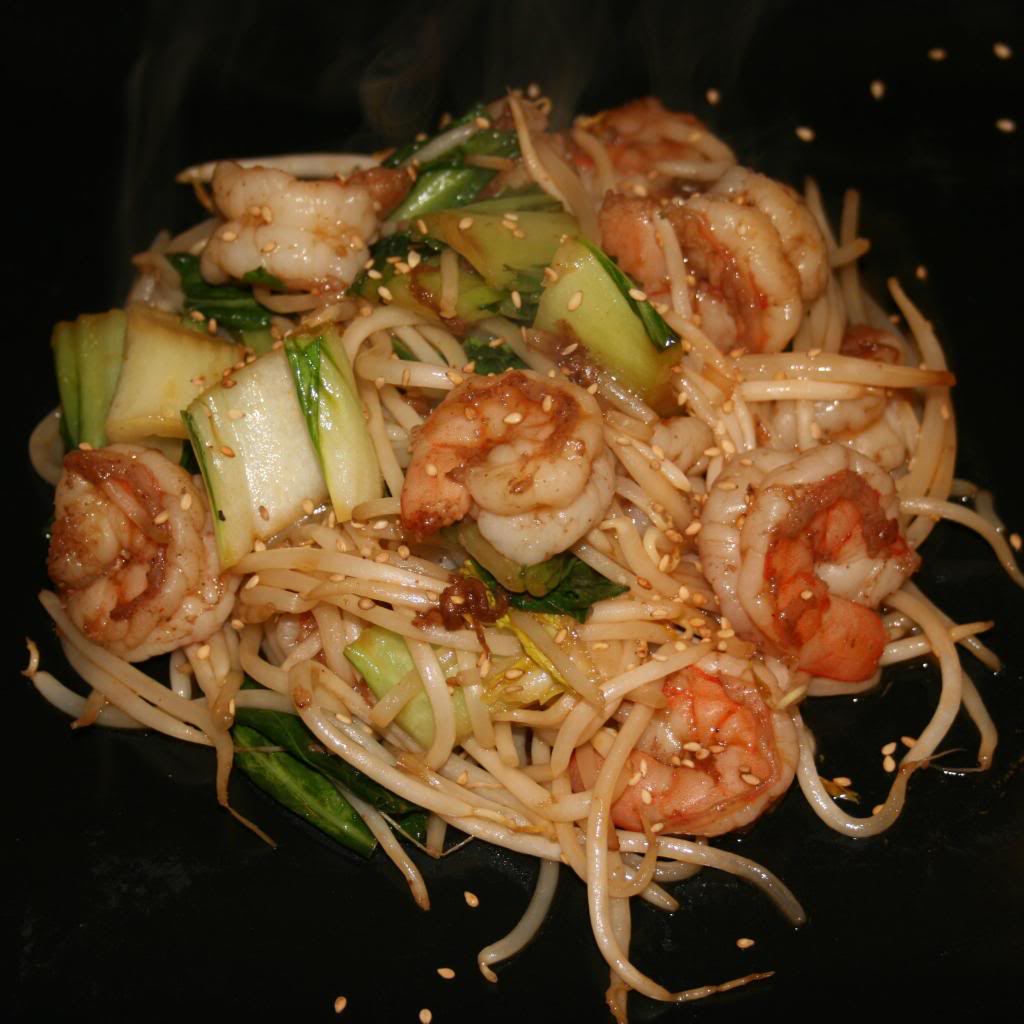
- Surprised on a recent grocery trip (by bus about 37 minutes away) to find some choice food items (see photos) and especially white lima beans, one of my favorites (remember I AM a southern man). Now we need to find some ingredients for corn bread.
- While mixing some sugar-free chocolate pudding (yes, I am spoiled) I looked out our fourth story apartment window and saw a young boy blowing a whistle in time to his bouncing steps. A little rainy and cold, maybe; he’d didn’t care. (reminded me of Brinson and Aiden).It was just what I needed for that exact moment.
- We have met many new Family with Good News spread…a room full of New Friends. Much good is occurring here from diligent work of many in the past years. It is a challenge to learn songs in a different language but I’m thankful there is patience and love from all concerned.
I am trying to practice what I’ve taught, as presented in a book I compiled a few years back…in relation to change: “Mark Twain was both wise and observant…and was “right on” when he said that “the only person who likes change is a wet baby.”
Harry Emerson Fosdick laid it out plainly for us to see and comprehend: “Christians are supposed not merely to endure change, nor even to profit by it, but to cause it.” We might also add: and embrace it!
Change is one of the most threatening things many of us face in life and yet we encounter it every day. The universe itself is changing. Scientists tell us that all observed systems are continually changing from order to disorder, and that every transformation of energy is accompanied by a loss in the availability of energy for future use. In other words, our universe is running down.
Besides that, the world we live in is changing. Highly sophisticated technical developments have radically altered our lifestyle, and now they threaten our very existence. Ideological developments have changed the balance of world power and threaten our freedom as a nation. Governments are toppled and new ones established overnight, and sometimes it seems as though revolutions are as common as eating and sleeping. Every day the news reports focus on some new changes occurring in our world.
People change. One day we may be in a good mood, the next day in an ugly mood. And it is disconcerting if we never know what to expect from our wives, our husbands, our parents, or our bosses. Nice people sometimes get irritable and touchy. Fortunately, grouchy people sometimes get nicer.
But we all change. That is the nature of creaturehood, and that is the nature of life. We find it unpleasant and intimidating at times. We would rather keep things the way they always were because the old and the familiar are more secure and comfortable, like an old shoe. But shoes wear out and need to be replaced, as does most everything else in life. So we struggle to adjust to change.
We grow and we strive to better ourselves, and that is change. Sometimes our sense of well‑being collapses around us; we lose our health, our loved ones, our money, or our material possessions, and that is change. Our bodies begin to wear out; we can no longer do the things we used to do, and that is change.
Over a hundred years ago, in a Scottish seaside inn, a group of fishermen were relaxing after a long day at sea. As a serving maid was walking past the fishermen’s table with a pot of tea, one of the men made a sweeping gesture to describe the size of the fish he claimed to have caught. His hand collided with the teapot and sent it crashing against the whitewashed wall, where its contents left an irregular brown splotch.
Standing nearby, the innkeeper surveyed the damage. “That stain will never come out,” he said in dismay. “The whole wall will have to be repainted.” “Perhaps not.” All eyes turned to the stranger who had just spoken. “What do you mean?” asked the innkeeper. “Let me work with the stain,” said the stranger, standing up from his table in the corner. “If my work meets your approval, you won’t need to repaint the wall.”
The stranger picked up a box and went to the wall. Opening the box, he withdrew pencils, brushes, and some glass jars of linseed oil and pigment. He began to sketch lines around the stain and fill it in here and there with dabs of color and swashes of shading. Soon a picture began to emerge. The random splashes of tea had been turned into the image of a stag with a magnificent rack of antlers. At the bottom of the picture, the man inscribed his signature. Then he paid for his meal and left.
The innkeeper was stunned when he examined the wall. “Do you know who that man was?” he said in amazement. “The signature reads ‘E.H. Landseer!'” Indeed, they had been visited by the well-known painter of wild life, Sir Edwin Landseer. God wants to take the stains and disappointments of our lives and not merely erase them, but rather turn them into a thing of beauty.
Two frogs were neighbors. One inhabited a deep pond, far removed from public view; the other lived in a gully containing little water, and traversed by a country road. The Frog that lived in the pond warned his friend to change his residence and entreated him to come and live with him, saying that he would enjoy greater safety from danger and more abundant food. The other refused, saying that he felt it so very hard to leave a place to which he had become accustomed. A few days afterwards a heavy wagon passed through the gully and crushed him to death under its wheels.
I appreciate the conviction that can state “if your religion does not change you, then you should change your religion. Change is a challenge and we need to accept that challenge because it’s the way God planned it. And God’s plans are good.
Our Address
中国 Zhong Guo China
湖北 Hubei
荆州 Jingzhou
434023
长江大学 Chang Jiang Da Xue / Yangtze University
城中校区 Cheng Zhong Xiao Qu / Central Campus
Gary and Terry Davenport