RSS

Encounters With God: “The Story of Noah…and Faith” – Genesis 6:9-8:22


Toward the end of the 19th century, Swedish chemist Alfred Nobel awoke one morning to read his own obituary in the local newspaper: “Alfred Nobel, the inventor of dynamite, who died yesterday, devised a way for more people to be killed in a war than ever before, and he died a very rich man.” There was only one problem; Alfred Nobel had not died. Actually, it was his older brother who had died, but a newspaper reporter had somehow gotten it wrong.

Regardless of how it happened, the account had a profound effect on Alfred Nobel. He decided he wanted to be known for something other than developing the means to kill people efficiently and for amassing a fortune in the process. So he initiated the Nobel Peace Prize, the award for scientists and writers who foster peace. Nobel said, “Every man ought to have the chance to correct his epitaph in midstream and write a new one.”

How will you be remembered when your time on earth is over? When you are gone, how will others describe your faith in God? The story of Noah will challenge us to answer these questions. Today, we will be looking at the better part of three chapters because the narrative treats these paragraphs as one long section. We will read through this section because we value learning God’s Word but some portions will be given more attention.

Write your epitaph –  Genesis 6:5-12 (NIV)

5  The LORD saw how great man’s wickedness on the earth had become, and that every inclination of the thoughts of his heart was only evil all the time.
6  The LORD was grieved that he had made man on the earth, and his heart was filled with pain.
7  So the LORD said, “I will wipe mankind, whom I have created, from the face of the earth–men and animals, and creatures that move along the ground, and birds of the air–for I am grieved that I have made them.”
8  But Noah found favor in the eyes of the LORD.

9  This is the account of Noah. Noah was a righteous man, blameless among the people of his time, and he walked with God.
10  Noah had three sons: Shem, Ham and Japheth.
11  Now the earth was corrupt in God’s sight and was full of violence.
12  God saw how corrupt the earth had become, for all the people on earth had corrupted their ways.

We learn four important things about Noah. First, Noah was a “righteous man.” The word translated “righteous” (tsaddiq) connotes “conformity to the standard.” In the case of Noah, he conformed to the standard set by God.

Second, Noah was “blameless.” The word “blameless” (tamim) involves the idea of completeness. Noah conformed to the standard set by God and his life was “complete,” with no essential quality missing. The modifying phrase “in his time” indicates all the more clearly that Noah’s righteousness and blamelessness stood out against his contemporaries’ sinfulness. Noah was not only righteous in the sight of God; he also had a credible reputation among the people of his day.

Third, Noah “walked with God.” This means he had daily, step-by-step fellowship with God. He had God as his companion as he walked through life. This type of imitate fellowship does not happen by osmosis; it must be cultivated. It takes work to be godly. Is your walk with God vibrant?

Lastly, Noah walked with God before his family. Noah’s godliness was the godliness of a man who was involved in ordinary life. He did not withdraw from society. Real godliness is not like that. Noah was out and about in God’s world. He provided for his family. The linking of the names of his sons with his faithful life surely indicates that Noah influenced his family in spiritual matters. Apparently, Noah instructed his family to believe in God…and they did! More often than not, when a husband and father exert spiritual leadership in the home, the entire family responds and follows his lead.

    2 Peter 2:5 (NIV) …if he did not spare the ancient world when he brought the flood on its ungodly people, but protected Noah, a preacher of righteousness, and seven others…Genesis 6:3 (NIV) Then the LORD said, “My Spirit will not contend with man forever, for he is mortal; his days will be a hundred and twenty years.”

     It is interesting to note, however, that Noah’s only converts were his wife, his sons, and their wives (6:18). Apparently, not a single person outside his family paid the slightest attention to what he had to say. He preached for the better part of 120 years and won no converts other than his own family. Nevertheless, by God’s grace, Noah won those that mattered most. Our top priority must always be to influence our family members for Christ.

This is one of the top requirements of leadership.

(1 Timothy 3:4-5 (NIV) 4  He must manage his own family well and see that his children obey him with proper respect.
5  (If anyone does not know how to manage his own family, how can he take care of God’s church?)

1 Timothy 3:12 (NIV) 12  A deacon must be the husband of but one wife and must manage his children and his household well.

Titus 1:6 (NIV) 6  An elder must be blameless, the husband of but one wife, a man whose children believe and are not open to the charge of being wild and disobedient.

Obey God’s Word

Genesis 6:13-14 (NIV) For the second time in three verses, the Lord mentions the “violence” of mankind:

13  So God said to Noah, “I am going to put an end to all people, for the earth is filled with violence because of them. I am surely going to destroy both them and the earth.
14  So make yourself an ark of cypress wood; make rooms in it and coat it with pitch inside and out.

Dimensions Noah’s Ark Contemporary Equivalent
Length 450 feet 1½ American football fields
Width 75 feet 7 parking spaces
Height 45 feet 3 stories
Cubic Feet 1.5 million 800 railroad boxcars
Capacity 14,000 gross tons Princess of the Orient

17  I am going to bring floodwaters on the earth to destroy all life under the heavens, every creature that has the breath of life in it. Everything on earth will perish.  18  But I will establish my covenant with you, and you will enter the ark–you and your sons and your wife and your sons’ wives with you.

This is the first occurrence of the word “covenant” (berith) in the Old Testament. In the wake of our tragedies and trials, God wants to do the same for us. He longs to speak to us through His Word. He wants to draw us close to Him. Are you running to Him or away from Him? This verse also illustrates another important biblical principle. While God bestows His saving grace and love on individuals, He is concerned about their families as well.

19  You are to bring into the ark two of all living creatures, male and female, to keep them alive with you.
20  Two of every kind of bird, of every kind of animal and of every kind of creature that moves along the ground will come to you to be kept alive.

Apparently, all of the animals would “come to” Noah voluntarily (6:20). It would seem that he would not have to hunt them down or look for them in remote places. Their natural instinct for self-preservation, energized by a special act of God, would bring them to Noah’s ark.

21  You are to take every kind of food that is to be eaten and store it away as food for you and for them.” 22  Noah did everything just as God commanded him.

In chapter 7, he then repeats this phrase three more times (Genesis 7:5 (NIV) And Noah did all that the LORD commanded him.

Genesis 7:9 (NIV) male and female, came to Noah and entered the ark, as God had commanded Noah.

Genesis 7:16 (NIV) The animals going in were male and female of every living thing, as God had commanded Noah. Then the LORD shut him in.

No doubt he was called a fool and worse. Just imagine how many Noah jokes people came up with over a century! But he went on believing and working. Noah remained obedient, doing exactly what God said for 25, 50, 75, 100 years…until the ark lay like a huge coffin on the land. What a powerful reminder that God sometimes calls His servants to obey Him even when it seems nonsensical. In these situations, all that we can do is trust in the promises of God’s Word.

This section also reminds us that it is possible to be right with God, even amidst surrounding iniquity. God is the same today as He was to Noah, and if only we are willing to fulfill the conditions we too shall walk with God and please Him.

Trust in God’s Provision – Genesis 7:1-16 (NIV) 1  The LORD then said to Noah, “Go into the ark, you and your whole family, because I have found you righteous in this generation.
4  Seven days from now I will send rain on the earth for forty days and forty nights, and I will wipe from the face of the earth every living creature I have made.”
5  And Noah did all that the LORD commanded him.
6  Noah was six hundred years old when the floodwaters came on the earth.
7  And Noah and his sons and his wife and his sons’ wives entered the ark to escape the waters of the flood.

God is still a holy God. He still hates sin. He still is slow to judge. He watches the sin of man and warns that it will not be allowed to go on and on forever. God tells that world what He will do. In His grace, God warns His people. He tells us in advance that sinful men do not deserve to live on God’s earth. This is the basic message of the Genesis flood.

Like Genesis 1, the account of the flood is structured by a careful counting of the days (371 total days).

  • 7 days of waiting for the waters to come (7:4, 10),
  • 40 days of water rising (7:12, 17),
  • 150 days of waters prevailing (7:24; 8:3),
  • 40 days of water receding (8:6),
  • 7 days of waiting for the waters to recede (8:10), and
  • 7 more days of waiting for the waters to recede completely (8:12).

Remember God’s power – Genesis 7:23 (NIV) Every living thing on the face of the earth was wiped out; men and animals and the creatures that move along the ground and the birds of the air were wiped from the earth. Only Noah was left, and those with him in the ark.

The flood is to be a reminder to us of the reality of final judgment Matthew 24:38-39 (NIV) 38  For in the days before the flood, people were eating and drinking, marrying and giving in marriage, up to the day Noah entered the ark;
39  and they knew nothing about what would happen until the flood came and took them all away. That is how it will be at the coming of the Son of Man.

Luke 17:27 (NIV) People were eating, drinking, marrying and being given in marriage up to the day Noah entered the ark. Then the flood came and destroyed them all.

2 Peter 2:5 (NIV) “…if he did not spare the ancient world when he brought the flood on its ungodly people, but protected Noah, a preacher of righteousness, and seven others;

2 Peter 3:5-6 (NIV) But they deliberately forget that long ago by God’s word the heavens existed and the earth was formed out of water and by water. 6  By these waters also the world of that time was deluged and destroyed.

God holds the world accountable for its behavior. It tells us that God is grieved over our sin and the harm it does to others. He will not put up with it forever.

We live in a moral universe, and to go against the moral laws which God has built into the world invites disaster. Sin affects our personal lives, our families, our church, our community, our nation, and ultimately, our world.

We cannot escape the fact that we are responsible to God for our behavior and that a future judgment is coming when we will answer for the way in which we have lived. That simple fact should dramatically affect our perspective in life and make us desire to be faithful to the God who has been faithful to us.

Rejoice in God’s grace. – Genesis 8:1-22 (NIV) But God remembered Noah and all the wild animals and the livestock that were with him in the ark, and he sent a wind over the earth, and the waters receded. 15  Then God said to Noah, 16  “Come out of the ark, you and your wife and your sons and their wives. 17  Bring out every kind of living creature that is with you–the birds, the animals, and all the creatures that move along the ground–so they can multiply on the earth and be fruitful and increase in number upon it.”
18  So Noah came out, together with his sons and his wife and his sons’ wives.
19  All the animals and all the creatures that move along the ground and all the birds–everything that moves on the earth–came out of the ark, one kind after another.
20  Then Noah built an altar to the LORD and, taking some of all the clean animals and clean birds, he sacrificed burnt offerings on it.
21  The LORD smelled the pleasing aroma and said in his heart: “Never again will I curse the ground because of man, even though every inclination of his heart is evil from childhood. And never again will I destroy all living creatures, as I have done.
22  “As long as the earth endures, seedtime and harvest, cold and heat, summer and winter, day and night will never cease.”


Leave a comment

Posted by on September 15, 2016 in God


Do You Have These Symptoms of Marital Distress?


Many in your situation experience these emotions and thoughts as their marriage is unraveling:

Devastated:  “I’ve lost my dream of marital happiness.”

Hopeless:  “I don’t know what to do.”

Pessimistic: “Even marriage counseling probably won’t help.”

Angry, especially if there’s been an affair: “How could he (or she) do this?”

Embarrassed:  “What will I tell my family, friends, and neighbors?”

Afraid: “How can I handle this financially? I’ve read that an average divorce in the U.S. costs over $20,000.”

Worried:  “How will the kids be affected if we divorce?”

Lonely: “How will I find someone else? I don’t want to deal with the dating scene again.”

 
Leave a comment

Posted by on September 12, 2016 in Marriage


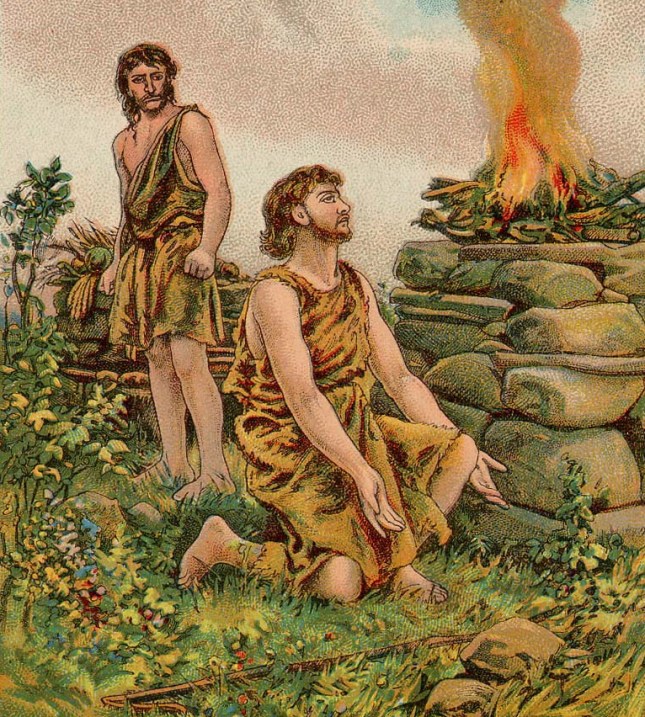
Encounters With God: “Raising Cain” – Genesis 4:1-16


If you don’t learn to deal with your temper, it will turn you into a monster of a person. It can change you into someone you don’t want to be. This is what happened to Cain in Genesis 4. He had a bad temper to start with, but he didn’t deal with it. Eventually, it turned him into this other person…an evil person.

However, Cain’s main problem was not an anger problem; his problem was a worship problem! The expression of inappropriate anger was a sin that was symptomatic of a greater problem. In Genesis 4:1-26, we will learn from the account of Cain how to worship God on His terms.

The birth of the two sons (4:1-2). Our account begins with these words: “Now the man had relations with his wife Eve, and she conceived and gave birth to Cain” (4:1a). After the fall, Adam and Eve began a family.

Eve gave birth to “Cain” whose name means, “acquire, get, or possess.” Eve responded to Cain’s birth by saying, “I have gotten a man child with the help of the LORD” (4:1b). The literal rendering of Eve’s reply is, “I have gotten a son, the Lord.” Eve understood from the prophecy of 3:15 that one of her offspring would bring about her redemption.

There is an implicit declaration of faith and gratitude (cf. 3:20). Eve acknowledges that God has enabled her to bear a child, a child through whom her deliverance may soon come.

In 4:2a, Moses records, “Again, she gave birth to his brother Abel” (4:2a). Unlike Cain’s name, Abel’s name is not explained by Eve. However, the Hebrew word “Abel” is the word “vanity” or “breath,” appearing throughout Ecclesiastes. Traditionally understood, his name reflects on the temporary nature of his existence. It is important to notice the terms “brother” and “Abel” each appear seven times, stressing the relationship between the two men. In these opening verses, Moses is trying to prepare us for what is to come.

The worship of the two brothers (4:2b-5). In 4:2b, Moses writes, “And Abel was a keeper of flocks, but Cain was a tiller of the ground.” Abel is a shepherd and Cain is a farmer. Both of these vocations are noble; one is not better than the other. This leads into an exercise in worship in 4:3-5a: “So it came about in the course of time that Cain brought an offering to the LORD of the fruit9 of the ground. Abel, on his part also10 brought of the firstlings of his flock and of their fat portions. And the LORD had regard for Abel and for his offering; but for Cain and for his offering He had no regard.” Both brothers bring offerings to the Lord suitable to their vocations (4:3). Yet, God regarded Abel and his offering and not Cain and his offering (4:4b).11 Some insist that the reason for this is Abel offered a blood sacrifice while Cain did not. However, there does not appear to be anything wrong with Cain offering fruit as opposed to animal sacrifice.

Later in Israel’s history, grain offerings and harvest offerings are legitimate expressions of worship that God accepts and even commands. So if it is not a failure to bring a blood sacrifice, why does God reject Cain and his offering?

The New Testament authors inform us that God regarded Abel because he had faith (Heb 11:4) while Cain did not (Jude 11-13 and 1 John 3:11-12). Therefore, it seems clear that Abel was in relationship with God and Cain was separated from God. A very important principle is this: “God always inspects the giver and the worshipper before He inspects the gift, service, or worship.”

There is also an interesting clue in the Genesis account that tells us about Cain and Abel and their offerings. In 4:4, Moses records that Abel offers “the firstlings of his flock” (cf. Exod 34:19; Deut 12:6; 14:23) and the “fat portions” (cf. Num 18:17) for his offering. The word that is translated “fat portions” means “choicest, best part, or abundance.” Abel gave what cost him most—the firstborn!

On the other hand, Cain merely offers “the fruit,” not the first fruit, of the ground (4:3). Abel brought the best parts of his flocks and Cain was not so particular. Abel went out of his way to worship God by giving his best. Cain merely discharged a duty.

One of the key themes throughout Scripture is God seeks worship that is perfect and costly (Leviticus 22:20-22 (NIV)
20  Do not bring anything with a defect, because it will not be accepted on your behalf.
21  When anyone brings from the herd or flock a fellowship offering to the LORD to fulfill a special vow or as a freewill offering, it must be without defect or blemish to be acceptable.
22  Do not offer to the LORD the blind, the injured or the maimed, or anything with warts or festering or running sores. Do not place any of these on the altar as an offering made to the LORD by fire.
     2 Samuel 24:24 (NIV)

24  But the king replied to Araunah, “No, I insist on paying you for it. I will not sacrifice to the LORD my God burnt offerings that cost me nothing.” So David bought the threshing floor and the oxen and paid fifty shekels of silver for them.

He will not be satisfied with second best (Malachi 1:6-14 (NIV)
6  “A son honors his father, and a servant his master. If I am a father, where is the honor due me? If I am a master, where is the respect due me?” says the LORD Almighty. “It is you, O priests, who show contempt for my name. “But you ask, ‘How have we shown contempt for your name?’
7  “You place defiled food on my altar. “But you ask, ‘How have we defiled you?’ “By saying that the LORD’s table is contemptible.
8  When you bring blind animals for sacrifice, is that not wrong? When you sacrifice crippled or diseased animals, is that not wrong? Try offering them to your governor! Would he be pleased with you? Would he accept you?” says the LORD Almighty.
9  “Now implore God to be gracious to us. With such offerings from your hands, will he accept you?”–says the LORD Almighty.
10  “Oh, that one of you would shut the temple doors, so that you would not light useless fires on my altar! I am not pleased with you,” says the LORD Almighty, “and I will accept no offering from your hands.
11  My name will be great among the nations, from the rising to the setting of the sun. In every place incense and pure offerings will be brought to my name, because my name will be great among the nations,” says the LORD Almighty.
12  “But you profane it by saying of the Lord’s table, ‘It is defiled,’ and of its food, ‘It is contemptible.’
13  And you say, ‘What a burden!’ and you sniff at it contemptuously,” says the LORD Almighty. “When you bring injured, crippled or diseased animals and offer them as sacrifices, should I accept them from your hands?” says the LORD.
14  “Cursed is the cheat who has an acceptable male in his flock and vows to give it, but then sacrifices a blemished animal to the Lord. For I am a great king,” says the LORD Almighty, “and my name is to be feared among the nations.

Romans 12:1 (NIV)
1  Therefore, I urge you, brothers, in view of God’s mercy, to offer your bodies as living sacrifices, holy and pleasing to God–this is your spiritual act of worship.

The Butterball Company set up a Thanksgiving hotline to answer questions about cooking turkeys. One woman asked if she could use a turkey that had been in the bottom of her freezer for 23 years. The Butterball expert—how’s that for a job title—told her it would probably be safe if the freezer had been below zero the entire time. But the expert warned her that even if the turkey was safe to eat, the flavor would likely have deteriorated and wouldn’t be worth eating. The woman said, “That’s what I thought. We’ll give the turkey to our church.”16 While this is an amusing story, it does hit a bit close to home for some Christians. Sin first shows itself in what you give God.

Motives matter to God. God is not impressed with those who do the right thing for the wrong reason. This truth is taught throughout the Bible. In Matthew 15:8, Jesus looks at the Pharisees and quotes Isaiah, “These people honor Me with their lips, but their hearts are far from Me.” Sometimes people can have very bad motives for doing good things.

What are our motives for serving the Lord? Every so often we need to do a motive checkup and ask ourselves: Why am I nice to other people? Why do I put money in the offering plate?

Whatever the cause of God’s rejection of Cain’s offering; the narrative itself focuses our attention on Cain’s response. It is there that the narrative seeks to make its point.

The response of the oldest brother (4:5b-8). When Cain learned that God had “no regard” for his offering, “[he] became very angry and his countenance fell” (4:5b). Cain became angry with God! Rather than being concerned about remedying the situation and pleasing God, he became very angry. We must stop here and ask these questions of ourselves: How do we respond when God says no?

When God convicts us and deals with the sin in our lives, how do we respond? Do we seek to make things right? Do we come before the Lord in worship and confession with a humble and contrite heart?

In customary fashion, in 4:6, the Lord pursues Cain with three consecutive questions: “Why are you angry? And why has your countenance fallen? If you do well, will not your countenance be lifted up?” God was not pleased with Cain or his offering. These first two questions demonstrate that He was even more displeased by Cain’s response. Yet, many of us have been told by other well-meaning Christians that it is perfectly acceptable to get mad at God.

In 4:7, the Lord says, “And if you do not do well, sin is crouching at the door; and its desire is for you, but you must master it.” This clearly implies that Cain knew what was right. He knew the quality of offering to bring and chose not to bring it. He knew his heart was not right, but he chose not to address it. Yet, this verse also shows God’s grace, for Cain was still invited to bring the correct offering. God warned Cain and He wanted Cain to “do well,” but Cain hardened his heart. Sin is like a wild animal ready to pounce and devour its victim. What a graphic picture the Lord paints! What a reminder that we do indeed have a choice whether or not to sin.

The Bad News:

Sin is waiting on us (“crouching at the door”). The influence of the world, the flesh, and the Devil are always conspiring our fall. If one doesn’t trip us up, the other will. All that is needed is “an opportunity” (lit. “a place,” Eph 4:27).

Sin desires us (“its desire is for you”). Most of us have experienced desire or passion for an individual of the opposite sex, right? Well, sin has an unholy desire and passion for us. The Devil wants to kill us, but since he can’t, he will do all that he can to destroy and render us ineffective.

The Good News:

We can master sin (“but you must master it”). We have the power to overcome sin. When temptation knocks, we can send Jesus to the door. We have been given all that we need to say “no” to sin.

We must be broken and humble before God (“be of sober spirit”). This is crucial. If we are to stand a chance against the power of sin, we must acknowledge our helplessness. We must honestly believe that, without the enablement and empowerment of the Holy Spirit, we are at sin’s mercy. We must understand the wickedness of our flesh. This will require the Lord to break us of our pride and self-reliance. We must always be on guard (“be on the alert”). Sin is sly and unpredictable. Sometimes, sin goes after us when we’re at our peak, when we feel untouchable and incapable of committing a sin. Other times, sin fights dirty and will attack when we are down, discouraged, and defeated. Yet, if we know how sin operates, we will be prepared and make sure that we’re always on our guard.

Unfortunately, instead of heeding God’s warning, Cain ignored God’s words and allowed himself to be mastered by sin. This resulted in the very first murder. Moses writes of the tragic event in 4:8: “Cain told Abel his brother. And it came about when they were in the field, that Cain rose up against Abel his brother and killed him.” In his anger, Cain took the life of another human being…and his victim was his very own brother. The use of “rise up” is most appropriate, since the “rising up” of Cain to kill his brother is a direct consequence of the “falling” of his countenance, when Abel’s offering was accepted but his was not.24 Under the Mosaic Law, the fact that a killing took place in a field, out of the range of help, was proof of premeditation (cf. Deut 22:25-27). We cringe at such a horrible act and think, “I could never do something like that.” But if we were honest, many of us would have to confess our own lists of people we’ve assassinated with our words or attitudes.

Ephesians 4:27 says if you don’t control your anger, you give the Devil a foothold (lit. “a place”) in your life. That is what Cain did. Uncontrolled anger and jealousy resulted in Abel’s death and destroyed Cain’s life too. Don’t let it happen in your life. Acknowledge that the attitude is wrong, confess it to the Lord, and ask His help in overcoming this destructive attitude.

The pursuit of a gracious God (4:9-16). In 4:9, Cain foolishly thought he could hide his sin from God. He’s following in his father’s footsteps (3:8). Yet, God seeks Cain just like He sought Adam and Eve. God is a seeker. After Cain’s treacherous sin, the Lord does the unthinkable—he dialogues with Cain. He speaks with grace, not wrath. The Lord says to Cain, “Where is Abel your brother?” Cain responds by saying, “I do not know.” Cain begins on a sinful note by lying to God. Puny old Cain tells an omniscient God that he doesn’t know where his brother Abel is. Come on! The fact that Cain can dispassionately deny what he has done and show a total lack of care and concern for his brother closely parallels man’s total lack of regard for woman in 3:12, where man icily refers to his companion as “the woman” and places all the blame on her, thereby revealing a complete absence of the intimacy and companionship that earlier had characterized their relationship.

To make matters worse, Cain goes on to utter the infamous old adage, “Am I my brother’s keeper?” This was a tragic mistake on Cain’s part. Now, if I was God, I would have smoked Cain right where he stood! But not the Lord! Instead, He asks Cain a follow-up question that is the same question He asked Eve (3:13): “What have you done?” Wouldn’t you just hate to be Cain right now? The Lord then stops asking questions and says, “The voice of your brother’s blood is crying to Me from the ground” (4:10). This is a key sentence. The words “to me” demonstrate how seriously God takes first-degree murder. When another person kills a baby, a child, or an adult made in the image of God (1:26; 9:6), the blood of the victim cries out to God! Sin cannot be covered up from God. It can be hidden from people, but not from God. Secret sin on earth is open scandal in heaven!

As a consequence of Cain’s act of deliberate sin, God curses him (4:11-12), just like He cursed the serpent (3:14) and the ground (3:17-19). Woe! Moses records these tragic words: “Now you are cursed from the ground, which has opened its mouth to receive your brother’s blood from your hand. When you cultivate the ground, it will no longer yield its strength to you; you will be a vagrant and a wanderer on the earth.”27 This is the first instance in Scripture where a human is “cursed.” The ultimate penalty for a Hebrew is not death, but exile, a loss of roots.

In 4:13-14, “Cain said to the LORD, ‘My punishment is too great to bear! Behold, You have driven me this day from the face of the ground; and from Your face I will be hidden, and I will be a vagrant and a wanderer on the earth, and whoever finds me will kill me.’”

In 4:15, the Lord speaks again to Cain, “‘Therefore whoever kills Cain, vengeance will be taken on him sevenfold.’ And the LORD appointed a sign31 for Cain, so that no one finding him would slay him.” God continues to demonstrate His grace and compassion—even to Cain! The Lord gave Cain a sign before judgment was carried out. Isn’t this just like the Lord?

In 4:16, we read these sad words: “Then Cain went out from the presence of the LORD, and settled in the land of Nod,34 east of Eden.” One question that is asked is: Did Cain repent? Probably not. The New Testament Scriptures uniformly speak of Cain in the negative with phrases like “the way of Cain” (Jude 11) and one “who was of the evil one and slew his brother” (1 John 3:12). His life is contrasted with “righteous Abel” (Matt 23:35).


Leave a comment

Posted by on September 8, 2016 in Encounters with God


Are you covered?


YouTube JesusIsLordofthisWebSite placeforyou2

 ——————————————–

In recent months, several natural and unnatural calamities have struck our country and community. Terrorists destroy buildings and lives; planes fall from the sky; evil people have given ‘hate mail’ a new meaning. Periodically, hurricanes ‘huff, and puff, and blow our East Coast houses down,’ and earthquakes ‘shake, rattle, and roll’ our West Coast structures. A little closer to home, fires often destroy neighborhood houses, storms ‘leave us in the dark,’ and auto accidents injure those we know.

Usually, upon finding out that no one was injured, we immediately ask, ‘Were they covered?’ We are interested in whether victims had insurance and sympathize the more with those who did not. It multiplies the sorrow of misfortune if there is no ‘starting over’ check.

Insurance companies provide a valuable service and most of us have been wisely counseled by informed agents. They always advise people to ‘take out some coverage-you never know when you might need it.’  Though we do not like to pay the premiums, most of us realize that the potential benefits are worth the price to be ‘covered.’ We often advise our children to take out a policy ‘just in case.’

There is a spiritual angle to the ‘insurance business.’

GOD IS IN THE INSURANCE BUSINESS.

There is a sense in which God is in the insurance business. He promised Moses that He would ‘cover’ him as He passed by (Ex. 33:22), and Moses promised the tribe of Benjamin, ‘…the Lord shall cover him all the day long, and he shall dwell between his shoulders’ (Deut. 33:12). In a beautiful word picture, the Psalmist describes God’s protection:  ‘Surely he shall deliver thee from the snare of the fowler, and from the noisome pestilence. He shall cover thee with his feathers, and under his wings shalt thou trust: his truth shall be thy shield and buckler’ (Psa. 91:3, 4).

From His vantage point, God can see an impending disaster worse than any hurricane or earthquake. It will not destroy just one house, or even town-but the whole earth (2 Pet. 3:10). It will not involve only a few hundred or thousand people, but all the people of the whole earth (2 Cor. 5:10). God is providing coverage for those willing to ‘pay the premiums.’ Jesus put it this way:

For which of you, intending to build a tower, sitteth not down first, and counteth the cost, whether he have sufficient to finish it? Lest haply, after he hath laid the foundation, and is not able to finish it, all that behold it begin to mock him, Saying, This man began to build, and was not able to finish. Or what king, going to make war against another king, sitteth not down first, and consulteth whether he be able with ten thousand to meet him that cometh against him with twenty thousand? Or else, while the other is yet a great way off, he sendeth an ambassage, and desireth conditions of peace. So likewise, whosoever he be of you that forsaketh not all that he hath, he cannot be my disciple (Lk. 14:28-33).

CHRISTIANS ARE INSURANCE AGENTS.

If God is in the insurance business, then we are His agents. We seek to ‘cover’ our friends, relatives, neighbors, co-workers, fellow citizens, and, actually, all our ‘brothers come down from Adam.’ Love motivates us. Gratitude sends us. When Noah was uncovered in his tent, Shem and Japheth took a garment and went backwards to cover their father’s shame (Gen. 9:23). They did what love always does-cover the shame of sinners. The Bible teaches us to do just that:

  •  ‘Hatred stirreth up strifes; but love covereth all sins’ (Prov.10:12).
  • ‘A fool’s wrath is presently known; but a prudent man covered shame’ (Prov. 12:16).
  • ‘He that covereth a transgression seeketh love; but he that repeateth a matter separateth very friends’ (Prov. 17:9).
  • ‘And above all things have fervent charity among your-selves: for charity shall cover the multitude of sins’ (1 Pet. 4:8).

Love does not ‘sweep sin under the rug.’  In younger days, our older brothers or buddies from school occasionally pressed us to ‘cover for them’ to keep them from the wrath of parents or teachers. It never worked. The truth came out and then we looked as bad as they did. Sin is like a rubber tire-it won’t stay buried (Num. 32:23; 1 Tim. 5:24, 25). So, then, what does the Bible mean when it says that ‘love covereth all sins?’ We cover sins by assisting sinners in getting rid of them. James wrote: ‘Let him know, that he which converteth the sinner from the error of his way shall save a soul from death, and shall hide a multitude of sins’ (5:20).

ARE YOU COVERED?

It does no good to cover one’s sins so that others do not know of them. Children may hide things from their parents, husbands and wives may hide things from each other, and workers may hide things from their employers, but no one hides anything from God (Heb. 4:13). ‘He that covereth his sins shall not prosper: but whoso confesseth and forsaketh them shall have mercy’ (Prov. 28:13).

The only way to cover one’s sins is to have them erased from the mind of God (Heb. 8:12). For sinners this is done through faith in His Son (Jn. 3:16), repentance (turning from sinful behavior) (Lk. 13:3), confession of faith (Rm. 10:9, 10), and immersion in water to have sins blotted out (Acts 2:38). For erring Christians, sins are covered by repentance, confession, and prayer (Acts 8:22).

‘Blessed is he whose transgression is forgiven, whose sin is covered’ (Psa. 32:1).

 
Leave a comment

Posted by on September 5, 2016 in Encouragement


Encounters With God: Adam and Eve: Paradise Lost – Genesis 3:1-7


Top Pickup Lines Used By Adam

  1. “You know you’re the only one for me!”
  2. “Do you come here often?”
  3. “Trust me, this was meant to be!”
  4. “Look around, baby. All the other guys around here are animals!”
  5. “I already feel like you’re a part of me!”
  6. “Honey, you were made for me!”
  7. “Why don’t you come over to my place and we can name some animals?”
  8. “You’re the girl of my dreams!”
  9. “I like a girl who doesn’t mind being ribbed!”
  10. “You’re the apple of my eye!”

By studying this passage, we will learn how sin entered the world and how we can overcome our sin. Let’s first set the scene: At the end of Genesis 2, life is perfect. Adam and Eve are naked in a lush and plush garden enjoying fellowship with the Lord and each other (2:25). Then something happens that forever changed the world.

The Serpent’s Scheme (3:1): Our story begins with the following description: “Now the serpent was more crafty than any beast of the field which the LORD God had made” (3:1a).

Mankind’s first temptation comes through the mouth of “the serpent.” The creature here is a literal serpent that Satan embodied to carry out this temptation. The Hebrew word for “serpent” carries the idea of bright and shiny. This describes its general appearance as beautiful and pleasant to be around. The serpent made a good pet and was probably constantly around Adam and Eve. In fact, it is also probable, that for this reason, Satan chose to use the serpent as his disguise to deceive Eve.

The serpent is called “more crafty than any beast of the field.” The Hebrew word for “crafty” (arum) sounds like the word for “naked” (arumim, 2:25). While Adam and Eve were naked in innocence, the Serpent was crafty in deception. The word “crafty” is not primarily a negative term in the Bible. Rather, it often suggests wisdom. The description of the Serpent as “crafty” is in direct contrast to the foolishness exhibited by the first man and woman. In man’s quest to be wise like God (3:6), man made a most foolish decision. Instead of enjoying all that was “very good” (1:31) man went after that which was clearly forbidden.

In 3:1b, the Serpent speaks to the woman and asks the first question recorded in Scripture: “Indeed, has God said, ‘You shall not eat from any tree of the garden?’” This is not an innocent conversation starter. The Serpent reduces God’s command to a question. Satan is so subtle. He does not directly deny God’s Word, but introduces the assumption that God’s Word is subject to our judgment.

Notice how Satan spins the question. He does not say, “Why would God keep you from eating the fruit of one tree?” It was couched in more deceptive words as he implies that God, who has forbidden one tree, has forbidden them all. However, the issue was one tree, not “any [every] tree of the garden.” The Devil’s words were misleading, and that is the way temptation always comes.

Satan focused Eve’s attention on God’s one prohibition. He suggested that God did not really want what was best for Adam and Eve but rather was withholding something from them that was essentially good. He hinted that God’s line of protection was actually a line that He drew because He was selfish. The Serpent wants God’s Word to appear harsh and restrictive. Satan is cleverly attempting to plant a seed of doubt in Eve’s mind concerning God’s Word and God’s goodness.

Do you believe God is holding something back from you? Is He preventing you from attaining something that is rightfully yours? Satan does not wish us to ponder the grace of God, but to grudgingly meditate upon His denials. We are to understand that denials (doing without, prohibitions) come from the hand of a good and loving God: “No good thing does He withhold from those who walk uprightly” (Ps 84:11). When temptation comes, stop to think before you take and eat.

Instead of rebuking the Serpent for its craftiness and calling Adam in for spiritual assistance, Eve listens. Eve’s first mistake was to listen to teaching that did not come from either God or Adam. Her second mistake was to listen to teaching that was contrary to God’s previous instructions. Eve placed herself in a vulnerable position by accepting dialog with the Serpent.

One of the questions you may have is: why did the Serpent talk to the woman? Why didn’t he talk to Adam or both of them as a couple? I believe Satan attempted to put a wedge between husband and wife to conquer by dividing, thus to capture their minds and cause them to act in disobedience to God’s Word. That’s why God puts such a high premium on the oneness of husband and wife and why, as husbands and wives, we need to encourage one another and build up one another.

2. The Woman’s Response (3:2-3). Instead of shunning the Serpent, Eve obliged him by carrying on a conversation. Rather than running from this one who dared to mock God’s character, she stays to debate. This is never wise. The Devil is not reasonable so there is no point in trying to reason with him. Not to mention, it is always dangerous to flirt with temptation. The moment Eve detected the Serpent insinuating something suspicious about God’s goodness, she should have kicked dirt in his face and made tracks. But instead, she stayed to argue. There are many Christians today that think they can counter the Devil. So they talk trash to him, stomp him under their feet, and make light of his power. We must always remember to have a healthy degree of respect for Satan. He is powerful. We are no match for him apart from Christ’s power working in and through us.

Let’s take a close look at Eve’s reply in 3:2-3: “From the fruit of the trees of the garden we may eat; but from the fruit of the tree which is in the middle of the garden, God has said, ‘You shall not eat from it or touch it, or you will die.’”

In her reply to the Serpent, Eve attempts to defend God’s honor but in the process distorts His Word. First, while God said, “From any tree of the garden you may eat freely” (2:16), Eve said, “From the fruit of the trees of the garden we may eat” (3:2). Eve omitted “any” and “freely,” the two words that emphasized the generosity of God (cf. Rom 8:32). Eve subtracts from God’s Word.

Likewise, Eve had a distorted impression of the severity of God in pro­hibiting the fruit of the Tree of the Knowledge of Good and Evil. She expressed God’s instruction in these words: “You shall not eat from it or touch it, lest you die” (3:3). But God had said, “But from the tree of the knowledge of good and evil you shall not eat, for in the day that you eat from it you shall surely die” (2:17). Eve magnified God’s strictness—“Just touch the tree, and zap you’re dead!” Her comment suggested that God is so harsh that an inadvertent slip would bring death. Here, Eve adds to God’s Word.

While exaggerating the prohibition to the point where even touching the tree was evil, Eve had unconsciously downplayed the judgment of God by omitting the word “surely,” and by failing to report that death would come on the day of the offense. In other words, Eve emphasized God’s severity, but under­estimated the fact that judgment would be executed surely and soon. Satan’s first attack on the woman was that of a religious seeker, in an effort to create doubts about the goodness of God and to fix her attention on what was forbidden as opposed to all that was freely given. In this final example, Eve softens God’s Word.

Satan’s scheme was quite diabolical. Had he begun to challenge the rule of God or Eve’s faith in Him, her choice would have been an easy one. But Satan erroneously stated God’s command with a question so as to appear that he was misinformed and needed to be corrected. Few of us can avoid the temptation of telling another that they are wrong. And so, wonder of wonders, Eve has begun to walk the path of disobedience while supposing that she was defending God to the Serpent.

3. The Serpent’s Kill (3:4-5). In 3:1b, Satan operated as a sly ole dog, but now in 3:4-5 Satan unleashes his beastly self. Moses records, “The serpent said to the woman, ‘You surely will not die! For God knows that in the day you eat from it your eyes will be opened, and you will be like God, knowing good and evil’” (3:4-5). In the first question (3:1b), Satan tiptoed up to Eve on her blindside, but now he steamrolls over her on the broadside with a bald-faced lie. The Hebrew places the word lo (“not”) in front of God’s declaration: “Not—you shall surely die!” It’s the Serpent’s word versus God’s Word. It’s crucial to understand the “Father of Lies” (John 8:44) is so saturated with lies that he even attempts to make God out to be a liar!

Satan’s strategy began rather innocently by introducing and encouraging doubt. His strategy quickly culminates in a blatant denial of God’s Word (cf. 2:17). In denying it he imputed motives to God that were not consistent with God’s character. God’s true motive was the welfare of man, but the Serpent implied it was God’s welfare at man’s expense. This added suggestion seemed consistent with what the Serpent had already implied about God’s motives in 3:1. Having entertained a doubt concerning God’s Word, Eve was ready to accept a denial of His Word.

As 3:4 reveals, the first thing Satan wants to deny is the doctrine of God’s judgment. He denies the penalty for sin. He says in effect, “You won’t reap what you sow.” Here is the lie that has allured the human race from the beginning: There is no punishment for disobedience. But the Bible again and again makes it clear that no one can get away with sin. It is imperative that we recognize there are consequences for sinful actions.

To make this direct contradiction of God’s Word seems reasonable; Satan invents a false motive for God. God, he says, has really invented a nonexistent penalty to keep you in your place. He is afraid you will rise to His level. If you knew as much as God knows, you would become a threat to Him. Eve’s response is fatal. She divorces her God-given reason from God’s Word and relies on her own limited experience.

This constitutes the great sin of man: to live independently of God. That is the root of sin. It is interesting to note that what the Serpent said about Eve’s being as God was a half-truth. Adam and Eve did not die immediately, and their eyes were opened. Ironically, she was already as God, having been made in His image (1:26). She did become like God in that she obtained a greater knowledge of good and evil by eating of the tree. However, she became less like God because she was no longer innocent of sin. Her relationship with God suffered. Though she remained like God she could no longer be with Him. The consequent separation from God is the essence of death (2:17).

The first doctrine Satan denied in Scripture was that sin results in death (separation from God), or we could say, the doctrine that God will not punish sin. This is still the truth he tries hardest to get people to disbelieve.

Also interesting to note is that the Serpent only speaks twice (3:1b, 4-5). That’s all the talk that was needed to plunge man downward into the spiral of sin. The success of the Serpent can be attributed to his cunning ability to question the goodness of God. The central theme of Genesis 1-2: God will provide the “good” for human beings if they will only trust Him and obey Him, is challenged by the Serpent. He cleverly suggests that God is indeed keeping “good” from His creation. The Serpent’s claim directly contradicted the main point of Genesis 1 and 2, namely, that God would provide what is good for man.

4. The Man and Woman’s Sin (3:6-7). In 3:6a: “When the woman saw that the tree was good for food, and that it was a delight to the eyes, and that the tree was desirable to make one wise, she took from its fruit and ate.” In 3:1-5, the Serpent initiated the first two steps. But in 3:6, he let Eve’s natural desires carry her into his trap. James countered this argument 2,000 years ago when he wrote, “But each one is tempted when he is carried away and enticed by his own lust” (Jas 1:14).

Eve’s basic needs and desires fell into three categories that share parallels with 1 John 2:15-17.

Human Need Genesis 3:6 Temptations 1 John 2:15-17 Parallel
Physical “Good for food” The lust of the flesh
Emotional “Delight to the eyes” The lust of the eyes
Intellectual    “Desirable to make one wise” The boastful pride of life

The next phrase is absolutely devastating: “and she [Eve] gave also to her husband with her, and he ate” (3:6b). Not only did Eve sin, but in her distorted thinking and her false sense of accomplishment, she also gave the fruit to her husband. When Eve brought the fruit to Adam, she was acting contrary to the “helper” principle (cf. 2:18). Instead of benefiting and aiding Adam, she is contributing to his downfall. She is actually inviting him and pressuring him to accept that which is contrary to divine viewpoint.

What sin have you invited a loved one to talk you into committing? Disobedience of God’s Word almost always affects someone else. Most tragically, it affects those we love the most. Eve’s disobedience affected her husband, her children, her grandchildren, her great-grandchildren, and every descendant since. The problem of sin doesn’t stop with the choice. Choosing to sin leads to consequences.

The word “with” is what is so devastating about this verse. Adam was with Eve while this tempting dialogue with the Serpent was going on. Sadly, Adam did not say a word and then he sinned willfully by eating of the fruit. Make no doubt about it; although the woman was deceived, the man was not. Adam passively watched everything. He sinned willfully, eyes wide-open, without hesitation. His sin was freighted with sinful, self-interest. He had watched Eve take the fruit, and nothing happened to her. He sinned willfully, assuming there would be no consequences. Everything was upside-down. Eve followed the snake, Adam followed Eve, and no one followed God.

In this biblical account, the man chooses to obey his wife rather than God (cf. 3:17). Adam rejected his relationship with God and embraced Eve. He said no to the Creator of all his blessings, and said, “Yes,” to a created one. He turned down the divine design of Gen 1:28 and turned it over to Satan.

Our passage closes in 3:7 with these tragic words: “Then the eyes of both of them were opened, and they knew that they were naked; and they sewed fig leaves together and made themselves loin coverings.”

The moment Adam and Eve sinned, they received the knowledge of good and evil. As a result, they “knew that they were naked.” Their nakedness was beautiful…but when sin entered the world, nakedness became shameful outside of the marriage relationship (cf. 2:25).

Satan’s Strategy:

  1. Satan attacks the family. He didn’t concern himself with Adam until he was married.
  2. Satan attacks new believers and those that aren’t in relationships with other believers. They are usually easy prey.
  3. Satan attacks when you least expect it. He loves the element of surprise. When you are at ease, relaxed, off guard, or secure, watch out! Eve was in a perfect environment, without a care in the world, when Satan attacked.
  4. Satan attacks our trust in God.
  5. Satan poisons truth with lies.
  6. Satan appeals to our pride.
  7. Satan makes promises that won’t be kept.

Your Response:

  1. Realize your vulnerability.
  2. Strengthen your weakness. Beware of sowing “wild oats” and then praying for a “crop failure”!
  3. Deepen your faith.
  4. Know and utilize God’s Word (2 Tim 2:15). “It is written” (Matt 4). Ignorance or disregard of God’s Word makes one very vulnerable to temptation (Ps 119:11).
  5. Stand strong. Refuse to yield (Eph 6:10).
  6. Resist Satan (Jas 4:7; 1 Pet 5:8-9).
  7. Trust in God’s provision (Ps 16:11). Express gratitude to Him for all that He has done for you.
 
Leave a comment

Posted by on September 1, 2016 in Encounters with God


Secrets to Improved Communication with Your Spouse


helpful-tips-image-web-design-sydneyWhen couples are asked to name the biggest challenge in their relationship, the number one complaint was “poor communication with my spouse.”  I’ve seen that poor communication has been a leading cause for couples to break up. Why, you ask?

Without good communication, you can’t have a satisfying marriage. When communication is blocked or non-existent, a relationship can’t thrive. So what can you do? If the communication in your marriage isn’t up to par, here are ten secrets to improved communication that can help:

  1. Take a moment before you leap into a heavy discussion to center yourself and get in sync with your partner. Deliberately pace your breathing and energy with that of your spouse. If your spouse is relaxed and calm and you start the conversation in a fast-paced, agitated mode, this will feel jarring and unsettling to your spouse. It’s easier to shift the energy in a conversation if you start where the other person is energetically and then make small progressive changes if necessary.
  2. To avoid making your spouse defensive, use the word “confused” when you can. Instead of saying, “I was furious that you deserted me at the party and never even came over to check to see how I was doing,” say “I know you care about me and my feelings, and want me to feel comfortable around your friends, so it was really confusing to feel so ignored and abandoned at the party.”
  3. Check things out instead of jumping to conclusions or second guessing your spouse. Give him or her the benefit of the doubt by asking for clarification about what happened or what was intended. None of us can read another person’s mind, and yet we often assume we know what our spouse is thinking or intending—and we’re often off-base.
  4. Cultivate a sense of teamwork with your spouse when you talk. Say things like, “It’s such a relief to finally have time to process this with you. I always feel better when I can talk things over with you because we’re good at coming up with solutions together. We’re a really good team.”
  5. Use your spouse’s name during the conversation. It’s amazing how many couples don’t call each other by name very often. It’s much more intimate and bonding to say, “Maria, you’re always so wonderful about listening to me when I need to talk,” than to have a long conversation without using your partner’s name. People like to hear their names—it feels good. Even though you may use “Honey” or “Sweetheart” on a regular basis, use your partner’s name at least occasionally, also.
  6. Give your spouse your undivided attention when you’re conversing, if at all possible. Of course, some short conversations take place when both partners are on the run, but for deep, meaningful communication, you’ll want to schedule time to talk when you can turn the TV and phone off and reduce the potential for interruption.
  7. Make eye contact with your spouse when you talk with each other. It’s distracting and unsettling to talk to someone who is looking away or looking down and not making eye contact. It sends the message that you’re not really engaged in the conversation, and it shuts the communication door instead of opening it.
  8. Keep your attention focused on the present moment. Resist the urge to think about what you’re going to do at work the next day or what happened yesterday. The other person can always feel the energy shift when you’re not fully present in the conversation.
  9. Make scheduling time to communicate with your spouse a top priority. It’s easy for communication to get neglected, blocked, or damaged in the hurry-scurry of everyday life. But if your communication with your partner suffers, your marriage will suffer—either now or down the road.
  10. Show respect for your spouse’s opinions, beliefs, and ideas, even if you think he or she is “wrong” or off-base. Instead of saying, “That’s a crazy idea,” say something like, “That’s an interesting idea. I hadn’t thought of it that way before. My personal opinion is different, and here’s why.” Remember, name calling or belittlement will stop honest communication because your partner won’t feel emotionally safe.


Leave a comment

Posted by on August 25, 2016 in Marriage


Definitions of Leadership


JesusIsLordofthisWebSite placeforyou2 575273_579331012148169_1163921425_n

——————————————————————————-

Leadership is influence, the ability of one person to influence others. One man can lead others only to the extent that he can influence them. This fact is supported by definitions of leadership by men who have themselves wielded great influence.

 Lord Montgomery defines it in these terms: “Leadership is the capacity and will to rally men and women to a common purpose, and the character which inspires confidence.”

 Dr. John R. Mott, a world leader in student circles, gave as his definition: “A leader is a man who knows the road, who can keep ahead, and who can pull others after him.”

 President Truman’s definition is: “A leader is a person who has the ability to get others to do what they don’t want to do, and like it.”…

 Lord Montgomery enunciated seven ingredients necessary in a leader in war, each of which is appropriate to the spiritual warfare:

(1) He should be able to sit back and avoid getting immersed in detail.
(2) He must not be petty.
(3) He must not be pompous.
(4) He must be a good picker of men.
(5) He should trust those under him, and let them get on with their job without interference.
(6) He must have the power of clear decision.
(7) He should inspire confidence.

 Dr. John R. Mott moved in student circles and his tests covered different territory:

(1) Does he do little things well?
(2) Has he learned the meaning of priorities?
(3) How does he use his leisure?
(4) Has he intensity?
(5) Has he learned to take advantage of momentum?
(6) Has he the power of growth?
(7) What is his attitude to discouragements?
(8) How does he face impossible situations?
(9) What are his weakest points?

J. O. Sanders in Spiritual Leadership, pp. 19-24

 
Leave a comment

Posted by on August 22, 2016 in Encouragement


“Yes or No” Should Be Enough


JesusIsLordofthisWebSite placeforyou2 575273_579331012148169_1163921425_n

 ——————————————–

Matthew 5:33-37 (ESV)
33  “Again you have heard that it was said to those of old, ‘You shall not swear falsely, but shall perform to the Lord what you have sworn.’
34  But I say to you, Do not take an oath at all, either by heaven, for it is the throne of God,
35  or by the earth, for it is his footstool, or by Jerusalem, for it is the city of the great King.
36  And do not take an oath by your head, for you cannot make one hair white or black.
37  Let what you say be simply ‘Yes’ or ‘No’; anything more than this comes from evil.

The passage we are considering is about oaths and vows. It may seem a little anticlimactic after all thehttp://www.dreamstime.com/-image9248825 discussion in 5:21-32 about murder, adultery, eye-plucking and hand-lopping. But the issue Jesus is addressing here goes to the very core of a person’s character – to the heart of what it means to live as a child of God.

We live in a culture in which the truth is often the first casualty of interactions between men. We have an incredibly elaborate system of lawyers and contracts and notaries and binding signatures to ensure that we do what we say we will do, at least when it’s perceived to be important enough.

And none of it makes people any more truthful. In fact, most people don’t even believe truth is an objective reality!

Changes in Moral Standards

  • Biblical Morality (1800s-early 1900s) “Certain things are right and wrong, and I know why.”
  • Abiblical Morality (1900-1950s)      “Certain things are right and wrong, but I don’t know why.”

Changes in Moral Standards

  • Immorality (1960-early 1970s)         “Certain things are right and wrong, but I don’t care.”
  • Amorality (late 1900s)                            “There’s no such things as right and wrong!”

(Fran Sciacca, Generation at Risk, 117.)

A study by Barna Research found that only 22% of adults in America believe there is even such a thing as absolute moral truth.

But the real kicker was what the study found related to those who profess to be “born again” Christians. They defined “born again” Christians as “people who said they have made a personal commitment to Jesus Christ that is still important in their life today and who also indicated they believe that when they die they will go to Heaven because they had confessed their sins and had accepted Jesus as their savior.”

Among that specific group, only 32% of adults and only 9% of teenagers said they believe moral truth is unchanging or absolute.

The study was entitled “Americans Are Most Likely to Base Truth on Feelings”

Less than one out of three born again Christians adopt the notion of absolute moral truth. The surveys also found that few Americans turn to their faith as the primary guide for their moral and ethical decisions.

Truth Is Relative, Say Americans

In two national surveys conducted by Barna Research, one among adults and one among teenagers, people were asked if they believe that there are moral absolutes that are unchanging or that moral truth is relative to the circumstances.

By a 3-to-1 margin (64% vs. 22%) adults said truth is always relative to the person and their situation. The perspective was even more lopsided among teenagers, 83% of whom said moral truth depends on the circumstances, and only 6% of whom said moral truth is absolute.

The gap between teen and adult views was not surprising, however, when the adult views are considered by generation. While six out of ten people 36 and older embraced moral relativism, 75% of the adults 18 to 35 did so. Thus, it appears that relativism is gaining ground, largely because relativism appears to have taken root with the generation that preceded today’s teens.

Moral Decision-Making

The surveys also asked people to indicate the basis on which they make their moral and ethical decisions. Six different approaches were listed by at least 5% of the teenagers interviewed, and eight approaches were listed by at least 5% of adults. In spite of the variety communicated, there was a clear pattern within both groups. By far the most common basis for moral decision-making was doing whatever feels right or comfortable in a situation. Nearly four out of ten teens (38%) and three out of ten adults (31%) described that as their primary consideration.

Among adults, other popular means of moral decision-making were on the basis of the values they had learned from their parents (15%), on the basis of principles taught in the Bible (13%), and based on whatever outcome would produce the most personally beneficial results (10%).

Teenagers were slightly different in their approach. One out of six (16%) said they made their choices on the basis of whatever would produce the most beneficial results for them. Three alternative foundations were each identified by one out of ten teens: whatever would make the most people happy, whatever they thought their family and friends expected of them, and on the basis of the values taught by their parents. Just 7% of teenagers said their moral choices were based on biblical principles.

What It Means

These figures were cited by George Barna, whose firm conducted the research, as a major reason underlying the data he released in a controversial recent public presentation about the moral views and behaviors of Christians.

In that forum Barna noted that substantial numbers of Christians believe that activities such as abortion, gay sex, sexual fantasies, cohabitation, drunkenness and viewing pornography are morally acceptable. “Without some firm and compelling basis for suggesting that such acts are inappropriate, people are left with philosophies such as ‘if it feels good, do it,’ ‘everyone else is doing it’ or ‘as long as it doesn’t hurt anyone else, it’s permissible.’ In fact, the alarmingly fast decline of moral foundations among our young people has culminated in a one-word worldview: ‘whatever.’ The result is a mentality that esteems pluralism, relativism, tolerance, and diversity without critical reflection of the implications of particular views and actions.”

Barna emphasized the importance of the data related to the views of teenagers and the born again population. “Just one out of ten of our country’s born again teenagers believe in absolute moral truth – a statistic that is nearly identical to that of non-born again teens. Christian families, educators and churches must prioritize this matter if the Christian community hopes to have any distinctiveness in our culture. The virtual disappearance of this cornerstone of the Christian faith – that is, God has communicated a series of moral principles in the Bible that are meant to be the basis of our thoughts and actions, regardless of our preferences, feelings or situations – is probably the best indicator of the waning strength of the Christian Church in America today.”

The researcher stated that the difference in truth views between born again and non-born again adults was statistically significant, but not much to cheer about. “When a majority of Christian adults, including three out of four born again Baby Busters, as well as three out of four born again teens proudly cast their vote for moral relativism, the Church is in trouble. Continuing to preach more sermons, teach more Sunday school classes and enroll more people in Bible study groups won’t solve the problem since most of these people don’t accept the basis of the principles being taught in those venues. The failure to address this issue at its root, and to do so quickly and persuasively, will undermine the strength of the church for at least another generation, and probably longer.”

Barna also reported that compared to a similar study his firm conducted a decade ago, the basis of people’s moral and ethical decisions these days is more likely to be feelings and less likely to be the Bible.

——————————-

The words we are considering were spoken by the One who declared Himself to be the Way, the Truth and the Life (John 14:6) – The One whose Word IS TRUTH (Psalm 119:160). And He presents us with a standard of truthfulness that is infinitely higher than the standards of men.

James seems to echo the words of our Lord in his epistle, and he puts special emphasis on this command, introducing it with the words, “above all.”

James 5:12 (ESV) 12  But above all, my brothers, do not swear, either by heaven or by earth or by any other oath, but let your “yes” be yes and your “no” be no, so that you may not fall under condemnation.

Our Lord’s approach to teaching does not often hand us His essential point without any mental effort on our part. Jesus uses forceful words – words that pierce into us and turn our traditions and assumptions on their heads, and He makes us think about things as we would never think about them apart from the influence of His Word.

As the writer of Hebrews says, God’s Word is… able to judge the thoughts and intentions of the heart. And there is no creature hidden from His sight, but all things are open and laid bare to the eyes of Him with whom we have to do (Hebrews 4:12-13).

Some Christians have taken Matthew 5:33-37 to teach that we must not, under any circumstances, utter an oath or vow. So they refuse to take an oath in a court of law, in a marriage ceremony, or in any other situation. Is that our Lord’s point here – to create a new prohibition that didn’t exist under the Law of Moses and thereby to overcome men’s tendency to be untruthful? Part of me would love for it to be that simple, but I do not think it is.

Oaths and vows show up remarkably often in both testaments, and the Law addresses them a great many times. It is strikingly consistent that, aside from this passage and James 5:12, the rest of the Scriptures does not prohibit oaths. Indeed, the Law specifically commanded God’s people to swear their oaths in His name.

Deuteronomy 6:13-14 (the “Hear, O Israel” passage): “You shall fear only the Lord your God; and you shall worship Him, and swear by His name. You shall not follow other gods, any of the gods of the peoples who surround you” (emphasis mine).

Deuteronomy 10:20: “You shall fear the Lord your God; you shall serve Him and cling to Him, and you shall swear by His name.”

These commands have in view the first and second commandments of the Ten Commandments. Exodus 20:1-5 (ESV) 1  And God spoke all these words, saying, 2  “I am the LORD your God, who brought you out of the land of Egypt, out of the house of slavery. 3  “You shall have no other gods before me. 4  “You shall not make for yourself a carved image, or any likeness of anything that is in heaven above, or that is in the earth beneath, or that is in the water under the earth. 5  You shall not bow down to them or serve them, for I the LORD your God am a jealous God, visiting the iniquity of the fathers on the children to the third and the fourth generation of those who hate me,

God’s people were to worship and serve Him alone, and were to swear by His name alone, because He is the One True God. God’s people were never to create or bow down to any image in the form of any created thing, because God alone is sovereign over all. To worship or serve anyone or anything except YAHWEH, the One True God, is to put that person or thing in God’s place. And to swear by any created thing is to make it an idol.

Leviticus 19:12 says, “And you shall not swear falsely by My name, so as to profane the name of your God; I am the Lord.”

This prohibition against swearing falsely by the name of God is critically tied to the third commandment of the Ten Commandments. You shall not take the name of the Lord your God in vain, for the Lord will not leave him unpunished who takes His name in vain (Exodus 20:7).

To take His name in vain means to invoke His name emptily, lightly, or profanely – to use it without humbly acknowledging the holy character of the One whose name you are invoking. To invoke the name of God in an oath or vow when your statement is false or when you do not intend to honor your words is a direct violation of the third commandment. And to invoke the name of God over a trivial or inconsequential matter is also a violation of the third commandment, because taking the name of the Lord in vain includes taking it lightly – treating it as common or trivial.

Hebrews 6:16 speaks of the first purpose of oaths, saying that with men, an oath given as confirmation is an end of every dispute.

I find nothing in Matthew 5:33 that fails to match up with clear statements contained in the Law. The error of the Pharisees that Jesus is addressing here was not in misstating the Law; it is in mishandling the Law. They missed the point of the Law. We will come back to that shortly.

“But I say to you, make no oath at all, either by heaven, for it is the throne of God, or by the earth, for it is the footstool of His feet, or by Jerusalem, for it is the city of the great King. Nor shall you make an oath by your head, for you cannot make one hair white or black” (Matthew 5:34-36).

What is the significance of swearing “by” someone or something?

In the Old Testament, when you swore by someone, you were invoking that person as: (1) a corroborating witness to attest to your words; and (2) a judge against you if your words were found to be untrue. You were invoking the name of one whose witness is reliable and trustworthy, to testify to the trustworthiness of your words. At the same time, you were acknowledging your accountability to that person, agreeing that you expected to be judged by Him if you were found to be speaking falsely. This is why, as Hebrews 6:16 says, “men swear by one greater than themselves” – i.e., one to whom they are accountable.

The Jews of Jesus’ day had put an interesting twist on all of this. They had trouble telling the truth consistently, just like you and I do, so in order to guard themselves against being found guilty of swearing falsely by the name of God, it seems that they had firmly established the habit of swearing by everything EXCEPT God. They wanted to add some kind of force to their promises to make their words more credible, but they didn’t want to incur the judgment of God by swearing something in His name when they didn’t fully intend to make it good or when it was not entirely true. They wanted to have their moldy cake and eat it, too. So they created what was in effect a lesser class of oaths – oaths that were bound to various parts of God’s creation rather than to God Himself. James Montgomery Boice refers to this practice as “evasive swearing.”[1]

As Jesus’ words in Matthew 5:34-36 point out, instead of swearing by God, they swore by “the heaven,” or by “the earth,” or by Jerusalem, or even by their own heads. Apparently, it got pretty silly. Oaths became like contests to see who could bind the most impressive object to his statements to give them the greatest force.

Jesus’ words in Matthew 23 show how absurd this all had become:

16 “Woe to you, blind guides, who say, ‘Whoever swears by the temple, that is nothing; but whoever swears by the gold of the temple, he is obligated.’

17 “You fools and blind men; which is more important, the gold, or the temple that sanctified the gold?

18 “And, ‘Whoever swears by the altar, that is nothing, but whoever swears by the offering up on it, he is obligated.’

19 “You blind men, which is more important, the offering or the altar that sanctifies the offering?

20 “Therefore, he who swears, swears both by the altar and by everything on it.

21 “And he who swears by the temple, swears both by the temple and by Him who dwells within it.

22 “And he who swears by heaven, swears both by the throne of God and by Him who sits upon it.”

Do you see where the scribes and Pharisees had taken this, and how Jesus stands their foolish logic on its head? They were coming up with all sorts of mental acrobatics to insulate themselves from accountability to God, and Jesus told them you cannot get away from your accountability to God by invoking things, because God is sovereign over all things!

You think that in swearing by the temple you avoid accountability to God to speak words of truth? It is the shekinah glory of God that makes the temple what it is – the dwelling place of God! You think that in swearing by heaven you insulate yourself from being seen by God in your lies? Heaven is the very throne of God!

Paul acknowledges that our “yes” must be “yes” and our “no” must be “no,” and yet, he employs an oath to affirm the genuineness of his motivation for changing his plans. From 2 Corinthians 1:

17 Therefore, I was not vacillating when I intended to do this, was I? Or that which I purpose, do I purpose according to the flesh, that with me there should be yes, yes and no, no at the same time?

18 But as God is faithful, our word to you is not yes and no.

23 But I call God as witness to my soul, that to spare you I came no more to Corinth (emphasis mine).

Verse 23 very much follows the pattern of the Old Testament oaths.

Now in what I am writing to you, I assure you before God that I am not lying (Galatians 1:20, emphasis mine).

For God is my witness, how I long for you all with the affection of Christ Jesus (Philippians 1:8, emphasis mine).

Paul repeatedly invokes God as his witness to emphasize the solemnity and the truthfulness of the things he is declaring, and he does so under the superintending of the Holy Spirit.

Was Paul violating the teaching of Jesus?

I don’t believe Jesus’ point in Matthew 5 is that oaths are evil or that an oath can never be legitimate. I believe His point is that the swearing of oaths as practiced by the scribes and Pharisees was evil, in its entirety – because they deliberately swore their oaths by everything EXCEPT God in a foolish effort to sidestep their accountability TO God!

Our Lord emphatically points out in Matthew 5 that God alone is sovereign over all things – heaven, earth, Jerusalem, even the hairs on your head. And you – you are sovereign over nothing, not even your own hair. No matter what you choose to swear by, it is God to whom you and I and every other created thing are accountable, and you’re accountable to Him whether you swear an oath or don’t swear an oath. You’re accountable to Him every time you open your mouth.

It would be better to swear no oath at all than to think you can contrive a way to avoid accountability before God to be a truthful person.

Our “Yes” must be yes and our “No” must be no. No oath can make that so. Being believed is nothing. Being a truthful person in the eyes of our heavenly Father is everything.

For us who are His children, our Father’s words show us how to live. May we desire to turn the light of His truth upon our own hearts first and foremost.

As you contemplate our Lord’s teaching regarding oaths and vows, I ask that you won’t focus exclusively on hashing out examples of how we fall short of God’s standard of truthfulness. I ask that you devote some time and thought to consideration of how we become truthful people – truthful from the heart.

I’m not saying our behavior doesn’t count. As children, we all start by learning how we are required to behave, then we hopefully learn to internalize the principles we have been taught. So the behavior can feed the heart, and the heart certainly feeds the behavior. But let’s focus on the goal of godly lives from godly hearts. We will not speak truth in our hearts if we are not in love with the One who is Truth.

  • Brothers and sisters, let us be truthful people because we hunger and thirst for righteousness.
  • Let us be truthful people because God re-created us to be pure in heart.
  • Let us be truthful people because we desire to be salt and light in a world that desperately needs our God and Savior, Jesus Christ.
  • Let us be truthful people because we long to live out the lovely character of the One who gave us life at the cost of His own life’s blood.
  • Let us be truthful people because we are our Father’s children.

That’s reason enough.

[1] James Montgomery Boice, The Sermon on the Mount (Grand Rapids, Michigan: Baker Books, 2002), p. 131.

 
Leave a comment

Posted by on August 22, 2016 in Encouragement


Hungering In hope – 1 Peter 1:13


  JesusIsLordofthisWebSite placeforyou2 575273_579331012148169_1163921425_n

——————————————————-

Sometimes in spite of all the positive thinking we can generate, life is really terrible. Simple optimism will not do. Genuine hope (“confident expectation”) must go beyond positive thinking. Genuine hope is not “Wishing for something you know isn’t going to happen.” It is not an idle wish at all.

Hope is a vigorous principle; it sets the head and heart to work and animates a man to do his utmost.

I like the story about the boy and his father who were planning a fishing trip for the next day.  That evening as the father was putting his son to bed, the boy hugged his father’s neck and said, “Daddy, thank you for tomorrow.”

The apostle Peter offered this counsel: “So, then, gird up the loins of your mind; be sober; come to a final decision to place your hope on the grace which is going to be brought to you at the revealing of Jesus Christ.” (1 Peter 1:13).

Peter has been talking about the greatness and the glory to which the Christian may look forward; but the Christian can never be lost in dreams of the future; he must always be virile in the battle of the present.  So Peter sends out three challenges to his people.

He tells them to gird up the loins of their mind.  This is a deliberately vivid phrase.  In the east men wore long flowing robes which hindered fast progress or strenuous action.  Round the waist they wore a broad belt or girdle; and when strenuous action was necessary they shortened the long robe by pulling it up within the belt in order to give them freedom of movement.  The English equivalent of the phrase would be to roll up one’s sleeves or to take off one’s jacket.

Peter is telling his people that they must be ready for the most strenuous mental endeavor.  They must never be content with a flabby and unexamined faith; they must set to and think things out and think them through.  It may be that they will have to discard some things.  It may be that they will make mistakes.  But what they are left with will be theirs in such a way that nothing and nobody can ever take it away from them.

He tells them to be sober.  Peter is appealing to them to maintain the essential steadiness of the man who knows what he believes.

He tells them to set their hope on the grace which is going to be given to them when Jesus Christ comes.  It is the great characteristic of the Christian that he lives in hope; and because he lives in hope he can endure the trials of the present.  Any man can endure struggle and effort and toil, if he is certain that it is all leading somewhere.  That is why the athlete accepts his training and the student his study.

For the Christian the best is always still to come.  He can live with gratitude for all the mercies of the past, with resolution to meet the challenge of the present and with the certain hope that in Christ the best is yet to be.

Hope is also a powerful concept. Without hope in the future, we have no power in the present. Hope may keep us alive. Without hope there is no reason to live. It has been said, “Life without Christ is a hopeless end, but life with Christ is an endless hope.”

Hope is grief’s best music. Hope is like the clouds: some pass by, others bring rain. Hope is like the sun, which, as we journey toward it, casts the shadow of our burden behind us.

Do not look forward to the changes and chances of this life in fear; rather look to them with full hope that, as they arise, God, whose you are, will deliver you out of them?

He is your keeper. He has kept you thus far. Do you but hold fast to His dear hand, and He will lead you safely through all things; and, when you cannot stand, He will bear you in His arms. Do not look forward to what may happen tomorrow. Our Father will either shield you from suffering, or He will give you strength to bear it.

I like the example of the hospice nurse, who had ministered to many as they faced death, trying to ease the transition. A minister asked her, “Do Christians die differently from others?” “Most definitely, yes,” she replied, “Christians really do die better.” Why do Christians die better? “They know it isn’t over.”

——————————-

Hope prevents us from clinging to what we have and frees us to move away from the safe place and enter unknown and fearful territory.

——————–

It’s the wise individual who can hope for the best, get ready for the worst, and take what God chooses to send.

Have I forgotten Paul’s prayer? “Now may the God of hope fill you with all joy and peace in believing, that you may abound in hope by the power of the Holy Spirit” (Romans 15:13).

How can I tolerate gloomy expectations when my Lord is Jesus, the God of creation? When my family is in his faithful care? When my church is his church, under his sovereign direction?

 
Leave a comment

Posted by on August 18, 2016 in Small groups


Do It Anyway


JesusIsLordofthisWebSite placeforyou2 575273_579331012148169_1163921425_n

——————————————————————————-

1. People are illogical, unreasonable and self-centered. Love them anyway.
2. If you do good, people will accuse you of selfish ulterior motives. Do good anyway.
3. If you are successful, you win false friends and true enemies. Succeed anyway.
4. The good you do today will be forgotten tomorrow. Do good anyway.
5. Honesty and frankness make you vulnerable. Be honest and frank anyway.
6. The biggest men with the biggest ideas can be shot down by the smallest men with the smallest minds Think big anyway.
7. People favor underdogs, but follow only top dogs Fight for a few underdogs   anyway.
8. What you spend years building may be destroyed overnight. Build anyway.
9. People really need help, but may attack you if you do help them. Help them anyway.
10. Give the world the best you have and you’ll get kicked in the teeth. Give the world the best you   have anyway.

David Augsberger, When Enough is Enough, (Ventura, CA: Regal Books, 1984), pp. 109-130

 
Leave a comment

Posted by on August 15, 2016 in Encouragement