RSS

A Father’s Love!” Psalm 121


Presentation1There’s a Spanish story of a father and son who had become estranged. The son ran away, and the father set off to find him. He searched for months to no avail. Finally, in a last desperate effort to find him, the father put an ad in a Madrid newspaper. The ad read: “Dear Paco, meet me in front of this newspaper office at noon on Saturday. All is forgiven. I love you. Your Father.” On Saturday 800 Pacos showed up, looking for forgiveness and love from their fathers.

Happy fathers’ day!Nationally, we celebrate five holidays that honor either family members or the family as a unit. Valentine’s day is a day for all people who are in love. But it is a day of special significance for wives and husbands. Mother’s day exists to honor mothers. Father’s day exists to honor fathers. And Thanksgiving and Christmas have become two of the most important family days of the entire year.

  • A successful father (by that I specifically mean a man who is successful as a father) is one of the most remarkable persons in our society.
  • What is a successful father? Are we talking about the perfect parent? No. Successful fathers are imperfect parents who acknowledge and accept responsibility for their mistakes.
  • Successful fathers are comfortable in accepting the fact that they are not super human, are not always right, and do make mistakes.
  • A successful father loves his children. He communicates his love with words, kindness, fairness, and touch.
  • He builds and nurtures relationships with his children rather than assuming the role of an authoritarian.
  • He dares to accept the challenge to communicate with his children in the knowledge that communication is a hard and often painful art to learn.
  • He is kind even when his children exploit him. He is fair in all his discipline.He seeks influence, not control. He literally loves his children enough to want them to make their mistakes while they are at home. Then he can in love and forgiveness help them recover and learn from their mistakes.
  • He knows that it is impossible to program a child to live his or her life in the ways that he as the parent chooses. But he also knows that he can live as a positive force in his children’s hearts even after he dies.

A Dad Is …

A dad is a mender of toys, A leader of boys.

He’s a changer of fuses, A healer of bruises

He’s a mover of couches, A soother of ouches.

He’s a pounder of nails, A teller of tales.

He’s a dryer of dishes, A fulfiller of wishes

Bless him, O Lord.  – Jo Ann Heidbreder

OUR FATHER NOTICES WHEN WE ARE WEAK AND STRUGGLING

“I lift up my eyes to the hills– where does my help come from? {2} My help comes from the LORD, the Maker of heaven and earth. {3} He will not let your foot slip– he who watches over you will not slumber; {4} indeed, he who watches over Israel will neither slumber nor sleep. {5} The LORD watches over you– the LORD is your shade at your right hand; {6} the sun will not harm you by day, nor the moon by night. {7} The LORD will keep you from all harm– he will watch over your life; {8} the LORD will watch over your coming and going both now and forevermore.

Sometimes we want to put on a front; we want others to think everything is okay and we are in control; we don’t want their pity, or curiosity, or disrespect. A mask of courage, a facade of strength, a pretense of power may well fool others around us and protect our image.

But our sighing is not hidden from God! Our way is not hidden from Him! He has not failed to take notice! He has not drifted off into disinterested sleep.

Psalms 121:4:

(Psa 121:4)  indeed, he who watches over Israel will neither slumber nor sleep.

God sees, God knows, and God cares.  Let’s make it personal here. Let’s bring this into life:

  • You may be weighted down with debt and financial pressures. God knows all about that and has promised to meet all your needs.
  • You may be struggling with a deep-seated sense of failure and frustration. God is aware of it and cares.
  • You may be weak in some moral area of life and may be struggling with temptation to sin. God sees it.
  • You may be grappling with some personal relationship. Maybe you are at odds with a parent, or a sibling, or one of your children, or a friend. You want to reconcile, but you are having a difficult time. God recognizes your weakness.
  • You may be weak spiritually right now. You just can’t seem to pray with power; you read the bible and forget it as soon as you close it; you have to force yourself to come to worship; your witness has dried up. God perceives the problem, and cares.

In all our weakness, in all our struggles, in all our futility, he speaks to us as He did to the disciples in Gethsemane:

(Mat 26:41)  “Watch and pray so that you will not fall into temptation. The spirit is willing, but the body is weak.”

The wonderful invitation still sounds out, still waits our RSVP:

(Mat 11:28)  “Come to me, all you who are weary and burdened, and I will give you rest.

If you’re struggling, He invites you to come to Him for rest. So, let me tell you a secret about a father’s love, you see, father’s don’t just love their children every now and then, it’s a love without end, even when we are weak, amen!

OUR FATHER LIFTS US WHEN WE HAVE FALLEN

(Psa 37:23-24)  If the LORD delights in a man’s way, he makes his steps firm; {24} though he stumble, he will not fall, for the LORD upholds him with his hand.

Our strength fails us; our foot slips. Sometimes we suffer the weakness of the flesh, and we sin. We disobey. We fall

Those of us who have watched our own children struggle to walk also watched them fall. They’d take a teetering step or two and then topple over, but we’d be there to take them by the hand. Or later, when they were learning to ride a bicycle or to roller skate, they’d take a spill or two.

That’s part of the learning procedure. But when they fell, we were there to pick them up. We didn’t kick them; we didn’t berate them; we didn’t disown them. Nor does our Father! He lifts us! He stabilizes us.

 “…who is able to keep you from falling and to present you before his glorious presence without fault and with great joy”

But when that inevitable fall comes, God is there to lift us and to encourage us and to help us. So, let me tell you a secret about a father’s love, you see, father’s don’t just love their children every now and then, it’s a love without end, even when we fall, amen!

OUR FATHER IS WITH US SO WE DON’T HAVE TO STRUGGLE ALONE:

God has given us unfailing promises

(Gen 28:15)  I am with you and will watch over you wherever you go, and I will bring you back to this land. I will not leave you until I have done what I have promised you.”

(Exo 33:14)  The LORD replied, “My Presence will go with you, and I will give you rest.”

(Deu 31:6)  Be strong and courageous. Do not be afraid or terrified because of them, for the LORD your God goes with you; he will never leave you nor forsake you.

(1 Chr 28:20)  David also said to Solomon his son, “Be strong and courageous, and do the work. Do not be afraid or discouraged, for the LORD God, my God, is with you. He will not fail you or forsake you until all the work for the service of the temple of the LORD is finished.

Jesus promised his disciples: (John 14:18)  I will not leave you as orphans; I will come to you.

We sing the truth, let’s believe and live by it:

“He walks with me, and He talks with me, and He tells me I am his own!”

“No, never alone, no never alone. He promised never to leave me, never to leave me alone.”

So, let me tell you a secret about a father’s love, you see, father’s don’t just love their children every now and then, it’s a love without end even if He has to carry us to the finish!

You can have that love today if you put faith in Jesus Christ and obey Him as Lord. And when you cross the finish, everyone in heaven will rise and cheer. You won’t win the gold medal, however, but something infinitely more valuable and desirable; you will receive a crown of life. That is the promise of the one who brings us love without end, amen!

Some what are some of the qualities of a great dad?

1.  A great dad treats the mother of his children with adoration and respect.  Little children see it all! Nothing gets by them.  They see the contemptuous looks and they hear the words that drip with sarcasm. The way you treat their mother, impacts the way they will treat others later on.

2.  A great dad is moral, even when his children are not looking.  A great dad realizes that an immoral lifestyle impacts his children whether they ever know the details or not.  After all, his character is slowly being diminished.

3.  A great dad shows his children what it means to love the Lord as he allows them to see his heart and life each day. Children don’t grow up loving God simply because they’ve seen Dad sing loudly at church.  Rather, they grow up loving God because they have seen how the Lord has impacted his life.

4.  A great dad lives his own life and deals with his own issues himself.  He doesn’t use and manipulate his children into thinking that they must somehow make their daddy happy.

5.  A great dad behaves like a grown up.  It is true that parents can be friends to their children.  However, more than needing friendship, children need a parent.

6.  A great dad tells the truth.  There is a certain security that children experience when they learn their parents always tell the truth.  However, children who learn that they cannot always count on their parents’ word, grow up wondering they  “really mean it” this time.

7.  A great dad treats his child right – regardless.  A great dad does not allow his moods determine what he says to his children.  A great dad lives by his principles not his emotions.

Build Me a Son, O Lord

Build me a son, O Lord, who will be strong enough to know when he is weak, and brave enough to face himself when he is afraid; one who will be proud and unbending in honest defeat, and humble and gentle in victory.

Build me a son whose wishbone will not be where his backbone should be; a son who will know Thee and that to know himself is the foundation stone of knowledge. Lead him, I pray, not in the path of ease and comfort, but under the stress and spur of difficulties and challenge. Here let him learn to stand up in the storm; here let him learn compassion for those who fail.

Build me a son whose heart will be clean, whose goal will be high; a son who will master himself before he seeks to master other men; one who will learn to laugh, yet never forget how to weep; one who will reach into the future, yet never forget the past.

And after all these things are his, add, I pray, enough of a sense of humor, so that he may always be serious, yet never take himself too seriously. Give him humility, so that he may always remember the simplicity of greatness, the open mind of true wisdom, the meekness of true strength.

Then I, his father, will dare to whisper, “I have not lived in vain.” -General Douglas MacArthur

An incredible event took place at the Barcelona Olympics of 1992. A runner from Britain, Derek Redmond, had trained for and worked toward and dreamed about winning a gold medal in the 400-meter race. The starting gun sounded in the semifinals and his aspiration seemed attainable. As he ran the race of his life, he could see the finish line as he rounded the turn into the backstretch. Suddenly, Derek felt a sharp pain go up the back of his leg. He ran with difficulty for a few steps and then began to stumble. His father, watching from the stands, became keenly alert to his son’s difficulty. As you and I press on through life, we grow weak and we struggle and we, too, often stumble badly, and our difficulties do not escape the attention of our Father.

Derek was struggling, and his father was watching from the stands. The pain in Derek’s leg was the result of a torn right hamstring. He tried to run, but stumbled and fell face first onto the track and winced in agony. As help was approaching, Derek fought to his feet and began hopping toward the finish line in a desperate effort to finish the race. But he had fallen, and was now far behind. Suddenly, his father came out of the stands, brushed aside the security guard and ran to Derek. Putting his arms around his injured son, he helped him stay on his feet. In our weakness, we often stumble; but in that very moment, our Father is there to help.

Derek’s father came to his side and spoke kindly. “You don’t have to do this,” he told his weeping son. “Yes, I do,” Derek said, through clenched teeth. “Then,” said his father, “we’re going to finish this together.” And the two of them pressed on; sometimes Derek’s head was buried in his father’s shoulder, but they stayed in his lane all the way to the finish line. When you are overwhelmed by the hard happenings of life, you will never face them alone. You have the Father by your side.

As Derek and his father crossed the finish line, the crowd rose and cheered and wept. He didn’t win a gold medal at Barcelona, but he walked away with the incredible memory of a father who came to him in his need and helped him finish the race.

This father demonstrates the same kind of imminent, present, caring, helping love God has brought to us in Jesus Christ. He did not remain apart from us in Heaven, He came to us, He identified with us, He brought us love. Love divine, all excelling love, redemptive love, saving love.

 
Leave a comment

Posted by on June 21, 2015 in Article


What Do Wives Really Want in a Husband? #2


 placeforyou2mp3iconFacebook    YouTube JesusIsLordofthisWebSite575273_579331012148169_1163921425_n

 ——————————————–

We looked earlier at what wives really want in a husband and we identified two things in particular. Wives want a soul mate who they feel deeply connected to and they want emotional support and emotional intimacy. This means that they want a husband who will talk about his feelings and who values having an emotional connection.

lichtenstein-jeff-loveyoutoo-blogsizeSo what’s a husband who has neglected this important area of marriage to do? The first thing is to understand the necessity of emotional intimacy in a happy marriage. The second thing is to take action. The following steps will help in making a beginning:

  1. Set a time with your spouse when you can talk and process the day’s events. Some days, you might only need 10-15 minutes to keep your emotional connection strong. On other days, you may have more to share and reflect on. During this time with your spouse, make a real effort to share your feelings. When your wife talks, concentrate and listen to her. Listen to the feelings that are beneath the words she is saying. If you’re not sure of something, check it out by asking a question. Communicate by your words and your actions that you value this special time with your wife, and protect it from intrusions.
  2. Push yourself past your comfort zone in making an effort to really share your feelings, problems, and concerns. I have known husbands who didn’t share important happenings in their life because they didn’t want to worry their wives. They didn’t realize how left out and unnecessary their wife was going to feel when she found out later. A common reaction is for a wife to feel that her husband doesn’t really “need” her if he doesn’t confide in her. Wives can feel very hurt and rejected when a husband doesn’t share his feelings, challenges, hurts, and unresolved problems.

And if you bury your feelings of anger or resentment toward your wife about something that has happened, just because you feel uncomfortable having to express these feelings, you are setting the stage for bigger problems later on. If you’re upset, state what you’re feeling and why. Talk about the situation, look for a solution that’s a win­-win one for your marriage, and then let it go.

  1. Watch your natural tendency to want to offer solutions prematurely when your wife brings up a decision she is wrestling with. Most men like to solve problems, and they also like to be helpful to their wives. So a husband’s first reaction to hearing about a problem his wife is having is to want to offer a solution immediately. This often irritates the wife, much to the surprise of the husband. His agenda is to solve the problem quickly and get it over with. Her agenda is to discuss the situation and process it with her husband. She doesn’t necessarily want him to tell her what to do—she wants his listening ear. When a husband really understands this gender ­based difference, he realizes that he doesn’t have to feel pressure to solve his wife’s problems. He just needs to listen and be supportive as she talks about them.
  2. Remember that most change occurs when you make a number of small steps in a new direction. You won’t change overnight, but if you consistently keep trying to improve, your actions can have a significant impact on the quality of your marriage. And most wives don’t expect their husband to change radically in a short time; they just want to see that he’s at least making an effort to meet more of their emotional needs. I have seen small actions on the part of a husband save a marriage. Wives want to know that their husbands care about them, that they value them, and that they want to be emotionally supportive. And they want to see the actions that accompany this: a real concern for their feelings, a desire to share intimate details of their life, and the motivation to connect daily on an emotional level.
 
Leave a comment

Posted by on June 18, 2015 in Family


“Keeping the Faith” Hebrews 11 Introduction


I appreciate your kind comments these past few weeks as we have worked our way through the first major part of Hebrews.

KEEPING_THE_FAITH_by_ainjhel21_largeIt is sobering to think that we might be sitting in this auditorium with heads of households who might not be faithful to the cause of Christ in coming years…and it moves us to our knees to be prayerful that we can be of help to encourage any who might “lose heart” and fall away.

Those who might move toward this unfaithfulness can lose the spiritual resources they need to make progress in this life..and certainly could miss out on the reward that is waiting at the end of our short time on this earth

The best thing we can do – and the first things we can do – is to be faithful ourselves. To get our priorities straight for those in our households, both physically and spiritually!

To appreciate chapter 11, which we will begin studying soon, we need to see it in its setting in Hebrews. Hebrews 11 was written not just to give us a great chapter on faith, but because faith was what the readers needed.

God’s Prescription For Discouragement Hebrews 11 Introduction

Our world does not encourage us in the direction of God, or Christ, or the Word of God or a “called out body of believers…the church” does it? I hope today and in coming weeks we will be reminded of circumstances in our life (and people) that brought us to that point of conviction and belief that encouraged us to put Christ on in baptism and begin the most wonderful life in this world…and the one to come!

The readers were Jewish Christians who lived in a certain locale, possibly in a predominantly Gentile city. They had started their Christian life with a great deal of enthusiasm. (They were commended in Hebrews 6:10 and 10:32-34.) Then they had become discouraged.

Spiritually, their hands were hanging down and their legs were shaky (Hebrews 12:12). Things had not turned out as they thought they would. It was not easy to be a Christian week after week, month after month, year after year. They were even being persecuted.

On top of this, apparently their fellow Jews had made fun of them, perhaps saying, “Look at our magnificent temple . . . and our high priest in his priestly robes . . . and the smoke of our sacrifices waft­ing heavenward—and you, you have nothing as far as we can see.” As a result, these Jewish Christians were on the verge of giving up.

Hebrews 10:32-39 (NIV) 32  Remember those earlier days after you had received the light, when you stood your ground in a great contest in the face of suffering.  33 Sometimes you were publicly exposed to insult and persecution; at other times you stood side by side with those who were so treated. 34 You sympathized with those in prison and joyfully accepted the confiscation of your property, because you knew that you yourselves had better and lasting possessions.

In the third century A.D., Celsus, a pagan philosopher, carried on a lively debate with Origen, the Christian scholar. The pagan phi­losopher tried to show that Christianity was untrue. He said that Christianity served only the superstitious and the simple-minded.

If there was anything of substance to the Christian faith, Celsus argued, certainly it would have attracted a greater following. He was one of many edu­cated people offended by Christian beliefs. (Do we often feel the same way today? We know only a remnant will be true to the principles set forth by Jesus Christ…but we often wonder…)

If numbers decided who is right before God, who has the largest crowds on the weekends…and on Sundays? I know of some groups that begin meeting on Saturday nights and have 2-3 meetings on Sunday…yet brag that they rarely discuss sin in their assemblies…never talk about hell…and worship in ways contrary to the New Testament pattern.

Before we went to China I heard that there was some 150,000 that followed the teachings of a man who did not believe in God, Christ, or the Bible. I never heard of this person, and I am thankful there are many thousands in the country that have a firm belief in God, are studying the Bible, and are coming to understand the message of Jesus Christ.

   I am personally aware of a baptism in the Ukraine, the Philippines, Hong Kong, and China during the past two weeks.

One characteristic which particularly of­fended ancient people was the Christian de­mand that people have faith in realities that no one could see or experience. The educated Greek required his students to examine all things using reason. They said “faith could too easily become a crutch for the simple-minded who dared not face real­ity. Christianity called for faith in its fol­lowers, so the pagans disdained this reliance on faith.

The old pagan argument seems modern. For many people, the church includes people who believe in a story and in a God who is far re­moved from the real world of their experience.

Scientific advances have made God seem more and more remote from the world. Today’s secu­larism concludes that the real world consists of our homes, our land, and those other material items that give us a sense of security. Indeed, we speak of papers that are locked away in a safe deposit box as our “securities.”

How has that kind of thinking served us during the past .com meltdown? Housing collapse? Stocks and other investments losing 65-90% of their value?

I read a few years back of one of our secular politicians who had earned with his wife in excess of 1 million $$…yet his income tax records of the previous 4 years showed he had given only $507 to charities. Where do you think his priorities were?

Sigmund Freud believed Christianity “was an invention on the part of people who ‘needed’ something in the midst of ‘our uncertainty in our future on this earth.”’

Ted Turner (of CNN, TNT and TBS fame) said “religion was for weak-kneed” or “weak-willed” or “weak-minded” people. He apparently never heard the stories of those we read about in those latter verses of Hebrews 10. Christianity was not a ‘crutch’…it was a firm conviction: because you knew that you yourselves had better and lasting possessions.

Faith in the ‘unseen’ was a great difficulty of scholars of the past…this view affects the life of the church today.

1 Corinthians 1:17ff (NIV)
17  For Christ did not send me to baptize, but to preach the gospel–not with words of human wisdom, lest the cross of Christ be emptied of its power. 18  For the message of the cross is foolishness to those who are perishing, but to us who are being saved it is the power of God.
19  For it is written: “I will destroy the wisdom of the wise; the intelligence of the intelligent I will frustrate.”
20  Where is the wise man? Where is the scholar? Where is the philosopher of this age? Has not God made foolish the wisdom of the world? 21  For since in the wisdom of God the world through its wisdom did not know him, God was pleased through the foolishness of what was preached to save those who believe.
22  Jews demand miraculous signs and Greeks look for wisdom, 23  but we preach Christ crucified: a stumbling block to Jews and foolishness to Gentiles, 24  but to those whom God has called, both Jews and Greeks, Christ the power of God and the wisdom of God. 25  For the foolishness of God is wiser than man’s wisdom, and the weakness of God is stronger than man’s strength.
26  Brothers, think of what you were when you were called. Not many of you were wise by human standards; not many were influential; not many were of noble birth. 27  But God chose the foolish things of the world to shame the wise; God chose the weak things of the world to shame the strong. 28  He chose the lowly things of this world and the despised things–and the things that are not–to nullify the things that are, 29  so that no one may boast before him.
30  It is because of him that you are in Christ Jesus, who has become for us wisdom from God–that is, our righteousness, holiness and redemption. 31  Therefore, as it is written: “Let him who boasts boast in the Lord.”

1 Corinthians 2:1-16 (NIV)
1  When I came to you, brothers, I did not come with eloquence or superior wisdom as I proclaimed to you the testimony about God. 2  For I resolved to know nothing while I was with you except Jesus Christ and him crucified. 3  I came to you in weakness and fear, and with much trembling.
4  My message and my preaching were not with wise and persuasive words, but with a demonstration of the Spirit’s power, 5  so that your faith might not rest on men’s wisdom, but on God’s power.
6  We do, however, speak a message of wisdom among the mature, but not the wisdom of this age or of the rulers of this age, who are coming to nothing.
7  No, we speak of God’s secret wisdom, a wisdom that has been hidden and that God destined for our glory before time began.

Our apathy toward the life of the church is probably the result of the unspoken belief that the real world is somewhere else. If it comes to a choice be­tween our commitment to the church and the world we see, we easily demonstrate which of the two is the real world.

What was the conclusion given, as we finish the verses from Hebrews 10: 35  So do not throw away your confidence; it will be richly rewarded.
36  You need to persevere so that when you have done the will of God, you will receive what he has promised.
37  For in just a very little while, “He who is coming will come and will not delay.
38  But my righteous one will live by faith. And if he shrinks back, I will not be pleased with him.”
39  But we are not of those who shrink back and are destroyed, but of those who believe and are saved.

We can imagine, however, an objection: We do believe, and we still are having all these prob­lems. So the writer of Hebrews begins to talk about what real faith is in chapter 11.

  • The sluggishness of the original readers of Hebrews was probably the result of a conviction that faith was impossible because they could not see or touch its reality. Frustration set in when the promises were not immediately fulfilled.
  • Perhaps the fact that Christianity had turned out to be a long pilgrimage or a distance run had unsettled their convictions and left them with the feeling that faith had brought no security. Persecution and imprisonment (10:32-34) had left them at the point of “falling away” and “shrinking back” (10:39).
  • Like Esau, they seemed ready to sell their birthright for a single meal from the real world (12:16, 17). The only world apparent to them was the world they could see and touch. The realities of faith had become nothing more than a mirage.

The Faith Chapter

The first part of chapter 11 is on the descrip­tion of faith, and the last part of the chapter is on the demonstration of faith, as the writer uses great examples of faith from the Old Testament.

Notice I said the chapter begins with a descrip­tion of faith. The chapter does not define faith in the full sense of the word. For instance, verse 1 does not mention the object of our faith, and verse 6 does not mention faith in Jesus. To get a complete definition of faith, we have to supple­ment this chapter with Paul’s discussion of faith in Romans and other books.

What the writer is striving to do is show what real faith is, the faith that will enable his readers to take whatever comes—persecutions, ridicule, whatever—and to remain faithful to the end.

As we shall see in the series, this involves several things, but the point I want to stress in this lesson is that real faith has the ability to see the unseeable.

Hebrews 11 stresses that God’s children can see the unseeable but goes a step further as it stresses that what enables us to see the unseeable is our faith. Note these verses:

Faith is . . . the evidence of things not seen (v. 1).

Through faith we understand . . . that things which are seen were not made of things which do appear (v. 3).

By faith Noah, being warned of God of things not seen as yet, moved with fear, prepared an ark. . . . (v. 7).

By faith [Abraham] . . . looked for a city [which was spiritual, eternal, invisible] (vv. 9, 10).

[The patriarchs] died in faith, not having received the promises, but having seen them afar off (v. 13).

By faith [Moses] . . . endured, as seeing him who is invisible (v. 27). (Emphasis mine.)

From these passages, we conclude that “see­ing the unseeable” involves several things:

First is the ability to see the reality of things spiritual and eternal; thus, to see these are of far greater importance than the physical and temporal.

Second is the ability to see the truthfulness of the God-given account of events which occurred when we were not present, and to learn from those events.

Third is the ability to see the cer­tainty of God’s promises, though the fulfillment of those promises may be far in the future.

We also learn that it is by this ability to see the unseeable that we can live the triumphant Christian life. If we can see the invisible, we can do the impossible. To put it another way, if we can see what others cannot see, we can do what others cannot do.

Perhaps most important, however, we learn from these verses what it is that enables us to see the unseeable by the eye of faith: the Word of God, the Word of Him who knows all things and who cannot lie!

The emphasis in this chapter is the same as that of Paul in Romans 10:17: “Faith cometh by hear­ing, and hearing by the word of God.”

It is God who tells us about the things unseeable—and you can, without reservation, totally trust in God and His Word!

 
Leave a comment

Posted by on June 17, 2015 in Article


Characteristics of an effective leader


 placeforyou2mp3iconFacebook    YouTube  575273_579331012148169_1163921425_n

 ——————————————–

John W. Gardner, former Secretary of the U.S. Department of Health, Education, and Welfare, who is now directing a leadership study project in Washington, D.C., has pinpointed five characteristics that set “leader” managers apart from run-of-the-mill managers:

Leadership1. They are long-term thinkers who see beyond the day’s crisis and the quarterly report.
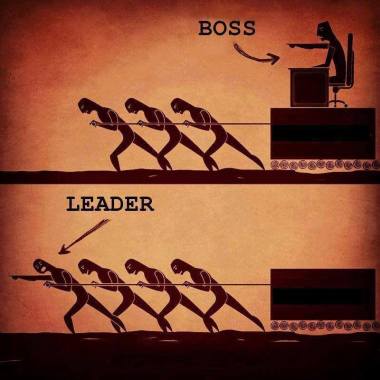
2. Their interest in the company does not stop with the unit they are heading. They want to know how all of the company’s departments affect one another, and they are constantly reaching beyond their specific area of influence.

3. They put heavy emphasis on vision, values, and motivation.

4. They have strong people skills.

5. They don’t accept the status quo.

Finding Good Leaders

What kind of person is best able to involve others and himself in good decision making? J. Keith Louden lists seven qualities:

1. The ability to look ahead and see what’s coming—foresight.

2. Steadiness, with patience and persistence and courage.

3. A buoyant spirit that in spite of cares generates confidence.

4. Ingeniousness, the ability to solve problems soundly yet creatively.

5. The ability to help others.

6. Righteousness, the willingness to do the right thing and speak the truth.

7. Personal morality of a quality that commands the respect of others. — Charles W.L. Foreman, “Managing a Decision Into Being,” from the Management Course for Presidents, pp. 3-4.

 
Leave a comment

Posted by on June 15, 2015 in Church


Examining the position of leadership


 placeforyou2mp3iconFacebook    YouTube  575273_579331012148169_1163921425_n

 ——————————————–

Don’t take a position of leadership in church unless you are prepared to be honest, pure, and loving in your lifestyle. Leadership is a privilege, and with privilege comes responsibility.

God holds teachers of His truth doubly responsible because we who lead are in a position where we can either draw people toward Christ or drive them away from Him.

This is illustrated in the life of the famous author Mark Twain. Church leaders were largely to blame for his becoming hostile to the Bible and the Christian faith. As he grew up, he knew elders and deacons who owned slaves and abused them. He heard men using foul language and saw them practice dishonesty during the week after speaking piously in church on Sunday.

He listened to ministers use the Bible to justify slavery. Although he saw genuine love for the Lord Jesus in some people, including his mother and his wife, he was so disturbed by the bad teaching and poor example of church leaders that he became bitter toward the things of God.

Indeed, it is a privilege to be an elder, a deacon, a Sunday school teacher, or a Bible club leader. But it is also an awesome responsibility. Let’s make sure we attract people to the Savior rather than turn them away.leaders

Lead Others

Actually, a manager needs the ability not only to make good decisions himself, but also to lead others to make good decisions. Charles Moore, after four years of research at the United Parcel Service reached the following conclusions:

1. Good decisions take a lot of time.

2. Good decisions combine the efforts of a number of people.

3. Good decisions give individuals the freedom to dissent.

4. Good decisions are reached without any pressure from the top to reach an artificial consensus.

5. Good decisions are based on the participation of those responsible for implementing them.*

One Man

Wherever anything is to be done, either in the Church or in the world, you may depend upon it, it is done by one man. The whole history of the Church, from the earliest ages, teaches the same lesson. A Moses, a Gideon, an Isaiah, and a Paul are from time to time raised up to do an appointed work; and when they pass away, their work appears to cease. Nor is it given to everyone, as it was to Moses, to see the Joshua who is destined to carry on his work to completion.

God can raise up a successor to each man, but the man himself is not to worry about that matter, or he may do harm. One great object of every religious teacher should be to prevent the creation of external appliances to make his teaching appear to live when it is dead.


1 Comment

Posted by on June 8, 2015 in Church


What do wives really want in a husband?


 placeforyou2mp3iconFacebook    YouTube JesusIsLordofthisWebSite575273_579331012148169_1163921425_n

 ——————————————–

Numerous men have pondered the questions, “Why does my wife say she’s unhappy? What does she want that I’m not doing?” Many of the men raising these questions have been blindsided by a wife’s confession that she’s not happy in the marriage.

marriage-what-does-your-husband-or-wife-want-1-638It can be confusing to try to figure out what a partner wants. And men, in particular, are having a harder time than ever because of changing expectations on the part of many females. In the past, it was enough for a husband to be a good provider, to have stable employment, and to bring home an adequate paycheck.

But now, that’s not enough anymore for many females. Enter the age of the “soul mate”—a word that signifies a deep bond and heart connection, someone who’s on the same “wave length” as his or her partner. Soul mates are compatible and bring out the best in each other. The relationship has satisfying intimacy and includes friendship, companionship, as well as love.

The connection between soul mates is sustained by emotional intimacy and the delight the partners share at having found each other. They share feelings easily and keep each other informed as to what they’re feeling, what concerns they’re wrestling with, what they’re worried about, and what their hopes and dreams are. Soul mates often say they feel a spiritual as well as an emotional connection to their partner.

A number of couples feel deeply connected at the beginning of their marriage. Both individuals are trying their best and are putting genuine effort and energy into the relationship. Even reticent, quiet males often make an effort to talk more and connect at this early stage in the marriage.

But, over time, the quality of the relationship can change—often for very understandable reasons, like parenting demands—and wives may begin feeling disconnected from their mates. Many husbands do not understand the importance of strengthening and nurturing emotional intimacy in a marriage. They may not feel comfortable sharing their feelings; they may not even be able to put their feelings into words and communicate them to their spouse.

The old model of marriage demanded a “real man,” and a “real man” didn’t cry, didn’t show his feelings, and didn’t talk about his feelings. He was strong, always in control of his emotions, and he solved his own problems without help from anyone else. While he was being emotionally strong, his wife was usually feeling increasingly distanced and disconnected from him.

“Well, what do women want, then? Do they want us to act like their female friends do?” The answer is both “yes” and “no.” No, they don’t expect their husbands to be as interested in every little aspect of certain things as their female friends are (planning a baby shower, deciding what dress to wear to a special event, for example). But yes, they do expect to get emotional support and sharing of feelings from their husbands on a regular basis.

 
Leave a comment

Posted by on June 4, 2015 in Family


Why Men Don’t Talk


 placeforyou2mp3iconFacebook    YouTube  575273_579331012148169_1163921425_n

 ——————————————–

(I referred to this article in a recent lesson and wanted to share the full article)

Why Men Don’t Talk

By Hampton Keathley

I read a book a couple of months ago that really changed my thinking on a few things and helped me understand a lot more about myself. The book was The Silence of Adam by Larry Crabb. It was so good, that I read it twice. It is called The Silence of Adam because he starts off by asking where Adam was when Eve was talking to the serpent.

Tradition has always taught, and I had always assumed that Eve was alone at that time, and that after she was deceived and ate the fruit, she went in search of Adam and gave him some to eat. But Crabb pointed out that Adam was right there with Eve during the conversation with the serpent. When I read that, I immediately got off the couch and went to get my Bible to read the verse for myself.

god-make-me-an-instrumentGenesis 3:6 says, When the woman saw that the tree was good for food, and that it was a delight to the eyes and that the tree was desirable to make one wise, she took from its fruit and ate; and she gave also to her husband with her, (imah) and he ate.

Wow! Adam was with her! I don’t know about you, but that blows away my categories. We always talk about how Eve was deceived, (In fact we read that three weeks ago in 1 Tim 2:14 right here in class.) And I think deep down, we sort of blame Eve for getting us all in this mess in the first place, even though we know technically that Adam was responsible.

But what if Adam was standing right there the whole time that Eve was talking to the serpent? I think this sheds new light on just how responsible Adam was for what happened. What does this say to us about not doing anything when we are not sure exactly what we should do or say? It sure makes inactivity look more sinful to me

If Adam was there, then why didn’t he say something? Why didn’t he tell the serpent to get lost? Why didn’t he correct Eve when she misquoted the command not to eat of the tree? Why didn’t he suggest they go somewhere else to talk about the situation? Why didn’t he stop Eve when she reached for the fruit?

Why Adam was silent? I’m not going to answer that right now. The answer will become obvious as we work through several concepts.

We are going to divide our study into the following topics:

  • The Search for Real Men
  • Man’s model—God’s role in creation, because man is created in God’s image and we need to see what that entails.
  • Man’s responsibility—to walk in God’s image.
  • Man’s natural tendency—to be silent.
    ————————————–
  • What Speaking is Not.
  • The Reasons for Silence
  • The Solution
  • Woman’s responsibility

The Search for “Real Men”

I think the first time I ever heard any talk about “real men” was in college when someone said, “Real men don’t eat quiche.” I think there was a whole string of “real men” jokes going around then, but that is the only one I remember.

The traditional view of a real man is one who is broad-shouldered, self-confident, tough, unemotional and successful. If you ever read any Louis L’Amour books, the main character was always tall, dark and invulnerable and he didn’t talk much. John Wayne and Clint Eastwood always played that kind of man in their movies.

But for the past ten years there has been a call for men to be more sensitive, to be vulnerable, to share their feelings, to cry more. Men are supposed to be more concerned with connecting with others than with trying to achieve and conquer the world. I remember my dad once making the comment that there didn’t seem to be any actors rising on the scene to replace John Wayne and Clint Eastwood. Maybe that is the reason. Their character type was out of style. John Wayne has been replaced with Billy Crystal.

I think the John Wayne tough guy image is a warped model of what a man should be. But I also think that the soft, vulnerable, almost homo-sexual image that we are bombarded with in the secular media is a pendulum swing too far in the other direction.

There is obviously a problem, but what is the solution? What constitutes a real man?

In the Christian world, we’ve been trying to come up with the answer. We have Family Life Seminars, Promise Keepers conventions, hundreds of self-help books on how to be a good father, how to be a good husband, how to be a good whatever. The list of self-help books is endless.

I think that phrase “self-help” is significant. I don’t mean to discredit any of those things I just mentioned, because they all have their place. In fact, many of them were started because people felt like churches weren’t dealing with the issues. But our tendency, when we realize there is a problem, is to go find a book written by some expert with the answers or go to a “professional counselor” or go to some conference to learn some neat steps to follow or principles to apply, to get motivated to work hard, and then we go home and try really hard to follow those steps. We do them for the next few weeks or months. But eventually, we slip back into our old habits and wait for the next conference. Perhaps that is why the Promise Keepers have to come back each year. We don’t keep our promises. The problem is that we were doing all these things out of our own energy, not God’s energy.

In our day, too many men are seeking more diligently for their manhood, than for God. However, if you read the biographies of the great Christians of the past, like Dwight L. Moody, Hudson Taylor, etc., it becomes obvious that they sought God first. They spent hours in the word and in prayer. They were very godly men. And look what God did through them. They are remembered as great men. Therefore, I think it is safe to say, “The only way to be manly is to be godly.” (Crabb, p. 32)

How do we become godly? By reflecting the image of God. We can’t do that unless we know what God is like. So we need to study what God is like. That by the way is theology. I almost hesitate to say that because most people think of theology as booooooring, but you will see that is very relevant. It is relevant because if we are to be godly, we have to know what God is like.

The Model: God’s Role in Creation

Genesis 1:2 says that the earth was formless and void and darkness was over the surface of the deep. In other words, everything was chaos. Then, while everything was darkness and chaos, God spoke into the darkness and He created life and beauty.

For years, people have argued about the “Gap theory” or “Restitution Theory” which proposes that there were two creations. After the first creation, Satan messed up the earth and so God had to rebuild. All this was supposed to happen somewhere between Gen. 1:1 and 1:3.

I think one reason this idea became popular was to try to explain why there was chaos. The question people asked, was “Why would God create a chaotic earth on his first pass, and then have to come back and fix it up later?” The gap theory also gained popularity when science started saying that the earth was millions of years old. A “Gap” between a first and second creation left room for that. The fact that the earth appears to be millions of years old can be explained without a gap theory. If God created a tree, and we cut it down the next day, how many rings would it have in it? 50? 100? God created trees, man, everything, including the earth, with apparent age. So we don’t need a gap theory as an answer to evolution.

Also, a good understanding of Hebrew shows that there is no reference to a gap in time in Gen. 1:3.

So, why the part about the earth being formless and void in vs. 2? Let me propose another reason—a theological one.

When Moses wrote Genesis, he left out lots of stuff. He covered 6000 years in just a few pages, and then focused in on Abraham, Isaac, Jacob, and Joseph. I think Moses was very selective in what events he recorded. He only recorded what he did because they make a theological point. Therefore Gen. 1:2 is as much a theological statement as it is an historical one. It is not just giving us a chronological order of events.

When I say it is a theological statement I mean that, the part about the earth being formless and void is there to make a statement about God—to let us know what God is like. What it is saying about God is that God moves in darkness and chaos and creates order and life. The statement is there so that man, who is created to walk in God’s image will know what that involves. It involves moving into the chaos and creating order and life.

That brings us to the next point.

Man’s Responsibility: To Walk in God’s Image

Genesis 1:26 says that man was created in God’s image and one purpose was to rule over the rest of creation. Man was to help keep the order. One of the first things Adam did was to name the animals. That did three things:

  • It demonstrated his superiority over them, and fulfilled the command to rule over creation.
  • It helped fulfill his role of being in God’s image and taking part in creating order out of chaos.

Lori and I were talking about that the other day. If animals didn’t have names, you would find yourself saying things like… I saw one of those yellow, furry animals down by the creek today. The other person would say, “The one with the long neck?” Then you would say, “No, it had a short neck..” Then the other person would say, “The one with stripes?” “No, the one spots…” And on and on it might go. That definitely would be a chaotic situation.

  • Adam was also “like” God because naming the animals involved speaking into the disorder.

I imagine that naming all those animals was not easy. Imagine if someone brought a few hundred species of animals to you and asked you to name them. Would you be overwhelmed? Sure you would. It was probably all you could do to think of a name for your baby. And if you’re like us, you didn’t decide untill they were rolling mom and baby out of the hospital.

So, Gen. 1:3 says God spoke and then in Gen. 2:19-20 man spoke. There is a logical connection between the two. Man was reflecting the image of God by speaking into the chaos and creating order.

That is the theological basis for our study. God spoke into chaos and created life and order. Man is created in God’s image and part of man’s responsibility is to speak into chaos and create life and order.

How does that apply to us today? We don’t need to name the animals.

For me, that means that when life is chaotic, I need to speak. I need to say something and I need to do something. I need to get involved. I should not remain silent. If I remain silent, I am like Adam in the garden. I am sinning.

But man’s natural tendency is to remain silent. That takes us to the next topic.

Man’s Natural Tendency: To Be Silent

If Adam were the only man in the Bible who was silent, then perhaps one could say that this conclusion is doubtful. But, there are several examples in the Bible of men who were silent. Let’s look at them and see where it got them.

The Example of Adam

We’ve already looked at this one, but I just wanted to make it a part of the list so I could ask you what were the consequences of Adam’s silence? The result was that billions of people have lived miserable lives and then died and most have gone to hell.

The Example of Abraham

Everyone probably knows of God’s promise to Abraham (Gen 15)—that he would have a son and be the father of a multitude, through whom God would bless the world. After ten years, and no children, Sarah comes to Abraham and says, take my slave, Hagar, and have children with her so that God’s promise can come true. What did Abraham say to that? Nothing. Gen 16:2 says He listened to the voice of Sarah.

Then later after Hagar has Ishmael, Sarah is jealous and Abraham tells her to do what she wants to her slave. And he lets her treat Hagar harshly.

So, Abraham was silent and did what Sarah said. What was the result? The Arab/Israeli conflict that still rages today.

The Example of Lot

We know from 2 Peter 2:7f that Lot was a righteous man, but you would never know it from the Genesis account. He stayed in Sodom and Gomorrah and was silent about the evil around him. When he offered his two daughters to a crowd of men to protect God’s messengers, that was not the action of a strong man. At the end of that account, when they are fleeing the city, and Lot’s wife looks back at Sodom and turns into a pillar of salt, it becomes obvious who it was that wanted to live in Sodom and Gomorrah and who was in really running the family. If Lot was tormented in his soul by the evil around him (2 Pet 2:8), then why didn’t he leave? Because his wife didn’t want to. Lot remained silent and passive.

Some time later Lot’s daughters commit incest with Lot while he is drunk and they get pregnant. So, we see further damage result from Lot’s silent passive life.

The Example of Bethuel

Do you remember the story of how Isaac got his wife? His father, Abraham, sent a servant back to the home country to get a wife for his son, Isaac. In the account in Gen. 24, the servant goes to a well, meets Rebekah, follows her home, and then proceeds to bargain with her brother Laban for her hand in marriage for Isaac. At the end of the account, (24:50) it says Bethuel agreed to the arrangement. It seems to me that Laban was the one who was involved, and Bethuel was along for the ride. I can’t swear to it, but nothing is said about him, and he doesn’t speak until the end of the account.

What was the result? He had two very controlling children. Laban and Rebekah. We know that Rebekah was very involved with the deception of Isaac when Jacob deceived his father out of the family blessing. And we know that Laban made life miserable for Jacob when he tried to marry Rachel and got Leah instead. So, by being a silent and uninvolved father, Bethuel helped create at least two manipulative and very controlling children.

The Example of Isaac

We don’t have to read much further in Genesis before we come to the next silent man —  Isaac. He was a very passive man. If you read through Genesis, you see that he didn’t do anything right except allow his father to almost sacrifice him.

Isaac knew the prophecy of God that his older son, Esau, would serve the younger son, Jacob, but he preferred Esau who appeared to be a strong, manly man always out hunting. And at the end of his life, he was going to go ahead and bless Esau in spite of the prophecy. Why? I think it was easier to go along with the tradition of blessing the oldest son than to trust God and bless Jacob. Why? Perhaps he was afraid of Esau’s reaction? After all, Esau was the hunter. Perhaps he was afraid of what others might say when they found out. Because he was afraid to act, his wife tried to take over and handle the problem. It backfired and the family was split up and Isaac and Rebekah never saw Jacob again.

Conclusion

Here we have five examples of men who were silent. In each situation the result was much harm to others. We might say the result was chaos.

When God spoke, He made order out of chaos. When man fails to act in God’s image, and speak, the result is more chaos. And very important to recognize: It brings the severing of relationship. And that is what this is all about – relationships. How is my silence going to affect my relationship with others? The Bible shows that it wll definitely destroy them.

  • Adam’s silence destroyed his relationship with God and his wife.
  • Abraham’s silence resulted in the Arab/Israeli conflict.
  • Lot’s relationship with his daughters and his wife was not good.
  • Isaac had almost no relationship with his wife or son, Jacob. This is obvious when you read the story of Isaac’s deception at the blessing. Isaac never talks to Rebekah. He never talks to Jacob (except when he thinks Jacob is Esau). Rebekah never talks to Esau. And Jacob never talks to Esau. You see a family divided right down the middle.

Notice also that in each of these situations, when the man was silent, the women stepped in and took control. God said that was going to be the woman’s natural tendency in Gen. 3:16, and we can see it happening over and over again.

So, man’s natural tendency is to be silent. But what we’ve seen so far ought to do away with the description of a man as “The Strong Silent Type.” When you understand these principles, it makes you want to change it to “The Weak Silent Type.”

Summary

  • What we’ve seen is that God speaks into disorder and creates order and life.
  • Man is created in God’s image and should also speak into disorder and create order and life.
  • But man’s natural tendency is to avoid the chaos and to be silent.
  • When he does that he creates even more chaos and destroys relationships.
 
Leave a comment

Posted by on June 4, 2015 in Article


Training involves getting a child to follow your instructions…without begging, nagging, anger or counting


 placeforyou2mp3iconFacebook    YouTube  575273_579331012148169_1163921425_n

 ——————————————–

We often are cautioned that training involves getting a child to follow your instructions…without begging, nagging, anger, and counting.

Picture4We should reach the point where you must learn how to accomplish getting this obedience.  Are you a winner? Winners are parents who have reared or are rearing obedient children. Their children respect and honor them; they show it in their speech, manners, and actions.

I can remember a visit made a few years back that was important, and, after meeting and greeting the family, it was time for the adults to talk alone in the living room. At the time, two children were in the room watching television.

The husband/father made a simple statement: “Boys, turn the TV off…we have to visit alone for a few minutes.” What did the boys do? Without hesitation (or begging or further explanation) they got up and obeyed their father. No talk back. No nasty attitude involved.

What would you expect as parents? Unfortunately, it doesn’t work that way in many homes because the children are treated differently on a daily basis and don’t know how to act when “company arrives.”

True obedience in this regard is: (a) immediate; (b) unquestioning, and (c) to the letter — no substitutions, additions, or omissions.

Several years ago we had a house in Ohio with a large open field and wonderful woods just behind us. The children spent many hours in those woods…special time with each other, etc. We had one common-sense rule immediately in place: when either Terry or I called out and wanted the children to come to the house, etc., we called their names and their only response was to be this: “coming.”

Not “what?” Not “do you want something?” It worked often because they had learned obedience.

Rosemond’s  Bill of Rights for Children

1. Children have the right to find out early in their lives that their parents don’t exist to make them happy, but to offer them the opportunity to learn the skills they-children-will need to eventually make themselves happy.

2. Children have a right to scream all they want over the decisions their parents make, albeit their parents have the right to confine said screaming to certain areas of their homes.

3. Children have the right to find out early that their parents care deeply for them but don’t give a hoot what their children think about them at any given moment in time.

4. Because it is the most character-building activity a child can engage in, children have the right to share significantly in the doing of household chores.

5. Every child has the right to discover early in life that he isn’t the center of the universe (or his family or his parents’ lives), that he isn’t a big fish in a small pond, and that he’s not even-in the total scheme of things-very important at all, no one is, so as to prevent him from becoming an insufferable brat.

Daddy
    1. Be fair. A man setting out to lead his wife and children must first of all be fair. Listen, especially to the wishes of your wife. Don’t expect of your family what you are not willing to do or be yourself. Take care of your family’s needs before your own.

     2. Be firm. When there is no leader, there is no leadership. If you are seeking to be fair, you’ll know when to listen and make changes.
     3. Be faithful. A family will do anything asked of them if they know you love them. How can you hurt your wife the most? Don’t love her; avoid her; don’t compliment her; make her feel as if she is inferior. Some treat the waitress better than their wife at home. Our wife needs to know, without doubt, that they are loved! Go visit your child’s teacher at the school they attend; determine their level of maturity as it relates to listening, sitting still, obeying commands, etc., and, please, do not expect less of them at worship than your teacher expects from them at school.

 
Leave a comment

Posted by on May 27, 2015 in Sermon


What’s the hurry, anyway?


 placeforyou2mp3iconFacebook    YouTube  575273_579331012148169_1163921425_n

 ——————————————–

Why is it that we feel we must rush our children into growing up? We hurry them off the bottle; we rush them out of diapers; we push them to walk. Why?

We allow eight-year-olds to adorn herself with pierced earrings, in lipstick and makeup, and rush them into dating at 11 and 12-years Picture1old…shame on us if we have been guilty of rushing our children. What we are actually doing is robbing them of the most glorious, beautiful, and peaceful time of the lives — their childhood.
One thought: if the child does everything that teenagers do at age 11, what is there left for them to do as teens? Doesn’t it encourage them to ‘move into adult issues’ too soon?

Good advice? Let them experience age-appropriate items at a normal pace. They will not miss out when it is their natural time. That ‘rush’ can also apply to our being too busy. If you feel as it you are always rushing your child, slow down and do something about your schedule. Cut some non-essential things out and spend more time with them. Look them in the eye and talk. And expect them to listen and act accordingly.

Nixon Waterman writes: “Hurry the baby as fast as you can, Hurry him, worry him, make him a man. If with his baby clothes, get him in pants,  Feed him on brain foods, and make him advance. Hustle him, soon as he’s able to walk, Into a grammar school; cram him with talk. Fill his poor head full of figures and facts, Keep on a-jamming them in till it cracks. Once boys grew up at a rational rate, Now we develop a man while you wait, Rush him through college, compel him to grab Of every known subject a dip and a dab. Get him in business and after the cash, All by the time he can grow a mustache. Let him forget he was ever a boy, Make gold his god and its jingle his joy. Keep him a-hustling and clear out of breath, Until he wins — nervous prostration and death.”

God Says Organize! The autocratic home must first of all be properly organized. God gives the blueprint for that organization in 1 Corinthians 11:3: “The head of every man is Christ; and the head of the woman is the man; and the head of Christ is God.” 

This particular scripture does not include children, but previous passages we’ve noticed (Eph. 6:1 and Col. 3:20) have already confirmed that they come under Daddy and Mother’s authority. Any time we get Daddy, Mother, and the children’s positions out of kilter, we are in serious trouble. We certainly aren’t happy. Daddy is humiliated, Mother embarrassed, and the children aren’t content, either. Society suffers and the nation is weakened, too, by the way. God has designated that men carry certain responsibilities and that women assume others. Men and women are not the same in purpose or responsibility, but they are equal in importance. God’s plan is that we
are “a 100% Daddy and a 100% Mother.”

What is the Dad’s responsibility?

Be the head of the home. This simply entails being the one by whom and through whom all decisions and orders of the family’s business are approved. You give the ultimate yes and no. If you are wise, you will
gladly share this with your spouse in many areas, but when it is all said and done, it is your responsibility.

Be the protector. This protection finds its fruit in both physical and emotional protection. God built with a man the ability to minimize his family’s fears and feelings of insecurity. With his deep, strong voice, he can scare any intruders away.

Be the physical provider. From the beginning of time, it has been God’s decree that the man is to make the living for his family (Gen. 3:17-19; Exodus 21:10). It’s important that the family be taught the lesson of contentment so ‘demand and command’ be held in check — in other words, live within your means.

Be the spiritual leader. A man’s spiritual welfare and that of his wife and children are resting in his hands. A woman is to submit willingly to man’s leadership (1 Cor. 11:3). Again, it is the wise husband who uses the nurturing skills and patience of the mother in this area.

Four levels of faith. John Westerhoff, in his book Will Our Children Have Faith? presents four levels of faith development. They can be used by each family to make decisions that relate to worship and training the child to more effectively participate in it.

  1. Ages birth to 5: the child has an experimental faith, where he/she slowly becomes aware of spiritual principles through other individuals. With this understanding, we should spend much time with the Bible and Christian people, and in regular worship, so our children can see us.
  2. Ages 6-11: the child moves to belonging faith, where he begins to sense some “belonging to the spiritual family.” Our response must be an earnest interest to get them in a Bible class of the congregation, and allow them to experience many fellowship and fun activities. This is definitely the age when they should be carrying and reading their own personal Bible, holding and singing from a songbook.    3. Ages 12-18: the child is in the Search faith phase, where he begins to question and test the par-ent’s beliefs. The parent should get their children with others so they can struggle together in the right environment…they need role models as that “significant other.”
  3. Age 18: the mature faith begins developing, and it’s the most exciting time of all, when the young adult reaches his own beliefs and believes because of his own decision and will.

Picture2Obedience: A Major Ingredient in Our Homes

Proverbs 13:24: “He who withholds his rod hates his son, But he who loves him disciplines him diligently.”

Proverbs 19:18: “Discipline your son while there is hope, And do not desire his death.”

Proverbs 20:11: “It is by his deeds that a lad distinguishes himself If his conduct is pure and right.”

Proverbs 22:15: “Foolishness is bound up in the heart of a child; The rod of discipline will remove it far from him.”

“Any time your children will not follow your teaching, you are in trouble and they are in worse trouble. Furthermore, until you get your children to mind you, neither independence, good habits, work, communication, no togetherness will work for you. Having an autocratic family will come to a dead standstill if you don’t have obedience.” Obedience is vital in our home because it builds three essential
ingredients within a child. It builds trust, respect, and responsibility. Without these ingredients, your child will be a social cripple and will be handicapped for life.”

 
1 Comment

Posted by on May 25, 2015 in Family


Developing Spiritual Maturity Hebrews 5:12—6:12


 placeforyou2mp3iconFacebook    YouTube 575273_579331012148169_1163921425_n

 ——————————————–

“For though by this time you ought to be teachers.. . .” (5:12).

Spiritual-Maturity
In the Middle Ages, a list was made of the “seven deadly sins.” The authors must have considered these seven sins worse than any others. The “seven deadly sins” contained such expected sins as pride, envy, anger, avarice, gluttony, and lust.

But there is one surprising item— the Greek word accidie, which is normally translated “laziness” or “sloth.” We may not think of it as one of our most serious offenses because to us the word “sin” normally conjures up images of sexual or anti-social offenses. But the church in the first century considered “sloth” to be one of its most serious offenses.

Another characteristic of accidie might be a “couldn’t-care-less” attitude.  We  might think that our problems are very different from those of ancient people because our lives are more complicated than theirs. But listen to this description of a lazy fifth-century monk: “When the poor fellow is beset by it, it makes him detest the place where he is, and loathe his cell; and he has a poor and scornful opinion of his brethren, near and far, and thinks that they are neglectful and unspiritual.

“It makes him sluggish and inert for every task; he cannot sit still, nor give his mind to reading; he thinks despondently how little progress he has made where he is, how little good he gains or does . . . he dwells on the excellence of other and distant monasteries; he thinks how profitable and healthy life is there; how delightful the brethren are, and how spiritually they talk. On the contrary, where he is, all seems harsh and untoward; there is no refreshment for his soul to be got from his brethren, and none for his body from the thankless land; . . . and so, with his mind full of stupid bewilderment and shameful gloom, he grows slack and void of all spiritual energy, and thinks that nothing will do him any good save to go and call on somebody, or else to betake himself to the solace of sleep.” 1

Sloth is  our  problem  as well.  We  see  the debilitating effects of not caring. Discouragement easily robs us of our will to go on with our Christian calling.

The Hebrews’ author says in 6:12, “That you may not be sluggish. . . .”

One of the problems of those Christians was that they had “hands that are weak and the knees that are feeble.” Having lost their original intensity, they were vulnerable to new ideas or doctrines (13:9). This sluggishness was especially evident in the problem of lack of church attendance (10:25) and in their temptation to “neglect” their great salvation. Sluggishness was only the beginning of what could turn into apostasy (6:6).

DULL OF HEARING

There is more than one way to be sluggish. We have already noticed some of the symptoms of sluggishness among the readers of Hebrews. But another aspect of sluggishness is often overlooked. In 5:11, the author suddenly says, “You have become dull of hearing.”

In 5:1-10, he starts the central section of the book showing that Jesus Christ is the high priest after the order of Melchizedek. After describing the levitical requirements for priesthood (5:1-4), he demonstrates that Jesus Christ fulfills all requirements.

Having experienced the agony of suffering (5:8, 9), He has been designated the “high priest according to the order of Melchizedek” (5:10). This fact is first mentioned in 5:10 and is then developed in chapters 5 through 10. For most people, the argument about the high priesthood of Christ is the most memorable section of the epistle. We learn that Jesus is no ordinary priest. Unlike levitical high priests, He lives forever (7:3, 23).

To our surprise, this discussion is interrupted in 5:11. The author leaves the subject to address his readers personally. We know that the author consistently ends his expositions of the Old Testament with some words of encouragement. The longest exhortation in the book is found in 5:11—6:12.

The subject which the author introduced in 5:10 is too difficult for the readers: “Concerning him we have much to say, and it is hard to explain.” The Greek word for “hard to explain” (dusermeneutos) literally means “hard to communicate,” not “hard to interpret.”

Hebrews is sometimes known for its difficult arguments, especially  in  the  description  of  Christ  and Melchizedek. We wonder why the author pursued a matter that is “hard to explain” with Christians who were dropping out of the community.

Why did he not try “pep rallies” or other new gimmicks to stir their interest? Often, we think the church should consider things that are “hard to explain” only after all other matters have been solved. Or we reserve such matters for the experts, not the entire church.

But the author was convinced that matters “hard to explain” were meant for the whole church—even a tired and  bored  church—to  pursue.  In  chapters  7 through 10, he continues this difficult message. We may wonder why the author pursues such a topic in a book on church renewal. The answer is that the only renewal that matters is a lasting renewal. There is a need for depth and roots if we are to maintain our vitality for a long period. A pep rally may be useful for a while. But a church that endures needs a firm anchor (6:19) where it can find the security and encouragement to keep the faith. Archimedes, the Greek mathematician, said, “Give me a place to stand, and I will move the world.” The author introduced a topic “hard to explain” because he knew the church needed a place to stand.

It is easy to lose the balance between the tasks of informing and exhorting in preaching. A sermon that merely informs may never confront the audience with the demands of God on their lives. A sermon which only exhorts may easily be without substance.

The author of Hebrews, a model preacher, knows that a living church maintains its vitality through both exhortation and information. He recognizes that a church needs firm roots in solid, demanding study. He is not afraid of confronting Christians with challenging words. He knows that a faith that is easily reduced to a few slogans does not give a firm place to stand. There is a place in biblical preaching for a challenge to our minds. There is no substitute for words that are “hard to explain” because the enthusiasm for learning provides roots for living.

AN INDICTMENT

Preaching should sometimes confront us with our responsibilities and indict us for our failures. The spiritual-maturityauthor of Hebrews says that the word is difficult to explain because “you are dull in hearing.” The Greek word for “dull” (nothros) is the same word that is translated “sluggish” in 6:12. This word was often used for a lazy student who refused to develop his mind. The author might have said, “The fault does not lie in the word itself. The fault is yours. You have not developed the capacity to understand.”

The readers had apparently been Christians for at least a generation. The author mentions the amount of time which has elapsed since they first became Christians (“by this time,” 5:12). The readers had sufficient time to sharpen their minds and become competent to teach. Their problem was sluggishness manifested in a lack of physical and intellectual energy.

The answer for a tired church, according to the author, is to be fed “solid food.” In the ancient times, a beginning philosophy student was introduced to a few “first principles” by his teachers. The student was often described as a “babe” who had to rely first on “milk” before he went on to “solid food.” The students intended to develop their potential in order to become teachers themselves. Any student who remained at the beginning level for a long period of time caused serious problems.

This was appropriate imagery for the author of Hebrews. After a generation, the readers were still in their infancy (5:13). Their diet consisted of milk, and they were unable to digest the solid food that the author would offer. The author probably looked at the tired community and wanted to say something that would strengthen their faith. But he observed that their lack of intellectual growth made it almost impossible for him to communicate what they needed most. He recognized that the church can never main- tain its identity unless it is grounded in the solid food of the Word of God.

A FAITH FOR OUR MINDS

According to the author of Hebrews, Christianity cannot survive unless it is taught. It must be treasured enough to capture our minds. Christians in every age have set up schools to pursue the scholarly study of Scripture. The health and vitality of Christianity benefits from a respect for learning. As heirs of a long, respected tradition of learning, we depend on the survival of educated church members. Faith must be explained, and faith seeks understanding. Only a shallow, inconsequential religion makes no demands for continued learning.

R. Glover, a great classical scholar, once explained a major reason why Christianity was victorious in the ancient world. There were many causes competing for the people’s commitment, but Christianity conquered their minds and hearts. Glover said Christians did better thinking than other people.

The Christian read the best books, assimilated them, and lived the freest intellectual life the world had known. Jesus had set him to be free to fact. There is no place for an ignorant Christian. From the very start every Christian had to know and to understand, and he had to read the gospels, he had to be able to give a reason for his faith. They read about Jesus, and they knew him, and they knew where they stood. . . . Who did the thinking in that ancient world? Again and again it was the Christian. He out-thought the world.2

 A WASTE OF TIME?

We sometimes think of study as a waste of time or a diversion from more important things. We live in a culture which favors action over reflection. But we must question the value of actions which are not guided by careful study. The author makes a careful distinction between those who are nourished on milk and those who are nourished on meat. Those who exist on milk are “not accustomed to the word of righteous- ness” (5:13). Those who live on meat “have their senses trained to discern good from evil” (5:14). The Greek word for “unskilled” literally means “inexperienced” or “ignorant.” The author says some Christians remain perpetually like beginning students. The “word of righteousness” or the Christian faith remains incomprehensible to them because they have no habit of careful study and reflection and no recognition that faith requires an understanding, responsive mind.

On the other hand, some Christians can distinguish between good and evil because their minds have been trained by practice. The author uses the illustration of an athlete who trains himself through habits of practice and self-control. The same language was sometimes used for the discipline of the philosophy student because he knew the importance of training the mind.

In the same way, there is training in the Christian faith. We can develop the necessary sensitivity to make moral decisions only through such training. Our minds are trained to “distinguish good from evil.” Without this training, we have no way to evaluate new ideas. We may easily become prey for any new popular idea. Without disciplined training in the “word of righteousness,” we cannot distinguish between the Christian faith and the many other claims.

But Christianity is not a religion only for learned people. Paul could describe some of the early Christians as being “not many wise according to the flesh, not many mighty, not many noble” (1 Corinthians 1:26). But Christianity called all of these to use their own gifts to become more intelligent in the faith.

We notice also that it is not just a certain group of experts in Hebrews who were called to develop their understanding of the faith. The words “you are dull of hearing” were addressed to the whole congregation. It was the author’s reminder that, while we may want responsible leadership to guide our study, others need to use their own gifts to grow up in the faith.

Are we also “sluggish in hearing”? What has happened to families who should have a thorough knowledge of the basic content of the Bible? As James Smart wrote in his book The Strange Silence of the Bible in the Church, there is a danger that the church will largely ignore the Bible in its educational curriculum. The indictment of a bored church long ago may also be indictment of contemporary congregations.

Not all educational programs based on the Bible are equally beneficial for the vitality of the church. We often demonstrate that we do not take the Bible seriously by the way we treat it in our programs. In some instances, we abuse it by limiting our study to only a few sections. Sometimes, it is used only to prove a point reached long ago. The mere fact that we use the Bible does not mean that we will “train our senses,” as Hebrews puts it. We grow when we study with enough seriousness to be prepared to hear the whole story, not just the parts we prefer to hear. We wonder why people who read a lot do not read more books on religious subjects. Some people take their Christianity very seriously. They keep informed in many fields by reading the best books.

But they seldom read a book about the realities of faith, about God, Christ, prayer, and the Bible.

Most of us have known people in the church with extraordinary competence in the academic, professional, or business world who have not grown beyond a few fundamentals in the Christian faith. In business they have shown their keen minds and capacity for growth. But they exhibit an unbelievable immaturity when it comes to faith. The author of Hebrews knows sluggish minds do not give vitality to the church.

A WORD OF ENCOURAGEMENT

The preacher’s indictment of his community is not the end of the sermon. Preaching also offers words of hope and encouragement. People must see a reason to engage in the action to which they are called. So the author of Hebrews encourages his community to leave the “elementary doctrines of Christ and go on to maturity” (6:1f.). In this word of exhortation, there is a stern warning that ap- pears in two other instances in Hebrews (10:26f.; 12:17).

If those who have been “once enlightened” fall away, it is impossible to restore them to repentance. The author does not elaborate on his statement, so his warning is hard for us to understand. We must remember, though, that his words are not addressed to people who have already fallen away and are seeking readmission to the church. His major point is that our faith is far too precious to throw away. Our “enlightenment,” or our beginning Christian life, only happens once. To think that we all “fall away” and then return cheapens our salvation. We must “go on to perfection.” Without that progress we will die.

The preacher must also provide the resources that will challenge the people to go on. The author offers two reasons to his community to keep their commitment. First, verses 7 and 8 provide an illustration from nature. The land which receives rain and bears useful fruit is blessed by God. If it bears only thorns and thistles, it will be burned. God calls the land to be responsible. He provides His blessing only if the land does its part. It is the same way with this tired community. God promises His blessing only to those who discipline themselves to grow up in the faith.

Second, we have invested so much of ourselves in the faith that it would be a tragedy to throw it away. The readers of this epistle demonstrated their “earnestness” (spoude) long ago when they served the saints. In 10:32-35, there is another reminder of what their faith had meant to them. They endured loss of property and abuse from their society. They visited prisoners (10:34), endured a hard struggle (10:32), and ministered to the saints (6:10). This faith meant far too much to them to be thrown away now.

Our church life often appears unpleasant. Disagreements with others and dissatisfaction with the direction of the church can cause us to become disheartened and sluggish. We need to remember our previous investment in a cause in which we believed. If God does not forget our “work and labor of love for his sake” (6:10), our past should also stimulate us to “show the same earnestness in realizing the full assurance of hope until the end” (6:11).

If the author of Hebrews had written his book two thousand years later, he probably would have said about the same thing. A weary church in the twentieth century needs to hear both his word of indictment (5:11-14) and his word of encouragement (6:11). Both sound as if they were addressed to us.

* Appreciation to Dr. James Thompson

——————-

1 David H. C. Read, Virginia Woolf Meets Charlie Brown (Grand Rapids, Mich.: Wm. B. Eerdmans Publishing Co., 1968), 141.

2 Donald Baillie, To Whom Shall We Go? (New York: Scribner’s Press, 1955), 63.

 
Leave a comment

Posted by on May 25, 2015 in Article