
RSS

Abundant Life Issue #1: Coping with life’s problems


 mp3iconFacebook    YouTube JesusIsLordofthisWebSite placeforyou2

 ——————————————–

Do you have a dream? You need one. Dreams give hope. They display a powerful image of what life can be. Has your dream been shattered? Worse yet, has your dream turned into a nightmare and come true? For all of us dreamers, there is hope.

Joseph was called, derisively, the dreamer. Some of his dreams were prophetic. He saw himself as a leader of men. Joseph dreamed of using his considerable talents to do great things for God and his family. Joseph’s dreams enabled him to live affirmatively.

Genesis 37-40

We begin now a study of one of the most exciting biographies in the Bible, that of Joseph and his brothers. The entire story illustrates the sovereignty of God and God’s providential care of His own. While Joseph had his faults, he still stands out as a spiritual giant in his own family.

  1. Joseph the Favored Son (37)
  2. Jacobs love (vv. 1-4)

Since Rachel was Jacob’s favorite wife, and Joseph was her firstborn son (30:22-24), it is easy to see why Jacob favored him in his old age. This kind of partiality in a home is bound to cause trouble. Joseph at seventeen was helping with the sheep, but soon Jacob relieved him of that duty and made him an “overseer” by giving him a “tailored coat.” Jacob wanted to make Joseph a ruler before he had really learned how to be a servant! The result—Joseph’s brothers hated him (v. 4) and envied him (v. 11).

  1. Josephs dreams (vv. 5-11)

That these dreams came from God, there is no question; and certainly the assurance that one day he would rule helped to keep Joseph faithful during those many years of testing in Egypt. Note that the first dream had an earthly setting, while the second dream was set in heaven. This suggests Abraham’s earthly children (the Jews) and his heavenly seed (the church). Joseph’s brothers did one day bow down to him! See also 42:6; 43:26; and 44:14.

  1. Judahs scheme (vv. 12-28)

We are not told which of the brothers first suggested doing away with Joseph. Possibly it was Simeon, who resented Joseph’s intrusion on the rights of the firstborn (which would finally be taken away from Reuben, 49:3-4). We know from chapter 34 that Simeon was crafty and cruel, and in 42:24, Joseph was rather harsh on Simeon. At any rate, the brothers were back in the region of Shechem (where they had gotten into trouble before, chap. 34), and they plotted to slay Joseph. It is to Reuben’s credit that he tried to spare Joseph’s life, although he used the wrong method to accomplish a noble deed. God overruled the hatred of the men, and Joseph was sold into slavery instead of slain in cold blood.

  1. Jacobs sorrow (vv. 29-36)

Years before, Jacob had slain a kid to deceive his father (27:9ff), and now his sons deceived him the same way. We reap what we sow. Jacob spent the next twenty-two years in sorrow, thinking that Joseph was dead. He thought that everything was working against him (Gen. 42:36), when in reality everything was working for him (Rom. 8:28). God had sent Joseph ahead to prepare the way for Israel’s preservation as a nation.

  1. Joseph the Faithful Steward (38-39)

Chapter 38 presents a sordid picture, showing Judah yielding to the lusts of the flesh. It is quite a contrast to Joseph’s purity (39:7-13). Judah was willing to sell his brother for a slave, yet he himself was a “slave of sin” (John 8:34). Even so, “where sin abounds, grace much more abounds” (Rom. 5:20), for we see that Tamar is included in the human lineage of Christ (Matt. 1:3). Note that Judah was harder on others than on himself (v. 24). Like David, he wanted the “sinner” judged—until he discovered that he was the sinner!

Jacob had tried to shield Joseph from the responsibilities of work, but God knew that Joseph could never be a ruler until first he was a servant (Matt. 25:21). God used three disciplines in Joseph’s life to prepare him to be the second ruler of Egypt:

  1. The discipline of service (39:1-6)

Joseph exchanged his “tailored coat” for a servant’s garb, and God forced him to learn how to work. This way, he learned humility (1 Peter 5:5-6) and the importance of obeying orders.

Because Joseph was faithful in the small things, God promoted him to greater things. See Prov. 22:29 and 12:24.

  1. The discipline of self-control (39:7-18)

Joseph’s mother was a beautiful woman, and no doubt the son inherited her features (29:17). Egyptian women were known for their unfaithfulness, but Joseph did not yield. God was testing Joseph, for if Joseph could not control himself as a servant, he could never control others as a ruler. He could have argued, “Nobody will know!” or “Everybody else is doing it!” But, instead, he lived to please God and made it a point to make no provision for the flesh (Rom. 13:14). “Flee youthful lusts!” Paul admonished (2 Tim. 2:22)—and that is just what Joseph did. As the Puritan preacher said, Joseph lost his coat, but he kept his character. Too many people have failed in this discipline, and God has had to put them on the shelf (1 Cor. 9:24-27; Prov. 16:32; 25:28).

  1. The discipline of suffering (39:19-23)

Not only was Joseph able to control his appetites, but he was also able to control his tongue; for he did not argue with the officers or expose the lie Potiphar’s wife was spreading about him. Control of the tongue is a mark of spiritual maturity (James 3). It is likely that Potiphar was the captain of the guards in charge of prisoners; he may even have been the chief executioner. At any rate, he saw to it that Joseph was put in the king’s prison (v. 20), and Joseph’s faithfulness and devotion again brought him favor with the officers. “The Lord was with Joseph” is the key to his success (39:2, 5, 21). Joseph had to suffer as a prisoner for at least two years, and probably longer. Psalm 105:17-20 explains that this suffering put “iron” in his soul. It helped to make a man out of him. People who avoid suffering have a hard time developing character. Certainly Joseph learned patience from his suffering (James 1:1-5) as well as a deeper faith in God’s Word (Heb. 6:12). This suffering was not enjoyable, but it was necessary, and one day it turned into glory.

III. Joseph the Forgotten Servant (40)

Joseph was now a servant in the royal prison (41:12), faithfully doing his work and waiting for the day when his prophetic dreams would come true. One day two new prisoners were added—the cupbearer to Pharaoh and the chief baker. What their crimes were is not stated; it may have been some minor thing that upset Pharaoh. However, we know that God arranged their arrest for Joseph’s sake. Joseph had been treated unjustly, but he knew that one day God would fulfill His Word.

Note Joseph’s humility as he interpreted the two dreams (v. 8). He gave all the glory to the Lord. “Humble yourselves under the mighty hand of God, that He may exalt you in due time” (1 Peter 5:6).

The two prisoners were in bonds because of something they had done, while Joseph was innocent. His interpretation of the dreams came true: the cupbearer was restored, and the baker was hanged. Yet Joseph was left in prison! We may wonder why others experience the blessings that we so desperately need; yet God has His plan and His time.

There is a hint of discouragement and unbelief, however, in Joseph’s request in v. 14. Was Joseph leaning on the arm of flesh? If so, the arm of flesh failed him, for the butler completely forgot about Joseph for the next two years. This was a good lesson to Joseph never to trust in men. God was ultimately going to use the butler’s bad memory to deliver Joseph, but the right time had not yet come. The butler forgot Joseph, but God did not forget him!

Joseph was seventeen years old when he went to Egypt and thirty years old when he was delivered from the prison (41:46). This means he spent thirteen years as a servant and a prisoner, years of discipline and training, and years of preparation for his lifelong ministry as the second ruler of Egypt. God prepares us for what He is preparing for us, if we will but yield to Him.

Genesis 41-45

This section records Joseph’s elevation from prisoner to second ruler of the land. He was given a new name—”the revealer of secrets” (41:45). Note the three secrets that Joseph revealed.

  1. The Secret of Pharaoh’s Dreams (41)

Joseph had hoped that the butler would remember him and intercede for him (40:13-15), but the man did not remember Joseph until the day Pharaoh became disturbed because he could not find the meaning of his strange dreams. God’s ways are past finding out, but God’s time to act is never too early or too late. Note the humility of Joseph as he stood before the mightiest monarch on earth: “God shall give Pharaoh an answer of peace” (v. 16). He explained the dream: there would be seven years of plenty followed by seven years of famine. Then he gave wise counsel: appoint a wise man to administer the food supply. God directed Pharaoh to appoint Joseph, so now he was exalted to the throne! See also 1 Peter 5:6.

Joseph’s marriage to a Gentile bride is a type of Christ’s marriage to the church during this age when His brothers after the flesh have rejected Him. “Manasseh” means “to forget” and suggests that Joseph’s new position in God’s will had caused him to forget the trials of the past; and “Ephraim” means “doubly fruitful,” suggesting that all his trials had, in the end, led to fruitfulness and blessing. Like the grain of wheat, Joseph “died” that he might not abide alone (John 12:23-26). God kept His Word to Joseph, and Joseph’s predictions came true. The Word of the Lord stands when man’s wisdom fails (41:8).

However, all of this was but a part of a greater plan, a plan to preserve Israel and prepare the way for the birth of Christ.

The Secrets of His Brothers’ Hearts (42-44)

The plan was now set in motion, for Jacob heard that there was grain in Egypt and sent his sons to secure food. Consider their two visits to Egypt.

The first visit (42)

Ten of the sons went down to Egypt, and Joseph recognized them even though they did not recognize him. Certainly his appearance had changed in twenty years, and his Egyptian speech and dress would lead them to believe he was a native. Note that the ten men bowed down (42:6), but that Joseph’s dreams had predicted that eleven would bow (37:9-10). This explains how Joseph knew the men would return with his brother, Benjamin.

Why was Joseph so hard on his brothers? And why did he wait so long to reveal himself to them? Because he wanted to be sure they had repented of their sins. To excuse people who are not sincerely repentant is to make them a worse sinner (see Luke 17:3-4). How did Joseph deal with his brothers? He spoke roughly to them and accused them of being spies (7-14; he kept them locked up for three days (v. 17); and then he kept Simeon as hostage and bound him before their eyes (vv. 18-24). His crowning act was to give them back their money (vv. 25-28). This rough treatment had its designed result, for the men confessed, “We are guilty!” See vv. 21-23. This statement indicated to Joseph that their hearts were softening. Their report to Jacob back home and their discovery of the money in their sacks only complicated their problem. What would they do? If they stayed home, they were thieves, but if they went back to Egypt, they had to risk taking Benjamin with them. We wonder if v. 36 indicates that Jacob knew what they had done to Joseph years before.

The second visit (chaps. 43-44)

God made Jacob’s family hungry again, and like the prodigal son of Luke 15, these men had to go back or starve to death. We see here other indications of their change of heart: Judah’s willingness to be surety, to bear the blame for young Benjamin; their willingness to return the money; and their confession of the truth to Joseph’s steward (43:19-22). However, they were making some mistakes too—taking a present to Joseph and confessing their sins to the servant instead of to Joseph himself. We cannot help but see in this whole episode the way God deals with the lost sinner. God controls circumstances to bring the sinner to himself and to the end of himself. But, sad to say, too many convicted sinners try to win their salvation by offering a present, or by confessing to a human servant, or by making some great sacrifice (as Judah did when he offered his own life as surety for Benjamin). The only way Joseph could excuse their sins was by receiving their honest confession and repentance.

Joseph used two devices to bring them to the place of confession: the feast of joy (43:26-34—note that in v. 26 and v. 28 all eleven men bowed before him) and the discovery of the cup in Benjamin’s sack. Again in 44:14 all eleven men fell down before Joseph in true contrition. “God has found out the iniquity of your servants!” they confess (44:16, NKJV). We cannot help but admire Judah’s speech in 44:18-34, not only for its humility and confession but also for the love that it shows toward his father and his youngest brother. He was willing to be surety, to bear the blame, even though it would cost him his life.

What a beautiful spiritual lesson we have here. Judah thought that Joseph was actually dead (44:20), and therefore, that he himself was guilty of murder. What he did not realize was that Joseph was alive—and was his savior! The lost sinner stands before God’s bar of judgment and confesses his guilt, thinking that his confession will mean certain wrath. But Jesus Christ is alive, and because He is alive, He is able to save to the uttermost. Christ does not expect us to be surety for our sins, or for the sins of another, for He Himself is our surety before God (Heb. 7:22). As long as Christ lives, God can never condemn us. And He will live forever!

It was not their confession of guilt, their sacrifices, or their gifts that brought salvation to the brothers. It was the gracious forgiveness of Joseph, a forgiveness purchased by his own suffering on their behalf. What a picture of Jesus Christ!

III. The Secret of God’s Purpose (45)

It was now time for Joseph to reveal himself and the purpose for which God had sent him. Acts 7:13 makes it clear that it was “the second time” that he revealed himself, just as it was the second time that Israel received Moses after rejecting his leadership forty years before (Acts 7:35). This is the theme of Stephen’s speech recorded in Acts 7: the chosen people Israel have always rejected their saviors the first time and received them the second time; they will do the same with Jesus Christ.

Joseph’s revelation of himself brought his brothers terror, for they fully expected him to judge them for their past sins. But he had seen their repentance; they had bowed before him; and he knew he could forgive them. He explained that five more years of famine would follow, but that he had prepared a place of refuge for them and their families there in Egypt. God had sent him before to save their lives.

Joseph promised to nourish them (v. 11) and protect them. He wept over them and kissed them, and he sent gifts to his father to assure him of the riches that lay in Egypt. “Come unto me!” was his invitation (45:18). Then, what a change took place in Jacob after he discovered that Joseph was alive—a change not too different from the change in the disciples when they discovered that Christ was alive! Before, Jacob had said, “All these things are against me (42:36), but now he could say, “All things are working together for good!”

  1. Affirmative living means recognizing the presence of God in your life.
    1. Whatever happened to Joseph never caused him to give up on God.
    2. In fact, everything that happened to him only drew him closer to God.
    3. Do you notice the presence of God in your life? Do you believe he has a plan for you? If not, you need to dare to dream again.
  1. Affirmative living means making the best of bad situations.
    1. Joseph was hated and sold into slavery. He was unjustly accused and placed in prison. Though forgotten, he never lost hope. We couldn’t have blamed him if he had.
    2. But, whatever happened to Joseph, he kept on making the best of it. He was sold into slavery only to become the head servant. Sent to prison, he took over the administration. Brought before the king, he became Pharaoh’s right hand man.
    3. Are you faced with troubles that bear down on you? If so, you need to dare to dream again.
  • Affirmative living means maintaining your principles even when inconvenient.
    1. Joseph faced his biggest challenge when accosted by his master’s wife.
    2. He could have given all kinds of excuses to give in, but he was willing to do what was right, in spite of the consequences. Have you been mistreated? If so, you need to dare to dream again.
  1. Affirmative living means recognizing God is in control.
    1. Joseph, when he was finally reunited with his brothers, said to them, “What you did to me you meant for bad, God used for good.” Joseph believed that ultimately God is in control, and that all things work together for good.
    2. Have you wondered if God has deserted you, or if your life has any purpose at all? If so, you need to dare to dream again.

Conclusion

It is my prayer that God will give you a dream if you do not have one. That he will restore your dream if it has been shattered. That he will give you courage if your dreams have turned to nightmares. Dare to dream again. If you have no dream, you are already dead.

Illustration

If you were to observe a group of people in a downtown area, all walking in different directions, you might think there they had no purpose at all. But if you were to interview each person, you would find that they are going somewhere and there is a purpose in the trip. Likewise, this world seems at times chaotic, but if we had the wisdom, we would see that there is a direction and purpose in life.

Some statements to encourage

A bell doesn’t ring on its own—if someone doesn’t pull or push it, it will remain silent. Plautus (c. 254–184 b.c.)

A ship in a harbor is safe, but that’s not what ships are built for. A strong man must have something difficult to do. John Stuart Blackie (1809–1895)

Doing becomes the natural overflow of being when the pressure within is stronger than the pressure without. Lois Lebar

Every calling is great when greatly pursued. Oliver Wendell Holmes (1809–1894)

Four steps to achievement: Plan purposefully, prepare prayerfully, proceed positively, pursue persistently. William Arthur Ward (1812–1882)

Give me a person who says, “This one thing I do, and not these fifty things I dabble in.” Dwight Lyman Moody (1837–1899)

I’m a slow walker, but I never walk back. Abraham Lincoln (1809–1865)

It is not enough to aim: you must hit. Italian Proverb

It is very easy to overestimate the importance of our own achievements in comparison with what we owe others.Dietrich Bonhoeffer (1906–1945)

No great achievement is possible without persistent work. Bertrand Arthur William Russell (1872–1970)

Nothing will ever be attempted if all possible objections must be first overcome. Samuel Johnson (1709–1784)

Only those who dare to fail greatly can ever achieve greatly.

Sitting on a tack is often more useful than having an idea; at least it makes you get up and do something about it.

Some men dream of worthy accomplishments, while others stay awake and do them.

The airplane, the atomic bomb, and the zipper have cured me of any tendency to state that a thing can’t be done. R. L. Duffus

The greatest works are done by the ones. The hundreds do not often do much, the companies never; it is the units, the single individuals, that are the power and the might. Charles Spurgeon (1834–1892)

The roots of true achievement lie in the will to become the best that you can become. Harold Taylor

There is no gathering the rose without being pricked by the thorns.

Whatever is worth doing at all, is worth doing well. Lord Chesterfield (1694–1773)

 
1 Comment

Posted by on July 2, 2015 in Encouragement


Do It Anyway


 mp3iconFacebook    YouTube JesusIsLordofthisWebSite placeforyou2

 ——————————————–

1. People are illogical, unreasonable and self-centered. Love them anyway.
2. If you do good, people will accuse you of selfish ulterior motives. Do good anyway.
3. If you are successful, you win false friends and true enemies. Succeed anyway.
4. The good you do today will be forgotten tomorrow. Do good anyway.
5. Honesty and frankness make you vulnerable. Be honest and frank anyway.
6. The biggest men with the biggest ideas can be shot down by the smallest men with the smallest minds Think big anyway.
7. People favor underdogs, but follow only top dogs Fight for a few underdogs anyway.
8. What you spend years building may be destroyed overnight. Build anyway.
9. People really need help, but may attack you if you do help them. Help them anyway.
10. Give the world the best you have and you’ll get kicked in the teeth. Give the world the best you have anyway.

David Augsberger, When Enough is Enough, (Ventura, CA: Regal Books, 1984), pp. 109-130

President Truman’s definition is: “A leader is a person who has the ability to get others to do what they don’t want to do, and like it.”…

Lord Montgomery enunciated seven ingredients necessary in a leader in war, each of which is appropriate to the spiritual warfare:

(1) He should be able to sit back and avoid getting immersed in detail.
(2) He must not be petty.
(3) He must not be pompous.
(4) He must be a good picker of men.
(5) He should trust those under him, and let them get on with their job without interference.
(6) He must have the power of clear decision.
(7) He should inspire confidence.

 
Leave a comment

Posted by on June 29, 2015 in Church


Are you in love? Do you love enough?


 placeforyou2mp3iconFacebook    YouTube  575273_579331012148169_1163921425_n

 ——————————————–

A young man said to his father at breakfast one morning, “Dad, I’m going to get married.” “

How do you know you’re ready to get married?” asked the father. “Are you in love?” “I sure am,” said the son. “How do you know you’re in love?” asked the father.

“Last night as I was kissing my girlfriend good-night, her dog bit me and I didn’t feel the pain until I got home.”

Some years ago, Dr. Karl Menninger, noted doctor and psychologist, was seeking the cause of many of his patients’ ills. One day he called in his clinical staff and proceeded to unfold a plan for developing, in his clinic, an atmosphere of creative love. All patients were to be given large quantities of love; no unloving attitudes were to be displayed in the presence of the patients, and all nurses and doctors were to go about their work in and out of the various rooms with a loving attitude. At the end of six months, the time spent by patients in the institution was cut in half.

fellowship-love1.jpgSome strange conversations are often wrapped around the subject of “love.” A 20-year-old daughter earnestly prayed before climbing into bed: “Dear God, I don’t ask anything for myself, but I do pray for my mother. Please give mother a handsome son-in-law to love.”

On the other hand, some seem to be over anxious about landing someone who will love them.  The mountain man was doing the best he could to be chivalrous.  He carried a washtub on his back and a chicken under his arm, had a cane in one hand and led a calf with the other.  Still his new girlfriend was wary. Either that or she was trying to cover up what she really wanted. As they approached the dark woods she held back, saying, “I’m afraid to walk with you in there.  You might try to hug me and kiss me.” “How on earth do you think I could manage that?” the mountaineer asked.  “As you can see, I’m pretty well loaded down.” “Well,” she said, “you COULD stick that cane in the ground, tie the calf up to it, and put the chicken under the washtub.”

A story tells about a fellow who was far away from home, and in a small town. He had in his possession only one thing, a $1,000 bill, but nothing else, no small change, no identification, nothing. He was famished for food, ravenously hungry, but he could buy nothing, for no one would take his $1,000 bill. It was not until he found a way to break that bill down into small change that he could spend any of it.

Our love for God, quite similarly, must be broken down into small, spendable change.

The teachings of the Hasidic rabbis often provide insight into God’s ways. One story comes from Levi Yitzhak of Berdichev in the Ukraine.  He confessed that the learned the meaning of love from a drunken peasant.  The rabbi was visiting a tavern owner in Poland’s countryside. As he entered the tavern, he immediately noticed two peasants at a table.  Both were gloriously in their cups. Arms around one another, they were protesting how much each loved the other. Suddenly Ivan said to his friend, “Peter, tell me, what hurts me?” Stunned, Peter sat back into his chair and blurted out, “How do I know what hurts you?” Ivan’s response cut through the drunken stupor:  “If you don’t know what hurts me, how can you say that you love me?”

None of us are loved perfectly. . . I heard recently of a couple who were trying to raise their little three year old so that he would never know fear. They didn’t paddle him, they never scolded him, they never said no, and they let him go where he wanted to go when he wanted to go, and do what he wanted to do when he wanted to do it. 

Some may think that this sound like heaven. . . when it didn’t sound like heaven to the person who was telling me this story.  This young couple happened to live by a busy highway. They had to go to a social activity and so they asked my friend to take care of this little boy. 

My friend said he had never had such a task on his hands before.  Can you imagine trying to take care of a three year old that knew no fear?  He was continually disappearing. . . and where did he want to go???? Of course, he wanted to go out and stand in the middle of the highway to watch the cars whiz by on either side.  The young parents thought that they were loving the child perfectly but they were just preparing the child for hurt, injury, and pain.

A man was known to carry a little can of oil wherever he went.  If he passed through a door that squeaked, he put a drop of oil on the hinges, and if a gate was hard to open, he oiled the latch.  So he passed through life lubricating all the creaking places, and making it a little more pleasant for those who followed after him. There is no telling how many lives we could keep from “rusting and squeaking” and how many gates we could open to happiness, if only we would carry a little oil of brotherly love and human kindness in an effort to prevent  lives of Christians from rusting away in sin.

John Haggai in his book Lead On tells about Dr. Claude H. Barlow, a missionary to China and one of the most revered foreigners to work in that land. A strange disease for which he knew no remedy was killing people.  There were no research laboratories for this disease, so Dr. Barlow conducted his own research.  He studied the disease, filling a notebook with his observations.  He then procured a vial of disease germs and sailed for the United States. 

Before he arrived, he took the germs into his own body, then went to the John Hopkins University Hospital to be observed. Claude Barlow was very sick now.  He allowed his old professors at John Hopkins to use him for experimentation. A cure was found, which a healthy Claude Barlow took back to China with him.  His efforts saved countless lives.

When asked about the experience, Dr. Barlow replied, “Anyone would have done the same thing.  I happened to be in a position of vantage and had the chance to offer my body.”

I doubt that just anyone would have done that, don’t you? Only a person with a very special kind of love in his or her heart would make that kind of sacrifice.  It is that very special kind of love proceeding from the heart of God that determined to  make a supreme sacrifice so that you might be saved. Without that love we would all still be orphans in a strange and hostile universe.  But that love does exist.  It exists in the church . . . it exists among people around this earth who have had an encounter with Jesus.

Being In Love

C. S. Lewis in Mere Christianity wrote, “Being in love is a good thing, but it is not the best thing. There are many things below it, but there are also things above it. You cannot make it the basis of a whole life. It is a noble feeling, but it is still a feeling. Now no feeling can be relied on to last in its full intensity, or even to last at all….In fact, the state of being in love usually does not last….But of course ceasing to be ‘in love’ need not mean ceasing to love. Love…is a deep unity, maintained by the will and deliberately strengthened by habit; reinforced by the grace which both partners ask and receive from God….They can retain this love even when each would easily, if they allowed themselves, be ‘in love’ with someone else. ‘Being in love’ first moved them to promise fidelity: this quieter love enable them to keep their promise. It is on this love that the engine of marriage is run: being in love was the explosion that started it.”

At the entrance to the harbor at the Isle of Man, there are two lights, which guide the mariner into the harbor. One would think the two signals would confuse the pilot. But the fact is, he has to keep them in line, and so long as he keeps the two lights in line his vessel is safe. And it is just as we keep our eyes on the two signals — the love of God, and the love of man — that we keep the channel, and are safe from the rocks on either hand. [2]

The height of our love for God will never exceed the depth of our love for one another.  Love is never lost.  If not reciprocated, it will flow back and soften and purify the heart.

We can risk loving as passionately as God loves.  For we know that the love God makes possible is no scarce resource that must be hoarded so that it may be distributed in dribs and drabs–a little here and a little there.  Love is not a rare commodity; rather, the more we love with the intense particularity of God’s love, the more we discover that we have the capacity to love. [3]

If you have love in your heart, you always have something to give. No one ever said it better than C. S. Lewis: To love at all is to be vulnerable.  Love anything, and your heart will certainly be wrung and possibly be broken.  If you want to make sure of keeping it intact, you must give your heart to no one, not even to an animal. Wrap it carefully round with hobbies and little luxuries; avoid all entanglements; lock it up safe in the casket or coffin of your selfishness.  But in that casket -safe, dark, motionless, airless — it will change.  It will not be broken; it will become unbreakable, impenetrable, irredeemable….  The only place outside Heaven where you can be perfectly safe from all the dangers of love… is Hell.

     We become vulnerable when we love people and go out of our way to help them.  That’s what the wealthy industrialist Charles Schwab declared after going to court and winning a nuisance suit at age 70. Given permission by the judge to speak to the audience, he made the following statement:  “I’d like to say here in a court of law, and speaking as an old man, that nine-tenths of my troubles are traceable to my being kind to others.  Look, you young people, if you want to steer away from trouble, be hard-boiled.  Be quick with a good loud no to anyone and everyone.  If you follow this rule, you will seldom be bothered as you tread life’s pathway. Except you’ll have no friends, you’ll be lonely, and you won’t have any fun!”  Schwab had made his point — love may bring heartache, but it’s worth it!

Whenever people expend themselves, they want results.  If they lay down life, they want someone’s life raised up.  If they empty themselves, they want someone to be filled.  They want their sufferings to bear fruit.

If this doesn’t happen, they’re tempted to give up.  The refusal of the gift quickly becomes a reason not to offer it.  Instead of leaning into resistance with love, they’ll back off and say, “Well, we tried.”

However, the motive for offering love is not that it be successful.  Christians want reponse, but they are not bound to it. They sacrifice for others because they are the recipients of sacrifice.  They are the current generation of a long line of broken bodies and shed blood.

This gift Christians have received, they freely give.  They join the living history in enacting the dream of God, [which] is a people sustained and transformed by mutual sacrificial love. [4]

Do you love enough?

Show me a church where there is love, and I will show you a church that is a power in the community.  In Chicago a few years ago a little boy attended a Sunday school I know of. When his parents moved to another part of the city the little fellow still attended the same Sunday school, although it meant a long, tiresome walk each way. A friend asked him why he went so far, and told him that there were plenty of others just as good nearer his home.

“They may be as good for others, but not for me,” was his reply.

“Why not?” she asked.

“Because they love a fellow over there,” he replied.

If only we could make the world believe that we loved them, there would be fewer empty churches, and a smaller proportion of our population who never darken a church door. Let love replace duty in our church relations, and the world will soon be evangelized. [5]

We’d be better people and have greater churches if we’d live according to this poem:

Lord, let me live from day to day In such a self-forgetful way,
That, even when I kneel to pray, My prayer shall be for others.

Help me, in all the work I do, Ever to be sincere and true,
And know that all I’d do for Thee, Must needs be done for Others.

Let “self” be crucified and slain, And buried deep, nor rise again;
And may all efforts be in vain, Unless they be for Others.

And when my work on earth is done, And my new work in heaven begun
May I forget the crown I’ve won, While thinking still of Others.

Yes, Others, Lord, yes, Others. Let this motto be;
Help me to live for Others, That I may live with Thee.

 
Leave a comment

Posted by on June 25, 2015 in Family


Life is too short and families grow too fast for us to raise a family through “trial and error”


 mp3iconFacebook    YouTube JesusIsLordofthisWebSite placeforyou2

 ——————————————–

Life is too short and families grow  too fast for us to raise a family  through “trial and error”

 Picture2 Man’s domestic problems begin when he departs from God’s counsel regarding the home. This study is vital because our understanding of Christ’s relationship to the church is dependent upon His conception of the home. A reminder about Satan The first attack Satan made was against the home: he invaded Eden and led the first  husband and wife into disobedience and judgment.

He is called the “deceiver” and wants us to center our mind upon him, to make us  ignorant of God’s will in our life. He uses lies…Jesus tells us that “Satan is the Father of  all liars…that he cannot tell the truth because it just isn’t in him”….our defense is God’s Word!

He’s also called “the destroyer” and uses suffering in this world to make us impatient with God’s will…we need to remember the unmerited, unending grace that God bestows upon each of us when we choose Jesus and make Him Savior and Lord of our lives!

If he can’t get us through these means, Satan works on our pride and hopes to make us independent of God’s will.  Or he uses accusation as “the accuser” to work on the heart and the conscience to bring an indictment by God’s will.

Satan uses religious leaders today to forbid marriage (1 Tim. 4:1-3). Singleness is a Christian’s option but for most people, marriage is the will of God. Satan’s approach is to convince the person that marriage is sinful. Any teaching  that claims greater spiritual virtues and blessings for the celibate than for the married is of the devil and not from God.

Satan seeks to reverse the headship in the home (1 Tim. 2:11-13; Eph. 5:22-23).  He wants man to be concerned with dictatorship and forget the model of Christ as the head of the church; the husband ought to be the head of the wife in a living, loving relationship.

What is the answer to life’s difficulties and to Satan’s attacks on our homes? God!! It might be of some comfort to realize that the world has always been a difficult  place in which Christians must live. It has always been opposed to God’s values and God’s will. Satan longs for the soul of any age person who will reject good, right, and truth and turn to his way of thinking. Christians must daily remind themselves of the clear, simple words of Jesus, from Matthew 7:13-14: “Enter by the narrow gate; for the gate is wide, and the way is broad that leads to destruction, and many are those who enter by it.” {14} “For the gate is small, and the way is narrow that leads to life, and few are those who find it.”

Confident Children and How They Grow — Blessing or Bother?

How could I ever forget the birth of our first child? It was early in the morning and I was rather groggy, but even through the fog of the years I can still project on the screen of my mind some vivid scenes from my memory bank. I can still see the doctor walking toward me in the hallway of the hospital, looking like a giant pea pod in his surgical greens, announcing Picture3with a note of happy triumph, “It’s a girl!”

Little did I realize it at the moment, but I would hear that very same announcement two more times, each with a little less of the happy triumph. After all, variety is the spice of life, and what father in his right mind doesn’t want a little girl to put her arms around his neck and say, “I love you, Daddy.”

I have learned, however, that God knows far better than I do what my needs are. Since he gave me those boys, and since they are exactly what I need for my own spiritual growth and blessing, no human being could make me give any one of them up of my own volition. Next to the wonderful wife the Lord has given me, they are the most precious things in this world to me. Those beautiful words of the ancient poet of Israel have taken on new meaning

Psalm 127:3 (NIV) Sons are a heritage from the Lord, children a reward from him. (5) Blessed is the man whose quiver is full of them. They will not be put to shame when they contend with their enemies in the gate. “

It is quite obvious that somebody wrote that a long time ago. There are not many people in 21st century America with the Psalmist’s viewpoint on children. A modern version might sound more like this: Lo, children are a burden from the Lord; and the fruit of the womb must be his way of testing us.  As the source of endless work and continual aggravation, so are the children of one’s youth.  Unhappy is the man who hears his neighbor ask, “Do all those kids belong to you?”

We can understand why folks might feel that way. Many children are rebellious, disobedient, disrespectful, and unmannerly–not very pleasant to be around. It’s no wonder that some people have decided not to have any at all. What has gone wrong? Where did we lose God’s perspective? The first verse of Psalm 127 may provide us with a clue. “Except the Lord build the house, they labor in vain that build it.” Stable and successful homes are built by God. He is the architect and the general contractor. He has drawn the blueprint, and he wants to provide the direction and give the orders. All he needs are some laborers–husbands, wives and children–who will study the blueprint provided in his Word, then follow his di­rections. Any other procedure is going to result in frustration and failure.

The basic problem in many homes is that we have departed from God’s blueprint and have substituted man’s. God is no longer the architect and builder. We are following instead the blueprint drawn by psychiatrists, psychologists, modern educators, doctors, and even syndicated columnists. Much of the advice we get from these sources is good. But if some parts of a blueprint are good and other parts are faulty, the result is going to be a weak building. The Bible is still the best textbook ever written on rearing children. We need to find out what it says and obey it. “Except the Lord build the house, they labor in vain that build it.”

It is gratifying to note an increasing alarm about the situation. Newspaper and magazine articles, along with a growing number of books on the subject, are warning people of the dangers of an unhappy home and are trying to help them repair the damage. The information may be helpful, but unless people are willing to turn their hearts and homes over to the Lord, it may be too little too late.

Listen to the Psalmist again. “Except the Lord keep the city, the watchman waketh but in vain.” No ancient city was safe from attack no matter how thick its walls nor alert its guards unless God was protecting it. Likewise, no home is safe from the attack of Satan unless it has been consciously committed to the Lord, unless he has been put in charge.Picture1

The homes where Jesus Christ reigns as Lord in the lives of every family member are the homes that will tower above the rest in love, serenity, happiness, mutual concern one for another, and the ability to adjust to people outside the home.

Some folks think there are other ways to produce a happy home. For example, “Work, work, work, as hard as you can. Provide all the material things of this world for your children. Maybe that will make them happy.” If dad doesn’t make enough money to do it, mom goes to work too. Read on in Psalm 127. “It is vain for you to rise up early, to sit up late, to eat the bread of sorrows; for so he giveth his beloved sleep.” The bread of sorrows is simply bread secured through toil and trouble. Food is essential, but God can provide it without taking fathers and mothers away from their children day and night to pursue that elusive and almighty dollar.

God has no time for laziness. He blesses honest work, but he can supply the things we need without anxious efforts and ceaseless self-activity. The Psalmist says God provides for his beloved ones, literally, “in sleep,” the idea being in calm, restful, confident trust in him.


The society in which we live has perverted our perspective. We have been sold a bill of goods, the false theory that we owe our children all the things they want. We hear parents say, “But we want them to have all the things we never had.” So they have things, but they don’t know who they are, or why they are here, or what they ought to accomplish in life. The most incor­rigible rebels in our society are not necessarily the under­privileged. They are kids who have had all that money can buy but were never loved, appreciated, and accepted. 

 
Leave a comment

Posted by on June 22, 2015 in Sermon


A Father’s Love!” Psalm 121


Presentation1There’s a Spanish story of a father and son who had become estranged. The son ran away, and the father set off to find him. He searched for months to no avail. Finally, in a last desperate effort to find him, the father put an ad in a Madrid newspaper. The ad read: “Dear Paco, meet me in front of this newspaper office at noon on Saturday. All is forgiven. I love you. Your Father.” On Saturday 800 Pacos showed up, looking for forgiveness and love from their fathers.

Happy fathers’ day!Nationally, we celebrate five holidays that honor either family members or the family as a unit. Valentine’s day is a day for all people who are in love. But it is a day of special significance for wives and husbands. Mother’s day exists to honor mothers. Father’s day exists to honor fathers. And Thanksgiving and Christmas have become two of the most important family days of the entire year.

  • A successful father (by that I specifically mean a man who is successful as a father) is one of the most remarkable persons in our society.
  • What is a successful father? Are we talking about the perfect parent? No. Successful fathers are imperfect parents who acknowledge and accept responsibility for their mistakes.
  • Successful fathers are comfortable in accepting the fact that they are not super human, are not always right, and do make mistakes.
  • A successful father loves his children. He communicates his love with words, kindness, fairness, and touch.
  • He builds and nurtures relationships with his children rather than assuming the role of an authoritarian.
  • He dares to accept the challenge to communicate with his children in the knowledge that communication is a hard and often painful art to learn.
  • He is kind even when his children exploit him. He is fair in all his discipline.He seeks influence, not control. He literally loves his children enough to want them to make their mistakes while they are at home. Then he can in love and forgiveness help them recover and learn from their mistakes.
  • He knows that it is impossible to program a child to live his or her life in the ways that he as the parent chooses. But he also knows that he can live as a positive force in his children’s hearts even after he dies.

A Dad Is …

A dad is a mender of toys, A leader of boys.

He’s a changer of fuses, A healer of bruises

He’s a mover of couches, A soother of ouches.

He’s a pounder of nails, A teller of tales.

He’s a dryer of dishes, A fulfiller of wishes

Bless him, O Lord.  – Jo Ann Heidbreder

OUR FATHER NOTICES WHEN WE ARE WEAK AND STRUGGLING

“I lift up my eyes to the hills– where does my help come from? {2} My help comes from the LORD, the Maker of heaven and earth. {3} He will not let your foot slip– he who watches over you will not slumber; {4} indeed, he who watches over Israel will neither slumber nor sleep. {5} The LORD watches over you– the LORD is your shade at your right hand; {6} the sun will not harm you by day, nor the moon by night. {7} The LORD will keep you from all harm– he will watch over your life; {8} the LORD will watch over your coming and going both now and forevermore.

Sometimes we want to put on a front; we want others to think everything is okay and we are in control; we don’t want their pity, or curiosity, or disrespect. A mask of courage, a facade of strength, a pretense of power may well fool others around us and protect our image.

But our sighing is not hidden from God! Our way is not hidden from Him! He has not failed to take notice! He has not drifted off into disinterested sleep.

Psalms 121:4:

(Psa 121:4)  indeed, he who watches over Israel will neither slumber nor sleep.

God sees, God knows, and God cares.  Let’s make it personal here. Let’s bring this into life:

  • You may be weighted down with debt and financial pressures. God knows all about that and has promised to meet all your needs.
  • You may be struggling with a deep-seated sense of failure and frustration. God is aware of it and cares.
  • You may be weak in some moral area of life and may be struggling with temptation to sin. God sees it.
  • You may be grappling with some personal relationship. Maybe you are at odds with a parent, or a sibling, or one of your children, or a friend. You want to reconcile, but you are having a difficult time. God recognizes your weakness.
  • You may be weak spiritually right now. You just can’t seem to pray with power; you read the bible and forget it as soon as you close it; you have to force yourself to come to worship; your witness has dried up. God perceives the problem, and cares.

In all our weakness, in all our struggles, in all our futility, he speaks to us as He did to the disciples in Gethsemane:

(Mat 26:41)  “Watch and pray so that you will not fall into temptation. The spirit is willing, but the body is weak.”

The wonderful invitation still sounds out, still waits our RSVP:

(Mat 11:28)  “Come to me, all you who are weary and burdened, and I will give you rest.

If you’re struggling, He invites you to come to Him for rest. So, let me tell you a secret about a father’s love, you see, father’s don’t just love their children every now and then, it’s a love without end, even when we are weak, amen!

OUR FATHER LIFTS US WHEN WE HAVE FALLEN

(Psa 37:23-24)  If the LORD delights in a man’s way, he makes his steps firm; {24} though he stumble, he will not fall, for the LORD upholds him with his hand.

Our strength fails us; our foot slips. Sometimes we suffer the weakness of the flesh, and we sin. We disobey. We fall

Those of us who have watched our own children struggle to walk also watched them fall. They’d take a teetering step or two and then topple over, but we’d be there to take them by the hand. Or later, when they were learning to ride a bicycle or to roller skate, they’d take a spill or two.

That’s part of the learning procedure. But when they fell, we were there to pick them up. We didn’t kick them; we didn’t berate them; we didn’t disown them. Nor does our Father! He lifts us! He stabilizes us.

 “…who is able to keep you from falling and to present you before his glorious presence without fault and with great joy”

But when that inevitable fall comes, God is there to lift us and to encourage us and to help us. So, let me tell you a secret about a father’s love, you see, father’s don’t just love their children every now and then, it’s a love without end, even when we fall, amen!

OUR FATHER IS WITH US SO WE DON’T HAVE TO STRUGGLE ALONE:

God has given us unfailing promises

(Gen 28:15)  I am with you and will watch over you wherever you go, and I will bring you back to this land. I will not leave you until I have done what I have promised you.”

(Exo 33:14)  The LORD replied, “My Presence will go with you, and I will give you rest.”

(Deu 31:6)  Be strong and courageous. Do not be afraid or terrified because of them, for the LORD your God goes with you; he will never leave you nor forsake you.

(1 Chr 28:20)  David also said to Solomon his son, “Be strong and courageous, and do the work. Do not be afraid or discouraged, for the LORD God, my God, is with you. He will not fail you or forsake you until all the work for the service of the temple of the LORD is finished.

Jesus promised his disciples: (John 14:18)  I will not leave you as orphans; I will come to you.

We sing the truth, let’s believe and live by it:

“He walks with me, and He talks with me, and He tells me I am his own!”

“No, never alone, no never alone. He promised never to leave me, never to leave me alone.”

So, let me tell you a secret about a father’s love, you see, father’s don’t just love their children every now and then, it’s a love without end even if He has to carry us to the finish!

You can have that love today if you put faith in Jesus Christ and obey Him as Lord. And when you cross the finish, everyone in heaven will rise and cheer. You won’t win the gold medal, however, but something infinitely more valuable and desirable; you will receive a crown of life. That is the promise of the one who brings us love without end, amen!

Some what are some of the qualities of a great dad?

1.  A great dad treats the mother of his children with adoration and respect.  Little children see it all! Nothing gets by them.  They see the contemptuous looks and they hear the words that drip with sarcasm. The way you treat their mother, impacts the way they will treat others later on.

2.  A great dad is moral, even when his children are not looking.  A great dad realizes that an immoral lifestyle impacts his children whether they ever know the details or not.  After all, his character is slowly being diminished.

3.  A great dad shows his children what it means to love the Lord as he allows them to see his heart and life each day. Children don’t grow up loving God simply because they’ve seen Dad sing loudly at church.  Rather, they grow up loving God because they have seen how the Lord has impacted his life.

4.  A great dad lives his own life and deals with his own issues himself.  He doesn’t use and manipulate his children into thinking that they must somehow make their daddy happy.

5.  A great dad behaves like a grown up.  It is true that parents can be friends to their children.  However, more than needing friendship, children need a parent.

6.  A great dad tells the truth.  There is a certain security that children experience when they learn their parents always tell the truth.  However, children who learn that they cannot always count on their parents’ word, grow up wondering they  “really mean it” this time.

7.  A great dad treats his child right – regardless.  A great dad does not allow his moods determine what he says to his children.  A great dad lives by his principles not his emotions.

Build Me a Son, O Lord

Build me a son, O Lord, who will be strong enough to know when he is weak, and brave enough to face himself when he is afraid; one who will be proud and unbending in honest defeat, and humble and gentle in victory.

Build me a son whose wishbone will not be where his backbone should be; a son who will know Thee and that to know himself is the foundation stone of knowledge. Lead him, I pray, not in the path of ease and comfort, but under the stress and spur of difficulties and challenge. Here let him learn to stand up in the storm; here let him learn compassion for those who fail.

Build me a son whose heart will be clean, whose goal will be high; a son who will master himself before he seeks to master other men; one who will learn to laugh, yet never forget how to weep; one who will reach into the future, yet never forget the past.

And after all these things are his, add, I pray, enough of a sense of humor, so that he may always be serious, yet never take himself too seriously. Give him humility, so that he may always remember the simplicity of greatness, the open mind of true wisdom, the meekness of true strength.

Then I, his father, will dare to whisper, “I have not lived in vain.” -General Douglas MacArthur

An incredible event took place at the Barcelona Olympics of 1992. A runner from Britain, Derek Redmond, had trained for and worked toward and dreamed about winning a gold medal in the 400-meter race. The starting gun sounded in the semifinals and his aspiration seemed attainable. As he ran the race of his life, he could see the finish line as he rounded the turn into the backstretch. Suddenly, Derek felt a sharp pain go up the back of his leg. He ran with difficulty for a few steps and then began to stumble. His father, watching from the stands, became keenly alert to his son’s difficulty. As you and I press on through life, we grow weak and we struggle and we, too, often stumble badly, and our difficulties do not escape the attention of our Father.

Derek was struggling, and his father was watching from the stands. The pain in Derek’s leg was the result of a torn right hamstring. He tried to run, but stumbled and fell face first onto the track and winced in agony. As help was approaching, Derek fought to his feet and began hopping toward the finish line in a desperate effort to finish the race. But he had fallen, and was now far behind. Suddenly, his father came out of the stands, brushed aside the security guard and ran to Derek. Putting his arms around his injured son, he helped him stay on his feet. In our weakness, we often stumble; but in that very moment, our Father is there to help.

Derek’s father came to his side and spoke kindly. “You don’t have to do this,” he told his weeping son. “Yes, I do,” Derek said, through clenched teeth. “Then,” said his father, “we’re going to finish this together.” And the two of them pressed on; sometimes Derek’s head was buried in his father’s shoulder, but they stayed in his lane all the way to the finish line. When you are overwhelmed by the hard happenings of life, you will never face them alone. You have the Father by your side.

As Derek and his father crossed the finish line, the crowd rose and cheered and wept. He didn’t win a gold medal at Barcelona, but he walked away with the incredible memory of a father who came to him in his need and helped him finish the race.

This father demonstrates the same kind of imminent, present, caring, helping love God has brought to us in Jesus Christ. He did not remain apart from us in Heaven, He came to us, He identified with us, He brought us love. Love divine, all excelling love, redemptive love, saving love.

 
Leave a comment

Posted by on June 21, 2015 in Article


What Do Wives Really Want in a Husband? #2


 placeforyou2mp3iconFacebook    YouTube JesusIsLordofthisWebSite575273_579331012148169_1163921425_n

 ——————————————–

We looked earlier at what wives really want in a husband and we identified two things in particular. Wives want a soul mate who they feel deeply connected to and they want emotional support and emotional intimacy. This means that they want a husband who will talk about his feelings and who values having an emotional connection.

lichtenstein-jeff-loveyoutoo-blogsizeSo what’s a husband who has neglected this important area of marriage to do? The first thing is to understand the necessity of emotional intimacy in a happy marriage. The second thing is to take action. The following steps will help in making a beginning:

  1. Set a time with your spouse when you can talk and process the day’s events. Some days, you might only need 10-15 minutes to keep your emotional connection strong. On other days, you may have more to share and reflect on. During this time with your spouse, make a real effort to share your feelings. When your wife talks, concentrate and listen to her. Listen to the feelings that are beneath the words she is saying. If you’re not sure of something, check it out by asking a question. Communicate by your words and your actions that you value this special time with your wife, and protect it from intrusions.
  2. Push yourself past your comfort zone in making an effort to really share your feelings, problems, and concerns. I have known husbands who didn’t share important happenings in their life because they didn’t want to worry their wives. They didn’t realize how left out and unnecessary their wife was going to feel when she found out later. A common reaction is for a wife to feel that her husband doesn’t really “need” her if he doesn’t confide in her. Wives can feel very hurt and rejected when a husband doesn’t share his feelings, challenges, hurts, and unresolved problems.

And if you bury your feelings of anger or resentment toward your wife about something that has happened, just because you feel uncomfortable having to express these feelings, you are setting the stage for bigger problems later on. If you’re upset, state what you’re feeling and why. Talk about the situation, look for a solution that’s a win­-win one for your marriage, and then let it go.

  1. Watch your natural tendency to want to offer solutions prematurely when your wife brings up a decision she is wrestling with. Most men like to solve problems, and they also like to be helpful to their wives. So a husband’s first reaction to hearing about a problem his wife is having is to want to offer a solution immediately. This often irritates the wife, much to the surprise of the husband. His agenda is to solve the problem quickly and get it over with. Her agenda is to discuss the situation and process it with her husband. She doesn’t necessarily want him to tell her what to do—she wants his listening ear. When a husband really understands this gender ­based difference, he realizes that he doesn’t have to feel pressure to solve his wife’s problems. He just needs to listen and be supportive as she talks about them.
  2. Remember that most change occurs when you make a number of small steps in a new direction. You won’t change overnight, but if you consistently keep trying to improve, your actions can have a significant impact on the quality of your marriage. And most wives don’t expect their husband to change radically in a short time; they just want to see that he’s at least making an effort to meet more of their emotional needs. I have seen small actions on the part of a husband save a marriage. Wives want to know that their husbands care about them, that they value them, and that they want to be emotionally supportive. And they want to see the actions that accompany this: a real concern for their feelings, a desire to share intimate details of their life, and the motivation to connect daily on an emotional level.
 
Leave a comment

Posted by on June 18, 2015 in Family


“Keeping the Faith” Hebrews 11 Introduction


I appreciate your kind comments these past few weeks as we have worked our way through the first major part of Hebrews.

KEEPING_THE_FAITH_by_ainjhel21_largeIt is sobering to think that we might be sitting in this auditorium with heads of households who might not be faithful to the cause of Christ in coming years…and it moves us to our knees to be prayerful that we can be of help to encourage any who might “lose heart” and fall away.

Those who might move toward this unfaithfulness can lose the spiritual resources they need to make progress in this life..and certainly could miss out on the reward that is waiting at the end of our short time on this earth

The best thing we can do – and the first things we can do – is to be faithful ourselves. To get our priorities straight for those in our households, both physically and spiritually!

To appreciate chapter 11, which we will begin studying soon, we need to see it in its setting in Hebrews. Hebrews 11 was written not just to give us a great chapter on faith, but because faith was what the readers needed.

God’s Prescription For Discouragement Hebrews 11 Introduction

Our world does not encourage us in the direction of God, or Christ, or the Word of God or a “called out body of believers…the church” does it? I hope today and in coming weeks we will be reminded of circumstances in our life (and people) that brought us to that point of conviction and belief that encouraged us to put Christ on in baptism and begin the most wonderful life in this world…and the one to come!

The readers were Jewish Christians who lived in a certain locale, possibly in a predominantly Gentile city. They had started their Christian life with a great deal of enthusiasm. (They were commended in Hebrews 6:10 and 10:32-34.) Then they had become discouraged.

Spiritually, their hands were hanging down and their legs were shaky (Hebrews 12:12). Things had not turned out as they thought they would. It was not easy to be a Christian week after week, month after month, year after year. They were even being persecuted.

On top of this, apparently their fellow Jews had made fun of them, perhaps saying, “Look at our magnificent temple . . . and our high priest in his priestly robes . . . and the smoke of our sacrifices waft­ing heavenward—and you, you have nothing as far as we can see.” As a result, these Jewish Christians were on the verge of giving up.

Hebrews 10:32-39 (NIV) 32  Remember those earlier days after you had received the light, when you stood your ground in a great contest in the face of suffering.  33 Sometimes you were publicly exposed to insult and persecution; at other times you stood side by side with those who were so treated. 34 You sympathized with those in prison and joyfully accepted the confiscation of your property, because you knew that you yourselves had better and lasting possessions.

In the third century A.D., Celsus, a pagan philosopher, carried on a lively debate with Origen, the Christian scholar. The pagan phi­losopher tried to show that Christianity was untrue. He said that Christianity served only the superstitious and the simple-minded.

If there was anything of substance to the Christian faith, Celsus argued, certainly it would have attracted a greater following. He was one of many edu­cated people offended by Christian beliefs. (Do we often feel the same way today? We know only a remnant will be true to the principles set forth by Jesus Christ…but we often wonder…)

If numbers decided who is right before God, who has the largest crowds on the weekends…and on Sundays? I know of some groups that begin meeting on Saturday nights and have 2-3 meetings on Sunday…yet brag that they rarely discuss sin in their assemblies…never talk about hell…and worship in ways contrary to the New Testament pattern.

Before we went to China I heard that there was some 150,000 that followed the teachings of a man who did not believe in God, Christ, or the Bible. I never heard of this person, and I am thankful there are many thousands in the country that have a firm belief in God, are studying the Bible, and are coming to understand the message of Jesus Christ.

   I am personally aware of a baptism in the Ukraine, the Philippines, Hong Kong, and China during the past two weeks.

One characteristic which particularly of­fended ancient people was the Christian de­mand that people have faith in realities that no one could see or experience. The educated Greek required his students to examine all things using reason. They said “faith could too easily become a crutch for the simple-minded who dared not face real­ity. Christianity called for faith in its fol­lowers, so the pagans disdained this reliance on faith.

The old pagan argument seems modern. For many people, the church includes people who believe in a story and in a God who is far re­moved from the real world of their experience.

Scientific advances have made God seem more and more remote from the world. Today’s secu­larism concludes that the real world consists of our homes, our land, and those other material items that give us a sense of security. Indeed, we speak of papers that are locked away in a safe deposit box as our “securities.”

How has that kind of thinking served us during the past .com meltdown? Housing collapse? Stocks and other investments losing 65-90% of their value?

I read a few years back of one of our secular politicians who had earned with his wife in excess of 1 million $$…yet his income tax records of the previous 4 years showed he had given only $507 to charities. Where do you think his priorities were?

Sigmund Freud believed Christianity “was an invention on the part of people who ‘needed’ something in the midst of ‘our uncertainty in our future on this earth.”’

Ted Turner (of CNN, TNT and TBS fame) said “religion was for weak-kneed” or “weak-willed” or “weak-minded” people. He apparently never heard the stories of those we read about in those latter verses of Hebrews 10. Christianity was not a ‘crutch’…it was a firm conviction: because you knew that you yourselves had better and lasting possessions.

Faith in the ‘unseen’ was a great difficulty of scholars of the past…this view affects the life of the church today.

1 Corinthians 1:17ff (NIV)
17  For Christ did not send me to baptize, but to preach the gospel–not with words of human wisdom, lest the cross of Christ be emptied of its power. 18  For the message of the cross is foolishness to those who are perishing, but to us who are being saved it is the power of God.
19  For it is written: “I will destroy the wisdom of the wise; the intelligence of the intelligent I will frustrate.”
20  Where is the wise man? Where is the scholar? Where is the philosopher of this age? Has not God made foolish the wisdom of the world? 21  For since in the wisdom of God the world through its wisdom did not know him, God was pleased through the foolishness of what was preached to save those who believe.
22  Jews demand miraculous signs and Greeks look for wisdom, 23  but we preach Christ crucified: a stumbling block to Jews and foolishness to Gentiles, 24  but to those whom God has called, both Jews and Greeks, Christ the power of God and the wisdom of God. 25  For the foolishness of God is wiser than man’s wisdom, and the weakness of God is stronger than man’s strength.
26  Brothers, think of what you were when you were called. Not many of you were wise by human standards; not many were influential; not many were of noble birth. 27  But God chose the foolish things of the world to shame the wise; God chose the weak things of the world to shame the strong. 28  He chose the lowly things of this world and the despised things–and the things that are not–to nullify the things that are, 29  so that no one may boast before him.
30  It is because of him that you are in Christ Jesus, who has become for us wisdom from God–that is, our righteousness, holiness and redemption. 31  Therefore, as it is written: “Let him who boasts boast in the Lord.”

1 Corinthians 2:1-16 (NIV)
1  When I came to you, brothers, I did not come with eloquence or superior wisdom as I proclaimed to you the testimony about God. 2  For I resolved to know nothing while I was with you except Jesus Christ and him crucified. 3  I came to you in weakness and fear, and with much trembling.
4  My message and my preaching were not with wise and persuasive words, but with a demonstration of the Spirit’s power, 5  so that your faith might not rest on men’s wisdom, but on God’s power.
6  We do, however, speak a message of wisdom among the mature, but not the wisdom of this age or of the rulers of this age, who are coming to nothing.
7  No, we speak of God’s secret wisdom, a wisdom that has been hidden and that God destined for our glory before time began.

Our apathy toward the life of the church is probably the result of the unspoken belief that the real world is somewhere else. If it comes to a choice be­tween our commitment to the church and the world we see, we easily demonstrate which of the two is the real world.

What was the conclusion given, as we finish the verses from Hebrews 10: 35  So do not throw away your confidence; it will be richly rewarded.
36  You need to persevere so that when you have done the will of God, you will receive what he has promised.
37  For in just a very little while, “He who is coming will come and will not delay.
38  But my righteous one will live by faith. And if he shrinks back, I will not be pleased with him.”
39  But we are not of those who shrink back and are destroyed, but of those who believe and are saved.

We can imagine, however, an objection: We do believe, and we still are having all these prob­lems. So the writer of Hebrews begins to talk about what real faith is in chapter 11.

  • The sluggishness of the original readers of Hebrews was probably the result of a conviction that faith was impossible because they could not see or touch its reality. Frustration set in when the promises were not immediately fulfilled.
  • Perhaps the fact that Christianity had turned out to be a long pilgrimage or a distance run had unsettled their convictions and left them with the feeling that faith had brought no security. Persecution and imprisonment (10:32-34) had left them at the point of “falling away” and “shrinking back” (10:39).
  • Like Esau, they seemed ready to sell their birthright for a single meal from the real world (12:16, 17). The only world apparent to them was the world they could see and touch. The realities of faith had become nothing more than a mirage.

The Faith Chapter

The first part of chapter 11 is on the descrip­tion of faith, and the last part of the chapter is on the demonstration of faith, as the writer uses great examples of faith from the Old Testament.

Notice I said the chapter begins with a descrip­tion of faith. The chapter does not define faith in the full sense of the word. For instance, verse 1 does not mention the object of our faith, and verse 6 does not mention faith in Jesus. To get a complete definition of faith, we have to supple­ment this chapter with Paul’s discussion of faith in Romans and other books.

What the writer is striving to do is show what real faith is, the faith that will enable his readers to take whatever comes—persecutions, ridicule, whatever—and to remain faithful to the end.

As we shall see in the series, this involves several things, but the point I want to stress in this lesson is that real faith has the ability to see the unseeable.

Hebrews 11 stresses that God’s children can see the unseeable but goes a step further as it stresses that what enables us to see the unseeable is our faith. Note these verses:

Faith is . . . the evidence of things not seen (v. 1).

Through faith we understand . . . that things which are seen were not made of things which do appear (v. 3).

By faith Noah, being warned of God of things not seen as yet, moved with fear, prepared an ark. . . . (v. 7).

By faith [Abraham] . . . looked for a city [which was spiritual, eternal, invisible] (vv. 9, 10).

[The patriarchs] died in faith, not having received the promises, but having seen them afar off (v. 13).

By faith [Moses] . . . endured, as seeing him who is invisible (v. 27). (Emphasis mine.)

From these passages, we conclude that “see­ing the unseeable” involves several things:

First is the ability to see the reality of things spiritual and eternal; thus, to see these are of far greater importance than the physical and temporal.

Second is the ability to see the truthfulness of the God-given account of events which occurred when we were not present, and to learn from those events.

Third is the ability to see the cer­tainty of God’s promises, though the fulfillment of those promises may be far in the future.

We also learn that it is by this ability to see the unseeable that we can live the triumphant Christian life. If we can see the invisible, we can do the impossible. To put it another way, if we can see what others cannot see, we can do what others cannot do.

Perhaps most important, however, we learn from these verses what it is that enables us to see the unseeable by the eye of faith: the Word of God, the Word of Him who knows all things and who cannot lie!

The emphasis in this chapter is the same as that of Paul in Romans 10:17: “Faith cometh by hear­ing, and hearing by the word of God.”

It is God who tells us about the things unseeable—and you can, without reservation, totally trust in God and His Word!

 
Leave a comment

Posted by on June 17, 2015 in Article


Characteristics of an effective leader


 placeforyou2mp3iconFacebook    YouTube  575273_579331012148169_1163921425_n

 ——————————————–

John W. Gardner, former Secretary of the U.S. Department of Health, Education, and Welfare, who is now directing a leadership study project in Washington, D.C., has pinpointed five characteristics that set “leader” managers apart from run-of-the-mill managers:

Leadership1. They are long-term thinkers who see beyond the day’s crisis and the quarterly report.
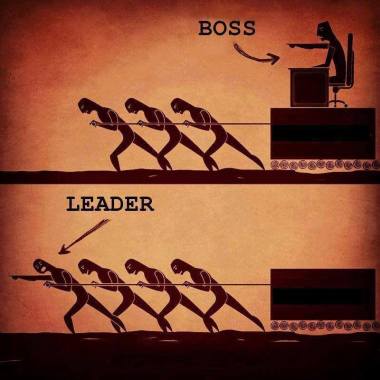
2. Their interest in the company does not stop with the unit they are heading. They want to know how all of the company’s departments affect one another, and they are constantly reaching beyond their specific area of influence.

3. They put heavy emphasis on vision, values, and motivation.

4. They have strong people skills.

5. They don’t accept the status quo.

Finding Good Leaders

What kind of person is best able to involve others and himself in good decision making? J. Keith Louden lists seven qualities:

1. The ability to look ahead and see what’s coming—foresight.

2. Steadiness, with patience and persistence and courage.

3. A buoyant spirit that in spite of cares generates confidence.

4. Ingeniousness, the ability to solve problems soundly yet creatively.

5. The ability to help others.

6. Righteousness, the willingness to do the right thing and speak the truth.

7. Personal morality of a quality that commands the respect of others. — Charles W.L. Foreman, “Managing a Decision Into Being,” from the Management Course for Presidents, pp. 3-4.

 
Leave a comment

Posted by on June 15, 2015 in Church


Examining the position of leadership


 placeforyou2mp3iconFacebook    YouTube  575273_579331012148169_1163921425_n

 ——————————————–

Don’t take a position of leadership in church unless you are prepared to be honest, pure, and loving in your lifestyle. Leadership is a privilege, and with privilege comes responsibility.

God holds teachers of His truth doubly responsible because we who lead are in a position where we can either draw people toward Christ or drive them away from Him.

This is illustrated in the life of the famous author Mark Twain. Church leaders were largely to blame for his becoming hostile to the Bible and the Christian faith. As he grew up, he knew elders and deacons who owned slaves and abused them. He heard men using foul language and saw them practice dishonesty during the week after speaking piously in church on Sunday.

He listened to ministers use the Bible to justify slavery. Although he saw genuine love for the Lord Jesus in some people, including his mother and his wife, he was so disturbed by the bad teaching and poor example of church leaders that he became bitter toward the things of God.

Indeed, it is a privilege to be an elder, a deacon, a Sunday school teacher, or a Bible club leader. But it is also an awesome responsibility. Let’s make sure we attract people to the Savior rather than turn them away.leaders

Lead Others

Actually, a manager needs the ability not only to make good decisions himself, but also to lead others to make good decisions. Charles Moore, after four years of research at the United Parcel Service reached the following conclusions:

1. Good decisions take a lot of time.

2. Good decisions combine the efforts of a number of people.

3. Good decisions give individuals the freedom to dissent.

4. Good decisions are reached without any pressure from the top to reach an artificial consensus.

5. Good decisions are based on the participation of those responsible for implementing them.*

One Man

Wherever anything is to be done, either in the Church or in the world, you may depend upon it, it is done by one man. The whole history of the Church, from the earliest ages, teaches the same lesson. A Moses, a Gideon, an Isaiah, and a Paul are from time to time raised up to do an appointed work; and when they pass away, their work appears to cease. Nor is it given to everyone, as it was to Moses, to see the Joshua who is destined to carry on his work to completion.

God can raise up a successor to each man, but the man himself is not to worry about that matter, or he may do harm. One great object of every religious teacher should be to prevent the creation of external appliances to make his teaching appear to live when it is dead.


1 Comment

Posted by on June 8, 2015 in Church


What do wives really want in a husband?


 placeforyou2mp3iconFacebook    YouTube JesusIsLordofthisWebSite575273_579331012148169_1163921425_n

 ——————————————–

Numerous men have pondered the questions, “Why does my wife say she’s unhappy? What does she want that I’m not doing?” Many of the men raising these questions have been blindsided by a wife’s confession that she’s not happy in the marriage.

marriage-what-does-your-husband-or-wife-want-1-638It can be confusing to try to figure out what a partner wants. And men, in particular, are having a harder time than ever because of changing expectations on the part of many females. In the past, it was enough for a husband to be a good provider, to have stable employment, and to bring home an adequate paycheck.

But now, that’s not enough anymore for many females. Enter the age of the “soul mate”—a word that signifies a deep bond and heart connection, someone who’s on the same “wave length” as his or her partner. Soul mates are compatible and bring out the best in each other. The relationship has satisfying intimacy and includes friendship, companionship, as well as love.

The connection between soul mates is sustained by emotional intimacy and the delight the partners share at having found each other. They share feelings easily and keep each other informed as to what they’re feeling, what concerns they’re wrestling with, what they’re worried about, and what their hopes and dreams are. Soul mates often say they feel a spiritual as well as an emotional connection to their partner.

A number of couples feel deeply connected at the beginning of their marriage. Both individuals are trying their best and are putting genuine effort and energy into the relationship. Even reticent, quiet males often make an effort to talk more and connect at this early stage in the marriage.

But, over time, the quality of the relationship can change—often for very understandable reasons, like parenting demands—and wives may begin feeling disconnected from their mates. Many husbands do not understand the importance of strengthening and nurturing emotional intimacy in a marriage. They may not feel comfortable sharing their feelings; they may not even be able to put their feelings into words and communicate them to their spouse.

The old model of marriage demanded a “real man,” and a “real man” didn’t cry, didn’t show his feelings, and didn’t talk about his feelings. He was strong, always in control of his emotions, and he solved his own problems without help from anyone else. While he was being emotionally strong, his wife was usually feeling increasingly distanced and disconnected from him.

“Well, what do women want, then? Do they want us to act like their female friends do?” The answer is both “yes” and “no.” No, they don’t expect their husbands to be as interested in every little aspect of certain things as their female friends are (planning a baby shower, deciding what dress to wear to a special event, for example). But yes, they do expect to get emotional support and sharing of feelings from their husbands on a regular basis.

 
Leave a comment

Posted by on June 4, 2015 in Family