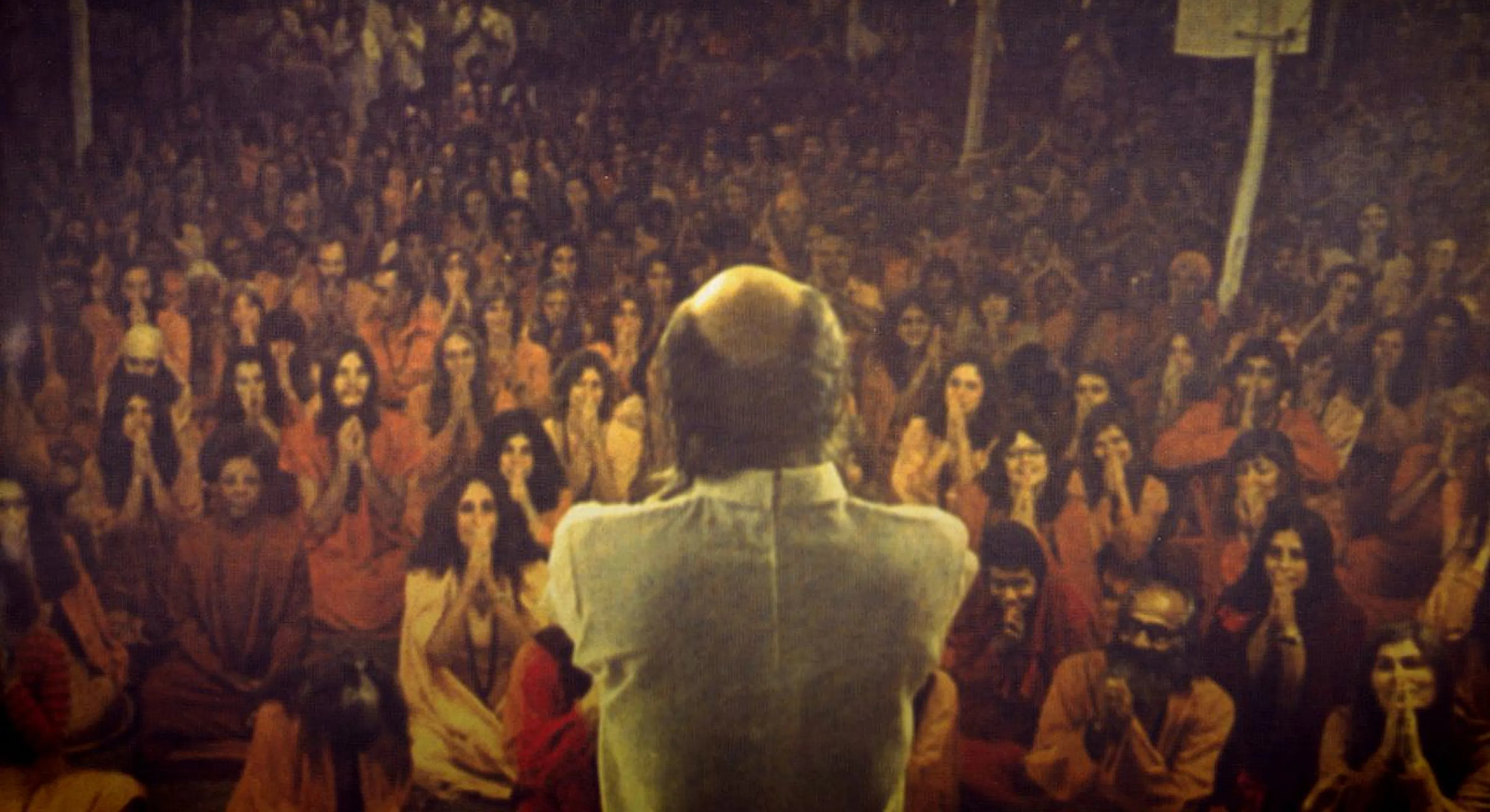
 Acts 15 may at first seem a strange text in which to study the characteristics of a cult. Although I did not immediately arrive at this conclusion, it slowly dawned on me that the “sect” of the Pharisees (15:5) actually was a cult and is therefore illustrative of today’s cults.
The term “sect” is not far removed from that of the term “cult.” The Pharisee “cult” was a small subset of the church in Jerusalem which insisted on the keeping of the law in addition to faith in Christ for salvation (15:1). The term “cult” seems a bit harsh, remember that these Judaizers had effectively redefined the gospel. The seriousness of this error is evident from the strong language Paul used to speak of such teachers and their fate:
I am amazed that you are so quickly deserting Him who called you by the grace of Christ, for a different gospel; which is really not another; only there are some who are disturbing[1] you, and want to distort the gospel of Christ. But even though we, or an angel from heaven, should preach to you a gospel contrary to that which we have preached to you, let him be accursed. As we have said before, so I say again now, if any man is preaching to you a gospel contrary to that which you received, let him be accursed (Gal. 1:6‑9).
Paul called this teaching “another gospel,” which resulted in followers deserting Christ. A curse is pronounced upon those who proclaim this “new gospel.” I think we can safely say that the term “cult” is not only appropriate, but even gracious, in the light of Paul’s appraisal of the Galatian heresy. It is a restatement of the error of the Judaizers in Acts 15.
In the first lesson on Acts 15 we stressed the issue of the purity of the gospel. The Jerusalem Council defined the gospel as promising men salvation by faith in the work of Christ alone, apart from law‑keeping. In this lesson we will seek to discover some of the characteristics of the Judaizers which are typical of cults in general. The purpose of this study is two‑fold. First, we will seek to clearly identify the cultist in order to avoid him (or her). Secondly, we wish to rid ourselves of unbiblical teaching since the characteristics of the cults are found (in slightly different forms and with more pious, biblical labels) in the true church of our Lord Jesus Christ. We will begin this lesson by defining the term “cult” and study some of the characteristics of a cult as evidenced in the message and methods of the Judaizers. In the final message on Acts 15, I will focus on culture as it relates to Christianity and to the cults.
Characteristics of a Cult
Cults are typically defined as groups that exert high levels of control over members through manipulative tactics, often centered around a charismatic leader or ideology. While the term “cult” can be subjective and not all new religious movements are harmful, experts identify several common traits that distinguish potentially destructive cults from benign groups. These characteristics are drawn from psychological, sociological, and anti-cult research frameworks.
Here is a list of key characteristics commonly associated with cults:
– Authoritarian Leadership: The group revolves around a central leader (often living) who demands unquestioning loyalty and is seen as infallible or divinely appointed. Members display excessive zeal toward this figure, and the leader is not accountable to any authorities.
– Psychological Manipulation and Control: Leaders use tactics like love-bombing, guilt, fear, or pressure to dominate members’ thoughts, behaviors, and emotions. This includes dictating personal decisions such as relationships, finances, or daily routines.
– Isolation from Outside Influences: Members are encouraged or required to cut ties with family, friends, or society, fostering dependency on the group. An “us vs. them” mentality portrays outsiders as enemies or unenlightened.
– Extremist or Absolute Beliefs: The group promotes doctrines that are rigid, black-and-white, and often require total commitment, including apocalyptic views or claims of exclusive truth. Dissent or questioning is not tolerated.
– Financial Exploitation: There is a strong emphasis on recruiting new members and extracting money through mandatory donations, tithing, or labor, with little transparency about how funds are used.
– Elitism and Special Status: The group views itself as superior or chosen, with members believing they have access to unique knowledge or salvation unavailable to others.
– Lack of Accountability and Transparency: Leaders avoid criticism, and there is no meaningful oversight or financial disclosure. Harmful actions may be justified as necessary for the greater good.
– Recruitment and Indoctrination Focus: Heavy emphasis on proselytizing, often using deceptive or high-pressure tactics to attract and retain members.
– Emotional or Physical Harm: Members may experience abuse, sleep deprivation, or other coercive practices, leading to mental health issues or difficulty leaving the group.
Definition of a Cult
The term “cult” is certainly loaded with emotion and bias. While we may find it easy to identify particular groups as cults, no group readily uses this term of itself. It is important for us to derive a precise meaning for the term “cult.” Webster defines a cult as, “A system of religious worship or ritual … devoted attachment to, or extravagant admiration for, a person, principle, etc.”[2]
Ironically, Webster chooses to use nudism as an illustration of a cult. Combining the two parts from Webster’s dictionary provides the following definition of a cult: A cult is a religious group, bound together by their attachment to a person or a principle.
From the vantage point of evangelical Christianity, we can make a more specific definition: A cult is a perversion of the gospel, based upon an unholy devotion to a person a principle, or both.
It is important for us to understand the difference between what is a “cult” and apostasy. A cult tends to be a rather small group, committed to a few very highly regarded principles, often led by a very “charismatic” (enthusiastic, dynamic, attractive) person. The cultist tends to view everyone outside the group as unbelievers. The cult is usually marked by a very strong, centralized authority. Apostasy is more easily defined in terms of what it is not. Apostasy denies authority, the authority of the Person of Christ and the Scriptures. Apostasy tends to shy away from anything firmly believed, other than the right to believe what you wish. While the cultist sees himself as one of the elect few, the apostate sees himself as one of the many, the majority. Both the cult and apostasy can lead a man to a Christless eternity. The former strongly believes the wrong thing; the latter believes in little or nothing. By this definition, the Unitarian movement would be an apostate religion; the Moonies are a cult.
It is not difficult then to understand why the “sect” of the Pharisees found in Acts 15:5 should be called a cult. Their commitment was more the preservation of Judaism than anything else. In the process of seeking to preserve Judaism, the Judaizers either deliberately or unwittingly perverted the gospel of Jesus Christ from a gospel of salvation by faith to one of faith plus works. As we consider the characteristics of this “sect,” we find that these same earmarks are evident in the cults of subsequent generations.
The Characteristics of a Cult
The Men of the Cult
The men who came to Antioch from Judea were true Christians, members of the strict Pharisee sect (Acts 15:1,5). There are two striking features of these men which seem to be typical of the cultist. First, these men were dogmatic. The message they presented was a mandate: “Unless you are circumcised according to the custom of Moses, you cannot be saved” (v. 1). The same authoritarian tone can be seen in verse 5: “It is necessary to circumcise them, and to direct them to observe the Law of Moses.”
Because of their dogmatism, they were unassailed by the strong resistance of Paul and Barnabas (15:2). From verse 5 I conclude that their defense was based upon their Pharisaic interpretation of the Old Testament Law. Verse 24 strongly implies that these men either implied or claimed apostolic approval of their message and ministry. The authority which these men falsely claimed, and their dogmatism implied, seemed convincing to some.
Arrogant dogmatism has always characterized false teaching. Satan did not suggest that God might be wrong in forbidding Adam and Eve to eat of the forbidden fruit; he dogmatically denied that Eve would die: “And the serpent said to the woman, ‘You surely shall not die!’” (Gen. 3:4). The same arrogant confidence is to be found in Satan’s counterfeit apostles:
But what I am doing, I will continue to do, that I may cut off opportunity from those who desire an opportunity to be regarded just as we are in the matter about which they are boasting. For such men are false apostles, deceitful workers, disguising themselves as apostles of Christ (2 Cor. 11:12‑13).
… Wanting to be teachers of the Law, even though they do not understand either what they are saying or the matters about which they make confident assertions (1 Tim. 1:7).
And especially those who indulge the flesh in its corrupt desires and despise authority. Daring, self‑willed, they do not tremble when they revile angelic majesties, whereas angels who are greater in might and power do not bring a reviling judgment against them before the Lord (2 Pet. 2:10‑11).
In 2 Corinthians 11 Paul tells us two things about the false apostles which are very instructive:
For you bear with anyone if he enslaves you, if he devours you, if he takes advantage of you, if he exalts himself, if he hits you in the face. To my shame I must say that we have been weak by comparison (2 Cor. 11:20‑21a).
First, these false apostles were authoritarian, even though they were neither authentic nor authoritative. In contrast, those who are authoritative are meek. Moses was the “meekest man on the face of the earth” (Num. 12:3). Our Lord said that He was “meek and lowly in heart” (Matt. 11:29). Paul could appeal to the Corinthians in “the meekness and gentleness of Christ” (2 Cor. 10:1). Paul told Timothy to deal with those who went astray with gentleness (2 Tim. 2:25). Peter taught elders not to “lord it over” those under their care (1 Pet. 5:3).
Second, the false apostles were authoritarian because the Corinthians liked to be “led” that way. The Corinthians loved to be lorded over. They took great pride in the one who led them (cf. also 1 Cor. 1:12). Then, as now, many identified a leader by his “macho,” rather than by his meekness. This is why many of those who choose a cult do so because of the domineering leader by whose authority the cult is held together.
One of the strongest attractions of the cults—authoritarian leadership—is also one of the clearest evidences of error. People are attracted to the cults because they find authoritarian leadership, a leadership which they desire, but which is unbiblical. The difficulty is that all too often truly evangelical churches and causes are led in the same dictatorial fashion as the cults. In an article entitled “The Power Abusers,” Ronald Enroth has written:
The popularity of evangelical gurus, new‑age cults, and superpastors says a number of things about our society as well as rank‑and‑file evangelicalism. First, there are many people in our rapidly changing and often confusing world who have real dependency needs. They are attracted to authoritarian movements, Christian or otherwise, because these movements offer black and white, clear‑cut answers (or systematized approaches) to life’s problems. Moreover, the leaders of such organizations convey a sense of solidity, a feeling of being on top of problems, of being in control of the situation. In a word, these groups offer security. For people who have lacked positive structure in their lives, who have difficulty making decisions or resolving conflicts or who are just plain uncertain about the future, these movements/churches/programs are a haven.[3]
Biblical leadership is as different from cultic leadership as authoritarian leadership is from that which is authoritative. The ministry of our Lord and of His apostles was authoritative, but not authoritarian. Do you remember the response of the crowds after hearing our Lord Jesus?
The result was that when Jesus had finished these words, the multitudes were amazed at His teaching; for He was teaching them as one having authority, and not as their scribes (Matt. 7:28‑29; cf. also 9:8; Luke 4:32).
As Jesus finished the Sermon on the Mount, the response of the crowd was recorded in the above passage. Jesus had authority; the scribes were authoritarian. What is the difference? It wasn’t that Jesus pounded his fist harder and yelled louder. Indeed, one finds Jesus “preaching” little and “teaching” much. He never demanded that people follow Him.
Jesus found His authority in the Scriptures and in the fact that He was obedient to the will of His Father, while the scribes maintained their authority as the interpreters of the Scriptures. Jesus had authority because He was in submission to authority. He was in submission to the will of the Father. He neither did nor taught anything contrary to the will of His Father (cf. John 8:29, 38, 42, 54). He was also subject to the law (cf. Matt. 17:24‑27; Gal. 4:4). He acknowledged the authority of the government, even to carry out execution (John 19:8‑11). Jesus even spoke of the scribes and Pharisees as having certain authority (Matt. 23:1‑3).
The scribes and the Pharisees, on the other hand, seemed to acknowledge no authority other than their own. As Jesus said, they had “seated themselves in the chair of Moses” (Matt. 23:1). When our Lord’s teaching contradicted that of the scribes and Pharisees, they challenged “by what authority” He acted and taught (Matt. 21:23; Mark 2:7; 11:28; Luke 20:2). In their arrogance, they refused to acknowledge even the present reality of their bondage under Roman rule (John 8:33).
The issue of authority versus authoritarianism was one that our Lord spoke often about with His disciples. Their authority as His apostles was to be evident in a different kind of leadership:
“You know that those who are recognized as rulers of the Gentiles lord it over them; and their great men exercise authority over them. But it is not so among you, but whoever wishes to become great among you shall be your servant; and whoever wishes to be first among you shall be slave of all” (Mark 10: 42‑44).
The kind of leadership our Lord summoned was such that no man would take upon himself the authority, the honor, or the obedience which was due Him:
“But do not be called Rabbi; for One is your Teacher, and you are all brothers. And do not call anyone on earth your father; for One is your Father, He who is in heaven. And do not be called leaders; for One is your Leader, that is, Christ” (Matt. 23:8‑10).
Peter conveyed this same spirit when he exhorted Christians to submit to constituted authority (1 Pet. 1:13,18; 2:1; 5:5), and instructed leaders to be sensitive and gentle in their oversight (3:7; 5:3).
The life and ministry of the Apostle Paul is an excellent example of biblical authority. Paul’s teaching was authoritative, but not authoritarian. It was not based upon fleshly appeal or flashy devices (1 Cor. 1:17; 2:1). He did not come in arrogant confidence, but in “fear and trembling” (1 Cor. 2:3). Paul did not insist upon his rights as an apostle (1 Cor. 9:1‑18). His ministry was one of self‑sacrifice and gentleness (cf. Acts 20:33‑35; 2 Thess. 3:6‑9). His relationship to the church could be likened to that of a nursing mother to her child (1 Thess. 2:7).
The attitude of men toward authority provides us with a significant clue as to their authenticity as servants of our Lord. It was one of the strongest appeals Paul could make in defending his claim of apostleship against those who were false apostles (cf. 1 Cor. 4; 2 Cor. 11). Those who are authoritarian should be immediately suspect. Those whose authority is based upon the Word of God and which is evidenced by humility and gentleness are much more likely to be authentically Christian.
Unfortunately, some evangelical leaders are authoritarian in their roles as pastors or elders. An authoritarian pastor only conditions the weaker members of the flock to look for a strong central leader who can tell them how to act, make their decisions for them, provide them with security, and do their thinking for them. This practice is wrong, because it is an unbiblical method of leadership.
The structure of Community Bible Chapel is designed to avoid authoritarianism. Since our Lord Jesus Christ is the head of this church, we do not have a pastor who has a centralized authority over the church. We are led by a plurality of elders. The elders’ decisions are not viewed as a direct edict from our Lord, who alone is the head of the church. The aim of our leadership is to point the congregation towards Christ, even as John the Baptist did to those who followed him (cf. John 1:35‑37). In effect, the elders are something like sheep dogs, whose task is to keep the sheep following the one true shepherd, Jesus Christ. They do not claim to know God’s will for each member’s life, nor do they wish any to have an unhealthy dependence upon them instead of upon Christ. Their only authority is that which the Word of God itself contains. To the degree that the decisions and leading are biblical, the elders have biblical authority. We believe that our structure is correct, first and foremost, because it is biblical, and secondly, because it is practical. While we do not always succeed, we strive to avoid the excesses and errors which the Bible condemns.
While it is true that there are evangelical leaders who have taken too much authority upon themselves, this often happens because it has been thrust upon them by church members who do not wish to search the Scriptures for themselves, or to find their security only in the Lord. Because of our commitment to a less authoritarian leadership, our elders are often criticized. Sometimes this criticism is correct, especially when they have failed to act decisively in a matter that is their responsibility. However, often criticism is based upon disappointment due to the failure of offering the kind of authoritarian leadership which can be found elsewhere, sometimes in evangelical churches and organizations, and nearly always in a cult.
These men from Judea were not only arrogant and authoritarian, they were also autonomous. They refused to recognize the authority of either Paul or Barnabas. From the fact that the Judaizers persisted in promoting legalism, we can safely assume that at least some of the Pharisee party may have continued to hold and to advocate their heretical view of salvation by faith plus law‑keeping. Authoritarian men are also autonomous—they refuse to accept the authority of others.
When the false teachers from Judea arrived at Antioch with the “new gospel,” that the Gentiles could only be saved by faith and law‑keeping, Paul and Barnabas immediately confronted them. These men refused to acknowledge the authority of these genuine apostles. In contrast, Paul was not authoritarian in the handling of this error. The church at Antioch made the decision to send Paul and Barnabas and others to Jerusalem (15:2). It was the apostles in Jerusalem who finally settled the matter. While Paul was a man of authority, he was also under authority—something not seen in the cultists, then or now.
There are several tell‑tale signs of this cultic, autonomous spirit which can be found today, as then. First, those who are authoritarian never find it necessary to read or regard the viewpoint of others. They reject the teaching gift of fellow‑Christian contemporaries. They reject the insight and wisdom available from commentaries, and they ignore the lessons which can be learned from the history of the church. The end result is that they ignore the concept of the church as the body of Christ by making themselves independent of it. This is often a characteristic of those who possess gifts which are more prominent (cf. 1 Cor. 12:20‑27).
A second indication of an autonomous spirit is the creation of a vocabulary which is not biblical, but which is known only to the “elect” who sit under their ministry. Only the initiated understand these “gnostic” labels, and so one who is limited to mere biblical terminology is left outside the circle of those who can comprehend, at least until he or she has attended long enough to interpret this in-house jargon.
It is my conviction that biblical concepts are best conveyed by biblical terminology. The only reason for creating new terminology is to set apart the teaching of one man (or a small minority, such as a cult) so that it is distinct from the teaching of others. Let us leave the truth of God’s Word to the terms which God Himself has chosen.
There is a hybrid version of this same autonomous spirit which is subtly incorporated in the expression “independent Bible church.” Many of us use this label to describe our church, and there is a sense in which this is true. We are a church which is based upon the Bible. We are independent of denominational ties and affiliations. However, a grave danger exists as well. We dare not be independent of all others in our interpretation of Scripture, in a way that suggests that only we have found the truth and proclaim it. We dare not be independent of other churches in our sense of obligation to them. The distinguishing mark of Christians and of churches is their unity, not their independence. Thus, the church at Antioch expressed its unity with the church in Jerusalem in several ways. It accepted Barnabas when he was sent to them (Acts 11:22‑24). It sent money to the “brethren in Judea” when word of the famine was prophesied (Acts 11:27‑30). It also appealed to the church leaders in Jerusalem when the gospel was challenged by the Judaizers (Acts 15:1‑3). The autonomy of the local church is a doctrine which needs to be very carefully defined and practiced. It should hardly be the watchword. Unity is the distinguishing mark of the church which Paul consistently stressed (cf. Eph. 4).
In addition to the arrogant dogmatism and the autonomous spirit of the false teachers who had troubled the church at Antioch, there was the further ingredient of their anonymity. These men were traveling teachers like many in that day. They had come down from Judea, and they had given the impression that their authority was either apostolic or at least sanctioned by the apostles in Jerusalem—something quickly denied by the apostles in their letter to the Gentile churches (Acts 15:24).
The ultimate basis for Paul’s authority was his apostleship (cf. Rom. 1:1; 1 Cor. 1:1; 9:1; 2 Cor. 1:1; Gal. 1-2). The defense of his apostleship was frequently based upon his life and ministry among the churches to whom he ministered (cf. Acts 20:33‑35; 1 Cor. 1:17–2:5; 2 Cor. 3:1‑4; 6:1‑13; 1 Thess. 1-2). A ministry cannot be isolated from the life of the one who ministers. Therefore, the pastoral epistles prescribe the qualifications of elders and deacons in terms of a man’s character.
While a man of known character occasionally falls into error (cf. Acts 20:29‑30; 1 Tim. 5:19‑20; 3 John 9), false teachers tend to be itinerant and thus the character of their life and ministry is undocumented. The false teachers detected by the Ephesian church seemed to be of this latter variety (Rev. 2:2). I am quite frankly amazed and disappointed by those who follow after leaders who have charisma, but not character. They may claim great miracles, but these are seldom documented. They may have a glorious testimony, but it can never thoroughly be corroborated. In contrast it is significant that the Scriptures list very specific requirements for church leaders (1 Tim. 3; Titus 1). I would like to suggest to you that the cultist can most easily be detected by his lifestyle. Look at his bank account or in his bedroom, and you will often see the discrepancy between what is taught and what is practiced.
Harold Bussell speaks of the cult‑like practice of putting the pastor and church leaders on a pedestal, giving the congregation the impression that they live their lives above the hum‑drum level of the mediocrity of Christianity.[4] It is little wonder that so many Christians seek a seminary education and try to leave secular work for that which is “spiritual” (full‑time Christian work), thinking that those who are thus occupied have a holier life as a result. When “professional Christians” give the impression that they live somehow above the temptations and failures of mortal men, they lead many astray and cause some who sincerely desire holiness to become candidates for the cults.
Bussell therefore urges pastors and Christian leaders to be open and honest about their own failures and frustrations in their spiritual walk. I agree wholeheartedly, except that some churches are not willing to have such a pastor on their staff, nor are congregations willing to admit that their leaders have weaknesses, too.
Fortunately, that is not the case at Community Bible Chapel. I am grateful to each member of our congregation for having realistic expectations of its staff and elders. The cultist will make much of this honesty, however, for he will claim to live his (or her) life above such mediocrity. No such minimal level of spirituality for him! Those gullible enough to believe him will flock to his group to find that higher level of spiritual perfection. The point I am making here is that while we need to be truthful in every area of our spiritual lives, this does not guarantee against deception or error, for Satan would just as easily distort truth as to emphasize error.
The Message of the Cult
Through the diverse message of the various cults, Satan masterfully markets his error. He learned, long before McDonalds, that “have it your way” is an appealing slogan. While there is only one way into God’s heaven, there are any number of ways to the Hell prepared for Satan and his followers. We should never think that there is only one (or a few) erroneous doctrinal deviations. There are many. For those who are inclined toward asceticism, Satan fashions a system which is legalistic. For those who are hedonistic (pleasure oriented), Satan offers a system based on liberty. In either case, it is error.
One of the dependable features of any cult is its distortion of the truth of the gospel, moving either in the direction of legalism (faith plus a system of rules to keep) or libertinism (no rules at all!). The cult of the Pharisee party which sought to mislead the saints in the church at Antioch tampered with the gospel by making salvation a matter of faith and works.
The message of the cults always tends toward narrowing the elect to their own ranks, while excluding all others. Let me illustrate what I mean. One cult leader I heard recently spoke of the terrible sin of those who make salvation available to nearly anyone. Such people, he said, widened the door of salvation. Believing anything sincerely is not sufficient for salvation. As I mentioned above, those who hold such doctrines are not cultic, so much as they are apostate. The cult leader was right to oppose the widening of the door of salvation. He even quoted the words of our Lord to justify his own position:
“Enter by the narrow gate; for the gate is wide, and the way is broad that leads to destruction, and many are those who enter by it. For the gate is small, and the way is narrow that leads to life, and few are those who find it” (Matt. 7:13‑14).
The difficulty with the cultist’s use of these words is that they are applied in such a way as to make the door of salvation too narrow. They pervert this passage by applying it only to their little group, who are the only “elect” who will enter into God’s heaven. The Judaizers in Acts 15, for example, felt that the door of faith was too wide, since it gave entrance to both Jews and Gentiles. They were trying to narrow the “door” to make it only a Jewish gate. If the Gentiles were to be saved, let them become Jewish proselytes. This is cultic.
While the message of each cult will differ greatly from other cults, each will redefine the gospel in such a way as to narrow the doorway to heaven so that only their particular group can enter in. We should expect error to be taught as truth in so many different forms that those of every temperament and every preference will find a false “truth” to believe. Those who are most vocal about error on one extreme are often guilty of error at the other.
Apostasy tends to expand the arena of truth to the point where almost any belief structure is acceptable. The cultist turns in the opposite direction. His doctrines usually include a very narrow spectrum. The cultist tends to capitalize on certain doctrines, a fact which is in accordance with Webster’s definition of a cult. For the Judaizer, the Old Testament law was the limit of his depth of field. In Acts 15:1, Luke was able to sum up their creed in a sentence. The narrowness of their theology is camouflaged by the alleged “depth” of the things they teach. This is only a facade, for their gnostic truth, hidden from the “hoi polloi,” was mere mysticism and speculation (cf. 1 Tim. 1:3‑7). In contrast, Paul could tell the Ephesian elders that he had taught “the whole purpose of God” (Acts 20:27).
Here is a very real danger for authentic Christianity, as well as a warning regarding the counterfeit cults. Evangelical churches, organizations, and institutions are often perceived to be in competition with their fellow‑churches or organizations. Consequently, we tend to stress our distinctives, rather than those things which we hold in common with orthodox Christianity. Our emphasis, then, falls upon matters which are more incidental than those which are fundamental. Whether this be prophecy, spiritual gifts, or the sovereignty of God, let us remember that “all Scripture is profitable” (2 Tim. 3:16).
The Methods of the Cults
While the message of the cults can vary greatly, their methods are incredibly similar. In speaking of the methods of the cultists, Enroth states, “The commonality of certain means to certain ends is so striking, however, that one is tempted to conclude that conspiratorial forces are at work. The tactics and techniques seem to be taken from the same mold.”[5]
First, the cults are deceptive. For the cultist, the end justifies the means. The cultist’s cause is so great and the consequences of not joining the cult are so severe, that unethical methods are justified.
The deception of the Judaizers in Acts 15 is apparent. I see a subtle but significant change in the message preached by the Judaizers in verse 1 and their position which was defined and defended before the apostles in verse 5. I believe that there was deliberate deception involved. These false teachers did not tell the apostles that keeping the custom (v. 1, rather than the “Law” of v. 5) of Moses (which would include the traditions of the Pharisees), was necessary for the salvation of the Gentiles. They simply told them that it was necessary for the Gentiles to be instructed to keep the law of Moses. If this deception is not clear, it is obvious that these men who came down from Judea either stated or implied that their preaching was merely an echo of the doctrine of the apostles in Jerusalem from where they had come. Therefore it was necessary for the leaders of the Jerusalem church to renounce these men and their teachings as unauthorized and unbiblical (v. 24).
The cultist has little difficulty justifying deception, even though he may readily accuse his opponents of this very evil. Those who fall into the cults seldom do so on the basis of what that cult actually practices or believes, but rather on what they perceive it is.
Lest you and I become proud, we are often guilty of deception as well. The “religious surveys” of not long ago were hardly what they appeared to be. They were a device to enter into a conversation designed to then lead into a witnessing opportunity. Even the gospel message itself is sometimes modified so that it will appeal to an unbeliever, but modified in a way that is not entirely truthful. Let us listen to the words of the Apostle Paul.
For we are not like many, peddling [lit. corrupting] the word of God, but as from sincerity, but as from God, we speak in Christ in the sight of God (2 Cor. 2:17).
But we have renounced the things hidden because of shame, not walking in craftiness or adulterating the word of God, but by the manifestation of truth commending ourselves to every man’s conscience in the sight of God (2 Cor. 4:2).
God’s truth should not be “peddled” in a deceptive way.
The cults attack the church, seeking to convert its members, especially those who have not yet come to the “full truth.” Do you notice in Acts 15 that the Judaizers did not go about as Paul and Barnabas, preaching the gospel to the lost and planting churches? Instead they went to the church, seeking to save its members from the true gospel and to convert them to what was another gospel (cf. Gal. 1:6‑10). Paul warned the Ephesian elders that this would happen, even by their own members:
“I know that after my departure savage wolves will come in among you, not sparing the flock; and from among your own selves men will arise, speaking perverse things, to draw away the disciples after them” (Acts 20:29‑30; cf. Matt. 24:24; 2 Tim. 2:14‑18; Titus 1:10‑11).
The cultist has an evangelistic zeal to convert others, but his key target is often those who have already been born again and are members of a church. This should come as no surprise, for the cultist is peddling perverted Christianity, and his principle target must therefore be one who has come to faith. A distorted gospel has a greater appeal to a believer than to the unbeliever.
Some of us who have been exposed to consistent Bible teaching may feel that we are immune to the attraction of the cults, since we have a greater maturity. A. W. Tozer warns us that it can be the zealous Christian who is especially vulnerable to the cultist:
Strange as it may seem, the danger today is greater for the fervent Christian than for the lukewarm and the self‑satisfied. The seeker after God’s best things is eager to hear anyone who offers a way by which he can obtain them. He longs for some new experience, some elevated view of truth, some operation of the Spirit that will raise him above the dead level of religious mediocrity he sees all around him, and for this reason he is ready to give a sympathetic ear to the new and the wonderful in religion, particularly if it is presented by someone with an attractive personality and a reputation for superior godliness.[6]
The cults always pervert the Scriptures. A wise pastor friend of mine once told me, “The cults are either the Bible plus or the Bible minus.” The cultist either adds to the Scriptures or he will subtract from them. Often, the cultist will do both. The Pharisee party which was represented in Antioch and the Jerusalem Council tended to focus only upon the Pentateuch, the first five books of the Law. It was not by accident that James chose to prove his point from the Prophets (Acts 15:15‑18), citing from the Book of Amos specifically. We should learn from the apostles that the Bible must be interpreted as a whole, rather than individual verses being used as prooftexts.
Distorting biblical revelation is one of the most common methods the cultists use to establish their doctrines. To tamper with the Scriptures requires some basis of authority. Often, the cult leader must resort to the claim of apostolic authority. That is why the false teachers of the New Testament are so frequently referred to as “false prophets” or “false apostles” (Matt. 24:11,24; Mark 13:22; Luke 6:26; Acts 13:6; 2 Cor. 11:13; 2 Pet. 2:1; 1 John 4:1; cf. Rev. 2:2). Such a position enables the false teacher to proclaim a “new revelation.” One method is to claim a “new revelation” because these are the last days. A. W. Tozer warns:
Over the last half‑century quite a number of unscriptural notions have gained acceptance among Christians by claiming that they were among the truths that were to be revealed in the last days. To be sure, say the advocates of this latter‑daylight theory, Augustine did not know, Luther did not, John Knox, Wesley, Finney and Spurgeon did not understand this; but greater light has now shined upon God’s people and we of these last days have the advantage of fuller revelation. … The Lord is getting His Bride ready for the marriage supper of the Lamb. We should all yield to this new movement of the Spirit. So they tell us.
The truth is that the Bible does not teach that there will be new light and advanced spiritual experiences in the latter days; it teaches the exact opposite. Nothing in Daniel or the New Testament epistles can be tortured into advocating the idea that we of the end of the Christian era shall enjoy light that was not known at its beginning. Beware of any man who claims to be wiser than the apostles or holier than the martyrs of the Early Church. The best way to deal with him is to rise and leave his presence. You cannot help him and he surely cannot help you.[7]
We should expect these new revelations because Paul tells us that in the end times men shall turn aside from what they have already learned, hoping to find some falsehood which suits their fancy:
For the time will come when they will not endure sound doctrine; but wanting to have their ears tickled, they will accumulate for themselves teachers in accordance to their own desires; and will turn away their ears from the truth, and will turn aside to myths (2 Tim. 4:3‑4).
The Bible tells us many of the ways in which men will attempt to pervert the Word of God. One method is outright denial. Thus, Satan denied God’s warning that Adam and Eve would die if they partook of the forbidden fruit (Gen. 3:4). False teachers will deny the Savior of whom the Scriptures speak (2 Pet. 2:1). Others will distort or dilute the Scriptures (2 Cor. 2:17; 4:2; 2 Pet. 3:16). Some will add to them or take away from them (cf. Rev. 22:18‑19). Still other will doubt the Word, scoffing at its promises or warnings (2 Pet. 3:3‑4). Jim Sire, in his excellent book, Scripture Twisters: Twenty Ways the Cults Misread the Bible, describes some of the most common ways the Scriptures are misread. I would strongly recommend this book.
It is difficult to underestimate the importance of the Scriptures to our spiritual lives. It is by them that the message of the gospel is made known to men (2 Tim. 3:15; James 1:21). By them we are sanctified and equipped for ministry (John 17:17; 2 Tim. 3:16‑17; 2 Pet. 1:4). It is for this reason that Satan will make an all‑out effort to deny or distort the truth of the Word of God.
There are several passages which provide us with principles which will help us to avoid Satan’s schemes in regard to the perversion of God’s Word. In 2 Peter 1, Peter, knowing that his days were numbered, reminded his readers of those truths which they had already learned (cf. vv. 12‑14). It is not “new” revelation which they needed so much as to remember and practice the teaching which they had already learned. The same emphasis is found in Paul’s final epistle to Timothy, where his parting words of exhortation are recorded (cf. 1:13‑14; 2:2‑3; 3:14‑17; 4:1‑5). These verses indicate the most likely error is that men will turn from the truth they have once learned. It is not “new” revelation which is needed by Christians at the end of the age (or any other time), but to remember and to practice the old.
Peter stressed two other truths regarding the Word of God in his second epistle. The Word of God is a certain word, a Word to which God Himself gave testimony, and of this testimony Peter was a witness. The Scriptures are a sure word from God, not cleverly devised tales (2 Pet. 1:15‑19). Furthermore, since God’s revelation was given to men through those who were guided by the Holy Spirit, the interpretation of God’s Word should never be novel and unknown to the Christian community at large (1:20‑21). We should expect that a proper interpretation of God’s Word has the confirming testimony of godly men through the ages. No new or novel interpretation is to be expected, just as no new revelation is expected.
In John 16:13 our Lord promised that the Holy Spirit would guide the apostles into all truth. While this promise applied primarily to the apostles, we are given assurance elsewhere that the Holy Spirit will guide us as to what God’s Word means:
These things I have written to you concerning those who are trying to deceive you. And as for you, the anointing which you received from Him abides in you, and you have no need for any one to teach you; but as His anointing teaches you about all things, and is true and is not a lie, and just as it has taught you, you abide in Him (1 John 2:26‑27).
The false teachers who seek to deceive the saints go beyond the Scriptures, ultimately denying the Savior (cf. 1 John 2:18‑23). John would have us know that we do not need to have the “inspired insight which provides a whole new understanding of the Scriptures,” which the cultist claims. The Holy Spirit is able to teach us God’s Word without the additional “lens” of the cultist, usually the result of his claim of additional revelation from God.
This does not contradict the instruction of the New Testament that some men have the gift of teaching and can help us better understand God’s Word. John is saying that anyone whose teaching is alleged to open up a “whole new world” of revelation is suspect. Those who are gifted teachers should only motivate and facilitate our study of the Bible. It is ultimately the Holy Spirit who is our teacher.
Conclusion
In conclusion I want to tell you how seriously we take the matter of teaching the Scriptures at Community Bible Chapel. Each week I spend approximately 30 hours reading, studying, praying, and writing the messages which I deliver on Sunday. I do this because it is my personal priority in ministry, and also the priority of the elders. Every Thursday morning several men (including two other elders) meet to discuss the passage which I will preach, along with an evaluation of the sermon from the previous week. I am very hesitant to include anything in my sermon which has been questioned during this weekly preaching seminar. In addition to the seminar, a very capable student of Scripture edits the printed manuscript before it is printed and distributed.
It has been my purpose in preaching to reveal the process of my Bible study as well as the product of it. This is because I am committed to the responsibility of each believer to study the Word of God for himself and to be subject, in the final analysis, to God’s Word, not merely to the interpretation of a single man. I strive to preach each passage according to its mood in context. I attempt to be as dogmatic on each point as the text is, and as it is confirmed by the rest of the Bible. I make an earnest effort to tell you what I do not know, as well as what I think I know. Many would like me to be authoritarian at points where I, in good conscience before God and His revealed Word, cannot be. I realize that the cultist has a ready answer for every question. I do not.
It is the desire of the elders of this church that you will become a diligent student of the Word of God, considering and faithfully comparing what is taught to what the Word of God says. This, we believe, is the responsibility of every believer-priest. We cannot, we dare not, place a preacher between you and God as the mediator and mouthpiece of God.
May God grant you the desire and the diligence to be the student of Scripture He has commanded you to be.
Cults, Christianity, and Culture Acts 15:1‑31
At first glance the subject of culture may seem innocuous, but this is far from the truth. One treads on very thin ice when addressing the subject of the relationship of Christianity to culture. There are several reasons for my apprehension concerning this subject. First, culture is something in which we are immersed and consequently we are rarely conscious of it. It is something akin to asking a fish what it thinks about water, or a bird about the atmosphere. Culture is the atmosphere in which we live without consciously thinking about it. Did you think about why you drove on the right‑hand side of the road on the way to church instead of on the left as people of other countries do? Did you think about sitting beside your wife as you entered the auditorium, instead of segregating men and women as practiced in some churches in India? These examples may help you to see that we don’t think a great deal about culture—our own culture at least. We are only aware of our cultural practices when we are confronted with opposing customs of other cultures. Culture is assimilated, almost by osmosis, not by instruction. Since cultural traditions are observed without consideration, we tend to accept them without thinking of them.
Second, culture is often intertwined with strong feelings of right and wrong which we have held as Christian convictions, rather than as personal or societal preferences. The use of alcohol and tobacco, the enjoyment of the theater or of television, and the issue of dancing are just a few issues often included in the list of Christian “don’ts.” A study of the history of the church reveals that these particular prohibitions have not characterized Christian values with any degree of consistency. The reformers, to whom we appeal in matters of soteriology, had no problem with smoking or drinking. It was only some years later that these were considered sins and added to the list of Christian taboos. At times, even coffee and tea were on the list of forbidden items for Christians.
Third, culture is not universal. We know that, of course, at least in principle. We expect people from foreign countries to think, to act and to dress differently. Yet we are not always willing to recognize different cultures, even within our church. One significant contributing factor to the so‑called “generation gap” is the difference of culture which exists between these age groups. If you don’t believe me, listen to the music which “turns on” your children, as opposed to what you enjoy. Lawrence Welk is not the name of the game for any but the geriatric generation.
If I am correct in concluding that culture is often unconscious and yet a matter of strong conviction, you can see why I approach this subject with fear and trembling. When a matter is discussed about which people have very strong feelings and yet have not really seriously contemplated, there is bound to be some reaction. In light of this, I ask that you make a sincere effort to withhold judgment until you have considered what I am about to say, and until you have had the time to carefully search the Scriptures on these matters. If you cannot agree with my conclusions, I will not be offended, so long as you have been honest with the Scriptures and with yourself.
Christianity and Culture
On the surface, culture may hardly seem to be an issue in the debate between the apostles and the Judaizers in Acts 15. Indeed, culture is not the issue for the issue faced by the Jerusalem Council was the gospel.[8] The implications of the decision of the Council, however, concern culture and its relationship to Christianity. There is a great deal of difference between an issue and its implications. For instance, the issue in the Supreme Court Case of Roe v. Wade was whether or not an unwed mother, pregnant due to rape, had the right to an abortion under the Constitution of the United States. The implications of that decision went much farther, however, giving any woman in the United States the right to have an abortion for virtually any reason.
In our first lesson on Acts 15 we dealt with the issue of the definition of the gospel. Renouncing the “gospel” of the Judaizers, the Jerusalem Council concluded that Gentiles were not subject to the Old Testament law as a condition for salvation. The Gentiles, like the Jews, were saved by faith alone. The law had never been able to save, but only to condemn. The principle of grace excluded law‑keeping as a condition for salvation. The salvation of the Gentiles was regarded as consistent with the words of the Old Testament prophets (Acts 15:6‑19).
While the Gentile converts were not required to keep the law and to adopt a Jewish lifestyle, Jewish Christians were not prohibited from living according to the law as long as they understood this did not contribute in any way to their salvation. Consequently, the Jewish Christians, including Paul, continued to observe the law, and in so doing, upheld their Jewish culture (cf. Acts 21:24). In no way was this contrary to the gospel or the decision of the Council.
The four prohibitions of verses 20 and 29 are considered a necessary obligation for the Gentiles,[9] yet they fail to adequately summarize the mass of New Testament Scriptures pertaining to the godly lifestyle required of Gentile Christians. Such matters were not intended to be taught here and included in the letter sent by the Jerusalem Council, but were rather the subject of the epistles:
This I say therefore, and affirm together with the Lord, that you walk no longer just as the Gentiles also walk, in the futility of their mind, … But you did not learn Christ in this way, if indeed you have heard Him and have been taught in Him, just as truth is in Jesus, that, in reference to your former manner of life, you lay aside the old self, which is being corrupted in accordance with the lusts of deceit, and that you be renewed in the spirit of your mind, and put on the new self, which in the likeness of God has been created in righteousness and holiness of the truth (Eph. 4:17, 20‑24).
If the four prohibitions are not conditions for salvation, and they are not the totality of God’s standards for Gentile conduct, what was the purpose of the Council in including them here? The answer to this question is the key to our message. The gospel of Jesus Christ saved both Jews and Gentiles and brought them together in a new and unique way, removing the barriers which had once existed between them (Eph. 2:11‑22). Neither Jews nor Gentiles were compelled to forsake their cultures to become Christians. Since both were to worship in harmony and unity, each must make concessions to the cultural sensitivities of the other. The four prohibitions specify the areas of Gentile conduct which would be most offensive to the scruples of their Jewish brethren.
While the cultural element is recognized by many Bible scholars, there is some disagreement as to what is specifically forbidden by these four prohibitions. The first prohibition is literally “the pollution’s of idols” (v. 20), which is called “things offered to idols” in verse 29. Partaking of “things offered to idols” was identified as a matter of Christian liberty in 1 Corinthians 8. However in Acts 15, these foods were forbidden to the Gentile Christians because they were an abomination to the Jewish saint and therefore they should be avoided. In later times, after Jerusalem had been sacked by the Roman army, there was less need for concern for the scruples of the Jewish Christians.
The second practice, “fornication,” may refer to various forms of sexual immorality which would therefore be wrong for Gentiles and Jews (cf. 1 Cor. 6:9‑20). The expression “fornication” could also refer to the Gentile practice of marrying a close relative, which the Old Testament law forbade (cf. Lev. 18). Thirdly, the forbidden “blood” may have been the blood of animals, which the Gentiles sometimes drank, but it might also refer to cruelty, murder and violence (cf. Gen. 9:4‑6). Finally, “things strangled” would most likely refer to the eating of animals which were killed by strangling, which was forbidden by the Old Testament law (cf. Lev. 17:10‑14; Deut. 12:16, 23, 25).[10]
The changes required of Peter in order for him to preach the gospel to the Gentiles (Acts 10) were accepted by the Jerusalem church leaders in Acts 11. Now, in Acts 15, the Gentiles are told what they must forsake in order to have unity in fellowship and worship with Jewish believers. Given the scruples of the Jewish Christians, Gentile saints had to be sensitive to them, especially in the areas of worship, eating, and sexual morality. The Gentiles were instructed to be careful to avoid these practices since they were the areas of greatest sensitivity for the conscientious Jew.
The Council’s decision, therefore, established a biblical precedent concerning the relationship between culture and Christianity. The Jewish culture (as prescribed by the Old Testament law) was not essential for salvation. To be saved, one needed only to believe in the shed blood of Jesus Christ. Christians, whether Jew or Gentile, could continue to practice their culture in any way that was not inconsistent with biblical morality. To have fellowship with those of other cultures, each Christian must be willing to refrain from his cultural liberties which prove to be either a cause of stumbling or a hindrance to fellowship.
There is another way in which the gospel is to govern the practice of our culture. Our culture should not become a hindrance to the proclamation of the gospel. Paul’s practice is a model for every Christian:
For though I am free from all men, I have made myself a slave to all, that I might win the more. And to the Jews I became as a Jew, that I might win Jews; to those who are under the law, as under the law, though not being myself under the law, that I might win those who are under the law; to those who are without law, as without law, though not being without the law of God but under the law of Christ, that I might win those who are without law. To the weak, I became weak, that I might win the weak; I have become all things to all men, that I may by all means save some. And I do all things for the sake of the gospel, that I may become a fellow‑partaker of it (1 Cor. 9:19‑23).
To Paul, as to all of the apostles, the gospel was primary, and culture was secondary. Gentiles did not have to adopt the Jewish culture to be saved for the gospel did not require it. Neither Jews nor Gentiles were compelled to forsake their culture, as long as the gospel was not compromised by it. Whenever the gospel could be promoted by adapting to the culture of another, the preaching of the gospel required such change. In addition to the implications of the gospel which govern culture, culture is also an important consideration because of its impact on the gospel.
The decision of the Jerusalem Council was the watershed of world evangelization in the Book of Acts. Once it was determined that the Jewish culture was not an essential part of the gospel, the gospel was freed from its cultural bonds and seen to be a universal message of salvation to all men. While this was a change that required a total reorientation on the part of Jewish Christians, it was not a change without considerable precedent, in both the Old Testament and the New Testament gospels.
When God created the nation Israel and brought them out of Egypt, He gave them the Mosaic Law in order to provide them with a standard of righteousness, with a promise of redemption, and with a prescription for a culture which would isolate them from the godless paganism of the heathen nations around them. When Israel was outside of the land, it was not possible to live completely under the law for they were not able to offer sacrifices in the prescribed places, nor were they able to isolate themselves from the cultures of their captors.
The first example of this is found in Joseph. When he realized that he would live out his life and die in Egypt, he chose to adopt much of the culture of the Egyptians. Before Joseph stood in Pharaoh’s presence, he shaved (Gen. 41:14), which was culturally very significant. A beard was highly regarded in Israel (cf. 2 Sam. 10:4‑5), but in Egypt it was not. Joseph revealed wisdom by adapting to the culture of his day, yet in a way that did not violate any biblical principle. A beard was really a matter of culture, not of creed. By taking the Egyptian’s language, their dress, and even an Egyptian wife (cf. Gen. 41:45), Joseph identified himself with the Egyptians in a way that made his ministry more acceptable, yet without any sacrifice of biblical principle.
Perhaps Daniel is the most striking example of cultural concession in the Old Testament. In Daniel 1 we find the prophet and his three Hebrew friends taken captive to Babylon. We know these men best in terms of what they refused to do. All four refused to partake of the king’s choice food and wine (Dan. 1:8‑16), which seemed to be associated with idolatrous worship. (In this case, it would be consistent with the prohibitions of Acts 15:20, 29.) Daniel refused to cease praying (Dan. 6), and his three friends would not bow down to the golden image (Dan. 3). In focusing our attention on what these four men refused to do we sometimes fail to take note of the cultural concession they were willing make. They were submissive to the king’s requirements by becoming educated in the schools of Babylon for three years, and of serving the king as advisors. These men, even in their youth, had the God‑given wisdom to discern between what was culturally acceptable and what was not. They were able to faithfully serve God and to be witnesses to Him, even in a pagan land, because they could discern the elements of that culture which were an offense to God. Perhaps they were aware of the words of the prophet Jeremiah:
Thus says the Lord of hosts, the God of Israel, to all the exiles whom I have sent into exile from Jerusalem to Babylon, “Build houses and live in them; and plant gardens, and eat their produce. Take wives and become the fathers of sons and daughters, and take wives for your sons and give your daughters to husbands, that they may bear sons and daughters; and multiply there and do not decrease. And seek the welfare of the city where I have sent you into exile, and pray to the Lord on its behalf; for in its welfare you will have welfare” (Jer. 29:4‑7).
In the Old Testament, adapting to the pagan cultures of Egypt and Babylon was the exception, not the rule. So long as there was a theocracy, the Old Testament law prescribed the culture of the people of God. Those Gentiles who desired to trust in the God of Israel placed themselves under His law, and thus became Jewish proselytes. With the coming of Christ as recorded in the Gospels, the dramatic changes recognized by the Jerusalem Council were hinted at but not fully comprehended. Our Lord’s teaching about being “salt” and “light” (Matt. 5:13‑16) could only apply as the gospel penetrated the various cultures of the Gentiles. When John recorded that our Lord “had to pass through Samaria” (John 4:4), He intended for us to look back and to understand that the Lord Jesus was foreshadowing the evangelization of the Gentiles. Mark 7 centers around the debate between Jesus and the Pharisees over their traditions. These words of Jesus to His disciples were later understood in light of the events of the Book of Acts (Acts 10, 11) and the decision of the Jerusalem Council:
And He said to them, “Are you too so uncomprehending? Do you not see that whatever goes into the man from outside cannot defile him; because it does not go into his heart, but into his stomach, and is eliminated?” (Thus He declared all foods clean.) (Mark 7:18‑19).
More than any other book of the Bible, Acts enables us to see the gradual unveiling of the separation of culture from Christianity. Our Lord’s statements and actions with regard to the Gentiles never registered with the disciples. Consequently, when He had risen from the grave and was about to ascend into heaven, their primary interest was in the coming of His kingdom (Acts 1:6). Our Lord’s response not only put off the question about the coming of His kingdom, but it suggested the universal proclamation of the gospel (Acts 1:8). Undaunted, the disciples hastened to appoint a twelfth apostle, no doubt to fill the vacancy so that they would be able to sit on the twelve promised thrones (cf. Matt. 19:28).
With the filling of the Spirit on the day of Pentecost came the gift of tongues, which was a sign of the pouring out of God’s Spirit on all mankind (Acts 2:17, 21). It was not until the Jerusalem church came under intense persecution that the Christians engaged in missionary activity (Acts 8:1ff.). Peter’s vision and his commission to go to the house of Cornelius, with the resulting testimony of the Holy Spirit to the conversion of these Gentiles (Acts 10), resulted in an inquiry on the part of the leaders of the Jerusalem church (Acts 11:1ff.). Even when all had been persuaded that God had chosen to save the Gentiles (11:18), only a few noble souls from Cyprus and Cyrene preached to the Gentiles, resulting in the church at Antioch (Acts 11:19‑30). From this church Barnabas and Paul were sent out as missionaries to the Gentiles (Acts 13:1‑3), and upon their return, the debate over the necessity of circumcising the Gentiles arose (Acts 15:1‑2). When the gospel was defined as distinct from any obligation upon Gentile converts to keep the law, and when the issue of culture was seen as subordinate to the gospel, the evangelization of the Gentile world became predominate as recorded in the remainder of the Book of Acts. The book, which begins with a Jewish church, thus ends with Paul’s explanation of the Jews’ rejection of the gospel and the salvation of the Gentiles (Acts 28:24‑29).
Christianity and Culture Through the Centuries
The universality of the gospel necessitated a distinction between Christianity and culture. Christianity can exist in any culture, but each culture will have certain beliefs, values, or practices which contradict Christianity and therefore must be laid aside. The Jewish emphasis on external righteousness by outward conformity to rules had to be put aside, for salvation is obtained by faith alone, apart from works. The Gentile practices of idolatry and immorality also had to be rejected as contrary to one’s calling in Christ. Any conformity to culture which hinders the preaching of the gospel should also be forsaken. It all seems quite simple, doesn’t it? However history reveals the difficulty which the saints have had in consistently relating Christianity to culture.
Historically, the church has struggled to identify with contemporary culture without becoming either isolated from it or identical to it. The church has attempted, with varying degrees of success, to relate to contemporary culture without creating a counter‑culture and without being consumed by secular culture. Needless to say, the church has not always succeeded in walking the tight rope between these two extremes.
In the early church at Jerusalem, the Jewish culture was strongly opposed to Christianity. The greatest danger was posed by the Judaistic Christians who sought to impose the Jewish culture on the Gentile believers. When Christianity was proclaimed among the Gentiles, we can see the struggle which the churches (like the one in Corinth) had in keeping the world out of the church. As greater opposition from Rome was focused against the Christians, this danger diminished for a time.
When the church pronounces contemporary culture corrupt, it seeks to eradicate that culture from Christianity by creating a counter‑culture of its own. True Christians are instructed to adopt this counter‑culture in place of their old lifestyles. When the church is powerful enough, it may seek to impose this “Christian culture” on society as a whole. Such was the case in the second century when Roman government was wedded to religion.
With the coming of Constantine, the church entered into a new era. The state which had once persecuted Christianity now professed it and even sought to promote it. The church thus had the opportunity to impose what it considered to be a “Christian culture” upon all Roman citizens. The church sought to return, once more, to a theocracy, like that to which ancient Israel had formerly been subject. This produced at best a feigned obedience to what was conceived to be the law of God. Richard Lovelace describes some of the legalism which ensued:
Hard‑line fundamentalists like Tertullian ruled out many intellectual activities: the theater (because of its origins in pagan worship), the dance (because it might inflame ill‑controlled sexual passions) and cosmetics (if God meant you to smell like a flower He would have given you a crop of them on your head!).[11]
The expansion of Roman rule and religion extended to other lands. This introduced the opposite error of the Christian faith. The church adopted the cultural corruptions of the subdued nations:
The missionary expansion of this modified theocracy was a genuine work of God’s grace, and yet it left the worst features of converted cultures intact or assimilated them into Catholicism while covering them over with a surface conformity to Roman ritual, theology and governmental hierarchy.[12]
The tension between resisting contemporary culture to the point of isolation and accepting it to the point of total identification (including its evils) can be seen throughout the remainder of the church’s history.[13] The Reformers reacted to the legislated morality of the Catholic Church. They, along with the Puritans, gratefully imbibed in alcohol and enjoyed tobacco. The temperance movement came later, a reaction to abuses of alcohol related to the Industrial Revolution. The Revivalists of the 1820’s and 1830’s carried temperance even further—to total abstinence. With Revivalist Charles Finney came the addition of coffee and tea to the list of “forbidden fruits.”
The important thing to observe as we consider the way the church has historically sought to relate to culture is that its actions have been the result of its understanding of the gospel. Lovelace observes:
Apparently if the church has not fully appropriated the life and redemptive benefits of Jesus Christ, it will inevitably be subject to two forms of re‑enculturation. Either it will suffer destructive enculturation, absorbing elements of its host cultures which it should discern and suppress as unholy, or it will try to re‑create once again the Old Testament protective enculturation, fusing itself with certain aspects of Christianized culture until the gospel is thought to be indissolubly wedded to those cultural expressions.[14]
The decision of the Jerusalem Council should thus be seen in light of its cultural implications. The apostles’ understanding of the gospel compelled them to address the issue of culture. So too we must be very careful that our comprehension of the gospel is correct and that our response to culture is consistent with the gospel.
Christianity, Culture, and the Cults
I believe there is a definite relationship between the cult and the contemporary culture. Most often the cultist utterly rejects the culture of his day, reacting by creating a kind of counter‑culture. The Jesus Movement, for example, was based upon a rejection of the culture of middle‑class America. In its place this movement provided a religion which substituted a middle‑class culture for a counter‑culture which rejected materialism and middle‑class values. If I am not mistaken you will find that virtually every cult has a very carefully defined culture which it seeks to promote as a cure for the contemporary culture of its day.
This was at least a part of the heresy of the Judaizers in Acts 15. They could not conceive of Christianity in any other cultural expression than that of Judaism. As a result of their fervent devotion to the preservation of this culture, they perverted the gospel.
So it is, I am convinced, with every cult. The cult is either born out of a reaction to a contemporary culture or out of a desire to transplant another culture into the current culture of that day. In order to do so, the gospel is distorted and the convert’s conformity to the new culture becomes the measure of his “faith.” To the extent that the Christian church loses sight of the power of the gospel to save and to sanctify a man or woman in any culture, it will pervert the gospel and will seek to establish another culture. Conformity to this lifestyle becomes the measure of one’s righteousness.
Christianity, Culture, and the Church
I have come to the conclusion that it is absolutely essential for us as Christians to understand the relationship between culture and Christianity. Let me suggest some of the ways culture affects Christianity.
(1) Culture plays a crucial role in foreign missions. Western missions (by this I mean the missionary endeavors of the churches in the United States) have often been greatly hindered by the cultural blunders of the missionaries and their sending agencies. Failing to distinguish between what is cultural and what is Christian, missionaries have often attempted to transplant American Christianity to foreign soil, rather than to take the gospel and allow it to develop within the indigenous culture of the people. Christianity has often been characterized as paternalistic and capitalistic. Churches are built in Western style, with Western monies. Those who are converted dress as Westerners. All too often, native leaders are sent to the United States to receive a Western education. Control of the missionaries and of the newly planted churches stays in Western hands.
The missionary activity of the Apostle Paul was quite different. He was seldom supported by funds from outside churches, but worked with his own hands, demonstrating the proper Christian lifestyle and values (cf. Acts 20:33‑35; 2 Thess. 3:6‑15). Paul seldom stayed in any one place too long. He encouraged the development of leadership among those converted, and he appointed those who were qualified to serve as elders and deacons (or had one like Timothy do so, cf. 1 Tim. 3; Titus 1). The newly planted churches were not dependent upon outside leadership or funds.
I do not wish to pose as an authority on foreign missions, for I am not. I have had opportunity to observe that Western missionary endeavors in India have been dominated by Western leadership and funds for decades and yet have often had little impact on the regions where they were located. In recent years the Indian government has greatly restricted foreign missionary activity, and the Indian church has become very effective in promoting the gospel in that country and elsewhere beyond its borders. A good part of the reason is because Christianity is being freed from the bondage of Western culture and is identifying with the culture (I should say cultures) of that great country. To the degree that we fail to comprehend the difference between our Christianity and our culture, we shackle the gospel.
(2) Culture plays a vital role in evangelism. Paul told the Corinthian saints that he carefully considered the impact of his culture on the preaching of the gospel, changing his culture in any way that was biblical to remove unnecessary barriers to the gospel (1 Cor. 9:19‑23). I am convinced that a good part of my failure as a witness is related to my cultural rigidity. Fundamental Christians have sought to protect themselves from the “world” by creating rigid rules which are often the basis for alienating our unsaved neighbors. We have come to think of spiritual purity in terms of physical separation, and so we avoid many of the places where the unsaved may be.
Now please don’t misunderstand me. I am not advocating that we frequent porno shops, X‑rated movies, and massage parlors in the name of evangelism. I am saying that we have become so preoccupied with church activities that we have no time and no interest in those things which are of interest to our neighbors—things like the PTA, the city council, Boy Scouts, and so on. If we are going to win men and women to Christ, we must, like Paul, become much more sensitive to the negative or positive impact of culture on the preaching of the gospel. Those elements of our culture which are expendable, we should gladly give up in order to, by all means, save some. We have become so alienated from the world in which we live that we can hardly relate to the lost in a way which provides an occasion to share our faith in a winsome fashion.
(3) Culture plays a vital role in the worship of the church. Never before has the church in America seen such a dramatic shift in the cultures represented in the congregation. The 1960s brought about a new generation, one which reacted strongly to the values and the lifestyle (the culture) of their parents. The “hippies,” the “Jesus people,” and a host of other reactionary movements came into existence. While the revolutionary aspects have passed, many of the younger generation of Christians have come out of this tradition, or at least have come to adopt a part of this counter‑culture. This is most evident in the area of music. Instead of the traditional hymns, accompanied by the traditional instruments, the piano and the organ, there is a new kind of music, often accompanied by guitars. The older generation (of which I am a part) tends to find the new music “irreverent,” while the younger generation finds the older musical forms uninspiring. The unity of the church, especially in its worship, has been endangered. Recognition of these “cultural” differences and responding to them in a biblical way has brought about growth for the church:
At Bear Valley one of our congregations is more of a melting pot than the others. It is made up of middle‑class family units, many singles, street people and some antiestablishment thinkers. There are points of tension in this service. For example, the middle‑class people like to sing from a hymnal accompanied by a piano. The street people prefer passages of Scripture set to music with guitars or maybe a banjo. … Through trial and error we have found an approach which seems to work. We simply split up. Half the time a middle‑class person leads the music and half the time a street person leads. Each group, in time, learns to appreciate the other. It has been good for street people to establish friendships with middle‑class people and vice versa. In fact, many in this congregation are attracted to it because of this very quality of diversity. We don’t believe we ought to force people to relate to others in different subcultures. But we feel it is a healthy thing for the whole church when the opportunity to do so exists.[15]
As discovered in the Book of Acts, it is possible for people of various cultures to be Christians. However, these differences in culture can also threaten the unity of the church. In order to guard against such a breech in fellowship, Christians of each culture must be sensitive to those things which are offensive to Christians of a different culture and must seek to set these things aside, making cultural concessions for the sake of unity and harmony. Our church, like the one described above, must learn to live and to worship together, respecting the cultural differences of others in the body of Christ.
(4) The church is often culture‑bound, thus hindering its ministry. I have observed that the church most often seems to be on the lagging edge of culture, rather than on the leading edge. One of the reasons why the church fails to minister creatively, and the parachurch groups do so, is because the church is plagued with cultural paralysis. Tillapaugh in his book, The Church Unleashed, tells how the Baptist and Methodist denominations grew rapidly in the 19th century by responding to the changes in society. As the population moved west, there were not enough trained ministers to plant and pastor the churches which were required. The Baptists responded creatively by supplying “farmer‑preachers” while the Methodists had their “circuit riders.”[16] The result was the rapid growth of these churches, due to their responsiveness to the changes in their culture.
The church of today is so culture‑bound it finds change difficult and agonizing if possible at all. The classic symptom of this cultural rigidity is the defense, “But we’ve always done it that way before.” The church needs to be able to detect changes in the culture about it and to respond creatively, yet biblically to them. Creativity in ministry is, in part, due to a proper understanding of culture and its relationship to the gospel.
(5) Satan’s most effective attacks upon the church may come through culture. Strangely, the Christian seems to look for Satan to attack the church in very direct and frontal ways, rather than through his more subtle (and effective) means. For example, the current “conspiracy” about which the church is being warned is that of “secular humanism.” Our attention has thus been focused on such issues as the teaching of evolution and prayer in schools. In the meantime, Satan is at work undermining our culture. Since our culture is something of which Christians are rarely conscious, Satan’s devices are not even detected.
Let me illustrate what I mean. For a long time the American culture was largely Christian in its values. For example, in the past society did not look favorably upon divorce or homosexuality, and so few practiced these evils, at least in a very open way. Unbelievers considered themselves Christians because they practiced Christian values. Christians prided themselves for practicing Christian values, too. In truth, many unbelievers and Christians were only conforming to the mores of their society—they conformed to a culture which was outwardly, at least, Christian. Satan used the moral culture as a means of deceiving many to consider themselves Christian, when they were only conformists.
Saturated by this atmosphere, Christians did not remain married or heterosexual because of any commitment to Christian principles, but out of conformity to culture’s values. Nonchristian values, however, have changed to conform more closely with their hearts. Divorces have become easy to obtain and society came to tolerates them—even encourage them. The values of non‑believers have become evident, and so have the values of the Christians. While the divorce rate among the general population has slowed down, the rate of divorces among Christians is reportedly still climbing (Christians are on the lagging edge of culture again). In retrospect we can see that Christians were not acting out of conviction by staying married to their wives, but only out of cultural conformity. Satan thus can attack Christians in such a subtle way that they are unaware of what has happened. When we equate Christianity (or spirituality) to conformity with a certain prescribed culture (which is what the Judaizers did, and what legalists of every age do), Satan can attack Christians by undermining their culture, an area of which they are only slightly conscious.
Conclusion
I hope that you are beginning to see the vital importance of understanding culture and its need to be consistent with the gospel. It is nearly impossible to understand the Old or the New Testament without first coming to grips with the culture of those days and the way in which Christian faith related to it. It is imperative that we see the relationship between the gospel and culture today, and that we shed those aspects of our culture which are incompatible with the gospel or which hinder the proclamation and practice of the gospel. In order to resist the devil, we must understand how he works through culture. In order to have unity and harmony in the church, we must see how culture affects our worship.
I would encourage you to make the study of culture a priority. You can sharpen your cultural sensitivities by looking for cultural characteristics in the Bible. Try to distinguish, for example, the difference between the culture of the Israelites under the law and that of the Canaanites. Try to understand the life and ministry of our Lord in the gospels in light of the culture of that day. Consider the Gentile churches of the New Testament in light of the distinct culture of those cities.
Make every effort to learn about different lifestyles by seeking to know people from different cultures in our city. International Students Incorporated facilitates interaction between foreign students and church members. Try to get to know your fellow‑Christians in this church who have a distinctly different culture. Find out how and why their culture affects their Christian life. If possible seek to travel to other countries, and if this is not possible, read missionary accounts of other cultures and ask visiting missionaries about the differences in the culture of those to whom they minister.
Finally, read books on the subject of culture. Be able to detect those aspects of your life which are influenced by your culture. One of the best books I am aware of is The Gravedigger File, by Os Guinness,[17] which shows the way Satan works through culture to undermine Christian faith and witness.
Culture is important because of its relationship to the gospel of Jesus Christ. I pray that you will take this matter seriously, for the sake of the gospel.
[1] The same expression “disturbing” found in Galatians 1:7 is that used by the apostles of the Judaizers of Acts 15:1, 5 who were troubling the Gentile saints in Antioch (Acts 15:24).
[2] Webster’s New World Dictionary of the American Language, College Edition (New York: The World Publishing Company, 1957), p. 358.
[3] Ronald M. Enroth, “The Power Abusers,” Eternity, (October, 1979):23, as quoted by Harold L. Bussell, Unholy Devotion: Why Cults Lure Christians (Grand Rapids: Zondervan Publishing House, 1983), pp. 65‑66.
[4] Cf. “You Just Have to Hear Our Pastor,” chapter 6, Unholy Devotion, pp. 61‑72.
[5] Ronald Enroth, Youth, Brainwashing, and the Extremist Cults (Grand Rapids: Zondervan Publishing House, 1977), p. 12.
[6] The Best of A. W. Tozer, compiled by Warren W. Wiersbe (Grand Rapids: Baker Book House, 1978), p. 182.
[7] Ibid., pp. 187‑188.
[8] In Acts 15:2 the church at Antioch sent Barnabas, Paul, and some others to Jerusalem “concerning this issue.” The issue mentioned in verse 2 is that stated in verse 1: that the Gentiles must be circumcised (and thus oblige themselves to keep the Law of Moses as prescribed by the Pharisees) in order to be saved.
[9] “On the other hand, part of the Law is defined as ‘quite necessary’ (a most emphatic word is used in verse 28).” E. M. Blaiklock, The Acts of the Apostles (Grand Rapids: Wm. B. Eerdmans Publishing Company, 1966), p. 114. I disagree with the inference Blaiklock seems to make here; namely, that the Gentiles were freed from most of the law, but not all of it, as though this is the one part of the law to which they are still bound.
[10] Cf. Charles W. Carter and Ralph Earle, The Acts of the Apostles (Grand Rapids: Zondervan Publishing Company, 1959), pp. 215‑216.
[11] Richard F. Lovelace, Dynamics of Spiritual Life: An Evangelical Theology of Renewal (Downers Grove: Inter‑Varsity Press, 1979), p. 191.
[12] Ibid.
[13] The historical details which follow are from Lovelace, pp. 192‑195.
[14] Ibid., pp. 191‑192.
[15] Frank R. Tillapaugh, The Church Unleashed (Ventura, Ca.: Regal Books, 1982), pp. 37‑38.
[16] Ibid., pp. 27‑30.
[17] Os Guinness, The Gravedigger File (Downers Grove: InterVarsity Press, 1983).


