RSS

Author Archives: Gary Davenport

Unknown's avatar

About Gary Davenport

Christian man, husband, father, father-in-law, and granddaddy

Christian Evidences Series: Science and the Bible


Studies in Christian Evidences by Waymon D. Miller

(This little booklet was developed in 1961 but is now out of print. For that reason, it is provided here for your use and edification in hopes that one more soul will come to believe today)

Introduction:
1. Through many years there has been a bitter conflict between religion
and science.
(a) Extremists on both sides contended that this conflict was
inevitable; that a Christian could not accept the finds of modern
science, and a scientist could not be a true Christian.
(b) Many Christians have viewed science with extreme skepticism,
believing its objective was to undermine religion, and many scientists
believe religion tends to oppose and retard scientific progress.
(c) It is true that many scientists are unbelievers, agnostics,
atheists, and infidels, but this is likewise true of many men of all
professions.
(d) Radical Christians have viewed science as the work of the devil, and
radical scientists have viewed religion as a relic of medieval
superstition.
(e) The mere fact that one is a scientist does not necessarily mean his
findings are untrue and antichristian, any more than the fact that one is
a professed Christian means his views of the Bible are correct.

2. There are some common sense matters to be recognized in whatever
issues may exist between science and the Bible.
(a) We need to recognize that the Bible is not a scientific book. It is
not designed to provide a technical discussion of scientific matters, but
rather to reveal God’s will.
(b) Since the Bible is not a scientific text, it should not be expected
to discuss scientific matters in detail, or its expressions (especially
obscure ones) be interpreted as scientific expositions.
(c) Science is an area of knowledge of human origin. The Bible is not
always concerned with intricate details of human wisdom, but it is our
conviction that all true knowledge is god-centered knowledge.

I. CAN THERE BE HARMONY BETWEEN SCIENCE AND THE BIBLE?
1. In order to determine if modern science denies the Bible we must
first determine what science is.
(a) In the absolute sense, “science” means “knowledge,” but this
definition is a narrow one, for many matters in scientific area are not
absolutely finalized.
(b) Science involves experiment, observation, deduction, conclusions,
conjecture, experience, fixed natural laws, hypotheses, speculation, and
theory. From these is derived both established truth and assumption.
(c) Herbert Spencer spoke of science as being “partially unified
knowledge.”

2. Does science destroy belief in God and the Bible beyond any dispute?
(a) If this were true, then in our wonderfully scientific age we could
not have the present sensational interest in the Bible and religion.
(b) The reason for the faith-destroying influence of scientific
knowledge lies deeper than science itself, since many good scientists
believe in God and the Bible.
(c) There is really no basic disagreement with any matter of scientific
knowledge and the Bible, when science is received reverently and the
Bible is rightly understood.
(d) Sir Oliver Lodge, noted scientist, said, “The region of religion and
the region of a completed science are one.”
(e) F. Hugh Capron correctly stated: “The fundamental truths of
religion are the fundamental truths of science.”
(f) Bernard Ramm wrote: “Ideally in their mutual pursuits the scientist
and the theologian should supplement each other.”

3. What is responsible for the conflict between scientists and the
Bible?
(a) There are both dogmatic scientists and dogmatic religionist who have
little sympathy for one another.
(b) Scientists have presumed to speak in the field of religion in which
they are not competent, and religionists have presumed to speak in the
field of science in which they are not qualified.
(c) Religionists have erred in seeking to make the Bible speak too
specifically about scientific matters, and scientists have erred in
seeking some conflict between science and the Bible.
(d) J.H. Pratt wrote: “The Book of Nature and the Word of God emanate
from the same infallible Author, and therefore cannot be at variance. 
But man is a fallible interpreter, and by mistaking one or both of these
Divine Records, he forces them too often into unnatural conflict.”
(e) In attempts to reconcile the Bible with various aspects of science,
over-zealous defenders of the Bible have frequently erred in seeking to
read many modern scientific discoveries back into the Scriptures
(f) Bible expositors have been guilty of superficial and untenable
interpretations of passages in effort to harmonize the Bible with
scientific matters. (cf. Heb. 11:3)
(g) Bible students have frequently confused their interpretation of
Biblical statements with inspired declarations, thus affirming that their
understanding of a passage is what inspiration declared about some
scientific matter.

4. We should understand some simple principles about what the Bible
teaches about the universe.
(a) the Bible declares that the universe and its in habitants were
brought into existence by creation by the infinite power of God, the
Creator.
(b) The Bible teaches that the universe is sustained by the unfailing
providence of God.
(c) The Bible maintains that the laws governing the universe are natural
laws, which are God’s laws.
(d) The Bible affirms the temporal nature of everything in the universe;
that all things are subject to decay.
(e) Observe the broad and general nature of these divine truths. The
Bible does not concern itself with infinitely technical details of these
matters.

II. SUPPOSED AREAS OF CONFLICT BETWEEN THE BIBLE AND SCIENCE:
1. The age of the world.
(a) Some have imagined that there is a contradiction between the
Biblical account of the age of the world and the affirmation of science.
(b) It is cited that scientists have estimated the age of the earth to
be between 4 and 5 billion years, while “the Bible teaches” it is only
6,000 years old.
(c) This is a conflict rising out of false assumptions, since the Bible
nowhere informs us of the earth’s age. It simply informs us that “in
the beginning” God created it. As to when “the beginning” was, we do
not know.
(d) Bible chronology was the work of Archbishop James Ussher of Ireland
(1581-1656), who worked out the elaborate time table of Biblical events
now found in many Bibles.
(e) John Lightfoot, English Bible scholar (1602-1675), working from
Ussher’s table, fixed creation during the week of October 18-24, 4004
B.C., and affirmed that Adam was created on October 23 9:00 a.m.,
forty-fifth meridian time!
(f) Since the Bible does not state in what year the creation occurred,
then such efforts are as much human speculation as the time estimates of
science.
(g) With modern radioactive dating procedures, if science can prove
beyond doubt that the world began five billions of years ago, this would
not contradict the Bible.

2. The origin of the world.
(a) The Bible accounts for the origin of the world in the simple
statement: “In the beginning God created the heaven and the earth.” 
(Genesis 1:1)
(b) It has been thought that belief in creation and belief in modern
science is incompatible, in that science rejects the Biblical idea of
creation.
(c) It would, in fact, be difficult to state what modern science accepts
about the origin of the universe, in that some ten theories have been
propounded to account for the origin of the earth, none of which is
confirmed.
(d) It is true that no believer would accept a theory of science
regarding the origin of the earth that would rule God out, but it is not
necessary to believe any skeptical to accept modern science.
(e) Even the divergent views of science concerning the origin of the
world start with an origin and require a cause.
(f) The fact is that some very distinguished scientist maintain firm
belief in the fact that God created the world, among whom are Johannes
Kepler, astronomer; Michael Faraday, distinguished English scientist;
John Ray, “the father of natural history” in Great Britain; Louis J. R.
Agassiz, famous geologist; James Dwight Dana, brilliant American
scientist; Charles Augustus Young, American astronomer; Lord Kelvin,
eminent English scientists; Arthur H. Compton, physicist, and others.

3. The origin of man.
(a) As to man’s origin, the Bible declares that “the Lord God formed man
out of the dust of the earth.
(Gen. 2:7)
(b) It has been shown that “modern chemical analysis detects at least
fourteen elements in the human body identical with “dust”-such as oxygen,
hydrogen, magnesium, silicon, sodium, phosphorus, and carbon.”
(c) While scientists have advanced numerous theories as to the origin of
life, they confess that science is incapable of definitely knowing this.
(d) Julian Huxley stated: “A scientifically based philosophy enables us
in the first place to cease tormenting ourselves with questions that
ought not to be asked, because they cannot be answered-such questions
about the Cause or Creation or Ultimate or Reality.
(e) The agnostic, Ernst Haeekel, stated: “The process of creation as
the coming into existence of matter is completely beyond human
comprehension and can therefore never become a subject of scientific
inquiry.”
(f) Lord Kelvin state, “I cannot admit that, with regard to the origin
of life, science neither affirms nor denies Creative Power. Science
positively affirms Creative Power.”

4. The creative days of Genesis.
(a) It has been argued that there cannot be harmony between science and
the Bible because the Bible teaches that the earth was created in 4004
B.C., while science argues that it is five billion years old.
(b) But the Bible makes no statement, as already seen, about when
creation was, and the date 4004 B.C. is purely speculative.
(c) Some contend, further, that if the earth is only 6,000 years old,
and creation lasted only six days, then the earth could not possibly be
as old as geologists insist.
(d) This argument is based upon two assumptions: (1) that the Bible
teaches creation occurred in 4004 B.C., which it does not, and (2) that
the “days” of creation must have been solar days-24 hours days like we
now have.
(e) The Bible does not, however, suggest the length of the days of
creation, and our contention that these days had to be solar days is pure
assumption.
(f) To accept the Biblical account of creation, it is not necessary to
believe in an immediate creation. It does not reflect upon God’s
omnipotence to believe that He used periods longer than 24 hours for each
creative step.
(g) The Bible frequently uses the word “day” to represent a period of
time much longer than 24 hours. (Gen. 2:4, 17; Duet. 9:1; Psalms 95:8;
137:7; Matt. 24:50; Luke 17:24; John 8:56; 9:4; Rom. 13:12; 2 Cor. 6:2; I
Thess. 5:2; Heb. 3:15; 4:7-8)
(h) The Genesis record indicates that God did not create the solar
system until the fourth day, and logically there could not have been
solar days before then.
(i) God rested on the seventh day of creation. (Gen 2:2-3) If God’s
“Sabbath of creation: continues to the present, and involves thousands of
years, whey could no the other creative days involve thousands of years
also?

CONCLUSION
1. Space does not permit a detailed consideration of every issue
existing between skeptical scientists and the Bible.
(a) Many other areas of scientific endeavor have confirmed the truths of
the Bible-findings in such areas as geology, archaeology, anthropology,
biology and astronomy.
(b) There is no discovery of modern science that would destroy faith in
the Bible, or our faith in God as the Creator. 
(c) Much of the controversy between science and religion has been
produced by skeptical scientists or dogmatic religionists who
deliberately oppose each other.
(d) Science is not naturally opposed to religion, and we must not
presume there is an inherent conflict between them.
(e) Because one is a scientist does not necessarily mean that he is a
skeptic, atheist, or infidel, for a great host of the most gifted of
scientists have been believers in God.
(f) Michael Faraday firmly believed the Bible to be the basis of all
truth. One day while ill, his friend, Sir Henry Ackland found Faraday
resting his head upon a table upon which also lay an open Bible. Ackland
remarked, “I fear you are worse today.” Faraday replied, “No, it is not
that. But why will people go astray when they have this blessed book to
guide them?”
(g) Professor Francis Bowen, a professor of philosophy at Harvard
University for over thirty years, stated with deep conviction: “I accept
with unhesitating conviction the doctrine of the being of one personal
God, the Creator and Governor of the world, and of one Lord Jesus Christ,
in whom dwelleth all the fullness of the Godhead bodily; and I have found
nothing whatever in the literature of modern infidelity, which, to my
mind, cast even the slightest doubt upon that belief.”

 
Leave a comment

Posted by on September 18, 2017 in Bible


The Church and Us…and Church Loyalty


I want to discuss very candidly today the place, the plan, the purpose, and the power of the church.

Jesus established and loved the church. He commanded his people to be loyal to it and to always give it priority affection and faithful support.

Loyalty has a martial ring to it. We think of our country and the nation’s flag. Loyalty stirs within us something high and holy. We like to think of ourselves as loyal, stalwart, and true.

In Nashville is a statue of one of the Confederacy’s heroes, Sam Davis, who uttered some immortal words: “I would die a thousand deaths, before I would betray a friend.”

The Place of Loyalty
Loyalty is the willing, practical devotion of self and substance to a person or a cause that is believed to be supremely worthwhile. It carries with it faithfulness, trust and confidence.

I would suggest that church loyalty runs much deeper: it calls for devoted allegiance to a Person and a cause. It involves decision, devotion, faithfulness, trustworthiness, and sacrifice.

Josiah Royce called loyalty “the chief of all virtues, the center of all beauty, the fulfillment of the moral law, and the very heart of religion.”

An individual without loyalty is like a ship without a compass. There may be much activity and much “going about” but it will often have little purpose and be unprofitable. Loyalty gives purpose, direction and drive to life.

In any list of Christian virtues, loyalty ranks high…we recognize it in scripture as faithfulness:

(Mat 23:23) “”Woe to you, teachers of the law and Pharisees, you hypocrites! You give a tenth of your spices–mint, dill and cummin. But you have neglected the more important matters of the law–justice, mercy and faithfulness. You should have practiced the latter, without neglecting the former.”

(Rom 3:3) “What if some did not have faith? Will their lack of faith nullify God’s faithfulness?”

(Gal 5:22) “But the fruit of the Spirit is love, joy, peace, patience, kindness, goodness, faithfulness,”

(3 John 1:3) “It gave me great joy to have some brothers come and tell about your faithfulness to the truth and how you continue to walk in the truth.”

(Rev 13:10) “If anyone is to go into captivity, into captivity he will go. If anyone is to be killed with the sword, with the sword he will bekilled. This calls for patient endurance and faithfulness on the part of the saints.”

In our daily lives, there are numerous ‘loyalties’ clamoring for devotion and interest. We must stand firm in our efforts to be loyal to God, to the faith, to the church, to friends and family, and to self!

“Lord,” I said, “I want to be your man, not my own. So to you I give my money, my car—even my home.”
Then, smug and content, I relaxed with a smile…and whispered to God, “I’ll bet it’s been a while since anyone has given so much, so freely?” His answer surprised me. He replied, “Not really. “Not a day has gone by since the beginning of time, that someone hasn’t offered meager nickels and dimes, golden altars and crosses, contributions and penance, stone monuments and steeples; but why not repentance?

“The money, the statues, the cathedrals you’ve built, do you really think I need your offerings of guilt? What good is money that’s meant only to salve the hurting conscience that so many of you have. “Your lips know no prayers. Your eyes, no compassion. But you will go to church (when churchgoing is in fashion).

“Just give me a tear—a heart ready to mold. And I’ll give you a mission, a message so bold—that a fire will be stirred where there was only death. And your heart will be flamed by my life and my breath.” I stuck my hands in my pockets and kicked at the dirt. It’s tough to be corrected…I guess my feelings were hurt. But it was worth the struggle to realize the though: that the cross isn’t for sale and Christ’s blood can’t be bought.”


Leave a comment

Posted by on July 27, 2017 in Church


God’s Design for the Church:  A Building — Eph. 2:19-22 


(Ephesians 2:19-22)  “Consequently, you are no longer foreigners and aliens, but fellow citizens with God’s people and members of God’s household, {20} built on the foundation of the apostles and prophets, with Christ Jesus himself as the chief cornerstone. {21} In him the whole building is joined together and rises to become a holy temple in the Lord. {22} And in him you too are being built together to become a dwelling in which God lives by his Spirit.”

Today’s church has fallen on hard times. Of course, times are always ‘difficult’ for the people of God in one way or another:

  • In the 1st century there were persecutions and the challenges of paganism
  • In the 2nd, the church fought off perverse heresies
  • In the 3rd, institutionalism undermined personal commitment

In every age, the church has faced strenuous and often brutal opposition. Our ‘hard times’ are different. We live in an increasingly ‘post-Christian’ culture, where Christ’s ethic and world-view command less respect and less toleration. The ‘me generation’ seeks to ‘live and let live’ so anyone or anything that lives by a motto ‘die to self and live for the Lord’ is distasteful.

We’re likely facing an identity crisis in today’s church; it’s a struggle with who we are and what we should be about. It threatens to undo us! It certainly wants to neutralize us in regard to our influence in this world!

We’re even having trouble ‘among ourselves’ to determine what the word ‘church means.’ That’s why we’re spend time on subjects related to the church on Sunday mornings here at Mentor.

The greatest building enterprise in the O.T. was no doubt the construction of God’s temple by Solomon.

David had wanted to build the temple, but God said no because he was a man of  war, “But God said to me, You shall not build a house for My name, because you have been a man of war and have shed blood.” (1 Chron. 28:3)

However. David was permitted to gather material for the building of the temple.        The temple was built of the finest and most expensive materials, with greatest care and craftsmanship:

  • Built of stone
  • Paneled with cedar
  • Overlaid with gold.
  • Was twice the size of the tabernacle.
  • Took seven and one-half years to build.
  • Located on  Mt Moriah, perhaps near the place where Abraham came to offer Isaac.
  • 30,000 Israelites were drafted to work on the temple, working in shifts of 10,000 per month.
  • There were 150,000 non-Israelites.
  • The supervisors of all these laborers numbered 3,850.
  • Counting 10,000 Israelites each month, it means 163,850 men worked continuously to construct the temple.

Solomon’s prayer at the dedication of the temple is one of the most beautiful prayers in scripture: (2 Chronicles 6:3-42) .

At the close of the prayer he offered 22,000 oxen and 120,000 sheep in sacrifice to God.    God sent fire to consume the sacrifice – “Now when Solomon had finished praying, fire came down from heaven and consumed the burnt offering and the sacrifices; and the glory of the Lord filled the house.  And the priests could not enter into the house of the Lord, because the glory of the Lord filled the Lord’s house” (2 Chron. 7:1-2).

The temple stood until destroyed by Nebuchadnezzar in 586 B.C.

Christ has built an even greater house for God, called by the N.T. writers, “the church.” It is the most glorious and unique structure ever built for God in the history of the world. In Ephesians 2 Paul shows the progress of the sinner from his lost state to that of salvation through God’s grace.

He closes that chapter by showing that though they had been foreigners and strangers, they were now a part of God’s great building, the church (vs. 19-22). In picturesque, figurative language, the Holy Spirit called the church God’s building.

THE CHURCH IS A “HUMAN” BUILDING!

Unlike the O.T. temple, the church, God’s N.T. building is made out of people. Each Christian provides the material out of which this building is composed. In religious circles when “the church” is spoken of, most are referring to a physical structure. When someone says, “we are going to build a new church,” it’s a building.

The comment, “you have a beautiful church”, it’s the building. When people know the real Mentor church, do they think it is beautiful?

The question, “where is your church?” it’s the building.  (address) People want to get married in the church, somehow feeling it will make for a better marriage than if they got married in a corn field.  (You would be as married, the surroundings would not be as nice.) Some feel they must be in the church to pray.  (You must be in the church to pray as a child of God, but this is not a building)

In our text, Paul said the gentiles were no longer strangers and aliens, but were part of this building. Peter made a similar analogy (1 Peter 2:4-5): “As you come to him, the living Stone–rejected by men but chosen by God and precious to him– {5} you also, like living stones, are being built into a spiritual house to be a holy priesthood, offering spiritual sacrifices acceptable to God through Jesus Christ.”

The church is a building, but a spiritual building. Each Christian is a spiritual stone in the building. They are joined or cemented together by God’s Spirit.

Paul’s picture is not that of hundreds of little organizations being grouped together to make one building. The N.T. does not describe the universal church as being made up of all the denominations of the world. It describes each congregation of Christ’s church as being complete within itself. The universal church is made up of Christians from all over the world, each serving as living stones in this spiritual structure, the church.

We must never confuse the church with a physical building. The N.T. does not have one line about a church building.

The church is commanded to assemble to worship (Heb. 10:25). This command would imply a place of assembly. It is left up to the church as to where it assembles.

According to Paul, Christians are to see themselves as God’s house, and each Christian to see himself as an important part of that house. The world will judge God’s church by Christians, not by the building or place of assembly. Let us make sure that we live as God’s building, that we live in harmony with our position as Christ’s church.

THE CHURCH IS A “LIVING” BUILDING!

A “human” building is a “living” building. Solomon’s temple was made of inanimate material. God’s building today is made up of living stones.

Paul never referred to the church as an institution. Paul saw the church as an organism, a spiritual, living building made of people. It is a living, growing, vibrant entity, not simply a group of people drawn together by common interests. This building is continually added to.

Christ is the foundation and cornerstone to hold the building together. As people are converted, they are added to the structure and it grows, but the building will never be complete.

From the beginning of the church, God adds the saved daily (Acts 2:47). The church will grow until Christ returns. Everything about the building is living:

  • God is referred to as “the living God” (Heb. 4:12) “For the word of God is living and powerful, and sharper than any two edged sword, piercing even to the division of soul and spirit, and of joints and marrow, and is a discerner of the thoughts and intents of the heart.”
  • Jesus is called the “living stone” (1 Peter 2:4).  “Coming to him as to a living stone, rejected indeed by men, but chosen by God and precious.”
  • Christians have a “living hope” (1 Peter 1:3).  “Blessed be the God and Father of our Lord Jesus Christ, who according to his abundant mercy has begotten us again to a living hope through the resurrection of Jesus Christ from the dead.”

The way Christians travel is called the “a new and living way” (Heb. 10:20). Jesus, as the eternal Christ, our mediator, “always lives” to make intercession for us (Heb. 7:25).  A Christian is not a part of an organization, but is a living stone in a living, growing, spiritual house.

THE CHURCH IS A “SPIRIT-INDWELT” BUILDING!

As houses are built to live in, so is God’s building, the church (Eph. 2:21-22). God’s dwelling place on earth is the church. He meets with and dwells among his family through the Spirit.

The church is the visible part of God on earth; God daily lives in and works through his building, the church. A house that is empty with no life within, is sad. If the church uninhabited, like any old empty house it would become worthless. But the true church is not empty, but is full of life and energy because the Spirit of God lives there.

Paganism had its temples throughout the Roman empire. Judaism had its temple in Jerusalem and its synagogues scattered throughout the Roman world where its members tried to keep the law of Moses alive.

However, the most beautiful and elaborate temple in the world, is God’s temple (1 Cor. 3:16-17):

(1 Corinthians 3:16-17)  “Don’t you know that you yourselves are God’s temple and that God’s Spirit lives in you? {17} If anyone destroys God’s temple, God will destroy him; for God’s temple is sacred, and you are that temple.”

Not a temple made with hands, but by God himself. Built upon the foundation taught by the apostles and prophets. Christ is the chief cornerstone.  God places each new Christian, as a living stone, in the building. Matters not where in the world these new stones are located – USA, Russia, Africa, Asia, etc. Because this is true, let us live with wisdom and holiness, obedience and faith.

CONCLUSION

The building of God is “human”, “living”, and “Spirit-indwelt.” If we do not build this building as instructed, we are cheating ourselves. (Story of the builder who took shortcuts on building a fine house only to learn the builder was giving him the house).

We have not only been commissioned to build a building – we have been commissioned “to be” a building. We are to be not just any house, but the very house of God. Those who fail to come into the house cheat themselves. Those who come into the house but fail to live an obedient life, cheat themselves. We cannot build a house for God as Solomon did. However, we can allow ourselves to become a part of God’s house by allowing God to add us to the house of living stones.

 
Leave a comment

Posted by on July 24, 2017 in Church


Jesus as the “I Am” and “One Sent”


c5f6b188dcd185fbe7f76b5ab2474b96Of all the Gospel writers, John places the most emphasis upon the deity of Christ through recording His actual claims about Himself. When Christ said, “Before Abraham was born, I am” (8:58), the people knew that He was claiming the very name of God that was revealed to Moses at the burning bush (Exodus 3:14). This is why the people tried to stone Him for alleged blasphemy. Christ was and is the eternal I Am. In a series of assertions, He amplified that claim:

  1. I am the bread of life (6:35).
  2. I am the light of the world (8:12; 9:5).
  3. I am the door (10:7).
  4. I am the good shepherd (10:11, 14).
  5. I am the resurrection and the life (11:25).
  6. I am the way, the truth, and the life (14:6).
  7. I am the true vine (15:1).

Other supporting statements in John include “I and the Father are one” (10:30) and “He who has seen Me has seen the Father” (14:9).

Jesus as the One Sent

As Jesus worked to establish His identity and His purpose in the minds of His listeners, He emphasized that He was “sent” from God:

  1. Jesus stated plainly that He was sent from the Father (6:57; 7:29; 8:42; 10:36).
  2. He said, “He who sent Me is with Me;…” (8:29).
  3. He spoke the words of the Father who sent Him (3:34; 7:16; 12:49; 14:24).
  4. He did the will, or the works, of the One who sent Him (4:34; 5:30, 36; 6:38, 39; 9:4).
  5. The world is called to believe in the One who was sent (6:29; 11:42; 17:8, 21, 23, 25).
  6. Jesus said, “No one can come to Me, unless the Father who sent Me draws him;…” (6:44).
  7. He said that the Father who sent Him has borne witness of Him (5:37; 8:18).
  8. He said, “He who beholds Me beholds the One who sent Me” (12:45).
  9. To accept or reject Jesus is to accept or reject the One who sent Him (5:23, 38; 12:44; 13:20).
  10. Jesus said that He would go to Him who sent Him (7:33; 16:5).
  11. He promised that eternal life would come through knowing the One who was sent (5:24; 17:3).
  12. He said that as the Father sent Him, He was sending His disciples (17:18; 20:21).
  13. Jesus warned His followers that they would be rejected by those who do not know the One who sent Him (15:21).
  14. He said that He and the One who sent Him are true (7:18, 28; 8:16, 26).
 
Leave a comment

Posted by on July 17, 2017 in Jesus Christ


The Christian View of Death


According to the Bible, death is best understood as another experience of birth. When our lives began, we lived in the narrow confines of our mothers’ bodies. We developed our capacities of hearing and seeing which could not be used in that place. Then we were born, dying in a small sense of that word, but at the same time thrust into a larger realm of life.

Now we are developing capacities which are not fully exhausted in this brief life-love for God and others. Death will bring us, if we are God’s children, into a still larger experience of life. John wrote, “Beloved, we are God’s children now; it does not yet appear what we shall be, but we know that when he appears we shall be like him, for we will see him as he is” (I John 3:2).

We all will die. But death is another experience of birth for the Christian. We emerge in the other world in the care and keeping of God. The really important death for each of occurs during this physical life when we die to sin and become alive to God. Paul wrote, “How can we who died to sin still live in it? Do you not know that all of us who have been baptized into Christ Jesus were baptized into his death? We were buried therefore with him by baptism into death, so that as Christ was raised from the dead by the glory of the Father, we too might walk in newness of life” (Rom. 6:2-4).

With our trust in God, we allow ourselves to be buried in baptism, as Jesus was buried in the tomb.

Then we are brought forth into the new, more wonderful Christian life. Later, physical death means only a change in our environment and is relatively unimportant. Paul described Jesus as the one “who abolished death and brought life and immortality to light through the gospel” (II Tim.1:10).

About A.D. 125, Aristides, a Greek writer, explained to a friend the success of a new religion he had become acquainted with: “If any righteous man among the Christians passes from this world, they rejoice and offer thanks to God and they escort his body with songs and thanksgiving as if he were setting out from one place to another nearby.”

As Death Approaches

Perhaps you have had the experience of calming a small child who was afraid of the dark. The child’s perceptions of the shadows can change remarkably when a loving parent stands by to give assurance that no harm will come. The faithful promise of the parent gives the child the peace of mind to face the darkness. It is the same way with us. We too face the shadow of fear caused by death. Because we trust the One who has conquered death, we can face the future with the confidence that we will not be harmed. Our real assurance, as death approaches, rests on the character of God, and on the teachings, the promises, and the example of Jesus.

Roland Perdue, in a manuscript meaningfully titled “I Will Die But Death Will Never Hold Me,” tells this story: During a night of fire bombing (in the days of the Blitz of London) a father and his small son ran from their burning house. Seeking some form of shelter, the father jumped into a shell hole in the yard and then he held up his arms for his son to follow. But the small boy, hearing the father’s voice urging him to jump, replied, ‘But I can’t see you.’ The father could see the child outlined against the night sky and the flickering flames, and he answered, ‘But I can see you. Jump.’

The faith by which and in which we live and which enables us to conduct our living and dying with dignity is not that we can see, but that we are seen; not that we can know without doubt, but that we are known by the God who is Lord of us in both our living and in our dying. For nothing can separate us from his love.”

“Be Ye Also Ready”

The Christian is so in tune with spiritual things and so intimate with the Lord that he neither fears nor dreads death. Each of us should strive to live in a state of readiness in case the end should come suddenly. When Christ was on the earth, he admonished his disciples, “. . . you also must be ready; for the Son of man is coming at an hour you do not expect” (Matt. 24:44). A little later he added, “Watch therefore, for you know neither the day nor the hour” (Matt.25:13).

This means, of course, that we need to have not only the superficial elements of our lives ready if the end should come suddenly, but also the deeper things. It is fine to have all of our business and personal things in good shape, but it is infinitely more important for our souls to be ready to meet God in judgment.

This means that we must have become children of God, in the manner prescribed in the New Testament, and that we must be living faithful, obedient lives, serving God and our fellow men.

The ideal is to believe early in life that Jesus Christ is the divine Son of God and to decide to follow Christ. This means repentance, or turning away from the world and its sin; this means the confession of Christ before men; this means obedience to the Lord’s command to be baptized. Then it means living as Christ lived-in purity and in concern for the needs of others.

While it is ideal to begin early in life, it is never too late to begin. One is never too old to have a genuine desire to follow Christ and to be willing to obey him.  The only ultimate tragedy of life is to die outside of Christ. What a blessing to know that not one of us need be lost.

Christ died that we might live, and invites us to come to him and to share eternal life in heaven. As the Christian faces death, he may well remember the words of the poet John Milton, “[Death is the] golden key that opens the palace of Eternity.”

 
Leave a comment

Posted by on July 13, 2017 in Doctrine


Six ways to overcome grief


god-is-loveDr. M. Norval Young has suggested six ways to overcome grief

  1. Accept the sympathy of others graciously. Sometimes they will not know how to express themselves well, but their love is sincere and you help them and yourself in leaning on them for a time.
  2. Recognize that the pain will grow more bearable. The pain of sorrow is acute, but time will help, or rather we should say God will help and he uses time to heal our hurts.
  3. Turn to the Bible with renewed thirst. Someone has said, “I opened the old, old Bible, and looked at a page of Psalms ‘til the wintry sea of my troubles was soothed as by summer calms; for the words that have helped so many, and the ages have made more clear, seemed new in their power to comfort, as they brought me their word of cheer.”
  4. Utilize the power of prayer. As Tennyson said, “There is more wrought by prayer than this world dreams of.” In the words of Frank L. Cox, “Divine comfort is greatly needed. Hearts are broken, bowed down with sorrow, filled with fear. Anxiety, bereavement, and temptation beset us. A humble prayer to “the God of all comfort” brings relief, binds up the broken heart, lightens the burden. Through prayer Jesus found relief and obtained strength to face the foe.
  5. Be even more faithful in worship. Some people make the mistake of withdrawing from the world and of closing the blinds and locking the door. The wise Christian knows that worshipping with others who have suffered will help him. He knows that grief is a common denominator and that the solace of worship will be especially helpful at this time.
  6. Look out and see others who need your help. Work is a blessing when we need to overcome sorrow. There is no substitute for getting busy helping others. The best way to honor the dead is to serve the living

Paul wrote, “I can do all things through Christ who strengthens me” (Phil. 4:13). We can even carry the burden of grief.

 
Leave a comment

Posted by on July 10, 2017 in Encouragement


Counsel for those dealing with a death


Some bereaved people may feel overwhelmed by the decisions required after a death. Others will argue with family members over decisions such as cremation or burial, or an open or closed casket. Your first job may be to help family and friends come to consensus. Remind people that the wishes of the deceased, if known, are not as important after death as the desires of the survivors. If that means canceling a cremation, then encourage family members to do it.

Provide reassurance of hope, heaven, and resurrection, but avoid being glib or superficial. When a loved one dies, the loss is acute, and knowing that the person will be in heaven is not always an immediate comfort to those who are left behind-because they are left behind.

When dealing with a sudden death, identify a family friend or other volunteer who can help with some of the practical tasks that must be done for the funeral. Help the bereaved person prioritize what needs to be done. Aid in identifying a funeral home, writing an obituary, calling other family members and friends, etc.

It should be noted that the process of grief and bereavement will not be resolved by things returning to “normal” as the person understands it. A death always drastically changes the identity, roles, and responsibilities of the person closest to the deceased. Recovery will come as the bereaved person learns to cope with and take on the new dynamics and tasks of daily life.

Basic Needs

Encourage family members to focus on basic needs-food, shelter, and safety. If these needs are not met, the critical emotional issues will be even harder to handle. People who are experiencing shock may neglect hygiene, forget to take necessary medications, or skip meals.

Ways of Coping

Assess the level of emotions present by using some of the suggested questions. Some people process emotions better by being busy, while others need to be alone. Help the former to find something simple to do, and help the latter to find a quiet place to be alone.

 Social Interaction

Urge the grieving person to not withdraw, but to find support in his or her friendships. Some friendships will be different (for example, if a spouse has died), but encourage the person to appreciate friends who still want his/her company, even without the other person.

Helping Children

If children are involved, counsel the family on strategies for helping them. Children often feel responsible for a sudden death, and teens can react in particularly complicated ways if a relationship to the deceased was tense. Children need, first of all, to feel secure. Reassure them that their family will be secure and stable. If a parent is in acute distress, try to ensure that the children are cared for by a familiar person who is calm.

Avoid statements that indicate to a child that God caused the death because He “wanted Mom/Dad/Grandma/Johnny in heaven with Him.’ Demystify death for children. Good funeral directors often answer a child’s curious questions.  Help children begin to process feelings of anger, guilt, and abandonment. They need to know that such feelings are normal

Allowing Time

Help the grieving person to understand that the pain will take time to subside. Encourage him/her to truly grieve. Assure the person that the grieving process is healthy and eventually productive.

Remind the person, when appropriate, of the stages of grief.

But now he is dead; why should I fast? Can I bring him back again? I shall go to him, but he shall not return to me. -2 Samuel 12:23

After the death of David and Bathsheba’s first son, David’s only consolation was that eventually he would “go to him:’ While the child was alive, David had begged God to spare his life. When the child died, however, David was confident that the boy was with God and he would see him again.

Christian parents who have faced the devastation of the death of a young child can take hope in David’s faith that God will bring the little ones to Himself.

Precious in the sight of the Lord is the death of His saints. -Psalm 116:15

We feel sad when loved ones die, and it is natural to grieve. God says that the death of a believer is “precious in the sight of the LORD.’ For believers, death is a gateway into the home in heaven where they ultimately belong.

But now Christ is risen from the dead, and has become the firstfruits of those who have fallen asleep. For since by man came death, by Man also came the resurrection of the dead. For as in Adam all die, even so in Christ all shall be made alive. -1 Corinthians 15:20-22

Jesus gave us the promise of resurrection from the dead. He accomplished this by becoming human, dying, and then rising again. Someday in God’s new creation, death itself will be destroyed: “The last enemy that will be destroyed is death” (l Corinthians 15:26). We must always be ready to die, ready to stand before God, and ready to thank Him for all He has done in giving us salvation.

So we are always confident, knowing that while we are at home in the body we are absent from the Lord. For we walk by faith, not by sight. We are confident, yes, well pleased rather to be absent from the body and to be present with the Lord.-2 Corinthians 5:6-8

Exactly what happens after someone dies? The Bible doesn’t go into much detail, but it does say that believers who die-that is, are “absent from the body” -will be “present with the Lord.” They will experience joy in the presence of God.

When Christ returns, believers who have died will be raised and the living believers will be changed. All will receive glorified, eternal bodies (1 Thessalonians 4:16-18).

God has promised that His people will be with Him forever. We can take hope in God’s sure promise.

I have fought the good fight, I have finished the race, I have kept the faith. Finally, there is laid up for me the crown of righteousness, which the Lord, the righteous Judge, will give to me on that Day, and not to me only but also to all who have loved His appearing. -2 Timothy 4:7-8

Believers can face death with confidence, knowing that God is waiting for them. On the day we meet Christ face to face, we want to be able to say, “I have fought the good fight, I have finished the race, I have kept the faith:’

Blessed are the dead who die in the Lord from now on . . . that they may rest from their labors, and their works follow them. -Revelation 14: 13

This chapter in Revelation paints a picture of stark contrasts-eternal life with God or eternal life without God. Where will you be for eternity? We can be certain of forgiveness and eternal life by trusting in Christ to cleanse us, make us children of God, and give us the gift of eternal life with Him.

Resources

Beyond Death: Exploring the Evidence for Immortality, by Gary R. Habermas and J. P. Moreland

Death and the Life After, by Billy Graham

The Undertaking: Life Studies from the Dismal Trade, by Thomas Lynch

When Your Father Dies, by Bruce Barton and Dave Veerman

 
Leave a comment

Posted by on July 3, 2017 in counsel


Soar Like Eagles: The Gospel of John #19 “Get Close To Each Other!”John 15:9-12


(John 15:9 NIV)  “”As the Father has loved me, so have I loved you. Now remain in my love.”

(John 15:12 NIV)  “My command is this: Love each other as I have loved you.”

If the church of our Lord has been given to any one sin through the years, it would have to be the sin of discord and its related vices.

Some people can fight (and eventually split) at the drop of a hat. The list continues to grow and it’s to our shame as a fellowship that we don’t do a better job standing firmly upon truth while realizing the difference between faith and opinion.

Terry and I have spent some wonderful time with the cutest, smartest, most adorable children in the world (our grandchildren). We’ve watched his parents work almost minute-by-minute as they seek to “train up a child” as God would want them. A young child can be excused for being selfish…wanting food when it’s hungry and wanting down when he’s been held long enough.

Those actions don’t go away through the toddler years but eventually begin to change as the child grows in years and has models of servanthood before him.

But there is simply no excuse for that “please me” selfish attitude to continue into adulthood and among Christians. The first thing we should learn as ‘baby’ Christians is that the one who is first will become last!

In our text, Jesus has explained the essential relationship of Christians to Himself, and now proceeds to show His disciples what their relationship to each other should be.

Those eight words are powerful and difficult to follow: Love each other as I have loved you.

As a parent, we often condense his message to just two words: Get along!

And we need to add two other verses here:

(John 17:20-21 NIV)  “”My prayer is not for them alone. I pray also for those who will believe in me through their message, {21} that all of them may be one, Father, just as you are in me and I am in you. May they also be in us so that the world may believe that you have sent me.”

One powerful purpose behind Jesus’ command to lovingly get along and forge unity from compassion was to show the world that Jesus was God’s Son. If we can’t learn to get along, and support each other, how is the world to believe that we have been touched by the Messiah?

When we fight and bicker, we become living proof that Jesus doesn’t have the power to change lives. If we have a lack of love for each other, we cut the legs out from under our evangelism and makes a mockery of our testimony.

Look at Jesus and the context of this principle

When death nears, it’s remarkable how important the shade of our sheltering friends becomes.  Not even the Son of God wanted to be alone when the shadow of the cross darkened His last days.

The differences of temperament among them (Matthew the tax collector and Simon the Zealot would have been serious rivals/enemies) and the jealousies that had arisen over the positions which they expected to hold in the coming kingdom made their group unstable.

Jesus knew that if they were to maintain an adequate testimony for Him they could do so only as a unit.  Disunity would mar their work, if indeed it did not vitate that work altogether. For this reason He gave them what many have called the 11th commandment: “My command is this: Love each other as I have loved you.”

The comparative clause in verse 12 gave the standard by which all real love can be measured and understood. Christ did not ask from His disciples more than He himself gave, and He set the norm by His own life.

(Ecclesiastes 4:9-12 NIV)  “Two are better than one, because they have a good return for their work: {10} If one falls down, his friend can help him up. But pity the man who falls and has no one to help him up! {11} Also, if two lie down together, they will keep warm. But how can one keep warm alone? {12} Though one may be overpowered, two can defend themselves. A cord of three strands is not quickly broken.”

How do we become people of love? How can we be transformed into an authentic community of caring people who speak to the world about real love?

  1. Jesus’ love comes from another world.

Jesus modified the word “love” in an extraordinary way: He told us we are to love one another as he has loved us! And He revealed the source of that love: from His Father.

As a Christian, I am to have for others (you) no less love than the Father has for the Son.

  1. Jesus loves with a Savior’s love.

All we need to do is think for a moment what Jesus did when He washed the feet of both Peter and Judas Iscariot to begin to remember the kind of love He had.

He looked not at the present but at the future of a person…and offered unconditional love to those around Him.

His love is not  driven by ifs or whens  such as “I’ll love you if you treat me right” or Í’ll love you when you straighten up.”

The Savior’s love is not conditioned by right behavior or a good performance. It pays no attention to IQ, bank balance, or skin color. It is blind to appearance and deaf to tone. It cares not about heritate, reputation, or rap sheet.

“Do As You Are Told!” John 15:10-11

(John 15:10-11 NIV)  “If you obey my commands, you will remain in my love, just as I have obeyed my Father’s commands and remain in his love. {11} I have told you this so that my joy may be in you and that your joy may be complete.”

In our culture, obey has become a four-letter word. It is the tool of the dictator and the taskmaster to some.

  • We’ve replaced “do as you’re told” with “please, consider choosing to comply”
  • We’ve done away with the rules and replaced them with suggestions
  • No morals…no codes…no restrictions.

Obedience, according to these verses, is the key to joy!

“They Won’t Like You!” John 15:18-27

(John 15:18-20 NIV)  “”If the world hates you, keep in mind that it hated me first. {19} If you belonged to the world, it would love you as its own. As it is, you do not belong to the world, but I have chosen you out of the world. That is why the world hates you. {20} Remember the words I spoke to you: ‘No servant is greater than his master.’ If they persecuted me, they will persecute you also. If they obeyed my teaching, they will obey yours also.”

A German preacher named Dietrich Bonhoeffer said: “When Christ calls a man, He bids him come and die.”

Jesus never intended that the Christian should live in pious isolation, but in active contact with the problems of men. Nevertheless, He drew a sharp line between the Christian and the “world” which comprises the mass of men who live without God.

Throughout all nature, whether in the animal or human world, there is a tendency to dislike any individual that differs from the average type.  Birds will drive from the flock one of their number that differs radically from them in plumage.

The very fact that He has chosen men out of the world places them in a different category from others.  They have a new nature, a new aim in life, a new productiveness.  The world does not understand their motives nor feel comfortable in their company.

Jesus gave three reasons why persecution will occur:

  1. “Because you are not of the world
  2. Because they do not know the One who sent Me
  3. That the word may be fulfilled

“If you belonged to the world, it would love you as its own. As it is, you do not belong to the world, but I have chosen you out of the world. That is why the world hates you. {20} Remember the words I spoke to you: ‘No servant is greater than his master[1].’ If they persecuted me, they will persecute you also. If they obeyed my teaching, they will obey yours also. {21} They will treat you this way because of my name, for they do not know the One who sent me.”

The chief reason, lastly, for the hatred of the world was Jesus’ exposure of its sin.  Verses 22 and 24 describe the effect of Jesus on the world.

If I had not come and spoken to them, they would not be guilty of sin. Now, however, they have no excuse for their sin. {23} He who hates me hates my Father as well. {24} If I had not done among them what no one else did, they would not be guilty of sin. But now they have seen these miracles, and yet they have hated both me and my Father. {25} But this is to fulfill what is written in their Law: ‘They hated me without reason.'”

The words and deeds of Christ showed by contrast how evil men can become.  Ignorance could no longer palliate their guilt.

Two antidotes to the attitude of the world are proposed in the concluding verses: the witness of the Spirit and the witness of Christians.

Jesus gives us four suggestions on how to react when the persecution starts to bewilder us:

  1. We should rely on the Holy Spirit
  2. We should stand firm and boldly testify our faith in Christ
  3. We shouldn’t stumble
  4. We shouldn’t forget we’d been forewarned

“”When the Counselor comes, whom I will send to you from the Father, the Spirit of truth who goes out from the Father, he will testify about me. {27} And you also must testify, for you have been with me from the beginning.”

Persecution is sometimes most intense within a Christian’s own home. A husband or a wife may criticize and belittle the faith of a believing spouse. This form of persecution may be the most difficult to endure. This is surely the reason that although first-century Christians were instructed to remain with their non-Christian mates, the idea of a Christian’s marrying a non-Christian was unthinkable (1 Corinthians 7:1216, 39).

The first nine words of this verse indicate that it is not always within our power to live at peace. Sometimes our spiritual opponents will not let matters rest, and we will have to face persecution.

We should not be surprised at this, remembering Jesus’ suffering and His warning that we will also suffer for following Him. His words are our protection to keep us from stumbling!

– There is a great difference between picking a fight and enduring a persecution.

– There is a great difference between loving the world and living in the world.

– There is a great difference between running scared and running informed.

————————————————————

Jesus has warned us that persecution is to be expected by those who dare to follow Him. In some way or another, all Christians face hardship because of our faith.

When that happens, what are we to do? The answers Jesus gives us are “Remain in the vine” and “Love each other.” The day after He gave these instructions, Jesus went to the cross as the greatest demonstration of love that the world has ever seen. However, He was not loved in return. Instead, He was cursed, spit upon, beaten, humiliated, and killed. It was a terrible scene of the most irrational hatred the world has ever witnessed.

Even in this madness, Jesus demonstrated faithfulness and love. He faced persecution and showed us the way to overcome it.

Where I live, we have an expression that we use when we have had an unusually bad day. We say, “My mother always said there would be days like this.” When we are called to pay a difficult price for the privilege of wearing the name of Christ, we can, in the same way, say, “My Lord said there would be days like this.” Not only did He say that suffering would come, but He also told us what to do when it does come: Cling to the vine, and love one another!

(John 15:22-25 NIV)  “If I had not come and spoken to them, they would not be guilty of sin. Now, however, they have no excuse for their sin. {23} He who hates me hates my Father as well. {24} If I had not done among them what no one else did, they would not be guilty of sin. But now they have seen these miracles, and yet they have hated both me and my Father. {25} But this is to fulfill what is written in their Law: ‘They hated me without reason.'”


Leave a comment

Posted by on June 30, 2017 in Encouragement, Jesus Christ


Soar Like Eagles: The Gospel of John #18 “Stay Close To Me!”John 15:5, 13-15


remain-in-me John 15:5 (ESV) 5  I am the vine; you are the branches. Whoever abides in me and I in him, he it is that bears much fruit, for apart from me you can do nothing.

John 15:13-15 (ESV) 13  Greater love has no one than this, that someone lay down his life for his friends. 14  You are my friends if you do what I command you. 15  No longer do I call you servants, for the servant does not know what his master is doing; but I have called you friends, for all that I have heard from my Father I have made known to you.

This is the seventh and last of the “I AM” statements of Christ recorded in the Gospel of John. However, Jesus did not stop with this image, but went on to use the picture of “the friend.” These two pictures of the believer—branches and friends—reveal both our privileges and our responsibilities. As branches, we have the privilege of sharing His life, and the responsibility of abiding. As friends, we have the privilege of knowing His will, and the responsibility of obeying.

In the Upper Room Discourse, Jesus moves from words of comfort to words of warning to his 11 apostles. The first one: stay close to me.

A missionary recently related a story of a trip to Thailand and he was offering firm, repeated warning to his son “Don’t let go of my hand!”

He was concerned that he’d get lost in the underground marketplace: lots of people, the child too small to understand yet totally incapable of  taking care of himself or finding his parents if he were to get separated from them.

“Don’t let go of my hand” had a very special meaning, didn’t it? But how do you explain to a young child such things when he approaches everything on a very innocent, simplistic level?

If you understand that frustration, you can relate to what Jesus must have felt as He considered His disciples’ future (John 15:1-8).

Jesus was leaving, that much He’d explained. The Spirit was coming, that they understood. Were the 22 eyes looking at Him on that occasion filled with confidence…wisdom…or were they filled with concern and uncertainty?

Jesus says five times in six verses: Remain in me!

In these opening verses, our Lord uses a similar homespun illustration — that of a vine and its branches — to teach His disciples the importance of fellowship with Him. This was an ancient metaphor that Israel’s prophets had used for centuries. He gives His followers a handful of reasons why they must remain close to Him.

Vineyards were everywhere, and it may be that they passed several on the road from Jerusalem to Gethsemane. They were certainly partaking of juice from the vine at their Passover feast.

The vine was also known as an emblem of their own nation, just as the eagle is the emblem of the United States.

Reasons to “remain in Him”

  1. Remain in Me because “I am the true vine.”2e612d37dad07e6540b501adaa8b2d2b

The story of Israel’s relationship with God had more “ups and downs” than a yo-yo. One minute they were worshipping God and the next minute they’re putting up Asherah poles or dancing around golden calves.

This verse describes their behavior: (Exodus 32:6)  “So the next day the people rose early and sacrificed burnt offerings and presented fellowship offerings. Afterward they sat down to eat and drink and got up to indulge in revelry.”

What prompts such unfaithfulness (then and now?)

  • What enables a Christian to slip out the back door or a church building and step into the side door of an adult bookstore?
  • What leads a disciple to let go of the hand of Christ and raise his hand in abuse against his wife or children?
  • What seduces the Christian into dancing with the devil?

The words of Jesus are plain: “I am the true vine.”

The first essential in planting a vineyard is to have the right stock. Every nurseryman guarantees that the plants he sells will run true to type.

Our problem? We often become enamored with imitations…the fake vine that claims to be rooted in something good is simply that: fake!

It looks succulent and good…others have chosen to drink of its nectar so we do too. That false vine comes in the form of money…power…pleasure…fame….the list needs to come from your lips.

No matter how sweet and filling these items may be today—they are destined to dry up and blow away—as will all people who have joined themselves to them!

  1. Remain in Me because “My Father is the husbandman (gardener)”

Israel is a land of vineyards and every vineyard must be pruned by an expert. The vinedresser had to know how and when to prune and fertilize the vine, so that it would produce the maximum stock.

Jesus indicates that God is both the owner and the manager of the field. It was His to tend as He saw fit. And there is one goal in mind: to get the most good fruit possible from the vines under His care.

The concept of pruning involves the removal of some shoots in order to enhance the fruit beaing of the other branches. Christ assures his followers that God had already pruned and cleaned their branches and that he would continue to tend them as they grew.

How does He do this? Through the discipline and trials we go through as Christians. “Trials only stop when it is useless: that is why it scarcely ever stops.”

But pruning also involves cutting off the branches that bear no fruit. And we simply cannot ignore the scriptures that speak of this process:

(Mat 13:40-41)  “”As the weeds are pulled up and burned in the fire, so it will be at the end of the age. {41} The Son of Man will send out his angels, and they will weed out of his kingdom everything that causes sin and all who do evil.”

(2 Th 1:7b-9)  “…This will happen when the Lord Jesus is revealed from heaven in blazing fire with his powerful angels. {8} He will punish those who do not know God and do not obey the gospel of our Lord Jesus. {9} They will be punished with everlasting destruction and shut out from the presence of the Lord and from the majesty of his power”

Cutting off barren branches is serious business. The fear of hell exists for a reason: the gardener will not tolerate barren branches.

  1. Remain in Me because You Can’t Bear Fruit Alone

Those branches which did not bear fruit had to be taken away, while those which bore fruit were cleaned so they could bear more fruit.

These verses talk of Christians who are habitually unfaithful to the cause of Christ. It isn’t spiritual immaturity or laziness or struggling lifestyles. These are people who have lost their connection/allegiance to Christ.

(2 Peter 2:20-22)  “If they have escaped the corruption of the world by knowing our Lord and Savior Jesus Christ and are again entangled in it and overcome, they are worse off at the end than they were at the beginning. {21} It would have been better for them not to have known the way of righteousness, than to have known it and then to turn their backs on the sacred command that was passed on to them. {22} Of them the proverbs are true: “A dog returns to its vomit,” and, “A sow that is washed goes back to her wallowing in the mud.””

  1. Remain in Me because if you do, I’ll make you fruitful.

15:5 “I am the vine; you are the branches. If a man remains in me and I in him, he will bear much fruit; apart from me you can do nothing.

In scripture, fruit, more fruit, and more fruit is the divine order! Growth brings increase in fruitfulness, and the more mature a Christian becomes, the more is expected of him.

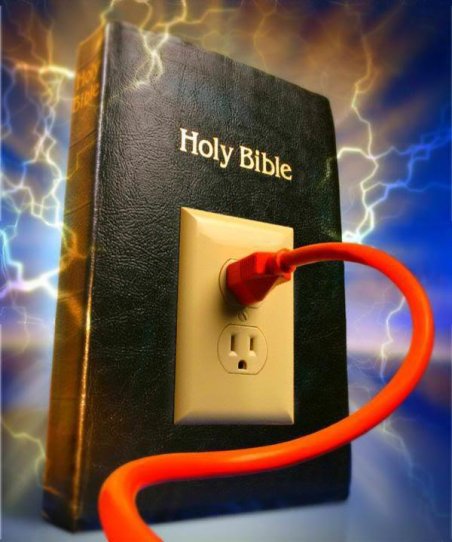
Trying to bear fruit on our own is like trying to turn on a light that isn’t plugged in. We can check the bulb and flip the switch as often as we like, but if it isn’t connected to the power source, it will not work!

God blesses those who abide in Him:

  1. Prayer is answered.

“If you remain in me and my words remain in you, ask whatever you wish, and it will be given you.” (vs. 7)


  1. God is glorified

“This is to my Father’s glory, that you bear much fruit, showing yourselves to be my disciples.” (vs. 8)

  1. Our life will be motivated by love.

“As the Father has loved me, so have I loved you. Now remain in my love. If you obey my commands, you will remain in my love, just as I have obeyed my Father’s commands and remain in his love.” (vs. 9-10)

  1. Joy will be ours in abundance.

“I have told you this so that my joy may be in you and that your joy may be complete.” (vs. 11).

A pair of scissors consists of two single blades. Yet the blades, regardless of  how sharp or shiny, are useless without one essential element — the small metal screw that holds them together.

Can you imagine trying to cut some paper or fabric without that tiny screw? Of course, you could put a blade in each hand. But think of the effort and difficulty involved in trying to make an even, precise cut that way. But when that tiny screw brings both blades together, suddenly the cutting becomes effortless.

In our relationship with God, abiding in Jesus is the screw that holds everything together and makes us useful to Him.


Leave a comment

Posted by on June 23, 2017 in Jesus Christ


Soar Like Eagles: The Gospel of John #17 Words of Comfort – “Don’t Stop Trusting in Me!” John 14:1


John 14:1 – Do not let your hearts be troubled; trust in God, trust also in me.

The immediate effect of our Lord’s words to His disciples was confusion and sadness. I would like to suggest that this was exactly what our Lord intended them to produce—for the moment.

Suppose the disciples really did grasp what Jesus was about to do. Suppose, for example, that the disciples understood that Judas was about to betray our Lord and to hand Him over to the Jewish authorities, so that they could carry out a mock trial and crucify the Son of God on the cross of Calvary.

I think I know what Peter would have done—he would have used his sword on Judas, rather than the high priest’s slave. I believe the disciples would have attempted to prevent what was about to happen, had they known what that was.

But the confusion our Lord’s words produced threw them off balance. The result was that when Jesus was arrested, they fled. They did not die trying to defend the Savior, and in part this was because they were utterly confused by what was happening. Jesus’ words were not intended to produce instant “relief,” but eternal joy.

The confusion and sadness that the Upper Room Discourse created in the disciples enabled Jesus to die just as He knew He must, just as it had been planned, purposed, and promised long before. The disciples were surely not “in control” at this point in time, but, as always, the Master was.

Do You Trust me?
Faith is a living well-founded confidence in the grace of God, so perfectly certain that it would die a thousand times rather than surrender its conviction.

Such confidence and personal knowledge of divine grace makes its possessor joyful, bold, and full of warm affection toward God and all created things — all of which the Holy Spirit works in faith.

Hence, such a man becomes without constraint willing and eager to do good to everyone, to serve everyone, to suffer all manner of ills, in order to please and glorify God, who has shown toward him such grace.

We have trusted many people and many things:
Personal nature: We often trust our families, we have trusted our friends.
Public nature: We have trusted our transportation services, We trusted our national security services, We trusted our military services.

What do all of these things have in common? Sometimes they fail our trust.

 God wants US to trust Him
Moses trusted God to deliver the Israelites at the Red Sea. Joseph trusted God while he languished in the Pharaoh’s prison. David trusted God for a victory when he was facing down Goliath. Jonah trusted God to answer his prayer in the belly of the fish. Peter and John trusted God as they stood before the Sanhedrin and gave their defense of the Christian faith.

What does it mean to trust?
Webster: Basic dependence on someone or something, Belief that something will happen or someone will act is a prescribed way

Trust is found in our unswerving belief that the God of Heaven will indeed work on our behalf to bring His perfect will for our lives into being.

Far too often in life we become completely focused on the trials and difficulties of life and we lose our focus on Christ.

When Peter walked on the water with Jesus he was doing well until he took his eyes off of Jesus and looked at the waves. The same is true of us today. God can get us through the most impossible situations but we must keep our focus and trust on Him. How can we ever expect to find help and healing when we are still focused on our difficulties and not our deliverance

Jesus was calling the disciples to trust God through any and every circumstance of life. He was  about to be crucified and they would be scattered. Jesus was telling them to trust even when they did not understand because God was still at work

If I were to ask you individually, most of you would very quickly say that you trust God but there are times when trust is not so simple. Trusting God means we believe in that which we cannot see and sometimes may not understand

Trusting God is literally against our human nature. Trusting God means that we have to admit that we are not in control of our lives

We need to place our trust in something or someone and we do it every day. We trust our cars to get us to our destination. We trust our employers to deliver paychecks. We trust our doctors top heals our illnesses. How much more should we trust God?
Proverbs 3:5-6 (ESV) Trust in the LORD with all your heart and lean not on your own understanding; in all your ways acknowledge Him, and he will make your paths straight.

Exodus 14:31 (NIV)
31  And when the Israelites saw the great power the LORD displayed against the Egyptians, the people feared the LORD and put their trust in him and in Moses his servant.

Exodus 19:9 (NIV)
9  The LORD said to Moses, “I am going to come to you in a dense cloud, so that the people will hear me speaking with you and will always put their trust in you.” Then Moses told the LORD what the people had said.

2 Kings 17:14 (NIV)
14  But they would not listen and were as stiff-necked as their fathers, who did not trust in the LORD their God.

Psalm 9:10 (NIV)
10  Those who know your name will trust in you, for you, LORD, have never forsaken those who seek you.

Psalm 13:5 (NIV)
5  But I trust in your unfailing love; my heart rejoices in your salvation.

Psalm 25:2 (NIV)
2  in you I trust, O my God. Do not let me be put to shame, nor let my enemies triumph over me.

Psalm 31:14 (NIV)
14  But I trust in you, O LORD; I say, “You are my God.”

Psalm 37:3 (NIV)
3  Trust in the LORD and do good; dwell in the land and enjoy safe pasture.

Disasters strike and tragedies happen in our lives. Life can indeed be hard. Life can be uncertain. Life is beyond our control. In times like this, life is beyond our understanding. We are left with raw emotions and tough questions. Answers are beyond us as we grapple with the question of why.

God asks the question: Do you trust me?
Nothing and I mean nothing that we go through in life is beyond God. The truth is that we can and must rely on God in every situation in life. Times that just don’t make any sense in human terms; we need to trust in God. The more senseless life becomes the greater our need to trust in God.

The writer of Proverbs states it simply and clearly that God wants your full and complete trust. Trust God with all of your heart. We must hold nothing back and surrender to Him all that we are, all that we have, all that we may become because without the presence and guidance of God we will go nowhere.

God asks the question: Do you trust me?
God wants you to trust even when you don’t understand. When life just doesn’t make sense. God wants us to follow Him when the future seems uncertain. It is only when we completely trust God that He to give us the power of His direction and the power of His presence.

Psalm 9:9-10 (ESV) The LORD is a refuge for the oppressed, a stronghold in times of trouble. Those who know your name will trust n you, for you, LORD, have never forsaken those who seek you.

Psalm 40:4 (NIV)
4  Blessed is the man who makes the LORD his trust, who does not look to the proud, to those who turn aside to false gods.

Psalm 52:8 (NIV)
8  But I am like an olive tree flourishing in the house of God; I trust in God’s unfailing love for ever and ever.

Psalm 56:3 (NIV)
3  When I am afraid, I will trust in you.

Psalm 56:4 (NIV)
4  In God, whose word I praise, in God I trust; I will not be afraid. What can mortal man do to me?

Psalm 56:11 (NIV)
11  in God I trust; I will not be afraid. What can man do to me?

Psalm 62:8 (NIV)
8  Trust in him at all times, O people; pour out your hearts to him, for God is our refuge. Selah

Psalm 91:2 (NIV)
2  I will say of the LORD, “He is my refuge and my fortress, my God, in whom I trust.”

Psalm 118:8 (NIV)
8  It is better to take refuge in the LORD than to trust in man.

When we feel weak, God is our strength. When we are pressured by life, God is our relief. When we need security, God is our refuge. The full resources of God are at our disposal when we place our trust in Him

God asks the question: Do you trust me?
If you do not place your trust in God, there is no access to His power, His mercy or His love. When trials arise and we go through difficulty; it is then that we must place our trust in God. Without trust in God there is no comfort, no peace, no strength and no relief.

Once my hands were always trying; Trying hard to do my best;
Now my heart is sweetly trusting, And my soul is all at rest.
Once my brain was always planning, And my heart, with cares oppressed;
Now I trust the Lord to lead me, And my life is all at rest.
Once my life was full of effort, Now ’tis full of joy and zest;
Since I took His yoke upon me, Jesus gives to me His rest.  — A.B. Simpson

God has made a promise that He will never forsake those who seek Him. The promise that God made so long ago is still valid today because God has never broken a promise yet. He is true and faithful to His people.

Our treasure is love from the God who created love. Our treasure is grace and peace from the God of all comfort. Our treasure is security from the God who never changes. Our treasure is protection and provision from the God who is all powerful. Our treasure is acceptance from the God who knows everything. Our treasure is eternity from the God who sacrificed His own Son that we could gain it. God is asking only one question this morning, do you trust me?

Thomas is determined to follow Jesus wherever he goes. In fact, earlier he urged the other Apostles to join Jesus as he returned to Judea even if it meant dying with him (John 11:16).

But he can’t follow Jesus if he doesn’t know where he is going or the way he is going to get there. So when Jesus declares that the Apostles know the way, Thomas feels obligated to correct him.

Where are we going to go to “find” God? He is an omnipresent Spirit. There is no certain place that one can travel to increase the odds of encountering him. However, God will manifest himself more visibly in the New Jerusalem (Rev 21:3).

Even now Jesus is returning to the throne room where God’s “manifestation” is surrounded by angels and elders (Rev 4-5).

While Jesus can “travel” there now, the rest of us will have to wait. But we will, indeed, find ourselves standing before that throne, turned judgment seat. Getting there is not the problem; it is where we stand when we get there that is in question.

The way to the Father is not a road but a relationship. Only through Jesus will we be able to stand before the Father on that day. Once Jesus has explained to Thomas his unity with the Father, and demonstrated it through his resurrection and ascension, there will be no more question for Thomas.

Nahum 1:7 (NIV)
7  The LORD is good, a refuge in times of trouble. He cares for those who trust in him,

Romans 15:13 (NIV)
13  May the God of hope fill you with all joy and peace as you trust in him, so that you may overflow with hope by the power of the Holy Spirit.

Romans 8:28 (ESV) And we know that for those who love God all things work together for good, for those who are called according to his purpose.


Leave a comment

Posted by on June 19, 2017 in Encouragement, Jesus Christ