RSS

Author Archives: Gary Davenport

Unknown's avatar

About Gary Davenport

Christian man, husband, father, father-in-law, and granddaddy

Examining the position of leadership


 placeforyou2mp3iconFacebook    YouTube  575273_579331012148169_1163921425_n

 ——————————————–

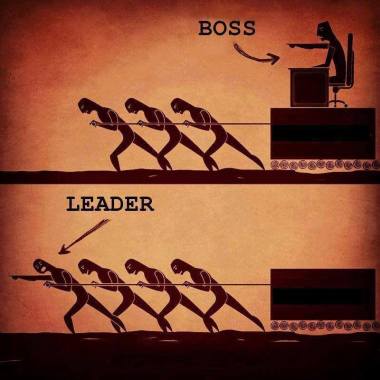
Don’t take a position of leadership in church unless you are prepared to be honest, pure, and loving in your lifestyle. Leadership is a privilege, and with privilege comes responsibility.

God holds teachers of His truth doubly responsible because we who lead are in a position where we can either draw people toward Christ or drive them away from Him.

This is illustrated in the life of the famous author Mark Twain. Church leaders were largely to blame for his becoming hostile to the Bible and the Christian faith. As he grew up, he knew elders and deacons who owned slaves and abused them. He heard men using foul language and saw them practice dishonesty during the week after speaking piously in church on Sunday.

He listened to ministers use the Bible to justify slavery. Although he saw genuine love for the Lord Jesus in some people, including his mother and his wife, he was so disturbed by the bad teaching and poor example of church leaders that he became bitter toward the things of God.

Indeed, it is a privilege to be an elder, a deacon, a Sunday school teacher, or a Bible club leader. But it is also an awesome responsibility. Let’s make sure we attract people to the Savior rather than turn them away.leaders

Lead Others

Actually, a manager needs the ability not only to make good decisions himself, but also to lead others to make good decisions. Charles Moore, after four years of research at the United Parcel Service reached the following conclusions:

1. Good decisions take a lot of time.

2. Good decisions combine the efforts of a number of people.

3. Good decisions give individuals the freedom to dissent.

4. Good decisions are reached without any pressure from the top to reach an artificial consensus.

5. Good decisions are based on the participation of those responsible for implementing them.*

One Man

Wherever anything is to be done, either in the Church or in the world, you may depend upon it, it is done by one man. The whole history of the Church, from the earliest ages, teaches the same lesson. A Moses, a Gideon, an Isaiah, and a Paul are from time to time raised up to do an appointed work; and when they pass away, their work appears to cease. Nor is it given to everyone, as it was to Moses, to see the Joshua who is destined to carry on his work to completion.

God can raise up a successor to each man, but the man himself is not to worry about that matter, or he may do harm. One great object of every religious teacher should be to prevent the creation of external appliances to make his teaching appear to live when it is dead.


1 Comment

Posted by on June 8, 2015 in Church


What do wives really want in a husband?


 placeforyou2mp3iconFacebook    YouTube JesusIsLordofthisWebSite575273_579331012148169_1163921425_n

 ——————————————–

Numerous men have pondered the questions, “Why does my wife say she’s unhappy? What does she want that I’m not doing?” Many of the men raising these questions have been blindsided by a wife’s confession that she’s not happy in the marriage.

marriage-what-does-your-husband-or-wife-want-1-638It can be confusing to try to figure out what a partner wants. And men, in particular, are having a harder time than ever because of changing expectations on the part of many females. In the past, it was enough for a husband to be a good provider, to have stable employment, and to bring home an adequate paycheck.

But now, that’s not enough anymore for many females. Enter the age of the “soul mate”—a word that signifies a deep bond and heart connection, someone who’s on the same “wave length” as his or her partner. Soul mates are compatible and bring out the best in each other. The relationship has satisfying intimacy and includes friendship, companionship, as well as love.

The connection between soul mates is sustained by emotional intimacy and the delight the partners share at having found each other. They share feelings easily and keep each other informed as to what they’re feeling, what concerns they’re wrestling with, what they’re worried about, and what their hopes and dreams are. Soul mates often say they feel a spiritual as well as an emotional connection to their partner.

A number of couples feel deeply connected at the beginning of their marriage. Both individuals are trying their best and are putting genuine effort and energy into the relationship. Even reticent, quiet males often make an effort to talk more and connect at this early stage in the marriage.

But, over time, the quality of the relationship can change—often for very understandable reasons, like parenting demands—and wives may begin feeling disconnected from their mates. Many husbands do not understand the importance of strengthening and nurturing emotional intimacy in a marriage. They may not feel comfortable sharing their feelings; they may not even be able to put their feelings into words and communicate them to their spouse.

The old model of marriage demanded a “real man,” and a “real man” didn’t cry, didn’t show his feelings, and didn’t talk about his feelings. He was strong, always in control of his emotions, and he solved his own problems without help from anyone else. While he was being emotionally strong, his wife was usually feeling increasingly distanced and disconnected from him.

“Well, what do women want, then? Do they want us to act like their female friends do?” The answer is both “yes” and “no.” No, they don’t expect their husbands to be as interested in every little aspect of certain things as their female friends are (planning a baby shower, deciding what dress to wear to a special event, for example). But yes, they do expect to get emotional support and sharing of feelings from their husbands on a regular basis.

 
Leave a comment

Posted by on June 4, 2015 in Family


Why Men Don’t Talk


 placeforyou2mp3iconFacebook    YouTube  575273_579331012148169_1163921425_n

 ——————————————–

(I referred to this article in a recent lesson and wanted to share the full article)

Why Men Don’t Talk

By Hampton Keathley

I read a book a couple of months ago that really changed my thinking on a few things and helped me understand a lot more about myself. The book was The Silence of Adam by Larry Crabb. It was so good, that I read it twice. It is called The Silence of Adam because he starts off by asking where Adam was when Eve was talking to the serpent.

Tradition has always taught, and I had always assumed that Eve was alone at that time, and that after she was deceived and ate the fruit, she went in search of Adam and gave him some to eat. But Crabb pointed out that Adam was right there with Eve during the conversation with the serpent. When I read that, I immediately got off the couch and went to get my Bible to read the verse for myself.

god-make-me-an-instrumentGenesis 3:6 says, When the woman saw that the tree was good for food, and that it was a delight to the eyes and that the tree was desirable to make one wise, she took from its fruit and ate; and she gave also to her husband with her, (imah) and he ate.

Wow! Adam was with her! I don’t know about you, but that blows away my categories. We always talk about how Eve was deceived, (In fact we read that three weeks ago in 1 Tim 2:14 right here in class.) And I think deep down, we sort of blame Eve for getting us all in this mess in the first place, even though we know technically that Adam was responsible.

But what if Adam was standing right there the whole time that Eve was talking to the serpent? I think this sheds new light on just how responsible Adam was for what happened. What does this say to us about not doing anything when we are not sure exactly what we should do or say? It sure makes inactivity look more sinful to me

If Adam was there, then why didn’t he say something? Why didn’t he tell the serpent to get lost? Why didn’t he correct Eve when she misquoted the command not to eat of the tree? Why didn’t he suggest they go somewhere else to talk about the situation? Why didn’t he stop Eve when she reached for the fruit?

Why Adam was silent? I’m not going to answer that right now. The answer will become obvious as we work through several concepts.

We are going to divide our study into the following topics:

  • The Search for Real Men
  • Man’s model—God’s role in creation, because man is created in God’s image and we need to see what that entails.
  • Man’s responsibility—to walk in God’s image.
  • Man’s natural tendency—to be silent.
    ————————————–
  • What Speaking is Not.
  • The Reasons for Silence
  • The Solution
  • Woman’s responsibility

The Search for “Real Men”

I think the first time I ever heard any talk about “real men” was in college when someone said, “Real men don’t eat quiche.” I think there was a whole string of “real men” jokes going around then, but that is the only one I remember.

The traditional view of a real man is one who is broad-shouldered, self-confident, tough, unemotional and successful. If you ever read any Louis L’Amour books, the main character was always tall, dark and invulnerable and he didn’t talk much. John Wayne and Clint Eastwood always played that kind of man in their movies.

But for the past ten years there has been a call for men to be more sensitive, to be vulnerable, to share their feelings, to cry more. Men are supposed to be more concerned with connecting with others than with trying to achieve and conquer the world. I remember my dad once making the comment that there didn’t seem to be any actors rising on the scene to replace John Wayne and Clint Eastwood. Maybe that is the reason. Their character type was out of style. John Wayne has been replaced with Billy Crystal.

I think the John Wayne tough guy image is a warped model of what a man should be. But I also think that the soft, vulnerable, almost homo-sexual image that we are bombarded with in the secular media is a pendulum swing too far in the other direction.

There is obviously a problem, but what is the solution? What constitutes a real man?

In the Christian world, we’ve been trying to come up with the answer. We have Family Life Seminars, Promise Keepers conventions, hundreds of self-help books on how to be a good father, how to be a good husband, how to be a good whatever. The list of self-help books is endless.

I think that phrase “self-help” is significant. I don’t mean to discredit any of those things I just mentioned, because they all have their place. In fact, many of them were started because people felt like churches weren’t dealing with the issues. But our tendency, when we realize there is a problem, is to go find a book written by some expert with the answers or go to a “professional counselor” or go to some conference to learn some neat steps to follow or principles to apply, to get motivated to work hard, and then we go home and try really hard to follow those steps. We do them for the next few weeks or months. But eventually, we slip back into our old habits and wait for the next conference. Perhaps that is why the Promise Keepers have to come back each year. We don’t keep our promises. The problem is that we were doing all these things out of our own energy, not God’s energy.

In our day, too many men are seeking more diligently for their manhood, than for God. However, if you read the biographies of the great Christians of the past, like Dwight L. Moody, Hudson Taylor, etc., it becomes obvious that they sought God first. They spent hours in the word and in prayer. They were very godly men. And look what God did through them. They are remembered as great men. Therefore, I think it is safe to say, “The only way to be manly is to be godly.” (Crabb, p. 32)

How do we become godly? By reflecting the image of God. We can’t do that unless we know what God is like. So we need to study what God is like. That by the way is theology. I almost hesitate to say that because most people think of theology as booooooring, but you will see that is very relevant. It is relevant because if we are to be godly, we have to know what God is like.

The Model: God’s Role in Creation

Genesis 1:2 says that the earth was formless and void and darkness was over the surface of the deep. In other words, everything was chaos. Then, while everything was darkness and chaos, God spoke into the darkness and He created life and beauty.

For years, people have argued about the “Gap theory” or “Restitution Theory” which proposes that there were two creations. After the first creation, Satan messed up the earth and so God had to rebuild. All this was supposed to happen somewhere between Gen. 1:1 and 1:3.

I think one reason this idea became popular was to try to explain why there was chaos. The question people asked, was “Why would God create a chaotic earth on his first pass, and then have to come back and fix it up later?” The gap theory also gained popularity when science started saying that the earth was millions of years old. A “Gap” between a first and second creation left room for that. The fact that the earth appears to be millions of years old can be explained without a gap theory. If God created a tree, and we cut it down the next day, how many rings would it have in it? 50? 100? God created trees, man, everything, including the earth, with apparent age. So we don’t need a gap theory as an answer to evolution.

Also, a good understanding of Hebrew shows that there is no reference to a gap in time in Gen. 1:3.

So, why the part about the earth being formless and void in vs. 2? Let me propose another reason—a theological one.

When Moses wrote Genesis, he left out lots of stuff. He covered 6000 years in just a few pages, and then focused in on Abraham, Isaac, Jacob, and Joseph. I think Moses was very selective in what events he recorded. He only recorded what he did because they make a theological point. Therefore Gen. 1:2 is as much a theological statement as it is an historical one. It is not just giving us a chronological order of events.

When I say it is a theological statement I mean that, the part about the earth being formless and void is there to make a statement about God—to let us know what God is like. What it is saying about God is that God moves in darkness and chaos and creates order and life. The statement is there so that man, who is created to walk in God’s image will know what that involves. It involves moving into the chaos and creating order and life.

That brings us to the next point.

Man’s Responsibility: To Walk in God’s Image

Genesis 1:26 says that man was created in God’s image and one purpose was to rule over the rest of creation. Man was to help keep the order. One of the first things Adam did was to name the animals. That did three things:

  • It demonstrated his superiority over them, and fulfilled the command to rule over creation.
  • It helped fulfill his role of being in God’s image and taking part in creating order out of chaos.

Lori and I were talking about that the other day. If animals didn’t have names, you would find yourself saying things like… I saw one of those yellow, furry animals down by the creek today. The other person would say, “The one with the long neck?” Then you would say, “No, it had a short neck..” Then the other person would say, “The one with stripes?” “No, the one spots…” And on and on it might go. That definitely would be a chaotic situation.

  • Adam was also “like” God because naming the animals involved speaking into the disorder.

I imagine that naming all those animals was not easy. Imagine if someone brought a few hundred species of animals to you and asked you to name them. Would you be overwhelmed? Sure you would. It was probably all you could do to think of a name for your baby. And if you’re like us, you didn’t decide untill they were rolling mom and baby out of the hospital.

So, Gen. 1:3 says God spoke and then in Gen. 2:19-20 man spoke. There is a logical connection between the two. Man was reflecting the image of God by speaking into the chaos and creating order.

That is the theological basis for our study. God spoke into chaos and created life and order. Man is created in God’s image and part of man’s responsibility is to speak into chaos and create life and order.

How does that apply to us today? We don’t need to name the animals.

For me, that means that when life is chaotic, I need to speak. I need to say something and I need to do something. I need to get involved. I should not remain silent. If I remain silent, I am like Adam in the garden. I am sinning.

But man’s natural tendency is to remain silent. That takes us to the next topic.

Man’s Natural Tendency: To Be Silent

If Adam were the only man in the Bible who was silent, then perhaps one could say that this conclusion is doubtful. But, there are several examples in the Bible of men who were silent. Let’s look at them and see where it got them.

The Example of Adam

We’ve already looked at this one, but I just wanted to make it a part of the list so I could ask you what were the consequences of Adam’s silence? The result was that billions of people have lived miserable lives and then died and most have gone to hell.

The Example of Abraham

Everyone probably knows of God’s promise to Abraham (Gen 15)—that he would have a son and be the father of a multitude, through whom God would bless the world. After ten years, and no children, Sarah comes to Abraham and says, take my slave, Hagar, and have children with her so that God’s promise can come true. What did Abraham say to that? Nothing. Gen 16:2 says He listened to the voice of Sarah.

Then later after Hagar has Ishmael, Sarah is jealous and Abraham tells her to do what she wants to her slave. And he lets her treat Hagar harshly.

So, Abraham was silent and did what Sarah said. What was the result? The Arab/Israeli conflict that still rages today.

The Example of Lot

We know from 2 Peter 2:7f that Lot was a righteous man, but you would never know it from the Genesis account. He stayed in Sodom and Gomorrah and was silent about the evil around him. When he offered his two daughters to a crowd of men to protect God’s messengers, that was not the action of a strong man. At the end of that account, when they are fleeing the city, and Lot’s wife looks back at Sodom and turns into a pillar of salt, it becomes obvious who it was that wanted to live in Sodom and Gomorrah and who was in really running the family. If Lot was tormented in his soul by the evil around him (2 Pet 2:8), then why didn’t he leave? Because his wife didn’t want to. Lot remained silent and passive.

Some time later Lot’s daughters commit incest with Lot while he is drunk and they get pregnant. So, we see further damage result from Lot’s silent passive life.

The Example of Bethuel

Do you remember the story of how Isaac got his wife? His father, Abraham, sent a servant back to the home country to get a wife for his son, Isaac. In the account in Gen. 24, the servant goes to a well, meets Rebekah, follows her home, and then proceeds to bargain with her brother Laban for her hand in marriage for Isaac. At the end of the account, (24:50) it says Bethuel agreed to the arrangement. It seems to me that Laban was the one who was involved, and Bethuel was along for the ride. I can’t swear to it, but nothing is said about him, and he doesn’t speak until the end of the account.

What was the result? He had two very controlling children. Laban and Rebekah. We know that Rebekah was very involved with the deception of Isaac when Jacob deceived his father out of the family blessing. And we know that Laban made life miserable for Jacob when he tried to marry Rachel and got Leah instead. So, by being a silent and uninvolved father, Bethuel helped create at least two manipulative and very controlling children.

The Example of Isaac

We don’t have to read much further in Genesis before we come to the next silent man —  Isaac. He was a very passive man. If you read through Genesis, you see that he didn’t do anything right except allow his father to almost sacrifice him.

Isaac knew the prophecy of God that his older son, Esau, would serve the younger son, Jacob, but he preferred Esau who appeared to be a strong, manly man always out hunting. And at the end of his life, he was going to go ahead and bless Esau in spite of the prophecy. Why? I think it was easier to go along with the tradition of blessing the oldest son than to trust God and bless Jacob. Why? Perhaps he was afraid of Esau’s reaction? After all, Esau was the hunter. Perhaps he was afraid of what others might say when they found out. Because he was afraid to act, his wife tried to take over and handle the problem. It backfired and the family was split up and Isaac and Rebekah never saw Jacob again.

Conclusion

Here we have five examples of men who were silent. In each situation the result was much harm to others. We might say the result was chaos.

When God spoke, He made order out of chaos. When man fails to act in God’s image, and speak, the result is more chaos. And very important to recognize: It brings the severing of relationship. And that is what this is all about – relationships. How is my silence going to affect my relationship with others? The Bible shows that it wll definitely destroy them.

  • Adam’s silence destroyed his relationship with God and his wife.
  • Abraham’s silence resulted in the Arab/Israeli conflict.
  • Lot’s relationship with his daughters and his wife was not good.
  • Isaac had almost no relationship with his wife or son, Jacob. This is obvious when you read the story of Isaac’s deception at the blessing. Isaac never talks to Rebekah. He never talks to Jacob (except when he thinks Jacob is Esau). Rebekah never talks to Esau. And Jacob never talks to Esau. You see a family divided right down the middle.

Notice also that in each of these situations, when the man was silent, the women stepped in and took control. God said that was going to be the woman’s natural tendency in Gen. 3:16, and we can see it happening over and over again.

So, man’s natural tendency is to be silent. But what we’ve seen so far ought to do away with the description of a man as “The Strong Silent Type.” When you understand these principles, it makes you want to change it to “The Weak Silent Type.”

Summary

  • What we’ve seen is that God speaks into disorder and creates order and life.
  • Man is created in God’s image and should also speak into disorder and create order and life.
  • But man’s natural tendency is to avoid the chaos and to be silent.
  • When he does that he creates even more chaos and destroys relationships.
 
Leave a comment

Posted by on June 4, 2015 in Article


Training involves getting a child to follow your instructions…without begging, nagging, anger or counting


 placeforyou2mp3iconFacebook    YouTube  575273_579331012148169_1163921425_n

 ——————————————–

We often are cautioned that training involves getting a child to follow your instructions…without begging, nagging, anger, and counting.

Picture4We should reach the point where you must learn how to accomplish getting this obedience.  Are you a winner? Winners are parents who have reared or are rearing obedient children. Their children respect and honor them; they show it in their speech, manners, and actions.

I can remember a visit made a few years back that was important, and, after meeting and greeting the family, it was time for the adults to talk alone in the living room. At the time, two children were in the room watching television.

The husband/father made a simple statement: “Boys, turn the TV off…we have to visit alone for a few minutes.” What did the boys do? Without hesitation (or begging or further explanation) they got up and obeyed their father. No talk back. No nasty attitude involved.

What would you expect as parents? Unfortunately, it doesn’t work that way in many homes because the children are treated differently on a daily basis and don’t know how to act when “company arrives.”

True obedience in this regard is: (a) immediate; (b) unquestioning, and (c) to the letter — no substitutions, additions, or omissions.

Several years ago we had a house in Ohio with a large open field and wonderful woods just behind us. The children spent many hours in those woods…special time with each other, etc. We had one common-sense rule immediately in place: when either Terry or I called out and wanted the children to come to the house, etc., we called their names and their only response was to be this: “coming.”

Not “what?” Not “do you want something?” It worked often because they had learned obedience.

Rosemond’s  Bill of Rights for Children

1. Children have the right to find out early in their lives that their parents don’t exist to make them happy, but to offer them the opportunity to learn the skills they-children-will need to eventually make themselves happy.

2. Children have a right to scream all they want over the decisions their parents make, albeit their parents have the right to confine said screaming to certain areas of their homes.

3. Children have the right to find out early that their parents care deeply for them but don’t give a hoot what their children think about them at any given moment in time.

4. Because it is the most character-building activity a child can engage in, children have the right to share significantly in the doing of household chores.

5. Every child has the right to discover early in life that he isn’t the center of the universe (or his family or his parents’ lives), that he isn’t a big fish in a small pond, and that he’s not even-in the total scheme of things-very important at all, no one is, so as to prevent him from becoming an insufferable brat.

Daddy
    1. Be fair. A man setting out to lead his wife and children must first of all be fair. Listen, especially to the wishes of your wife. Don’t expect of your family what you are not willing to do or be yourself. Take care of your family’s needs before your own.

     2. Be firm. When there is no leader, there is no leadership. If you are seeking to be fair, you’ll know when to listen and make changes.
     3. Be faithful. A family will do anything asked of them if they know you love them. How can you hurt your wife the most? Don’t love her; avoid her; don’t compliment her; make her feel as if she is inferior. Some treat the waitress better than their wife at home. Our wife needs to know, without doubt, that they are loved! Go visit your child’s teacher at the school they attend; determine their level of maturity as it relates to listening, sitting still, obeying commands, etc., and, please, do not expect less of them at worship than your teacher expects from them at school.

 
Leave a comment

Posted by on May 27, 2015 in Sermon


What’s the hurry, anyway?


 placeforyou2mp3iconFacebook    YouTube  575273_579331012148169_1163921425_n

 ——————————————–

Why is it that we feel we must rush our children into growing up? We hurry them off the bottle; we rush them out of diapers; we push them to walk. Why?

We allow eight-year-olds to adorn herself with pierced earrings, in lipstick and makeup, and rush them into dating at 11 and 12-years Picture1old…shame on us if we have been guilty of rushing our children. What we are actually doing is robbing them of the most glorious, beautiful, and peaceful time of the lives — their childhood.

One thought: if the child does everything that teenagers do at age 11, what is there left for them to do as teens? Doesn’t it encourage them to ‘move into adult issues’ too soon?

Good advice? Let them experience age-appropriate items at a normal pace. They will not miss out when it is their natural time. That ‘rush’ can also apply to our being too busy. If you feel as it you are always rushing your child, slow down and do something about your schedule. Cut some non-essential things out and spend more time with them. Look them in the eye and talk. And expect them to listen and act accordingly.

Nixon Waterman writes: “Hurry the baby as fast as you can, Hurry him, worry him, make him a man. If with his baby clothes, get him in pants,  Feed him on brain foods, and make him advance. Hustle him, soon as he’s able to walk, Into a grammar school; cram him with talk. Fill his poor head full of figures and facts, Keep on a-jamming them in till it cracks. Once boys grew up at a rational rate, Now we develop a man while you wait, Rush him through college, compel him to grab Of every known subject a dip and a dab. Get him in business and after the cash, All by the time he can grow a mustache. Let him forget he was ever a boy, Make gold his god and its jingle his joy. Keep him a-hustling and clear out of breath, Until he wins — nervous prostration and death.”

God Says Organize! The autocratic home must first of all be properly organized. God gives the blueprint for that organization in 1 Corinthians 11:3: “The head of every man is Christ; and the head of the woman is the man; and the head of Christ is God.” 

This particular scripture does not include children, but previous passages we’ve noticed (Eph. 6:1 and Col. 3:20) have already confirmed that they come under Daddy and Mother’s authority. Any time we get Daddy, Mother, and the children’s positions out of kilter, we are in serious trouble. We certainly aren’t happy. Daddy is humiliated, Mother embarrassed, and the children aren’t content, either. Society suffers and the nation is weakened, too, by the way. God has designated that men carry certain responsibilities and that women assume others. Men and women are not the same in purpose or responsibility, but they are equal in importance. God’s plan is that we
are “a 100% Daddy and a 100% Mother.”

What is the Dad’s responsibility?

Be the head of the home. This simply entails being the one by whom and through whom all decisions and orders of the family’s business are approved. You give the ultimate yes and no. If you are wise, you will
gladly share this with your spouse in many areas, but when it is all said and done, it is your responsibility.

Be the protector. This protection finds its fruit in both physical and emotional protection. God built with a man the ability to minimize his family’s fears and feelings of insecurity. With his deep, strong voice, he can scare any intruders away.

Be the physical provider. From the beginning of time, it has been God’s decree that the man is to make the living for his family (Gen. 3:17-19; Exodus 21:10). It’s important that the family be taught the lesson of contentment so ‘demand and command’ be held in check — in other words, live within your means.

Be the spiritual leader. A man’s spiritual welfare and that of his wife and children are resting in his hands. A woman is to submit willingly to man’s leadership (1 Cor. 11:3). Again, it is the wise husband who uses the nurturing skills and patience of the mother in this area.

Four levels of faith. John Westerhoff, in his book Will Our Children Have Faith? presents four levels of faith development. They can be used by each family to make decisions that relate to worship and training the child to more effectively participate in it.

  1. Ages birth to 5: the child has an experimental faith, where he/she slowly becomes aware of spiritual principles through other individuals. With this understanding, we should spend much time with the Bible and Christian people, and in regular worship, so our children can see us.
  2. Ages 6-11: the child moves to belonging faith, where he begins to sense some “belonging to the spiritual family.” Our response must be an earnest interest to get them in a Bible class of the congregation, and allow them to experience many fellowship and fun activities. This is definitely the age when they should be carrying and reading their own personal Bible, holding and singing from a songbook.    3. Ages 12-18: the child is in the Search faith phase, where he begins to question and test the par-ent’s beliefs. The parent should get their children with others so they can struggle together in the right environment…they need role models as that “significant other.”
  3. Age 18: the mature faith begins developing, and it’s the most exciting time of all, when the young adult reaches his own beliefs and believes because of his own decision and will.

Picture2Obedience: A Major Ingredient in Our Homes

Proverbs 13:24: “He who withholds his rod hates his son, But he who loves him disciplines him diligently.”

Proverbs 19:18: “Discipline your son while there is hope, And do not desire his death.”

Proverbs 20:11: “It is by his deeds that a lad distinguishes himself If his conduct is pure and right.”

Proverbs 22:15: “Foolishness is bound up in the heart of a child; The rod of discipline will remove it far from him.”

“Any time your children will not follow your teaching, you are in trouble and they are in worse trouble. Furthermore, until you get your children to mind you, neither independence, good habits, work, communication, no togetherness will work for you. Having an autocratic family will come to a dead standstill if you don’t have obedience.” Obedience is vital in our home because it builds three essential
ingredients within a child. It builds trust, respect, and responsibility. Without these ingredients, your child will be a social cripple and will be handicapped for life.”

 
1 Comment

Posted by on May 25, 2015 in Family


How Old Are Grandpa and Grandma!!!


 placeforyou2mp3iconFacebook    YouTube  575273_579331012148169_1163921425_n

 ——————————————–

This was shared by a good friend and thought it too interesting not to pass along to others…

Stay with this — the answer is at the end. It may blow you away. One evening a grandson was talking to his grandfather about current events. The grandson asked his grandfather what he thought about the shootings at schools, the computer age, and just things in general..

The Grandfather replied, “Well, let me think a minute, I was born before: 
television 
penicillin 
polio shots 
frozen foods 
Xerox 
contact lenses 
Frisbees and 
the pill
 
There were no:
credit cards 
laser beams or 
ball-point pens
 
Man had not invented: 
pantyhose 
air conditioners 
dishwashers 
clothes dryers 
and the clothes were hung out to dry in the fresh air and
space travel was only in Flash Gordon books.
 
Your Grandmother and I got married first,… and then lived together.. Every family had a father and a mother. Until I was 25, I called every woman older than me, “mam”. And after I turned 25, I still called policemen and every man with a title, “Sir.” We were before gay-rights, computer-dating, dual careers, daycare centers, and group therapy. Our lives were governed by the Bible, good judgment, and common sense. We were taught to know the difference between right and wrong and to stand up and take responsibility for our actions. Serving your country was a privilege; living in this country was a bigger privilege… We thought fast food was eating half a biscuit while running to catch the school bus. Having a meaningful relationship meant getting along with your cousins. Draft dodgers were those who closed front doors as the evening breeze started. Time-sharing meant time the family spent together in the evenings and weekends-not purchasing condominiums.

We never heard of FM radios, tape decks, CDs, electric typewriters, yogurt, or guys wearing earrings. We listened to Big Bands, Jack Benny, and the President’s speeches on our radios. And I don’t ever remember any kid blowing his brains out listening to Tommy Dorsey. If you saw anything with ‘Made in Japan ‘ on it, it was junk the term ‘making out’ referred to how you did on your school exam…. Pizza Hut, McDonald’s, and instant coffee were unheard of. We had 5 &10-cent stores where you could actually buy things for 5 and 10 cents. Ice-cream cones, phone calls, rides on a streetcar, and a Pepsi were all a nickel. And if you didn’t want to splurge, you could spend your nickel on enough stamps to mail 1 letter and 2 postcards. You could buy a new Ford Coupe for $600, … but who could afford one? 
 
Too bad, because gas was 11 cents a gallon.
 
In my day: 
“grass” was mowed, 
“coke” was a cold drink, 
“pot” was something your mother cooked in and 
“rock music” was your grandmother’s lullaby. 
“Aids” were helpers in the Principal’s office, 
“chip” meant a piece of wood, 
“hardware” was found in a hardware store and 
“software” wasn’t even a word.
 
And we were the last generation to actually believe that a lady needed a husband to have a baby. No wonder people call us “old and confused” and say there is a generation gap. or from the archives How old do you think I am? I bet you have this old man in mind….you are in for a shock! Read on to see — pretty scary if you think about it and pretty sad at the same time.
 
Are you ready ?????
 

This man would be only 70 years old.  

GIVES YOU SOMETHING TO THINK ABOUT… PASS THIS ON TO THE OLD ONES, THE YOUNG ONES WOULDN’T BELIEVE IT. 
 
Thanks, Ronald.
 
 
Leave a comment

Posted by on May 22, 2015 in Sermon


Obedience: A major ingredient in our homes


placeforyou2mp3iconFacebook YouTube JesusIsLordofthisWebSite  575273_579331012148169_1163921425_n

 ——————————————–

Obedience is vital in our home because it builds three essential ingredients within a child. It builds trust, respect, and responsibility. Without these ingredients, your child will be a social cripple and will be handicapped for life.

Proverbs 13:24: “He who withholds his rod hates his son, But he who loves him disciplines him diligently.”

Proverbs 19:18: “Discipline your son while there is hope, And do not desire his death.”

“Any time your children will not follow your teaching, you are in trouble and they are in worse trouble. Furthermore, until you get your children to mind you, neither independence, good habits, work, communication, no togetherness will work for you. Having an autocratic family will come to a dead standstill if you don’t have obedience.”

Proverbs 20:11: “It is by his deeds that a lad distinguishes himself If his conduct is pure and right.”

Proverbs 22:15: “Foolishness is bound up in the heart of a child; The rod of discipline will remove it far from him.”

In previous posts, we were cautioned that training involves getting a child to follow your instructions…without begging, nagging, anger, and counting. We have now  reached the point where you must learn how to accomplish getting this obedience. Are you a winner? Winners are parents who have reared or are rearing obedient children. Their children respect and honor them; they show it in their speech, manners, and actions.

I can remember a visit made a few years back that was important, and, after meeting and greeting the family, it was time for the adults to talk alone in the living room. At the time, two children were in the room watching television. The husband/father made a simple statement: “Boys, turn the TV off…we have to visit alone for a few minutes.” What did the boys do? Without hesitation (or begging or further explanation) they got up and obeyed their father. No talkback. No nasty attitude involved. What would you expect as parents? Unfortunately, it doesn’t work that way in many homes because the children are treated differently on a daily basis and don’t know how to act when “company arrives.” True obedience in this regard is: (a) immediate; (b) unquestioning, and (c) to the letter — no substitutions, additions, or omissions.

Let’s discuss ten basic facts that contribute to getting obedience in our homes:

  1. To love and to discipline don’t conflict. The first fact you need to know before you can win the obedience race with your children is that to love is to discipline. “The greatest social disaster of this century is the belief that abundant love makes discipline unnecessary.” It is for the good of any child to have acceptable behavior and to be able to get along in the family, in the neighborhood, and at worship.
  2. Punishment isn’t always discipline, but inflicted discipline is always punishment. There is a difference between pure punishment and true discipline. Punishment is pain or discomfort inflicted upon one. Now if pain or discomfort is inflicted upon a child for his welfare and to make him a better and more acceptable person, it is discipline. But if pain is inflicted on a child out of spite, anger, hate, or when a parent is in a rage, it is pure punishment.
    We must work diligently to make them follow our instructions with a calm and firm hand and a loving spirit. Given this way, it will be discipline for the child’s sake and not an outlet for our own frustrations.
  3. A child’s judgment takes years to develop. Children are children, and it takes months and years of living for their judgments to develop. One writer said: “On behalf of children everywhere, I beg of you, don’t terrify them with explanations. Just support them with facts. Don’t force a child to make decisions before he has the facts upon which to decide and the self-confidence to do so.” Two examples: a mother walks her preschooler to the closet and asks: “what do you want to wear today?” The child doesn’t know what they are going to do that day and has no concept of the outside weather. Mother is the one to make this decision. Example two: a couple takes their child to the church building for an event. It’s late and time to leave…the Dad turns to the child: “are you ready to go home?” They can’t tell time, don’t always understand they need to get to bed at a time appropriate for their age, etc. The Dad should make this decision, not the child. Parents who deal with their children in the ways given will usually have to contend with some terrible scenes. All of those incidents could have been avoided if the parents had furnished the child with facts. We spare our children unnecessary anxiety, tension, and anger by supporting them with facts until they are old enough to make sound judgments on their own.
  4. Your child needs to learn respect for authority. This is a major lesson that simply must be taught: respect for authority. No matter what else they learn, they must learn this because all the others work from this foundation. I know of a situation recently at the church building where an adult kindly told some elementary-age children to quit standing on the tables in the fellowship hall. The response by one of the boys? “You’re not my boss.” While it’s clear that strangers are not the boss, it’s also clear that in such an environment, that youngster should have responded differently.
    5. You are your child’s first authority. The basic purpose in God’s using parents to be the child’s first authority is not to give the parents an avenue for boosting their ego and exercising their power, but to build a basis for the child’s attitude toward other people. There are key steps in being an authority. An authority: (a) knows the subject better than the person being addressed; (b) verbally gives the facts (one time…never more than twice, unless asked); and he then follows his facts with proof. Example: It’s time to put the three-year old down for a nap. Step 1: You know the subject better than the child (it’s 1:00 and youngsters need extra rest); Step 2: you verbally give the fact once; Step 3: you follow your fact with proof (take the child and tuck him in bed). Look what your child has learned: their mother spoke and they didn’t have to wonder whether or not she knew her subject. She knew what she was talking about, because she furnished immediate proof. The child will trust her next time and will show her respect by following her spoken word. In time, they will learn responsibility because they were taught to yield consistent obedience to a trusted parent. The key ingredient? Consistency! Too often parents use ‘noise’ to get action, when they should use ‘action’ to get action.  No ‘authority” (parents) would allow misbehavior on Monday (when Mom is happy) and then allow it on Tuesday (when Mom might be  tired). Moods, good days, bad weather, sickness, etc., should not change the facts. An authority, therefore, will teach consistent facts Sunday through Saturday. And remember, Dad and Mom are working together, agreeing on what these facts are and in their willingness to back them with proof. What do you do when these steps have been followed and they don’t obey…that’s next month!
  5. To discipline you need a rod. If our children won’t stay in bed when they are told, or refuse to leave the chair alone, you will have to reinforce that your facts are true by furnishing further proof. Often, in order to make a child obey your spoken word, you will need action, and that sometimes means a ‘rod.’ Why is that so? Because God said so! Listen to His words and forget the words of psychologists who often are not guided by Godly principles.

Another principle that some also ignore: the rod is the first response, not the last resort. There should be no “waiting till Daddy comes home.” If your child is not minding your spoken words, then you are the one to respond with the proper correction. If we learn one thing, learn this: if your child is rebellious, it is no small thing…and he needs to know that you will win the rebellion skirmishes!

Sometimes when you give your child a fact, he will not obey
immediately and will continue to procrastinate. When he/she sees you coming with the ‘rod’ in your hand, however, he will hasten to do what you told him to do. What is a parent to do when this happens? If you go to the trouble to get a rod, you must go ahead and use it…if you don’t, your child will develop this little ‘daring’ act into a game of tag every time you tell him to do something, and you will be the one who is always “it.”

Two important things should be understood at this point: (a) the spanking should have some ‘sting’ in order to get its point across, but pain is not the goal. The goal is to get their attention and know you are serious! (b) a belt or a ping pong paddle on the fatty part of the seat will accomplish this without causing welts or bruises…it has always been recommended to me that you not use the hand, since it is attached to a “loving mom or dad” while the paddle, belt, or switch can become the enemy instead of the person using it.

And don’t underestimate a good swat on the seat or fatty portion of the leg to also get their attention when smaller things occur.

One more thing: parents who spend a lot of time “yelling and nagging” a child into obedience is simply being used by the child…children who have been scolded and nagged for weeks and months acquire the habit of deafness and rarely are moved to action until they see something more substantial.

 
1 Comment

Posted by on May 18, 2015 in Family


Countries who have viewed this site this year


  • 542United States
  • 31China
  • 6Brazil
  • 5Philippines
  • 4Canada
  • 3Italy
  • 3United Kingdom
  • 3Taiwan
  • 2New Zealand
  • 2Nigeria

 Countries who viewed this site in 2014

United States 877
Australia 9
Mongolia 6
India 5
Japan 5
Philippines 4
Canada 4
Brazil 3
United Kingdom 3
Germany 3
France 2
Malaysia 2
Singapore 2
Ukraine 2
Italy 2
Nigeria 2
Lebanon 1
European Union 1
Mexico 1
South Africa 1
Latvia 1
Egypt 1
Kenya 1
Finland 1
Tunisia 1
Dominica 1
Morocco 1
Russia 1
 
1 Comment

Posted by on May 14, 2015 in Sermon


A Soldier of the Cross


placeforyou2 mp3iconFacebook    YouTube JesusIsLordofthisWebSite 

 ——————————————–

I am a soldier in the army of my God. The Lord Jesus Christ is my commanding officer. The Holy Bible is my code of conduct. Faith, prayer, and the Word are my weapons of warfare. I have been taught by the Holy Spirit, trained by experience, tried by adversity and tested by fire.

4 in group with crossI’m a volunteer in this army, and I’m enlisted for eternity. I will either retire in this army at the end of time or die in this army; but I will not get out, sell out, be talked out, or pushed out. I am faithful, reliable, capable and dependable. If my God needs me, I am there. If He needs me in the Sunday school, to teach the children, work with the youth, help adults or just sit and learn.

He can use me because I am there! I am a soldier. I am not a baby. I do not need to be pampered, petted, primed up, pumped up, picked up or pepped up. I am a soldier. No one has to call me, remind me, write me, visit me, entice me, or lure me. I am a soldier. I am not a wimp. I am in place, saluting my King, obeying His orders, praising His name, and building His kingdom! No one has to send me flowers, gifts, food, cards, candy, or give me handouts. I do not need to be cuddled, cradled, cared for, or catered to. I am committed.

I cannot have my feelings hurt bad enough to turn me around. I cannot be discouraged enough to turn me aside. I cannot lose enough to cause me to quit. When Jesus called me into this army, I had nothing. If I end up with nothing, I will still come out ahead. I will win. My God has and will continue to supply all of my need.

I am more than a conqueror. I will always triumph. I can do all things through Christ. Devils cannot defeat me. People cannot disillusion me. Weather cannot weary me. Sickness cannot stop me. Battles cannot beat me. Money cannot buy me. Governments cannot silence me.

I am a soldier. Even death cannot destroy me. For when my commander calls me from this battlefield, He will promote me to Captain and then allow me to rule with Him. I am a soldier in the army, and I’m marching claiming victory. I will not give up. I will not turn around.

I will keep walking and marching to the orders of the King, Jesus. I serve the Kingdom.

 
1 Comment

Posted by on May 14, 2015 in Encouragement


When Christ is in the home


placeforyou2 mp3iconFacebook    YouTube JesusIsLordofthisWebSite 

 ——————————————–

“A crowd was sitting around him, and they told him, “Your mother and brothers are outside looking for you.” {33} “Who are my mother and my brothers?” he asked. {34} Then he looked at those seated in a circle around him and said, “Here are my mother and my brothers! {35} Whoever does God’s will is my brother and sister and mother.”” (Mark 3:32-35) 

When the first Christians were made part of the New Testament church, begun on the day of Pentecost in Acts 2, they knew hardly anything of Jesus and nothing at all of the “church (God’s family).” Yet, immediately, they were thrust into a fellowship of other believers – a radical, consuming community which supplanted every other loyalty.

They “devoted themselves” to meeting with a relative strangers (Acts 2:42). They sold their possessions to support one another (Acts 4). They met daily with their new friends to worship and commune in each other’s homes (Acts 2:46). They even rejoiced together when suffering persecution and ridicule!

All this had a revolutionary impact on the families, businesses, and friendships of these first Christians. Old loyalties were exchanged for new ones. The church became almost overnight the primary “reference group” for its members.

In the New Testament, the church commands the primary allegiance of disciples. No other group of people is allowed to take precedence over God’s people.jesusinthehome

Even family ties were subordinated to the family of God. Families of origin were put at risk and even broken: (Mark 10:29-30)  “”I tell you the truth,” Jesus replied, “no one who has left home or brothers or sisters or mother or father or children or fields for me and the gospel {30} will fail to receive a hundred times as much in this present age (homes, brothers, sisters, mothers, children and fields–and with them, persecutions) and in the age to come, eternal life.”

All that mattered in the 1st Century was being in Christ.  “You are all sons of God through faith in Christ Jesus, for all of you who were baptized into Christ have clothed yourselves with Christ. There is neither Jew nor Greek, slave nor free, male nor female, for you are all one in Christ Jesus. If you belong to Christ, then you are Abraham’s seed, and heirs according to the promise.” (Gal. 3:26-29)

In her best-seller, What Is a Family?, Edith Schaeffer devotes her longest chapter to the idea that a family is a perpetual relay of truth.  A place where principles are hammered and honed on the anvil of everyday living.  Where character traits are sculptured under the watchful eyes of moms and dads.  Where steel-strong fibers are woven into the fabric of inner constitution. The relay place.  A race with a hundred batons.

  • Determination.  “Stick with it, regardless.”      
  • Honesty.  “Speak and live the truth – always.”            
  • Responsibility.  “Be dependable, be trustworthy.”      
  • Thoughtfulness.  “Think of others before yourself.”  
  • Confidentiality.  “Don’t tell secrets.  Seal your lips.”   
  • Punctuality.  “Be on time.”      
  • Self-control.  “When under stress, stay calm.”            
  • Patience.  “Fight irriatability.  Be willing to wait.”       
  • Purity.  “Reject anything that lowers your standards.”
  • Compassion.  “When another hurts, feel it with him.”            
  • Diligence.  “Work hard.  Tough it out.”

 And how is this done?  Over the long haul, believe me.  This race is not a sprint, it’s a marathon.  There are no 50-yard dash courses on character building.  Relays require right timing and smooth handoffs – practiced around the track hour after hour when nobody is looking.  And where is this practice track? Where is this place where rough edges cannot remain hidden, must not be left untouched?  Inside your own front door.  The home is God’s built-in training facility.

Marriage and parenthood call for faith of the most radical sort.  The Devil cannot bear to see married people agree well with each other.

Most would agree that the major contributing factor to the crime, violence, moral decay, and social upheaval in our society is the breakdown of the family.

Many couples in my generation need to learn that a happy home is not having a good paying job, a mortgage of $100,+, a brand new car every five years, trying to keep up with everyone else.  Home is really a state of mind; ideally, it is a created situation where two people who love each other are committed to one another’s well being, living in harmony, love, forbearance, and consideration.

The all-knowing and all-powerful God (who created, established, ordained, and instituted the home and who created its members) has provided a manual; a perfect plan for the home.  He has given us divine guidelines for daily living in the home. We must in humility, look to God for strength, trusting that He has the answers. We need to daily pray to God with one another for assistance and then have the courage of our convictions to apply these Biblical principles.

When there is continual strife and unrest between family members, someone is likely not applying Biblical principles pertaining to the home.  When one refuses to talk to the other, or refuses to forgive, or is stubbornly selfish, Biblical principles are again being refused and rejected.

There are at least two primary joys of a Christian home: First there  is the joy of knowing that someone cares for you.God cares for me (John 3:16) and there is not a greater self-esteem builder in the world. God created us with the desire to feel wanted, important, and necessary.  He created the home to aid in fulfilling the need to feel needed!

In the Christian home, the husband and wife have said to one another, “I care so much for you that I  selected you from all others to share my life.”  Likewise, our children should be convinced that we care for them!

Second, there is the joy of knowing that there is someone I can depend upon! A great joy to know this – standing together in good times and bad. Children need to know there is someone they can depend on when the trials of life come knocking.

Being able to depend upon someone is described in the word “commitment.” In a proper home situation there is someone to whom I am committed and who is committed to me.

A question asked by many people in the 1990’s is a complex and deeply felt one: is it possible to have a Christ centered home in today’s world of trouble and sin?

Recent studies have listed many issues with which parents must cope today: finances (the cost of bearing, clothing, feeding, entertaining and educating children is the greatest in our history); working mothers (for the first time, a majority of American mothers hold jobs out-side the home, many out of necessity rather than desire; drugs, divorce, alcohol, crime, runaways, and abuse.

More than 1.6 million couples were divorced last year. Drugs and alcohol are on the rise among youngsters. The second leading cause of death between ages 14-24 is now suicide, and one child in nine can expect to appear in juvenile court before he turns 18.

A newspaper columnist who was disturbed by the rising suicide rate among teenagers blamed this trend on the loss of “the extended family.”  She said that most of today’s youngsters do not possess a sense of belonging.  They never felt close to a grandfather who went fishing with them, a grandmother who rode down a hill with them on a sled, an uncle who entertained them with tall tales, or an unmarried aunt who, when substituting for mother, washed their faces so vigorously that it felt like she was peeling off the skin.

The loss of the “extended family” is a serious matter. However, the causes for teenage suicide lie deeper.  Many parents leave God out of their thinking entirely.  They become so pleasure-oriented or success-minded that they all but ignore their children.  Others disobey God’s law through infidelity, breaking up homes and leaving children with only one parent – and many emotional scars.  Indeed, the deepest need of our children is not merely the extended family, it is God made real to them through the extended family.

It might be of comfort to realize that the world has always been a difficult place in which Christians must live. It has always been opposed to God’s values and God’s will. 

We might also be encouraged to remember a story recorded in 2 Chronicles 20, which shows a situation similar to the one we face today. Jehoshaphat had some men before him reporting the approach of a vast army, one the size of which his army could not defeat. 

He inquired of the Lord his future and God’s answer is recorded for us in 2 Chronicles 20:15-17: “He said: “Listen, King Jehoshaphat and all who live in Judah and Jerusa-lem! This is what the LORD says to you: ‘Do not be afraid or discouraged because of this vast army. For the battle is not yours, but God’s. Tomorrow march down against them. They will be climbing up by the Pass of Ziz, and you will find them at the end of the gorge in the Desert of Jeruel. You will not have to fight this battle. Take up your positions; stand firm and see the deliverance the LORD will give you, O Judah and Jeru-salem. Do not be afraid; do not be discouraged. Go out to face them tomorrow, and the LORD will be with you.'””

A truly Christian home is a place where sinners live; but it is also a place where the members of that home admit this fact and understand the problem, know what to do about it, and as a result grow by grace. 

It is important that this environment be in place so all members of the family will have a loving, graceful, safe, and warm place in which to grow. It’s vital that we treat each other in the same way Jesus treated His 12 apostles. 

As they stumbled and fell and made mistakes, he was patient with them because of one simple point: He knew they were not yet what they would become. We need to “be patient, God’s not finished with me yet!

Let’s look in detail for a moment at three significant items that make all the difference in the world; (as they are discussed, think of the atmosphere or environment which these will create in the home):

christ head in the homeChristians admit their sins.

Because they know the Bible says that no Christian is ever perfect in this life, they are free to admit their sins: 1 John 1:8-10: “If we claim to be without sin, we deceive ourselves and the truth is not in us, if we confess our sins, he is faithful and just and will forgive us our sins and purify us from all unrighteousness. If we claim we have not sinned, we make him out to be a liar and his word has no place in our lives.”

What does it mean to you to know that your boss, parents, etc., can admit when they make a mistake and acknowledge sin? What response do you give to this kind of person? What kind of response is given to the person who thinks they are perfect, who acts like they never do wrong?

Christians are able to acknowledge the fact and, in time, learn to anticipate and prepare for sin. Christians, of all persons, should never rely upon rationalizations, excuses or blameshifting to try to euphemize their sins.

Because they can admit their sins, there can also be a certain amount of openness, honesty, and relaxation about the relationships that Christians sustain to one another, especially at home. Christians can pour their time and energies into the endeavor to replace sinful patterns with Biblical patterns of life.

Rather than wasting time minimizing or denying the fact of sin, Christians can concentrate on dealing with sin.

Christians know what to do about their sins.

Because they have the Bible as the standard of faith and practice, Christians not only know why problems occur in the home, but they know what to do about them!  Is any sin too big for God? Can any sin be overcome in a loving, forgiving environment? We need to realize that each person in the Bible who stands before us a “great men and women of faith” are average people with sin in their life, which God helped remove.

Christians progress out of their sins.

Where there is spiritual life, there also will be spiritual growth. No Christian may remain the same yesterday, today, and tomorrow.  A fundamental presupposition of the Christian faith is that there will be growth out of sin into righteousness. Where there is Bible study, prayer and the fellowship of the saints, the Spirit of God will be at work to
produce His fruit.

The Christian home, then, is a place where sinful persons face the problems of a sinful world. Yet, they face them together with God and His resources, which are all centered in Christ. Sinners live in the Christian home, but the sinless Savior lives there too! “That is what makes the difference!

No one can better understand and repair a product than its creator. This is doubly true with regard to the home. God not only planned and designed the home itself, but he actually formed man and woman, its component parts.

How futile and how vain to seek everywhere but with God for balm and remedy when homes weaken and deteriorate! The Bible also tells us that our homes should be happy places and goes on to show us how to have them. Our homes can be happy and successful if we use spiritual principles and sound judgment in their formation and development.

What purposes shall we try to achieve in our homes?  The first purpose is the personal development of each family member. This is not to say that one should view his home selfishly and think only in terms of what he can get out of it himself. Each family member experiences personal growth and receives a sense of genuine fulfillment by giving of himself in order to build a happy home.

The second purpose involves the accomplishment of certain social functions of the home. The primary social function is to provide a special companionship for each member of the family. To feel alone and
unloved is one of the emptiest feelings on earth. But we must also prepare each member to be part of the larger group of society.

But the third purpose reaches into eternity: we must work toward achieving the spiritual development of the family members. We must never forget that marriage and the home is primarily a spiritual relationship.

We should daily be reminded of the question asked by Jesus in one of his most penetrating sermons, recorded for us in Matthew 16:26-27: “What good will it be for a man if he gains the whole world, yet forfeits his soul? Or what can a man give in exchange for his soul? For the Son of Man is going to come in his Father’s glory with his angels, and then he will reward each person according to what he has done.”

What qualities of character do we need to possess and demonstrate in our homes in order to fulfill these purposes? Generally speaking, the development of Christian character is the single most important factor in achieving a successful home. The two marriage partners must desire success in their home, and genuine love is absolutely necessary! Each member of the family must take their differences into account and strive to communicate their feelings to each other.

There is a rising chorus in the world telling us that the American family is not beyond hope. Sociologist Theodore Caplow of the University of Virginia observes that while many Americans think the family is about to collapse, this whole idea is largely a myth fostered by the media.

Repeated surveys show that Americans have more, not less, solid relationships with family members than a generation ago! Certainly, since the events of September 11, 2001 and the terrorist attacks on our country, we are spending more time with family, looking at our value system, and turning to God as a country! How healthy are our families? Medical checkups are recommended today for good physical health. What if your family went in for a checkup? How would you do? What would be some of the tests the experts would run?

We might have the attitude a well-known politician had some years back: “If it ain’t broke, don’t fix it.” What he meant was that things that seem to work well should be left alone.

We may feel that way about marriage. But there are several good reasons to get that checkup: Things might not be going as well as we think. Some married couples have been totally surprised to discover their mates were not at all happy. By the time they discovered something was wrong, it was too late.

There is a tendency in marriage for a movement in one direction to increase geometrically as time passes. Spouses who are drifting apart because of annoying little habits begin to blame each other for the creeping separation. As time passes, the tendency increases and becomes more difficult to reverse.

There is always the opportunity to make good relationships even better. If your family is happy, you may still discover something about yourself that will make for improvement. If accomplished athletes and artists still spend hours improving their skills, it is certainly possible that the best marriages can be further strengthened.

Even if your family is strong, there are predictable crisis in almost all families. Sonya Rhodes and Josleen Wilson in Surviving Family Life explore seven crisis living together. These include early marital adjustments, the birth of children, changes as children enter adolescence and later leave home, and caring for three generations under one roof. With preventative care, these challenges can become opportunities for
growth.

The family needs regular checkups because relationships are never static. We either grow together or we grow apart. A marriage may reach its full potential at the very beginning and then begin to decline.

How To Do Your Checkup
Does your family have a central value system? Long before our society began to build marriages on the insecure foundation of romance, there were stable marital relationships.

When the Book of Genesis describes marriage as leaving father and mother, cleaving to one’s spouse, and two people becoming “one flesh,” it points to an irrevocable act. In a biblically based marriage, each person says, “I am with you, no matter what may happen.”

Such a marriage proceeds not only from the heart but also from the mind. These promises cannot be made lightly or kept carelessly. This marriage is based both on love and fidelity. And faithfulness depends upon having a central value system.

 The book of Proverbs has 209 of its 915 verses– almost one-fourth –dedicated to instruction about rearing children, for instance. Consider just a few of them and think of the time parents should spend analyzing and putting into practice these concepts.

Proverbs 8:32-36: “”Now then, my sons, listen to me; blessed are those who keep my ways. “Listen to my instruction and be wise; do not ignore it. Blessed is the man who listens to me, watching daily at my doors, waiting at my doorway. For whoever finds me finds life and receives favor from the LORD. But whoever fails to find me harms himself; all who hate me love death.””

Proverbs 10:5: “He who gathers crops in summer is a wise son, but he who sleeps during harvest is a dis-graceful son.”

Proverbs 12:1: “Whoever loves discipline loves knowledge, but he who hates correction is stupid.”

Proverbs 22:6: “Train a child in the way he should go, and when he is old he will not turn from it.”

The book tells parents to warn their children against the dangers of sexual experimentation, violence, drunkenness, bad language, criminal behavior, financial mismanagement, and disrespect for parents.

Strong buildings rest on solid foundations. Healthy families respond when they have a central value system that responds to a higher authority. If a family is deeply committed to Jesus Christ, they enjoy enormous ad-vantages over the family with no spiritual dimension.

Persons who do not know or even recognize the existence and authority of God are not motivated to accept God’s standard for marriage and the family or for anything else. They do not have the new nature or inner resources to fully follow those standards even if they wanted to.

We are drowning in a sea of marriage information today. A book on sex and marriage, whether from a secular or Christian viewpoint, is sure to sell. Many purportedly Christian books are as preoccupied with and indelicate about sex as their secular counterparts. Marriage conferences, seminars, and counselors  abound—some of which may be solidly scriptural and well presented. But apart from a believer’s being filled with the Holy Spirit and applying the ever-sufficient Word of God, even the best advice will produce only superficial and temporary benefit, because the heart will not be rightly motivated or empowered.
On the other hand, when we are filled with the Spirit and thus are controlled in divine truth, we are divinely directed to do what is pleasing to God, because His Spirit controls our attitudes and relationships.

 James said, “What is the source of quarrels and conflicts among you? Is not the source your pleasures that wage war in your members?” (James 4:1). Conflicts in the church, in the home, and in marriage always result from hearts that are directed by the self rather than by the Spirit of God. When self insists on  its own rights, opinions, and goals, harmony and peace are precluded.

The self-centered life is always in a battle for the top, and pushes others down as it climbs up in pride. The Spirit-centered life, on the other hand, is directed toward lowliness, toward subservience, and it lifts others up as it descends in humility.

Any society that has taken either the obvious nature of women or the Word of God into consideration has fashioned its best laws in line with His. Laws against murder find their source in the Ten commandments —just as do laws against stealing, adultery, perjury, and so on. The wife’s submission to her husband is a divine principle that has been reflected to some degree in the legal codes of most societies.

For the past several hundred years western society has been bombarded with the humanistic, egalitarian, sexless, classless philosophy that was the dominant force behind the French Revolution. The blurring and even total removal of all human distinctions continues to be masterminded by Satan so as to undermine legitimate, God-ordained authority in every realm of human activity—in government, the family, the school, and even in the church.

Child/Parent Relationship

Cornell University’s Urie Bronfenbrenner cites nine specific changes that have taken place during the past generation which have increasingly separated children and youth from the world of adults, especially the adults in their own families:

1. Fathers’ vocational choices which remove them from the home for lengthy periods of time

2. An increase in the number of working mothers

3. A critical escalation in the divorce rate

4. A rapid increase in single-parent families

5. A steady decline in the extended family

6. The evolution of the physical environment of the home (family rooms, playrooms and master bedrooms)

7. The replacement of adults by the peer group

8. The isolation of children from the work world

9. The insulation of schools from the rest of society

This last factor has caused Bronfenbrenner to describe the current U.S. educational system as “one of the most potent breeding grounds for alienation in American society.” When he wrote these words in 1974, this trend toward isolation was in full swing, and it has not been significantly checked since that time.

With one in four young people now indicating that they have never had a meaningful conversation with their father, is it any wonder that 76 percent of the 1,200 teens surveyed in USA Today actually want their parents to spend more time with them?

Andree Alieon Brooks, a New York Times journalist, in her eye-opening book Children of Fast-Track Parents, describes her interviews with scores of children and parents who seemed to “have it all”: “If there was one theme that constantly emerged from my conversations with the children it was a surprising undercurrent of aloneness—feelings of isolation from peers as well as parents despite their busy lives.”

Family members gave one another compliments and sincere demonstrations of approval. They tried to make the others feel appreciated and good about themselves.

A healthy family:

1. communicates and listens

2. affirms and supports one another

3. teaches respect for others

4. develops a sense of trust

5. has a sense of play and humor

6. exhibits a sense of shared responsibility

7. teaches a sense of right and wrong

8. has a strong sense of family in which rituals and traditions abound

9. has a balance of interaction among members

10. has a shared religious core

11. respects the privacy of one another

12. values service to others

13. fosters family table time and conversation

14. shares leisure time

15. admits to and seeks help with problems.

 
Leave a comment

Posted by on May 11, 2015 in Encouragement