RSS

Lack of Spiritual Health


We are always looking for someone else to blame for our lack of spiritual health.

A woman’s husband had been slipping in and out of a coma for several months, yet she’d stayed by his bedside every single day. One day, when he came to, he motioned for her to come nearer

As she sat by him, he whispered, eyes full of tears, “You know what? You have been with me all through the bad times. When I got fired, you were there to support me. When my business failed, you were there. When I got shot, you were by my side. When we lost the house, you stayed right here. When my health started failing, you were still by my side ….You know what?”

“What dear?” She gently asked, smiling as her heart began to fill with warmth.

His reply: “I think you’re bad luck.”


Some Illustrations and Types of Accountability That Are Helpful As We Fellowship One Another


We often have ask members of our congregations to spend prayer time asking God to provide direction in regard to a new ministry effort, etc.  Within the church, the body of Christ, there are a number of illustrations of the form in which accountability may take shape in the process of making disciples.

(1) Paul with Timothy and Titus.  If we each had a Timothy or a Titus, someone we are giving ourselves to, someone we are helping to grow, someone we are responsible for and who is responsible to us, certainly we would see a great deal more spiritual maturity and obedience.

1 John 4:21 (43 kb)

(2) Paul and Barnabus. Paul had a Barnabus (a son of encouragement) with whom he could identify. Paul could go to him with problems and discouragement. He was someone with whom he could pray, or from whom he could get counsel, guidance, and encouragement. He was someone to give another viewpoint or perspective. As iron sharpens iron, so one man sharpens another.

(3) A team or small group. This is not just a prayer group or a Bible study, but a small group of men or women with whom to interact, share ideas, pain, burdens, and victories. It is a small group like the disciples of the Lord, those with whom we can pray and discuss the Word together without fear of rejection.

(4) Marriage illustrates another place where accountability takes place.  If we are married we need to develop our relationship with our spouses so we can share our problems and concerns with each other, discuss them, and get honest input without fear of rejection.

(5) The local church. The local church consists of overseers/leaders, those who are to be responsible for and accountable to the flock, and there is the flock, those who are to be accountable and responsible to their leaders as Hebrews 13:17 teaches.

(6) The Godhead. Finally, The Son Himself, though God of very God, is subject to or accountable to the Father (1 Cor. 11:3; 3:23; 15:24-28).

With this in mind, it would be good to think about how one can implement this more in one’s own ministry. Items like small groups provide an opportunity and team training another, but surely we need more accountability. One method is the buddy system where believers divide up into smaller groups of two or three who regularly meet for fellowship and input together.

Biblical Ways to Promote Accountability   — An important question is what happens (or should happen) when a small group meets together?  Goals and objectives to promote Christ-like growth in measurable ways: Meeting together is not just a time when good old boys meet to talk about fishing, football, or chew the fat. Here are some suggestions.

(1) Study: Part of the time should be spent around a portion of the Word, thinking together about what it means and how it applies.

(2) Prayer: This means it will be a time when the team shares needs and concerns. Pray together when you meet and covenant to pray for each other during the week.

(3) A schedule: Develop a schedule to give guidance in the use of time with the Lord, family, church, the team, etc.

(4) Report: Part of the team’s time should be spent sharing how each member has been doing—the battles, victories, problems, temptations, etc. How each one has been able or not been able to keep to their schedule, prayer time, study, etc.

Some guidelines and warnings:

(1) Be honest and humble about struggles. Watch the tendency to protect those comfort zones and layers of self-protection.

(2) Be patient, and understanding. Don’t come across as condemning. Maintain a spirit of acceptance of the other person. This does not mean there can’t be challenge, exhortation, and even rebuke, but it must be done in love and with patience and acceptance.

(3) Guard your tongue. In keeping with the biblical goal, guard against gossip and being critical. What is shared must be kept in strict confidence. Each person needs to know they can trust the others. (Prov. 16:27; 17:4, 27).

 
Leave a comment

Posted by on September 17, 2018 in Church


What’s Your Number? The Vietnam War Selective Service Lottery


(Selective Service Archive)
During the Vietnam War, young men gathered in college dorms and friends’ homes to listen to live TV and radio broadcasts of the U.S. Selective Service System drawing lottery numbers to determine who would and would not be drafted. This serves as a short, yet painful reminded of that stressful time. (The 2010 issue of Vietnam magazine revisits those days in the article, “Live from Washington, It’s Lottery Night 1969!!”) Approximately 850,000 men were affected by the 1969 draft lottery. For the lottery, 366 blue plastic capsules, each containing one date of the calendar year, were dumped in a large glass container. The capsules were then drawn out and opened, one by one, and assigned sequentially rising numbers. Congressman Alexander Pirnie (R-NY) drew the first capsule, which contained the date September 14. Thus, all men born on that date, from 1944 through 1950, received the first priority for call to duty. The remaining capsules were drawn by youth delegates who had been selected for that purpose from around the country. The last date drawn was June 8, which was assigned draft number 366. This initial Vietnam draft lottery drawing was on December 1, 1969. The first birth date drawn that night, assigned the lowest number, “001,” was September 14. As I sat with about 20 people in the living room of the Middle Tennessee Christian Center in Murfreesboro, I remember that at least three of us had numbers well below 100…mine was 38, which meant that when my college deferment ended I would be guaranteed to report for service. Some of those that day graduated at the end of the spring semester (1970) and joined the service, to keep it to only two years. Some served as medics. I began service in the fall of 1972 as a conscientious objector at a non-profit organization. The war was very unpopular and beginning to end, so the draft board was much more willing to allow some to serve in this way. “Conscientious objector” status was granted to those who could demonstrate “sincerity of belief in religious teachings combined with a profound moral aversion to war and killing.” Find your birthday in the chart below to see what order you would have been called to service. 
 
Leave a comment

Posted by on September 14, 2018 in Article


Habits and Attitudes of Highly Effective Churches – Lives Are Changed


The “acid test” for a church’s effectiveness is the transforming work of the Holy Spirit among its members.  And what is the proof that the Spirit of God is present and active in a body of people? Lives are being changed daily!

While all Christians recall and marvel at the mighty works of Christ, some of us seem to have forgotten the power of words. The truth He communicated to men and women contained the power of God to transform and
empower their lives.

The power of words is explained this way in Scripture: “The word of God is living and active. Sharper than any double-edged sword, it penetrates even to dividing soul and spirit, joints and marrow; it judges the thoughts and attitudes of the heart” (Heb. 4:12).

We must cling to the joyous truth that the Word of God is powerful. When we teach it with authority and expectation, it will achieve the result God has ordained.

1. Are non-Christian therapists as effective in saving marriages as Christian therapists — working in a context of a church’s faith, prayers, and ministry?
2. Are humanistic 12-step programs as good for breaking alcohol and cocaine addiction as ones where the name of Jesus is invoked reverently and frequently?
3. What about eating disorders? Cancer? Problems with children? Sexual addiction? Depression? Personality disorders?

I am one of a growing number of non-charismatics who believes in supernatural answers to our prayers. Yes, God sometimes allows situations to remain unaltered so he can teach us the sufficiency of grace in our weakness:

2 Corinthians 12:7-10: “Because of the surpassing greatness of the revelations, for this reason, to keep me from exalting myself, there was given me a thorn in the flesh, a messenger of Satan to torment me—to keep me from exalting myself! {8} Concerning this I implored the Lord three times that it might leave me. {9} And He has said to me, “My grace is sufficient for you, for power is perfected in weakness.” Most gladly, therefore, I will rather boast about my weaknesses, so that the power of Christ may dwell in me. {10} Therefore I am well content with weaknesses, with insults, with distresses, with persecutions, with difficulties, for Christ’s sake; for when I am weak, then I am strong.”


So believers are not exempt from cancer, bankruptcy, or divorce. And, yes, we should use all the natural and ordinary resources such as education and medication, therapy and discipline, Alcoholics Anonymous and surgery that can help people.

But we must become bolder in prayer and spiritual ministry. God’s Holy Spirit lives among and within people, and we must believe that power at work in those who believe can bring about dramatic outcomes. Here is a clear call from God to all believers about some things that cannot be tolerated in our personal and corporate lives as people:

Colossians 3:5-10: “Therefore consider the members of your earthly body as dead to immorality, impurity, passion, evil desire, and greed, which amounts to idolatry. {6} For it is because of these things that the wrath
of God will come upon the sons of disobedience, {7} and in them you also once walked, when you were living in them. {8} But now you also, put them all aside: anger, wrath, malice, slander, and abusive speech from your
mouth. {9} Do not lie to one another, since you laid aside the old self with its evil practices, {10} and have put on the new self who is being renewed to a true knowledge according to the image of the One who created him-”
.

In Paul’s theology, the key to this marvelous transformation lies in the fact that we have been “raised with Christ” and have set our “minds on things above” (Col. 3:1-2).

There is something about our connection with God and the truth that Christ has revealed to us that can bring about so wonderful a result. It is not by human means, but by the power of God.

“I can do everything through [Christ] who gives me strength” (Phil. 4:13).

Christians look to Him with the expectation that He will respond to our needs. Specifically, He will not refuse a plea for moral and spiritual power to overcome sin.

A church is highly effective for God’s purposes only if it believes that divine power is at work among its members. But there is more. It must go beyond merely affirming and teaching the truth of God’s power to change lives.

Our prayer, counseling, benevolence, and teaching must assume the ability of God to work in our midst to do things we could not bring about through our own devices.

We must have the same confident attitude toward God’s power at work in today’s churches that Paul had toward it in the first century.


“Now to him who is able to do immeasurably more than all we ask or imagine, according to power that is at work within us, to him be glory in the church and in Christ Jesus throughout all generations, for ever and ever!” (Eph. 3:20-21).


Real Religion Requires Revelation
A simple truth, verified by man’s story, is stated thus by the prophet of old: “The way of man is not in himself…it is not in man that walketh to direct steps” (Jer. 10:23). Religion forces man to look beyond himself for guidance.

Obedience to the admonition to “know the Lord” (Heb. 8:11) is made possible because God reveals Himself to us.

God reveals Himself to us “in words” which are called “scripture.” Without such revelation from God, none of us could know the character and will of God. Real religion requires revelation.

Real Religion Requires a Redeemer
Man’s basic need is not to improve himself, to be a better person. Yes, religion will accomplish that. But the primary purpose of religion is found in man’s deepest need: “For all have sinned and fall short of the glory of God… The wages of sin is death” (Rom. 3:23; 6:23).

That means we all sin. And that means we all must be under the penalty of death. Because we have all sinned, and because sin has separated us from God, we all must perish without God. That is a bleak picture, if the story ended there. But it doesn’t end there: “For God so loved the world that he gave only begotten Son, that whosoever believeth on him should not perish, but have eternal life” (John 3:16).

Christ is our Redeemer, and there can be no other. And real religion requires a redeemer.

Real Religion Requires Repentance
Because we have all sinned, a change in the way we live is required. The determination to change, to live differently than we have, is called “repentance.” In that city of Jerusalem, the apostles began the proclamation of the gospel of Christ (Acts 2:1-36).

Jesus did not come to save people in their sins; He came to save them FROM their sins. Unless people are willing  o repent, and thus determine to leave sin, they can never be saved.

He died to save us from the guilt of sin, and death motivates us to leave sin and “live for him.” A new life results when one comes to Christ, and repentance is the turning point that brings that about.

“Shall we continue in sin, that grace may abound? God forbid. We who died to sin, how shall we any longer live therein?” (Rom. 6:1-2).

Real Religion Requires Regeneration
The apostle Paul wrote of our salvation, our redemption, in these words: “Not by works done in righteousness, which we did ourselves, but according to own mercy he saved us, through the washing of regeneration and renewing of the Holy Spirit” (Titus 3:5).

To “regenerate” simply means to give new life or to give life again.

Note carefully the process of regeneration. The word, given by the Spirit, is preached, people receive it (Acts 2:41) and are baptized in water (Acts 8:36; 10:47). Because of that “washing of regeneration” (Titus 3:5), they are now “in Christ” (Rom. 6:3). And note the result of that: “If any man is in Christ, he is a new creature: the old things are
passed away, behold, they are become new” (2 Cor. 5:17).

Real Religion Requires Righteousness
Many try to belittle the need for living right, claiming that such means we are trying to earn salvation. But the truth is simple: Unless religion makes us righteous in our lives, it is vain and worthless.

Paul wrote that the “gospel is the power of God unto salvation,” then  added, “Therein is revealed a righteousness of God, from faith unto faith, for it is written, But the righteous shall live by faith” (Rom. 1:16-17).

God expects us to be righteous, to work righteousness in our daily living. The apostle Paul shows the result of our being born again by being baptized into Christ — into death, burial and resurrection (Rom. 6:3-6).

He then states, “Thanks be to God, that whereas ye were the servants of sin, ye became obedient from the heart to that form of teaching whereunto ye were delivered; and being made free from sin, ye became servants of righteousness” (Rom. 6:17-18).

Community Transformation
Although it is God who does this work, the plan is to bring about the “putting together again” of our lives within the community of faith called a church. And the church through which He wills to bring about salvation and change is not a vague “church universal” but the concrete local churches of which you and I are members.

The Stafford Church of Christ is intended by our Heavenly Father to be a reconciling place.  Not only are we reconciled to God in the church but with our fellow human beings as well.

“All this is from God, who reconciled us to himself through Christ and gave us the ministry of reconciliation: that God was reconciling the world to himself in Christ, not counting men’s sins against them. And he has committed to us the message of reconciliation” (2 Cor. 5:18-19).

The Stafford Church of Christ is also meant by God to be a nurturingplace. Because we embrace kingdom values rather than worldly values, we both affirm the life-style of Christ (i.e., holiness) and work to equip ourselves for service (i.e., ministry).

Conclusion
A little girl whose malformed leg had undergone another in a series of corrective surgeries became discouraged with her physical therapy. She insisted she wanted to give up and accept the consequences. When her father insisted that she keep trying to walk through her pain, she fell into arms and said, “Daddy, why can’t you love me just the way I am?”

Trying to understand her situation, a father whose eyes were filled with tears hugged little girl and said, “Honey, I do love you just the way you are. But I love you too much to let you stay that way when you can get well and walk!”

That is the way God loves each of us. He loves us fully and unreservedly just the way we are — limitations, imperfections, a story of failure.

Even though you are struggling with some sin today, he loves you just the way you are and cannot love you more than he does. He has forgiven you, accepted you, and receive you into family for Jesus’ sake. But he loves you too much to let you remain as weak, handicapped, and limited as you are. He wants to transform you into the image of Holy Son Jesus.

Because God has such passion for you and me, more of our churches must become places where he is free to work miracle of changing lives. When that happens in your church, heaven touches earth again. Christ is seen. Hearts are captured. And the redemptive purposes of God through the church are continued.

 
1 Comment

Posted by on September 13, 2018 in Church


Habits and Attitudes of Highly Effective Churches: Responds to Its Time and Place


The changes in my parents’ lifetimes from simple Model-T carburetors to computerized fuel-injection systems or from crude medical treatment without antibiotics to organ-replacement surgeries will seem incredibly slow when compared to what is ahead for us in the next ten years.

Do you remember the “Calvin and Hobbs” strip? It usually consisted of conversations between a little boy named Calvin and his stuffed tiger, Hobbs. As they were barreling down a hill in one frame, Calvin told his imaginary playmate, “Nothing is permanent. Everything changes. That the one thing we know for sure in this world.” Then, with their backs to us in the second frame, he continued, “But I’m still going to gripe about it.”

The church that survives, thrives, and changes lives will be the church that knows how to respond to its time and place. It will understand its culture and respond appropriately to it:
1. It will not adopt its culture, but it will comprehend it and engage it.
2. It will not conform to its culture, but it will enable its members to respond to it with the compassionate heart and   perceptive mind of Jesus Christ.

A plausible case could be made for the following thesis: To the degree that Christians allow ourselves to be out of touch with the books, magazines, movies, music, videos, Internet, and other media of our time:
1. we are either too timid with the gospel (i.e., afraid it cannot withstand and answer the spirit of our age)
2. or blatantly unfaithful with it (i.e., unaware of the issues that must be confronted by the message of Jesus Christ).

Perhaps the truth is not so severe, however, and we have just thoughtlessly cocooned ourselves from the world to the degree that we have assumed that the old methods of communicating the gospel are sufficient for this time and place.

Whether the true analysis is positively sinister or carelessly naive, we have to wake up quickly to the biblical mandate about engaging our world. God did not tell us to build edifices and wait for lost people to come to us. He told us to figure out ways and means of going to the lost in order to establish credibility, teach the gospel, and offer them the opportunity of eternal life.

The clearest place in Scripture where this mandate is articulated is in the writings of Paul. He is a living model of the process in which we must be engaged.

“Though I am free and belong to no man, I make myself a slave to everyone, to win as many as possible. To the Jews I became like a Jew, to win the Jews. To those under the law I became like one under the law (though I myself am not under the law), so as to win those under the law. To those not having the law I became like one not having the law (though
I am not free from God’s law but am under Christ’s law), so as to win those not having the law. To the weak I became weak, to win the weak. I have become all things to all men so that by all possible means I might save some. I do all this for the sake of the gospel, that I may share in its blessings” (1 Cor. 9:19-23).

It is unfortunate that the phrase “all things to all men” has been used and abused by the world and made to mean what Paul did not intend for it to mean. Paul was not a chameleon who changed his message and methods with each new situation. Nor was Paul a compromiser who adjusted his message to please his audience. He was an ambassador, not a politician!

Paul was a Jew who had a great burden for his own people: Romans 9:1-3: “I am telling the truth in Christ, I am not lying, my conscience testifies with me in the Holy Spirit, {2} that I have great sorrow and unceasing grief in my heart. {3} For I could wish that I myself were accursed, separated from Christ for the sake of my brethren, my kinsmen according to the flesh,”

Romans 10:1: “Brethren, my heart’s desire and my prayer to God for them is for their salvation.”

But his special calling was to minister to the Gentiles. Whenever he went into a new city, he headed straight for the synagogue, if there was one, and boldly shared the Gospel. If he was rejected by the Jews, then he turned to the Gentiles.

What separated Jews and Gentiles in that day? The Law and the covenants. In his personal life, Paul so lived that he did not offend either the Jews or the Gentiles. He did not parade his liberty before the Jews, nor did he impose the Law on the Gentiles.

Was Paul behaving in an inconsistent manner? Of course not. He simply adapted his approach to different groups. Paul’s going along with the opinions and customs of others does not mean he was compromising his convictions nor being two-faced. It means that he was getting ‘next to men,’ gaining their confidence and trust so they would pay attention to
his witness for Christ.

This point is illustrated by Paul’s dealing with Timothy and Titus:

Acts 16:1-3: “Paul came also to Derbe and to Lystra. And a disciple was there, named Timothy, the son of a Jewish woman who was a believer, but his father was a Greek, {2} and he was well spoken of by the brethren who were in Lystra and Iconium. {3} Paul wanted this man to go with him; and he took him and circumcised him because of the Jews who were in those parts, for they all knew that his father was a Greek.”

Timothy’s mother was a Jew, but his father was a Greek
1. Paul knew Timothy would be limited in his access to the Jews and to the opportunities to teach in the synagogue if uncircumcised
2. He knew circumcision had nothing to do with salvation and was no longer required even of Jews!

Galatians 2:1-5: “Then after an interval of fourteen years I went up again to Jerusalem with Barnabas, taking Titus along also. {2} It was because of a revelation that I went up; and I submitted to them the gospel which I preach among the Gentiles, but I did so in private to those who were of reputation, for fear that I might be running, or had run, in vain. {3} But not even Titus, who was with me, though he was a Greek, was compelled to be circumcised. {4} But it was because of the false brethren secretly brought in, who had sneaked in to spy out our liberty which we have in Christ Jesus, in order to bring us into bondage. {5} But we did not yield in subjection to them for even an hour, so that the truth of the gospel would remain with you.”

1. Paul refused to let Titus be circumcised
2. As a Gentile, he had never been under the law of circumcision
3. Judaizers taught one had to be circumcised and keep the law of Moses in order to be saved…one had to become a Jew  before he could become a Christian
4. They wanted Titus as a ‘test case’ and Paul would have nothing to do with it!
5. Those who bound circumcision were guilty of adding to God’s Word

It takes tact to have contact.  To immature people, Paul’s lifestyle probably looked inconsistent. In  reality, he was very consistent, for his overriding purpose was to win people to Jesus Christ.

1. Paul had the right to eat whatever pleased him, but he gave up that right so that he might win the Jews.
2. Paul revered the Law (see Rom. 7:12), but set that aside so that he might reach the lost Gentiles.
3. He even identified himself with the legalistic weak Christians so that he might help them to grow.

Paul never compromised or watered down the demands of the gospel of Jesus Christ. Yet this text makes it clear that he was committed to the removal of every unnecessary obstacle to its communication.

1. And he saw his most likely “unnecessary obstacle” as himself.
2. He was bright enough to know that his tendency would be to so insulate himself from cultures that were foreign to him that he would be completely ineffective in breaking through to them with the gospel.

A Time to Be Like Other People
First, Paul wanted people to know Christ so badly that he took the initiative to know and be like others as much as possible.
He didn’t set up shop and wait for them to come to him. He went where they were and talked to them in language they could understand.

Paul was Jewish by birth but cosmopolitan in lifestyle by virtue of education and travel. As he moved freely in the Mediterranean world and contacted Jews and Gentiles, men and women, rich and poor, educated and uneducated, he respected and acknowledged everything he encountered that was either holy or redeemable to the Lord.

Things that might not have been to his taste or liking, he nevertheless affirmed for the sake of having something in common with them in order to reach them with the gospel.

A Time to Be Different from Others
Second, Paul knew where to draw the line and would do so when necessary.
Granting that he moved among and lived like “those not having the law,” Paul always knew that he was “under Christ’s law.”

His first loyalty was always to Christ, and he never forgot that he was “not free from God’s law.”

  1. Some believers let their backgrounds, tastes, and personal experiences keep them from going far enough — far enough to reach the lost on their own turf.
    2. But the danger of going too far is also real — so far that one’s commitment to Christ is compromised.
    3. The challenge is to be relevant without being unfaithful, germane without becoming untrue.

It must be possible to become all things to all men without compromising our faith. Otherwise God would not hold out that ideal to us. But how  deliberately are we moving toward that goal?

Conclusion
What mattered in life was not him and his rights, but the gospel. The gospel was the consuming passion of his life. Why? That he might partake of the gospel with other believers. By being faithful to the gospel he would share in the redemption of the gospel with other believers.

The church exists in visible, incarnational form to exhibit God’s glory, power, and righteousness to the world and to reach beyond itself to carry the knowledge of salvation to people facing eternity without Christ. This doesn’t change.

But the means and methods by which we accomplish that goal have changed repeatedly and drastically. They continue to change before our very eyes.

Our most effective form of outreach for the coming century might not be VBS and a gospel meeting every year but a systematic plan of compassionate outreach that lets people experience the love of God at our hands and opens their hearts to our telling of the gospel story.

It’s time for us to get past griping about the change that has gone on in our world while we slept and to begin addressing it in the mighty power of Jesus Christ.

 
Leave a comment

Posted by on September 10, 2018 in Church


Five Characteristics of a Leader


John W. Gardner, former Secretary of the U.S. Department of Health, Education, and Welfare, who also directed a leadership study project in Washington, D.C., has pinpointed five characteristics that set “leader” managers apart from run-of-the-mill managers:

1. They are long-term thinkers who see beyond the day’s crisis and the quarterly report.

2. Their interest in the company does not stop with the unit they are heading. They want to know how all of the company’s departments affect one another, and they are constantly reaching beyond their specific area of influence.

3. They put heavy emphasis on vision, values, and motivation.

4. They have strong people skills.

5. They don’t accept the status quo.

Lead Others

Actually, a manager needs the ability not only to make good decisions himself, but also to lead others to make good decisions. Charles Moore, after four years of research at the United Parcel Service reached the following conclusions:

1. Good decisions take a lot of time.

2. Good decisions combine the efforts of a number of people.

3. Good decisions give individuals the freedom to dissent.

4. Good decisions are reached without any pressure from the top to reach an artificial consensus.

5. Good decisions are based on the participation of those responsible for implementing them.*

One Man

Wherever anything is to be done, either in the Church or in the world, you may depend upon it, it is done by one man. The whole history of the Church, from the earliest ages, teaches the same lesson. A Moses, a Gideon, an Isaiah, and a Paul are from time to time raised up to do an appointed work; and when they pass away, their work appears to cease. Nor is it given to everyone, as it was to Moses, to see the Joshua who is destined to carry on his work to completion.

God can raise up a successor to each man, but the man himself is not to worry about that matter, or he may do harm. One great object of every religious teacher should be to prevent the creation of external appliances to make his teaching appear to live when it is dead.

Charles Spurgeon, in Wycliffe Handbook of Preaching & Preachers, W. Wiersbe, p. 223

Position of Leadership

Don’t take a position of leadership in church unless you are prepared to be honest, pure, and loving in your lifestyle. Leadership is a privilege, and with privilege comes responsibility. God holds teachers of His truth doubly responsible because we who lead are in a position where we can either draw people toward Christ or drive them away from Him.

This is illustrated in the life of the famous author Mark Twain. Church leaders were largely to blame for his becoming hostile to the Bible and the Christian faith. As he grew up, he knew elders and deacons who owned slaves and abused them. He heard men using foul language and saw them practice dishonesty during the week after speaking piously in church on Sunday. He listened to ministers use the Bible to justify slavery. Although he saw genuine love for the Lord Jesus in some people, including his mother and his wife, he was so disturbed by the bad teaching and poor example of church leaders that he became bitter toward the things of God.

Indeed, it is a privilege to be an elder, a deacon, a Sunday school teacher, or a Bible club leader. But it is also an awesome responsibility. Let’s make sure we attract people to the Savior rather than turn them away.

Quotes

  • Dwight Eisenhower described leadership as “The act of getting somebody else to do what you want done because he wants to      do it.”
  • Give your decision, never your reasons; your decisions may be right, your reasons are sure to be wrong. – Lord Mansfield
  • When it is not necessary to make a decision, it is necessary not to make a decision. – Lucius, Second Lord Falkland
  • Leadership is the ability to hide your panic from others. – Quoted in MSC Newsletter
  • Look over your shoulder now and then to be sure someone’s following you. – Henry Gilmer
  • Effective leadership is the willingness to sacrifice for the sake of predetermined objectives. – Ted Engstrom
  • When a general gets too far ahead of his troops, he’s often mistaken for the enemy. – Anon
  • Leadership is the discipline of deliberately exerting special influence within a group to move it towards goals of beneficial permanence that fulfills the group’s real needs. – Dr. John      Haggai, Lead On!
  • Experts know what should be done; leaders know what should be done and how to get people to do it. – Quoted in C. Barber,      Nehemiah and the Dynamics of Leadership, p. 72.
  • You can judge leaders by the size of the problems they tackle—people nearly always pick a problem their own size, and ignore      or leave to others the bigger or smaller ones. – Anthony Jay, in Bits and Pieces, Sept., 1989
  • Effective leadership is the willingness to sacrifice for the sake of predetermined objectives. – Ted Engstrom, in Erwin Lutzer, Pastor to Pastor, p. 117.
  • A leader who keeps his ear to the ground allows his rear end to become a target. – Angie Papadakis
  • You cannot paint the “Mona Lisa” by assigning one dab each to a thousand painters. – William F. Buckley, Jr.
  • Do not follow where the path may lead, go instead where there is no path and leave a trail. – Anon
  • A leader is one who knows the way, goes the way and shows the way. – John Maxwell
  • A leader is a person with a magnet in his heart and a compass in his head. – Vance Havner
  • Leadership in the local church should be determined by spirituality, not notoriety. – Tony Evans
  • The hardest thing to learn in life is which bridge to cross and which to burn. – David Russell
  • It is small wonder where the shepherds hesitate and stumble, that the sheep draw back affrighted. – Scott Nearing.
  • The captain of a floundering ship does little good by criticizing the crew to the passengers.
  • In order to give the illusion of authority, one must make immediate changes. – loose paraphrase of Douglas McArthur
  • The trouble with being a leader today is that you can’t be sure whether people are following you or chasing you.
  • One of the tests of leadership is the ability to recognize a problem before it becomes an emergency.
 
Leave a comment

Posted by on September 6, 2018 in Sermon


The good leader: who is he?


The following list of items can be useful as we seek to be the leaders God needs us to be at our local congregations. If you are an elder, deacon, ministry leader, Bible class teacher or minister, read and re-read this from time to time and use it to make some ‘mirror checks’ for your own life. May God bless you as you seek to be God’s person in your place.

  1. A good leader learns to say yes in matters of expediency to programs and plans. Some of our brethren have never learned to say yes. All they can say is no. Born in the objective mood and in the kickative case. Against everything. It is a matter of attitude. If someone has a good idea which they think will work, give it a chance and get behind it. Try it out.
  1. A good leader brings others along with him. What happens sometimes is that we get to going and look behind and nobody is there. Keep the congregation well informed, up-to-dale, let them know what is going on. It is vital that we are patient enough to march together.
  1. 6a00d83451b39269e20120a91985dd970b-800wiA good leader keeps the unity of the Spirit in the bond of peace. What have you profited if you build a large congregation and then split it to pieces with a church fuss. Elders must be peacemakers and know how to make peace. This is one of the greatest challenges of elders and preachers.
  1. A good leader is long-fused. Gentle, patient, easy to be around. kind. doesn’t fly off the handle. Haven’t you seen people you would walk across the street to get away from? They are always complaining about something. They are short-fused and hard to be around. We must be calm even when criticizes. I have seen leaders with an ‘angry spirit’ and it is NOT a pretty thing.
  1. A good leader is intelligent and has a high antennae. Sensitive to the feelings of others and has a sense of timing. Uses common sense. Doesn’t “jump the gun”, but neither will he “wait until it is too late.”
  1. A good leader has a good knowledge of the Bible, a profound respect for the word of God, real conviction, and always asks is it scriptural? Is this in harmony with the word of God?’ He must study.
  1. A good leader does not make mountains out of molehills. Instead he puts the best interpretation on every action. Some leaders see the worse side of every situation. Has good perception. Not easily excitable. Sees things as they really are. I find that these kind of leaders also have short memories.
  1. A good leader has sense enough to leave a successful program alone. It’s easy to kill, hard to build. Easy to criticize, hard to roll up your sleeves and get in there and do a better job.
  1. A good leader is slow to show his authority. To crack the whip. Rather, he is swift to hear, slow to speak. Authority is like ‘money in the bank. “The less you use it the more you have.” Elders should not view their job as a “Boss” man with great authority and power. With the attitude. ‘I’m up here: you’re down there.” Some view the office of elder as a position rather than a performance. The key word is submission (being submissive). Elders must not lord over the flock, drive the church, serve for personal gain. 
  1. A good leader keeps in touch with the grassroots of the church. He does not cater to the rich, famous and powerful. The strength of the church is in the grassroots. If a brother is sick, go see him. Stay in touch with the grassroots constantly.
  1. A good leader does not take himself too seriously. He rolls with the punches. He knows he is not indispensable. Knows his frame is only dust. Gal. 6:3-4. He keeps his feet on the ground.
  1. A good leader is a balanced man with a good sense of humor. He is not a cake half-baked. “A merry heart is good like a medicine,” Not a radical, a fanatic, not a know-it-all….but a well balanced person. Doesn’t run off on every tangent, pig trail.
  1. A good leader loves people. Especially the brethren, There is no substitute for love, and especially for the brethren.
  1. A good leader is a liberal giver. Free from greed, He believes in laying by in store on the first day of week. I like to think that he doesn’t stop at a tenth, but that he starts at a tenth. He lets his righteousness exceed the scribes and Pharisees.
  1. A good leader is not afraid of success. “To him that hath it shall be given, and he shall have abundance,” Some of us are afraid of success. We aren’t afraid of failure. We’re used to that. Don’t be negative in your thinking. Ask God in prayer to help you not to run from success.
  1. A good leader is not motivated by or immobilized by fear. Rev. 2.:8. The one talent man was afraid. Some brother says, “Well, we can build it, but we will never pay for it.” Has great faith, is courageous, trusts in God Almighty.
  1. A good leader is a big person. Not little, petty, does not nit-pick everything that comes along. This particular thing has robbed us of many good, talented young men, and some who are now old. It discourages them in the ministry. Such leaders destroy the spirit and heart of a congregation.
  1. A good leader will put the Lord first in his entire life — what he does, says, etc. He will attend every service of the congregation and be involved in the mainstream of church activities.
  1. A good leader is one who people naturally follow and are already following. To this extent, he is not appointed, but recognized. Members can’t be made or forced to follow. People will follow this type person whether he is appointed or not. Leadership is not an “award” for attending services regularly, and being an elder is not an “award” we bestow to the “good ole boys.”
  1. A good leader is one who has evidenced in his life the fruits of the Spirit. Love, joy, peace, happiness, etc. Gal. 5:22-23.
 
Leave a comment

Posted by on August 30, 2018 in Church


The Church as the Bride of Christ


Years ago, every married couple in this room stood in front of a group of people very similar to this one and made some statements we call “vows” to each other: “Do you take this woman to be your wife? Do you promise to love her, honor her, and submit to her? Do you promise to stay with her and stand by her for as long as you both shall live?”……

There were differences in the details of the vows, in the styles of weddings, etc., but we each were in circumstances that presented a strong potential:
· we repeated the right words and said “I do” in the right place
· we heard ourselves promise love, honor, obedience, respect, and faithfulness
· every one of us fully believed we’d keep to promises made
· we believed our marriage would be better than any we had ever seen

Many times, the reality and the ideal don’t match. It hasn’t surprised us this week to find that the ‘marriage’ of God and the church has its ‘ups and downs,’ too.

(Isa 62:5) “As a young man marries a maiden, so will your sons marry you; as a bridegroom rejoices over his bride, so will your God rejoice over you.”

(Hosea 2:16-20) “”In that day,” declares the LORD, “you will call me ‘my husband’; you will no longer call me ‘my master.’
{17} I will remove the names of the Baals from her lips; no longer will their names be invoked.
{18} In that day I will make a covenant for them with the beasts of the field and the birds of the air and the creatures that move along the ground. Bow and sword and battle I will abolish from the land, so that
all may lie down in safety.  {19} I will betroth you to me forever; I will betroth you in righteousness and justice, in love and compassion. {20} I will betroth you in faithfulness, and you will acknowledge the
LORD.”

(2 Cor 11:2) “I am jealous for you with a godly jealousy. I promised you to one husband, to Christ, so that I might present you as a pure virgin to him.”

(Rev 21:2) “I saw the Holy City, the new Jerusalem, coming down out of heaven from God, prepared as a bride beautifully dressed for her husband.”

What are some things that makes for a successful marriage? (Must happen in our earthly marriages and also in our marriage to Christ).
· Communication
· Accent the positive
· Don’t rundown in front of others
· Don’t make a list for him..make it for yourself
· Faithfulness (discuss sexual purity here and what God has set in place for those who are married).

Reliving the church’s vows (when this sermon was preached, I closed the sermon by having all the members stand and they repeated after me the following vow…it was voluntary and we immediately began singing the invitations song):
“Do you, church, take Jesus to be your husband? Do you promise to love him, honor him, and submit to him? Do you promise to stay with him and stand by him for as long as you live?”….

Christians have made similar vows in principle for over 2,000 years and meant every word they said. They believed Jesus was the Son of God. They wanted to make Him both their Master and Lord. They spoke with sincerity, conviction, and hope.

But, like Israel, the faithfulness hasn’t always followed:
(Jer 3:8) “I gave faithless Israel her certificate of divorce and sent her away because of all her adulteries. Yet I saw that her unfaithful sister Judah had no fear; she also went out and committed adultery.”

(Hosea 2:2-4) “”Rebuke your mother, rebuke her, for she is not my wife, and I am not her husband. Let her remove the adulterous look from her face and the unfaithfulness from between her breasts. {3} Otherwise I will strip her naked and make her as bare as on the day she was born; I will make her like a desert, turn her into a parched land, and slay her with thirst. {4} I will not show my love to her children, because they are the children of adultery.

James 4:4: “You adulterous people, don’t you know that friendship with the world is hatred toward God? Anyone who chooses to be a friend of the world becomes an enemy of God.”


1 Comment

Posted by on August 27, 2018 in Church


The Medium, Measure and Means of Loyalty


(Eph 5:24-27) “Therefore, just as the church is subject to Christ, so let the wives be to their own husbands in everything. {25} Husbands, love your wives, just as Christ also loved the church and gave Himself for her, {26} that He might sanctify and cleanse her with the washing of water by the word, {27} that He might present her to Himself a glorious church, not having spot or wrinkle or any such thing, but that she should be holy and without blemish.”
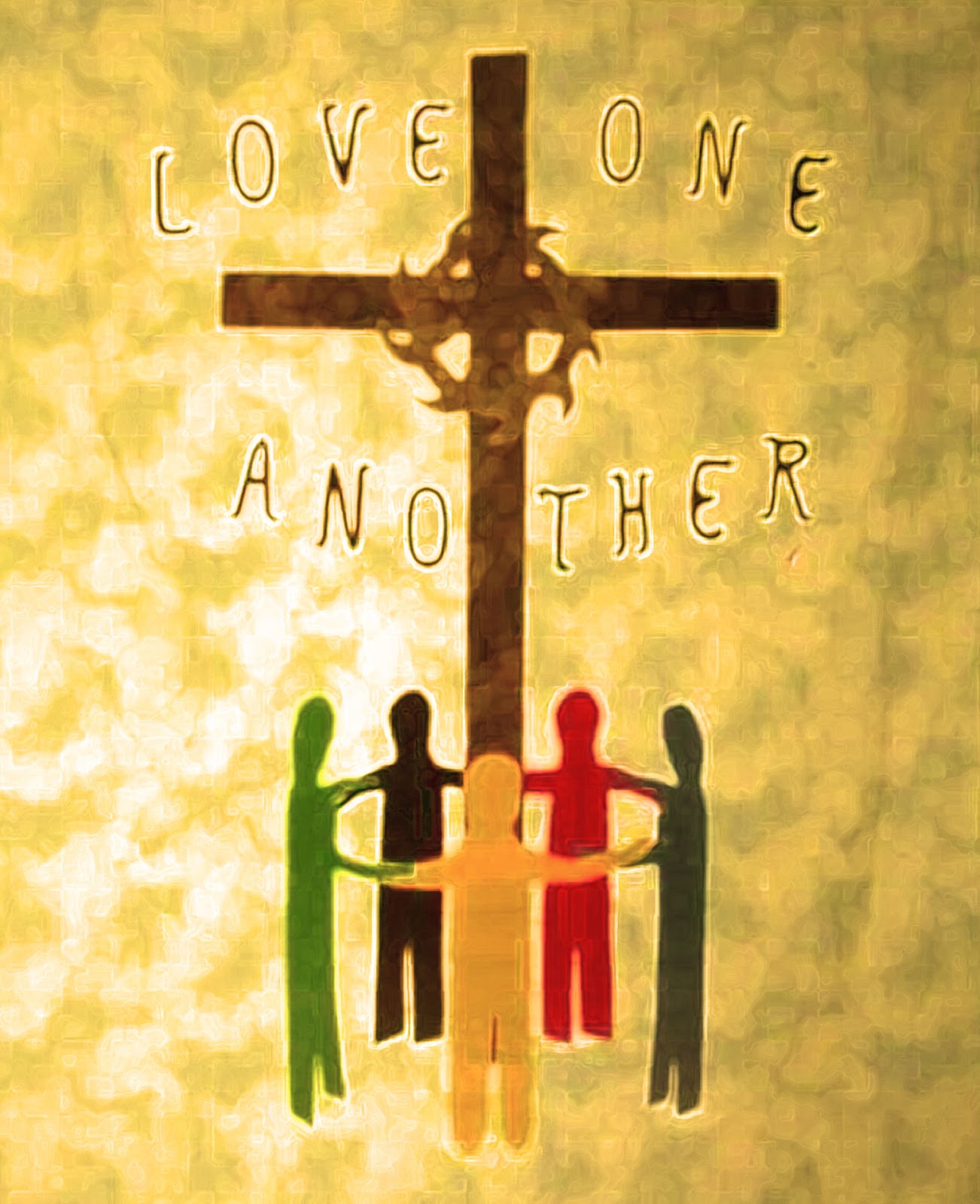
On a day when we have seen that the church is to be viewed and treated by each of us as a family, these verses raise a very high standard for relationship between husbands and wives and the church toward Christ.

If the husband makes Christ’s love for the church the pattern for loving his wife, then he will love her sacrificially. Christ gave Himself for the church; so the husband, in love, gives himself for his wife.

The husband’s love will also be a sanctifying love. The word sanctify means “to set apart.” In the marriage ceremony, the husband is set apart to belong to the wife, and the wife is set apart to belong to the husband. Any interference with this God-given arrangement is sin.

Our Christian homes are to be pictures of Christ’s relationship to His church. Each believer is a member of Christ’s body, and each believer is to help nourish the body in love

We are one with Christ. The church is His body and His bride, and the Christian home is a divinely ordained illustration of this relationship. This certainly makes marriage a serious matter. The root of most marital problems is sin, and the root of all sin is selfishness.

Submission to Christ and to one another is the only way to overcome selfishness, for when we submit, the Holy Spirit can fill us and enable us to love one another in a sacrificial, sanctifying, satisfying way—the way Christ loves the church.

A Glorious Church
The church has a history with God in it:

· It is the church of the living God
· It is the church for which the ages waited and God prepared
· It is the church of God’s redeemed and of martyrs.

Jesus built a church to withstand the ravages of time, the persecutions of men, and the destructive power of the devil.

It is the most sacred thing in the world:
· It is the body of Christ, the light of the world
· It is commissioned to proclaim the truth
· It is dependent for its success upon:

  1. Christ as its head
  2. Holy Spirit as its guide
  3. The willing ministry of redeemed men and women

An All-Inclusive Message
The message of the church is inclusive:

· it is a message of salvation for all souls
· of enlightenment for all minds
· of comfort for all hearts
· of relief for all needs
· of challenge for every life.

It has a message from God and stands for a Redeemer with a message of liberty and a dispensation of grace. It is the guardian of human rights, the hope of humanity and of peace.

It has not come without a high price. The cost of the church has been faithfulness and loyalty under persecution. The price has been paid in blood, from that of Christ and the first century Christians to hundreds martyred since.

We have a sacred obligation. The church is God’s tool for proclaiming Christ’s ideals and principles for life. It is founded on sacrifice and maintained by sacrifice. It appeals to the highest instincts of the human heart.

THE MEASURE OF LOYALTY
If our supreme loyalty is to Christ, then self and others will find their rightful place. Christ demands and deserves first place in our life.

(Mat 10:32-42) “”Therefore whoever confesses Me before men, him I will also confess before My Father who is in heaven. {33} “But whoever denies Me before men, him I will also deny before My Father who is in heaven. {34} “Do not think that I came to bring peace on earth. I did not come to bring peace but a sword. {35} “For I have come to ‘set a man against his father, a daughter against her mother, and a daughter-in-law against her mother-in-law’; {36} “and ‘a man’s enemies will be those of his own household.’ {37} “He who loves father or mother more than Me is not worthy of Me. And he who loves son or daughter more than Me is not worthy of Me. {38} “And he who does not take his cross and follow after Me is not worthy of Me. {39} “He who finds his life will lose it, and he who loses his life for My sake will find it. {40} “He who receives you receives Me, and he who receives Me receives Him who sent Me. {41} “He who receives a prophet in the name of a prophet shall receive a prophet’s reward. And he who receives a righteous man in the name of a righteous man shall receive a righteous man’s reward. {42} “And whoever gives one of these little ones only a cup of cold water in the name of a disciple, assuredly, I say to you, he shall by no means lose his reward.””

A tragedy of Christianity today is that, unlike the people in Jesus’ day, the shepherd-less masses look elsewhere for a savior.

The real peril is from within:
“The compelling need of our churches is neither larger numbers, more money, nor different programs, but a fuller consecration of the lives of individual church members to Jesus Christ. “Carelessness, prayerlessness, indifference, lowering of ideals, and open inconsistency of professed Christians within the church constitutes a greater menace to the cause of our Lord than indifference, opposition, infidelity, atheism, or other issues without the church. “The neglect of the devotional life brings flabbiness, indifference and unhappiness. Church discipline seems to have been largely discarded. The standard of Christ is the demand of the times.”

THE MEANS OF EXPRESSING LOYALTY
1. By our priority allegiance
If I truly belong as a husband and wife belong to each, or as children belong to parents, the church will have a real claim upon my personality, my powers, and my possessions.

We ought to be ashamed of ourselves when we put our children’s sports, homework, or recreation activities ahead of our worship and Bible classes!

We ought to be ashamed of ourselves when we work all week no matter how we feel and use a ‘being tired’ as an excuse to miss worship!

Loyalty to the church:
· would cause us to pray for each other

· would lead us to want to meet together and make the necessary plans ahead of time to be ready to worship when we get here
· would cause us to take positive stands against those things which would interfere with our worship and work

1. By uplifting influence
Jesus demands from each of us a high standard of moral and ethical conduct. He demands personal purity…” Eph 5:3 But among you there must not be even a hint of sexual immorality, or of any kind of impurity, or of greed, because these are improper for God’s holy people.”

“It is very possible that our churches are suffering a greater loss to the influence for good through the social activities of the individual members than at any other point.  “If we are as loyal and as earnest as we should be about this business of Christianity, we will not go places and do things that are calculated to retard the progress of the church to which we belong. Uncompromising loyalty to Christ wherever we are placed is one of the inescapable obligations and privileges of the Christian life.”

2. By Christ-like deeds
We might not see ourselves as flattering pictures of Christ, but in the things we say and do, we remind people that Christ dwells upon earth.

“Christianity is more than a vision…it is a life, a power, a mission for God. It is going somewhere; it is accomplishing something; it is increasing the forces of righteousness; it is translating routine into duty; it is making drudgery divine; it is finding out God and cooperating with Him in everyday life.”

 
1 Comment

Posted by on August 20, 2018 in Church


The Meaning of Church Loyalty


Jesus established and loved the church. He commanded his people to be loyal to it and to always give it priority affection and faithful support.

Loyalty has a martial ring to it. We think of our country and the nation’s flag. Loyalty stirs within us something high and holy. We like to think of ourselves as loyal, stalwart, and true.9d7dd-love_one_another_

In Nashville is a statue of one of the Confederacy’s heroes, Sam Davis, who uttered some immortal words: “I would die a thousand deaths, before I would betray a friend.”

The Place of Loyalty
Loyalty is the willing, practical devotion of self and substance to a person or a cause that is believed to be supremely worthwhile. It carries with it faithfulness, trust and confidence.

I would suggest that church loyalty runs much deeper: it calls for devoted allegiance to a Person and a cause. It involves decision, devotion, faithfulness, trustworthiness, and sacrifice.

Josiah Royce called loyalty “the chief of all virtues, the center of all beauty, the fulfillment of the moral law, and the very heart of religion.”

An individual without loyalty is like a ship without a compass. There may be much activity and much “going about” but it will often have little purpose and be unprofitable. Loyalty gives purpose, direction and drive to life.

In any list of Christian virtues, loyalty ranks high…we recognize it in scripture as faithfulness:
(Mat 23:23) “”Woe to you, teachers of the law and Pharisees, you hypocrites! You give a tenth of your spices–mint, dill and cummin. But you have neglected the more important matters of the law–justice, mercy and faithfulness. You should have practiced the latter, without neglecting the former.”

(Rom 3:3) “What if some did not have faith? Will their lack of faith nullify God’s faithfulness?”

(Gal 5:22) “But the fruit of the Spirit is love, joy, peace, patience, kindness, goodness, faithfulness,”

(Rev 13:10) “If anyone is to go into captivity, into captivity he will go. If anyone is to be killed with the sword, with the sword he will be killed. This calls for patient endurance and faithfulness on the part of the saints.”

· the Christian cannot serve God and money
· if any man would come to Christ, he must disclaim all loyalty to others and follow him
· Paul put it this way: “..to live is Christ and to die is gain…”

In our daily lives, there are numerous ‘loyalties’ clamoring for devotion and interest. We must stand firm in our efforts to be loyal to God, to the faith, to the church, to friends and family, and to self!

I WILL NEVER LEAVE THE CHURCH!

The reason that I will never leave the church is not due to anything special in me, but something special in Christ. Before He died on the cross He said, “I will build my church and the gates of Hades shall not prevail against it.” After His resurrection He promised, “I will be with you always, to the very end of the age.”

Yes, they have weaknesses, make mistakes, and commit sins; but, I’m not leaving them. Even though hypocrisy, materialism, and pride may surface in the life of my brothers and sisters, I’m not leaving!

So all through His life, Jesus committed Himself to people. Even though we have guilt, pride and many problems, we have the guarantee of divinity that Jesus will never leave us. I’ve decided that means several things in my relationship with the church:

 I will never leave the church emotionally. We must be available to each other to share our lives, to confess our faults, to worship, to laugh, to cry and to walk together through the places of life. We must not commit emotional adultery against each other. We need to be each other’s best friend.

 I will never leave the church theologically. Jesus built one church and He is its head. The purpose of “no creed, but Christ, no book but the Bible, no message but the Gospel and no aim but to save” is a good summary of what the New Testament church was all about. I’m committed to those principles.

 I will never leave the Church spiritually. You are my brothers and sisters in Christ. God is our Father. It is the greatest family on earth. Though sometimes our lives are chipped and broken, we are still the vessels of God’s treasure. We must never leave each other.

 Ephesians 3:8-11 (ESV)–  To me, though I am the very least of all the saints, this grace was given, to preach to the Gentiles the unsearchable riches of Christ, 9 and to bring to light for everyone what is the plan of the mystery hidden for ages in God who created all things, 10 so that through the church the manifold wisdom of God might now be made known to the rulers and authorities in the heavenly places. 11 This was according to the eternal purpose that he has realized in Christ Jesus our Lord…”

 
Leave a comment

Posted by on August 16, 2018 in Church